THE DIVINE EQUATION: The implications of corruptibility for the incorruptibility of the Resurrection.

This excerpt is from my book, The Divine Equation.

THE DIVINE EQUATION: THE CORRUPTION OF EVERYDAY LIVING

The focus of my thinking these days has been on Original Sin and how humans must live within its parameters, such as death, pain, emotions, and the ambiguity of choosing either good or bad behaviors that we think will make us satisfied. Saint Augustine also struggled with this concept and coined the famous catchphrase: “Our hearts are restless until they rest in thee.” How did humans end up with all these faults and failings of their human nature? What does Original Sin have to do with how I live out my commitment as a Lay Cistercian? Why must I struggle each day to reposition my center with the help of the Holy Spirit, lest I drift into dissonance? In another blog, I have written down what I do by Way of habits to keep my equilibrium in the condition of Original Sin. I am not corrupt morally by nature but only by my choices. What God made is good. What I do may be good or bad, depending on my choices. All my choices have consequences that will be made public in the last judgment. St. Benedict’s Chapter 4 has one of his tools:

41 Place your hope in God alone.
42 If you notice something good in yourself, give credit to God, not to yourself,
43 but be certain that the evil you commit is always your own and yours to acknowledge
.

44 Live in fear of judgment day
45 and have a great horror of hell.

Everything we do will be known to all. This is due, in my opinion, to the fact that our choices, whatever they may be, are part of the fabric of our existence and are who we are. “I am not you; you are not me; God is not you; you, most certainly, are not God,” is a quote I frequently use when I host a pity party for my past bad behavior. I live in a condition of corrupt behavior, one which presents to me both those behaviors that lead to my true self and those that cause me to embrace my false self due to Original Sin. Being in the warm embrace of the Lay Cistercian community, I am overshadowed not only by the Holy Spirit but by the same Holy Spirit who overshadows all my Lay Cistercian brothers and sisters. (Silence, Solitude, Prayer, Work, and Community) To combat the ever-present effects of Original Sin means the Sin of Adam and Eve is forgiven by the Father, who chooses me to be an adopted son (daughter), but its effects are my challenge as I must from self to God. I use the Cistercian practices and charisms (charity, humility, obedience to the will of the Father through Christ, and those tools of good works suggested in Chapter 4 of the Rule of St. Benedict). https://christdesert.org/rule-of-st-benedict/chapter-4-the-tools-for-good-works/( See above)

If we are strong, each of us only lives seventy or eighty years (so says the Psalmist). We interact with the World as we experience it using our human reasoning and good or evil choices within that time frame. The problem with human experience is twofold: 1. What is right or wrong? and 2. Who determines what is right or wrong.

There are two options to choose good from evil for us. One choice is that we are the final person to determine what is good or bad (morally, spiritually, and every other Way.) What is good depends on what I choose. Put another way, something is right or wrong because I choose it to be so. The second choice is that what is right or wrong comes from outside ourselves with a power greater than ourselves. Something is ultimately good or bad for us because God tells us so. Remember, each individual only lives seventh or eighty years, if lucky.

CORRUPTION IS THE NORMAL DEFAULT OF ALL REALITY

Let me share with you some of the thoughts from my Lectio Divina meditations (Philippians 2:5) about living in a world with the effects of Original Sin.

Corruption takes place in three different universes with three different characteristics and outcomes.

THE CORRUPTION OF ALL MATTER AND ENERGY: Corruption in the physical universe –– Everything in the universe of matter, time, space, energy, and life has a beginning and an end. This is the default corruption of the normal. Don’t think of corruption as being morally corrupt. That comes in the next universe, the mental universe. This corruption is the dissonance of having a set beginning and end. Nothing exists forever, at least, in the physical and mental universes. They each have their energy type, but only due to nature’s generated. I am certainly not as powerful as Stephenson 2-18, a red hypergiant star about the size of Neptune’s orbit. Yet, this most powerful and most enormous of stars (that we know of) doesn’t know that it knows. I study this star to learn about who I am and where I am going. It does not have the energy to propel me from animality to rationality by itself. Stephenson 2.18 does not have the power to study who I am and receive the power to be the Father’s adopted son (daughter). What does that tell you?

Characteristics:

  • This universe or dimension of reality is the one that we call home. In it is everything that is. All life on Earth is part of this universe, including humans. We could not exist without the physical universe and its laws.
  • The physical universe and everything in it has a beginning and an end, including humans. Corruption means deterioration with defined limitations, chief among them being we must all die. Everything dies.
  • Original Sin means we live in a condition much like a piece of iron pipe exposed to oxygen. We rust.
  • No one, as yet, can stop this corruption from happening. The best we can do is slow it down.
  • Based on what we know, the most powerful objects in this universe are hypernovas, black holes, and neutron stars. We are sure to learn more about inner and outer space in the future.
  • The laws of nature are based on the interaction of matter, gases, chemistry, gravity, and much more.

CORRUPTION IN THE MENTAL UNIVERSE: Corruption of human nature and the individual mind— The mental universe is where only humans live (my hypothesis). As far as we know, humans are the only species that knows that it knows. Animals don’t know that they don’t know. Human reasoning and choice are the two components that distinguish us from other types of life, even though we share some of the elements of being together. This is the next level of progressive natural engineering, which happens naturally,

As our race began to accumulate knowledge of what is good or evil, they did so within the context of a corrupt infrastructure. Everything deteriorates, our human personae corrupts, but knowledge is passed on to another. So, when I look around at the parameters of my life, and the World, I see physical corruption and corruption of ideas as they are measured against me and other persons or groups of persons. This idea can resonate with who we are intended to be as a species (our purpose, our destiny) or dissonance with our intended progression. Where do we get the questions and answers to determine our eventual end? It can only come from inside us or outside of us. In the mental universe, there is only the power to live until you die, to somehow sift through all those philosophies and psychologies of what our purpose is and what is the meaning of life. We have the unique ability to reason for a reason. To uncover the mysteries of being and the purpose of why I wake up at this particular time in time and space and look around me, I ask six questions to help me sort out the chaff from the wheat. I have collected the answers to these questions from my awareness of the purpose of life. These answers come from the spiritual universe. The mental and the physical universes do not possess the energy to answer these questions correctly and to allow me to execute them as God intended. I call this quest The Divine Equation. These six questions are:

  1. What is the purpose of life?
  2. What is the purpose of my life within that purpose of life?
  3. What does reality look like?
  4. How does it all fit together?
  5. How can I love fiercely?
  6. You know you are going to die, now what?

Having the correct questions and then answering them with the only answers will produce enough energy, and moves us to the next level of our collective maturation as a species.

Characteristics:

  • This is a totally different paradigm than the physical universe but totally dependent on it for its existence. It is the universe of the mind.
  • Humans alone have the ability to reason and choose what is right for them. This is the universe of the human species and begins a new universe. However, like physical nature, human nature evolves from beginning to end. Humans die.
  • Each human lives for a period of time from birth until they die, usually, seventy or eighty years, if they are lucky. Some humans die sooner than others because of accidents, illness, murder, war, or other aberrations of the normal lifespan.
  • Humans are susceptible to strong behaviors with choices that can be noble or destructive of themselves or others. The choice is the key quality of humans that enables them to move forward with learning what is good or evil.
  • Corruption of the mind occurs when humans choose those options that cause them to revert to the physical universe and go against their nature.
  • The human heart (symbol of love and nobility) embraces what it thinks is good, even bad or evil.
  • The knowledge of what is good or evil is left to each individual. Individuals can decide whether society’s norms are good or bad for them.
  • This universe has no power of its own, except the power of the interrogatories, which they can pass on to the next generation. The interrogatories are answers that only humans can ask (who, what, when, where, why). The answers come from human knowledge, wisdom, scientific inquiry, philosophical discourse, and the luxury of time.
  • Where we get our information determines the scope of our reality. We can either get our information from within, where we are the final arbiter of what is good or bad, or use the information from someone with more insight and a more comprehensive appreciation of reality.
  • Scientific inquiry and philosophical discourse both presuppose that two universes contain reality, the physical one we can see and measure and the mental universe, which allows us to make conclusions about the purpose of life, based on the languages of mathematics and chemist, to name only a few.
  • It would be a grave mistake to think or hold that the mental universe is bad or somehow evil. The evil in the World comes from and through humans. We all have experienced the goodness and nobility in the human heart; we have no doubt felt the chill of real evil in persons. Evil exists only in humans, not in nature, and even then, not all activities are wrong for humans to hold because they do not have the energy to propel us to the next level of our evolution.
  • Who determines what is evil if each individual has the right to choose what is good for them and what is not? Society certainly creates laws based on political expediency. Monarchies dictate laws and are at the mercy of the lawgiver. Who gives us the big picture, which means who knows the intended or unintended consequences of our choices not just now, but hundreds of years in the future? I don’t know of any who lives more than seventy or eighty years, so it must be the consecutive linking of ideas from one generation to another. Even that tradition is flawed.

There is an answer to this, the answers to the six proofs of the Divine Equation, which I have stated above. Where I get those answers depends on this next level of evolution, that of the Spiritual Universe.

THE CORRUPTION OF THE SPIRIT: The condition of Original Sin.

Original Sin is the default condition found in that tremendous archetypal story of Genesis that goes to the core of what humanity is and what we need to do to reach our intended evolution as a species and as individuals. Humans make choices that make them morally corrupt. We did not do a good job making choices, so Israel was selected to be the chosen people to know authentic or non-authentic existence in the Old Testament.

I keep asking myself why it is so difficult to keep myself centered on Christ and then forget about it until I get to automatic heaven. My answers over the years have been that, although I have been adopted by the Father as an adopted son (daughter), I must nevertheless continue to struggle each day to seek God, lest my resolve weakens. I don’t learn what it means to take up my cross DAILY and follow Christ. This is my unique cross, the sum of my life, both achievements and those defeats to my good intentions. I am the sum of the choices that I have made. What influences my choices is the Holy Spirit, but all of this is within the context of the corruption of the physical and mental but also perhaps the spiritual universe itself. I keep asking Christ to have mercy on me, a sinner. I am a sinner because I make new choices and run the gauntlet of good and evil thoughts each day. Corruption of the physical and mental universes permeates my choices. The corruption of the Spirit means that the Spirit is not corrupt. Still, because I live in the physical universe and thus am subject to its laws, the choices in the spiritual universe are inexorably bound together.

The Lay Cistercian spirituality, based on the Cistercian Way, which is rooted in the Rule of St. Benedict, which is, in turn, grounded in Scripture and the Traditions that come down to us from Christ, are the tools that I use to fight against the condition of the corruption of the Spirit that permeates my humanity. Trying to do God’s will is my mantra. Over and over, to practice contemplative prayer through Lectio Divina, The Eucharist, Eucharistic Adoration, the Rosary, Reading from Sacred Scripture, and the Liturgy of the Word.

Characteristics

  • The physical universe (our ground of existence) and the mental universe (our ability to reflect on what is around us and discover the next level of our evolution) leads to the third element, in reality, a universe of the Spirit. This universe is one where you have to choose to get into it, and once in it, you have to struggle to stay there until you die. This is the ultimate reality because it created the other two universes and that is why we have reason and the ability to choose.
  • This universe has a beginning (Baptism and Confirmation) but no end. There is corruption in this universe, but it has to do with taking up your cross daily (whatever comes your Way) and transforming it into good.
  • Those who enter this universe by invitation and commitment will not die. It is the adoption of each person as the son or daughter of the Father. Knowledge of good or evil plays into this universe because of free choice. If one chooses not to be an adopted son of the Father (and knows the implications of their decision), then Jesus will look you straight in the eye and say to you, “Why did you not pick up on the people I sent to you to show you how to “love others, as I loved you?”
  • Heaven is God’s playground. If you die and want to play there, you must play by God’s rules. You practice these rules on earth by loving God with your whole heart, your whole mind, and your whole strength, and your neighbor as yourself. (Deuteronomy 6:5 and Matthew 22:37)
  • The Kingdom of Heaven on Earth is not corrupt, but it overlaps with the physical and mental universes because you need space and time to learn the meaning of the Divine Equation. While you are in the Kingdom of Heaven on earth, before you die and get your report card, you are subject to the corruption of the Spirit (your Spirit).
  • As a Lay Cistercian or even a contemplative monk or nun, there is the martyrdom of living out a meaningful meaningless set of practices and charisms to move you from the World to the Kingdom of Heaven.
  • Corruption of the Spirit is the temptation of Satan to seduce you into thinking that He (Satan) has the kingdom, the power, and the glory, and not God, who seems to be passive and just there.
  • “If you are so spiritual, why don’t you feel it and be more powerful in the eyes of your peers?”
  • “Nobody knows what you do when you pray, so just fake it.”
  • “Sexual urges and desires are a natural part of being human. Don’t be a phony to your nature and deny yourself what could make you happy.”
  • “What you do in prayer and contemplation won’t change a thing in the world.”
  • “Repetition and practice of Lectio Divina are boring and a waste of your valuable time.”

THE REAL BATTLE FOR THE SOULS OF THE FAITHFUL This corruption of physical and mental universes comes from the natural progression or evolution of matter, energy, time, and space. With the introduction of the human species, the only life form to be lifted to a higher level of human reason and free choice, a radical change occurred in the fabric of what went before. Now, dissonance comes into a universe that abided by the law of nature. The term we use for this occurrence is Original Sin, based on the biblical narrative of the origins of human nature and why its acts are sometimes at odds with a perfect human concept (Genesis 2-3). Human nature is not evil but exists in a flawed CONDITION that each species inherits.

Some people will not realize that there is a battle at all. If you only live in two universes (physical and mental), you won’t be aware of another dimension, one you must choose to enter, designed to prepare you to accept responsibility for your role as an adopted son (daughter) of the Father. This dual universe concept we call The World is based on Galatians 5. In fairness, not everyone in The World is evil or without the nobility of their species. It is the condition of which I speak, not the individual nature which has been wounded.

Baptism is so essential that all the other sacramental moments are there to sustain it as each individual from child to adult moves from two universes to three universes, the destiny of their race, and their fulfillment. Baptism is a sign that God’s signature is on your forehead, the cross.

This cross-over from two universes to that of accepting our adoption and acting according to God’s rules for us, not our own, happens in the context of ordinary, everyday routines and patterns of behavior we adopt. The individual is critical here because it houses free will and the reason needed to accept the invitation of God to move to this next level of human evolution, one that demands a choice. The Christ Principle (Jesus Christ, Son of God, Savior) loved us so much that he became our nature, with all that it implies except Sin so that we could learn how to love in such a way that we could inherit what God had intended for us in the Garden of Eden (Genesis 2-3). It is no coincidence that Jesus the Messiah became one of us to teach us how to survive the corruption of the physical and mental universes and open to us the possibility of living forever, a characteristic of the Kingdom of Heaven. But, there is a problem. Humans don’t have the energy to lift us to the next level of our evolution. Only some of this makes sense with the knowledge and experiences around us. God has a problem, too. How can God communicate what lies in store for those who love Him with mere human language that only uses the stories and dreams of those who desire to be one with an entity they can only approach through the corruption of matter and energy? The Christ Principle showed us what to do, and how to do it, and then did it as an example for us to follow.

The battlefield in the Kingdom of Heaven on Earth militates against the corruption of the physical and mental universes, which seeks to infringe on the only thing it can control with the permission of the individual, human choice. If you picture yourself standing on the battlefield of each day going through whatever comes your Way, this is why you struggle with putting Jesus into your heart EACH DAY and why yesterday’s battle is not today’s opportunity to claim your inheritance as a son (daughter) of the Father.

The Spiritual Universe is the playground of God and is not corrupt. At Baptism, it overshadows you, just as the Holy Spirit did with the Blessed Mary, Mother of God. The problem is you still live in the physical and mental universes, which are corrupt by default, called the effects of Original Sin. Individuals are susceptible to being seduced by the forces of darkness to deny that God has the kingdom, the power, and the glory. Baptism takes away the Sin, but the effects remain, and so does the lion roaming the earth, seeking whom He may devour.

Practically speaking, my Lay Cistercian journey begins with my profession of promises to live in such a way that I am aware, each day, that Christ offers His presence to me in ways I can choose to be present. The Corruption of the Spirit (my Spirit) means, like St. Paul, I don’t always do what I say I will do. Even with my sins forgiven, I must seek God’s mercy each day, not because I am a great sinner, but because I need the Holy Spirit to help me battle against the corruption of everyday living, thinking that all of this is so much cotton candy and that my prayers are not efficacious (I love that word).

Because I live in the Kingdom of Heaven on earth, yet my body must be consistent with the corruption of the physical and mental universes, the Christ Principle is the sign that what might seem folly for the gentiles and a stumbling block to the Jews is actually the key to my fulfilling my evolution as a human being.

LEARNING POINTS

  • Because I live in the physical and mental universes, I am bound by the corruption of Matter and Mind. Because of Baptism and my free choice of Jesus Christ as Son of God, Messiah, I have dual citizenship, one as a human being until I die, and the second as an adopted son (daughter) of the Father awaiting the fulfillment of my destiny as a human being, to live with the one I love Forever.
  • Corruption does not mean that the physical universe and mental universes are morally evil, as the Manicheans heresy taught, but everything has a beginning and an end.

St. Paul comments on this condition of corruption when he says in Romans 7: “14We know that the law is spiritual, but I am carnal, sold into slavery to sin.j15What I do, I do not understand. For I do not do what I want, but I do what I hate.16Now if I do what I do not want, I concur that the law is good.17So now it is no longer I who do it, but Sin that dwells in me.18For I know that good does not dwell in me, that is, in my flesh. The will is ready at hand, but doing the good is not.k19For I do not do the good I want, but I do the evil I do not want.20Now if [I] do what I do not want, it is no longer I who do it, but Sin that dwells in me.”

NOW WHAT?

I relish the time I have to be with Jesus through the energy of the Holy Spirit. I look forward to being with the one who has emptied Himself for my sake and asked me to do the same for others as He did for me. I am grateful beyond my ability to express it and excited in the depths of my upper room that Jesus came to me and asked me to put my hands in the place of his side and to feel the holes left by the nails. I am joyful beyond human experience to be called by the Father to be his adopted son (daughter) in a condition where there is no corruption, only resonance with all reality, my playground for all eternity with those I love and those who love me.

uiodg

G.K. CHESTERTON: God’s Curmudgeon

Growing up, Chesterton was one of my favorite characters. I hope you take advantage of the opportunity to add his wit and wisdom to your portfolio contained in your Book of Life.

Who is this guy? I recommend the following resources for your spiritual edification (and enjoyment).https://www.chesterton.org/who-is-this-guy/

https://www.chesterton.org/category/discover-chesterton/chestertons-selected-works/

uiodg

DON’T BE AFRAID

Several years ago, I was part of a discussion at the Monastery of Our Lady of the Holy Spirit (Trappist) centered around humility. St. Benedict has twelve steps to achieve humility which is Chapter 7 of his Rule. Humility does not come automatically. Like human love, Erich Fromm says in his Art of Loving that we must learn how to love by practice. Some people get it, and some don’t. If you want humility in your heart, you must put it there. This is the Art of Contemplative Practice, doing Cistercian practices and charisms to place yourself in the presence of Christ and wait for the Holy Spirit to overshadow you.

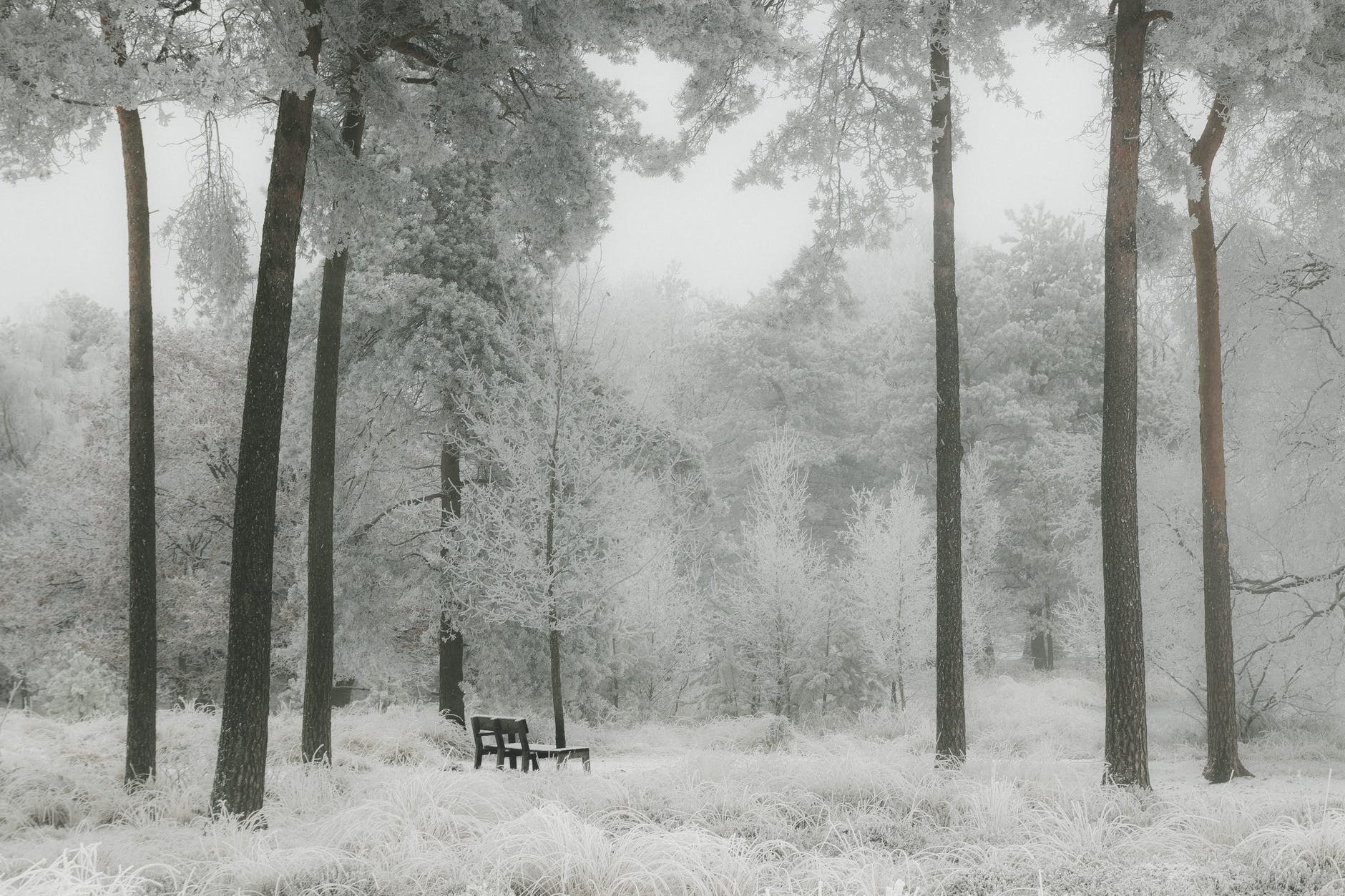
One of the most important reasons that I always say “Wait” for the Holy Spirit has to do with humility. In Chapter 7 of the Rule, St. Benedict has twelve steps to achieve humility for his monks. Because of original sin’s effects, humans always have a penchant for asking God to meet them as though they (humans) order God around. “I’ll pray,” Lord, “but you have to give me what I want.” That first step in chapter seven of the Rule has to do with “Fear of the Lord.” Our discussion about humility began with how to fear the Lord. Some people said it means we must be afraid of God, which is true to some extent. I chimed in that I thought St. Benedict was trying to instill in his monks not to boss God around with all their practices and prayers, as though we are doing God some sort of favor. Remember, it is God we are asking to sit down on a park bench in the middle of winter and overshadow us with his Faith. Fear of the Lord is respecting that God is divine and we are human, that God is God and we are adopted sons and daughters of the Father through Faith.

TEMPTATIONS I CONFRONTED WHEN PLACING MYSELF IN CHRIST’S PRESENCE

  1. CHRIST IS NOT ON THE CLOCK –Being present to Christ is unlike a chess match, where each move is clocked. One of my early expectations, and still creeps in from time to time, is that Christ is there for me in my time. Indeed, Christ is there for me, but it is disrespectful for me to think, “Your time is my time.” This is a subtle act of control, very common in the work world in which we live.
  2. CHRIST SAID HE WOULD GIVE ME WHATEVER I ASK, SO I CAN ASK FOR ANYTHING — You have read the passage from the Scriptures that says, “Ask anything in my name and I will give it to you.” Literally, if you ask something, you expect it because it says so in Scripture and, therefore, must be infallible. Try it sometime. Ask to win the Lottery or to have your neighbor lose all their money because they slighted you. God knows what each of us needs and gives that to us when we ask in humility, but maybe not in the way we anticipate or the timeframe we expect. When I began my Lay Cistercian journey, I had a somewhat considerable background in theology. I had to realize who God is and that, once again, in life, I had to start from the beginning (although, in fairness, I carry with me the accumulated experiences of my daily attempts to discover what it means to grow in being human (capacitas dei)). I did grow, and Christ did answer my prayers in silence and solitude, but it was like drinking concentrated orange juice (bitter) until I added the water from a lifetime of struggling to keep Christ as my one Christ Principle at my center.
  3. BLESSED ARE THOSE WHO HAVE NOT SEEN AND YET BELIEVE. — I have never seen the face of God, nor the face of Christ, for that matter. I have no idea what the Holy Spirit looks like, although all three persons of the Trinity figure prominently in how I approach life using THE WAY, THE TRUTH, AND THE LIFE. Abandoning my reliance on reality (two universes of the physical and mental), I actually experience the presence of Love from outside of myself, a Love that overshadows me and calms down the reliance on the promises of the World to show me its way to being fully human.

Fear of the Lord is not being afraid of the Lord as much as, with humility and obedience to what I know God shares with me, to give glory to the Father, and to the Son, and the Holy Spirit, now and forever. The God who is, who was, and who will come at the end of the ages. Amen.

Is being in the presence of God a waste of time? I hope so. The folly of God is wiser than all the wisdom of humans put together.

uiodg

THE SEDUCTION OF THE INNOCENTS

While trolling through the various YouTube streamings on my television, I came upon some topics that I would like to comment upon in terms of what I consider a dangerous temptation for those whose faith is not grounded in Christ Jesus. It is difficult enough for me to stay focused on “having in me the mind of Christ Jesus,” (Philippians 2:5) without these tangential swipes from external sources invading and challenging my center. I refer to the YouTube about the nun whose body is exhumed and preserved in perfect condition.

As one of those who try to be faithful to the Gospel’s call for mercy and forgiveness, I look at the pop-up so-called manifestations or miracles as having the possibility of seducing those who desperately seek a sign that Jesus is real and for something extraordinary in which they can place their trust. I refer specifically to the Fatima letters and even apparitions of Mary and the Saints. To be very clear, the Church is the arbiter of what is true and should be believed (e.g., The Nicene Creed), and I am not objecting to the devotion to Mary or any of the Saints, which I continue to practice. What raises red flags for me is taking these tangential occurrences and placing them as my center. Doing so means I must push any other centers to the side, in my case, Philippians 2:5. St. Benedict says that we “must prefer nothing to the love of Christ.” (Rule of St. Benedict, Chapter 4).

CONSEQUENCES OF BELIEF

Belief or non-belief, like any human choice, has consequences. Some are intended (we know what they are), but some are unintended (we have outcomes that we don’t anticipate). When looking at placing miracles and proofs of God speaking to us through nature or our imagination, I am reminded that only Christ can be a true center. What does the first Commandment say? I have added the footnotes from the text for you to reflect on the Ten Commandments as keys to keep our focus on God. I encourage you to do a little digging into one of the foundations of our morality. In doing so, keep in mind that the consequence of being led off center by some of these events and people who seek to sow discord and doubt about the Holy Father and what is truth only serves to weaken our core.

The Ten Commandments.*

1Then God spoke all these words:

2a I am the LORD your God, who brought you out of the land of Egypt,b out of the house of slavery.

3You shall not have other gods beside me.*

4You shall not make for yourself an idolc or a likeness of anything* in the heavens above or on the earth below or in the waters beneath the earth;

5you shall not bow down before them or serve them.d For I, the LORD, your God, am a jealous God, inflicting punishment for their ancestors’ wickedness on the children of those who hate me, down to the third and fourth generation*;

6but showing love down to the thousandth generation of those who love me and keep my commandments.

7You shall not invoke the name of the LORD, your God, in vain.* e For the LORD will not leave unpunished anyone who invokes his name in vain.

8Remember the sabbath day—keep it holy.*

9Six days you may labor and do all your work,

10but the seventh day is a sabbath of the LORD your God.f You shall not do any work, either you, your son or your daughter, your male or female slave, your work animal, or the resident alien within your gates.

11For in six days the LORD made the heavens and the earth, the sea and all that is in them; but on the seventh day he rested.g That is why the LORD has blessed the sabbath day and made it holy.*

12* h Honor your father and your mother, that you may have a long life in the land the LORD your God is giving you.i

13You shall not kill.* j

14You shall not commit adultery.k

15You shall not steal.l

16You shall not bear false witness against your neighbor.m

17You shall not covet your neighbor’s house. You shall not covet your neighbor’s wife, his male or female slave, his ox or donkey, or anything that belongs to your neighbor.n

Moses Accepted as Mediator.

18Now as all the people witnessed the thunder and lightning, the blast of the shofar and the mountain smoking, they became afraid and trembled.o So they took up a position farther away

19and said to Moses, “You speak to us, and we will listen; but do not let God speak to us, or we shall die.”

20Moses answered the people, “Do not be afraid, for God has come only to test you and put the fear of him upon you so you do not sin.”

21So the people remained at a distance, while Moses approached the dark cloud where God was.

The Covenant Code.

22* The LORD said to Moses: This is what you will say to the Israelites: You have seen for yourselves that I have spoken to you from heaven.

23You shall not make alongside of me gods of silver, nor shall you make for yourselves gods of gold.p

24An altar of earth make for me, and sacrifice upon it your burnt offerings and communion sacrifices, your sheep and your oxen.q In every place where I cause my name to be invoked* I will come to you and bless you.

25But if you make an altar of stone for me,r do not build it of cut stone, for by putting a chisel to it you profane it.

26You shall not ascend to my altar by steps, lest your nakedness be exposed.

* [20:1–17] The precise numbering and division of these precepts into “ten commandments” is somewhat uncertain. Traditionally among Catholics and Lutherans vv. 1–6 are considered as only one commandment, and v. 17 as two. The Anglican, Greek Orthodox, and Reformed churches count vv. 1–6 as two, and v. 17 as one. Cf. Dt 5:6–21. The traditional designation as “ten” is not found here but in 34:28 (and also Dt 4:13 and 10:4), where these precepts are alluded to literally as “the ten words.” That they were originally written on two tablets appears in Ex 32:15–1634:28–29Dt 4:1310:2–4.

The present form of the commands is a product of a long development, as is clear from the fact that the individual precepts vary considerably in length and from the slightly different formulation of Dt 5:6–21 (see especially vv. 12–15 and 21). Indeed they represent a mature formulation of a traditional morality. Why this specific selection of commands should be set apart is not entirely clear. None of them is unique in the Old Testament and all of the laws which follow are also from God and equally binding on the Israelites. Even so, this collection represents a privileged expression of God’s moral demands on Israel and is here set apart from the others as a direct, unmediated communication of God to the Israelites and the basis of the covenant being concluded on Sinai.

* [20:3] Beside me: this commandment is traditionally understood as an outright denial of the existence of other gods except the God of Israel; however, in the context of the more general prohibitions in vv. 4–5, v. 3 is, more precisely, God’s demand for Israel’s exclusive worship and allegiance.

The Hebrew phrase underlying the translation “beside me” is, nonetheless, problematic and has been variously translated, e.g., “except me,” “in addition to me,” “in preference to me,” “in defiance of me,” and “in front of me” or “before my face.” The latter translation, with its concrete, spatial nuances, has suggested to some that the prohibition once sought to exclude from the Lord’s sanctuary the cult images or idols of other gods, such as the asherah, or stylized sacred tree of life, associated with the Canaanite goddess Asherah (34:13). Over the course of time, as vv. 4–5 suggest, the original scope of v. 3 was expanded.

* [20:4] Or a likeness of anything: compare this formulation to that found in Dt 5:8, which understands this phrase and the following phrases as specifications of the prohibited idol (Hebrew pesel), which usually refers to an image that is carved or hewn rather than cast.

* [20:5] Jealous: demanding exclusive allegiance. Inflicting punishment…the third and fourth generation: the intended emphasis is on God’s mercy by the contrast between punishment and mercy (“to the thousandth generation”—v. 6). Other Old Testament texts repudiate the idea of punishment devolving on later generations (cf. Dt 24:16Jer 31:29–30Ez 18:2–4). Yet it is known that later generations may suffer the punishing effects of sins of earlier generations, but not the guilt.

* [20:7] In vain: i.e., to no good purpose, a general framing of the prohibition which includes swearing falsely, especially in the context of a legal proceeding, but also goes beyond it (cf. Lv 24:16Prv 30:8–9).

* [20:8] Keep it holy: i.e., to set it apart from the other days of the week, in part, as the following verse explains, by not doing work that is ordinarily done in the course of a week. The special importance of this command can be seen in the fact that, together with vv. 9–11, it represents the longest of the Decalogue’s precepts.

* [20:11] Here, in a formulation which reflects Priestly theology, the veneration of the sabbath is grounded in God’s own hallowing of the sabbath in creation. Compare 31:13Dt 5:15.

* [20:12–17] The Decalogue falls into two parts: the preceding precepts refer to God, the following refer primarily to one’s fellow Israelites.

* [20:13] Kill: as frequent instances of killing in the context of war or certain crimes (see vv. 12–18) demonstrate in the Old Testament, not all killing comes within the scope of the commandment. For this reason, the Hebrew verb translated here as “kill” is often understood as “murder,” although it is in fact used in the Old Testament at times for unintentional acts of killing (e.g., Dt 4:41Jos 20:3) and for legally sanctioned killing (Nm 35:30). The term may originally have designated any killing of another Israelite, including acts of manslaughter, for which the victim’s kin could exact vengeance. In the present context, it denotes the killing of one Israelite by another, motivated by hatred or the like (Nm 35:20; cf. Hos 6:9).

* [20:22–23:33] This collection consists of the civil and religious laws, both apodictic (absolute) and casuistic (conditional), which were given to the people through the mediation of Moses. They will be written down by Moses in 24:4.

* [20:24] Where I cause my name to be invoked: i.e., at the sacred site where God wishes to be worshiped. Dt 12 will demand the centralization of all sacrificial worship in one place chosen by God.

a. [20:2–17Dt 5:6–21.

b. [20:2Lv 26:13Ps 81:11Hos 13:4.

c. [20:4Ex 34:17Lv 26:1Dt 4:15–1927:15.

d. [20:5Ex 34:714Nm 14:18Dt 4:246:15.

e. [20:7Lv 19:1224:16.

f. [20:8–11Ex 23:1231:13–1634:2135:2Lv 23:3.

g. [20:11Ex 31:17Gn 2:2–3.

h. [20:12–16Mt 19:18–19Mk 10:19Lk 18:20Rom 13:9.

i. [20:12Lv 20:9Mt 15:4Mk 7:10Eph 6:2–3.

j. [20:13Mt 5:21.

k. [20:14Lv 18:2020:10Dt 22:22Mt 5:27.

l. [20:15Lv 19:11.

m. [20:16Ex 23:1Dt 19:16–19Prv 19:5924:28.

n. [20:17Rom 7:7.

o. [20:18–21Dt 4:115:22–2718:16Heb 12:18–19.

p. [20:23Ex 20:3–4.

q. [20:24Dt 12:51114:2316:6.

r. [20:25Dt 27:5Jos 8:31.

Copyright 2019-2023 USCCB, please review our Privacy Policy

MY CONCLUSIONS

  • No matter what the world thinks, and this includes people of good will who see a conspiracy under every shade tree, be steadfast in your faith, in season and out of season.
  • Christ alone is my center, and I must struggle daily to keep external forces from trying to unthrone Him.
  • Don’t put your trust in princes. This means seemingly miraculous events that seem to prove God is with us.
  • Take my inspiration for Christ from Mary and the Saints, who resisted the snares of the Evil One and kept their eyes upon Christ alone.
  • Realize that my Faith is weak if I don’t renew it each day with the power of the Holy Spirit in Lectio Divina, Eucharist, Liturgy of the Hours, Sacred Reading, and converting my life daily to becoming more like Christ (which for me means I am becoming more and more what my nature intended humanity to be).
  • Don’t be seduced by seemingly innocent events that purport to sensationalize external proofs that God exists. The weak need a sign, but no sign will be given to them but the sign of Jonah.

The Demand for a Sign.*

38Then some of the scribes and Pharisees said to him, “Teacher,* we wish to see a sign from you.”u

39He said to them in reply, “An evil and unfaithful* generation seeks a sign, but no sign will be given it except the sign of Jonah the prophet.

40Just as Jonah was in the belly of the whale three days and three nights,* so will the Son of Man be in the heart of the earth three days and three nights.

41* At the judgment, the men of Nineveh will arise with this generation and condemn it, because they repented at the preaching of Jonah; and there is something greater than Jonah here.

42At the judgment the queen of the south will arise with this generation and condemn it, because she came from the ends of the earth to hear the wisdom of Solomon; and there is something greater than Solomon here.v

https://bible.usccb.org/bible/matthew/12

Be careful what you place at your center. You have to live with it forever.

uiodg

INTELLIGENT PROGRESSION: Cosmic integration of all reality

Henri Teilhard de Chardin, S.J.

My most recent Lectio Divina (Philippians 2:5) this very morning makes absolutely no sense, in terms of the core theme: “…have in you the mind of Christ Jesus.” How do you go from that core theme to a series of thoughts about “the devolution of the species?” Is the Holy Spirit just jerking me around, or is there madness to this method? Let me explain my most recent thought progression and you decide.

First, you must do a little homework. Go to https://thecenterofcontemplativepractice.org and then read one of the recent blogs about intelligent progression (my more accurate term for the generic Darwinistic evolution). I take my inspiration from Teilhard de Chardin, Jesuit Paleontologist and author of The Divine Milieu and The Phenomenon of Man.

See https://www.organism.earth/ If there is one slideshow that encapsulates or rounds up my thoughts, it is this one on organism.earth. It is a confirmation of my view of reality, of how it all fits together. I cried tears of happiness as I watched this magnificent confirmation of The Christ Principle unfold. You MUST watch it.

My quest is to discover, not who God is, but who I am, the fullness of my humanity, which is about all I can hope to do with human energy. With the help and power of Christ, I have expanded that humanity exponentially to include not only the awareness of self and the world but the opening up of a reality for which humans have been intended since creation.

Consciousness and complexity, as shown by this map by Teilhard de Chardin, move. This is evolution, not just of the species, which it is, but also of the physical universe, the mental universe, and the spiritual universe. I am here because I can be aware of how to move to the next level of my consciousness, one that mere human reason cannot empower me to do. With The Christ Principle lifting me up, by being both divine and human in nature, I can now transcend human consciousness by itself and more to a deeper meaning of my humanity, one that is not limited except by the boundaries of knowledge, love, and service.

In this context, I can now read the Canticle of Daniel with fresh eyes, realizing that all creation praises God by being what is it and being faithful to its nature. For me, proving God is a waste of time. However, being aware of how God speaks to me in nature, in the depths of my heart, the place no human wants to look, is forever fresh and exciting. For a Lay Cistercian, each day is a new creation, a way to be present to the ontic possibility of the manifest ability of my humanity in its intended, intelligent progression.

I encourage you, as I did, to read this Prayer of Azariah three times. First, read it for meaning; secondly, read it as your prayer; thirdly, pray that you can be what you read.

Prayer of Azariah.*

24They walked about in the flames, singing to God and blessing the Lord.

25 Azariah* stood up in the midst of the fire and prayed aloud:

26 “Blessed are you, and praiseworthy,

O Lord, the God of our ancestors,

and glorious forever is your name.

27 For you are just in all you have done;

all your deeds are faultless, all your ways right,

and all your judgments proper.

28 You have executed proper judgments

in all that you have brought upon us

and upon Jerusalem, the holy city of our ancestors.

By a proper judgment you have done all this

because of our sins;

29 For we have sinned and transgressed

by departing from you,

and we have done every kind of evil.

30 Your commandments we have not heeded or observed,

nor have we done as you ordered us for our good.

31 Therefore all you have brought upon us,

all you have done to us,

you have done by a proper judgment.

32You have handed us over to our enemies,

lawless and hateful rebels;

to an unjust king, the worst in all the world.

33 Now we cannot open our mouths;

shame and reproach have come upon us,

your servants, who revere you.

34For your name’s sake, do not deliver us up forever,

or make void your covenant.

35 Do not take away your mercy from us,

for the sake of Abraham, your beloved,

Isaac your servant, and Israel your holy one,

36 To whom you promised to multiply their offspring

like the stars of heaven,

or the sand on the shore of the sea.

37 For we are reduced, O Lord, beyond any other nation,

brought low everywhere in the world this day

because of our sins.

38 We have in our day no prince, prophet, or leader,

no burnt offering, sacrifice, oblation, or incense,

no place to offer first fruits, to find favor with you.

39 But with contrite heart and humble spirit

let us be received;

As though it were burnt offerings of rams and bulls,

or tens of thousands of fat lambs,

40 So let our sacrifice be in your presence today

and find favor before you;

for those who trust in you cannot be put to shame.

41 And now we follow you with our whole heart,

we fear you and we seek your face.

Do not put us to shame,

42 but deal with us in your kindness and great mercy.

43 Deliver us in accord with your wonders,

and bring glory to your name, O Lord:

44 Let all those be put to shame

who inflict evils on your servants;

Let them be shamed and powerless,

and their strength broken;

45 Let them know that you alone are the Lord God,

glorious over the whole world.”

46 Now the king’s servants who had thrown them in continued to stoke the furnace with naphtha, pitch, tow, and brush.

47 The flames rose forty-nine cubits above the furnace,

48 and spread out, burning the Chaldeans that it caught around the furnace.

49 But the angel of the Lord went down into the furnace with Azariah and his companions, drove the fiery flames out of the furnace,

50and made the inside of the furnace as though a dew-laden breeze were blowing through it. The fire in no way touched them or caused them pain or harm.

51 Then these three in the furnace with one voice sang, glorifying and blessing God:

52 “Blessed are you, O Lord, the God of our ancestors,

praiseworthy and exalted above all forever;

And blessed is your holy and glorious name,

praiseworthy and exalted above all for all ages.

53 Blessed are you in the temple of your holy glory,

praiseworthy and glorious above all forever.

54 Blessed are you on the throne of your kingdom,

praiseworthy and exalted above all forever.

55 Blessed are you who look into the depths

from your throne upon the cherubim,

praiseworthy and exalted above all forever.

56 Blessed are you in the firmament of heaven,

praiseworthy and glorious forever.

57 Bless the Lord, all you works of the Lord,

praise and exalt him above all forever.

58 Angels of the Lord, bless the Lord,

praise and exalt him above all forever.

59 You heavens, bless the Lord,

praise and exalt him above all forever.a

60 All you waters above the heavens, bless the Lord,

praise and exalt him above all forever.

61 All you powers, bless the Lord;

praise and exalt him above all forever.

62 Sun and moon, bless the Lord;

praise and exalt him above all forever.

63 Stars of heaven, bless the Lord;

praise and exalt him above all forever.

64 Every shower and dew, bless the Lord;

praise and exalt him above all forever.

65 All you winds, bless the Lord;

praise and exalt him above all forever.

66 Fire and heat, bless the Lord;

praise and exalt him above all forever.

67 Cold and chill, bless the Lord;

praise and exalt him above all forever.

68 Dew and rain, bless the Lord;

praise and exalt him above all forever.

69 Frost and chill, bless the Lord;

praise and exalt him above all forever.

70 Hoarfrost and snow, bless the Lord;

praise and exalt him above all forever.

71 Nights and days, bless the Lord;

praise and exalt him above all forever.

72 Light and darkness, bless the Lord;

praise and exalt him above all forever.

73 Lightnings and clouds, bless the Lord;

praise and exalt him above all forever.

74 Let the earth bless the Lord,

praise and exalt him above all forever.

75 Mountains and hills, bless the Lord;

praise and exalt him above all forever.

76 Everything growing on earth, bless the Lord;

praise and exalt him above all forever.

77 You springs, bless the Lord;

praise and exalt him above all forever.

78 Seas and rivers, bless the Lord;

praise and exalt him above all forever.

79 You sea monsters and all water creatures, bless the Lord;

praise and exalt him above all forever.

80 All you birds of the air, bless the Lord;

praise and exalt him above all forever.

81 All you beasts, wild and tame, bless the Lord;

praise and exalt him above all forever.

82 All you mortals, bless the Lord;

praise and exalt him above all forever.

83 O Israel, bless the Lord;

praise and exalt him above all forever.

84 Priests of the Lord, bless the Lord;

praise and exalt him above all forever.

85 Servants of the Lord, bless the Lord;

praise and exalt him above all forever.

86 Spirits and souls of the just, bless the Lord;

praise and exalt him above all forever.

87 Holy and humble of heart, bless the Lord;

praise and exalt him above all forever.

88 Hananiah, Azariah, Mishael, bless the Lord;

praise and exalt him above all forever.

For he has delivered us from Sheol,

and saved us from the power of death;

He has freed us from the raging flame

and delivered us from the fire.

89 Give thanks to the Lord, who is good,

whose mercy endures forever.

90 Bless the God of gods, all you who fear the Lord;

praise and give thanks,

for his mercy endures forever.”

Reflect on the intelligent progression of reality through time using the Teilhard map provided (unattributed).

BROWSING FOR JESUS: Jesus as Messiah

I have wondered what it means for Jesus to be my Savior, My Redeemer Lives. There are a couple of ways to grow deeper with this phrase as Lectio Divina. I share with you what I did to move to a deeper level of my humanity, not just on the surface with what I can see, but the endless depths of my human experience that I have yet to fully explore. This Strong’s Concordance is a technical tool that I find helps me in having in me the mind of Christ Jesus. (Philippians 2:5)

I use Strong’s Concordance, a way to examine each word in the Scriptures to see its historicity and natural usage of the time. I want you to do the following.

  • Click on this URL of Strong’s Concordance to access it. https://biblehub.com/hebrew/1350.htm
  • A page will come up with a window at the top to allow you to search for any words you want.
  • Type in the word “messiah.”
  • Read what the page presents.
  • This is the word for Redeemer comes from a word associated with a pawn shop, where a KINSMAN (this is important) goes there to buy back what a family member hocked sometime before.
  • What thoughts does this evoke in you as you think of Christ as Redeemer?
  • I looked up John 20:30-31 and the words for Jesus Christ. Interesting. I like browsing and then seeing where that takes me, using this tool.

uiodg

SPIRITUAL READING: Sayings of the Desert Fathers

I offer you what I use as spiritual reading. Remember, reading Sacred Scripture is the deepest part because you become what you read. With these readings and all spiritual readings, you gain wisdom and perspective. Both are necessary, but one is essential.

These readings are not my regular routine reading but provide a real-life look into the process of becoming more like Christ and less like my human self (which ironically allows me to become more fulfilled as a human being). You will see the home page of the Monastery. Click on the tab that says “Prayer+Chant.” That takes you to a page that has a list of options. Choose the one that says “Saying and Stories of the Desert Fathers.” Just browsing in this website is fun for me. Hope you enjoy it as I do.

Peace be with you. This is not the peace that the world gives, the absence of conflict, but the presence of Love.

uiodg

COSMIC INTELLIGENT PROGRESSION

I have adopted the model of a cosmic universe from the Jesuit Paleontologist Henri Pierre Teilhard de Chardin as how I look at intelligent progression on a cosmic scale. I offer you his URL and some quotes from AZ Quotes.

“We are not human beings having a spiritual experience; we are spiritual beings having a human experience.” ~ Pierre Teilhard de Chardin

“Someday, after mastering the winds, the waves, the tides and gravity, we shall harness for God the energies of love, and then, for a second time in the history of the world, man will have discovered fire.” ~ Pierre Teilhard de Chardin

“Remain true to yourself, but move ever upward toward greater consciousness and greater love! At the summit you will find yourselves united with all those who, from every direction, have made the same ascent. For everything that rises must converge.” ~ Pierre Teilhard de Chardin

“Love is the most powerful and still most unknown energy in the world.” ~ Pierre Teilhard de Chardin

“Love is the most universal, the most tremendous and the most mystical of cosmic forces. Love is the primal and universal psychic energy. Love is a sacred reserve of energy; it is like the blood of spiritual evolution.” ~ Pierre Teilhard de Chardin

“In the final analysis, the questions of why bad things happen to good people transmutes itself into some very different questions, no longer asking why something happened, but asking how we will respond, what we intend to do now that it happened.” ~ Pierre Teilhard de Chardin

“Humanity has been sleeping-and still sleeps-lulled within the narrowly confining joys of its little closed loves. In the depths of the human multitude there slumbers an immense spiritual power that will manifest itself only when we have learned how to break through the dividing walls of our egoism and raise ourselves up to an entirely new perspective, so that habitually and in a practical fashion we fix our gaze on the universal realities.” ~ Pierre Teilhard de Chardin

“Matter is spirit moving slowly enough to be seen.” ~ Pierre Teilhard de Chardin

“The human person is the sum total of a 15 billion year chain of unbroken evolution now thinking about itself” ~ Pierre Teilhard de Chardin

DOCTOR MELLIFLUUS

Here is a reading from the www.newadvent.org website in the top right-hand corner under the category of Library. It is a treasure trove of source materials for those wanting to delve deeper into contemplation.

Doctor Mellifluus

His Holiness Pope Pius XII
Encyclical on St. Bernard of Clairvaux
May 24, 1953

To Our Venerable Brethren, the Patriarchs, Primates, Archbishops, Bishops and other Local Ordinaries in Peace and Communion with the Apostolic See.

Health and Apostolic Benediction.

The “Doctor Mellifluus,” “the last of the Fathers, but certainly not inferior to the earlier ones,”[1] was remarkable for such qualities of nature and of mind, and so enriched by God with heavenly gifts, that in the changing and often stormy times in which he lived, he seemed to dominate by his holiness, wisdom, and most prudent counsel. Wherefore, he has been highly praised, not only by the sovereign Pontiffs and writers of the Catholic Church, but also, and not infrequently, by heretics. Thus, when in the midst of universal jubilation, Our predecessor, Alexander III, of happy memory, inscribed him among the canonized saints, he paid reverent tribute when he wrote: “We have passed in review the holy and venerable life of this same blessed man, not only in himself a shining example of holiness and religion, but also shone forth in the whole Church of God because of his faith and of his fruitful influence in the house of God by word and example; since he taught the precepts of our holy religion even to foreign and barbarian nations, and so recalled a countless multitude of sinners . . . to the right path of the spiritual life.”[2] “He was,” as Cardinal Baronius writes, “a truly apostolic man, nay, a genuine apostle sent by God, mighty in work and word, everywhere and in all things adding luster to his apostolate through the signs that followed, so that he was in nothing inferior to the great apostles, . . . and should be called . . . at one and the same time an adornment and a mainstay of the Catholic Church.”[3]

2. To these encomiums of highest praise, to which almost countless others could be added, We turn Our thoughts at the end of this eighth century when the restorer and promoter of the holy Cistercian Order piously left this mortal life, which he had adorned with such great brilliance of doctrine and splendor of holiness. It is a source of gratification to think of his merits and to set them forth in writing, so that, not only the members of his own Order, but also all those who delight principally in whatever is true, beautiful, or holy, may feel themselves moved to imitate the shining example of his virtues.

3. His teaching was drawn, almost exclusively, from the pages of Sacred Scripture and from the Fathers, which he had at hand day and night in his profound meditations: and not from the subtle reasonings of dialecticians and philosophers, which, on more than one occasion, he clearly held in low esteem.[4] It should be remarked that he does not reject that human philosophy which is genuine philosophy, namely, that which leads to God, to right living, and to Christian wisdom. Rather does he repudiate that philosophy which, by recourse to empty wordiness and clever quibbling, is overweening enough to climb to divine heights and to delve into all the secrets of God, with the result that, as often happened in those days, it did harm to the integrity of faith and, sad to say, fell into heresy.

4. “Do you see . . .” he wrote, “how St. Paul the Apostle (I Cor. viii, 2),[5] makes the fruit and the utility of knowledge consist in the way we know? What is meant by ‘the way we know’? Is it not simply this, that you should recognize in what order, with what application, for what purpose and what things you should know? In what order–that you may first learn what is more conducive to salvation; with what zeal–that you may learn with deeper conviction what moves you to more ardent love; for what purpose–that you may not learn for vain glory, curiosity, or anything of the kind, but only for your own edification and that of your neighbor. For there are some who want knowledge for the sole purpose of knowing, and this is unseemly curiosity. And there are some who seek knowledge in order to be known themselves; and this is unseemly vanity . . . and there are also those who seek knowledge in order to sell their knowledge, for example, for money or for honors; and this is unseemly quest for gain. But there are also those who seek knowledge in order to edify, and this is charity. And there are those who seek knowledge in order to be edified, and this is prudence.”[6]

5. In the following words, he describes most appropriately the doctrine, or rather the wisdom, which he follows and ardently loves: “It is the spirit of wisdom and understanding which, like a bee bearing both wax and honey, is able to kindle the light of knowledge and to pour in the savor of grace. Hence, let nobody think he has received a kiss, neither he who understands the truth but does not love it, nor he who loves the truth but does not understand it.”[7] “What would be the good of learning without love? It would puff up. And love without learning? It would go astray.'[8] “Merely to shine is futile; merely to burn is not enough; to burn and to shine is perfect.”[9] Then he explains the source of true and genuine doctrine, and how it must be united with charity: “God is Wisdom, and wants to be loved not only affectionately, but also wisely. . . Otherwise, if you neglect knowledge, the spirit of error will most easily lay snares for your zeal; nor has the wily enemy a more efficacious means of driving love from the heart, than if he can make a man walk carelessly and imprudently in the path of love.”[10]

6. From these words it is clear that in his study and his contemplation, under the influence of love rather than through the subtlety of human reasoning, Bernard’s sole aim was to focus on the supreme Truth all the ways of truth which he had gathered from many different sources. From them he drew light for the mind, the fire of charity for the soul, and right standards of conduct. This is indeed true wisdom, which rides over all things human, and brings everything back to its source, that is, to God, in order to lead men to Him. The “Doctor Mellifluus” makes his way with care deliberately through the uncertain and unsafe winding paths of reasoning, not trusting in the keenness of his own mind nor depending upon the tedious and artful syllogisms which many of the dialecticians of his time often abused. No! Like an eagle, longing to fix his eyes on the sun, he presses on in swift flight to the summit of truth.

7. The charity which moves him, knows no barriers and, so to speak, gives wings to the mind. For him, learning is not the final goal, but rather a path leading to God; it is not something cold upon which the mind dwells aimlessly, as though amusing itself under the spell of shifting, brilliant light. Rather, it is moved, impelled, and governed by love. Wherefore, carried upwards by this wisdom and in meditation, contemplation, and love, Bernard climbs the peak of the mystical life and is joined to God Himself, so that at times he enjoyed almost infinite happiness even in this mortal life.

8. His style, which is lively, rich, easy flowing, and marked by striking expressions, has such pleasing function that it attracts, delights and recalls the mind of the reader to heavenly things. It incites to, nourishes and strengthens piety; it draws the soul to the pursuit of those good things which are not fleeting, but true, certain, and everlasting. For this reason, his writings were always held in high honor. So from them, the Church herself has inserted into the Sacred Liturgy not a few pages fragrant with heavenly things and aglow with piety.[11] They seem to have been nourished with the breath of the Divine Spirit, and to shine with a light so bright, that the course of the centuries cannot quench it; for it shines forth from the soul of a writer thirsting after truth and love, and yearning to nourish others and to make them like to himself.[12]

9. It is a pleasure, Venerable Brethren, for the edification of us all, to quote from his books some beautiful extracts from this mystical teaching: “We have taught that every soul, even though weighed down with sins, ensnared in vice, caught in the allurements of the passions, held captive in exile, and imprisoned in the body . . . even, I say, though it be thus damned and in despair, can find within itself not only reasons for yearning for the hope of pardon and the hope of mercy, but also for making bold to aspire to the nuptials of the Word, not hesitating to establish a covenant of union with God, and not being ashamed to carry the sweet yoke of love along with the King of the Angels. What will the soul not dare with Him whose marvelous image it sees within itself, and whose striking likeness it recognizes in itself?”[13] “By this likeness of charity . . . the soul is wedded to the Word, when, namely, loving even as she is loved, she shows herself, in her will, likened to Him to Whom she is already likened in her nature. Therefore, if she loves Him perfectly, she has become His bride. What can be more sweet than such a likeness? What can be more desirable than this love, whereby thou art enabled of thyself to draw nigh with confidence to the Word, to cleave to Him steadfastly, to question Him familiarly, and to consult Him in all thy doubts, as daring in thy desires as thou art receptive in thy understanding? This is in truth the alliance of holy and spiritual wedlock. Nay, it is saying too little to call it an alliance: it is rather an embrace. Surely we have then a spiritual embrace when the same likes and the same dislikes make of two one spirit. Nor is there any occasion to fear lest the inequality of the persons should cause some defect in the harmony of wills, since love knows nothing of reverence. Love means an exercise of affection, not a showing of honor. . . Love is all sufficient for itself. Whithersoever love comes, it keeps under and holds captive to itself all the other affections. Consequently, the soul that loves, simply loves and knows nothing else except to love.”[14]

10. After pointing out that God wants to be loved by men rather than feared and honored, he adds this wise and penetrating observation: “Love is sufficient of itself; it pleases of itself, and for the sake of loving. A great thing is love, if yet it returns to its Principle, if it is restored to its Origin, if it finds its way back again to its fountain-head, so that it may thus be enabled to flow on unfailingly. Amidst all the emotions, sentiments, and feelings of the soul, love is outstanding in this respect, namely, that it alone among created things, has the power to correspond with, and to make return to the creator in kind, though not in equality.”[15]

11. Since in his prayer, and his contemplation he had frequently experienced this divine love, whereby we can be intimately united with God, there broke forth from his soul these inspired words: “Happy is the soul to whom it has been given to experience an embrace of such surpassing delight! This spiritual embrace is nothing else than a chaste and holy love, a love sweet and pleasant, a love perfectly serene and perfectly pure, a love that is mutual, intimate, and strong, a love that joins two, not in one flesh, but in one spirit, that makes two to be no longer two but one undivided spirit, as witness St. Paul,[16] where he says, ‘He who cleaves to the Lord is one spirit with Him’.”[17]

12. In our day this sublime teaching of the Doctor of Clairvaux on the mystical life, which surpasses and can satisfy all human desires, seems to be sometimes neglected and relegated to a secondary place, or forgotten by many who, completely taken up with the worries and business of daily life, seek and desire only what is useful and profitable for this mortal life, scarcely ever lift their eyes and minds to Heaven, or aspire after heavenly things and the goods that are everlasting.

13. Yet, although not all can reach the summit of that exalted contemplation of which Bernard speaks so eloquently, and although not all can bind themselves so closely to God as to feel linked in a mysterious manner with the Supreme Good through the bonds of heavenly marriage; nevertheless, all can and must, from time to time, lift their hearts from earthly things to those of heaven, and most earnestly love the Supreme Dispenser of all gifts.

14. Wherefore, since love for God is gradually growing cold to-day in the hearts of many, or is even completely quenched, We feel that these writings of the “Doctor Mellifluus” should be carefully pondered; because from their content, which in fact is taken from the Gospels, a new and heavenly strength can flow both into individual and on into social life, to give moral guidance, bring it into line with Christian precepts, and thus be able to provide timely remedies for the many grave ills which afflict mankind. For, when men do not have the proper love for their Creator, from Whom comes everything they have when they do not love one another, then, as often happens, they are separated from one another by hatred and deceit, and so quarrel bitterly among themselves. Now God is the most loving Father of us all, and we are all brethren in Christ, we whom he redeemed by shedding His precious Blood. Hence, as often as we fail to return God’s love or to recognize His divine fatherhood with all due reverence, the bonds of brotherly love are unfortunately shattered and–as, alas, is so often evident,–discord, strife and enmity unhappily are the result, so much so as to undermine and destroy the very foundations of human society.

15. Hence, that divine love with which the Doctor of Clairvaux was so ardently aflame must be re-enkindled in the hearts of all men, if we desire the restoration of Christian morality, if the Catholic religion is to carry out its mission successfully, and if, through the calming of dissension and the restoration of order, injustice and equity, serene peace is to shine forth on mankind so weary and bewildered.

16. May those who have embraced the Order of the “Doctor Mellifluus,” and all the members of the clergy, whose special task it is to exhort and urge others to a greater love of God, be aglow with that love with which we must always be most passionately united with God. In our own day, more than at any other time–as We have said,–men are in need of this divine love. Family life needs it, mankind needs it. Where it burns and leads souls to God, Who is the supreme goal of all mortals, all other virtues wax strong. When, on the other hand, it is absent or has died out, then quiet, peace, joy, and all other truly good things gradually disappear or are completely destroyed, since they flow from Him who is love itself.[18]

17. Of this divine charity, possibly nobody has spoken more excellently, more profoundly, or more earnestly than Bernard: “The reason for loving God,” as he says, “is God; the measure of this love is to love without measure.”[19] “Where there is love, there is no toil, but delight.”[20] He admits having experienced this love himself when he writes: “O holy and chaste love! O sweet and soothing affection! . . . It is the more soothing and more sweet, the more the whole of that which is experienced is divine. To have such love, means being made like God.”[21] And elsewhere: “It is good for me, O Lord, to embrace Thee all the more in tribulation, to have Thee with me in the furnace of trial rather than to be without Thee even in heaven.”[22] But when he touches upon that supreme and perfect love whereby he is united with God Himself in intimate wedlock, then he enjoys a happiness and a peace, than which none other can be greater; “O place of true rest. . . For we do not here behold God either, as it were, excited with anger, or as though distracted with care; but His will is proved to be ‘good and acceptable and perfect.’ This vision soothes. It does not frighten. It lulls to rest, instead of awakening our unquiet curiosity. It calms the mind instead of tiring it. Here is found perfect rest. God’s quiet quietens all about Him. To think of His rest is to give rest to the soul.”[23]

18. However, this perfect quiet is not the death of the mind but its true life. “. . . Instead of bringing darkness and lethargy, the sleep of the Spouse is wakeful and life-giving; it enlightens the mind, expels the death of sin, and bestows immortality. Nevertheless, it is indeed a sleep, which transports rather than stupefies the faculties. It is a true death. This I affirm without the least hesitation, since the Apostle says, in commendation of some who were still living in the flesh,[24] ‘You are dead, and your life is hid with Christ in God’.”[25]

19. This perfect quiet of the mind, in which we enjoy the loving God by returning His love, and by which we turn and direct ourselves and all we have to Him, does not make us lazy and slothful. Rather it is a constant, effective and active zeal that spurs us on to look to our own salvation, and, with the help of God, to that of others also. For this lofty contemplation and meditation, which is brought about by divine love, “regulates the affections, directs the actions, cuts away all excesses, forms the character, orders and ennobles the life, and lastly. . . endows the understanding with a knowledge of things divine and human. It . . . undoes what is tangled, unites what is divided, gathers what is scattered, uncovers what is hidden, searches out what is false and deceptive. It . . . lays down beforehand what we have to do, and passes in review what has been accomplished, so that nothing disordered may remain in the mind, nothing uncorrected. Finally . . . it makes provision for trouble, and thus endures misfortune, so to say, without feeling it, of which the former is the part of prudence, and the latter the function of fortitude.”[26]

20. In fact, although he longs to remain fixed in this most exalted and sweet contemplation and meditation, nourished by the Spirit of God, the Doctor of Clairvaux does not remain enclosed within the walls of his cell that “waxes sweet by being dwelled in,”[27] but is a hand with counsel, word and action wherever the interests of God and Church are at stake. For he was wont to observe that “no one ought to live for himself alone, but all for all.”[28] And moreover, he wrote about himself and his followers: “In like manner, the laws of brotherliness and of human society give our brethren, amongst whom we live, a claim upon us for counsel and help.”[29] When, with sorrowing mind, he beheld the holy faith endangered or troubled, he spared neither toil, nor journeyings, nor any manner of pains to come stoutly to its defense, or to bring it whatever assistance he could. “I do not regard any of the affairs of God,” he said, “as things with which I have no concern.”[30] And to St. Louis of France he penned these spirited words: “We sons of the Church, cannot on any account overlook the injuries done to our mother, and the way in which she is despised and trodden under foot. . . We will certainly make a stand and fight even to death, if need be, for our mother, with the weapons allowed us; not with shield and sword, but with prayers and lamentations to God.”[31]

21. To Abbot Peter of Cluny he wrote: “And I glory in tribulations if I have been counted worthy to endure any for the sake of the Church. This, truly, is my glory and the lifting up of my head: the triumph of the Church. For if we have been sharers of her troubles, we shall be also of her consolation. We must work and suffer with our mother.”[32]

22. When the mystical body of Christ was torn by so grave a schism, that even good men on both sides became heated in dispute, he bent all his efforts to settling disagreements and happily restoring unity of mind. When princes, led by desire of earthly dominion, were divided by fearful quarrels, and the welfare of nations was thereby seriously threatened, he was ever the peacemaker and the architect of agreement. When, finally, the holy places of Palestine, hallowed by the blood of our Divine Savior, were threatened with gravest danger, and were hard pressed by foreign armies, at the command of the Supreme Pontiff, with loud voice and a still wider appeal of love, he roused Christian princes and peoples to undertake a new crusade; and if indeed it was not brought to a successful conclusion, the fault was surely not his.

23. And above all, when the integrity of Catholic faith and morals–the sacred heritage handed down by our forefathers–was jeopardized, especially by the activities of Abelard, Arnold of Brescia and Gilbert de la Poree, strong in the grace of God he spared no pains in writing works full of penetrating wisdom and making tiring journeys, so that errors might be dispelled and condemned, and the victims of error might as far as possible be recalled to the straight path and to virtuous living.

24. Yet, since he was well aware that in matters of this kind the authority of the Roman Pontiff prevails over the opinions of learned men, he took care to call attention to that authority which he recognized as supreme and infallible in settling such questions. To his former disciple, our predecessor of blessed memory Eugene III, he wrote these words which reflect at once his exceeding great love and reverence and that familiarity which becomes the saints: “Parental love knows nothing of lordship, it recognizes not a master but a child even in him who wears the tiara . . . Therefore shall I admonish thee now, not as a master, but as a mother, yea, as a most loving mother.”[33]

25. Then he addresses to him these powerful words: “Who art thou.? Thou art the High Priest and the Sovereign Pontiff. Thou art the prince of pastors and the heir of the apostles . . . by thy jurisdiction, a Peter; and by thy unction, a Christ. Thou art he to whom the keys have been delivered and the sheep entrusted. There are indeed other gate-keepers of heaven, and there are other shepherds of the flock; but thou art in both respects more glorious than they in proportion as thou hast inherited a more excellent name. They have assigned to them particular portions of the flock, his own to each; whereas thou art given charge of all the sheep, as the one Chief Shepherd of the whole flock. Yea, not only of the sheep, but of the other pastors also art thou the sole supreme Shepherd.”[34] And again: “He who wishes to discover something which does not belong to thy charge, will have to go outside the world.”[35]

26. In clear and simple fashion he acknowledges the infallible magisterium of the Roman Pontiff in questions of faith and morals. For, recognizing the errors of Abelard, who when he “speaks of the Trinity savors of Arius; when of grace, of Pelagius; when of the person of Christ, of Nestorious,”[36] “who . . . predicated degrees in the Trinity, measure in majesty, numbers in eternity”;[37] and in whom “human reason usurps for itself everything, leaving nothing for faith”;[38] he not only shatters, weakens and refutes his subtle, specious and fallacious tricks and sophisms, but also, on this subject, writes to Our predecessor of immortal memory, Innocent II, these words of utmost importance: “Your See should be informed of all dangers that may arise, especially those that touch faith. For I consider it meet that damage to the faith be repaired in the particular place where faith is perfectly whole. These indeed are the prerogatives of this See. . . It is time, most loving Father, that you recognized your pre-eminence. Then do you really take the place of Peter, whose See you hold, when by your admonitions you strengthen hearts weak in faith; when, by your authority, you break those who corrupt the faith.”[39]

27. How it was that this humble monk, with hardly any human means at his disposal, was able to draw the strength to overcome difficulties so thorny, to settle questions so intricate, and to solve the most troublesome cases, can only be understood when one considers the great holiness of life which distinguished him, and his great zeal for truth. For, as We have said, he was, above all, on fire with a most burning love of God and his neighbor (which as you know, Venerable Brethren, is the chief and, as it were, all embracing commandment of the gospel), so that he was, not only united to the heavenly father by an unfailing mystical bond, but he desired nothing more than to win men to Christ, to uphold the most sacred rights of the Church, and to defend as best he could the integrity of the Catholic faith.

28. Although he was held in great favor and esteem by Popes, princes and peoples, he was not puffed up, he did not grasp at the slippery and empty glory of men, but ever shone with that Christian humility which “acquires other virtues . . . having acquired them, keeps them . . . keeping them, perfects them”;[39] so that “without it the others do not even seem to be virtues.”[40] Wherefore “proffered honor did not even seem to be virtues.”[41] Wherefore “proffered honor did not tempt his soul, nor did he set his foot on the downward path of world glory; and the tiara and ring delighted him no more than the lecture platform and garden hoe.”[42] And while he undertook so often such great labors for the glory of God and the benefit of the Christian name, he was wont to call himself “the useless servant of the servants of God,”[43] “a vile worm,”[44] “a barren tree,”[45] “a sinner, ashes. . .”[46] This Christian humility, together with the other virtues, he nourished by diligent contemplation of heavenly things, and by fervent prayer to God, by which he called down grace from on high on the labors undertaken by himself and his followers.

29. So burning was his love, particularly of Jesus Christ Our Divine Savior, that, loved thereby, he penned the beautiful and lofty pages which still arouse the admiration and enkindle the devotion of all readers. “What can so enrich the soul that reflects upon it (the holy name of Jesus)? What can . . . strengthen the virtues, beget good and honorable dispositions, foster holy affections? Dry is every kind of spiritual food which this oil does not moisten. Tasteless, whatever this salt does not season. If thou writest, thy composition has no charms for me, unless I read there the name of Jesus. If thou dost debate or converse, I find no pleasure in thy words, unless I hear there the name of Jesus. Jesus is honey on the lips, melody in the ear, joy in the heart. Yet not alone is that name light and food. It is also a remedy. Is any one amongst you sad? Let the name of Jesus enter his heart; let it leap thence to his mouth; and lo! the light shining from that name shall scatter every cloud and restore peace. Has some one perpetrated a crime, and then misled, moved despairingly towards the snare of death? Let him but invoke this life-giving name, and straightway he shall find courage once more. . . Whoever, all a-tremble in the presence of danger, has not immediately felt his spirits revive and his fears depart as soon as he called upon this name of power? There is nothing so powerful as the name of Jesus to check anger, reduce the swelling of pride, heal the smarting wound of envy. . .”[47]

30. To this warm love of Jesus Christ was joined a most sweet and tender devotion towards His glorious Mother, whose motherly love he repaid with the affection of a child, and whom he jealously honored. So great was his confidence in her most powerful intercession, that he did not hesitate to write: “It is the will of God that we should have nothing which has not passed through the hands of Mary.”[48] Likewise: “Such is the will of God, Who would have us obtain everything through the hands of Mary.”[49]

31. And here it is well, Venerable Brethren, to bid you all consider a page in praise of Mary than which there is perhaps none more beautiful, more moving, more apt to excite love for her, more useful to stir devotion and to inspire imitation of her virtuous example: “Mary . . . is interpreted to mean ‘Star of the Sea.’ This admirably befits the Virgin Mother. There is indeed a wonderful appropriateness in this comparison of her with a star, because as a star sends out its rays without harm to itself, so did the Virgin bring forth her Child without injury to her integrity. And as the ray does not diminish the rightness of the star, so neither did the Child born of her tarnish the beauty of Mary’s virginity. She is therefore that glorious star, which, as the prophet said, arose out of Jacob, whose ray enlightens the whole earth, whose splendor shines out for all to see in heaven and reaches even unto hell. . . She, I say, is that shining and brilliant star, so much needed, set in place above life’s great and spacious sea, glittering with merits, all aglow with examples for our imitation. Oh, whosoever thou art that perceiveth thyself during this mortal existence to be rather drifting in treacherous waters, at the mercy of the winds and the waves, than walking on firm ground, turn not away thine eyes from the splendor of this guiding star, unless thou wish to be submerged by the storm! When the storms to temptation burst upon thee, when thou seest thyself driven upon the rocks of tribulation, look at the star, call upon Mary. When buffeted by the billows of pride, or ambition, or hatred, or jealousy, look at the star, call upon Mary. Should anger, or avarice, or fleshly desire violently assail the frail vessel of thy soul, look at the star, call upon Mary. If troubled on account of the heinousness of thy sins, distressed at the filthy state of thy conscience, and terrified at the thought of the awful judgment to come, thou art beginning to sink into the bottomless gulf of sadness and to be swallowed in the abyss of despair, then think of Mary. In dangers, in doubts, in difficulties, think of Mary, call upon Mary. Let not her name leave thy lips, never suffer it to leave thy heart. And that thou mayest more surely obtain the assistance of her prayer, see that thou dost walk in her footsteps. With her for guide, thou shalt never go astray; whilst invoking her, thou shalt never lose heart; so long as she is in thy mind, thou shalt not be deceived; whilst she holds thy hand, thou canst not fall; under her protection, thou hast nothing to fear; if she walks before thee, thou shalt not grow weary; if she shows thee favor, thou shalt reach the goal.”[50]

32. We can think of no better way to conclude this Encyclical Letter than in the words of the “Doctor Mellifluus” to invite all to be more and more devout to the loving Mother of God, and each in his respective state in life to strive to imitate her exalted virtues. If at the beginning of the twelfth century grave dangers threatened the Church and human society, the perils besetting our own age are hardly less formidable. The Catholic faith, supreme solace of mankind, often languishes in souls, and in many regions and countries is even subjected to the bitterest public attacks. With the Christian religion either neglected or cruelly destroyed, morals, both public and private, clearly stray from the straight way, and, following the tortuous path of error, end miserably in vice.

33. Charity, which is the bond of perfection, concord and peace, is replaced by hatred, enmities and discords.

34. A certain restlessness, anxiety and fear have invaded the minds of men. It is indeed to be greatly feared that if the light of the Gospel gradually fades and wanes in the minds of many, or if–what is even worse,–they utterly reject it, the very foundations of civil and domestic society will collapse, and more evil times will unhappily result.

35. Therefore, as the Doctor of Clairvaux sought and obtained from the Virgin Mother Mary help for the troubles of his times, let us all through the same great devotion and prayer so strive to move our divine Mother, that she will obtain from God timely relief from these grave evils which are either already upon us or may yet befall, and that she who is at once kind and most powerful, will, by the help of God, grant that the true, lasting, and fruitful peace of the Church may at last dawn on all nations and peoples.

36. Such, We hope, through the intercession of Bernard, may be the rich and wholesome effects of the centenary celebration of his most holy death. Do you, all, join Us in prayer for this intention, and as you study and ponder on the example of the “Doctor Mellifluus,” strive earnestly and eagerly to follow his footsteps.

Now as a pledge of these benefits We bestow with heartfelt affection upon you, Venerable Brothers, upon the flocks entrusted to you, and particularly on those who have embraced the Institute of St. Bernard, the Apostolic Blessing.

Given at Rome, St. Peter’s, on the 24th of May, on the feast of Pentecost, 1953, in the 15th year of our pontificate.

REFERENCES

1. Mabillon, Bernardi Opera, Praef, generalis, n. 23;
Migne, P. L., CLXXXII, 26.
2. Litt. Apost. Contigit olim, XV Kal. Feb., 1174, Anagniae d.
3. Annal., t. XII, An. 1153, p. 385, D-E; Rome, ex Tipografia Vaticana, 1907.
4. Cf. Serm. in Festo SS. Apost. Petri et Pauli n. 3; Migne, P. L., CLXXXIII, 407, and Serm. 3, in Festo Pentec., n, 5; Migne, P. L., CLXXXIII, 332-b.
5. Cf. 1 Cor., viii, 2.
6. In Cantica, Serm. XXXVI, 3; Migne, P. L., CLXXXIII, 968c,-d.
7. Ibid., Serm. VIII, 6; Migne, P. L., CLXXXIII, 813-a, b.
8. Ibid., Serm. LXIX, 2; Migne, P. L., CLXXXIII, 1113-a.
9. In Nat. S. Joan. Bapt., Serm. 3; Migne, P. L., CLXXXIII, 399-b.
10. In Cantica, Serm. XIX, 7; Migne, P. L., CLXXXIII, 866-d.
11. Cfr. Brev. Rom. in festo SS. Nom. Jesu; die III infra octavam Concept. immac. B.M.V.; in octava Assumpt. B.M.V.; in festo septem Dolor. B.M.V.; in festo sacrat. Rosarii B.M.V.; in festo S. Josephi Sp. B.M.V.; in festo S. Gabrielis Arch.
12. Cfr. Fenelon, Panegyrique de St. Bernard.
13. In Cantica, Serm. LXXXIII, I; Migne, P. L., CLXXXIII, 1181-c, d.
14. Ibid., 3; Migne, P. L., CLXXXIII, 1182-c, d.
15. Ibid., 4; Migne, P. L., CLXXXIII, 1183-b.
16. Cf. I Cor., vi, 17.
17. In Cantica Serm. LXXXIII, 6; Migne, P. L., CLXXXIII, I 1 84-c.
18. I John iv, 8.
19. De Diligendo Deo, c. L., Migne, P. L., CLXXXII, 974-a.
20. In Cantica, Serm. LXXXV, 8; Migne, P. L., CLXXXIII, 1 191-d.
21. De Diligendo Deo, c. X, 28; Migne, P. L., CLXXXIII, 99 1 -a.
22. In Ps. CLXXXX, Serm. XVII, 4; Migne, P. L., CLXXXIII, 252-c.
23. In Cantica, Serm. XXIII, 16; Migne, P. L., CLXXXIII, 893-a, b.
24. Col., iii, 3.
25. In Cantica, Serm. LII, 3; Migne, P. L., CLXXXIII, 1031 a.
26. De Consid. 1, c. 7; Migne, P. L., CLXXXIl, 737-a, b.
27. De Imit. Christi, 1, 20, 5.
28. In Cantica, serm. XLI, 6; Migne, P. L., CLXXXLI, 987-b.
29. De adventu D., serm. III, 5; Migne, P. L., CLXXXIII, 45-d.
30. Epist. 20 (ad Card. Haimericum); Migne, P. L., CLXXXII 123-b.
31. Epist. 221 3; Migne, P. L., CLXXXII, 386-d, 387-a.
32. Epist. 147, 1; Migne, P. L., CLXXXII, 304-c, 305-a.
33. De Consid., Prolog.; Migne, P. L., CLXXXII, 727-a, 728-a,b.
34. Ibid., II, c. 8; Migne, P. L., CLXXXII, 751-c, d.
35. Ibid., III, c. L Migne, P. L., CLXXXII, 757-b.
36. Epist. 192; Migne, P. L., CLXXXII, 358-d, 359-a.
37. De error. Abaelardi, 1, 2; Migne, P. L., CLXXXII, 1056-a.
38. Epist. 188; Migne, P. L., CLXXXIl, 353-a, b.
39 De error. Abaelardi, Praef.; Migne, P. L., CLXXXII, 1053, 1054-d.
40. De monbus et off. Episc., seu Epist. 42, 5, 17; Migne, P.L., CLXXXII, 821-a.
41. Ibid.
42. Vita Prima, II. 25; Migne, P. L., CLXXXV, 283-b.
43. Epist., 37; Migne, P. L., CLXXXII, 143-b.
44. Epist., 215; Migne, P. L., CLXXXII, 379-b.
45. Vita prima, V. 12; Migne, P. L., CLXXXV, 358-d.
46. In Cantica, Serm. LXXI, 5; Migne, P. L., CLXXXIII, I 1 23-d.
47. In Cantica, Serm. XV, 6; Migne, P. L., CLXXXIII, 846-d, 847-a, b.
48. In vigil. Nat. Domini, Serm. III, 10; Migne, P. L., CLXXXIII, 100-a.
49. Serm. in Nat, Mariae, 7; Migne, P. L., CLXXXIII, 441-b.
50. Hom. II super “Missus est,” 17; Migne, P. L., CLXXXIII, 70-b, c, d, 71-a.

Copyright © 2021 by New Advent LLC. Dedicated to the Immaculate Heart of Mary.

WHAT IS CONTEMPLATION ACCORDING TO ST. BERNARD

Contemplation is not a word exclusive to Benedictine, Carthusian, and Cistercian monks. Other religions practice it. My emphasis will be limited to what I know about Cistercian, and even more selectively, Lay Cistercian contemplation. I always like to offer you the same resources I use in my quest to discover what it means to be fully human as nature intended, using Lay Cistercian practices and charisms (silence, solitude, work, prayer, community, humility and obedience to what I think God wants of me this and each day.

Here is a text I blogged to you previously, but I used it again today, so I thought you might like a refresher. St. Bernard lived about 1090 AD.

Second reading

From a sermon by Saint Bernard, abbot

The stages of contemplation

Let us take our stand on secure ground, leaning with all our strength on Christ, the most solid rock, according to the words: He set my feet on a rock and guided my steps. Thus firmly established, let us begin to contemplate what he is saying to us and what reply we ought to make to his charges.

The first stage of contemplation, my dear brothers, is constantly considering what God wants, what is pleasing to him, and what is acceptable in his eyes. We all offend in many things; our strength cannot match the rectitude of God’s will, being neither one with it nor wholly in accord with it; let us then humble ourselves under the powerful hand of the most high God and be concerned to show ourselves unworthy before his merciful gaze, saying: Heal me, Lord, and I shall be healed; save me and I shall be saved. And again, Lord have mercy on me; heal my soul because I have sinned against you.

Once the eye of the soul has been purified by such considerations we no longer abide within our own spirit in a sense of sorrow but abide rather in the Spirit of God with great delight. No longer do we consider what is the will of God for us, but rather what it is in itself. For our life is in his will. Thus we are convinced that what is according to his will is in every way more advantageous and fitting for us. And so, concerned as we are to preserve the life of our soul, we should be equally concerned, insofar as we can, not to deviate from his will.

Thus having made some progress in our spiritual exercise under the guidance of the Spirit who searches the deep things of God, let us reflect on how sweet is the Lord and how good he is in himself; in the words of the prophet let us pray to see God’s will; no longer shall we frequent our own hearts but his temple. At the same time, we shall say: My soul is humbled within me, therefore I shall be mindful of you.

The whole of the spiritual life consists of these two elements. When we think of ourselves, we are perturbed and filled with salutary sadness. And when we think of the Lord, we are revived to find consolation in the joy of the Holy Spirit. From the first, we derive fear and humility, from the second hope and love.

This excerpt from a sermon by St. Bernard of Clairvaux (Sermo 5 de diversis, 4-5: Opera omnia, Edit. Cisterc. 6, 1 [1970], 103-4) is used in the Roman Catholic Office of Readings for Wednesday of the 23rd week in Ordinary Time with the accompanying biblical reading taken from Habakkuk 2:5-20.

uiodg

NEW SKINS FOR NEW WINE: The Lay Cistercian commitment to seek God every day.

The Lay Cistercian Way is more about how the individual Lay Cistercian crafts what it means to take Cistercian spirituality as they know it and live it out each day, simply seeking God in whatever happens. For me, that means doing the Lay Cistercian practices each day as I can and as I have scheduled for that day. A lot of my Lay Cistercian Way is determined for me by my advancing age and its consequences.

One of my most cherished activities is to pass on what I myself have received, knowing that I have filtered my life experiences with The Christ Principle and settled down to just relaxing with this whole notion of being active. What happens for me is primarily new within (which is what the Lay Cistercian Way is all about).Matthew 6:5.

For new novices under the shade of my wing ( or sub umbra alarum suarum), I offer these four ideas about being a novice. Take it from one who realizes he is a perpetual novice in all things Cistercian.

ENJOY THE JOURNEY: You have just begun your exposure to different ideas and different people who have different views of what it means to be a Lay Cistercian. You are not them; they are not you; God is not you; and you, most certainly, not God. In our age of instant gratification, we want to skip from novice to mastery in one day. It is the flush that comes with conversion, wishing that all people you meet can share the joy you feel. They can’t and won’t. My advice is to relax, pace yourself, as Brother Michael recommends, and enjoy the journey each day. That “each day” is important because I am the only one who can offer up to the Father’s glory through, with, and in Christ. Each day is a lifetime, I have come to realize. Enjoying the journey means it takes time, patience, endurance, and sometimes depression, over moving from my false self to my new self in Christ. You are a new wine as a novice, and you don’t need to put it in the wineskins of your past. New wine is what happens on your journey each day, each day. The new wineskins are the Lay Cistercian Ways you absorb into your unique way, all based on the Cistercian traditions and practices of the Trappists who have chosen to call us brothers and sisters. You are not called to be a monk but rather to translate Cistercian Way into your space in time with whatever remains of it, to seek the simplicity of heart, poverty of spirit, and the ability to wait for the Lord in Lectio Divina and other practices. Don’t rush to the parousia. Heaven is now, each day, each time you rise above your false self and convert your mind and heart to be more like the one you love. Savor the martyrdom of ordinary living, recognizing that repetition and sameness are the crucibles in which your spirit is ground to make an acceptable meal of grain for the Lord.

HABITS: Enjoy the journey. Relax and wait for the Lord to catch up to you. Eat your meal one bite at a time, and don’t gorge yourself.

DON’T TRY TO BE LIKE OTHER PEOPLE– As a Lay Cistercian, you are one of a kind, even if you are one of many on Gathering Day. It is this uniqueness that comes from the Holy Spirit in you and your awareness of it in others that makes these monthly meetings so electrifying. Forge your own schedule, your Lay Cistercian Way is not my Lay Cistercian Way. It is in sharing that difference that we become more One in Christ Jesus. It happens almost imperturbably.

HABITS: You are the only Lay Cistercian that is you. Give glory to the Father for your Faith, your Hope, and your Love. Celebrate the uniqueness in others. Relax and wait for the Lord to catch up to you.

ASSIMILATE THE WORD INTO YOUR HEART: The Rule of St. Benedict is our guide to becoming more like Christ. Chapter 4 sets forth many behaviors we must assimilate into our hearts and minds. My particular favorite is “prefer nothing to the love of Christ.” Assimilation means repetition. Repetition means I realize it takes work to carve out time for Christ. We do what it takes to be present to Christ in the Eucharist and Eucharistic Adoration, Lectio Divina, and Liturgy of the Hours. Take it easy and ease into the more challenging ways of behaving. Some of them won’t make sense right now, such as you must die to self to rise to a new life. All of this takes time. Slow down. Relax and wait for the Lord to catch up to you (or rather for you to slow down enough to listen the “the ear of the heart.”)

HABITS: Patience. Perseverance. Balance. Don’t be afraid.

APPRECIATE WHERE YOU CAME FROM AND WHERE YOU ARE GOING-– At Baptism, you received a tattoo on your spirit, the sign of the cross. It should remind you that “you are dust and into dust you shall return.” As dual citizens of both earth (until we die) ad heaven (begins with Baptism and never ends) we are the product of all those life experiences that were authentic, and even those which caused us to walk off of the path, we could learn from them and in humility ask God for mercy on us. We are intended to live forever. To do that, God has provided us with Jesus, the Messiah, the one who is the Way, the Truth, and the Life. In Baptism, Christ chose us to be an adopted son or daughter so that we could make the hyperjump from this secular world to the spiritual world. In the Eucharist (the word means Thanksgiving), we go with Christ to the Father to know, love, and serve more in this life so that we can live what we discovered about love on the earth to take with us to heaven. We make our heaven on earth (or our hell…ouch!). That tattoo overcomes the world and permits us, through Faith, to begin the journey to our destiny as fully human. As a Lay Cistercian, appreciate where you came from but also realize that you must struggle while in this world to keep faithful to the stone, which has become the new cornerstone of reality. Lay Cistercian practices and charisms allow us the privilege of placing ourselves in the presence of Christ and bask in the Holy Spirit while we still live on this earth.

HABITS: Humility. Obedience to God’s Will. Cultivating an appreciation to be in the Real Presence of Christ through the Eucharist, Scriptures, and Good Works (Chapter 4 of the Rule of St. Benedict), to name a few.

Relax. Be Still. Be Patient. You Are Loved. Learn the Art of Contemplation. Learn to go to the upper room in your heart and pray in silence and solitude. (Matthew 6:5) You have all those Lay Cistercians plus the Cistercian monks and nuns who are praying for us, plus those for whom we pray. Live each day as a lifetime. Pray as you can, says Brother Michael O.C.S.O.

uiodg

LAY CISTERCIAN PRACTICES: The transforming power of Sacred Scripture.

I am not the person I once was, not just because my cells regenerated, but because my spirit reconstituted itself due to the power of Sacred Scripture. I read and then tried to penetrate the Word’s purpose with the Holy Spirit’s aid. (John 20: 30-31)

Last Sunday, our Lay Cistercian Gathering Day met (I was on the Zoom meeting because I was not feeling well) and talked about the Eucharist. One of my Lay Cistercian colleagues commented on a homily by Father Francis Michael (www.trappist.net) where he remarked that when we eat the real flesh and drink the real blood, it does not become us, but because it is Divine, we become more like it. I must confess that I learned about that observation in 1962 during a retreat by a Franciscan friar at St. Meinrad School of Theology (www.saintmeinrad.edu), where I attended. I never forgot that statement. I was pleasantly surprised when someone brought up this concept again, and all those wonderful memories came flooding back. In my imperceptible growth (capacitas dei) from where I was as a Lay Cistercian to where I am now, I thought of how this transformation happens with the Eucharist, Lectio Divina, Liturgy of the Hours, Rosary, Eucharist, but most significantly with Sacred Scripture. I like to use the term “Sacred Scripture” rather than “Bible” because the word bible means a book, but when I read “Sacred Scripture,” like Eucharist, it means I become what I read, given my humility and conversio morae (transformation) to be more like Christ and less like me. You have heard the saying: “You are what you eat; the same is true with reading Sacred Scriptures. You are what you read when Christ is the Word made flesh.”

I share with you a Lectio Divina I had on this topic. I take my inspiration from the Holy Spirit in the Scriptures. Before I explain the six steps of reading Sacred Scripture, here are some preliminary thoughts I have begun practicing.

Sacred Scriptures are sacred. What sounds like a truism is actually a paradigm for the Trinity. There is One God but three distinct persons (Father, Son, and Holy Spirit). Another way I put it (I hope I am not heretical) is to say: God is pure energy (100% of God’s nature) that is composed of pure knowledge (The Father), pure love(The Son), and pure service (The Holy Spirit). If you remember, there was a schism in 1090 or so where the Western Church (centered in Rome) split with the Eastern Church (centered in Constantinople) over what is called “The Filioque Controversy.” We in the West think of The Father AND the Son as generating the Holy Spirit, whereas in the East, The Father begets the Son and the Holy Spirit. The East rejected the authority of the primacy of St. Peter, thus setting up a theological hiccup that exists until this day. https://www.newadvent.org/cathen/06073a.htm Service, which is the Holy Spirit is the same one that overshadowed Mary in Luke and the Apostles in the upper room. This “Service” is the person of the Holy Spirit, one that proceeds from the Father and the Son, and the energy between the Father and the Son is the Holy Spirit. I have failed to consider the power of this statement when I am in prayer. It is not my power that transforms anything. That Christ stressed “service” to others as one of his commandments should be no surprise. This “service” produces in us the fruits of our sacrifice and abandonment of self to Christ. Matthew 25 is a famous passage that seems out of place in today’s stress on domination and self-importance. It is no accident that the Holy Spirit came down upon the Apostles with energy outside of their own humanity. This Second Advocate is service. Just as the Holy Spirit overshadowed Mary and allowed her humanity to become what it would be at the end of our intelligent progression, Omega, in the thinking of Teilhard de Chardin, so that same Holy Spirit with the same power of the Resurrection inhabits my wracked and weakened body, to take up residence in my Ark of the Covenant. Realizing this in my daily seeking God in whatever I do means I always carry the Holy Spirit with me unless I lose my equilibrium and fall on my face for lack of humility.

There are tons of writings from people about Christ in the first two centuries after His death. Not all writings are what Christ taught. Did you know there are 25 Gospels and Acts about Christ (Gospel of Thomas, etc…)? What is impressive is that the Early Church quickly relegated the four Gospels (Matthew, Mark, Luke, and John) to Canonical Gospels, or those when you read them, you become what you read. Other readings from the Church Fathers are just spiritual reading, good to know, but not the same. The Church safeguards us from false teachings, even our own. The Church does not, of itself with all of its sinful members, have the strength to cull out those subtle writings that are heretical and therefore based on false assumptions. It is the Holy Spirit alone. The living body of Christ protects us from evil interpretations of well-intentioned individuals throughout the ages, including the present penchant for fitting the Gospel message to fit the individual rather than take up the cross of ordinary living with Christ.

Judaistic and heretical gospels

Gospel according to the Hebrews

Clement of AlexandriaOrigenEusebius, and St. Epiphanius speak of a “Gospel according to the Hebrews” which was the sole one in use among the Palestinian Judeo-Christians, otherwise known as the Nazarenes. Jerome translated it from the Aramaic into Greek. It was evidently very ancient, and several of the above mentioned writers associate it with St. Matthew’s Gospel, which it seems to have replaced in the JewishChristian community at an early date. The relation between the Gospel according to the Hebrews and our canonical Matthew Gospel is a matter of controversy. The surviving fragments prove that there were close literal resemblances. Harnack asserts that the Hebrew Gospel was entirely independent, the tradition it contained being parallel to that of Matthew. Zahn, while excluding any dependence on our Greek canonical Matthew, maintains one on the primitive Matthew, according to which its general contents were derived from the latter. This Gospel seems to have been read as canonical in some non-Palestinian churches; the Fathers who are acquainted with it refer to it with a certain amount of respect. Twenty-four fragments have been preserved by ecclesiastical writers. These indicate that it had a number of sections in common with the Synoptics, but also various narratives and sayings of Jesus, not found in the canonical Gospels. The surviving specimens lack the simplicity and dignity of the inspired writings; some even savour of the grotesque. We are warranted in saying that while this extra-canonical material probably has as its starting-point primitive tradition, it has been disfigured in the interests of a Judaizing Church. (See AGRAPHA.)

Gospel According to the Egyptians

It is by this title that Clement of AlexandriaOrigenHippolytus, and Epiphanius describe an uncanonical work, which evidently was circulated in Egypt. All agree that it was employed by heretical sects â€” for the most part Gnostics. The scanty citations which have been preserved in the Fathers indicate a tendency towards the Encratite condemnation of marriage, and a pantheistic Gnosticism. The Gospel according to the Egyptians did not replace the canonical records in the Alexandrian Church, as Harnack would have us believe, but it seems to have enjoyed a certain popularity in the country districts among the Coptic natives. It could scarcely have been composed later than the middle of the second century and it is not at all impossible that it retouched some primitive material not represented in the canonical Gospels.

Gospel of St. Peter

The existence of an apocryphal composition bearing this name in Christian antiquity had long been known by references to it in certain early patristic writers who intimate that it originated or was current among Christians of Docetic views. Much additional light has been thrown on this document by the discovery of a long fragment of it at Akhmîn in Upper Egypt, in the winter of 1886-87, by the French Archæological Mission. It is in Greek and written on a parchment codex at a date somewhere between the sixth and ninth century. The fragment narrates part of the Passion, the Burial, and Resurrection. It betrays a dependence, in some instances literal, on the four inspired Gospels, and is therefore a valuable additional testimony to their early acceptance. While the apocryphon has many points of contact with the genuine Gospels, it diverges curiously from them in details, and bears evidence of having treated them with much freedom. No marked heretical notes are found in the recovered fragment, but there are passages which are easily susceptible of a heterodox meaning. One of the few extra-canonical passages which may contain an authentic tradition is that which describes Christ as placed in mockery upon a throne by His tormentors. Pseudo-Peter is intermediate in character between the genuine Evangels and the purely legendary apocrypha. Its composition must be assigned to the first quarter or the middle of the second century of the Christian era. C. Schmidt thinks he has found traces of what is perhaps a second Gospel of Peter in some ancient papyri (Schmidt, Sitzungsberichte der königlichen preuss. Akademie zu Berlin, 1895; cf. Bardenhewer, Geschichte, I, 397, 399).

Gospel of St. Philip

Only one or two quotations remain of the Gospel of St. Philip mentioned by Epiphanius and Leontius of Byzantium; but these are enough to prove its Gnostic colouring.

Gospel of St. Thomas

There are two Greek and two Latin redactions of it, differing much from one another. A Syriac translation is also found. A Gospel of Thomas was known to many Fathers. The earliest to mention it is St. Hippolytus (155-235), who informs us that it was in use among the Naasenes, a sect of Syrian Gnostics, and cites a sentence which does not appear in our extant text. Origen relegates it to the heretical writings. St. Cyril of Jerusalem says it was employed by the ManichæansEusebius rejects it as heretical and spurious. It is clear that the original Pseudo-Thomas was of heterodox origin, and that it dates from the second century; the citations of Hippolytus establish that it was palpably Gnostic in tenor. But in the extant Thomas Gospel there is no formal or manifest Gnosticism. The prototype was evidently expurgated by a Catholic hand, who, however, did not succeed in eradicating all traces of its original taint. The apocryphon in all its present forms extravagantly magnifies the Divine aspect of the boy Jesus. In bold contrast to the Infancy narrative of St. Luke, where the Divinity is almost effaced, the author makes the Child a miracle-worker and intellectual prodigy, and in harmony with Docetism, leaves scarcely more than the appearance of humanity in Him. This pseudo-Gospel is unique among the apocrypha, inasmuch as it describes a part of the hidden life of Our Lord between the ages of five and twelve. But there is much that is fantastic and offensive in the pictures of the exploits of the boy Jesus. His youthful miracles are worked at times out of mere childish fancy, as when He formed clay pigeons, and at a clap of His hands they flew away as living birds; sometimes, from beneficence; but again from a kind of harsh retribution.

Gospel of St. Bartholomew

The so-called Decretum of Gelasius classes the Gospel of St. Bartholomew among the apocrypha. The earliest allusion to it is in St. Jerome’s works. Recently scholars have brought to light fragments of it in old Coptic manuscripts. One of these Orientalists, Baumstark, would place its composition in the first part of the fourth century. A Gospel of Matthias is mentioned by Origen and Eusebius among the heretical literature along with the Peter and Thomas Gospels. Hippolytus states that the Basilidean Gnostics appealed to a “secret discourse” communicated to them by the Apostle Matthias who had received instruction privately from the Lord. Clement of Alexandria, who was credulous concerning apocryphal literature, quotes with respect several times the “Tradition of Matthias”.

Gospel of the Twelve Apostles

A Gospel of the Twelve Apostles was known to Origen (third century). Other patristic notices give rise to some uncertainty whether the Gospel of the Twelve Apostles of antiquity was really distinct from that of the Hebrews. The greater probabilities oppose their identity. Recently the claim has been made by M. Reveillout, a Coptic scholar, that the lost Gospel has been in a considerable measure recovered in several Coptic fragments, all of which, he asserts, belong to the same document. But this position has been successfully combated by Dr. Baumstark in the in the “Revue Biblique” (April, 1906, 245 sqq.), who will allow at most a probability that certain brief sections appertain to a Gospel of the Twelve Apostles, written originally in Greek and current among Gnostic Ebionites as early as the second century. There exists a late and entirely orthodox Syriac “Gospel of the Twelve Apostles”, published by J. Rendel Harris (Cambridge, 1900).

Other Gospels

It is enough to note the existence of other pseudo-Gospels, of which very little is known beside the names. There was a Gospel of St. Andrew, probably identical with the Gnostic “Acts of Andrew” (q.v., inf.); a Gospel of Barnabas, a Gospel of Thaddeus, a Gospel of Eve, and even one of Judas Iscariot, the last in use among the Gnostic sect of Cainites, and which glorified the traitor.

https://www.newadvent.org/cathen/01601a.htm

READING GOD’S WORD AND MAKING IT FLESH AS A LAY CISTERCIAN

I read lots of writings from and about Lay Cistercian practices, those from the Early Church Fathers to more current writers, such as St. Bernard of Clairvaux, and even more contemporary authors like Pope Francis, Thomas Merton, Dom Andre Louf, O.S.C.O., and Archbishop Fulton J. Sheen plus Dr. Scott Hahn on the YouTube.

Not all of what I read is Sacred Scripture. Here is my hierarchy of the Sacred.

  • New and Old Scriptures are accepted by the Church as canonical (authentic). This is the Word of God. What I read, I become through the power of the Holy Spirit.
  • Writings of Early Church Fathers and Ecumenical Councils. This is a spiritual reading about Christ and how each age carries its cross to follow Christ. This includes all documents from the Magisterium, or teaching authority of the Church.
  • Writings of the Saints. This is spiritual reading, but by those whose lives we try to emulate.
  • Writings of St. Benedict and St. Bernard of Clairvaux and other authors on how to be more like Christ and less like our fallen nature (conversio morae).
  • Current writers and YouTubers, Bloggers, and commentators on Lay Cistercian spirituality.

I base the following (loosely, I must admit) on the Lectio Divina steps of the Carthusian Prior, Guido II (lectio, meditatio, oratio, and contemplatio). Contemplation is the goal, but not easily attained.

MY SACRA SCRIPTURA STEPS

SACRA SCRIPTURA PREPARATIO: This is a newly discovered step for me, practiced by Lay Cistercians before their Gathering Day, once a month at the Monastery. It is a detoxification of my day, a refocus on the seriousness of God being present and my approaching the Sacred with a sinful past needing redemption. This is a time I carve out in the day for my silence and solitude, one which I have slowly begun to anticipate with the love that comes from wanting to be present to Christ in that upper room of my heart (Matthew 6:5), where there is just Jesus and me (and the Holy Spirit as Second Advocate).

I try to focus on Chapter 7 of the Rule of St. Benedict, where he advises monks to begin humility with “fear of the Lord.” I usually sit in stillness for five to ten minutes saying the ancient mantra, “Jesus, Son of David, have mercy on me, a sinner,” over and over.

SACRA SCRIPTURA LECTIO: I select a short passage from the Eucharist readings that day or my favorite one, Philippians 2:5-12, and read it slowly. This dimension is READING THE WORD. I close my eyes (custos oculi) and be still for five to ten minutes (the length is not as important as growing deeper in Christ {capacitas dei}). My unspoken hope is to be with Christ and move deeper to the next step.

SACRA SCRIPTURA ORATIO: Using the same holy text, I reread it, very slowly, but this time as a prayer that Christ and I say together to the Father. Again, I take five to ten minutes to reflect in silence and solitude, conscious that Christ is there next to me, his heart beating next to mine. I am open to what Christ tells me.

SACRA SCRIPTURA COMMUNICATIO: Again, read the same text, and when you have finished, you communicate with the only other person(s) in your upper room, Jesus and the Holy Spirit. First, tell them one item on which you wish to focus. Ask them what they think? Wait for the answer. Listen with the “ear of the heart.” Sit in silence for five to ten minutes (whatever time it takes).

SACRA SCRIPTURA TRANSFORMATIO: The whole idea of reading Sacred Scriptures is to be in the presence of Christ and listen. This step is about reading the text one more time, praying, communicating, and asking Jesus to become what you read. Reflect on this in silence for five to ten minutes.

SACRA SCRIPTURA ACTIO: Pope Benedict XVI suggested that we add an Actio to our Lectio Divina. I like that idea for my scriptural steps. Actio means you commit to taking what you say your transformation is and doing it. This is the service part of prayer, like that which exists between the Father and Son and is the product of love. My product of love is to serve others. Sacred Scriptures are the chief means for me to actually read the words and become what I read so that I can share that with others.

Like any habit of prayerfulness, what might start out as very legalistic (going through each step) becomes more and more about the content than the process as I gain mastery over this technique.

uiodg

TOM O’BEDLAM READS….

I offer you some of the YouTube readings on my favorite topics as read by Tom O’ Bedlam. I do so without commentary.

The Hound of Heaven

I WONDER…: THE SCHIZOPHRENIC CATHOLIC

I wonder if there is such a thing as a schizophrenic in religion, such as a person that has two personalities and exists in two sets of behaviors within that personality type. I do not refer to the duality that exists when Baptism makes us heirs to the kingdom of heaven, while we have citizenship on earth.

My thoughts go to a person who says they are Catholic (and that can range from a social Catholic all the way to a Lay Cistercian or other Lay Oblates, such as Benedictine, Franciscan, or Dominican, to name only a few).

  • Here are some observations. I try not to judge (although I still do).
  • Catholics who go to Eucharist because their mom and dad did.
  • Catholics who say they are personally against Abortion but vote to make it legitimate.
  • Catholics do not recognize that they are cross carriers and heirs of the kingdom of heaven.
  • Catholics are social butterflies and try to please their spouse and give example to their children, without believing in what they profess in the Creed.
  • Catholics believe so because it is life insurance (fire insurance?).
  • Catholics profess one thing in private and something totally different in public (denying Christ three times like St. Peter).
  • Catholics who have never tried to grow deeper in Christ and feel the weight of discipleship.
  • Catholics who have never read The Catholic Catechism or accessed USCCB’s website. (usccb.org)
  • Catholics who have gone to church faithfully their whole life but don’t know what conversion of life each day, means.
  • Catholics who have compartmentalized their Faith within the Church walls and without.
  • Catholics who call others names, and race and body shaming others while smugly thinking they are superior.
  • Catholics who think their Faith is keeping the rules (which it is) but not growing deeper into Christ’s love in their hearts. It is mercy I seek, says God, not sacrifice.

Read the following text as a prayer and as something you want in your life to keep you balanced and on track.

Denunciation of the Scribes and Pharisees.

1a Then Jesus spoke to the crowds and to his disciples,

2* saying, “The scribes and the Pharisees have taken their seat on the chair of Moses.

3 Therefore, do and observe all things whatsoever they tell you, but do not follow their example. For they preach but they do not practice.

4b They tie up heavy burdens* [hard to carry] and lay them on people’s shoulders, but they will not lift a finger to move them.

5* c All their works are performed to be seen. They widen their phylacteries and lengthen their tassels.

6* d They love places of honor at banquets, seats of honor in synagogues,

7 greetings in marketplaces, and the salutation ‘Rabbi.’

8* As for you, do not be called ‘Rabbi.’ You have but one teacher, and you are all brothers.

9 Call no one on earth your father; you have but one Father in heaven.

10 Do not be called ‘Master’; you have but one master, the Messiah.

11e The greatest among you must be your servant.

12f Whoever exalts himself will be humbled; but whoever humbles himself will be exalted.

13* g â€œWoe to you, scribes and Pharisees, you hypocrites. You lock the kingdom of heaven* before human beings. You do not enter yourselves, nor do you allow entrance to those trying to enter.

[14]*

15* â€œWoe to you, scribes and Pharisees, you hypocrites. You traverse sea and land to make one convert, and when that happens you make him a child of Gehenna twice as much as yourselves.

16* h â€œWoe to you, blind guides, who say, ‘If one swears by the temple, it means nothing, but if one swears by the gold of the temple, one is obligated.’

17 Blind fools, which is greater, the gold, or the temple that made the gold sacred?

18 And you say, ‘If one swears by the altar, it means nothing, but if one swears by the gift on the altar, one is obligated.’

19 You blind ones, which is greater, the gift, or the altar that makes the gift sacred?

20i One who swears by the altar swears by it and all that is upon it;

21 one who swears by the temple swears by it and by him who dwells in it;

22 one who swears by heaven swears by the throne of God and by him who is seated on it.

23j â€œWoe to you, scribes and Pharisees, you hypocrites. You pay tithes* of mint and dill and cummin, and have neglected the weightier things of the law: judgment and mercy and fidelity. [But] these you should have done, without neglecting the others.

24* k Blind guides, who strain out the gnat and swallow the camel!

25* l â€œWoe to you, scribes and Pharisees, you hypocrites. You cleanse the outside of cup and dish, but inside they are full of plunder and self-indulgence.

26 Blind Pharisee, cleanse first the inside of the cup, so that the outside also may be clean.

27* â€œWoe to you, scribes and Pharisees, you hypocrites. You are like whitewashed tombs, which appear beautiful on the outside, but inside are full of dead men’s bones and every kind of filth.

28m Even so, on the outside you appear righteous, but inside you are filled with hypocrisy and evildoing.

29* â€œWoe to you, scribes and Pharisees,* you hypocrites. You build the tombs of the prophets and adorn the memorials of the righteous,

30n and you say, ‘If we had lived in the days of our ancestors, we would not have joined them in shedding the prophets’ blood.’

31o Thus you bear witness against yourselves that you are the children of those who murdered the prophets;

32 now fill up what your ancestors measured out!

33p You serpents, you brood of vipers, how can you flee from the judgment of Gehenna?

34* q Therefore, behold, I send to you prophets and wise men and scribes; some of them you will kill and crucify, some of them you will scourge in your synagogues and pursue from town to town,

35so that there may come upon you all the righteous blood shed upon earth, from the righteous blood of Abel to the blood of Zechariah, the son of Barachiah, whom you murdered between the sanctuary and the altar.

36 Amen, I say to you, all these things will come upon this generation.

SEVEN FAMOUS LAST WORDS THAT PEOPLE TELL ST. PETER WHEN THEY GET TO HEAVEN

Here are my ideas about what people who are atheists, agnostics, and schizophrenic Catholics, including myself, do when we first get to heaven.

St. Peter greets each person outside the walls with a smile and handshake. “Welcome to Heaven,” he says, “show me your tattoo and give me the password.” People would likely soil themselves, but there are no pants, no soiling, nothing, just you and St. Peter. I show him my tattoo and the password, and he tells me to wait next to him.

  • “You know,” he says, looking at me, “I get a lot of crazy statements when people first get here and get over their shock.
  • One human said, “Who do you think you are, spoiling my afternoon grilling with my family. Get me out of here.”
  • Another told me, “Why didn’t the Catholic Church tell me about this and what the password is? What is this tattoo you are talking about? I don’t have any tattoos.”
  • Still, another woman told me that the Scriptures did not mention this and that I was wrong to betray the Word of God.”
  • I had another one, an atheist, tell me to “Go to Hell.” At least he was honest. I like that.

Do you know what the tattoo is? How about the password? I am not going to tell you. Life is about trying to find out what it means to be fully human, to move to that next level of our evolution, but one that requires me to choose to do so. It is not the collective conveyor belt of “the spine of reality” that happens because we are travelers in the river of time as it flows inexorably from creation to Omega (Teilhard’s Chart (unattributed)). I own 82.8 years of this time on the river and have accumulated many experiences along the way that contribute to who I am as a human being. Based on what I know, my consciousness speaks to me that the tattoo is the sign of my Baptism, the cross. This means that I am an adopted son (daughter) of the Father but it also means that I am raised beyond the paranoia and schizophrenia of ordinary living by the power of Christ, the power of knowledge, of love, and of service to others. Christ alone has the power of the Resurrection to allow me to tag along as I daily seek to convert myself more to that of being fully human, and less to my mere human self. It is a constant struggle, one that has a password for those who are aware of the process. It is the sign of the fish (Jesus Christ, Son of God, Savior). Anyone who utters this name does so by the power of the Holy Spirit.

With humility and obedience to the Father as my attributes, I can only stumble forward each day, confronting whatever is in my path, knowing that, whatever comes my way, I am walking with Christ.

uiodg

FIVE MINDSETS THAT HAVE HELPED ME SEE WHAT CAN’T BE SEEN WITH EYES ALONE

Assumptions are those ways of thinking that are the foundation of why we believe what we do. When an atheist says “There is no god,” it is because of the assumptions that they hold. It is the god that they assume NOT to be true that they place at the center of their lives. To be fair, they are correct in their assumptions if you hold the same way of thinking to be true. To shift away from the “there is no god” assumption, science is famous for the assumptions it holds in reality. There is a “theory of everything” floating about the Internet, which tries to unify everything into one way of thinking. All of this makes sense if you have the same assumptions, which, by the way, are just as individualistic as snowflakes. Just as those with the assumption that “Jesus is the Son of God, Savior” can be the same, what that means becomes what that individual person experiences in their life about what it means to be human and those choices that have become mindsets or a conglomerate of assumptions (perhaps not all agreeing) that shape our minds and hearts.

From assumptions come language and the basis for moral choices. I have a soft spot in my heart for all those who seek the truth and end up not being able to move beyond two universes of reality (the physical as the basis for humanity and the eighty or so years I carve out of that for my time alive on earth, plus the mental universe so I can reflect on that base and determine the deeper purpose for why I wake up as a human being and not a dinosaur and can say, “Is there anything more to life than death)? Is there another level of evolution for humans that is beyond just what we can see?”

I offer my assumptions (some call it opinion, but it is an opinion that is fantasy to those who can’t make the jump from a reality that has both visible and invisible dimensions) about what reality looks like. Belief comes from my assumptions, but when I run up against what I consider to be a mindset that leads me to a wall over which my reasoning cannot mount, without help, I look around to see what can help my humanity move to what I am convinced is its destiny, and what mindsets are out there with the energy to live me up to the next level of my rationality to one that fulfills my physical and mental dimensions.

What follows is the mindset that I have accepted as allowing my humanity and also my life experiences to not be lost when I die but move to the next level of my intelligent progression. Here are five ways of thinking within the framework of my assumptions about life that have allowed me to see what cannot be seen by eyes alone (this is another way of saying that invisible reality is the deeper part of the visible/invisible duality of the physical universe.

LINKING ALL REALITY TOGETHER — Let me be clear, I don’t claim to have linked everything in a neat bow and then smugly sit back and criticize others for their lack of insights, but rather it is part of my CONVERSIO MORAE, looking at life and wondering what makes it meaningful. Science looks at reality and seeks to show what makes it up and how it works. Nothing wrong what that. I do that myself. But there is more to life. Conversio Morae means I look at life each day and measure myself against what I perceive to be The Christ Principle. I don’t deny scientific inquiry and methodology only that it does get me to what it means to be a fully evolved human. The Christ Principle does that for me. This is one of my mindsets.

CONTINUITY OF TEACHING — Most people look back at the Apostolic period and interpret it from their vantage point of where they are now in life. Continuity of teaching is the mindset that each age must confront its demons and dispel them (or not). What passes on from one generation to another is its heritage (like the Coronation of King Charles III), Christ is the Magister Noster, the great teacher, the visible manifestation of the Father in the person of Jesus the Messiah. Tradition, to have continuity, must be viewed as moving forward and gathering momentum. For The Christ Principle, the core is the same but how it is addressed by each age in the Church is different. There must be an unbroken link with the past, as everything is linked to everything else (even if we don’t know what that is). This assumption is another one of my mindsets.

THE LAST PHASE OF HUMAN DEVELOPMENT MUST BE ENTERED BY INDIVIDUALS WITH A YES. The Christ Principle came to make sense out of a life without meaning and fulfillment. The problem with reason is that it can’t make it to the next level of our evolution with some help, just as life itself had a boost from the energy of God. When atheists, agnostics, indifferent humans, those who fail to even ask the question about the next phase of evolution or intelligent progression don’t see what I see (due to Faith or energy from God to illuminate that which is, with reason alone, in darkness), I don’t get angry. This is not a battle of who has the best god, me or you. It is about discovery and using an approach that Christ taught us that we are adopted sons and daughters and that our purpose in life to be fulfilled is to love God with our whole heart, our whole mind, and our whole strength and our neighbor as ourselves. (Deuteronomy 6:5 and Matthew 22:32ff) This makes perfect sense to be, although I confess I still keep reflecting on what it means. We have reason for a reason. We have free choice for a reason. Animals don’t have what our species had. It is when we accept a higher power than ourselves and abandon the worldly paradigms (money, fame, fortune, sex as an end in itself) that we rise to the next level of our evolution, that of being fully what it means to be a human and adopted son and daughter of the Father. This way of thinking informs how I look at reality.

HEAVEN AND HELL BEGIN WHEN I AM BORN. Baptism gives me the grace and tools necessary to survive the minefields of walking through life in the physical universe without being blown up by Satan by the enticement that whatever I believe must be true because I am the center of my universe. Ironically, I am the center of my universe, and heaven is when I abandon my human inclination to actually fulfill them by rising to another level as a citizen of the kingdom of heaven on earth. Hell is those bad choices that lead to bad results for this adoption. We are born into a default where sin is the automatic pull on our humanity. Baptism breaks that hold on our nature and restores us to have a choice between good and evil (just like Genesis Chater 2-3). Heaven is those choices that I make to give God the power, my kingdom on earth, and the glory that is due Him by being God, through, with, and in Christ with the power of the Holy Spirit. I use this mindset to keep focused on my humanity, while original sin keeps exerting pressure on me to abandon this cross as being irrelevant. My Heaven begins now and continues with all those linkages I make to The Christ Principle. My Hell would be those choices I made that, like Adam and Eve, failed to create a human that has been redeemed by the Blood of the Lamb.

EACH DAY IS A LIFETIME — I begin each day anew, starting over. Yesterday’s prayers and sacrifices are for yesterday. Today, I seek God in whatever I do, and how I think (these mindsets plus others) and just relax about sitting on a couch in my upper room and talking with Christ about things that matter to me. Meditation is when I reflect on a passage of Scripture in depth, contemplation is when I sit there and Christ gives me His opinion. Each day, I have the opportunity to move beyond where I am now, called capacitas dei, or Christ must increase and I must decrease. Growing deeper each day in my experiences in knowledge, love, and service comes naturally since I am made in the image and likeness of God. God doesn’t have an image as humans imagine. God is pure knowledge, pure love, and pure service. God shares that with all of us through the mediation of Christ. Christ alone is the way, the truth, and also the life. These are some of my mindsets.

uiodg

WHERE ARE THOSE OLD WEDDING PICTURES, NOW?

Anniversaries are part and fabric of what it means to be human. Mine are no different, and I mark them (celebration is a bit too over the top for me) each year with the sober realization that I am now one year closer to my death, my parousia, my destiny as a human who has stumbled chiefly through life and failing to love Christ more than loving him when I meet other people.

I am approaching the anniversary of my final promises as a Lay Cistercian. I thought I would share with you some ideas.

I am not the person I was when I made Lay Cistercian promises in 2018. Hopefully, I have diminished in my false self, but Christ has increased. Some days have been better than others, but my movement creeps along despite my penchant for being such a bad person (not morally as much as spiritually).

I am a hostage to my mind and its parameters. Unless I put goodness there, it just sits there, waiting for me to use it appropriately. If I want to love Christ there, I must put it there. The Lay Cistercian practices and charisms ensure that I keep the discipline of trying to have in me the mind of Christ Jesus (Philippians 2:5) each day. What these moments with Jesus do for me is to be present at my center, The Christ Principle. If I did not do this, like love, it withers on the vine and dries up over time.

A one-time renewal of promises is symbolic. A mindset that says each day I must seek God in whatever comes my way puts love where there is none. It is not without difficulty that this happens because of the aura of original sin that blankets my citizenship as a human being. Fortunately, Christ has lifted me up to become an adopted son (daughter) of the Father. I profess my citizenship in the kingdom of heaven at my annual renewal of promises as a Lay Cistercian.

If we don’t remember our promises, like those wedding promises we all made or the vows we made as a priest, a monk, a nun, a brother, or lay orders (Dominican, Benedictine, Franciscan, and many more), we lose its significance as those milestones become road markers of past experiences long since forgotten by lack of use.

A BLOG ABOUT MY PROMISES

Here is a copy of a blog I wrote for my lifetime promises as a Lay Cistercian in May 2018. With Christ’s help, I make all things new once again (actually, every day, if I am aware of it).

As I look back on my life, which is a very long look, I usually reflect on what is good and try to forget all those times (the majority of my life) when I made a fool out of myself or was outright full of myself. To list all those faults and failures would take a book of many chapters and quotes. I won’t bore you with all those details. I will, however, share with you one of my Lectio Divina meditations (Philippians 2:5) that looked at the positive things I have learned and try to keep before my eyes each day, in keeping with the perpetual promises I made as a Lay Cistercian, my anniversary of the final profession as a Lay Cistercian. www.trappist.net . I share with you this profession of Faith just as I read it two years ago and as I try to live on a daily basis until I pass over to be with Christ.

FINAL PROMISES AS A LAY CISTERCIAN OF OUR LADY OF THE HOLY SPIRIT MONASTERY (TRAPPIST), CONYERS, GEORGIA

I, Michael Francis Conrad, a member of the Lay Cistercians of Our Lady of the Holy Spirit, a community of Catholics living in the world, promise to strive for a daily conversion of life as my response to the love of God.

I commit myself to live in a spirit of contemplative prayer and sacrifice in obedience to God’s universal call to holiness, using daily Cistercian practices and charisms of simplicity, humility, obedience to God’s will, hospitality, and striving for conversion of life to move from self to God.

I thank my wife, Young, and my daughter, Martha, for standing with me on my journey. I ask for prayers from the Monastic community of the Monastery of the Holy Spirit and the Lay Cistercian community, including the  Ecumenical and Auxiliary communities. I place myself in the hands of those already stand before the throne of the Lamb, including Holy Mary, Mother of God, St. Benedict, St. Bernard, the Seven Cistercian Martyrs of Our Lady of Atlas, Father Anthony Delisi and other deceased monks and Lay Cistercians of the Monastery of the Holy Spirit, and also Deacon Marcus Hepburn. Finally, I accept the Rule of St. Benedict as interpreted by the constitutions and statutes of the Strict Observance Cistercians as my guide for living the Gospel within the time I have remaining. Ut in Omnia Dei glorificatur.

FIVE LESSONS THAT HAVE SHAPED MY LIFE

Here are the five lessons that have shaped my life.

I. HAVE IN YOU THE MIND OF CHRIST JESUS. This quote from Philippians 2:5 sums up my life purpose and the motivation that propels me forward to whatever awaits me when my life will change but not end. I use it as my Lectio Divina quote each and every day. I have tried to use it as far back as September 1962 (I don’t remember the day). It is the North on my compass, the reason for trying to transform my life from my false self (seven deadly sins) to my true self (seven gifts of the Holy Spirit). It is why I am here on earth for whatever time I have. It motivates me to want to sit on a park bench in the dead of winter and wait for the Lord to come by and grace me with His presence (God, of course, is everywhere). I can’t imagine what I would be without this North on my compass.

II. LOVE OTHERS AS CHRIST LOVES YOU— I went from thinking that having the mind of Christ Jesus means I must be in Church as much as I am the Church, the Body of Christ. The Church Universal are all those who have been signed by the blood of the Lamb, and all those whom God deems worthy to be in Heaven. Loving others as Christ loves us means that I don’t judge who goes to Heaven (a subtle form of idolatry) but worry that I am not worthy enough to be an adopted son of the Father.

III. CONTEMPLATION ENTERS THE PRESENCE OF CHRIST — Yes, God’s presence is everywhere, but I am talking about me making a conscious choice to place myself in the presence of Christ in a deliberate prayer. This is a spirituality of one Being, Christ, who is both God and Human nature, being invited to picnic with me. It is my invitation to Christ to be present to me in a unique way, with no agenda or hidden needs on my part. I just want to be present to and with him. Yes, Christ is everywhere, but I am not. In contemplation, I sit on a park bench in the dead of winter and ask Christ to grace me with his presence. Even as I sit in silence and solitude before the Blessed Sacrament in Eucharistic adoration, my prayer is for Jesus to have mercy on me for my lack of Faith and to wait until He wants to talk to me. I don’t want to presume on the mercy of God for me.

IV. TRANSFORMATION FROM SELF TO GOD— If my spiritual life is a room, have I cluttered it with so many useless values of the World that Christ has no room. To make room, I must be humble and admit that I need salvation every day. Each day is a lifetime of trying to move from self to God. It is only due to God’s grace or energy that I can even move or transform myself. I have found Chapter 4 of the Rule of St. Benedict of particular helpful in identifying the tools for good works and a list of those attitudes and practices I must perform to move from self to God. Each day, I read Chapter 4 in total or in some parts. My prayer for me is that I might become what I pray for, moving from pride and idolatry of my false self to humility and obedience to the will of the Father.

V. THE PEACE OF CHRIST IN MY HEART — Loving others as Christ loves me has the effect of being one with Christ and the object of that love in those around me. This is not the peace that the world gives, as the Scriptures point out. The Peace of Christ is the result of being in the presence of God in contemplation. The Joy of the Resurrection is the product of having in me the mind of Christ Jesus, without condition, open to the Holy Spirit in humility and obedience to whatever Jesus is telling me. Peace is not the absence of hostility but the presence of love, the real presence of Christ here before me just as he is in heaven sitting on the Throne of the Lamb of God. Faith alone, God’s own energy, enables me to be an adopted son of the Father. Church alone, the Body of Christ, allows me to love others as Christ loves me. It lets your light shine before everyone so that “..they may see your good works and glorify your Father in Heaven.” I am called to share that peace of Christ with those around me, those marked with the sign of salvation, and those who have not yet accepted Christ. I am called to judge not the motives or hearts of others in the church and let God judge those outside it. This is the peace that is beyond all telling.

Glory be to the Father and to the Son and to the Holy Spirit, now and forever. The God who is, who was, and who is to come at the end of the ages. Amen and Amen. –Cistercian doxology

Pray for me and my fellow Lay Cistercians to become what we promise.

ANOTHER BLOG

LAY CISTERCIAN FINAL PROMISES

Posted on May 3, 2023, by thecenterforcontemplativepractice

My Lectio Divina today (Phil 2:5) was on how blessed I am to be blessed by Christ in what I do.  St. Benedict says that in all things, we should glorify God. I asked myself, what things?  The list is too long to recount here. If you turn to the very end of John’s Gospel, he makes a very practical statement about all those “things” Jesus did and why he did them for us. Read John 20:30.

John 20:30-31 New Revised Standard Version Catholic Edition (NRSVCE)The Purpose of This Book30 Now Jesus did many other signs in the presence of his disciples, which are not written in this book. 31 But these are written so that you may come to believe[a] that Jesus is the Messiah,[b] the Son of God, and that through believing you may have life in his name.

Three statements stand out for me.

  • Jesus did many other signs in the presence of the disciples.  What signs? Do we know what these signs are from early Apostolic writing?
  • The whole New Testament book is full of signs, signs Jesus did as witnessed and recorded by those who followed him. The fact that Jesus did signs or actions throughout his ministry rather than write a book is a testament to his command to love one another as he loved us. Read Matthew 25:31-45 to read what Jesus wanted us to do with those signs he saved us.
  • They are written for me, a Lay Cistercian about to make Final Promises before Christ, to remind me that Jesus is the Messiah, the Son of God. What I have done as a Lay Cistercian novice and junior professed up to this point is believing I may have life in his name.

LAY CISTERCIAN FINAL PROMISES

This is the end of my five years of discernment and the beginning of my full commitment to seek God using Cistercian practices and charisms from the constitutions and statutes of the Strict Order of Cistercian Monks and Nuns.  It is a lifetime commitment to have in me the mind of Christ Jesus. I don’t take this promise lightly because, given Original Sin, it will be a constant challenge to love God with all my heart, mind, and strength, plus my neighbor as myself. I have not achieved this as much as I keep on attempting it and attempting it each day.  This, indeed, is the cross I take up to follow Christ.  As I approach this momentous milestone, one which I do with humility and obedience, I do so in the context of my faith community, other Lay Cistercians, and my faith community at Good Shepherd, Tallahassee, Florida.

As I reflect on my Final Promises, four themes seem to pop up in my Lectio Divina (Phil 2:5) these days:

  • Silence and Solitude in the Wilderness
  • Practice. Practice. Practice.
  • Return to Your Heart
  • The mystery of Faith, with all its incredible dimensions

Silence and Solitude in the Wilderness —  A monk told a group of Lay Cistercian novices that he wanted to have silence and solitude in his life, and the monastery was the only place where he could secure that without too many distractions.  What is interesting for me is that, as a Lay Cistercian and not a monk, I try to use the same Cistercian practices and charisms that monks do, with a big difference. There is something purifying about the early Fathers and hermits going into the desert to rid themselves of all the distractions of the world and list to Christ in the wilderness. I had a thought about the wilderness, a place of intense silence, and deafening solitude, a condition where you discover who you are in the midst of seemingly no living things, a crucible to crush the temptations of the world to be great in favor of having in you the mind of Christ Jesus.  The thought I had was I live in a wilderness, just as the hermits and early monks did. They had deafening silence; I have a silence that must struggle against the temptations of the world to be god. They had solitude. I live as a pilgrim in a foreign land when I try to practice Cistercian charisms as I try to seek God. The wilderness is not only devoid of life, but my wilderness is also devoid of life. The world is a wasteland of false promises and practices. Every word in the universe of physical and mental (the world) has meaning, but add the spiritual universe, and that word takes on a different meaning because of what Jesus Christ, Son of God, Savior, taught us. Christ says I do not give you peace as the world gives peace.  Fake prophets tout that they know Jesus and speak for God.  The greatest sin humans can make, made consistently by those who think God is on their side, is to be god. It is not without irony that it is the first commandment.  Adam and Eve’s sin is part of every sin we commit. The silence and solitude that I learned from Cistercian monks help me sometimes to focus on where I am and who I am in the sight of God. The thought is always humbling to me. Lay Cistercian spirituality, especially the charisms of humility, obedience, stability, silence, and solitude, have helped me recognize that the world is actually the wilderness, devoid of the Kingdom of Heaven. We can live in the world but not be seduced by its allurements and temptations to be god. Just because we choose something does not mean it is good for us. Not to be confused, humanism, living in two universes (physical and mental universe), can be noble, fulfilling, and not evil. Like the scientific approach to all life, it is not adequate to live in the spiritual universe, one where loving God is the center and purpose of life and not loving self without God.

Practice. Practice. Practice. â€” Silence and solitude is the condition in which I find myself; in my case, I live the wilderness of dysfunction and the world’s opinion of what is meaningful. Here are some Cistercian practices I practice over and over and over in order to overcome the temptations of the world.

Lectio Divina: Chief among these Cistercian practices for me is Lectio Divina. I must practice this over and over and over; that habit of Lectio helps me focus on Christ every day for at least thirty minutes.  As a novice, I tried to set aside thirty minutes and used the four steps of Lectio, Meditatio, Oratio, and Contemplatio. Five years later, approaching my Final Promise to be faithful to my Lectio for the rest of my life, I don’t count time at all, and I have morphed from sitting in the chapel (although I still do that) to sitting in front of the computer to do Lectio (like I am doing now). Using the ideas and inspiration I have gained from Lectio Divina, I have completed forty-nine books and blogs for this site, all since 2000.

Gathering Day:  This is the one day a month that Lay Cistercians meet in the community to pray, work, and experience silence and solitude together.  During my last five years, since I first was received as a novice, there has been a noticeable shift in my approach to the Sacred, all due, I think, to my appreciation of the Holy Spirit working in and through other Lay Cistercians.  I can’t point to a single instance or person that made this happen. I do know that I am more focused on Christ, have an increased capacity for god in myself, am more tolerant of the views of others, have more peace in my inner self, and look forward to Eucharist, Lectio Divina, Liturgy of the Hours, Meditation, Rosary, and Adoration before the Blessed Sacrament as not exercises, but as occasions where I sit next to Christ and allow him to show up or not and say what he wants to me without me trying to fill the silence with my own frustrations. Gathering Day is five hours away (one way) by auto. Someone once asked me how I could drive five hours (getting up sometimes at one in the morning to leave for the monastery), and I said this was the pearl of great price, something you would sell all you have to possess. It is not a thing, or property, or fame, or food, or adulation, but simply to be in the presence of God and wait for what happens.  At the end of five years, I can tell you it is worth the drive each month. I have had health challenges during the past five years, including Leukemia (CLL type), in 2014. Through it all, I have tried to keep my eyes on the prize, as St. Paul says in Philippians 3: 7-16. Read the passage in its entirety.

New Revised Standard Version Catholic Edition (NRSVCE)Yet whatever gains I had, these I have come to regard as loss because of Christ. More than that, I regard everything as loss because of the surpassing value of knowing Christ Jesus, my Lord. For his sake, I have suffered the loss of all things, and I regard them as rubbish, in order that I may gain Christ 9 and be found in him, not having a righteousness of my own that comes from the law, but one that comes through faith in Christ,[a] the righteousness from God based on faith. 10 I want to know Christ[b] and the power of his resurrection and the sharing of his sufferings by becoming like him in his death, 11 if somehow I may attain the resurrection from the dead. Pressing toward the Goal12 Not that I have already obtained this or have already reached the goal;[c] but I press on to make it my own because Christ Jesus has made me his own. 13 Beloved,[d] I do not consider that I have made it my own;[e] but this one thing I do: forgetting what lies behind and straining forward to what lies ahead, 14 I press on toward the goal for the prize of the heavenly[f] call of God in Christ Jesus. 15 Let those of us mature be of the same mind; if you think differently about anything, this too God will reveal to you. 16 Only let us hold fast to what we have attained.

 This Scripture passage expresses what I have in my spirit as I approach Final Promises.

These are not Final Promises but rather hopes born of many, many times I have struggled to place myself next to the heart of Christ.

As a result of Cistercian practice and practice and practice, I am becoming more and more comfortable with faith as a mystery, the Resurrection as an enigma but one that holds my hope to live forever, the sign of contraction as the world, and the Kingdom of Heaven, the purpose of life, my purpose in life (Phil 2:5), what reality looks like, how it all fits together, how to love fiercely as Christ loved us, and how to prepare to live…Forever.

I am content with not knowing everything about Jesus, but rather just trying to have in me each day the mind of Christ Jesus. The struggle for me now is “each day,” not worrying about if Christ will show up.

The Rule of St. Benedict — I do not follow the holy Rule as written, nor, I understand, do Cistercians. I am not a monk, nor live in a place where all the chapters make sense.  I read the Rule of St. Benedict in some form each day, especially Chapter 4 on the tools of good works, the core spiritual behaviors against which I measure my resolve each day and come up wanting. The Prologue is one of my favorite readings (listen with the ear of your heart), and Chapters on Humility and Obedience.   The key for me as a Lay Cistercian is “every day”.  Read the words of the late Dom Andre Louf, who wrote one of my favorite Cistercian books, The Cistercian Way. The Cistercian monks have taught me many wonderful insights that I do not immediately integrate into my spiritual way. One of those insights is to return to your heart.  Here is what Dom Andre Louf writes about the realm of the heart, which propels us to want to love more and more and compels us to sell all we have of the world and follow Him.

Return to your heart.–

“The advice that the ancient fathers unceasingly gave to the novice was, ‘Return to your own heart.’ What does this mean? The young monk soon realizes how difficult it is to approach God to enter into contact with him. We have already described the first two unavailing steps which help him deepen his inner life. An important aspect of this maturing process is the discovery, perhaps at first only the presentiment, of an inner organ that will allow him to enter into contact with God. What is it that we pray to God with? What faculty do we use in order to pray? Do I use my intelligence? Do I reflect on my concept of God, trying to deepen and compare it with other realities I already know? Perhaps I can, to some extent, deduce some conclusions from this, for example, that God is all-powerful, knows everything, is the ultimate reason for my being, and is my creator.

These ideas are useful, but they can lead me to think that in this way, I can come to a full knowledge of God. In fact, they remain superficial and can end by wearying me. They are always open to very plausible counterarguments, which can sometimes shake my perhaps painfully acquired conviction. I must also ask if this reasoning can satisfy my thirst for God. Does reasoning of this kind truly put me in touch with God? The answer, I think, is “No”.

I can, of course, turn to my imagination. I can try to represent God to myself using images that are familiar to me. However, even these images–and they are holy, for they are used by the Church in the liturgy—cannot speak to me interiorly except to the extent that my heart has been made truly receptive to their spiritual depth. There is always a certain danger with feelings in religion. Are they artificial? How can I stir up repentance, sorrow, or love again in my heart unless God himself intervene and lead to them again, buried as they are in the deepest part of myself, in this place he wishes to reveal to me? 

The Bible gives this interior place the name “heart”. The best description of the heart in this sense is given by some Fathers of the church who designate it as “the place of God in us”. There is a place in every man where God touches him and where he himself is constantly in contact with God. This is simply because at every instant God holds us in being.  Ceaselessly we come forth from the hand. The place where this contravenes contact with God takes place deep within me. If I can reach it I can touch God. If I can arrive at a point where I can free myself from every other reality and be the gaze of my spirit to bear on this point exclusively, I can meet God.” (Dom Andre Louf, OCSO, The Cistercian Way, pp.71-71)

There are two dimensions or realms of my spirituality: the mind and the heart. As a Lay Cistercian, I want to use what is best about my humanity to access both the mind and the heart. This is a concept I have not always appreciated, although it has always been there. The Cistercian Way has gradually opened my mind (and thus my heart) to consider the importance of mystery, reality just beyond my knowing, although I know it is real.

The mystery of Faith with all its incredible dimensions — As I approach Final Promises, I am aware that what I don’t know far outweighs what I know. I can live to be one thousand years of age and it would not change. It is not that there is a set body of knowledge out there, as in memorizing the Bible passages, but that what it means is so deep and so mysterious we will never reach the end of all there is to know. In a way, trying to know everything is a form of idolatry. Christ bid us to love God with all our hearts, all our minds, all our strength, and our neighbor as ourselves. This is not attainable by only knowing about Christ but by loving Christ by loving others as Christ loved us.

THE SPIRITUAL UNIVERSE DOESN’T MAKE SENSE

There is a reality out there that we have difficulty possessing in our minds, quite simply because we do not have either the capacity or the capability for our mind to approach it. The Rule of Opposites, one of three rules of the spiritual universe, is one such mental contradiction that our minds do not seem to accept. In the spiritual universe, what is real is the opposite of what we know in the physical and mental universes. Think about it. Everything looks normal because your senses and mind process what it sees, hears, and knows to be true and is consistent with what you know is real. Yet, to be a disciple of the Master, we are called to renounce self and die to self in order to live. It just doesn’t make sense.  Again, that God would become one of us when he does not have to leave the comfort of being God (Phil 2: 5-12) doesn’t make sense. That this sinless God who took on our sinful human nature would die for us voluntarily and then rise from the dead so that we could also rise from the dead makes no sense whatsoever. The whole experience of the mysterious as being more real the more mysterious it is is part of our Eastern Mysticism, a rich heritage of approaching God. In Western (Roman and Greek) thinking about what is real, the more you know about something, the more real it is. In Eastern traditions, the more something is mysterious, the more real it is.  One of the happenings I find myself trying to explain is why I am not more disturbed to spend all my time knowing about God. For example, the more I know about God, the better disciple I will become. The more prayers I say, the holier I am. I am at peace with the fact that I can never approach God the Father except by sitting next to the heart of Christ and joining through him, with him, and in him as he gives glory to the Father in unity with the Holy Spirit. It is not that I don’t try as much as I can to know more, but I am satisfied that knowledge must lead to loving, and knowing and loving automatically produces service to others. Read Matthew Matthew 25:31-46. If you want to get a flavor of mystery, read The Cloud of the Unknowing, https://www.paracletepress.com/samples/exc-complete-cloud-of-unknowing.pdf. I must warn you, it is not for the faint of heart or mind.  The Book of Revelations and the Book of Daniel are more readable but no less mystical documents.

As I approach my Final Promises with Cistercian practices of Lectio Divina, contemplation, and the Rule of St. Benedict, Chapter 4, I am at peace with my mind, not trying to comprehend what is essentially pure knowledge.  Even when I get to Heaven, with God’s grace, I will only be able to “see” that which I was able to link with the Redemptive Act of Christ. What I see now is, in the words of St. Thomas Aquinas, O.P., so much straw compared to what reality is, what God is, what the purpose of life is, How my purpose fits into the purpose of life, what reality is, how it all fits together, how fierce love is the nuclear fission that fuels all of what is, and how well I had in my mind the mind of Christ Jesus (Phil 2:5).

I will make my Final Promises to try, with the help of Christ, the Holy Mother of God, St. Benedict, St. Bernard, the Seven Cistercians Martyrs of Our Lady of Atlas, to seek God with all my heart, all my mind, with all my self, and love my neighbor as myself. Final Promises are not final but rather a continuation of what was begun in my Baptism and Confirmation. That in all things, may God be glorified. –St. Benedict

I add a poem that I wrote about my life.  It seems to sum up where I am on my Lay Cistercian journey.

The Poem of My Life

I sing the song of life and love…

…sometimes flat and out of tune

…sometimes eloquent and full of passion

…sometimes forgetting notes and melody

…sometimes quaint and intimate

…often forgetful and negligent

…often in tune with the very core of my being

…often with the breath of those who would pull me down, shouting right in my face

…often with the breath of life uplifting me to heights never before dreamed

…greatly grateful for the gift of humility and obedience to The One

…greatly thankful for adoption, the discovery of new life of pure energy

…greatly appreciative of sharing meaning with others of The Master

…greatly sensitive to not judging the motives of anyone but me

…happy to be accepted as an aspiring Lay Cistercian

…happy to spend time in Eucharistic Adoration

…happy and humbled to be counted worthy of being an adopted son of the Father

…happy for communities of faith and love with wife, daughter, friends

…mindful that the passage of time increases each year

…mindful of the major distractions of cancer and cardiac arrest

…mindful of my center and the perspective that I am loved. moreover, I must love back with all the energy of my heart and strength, yet always falling a little short

…mindful of the energy I receive from The One in Whom I find purpose and meaning…  Forever.

To The One who is, Who was, and Who is to come at the end of the ages, be glory, honor, power, and blessings through The Redeemer Son in unity with the Advocate, Spirit of Love.

From The One who is, Who was, and Who is to come at the end of the ages, I seek hope that His words about the purpose of life are true, that He is the way that leads to life…Forever.

With The One who is, Who was, and Who is to come at the end of the ages, I seek the fierce love so I can have the mind of Christ Jesus, my purpose in life and my center…Forever.

FIVE HABITS EVERY LAY CISTERCIAN SHOULD TRY TO UNCOVER

In keeping with my daily theme of digging deeper into reality using Lay Cistercian practices and charisms, I noticed that there are levels of habits available to me, depending on how deep I go in my capacitas dei and conversio morae (growing more in Christ and gradually moving from false self to true self).

Level One: Silence, Solitude, Prayer, Work, and Community

Level Two: Stillness, Humility, Obedience, Daily Seeking God, Lectio Divina

Level Three: Here are some habits I need to reinforce my Level One and Two Habits. I discovered or maybe uncovered them in my Lectio as I keep seeking to grow deeper in my vertical prayer each day. They are in no order of priority.

Anticipation— I have been trying to allow my mind to be in my upper room alone with Christ. I find that my feeling is for anticipation, even if I know that what I anticipate is unclear or if can master my false self enough to be open to the possibility of all thoughts, feelings, and being with the person who is my center, The Christ Principle. In Christ’s School of Love, as defined by St. Benedict, among others, longing for the courts of the Lord is a habit not for the faint of Faith. It comes only after practice over and over, much like the love of a husband for a wife or children watching for their Dad to come home from school, walking at a distance but getting closer every minute.

Perseverance-– Each Lay Cistercian and I guess all monks and nuns experience the boredom of the ordinary, which I call the martyrdom of the Ordinary. Doing practices over and over each day, there is the temptation to think that the value is taking time to do, for example, Lectio Divina, or Liturgy of the Hours at a certain time. The habit of perseverance means those feelings of worthlessness or futility of praying must be met with the realization that all of it is our giving up to the Father’s love, respect, glory, and honor through, with, and in Christ, using the energy of the Holy Spirit. This confrontation of original sin means I take up my cross (doing the psychopathology of the normal) each day, not without thinking about it, but rather realizing that this struggle is what Christ experienced in the Garden of Gethsemani.

Fear of the Lord — St. Benedict wisely put “fear of the Lord” as the first step his monks should confront in putting on the cloak of humility overall they do. My sense of what this means is to sit next to Christ on a park bench in the middle of winter and try to abandon all my distractions so that I can listen to Christ. Christ is not only human but also God. Humility is a great habit that allows me to accept my adoption by the Father as an heir to the kingdom of heaven. In Lectio Divina, I try to use meditation on a Lectio (have in you the mind of Christ Jesus –Philippians 2:5-12) where I ask Jesus to help me grow deeper. Contemplation is when Christ speaks to me in my mind, and heart, and I must listen with “the ear of the heart.” I need to be aware of who God is. As my saying goes: I am not you; you are not me; God is not me; and I, most certainly, am not God.

Not worrying about Heaven — Heaven is now. Each day is an eternity. Each day is sufficient unto itself. I don’t worry about going to Heaven. Jesus told us not to worry about what we are to eat, what to wear, and, I might add, what Heaven after we die is like. Jesus Ascended into Heaven to prepare a place for all those with adoption, so we could be happy with Him forever. This is not a physical world, like Mars or another planet, but a containment field (an imperfect image) where I can fulfill my humanity by growing in consciousness, knowledge, love, and service (the image and likeness of God). Christ is Assumed, body and blood, soul and divinity, as is Mary, his mother, assumed through the overshadowing of the Holy Spirit (once again) body and blood in her human nature only. This is our destiny. I am unclear about what it looks like, but I want to go there because Christ is there.

Linking with the Golden Thread –– Community is important for those gathered together as Church Universal. Each human who ever lived contains the sum total of what they have learned about life. Some say it ends at death; some say it never ends. I have the power to link all those experiences, which I think help me become more human and fulfill my destiny as defined by my nature. This Golden Thread is Christ who gives me the task of creating my heaven (or hell) on earth using the tread which links all things together in wisdom and truth. What I like together, I can take with me to heaven.

It takes work to sustain my Faith, and these are some habits on which I rely for help.

uiodg

EXPANDING YOUR FAITH: Angels

I have selected this section on angels from www.newadvent.org for your reading. I do not provide comment. I would encourage you to sign up for New Advent as a site to use frequently.

Angels

Please help support the mission of New Advent and get the full contents of this website as an instant download. Includes the Catholic Encyclopedia, Church Fathers, Summa, Bible and more — all for only $19.99…

(Latin angelus; Greek aggelos; from the Hebrew for “one going” or “one sent”; messenger). The word is used in Hebrew to denote indifferently either a divine or human messenger. The Septuagint renders it by aggelos which also has both significations. The Latin version, however, distinguishes the divine or spirit-messenger from the human, rendering the original in the one case by angelus and in the other by legatus or more generally by nuntius. In a few passages the Latin version is misleading, the word angelus being used where nuntius would have better expressed the meaning, e.g. Isaiah 18:233:3-6.

It is with the spirit-messenger alone that we are here concerned. We have to discuss

  • the meaning of the term in the Bible,
  • the offices of the angels,
  • the names assigned to the angels,
  • the distinction between good and evil spirits,
  • the divisions of the angelic choirs,
  • the question of angelic appearances, and
  • the development of the scriptural idea of angels.

The angels are represented throughout the Bible as a body of spiritual beings intermediate between God and men: “You have made him (man) a little less than the angels” (Psalm 8:6). They, equally with man, are created beings; “praise ye Him, all His angels: praise ye Him, all His hosts . . . for He spoke and they were made. He commanded and they were created” (Psalm 148:2-5Colossians 1:16-17). That the angels were created was laid down in the Fourth Lateran Council (1215). The decree “Firmiter” against the Albigenses declared both the fact that they were created and that men were created after them. This decree was repeated by the Vatican Council, “Dei Filius”. We mention it here because the words: “He that liveth for ever created all things together” (Ecclesiasticus 18:1) have been held to prove a simultaneous creation of all things; but it is generally conceded that “together” (simul) may here mean “equally”, in the sense that all things were “alike” created. They are spirits; the writer of the Epistle to the Hebrews says: “Are they not all ministering spirits, sent to minister to them who shall receive the inheritance of salvation?” (Hebrews 1:14).

Attendants at God’s throne

It is as messengers that they most often figure in the Bible, but, as St. Augustine, and after him St. Gregory, expresses it: angelus est nomen officii (“angel is the name of the office”) and expresses neither their essential nature nor their essential function, viz.: that of attendants upon God’s throne in that court of heaven of which Daniel has left us a vivid picture:

I behold till thrones were placed, and the Ancient of Days sat: His garment was white as snow, and the hair of His head like clean wool: His throne like flames of fire: the wheels of it like a burning fire. A swift stream of fire issued forth from before Him: thousands of thousands ministered to Him, and ten thousand times a hundred thousand stood before Him: the judgment sat and the books were opened. (Daniel 7:9-10; cf. also Psalm 96:7Psalm 102:20Isaiah 6, etc.)

This function of the angelic host is expressed by the word “assistance” (Job 1:62:1), and our Lord refers to it as their perpetual occupation (Matthew 18:10). More than once we are told of seven angels whose special function it is thus to “stand before God’s throne” (Tobit 12:15Revelation 8:2-5). The same thought may be intended by “the angel of His presence” (Isaiah 63:9) an expression which also occurs in the pseudo-epigraphical “Testaments of the Twelve Patriarchs”.

God’s messengers to mankind

But these glimpses of life beyond the veil are only occasional. The angels of the Bible generally appear in the role of God’s messengers to mankind. They are His instruments by whom He communicates His will to men, and in Jacob’s vision they are depicted as ascending and descending the ladder which stretches from earth to heaven while the Eternal Father gazes upon the wanderer below. It was an angel who found Agar in the wilderness (Genesis 16); angels drew Lot out of Sodom; an angel announces to Gideon that he is to save his people; an angel foretells the birth of Samson (Judges 13), and the angel Gabriel instructs Daniel (Daniel 8:16), though he is not called an angel in either of these passages, but “the man Gabriel” (9:21). The same heavenly spirit announced the birth of St. John the Baptist and the Incarnation of the Redeemer, while tradition ascribes to him both the message to the shepherds (Luke 2:9), and the most glorious mission of all, that of strengthening the King of Angels in His Agony (Luke 22:43). The spiritual nature of the angels is manifested very clearly in the account which Zacharias gives of the revelations bestowed upon him by the ministry of an angel. The prophet depicts the angel as speaking “in him”. He seems to imply that he was conscious of an interior voice which was not that of God but of His messenger. The Massoretic text, the Septuagint, and the Vulgate all agree in thus describing the communications made by the angel to the prophet. It is a pity that the “Revised Version” should, in apparent defiance of the above-named texts, obscure this trait by persistently giving the rendering: “the angel that talked with me: instead of “within me” (cf. Zechariah 1:9-142:34:55:10).

Such appearances of angels generally last only so long as the delivery of their message requires, but frequently their mission is prolonged, and they are represented as the constituted guardians of the nations at some particular crisis, e.g. during the Exodus (Exodus 14:19Baruch 6:6). Similarly it is the common view of the Fathers that by “the prince of the Kingdom of the Persians” (Daniel 10:13-21) we are to understand the angel to whom was entrusted the spiritual care of that kingdom, and we may perhaps see in the “man of Macedonia” who appeared to St. Paul at Troas, the guardian angel of that country (Acts 16:9). The Septuagint (Deuteronomy 32:8), has preserved for us a fragment of information on this head, though it is difficult to gauge its exact meaning: “When the Most High divided the nations, when He scattered the children of Adam, He established the bounds of the nations according to the number of the angels of God“. How large a part the ministry of angels played, not merely in Hebrew theology, but in the religious ideas of other nations as well, appears from the expression “like to an angel of God“. It is three times used of David (2 Samuel 14:17-2014:27) and once by Achis of Geth (1 Samuel 29:9). It is even applied by Esther to Assuerus (Esther 15:16), and St. Stephen’s face is said to have looked “like the face of an angel” as he stood before the Sanhedrin (Acts 6:15).

Personal guardians

Throughout the Bible we find it repeatedly implied that each individual soul has its tutelary angel. Thus Abraham, when sending his steward to seek a wife for Isaac, says: “He will send His angel before thee” (Genesis 24:7). The words of the ninetieth Psalm which the devil quoted to our Lord (Matthew 4:6) are well known, and Judith accounts for her heroic deed by saying: “As the Lord liveth, His angel hath been my keeper” (13:20). These passages and many like them (Genesis 16:6-32Hosea 12:41 Kings 19:5Acts 12:7Psalm 33:8), though they will not of themselves demonstrate the doctrine that every individual has his appointed guardian angel, receive their complement in our Saviour’s words: “See that you despise not one of these little ones; for I say to you that their angels in Heaven always see the face of My Father Who is in Heaven” (Matthew 18:10), words which illustrate the remark of St. Augustine: “What lies hidden in the Old Testament, is made manifest in the New“. Indeed, the book of Tobias seems intended to teach this truth more than any other, and St. Jerome in his commentary on the above words of our Lord says: “The dignity of a soul is so great, that each has a guardian angel from its birth.” The general doctrine that the angels are our appointed guardians is considered to be a point of faith, but that each individual member of the human race has his own individual guardian angel is not of faith (de fide); the view has, however, such strong support from the Doctors of the Church that it would be rash to deny it (cf. St. Jeromesupra). Peter the Lombard (Sentences, lib. II, dist. xi) was inclined to think that one angel had charge of several individual human beingsSt. Bernard’s beautiful homilies (11-14) on the ninetieth Psalm breathe the spirit of the Church without however deciding the question. The Bible represents the angels not only as our guardians, but also as actually interceding for us. “The angel Raphael (Tobit 12:12) says: “I offered thy prayer to the Lord” (cf. Job 5:1 (Septuagint), and 33:23 (Vulgate); Apocalypse 8:4). The Catholic cult of the angels is thus thoroughly scriptural. Perhaps the earliest explicit declaration of it is to be found in St. Ambrose’s words: “We should pray to the angels who are given to us as guardians” (De Viduis, ix); (cf. St. AugustineReply to Faustus XX.21). An undue cult of angels was reprobated by St. Paul (Colossians 2:18), and that such a tendency long remained in the same district is evidenced by Canon 35 of the Synod of Laodicea.

As divine agents governing the world

The foregoing passages, especially those relating to the angels who have charge of various districts, enable us to understand the practically unanimous view of the Fathers that it is the angels who put into execution God’s law regarding the physical world. The Semitic belief in genii and in spirits which cause good or evil is well known, and traces of it are to be found in the Bible. Thus the pestilence which devastated Israel for David’s sin in numbering the people is attributed to an angel whom David is said to have actually seen (2 Samuel 24:15-17), and more explicitly, I Par., xxi, 14-18). Even the wind rustling in the tree-tops was regarded as an angel (2 Samuel 5:23-241 Chronicles 14:14, 15). This is more explicitly stated with regard to the pool of Probatica (John 5:1-4), though there is some doubt about the text; in that passage the disturbance of the water is said to be due to the periodic visits of an angel. The Semites clearly felt that all the orderly harmony of the universe, as well as interruptions of that harmony, were due to God as their originator, but were carried out by His ministers. This view is strongly marked in the “Book of Jubilees” where the heavenly host of good and evil angels is ever interfering in the material universeMaimonides (Directorium Perplexorum, iv and vi) is quoted by St. Thomas Aquinas (Summa Theologicæ I.1.3) as holding that the Bible frequently terms the powers of nature angels, since they manifest the omnipotence of God (cf. St. Jerome, In Mich., vi, 1, 2; P.L., iv, col. 1206).

Hierarchical organization

Though the angels who appear in the earlier works of the Old Testament are strangely impersonal and are overshadowed by the importance of the message they bring or the work they do, there are not wanting hints regarding the existence of certain ranks in the heavenly army.

After Adam’s fall Paradise is guarded against our First Parents by cherubim who are clearly God’s ministers, though nothing is said of their nature. Only once again do the cherubim figure in the Bible, viz., in Ezechiel’s marvellous vision, where they are described at great length (Ezekiel 1), and are actually called cherub in Ezechiel 10. The Ark was guarded by two cherubim, but we are left to conjecture what they were like. It has been suggested with great probability that we have their counterpart in the winged bulls and lions guarding the Assyrian palaces, and also in the strange winged men with hawks’ heads who are depicted on the walls of some of their buildings. The seraphim appear only in the vision of Isaias 6:6.

Mention has already been made of the mystic seven who stand before God, and we seem to have in them an indication of an inner cordon that surrounds the throne. The term archangel occurs only in St. Jude and 1 Thessalonians 4:15; but St. Paul has furnished us with two other lists of names of the heavenly cohorts. He tells us (Ephesians 1:21) that Christ is raised up “above all principality, and power, and virtue, and dominion”; and, writing to the Colossians (1:16), he says: “In Him were all things created in heaven and on earth, visible and invisible, whether thrones or dominations, or principalities or powers.” It is to be noted that he uses two of these names of the powers of darkness when (2:15) he talks of Christ as “despoiling the principalities and powers . . . triumphing over them in Himself”. And it is not a little remarkable that only two verses later he warns his readers not to be seduced into any “religion of angels”. He seems to put his seal upon a certain lawful angelology, and at the same time to warn them against indulging superstition on the subject. We have a hint of such excesses in the Book of Enoch, wherein, as already stated, the angels play a quite disproportionate part. Similarly Josephus tells us (Bel. Jud., II, viii, 7) that the Essenes had to take a vow to preserve the names of the angels.

We have already seen how (Daniel 10:12-21) various districts are allotted to various angels who are termed their princes, and the same feature reappears still more markedly in the Apocalyptic “angels of the seven churches”, though it is impossible to decide what is the precise signification of the term. These seven Angels of the Churches are generally regarded as being the Bishops occupying these seesSt. Gregory Nazianzen in his address to the Bishops at Constantinople twice terms them “Angels”, in the language of the Apocalypse.

The treatise “De Coelesti Hierarchia”, which is ascribed to St. Denis the Areopagite, and which exercised so strong an influence upon the Scholastics, treats at great length of the hierarchies and orders of the angels. It is generally conceded that this work was not due to St. Denis, but must date some centuries later. Though the doctrine it contains regarding the choirs of angels has been received in the Church with extraordinary unanimity, no proposition touching the angelic hierarchies is binding on our faith. The following passages from St. Gregory the Great (Hom. 34, In Evang.) will give us a clear idea of the view of the Church’s doctors on the point:

We know on the authority of Scripture that there are nine orders of angels, viz., Angels, Archangels, Virtues, Powers, Principalities, Dominations, Throne, Cherubim and Seraphim. That there are Angels and Archangels nearly every page of the Bible tell us, and the books of the Prophets talk of Cherubim and SeraphimSt. Paul, too, writing to the Ephesians enumerates four orders when he says: ‘above all Principality, and Power, and Virtue, and Domination’; and again, writing to the Colossians he says: ‘whether Thrones, or Dominations, or Principalities, or Powers’. If we now join these two lists together we have five Orders, and adding Angels and Archangels, Cherubim and Seraphim, we find nine Orders of Angels.

St. Thomas (Summa Theologica I:108), following St. Denis (De Coelesti Hierarchia, vi, vii), divides the angels into three hierarchies each of which contains three orders. Their proximity to the Supreme Being serves as the basis of this division. In the first hierarchy he places the SeraphimCherubim, and Thrones; in the second, the Dominations, Virtues, and Powers; in the third, the Principalities, Archangels, and Angels. The only Scriptural names furnished of individual angels are RaphaelMichael, and Gabriel, names which signify their respective attributes. Apocryphal Jewish books, such as the Book of Enoch, supply those of Uriel and Jeremiel, while many are found in other apocryphal sources, like those Milton names in “Paradise Lost”. (On superstitious use of such names, see above).

The number of angels

The number of the angels is frequently stated as prodigious (Daniel 7:10Apocalypse 5:11Psalm 67:18Matthew 26:53). From the use of the word host (sabaoth) as a synonym for the heavenly army it is hard to resist the impression that the term “Lord of Hosts” refers to God’s Supreme command of the angelic multitude (cf. Deuteronomy 33:232:43Septuagint). The Fathers see a reference to the relative numbers of men and angels in the parable of the hundred sheep (Luke 15:1-3), though this may seem fanciful. The Scholastics, again, following the treatise “De Coelesti Hierarchia” of St. Denis, regard the preponderance of numbers as a necessary perfection of the angelic host (cf. St. ThomasSumma Theologica I:1:3).

The evil angels

The distinction of good and bad angels constantly appears in the Bible, but it is instructive to note that there is no sign of any dualism or conflict between two equal principles, one good and the other evil. The conflict depicted is rather that waged on earth between the Kingdom of God and the Kingdom of the Evil One, but the latter’s inferiority is always supposed. The existence, then, of this inferior, and therefore created, spirit, has to be explained.

The gradual development of Hebrew consciousness on this point is very clearly marked in the inspired writings. The account of the fall of our First Parents (Genesis 3) is couched in such terms that it is impossible to see in it anything more than the acknowledgment of the existence of a principle of evil who was jealous of the human race. The statement (Genesis 6:1) that the “sons of God” married the daughters of men is explained of the fall of the angels, in Enoch, vi-xi, and codices, D, E F, and A of the Septuagint read frequently, for “sons of God“, oi aggeloi tou theou. Unfortunately, codices B and C are defective in Genesis 6, but it is probably that they, too, read oi aggeloi in this passage, for they constantly so render the expression “sons of God“; cf. Job 1:62:1 and 38:7; but on the other hand, see Psalm 2:1 and 88 (Septuagint). Philo, in commenting on the passage in his treatise “Quod Deus sit immutabilis”, i, follows the Septuagint. For Philo’s doctrine of Angels, cf. “De Vita Mosis”, iii, 2, “De Somniis”, VI: “De Incorrupta Manna”, i; “De Sacrificis”, ii; “De Lege Allegorica”, I, 12; III, 73; and for the view of Genesis 6:1, cf. St. JustinFirst Apology 5. It should moreover be noted that the Hebrew word nephilim rendered gigantes, in 6:4, may mean “fallen ones”. The Fathers generally refer it to the sons of Seth, the chosen stock. In 1 Samuel 19:9, an evil spirit is said to possess Saul, though this is probably a metaphorical expression; more explicit is 1 Kings 22:19-23, where a spirit is depicted as appearing in the midst of the heavenly army and offering, at the Lord’s invitation, to be a lying spirit in the mouth of Achab’s false prophets. We might, with Scholastics, explain this is malum poenae, which is actually caused by God owing to man’s fault. A truer exegesis would, however, dwell on the purely imaginative tone of the whole episode; it is not so much the mould in which the message is cast as the actual tenor of that message which is meant to occupy our attention.

The picture afforded us in Job 1 and 2 is equally imaginative; but Satan, perhaps the earliest individualization of the fallen Angel, is presented as an intruder who is jealous of Job. He is clearly an inferior being to the Deity and can only touch Job with God’s permission. How theologic thought advanced as the sum of revelation grew appears from a comparison of 2 Samuel 24:1, with 1 Chronicles 21:1. Whereas in the former passage David’s sin was said to be due to “the wrath of the Lord” which “stirred up David”, in the latter we read that “Satan moved David to number Israel“. In Job 4:18, we seem to find a definite declaration of the fall: “In His angels He found wickedness.” The Septuagint of Job contains some instructive passages regarding avenging angels in whom we are perhaps to see fallen spirits, thus 33:23: “If a thousand death-dealing angels should be (against him) not one of them shall wound him”; and 36:14: “If their souls should perish in their youth (through rashness) yet their life shall be wounded by the angels”; and 20:15: “The riches unjustly accumulated shall be vomited up, an angel shall drag him out of his house;” cf. Proverbs 17:11Psalm 34:5-6 and 77:49, and especially Ecclesiasticus 39:33, a text which, as far as can be gathered from the present state of the manuscript, was in the Hebrew original. In some of these passages, it is true, the angels may be regarded as avengers of God’s justice without therefore being evil spirits. In Zechariah 3:1-3, Satan is called the adversary who pleads before the Lord against Jesus the High PriestIsaiah 14 and Ezekiel 28 are for the Fathers the loci classici regarding the fall of Satan (cf. TertullianAgainst Marcion 2.10); and Our Lord Himself has given colour to this view by using the imagery of the latter passage when saying to His Apostles: “I saw Satan like lightning falling from heaven” (Luke 10:18).

In New Testament times the idea of the two spiritual kingdoms is clearly established. The devil is a fallen angel who in his fall has drawn multitudes of the heavenly host in his train. Our Lord terms him “the Prince of this world” (John 14:30); he is the tempter of the human race and tries to involve them in his fall (Matthew 25:412 Peter 2:4Ephesians 6:122 Corinthians 11:1412:7). Christian imagery of the devil as the dragon is mainly derived from the Apocalypse (9:11-15 and 12:7-9), where he is termed “the angel of the bottomless pit”, “the dragon”, “the old serpent”, etc., and is represented as having actually been in combat with Archangel Michael. The similarity between scenes such as these and the early Babylonian accounts of the struggle between Merodach and the dragon Tiamat is very striking. Whether we are to trace its origin to vague reminiscences of the mighty saurians which once people the earth is a moot question, but the curious reader may consult Bousett, “The Anti-Christ Legend” (tr. by Keane, London, 1896). The translator has prefixed to it an interesting discussion on the origin of the Babylonian Dragon-Myth.

The term “angel” in the Septuagint

We have had occasion to mention the Septuagint version more than once, and it may not be amiss to indicate a few passages where it is our only source of information regarding the angels. The best known passage is Isaiah 9:6, where the Septuagint gives the name of the Messias, as “the Angel of great Counsel”. We have already drawn attention to Job 20:15, where the Septuagint reads “Angel” instead of “God”, and to 36:14, where there seems to be question of evil angels. In 9:7Septuagint (B) adds: “He is the Hebrew (5:19) say of “Behemoth”: “He is the beginning of the ways of God, he that made him shall make his sword to approach him”, the Septuagint reads: “He is the beginning of God’s creation, made for His Angels to mock at”, and exactly the same remark is made about “Leviathan” (41:24). We have already seen that the Septuagint generally renders the term “sons of God” by “angels”, but in Deuteronomy 32:43, the Septuagint has an addition in which both terms appear: “Rejoice in Him all ye heavens, and adore Him all ye angels of God; rejoice ye nations with His people, and magnify Him all ye Sons of God.” Nor does the Septuagint merely give us these additional references to angels; it sometimes enables us to correct difficult passages concerning them in the Vulgate and Massoretic text. Thus the difficult Elim of MT in Job 41:17, which the Vulgate renders by “angels”, becomes “wild beasts” in the Septuagint version.

The early ideas as to the personality of the various angelic appearances are, as we have seen, remarkably vague. At first the angels are regarded in quite an impersonal way (Genesis 16:7). They are God’s vice-regents and are often identified with the Author of their message (Genesis 48:15-16). But while we read of “the Angels of God” meeting Jacob (Genesis 32:1) we at other times read of one who is termed “the Angel of God” par excellence, e.g. Genesis 31:11. It is true that, owing to the Hebrew idiom, this may mean no more than “an angel of God“, and the Septuagint renders it with or without the article at will; yet the three visitors at Mambre seem to have been of different ranks, though St. Paul (Hebrews 13:2) regarded them all as equally angels; as the story in Genesis 13 develops, the speaker is always “the Lord”. Thus in the account of the Angel of the Lord who visited Gideon (Judges 6), the visitor is alternately spoken of as “the Angel of the Lord” and as “the Lord”. Similarly, in Judges 13, the Angel of the Lord appears, and both Manue and his wife exclaim: “We shall certainly die because we have seen God.” This want of clearness is particularly apparent in the various accounts of the Angel of Exodus. In Judges 6, just now referred to, the Septuagint is very careful to render the Hebrew “Lord” by “the Angel of the Lord”; but in the story of the Exodus it is the Lord who goes before them in the pillar of a cloud (Exodus 13:21), and the Septuagint makes no change (cf. also Numbers 14:14, and Nehemiah 9:7-20. Yet in Exodus 14:19, their guide is termed “the Angel of God“. When we turn to Exodus 33, where God is angry with His people for worshipping the golden calf, it is hard not to feel that it is God Himself who has hitherto been their guide, but who now refuses to accompany them any longer. God offers an angel instead, but at Moses’s petition He says (14) “My face shall go before thee”, which the Septuagint reads by autos though the following verse shows that this rendering is clearly impossible, for Moses objects: “If Thou Thyself dost not go before us, bring us not out of this place.” But what does God mean by “my face”? Is it possible that some angel of specially high rank is intended, as in Isaiah 63:9 (cf. Tobit 12:15)? May not this be what is meant by “the angel of God” (cf. Numbers 20:16)?

That a process of evolution in theological thought accompanied the gradual unfolding of God’s revelation need hardly be said, but it is especially marked in the various views entertained regarding the person of the Giver of the Law. The Massoretic text as well as the Vulgate of Exodus 3 and 1920 clearly represent the Supreme Being as appearing to Moses in the bush and on Mount Sinai; but the Septuagint version, while agreeing that it was God Himself who gave the Law, yet makes it “the angel of the Lord” who appeared in the bush. By New Testament times the Septuagint view has prevailed, and it is now not merely in the bush that the angel of the Lord, and not God Himself appears, but the angel is also the Giver of the Law (cf. Galatians 3:19Hebrews 2:2Acts 7:30). The person of “the angel of the Lord” finds a counterpart in the personification of Wisdom in the Sapiential books and in at least one passage (Zechariah 3:1) it seems to stand for that “Son of Man” whom Daniel (7:13) saw brought before “the Ancient of Days”Zacharias says: “And the Lord showed me Jesus the high priest standing before the angel of the Lord, and Satan stood on His right hand to be His adversary”. Tertullian regards many of these passages as preludes to the Incarnation; as the Word of God adumbrating the sublime character in which He is one day to reveal Himself to men (cf. Against Praxeas 16Against Marcion 2.273.91.101.21-22). It is possible, then, that in these confused views we can trace vague gropings after certain dogmatic truths regarding the Trinity, reminiscences perhaps of the early revelation of which the Protevangelium in Genesis 3 is but a relic. The earlier Fathers, going by the letter of the text, maintained that it was actually God Himself who appeared. He who appeared was called God and acted as God. It was not unnatural then for Tertullian, as we have already seen, to regard such manifestations in the light of preludes to the Incarnation, and most of the Eastern Fathers followed the same line of thought. It was held as recently as 1851 by Vandenbroeck, “Dissertatio Theologica de Theophaniis sub Veteri Testamento” (Louvain).

But the great Latins, St. JeromeSt. Augustine, and St. Gregory the Great, held the opposite view, and the Scholastics as a body followed them. St. Augustine (Sermo vii, de Scripturis, P.G. V) when treating of the burning bush (Exodus 3) says: “That the same person who spoke to Moses should be deemed both the Lord and an angel of the Lord, is very hard to understand. It is a question which forbids any rash assertions but rather demands careful investigation . . . Some maintain that he is called both the Lord and the angel of the Lord because he was Christ, indeed the prophet (Isaiah 9:6Septuagint Version) clearly styles Christ the ‘Angel of great Counsel.'” The saint proceeds to show that such a view is tenable though we must be careful not to fall into Arianism in stating it. He points out, however, that if we hold that it was an angel who appeared, we must explain how he came to be called “the Lord,” and he proceeds to show how this might be: “Elsewhere in the Bible when a prophet speaks it is yet said to be the Lord who speaks, not of course because the prophet is the Lord but because the Lord is in the prophet; and so in the same way when the Lord condescends to speak through the mouth of a prophet or an angel, it is the same as when he speaks by a prophet or apostle, and the angel is correctly termed an angel if we consider him himself, but equally correctly is he termed ‘the Lord’ because God dwells in him.” He concludes: “It is the name of the indweller, not of the temple.” And a little further on: “It seems to me that we shall most correctly say that our forefathers recognized the Lord in the angel,” and he adduces the authority of the New Testament writers who clearly so understood it and yet sometimes allowed the same confusion of terms (cf. Hebrews 2:2, and Acts 7:31-33).

The saint discusses the same question even more elaborately, “In Heptateuchum,” lib. vii, 54, P.G. III, 558. As an instance of how convinced some of the Fathers were in holding the opposite view, we may note Theodoret’s words (In Exod.): “The whole passage (Exodus 3) shows that it was God who appeared to him. But (Moses) called Him an angel in order to let us know that it was not God the Father whom he saw — for whose angel could the Father be? — but the Only-begotten Son, the Angel of great Counsel” (cf. Eusebius, Church History I.2.7St. IrenaeusAgainst Heresies 3:6). But the view propounded by the Latin Fathers was destined to live in the Church, and the Scholastics reduced it to a system (cf. St. Thomas, Quaest., Disp., De Potentia, vi, 8, ad 3am); and for a very good exposition of both sides of the question, cf. “Revue biblique,” 1894, 232-247.

Angels in Babylonian literature

The Bible has shown us that a belief in angels, or spirits intermediate between God and man, is a characteristic of the Semitic people. It is therefore interesting to trace this belief in the Semites of Babylonia. According to Sayce (The Religions of Ancient Egypt and Babylonia, Gifford Lectures, 1901), the engrafting of Semitic beliefs on the earliest Sumerian religion of Babylonia is marked by the entrance of angels or sukallin in their theosophy. Thus we find an interesting parallel to “the angels of the Lord” in Nebo, “the minister of Merodach” (ibid., 355). He is also termed the “angel” or interpreter of the will or Merodach (ibid., 456), and Sayce accepts Hommel’s statement that it can be shown from the Minean inscriptions that primitive Semitic religion consisted of moon and star worship, the moon-god Athtar and an “angel” god standing at the head of the pantheon (ibid., 315). The Biblical conflict between the kingdoms of good and evil finds its parallel in the “spirits of heaven” or the Igigi–who constituted the “host” of which Ninip was the champion (and from who he received the title of “chief of the angels”) and the “spirits of the earth”, or Annuna-Ki, who dwelt in Hades (ibid. 355). The Babylonian sukalli corresponded to the spirit-messengers of the Bible; they declared their Lord’s will and executed his behests (ibid., 361). Some of them appear to have been more than messengers; they were the interpreters and vicegerents of the supreme deity, thus Nebo is “the prophet of Borsippa”. These angels are even termed “the sons” of the deity whose vicegerents they are; thus Ninip, at one time the messenger of En-lil, is transformed into his son just as Merodach becomes the son of Ea (ibid., 496). The Babylonian accounts of the Creation and the Flood do not contrast very favourably with the Biblical accounts, and the same must be said of the chaotic hierarchies of gods and angels which modern research has revealed. perhaps we are justified in seeing all forms of religion vestiges of a primitive nature-worship which has at times succeeded in debasing the purer revelation, and which, where that primitive revelation has not received successive increments as among the Hebrews, results in an abundant crop of weeds.

Thus the Bible certainly sanctions the idea of certain angels being in charge of special districts (cf. Daniel 10, and above). This belief persists in a debased form in the Arab notion of Genii, or Jinns, who haunt particular spots. A reference to it is perhaps to be found in Genesis 32:1-2: “Jacob also went on the journey he had begun: and the angels of God met him: And when he saw then he said: These are the camps of God, and he called the name of that place Mahanaim, that is, ‘Camps.'” Recent explorations in the Arab district about Petra have revealed certain precincts marked off with stones as the abiding-laces of angels, and the nomad tribes frequent them for prayer and sacrifice. These places bear a name which corresponds exactly with the “Mahanaim” of the above passage in Genesis (cf. Lagrange, Religions Semitques, 184, and Robertson Smith, Religion of the Semites, 445). Jacob’s vision at Bethel (Genesis 28:12) may perhaps come under the same category. Suffice it to say that not everything in the Bible is revelation, and that the object of the inspired writings is not merely to tell us new truths but also to make clearer certain truths taught us by nature. The modern view, which tends to regard everything Babylonian as absolutely primitive and which seems to think that because critics affix a late date to the Biblical writings the religion therein contained must also be late, may be seen in Haag, “Theologie Biblique” (339). This writer sees in the Biblical angels only primitive deities debased into demi-gods by the triumphant progress of Monotheism.

Angels in the Zend-Avesta

Attempts have also been made to trace a connection between the angels of the Bible and the “great archangels” or “Amesha-Spentas” of the Zend-Avesta. That the Persian domination and the Babylonian captivity exerted a large influence upon the Hebrew conception of the angels is acknowledged in the Talmud of Jerusalem, Rosch Haschanna, 56, where it is said that the names of the angels were introduced from Babylon. It is, however, by no means clear that the angelic beings who figure so largely in the pages of the Avesta are to be referred to the older Persian Neo-Zoroastrianism of the Sassanides. If this be the case, as Darmesteter holds, we should rather reverse the position and attribute the Zoroastrian angels to the influence of the Bible and of Philo. Stress has been laid upon the similarity between the Biblical “seven who stand before God” and the seven Amesha-Spentas of the Zend-Avesta. But it must be noted that these latter are really six, the number seven is only obtained by counting “their father, Ahura-Mazda,” among them as their chief. Moreover, these Zoroastrian archangels are more abstract than concrete; they are not individuals charged with weighty missions as in the Bible.

Angels in the New Testament

Hitherto we have dwelt almost exclusively on the angels of the Old Testament, whose visits and messages have been by no means rare; but when we come to the New Testament their name appears on every page and the number of references to them equals those in the Old Dispensation. It is their privilege to announce to Zachary and Mary the dawn of Redemption, and to the shepherds its actual accomplishment. Our Lord in His discourses talks of them as one who actually saw them, and who, whilst “conversing amongst men”, was yet receiving the silent unseen adoration of the hosts of heaven. He describes their life in heaven (Matthew 22:30Luke 20:36); He tell us how they form a bodyguard round Him and at a word from Him would avenge Him on His enemies (Matthew 26:53); it is the privilege of one of them to assist Him in His Agony and sweat of Blood. More than once He speaks of them as auxiliaries and witnesses at the final judgment (Matthew 16:27), which indeed they will prepare (13:39-49); and lastly, they are the joyous witnesses of His triumphant Resurrection (28:2).

It is easy for skeptical minds to see in these angelic hosts the mere play of Hebrew fancy and the rank growth of superstition, but do not the records of the angels who figure in the Bible supply a most natural and harmonious progression? In the opening page of the sacred story the Jewish nation is chosen out from amongst others as the depositary of God’s promise; as the people from whose stock He would one day raise up a Redeemer. The angels appear in the course of this chosen people’s history, now as God’s messengers, now as that people’s guides; at one time they are the bestowers of God’s law, at another they actually prefigure the Redeemer Whose divine purpose they are helping to mature. They converse with His prophets, with David and Elias, with Daniel and Zacharias; they slay the hosts camped against Israel, they serve as guides to God’s servants, and the last prophet, Malachi, bears a name of peculiar significance; “the Angel of Jehovah.” He seems to sum up in his very name the previous “ministry by the hands of angels”, as though God would thus recall the old-time glories of the Exodus and Sinai. The Septuagint, indeed, seems not to know his name as that of an individual prophet and its rendering of the opening verse of his prophecy is peculiarly solemn: “The burden of the Word of the Lord of Israel by the hand of His angel; lay it up in your hearts.” All this loving ministry on the part of the angels is solely for the sake of the Saviour, on Whose face they desire to look. Hence when the fullness of time was arrived it is they who bring the glad message, and sing “Gloria in excelsis Deo”. They guide the newborn King of Angels in His hurried flight into Egypt, and minister to Him in the desert. His second coming and the dire events that must precede that, are revealed to His chosen servant in the island of Patmos, It is a question of revelation again, and consequently its ministers and messengers of old appear once more in the sacred story and the record of God’s revealing love ends fittingly almost as it had begun: “I, Jesus, have sent My angel to testify to you these things in the churches” (Revelation 22:16). It is easy for the student to trace the influence of surrounding nations and of other religions in the Biblical account of the angels. Indeed it is needful and instructive to do so, but it would be wrong to shut our eyes to the higher line of development which we have shown and which brings out so strikingly the marvellous unity and harmony of the whole divine story of the Bible. (See also ANGELS IN EARLY CHRISTIAN ART.)

Sources

In addition to works mentioned above, see St. Thomas, Summa Theol., I, QQ. 50-54 and 106-114; Suarez De Angelis, lib. i-iv.

About this page

APA citation. Pope, H. (1907). Angels. In The Catholic Encyclopedia. New York: Robert Appleton Company. Retrieved May 2, 2023 from New Advent: https://www.newadvent.org/cathen/01476d.htm

MLA citation. Pope, Hugh. “Angels.” The Catholic Encyclopedia. Vol. 1. New York: Robert Appleton Company, 1907. 2 May 2023 <https://www.newadvent.org/cathen/01476d.htm>.

Transcription. This article was transcribed for New Advent by Jim Holden.

Ecclesiastical approbation. Nihil Obstat. March 1, 1907. Remy Lafort, S.T.D., Censor. Imprimatur. +John Cardinal Farley, Archbishop of New York.

Contact information. The editor of New Advent is Kevin Knight. My email address is webmaster at newadvent.org. Regrettably, I can’t reply to every letter, but I greatly appreciate your feedback — especially notifications about typographical errors and inappropriate ads.

LISTENING TO THE HEARTBEAT OF CHRIST

For all the theologies and descriptions of the Scriptures, it can all be reduced to the simplicity of me, sitting in the back bench of the Church, eyes lowered (custos occuli), repeating over and over the prayer of penitence, “Jesus, Son of David, have mercy on me, a sinner.”

  • Meditation is when I think about Christ using a sentence from Scripture (Have in you the mind of Christ Jesus.) Contemplation is when Christ speaks to me, using no words but warming me up with the feeling of the Divine Presence.
  • Lay Cistercian practices and charisms helped me to sit on that sofa in the upper room of myself (Matthew 6:5) and just listen for the heartbeat of Christ.
  • Silness of heart and simplicity of just preferring nothing to the love of Christ is all I need.
  • Eucharist is when Christ lifts me up to the Father and all others in a fitting homage because of my adoption as the son (daughter of the Father).
  • If there is no resurrection, St.Paul says, we are scammed by the most significant fraud in history. If there is no real presence in the Eucharist, Christ is not real but symbolic in my heart. It is not worth my trouble and sacrifice to convert myself daily if Christ is not real.
  • To listen to the heartbeat of Christ, I must live in the spiritual universe and listen to what seems like the nothingness of Christ. In fact, it is so faint that I will miss it, if I am not still, and listen the the “ear of the heart.”
  • If I want the Love of Christ in my heart, I must put it there. Each day is a new creation, a new chance to prefer nothing to the Love of Christ, as St. Benedict states in Chapter 4 of the Rule.
  • Christ has prepared a place just for me and all those faithful who confess that Jesus is Lord. There are many mansions there. It is a place that will be consistent with my life experiences on Earth. Everyone’s heaven will be different but linked with the Golden Thread of Christ, which comes from the Father.
  • Each day, take out your Rule of St. Benedict and read at least part of Chapter 4.

“Any old woman can love God better than a doctor of theology can.” ~ Bonaventure

“One day when Thomas Aquinas was preaching to the local populace on the love of God, he saw an old woman listening attentively to his every word. And inspired by her eagerness to learn more about her God whom she loved so dearly, he said to the people: It is better to be this unlearned woman, loving God with all her heart, than the most learned theologian lacking love.” ~ Thomas Aquinas

Mrs. Murphy knows more than all the theologians because she wants to be one with the heart of Christ, not just talking about Him. –The late Father Aidan Kavanaugh. O.S.B.

uiodg

THE TERRIFYING POWER OF THE TRANSFIGURATION

It seems that when introducing humans to God in evermore intense encounters, there is always that admonition of “Don’t be afraid.” Human reasoning, and the ability to authentically choose what is good for them, seems to have presented itself to selected humans by God in stages, over the ages, or in the fullness of time.

Here is Matthew’s account of The Transfiguration Moment. Feel it.

The Transfiguration of Jesus.*

1a After six days Jesus took Peter, James, and John his brother, and led them up a high mountain by themselves.*

2* b And he was transfigured before them; his face shone like the sun and his clothes became white as light.

3* And behold, Moses and Elijah appeared to them, conversing with him.

4 Then Peter said to Jesus in reply, “Lord, it is good that we are here. If you wish, I will make three tents* here, one for you, one for Moses, and one for Elijah.”

5c While he was still speaking, behold, a bright cloud cast a shadow over them,* then from the cloud came a voice that said, “This is my beloved Son, with whom I am well pleased; listen to him.”

6* When the disciples heard this, they fell prostrate and were very much afraid.

7 But Jesus came and touched them, saying, “Rise, and do not be afraid.”

8 And when the disciples raised their eyes, they saw no one else but Jesus alone.

https://bible.usccb.org/bible/matthew/17

I am adding the footnotes from the USCCB passage of Matthew because they give a theological explanation of The Transfiguration. It is always a good practice to look at these footnotes from the passages to read what scholars have to say about the text.

[17:1–8] The account of the transfiguration confirms that Jesus is the Son of God (Mt 17:5) and points to fulfillment of the prediction that he will come in his Father’s glory at the end of the age (Mt 16:27). It has been explained by some as a resurrection appearance retrojected into the time of Jesus’ ministry, but that is not probable since the account lacks many of the usual elements of the resurrection-appearance narratives. It draws upon motifs from the Old Testament and noncanonical Jewish apocalyptic literature that express the presence of the heavenly and the divine, e.g., brilliant light, white garments, and the overshadowing cloud.

* [17:1] These three disciples are also taken apart from the others by Jesus in Gethsemane (Mt 26:37). A high mountain: this has been identified with Tabor or Hermon, but probably no specific mountain was intended by the evangelist or by his Marcan source (Mk 9:2). Its meaning is theological rather than geographical, possibly recalling the revelation to Moses on Mount Sinai (Ex 24:12–18) and to Elijah at the same place (1 Kgs 19:8–18; Horeb = Sinai).

* [17:2] His face shone like the sun: this is a Matthean addition; cf. Dn 10:6. His clothes became white as light: cf. Dn 7:9, where the clothing of God appears “snow bright.” For the white garments of other heavenly beings, see Rev 4:47:919:14.

* [17:3] See note on Mk 9:5.

* [17:4] Three tents: the booths in which the Israelites lived during the feast of Tabernacles (cf. Jn 7:2) were meant to recall their ancestors’ dwelling in booths during the journey from Egypt to the promised land (Lv 23:39–42). The same Greek word, skÄ“nÄ“, here translated tents, is used in the LXX for the booths of that feast, and some scholars have suggested that there is an allusion here to that liturgical custom.

* [17:5] Cloud cast a shadow over them: see note on Mk 9:7. This is my beloved Son…listen to him: cf. Mt 3:17. The voice repeats the baptismal proclamation about Jesus, with the addition of the command listen to him. The latter is a reference to Dt 18:15 in which the Israelites are commanded to listen to the prophet like Moses whom God will raise up for them. The command to listen to Jesus is general, but in this context it probably applies particularly to the preceding predictions of his passion and resurrection (Mt 16:21) and of his coming (Mt 16:2728).

https://bible.usccb.org/bible/matthew/17

THE TERRIFYING POWER OF THE TRANSFIGURATION

One way I look at the whole Transfiguration Moment is another lesson from our great teacher and Magister Noster, Jesus, for humans to discover what it means to be human. For those who have made the jump from the kingdom of earth to the kingdom of heaven (dual citizenship), there is the possibility to not only discover the evolution of consciousness in the physical and mental universes but now to complete our humanity by adding the spiritual universe to our knowledge, love, and service of God.

With this added dimension of reality from the Holy Spirit, I now see The Transfiguration Moment as a TRUTH to add to my WAY, and so have LIFE (or seek an ever-deepening penetration of reality) as consciousness goes from animality to rationality and now to the fullness of what it means to be human.

Nothing is in the Sacred Scriptures by chance, even if humans created all these events. They are there for us to learn about Christ, yes, but also to use these stories and events to help us grow deeper into the ever-expanding Mystery of Faith. This growing deeper is unique to me as Lay Cistercian, as it is to any other Lay Cistercian or person seeking to grow in the grace of Christ (capacitas dei) through daily conversion of mind and heart.

Once again, I anchor all that I meditate and contemplate against the cross, that ultimate sign that what is ultimately real to the world is a fairy tale and that moving deeper into the kingdom of heaven is both collective and individual. I grow as an adopted son (daughter) of the Father both horizontally (from point a to point b) in time and space while in the physical and mental universes (everything has a beginning and an end) where life experiences accumulate, and I add to them with my unique life experiences of trying to prefer nothing to the love of Christ. I also grow deeper in the NOW moment, which is vertical maturity. Horizontal maturity is the race moving inexorably forward in time and space, evolving towards certain points or milestones (e.g., from humanity to spirituality). Here is my Teilhard Map, although I have not located its attribution to date.

The Transfiguration Moment, like the Incarnation Moment, the Baptismal Moment, the Resurrection Moment, and the Ascension Moment, all track forward in both complexity (horizontal and vertical knowledge, love and service) and consciousness (my looking at these Moments and learning how to become more human as an adopted son (daughter) of the Father. I own 82.8 years of this “spine of reality,” so far.

THE LESSON OF THE TRANSFIGURATION FOR MY LIFE’S EXISTENCE

Here are some disjointed ideas (those are the ones I seem to be having these days) about what it means for me to grow in Christ Jesus (capacitas dei) against the Terrifying Power of the Resurrection.

  • If I really know God as God is, I would be scared to the point of frying all my neurons (like I would be during a bombardment of neutron emissions).
  • God allows me to relate to pure energy (pure knowledge, pure love, and pure service) through a transformer, one who is both divine and human, one who can translate the unintelligible to make sense with human similies, stories, events, learning points, and all overshadowed by the Holy Spirit. *John 30:30-31.
  • The Transfiguration Moment is one such event in the Scriptures, put there for me to try to assimilate what is verbal into something mental and something mental into human knowledge, love, and service.
  • This out-of-the-ordinary moment brings our adoption to a deeper level of reality, one where Christ’s Father shows off how it is to be a proud papa, saying. “That’s ma boy!” He also had the same saying at the Baptism of Jesus. Mt 3:17.
  • Jesus shows a glimmer of the divine self in the Transfiguration. With just a brief flash of power, the three Apostles are stunned and fall to the ground in fear at seeing a flash of who Jesus is. Make no mistake; that passage is meant for all of us to “wake up” and realize what reality is now in front of us. It is important for me because, using my Lay Cistercian charisms and practices, I purposefully place myself in the presence of God as much as I can remember.
  • The same Jesus who transfigures Himself to the Apostles does so for me (and you) each day if we convert our wills to God. Ironically, we don’t lose our individuality when we give God the YES of our love and free will. We gain everything plus that of being what we should be as humans on the conscious path to our destiny, Omega.
  • The Father tells Christ’s followers with the power of the Baptismal Moment to listen to Him because He is human like them, submitting to human rituals to show God empties Himself for them. The Father tells Christ’s followers in the Transfiguration Moment, using the same language as before, i.e., to listen to Christ but now because he is both human and God. Jesus knew that, but this is a teaching moment for the Apostles (symbolizing all of us who call upon the name of the Lord to be saved).
  • Omega is each day, beginning anew, starting over,, but this time with Christ with us making all things new.
  • In Lectio Divina, the main focus of Cistercian spirituality, Lay Cistercian adaptation of it, there is horizontal and vertical prayer in my lifetime. The template for this vertical prayer comes from the Trinity as a paradigm of reality. One God, three distinct persons, one is not the other, yet all are one.

I remember having breakfast with a group of parishioners from Good Shepherd and a Jewish person was there. He said, “I could never believe in Catholicism because I believe God is one.” Many years later, in fact, this morning, I am reflecting on the Transfiguration with Christ SHOWING a flash of who he is, with the Holy Spirit there and the Father telling us to follow him (like the Blessed Mother told the attendants to “Do What He Tells You,” at the wedding feast of Cana), and thought about this:

  • God is one in Divine Nature
  • God sends His Divine Son to become human Jesus.
  • Jesus reveals that God is not only one, as fulfilled in the Old Testament, but is deeper than that.
  • Humans could never reason that there were three distinct persons in one God. Who would ever believe that?
  • Jesus reveals to us in Lectio Divina how to use pure energy, pure love, and pure service, not how God uses it, but how we can use it.
  • We must work to grow in grace and conversion of heart each day, to sit next to Jesus on the couch and just listen for His heartbeat.
  • God is our unseen paradigm; we can see Jesus if we know how. We can experience The Transfiguration Moment if we abandon our false selves and take on the power of Christ. Christ is not then; Christ is NOW, in each moment, in each day, in each time we take up the cross and follow in His footsteps. You can tap into the terrifying Power of the Transfiguration NOW if you have Faith. Faith is always free, but the wages of sin are always death.

God is good.

uiodg

THE WAY: Four Inscrutibles

In this series of blogs on Chapter 14 of John’s Gospel, I will share with you what I received from my Lectio Divina (Philippians 2:5) meditations on the significance of THE WAY, THE TRUTH, AND THE LIFE. Each of these three elements of my Lay Cistercian spirituality has four inscrutables resulting from capacitas dei in each one. What follows is for your reflection about my reflections.

THE WAY

1* â€œDo not let your hearts be troubled. You have faith in God; have faith also in me.

2 In my Father’s house there are many dwelling places. If there were not, would I have told you that I am going to prepare a place for you?

3* And if I go and prepare a place for you, I will come back again and take you to myself, so that where I am you also may be.a

4 Where [I] am going you know the way.”*

5 Thomas said to him, “Master, we do not know where you are going; how can we know the way?”

6J esus said to him, “I am the way and the truth* and the life. No one comes to the Father except through me.b

7 If you know me, then you will also know my Father.* From now on you do know him and have seen him.”c

8 Philip said to him, “Master, show us the Father,* and that will be enough for us.”d

9 Jesus said to him, “Have I been with you for so long a time and you still do not know me, Philip? Whoever has seen me has seen the Father. How can you say, ‘Show us the Father’?e

10 Do you not believe that I am in the Father and the Father is in me? The words that I speak to you I do not speak on my own. The Father who dwells in me is doing his works.f

11 Believe me that I am in the Father and the Father is in me, or else, believe because of the works themselves.g

12 Amen, amen, I say to you, whoever believes in me will do the works that I do, and will do greater ones than these, because I am going to the Father.h

13 And whatever you ask in my name, I will do, so that the Father may be glorified in the Son.i

14 If you ask anything of me in my name, I will do it.

In the next five minutes, read this passage three times. Each time, pause at verse six to reflect on how it relates to your way in life. Does THE WAY of Christ give your way a way?

https://bible.usccb.org/bible/john/14

THE FOUR INSCRUTIBLES

Scriptures speak of the Lord’s ways as being inscrutable. The word inscrutable means unbelievable or doesn’t make sense without a key. Use this Scripture to tease out why Jesus became our nature for all humans, not just Jews or Catholics; it is indeed inscrutable.

God’s Irrevocable Call.*

25 I do not want you to be unaware of this mystery, brothers, so that you will not become wise [in] your own estimation: a hardening has come upon Israel in part, until the full number of the Gentiles comes in,s

26 and thus all Israel will be saved,t as it is written:u

“The deliverer will come out of Zion,

he will turn away godlessness from Jacob;

27 and this is my covenant with them

when I take away their sins.”v

28 In respect to the gospel, they are enemies on your account; but in respect to election, they are beloved because of the patriarchs.w

29 For the gifts and the call of God are irrevocable.x

Triumph of God’s Mercy.

30 Just as you once disobeyed God but have now received mercy because of their disobedience,

31 so they have now disobeyed in order that, by virtue of the mercy shown to you, they too may [now] receive mercy.

32 For God delivered all to disobedience, that he might have mercy upon all.y

33* Oh, the depth of the riches and wisdom and knowledge of God! How inscrutable are his judgments and how unsearchable his ways!z

34 “For who has known the mind of the Lord*

or who has been his counselor?”a

35* â€œOr who has given him anythingb

that he may be repaid?”

36 For from him and through him and for him are all things. To him be glory forever. Amen.c

https://bible.usccb.org/bible/romans/11

What follows comes from my Lectio Divina via the Holy Spirit. I do not speak for the Holy Spirit but rather listen to the Spirit of Truth, my second advocate.

FIRST INSCRUTABLE FOR THE WAY– The cross.

It is fitting that the first thing that doesn’t make sense to the Gentiles is the cross. The cross symbolizes the unfathomable contradiction of religion, the sign of derision has become the badge of glory, the stone that the builders have rejected has become the cornerstone, and it is glorious in the eyes of those looking beyond reality because of th and morals. Each Lenten Ash Wednesday, I have the cross traced on my forehead with the words, “Remember, Human, you are dust, and into dust, you shall return.” Even though we do this ritually for one day, those ashes denote an inscrutable truth tattooed indelibly into our The Church exists beyond and outside of my lifetime of eighty-two years (so far) so that I might use that heritage from Christ to overcome the secular notions of faith and morals.living spirit.

The cross is a sign of contradiction, which means making sense of what our reason alone tells us is true might not be so. Reality is what we can see, not somebodies opinion, not so? So, putting on the cross means dying to everything the world says makes you a complete human. Those who live deeper into their humanity know that to sustain that unnatural condition of Faith and Energy from God takes work, sometimes making us even doubt our sanity. In Lay Cistercian principles which come from the time-tested Cistercian practices and charisms (humility, obedience, love, silence, solitude, work, prayer, in the community context). I have discovered A WAY that helps me to focus on Christ’s teaching that He is THE WAY.

“And if I go and prepare a place for you, I will come back again and take you to myself, so that where I am you also may be.a

4 Where [I] am going you know the way.”*

5 Thomas said to him, “Master, we do not know where you are going; how can we know the way?”

6 Jesus said to him, “I am the way and the truth* and the life. No one comes to the Father except through me.b

https://bible.usccb.org/bible/john/14

CHARACTERISTICS OF THE WAY OF THE CROSS

  • Jesus is not only the way but the only way to go to the Father.
  • We go to the Father because we are adopted sons and daughters with heaven as the destiny of our human species.
  • Jesus, being both Divine and Human in nature, takes us by the hand each time we pray, but especially in the Eucharist (Thanksgiving Prayer) and adoration before the Blessed Sacrament, and says to us “I am the Way. Don’t be afraid. Learn of me, for I am meek and humble of heart. Let’s go together to the Father as was intended for your human evolution before there was matter and time.
  • The way is the way of the cross. Our road may be rocky (mine was and is) but just because I walk on the way of my life, doesn’t mean it is the wrong road.
  • All of us must work to get to Heaven, realizing Faith is necessary to raise us up and sustain our new covenant relationship as adopted sons and daughters of the Father.
  • Christ won’t walk it for me but challenges me by walking with me as long as I struggle to keep my heart next to His Sacred Heart through prayer and penance (I read the seven penitential Psalms frequently).
  • For each human, their cross is what crosses their paths each day and how they assimilate it into their book of life.
  • The cross is what allows us to rise above the absurdities of life and keep our equilibrium, although the pain still remains.
  • The cross also hints that when I give up my allegiance to the Lord of the World (Satan), I claim my heritage as a member of the Body of Christ, using the Rule of Opposites. Remember our prayer at the Easter Liturgy Baptism: “Do you renounce Satan? And all his allurements?”
  • My way becomes THE WAY of Christ when I choose to do what he told us through Sacred Scriptures and the authorized leaders of the Church (sinful though each one is). Again, the cross is present as the Church weaves and stumbles down the centuries carrying the Ark of the Covenant down a rocky path for collective and individual members. Only Christ or those he designates can touch the Ark of the Covenant. Christ alone is THE WAY, and his way is the cross, as Servant of God Archbishop Fulton J. Sheen kept pounding into our consciousness. Watch these great men of Faith describe the inscrutable wonder of the cross.

LEARNING POINTS

  • The sign of contradiction for Catholics is that reality becomes being a pilgrim in a foreign land.
  • The cross is the difference between secular love and the love of Christ.
  • Unless you take up your (unique) cross, as Christ did, and die to all reality as you know it, you won’t be able to use the key (The Christ Principle) and apply it to what it means for you to fulfill your humanity.
  • The cross Christ carried is more than wood. It is the sin of all humans we hoisted. He is a ransom for many.
  • The cross means that anything or anyone you face each day, you try to have the mind of Christ Jesus in you.
  • The cross Christ carried daily means to love others as Christ has loved you.
  • Loving means being present to the ontic possibility of the manifest ability of all being, no matter if people hate you or speak all ill against you in the name of Christ.
  • The cross means not returning evil for evil when people scream at you and call you pathetic and living in la-la land because you don’t scream back at them and get into a vicious cycle of hatred and mindless anger. Of course, Satan loves this way. Christ is THE WAY, and the cross is how we walk THE WAY with Our Blessed Lord. His are the bloody footprints of the passion; we are the footprints that try to walk in his footsteps.
  • There is no WAY without the cross. There is no cross without THE WAY.
  • Any claiming to be THE WAY must have the cross at their center, not cotton candy.

THE WEIGHT OF MY CROSS

Here is a blog I wrote a few weeks ago detailing what are the criticisms of the Catholic Church. I turned it around and wrote what I thought the strengths are. Having some additional thoughts on the matter in a recent Lectio Divina, I would like to share my thoughts about Father as the Way, the Holy Spirit as the Truth, and Christ as the Life.

Creating humans was God’s most outstanding achievement in terms of intelligent progression. Imperfect? All matter is there to allow us to use our reason and free choice to say YES to God and NO to sin. You could not have a more imperfect species than humans, yet, God so loved us with all our perfections, denials, sinfulness, and betrayal that it is unbelievable. The move from animality to rationality for humans had some intended and unintended consequences. First, we had to learn to be human, not animal, while retaining the residue of our heritage. This meant there were good choices for being new humans and bad choices, but humans did not know the consequences. Sin entered the world through one man, St. Paul says in Romans 5. That is significant because Genesis is a textbook of the archetype of what it means to struggle with being human. Imperfect and sinful? Yes, humans of all species were loved as worth teaching, but they needed help. Christ became the second Adam to give us adoption as sons and daughters of the Father. Jesus gave him life for the ransom of many to show this love.

Humans, in response, still had no clue as to the depths of his love. Peter denied him three times, and Judas committed suicide. Only John was at the foot of the cross with Mary, his mother. Yet, God did not give up on us and sent us to Holy Spirit to blow away the cobwebs and to allow us dual citizenship (we live on the earth until we die, but we are destined to be with that love forever). Now, we get a glimpse of that destiny that fulfills the Genesis Principle with the Christ Principle and allows us to fulfill our destiny as humans as nature intended. Dissonance has become resonance, but we are aware of it only to the extent that we choose God over self. Lay Cistercian practices of capacitas dei (growing more in Christ and less of my false self) and conversio morae, daily having in me the mind of Christ Jesus (Philippians 2:5) is my purpose in life, one that is a human alone with my reasoning would never attain.

WHAT ARE SOME CRITICISMS OF THE CATHOLIC CHURCH?

Posted on August 13, 2022, by thecenterforcontemplativepractice

I AM THE WAY

I added these to the website Quora to answer one of their questions. With some of these inane questions, no wonder many countries are becoming more atheistic. I don’t blame them, but I offer some ideas that help me with the insanity of false questions. It’s a living.

  • That they ask you to die each day to yourself to rise to new life in Christ Jesus.
  • That they ask you to love one another as Christ loved us.
  • That they ask you to love God with your whole heart, whole mind, and all your strength and your neighbor as yourself.
  • That they ask you, when people calumniate and make false statements, do not return evil for evil, but return evil with good.
  • You should be filled with the presence of the Holy Spirit and overflow so that people may see your good works and give glory to our heavenly Father.
  • They ask you to grow in the capacity of God each day in silence and solitude.
  • They ask you to forgive those who persecute you and love those who hate you.
  • That they ask you to believe that the words of Christ are as valid today as when he spoke them.
  • They ask you to give glory to the Father, through, with, and in Christ, with the power of the Holy Spirit in the Eucharistic sacrifice.
  • They ask you to convert your sinful self each day through the power of the Holy Spirit.
  • They ask you to sit quietly on a park bench in the middle of winter with the heart of Christ next to yours and just be fully human as your nature intended.
  • You should do nothing more than seek God each day in whatever comes your way or whoever comes your way with no judgments.
  • They ask you to have mercy on others as Christ has mercy on you.
  • You should pray in the silence of your room (Matthew 6.5) in secret (contemplative prayer) and make no demands on God.
  • You should remember that the first step of humility is to fear the Lord.
  • You should not worship false gods of the world, the first and foremost being yourself.
  • You should do penance for your sins and read the seven penitential psalms with genuine sorrow for offending God.
  • That you should not prevaricate and speak falsely of others.
  • That you should not let the sun go down on your anger.
  • You should do unto others as you want them to do unto you.
  • That you should come to believe in the words of Christ as Messiah. (John 20:30–31)
  • You should not worship false idols such as money, fame, fortune, adulation, false pride, or thinking that you and your thinking are better than others.
  • That they ask you to give up what seems righteous to the world but which is the opposite for those in the kingdom of heaven.
  • That they ask that in all things, you glorify God.
  • That they ask you to watch out for the devil goes about seeking whom he may devour, especially me.
  • They ask you not to place the world’s riches as your center but instead place there God’s riches. Only the rich get to heaven, but it is with God’s riches, not material things.
  • They ask you to have Faith, Hope, and Love and listen to the whispers of the Holy Spirit with the ear of your heart.
  • They tell you that without Faith, no proof is possible, but with Faith, no proof is necessary.
  • That, even if there is no god, no higher source, nobody from whom we have a DNA, doing these things would allow us to reach the highest potential of our humanity as intended by our nature.
  • That, in the end, we have Faith so that we can have Hope in the resurrection, and so live now in the love of God (not the world), and serve others as Christ has served us.

Who wants to be a member of that? I do.

THE SECOND INSCRUTABLE OF THE WAY: Dual citizenship.

Using the cross as our key to measuring the fulfillment of our nature as humans leads to the second incomprehensible element of THE WAY. Having opened the door to the spiritual world through Baptism and Confirmation, Christ bestows on us the possibility of being fully human by being an adopted son or daughter of the Father

This second citizenship is demarked by an act of the will (choice) called Baptism. Christ is the Son of the Father, and Christ loved us so much as to become our nature so that we could become adopted sons and daughters of the Father. Remember, no one goes to the Father except through the Son. Jesus tells us and shows us how to overcome the corruptibility of mind and matter by the only way we can fulfill what our nature was about (as explained in the Garden of Eden before the Fall). With the Christ Principle paying the price for our redemption (Philippians 2:5), Christ buys us back from the pawnshop that Adam and Eve sold us in Genesis, (“Gaal” in Hebrew) Christ redeemed us to be able to walk THE WAY through the minefield of our first citizenship, one with the effects of original sin, without getting blown up (if we learn from what Jesus teaches). It is our teaching that all humans are born with the original sin of Adam and Eve (from animality to rationality) according to nature. The problem is, humans don’t know what it means to be human nor do they make choices that will lead them to incorruptibility. Baptism washes away the sin of Adam and Eve, but the residuals remain. This world where we find ourselves is not a bad one, nor one where we can’t find fulfillment, but one where, without help from a higher nature, we cannot push ourselves up using human reasoning and choices informed by secular values and morality. We must be lifted up (passive as that sounds) by the energy of God. Because of the fallibility of our humanity, we can only lift ourselves up higher to become more human (moving from hatred to love, from envy to abandonment, from lust to love.

As a citizen of heaven (adoption) God lifts us up when we lift up our hands to die to ourselves to rise with Christ to what our nature intended before the Fall. As crazy as this sounds, it is when we abandon our humanity with its false assumptions, that we are free to embrace the embrace of Christ through the energy of the Holy Spirit. Here are some characteristics of adoption as the son (daughter) or the Father. Think about that for a moment. Jesus is God’s Son, but so are we.

We are not God but citizens of what God has planned for those who love him on earth. It is our inheritance. Like the Father in the parable of the Prodigal Son, we are the ones who squander our true inheritance to fall back into the swamp of sinful habits. St. Paul writes of this in Galatians 5, where we can choose good or evil but not both. As adopted sons and daughters, we have The Christ Principle as the North against which we navigate the WAY. We have the Sacred Scriptures with the writers of the Early Church to measure out sometimes crazy and heretical thoughts. We have the Holy Spirit to instill in us the humility and obedience we need to say, “Thy will be done, on earth as it is in heaven.”

We sell our inheritance and end up with a humanity that, of itself, is incapable of reaching the finality of our inheritance, that of heaven. The citizenship of the world is not bad as much as it is incapable of lifting up us higher to be more human, more moral, more loving, and more helpful to others.

We must die for all that the citizenship of the world has to offer. Or as in the case of the Son in the Parable, make a conversion of heart (conversio morae), realizing that only with the Father is there a redemption from the swamp of Original Sin.

In Baptism, first, God reaches down to pull us up from the swamp of Original Sin and washes us off with the waters of Faith. “You have not chosen me, I have chosen you,”

Two citizenship theory means I live in the world as my base of operations and use the externals of matter and mind for existing, but my vision of reality is enhanced (not changed) by placing The Christ Principle as key to my resolving what it means to be fully human in potential.

  • I move from being a citizen of the world to that a citizen of heaven as an adopted son (daughter) of the Father by following the WAY of Christ.
  • I must be born of water and the spirit.
  • I must live a life based on loving others as Christ loved us.
  • I must die to self (conversio morae) or move from my false self each day in a conscious way.
  • I must walk the path I am on, despite it being rocky, taking up my cross daily in anything that comes my way.
  • I must suffer the martyrdom of ordinary thinking and the heresy of the individual and rise above it to a deeper meaning in routine and boring things in my life.
  • I must rise in, with, and through Christ each day to the glory of the Father through the energy of the Holy Spirit.
  • I must consciously realize that my purpose is to know, love, and serve God through others in this life so that I can continue that in the kingdom of heaven.
  • I must always pray as though everything depends upon God but act always as though everything is my free choice to do the will of God each day, as I know it.
  • I must have a mindset of prayer that links Christ with all I have encountered in my life, and so in the life to come.

This is the WAY, the TRUTH, and the LIFE.

THE THIRD INSCRUTABLE OF THE WAY: The Divine Equation

If you have noticed, THE WAY of Christ is not for the faint of heart. It takes work, and, as viewed from the notion of dual citizenship, it takes energy that does not come from human endeavors. My assumption is that we can become fully human as our intelligent progression is intended only by applying the principles of living that come from God. Left to our own devices, and the constant radiation from exposure to the choices of either good or bad for us, our default tends to be more towards our animal past with the less noble aspects of being human (the magnetic lure of those things in the Seven Deadly Sin and in Galatians 5) that pull us down from seeking to evolve to an ever higher dimension of our humanity–that of adopted son or daughter of the Father.

Jesus told us he would not leave us, orphans, when he left to fulfill what it meant for him to be human and divine nature. In my Lectio Divina over a lifetime, I have culled out six thresholds or principles through which I had to pass, like a snake that has to shed its skin to grow. I share these with you, not that I recommend that you accept what my life has produced or that you follow anything I do. I share these because I am bid to do so strange as that sounds. I don’t even understand it fully myself. I present The Divine Equation.

I came upon this name quite by accident as I am trying to make sense of the various ways people seek to explain or deny God. I realized that the notion of knowing who God is is a waste of my intellectual capital. Far more crucial to find out who I am as a unique human with a lifetime of experiences in what is good or bad for me, is the quest to go to the next level of my intelligent progression.

I have found that the “spine of intelligent design” set forth above, by Henri Teilhard de Chardin in his movement from creation to Omega our destiny as humans, is helpful. This diagram showed me that we are not only not orphans but that was is a WAY for humanity to travel, one where all humanity can get refreshment along the way, one where there is food for the journey (Eucharist) and a physician to fix our spiritual depressions or falls (Sacrament of Reconciliation). This equation I term this the Divine Equation, not because it proves who God is, which is impossible with human languages or reasoning, but because God proves to me who I am by refocusing me on the kingdom of heaven rather than the false promises of the World.

Here are the six questions that God gives humans through, with, and in Christ Jesus, as well as the correct answers (absolute truth that is from the divine nature only) and permeate humans as their capacitas dei permits on a daily basis.

  • What is the purpose of life?
  • What is the purpose of my life within that purpose?
  • What does reality look like?
  • How does it all fit together?
  • How can I love fiercely?
  • You know you are going to die, now what?

These questions plus the six correct answers come from God through Christ and down through the ages in the Church Universal. They are called The Divine Equation not because they tell us who God is (Christ gives us these six questions plus the correct answers in human terms) but because they help each of us identify what it means to fulfill our human purpose in life. These six questions must be answered by each human (my assumption) and the answers come from the totality of their life experiences. Many answer these six questions but there is only one set of correct answers. Remember, these six questions help me, the individual, discover who I am as a human being and ever deeper into the Mystery of Faith, the plunge into the unknowing. Jesus is the savior because He is the WAY, the TRUTH, and the LIFE.

We, humans, have reason and the ability to make choices that shape our values and integrity. Some don’t include God in the equation. It is my contention that our human is only fulfilled through an emptying (kenosis in Philippians 2:5-12) and dying to our false selves and values.

THE MAGISTER NOSTER

The Father is Magister Noster (our teacher) to Christ; Christ is Magister Noster to the Church; The Church, through the Holy Father, is Magister Noster to me as I pop up into the “spine of reality” to live my 82+ years so far. There are at least four lessons that I must master in my lifetime, lessons that allow me to penetrate more deeply into my humanity, ever-expanding absolute truth. What follows is a blog that I wrote on a few of these lessons from the Magister Noster.

FOUR LESSONS GOD HELPS US BEGIN TO MASTER THE DIVINE EQUATION

Erich Fromm, the author of The Art of Loving, introduced me to the concept of learning, one where love is not infused as something we get automatically from being born as a human. We must learn what love is over a lifetime of trial and error, plus applying norms and social constructs to test if what we reason is reasonable. Love becomes a process where we accept assumptions about what it means, what is authentic or unauthentic, and why, plus how all of these notions contribute to what it means to be fully human as nature intended.

What follows is my reasoning as to the four learning milestones I have had to learn using my life experiences and trials and errors (sin and grace). These four are called the Art of Living, the Art of Loving, The Art of Discerning Truth, and the Art of Contemplative Practice.

Up to, and including this past year, my focus has been moving from my false self to my true self, which I assumed was to love others as Christ loved me. While still true, I happened to uncover a way to move significantly deeper into my Lectio Divina meditations (Philippians 2:5). I called this vertical prayer because it is my quest to explore my prayer (Lectio Divine, Liturgy of the Hours, Eucharist, Penance, Rosary, Reading Holy Scripture, Reading Early Church Fathers, and Adoration before the Blessed Sacrament, to name a few practices).

These four habits, which require work and prayer, are limitless in their integration with The Christ Principle. These four habits are to be used as THE WAY to be living daily in our process of seeking God. Here are some ideas I had as a result of allowing my boundaries to dissolve and asking the Holy Spirit to be my Magister Noster.

  1. The Art of Living — The Father is THE LIFE of all existence. This life is physical living while I am on this earth. While on this earth, I have reason and the ability to make choices for a reason. These two qualities differentiate me from other living things, over which I am the conservator and guardian. I can choose a deeper level of existence, one which my humanity alone cannot propel me to become, although I am constantly compelled to seek it out. (St. Augustine says of this magnetic attraction, “Our hearts are restless until they rest in Thee.” Frances Thompson’s Hound of Heaven has given me profound thinking about the flow of intelligent progression in which I try to discover my purpose. https://www.youtube.com/watch?v=V6hNu8U7NSc Before I discover the way, I must learn what it means to be fully human as nature intended. The Father gives me life to go to the next step in my awareness of the meaning in life that moves me to the next step in my evolution, the way. The Father teaches us to appreciate life as we are its custodians.
  2. The Art of the Way– The Son, Jesus Christ, born of the Virgin Mary, became one of us to show us THE WAY. (Philippians 2:5-12). Note here that the Magister Noster is God the Father, and God the Son, who provides reason and free choice so that we might become more human. The problem with this Art of the Way is that its sign is the cross, an indicator that, to move forward, I must die to everything I know about the world and embrace another set of assumptions that are the opposite of what this human reason and choice tell me is true. This is not normal nor normative to those who just see what is in front of them in life and have no ability to move deeper into reality to ask questions about the essence of what is, which is invisible to the eye. Humans have to learn the way to use Faith informed by reason to at least move forward, even if what they move towards is unclear or doesn’t make sense. This happens only because The Christ Principle has loved us first and said, “Follow me. Step in the footsteps that I made with my passion, death, and resurrection. Just love others as I have loved you.” The Son teaches us the authentic path to walk to understand the complexities of original sin. It is dying to self so that a new reality that is the opposite of the world is deeper right in front of us. Most people can’t look there because of their lack of Faith.
  3. The Art of Truth — This TRUTH is the Holy Spirit and exists outside our human experience. We can’t know God using God’s attributes, only those characteristics of human beings, imperfect but “looking through a foggy glass,” as St. Paul writes. The Scriptures have authorized writings that show us THE TRUTH. The gift of the Holy Spirit to those adopted by the Father and befriended by Christ is the energy to live this cross, the contradiction of being a pilgrim in a foreign land. If the Father is the WHY, and the Son is the WHAT, then the Holy Spirit is the HOW in each age. We have gifts to help us on our collective journey as Church and also our personal journey. They are the gifts of Confirmation by the Holy Spirit, the ability to make all things new in Penance and Reconciliation, food for the daily journey of Christ Himself in Eucharist, Holy Orders, Matrimony, and Unction or Healing at the end of our lives. The Holy Spirit teaches those who embrace their new life as adopted sons and daughters and walk the path designed for them as adopted sons and daughters and shown by the map (Scriptures) to do so in the context of my life as I live out each day using the life and the way to embrace objective truth. This is not the objective truth the world thinks it gives, but the abandonment of everything I thought I knew as being so much straw (St. Thomas Aquinas) to discover that this is only the beginning of what it is like being caught up in the third heaven (St. Paul in 2 Corinthians 12)I must boast; not that it is profitable, but I will go on to visions and revelations of the Lord.
  4. The Art of Contemplative Practice: Transfering The Christ Principle to my life (as much as I can absorb). This is the “How” to the “What and Why” of the Christ Principle in my unique life. There is only One Lord, One Faith, One Baptism, but my life is unique in that I alone can say YES or NO to the invitation and continuation of God’s triune WAY, TRHTH, and LIFE in me.
  • I find that, whereas I had a loose schedule of doing Cistercian practices (Liturgy of the Hours, Lectio Divina, Eucharist, Reading Sacred Scripture, and those wrote about contemplative charisms and their effects on them), now, my whole day is one prayer in the morning to evening, where I seek “to have in me the mind of Christ Jesus,” and just wait to see what life brings. It may be my illnesses related to my heart or my ongoing battle with fatigue (my wife calls it laziness). Now, I choose to place myself in the presence of Christ and ask the Holy Spirit to be present. I just wait. My waiting is a prayer of gratitude to the Father for the gifts of Faith, Hope, and Love that I have present but clearly have not earned or merited.
  • I find that the five pillars of Cistercian spirituality as I have practiced as I know them (silence, solitude, prayer, work, and community) are one prayer and not separate stages of attainment. My work (being retired to sitting in a chair most of the day) is my prayer. The distinction that my humanity prompts me to make as a result of original sin seems to dissolve into just one prayer, work being prayer and prayer being work. The separation between the world of the flesh (my citizenship of the world) and the spirit (my citizenship of the spirit) becomes more and more the same.
  • I don’t need to prove to anyone else that God is God or that I must prove God to anyone but myself. As I move forward toward the parousia, my mind still challenges those mysteries such as the Trinity, the Resurrection from the Dead, the Real Presence of the Eucharist, the Forgiveness of Sins, and my own failures in my life (not sins so much as just being a complete jerk to those with whom I have encountered). I have learned that all these failures and lost opportunities to love others as Christ loved me that have plagued my whole life are offerings to the Father to be lifted up through the blood of the Lamb and placed on the altar of sacrifice in atonement for my sins and failures.
  • I find that my notion of who God is is, more and more, one who stands at the back of the Church on the last bench, with eyes lowered (custos oculi) and in silence and solitude, just uttering one, all-encompassing prayer, “Jesus, Son of David, have mercy on me a sinner.” St. Benedict’s notion of humility, which begins with “Fear of the Lord,” has stuck in my consciousness. I can’t get past the notion that someone so beyond human nature wanted me to discover that what it means to be fully human according to my evolution is only attainable by becoming an adopted son (daughter) of the Father. All I have to do is learn from the Magister Noster that what is real is the opposite of what the world offers (good as it is).
  • I find that I am beginning to understand what it means to “die to self so that I might rise to new life in Christ Jesus.” This dying is not a one-time event. Because I am immersed in the world and thus the effects of original sin, each day is a challenge, a struggle to take up my cross and follow Christ’s WAY. Each of us has our rocky road to walk. The constant in my life is my processing of The Christ Principle each day. I will never achieve mastery. My Lay Cistercian journey is mine alone but in union with all others who are Lay Cistercian and all believers.
  • Praise be to the Father and to the Son and to the Holy Spirit, now and forever. The God who is, who was, and who is to come at the end of the ages. Amen. –Cistercian doxology

THE FOURTH INSCRUTABLE: The Christ Principle is the template of THE TRUTH.

A REVIEW

  • With these four inscrutables, I set forth what I consider to be the four characteristics of THE WAY.
  • The WAY is Christ. What does it mean to say Christ is THE WAY?
  • If I walk the WAY of Christ, it must be the WAY of the cross. Cross does not mean I walk the way of the Passion, Death, and Resurrection, each day, but that it is the ultimate test of Faith, the sign that contradicts. This cross is living in the world of original sin, the default of nature because of the sin of Adam.
  • If humans do nothing, we still suffer pain, must work for our food, suffer an illness, have mental stresses, and eventually die. I do not control time but only have seventy or eighty years to discover what it means to be fully human in this timeframe.
  • We have human reasoning for a reason and the ability to choose, two tools not possessed by other living things. Choose what? Reason what? I hold that humans are the unique species in the whole universe (as far as we can tell)to discover that next level of evolution (intelligent progression).
  • Christ came to show us that the cross is how to address the conclusions of the world that I am the center of the universe. Ironically, I am, but the sign of contradiction means I give that power back to God (complete abandonment to the will of God) so that I can possess the tools needed to see how I can move beyond original sin and its effects. It is only when I give away all that makes sense, that a new reality appears that moves me to the next level in my evolution.
  • For me to exist in the world and not be “of” it, I must use this second inscrutable, that of looking at the world as a pilgrim in a foreign land, a person who has no home in the world but is an adopted son (daughter) of the Father awaiting my fulfillment as a human being in heaven. This duality informs all of my choices because I must still battle the Prince of Darkness who seeks to keep me from my destiny. The choices I make that help me survive life are devious and contain many false paths. The Ten Commandments are God’s instructions to avoid the pitfalls of life. God, through Jesus the Messiah, came to SHOW each one of us HOW to walk THE WAY, even if the road is rocky.
  • Jesus gave us The Divine Equation to help us. This is not an Equation to prove God’s existence but six postulates or questions that each person must answer in sequence to become fully adopted sons and daughters of the Father while we live. Jesus as Magister Noster received these questions and answers from the Father to give to us so that we could increase our capacity to love others as Christ loved us (capacitas dei). With Baptism in water and the Spirit, continued each day, heaven is now (so is hell).
  • The world keeps asking for a sign (proof) that the words of Christ are true. Christ alone is the sign, the answer to the Divine Equation, the template of Truth.

THE CHRIST PRINCIPLE IS THE TEMPLATE OF TRUTH

Whenever I take a test, the instructor gives the test a series of questions in the case of The Divine Equation, and then I write out my answer based on the total life experiences of my life on this earth. The instructor then grades the test to see how close I came to the answer. The answers are all uniform, and there is usually only one correct answer, although the context will be unique to each individual. My point in all of this is to say that just because I answered each question doesn’t mean it is correct. It is correct because it conforms with what the instructor taught. These six questions of The Divine Equation have a template, one set of answers that are correct. In the case of this test, Christ, the instructor, has predetermined the correct answer and judges if I have answered it correctly. I don’t understand what is true, just because I took the test and gave some answer I thought was correct.

FIVE TYPES OF TEMPLATES I HAVE USED IN ANSWERING THE DIVINE EQUATION.

To know if my answers to the Divine Equation are correct, I must measure them against the template of truth based on the Magister Noster who created them. This is Jesus. “You shall know the truth, and the truth will make you free.” To determine what is true, I use my reason to ask how these four inscrutables can help to answer The Divine Equation. The Christ Principle is the one template that completely answers my questions about truth. Other templates have some properties but do not satisfy all four characteristics

THE CHRIST PRINCIPLE TEMPLATE

The person of Christ is the template, not a figment of the imagination or a cognitive construct.

The Christ Principle contains both divine nature and human and divine nature in Christ.

The answers to The Divine Equation come from the ones who asked humans the questions.

The WAY to discovering who you are as a human reached a barrier that only Christ can raise up. We simply tag along his WAY by walking where he walked and doing what He did.

The Lay Cistercian WAY is sunnonumous with Christ’s WAY.

Each human has a WAY they walk (usually seventy to eighty years, if they are strong). Each Lay Cistercian has a WAY they walk, which is unique. Christ is the WAY, and my challenge is to get as close to that WAY as my way can get. I do that through Cistercian practices and charisms and daily converting myself from my sinful self to my glorious self in Christ through the power of the Holy Spirit.

The Christ Principle alone has the power of the Resurrection and Ascension to raise me up to the next level of my humanity– to claim my adoption as a son (daughter) of the Father and brother and friend to Christ.

The Christ Principle alone allows me to focus my energies on becoming fully human as nature intended.

The Christ Principle alone gives not only THE WAY, but THE TRUTH so that I can have THE LIFE of the adopted son (daughter) of the Father.

Walking Christ’s WAY, I use my Lectio Divina, Eucharist, Scriptures, Reading Early Church Fathers and Cistercian men and women, Rosary, in silence, solitude, work, and prayer, in the context of community, to seek God each day. I wait for the Lord. Pray this Psalm, with how to walk THE WAY with Christ. Each letter of the Hebrew Alphabet has a thought worth our prayers.

Aleph

1. Do not be provoked by evildoers;

do not envy those who do wrong.a

2 Like grass they wither quickly;

like green plants they wilt away.b

Beth

3 Trust in the LORD and do good

that you may dwell in the land* and live secure.c

4 Find your delight in the LORD

who will give you your heart’s desire.d

Gimel

5 Commit your way to the LORD;

trust in him and he will acte

6 And make your righteousness shine like the dawn,

your justice like noonday.f

Daleth

7 Be still before the LORD;

wait for him.

Do not be provoked by the prosperous,

nor by malicious schemers.

He

8 Refrain from anger; abandon wrath;

do not be provoked; it brings only harm.

9 Those who do evil will be cut off,

but those who wait for the LORD will inherit the earth.g

Waw

10 Wait a little, and the wicked will be no more;

look for them and they will not be there.

11 But the poor will inherit the earth,h

will delight in great prosperity.

Zayin

12 The wicked plot against the righteous

and gnash their teeth at them;

13 But my Lord laughs at them,i

because he sees that their day is coming.

Heth

14 The wicked unsheath their swords;

they string their bows

To fell the poor and oppressed,

to slaughter those whose way is upright.j

15 Their swords will pierce their own hearts;

their bows will be broken.

Teth

16 Better the meagerness of the righteous one

than the plenty of the wicked.k

17 The arms of the wicked will be broken,

while the LORD will sustain the righteous.

Yodh

18 The LORD knows the days of the blameless;

their heritage lasts forever.

19 They will not be ashamed when times are bad;

in days of famine they will be satisfied.

Kaph

20 The wicked perish,

enemies of the LORD;

They shall be consumed like fattened lambs;

like smoke they disappear.l

Lamedh

21 The wicked one borrows but does not repay;

the righteous one is generous and gives.

22 For those blessed by the Lord will inherit the earth,

but those accursed will be cut off.

Mem

23 The valiant one whose steps are guided by the LORD,

who will delight in his way,m

24 May stumble, but he will never fall,

for the LORD holds his hand.

Nun

25 Neither in my youth, nor now in old age

have I seen the righteous one abandonedn

or his offspring begging for bread.

26 All day long he is gracious and lends,

and his offspring become a blessing.

Samekh

27 Turn from evil and do good,

that you may be settled forever.o

28 For the LORD loves justice

and does not abandon the faithful.

Ayin

When the unjust are destroyed,

and the offspring of the wicked cut off,

29 The righteous will inherit the earth

and dwell in it forever.p

Pe

30 The mouth of the righteous utters wisdom;q

his tongue speaks what is right.

31 God’s teaching is in his heart;r

his steps do not falter.

Sadhe

32 The wicked spies on the righteous

and seeks to kill him.

33 But the LORD does not abandon him in his power,

nor let him be condemned when tried.

Qoph

34 Wait eagerly for the LORD,

and keep his way;s

He will raise you up to inherit the earth;

you will see when the wicked are cut off.

Resh

35 I have seen a ruthless scoundrel,

spreading out like a green cedar.t

36 When I passed by again, he was gone;

though I searched, he could not be found.

Shin

37 Observe the person of integrity and mark the upright;

Because there is a future for a man of peace.u

38 Sinners will be destroyed together;

the future of the wicked will be cut off.

Taw

39 The salvation of the righteous is from the LORD,

their refuge in a time of distress.v

40 The LORD helps and rescues them,

rescues and saves them from the wicked,

because they take refuge in him.

* [Psalm 37] The Psalm responds to the problem of evil, which the Old Testament often expresses as a question: why do the wicked prosper and the good suffer? The Psalm answers that the situation is only temporary. God will reverse things, rewarding the good and punishing the wicked here on earth. The perspective is concrete and earthbound: people’s very actions place them among the ranks of the good or wicked. Each group or “way” has its own inherent dynamism—eventual frustration for the wicked, eventual reward for the just. The Psalm is an acrostic, i.e., each section begins with a successive letter of the Hebrew alphabet. Each section has its own imagery and logic.

I have accepted The Christ Principle as the WAY I will use to discover who I really am as an adopted son (daughter) of the Father, the final phase of human intelligent progression. There are other templates that I could follow but I choose this one as being the most authentic. Here are some other types of templates that I use in part but just don’t have the scope of reality nor the energy to bring me to that next level of my (and humanity’s) Omega.

THE SCIENTIFIC TEMPLATE — I use this template as a check to thinking of reality as whatever I believe it to be (e.g. I want to be a tree). The scientific template is my template of choice when I look at the physical reality. Scientific inquiry is about discovering the depths of the physical universe (macro as well as micro) using languages such as physics, mathematics, and chemistry, to name a few). This template fits very well over the physical and mental universes that look at visible reality. It falls short, for me, in that it has no energy to move me to that next level of my evolution, nor does it look at all of reality (it excludes the spiritual universe as being non-existent). When I apply the scientific template to the six questions of The Divine Equation, I do not find answers that transcend matter or time. For this reason, I render until Caesar that which is Caesar’s and to God that which is God’s. As a Canon Law Professor once told us, “Science teaches us how the heavens go; Spirituality teaches us how to go to heaven.”

THE SECULAR HUMANIST TEMPLATE — Most secular humanists, those who purposefully exclude any God stuff from how they look at what is true, use a combination of scientific inquiry and logic to make genuine conclusions about reality. I would argue that I am a genuine secular humanist, but one who seeks to learn about the fullness of what it means to be human, only I use The Christ Principle to get me there. These are radically different approaches to truth so each of us has a WAY to walk in order to discover THE TRUTH and so live LIFE as nature intended. I don’t care to prove anything by solving The Divine Equation using The Christ Principle. A secular humanist model whose assumptions are limited to visible reality and to the absence of God as the center of their lives, is, in my estimation, not for me.

THE RELATIVIST TEMPLATE— Relativism is the template of default by many people who tout freedom of expression and the right to choose whatever they want. https://plato.stanford.edu/entries/relativism/ I do not spend a lot of time thinking about this template, nor do I associate with those who seem to hold its tenants.

THE ATHEISTIC TEMPLATE –– I love atheists, those that I know are genuinely seeking this template as a philosophy for life. If an atheist gives me smirky, snarky, sarcastic comments about god (notice the lowercase), then I usually discount them as I do those supposed Christians who denigrate those “others” who are not as self-righteous as themselves. Forgive me, but I think there will be more atheists in heaven than those who take upon themselves the judgment of being god. May God have mercy on all of us.

uiodg

THE GOLDEN THREAD: Spiritual Kinship through The Christ Principle.

Jesus called those he loved and who loved him back as friends. Read this most eloquent of texts in their entirety, so you get the context. Note that Jesus calls us friends, in this passage. He has chosen us, we have not chosen Him. Because He first chose us, we are able to become adopted sons and daughters of the Father, through, with, and in Christ Jesus.

The Vine and the Branches.

1* â€œI am the true vine,* and my Father is the vine grower.a

2 He takes away every branch in me that does not bear fruit, and every one that does he prunes* so that it bears more fruit.

3 You are already pruned because of the word that I spoke to you.b

4 Remain in me, as I remain in you. Just as a branch cannot bear fruit on its own unless it remains on the vine, so neither can you unless you remain in me.

5 I am the vine, you are the branches. Whoever remains in me and I in him will bear much fruit, because without me you can do nothing.

6*Anyone who does not remain in me will be thrown out like a branch and wither; people will gather them and throw them into a fire and they will be burned.

7 If you remain in me and my words remain in you, ask for whatever you want and it will be done for you.d

8 By this is my Father glorified, that you bear much fruit and become my disciples.e

9 As the Father loves me, so I also love you. Remain in my love.f

10 If you keep my commandments, you will remain in my love, just as I have kept my Father’s commandments and remain in his love.g

11 “I have told you this so that my joy may be in you and your joy may be complete.h

12 This is my commandment: love one another as I love you.i

13* No one has greater love than this,j to lay down one’s life for one’s friends.

14 You are my friends if you do what I command you.

15 I no longer call you slaves, because a slave does not know what his master is doing. I have called you friends,* because I have told you everything I have heard from my Father.k

16 It was not you who chose me, but I who chose you and appointed you to go and bear fruit that will remain, so that whatever you ask the Father in my name he may give you.l

17 This I command you: love one another.m

If I am linked to the Father through Christ with the power of the Holy Spirit, then those with whom I am linked are one with me. In the five charisms of the Cistercian Order, which Lay Cistercians follow, they state: silence, solitude, work, prayer, and community. In this context of community or “gathering,” the linkage goes all the way back to Christ. This is not just the Christ that died for our sins on the cross, although it is that. It expands to include all those with whom I experience in my lifetime, both good and evil.

THE GOLDEN THREAD

One syncretic analogy I use to help my mind even approach what this means, in reality, has to do with my notion that at Baptism, Christ handed me a golden thread, one which he received from the Father when he became human as a ransom for the many. My task is to pass this Golden Thread through those events, sunsets, and sunrise, situations where I encountered the living Christ, each time I go with Christ to the Father in the Eucharist to give fitting praise and glory, the times I overcame evil by loving those who calumniate or chastise me for Christ’s sake, and all the times I realized that most of my life, I have been a complete failure to recognize Christ in others, relying on my own ego and pride for self-satisfaction.

What I thread with Christ’s Golden Thread, I can take with me to heaven. All human experiences that bring me closer to Christ and farther away from my false self will be my heaven. In this scenario, I wish to link up with as many people as possible. This is where spiritual kinship comes into play for me. I have biological brothers and sisters, but, because of my Baptism and kinship with others through Christ, I have spiritual relationships, ones that are sacramentalized in Matrimony and Holy Orders and maintained through Eucharist and Reconciliation.

Here are a few of the relationships I have established using The Golden Thread. Even though they seem to involve only one person or a small group (ala Lay Cistercians), remember there is but one thread that reaches from my Baptism through to my passover into my new inheritance as an adopted son (daughter) of the Father. All of us are linked together by The Christ Principle. Every person I ever met, good or bad for me, is linked with that Golden Thread. When I die, that Golden Thread allows me to take those human experiences that have enabled me to love others as Christ loved me, to the place where Jesus and His mother await me and present to me the inheritance due me by my adoption.

THE LAY CISTERCIAN KINSHIP

This past April, a new class of Novice Lay Cistercians was received into the group of Lay Cistercians of Our Lady of the Holy Spirit Monastery (Trappist), in Conyers, Georgia. Each new Lay Cistercian novice was assigned a senior member to act as a guide to help them grow in awareness of how to use Cistercian practices and charisms to “grow in Christ.” Cistercians call this “capacitas dei,” or I must decrease and Christ must increase. This is not so much a one-time commitment but rather a Lay Cistercian Way or walk for two years. These senior members stand behind each novice as they make promises to enter the Lay Cistercian Way and receive a medal of St, Benedict to wear, especially at the monthly Gathering Day meetings.

I was fortunate to have been selected to be a guide and companion for three of the new novices, two of them from my hometown of Tallahassee, Florida. In reflecting on the significance of my responsibility, I wondered if this was a ceremonial requirement (which it is not) or if it might be something more significant, a depth to which I had hitherto not even considered.

My role as sponsor, companion, or guide to new aspirants to the disciplines of Cistercian spirituality, took on new meaning in terms of this Golden Thread. I use my thread to link up these three novices and one other previous novice together with me. Since Christ is the golden thread, which he received from the Father, as an adopted son (daughter), I have kinship with these novices, not just for a year, but for all eternity. The power of my St. Benedict’s medal, I join with the reception of their new Novice medals (smaller but identical). The St. Benedict medal protects us from the evil one but also links all wearers together in Christ.

Like a godfather or godmother at Baptism, there is a kinship created with that person that lasts forever. There is much more to this concept because I am now aware of the vital dynamic of sharing my “capacitas dei” with these special friends. It is a deeper awareness, a more lasting and enduring relationship than even marriage. It transcends time and links together all those with whom I have threaded the Golden Thread of Christ now, and in the life to come. We are bound together in, with, and through Christ with the power of the Holy Spirit. The implications of this threading are of great importance to me as I thread my way through life, capturing the treasures of God through Christ to bring with me to create the dimensions of my heaven within what God has in store for me.

Heaven begins with Baptism and is sustained by the gifts of the Holy Spirit. Recently, I have been revisiting all those old people from my past whom I have brushed against in my lifetime. In humility, and due to the maturation of Christ in me (I am not the same person spiritually that I was even ten years ago), I have been asking Christ for mercy and asking those whom I have slighted and been a complete jerk towards in my past life (and believe me, it is almost everyone I have ever met), seeking their forgiveness for my lack of charity and love and asking for their prayers. This is not just with fellow Catholics with whom my kinship is with the Golden Thread, but also those who have hated me and sought to calumniate my memory. The neat thing about God is that he is the power, the kingdom, and the glory, not me.

I do a virtual linkage in my Lectio Divina with these groups and write their names (known and unknown) in my Book of Life, one that I hand to Jesus at the Last Judgment and seek mercy. Each night before bed, I ask Mary, St. Joseph, and St. Michael to intercede with Jesus on me, such an insensitive person.

  • All the School Teachers I have ever had in Grade School, High School, College, Seminary, Loyola University, and Indiana University.
  • All the classmates I have ever met.
  • Those individuals I have named as written in my Book of Life.
  • All my relatives.
  • Those souls in Purgatory who await conversion of the heart needed to stand in the presence of the Lamb.
  • Those whom I have hurt or slighted by not recognizing Christ in them and instead having a prideful and self-serving heart.
  • For all the times I have not put Christ as my Christ Principle which I use to answer four questions:
  • What does it mean to be fully human as nature intended?
  • What does it mean to love others as Christ loved us?
  • What does it mean to seek the Truth Absolutely?
  • What does it mean for me to be an adopted son (daughter) of the Father?
  • All the monks, especially at Our Lady of the Holy Spirit in Conyers, Georgia, and St. Meinrad
  • All the Lay Cistercians I have ever met.
  • My four kinsmen and novices who are beginning their Lay Cistercian journey.

All of these plus sunsets, events, occasions with my pet animals, and all the time nature reminded me that winds and showers bless the Lord (The Canticle of Daniel).

I have one drawback, I cannot put this Golden Thread of Christ through anything evil or touched by Satan. It simply will not tread, passing through each time.

When I die, I take my Golden Thread and all its implications with me to my inheritance as an adopted son of the Father.

Here is where it gets scary. I am only talking about those things, people, events, prayers, and contemplations, that are in my life. Each person that I link with also has a complete lifetime of linking together. Add all of us together and this is The Church Universal in Triumph.

When I say Communion of Saints, this is the scope of what awaits each of us in heaven, exploring all those linked realities of all the Saints, the saints, and asking them how they got there with Christ as their Golden Thread. It is mind-boggling.

uiodg

THE IMPROBABLE POWER OF THE INCARNATION: The divine archetype.

You can’t make this stuff up, even in Hollywood. The Incarnation Moment is so beyond the ability of humans to put it out of that hat that is so improbable that such an event could occur within normal limits of human experiences. Where does all of this God stuff come from? If the disciples made it up, ad they were undoubtedly its authors, the way that all of it fits together is astounding.

The Incarnation Moment begins with a new paradigm. Using the map (attribution unknown) of Teilhard de Chardin on movement from simplicity to the complexity of reality would be the beginning of the Christoshere. I contend that Israel had developed in a direction that would not have allowed its intelligent progression to move beyond being exclusively inward to keeping the laws. While this is good, it does not allow Israel’s progression to be a light of revelation to the Gentiles. Christ’s becoming human by God reaching down and lifting up Israel to the next level of spiritual evolution, does not make sense to human reasoning, especially if the expectations of the Chosen People are for someone to lead them out of the slavery of the Romans and other hostile nations.

It is significant to see the parallels between Christ and Adam and no less remarkable between the Blessed Mother and Eve. St. Paul writes insightfully about how Christ is the second Adam, how He became sin for us, although He knew no sin. In order for that to happen, Christ’s mother had to be sinless as a vessel to hold the Son of God in her womb and be overshadowed by the Holy Spirit.

Jesus, like Adam, is an archetype, beyond that of just a mere type. Adam represents humanity in the book of Genesis, created by God to be a gardener or steward of all that we know exists. Jesus inherits that mantel and expands it to include the earth and into the kingdom of heaven. Jesus had to be God to lift up humanity to the next level of intelligent progression. With Adam, God reached down (a mere human explanation for that which cannot be explained) and lifted humanity up to the next level from animality.

Something wonderful happened when Mary assented to God’s will. This new paradigm began. Mary is the woman who changed time itself, ushering in a new phase of humanity’s journey toward its destiny. With the Incarnation, the choice was restored through Christ. Humans still don’t have the power to lift themselves up to the Father to give their free will as a sacrifice of praise to the Father. Only through Christ, who is now human and divine, can I as individual and we as individuals in the Church Universal, together lift up our hearts to the Lord in prayer, in Eucharist, in Penance, in love, one that is the acceptable sacrifice of Abraham, the fulfillment of the sacrifice of the unblemished Lamb to make atonement for sins and to receive that Lamb as part of the Thanksgiving Covenant. Christ is the Lamb of God who takes away the sins of the world.

in our inexorable journey from creation to Omega, Christ assumes the types of all who went before (Abraham, Moses, David) plus fulfill the prophets’ call to move from sacrificing animals as an expiation for sins to showing mercy toward others. Genesis is a mythical collection of writings to show what it means to be human, inexorably moving forward from reliance on self as the center of reality to a new reality. This reality takes the inescapable movement of humanity from just being an animal who reasons to one that moves to the next level of human evolution, replacing evil behaviors with those that lead to a higher level of humanity. The problem was, and still is, humans must submit their wills to a force outside of themselves, once not easily done without totally abandoning or dying to the old wine in skins. This is the speed bump or what Scriptures call “the sign of contradiction,” to the Gentiles, it seems foolish, and to the Jews always a stumbling block.

Jesus, being both God and Human, fulfills his destiny (John 17) and that of all humans by allowing us to move forward in humanity’s quest toward Omega. There are a couple of requirements now. First, you must be Baptized in water and the Spirit; water signifies death to self and being washed with the Blood of the Lamb of God, and Spirit, the Second Advocate, who overshadows each person as they struggle with the effects of original sin against their adoption as sons and daughters of the Father. This Baptism is the power of the Incarnation in each person who takes up their cross daily and seeks to discover Christ in whatever comes their way.

Being one who has adopted The Cistercian Way, I have dedicated my life remaining to seek mercy for the times I failed to see Christ in specific people I met and seeking their forgiveness, and giving praise to the Father through, with, and in Christ with the power of the Holy Spirit. This energy allows humanity to move forward in human space and time to fulfill their destiny while using Faith (energy) informed by reason to make sense out of the chaos of how humans act (especially those in the Church).

The improbability of the Incarnation is not only that God would love such a pitiable broken-down, old Lay Cistercian like me, but that, like Christ taking on the nature of a slave (Philippians 2:5-12), he would take up residence in this temple, knowing how vulnerable and fickle my Faith is because of original sin. With Lay Cistercian practices and Charisms (silence, solitude, prayer, work, in the context of a community of monks), I seek to put Christ each day where there is no Christ, to seek to grow in Christ (capacitas dei) each day, to never take for granted the love which is so strong as I sit on that park bench in the dead of winter waiting for Christ to sit next to me, my heart beating next to His.

The Eucharist, Christ’s living in our midst, is not a symbol, as is the cross. The power of the Incarnation is that each day I pray, each time I lift up my heart to the Lord through, with, and in Christ, I become more human, inching my way to the parousia, wobbling on the rocky road to fulfill my adoption.

In the face of all this astounding love and energy of God, I look at all the effects of original sin around me, all the forgotten homeless because of earthquakes and floods, those innocents preyed upon by pedophiles and incest, all the poverty around me, all those who exploit others in the name of money, power, and pride, and see despair for humanity. The world, if you read statistics, is growing more atheistic (although I believe it is apathy, not atheism). What can I do in the face of all of this chaos?

I choose not to let the world’s sinfulness seduce me into thinking there is no hope. If I want love in my life, I must put it there. If I want Hope (upper case intentional) there, I must do something to put it there. At 82++, I cannot change what I cannot change. However, I do have the power to say YES to having the Holy Spirit overshadow me as I pray for those who seek to destroy humanity, who deny a God they cannot see, who wage war in the name of nationalism, who kill babies as if it was righteous. The truth will prevail because Christ is the WAY, the TRUTH, and the LIFE.

One thing, I seek is to dwell in the house of the Lord all the days of my life. I share with you this prayer that brings me comfort, actualized the Incarnation, and restores my faith that all of this is in the Lord’s hands not mine.

Of David.

I

The LORD is my light and my salvation;

whom should I fear?

The LORD is my life’s refuge;

of whom should I be afraid?

2 When evildoers come at me

to devour my flesh,*b

These my enemies and foes

themselves stumble and fall.

3 Though an army encamp against me,

my heart does not fear;

Though war be waged against me,

even then do I trust.

II

4 One thing I ask of the LORD;

this I seek:

To dwell in the LORD’s house

all the days of my life,

To gaze on the LORD’s beauty,

to visit his temple.c

5 For God will hide me in his shelter

in time of trouble,d

He will conceal me in the cover of his tent;

and set me high upon a rock.

6 Even now my head is held high

above my enemies on every side!

I will offer in his tent

sacrifices with shouts of joy;

I will sing and chant praise to the LORD.

B

I

7 Hear my voice, LORD, when I call;

have mercy on me and answer me.

8 “Come,” says my heart, “seek his face”;*

your face, LORD, do I seek!e

9 Do not hide your face from me;

do not repel your servant in anger.

You are my salvation; do not cast me off;

do not forsake me, God my savior!

10 Even if my father and mother forsake me,

the LORD will take me in.f

II

11 LORD, show me your way;

lead me on a level path

because of my enemies.g

12 Do not abandon me to the desire of my foes;

malicious and lying witnesses have risen against me.

13 I believe I shall see the LORD’s goodness

in the land of the living.*h

14 Wait for the LORD, take courage;

be stouthearted, wait for the LORD!

These thoughts are my thoughts. These feelings are the ones I feel. I wish to become what the Psalmist states. “Wait for the Lord, take courage; be stouthearted, wait for the Lord.”

Waiting for the Lord.

A LAY CISTERCIAN’S BEATITUDES

As a result of my Lection Divina, and having reflected on where I am in the process of believing in The Christ Principle, here are some Beatitudes that come to my mind. If you are a Catholic, practicing your faith may not always be peaches and cream but may often be the way of the cross. Just because your road is rocky doesn’t mean you are on the wrong road. One thing is clear, nothing can separate us from the heart of Christ Jesus, not ridicule, shaming our practice, discounting our past attempt

  • Blessed are you when those you love laugh at you and disrespect your practice of contemplative Cistercian spirituality, dismissing it as so much fantasy and as just a way to seek attention. Christ gives you the opportunity to bear your cross, eyes lowered, saying only, “Have mercy on them for they know not what they say.”
  • Blessed are you when those around you verbally block your practice of Cistercian practices saying that you should go to the monastery and leave home and don’t return. You have the opportunity to ask God for patience and fortitude to withstand the forces of the evil one.
  • Blessed are you when people call you names such as “loser,” “failure,” and a “fraud,” claiming that God does not like you and what you do. Be glad on that day, for you have the opportunity to return good for evil, love for hatred, and peace for fractioning.
  • Blessed are you when people around you shame you and verbally abuse you because you seek to love others as Christ loved you. You are not far from the kingdom of heaven on earth as you battle for what is the way, what is true so that you and your antagonists might have life, now and forever.
  • Blessed are you when you can feel hatred and demonic presence when others try to split you from The Lay Cistercian Way by shaming others who join you in this quest. Pray for those who shame and blaspheme your God and Cistercian spirituality as not knowing what they do.
  • Blessed are you when your insides feel like they are on fire and to want to abandon your prayer or Lectio Divina because it hurts you to focus on Christ, your reward is to have taken up your cross and carried the martyrdom of the ordinary one step further than before.
  • Blessed are you when you struggle against your sexual animal heritage which leads you to false promises and cotton candy nourishment, for you are being fully human not giving in to pleasure as the sole center of your life.
  • Blessed are you when you realize that you were signed with the cross at your Baptism and are asked by Christ to continually die to your false self and the desires of the World in order to make the Resurrection real for each day of your life. Your reward is doing God’s will and not your own.

THE UNIMAGINABLE POWER OF THE RESURRECTION

This Easter Sunday, some will hunt Easter eggs, some will eat a wonderful Easter meal with their families, and some will disavow Easter altogether as a conspiracy of Jesus’ followers to justify his death by making up a fantasy story about rising from the dead because no one can rise from the dead. Then, there are those who defy reason and logic to reach a level of awareness about a power so awesome in its existence that humans are unable to even fantasize about its properties. Human reasoning has not, nor could it, step out into this energy for a second and survive. Like Stephenson 2-18, the greatest star discovered (so far), human flesh would disintegrate into nothing if it was, in its presence. But there is a greater power than a neutron star or a kilonova, which only exist in the physical and mental universes. https://pweb.cfa.harvard.edu/news/kilonova-discovery-challenges-our-understanding-gamma-ray-bursts

THREE UNIVERSES OF POWER

My hypothesis (reflection) is that there are three types of power corresponding to the three types of universes which make up what I call reality.

  1. The Physical Universe — Power in this universe obeys the properties of its nature. This is the universe of matter, and everything follows the rules that exist independent of human intervention. Power is. We can observe it, even try to harness it to some degree in the mental universe using technology and scientific inquiry, and make theories as to why it is, but we are observers looking at this power with human languages and making observations as to its composition. Humans, because we are composed of these elements, belong to this physical universe and must obey its laws. This power is what it is because of the unique combinations of gases, gravity, chemical, and atoms, and they all operate as they are meant to do. They act their nature. There is a limitation to this power, however. It does not know that it has power, it only is. Not a problem, it is acting as intended through intelligent progression. Everything in this universe has a beginning and end. Power in this universe is the dominance of matter and energy, energy requires matter and the accumulation of gases, gravity, dust, and chemical, and it happens naturally. All of this power is supreme and dominates everything in its domain.
  2. The Mental Universe– Power in this universe is enlightenment. Knowledge is the ability to reason and to make choices that ultimately say YES or NO to what we reason. Humans are the only ones in this universe because of these abilities. Power in this universe is knowledge and what to do with it. Each individual human exists for not more than one hundred years (most of them much less) and is subject to the requirements of the physical universe (we need oxygen and an atmosphere for us to exist at all). What gives humans power is twofold: we know that we know, and we can use that to look around our particular environment and ask interrogatory questions. We learn from those that went before and move forward collectively in how to be human, how to love authentically, and the discovery of the template against which all human truth is measured. Humans have a beginning and an ending, both individually and collectively. Within those two poles, we search for meaning and what it means to be fully human. That each person can say YES or NO to any way of thinking is intrinsic to being human. But, there is a problem with what is truth, what is real, how I look at reality to discover the purpose of my life, how it all fits together, how love fits into this whole experience of mine, and now what? These are fundamental and, dare I say, cosmic questions each human must face. We do so with what we have learned and experienced, both personally and from the knowledge of others, such as scientific advancements in the languages that help us probe deeper and ever deeper into reality. But there is another, often overlooked problem humans have. Where they get their information can be solely from what they see and reason to, or, probing deeper into human nature, slowly uncover another universe lurking beneath the physical and mental ones, one that actually is beyond humanity yet perfects it and allows humanity to reach its intended evolution or progressive intelligence as nature intended.
  3. The Spiritual Universe — Power in this universe is the energy from divine nature. Because humans can say YES or NO to anything, especially when it does not make sense to their nature, taking that step into the unknown is fearful. We like to dig our big toe into the water to test the temperature. To reach this next level of maturation, humans must die to all that they know, step out onto the unknown with only the promise of one who has been there and done that, that the water is fine and what awaits you is beyond imagination. That person who took the plunge before us is Jesus, who is both human and of divine nature. We can only enter this universe by saying YES (belief) to the beginning of knowing, loving, and serving others in this life to be happy in the next. It makes no sense to those who only live in the physical and mental universes (good as that can be). Power in this universe is the pure energy of the nature of the divine, or, in my own words, pure knowledge, pure love, and pure service being 100% of its nature. Since this is divine nature, without physical or mental universe constraints of matter, time, living so long, getting sick, having dementia or some other ailment, humans can only reason to it with the limitations of reason (In my case, a lifetime of asking questions about how I can become more and more human when I know I am flawed and corrupt. Power in this universe surrounds the physical and mental universes, overshadowing it with pure energy, awaiting cosmic moments where the need for a surge of this power is needed to fulfill the intelligent progression and keep it on its path of completion to Omega.

It is this pure intelligence (John 1:1 calls it The Word) that was powerful enough to begin all that we know. I have discerned (hypothesized) that the Resurrection Event with Christ is a place in time and space where this pure intelligence met human intelligence and changed reality. Each time this power is needed and used, there seems to be a price to pay for using it. I am still working out the implications of what I observe in my mind and heart.

If you thought this was a one-time deal, I have teased out five other such Resurrection Events corresponding to Six surges in the divine power that was there to lend a hand to nature, humanity, spirituality, and me, personally. I take my inspiration from the work of Jesuit scientist Henri Pierre Teilhard de Chardin in his book The Phenomenon of Man. https://www.brainyquote.com/authors/pierre-teilhard-de-chardi-quotes; https://www.ignatianspirituality.com/ignatian-voices/20th-century-ignatian-voices/pierre-teilhard-de-chardin-sj/

I would like to share my Lectio Divina (Philippians 2:5) thoughts about the power of the Resurrection based on a map of Teilhard’s progression, which I like to call intelligent progression using his map to indicate a “spine of reality” from creation (the beginning) to Omega (the ending).

Before you read further, I need to clarify (more for myself than anyone else) some of the assumptions around which I make these reflections.

  • The power of the resurrection exists in the spiritual universe. It makes all things new over and over. The energy of knowledge, love, and service careens down the spine of reality, ever becoming what it is intended to be by its creator, leaving DNA or fingerprints on each atom and time itself.
  • Life comes from life. There were six times that this progression needed a helping hand to reach down from a superior nature to raise it up, not to be God, but to be fully what nature intended before the Fall, adopted sons and daughters of the Father.
  • The Blessed Mother is one human whom God reached down to allow her to become the absolute fulness of humanity (full of grace). Mary is the Arc of the Covenant that carried Jesus, overshadowed by the Holy Spirit with his power of the Resurrection so He could become a ransom for many and allow us to become what our nature intended.
  • Because of the love Christ had for humans, he is the power, the kingdom, and the glory, the gift humanity gives to the Father for being adopted sons and daughters of the Father.
  • God lifts up. Humans can only push up their nature to try to become fully human. Human reasoning alone does not have the capacity or the capability to rise to what our nature intended.
  • The power of the Resurrection is a constant flow of energy, not a one-time deal. It permeates everything from creation to Omega, as you can see by Teilhard’s map of progression.
  • I conclude that there are several such Resurrection Moments, each corresponding to a need in the progress of intelligence to keep it from stalling. The steps to Omega are ever-higher movements in our existence toward the top. Each step is too high to reach by human energy alone. Only the one who made the steps for reality to reach its destiny, including humans, lifts us up to the next level of our destiny, one inexorably moving from simplicity to complexity. Such moments occur at critical points where physical and mental energy is insufficient to lift up its intended progression. An intervention is needed, one that is “out of this world.” Divine energy and human destiny kiss to give humanity and reality the boost to take the next step in the progression from creation to fulfillment as adopted sons and daughters in Omega.
  • Here are a few such moments based on the complexity of the divine intelligence that helps human evolution. (See the Teilhard map of these steps below.) The moment of contact between the Word and Matter; the moment of contact between Matter and Life; the moment of contact between Life and Humanity; the moment of Humanity between the Kingdom of the World to the Kingdom of Heaven (spirituality); the moment of the Kingdom of Heaven on earth to the Kingdom of Heaven in Heaven; the moment in my life where I must plunge into the unknown, seeming to give up reason, free will, to possess what some call fairy tales and gibberish, only to come up for air in a new Kingdom, one whose only rule is to love others as Christ loved us. Finally, as I live out my life in two universes (the world and the kingdom of heaven, I have the power of the Holy Spirit to help sustain me and endure the corrosion of matter and the corruption of time. These are all Resurrection events, like that of The Christ Principle. In this case, the power did not reach down to lift us up, it lifted us up. (Philippians 2:5-12). It happened because a human, a type of what it means to be redeemed to what humanity can become, (Our Blessed Mother) said YES to the NO of Adam and Eve. The Blessed Virgin Mary’s YES was possible because of the Power of the Resurrection, the overshadowing of the Holy Spirit. A human cup was filled to the brim with so much energy from God that it could not sustain a drop more without running over, to use a somewhat imperfect simili. We simply say it so casually as “Hail, Mary, full of grace, the Lord is with you.” What a great description of Unconditional Love, one to which Lay Cistercians and others can only aspire but never master in their lifetimes.
  • The energy source from the physical and mental universes alone is insufficient to raise nature to a different level of competency. Animals can’t make me more human. My human nature, good as it is, cannot push me upward. The higher nature reaches down to grasp me and pull me up.

THE GENESIS PRINCIPLE:(THE LIFE) — Looking at the Teildard map, find “creation” at the bottom of the chart. Before there was something, there was nothing. But this nothing is nothing as humans understand it. Pure energy creates or replicates itself in another form, that of physical reality. Moving to the next level in evolution needs a boost to reach down and lift up to get things moving. John’s Gospel gives us a hint about the origins of matter in the progression of movement from simplicity to complexity when he says that “In the beginning, there was the Word.” (John 1:1) This energy does not come from the physical universe for there was no physical universe, yet the energy to produce something where there was nothing had to come from outside of itself. I suggest it is a nature, a divine nature, who, with one thought, created the beginning of what we know. The creator always creates from the totality of who they are. In the case of God, and I am hypothesizing here, this pure energy was three persons with one nature, divine nature, for lack of a better word. This intelligence left its fingerprints on all matter that is or would evolve, a DNA if you will. All matter, all time, all that is from the beginning to its ending is imprinted with the image and likeness of its creator. As mythologized in the Book of Genesis, this creation is good because its source is good.

The power that created the physical universe and moved it from the complexity of no energy to the energy of natural existence is the same power that raised up the nothingness of the physical universe to set in motion the “spine of reality” towards a point in the future, Omega. It is the energy of The Resurrection of Life. Only a power beyond what we know in the physical or the mental universes can reach down to lift up all physical reality with a thought.

The Psalmist gives us a major hint as to the effects of this power on all that is, in Psalm Read it from the viewpoint of all creation moving to fulfill its destiny as part of the great intelligent progression, as the great cosmologic conglomeration moves to be what nature intended. Here is the Hymn of Daniel on how all creation blesses the Lord. Each blesses the Lord by being what their creator intended them to be. www.divineoffice.org

“Ant. 2 Our Redeemer has risen from the tomb; let us sing a hymn of praise to the Lord our God, alleluia.

Canticle – Daniel 3:57-88, 56
Let all creatures praise the Lord
All you servants of the Lord, sing praise to him (Revelation 19:5).

Bless the Lord, all you works of the Lord.
Praise and exalt him above all forever.
Angels of the Lord, bless the Lord.
You heavens, bless the Lord.
All you waters above the heavens, bless the Lord.
All you hosts of the Lord, bless the Lord.
Sun and moon, bless the Lord.
Stars of heaven, bless the Lord.

Ant. Our Redeemer has risen from the tomb; let us sing a hymn of praise to the Lord our God, alleluia.

Every shower and dew, bless the Lord.
All you winds, bless the Lord.
Fire and heat, bless the Lord.
Cold and chill, bless the Lord.
Dew and rain, bless the Lord.
Frost and chill, bless the Lord.
Ice and snow, bless the Lord.
Nights and days, bless the Lord.
Light and darkness, bless the Lord.
Lightnings and clouds, bless the Lord.

Ant. Our Redeemer has risen from the tomb; let us sing a hymn of praise to the Lord our God, alleluia.

Let the earth bless the Lord.
Praise and exalt him above all forever.
Mountains and hills, bless the Lord.
Everything growing from the earth, bless the Lord.
You springs, bless the Lord.
Seas and rivers, bless the Lord.
You dolphins and all water creatures, bless the Lord.
All you birds of the air, bless the Lord.
All you beasts, wild and tame, bless the Lord.
You sons of men, bless the Lord.

Ant. Our Redeemer has risen from the tomb; let us sing a hymn of praise to the Lord our God, alleluia.

O Israel, bless the Lord.
Praise and exalt him above all forever.
Priests of the Lord, bless the Lord.
Servants of the Lord, bless the Lord.
Spirits and souls of the just, bless the Lord.
Holy men of humble hearts, bless the Lord.
Hananiah, Azariah, Mishael, bless the Lord.
Praise and exalt him above all forever.

Ant. Our Redeemer has risen from the tomb; let us sing a hymn of praise to the Lord our God, alleluia.

Let us bless the Father, and the Son, and the Holy Spirit.
Let us praise and exalt Him above all forever.
Blessed are you, Lord, in the firmament of heaven.
Praiseworthy and glorious and exalted above all forever.

Ant. Our Redeemer has risen from the tomb; let us sing a hymn of praise to the Lord our God, alleluia.”

https://divineoffice.org/easter-w01-sun-mp/?date=20230409

This Resurrection power creates all that is not affected by the movement of matter in its intelligent progression toward what nature intended. It is beyond time, beyond movement, outside the beginning and the ending, yet permeates everything as it moves forward. The Genesis Principle is the feeble attempt of human intelligence to reflect on all of this in terms that make sense to our minds. This is the power to lift up the poor from slavery, of matter from corruption to incorruption, of the mind and heart from the sting of death to fulfill the destiny of the human species, to be adopted sons and daughters of the Father.

THE GENESIS PRINCIPLE: From matter, and energy to life. This next plateau or step is too great for matter and energy to attain by its own energy. That seems improbable because the energy of a hypernova or neutron star can fizzle human flesh in a nanosecond. Yet, this intelligent progression means that there is something more than sheer power, although we need it to survive.

Life happens. My contention is that the power that is the Resurrection and the Life (God), reached down to give life a hand, one it is incapable of reaching with its own power. This is the power that is life itself, life without movement, a life that is alive (a human term for lack of a better one). Life begets life; in this case, its DNA is imprinted into the genetic makeup of all matter as it moves from simplicity to complexity. How did it take place? We have the languages of each age to address that question. Science, philosophy, theology, existentialism, and even false thinking, such as rationalism and secular popular explanations of life, all vie in saying, “I am the Way.” As an individual, you have reason to choose one that makes sense to you, realizing that only one can be correct.

Life began with one, one cell, one cell that was a new paradigm, one infused with God’s DNA. It followed nature’s dictates and grew. Of course, the condition for sustaining life had to be here also. Did all of this happen by chance? I don’t know. Maybe there was a new paradigm on purpose, as part of some greater direction. What we know as living or bios, happened according to plan. All life, all simple life continued to move towards its destiny, on an earth that had several extinctions along the way. Life finds a way to wiggle through to the next generation. It was not easy but eventually, one species appears to have just enough hutzpah to huff and puff itself up its evolutional path to the next step. Unable to have the energy to lift itself up, life needed help to go from animality to rationality, a totally new paradigm and one that raises the intelligent progression to its next predestined level of being, the human species that has what no other animal has, the power of reasoning and the freedom to choose good or bad outside the dimensions of its nature.

From animality to humanity.

THE GENESIS PRINCIPLE: What does it mean to be human? Humanity did not have a book of instructions on how to be human. Intelligent progression means those first ancestors were not very conscious nor very complex in their humanity. The struggle was to survive as both individuals and as a tribe. Trial and error was the tool of choice to see what worked and what didn’t. Teilhard calls this new paradigm by the name of homogenesis or the birth of humanity. In this crucible of intelligent progression, all it takes is time to gain complexity and consciousness. Time is the great ingredient that makes all things new.

Since humans were made in the image and likeness of divine intelligence, our race took on the look of its source and the characteristics that made God, God, that is, intelligence, love, and service. These three are one reality and coat every THING in its pathway, ” the spine of reality,” with these properties. Just as your life moves forward and you can’t stop it, the inexorable pull to some point out there means you are doing what your nature intended and thus humans are resonant with their nature. But, something began to happen to humans that did not befall other species. Humans had reason, although primitive, and free choice. Their choices were made based on what made them feel good, as we talked about earlier with the theories of B.F. Skinner and operant conditioning. Humans had choices now between choosing what makes them feel good (no pain) and what is right for their nature. No one was there to say, “This is the way, this is truth, this is the life that leads to being fully human as nature intended, one that leads to being resonant instead of dissonant.” This would be a good time to reread the Canticle – Daniel 3:57-88, 56 above.

Try as they might, humans were unable to lift themselves up to a level above their human, once preordained by the source, one that continued to march on inexorably to an invisible conclusion. Put aside any conceptions or misconceptions you have about God and read the Book of Genesis from the viewpoint of a commentary of many authors over a period of time that tries to explain what happened to humanity that they became so seduced by their emotions, and feelings of superiority, sexuality, and power that there was no absolute truth against which all would have equal responsibility. Humans don’t like to be told what to do or how to act. Pride was the downfall of Satan and the failed angels and would taint any humans who would be born into a condition where people died, suffered pain, killed each other, loved each other, and they had to work for what they received as food or modernization of their status. This Book of Genesis gives a way to view why humans seem to act the way they do. What is unique is the introduction of a human-like God that is the absolute genitor of truth and the way. The authors told a story about how humans had it all and lost it because they did not act their nature, and there were consequences to their actions of disobedience. Pride goes before the fall. It would not be until later on in the time that humility would conquer and subdue pride (as an archetype of humanity’s penchant to resist anyone telling them what is right or wrong).

Why did homo sapiens run the gauntlet of intelligent progression successfully while other animals did not or count not? It is my contention that animality needed a lift up from divine intelligence to keep the movement of progression on track as intended from before there was a was. Animality did not possess the power to raise up its evolutionary product to the next step without help. This help is the power of the Resurrection, to lift up all things to what they are intended to be. To use an imperfect analogy but one that humans can sympathize with, God reached down and lifted up Homo Sapiens to put it in a place where the next part of human evolution could thrive and not be stuck against a step too high to reach. This analogy is much like a ship having to go through a series of locks to move from the Atlantic to the Pacific. God is the locks and the water upon which humanity sails along its “spine of reality” towards its destiny.

Genesis is an astounding mythical account of why and how humanity had to learn what it means to be human after rejecting help from God in the Garden of Eden. Choices have consequences and still do to this day. The wages of sin are death to human progress bringing growth to a halt. The world, or our natural environment in which each individual lives out whatever time they have, is corrupt (physically in that we have a beginning and an ending, and morally because our choices might in fact limit our potential). Humans began to make choices of what is good for them and what is bad for them. Unfortunately, many of these choices were so far off the mark and based on their animal instincts inherited from our DNA and need for power, fame, orgiastic sex, alcohol, and drugs (Erich Fromm’s notion of unauthentic love), that the power of the resurrection was needed to show humanity how to act and not just tell us (The Old Testament).

Beginning with the Abrahamic covenant and continuing through to John the Baptist, one person (twelve tribes) was selected as a pilot for the rest of humanity to see if they could get it right. They got much of it correct but were convinced that they alone were to be the chosen race, exclusive of other human progressions. When it was clear that intelligent progression was not going to be a light in the darkness of humanity’s search for the truth, God once more intervened in space and time (The Christ Principle) to SHOW people how to continue their cosmic journey without stalling out.

THE CHRIST PRINCIPLE: From rationality to spirituality. As Abraham was selected from his people to begin his journey as a wandering Armenian, so it continued through Moses, through a period of judges, kings, and prophets, ending with Judas Maccabeeas and John the Baptist. The Messiah would come to free his people from their sins and shepherd them toward their destiny. This would not be a Messiah just for the Jews but for all humanity, the Jews meant to be knights in shining armor to lead the way for the rest of us. When this was not going to happen, God send his only Son to become human too, once again, lifting up humanity from stalling before this next paradigm. (Read Philippians 2:5-12) Humans or the Jewish people did not possess the power enough to step up to the next level of our evolution. Teilhard’s chart shows this as Christogenesis or God reaching down to a humble maid (Mary) to overshadow her with this Resurrection power to continue our rational evolution to its next intended phase, The Christ Principle. God bends down from divinity to pick up humanity to set it on the next level. This is a new paradigm and, as happens with all moving forward, we start all over from the beginning. It is like being a Senior in High School and high on the totem pole and then going to college (or the Military Academy as a pleb) and starting from scratch. We carry with us, collectively and individually, what went before us, but have new opportunities to see how all of this fits together according to the template of Truth, the Holy Spirit.

The Resurrection Moment comprises:

  • the Incarnation Moment where the power of the Resurrection in the Word becomes flesh;
  • through the Baptismal Moment of Christ where the Father says he is pleased with him,
  • through the wedding feast of Cana Moment where Mary tells us “Do what he tells you,”
  • through the Transfiguration, where The Father shows Christ is God
  • through Passion, the Death moment
  • through to the Resurrection of Christ from the dead
  • through to the Ascension.

The veil in the Temple was torn in two when Jesus died, symbolizing one view but two parts of the Resurrection, that which was before (Old Testament promises) and now all things once again in intelligent progression as nature intended (New Testament fulfillment). This is a completely new paradigm. With the Resurrection, something different, something remarkable happened to our “spine of reality.” Now, God no longer needs to reach down to lift humanity up to the next step. With The Christ Principle being both God and Human, humanity, through, with, and in Christ, lifts us up to that next plateau. Christ is the kingdom, the power, and the glory. God is with us, not just as a transactional analysis type of parent or child, but as a brother. We are, by choice alone, adopted sons and daughters of the Father and heirs to the kingdom of heaven. At Baptism, we are adopted by the Father; at Confirmation, we are overshadowed by the Holy Spirit for our whole lives; at Eucharist, Christ once again lifts up humanity to the Father and we tag along as grateful disciples and eat the very body and blood of Christ that rose from the dead (the priest lifts up the host at consecration is Christ lifting ALL HUMANITY to the Father, not just Catholics, although we are an integral part of it). We make all things new once more through the Sacrament of Penance and start over once more with Christ as our center. We serve others through Marriage and Holy Orders to sustain us as we move from the lifespan of one individual through generations. We reach the end of our lives with Viaticum and healing from the power of the Resurrection to prepare us to await our judgment in humility and contriteness of heart for all of our transgressions.

This image has an empty alt attribute; its file name is image-10.png

THE CHRIST PRINCIPLE: The Sustaining power of the Resurrection. This new paradigm of the Christosphere of movement down the march of time has changed time itself. Before, time was a succession of moments in which individual humans make choices that affect their humanity. Now, individuals have the opportunity to choose to give up the assumptions of the world and plunge into dual citizenship — living in the world in two universes (physical and mental) but having the choice of fulfilling our humanity by adding a dimension called the spiritual universe.

The spiritual universe is only for those who wish it and is the result of choice (belief) in what Christ has revealed as needed to be adopted sons and daughters of the Father. There are indeed other religions in the world, but Faith means you choose this Way, this Truth, leading to a Life centered on Jesus Christ and his role in the “spine of reality.”

Because of original sin, human nature is prone to choose itself, its likes, its false assumptions, and its reliance on the individual as the center of all morality. This is a way of saying that to sustain my intention of having in me the mind of Christ Jesus (Philippians 2:5-12), I must convert my humanity daily to that of a power that is unrecognizable to reason alone, and a stumbling block to those who have not taken the plunge of Faith and come up on the other side with all that they had before but now as adopted sons and daughters and friends of Christ.

Being a Lay Cistercian is one way that I can do that. www.trappist.net This CISTERCIAN WAY takes the WAY of Christ and gives it structure and discipline for me. This new paradigm of The Christ Principle is the pneumatophore, if you look at the Teihard map. Again, it is now the Holy Spirit who has taken the baton from Christ to finish the race with both the Church Universal and allow individual persons to say YES to the power of the Resurrection in their lives as they walk the rocky road of humanity. But, there is a difference now. The Spirit of TRUTH is the template that fits our struggle to discover The Divine Equation and identify the six questions needed to formulate TRUTH and to receive the answers from outside of our corruption of matter and mind. The Divine Equation has nothing to do with discovering who God is. Rather paradoxically, it uses the questions and answers from God to help each one to discover what it means to be fully human. This can only happen when the Holy Spirit overshadows us with the pure energy of the divine nature. We receive it as we care capable and open to the totality of all that is. listening to what that is “with the ear of the heart,” as St. Benedict states in the Prolog to the Rule.

Faith comes from God alone and belief comes from me alone. When we meet in prayer divinity kisses humanity and fulfills it. The lesser nature (human) always rises to become more like the more powerful nature, in this case, divine nature. All of my prayers of Lectio, Liturgy of the Hours, Rosary, Eucharist, Eucharistic Adoration, Reading Scriptures, and the Benedictine and Cistercian authors, happen because I choose to place myself in the presence of the one I love and wish to sit on a bench in the dead of winter and wait for me to show up next to Christ, listen to His heartbeat, if I can, and sync my heart with His. As a citizen of this world, until my body dies, I struggle each day to start over, trying to stay ahead of the feeling of discouragement and overcoming the martyrdom of ordinary living. The Catholic Church is not the center of my life; Jesus Christ is. The center of the Catholic Church is not me but Jesus Christ, Son of God, Savior.

FRAGMENTS OF REFLECTING ON THE POWER OF THE RESURRECTION

There is one reality having three persons: Father, Son, and Holy Spirit. This is revealed by God and not revealed by logic.

There are three universes, the physical or depository of matter, time, and energy; the mental or repository of mental learning about the meaning of the physical universe; the spiritual universe, the conclusion to this Divine Equation about the meaning of what it means to be human, what it means to love authentically, and the template of Absolute Truth against which humans measure their individual and collective answers.

Teilhard de Chardin’s “Spine of Reality” is an attempt to begin to describe the process of humanity moving from simplicity to complexity of intelligent progression (evolution) through various stages. It is the equivalent of theoretical physics looking out at reality and positing “what ifs” about the movement of matter and their equations or theories. It is “existing a step in front of logic and reason,” allowing the mind to look at reality with not only scientific inquiry but also factoring in cognitive trends and theories of “reality” that are not solved by science alone. Is it true? What is true is that the human mind flexes itself to not only include reality it can see but also what is invisible to the eye.

God is the generating plant using the energy of the interaction of pure knowledge (The Father), pure love (The Son), and pure service (The Holy Spirit). There is but one God. God is one, there is no two. The transmission line is the Church; the sole purpose of the Church is to keep the energy flowing (service to others and love of others as Christ loved us) in each age. Each house is wired by the Power Company (the Vatican and each bishop) to bring Christ to each house. In the house, energy can be used by turning on appliances (good works) so that energy is transformed into light, heat, and the reason why our utilities work. Each owner of the house must turn on this power through a fuse box. Failure to turn on the electricity means you have access to it but refuse to use it, thus resulting in darkness and no utilities. There are light switches all over the house, but once more, they must be switched on. How does this story have anything to do with the power of the Resurrection?

The spiritual universe is only entered by an act of free will. This act means the person must do what is seemingly a fairy tale and does not make sense if you use just two universes (the physical and mental). When Jesus went to a town to cure inhabitants, some he could not cure, not because he did not have the power of the Resurrection but because THEY did not have this power. They never thought that is could be possible for such a thing to happen, so they were limited in their Faith (no Faith) as to the possibility of the manifest ability to encounter phenomena outside of their daily routines. Like many of those who hold Science alone can describe true reality, they lacked Faith because they did not think to look there. If you have to prove it, it is not Faith. It is significant in this passage that Jesus did heal those on whom he laid hands. https://bible.usccb.org/bible/matthew/13 You have this same power of the Resurrection within you because of the Holy Spirit. Are you using it as Jesus intended?


WONDERFUL RESOURCES

And just when you thought the world was going to Hell… here are resources to give Hope.

https://www.scotthahn.com/about-dr-hahn

https://www.youtube.com/@word-on-fire

HERESY OF THE INDIVIDUAL: NEO-IDOLATRY

To be clear, this is not a heresy as defined by the Catholic Church, but rather one that I observe to be so insidiously pervasive in society that whole nations and their Judeo-Christian moral compasses have been recalibrated based on a new North. It is the old standard of Idolatry with a relativistic twist.

This is what prompts my thoughts. Because of how I understand original sin and the Genesis narrative on what it means to be human and to use God’s help to fulfill my human intelligent progression, the default for humans is not good, but rather what I think fulfills my urges and animal tendencies inherited from my DNA and animalistic tendencies (sex, pain, domination, all those things in Galatians 5 that come from the flesh).

Humans are created good, like butterflies and honey bees, but unlike animals, they have reason, and most importantly the ability to choose each moment of their lives. Human memory can store some of these choices, and we remember what is good or bad for us so we don’t do it again. The problem comes when God becomes one of us to tell us we must go against those needs and die to these ideas that emanate from our humanity to actually step up to the next level of our evolution, one that requires a choice that seems to contradict nature, reason, and how I feel. Human nature does not possess the power to raise itself up to that next level, just as it had to have help in the transition from animality to rationality. That power is from the source of life outside of matter or mind and is incorruptible. It is pure energy from the source of pure knowledge, pure love, and pure service. We dare not look upon the face of this energy directly, like looking at the Sun without protection. Our protector, our transformer, our mediator, our kinsman is none other than God the Son (Philippians 2:5), who bought us back from having only one option (to learn how to be human using only what the individual mind can assimilate as what is real and what is true about what is real) to that of tapping into what God has revealed to humans about how to reach that next step in the evolutionary intelligent progression of our species. (See Teilhard’s Perspective below to view the “spine of reality” or a cosmic pathway in which we get to choose our individual pathway and achieve the fullness of our human nature. We must work for it. We must endure pain and suffering for it. We must die for it.

IDOLATRY OF THE INDIVIDUAL MIND: The rise in the pro-life approach to life as excluding God in favor of humans being the ultimate decider of life. This is the anarchy of the individual mind to hold whatever they want to believe (which I support), but also its assumption that just because I have the right to believe something makes it suitable.

Heresies are those thoughts that are not authentic regarding the Tradition of the Catholic Church. They are not authentic because the Church has judged them to be shallow and inconsistent with the flow of Faith and its concomitant belief in each age. I am not talking here about a one-time disruption in the chain of logically held principles of morality from the Judeo-Christian tradition (e.g., the ten commandments, Beatitudes, and Scriptures). This is strictly a twentieth and twenty-first-century phenomenon based on intellectual anarchy and the ever-increasing atheism of the world. Check out this site about the rise of atheism. https://www.youtube.com/watch?v=rfnw6sOj8ao I don’t challenge these statistics at all but rather ask the question, “If it is true that a-theists or a-gnostics are on the rise, and this is true, is there a correlation between this and the rise of movements that permeate legislatures and thus laws in all counties and have won the PR battles on media that one has the right to believe in whatever and society must allow them to do whatever they choose as reality and no one may challenge them or stop them? These opinions have coalesced into prominent and dominant movements to the extent that they have co-opted both lower and higher education in every part of the country and have become the new dogma that no one may challenge without being shamed or blacklisted.

THE PRIMACY OF THE INDIVIDUAL MIND TRUMPS THE PRIMACY OF GOD: If life today is a football game, God is losing. We have Presidents, Congressmen, Congresswomen, and Supreme Court that make daily decisions based on what is easy versus right. Why is that? The notion that God is the one immutable principle against which all are measured is related and degraded to that of your personal opinion that should not be forced on anyone. But, that opinion, strangely enough, is foisted on me in the name of fairness and justice.

Humans don’t want to be told what to do. I don’t. This trait, no doubt inherited in our collective DNA, informs my decision-making. I choose what interests me at the moment. Counting out every other human being on the planet, I make decisions of YES or NO based on my needs. Ironically, this is how our species adapted to being human. No one tells me what is good for me if I don’t want to listen to it. In that, I am different from all other reality. This is one of the reasons I suggest that there is an entirely separate universe, although contained in the physical one that is the basis for our existence.

THE PERSUASION OF PAIN

B.F. Skinner, at least when I studied him at Indiana Universe School of Business, as one way (cognitive is the other) to manage people, stresses the behavior with stimulants and responses (pain or the lack of it). He used rats as proof of operant conditioning, or how we set up situations where we go if there is a treat, and don’t go, if it causes pain. That sounds like what is going on, not only in our society with the moral questions and their individual behaviors but also on a global scale, with some counties bullying others just because they can inflict pain on others to force others to do what they say. This is economic and agricultural blackmail to have others conform to your will. If this sounds familiar, I would argue that it is the default of all behaviors based on Original Sin. Animals, if you recall, don’t have the reason and freedom to move outside of their nature to choose what is unnatural (an aardvark wants to be a butterfly, for example). These behaviors, pain, and avoidance typify what it means to be human without God, without an alternative.

There may be more instincts to move humans to make choices (good for them or bad for their nature), but two that I think “boiled over”the line from animality to rationality are the sex drive and pain. “Boiled over” comes from Teilhard de Chardin’s notion of progressive movement from simplicity to complexity. https://www.teilhardforbeginners.com/ I call this movement intelligent design because I assume that God created all and left fingerprints (DNA) in the matter based on their respective nature; below is a chart that I find helpful. I don’t have an attribution for it, but it is perfect for understanding the progressive nature of being.

In its search for meaning, humanity, over the centuries, flirted with various taxonomies of what it means to be human, a significant component of which was the notion of gods or something, not them, to which they could make sense out of sexual promiscuity, procreation, sexual deviation, and how humans should act. Pain, no less, was part of the human experience and continues today. We have physical pain, pain that comes from childbirth, pain that comes from cancer, just plain getting old and losing control of our bodies and minds, and aches and headaches. Additionally, there is depression, mental illness, the results of wars and separation, earthquakes, and floods that inflict suffering of a different type than personal pain.

Read the blogs on pain to gain a profound awareness of what it means to be human.

Societies try to deal with these two (and many more) unintended consequences of our “bubbling over” from animality to rationality. Into this crucible of human progression, I am born of parents who nurture me and give me the tools to survive the martyrdom of ordinary living. Being human, although a tiny one, I can and do say YES or NO to what I don’t like because it doesn’t taste good, makes me feel embarrassed, or hurts. I don’t like going to the dentist. This is an excellent example of how humans don’t want pain but need to fill the decay in their teeth with something that does not hurt.

Operant conditioning works well with animals who don’t have human reasoning or free choice. We are the only species I am aware of that can actually choose pain or the contradiction of our nature. If I want to have goodness or what God tells me is good for me (Ten Commandments and Galatians 5), sometimes I must endure pain (physical or psychological) to choose something that is ultimately good for me that my humanity says doesn’t make any sense. If I want love to be there, I must put it there intentionally.

Within the confines of my personal life, I must try to answer three cosmic questions that influence how I move forward in my quest to become more like what my nature intended me to be as a result of intelligent progression.

  1. What does it mean to be human as nature intended? Is death the end or the beginning of something? If my body corrupts, does my humanity continue to mature and evolve after death?
  2. What does it mean to love so fiercely that it propels me to the next level of my nature, to be an adopted son or daughter of the Father and heir to the kingdom? What are the implications of that love each day I am alive?
  3. What does it mean to know the truth,, and how does that make me free? There is no absolute truth among humans because each individual has the power to say YES or NO (they define truth according to their life experiences of good or bad). I am free to choose, but TRUTH means that what I choose must be consistent with absolute TRUTH, not with my whim or fancy of the moment.

Both the questions and answers to these three questions come from our Father, who does not want to see humans floundering in their own inability to move forward in their evolution of knowledge, love, and service. Jesus came to give us The Divine Equation, the six questions and answers God provided to humans for them to become adopted sons and daughters of the Father. This inheritance means you have the questions and answers to The Divine Equation. This equation does not tell us who God is, for we have neither the capacity nor the capability to assimilate into our consciousness even if we knew it, which we don’t. Jesus came to be a ransom for the many so that we could appreciate The Divine Equation and begin to see our destiny “as through a foggy window.” We all are challenged to use our reason and choices for THE TRUTH to begin to appreciate the meaning of adoption by the Father. All we can say in response is “Thank you,” (the Eucharistic sacrifice of Christ to the Father with us tagging along in fear of the Lord). We know God gives us what we need to survive this sometimes rocky road of Faith by giving us seven gifts of Faith that increase God’s energy and re-establishes our covenant with God.

The Church are those in heaven who have braved the temptations of the world and are now in heaven, those who have died but are given a second chance in Purgatory to do penance and reparation for their sins, and those of us on earth, still trying to stave off the influences of the World and live in the toxic atmosphere of the earth until we reach the next level of our humanity, but in heaven.

Until then, each day, I use Lay Cistercian (Cistercian) spirituality to place myself in the presence of Christ and soak up the energy of the Holy Spirit as I am able (capacitas dei), converting myself to be what I think an adopted son (daughter) is.

MY PENITENTIAL PRACTICES

  • Go to that upper room within you and lock the door (Matthew 6:5). You are sitting on the couch waiting for Jesus to show up (in reality, waiting for you to calm down and slow down so that you can “listen with the ear of your heart.”)
  • Each day, read some of Chapter 4 (Rule of St. Benedict). There are two habits here: Read Chapter 4 as prayer and become what you pray. The second habit is doing it each day, a much more difficult challenge. Each day. https://christdesert.org/rule-of-st-benedict/chapter-4-the-tools-for-good-works/
  • Read some of the Penitential Psalms once a month. https://www.usccb.org/prayer-and-worship/liturgical-year/lent/seven-penitential-psalms-songs-of-suffering-servant
  • Humans don’t like to be told what to do. You must give up or abandon your freedom and die to your false self in order to rise to the newness of adoption in, with, and through Christ, to the glory of the Father. When you come up on the other side, you have it all but in proper order.
  • Neo-idolatry is subtle and devious, making you the center of the universe (which, ironically, you are). It is this gift of “thy will be done on earth as it is in heaven,” that God seeks from you voluntarily. Our model is Christ, in his life and suffering all the way to the cross (our sign of victory).

YOUR CHURCH: The Kingdom of Heaven on earth

What follows is inspirational reading about the notion of the Church. Your heritage has been won by the blood of the Lamb. Your own blood is the price you pay to die to yourself each day and reaffirm God’s will be done on earth as it is in heaven. www.newadvent.org

The Church

Please help support the mission of New Advent and get the full contents of this website as an instant download. Includes the Catholic Encyclopedia, Church Fathers, Summa, Bible and more — all for only $19.99…

The term church (Anglo-Saxon, cirice, circe; Modern German, Kirche; Swedish, Kyrka) is the name employed in the Teutonic languages to render the Greek ekklesia (ecclesia), the term by which the New Testament writers denote the society founded by Our Lord Jesus Christ. The derivation of the word has been much debated. It is now agreed that it is derived from the Greek kyriakon (cyriacon), i.e. the Lord’s house, a term which from the third century was used, as well as ekklesia, to signify a Christian place of worship. This, though the less usual expression, had apparently obtained currency among the Teutonic races. The Northern tribes had been accustomed to pillage the Christian churches of the empire, long before their own conversion. Hence, even prior to the arrival of the Saxons in Britain, their language had acquired words to designate some of the externals of the Christian religion.

The present article is arranged as follows:

  • The term Ecclesia
  • The Church in prophecy
  • Its constitution by Christ; the Church after the Ascension
  • Its organization by the Apostles
  • The Church, a divine society
  • The Church, the necessary means of salvation
  • Visibility of the Church
  • The principle of authority; infallibility; jurisdiction
  • Members of the Church
  • Indefectibility of the Church; continuity
  • Universality of the Church; the “Branch” Theory
  • Notes of the Church
  • The Church, a perfect society

The term ecclesia

In order to understand the precise force of this word, something must first be said as to its employment by the Septuagint translators of the Old Testament. Although in one or two places (Psalm 25:5Judith 6:21; etc.) the word is used without religious signification, merely in the sense of “an assembly”, this is not usually the case. Ordinarily it is employed as the Greek equivalent of the Hebrew qahal, i.e., the entire community of the children of Israel viewed in their religious aspect. Two Hebrew words are employed in the Old Testament to signify the congregation of Israel, viz. qahal ‘êdah. In the Septuagint these are rendered, respectively, ekklesia and synagoge. Thus in Proverbs 5:14, where the words occur together, “in the midst of the church and the congregation”, the Greek rendering is en meso ekklesias kai synagoges. The distinction is indeed not rigidly observed — thus in Exodus, Leviticus and Numbers, both words are regularly represented by synagoge â€” but it is adhered to in the great majority of cases, and may be regarded as an established rule. In the writings of the New Testament the words are sharply distinguished. With them ecclesia denotes the Church of Christ; synagoga, the Jews still adhering to the worship of the Old Covenant. Occasionally, it is trueecclesia is employed in its general significance of “assembly” (Acts 19:321 Corinthians 14:19); and synagoga occurs once in reference to a gathering of Christians, though apparently of a non-religious character (James 2:2) But ecclesia is never used by the Apostles to denote the Jewish Church. The word as a technical expression had been transferred to the community of Christian believers.

It has been frequently disputed whether there is any difference in the signification of the two words. St. Augustine (Enarration on Psalm 77) distinguishes them on the ground that ecclesia is indicative of the calling together of mensynagoga of the forcible herding together of irrational creatures: “congregatio magis pecorum convocatio magis hominum intelligi solet”. But it may be doubted whether there is any foundation for this view. It would appear, however, that the term qahal, was used with the special meaning of “those called by God to eternal life”, while ‘êdah, denoted merely “the actually existing Jewish community” (Schürer, Hist. Jewish People, II, 59). Though the evidence for this distinction is drawn from the Mishna, and thus belongs to a somewhat later date, yet the difference in meaning probably existed at the time of Christ’s ministry. But however this may have been, His intention in employing the term, hitherto used of the Hebrew people viewed as a church, to denote the society He Himself was establishing cannot be mistaken. It implied the claim that this society now constituted the true people of God, that the Old Covenant was passing away, and that He, the promised Messias, was inaugurating a New Covenant with a New Israel.

As signifying the Church, the word Ecclesia is used by Christian writers, sometimes in a wider, sometimes in a more restricted sense.

  • It is employed to denote all who, from the beginning of the world, have believed in the one true God, and have been made His children by grace. In this sense, it is sometimes distinguished, signifying the Church before the Old Covenant, the Church of the Old Covenant, or the Church of the New Covenant. Thus St. Gregory (Book V, Epistle 18) writes: “Sancti ante legem, sancti sub lege, sancti sub gratiâ, omnes hi . . . in membris Ecclesiæ sunt constituti” (The saints before the Law, the saints under the Law, and the saints under grace — all these are constituted members of the Church).
  • It may signify the whole body of the faithful, including not merely the members of the Church who are alive on earth but those, too, whether in heaven or in purgatory, who form part of the one communion of saints. Considered thus, the Church is divided into the Church Militant, the Church Suffering, and the Church Triumphant.
  • It is further employed to signify the Church Militant of the New Testament. Even in this restricted acceptation, there is some variety in the use of the term. The disciples of a single locality are often referred to in the New Testament as a Church (Revelation 2:18Romans 16:4Acts 9:31), and St. Paul even applies the term to disciples belonging to a single household (Romans 16:51 Corinthians 16:19Colossians 4:15Philemon 1-2). Moreover, it may designate specially those who exercise the office of teaching and ruling the faithful, the Ecclesia Docens (Matthew 18:17), or again the governed as distinguished from their pastors, the Ecclesia Discens (Acts 20:28). In all these cases the name belonging to the whole is applied to a part. The term, in its full meaning, denotes the whole body of the faithful, both rulers and ruled, throughout the world (Ephesians 1:22Colossians 1:18). It is in this meaning that the Church is treated of in the present article. As thus understood, the definition of the Church given by Bellarmine is that usually adopted by Catholic theologians: “A body of men united together by the profession of the same Christian Faith, and by participation in the same sacraments, under the governance of lawful pastors, more especially of the Roman Pontiff, the sole vicar of Christ on earth” (Coetus hominum ejusdem christianæ fidei professione, et eorumdem sacramentorum communione colligatus, sub regimine legitimorum pastorum et præcipue unius Christi in Terris vicarii Romani Pontificis. — Bellarmine, De Eccl., III, ii, 9). The accuracy of this definition will appear in the course of the article.

The Church in prophecy

Hebrew prophecy relates in almost equal proportions to the person and to the work of the Messias. This work was conceived as consisting of the establishment of a kingdom, in which he was to reign over a regenerated Israel. The prophetic writings describe for us with precision many of the characteristics which were to distinguish that kingdom. Christ during His ministry affirmed not only that the prophecies relating to the Messias were fulfilled in His own person, but also that the expected Messianic kingdom was none other than His Church. A consideration of the features of the kingdom as depicted by the Prophets, must therefore greatly assist us in understanding Christ’s intentions in the institution of the Church. Indeed many of the expressions employed by Him in relation to the society He was establishing are only intelligible in the Light of these prophecies and of the consequent expectations of the Jewish people. It will moreover appear that we have a weighty argument for the supernatural character of the Christian revelation in the precise fulfillment of the sacred oracles.

A characteristic feature of the Messianic kingdom, as predicted, is its universal extent. Not merely the twelve tribes, but the Gentiles are to yield allegiance to the Son of David. All kings are to serve and obey him; his dominion is to extend to the ends of the earth (Psalm 21:28 sq.2:7-12116:1Zechariah 9:10). Another series of remarkable passages declares that the subject nations will possess the unity conferred by a common faith and a common worship — a feature represented under the striking image of the concourse of all peoples and nations to worship at Jerusalem. “It shall come to pass in the last days (i.e. in the Messianic Era] . . . that many nations shall say: Come and let us go up to the mountain of the Lord, and to the house of the God of Jacob; and he will teach us of his ways and we will walk in his paths; for the law shall go forth out of Sion, and the word of the Lord out of Jerusalem” (Micah 4:1-2; cf. Isaiah 2:2Zechariah 8:3). This unity of worship is to be the fruit of a Divine revelation common to all the inhabitants of the earth (Zechariah 14:8).

Corresponding to the triple office of the Messias as priestprophet, and king, it will be noted that in relation to the kingdom the Sacred Writings lay stress on three points:

In regard to the first of these points, the priesthood of the Messias Himself is explicitly stated (Psalm 109:4); while it is further taught that the worship which He is to inaugurate shall supersede the sacrifices of the Old Dispensation. This is implied, as the Apostle tells us, in the very title, “a priest after the order of Melchisedech“; and the same truth is contained in the prediction that a new priesthood is to be formed, drawn from other peoples besides the Israelites (Isaiah 66:18), and in the words of the Prophet Malachias which foretell the institution of a new sacrifice to be offered “from the rising of the sun even to the going down” (Malachi 1:11). The sacrifices offered by the priesthood of the Messianic kingdom are to endure as long as day and night shall last (Jeremiah 33:20).

The revelation of the Divine truth under the New Dispensation attested by Jeremias: “Behold the days shall come saith the Lord, and I will make a new covenant with the house of Israel and with the house of Juda . . . and they shall teach no more every man his neighbour, saying: Know the Lord: for all shall know me from the least of them even to the greatest” (Jeremiah 31:31, 34), while Zacharias assures us that in those days Jerusalem shall be known as the city of truth. (Zechariah 8:3).

The passages which foretell that the Kingdom will possess a peculiar principle of authority in the personal rule of the Messias are numerous (e.g. Psalms 2 and 71Isaiah 9:6 sq.); but in relation to Christ’s own words, it is of interest to observe that in some of these passages the prediction is expressed under the metaphor of a shepherd guiding and governing his flock (Ezekiel 34:2337:24-28). It is noteworthy, moreover, that just as the prophecies in regard to the priestly office foretell the appointment of a priesthood subordinate to the Messias, so those which relate to the office of government indicate that the Messias will associate with Himself other “shepherds”, and will exercise His authority over the nations through rulers delegated to govern in His name (Jeremiah 18:6Psalm 44:17; cf. St. AugustineEnarration on Psalm 44, no. 32). Another feature of the kingdom is to be the sanctity of its members. The way to it is to be called “the holy way: the unclean shall not pass over it”. The uncircumcised and unclean are not to enter into the renewed Jerusalem (Isaiah 35:852:1).

The later uninspired apocalyptic literature of the Jews shows us how profoundly these predictions had influenced their national hopes, and explains for us the intense expectation among the populace described in the Gospel narratives. In these works as in the inspired prophecies the traits of the Messianic kingdom present two very different aspects. On the one hand, the Messias is a Davidic king who gathers together the dispersed of Israel, and establishes on this earth a kingdom of purity and sinlessness (Psalms of Solomon, xvii). The foreign foe is to be subdued (Assumpt. Moses, c. x) and the wicked are to be judged in the valley of the son of Hinnon (Enoch, xxv, xxvii, xc). On the other hand, the kingdom is described in eschatological characters. The Messias is pre-existent and Divine (Enoch, Simil., xlviii, 3); the kingdom He establishes is to be a heavenly kingdom inaugurated by a great world-catastrophe, which separates this world (aion outos), from the world to come (mellon). This catastrophe is to be accompanied by a judgment both of angels and of men (Jubilees, x, 8; v, 10; Assumpt. Moses, x, 1). The dead will rise (Psalms of Solomon, 3.11) and all the members of the Messianic kingdom will become like to the Messias (Enoch, Simil., xc, 37). This twofold aspect of the Jewish hopes in regard to the coming Messias must be borne in mind, if Christ’s use of the expression “Kingdom of God” is to be understood. Not infrequently, it is true, He employs it in an eschatological sense. But far more commonly He uses it of the kingdom set up on this earth — of His Church. These are indeed, not two kingdoms, but one. The Kingdom of God to be established at the last day is the Church in her final triumph.

Constitution by Christ

The Baptist proclaimed the near approach of the Kingdom of God, and of the Messianic Era. He bade all who would share its blessings prepare themselves by penance. His own mission, he said, was to prepare the way of the Messias. To his disciples he indicated Jesus of Nazareth as the Messias whose advent he had declared (John 1:29-31). From the very commencement of His ministry Christ laid claim in an explicit way to the Messianic dignity. In the synagogue at Nazareth (Luke 4:21) He asserts that the prophecies are fulfilled in His person; He declares that He is greater than Solomon (Luke 11:31), more venerable than the Temple (Matthew 12:6), Lord of the Sabbath (Luke 6:5). John, He says, is Elias, the promised forerunner (Matthew 17:12); and to John’s messengers He vouchsafes the proofs of His Messianic dignity which they request (Luke 7:22). He demands implicit faith on the ground of His Divine legation (John 6:29). His public entry into Jerusalem was the acceptance by the whole people of a claim again and again reiterated before them. The theme of His preaching throughout is the Kingdom of God which He has come to establish. St. Mark, describing the beginning of His ministry, says that He came into Galilee saying, “The time is accomplished, and the Kingdom of God is at hand”. For the kingdom which He was even then establishing in their midst, the Law and the Prophets had been, He said, but a preparation (Luke 16:16; cf. Matthew 4:239:3513:1721:4324:14Mark 1:14Luke 4:438:19:2, 6018:17).

When it is asked what is this kingdom of which Christ spoke, there can be but one answer. It is His Church, the society of those who accept His Divine legation, and admit His right to the obedience of faith which He claimed. His whole activity is directed to the establishment of such a society: He organizes it and appoints rulers over it, establishes rites and ceremonies in it, transfers to it the name which had hitherto designated the Jewish Church, and solemnly warns the Jews that the kingdom was no longer theirs, but had been taken from them and given to another people. The several steps taken by Christ in organizing the Church are traced by the Evangelists. He is represented as gathering numerous disciples, but as selecting twelve from their number to be His companions in an especial manner. These share His life. To them He reveals the more hidden parts of His doctrine (Matthew 13:11). He sends them as His deputies to preach the kingdom, and bestows on them the power to work miracles. All are bound to accept their message; and those who refuse to listen to them shall meet a fate more terrible than that of Sodom and Gomorrha (Matthew 10:1-15). The Sacred Writers speak of these twelve chosen disciples in a manner indicating that they are regarded as forming a corporate body. In several passages they are still termed “the twelve” even when the number, understood literally, would be inexact. The name is applied to them when they have been reduced to eleven by the defection of Judas, on an occasion when only ten of them were present, and again after the appointment of St. Paul has increased their number to thirteen (Luke 24:33John 20:241 Corinthians 15:5Revelation 21:14).

In this constitution of the Apostolate Christ lays the foundation of His Church. But it is not till the action of official Judaism had rendered it manifestly impossible to hope the Jewish Church would admit His claim, that He prescribes for the Church as a body independent of the synagogue and possessed of an administration of her own. After the breach had become definite, He calls the Apostles together and speaks to them of the judicial action of the Church, distinguishing, in an unmistakable manner, between the private individual who undertakes the work of fraternal correction, and the ecclesiastical authority empowered to pronounce a judicial sentence (Matthew 18:15-17). To the jurisdiction thus conferred He attached a Divine sanction. A sentence thus pronounced, He assured the Apostles, should be ratified in heaven. A further step was the appointment of St. Peter to be the chief of the Twelve. For this position he had already been designated (Matthew 16:15 sqq.) on an occasion previous to that just mentioned: at Cæsarea Philippi, Christ had declared him to be the rock on which He would build His Church, thus affirming that the continuance and increase of the Church would rest on the office created in the person of Peter. To him, moreover, were to be given the keys of the Kingdom of Heaven â€” an expression signifying the gift of plenary authority (Isaiah 22:22). The promise thus made was fulfilled after the Resurrection, on the occasion narrated in John 21. Here Christ employs a simile used on more than one occasion by Himself to denote His own relation to the members of His Church — that of the shepherd and his flock. His solemn charge, “Feed my sheep”, constituted Peter the common shepherd of the whole collective flock. (For a further consideration of the Petrine texts see article PRIMACY.) To the twelve Christ committed the charge of spreading the kingdom among all nations, appointing the rite of baptism as the one means of admission to a participation in its privileges (Matthew 28:19).

In the course of this article detailed consideration will be given to the principal characteristics of the Church. Christ’s teaching on this point may be briefly summarized here. It is to be a kingdom ruled in His absence by men (Matthew 18:18John 21:17). It is therefore a visible theocracy; and it will be substituted for the Jewish theocracy that has rejected Him (Matthew 21:43). In it, until the day of judgment, the bad will be mingled with the good (Matthew 13:41). Its extent will be universal (Matthew 28:19), and its duration to the end of time (Matthew 13:49); all powers that oppose it shall be crushed (Matthew 21:44). Moreover, it will be a supernatural kingdom of truth, in the world, though not of it (John 18:36). It will be one and undivided, and this unity shall be a witness to all men that its founder came from God (John 17:21).

It is to be noticed that certain recent critics contest the positions maintained in the preceding paragraphs. They deny alike that Christ claimed to be the Messias, and that the kingdom of which He spoke was His Church. Thus, as regards Christ’s claim to Messianic dignity, they say that Christ does not declare Himself to be the Messias in His preaching: that He bids the possessed who proclaimed Him the Son of God be silent: that the people did not suspect His Messiahship, but formed various extravagant hypotheses as to his personality. It is manifestly impossible within the limits of this article to enter on a detailed discussion of these points. But, in the light of the testimony of the passages above cited, it will be seen that the position is entirely untenable. In reference to the Kingdom of God, many of the critics hold that the current Jewish conception was wholly eschatological, and that Christ’s references to it must one and all be thus interpreted. This view renders inexplicable the numerous passages in which Christ speaks of the kingdom as present, and further involves a misconception as to the nature of Jewish expectations, which, as has been seen, together with eschatological traits, contained others of a different character. Harnack (What is Christianity? p. 62) holds that in its inner meaning the kingdom as conceived by Christ is “a purely religious blessing, the inner link of the soul with the living God“. Such an interpretation can in no possible way be reconciled with Christ’s utterances on the subject. The whole tenor of his expressions is to lay stress on the concept of a theocratic society.

The Church after the Ascension

The doctrine of the Church as set forth by the Apostles after the Ascension is in all respects identical with the teaching of Christ just described. St. Peter, in his first sermon, delivered on the day of Pentecost, declares that Jesus of Nazareth is the Messianic king (Acts 2:36). The means of salvation which he indicates is baptism; and by baptism his converts are aggregated to the society of disciples (Acts 2:41). Though in these days the Christians still availed themselves of the Temple services, yet from the first the brotherhood of Christ formed a society essentially distinct from the synagogue. The reason why St. Peter bids his hearers accept baptism is none other than that they may “save themselves from this unbelieving generation”. Within the society of believers not only were the members united by common rites, but the tie of unity was so close as to bring about in the Church of Jerusalem that condition of things in which the disciples had all things common (2:44).

Christ had declared that His kingdom should be spread among all nations, and had committed the execution of the work to the twelve (Matthew 28:19). Yet the universal mission of the Church revealed itself but gradually. St. Peter indeed makes mention of it from the first (Acts 2:39). But in the earliest years the Apostolic activity is confined to Jerusalem alone. Indeed an old tradition (Apollonius, cited by Eusebius Church History V.17, and Clement of AlexandriaStromata VI.5) asserts that Christ had bidden the Apostles wait twelve years in Jerusalem before dispersing to carry their message elsewhere. The first notable advance occurs consequent on the persecution which arose after the death of Stephen, A.D. 37. This was the occasion of the preaching of the Gospel to the Samaritans, a people excluded from the privileges of Israel, though acknowledging the Mosaic Law (Acts 8:5). A still further expansion resulted from the revelation directing St. Peter to admit to baptism Cornelius, a devout Gentile, i.e. one associated to the Jewish religion but not circumcised. From this time forward circumcision and the observance of the Law were not a condition requisite for incorporation into the Church. But the final step of admitting those Gentiles who had known no previous connection with the religion of Israel, and whose life had been spent in paganism, was not taken till more than fifteen years after Christ’s Ascension; it did not occur, it would seem, before the day described in Acts 13:46, when, at Antioch in Pisidia, Paul and Barnabas announced that since the Jews accounted themselves unworthy of eternal life they would “turn to the Gentiles“.

In the Apostolic teaching the term Church, from the very first, takes the place of the expression Kingdom of God (Acts 5:11). Where others than the Jews were concerned, the greater suitability of the former name is evident; for Kingdom of God had special reference to Jewish beliefs. But the change of title only emphasizes the social unity of the members. They are the new congregation of Israel â€” the theocratic polity: they are the people (laos) of God (Acts 15:14Romans 9:252 Corinthians 6:161 Peter 2:9 sq.Hebrews 8:10Revelation 18:421:3). By their admission to the Church, the Gentiles have been grafted in and form part of God’s fruitful olive-tree, while apostate Israel has been broken off (Romans 11:24). St. Paul, writing to his Gentile converts at Corinth, terms the ancient Hebrew Church “our fathers” (1 Corinthians 10:1). Indeed from time to time the previous phraseology is employed, and the Gospel message is termed the preaching of the Kingdom of God (Acts 20:2528:31).

Within the Church the Apostles exercised that regulative power with which Christ had endowed them. It was no chaotic mob, but a true society possessed of a corporate life, and organized in various orders. The evidence shows the twelve to have possessed (a) a power of jurisdiction, in virtue of which they wielded a legislative and judicial authority, and (b) a magisterial office to teach the Divine revelation entrusted to them. Thus (a) we find St. Paul authoritatively prescribing for the order and discipline of the churches. He does not advise; he directs (1 Corinthians 11:3416:1Titus 1:5). He pronounces judicial sentence (1 Corinthians 5:52 Corinthians 2:10), and his sentences, like those of other Apostles, receive at times the solemn sanction of miraculous punishment (1 Timothy 1:20Acts 5:1-10). In like manner he bids his delegate Timothy hear the causes even of priests, and rebuke, in the sight of all, those who sin (1 Timothy 5:19 sq.). (b) With no less definiteness does he assert that the Apostolate carries with it a doctrinal authority, which all are bound to recognize. God has sent them, he affirms, to claim “the obedience of faith” (Romans 1:515:18). Further, his solemnly expressed desire, that even if an angel from heaven were to preach another doctrine to the Galatians than that which he had delivered to them, he should be anathema (Galatians 1:8), involves a claim to infallibility in the teaching of revealed truth.

While the whole Apostolic College enjoyed this power in the Church, St. Peter always appears in that position of primacy which Christ assigned to him. It is Peter who receives into the Church the first converts, alike from Judaism and from heathenism (Acts 2:4110:5 sq.), who works the first miracle (Acts 3:1 sqq.), who inflicts the first ecclesiastical penalty (Acts 5:1 sqq.). It is Peter who casts out of the Church the first hereticSimon Magus (Acts 8:21), who makes the first Apostolic visitation of the churches (Acts 9:32), and who pronounces the first dogmatic decision (Acts 15:7). (See Schanz, III, p. 460.) So indisputable was his position that when St. Paul was about to undertake the work of preaching to the heathen the Gospel which Christ had revealed to him, he regarded it as necessary to obtain recognition from Peter (Galatians 1:18). More than this was not needful: for the approbation of Peter was definitive.

Organization by the apostles

Few subjects have been so much debated during the past half-century as the organization of the primitive Church. The present article cannot deal with the whole of this wide subject. Its scope is limited to a single point. An endeavour will be made to estimate the existing information regarding the Apostolic Age itself. Further light is thrown on the matter by a consideration of the organization that is found to have existed in the period immediately subsequent to the death of the last Apostle. (See BISHOP.) The independent evidence derived from the consideration of each of these periods will, in the opinion of the present writer, be found, when fairly weighed, to yield similar results. Thus the conclusions here advanced, over and above their intrinsic value, derive support from the independent witness of another series of authorities tending in all essentials to confirm their accuracy. The question at issue is, whether the Apostles did, or did not, establish in the Christian communities a hierarchical organization. All Catholic scholars, together with some few Protestants, hold that they did so. The opposite view is maintained by the rationalist critics, together with the greater number of Protestants.

In considering the evidence of the New Testament on the subject, it appears at once that there is a marked difference between the state of things revealed in the later New Testament writings, and that which appears in those of an earlier date. In the earlier writings we find but little mention of an official organization. Such official positions as may have existed would seem to have been of minor importance in the presence of the miraculous charismata of the Holy Spirit conferred upon individuals, and fitting them to act as organs of the community in various grades. St. Paul in his earlier Epistles has no messages for the bishops or deacons, although the circumstances dealt with in the Epistles to the Corinthians and in that to the Galatians would seem to suggest a reference to the local rulers of the Church. When he enumerates the various functions to which God has called various members of the Church, he does not give us a list of Church offices. “God“, he says, “hath set some in the church, first apostles, secondly prophets, thirdly doctors [didaskaloi]; after that miracles; then the graces of healings, helps, governments, kinds of tongues” (1 Corinthians 12:28). This is not a list of official designations. It is a list of “charismata” bestowed by the Holy Spirit, enabling the recipient to fulfill some special function. The only term which forms an exception to this is that of apostle. Here the word is doubtless used in the sense in which it signifies the twelve and St. Paul only. As thus applied the Apostolate was a distinct office, involving a personal mission received from the Risen Lord Himself (1 Corinthians 1:1Galatians 1:1). Such a position was of altogether too special a character for its recipients to be placed in any other category. The term could indeed be used in a wider reference. It is used of Barnabas (Acts 14:13) and of Andronicus and Junias, St. Paul’s kinsmen (Romans 16:7). In this extended signification it is apparently equivalent to evangelist (Ephesians 4:112 Timothy 4:5) and denotes those “apostolic men”, who, like the Apostles, went from place to place labouring in new fields, but who had received their commission from them, and not from Christ in person. (See APOSTLES.)

The “prophets”, the second class mentioned, were men to whom it was given to speak from time to time under the direct influence of the Holy Spirit as the recipients of supernatural inspiration (Acts 13:215:2321:11; etc.). By the nature of the case the exercise of such a function could be occasional only. The “charisma” of the “doctors” (or teachers) differed from that of the prophets, in that it could be used continuously. They had received the gift of intelligent insight into revealed truth, and the power to impart it to others. It is manifest that those who possessed such a power must have exercised a function of vital moment to the Church in those first days, when the Christian communities consisted to so large an extent of new converts. The other “charismata” mentioned do not call for special notice. But the prophets and teachers would appear to have possessed an importance as organs of the community, eclipsing that of the local ministry. Thus in Acts 13:1, it is simply related that there were in the Church which was at Antioch prophets and doctors. There is no mention of bishops or deacons. And in the Didache â€” a work as it would seem of the first century, written before the last Apostle had passed away — the author enjoins respect for the bishops and deacons, on the ground that they have a claim similar to that of the prophets and doctors. “Appoint for yourselves”, he writes, “bishops and deacons, worthy of the Lord, men who are meek, and not lovers of money, and true and approved; for unto you they also perform the service [leitourgousi ten leitourgian] of the prophets and doctors. Therefore despise them not: for they are your honourable men along with the prophets and teachers” (Acts 15).

It would appear, then, indisputable that in the earliest years of the Christian Church ecclesiastical functions were in a large measure fulfilled by men who had been specially endowed for this purpose with “charismata” of the Holy Spirit, and that as long as these gifts endured, the local ministry occupied a position of less importance and influence. Yet, though this be the case, there would seem to be ample ground for holding that the local ministry was of Apostolic institution: and, further, that towards the later part of the Apostolic Age the abundant “charismata” were ceasing, and that the Apostles themselves took measures to determine the position of the official hierarchy as the directive authority of the Church. The evidence for the existence of such a local ministry is plentiful in the later Epistles of St. Paul (Philippians1 and 2 Timothy, and Titus). The Epistle to the Philippians opens with a special greeting to the bishops and deacons. Those who hold these official positions are recognized as the representatives in some sort of the Church. Throughout the letter there is no mention of the “charismata”, which figure so largely in the earlier Epistles. It is indeed urged by Hort (Christian Ecclesia, p. 211) that even here these terms are not official titles. But in view of their employment as titles in documents so nearly contemporary, as the Epistle of Clement 4 and the Didache, such a contention seems devoid of all probability.

In the Pastoral Epistles the new situation appears even more clearly. The purpose of these writings was to instruct Timothy and Titus regarding the manner in which they were to organize the local Churches. The total absence of all reference to the spiritual gifts can scarcely be otherwise explained than by supposing that they no longer existed in the communities, or that they were at most exceptional phenomena. Instead, we find the Churches governed by a hierarchical organization of bishops, sometimes also termed presbyters, and deacons. That the terms bishop and presbyter are synonymous is evident from Titus 1:5-7: “I left thee in Crete, that thou shouldest . . . ordain priests in every city . . . For a bishop must be without crime.” These presbyters form a corporate body (1 Timothy 4:14), and they are entrusted with the twofold charge of governing the Church (1 Timothy 3:5) and of teaching (1 Timothy 3:2Titus 1:9). The selection of those who are to fill this post does not depend on the possession of supernatural gifts. It is required that they should not be unproved neophytes, that they should be under no charge, should have displayed moral fitness for the work, and should be capable of teaching. (1 Timothy 3:2-7Titus 1:5-9) The appointment to this office was by a solemn laying on of hands (1 Timothy 5:22). Some words addressed by St. Paul to Timothy, in reference to the ceremony as it had taken place in Timothy’s case, throw light upon its nature. “I admonish thee”, he writes, “that thou stir up the grace (charisma) of God, which is in thee by the laying on of my hands” (2 Timothy 1:6). The rite is here declared to be the means by which a charismatic gift is conferred; and, further, the gift in question, like the baptismal character, is permanent in its effects. The recipient needs but to “waken into life” [anazopyrein] the grace he thus possesses in order to avail himself of it. It is an abiding endowment. There can be no reason for asserting that the imposition of hands, by which Timothy was instructed to appoint the presbyters to their office, was a rite of a different character, a mere formality without practical import.

With the evidence before us, certain other notices in the New Testament writings, pointing to the existence of this local ministry, may be considered. There is mention of presbyters at Jerusalem at a date apparently immediately subsequent to the dispersion of the Apostles (Acts 11:30; cf. 15:216:421:18). Again, we are told that Paul and Barnabas, as they retraced their steps on their first missionary journey, appointed presbyters in every Church (Acts 14:22). So too the injunction to the Thessalonians (1 Thessalonians 5:12) to have regard to those who are over them in the Lord (proistamenoi; cf. Romans 12:6) would seem to imply that there also St. Paul had invested certain members of the community with a pastoral charge. Still more explicit is the evidence contained in the account of St. Paul’s interview with the Ephesian elders (Acts 20:17-23). It is told that, sending from Miletus to Ephesus, he summoned “the presbyters of the Church”, and in the course of his charge addressed them as follows: “Take heed to yourselves and to the whole flock, wherein the Holy Ghost has placed you bishops to tend [poimainein] the Church of God” (20:28). St. Peter employs similar language: “The presbyters that are among you, I beseech, who am myself also a presbyter . . . tend [poimainein] the flock of God which is among you.” These expressions leave no doubt as to the office designated by St. Paul, when in Ephesians 4:11, he enumerates the gifts of the Ascended Lord as follows: “He gave some apostles, and some prophets, and other some evangelists, and other some pastors and doctors [tous de poimenas kai didaskalous]. The Epistle of St. James provides us with yet another reference to this office, where the sick man is bidden send for the presbyters of the Church, that he may receive at their hands the rite of unction (James 5:14).

The term presbyter was of common use in the Jewish Church, as denoting the “rulers” of the synagogue (cf. Luke 13:14). Hence it has been argued by some non-Catholic writers that in the bishops and deacons of the New Testament there is simply the synagogal organization familiar to the first converts, and introduced by them into the Christian communities. St. Paul’s concept of the Church, it is urged, is essentially opposed to any rigid governmental system; yet this familiar form of organization was gradually established even in the Churches he had founded. In regard to this view it appears enough to say that the resemblance between the Jewish “rulers of the synagogue” and the Christian presbyter-episcopus goes no farther than the name. The Jewish official was purely civil and held office for a time only. The Christian presbyterate was for life, and its functions were spiritual. There is perhaps more ground for the view advocated by some (cf. de Smedt, Revue des quest. hist., vols. XLIV, L), that presbyter and episcopus may not in all cases be perfectly synonymous. The term presbyter is undoubtedly an honorific title, while that of episcopus primarily indicates the function performed. It is possible that the former title may have had a wider significance than the latter. The designation presbyter, it is suggested, may have been given to all those who were recognized as having a claim to some voice in directing the affairs of the community, whether this were based on official status, or social rank, or benefactions to the local Church, or on some other ground; while those presbyters who had received the laying on of hands would be known, not simply as “presbyters”, but as “presiding [proistamenoi â€” 1 Thessalonians 5:12presbyters“, “presbyter-bishops”, “presbyter-rulers” (hegoumenoi â€” Hebrews 13:17).

It remains to consider whether the so-called “monarchical” episcopate was instituted by the Apostles. Besides establishing a college of presbyter-bishops, did they further place one man in a position of supremacy, entrusting the government of the Church to him, and endowing him with Apostolic authority over the Christian community? Even if we take into account the Scriptural evidence alone, there are sufficient grounds for answering this question in the affirmative. From the time of the dispersion of the ApostlesSt. James appears in an episcopal relation to the Church of Jerusalem (Acts 12:1715:13Galatians 2:12). In the other Christian communities the institution of “monarchical” bishops was a somewhat later development. At first the Apostles themselves fulfilled, it would seem, all the duties of supreme oversight. They established the office when the growing needs of the Church demanded it. The Pastoral Epistles leave no room to doubt that Timothy and Titus were sent as bishops to Ephesus and to Crete respectively. To Timothy full Apostolic powers are conceded. Notwithstanding his youth he holds authority over both clergy and laity. To him is confided the duty of guarding the purity of the Church’s faith, of ordaining priests, of exercising jurisdiction. Moreover, St. Paul’s exhortation to him, “to keep the commandment without spot, blameless, unto the coming of our Lord Jesus Christ” shows that this was no transitory mission. A charge so worded includes in its sweep, not Timothy alone, but his successors in an office which is to last until the Second Advent. Local tradition unhesitatingly reckoned him among the occupants of the episcopal see. At the Council of Chalcedon, the Church of Ephesus counted a succession of twenty-seven bishops commencing with Timothy (Mansi, VII, 293; cf. EusebiusChurch History III.4-5).

These are not the sole evidences which the New Testament affords of the monarchical episcopate. In the Apocalypse the “angels” to whom the letters to the seven Churches are addressed are almost certainly the bishops of the respective communities. Some commentators, indeed, have held them to be personifications of the communities themselves. But this explanation can hardly stand. St. John, throughout, addresses the angel as being responsible for the community precisely as he would address its ruler. Moreover, in the symbolism of chapter 1, the two are represented under different figures: the angels are the stars in the right hand of the Son of Man; the seven candlesticks are the image which figures the communities. The very term angel, it should be noticed, is practically synonymous with apostle, and thus is aptly chosen to designate the episcopal office. Again the messages to Archippus (Colossians 4:17Philemon 2) imply that he held a position of special dignity, superior to that of the other presbyters. The mention of him in a letter entirely concerned with a private matter, as is that to Philemon, is hardly explicable unless he were the official head of the Colossian Church. We have therefore four important indications of the existence of an office in the local Churches, held by a single person, and carrying with it Apostolical authority. Nor can any difficulty be occasioned by the fact that as yet no special title distinguishes these successors of the Apostles from the ordinary presbyters. It is in the nature of things that the office should exist before a title is assigned to it. The name of apostle, we have seen, was not confined to the Twelve. St. Peter (1 Peter 5:1) and St. John (2 and 3 John 1:1) both speak of themselves as presbyters“. St. Paul speaks of the Apostolate as a diakonia. A parallel case in later ecclesiastical history is afforded by the word pope. This title was not appropriated to the exclusive use of the Holy See till the eleventh century. Yet no one maintains that the supreme pontificate of the Roman bishop was not recognized till then. It should cause no surprise that a precise terminology, distinguishing bishops, in the full sense, from the presbyter-bishops, is not found in the New Testament.

The conclusion reached is put beyond all reasonable doubt by the testimony of the sub-Apostolic Age. This is so important in regard to the question of the episcopate that it is impossible entirely to pass it over. It will be enough, however, to refer to the evidence contained in the epistles of St. Ignatius, Bishop of Antioch, himself a disciple of the Apostles. In these epistles (about A.D. 107) he again and again asserts that the supremacy of the bishop is of Divine institution and belongs to the Apostolic constitution of the Church. He goes so far as to affirm that the bishop stands in the place of Christ Himself. “When ye are obedient to the bishop as to Jesus Christ,” he writes to the Trallians, “it is evident to me that ye are living not after men, but after Jesus Christ. . . be ye obedient also to the presbytery as to the Apostles of Jesus Christ” (Letter to the Trallians 2). He also incidentally tells us that bishops are found in the Church, even in “the farthest parts of the earth” (Letter to the Ephesians 3) It is out of the question that one who lived at a period so little removed from the actual Apostolic Age could have proclaimed this doctrine in terms such as he employs, had not the episcopate been universally recognized as of Divine appointment. It has been seen that Christ not only established the episcopate in the persons of the Twelve but, further, created in St. Peter the office of supreme pastor of the Church. Early Christian history tells us that before his death, he fixed his residence at Rome, and ruled the Church there as its bishop. It is from Rome that he dates his first Epistle, speaking of the city under the name of Babylon, a designation which St. John also gives it in the Apocalypse (c. xviii). At Rome, too, he suffered martyrdom in company with St. Paul, A.D. 67. The list of his successors in the see is known, from LinusAnacletus, and Clement, who were the first to follow him, down to the reigning pontiff. The Church has ever seen in the occupant of the See of Rome the successor of Peter in the supreme pastorate. (See POPE.)

The evidence thus far considered seems to demonstrate beyond all question that the hierarchical organization of the Church was, in its essential elements, the work of the Apostles themselves; and that to this hierarchy they handed on the charge entrusted to them by Christ of governing the Kingdom of God, and of teaching the revealed doctrine. These conclusions are far from being admitted by Protestant and other critics. They are unanimous in holding that the idea of a Church — an organized society â€” is entirely foreign to the teaching of Christ. It is therefore, in their eyes, impossible that Catholicism, if by that term we signify a worldwide institution, bound together by unity of constitution, of doctrine, and of worship, can have been established by the direct action of the Apostles. In the course of the nineteenth century many theories were propounded to account for the transformation of the so-called “Apostolic Christianity” into the Christianity of the commencement of the third century, when beyond all dispute the Catholic system was firmly established from one end of the Roman Empire to the other. At the present day (1908) the theories advocated by the critics are of a less extravagant nature than those of F.C. Baur (1853) and the Tübingen School, which had so great a vogue in the middle of the nineteenth century. Greater regard is shown for the claims of historical possibility and for the value of early Christian evidences. At the same time it is to be observed that the reconstructions suggested involve the rejection of the Pastoral Epistles as being documents of the second century. It will be sufficient here to notice one or two salient points in the views which now find favour with the best known among non-Catholic writers.

  • It is held that such official organization as existed in the Christian communities was not regarded as involving special spiritual gifts, and had but little religious significance. Some writers, as has been seen, believe with Holtzmann that in the episcopi and presbyteri, there is simply the synagogal system of archontes and hyperetai. Others, with Hatch, derive the origin of the episcopate from the fact that certain civic functionaries in the Syrian cities appear to have borne the title of “episcopi”. Professor Harnack, while agreeing with Hatch as to the origin of the office, differs from him in so far as he admits that from the first the superintendence of worship belonged to the functions of the bishop. The offices of prophet and teacher, it is urged, were those in which the primitive Church acknowledged a spiritual significance. These depended entirely on special charismatic gifts of the Holy Ghost. The government of the Church in matters of religion was thus regarded as a direct Divine rule by the Holy Spirit, acting through His inspired agents. And only gradually, it is supposed, did the local ministry take the place of the prophets and teachers, and inherit from them the authority once attributed to the possessors of spiritual gifts alone (cf. Sabatier, Religions of Authority, p. 24). Even if we prescind altogether from the evidence considered above, this theory appears devoid of intrinsic probability. A direct Divine rule by “charismata” could only result in confusion, if uncontrolled by any directive power possessed of superior authority. Such a directive and regulative authority, to which the exercise of spiritual gifts was itself subject, existed in the Apostolate, as the New Testament amply shows (1 Corinthians 14). In the succeeding age a precisely similar authority is found in the episcopate. Every principle of historical criticism demands that the source of episcopal power should be sought, not in the “charismata”, but, where tradition places it, in the Apostolate itself.
  • It is to the crisis occasioned by Gnosticism and Montanism in the second century that these writers attribute the rise of the Catholic system. They say that, in order to combat these heresies, the Church found it necessary to federate itself, and that for this end it established a statutory, so-called “apostolic” faith, and further secured the episcopal supremacy by the fiction of “apostolic succession”, (Harnack, Hist. of Dogma, II, ii; Sabatier, op. cit., pp. 35-59). This view appears to be irreconcilable with the facts of the case. The evidence of the Ignatian epistles alone shows that, long before the Gnostic crisis arose, the particular local Churches were conscious of an essential principle of solidarity binding all together into a single system. Moreover, the very fact that these heresies gained no foothold within the Church in any part of the world, but were everywhere recognized as heretical and promptly excluded, suffices to prove that the Apostolic faith was already clearly known and firmly held, and that the Churches were already organized under an active episcopate. Again, to say that the doctrine of Apostolic succession was invented to cope with these heresies is to overlook the fact that it is asserted in plain terms in the Epistle of Clement 42.

M. Loisy’s theory as to the organization of the Church has attracted so much attention in recent years as to call for a brief notice. In his work, “L’Evangile et l’Église”, he accepts many of the views held by critics hostile to Catholicism, and endeavours by a doctrine of development to reconcile them with some form of adhesion to the Church. He urges that the Church is of the nature of an organism, whose animating principle is the message of Jesus Christ. This organism may experience many changes of external form, as it develops itself in accordance with its inner needs, and with the requirements of its environment. Yet so long as these changes are such as are demanded in order that the vital principle may be preserved, they are unessential in character. So far indeed are they from being organic alterations, that we ought to reckon them as implicitly involved in the very being of the Church. The formation of the hierarchy he regards as a change of this kind. In fact, since he holds that Jesus Christ mistakenly anticipated the end of the world to be close at hand, and that His first disciples lived in expectation of His immediate return in glory, it follows that the hierarchy must have had some such origin as this. It is out of the question to attribute it to the ApostlesMen who believed the end of the world to be impending would not have seen the necessity of endowing a society with a form of government intended to endure.

These revolutionary views constitute part of the theory known as Modernism, whose philosophical presuppositions involve the complete denial of the miraculous. The Church, according to this theory, is not a society established by eternal Divine interposition. It is a society expressing the religious experience of the collectivity of consciences, and owing its origin to two natural tendencies in men, viz. the tendency of the individual believer to communicate his beliefs to others, and the tendency of those who hold the same beliefs to unite in a society. The Modernist theories were analyzed and condemned as “the synthesis of all the heresies” in the Encyclical “Pascendi Dominici gregis” (18 September, 1907). The principal features of M. Loisy’s theory of the Church had been already included among the condemned propositions contained in the Decree “Lamentabili” (3 July, 1907). The fifty-third of the propositions there singled out for reprobation is the following: “The original constitution of the Church is not immutable; but the Christian society like human society is subject to perpetual change.”

The Church, a divine society

The church, as has been seen, is a society formed of living men, not a mere mystical union of souls. As such it resembles other societies. Like them, it has its code of rules, its executive officers, its ceremonial observances. Yet it differs from them more than it resembles them: for it is a supernatural society. The Kingdom of God is supernatural alike in its origin, in the purpose at which it aims, and in the means at its disposal. Other kingdoms are natural in their origin; and their scope is limited to the temporal welfare of their citizens. The supernatural character of the Church is seen, when its relation to the redemptive work of Christ is considered. It is the society of those whom He has redeemed from the world. The world, by which term are signified men in so far as they have fallen from God, is ever set forth in Scripture as the kingdom of the Evil One. It is the “world of darkness” (Ephesians 6:12), it is “seated in the wicked one” (1 John 5:19), it hates Christ (John 15:18). To save the world, God the Son became man. He offered Himself as a propitiation for the sins of the whole world (1 John 2:2). God, Who desires that all men should be saved, has offered salvation to all; but the greater part of mankind rejects the proffered gift. The Church is the society of those who accept redemption, of those whom Christ “has chosen out of the world” (John 15:19). Thus it is the Church alone which He “hath purchased with his own blood” (Acts 20:28). Of the members of the Church, the Apostle can say that “God hath delivered us from the power of darkness, and hath translated us into the kingdom of the Son of his love” (Colossians 1:13). St. Augustine terms the Church “mundus salvatus” — the redeemed world — and speaking of the enmity borne towards the Church by those who reject her, says: “The world of perdition hates the world of salvation” (Tractate 80 on the Gospel of John, no. 2). To the Church Christ has given the means of grace He merited by His life and death. She communicates them to her members; and those who are outside her fold she bids to enter that they too may participate in them. By these means of grace — the light of revealed truth, the sacraments, the perpetual renewal of the Sacrifice of Calvary â€” the Church carries on the work of sanctifying the elect. Through their instrumentality each individual soul is perfected, and conformed to the likeness of the Son of God.

It is thus manifest that, when we regard the Church simply as the society of disciples, we are considering its external form only. Its inward life is found in the indwelling of the Holy Ghost, the gifts of faithhope, and charity, the grace communicated by the sacraments, and the other prerogatives by which the children of God differ from the children of the world. This aspect of the Church is described by the Apostles in figurative language. They represent it as the Body of Christ, the Spouse of Christ, the Temple of God. In order to understand its true nature some consideration of these comparisons is requisite. In the conception of the Church as a body governed and directed by Christ as the head, far more is contained than the familiar analogy between a ruler and his subjects on the one hand, and the head guiding and coordinating the activities of the several members on the other. That analogy expresses indeed the variety of function, the unity of directive principle, and the cooperation of the parts to a common end, which are found in a society; but it is insufficient to explain the terms in which St. Paul speaks of the union between Christ and His disciples. Each of them is a member of Christ (1 Corinthians 6:15); together they form the body of Christ (Ephesians 4:16); as a corporate unity they are simply termed Christ (1 Corinthians 12:12).

The intimacy of union here suggested is, however, justified, if we recall that the gifts and graces bestowed upon each disciple are graces merited by the Passion of Christ, and are destined to produce in him the likeness of Christ. The connection between Christ and himself is thus very different from the purely juridical relation binding the ruler of a natural society to the individuals belonging to it. The Apostle develops the relation between Christ and His members from various points of view. As a human body is organized, each joint and muscle having its own function, yet each contributing to the union of the complex whole, so too the Christian society is a body “compacted and firmly joined together by that which every part supplieth” (Ephesians 4:16), while all the parts depend on Christ their head. It is He Who has organized the body, assigning to each member his place in the Church, endowing each with the special graces necessary, and, above all, conferring on some of the members the graces in virtue of which they rule and guide the Church in His name (4:11). Strengthened by these graces, the mystical body, like a physical body, grows and increases. This growth is twofold. It takes place in the individual, inasmuch as each Christian gradually grows into the “perfect man”, into the image of Christ (Ephesians 4:13, 15Romans 8:29). But there is also a growth in the whole body. As time goes on, the Church is to increase and multiply till it fills the earth. So intimate is the union between Christ and His members, that the Apostle speaks of the Church as the “fullness” (pleroma) of Christ (Ephesians 1:234:13), as though apart from His members something were lacking to the head. He even speaks of it as Christ: “As all the members of the body whereas they are many, yet are one body, so also is Christ” (1 Corinthians 12:12). And to establish the reality of this union he refers it to the efficacious instrumentality of the Holy Eucharist: “We being many, are one bread, one body: for we all partake of that one bread” (1 Corinthians 10:17 â€” Greek text).

The description of the Church as God’s temple, in which the disciples are “living stones” (1 Peter 2:5), is scarcely less frequent in the Apostolic writings than is the metaphor of the body. “You are the temple of the living God” (2 Corinthians 6:16), writes St. Paul to the Corinthians, and he reminds the Ephesians that they are “built upon the foundation of the apostles and prophetsJesus Christ himself being the chief corner stone; in whom all the building being framed together, groweth up into a holy temple in the Lord” (Ephesians 2:20 sq.). With a slight change in the metaphor, the same Apostle in another passage (1 Corinthians 3:11) compares Christ to the foundation, and himself and other Apostolic labourers to the builders who raise the temple upon it. It is noticeable that the word translated “temple” is naos, a term which signifies properly the inner sanctuary. The Apostle, when he employs this word, is clearly comparing the Christian Church to that Holy of Holies where God manifested His visible presence in the Shekinah. The metaphor of the temple is well adapted to enforce two lessons. On several occasions the Apostle employs it to impress on his readers the sanctity of the Church in which they have been incorporated. “If any shall violate the temple of God“, he says, speaking of those who corrupt the Church by false doctrine, “him shall God destroy” (1 Corinthians 3:17). And he employs the same motive to dissuade disciples from forming matrimonial alliance with Unbelievers: “What agreement hath the temple of God with idols? For you are the temple of the living God” (2 Corinthians 6:16). It further illustrates in the clearest way the truth that to each member of the Church God has assigned his own place, enabling him by his work there to cooperate towards the great common end, the glory of God.

The third parallel represents the Church as the bride of Christ. Here there is much more than a metaphor. The Apostle says that the union between Christ and His Church is the archetype of which human marriage is an earthly representation. Thus he bids wives be subject to their husbands, as the Church is subject to Christ (Ephesians 5:22 sq.). Yet he points out on the other hand that the relation of husband to wife is not that of a master to his servant, but one involving the tenderest and most self-sacrificing love. He bids husbands love their wives, “as Christ also loved the Church, and delivered himself up for it” (Ephesians 5:25). Man and wife are one flesh; and in this the husband has a powerful motive for love towards the wife, since “no man ever hated his own flesh”. This physical union is but the antitype of that mysterious bond in virtue of which the Church is so truly one with Christ, that “we are members of his body, of his flesh, and of his bones. ‘For this cause shall a man leave his father and mother, and shall cleave to his wife, and they shall be two in one flesh'” (Ephesians 5:30 sq.Genesis 2:24). In these words the Apostle indicates the mysterious parallelism between the union of the first Adam with the spouse formed from his body, and the union of the second Adam with the Church. She is “bone of his bones, and flesh of his flesh”, even as Eve was in regard to our first father. And those only belong to the family of the second Adam, who are her children, “born again of water and of the Holy Ghost“. Occasionally the metaphor assumes a slightly different form. In Apocalypse 19:7, the marriage of the Lamb to his spouse the Church does not take place till the last day in the hour of the Church’s final triumph. Thus too St. Paul, writing to the Corinthians (2 Corinthians 11:2), compares himself to “the friend of the bridegroom”, who played so important a part in the Hebrew marriage ceremony (cf. John 3:29). He has, he says, espoused the Corinthian community to Christ, and he holds himself responsible to present it spotless to the bridegroom.

Through the medium of these metaphors the Apostles set forth the inward nature of the Church. Their expressions leave no doubt that in them they always refer to the actually existing Church founded by Christ on earth — the society of Christ’s disciples. Hence it is instructive to observe that Protestant divines find it necessary to distinguish between an actual and an ideal Church, and to assert that the teaching of the Apostles regarding the Spouse, the Temple, and the Body refers to the ideal Church alone (cf. Gayford in Hastings, “Dict. of the Bible”, s.v. Church).

The necessary means of salvation

In the preceding examination of the Scriptural doctrine regarding the Church, it has been seen how clearly it is laid down that only by entering the Church can we participate in the redemption wrought for us by Christ. Incorporation with the Church can alone unite us to the family of the second Adam, and alone can engraft us into the true Vine. Moreover, it is to the Church that Christ has committed those means of grace through which the gifts He earned for men are communicated to them. The Church alone dispenses the sacraments. It alone makes known the light of revealed truth. Outside the Church these gifts cannot be obtained. From all this there is but one conclusion: Union with the Church is not merely one out of various means by which salvation may be obtained: it is the only means.

This doctrine of the absolute necessity of union with the Church was taught in explicit terms by ChristBaptism, the act of incorporation among her members, He affirmed to be essential to salvation. “He that believeth and is baptized shall be saved: he that believeth not shall be condemned” (Mark 16:16). Any disciple who shall throw off obedience to the Church is to be reckoned as one of the heathen: he has no part in the Kingdom of God (Matthew 18:17). St. Paul is equally explicit. “A man that is a heretic“, he writes to Titus, “after the first and second admonition avoid, knowing that he that is such a one is . . . condemned by his own judgment” (Titus 3:10 sq.). The doctrine is summed up in the phrase, Extra Ecclesiam nulla salus. This saying has been the occasion of so many objections that some consideration of its meaning seems desirable. It certainly does not mean that none can be saved except those who are in visible communion with the Church. The Catholic Church has ever taught that nothing else is needed to obtain justification than an act of perfect charity and of contrition. Whoever, under the impulse of actual grace, elicits these acts receives immediately the gift of sanctifying grace, and is numbered among the children of God. Should he die in these dispositions, he will assuredly attain heaven. It is true such acts could not possibly be elicited by one who was aware that God has commanded all to join the Church, and who nevertheless should willfully remain outside her fold. For love of God carries with it the practical desire to fulfill His commandments. But of those who die without visible communion with the Church, not all are guilty of willful disobedience to God’s commands. Many are kept from the Church by ignorance. Such may be the case of numbers among those who have been brought up in heresy. To others the external means of grace may be unattainable. Thus an excommunicated person may have no opportunity of seeking reconciliation at the last, and yet may repair his faults by inward acts of contrition and charity.

It should be observed that those who are thus saved are not entirely outside the pale of the Church. The will to fulfill all God’s commandments is, and must be, present in all of them. Such a wish implicitly includes the desire for incorporation with the visible Church: for this, though they know it not, has been commanded by God. They thus belong to the Church by desire (voto). Moreover, there is a true sense in which they may be said to be saved through the Church. In the order of Divine Providencesalvation is given to man in the Church: membership in the Church Triumphant is given through membership in the Church Militant. Sanctifying grace, the title to salvation, is peculiarly the grace of those who are united to Christ in the Church: it is the birthright of the children of God. The primary purpose of those actual graces which God bestows upon those outside the Church is to draw them within the fold. Thus, even in the case in which God saves men apart from the Church, He does so through the Church’s graces. They are joined to the Church in spiritual communion, though not in visible and external communion. In the expression of theologians, they belong to the soul of the Church, though not to its body. Yet the possibility of salvation apart from visible communion with the Church must not blind us to the loss suffered by those who are thus situated. They are cut off from the sacraments God has given as the support of the soul. In the ordinary channels of grace, which are ever open to the faithful Catholic, they cannot participate. Countless means of sanctification which the Church offers are denied to them. It is often urged that this is a stern and narrow doctrine. The reply to this objection is that the doctrine is stern, but only in the sense in which sternness is inseparable from love. It is the same sternness which we find in Christ’s words, when he said: “If you believe not that I am he, you shall die in your sin” (John 8:24). The Church is animated with the spirit of Christ; she is filled with the same love for souls, the same desire for their salvation. Since, then, she knows that the way of salvation is through union with her, that in her and in her alone are stored the benefits of the Passion, she must needs be uncompromising and even stern in the assertion of her claims. To fail here would be to fail in the duty entrusted to her by her Lord. Even where the message is unwelcome, she must deliver it.

It is instructive to observe that this doctrine has been proclaimed at every period of the Church’s history. It is no accretion of a later age. The earliest successors of the Apostles speak as plainly as the medieval theologians, and the medieval theologians are not more emphatic than those of today. From the first century to the twentieth there is absolute unanimity. St. Ignatius of Antioch writes: “Be not deceived, my brethren. If any man followeth one that maketh schism, he doth not inherit the kingdom of God. If any one walketh in strange doctrine, he hath no fellowship with the Passion” (Philadelphians 3). Origen says: “Let no man deceive himself. Outside this house, i.e. outside the Church, none is saved” (Hom. in Jos., iii, n. 5 in P.G., XII, 841). St. Cyprian speaks to the same effect: “He cannot have God for his father, who has not the Church for his mother” (Treatise on Unity 6). The words of the Fourth Ecumenical Council of the Lateran (1215) define the doctrine thus in its decree against the Albigenses: “Una est fidelium universalis Ecclesia, extra quam nullus omnino salvatur” (Denzinger, n. 357); and Pius IX employed almost identical language in his Encyclical to the bishops of Italy (10 August, 1863): “Notissimum est catholicum dogma neminem scilicet extra catholicam ecclesiam posse salvari” (Denzinger, n. 1529).

Visibility of the Church

In asserting that the Church of Christ is visible, we signify, first, that as a society it will at all times be conspicuous and public, and second, that it will ever be recognizable among other bodies as the Church of Christ. These two aspects of visibility are termed respectively “material” and “formal” visibility by Catholic theologians. The material visibility of the Church involves no more than that it must ever be a public, not a private profession; a society manifest to the world, not a body whose members are bound by some secret tie. Formal visibility is more than this. It implies that in all ages the true Church of Christ will be easily recognizable for that which it is, viz. as the Divine society of the Son of God, the means of salvation offered by God to men; that it possesses certain attributes which so evidently postulate a Divine origin that all who see it must know it comes from God. This must, of course, be understood with some necessary qualifications. The power to recognize the Church for what it is presupposes certain moral dispositions. Where there is a rooted unwillingness to follow God’s will, there may be spiritual blindness to the claims of the Church. Invincible prejudice or inherited assumptions may produce the same result. But in such cases the incapacity to see is due, not to the want of visibility in the Church, but to the blindness of the individual. The case bears an almost exact analogy to the evidence possessed by the proofs for the existence of God. The proofs in themselves are evident: but they may fail to penetrate a mind obscured by prejudice or ill will. From the time of the ReformationProtestant writers either denied the visibility of the Church, or so explained it as to rob it of most of its meaning. After briefly indicating the grounds of the Catholic doctrine, some views prevalent on this subject among Protestant authorities will be noticed.

It is unnecessary to say more in regard to the material visibility of the Church than has been said in sections III and IV of this article. It has been shown there that Christ established His Church as an organized society under accredited leaders, and that He commanded its rulers and those who should succeed them to summon all men to secure their eternal salvation by entry into it. It is manifest that there is no question here of a secret union of believers: the Church is a worldwide corporation, whose existence is to be forced upon the notice of all, willing or unwilling. Formal visibility is secured by those attributes which are usually termed the “notes” of the Church — her UnitySanctityCatholicity, and Apostolicity (see below). The proof may be illustrated in the case of the first of these. The unity of the Church stands out as a fact altogether unparalleled in human history. Her members all over the world are united by the profession of a common faith, by participation in a common worship, and by obedience to a common authority. Differences of class, of nationality, and of race, which seem as though they must be fatal to any form of union, cannot sever this bond. It links in one the civilized and the uncivilized, the philosopher and the peasant, the rich and the poor. One and all hold the same belief, join in the same religious ceremonies, and acknowledge in the successor of Peter the same supreme ruler. Nothing but a supernatural power can explain this. It is a proof manifest to all minds, even to the simple and the unlettered, that the Church is a Divine society. Without this formal visibility, the purpose for which the Church was founded would be frustrated. Christ established it to be the means of salvation for all mankind. For this end it is essential that its claims should be authenticated in a manner evident to all; in other words, it must be visible, not merely as other public societies are visible, but as being the society of the Son of God.

The views taken by Protestants as to the visibility of the Church are various. The rationalist critics naturally reject the whole conception. To them the religion preached by Jesus Christ was something purely internal. When the Church as an institution came to be regarded as an indispensable factor in religion, it was a corruption of the primitive message. (See Harnack, What is Christianity, p. 213.) Passages which deal with the Church in her corporate unity are referred by writers of this school to an ideal invisible Church, a mystical communion of souls. Such an interpretation does violence to the sense of the passages. Moreover, no explanation possessing any semblance of probability has yet been given to account for the genesis among the disciples of this remarkable and altogether novel conception of an invisible Church. It may reasonably be demanded of a professedly critical school that this phenomenon should be explained. Harnack holds that it took the place of Jewish racial unity. But it does not appear why Gentile converts should have felt the need of replacing a feature so entirely proper to the Hebrew religion.

The doctrine of the older Protestant writers is that there are two Churches, a visible and an invisible. This is the view of such standard Anglican divines as Barrow, Field, and Jeremy Taylor (see e.g. Barrow, Unity of Church, Works, 1830, VII, 628). Those who thus explain visibility urge that the essential and vital element of membership in Christ lies in an inner union with Him; that this is necessarily invisible, and those who possess it constitute an invisible Church. Those who are united to Him externally alone have, they maintain, no part in His grace. Thus, when He promised to His Church the gift of indefectibility, declaring that the gates of hell should never prevail against it, the promise must be understood of the invisible, not of the visible Church. In regard to this theory, which is still tolerably prevalent, it is to be said that Christ’s promises were made to the Church as a corporate body, as constituting a society. As thus understood, they were made to the visible Church, not to an invisible and unknown body. Indeed for this distinction between a visible and an invisible Church there is no Scriptural warrant. Even though many of her children prove unfaithful, yet all that Christ said in regard to the Church is realized in her as a corporate body. Nor does the unfaithfulness of these professing Catholics cut them off altogether from membership in Christ. They are His in virtue of their baptism. The character then received still stamps them as His. Though dry and withered branches they are not altogether broken off from the true Vine (Bellarmine, De Ecciesiâ, III, ix, 13). The Anglican High Church writers explicitly teach the visibility of the Church. They restrict themselves, however, to the consideration of material visibility (cf. Palmer, Treatise on the Church, Part I, C. iii).

The doctrine of the visibility in no way excludes from the Church those who have already attained to bliss. These are united with the members of the Church Militant in one communion of saints. They watch her struggles; their prayers are offered on her behalf. Similarly, those who are still in the cleansing fires of purgatory belong to the Church. There are not, as has been said, two Churches; there is but one Church, and of it all the souls of the just, whether in heaven, on earth, or in purgatory, are members (Catech. Rom., I, x, 6). But it is to the Church only in so far as militant here below — to the Church among men â€” that the property of visibility belongs.

The principle of authority

Whatever authority is exercised in the Church, is exercised in virtue of the commission of Christ. He is the one Prophet, Who has given to the world the revelation of truth, and by His spirit preserves in the Church the faith once delivered to the saints. He is the one Priest, ever pleading on behalf of the Church the sacrifice of Calvary. And He is the one King — the chief Shepherd (1 Peter 5:4) — Who rules and guides, through His Providence, His Church’s course. Yet He wills to exercise His power through earthly representatives. He chose the Twelve, and charged them in His name to teach the nations (Matthew 28:19), to offer sacrifice (Luke 22:19), to govern His flock (Matthew 18:18John 21:17). They, as seen above, used the authority committed to them while they lived; and before their death, they took measures for the perpetuation of this principle of government in the Church. From that day to this, the hierarchy thus established has claimed and has exercised this threefold office. Thus the prophecies of the Old Testament have been fulfilled which foretold that to those who should be appointed to rule the Messianic kingdom it should be granted to participate in the Messias’ office of prophetpriest, and king. (See II above.)

The authority established in the Church holds its commission from above, not from below. The pope and the bishops exercise their power as the successors of the men who were chosen by Christ in person. They are not, as the Presbyterian theory of Church government teaches, the delegates of the flock; their warrant is received from the Shepherd, not from the sheep. The view that ecclesiastical authority is ministerial only, and derived by delegation from the faithful, was expressly condemned by Pius VI (1794) in his Constitution “Auctorem Fidei”; and on the renovation of the error by certain recent Modernist writers, Pius X reiterated the condemnation in the Encyclical on the errors of the Modernists. In this sense the government of the Church is not democratic. This indeed is involved in the very nature of the Church as a supernatural society, leading men to a supernatural end. No man is capable of wielding authority for such a purpose, unless power is communicated to him from a Divine source. The case is altogether different where civil society is concerned. There the end is not supernatural: it is the temporal well-being of the citizens. It cannot then be said that a special endowment is required to render any class of men capable of filling the place of rulers and of guides. Hence the Church approves equally all forms of civil government which are consonant with the principle of justice. The power exercised by the Church through sacrifice and sacrament (potestas ordinis) lies outside the present subject. It is proposed briefly to consider here the nature of the Church’s authority in her office (1) of teaching (potestas magisterii) and (2) of government (potestas jurisdictionis).

Infallibility

As the Divinely appointed teacher of revealed truth, the Church is infallible. This gift of inerrancy is guaranteed to it by the words of Christ, in which He promised that His Spirit would abide with it forever to guide it unto all truth (John 14:1616:13). It is implied also in other passages of Scripture, and asserted by the unanimous testimony of the Fathers. The scope of this infallibility is to preserve the deposit of faith revealed to man by Christ and His Apostles (see INFALLIBILITY.) The Church teaches expressly that it is the guardian only of the revelation, that it can teach nothing which it has not received. The Vatican Council declares: “The Holy Ghost was not promised to the successors of Peter, in order that through His revelation they might manifest new doctrine: but that through His assistance they might religiously guard, and faithfully expound the revelation handed down by the Apostles, or the deposit of the faith” (Conc. Vat., Sess. IV, cap. liv). The obligation of the natural moral law constitutes part of this revelation. The authority of that law is again and again insisted on by Christ and His Apostles. The Church therefore is infallible in matters both of faith and morals. Moreover, theologians are agreed that the gift of infallibility in regard to the deposit must, by necessary consequence, carry with it infallibility as to certain matters intimately related to the Faith. There are questions bearing so nearly on the preservation of the Faith that, could the Church err in these, her infallibility would not suffice to guard the flock from false doctrine. Such, for instance, is the decision whether a given book does or does not contain teaching condemned as heretical. (See DOGMATIC FACTS.)

It is needless to point out that if the Christian Faith is indeed a revealed doctrine, which men must believe under pain of eternal loss, the gift of infallibility was necessary to the Church. Could she err at all, she might err in any point. The flock would have no guarantee of the truth of any doctrine. The condition of those bodies which at the time of the Reformation forsook the Church affords us an object-lesson in point. Divided into various sections and parties, they are the scene of never-ending disputes; and by the nature of the case they are cut off from all hope of attaining to certainty. In regard also to the moral law, the need of an infallible guide is hardly less imperative. Though on a few broad principles there may be some consensus of opinion as to what is right and what is wrong, yet, in the application of these principles to concrete facts, it is impossible to obtain agreement. On matters of such practical moment as are, for instance, the questions of private property, marriage, and liberty, the most divergent views are defended by thinkers of great ability. Amid all this questioning the unerring voice of the Church gives confidence to her children that they are following the right course, and have not been led astray by some specious fallacy. The various modes in which the Church exercises this gift, and the prerogatives of the Holy See in regard to infallibility, will be found discussed in the article dealing with that subject.

Jurisdiction

The Church’s pastors govern and direct the flock committed to them in virtue of jurisdiction conferred upon them by Christ. The authority of jurisdiction differs essentially from the authority to teach. The two powers are concerned with different objects. The right to teach is concerned solely with the manifestation of the revealed doctrine; the object of the power of jurisdiction is to establish and enforce such laws and regulations as are necessary to the well-being of the Church. Further, the right of the Church to teach extends to the whole world: The jurisdiction of her rulers extends to her members alone (1 Corinthians 5:12). Christ’s words to St. Peter, “I will give thee the keys of the kingdom of heaven“, distinctly express the gift of jurisdiction. Supreme authority over a body carries with it the right to govern and direct. The three elements which go to constitute jurisdiction â€” legislative power, judicial power, and coercive power — are, moreover, all implied in Christ’s directions to the Apostles (Matthew 18). Not merely are they instructed to impose obligations and to settle disputes; but they may even inflict the extremest ecclesiastical penalty — that of exclusion from membership in Christ.

The jurisdiction exercised within the Church is partly of Divine right, and partly determined by ecclesiastical law. A supreme jurisdiction over the whole Church — clergy and laity alike — belongs by Divine appointment to the pope (Conc. Vat, Sess. IV, cap. iii). The government of the faithful by bishops possessed of ordinary jurisdiction (i.e. a jurisdiction that is not held by mere delegation, but is exercised in their own name) is likewise of Divine ordinance. But the system by which the Church is territorially divided into dioceses, within each of which a single bishop rules the faithful within that district, is an ecclesiastical arrangement capable of modification. The limits of dioceses may be changed by the Holy See. In England the old pre-Reformation diocesan divisions held good until 1850, though the Catholic hierarchy had become extinct in the reign of Queen Elizabeth. In that year the old divisions were annulled and a new diocesan system established. Similarly in France, a complete change was introduced after the Revolution. A bishop may exercise his power on other than a territorial basis. Thus in the East there are different bishops for the faithful belonging to the different rites in communion with the Holy See. Besides bishops, in countries where the ecclesiastical system is fully developed, those of the lower clergy who are parish priests, in the proper sense of the term, have ordinary jurisdiction within their own parishes.

Internal jurisdiction is that which is exercised in the tribunal of penance. It differs from the external jurisdiction of which we have been speaking in that its object is the welfare of the individual penitent, while the object of external jurisdiction is the welfare of the Church as a corporate body. To exercise this internal jurisdiction, the power of orders is an essential condition: none but a priest can absolve. But the power of orders itself is insufficient. The minister of the sacrament must receive jurisdiction from one competent to bestow it. Hence a priest cannot hear confessions in any locality unless he has received faculties from the ordinary of the place. On the other hand, for the exercise of external jurisdiction the power of orders is not necessary. A bishop, duly appointed to a see, but not yet consecrated, is invested with external jurisdiction over his diocese as soon as he has exhibited his letters of appointment to the chapter.

Members of the Church

The foregoing account of the Church and of the principle of authority by which it is governed enables us to determine who are members of the Church and who are not. The membership of which we speak, is incorporation in the visible body of Christ. It has already been noted (VI) that a member of the Church may have forfeited the grace of God. In this case he is a withered branch of the true Vine; but he has not been finally broken off from it. He still belongs to Christ. Three conditions are requisite for a man to be a member of the Church.

  1. In the first place, he must profess the true Faith, and have received the Sacrament of Baptism. The essential necessity of this condition is apparent from the fact that the Church is the kingdom of truth, the society of those who accept the revelation of the Son of God. Every member of the Church must accept the whole revelation, either explicitly or implicitly, by profession of all that the Church teaches. He who refuses to receive it, or who, having received it, falls away, thereby excludes himself from the kingdom (Titus 3:10 sq.). The Sacrament of Baptism is rightly regarded as part of this condition. By it those who profess the Faith are formally adopted as children of God (Ephesians 1:13), and an habitual faith is among the gifts bestowed in it. Christ expressly connects the two, declaring that “he who believeth and is baptized shall be saved” (Mark 16:16; cf. Matthew 28:19).
  2. It is further necessary to acknowledge the authority of the Church and of her appointed rulers. Those who reject the jurisdiction established by Christ are no longer members of His kingdom. Thus St. Ignatius lays it down in his Letter to the Church of Smyrna (no. 8): Wheresoever the bishop shall appear, there let the people be; even as where Jesus may be there is the universal Church”. In regard to this condition, the ultimate touchstone is to be found in communion with the Holy See. On Peter Christ founded his Church. Those who are not joined to that foundation cannot form part of the house of God.
  3. The third condition lies in the canonical right to communion with the Church. In virtue of its coercive power the Church has authority to excommunicate notorious sinners. It may inflict this punishment not merely on the ground of heresy or schism, but for other grave offences. Thus St. Paul pronounces sentence of excommunication on the incestuous Corinthian (1 Corinthians 5:3). This penalty is no mere external severance from the rights of common worship. It is a severance from the body of Christ, undoing to this extent the work of baptism, and placing the excommunicated man in the condition of the heathen and the publican“. It casts him out of God’s kingdom; and the Apostle speaks of it as “delivering him over to Satan” (1 Corinthians 5:51 Timothy 1:20).

Regarding each of these conditions, however, certain distinctions must be drawn.

  1. Many baptized heretics have been educated in their erroneous beliefs. Their case is altogether different from that of those who have voluntarily renounced the Faith. They accept what they believe to be the Divine revelation. Such as these belong to the Church in desire, for they are at heart anxious to fulfill God’s will in their regard. In virtue of their baptism and good will, they may be in a state of grace. They belong to the soul of the Church, though they are not united to the visible body. As such they are members of the Church internally, though not externally. Even in regard to those who have themselves fallen away from the Faith, a difference must be made between open and notorious heretics on the one hand, and secret heretics on the other. Open and notorious heresy severs from the visible Church. The majority of theologians agree with Bellarmine (de Ecclesiâ, III, c. x), as against Francisco Suárez, that secret heresy has not this effect.
  2. In regard to schism the same distinction must be drawn. A secret repudiation of the Church’s authority does not sever the sinner from the Church. The Church recognizes the schismatic as a member, entitled to her communion, until by open and notorious rebellion he rejects her authority.
  3. Excommunicated persons are either excommunicati tolerati (i.e. those who are still tolerated) or excommunicati vitandi (i.e. those to be shunned). Many theologians hold that those whom the Church still tolerates are not wholly cut off from her membership, and that it is only those whom she has branded as “to be shunned” who are cut off from God’s kingdom (see Murray, De Eccles., Disp. i, sect. viii, n. 118). (See EXCOMMUNICATION.)

Indefectibility of the Church

Among the prerogatives conferred on His Church by Christ is the gift of indefectibility. By this term is signified, not merely that the Church will persist to the end of time, but further, that it will preserve unimpaired its essential characteristics. The Church can never undergo any constitutional change which will make it, as a social organism, something different from what it was originally. It can never become corrupt in faith or in morals; nor can it ever lose the Apostolic hierarchy, or the sacraments through which Christ communicates grace to men. The gift of indefectibility is expressly promised to the Church by Christ, in the words in which He declares that the gates of hell shall not prevail against it. It is manifest that, could the storms which the Church encounters so shake it as to alter its essential characteristics and make it other than Christ intended it to be, the gates of hell, i.e. the powers of evil, would have prevailed. It is clear, too, that could the Church suffer substantial change, it would no longer be an instrument capable of accomplishing the work for which God called it in to being. He established it that it might be to all men the school of holiness. This it would cease to be if ever it could set up a false and corrupt moral standard. He established it to proclaim His revelation to the world, and charged it to warn all men that unless they accepted that message they must perish everlastingly. Could the Church, in defining the truths of revelation err in the smallest point, such a charge would be impossible. No body could enforce under such a penalty the acceptance of what might be erroneous. By the hierarchy and the sacramentsChrist, further, made the Church the depositary of the graces of the Passion. Were it to lose either of these, it could no longer dispense to men the treasures of grace.

The gift of indefectibility plainly does not guarantee each several part of the Church against heresy or apostasy. The promise is made to the corporate body. Individual Churches may become corrupt in morals, may fall into heresy, may even apostatize. Thus at the time of the Mohammedan conquests, whole populations renounced their faith; and the Church suffered similar losses in the sixteenth century. But the defection of isolated branches does not alter the character of the main stem. The society of Jesus Christ remains endowed with all the prerogatives bestowed on it by its Founder. Only to One particular Church is indefectibility assured, viz. to the See of Rome. To Peter, and in him to all his successors in the chief pastorate, Christ committed the task of confirming his brethren in the Faith (Luke 22:32); and thus, to the Roman Church, as Cyprian says, “faithlessness cannot gain access” (Epistle 54). The various bodies that have left the Church naturally deny its indefectibility. Their plea for separation rests in each case on the supposed fact that the main body of Christians has fallen so far from primitive truth, or from the purity of Christian morals, that the formation of a separate organization is not only desirable but necessary. Those who are called on to defend this plea endeavour in various ways to reconcile it with Christ’s promise. Some, as seen above (VII), have recourse to the hypothesis of an indefectible invisible Church. The Right Rev. Charles Gore of Worcester, who may be regarded as the representative of high-class Anglicanism, prefers a different solution. In his controversy with Canon Richardson, he adopted the position that while the Church will never fail to teach the whole truth as revealed, yet “errors of addition” may exist universally in its current teaching (see Richardson, Catholic Claims, Appendix). Such an explanation deprives Christ’s words of all their meaning. A Church which at any period might conceivably teach, as of faith, doctrines which form no part of the deposit could never deliver her message to the world as the message of GodMen could reasonably urge in regard to any doctrine that it might be an “error of addition”.

It was said above that one part of the Church’s gift of indefectibility lies in her preservation from any substantial corruption in the sphere of morals. This supposes, not merely that she will always proclaim the perfect standard of morality bequeathed to her by her Founder, but also that in every age the lives of many of her children will be based on that sublime model. Only a supernatural principle of spiritual life could bring this about. Man’s natural tendency is downwards. The force of every religious movement gradually spends itself; and the followers of great religious reformers tend in time to the level of their environment. According to the laws of unassisted human nature, it should have been thus with the society established by Christ. Yet history shows us that the Catholic Church possesses a power of reform from within, which has no parallel in any other religious organization. Again and again she produces saintsmen imitating the virtues of Christ in an extraordinary degree, whose influence, spreading far and wide, gives fresh ardour even to those who reach a less heroic standard. Thus, to cite one or two well-known instances out of many that might be given: St. Dominic and St. Francis of Assisi rekindled the love of virtue in the men of the thirteenth century; St. Philip Neri and St. Ignatius Loyola accomplished a like work in the sixteenth century; St. Paul of the Cross and St. Alphonsus Liguori, in the eighteenth. No explanation suffices to account for this phenomenon save the Catholic doctrine that the Church is not a natural but a supernatural society, that the preservation of her moral life depends, not on any laws of human nature, but on the life-giving presence of the Holy Ghost. The Catholic and the Protestant principles of reform stand in sharp contrast the one to the other. Catholic reformers have one and all fallen back on the model set before them in the person of Christ and on the power of the Holy Ghost to breathe fresh life into the souls which He has regeneratedProtestant reformers have commenced their work by separation, and by this act have severed themselves from the very principle of life. No one of course would wish to deny that within the Protestant bodies there have been many men of great virtues. Yet it is not too much to assert that in every case their virtue has been nourished on what yet remained to them of Catholic belief and practice, and not on anything which they have received from Protestantism as such.

The Continuity Theory

The doctrine of the Church’s indefectibility just considered will place us in a position to estimate, at its true value, the claim of the Anglican Church and of the Episcopalian bodies in other English-speaking countries to be continuous with the ancient pre-Reformation Church of England, in the sense of being part of one and the same society. The point to be determined here is what constitutes a breach of continuity as regards a society. It may safely be said that the continuity of a society is broken when a radical change in the principles it embodies is introduced. In the case of a Church, such a change in its hierarchical constitution and in its professed faith suffices to make it a different Church from what it was before. For the societies we term Churches exist as the embodiment of certain supernatural dogmas and of a Divinely-authorized principle of government. when, therefore, the truths previously field to be of faith are rejected, and the principle of government regarded as sacred is repudiated, there is a breach of continuity, and a new Church is formed. In this the continuity of a Church differs from the continuity of a nation. National continuity is independent of forms of government and of beliefs. A nation is an aggregate of families, and so long as these families constitute a self-sufficing social organism, it remains the same nation, whatever the form of government may be. The continuity of a Church depends essentially on its government and its beliefs.

The changes introduced into the English Church at the time of the Reformation were precisely of the character just described. At that period fundamental alterations were made in its hierarchical constitution and in its dogmatic standards. It is not to be determined here which was in the right, the Church of Catholic days or the Reformed Church. It is sufficient if we show that changes were made vitally affecting the nature of the society. It is notorious that from the days of Augustine to those of Warham, every archbishop of Canterbury recognized the pope as the supreme source of ecclesiastical jurisdiction. The archbishops themselves could not exercise jurisdiction within their province until they had received papal confirmation. Further, the popes were accustomed to send to England legates a latere, who, in virtue of their legatine authority, whatever their personal status in the hierarchy, possessed a jurisdiction superior to that of the local bishopsAppeals ran from every ecclesiastical court in England to the pope, and his decision was recognized by all as final. The pope, too, exercised the right of excommunication in regard to the members of the English Church. This supreme authority was, moreover, regarded by all as belonging to the pope by Divine right, and not in virtue of merely human institution. When, therefore, this power of jurisdiction was transferred to the king, the alteration touched the constitutive principles of the body and was fundamental in its character. Similarly, in regard to matters of faith, the changes were revolutionary. It will be sufficient to note that a new rule of faith was introduced, Scripture alone being substituted for Scripture and Tradition; that several books were expunged from the Canon of Scripture; that five out of the seven sacraments were repudiated; and that the sacrifices of Masses were declared to be “blasphemous fables and dangerous deceits”. It is indeed sometimes said that the official formularies of Anglicanism are capable of a Catholic sense, if given a “non-natural” interpretation. This argument can, however, carry no weight. In estimating the character of a society, we must judge, not by the strained sense which some individuals may attach to its formularies, but by the sense they were intended to bear. Judged by this criterion, none can dispute that these innovations were such as to constitute a fundamental change in the dogmatic standpoint of the Church of England.

Universality of the Church

The Church of Christ has from the first claimed to transcend all those national differences which divide men. In it, the Apostle asserts, “there is neither Gentile nor Jew . . . Barbarian nor Scythian” (Colossians 3:11). Men of every race are one in it; they form a single brotherhood in the Kingdom of God. In the pagan world, religion and nationality had been coterminous. The boundaries of the State were the boundaries of the faith which the State professed. Even the Jewish Dispensation was limited to a special race. Previous to the Christian revelation the idea of a religion adapted to all peoples was foreign to the conceptions of men. It is one of the essential features of the Church that she should be a single, worldwide society embracing all races. In it, and in it alone, is the brotherhood of man realized. All national barriers, no less than all differences of class, disappear in the City of God. It is not to be understood that the Church disregards the ties which bind men to their country, or undervalues the virtue of patriotism. The division of men into different nations enters into the scheme of Providence. To each nation has been assigned a special task to accomplish in the working out of God’s purposes. A man owes a duty to his nation no less than to his family. One who omits this duty has failed in a primary moral obligation. Moreover, each nation has its own character, and its own special gifts. It will usually be found that a man attains to high virtue, not by neglecting these gifts, but by embodying the best and noblest ideals of his own people.

For these reasons the Church consecrates the spirit of nationality. Yet it transcends it, for it binds together the various nationalities in a single brotherhood. More than this, it purifies, develops, and perfects national character, just as it purifies and perfects the character of each individual. Often indeed it has been accused of exercising an anti-patriotic influence. But it will invariably be found that it has incurred this reproach by opposing and rebuking what was base in the national aspirations, not by thwarting what was heroic or just. As the Church perfects the nation, so reciprocally does each nation add something of its own to the glory of the Church. It brings its own type of sanctity, its national virtues, and thus contributes to “the fullness of Christ” something which no other race could give. Such are the relations of the Church to what is termed nationality. The external unity of the one society is the visible embodiment of the doctrine of the brotherhood of man. The sin of schism, the Fathers tell us, lies in this, that by it the law of love to our neighbour is implicitly rejected. “Nec hæretici pertinent ad Ecclesiam Catholicam, qæ diligit Deum; nec schismatici quoniam diligit proximum” (Neither do heretics belong to the Catholic church, for she loves God; nor do schismatics, for she loves her neighbour — Augustine, On Faith and the Creed 10). It is of importance to insist on this point. For it is sometimes urged that the organized unity of Catholicism may be adapted to the Latin races but is ill-suited to the Teutonic spirit. To say this is to say that an essential characteristic of this Christian revelation is ill-suited to one of the great races of the world.

The union of different nations in one society is contrary to the natural inclinations of fallen humanity. It must ever struggle against the impulses of national pride, the desire for complete independence, the dislike of external control. Hence history provides various cases in which these passions have obtained the upper hand, the bond of unity has been broken, and “National Churches” have been formed. In every such case the so-called National Church has found to its cost that, in severing its connection with the Holy See, it has lost its one protector against the encroachments of the secular Government. The Greek Church under the Byzantine Empire, the autocephalous Russian Church today, have been mere pawns in the hands of the civil authority. The history of the Anglican Church presents the same features. There is but one institution which is able to resist the pressure of secular powers â€” the See of Peter, which was set in the Church for this purpose by Christ, that it might afford a principle of stability and security to every part. The papacy is above all nationalities. It is the servant of no particular State; and hence it has strength to resist the forces that would make the religion of Christ subservient to secular ends. Those Churches alone have retained their vitality which have kept their union with the See of Peter. The branches which have been broken from that stem have withered.

The Branch Theory

In the course of the nineteenth century, the principle of National Churches was strenuously defended by the High Church Anglican divines under the name of the “Branch theory”. According to this view, each National Church when fully constituted under its own episcopate is independent of external control. It possesses plenary authority as to its internal discipline, and may not merely reform itself as regards ritual and ceremonial usages, but may correct obvious abuses in matters of doctrine. It is justified in doing this even if the step involve a breach of communion with the rest of Christendom; for, in this case, the blame attaches not to the Church which undertakes the work of reformation, but to those which, on this score, reject it from communion. It still remains a “branch” of the Catholic Church as it was before. At the present day the AnglicanRoman Catholic, and Greek Churches are each of them a branch of the Universal Church. None of them has an exclusive right to term itself the Catholic Church. The defenders of the theory recognize, indeed, that this divided state of the church is abnormal. They admit that the Fathers never contemplated the possibility of a church thus severed into parts. But they assert that circumstances such as those which led to this abnormal state of things never presented themselves during the early centuries of ecclesiastical history.

The position is open to fatal objections.

  • It is an entirely novel theory as to the constitution of the Church, which is rejected alike by the Catholic and the Greek Churches. Neither of these admit the existence of the so-called branches of the Church. The Greek schismatics, no less than the Catholics, affirm that they, and they only, constitute the Church. Further, the theory is rejected by the majority of the Anglican body. It is the tenet of but one school, though that a distinguished one. It Is almost a reductio ad absurdum when we are asked to believe that a single school in a particular sect is the sole depositary of the true theory of the Church.
  • The claim made by many Anglicans that there is nothing in their position contrary to ecclesiastical and patristic tradition in quite indefensible. Arguments precisely applicable to their case were used by the Fathers against the Donatists. It is known from the “Apologia” that Cardinal Wiseman’s masterly demonstration of this point was one of the chief factors in bringing about the conversion of Newman. In the controversy with the DonatistsSt. Augustine holds it sufficient for his purpose to argue that those who are separated from the Universal Church cannot be in the right. He makes the question one of simple fact. Are the Donatists separated from the main body of Christians, or are they not? If they are, no vindication of their cause can absolve them from the charge of schism. “Securus judicat orbis terrarum bonos non esse qui se dividunt ab orbe terrarum in quâcunque parte orbis terrarum” (The entire world judges with security that they are not good, who separate themselves from the entire world in whatever part of the entire world — Augustine, contra epist. Parm., III, c. iv in P.L., XLIII, 101). St. Augustine’s position rests through out on the doctrine he assumes as absolutely indubitable, that Christ’s Church must be one, must be visibly one; and that any body that is separated from it is ipso facto shown to be in schism.
    The contention of the Anglican controversialists that the English Church is not separatist since it did not reject the communion of Rome, but Rome rejected it, has of course only the value of a piece of special pleading, and need not be taken as a serious argument. Yet it is interesting to observe that in this too they were anticipated by the Donatists (Against Petilian 2.38).
  • The consequences of the doctrine constitute a manifest proof of its falsity. The unity of the Catholic Church in every part of the world is, as already seen, the sign of the brotherhood which binds together the children of God. More than this, Christ Himself declared that it would be a proof to all men of His Divine mission. The unity of His flock, an earthly representation of the unity of the Father and the Son, would be sufficient to show that He had come from God (John 17:21). Contrariwise, this theory, first advanced to justify a state of things having Henry VIII as its author, would make the Christian Church, not a witness to the brotherhood of God’s children, but a standing proof that even the Son of God had failed to withstand the spirit of discord amongst men. Were the theory true, so far from the unity of the Church testifying to the Divine mission of Jesus Christ, its severed and broken condition would be a potent argument in the hands of unbelief.

Notes of the Church

By the notes of the Church are meant certain conspicuous characteristics which distinguish it from all other bodies and prove it to be the one society of Jesus Christ. Some such distinguishing marks it needs must have, if it is, indeed, the sole depositary of the blessings of redemption, the way of salvation offered by God to man. A Babel of religious organizations all proclaim themselves to be the Church of Christ. Their doctrines are contradictory; and precisely in so far as any one of them regards the doctrines which it teaches as of vital moment, it declares those of the rival bodies to be misleading and pernicious. Unless the true Church were endowed with such characteristics as would prove to all men that it, and it alone, had a right to the name, how could the vast majority of mankind distinguish the revelation of God from the inventions of man? If it could not authenticate its claim, it would be impossible for it to warn all men that to reject it was to reject Christ. In discussing the visibility of the Church (VII) it was seen that the Catholic Church points to four such notes — those namely which were inserted in the Nicene Creed at the Council of Constantinople (A.D. 381): UnitySanctityCatholicity, and Apostolicity. These, it declares, distinguish it from every other body, and prove that in it alone is to be found the true religion. Each of these characteristics forms the subject of a special article in this work. Here, however, will be indicated the sense in which the terms are to be understood. A brief explanation of their meaning will show how decisive a proof they furnish that the society of Jesus Christ is none other than the Church in communion with the Holy See.

The Protestant reformers endeavoured to assign notes of the Church, such as might lend support to their newly-founded sectsCalvin declares that the Church is to be found “where the word of God is preached in its purity, and the sacraments administered according to Christ’s ordinance” (Instit., Bk. IV, c. i; cf. Confessio August., art. 4). It is manifest that such notes are altogether nugatory. The very reason why notes are required at all is that men may be able to discern the word of God from the words of false prophets, and may know which religious body has a right to term its ceremonies the sacraments of Christ. To say that the Church is to be sought where these two qualities are found cannot help us. The Anglican Church adopted Calvin’s account in its official formulary (Thirty-Nine Articles, art. 17); on the other hand, it retains the use of the Nicene Creed; though a profession of faith in a Church which is One, HolyCatholic, and Apostolic, can have little meaning to those who are not in communion with the successor of Peter.

Unity

The Church is One because its members;

  1. Are all united under one government
  2. All profess the same faith
  3. All join in a common worship

As already noted (XI) Christ Himself declared that the unity of his followers should bear witness to Him. Discord and separation are the Devil’s work on the earth. The unity and brotherhood promised by Christ are to be the visible manifestation on the earth of the Divine union (John 17:21). St. Paul’s teaching on this point is to the same effect. He sees in the visible unity of the body of Christ an external sign of the oneness of the Spirit who dwells within it. There is, he says, “one body and one Spirit” (Ephesians 4:4). As in any living organism the union of the members in one body is the sign of the one animating principle within, so it is with the Church. If the Church were divided into two or more mutually exclusive bodies, how could she witness to the presence of that Spirit Whose name is Love. Further, when it is said that the members of the Church are united by the profession of the same faith, we speak of external profession as well as inward acceptance. In recent years, much has been said by those outside the Church, about unity of spirit being compatible with differences of creed. Such words are meaningless in reference to a Divine revelation. Christ came from heaven to reveal the truth to man. If a diversity of creeds could be found in His Church, this could only be because the truth He revealed had been lost in the quagmire of human error. It would signify that His work was frustrated, that His Church was no longer the pillar and ground of the truth. There is, it is plain, but one Church, in which is found the unity we have described — in the Catholic Church, united under the government of the supreme pontiff, and acknowledging all that he teaches in his capacity as the infallible guide of the Church.

Sanctity

When the Church points to sanctity as one of her notes, it is manifest that what is meant is a sanctity of such a kind as excludes the supposition of any natural origin. The holiness which marks the Church should correspond to the holiness of its Founder, of the Spirit Who dwells within it, of the graces bestowed upon it. A quality such as this may well serve to distinguish the true Church from counterfeits. It is not without reason that the Church of Rome claims to be holy in this sense. Her holiness appears in the doctrine which she teaches, in the worship she offers to God, in the fruits which she brings forth.

  • The doctrine of the Church is summed up in the imitation of Jesus Christ. This imitation expresses itself in good works, in self-sacrifice, in love of suffering, and especially in the practice of the three evangelical counsels of perfection â€” voluntary povertychastity, and obedience. The ideal which the Church proposes to us is a Divine ideal. The sects which have severed themselves from the Church have either neglected or repudiated some part of the Church’s teaching in this regard. The Reformers of the sixteenth century went so far as to deny the value of good works altogether. Though their followers have for the most part let fall this anti-Christian doctrine, yet to this day the self-surrender of the religious state is regarded by Protestants as folly.
  • The holiness of the Church’s worship is recognized even by the world outside the Church. In the solemn renewal of the Sacrifice of Calvary there lies a mysterious power, which all are forced to own. Even enemies of the Church realize the sanctity of the Mass.
  • Fruits of holiness are not, indeed, found in the lives of all the Church’s children. Man’s will is free, and though God gives grace, many who have been united to the Church by baptism make little use of the gift. But at all times of the Church’s history there have been many who have risen to sublime heights of self-sacrifice, of love to man, and of love to God. It is only in the Catholic Church that is found that type of character which we recognize in the saints â€” in men such as St. Francis XavierSt. Vincent de Paul, and many others. Outside the Church men do not look for such holiness. Moreover, the saints, and indeed every other member of the Church who has attained to any degree of piety, have been ever ready to acknowledge that they owe whatever is good in them to the grace the Church bestows.

Catholicity

Christ founded the Church for the salvation of the human race. He established it that it might preserve His revelation, and dispense His grace to all nations. Hence it was necessary that it should be found in every land, proclaiming His message to all men, and communicating to them the means of grace. To this end He laid on the Apostles the Injunction to “go, and teach all nations”. There is, notoriously, but one religious body which fulfills this command, and which can therefore lay any claim to the note of Catholicity. The Church which owns the Roman pontiff as its supreme head extends its ministrations over the whole world. It owns its obligation to preach the Gospel to all peoples. No other Church attempts this task, or can use the title of Catholic with any appearance of justification. The Greek Church is at the present day a mere local schism. None of the Protestant bodies has ever pretended to a universal mission. They claim no right to convert to their beliefs the Christianized nations of Europe. Even in regard to the heathen, for nearly two hundred years missionary enterprise was unknown among Protestant bodies. In the nineteenth century, it is true, many of them displayed no little zeal for the conversion of the heathen, and contributed large sums of money for this purpose. But the results achieved were so inadequate as to justify the conclusion that the blessing of God did not rest upon the enterprise. (See CATHOLIC MISSIONS; MISSIONS; PROTESTANT.)

Apostolicity

The Apostolicity of the Church consists in its identity with the body which Christ established on the foundation of the Apostles, and which He commissioned to carry on His work. No other body save this is the Church of Christ. The true Church must be Apostolic in doctrine and Apostolic in mission. Since, however, it has already been shown that the gift of infallibility was promised to the Church, it follows that where there is Apostolicity of mission, there will also be Apostolicity of doctrineApostolicity of mission consists in the power of Holy orders and the power of jurisdiction derived by legitimate transmission from the Apostles. Any religious organization whose ministers do not possess these two powers is not accredited to preach the Gospel of Christ. For “how shall they preach”, asks the Apostle, “unless they be sent?” (Romans 10:15). It is Apostolicity of mission which is reckoned as a note of the Church. No historical fact can be more clear than that Apostolicity, if it is found anywhere, is found in the Catholic Church. In it there is the power of Holy orders received by Apostolic succession. In it, too, there is Apostolicity of jurisdiction; for history shows us that the Roman bishop is the successor of Peter, and as such the centre of jurisdiction. Those prelates who are united to the Roman See receive their jurisdiction from the pope, who alone can bestow it. No other Church is Apostolic. The Greek church, it is true, claims to possess this property on the strength of its valid succession of bishops. But, by rejecting the authority of the Holy See, it severed itself from the Apostolic College, and thereby forfeited all jurisdictionAnglicans make a similar claim. But even if they possessed valid orders, jurisdiction would be wanting to them no less than to the Greeks.

The Church, a perfect society

The Church has been considered as a society which aims at a spiritual end, but which yet is a visible polity, like the secular polities among which it exists. It is, further, a “perfect society“. The meaning of this expression, “a perfect society“, should be clearly understood, for this characteristic justifies, even on grounds of pure reason, that independence of secular control which the Church has always claimed. A society may be defined as a number of men who unite in a manner more or less permanent in order, by their combined efforts, to attain a common good. Association of this kind is a necessary condition of civilization. An isolated individual can achieve but little. He can scarcely provide himself with necessary sustenance; much less can he find the means of developing his higher mental and moral gifts. As civilization progresses, men enter into various societies for the attainment of various ends. These organizations are perfect or imperfect societies. For a society to be perfect, two conditions are necessary:

  • The end which it proposes to itself must not be purely subordinate to the end of some other society. For example, the cavalry of an army is an organized association of men; but the end for which this association exists is entirely subordinate to the good of the whole army. Apart from the success of the whole army, there can properly speaking be no such thing as the success of the lesser association. Similarly, the good of the whole army is subordinate to the welfare of the State.
  • The society in question must be independent of other societies in regard to the attainment of its end. Mercantile societies, no matter how great their wealth and power, are imperfect; for they depend on the authority of the State for permission to exist. So, too, a single family is an imperfect society. It cannot attain its end — the well-being of its members — in isolation from other families. Civilized life requires that many families should cooperate to form a State.

There are two societies which are perfect — the Church and the State. The end of the State is the temporal welfare of the community. It seeks to realize the conditions which are requisite in order that its members may be able to attain temporal felicity. It protects the rights, and furthers the interests of the individuals and the groups of individuals which belong to it. All other societies which aim in any manner at temporal good are necessarily imperfect. Either they exist ultimately for the good of the State itself; or, if their aim is the private advantage of some of its members, the State must grant them authorization, and protect them in the exercise of their various functions. Should they prove dangerous to it, it justly dissolves them. The Church also possesses the conditions requisite for a perfect society. That its end is not subordinate to that of any other society is manifest: for it aims at the spiritual welfare, the eternal felicity, of man. This is the highest end a society can have; it is certainly not an end subordinate to the temporal felicity aimed at by the State. Moreover, the Church is not dependent on the permission of the State in the attaining of its end. Its right to exist is derived not from the permission of the State, but from the command of God. Its right to preach the Gospel, to administer the sacraments, to exercise jurisdiction over its subjects, is not conditional on the authorization of the civil Government. It has received from Christ Himself the great commission to teach all nations. To the command of the civil Government that they should desist from preaching, the Apostles replied simply that they ought to obey God rather than men (Acts 5:29). Some measure of temporal goods is, indeed, necessary to the Church to enable it to carry out the work entrusted to it. The State cannot justly prohibit it from receiving this from the benefactions of the faithful. Those whose duty it is to achieve a certain end have a right to possess the means necessary to accomplish their task.

Pope Leo XIII summed up this doctrine in his Encyclical “Immortale Dei” (1 November, 1885) on the Christian constitution of States: “The Church”, he says, “is distinguished and differs from civil society; and, what is of highest moment, it is a society chartered as of right divine, perfect in its nature and its title to possess in itself and by itself through the will and loving kindness of its Founder, all needful provision for its maintenance and action. And just as the end at which the Church aims is by far the noblest of ends, so is its authority the most excellent of all authority, nor can it be looked on as inferior to the civil power, or in any manner dependent upon it.” It is to be observed that though the end at which the Church aims is higher than that of the State, the latter is not, as a society, subordinate to the Church. The two societies belong to different orders. The temporal felicity at which the State aims is not essentially dependent on the spiritual good which the Church seeks. Material prosperity and a high degree of civilization may be found where the Church does not exist. Each society is Supreme in its own order. At the same time each contributes greatly to the advantage of the other. The church cannot appeal to men who have not some rudiments of civilization, and whose savage mode of life renders moral development impossible. Hence, though her function is not to civilize but to save souls, yet when she is called on to deal with savage races, she commences by seeking to communicate the elements of civilization to them. On the other hand, the State needs the Supernatural sanctions and spiritual motives which the Church impresses on its members. A civil order without these is insecurely based.

It has often been objected that the doctrine of the Church’s independence in regard to the State would render civil government impossible. Such a theory, it is urged, creates a State within a State; and from this, there must inevitably result a conflict of authorities each claiming supreme dominion over the same subjects. Such was the argument of the Gallican Regalists. The writers of this school, consequently, would not admit the claim of the Church to be a perfect society. They maintained that any jurisdiction which it might exercise was entirely dependent on the permission of the civil power. The difficulty, however, is rather apparent than real. The scope of the two authorities is different, the one belonging to what is temporal, the other to what is spiritual. Even when the jurisdiction of the Church involves the use of temporal means and affects temporal interests, it does not detract from the due authority of the State. If difficulties arise, they arise, not by the necessity of the case, but from some extrinsic reason. In the course of history, occasions have doubtless arisen, when ecclesiastical authorities have grasped at power which by right belonged to the State, and, more often still, when the State has endeavoured to arrogate to itself spiritual jurisdiction. This, however, does not show the system to be at fault, but merely that human perversity can abuse it. So far, indeed, is it from being true that the Church’s claims render government impossible, that the contrary is the case. By determining the just limits of liberty of conscience, they are a defence to the State. Where the authority of the Church is not recognized, any enthusiast may elevate the vagaries of his own caprice into a Divine command, and may claim to reject the authority of the civil ruler on the plea that he must obey God and not man. The history of John of Leyden and of many another self-styled prophet will afford examples in point. The Church bids her members see in the civil power “the minister of God“, and never justifies disobedience, except in those rare cases when the State openly violates the natural or the revealed law. (See CIVIL ALLEGIANCE.)

Sources

Among the writings of the Fathers, the following are the principal works which bear on the doctrine of the Church: ST. IRENÆUS, Adv. Hæreses in P.G., VII; TERTULLIAN, De Prescriptionibus in P. L., II; ST. CYPRIAN, De Unitate Ecclesie in P.L., IV; ST. OPTATUS, De Schismate Donatistarum in P.L., XI; ST. AUGUSTINE, Contra Donatistas, Contra Epistolas Parmeniani, Contra Litteras Petiliani in P.L., XLIII; ST. VINCENT OF LÉRINS, Commonitorium in P.L., L. — Of the theologians who in the sixteenth and seventeenth centuries defended the Catholic Church against the Reformers may be mentioned: STAPLETON, Principiorum Fidei Doctrinalium Demonstratio (1574; Paris, 1620); BELLARMINE, Disputationes de Controversiis Fidei (1576; Prague, 1721); SUAREZ, Defensio Fidea Catholicoe adversus Anglicanoe Sectoe Errores (1613; Paris, 1859). — Among more recent writers: MURRAY, De Ecclesiâ (Dublin, 1866); FRANZLIN, De Ecclesiâ (Rome, 1887); PALMIERI, De Romano Pontifice (Prato, 1891); DÖLLINGER, The First Age of the Church (tr. London, 1866); SCHANZ, A Christian Apology (tr. Dublin, 1892). — The following English works may also be noticed: WISEMAM, Lectures on the Church; NEWMAN, Development of Christian Doctrine; IDEM, Difficulties of Anglicans; MATHEW, ed., Ecclesia (London, 1907). In special relation to recent rationalist criticism regarding the primitive Church and its organization, may be noted: BATIFFOL, Etudes d’histoire et de la théologie positive (Paris, 1906); important articles by Mgr. Batiffol will also he found in the Bulletin de littérature ecclésiastique for 1904, 1905, 1906, and in the Irish Theological Quarterly for 1906 and 1907; DE SMEDT in the Revue des questions historiques (1888, 1891), vols. XLIV, CL; BUTLER in The Dublin Review (1893, 1897), vols. CXIII, CXXI. The following works are by Anglican divines of various schools of thought: PALMER, Treatise on the Church (1842); GORE, Lux Mundi (London, 1890); IDEM, The Church and the Ministry (London, 1889); HORT, The Christian Ecciesia (London, 1897); LIGHTFOOT, the dissertation entitled The Christian Ministry in his Commentary on Epistle to Philippians (London, 1881); GAYFORD in HASTING, Dict. of Bible, s.v. Church. Amongst rationalist critics may be mentioned: HARNACK, History of Dogma (tr. London, 1904); IDEM, What is Christianity? (tr. London, 1901), and articles in Expositor (1887), vol. V; HATCH, Organization of the Early Christian Churches (London, 1880); WEISZÄCKER, Apostolic Age (tr. London, 1892); SABATIER, Religions of Authority and the Religion of the Spirit (tr. London, 1906); LOWRIE, The Church and its Organization â€” an Interpretation of Rudolf Sohm’s ‘Kirchenrecht” (London, 1904). With these may be classed: LOISY, L’Evangile et l’Église (Paris, 1902).

About this page

APA citation. Joyce, G. (1908). The Church. In The Catholic Encyclopedia. New York: Robert Appleton Company. Retrieved April 5, 2023 from New Advent: https://www.newadvent.org/cathen/03744a.htm

MLA citation. Joyce, George. “The Church.” The Catholic Encyclopedia. Vol. 3. New York: Robert Appleton Company, 1908. 5 Apr. 2023 <https://www.newadvent.org/cathen/03744a.htm>.

Transcription. This article was transcribed for New Advent by Douglas J. Potter. Dedicated to the Immaculate Heart of the Blessed Virgin Mary.

Ecclesiastical approbation. Nihil Obstat. November 1, 1908. Remy Lafort, S.T.D., Censor. Imprimatur. +John Cardinal Farley, Archbishop of New York.

Contact information. The editor of New Advent is Kevin Knight. My email address is webmaster at newadvent.org. Regrettably, I can’t reply to every letter, but I greatly appreciate your feedback — especially notifications about typographical errors and inappropriate ads.

SEEING JESUS

In this recent Lectio Divina (Philippians 2:5), I asked myself, “How can I see Jesus daily?” Here are some thoughts.

When I go to Church, I see Jesus:

  • The building is consecrated by the Bishop
  • The Church houses the Arc of the Covenant in real terms (tabernacle)
  • The Church is the Holy of Holies
  • At the entrance and exit of any church, I dip my fingers in holy water, the waters of Baptism, to remind me that I am a sinner in need of what is inside.
  • The people inside the Church are those gathered to love others as Christ loves them. Sinners? Each one of us. We all sit on our benches in silence with our eyes lowered and ask Jesus for mercy so that we can extend mercy in turn to others.
  • The cross (at Good Shepherd, Tallahassee) has the risen Christ on the wall behind the altar
  • The altar of sacrifice has been consecrated by the Bishop and contains a remnant of a saint.
  • Priests kiss the altar before and after leaving the Church.
  • The altar is the place on which Abraham placed his son to be killed.
  • The altar is the place where the unblemished lamb sheds his blood to make atonement for sins and to give thanksgiving to God
  • The altar is the object to which I bow when I come into and leave the church. It is not an idol but the gateway to paradise.
  • The baptistry is at the front near the altar.
  • The Eucharist is held on the table of forgiveness for sins by shedding the blood of the spotless lamb of God, Jesus Christ.
  • The eternal flame next to the tabernacle signifies Christ is present in the arc, body and blood, soul and divinity. This is the light early Christians used to leave the lights on for Elijah, the prophet, who would return to save the people.
  • The Stations of the Cross reflect the path Jesus took to redeem us from our sinfulness and the Resurrection.

There are many more ways to see Jesus in Church, but I am running out of juice.

YOUR CHURCH HISTORY HERITAGE: The insights of Eusebius

Here is an early church writer before there was a bible as we know it. I offer you what I myself read and you can make your own conclusions.

Church History (Book I)

Please help support the mission of New Advent and get the full contents of this website as an instant download. Includes the Catholic Encyclopedia, Church Fathers, Summa, Bible and more — all for only $19.99…

Chapter 1. The Plan of the Work.

1. It is my purpose to write an account of the lines of succession of the holy apostles, as well as of the times that have elapsed from the days of our Saviour to our own; and to relate the many important events that are said to have occurred in the history of the Church; and to mention those who have governed and presided over the Church in the most prominent parishes, and those who in each generation have proclaimed the divine word either orally or in writing.

2. It is my purpose also to give the names and number and dates of those who through love of innovation have run into the greatest errors, and, proclaiming themselves discoverers of knowledge falsely so-called 1 Timothy 6:20 have like fierce wolves mercilessly devastated the flock of Christ.

3. It is my intention, moreover, to recount the misfortunes that immediately came upon the whole Jewish nation in consequence of their plots against our Saviour, and to record the ways and the times in which the divine word has been attacked by the Gentiles, and to describe the character of those who at various periods have contended for it in the face of blood and of tortures, as well as the confessions which have been made in our own days, and finally the gracious and kindly succor which our Saviour has afforded them all. Since I propose to write of all these things I shall commence my work with the beginning of the dispensation [οἰκονομία] of our Saviour and Lord Jesus Christ[Several manuscripts, editors and translators read Ï„οῦ θεοῦ after Ï‡ÏÎ¹ÏƒÏ„όν. But the best manuscripts and sources, included Rufinus, omit Ï„οῦ θεοῦ.]

4. But at the outset I must crave for my work the indulgence of the wise, for I confess that it is beyond my power to produce a perfect and complete history, and since I am the first to enter upon the subject, I am attempting to traverse as it were a lonely and untrodden path. I pray that I may have God as my guide and the power of the Lord as my aid, since I am unable to find even the bare footsteps of those who have traveled the way before me, except in brief fragments, in which some in one way, others in another, have transmitted to us particular accounts of the times in which they lived. From afar they raise their voices like torches, and they cry out, as from some lofty and conspicuous watchtower, admonishing us where to walk and how to direct the course of our work steadily and safely.

5. Having gathered therefore from the matters mentioned here and there by them whatever we consider important for the present work, and having plucked like flowers from a meadow the appropriate passages from ancient writers, we shall endeavor to embody the whole in a historical narrative, content if we preserve the memory of the lines of succession of the apostles of our Saviour; if not indeed of all, yet of the most renowned of them in those churches that are the most noted, and which even to the present time are held in honor.

6. This work seems especially important to me because I know of no ecclesiastical writer who has devoted himself to this subject. I hope that it will appear most useful to those who are fond of historical research.

7. I have already given a summary of these things in the Chronological Canons that I have composed, but notwithstanding that, I have undertaken in the present work to write as full an account of them as I am able.

8. My work will begin, as I have said, with the dispensation [οἰκονομία] of the Saviour Christ â€” which is loftier and greater than human conception — and with a discussion of his divinity.

9. For it is necessary, inasmuch as we derive even our name from Christ, for one who proposes to write a history of the Church to begin with the very origin of Christ’s dispensation, a dispensation more divine than many think.

Chapter 2. Summary View of the Pre-existence and Divinity of Our Saviour and Lord Jesus Christ.

1. Since in Christ there is a twofold nature, and the one — in so far as he is thought of as God â€” resembles the head of the body, while the other may be compared with the feet — in so far as he, for the sake of our salvation, put on human nature with the same passions as our own — the following work will be complete only if we begin with the chief and lordliest events of all his history. In this way will the antiquity and divinity of Christianity be shown to those who suppose it of recent and foreign origin[νέαν αὐτὴν καὶ ἐκτετοπισμένην] and imagine that it appeared only yesterday[This was one of the principal objections raised against Christianity. A religion could not be considered true unless it had ancient origins. Hence the Church Fathers laid great stress upon the antiquity of Christianity, and emphasized the Old Testament as a Christian book.]

2. No language is sufficient to express the origin and the worth, the being and the nature of Christ. Wherefore also the Holy Spirit says in the propheciesWho shall declare his generation? Isaiah 53:8 For none knows the Father except the Son, neither can any one know the Son adequately except the Father alone who has begotten him.

3. For who beside the Father could clearly understand the Light which was before the world, the intellectual and essential Wisdom which existed before the ages, the living Word which was in the beginning with the Father and which was God, the first and only begotten of God which was before every creature and creation visible and invisible, the commander-in-chief of the rational and immortal host of heaven, the messenger of the great counsel, the executor of the Father’s unspoken will, the creator, with the Father, of all things, the second cause of the universe after the Father, the true and only-begotten Son of God, the Lord and God and King of all created things, the one who has received dominion and power, with divinity itself, and with might and honor from the Father; as it is said in regard to him in the mystical passages of Scripture which speak of his divinity: In the beginning was the Word, and the Word was with God, and the Word was God. John 1:1 All things were made by him; and without him was not anything made. John 1:3

4. This, too, the great Moses teaches, when, as the most ancient of all the prophets, he describes under the influence of the divine Spirit the creation and arrangement of the universe. He declares that the maker of the world and the creator of all things yielded to Christ himself, and to none other than his own clearly divine and firstborn Word, the making of inferior things, and communed with him respecting the creation of manFor, says he, God said, Let us make man in our image and in our likeness. Genesis 1:26

5. And another of the prophets confirms this, speaking of God in his hymns as follows: He spoke and they were made; he commanded and they were created. He here introduces the Father and Maker as Ruler of all, commanding with a kingly nod, and second to him the divine Word, none other than the one who is proclaimed by us, as carrying out the Father’s commands.

6. All that are said to have excelled in righteousness and piety since the creation of man, the great servant Moses and before him in the first place Abraham and his children, and as many righteous men and prophets as afterward appeared, have contemplated him with the pure eyes of the mind, and have recognized him and offered to him the worship which is due him as Son of God.

7. But he, by no means neglectful of the reverence due to the Father, was appointed to teach the knowledge of the Father to them all. For instance, the Lord God, it is said, appeared as a common man to Abraham while he was sitting at the oak of Mambre. And he, immediately falling down, although he saw a man with his eyes, nevertheless worshipped him as God, and sacrificed to him as Lord, and confessed that he was not ignorant of his identity when he uttered the words, Lord, the judge of all the earth, will you not execute righteous judgment? Genesis 18:25

8. For if it is unreasonable to suppose that the unbegotten and immutable essence of the almighty God was changed into the form of man or that it deceived the eyes of the beholders with the appearance of some created thing, and if it is unreasonable to suppose, on the other hand, that the Scripture should falsely invent such things, when the God and Lord who judges all the earth and executes judgment is seen in the form of a man, who else can be called, if it be not lawful to call him the first cause of all things, than his only pre-existent Word? [Eusebius accepts the common view of the early Church, that the theophanies of the Old Testament were Christophanies; that is, appearances of the second person of the Trinity. Augustine seems to have been the first of the Fathers to take a different view, maintaining that such Christophanies were not consistent with the identity of essence between Father and Son, and that the Scriptures themselves teach that it was not the Logos, but an angel, that appeared to the Old Testament worthies on various occasions (cf. On the Trinity III.11). Augustine’s opinion was widely adopted, but in modern times the earlier view, which Eusebius represents, has been the prevailing one.] Concerning whom it is said in the PsalmsHe sent his Word and healed them, and delivered them from their destructions. Psalm 107:20

9. Moses most clearly proclaims him second Lord after the Father, when he says, The Lord rained upon Sodom and Gomorrha brimstone and fire from the Lord. Genesis 19:24 The divine Scripture also calls him God, when he appeared again to Jacob in the form of a man, and said to Jacob, Your name shall be called no more Jacob, but Israel shall be your name, because you have prevailed with God. Genesis 32:28 Wherefore also Jacob called that place Vision of God [εἶδος θεοῦ] â€” saying, For I have seen God face to face, and my life is preserved. Genesis 32:30

10. Nor is it admissible to suppose that the theophanies recorded were appearances of subordinate angels and ministers of God, for whenever any of these appeared to men, the Scripture does not conceal the fact, but calls them by name not God nor Lord, but angels, as it is easy to prove by numberless testimonies.

11. Joshua, also, the successor of Moses, calls him, as leader of the heavenly angels and archangels and of the supramundane powers, and as lieutenant of the Father, entrusted with the second rank of sovereignty and rule over all, captain of the host of the Lord, although he saw him not otherwise than again in the form and appearance of a man. For it is written:

12. And it came to pass when Joshua was at Jericho [ἐν ῾Ιεριχὼ] that he looked and saw a man standing over against him with his sword drawn in his hand, and Joshua went unto him and said, Are you for us or for our adversaries? And he said to him, As captain of the host of the Lord am I now come. And Joshua fell on his face to the earth and said to him, Lord, what do you command your servant? And the captain of the Lord said to Joshua, Loose your shoe from off your feet, for the place whereon you stand is holy.

13. You will perceive also from the same words that this was no other than he who talked with Moses. For the Scripture says in the same words and with reference to the same one, When the Lord saw that he drew near to see, the Lord called to him out of the bush and said, MosesMoses. And he said, What is it? And he said, Draw not near hither; loose your shoe from off your feet, for the place whereon you stand is holy ground. And he said to him, I am the God of your fathers, the God of Abraham, and the God of Isaac, and the God of Jacob.

14. And that there is a certain substance which lived and subsisted before the world, and which ministered unto the Father and God of the universe for the formation of all created things, and which is called the Word of God and Wisdom, we may learn, to quote other proofs in addition to those already cited, from the mouth of Wisdom herself, who reveals most clearly through Solomon the following mysteries concerning herself: I, Wisdom, have dwelt with prudence and knowledge, and I have invoked understanding. Through me kings reign, and princes ordain righteousness. Through me the great are magnified, and through me sovereigns rule the earth.

15. To which she adds: The Lord created me in the beginning of his ways, for his works; before the world he established me, in the beginning, before he made the earth, before he made the depths, before the mountains were settled, before all hills he begot me. When he prepared the heavens I was present with him, and when he established the fountains of the region under heaven I was with him, disposing. I was the one in whom he delighted; daily I rejoiced before him at all times when he was rejoicing at having completed the world.

16. That the divine Word, therefore, pre-existed and appeared to some, if not to all, has thus been briefly shown by us.

17. But why the Gospel was not preached in ancient times to all men and to all nations, as it is now, will appear from the following considerations. The life of the ancients was not of such a kind as to permit them to receive the all-wise and all-virtuous teaching of Christ.

18. For immediately in the beginning, after his original life of blessedness, the first man despised the command of God, and fell into this mortal and perishable state, and exchanged his former divinely inspired luxury for this curse-laden earth. His descendants having filled our earth, showed themselves much worse, with the exception of one here and there, and entered upon a certain brutal and insupportable mode of life.

19. They thought neither of city nor state, neither of arts nor sciences. They were ignorant even of the name of laws and of justice, of virtue and of philosophy. As nomads, they passed their lives in deserts, like wild and fierce beasts, destroying, by an excess of voluntary wickedness, the natural reason of man, and the seeds of thought and of culture implanted in the human soul. They gave themselves wholly over to all kinds of profanity, now seducing one another, now slaying one another, now eating human flesh, and now daring to wage war with the Gods and to undertake those battles of the giants celebrated by all; now planning to fortify earth against heaven, and in the madness of ungoverned pride to prepare an attack upon the very God of all.

20. On account of these things, when they conducted themselves thus, the all-seeing God sent down upon them floods and conflagrations as upon a wild forest spread over the whole earth. He cut them down with continuous famines and plagues, with wars, and with thunderbolts from heaven, as if to check some terrible and obstinate disease of souls with more severe punishments.

21. Then, when the excess of wickedness had overwhelmed nearly all the race, like a deep fit of drunkenness, beclouding and darkening the minds of men, the first-born and first-created wisdom of God, the pre-existent Word himself, induced by his exceeding love for man, appeared to his servants, now in the form of angels, and again to one and another of those ancients who enjoyed the favor of God, in his own person as the saving power of God, not otherwise, however, than in the shape of man, because it was impossible to appear in any other way.

22. And as by them the seeds of piety were sown among a multitude of men and the whole nation, descended from the Hebrews, devoted themselves persistently to the worship of God, he imparted to them through the prophet Moses, as to multitudes still corrupted by their ancient practices, images and symbols of a certain mystic Sabbath and of circumcision, and elements of other spiritual principles, but he did not grant them a complete knowledge of the mysteries themselves.

23. But when their law became celebrated, and, like a sweet odor, was diffused among all men, as a result of their influence the dispositions of the majority of the heathen were softened by the lawgivers and philosophers who arose on every side, and their wild and savage brutality was changed into mildness, so that they enjoyed deep peace, friendship, and social intercourse. Then, finally, at the time of the origin of the Roman Empire, there appeared again to all men and nations throughout the world, who had been, as it were, previously assisted, and were now fitted to receive the knowledge of the Father, that same teacher of virtue, the minister of the Father in all good things, the divine and heavenly Word of God, in a human body not at all differing in substance from our own. He did and suffered the things which had been prophesied. For it had been foretold that one who was at the same time man and God should come and dwell in the world, should perform wonderful works, and should show himself a teacher to all nations of the piety of the Father. The marvelous nature of his birth, and his new teaching, and his wonderful works had also been foretold; so likewise the manner of his death, his resurrection from the dead, and, finally, his divine ascension into heaven.

24. For instance, Daniel the prophet, under the influence of the divine Spirit, seeing his kingdom at the end of time, was inspired thus to describe the divine vision in language fitted to human comprehension: For I beheld, he says, until thrones were placed, and the Ancient of Days did sit, whose garment was white as snow and the hair of his head like pure wool; his throne was a flame of fire and his wheels burning fire. A river of fire flowed before him. Thousand thousands ministered unto him, and ten thousand times ten thousand stood before him. He appointed judgment, and the books were opened. Daniel 7:9-10

25. And again, I saw, says he, and beheld, one like the Son of man came with the clouds of heaven, and he hastened unto the Ancient of Days and was brought into his presence, and there was given him the dominion and the glory and the kingdom; and all peoples, tribes, and tongues serve him. His dominion is an everlasting dominion which shall not pass away, and his kingdom shall not be destroyed. Daniel 7:13-14

26. It is clear that these words can refer to no one else than to our Saviour, the God Word who was in the beginning with God, and who was called the Son of man because of his final appearance in the flesh.

27. But since we have collected in separate books the selections from the prophets which relate to our Saviour Jesus Christ, and have arranged in a more logical form those things which have been revealed concerning him, what has been said will suffice for the present.

Chapter 3. The Name Jesus and also the Name Christ were known from the Beginning, and were honored by the Inspired Prophets.

1. It is now the proper place to show that the very name Jesus and also the name Christ were honored by the ancient prophets beloved of God.

2. Moses was the first to make known the name of Christ as a name especially august and glorious. When he delivered types and symbols of heavenly things, and mysterious images, in accordance with the oracle which said to him, Look that you make all things according to the pattern which was shown you in the mount, Exodus 25:40 he consecrated a man high priest of God, in so far as that was possible, and him he called Christ. And thus to this dignity of the high priesthood, which in his opinion surpassed the most honorable position among men, he attached for the sake of honor and glory the name of Christ.

3. He knew so well that in Christ was something divine. And the same one foreseeing, under the influence of the divine Spirit, the name Jesus, dignified it also with a certain distinguished privilege. For the name of Jesus, which had never been uttered among men before the time of Moses, he applied first and only to the one who he knew would receive after his death, again as a type and symbol, the supreme command.

4. His successor, therefore, who had not hitherto borne the name Jesus, but had been called by another name, Auses, which had been given him by his parents, he now called Jesus, bestowing the name upon him as a gift of honor, far greater than any kingly diadem. For Jesus himself, the son of Nave, bore a resemblance to our Saviour in the fact that he alone, after Moses and after the completion of the symbolic worship which had been transmitted by him, succeeded to the government of the true and pure religion.

5. Thus Moses bestowed the name of our Saviour, Jesus Christ, as a mark of the highest honor, upon the two men who in his time surpassed all the rest of the people in virtue and glory; namely, upon the high priest and upon his own successor in the government.

6. And the prophets that came after also clearly foretold Christ by name, predicting at the same time the plots which the Jewish people would form against him, and the calling of the nations through him. Jeremiah, for instance, speaks as follows: The Spirit before our face, Christ the Lord, was taken in their destructions; of whom we said, under his shadow we shall live among the nations. Lamentations 4:20 And David, in perplexity, says, Why did the nations rage and the people imagine vain things? The kings of the earth set themselves in array, and the rulers were gathered together against the Lord and against his Christ; to which he adds, in the person of Christ himself, The Lord said to me, You are my Son, this day have I begotten you. Ask of me, and I will give you the nations for your inheritance, and the uttermost parts of the earth for your possession.

7. And not only those who were honored with the high priesthood, and who for the sake of the symbol were anointed with especially prepared oil, were adorned with the name of Christ among the Hebrews, but also the kings whom the prophets anointed under the influence of the divine Spirit, and thus constituted, as it were, typical Christs. For they also bore in their own persons types of the royal and sovereign power of the true and only Christ, the divine Word who rules over all.

8. And we have been told also that certain of the prophets themselves became, by the act of anointing, Christs in type, so that all these have reference to the true Christ, the divinely inspired and heavenly Word, who is the only high priest of all, and the only King of every creature, and the Father’s only supreme prophet of prophets.

9. And a proof of this is that no one of those who were of old symbolically anointed, whether priests, or kings, or prophets, possessed so great a power of inspired virtue as was exhibited by our Saviour and Lord Jesus, the true and only Christ.

10. None of them at least, however superior in dignity and honor they may have been for many generations among their own people, ever gave to their followers the name of Christians from their own typical name of Christ. Neither was divine honor ever rendered to any one of them by their subjects; nor after their death was the disposition of their followers such that they were ready to die for the one whom they honored. And never did so great a commotion arise among all the nations of the earth in respect to any one of that age; for the mere symbol could not act with such power among them as the truth itself which was exhibited by our Saviour.

11. He, although he received no symbols and types of high priesthood from any one, although he was not born of a race of priests, although he was not elevated to a kingdom by military guards, although he was not a prophet like those of old, although he obtained no honor nor pre-eminence among the Jews, nevertheless was adorned by the Father with all, if not with the symbols, yet with the truth itself.

12. And therefore, although he did not possess like honors with those whom we have mentioned, he is called Christ more than all of them. And as himself the true and only Christ of God, he has filled the whole earth with the truly august and sacred name of Christians, committing to his followers no longer types and images, but the uncovered virtues themselves, and a heavenly life in the very doctrines of truth.

13. And he was not anointed with oil prepared from material substances, but, as befits divinity, with the divine Spirit himself, by participation in the unbegotten deity of the Father. And this is taught also again by Isaiah, who exclaims, as if in the person of Christ himself, The Spirit of the Lord is upon me; therefore has he anointed me. He has sent me to preach the Gospel to the poor, to proclaim deliverance to captives, and recovery of sight to the blind.

14. And not only Isaiah, but also David addresses him, saying, Your throne, O God, is forever and ever. A scepter of equity is the scepter of your kingdom. You have loved righteousness and have hated iniquity. Therefore God, your God, has anointed you with the oil of gladness above your fellows. Here the Scripture calls him God in the first verse, in the second it honors him with a royal scepter.

15. Then a little farther on, after the divine and royal power, it represents him in the third place as having become Christ, being anointed not with oil made of material substances, but with the divine oil of gladness. It thus indicates his special honor, far superior to and different from that of those who, as types, were of old anointed in a more material way.

16. And elsewhere the same writer speaks of him as follows: The Lord said to my Lord, Sit at my right hand until I make your enemies your footstool; and, Out of the womb, before the morning star, have I begotten you. The Lord has sworn and he will not repent. You are a priest forever after the order of Melchizedek.

17. But this Melchizedek is introduced in the Holy Scriptures as a priest of the most high God, not consecrated by any anointing oil, especially prepared, and not even belonging by descent to the priesthood of the Jews. Wherefore after his order, but not after the order of the others, who received symbols and types, was our Saviour proclaimed, with an appeal to an oath, Christ and priest.

18. History, therefore, does not relate that he was anointed corporeally by the Jews, nor that he belonged to the lineage of priests, but that he came into existence from God himself before the morning star, that is before the organization of the world, and that he obtained an immortal and undecaying priesthood for eternal ages.

19. But it is a great and convincing proof of his incorporeal and divine unction that he alone of all those who have ever existed is even to the present day called Christ by all men throughout the world, and is confessed and witnessed to under this name, and is commemorated both by Greeks and Barbarians and even to this day is honored as a King by his followers throughout the world, and is admired as more than a prophet, and is glorified as the true and only high priest of God. And besides all this, as the pre-existent Word of God, called into being before all ages, he has received august honor from the Father, and is worshipped as God.

20. But most wonderful of all is the fact that we who have consecrated ourselves to him, honor him not only with our voices and with the sound of words, but also with complete elevation of soul, so that we choose to give testimony unto him rather than to preserve our own lives.

21. I have of necessity prefaced my history with these matters in order that no one, judging from the date of his incarnation, may think that our Saviour and Lord Jesus, the Christ, has but recently come into being.

Chapter 4. The Religion Proclaimed by Him to All Nations Was Neither New Nor Strange.

1. But that no one may suppose that his doctrine is new and strange, as if it were framed by a man of recent origin, differing in no respect from other men, let us now briefly consider this point also.

2. It is admitted that when in recent times the appearance of our Saviour Jesus Christ had become known to all men there immediately made its appearance a new nation; a nation confessedly not small, and not dwelling in some corner of the earth, but the most numerous and pious of all nations, indestructible and unconquerable, because it always receives assistance from God. This nation, thus suddenly appearing at the time appointed by the inscrutable counsel of God, is the one which has been honored by all with the name of Christ.

3. One of the prophets, when he saw beforehand with the eye of the Divine Spirit that which was to be, was so astonished at it that he cried out, Who has heard of such things, and who has spoken thus? Hath the earth brought forth in one day, and has a nation been born at once? Isaiah 66:8 And the same prophet gives a hint also of the name by which the nation was to be called, when he says, Those that serve me shall be called by a new name, which shall be blessed upon the earth. Isaiah 65:15-16

4. But although it is clear that we are new and that this new name of Christians has really but recently been known among all nations, nevertheless our life and our conduct, with our doctrines of religion, have not been lately invented by us, but from the first creation of man, so to speak, have been established by the natural understanding of divinely favored men of old. That this is so we shall show in the following way.

5. That the Hebrew nation is not new, but is universally honored on account of its antiquity, is known to all. The books and writings of this people contain accounts of ancient men, rare indeed and few in number, but nevertheless distinguished for piety and righteousness and every other virtue. Of these, some excellent men lived before the flood, others of the sons and descendants of Noah lived after it, among them Abraham, whom the Hebrews celebrate as their own founder and forefather.

6. If any one should assert that all those who have enjoyed the testimony of righteousness, from Abraham himself back to the first man, were Christians in fact if not in name, he would not go beyond the truth.

7. For that which the name indicates, that the Christian man, through the knowledge and the teaching of Christ, is distinguished for temperance and righteousness, for patience in life and manly virtue, and for a profession of piety toward the one and only God over all — all that was zealously practiced by them not less than by us.

8. They did not care about circumcision of the body, neither do we. They did not care about observing Sabbaths, nor do we. They did not avoid certain kinds of food, neither did they regard the other distinctions which Moses first delivered to their posterity to be observed as symbols; nor do Christians of the present day do such things. But they also clearly knew the very Christ of God; for it has already been shown that he appeared unto Abraham, that he imparted revelations to Isaac, that he talked with Jacob, that he held converse with Moses and with the prophets that came after.

9. Hence you will find those divinely favored men honored with the name of Christ, according to the passage which says of them, Touch not my Christs, and do my prophets no harm.

10. So that it is clearly necessary to consider that religion, which has lately been preached to all nations through the teaching of Christ, the first and most ancient of all religions, and the one discovered by those divinely favored men in the age of Abraham.

11. If it is said that Abraham, a long time afterward, was given the command of circumcision, we reply that nevertheless before this it was declared that he had received the testimony of righteousness through faith; as the divine word says, Abraham believed in God, and it was counted unto him for righteousness. Genesis 15:6

12. And indeed unto Abraham, who was thus before his circumcision a justified man, there was given by God, who revealed himself unto him (but this was Christ himself, the word of God), a prophecy in regard to those who in coming ages should be justified in the same way as he. The prophecy was in the following words: And in you shall all the tribes of the earth be blessed. Genesis 12:3 And again, He shall become a nation great and numerous; and in him shall all the nations of the earth be blessed. Genesis 18:18

13. It is permissible to understand this as fulfilled in us. For he, having renounced the superstition of his fathers, and the former error of his life, and having confessed the one God over all, and having worshipped him with deeds of virtue, and not with the service of the law which was afterward given by Moses, was justified by faith in Christ, the Word of God, who appeared unto him. To him, then, who was a man of this character, it was said that all the tribes and all the nations of the earth should be blessed in him.

14. But that very religion of Abraham has reappeared at the present time, practiced in deeds, more efficacious than words, by Christians alone throughout the world.

15. What then should prevent the confession that we who are of Christ practice one and the same mode of life and have one and the same religion as those divinely favored men of old? Whence it is evident that the perfect religion committed to us by the teaching of Christ is not new and strange, but, if the truth must be spoken, it is the first and the true religion. This may suffice for this subject.

Chapter 5. The Time of his Appearance among Men.

1. And now, after this necessary introduction to our proposed history of the Church, we can enter, so to speak, upon our journey, beginning with the appearance of our Saviour in the flesh. And we invoke God, the Father of the Word, and him, of whom we have been speaking, Jesus Christ himself our Saviour and Lord, the heavenly Word of God, as our aid and fellow-laborer in the narration of the truth.

2. It was in the forty-second year of the reign of Augustus and the twenty-eighth after the subjugation of Egypt and the death of Antony and Cleopatra, with whom the dynasty of the Ptolemies in Egypt came to an end, that our Saviour and Lord Jesus Christ was born in Bethlehem of Judea, according to the prophecies which had been uttered concerning him. Micah 5:2 His birth took place during the first census, while Cyrenius was governor of Syria.

3. Flavius Josephus, the most celebrated of Hebrew historians, also mentions this census, which was taken during Cyrenius’ term of office. In the same connection he gives an account of the uprising of the Galileans, which took place at that time, of which also Luke, among our writers, has made mention in the Acts, in the following words: After this man rose up Judas of Galilee in the days of the taxing, and drew away a multitude after him: he also perished; and all, even as many as obeyed him, were dispersed. Acts 5:37

4. The above-mentioned author, in the eighteenth book of his Antiquities, in agreement with these words, adds the following, which we quote exactly: Cyrenius, a member of the senate, one who had held other offices and had passed through them all to the consulship, a man also of great dignity in other respects, came to Syria with a small retinue, being sent by Cæsar to be a judge of the nation and to make an assessment of their property.

5. And after a little he says: But Judas, a Gaulonite, from a city called Gamala, taking with him Sadduchus, a Pharisee, urged the people to revolt, both of them saying that the taxation meant nothing else than downright slavery, and exhorting the nation to defend their liberty.

6. And in the second book of his History of the Jewish War, he writes as follows concerning the same man: At this time a certain Galilean, whose name was Judas, persuaded his countrymen to revolt, declaring that they were cowards if they submitted to pay tribute to the Romans, and if they endured, besides God, masters who were mortal. These things are recorded by Josephus.

Chapter 6. About the Time of Christ, in accordance with Prophecy, the Rulers who had governed the Jewish Nation in Regular Succession from the Days of Antiquity came to an End, and Herod, the First Foreigner, Became King.

1. When Herod, the first ruler of foreign blood, became King, the prophecy of Moses received its fulfillment, according to which there should not be wanting a prince of Judah, nor a ruler from his loins, until he come for whom it is reserved. The latter, he also shows, was to be the expectation of the nations.

2. This prediction remained unfulfilled so long as it was permitted them to live under rulers from their own nation, that is, from the time of Moses to the reign of Augustus. Under the latter, Herod, the first foreigner, was given the Kingdom of the Jews by the Romans. As Josephus relates, he was an Idumean on his father’s side and an Arabian on his mother’s. But Africanus, who was also no common writer, says that they who were more accurately informed about him report that he was a son of Antipater, and that the latter was the son of a certain Herod of Ascalon, one of the so-called servants of the temple of Apollo.

3. This Antipater, having been taken a prisoner while a boy by Idumean robbers, lived with them, because his father, being a poor man, was unable to pay a ransom for him. Growing up in their practices he was afterward befriended by Hyrcanus, the high priest of the Jews. A son of his was that Herod who lived in the times of our Saviour.

4. When the Kingdom of the Jews had devolved upon such a man the expectation of the nations was, according to prophecy, already at the door. For with him their princes and governors, who had ruled in regular succession from the time of Moses came to an end.

5. Before their captivity and their transportation to Babylon they were ruled by Saul first and then by David, and before the kings leaders governed them who were called Judges, and who came after Moses and his successor Jesus.

6. After their return from Babylon they continued to have without interruption an aristocratic form of government, with an oligarchy. For the priests had the direction of affairs until Pompey, the Roman general, took Jerusalem by force, and defiled the holy places by entering the very innermost sanctuary of the temple. Aristobulus, who, by the right of ancient succession, had been up to that time both king and high priest, he sent with his children in chains to Rome; and gave to Hyrcanus, brother of Aristobulus, the high priesthood, while the whole nation of the Jews was made tributary to the Romans from that time.

7. But Hyrcanus, who was the last of the regular line of high priests, was very soon afterward taken prisoner by the Parthians, and Herod, the first foreigner, as I have already said, was made King of the Jewish nation by the Roman senate and by Augustus.

8. Under him Christ appeared in bodily shape, and the expected Salvation of the nations and their calling followed in accordance with prophecy. From this time the princes and rulers of Judah, I mean of the Jewish nation, came to an end, and as a natural consequence the order of the high priesthood, which from ancient times had proceeded regularly in closest succession from generation to generation, was immediately thrown into confusion. [Eusebius’ statement is perfectly correct. The high priestly lineage had been kept with great scrupulousness until Hyrcanus II, the last of the regular succession. (His grandson Aristobulus, however, was high priest for a year under Herod, but was then slain by him.) Afterward the high priest was appointed and changed at pleasure by the secular ruler. Herod the Great first established the practice of removing a high priest during his lifetime; and under him there were no less than six different ones.]

9. Of these things Josephus is also a witness, who shows that when Herod was made King by the Romans he no longer appointed the high priests from the ancient line, but gave the honor to certain obscure persons. A course similar to that of Herod in the appointment of the priests was pursued by his son Archelaus, and after him by the Romans, who took the government into their own hands.

10. The same writer shows that Herod was the first that locked up the sacred garment of the high priest under his own seal and refused to permit the high priests to keep it for themselves. The same course was followed by Archelaus after him, and after Archelaus by the Romans.

11. These things have been recorded by us in order to show that another prophecy has been fulfilled in the appearance of our Saviour Jesus Christ. For the Scripture, in the Book of Daniel, Daniel 9:26 having expressly mentioned a certain number of weeks until the coming of Christ, of which we have treated in other books, most clearly prophesies, that after the completion of those weeks the unction among the Jews should totally perish. And this, it has been clearly shown, was fulfilled at the time of the birth of our Saviour Jesus Christ. This has been necessarily premised by us as a proof of the correctness of the time.

Chapter 7. The Alleged Discrepancy in the Gospels in regard to the Genealogy of Christ.

1. Matthew and Luke in their gospels have given us the genealogy of Christ differently, and many suppose that they are at variance with one another. Since as a consequence every believer, in ignorance of the truth, has been zealous to invent some explanation which shall harmonize the two passages, permit us to subjoin the account of the matter which has come down to us, and which is given by Africanus, who was mentioned by us just above, in his epistle to Aristides, where he discusses the harmony of the gospel genealogies. After refuting the opinions of others as forced and deceptive, he give the account which he had received from tradition in these words:

2. For whereas the names of the generations were reckoned in Israel either according to nature or according to law — according to nature by the succession of legitimate offspring, and according to law whenever another raised up a child to the name of a brother dying childless; for because a clear hope of resurrection was not yet given they had a representation of the future promise by a kind of mortal resurrection, in order that the name of the one deceased might be perpetuated —

3. whereas then some of those who are inserted in this genealogical table succeeded by natural descent, the son to the father, while others, though born of one father, were ascribed by name to another, mention was made of both of those who were progenitors in fact and of those who were so only in name.

4. Thus neither of the gospels is in error, for one reckons by nature, the other by law. For the line of descent from Solomon and that from Nathan were so involved, the one with the other, by the raising up of children to the childless and by second marriages, that the same persons are justly considered to belong at one time to one, at another time to another; that is, at one time to the reputed fathers, at another to the actual fathers. So that both these accounts are strictly true and come down to Joseph with considerable intricacy indeed, yet quite accurately.

5. But in order that what I have said may be made clear I shall explain the interchange of the generations. If we reckon the generations from David through Solomon, the third from the end is found to be Matthan, who begot Jacob the father of Joseph. But if, with Luke, we reckon them from Nathan the son of David, in like manner the third from the end is Melchi, whose son Eli was the father of Joseph. For Joseph was the son of Eli, the son of Melchi.

6. Joseph therefore being the object proposed to us, it must be shown how it is that each is recorded to be his father, both Jacob, who derived his descent from Solomon, and Eli, who derived his from Nathan; first how it is that these two, Jacob and Eli, were brothers, and then how it is that their fathers, Matthan and Melchi, although of different families, are declared to be grandfathers of Joseph.

7. Matthan and Melchi having married in succession the same woman, begot children who were uterine brothers, for the law did not prohibit a widow, whether such by divorce or by the death of her husband, from marrying another.

8. By Estha then (for this was the woman’s name according to tradition) Matthan, a descendant of Solomon, first begot Jacob. And when Matthan was dead, Melchi, who traced his descent back to Nathan, being of the same tribe but of another family, married her as before said, and begot a son Eli.

9. Thus we shall find the two, Jacob and Eli, although belonging to different families, yet brethren by the same mother. Of these the one, Jacob, when his brother Eli had died childless, took the latter’s wife and begot by her a son Joseph, his own son by nature and in accordance with reason. Wherefore also it is written: ‘Jacob begot Joseph.’ Matthew 1:6 But according to law he was the son of Eli, for Jacob, being the brother of the latter, raised up seed to him.

10. Hence the genealogy traced through him will not be rendered void, which the evangelist Matthew in his enumeration gives thus: ‘Jacob begot Joseph.’ But Luke, on the other hand, says: ‘Who was the son, as was supposed’ (for this he also adds), ‘of Joseph, the son of Eli, the son of Melchi’; for he could not more clearly express the generation according to law. And the expression ‘he begot’ he has omitted in his genealogical table up to the end, tracing the genealogy back to Adam the son of God. This interpretation is neither incapable of proof nor is it an idle conjecture.

11. For the relatives of our Lord according to the flesh, whether with the desire of boasting or simply wishing to state the fact, in either case truly, have handed down the following account: Some Idumean robbers, having attacked Ascalon, a city of Palestine, carried away from a temple of Apollo which stood near the walls, in addition to other booty, Antipater, son of a certain temple slave named Herod. And since the priest was not able to pay the ransom for his son, Antipater was brought up in the customs of the Idumeans, and afterward was befriended by Hyrcanus, the high priest of the Jews.

12. And having been sent by Hyrcanus on an embassy to Pompey, and having restored to him the kingdom which had been invaded by his brother Aristobulus, he had the good fortune to be named procurator of Palestine. But Antipater having been slain by those who were envious of his great good fortune was succeeded by his son Herod, who was afterward, by a decree of the senate, made King of the Jews under Antony and Augustus. His sons were Herod and the other tetrarchs. These accounts agree also with those of the Greeks.

13. But as there had been kept in the archives up to that time the genealogies of the Hebrews as well as of those who traced their lineage back to proselytes, such as Achior the Ammonite and Ruth the Moabitess, and to those who were mingled with the Israelites and came out of Egypt with them, Herod, inasmuch as the lineage of the Israelites contributed nothing to his advantage, and since he was goaded with the consciousness of his own ignoble extraction, burned all the genealogical records, thinking that he might appear of noble origin if no one else were able, from the public registers, to trace back his lineage to the patriarchs or proselytes and to those mingled with them, who were called Georae.

14. A few of the careful, however, having obtained private records of their own, either by remembering the names or by getting them in some other way from the registers, pride themselves on preserving the memory of their noble extraction. Among these are those already mentioned, called Desposyni, on account of their connection with the family of the Saviour. Coming from Nazara and Cochaba, villages of Judea, into other parts of the world, they drew the aforesaid genealogy from memory and from the book of daily records as faithfully as possible.

15. Whether then the case stand thus or not no one could find a clearer explanation, according to my own opinion and that of every candid person. And let this suffice us, for, although we can urge no testimony in its support, we have nothing better or truer to offer. In any case the Gospel states the truth. And at the end of the same epistle he adds these words: Matthan, who was descended from Solomon, begot Jacob. And when Matthan was dead, Melchi, who was descended from Nathan begot Eli by the same womanEli and Jacob were thus uterine brothers. Eli having died childless, Jacob raised up seed to him, begetting Joseph, his own son by nature, but by law the son of Eli. Thus Joseph was the son of both.

17. Thus far Africanus. And the lineage of Joseph being thus traced, Mary also is virtually shown to be of the same tribe with him, since, according to the law of Moses, intermarriages between different tribes were not permitted. For the command is to marry one of the same family and lineage, so that the inheritance may not pass from tribe to tribe. This may suffice here.

Chapter 8. The Cruelty of Herod toward the Infants, and the Manner of his Death.

1. When Christ was born, according to the prophecies, in Bethlehem of Judea, at the time indicated, Herod was not a little disturbed by the enquiry of the magi who came from the east, asking where he who was born King of the Jews was to be found — for they had seen his star, and this was their reason for taking so long a journey; for they earnestly desired to worship the infant as God, — for he imagined that his kingdom might be endangered; and he enquired therefore of the doctors of the law, who belonged to the Jewish nation, where they expected Christ to be born. When he learned that the prophecy of Micah Micah 5:2 announced that Bethlehem was to be his birthplace he commanded, in a single edict, all the male infants in Bethlehem, and all its borders, that were two years of age or less, according to the time which he had accurately ascertained from the magi, to be slain, supposing that Jesus, as was indeed likely, would share the same fate as the others of his own age.

2. But the child anticipated the snare, being carried into Egypt by his parents, who had learned from an angel that appeared unto them what was about to happen. These things are recorded by the Holy Scriptures in the Gospel. Matthew 2

3. It is worth while, in addition to this, to observe the reward which Herod received for his daring crime against Christ and those of the same age. For immediately, without the least delay, the divine vengeance overtook him while he was still alive, and gave him a foretaste of what he was to receive after death.

4. It is not possible to relate here how he tarnished the supposed felicity of his reign by successive calamities in his family, by the murder of wife and children, and others of his nearest relatives and dearest friends. The account, which casts every other tragic drama into the shade, is detailed at length in the histories of Josephus.

5. How, immediately after his crime against our Saviour and the other infants, the punishment sent by God drove him on to his death, we can best learn from the words of that historian who, in the seventeenth book of his Antiquities of the Jews, writes as follows concerning his end:

6. But the disease of Herod grew more severe, God inflicting punishment for his crimes. For a slow fire burned in him which was not so apparent to those who touched him, but augmented his internal distress; for he had a terrible desire for food which it was not possible to resist. He was affected also with ulceration of the intestines, and with especially severe pains in the colon, while a watery and transparent humor settled about his feet.

7. He suffered also from a similar trouble in his abdomen. Nay more, his privy member was putrefied and produced worms. He found also excessive difficulty in breathing, and it was particularly disagreeable because of the offensiveness of the odor and the rapidity of respiration.

8. He had convulsions also in every limb, which gave him uncontrollable strength. It was said, indeed, by those who possessed the power of divination and wisdom to explain such events, that God had inflicted this punishment upon the King on account of his great impiety.

9. The writer mentioned above recounts these things in the work referred to. And in the second book of his History he gives a similar account of the same Herod, which runs as follows: The disease then seized upon his whole body and distracted it by various torments. For he had a slow fever, and the itching of the skin of his whole body was insupportable. He suffered also from continuous pains in his colon, and there were swellings on his feet like those of a person suffering from dropsy, while his abdomen was inflamed and his privy member so putrefied as to produce worms. Besides this he could breathe only in an upright posture, and then only with difficulty, and he had convulsions in all his limbs, so that the diviners said that his diseases were a punishment.

10. But he, although wrestling with such sufferings, nevertheless clung to life and hoped for safety, and devised methods of cure. For instance, crossing over Jordan he used the warm baths at Callirhoë, which flow into the Lake Asphaltites, but are themselves sweet enough to drink.

11. His physicians here thought that they could warm his whole body again by means of heated oil. But when they had let him down into a tub filled with oil, his eyes became weak and turned up like the eyes of a dead person. But when his attendants raised an outcry, he recovered at the noise; but finally, despairing of a cure, he commanded about fifty drachms to be distributed among the soldiers, and great sums to be given to his generals and friends.

12. Then returning he came to Jericho, where, being seized with melancholy, he planned to commit an impious deed, as if challenging death itself. For, collecting from every town the most illustrious men of all Judea, he commanded that they be shut up in the so-called hippodrome.

13. And having summoned Salome, his sister, and her husband, Alexander, he said: ‘I know that the Jews will rejoice at my death. But I may be lamented by others and have a splendid funeral if you are willing to perform my commands. When I shall expire surround these men, who are now under guard, as quickly as possible with soldiers, and slay them, in order that all Judea and every house may weep for me even against their will.’

14. And after a little Josephus says, And again he was so tortured by want of food and by a convulsive cough that, overcome by his pains, he planned to anticipate his fate. Taking an apple he asked also for a knife, for he was accustomed to cut apples and eat them. Then looking round to see that there was no one to hinder, he raised his right hand as if to stab himself.

15. In addition to these things the same writer records that he slew another of his own sons before his death, the third one slain by his command, and that immediately afterward he breathed his last, not without excessive pain.

16. Such was the end of Herod, who suffered a just punishment for his slaughter of the children of Bethlehem, which was the result of his plots against our Saviour.

17. After this an angel appeared in a dream to Joseph in Egypt and commanded him to go to Judea with the child and its mother, revealing to him that those who had sought the life of the child were dead. To this the evangelist adds, But when he heard that Archelaus did reign in the room of his father Herod he was afraid to go there; notwithstanding being warned of God in a dream he turned aside into the parts of Galilee. Matthew 2:22

Chapter 9. The Times of Pilate.

1. The historian already mentioned agrees with the evangelist in regard to the fact that Archelaus succeeded to the government after Herod. He records the manner in which he received the kingdom of the Jews by the will of his father Herod and by the decree of Cæsar Augustus, and how, after he had reigned ten years, he lost his kingdom, and his brothers Philip and Herod the younger, with Lysanias, still ruled their own tetrarchies. The same writer, in the eighteenth book of his Antiquities, says that about the twelfth year of the reign of Tiberius, who had succeeded to the empire after Augustus had ruled fifty-seven years, Pontius Pilate was entrusted with the government of Judea, and that he remained there ten full years, almost until the death of Tiberius.

2. Accordingly the forgery of those who have recently given currency to acts against our Saviour is clearly proved. For the very date given in them shows the falsehood of their fabricators.

3. For the things which they have dared to say concerning the passion of the Saviour are put into the fourth consulship of Tiberius, which occurred in the seventh year of his reign; at which time it is plain that Pilate was not yet ruling in Judea, if the testimony of Josephus is to be believed, who clearly shows in the above-mentioned work that Pilate was made procurator of Judea by Tiberius in the twelfth year of his reign.

Chapter 10. The High Priests of the Jews under whom Christ taught.

1. It was in the fifteenth year of the reign of Tiberius, according to the evangelist, and in the fourth year of the governorship of Pontius Pilate, while Herod and Lysanias and Philip were ruling the rest of Judea, that our Saviour and Lord, Jesus the Christ of God, being about thirty years of age, came to John for baptism and began the promulgation of the Gospel.

2. The Divine Scripture says, moreover, that he passed the entire time of his ministry under the high priests Annas and Caiaphas, showing that in the time which belonged to the priesthood of those two men the whole period of his teaching was completed. Since he began his work during the high priesthood of Annas and taught until Caiaphas held the office, the entire time does not comprise quite four years.

3. For the rites of the law having been already abolished since that time, the customary usages in connection with the worship of God, according to which the high priest acquired his office by hereditary descent and held it for life, were also annulled and there were appointed to the high priesthood by the Roman governors now one and now another person who continued in office not more than one year.

4. Josephus relates that there were four high priests in succession from Annas to Caiaphas. Thus in the same book of the Antiquities he writes as follows: Valerius Gratus having put an end to the priesthood of Ananus appoints Ishmael, the son of Fabi, high priest. And having removed him after a little he appoints Eleazer, the son of Ananus the high priest, to the same office. And having removed him also at the end of a year he gives the high priesthood to Simon, the son of Camithus. But he likewise held the honor no more than a year, when Josephus, called also Caiaphas, succeeded him. Accordingly the whole time of our Saviour’s ministry is shown to have been not quite four full years, four high priests, from Annas to the accession of Caiaphas, having held office a year each. The Gospel therefore has rightly indicated Caiaphas as the high priest under whom the Saviour suffered. From which also we can see that the time of our Saviour’s ministry does not disagree with the foregoing investigation.

5. Our Saviour and Lord, not long after the beginning of his ministry, called the twelve apostles, and these alone of all his disciples he named apostles, as a special honor. And again he appointed seventy others whom he sent out two by two before his face into every place and city whither he himself was about to come.

Chapter 11. Testimonies in Regard to John the Baptist and Christ.

1. Not long after this John the Baptist was beheaded by the younger Herod, as is stated in the GospelsJosephus also records the same fact, making mention of Herodias by name, and stating that, although she was the wife of his brother, Herod made her his own wife after divorcing his former lawful wife, who was the daughter of Aretas, king of Petra, and separating Herodias from her husband while he was still alive.

2. It was on her account also that he slew John, and waged war with Aretas, because of the disgrace inflicted on the daughter of the latter. Josephus relates that in this war, when they came to battle, Herod’s entire army was destroyed, and that he suffered this calamity on account of his crime against John.

3. The same Josephus confesses in this account that John the Baptist was an exceedingly righteous man, and thus agrees with the things written of him in the Gospels. He records also that Herod lost his kingdom on account of the same Herodias, and that he was driven into banishment with her, and condemned to live at Vienne in Gaul.

4. He relates these things in the eighteenth book of the Antiquities, where he writes of John in the following words: It seemed to some of the Jews that the army of Herod was destroyed by God, who most justly avenged John called the Baptist.

5. For Herod slew him, a good man and one who exhorted the Jews to come and receive baptism, practicing virtue and exercising righteousness toward each other and toward God; for baptism would appear acceptable unto Him when they employed it, not for the remission of certain sins, but for the purification of the body, as the soul had been already purified in righteousness.

6. And when others gathered about him (for they found much pleasure in listening to his words), Herod feared that his great influence might lead to some sedition, for they appeared ready to do whatever he might advise. He therefore considered it much better, before any new thing should be done under John’s influence, to anticipate it by slaying him, than to repent after revolution had come, and when he found himself in the midst of difficulties. On account of Herod’s suspicion John was sent in bonds to the above-mentioned citadel of Machæra, and there slain.

7. After relating these things concerning John, he makes mention of our Saviour in the same work, in the following words: And there lived at that time Jesus, a wise man, if indeed it be proper to call him a man. For he was a doer of wonderful works, and a teacher of such men as receive the truth in gladness. And he attached to himself many of the Jews, and many also of the Greeks. He was the Christ.

8. When Pilate, on the accusation of our principal men, condemned him to the cross, those who had loved him in the beginning did not cease loving him. For he appeared unto them again alive on the third day, the divine prophets having told these and countless other wonderful things concerning him. Moreover, the race of Christians, named after him, continues down to the present day.

9. Since an historian, who is one of the Hebrews themselves, has recorded in his work these things concerning John the Baptist and our Saviour, what excuse is there left for not convicting them of being destitute of all shame, who have forged the acts against them? But let this suffice here.

Chapter 12. The Disciples of our Saviour.

1. The names of the apostles of our Saviour are known to every one from the Gospels. But there exists no catalogue of the seventy disciples. Barnabas, indeed, is said to have been one of them, of whom the Acts of the Apostles makes mention in various places, and especially Paul in his Epistle to the Galatians.

2. They say that Sosthenes also, who wrote to the Corinthians with Paul, was one of them. This is the account of Clement in the fifth book of his Hypotyposes, in which he also says that Cephas was one of the seventy disciples, a man who bore the same name as the apostle Peter, and the one concerning whom Paul says, When Cephas came to Antioch I withstood him to his face. Galatians 2:11

3. Matthias, also, who was numbered with the apostles in the place of Judas, and the one who was honored by being made a candidate with him, are likewise said to have been deemed worthy of the same calling with the seventy. They say that Thaddeus also was one of them, concerning whom I shall presently relate an account which has come down to us. And upon examination you will find that our Saviour had more than seventy disciples, according to the testimony of Paul, who says that after his resurrection from the dead he appeared first to Cephas, then to the twelve, and after them to above five hundred brethren at once, of whom some had fallen asleep; 1 Corinthians 15:5-7 but the majority were still living at the time he wrote.

4. Afterwards he says he appeared unto James, who was one of the so-called brethren of the Saviour. But, since in addition to these, there were many others who were called apostles, in imitation of the Twelve, as was Paul himself, he adds: Afterward he appeared to all the apostles. 1 Corinthians 15:7 So much in regard to these persons. But the story concerning Thaddeus is as follows.

Chapter 13. Narrative concerning the Prince of the Edessenes.

1. The divinity of our Lord and Saviour Jesus Christ being reported abroad among all men on account of his wonder-working power, he attracted countless numbers from foreign countries lying far away from Judea, who had the hope of being cured of their diseases and of all kinds of sufferings.

2. For instance the King Abgarus, who ruled with great glory the nations beyond the Euphrates, being afflicted with a terrible disease which it was beyond the power of human skill to cure, when he heard of the name of Jesus, and of his miracles, which were attested by all with one accord sent a message to him by a courier and begged him to heal his disease.

3. But he did not at that time comply with his request; yet he deemed him worthy of a personal letter in which he said that he would send one of his disciples to cure his disease, and at the same time promised salvation to himself and all his house.

4. Not long afterward his promise was fulfilled. For after his resurrection from the dead and his ascent into heaven, Thomas, one of the twelve apostles, under divine impulse sent Thaddeus, who was also numbered among the seventy disciples of Christ, to Edessa, as a preacher and evangelist of the teaching of Christ.

5. And all that our Saviour had promised received through him its fulfillment. You have written evidence of these things taken from the archives of Edessa, which was at that time a royal city. For in the public registers there, which contain accounts of ancient times and the acts of Abgarus, these things have been found preserved down to the present time. But there is no better way than to hear the epistles themselves which we have taken from the archives and have literally translated from the Syriac language in the following manner.

Copy of an epistle written by Abgarus the ruler to Jesus, and sent to him at Jerusalem by Ananias the swift courier.

6. Abgarus, ruler of Edessa, to Jesus the excellent Saviour who has appeared in the country of Jerusalem, greeting. I have heard the reports of you and of your cures as performed by you without medicines or herbs. For it is said that you make the blind to see and the lame to walk, that you cleanse lepers and cast out impure spirits and demons, and that you heal those afflicted with lingering disease, and raise the dead.

7. And having heard all these things concerning you, I have concluded that one of two things must be true: either you are God, and having come down from heaven you do these things, or else you, who does these things, are the Son of God.

8. I have therefore written to you to ask you if you would take the trouble to come to me and heal the disease which I have. For I have heard that the Jews are murmuring against you and are plotting to injure you. But I have a very small yet noble city which is great enough for us both.

The answer of Jesus to the ruler Abgarus by the courier Ananias.

9. Blessed are you who hast believed in me without having seen me. For it is written concerning me, that they who have seen me will not believe in me, and that they who have not seen me will believe and be saved. But in regard to what you have written me, that I should come to you, it is necessary for me to fulfill all things here for which I have been sent, and after I have fulfilled them thus to be taken up again to him that sent me. But after I have been taken up I will send to you one of my disciples, that he may heal your disease and give life to you and yours.

Further accounts

10. To these epistles there was added the following account in the Syriac language. After the ascension of Jesus, Judas, who was also called Thomas, sent to him Thaddeus, an apostle, one of the Seventy. When he had come he lodged with Tobias, the son of Tobias. When the report of him got abroad, it was told Abgarus that an apostle of Jesus had come, as he had written him.

11. Thaddeus began then in the power of God to heal every disease and infirmity, insomuch that all wondered. And when Abgarus heard of the great and wonderful things which he did and of the cures which he performed, he began to suspect that he was the one of whom Jesus had written him, saying, ‘After I have been taken up I will send to you one of my disciples who will heal you.’

12. Therefore, summoning Tobias, with whom Thaddeus lodged, he said, I have heard that a certain man of power has come and is lodging in your house. Bring him to me. And Tobias coming to Thaddeus said to him, The ruler Abgarus summoned me and told me to bring you to him that you might heal him. And Thaddeus said, I will go, for I have been sent to him with power.

13. Tobias therefore arose early on the following day, and taking Thaddeus came to Abgarus. And when he came, the nobles were present and stood about Abgarus. And immediately upon his entrance a great vision appeared to Abgarus in the countenance of the apostle Thaddeus. When Abgarus saw it he prostrated himself before Thaddeus, while all those who stood about were astonished; for they did not see the vision, which appeared to Abgarus alone.

14. He then asked Thaddeus if he were in truth a disciple of Jesus the Son of God, who had said to him, ‘I will send you one of my disciples, who shall heal you and give you life.’ And Thaddeus said, Because you have mightily believed in him that sent me, therefore have I been sent unto you. And still further, if you believe in him, the petitions of your heart shall be granted you as you believe.

15. And Abgarus said to him, So much have I believed in him that I wished to take an army and destroy those Jews who crucified him, had I not been deterred from it by reason of the dominion of the Romans. And Thaddeus said, Our Lord has fulfilled the will of his Father, and having fulfilled it has been taken up to his Father. And Abgarus said to him, I too have believed in him and in his Father.

16. And Thaddeus said to him, Therefore I place my hand upon you in his name. And when he had done it, immediately Abgarus was cured of the disease and of the suffering which he had.

17. And Abgarus marvelled, that as he had heard concerning Jesus, so he had received in very deed through his disciple Thaddeus, who healed him without medicines and herbs, and not only him, but also Abdus the son of Abdus, who was afflicted with the gout; for he too came to him and fell at his feet, and having received a benediction by the imposition of his hands, he was healed. The same Thaddeus cured also many other inhabitants of the city, and did wonders and marvelous works, and preached the word of God.

18. And afterward Abgarus said, You, O Thaddeus, do these things with the power of God, and we marvel. But, in addition to these things, I pray you to inform me in regard to the coming of Jesus, how he was born; and in regard to his power, by what power he performed those deeds of which I have heard.

19. And Thaddeus said, Now indeed will I keep silence, since I have been sent to proclaim the word publicly. But tomorrow assemble for me all your citizens, and I will preach in their presence and sow among them the word of God, concerning the coming of Jesus, how he was born; and concerning his mission, for what purpose he was sent by the Father; and concerning the power of his works, and the mysteries which he proclaimed in the world, and by what power he did these things; and concerning his new preaching, and his abasement and humiliation, and how he humbled himself, and died and debased his divinity and was crucified, and descended into Hades, and burst the bars which from eternity had not been broken, and raised the dead; for he descended alone, but rose with many, and thus ascended to his Father.

20. Abgarus therefore commanded the citizens to assemble early in the morning to hear the preaching of Thaddeus, and afterward he ordered gold and silver to be given him. But he refused to take it, saying, If we have forsaken that which was our own, how shall we take that which is another’s? These things were done in the three hundred and fortieth year.

I have inserted them here in their proper place, translated from the Syriac literally, and I hope to good purpose.

About this page

Source. Translated by Arthur Cushman McGiffert. From Nicene and Post-Nicene Fathers, Second Series, Vol. 1. Edited by Philip Schaff and Henry Wace. (Buffalo, NY: Christian Literature Publishing Co., 1890.) Revised and edited for New Advent by Kevin Knight. <https://www.newadvent.org/fathers/250101.htm>.

Contact information. The editor of New Advent is Kevin Knight. My email address is feedback732 at newadvent.org. (To help fight spam, this address might change occasionally.) Regrettably, I can’t reply to every letter, but I greatly appreciate your feedback — especially notifications about typographical errors and inappropriate ads.

Copyright © 2021 by New Advent LLC. Dedicated to the Immaculate Heart of Mary.

THE INDEFATIGABLE NATURE OF TRUTH

My current preoccupation in my Lectio Divina is on the nature of truth. Having sat on a couch with Christ next to me, my thoughts seem to drift towards very esoteric thinking no one wants to hear or read. It is the nature of truth. What is absolute truth? Why original sin means no one has the truth absolutely, and where can immutable truth be found? The occasion for my thinking about this comes from another blog on Christ saying, “I am the WAY, the TRUTH, and the LIFE.” This blog contains my reflections on the necessity for the truth to be immutable and indefatigable. At least for me, this is an abrupt departure from my understanding of TRUTH. TRUTH, like FAITH, is the power to be at one with my human nature.

THE INDEFATIGABLE NATURE OF TRUTH

  • Absolute, immutable truth is impossible for any human (except Christ) because of Original Sin.
  • There is only truth in the Divine Nature, and humans don’t live in that playground.
  • Truth in the Divine Nature is what it is (e.g. I am the one who is).
  • Truth in the Divine Nature is absolute, immutable, indefatigable, and does not exist in the realm of that which exists from the Alpha to the Omega.
  • Truth in the Divine Nature does not admit to corruption, as does the truth that exists due to the original sin of Adam and Eve.
  • Truth in the Divine Nature does not admit to change or intelligent progression; it is.
  • Truth in the Divine Nature is able to overshadow Human Nature with what is true.
  • What comes from the Divine Nature is absolute, i.e., pure knowledge (the Life), pure love(the Way), and pure service (energy or the Truth).
  • Being absolute and reaching to overshadow Human Nature, this is the absolute truth. Humans are subject to the corruption of original sin (matter and mind).
  • Anything God overshadows humans with (Faith to be adopted sons and daughters of the Father) is not human but comes from God. The Commandments are absolute. The Gospels and Epistles are authorized by the Church and are absolute; the times we place ourselves in the presence of Christ through the power of the Holy Spirit and just “be present to the manifest ability of the Sacred,” is absolute.
  • Absolute truth comes from God (energy) and is beyond human interpretation.

THE SETI OF HUMAN TRANSLATION FROM HUMAN CORRUPTIBILITY TO DIVINE INCORRUPTIBILITY

  • Divine Truth is.
  • Humans can pick up the waves of Divine Truth if they know how.
  • In Baptism, we are all given how to be one with Divinity, but not all use it because of the corrupting influence of original sin on human truth. Baptism gives us access to the code that humans can use to apply against reality to see what will help them become more human and less their false selves (capacitas dei).
  • Each person has reason and the freedom to choose what they consider good for them.
  • Divine truth intersects with humanity in the person of Christ, who tells us (the mind) and shows us (the heart) the one thing that can help us translate absolute truth into human truths that are good for our humanity.
  • To choose human truth over Divine Truth is sinful (sinful, meaning I totally missed the point of life, and the train has left the station without me).
  • God tells us and shows us through Jesus, both Divine, and Human in nature, what will help us walk through the minefields of life without losing a foot or two. Belief means I walk in the WAY, use the TRUTH, and live THE LIFE intended before the Fall in Genesis. I only know this because God shared it with me. (Philippians 2:5)
  • Whatever comes from God is absolute truth. Whatever comes from humans is based on what they choose to be true for them. Truth becomes relative without God.

THE PLUNGE FROM HUMANITY TO SPIRITUALITY

  • Everything physical, mental, and spiritual has intelligent progress for humans. God began all of this with a thought, a word, the idea of sharing with us. The problem is that humans have reason and free will, and we can say YES and NO to God.
  • Scriptures record how the Israelites, then the Church, moved from their false selves to their true selves (conversio morae). Christ became human to show us HOW TO do it and become a ransom for many.
  • The problem any human has is that to go from what we are as a human to what we need to evolve into demands that we totally die to self (abandonment of all that went before to take the plunge into a pool of water where we don’t know how deep it is. Jesus stands beside us with a hand on our shoulder and says, “Don’t be afraid. I just jumped, and the water is fine.”
  • Unless each person dies to self, religion becomes various things, from holding onto statements that affect the peripherals, being a single source critic, and being a country club Catholic.
  • The Church is living the cross each day using the power of the Holy Spirit. To do this, we must, like any good relationship, want to be in the presence of the Holy Spirit, the transformer of hearts from false self to new self in Christ.

Something strange, almost imperceptible, has happened to me, since becoming a Lay Cistercian and dying to my false self each day.

Being in the presence of Christ each day, and each hour has had an effect on me. Like being present to nuclear radiation where you can’t see it, but you will die if exposed, being present to the Truth of the Holy Spirit has, without me doing anything, transformed me from my false self to my true self.

Being in the presence of Christ in Eucharistic Adoration, in Lectio Divina, Liturgy of the Hours, Eucharist, Rosary, Reading Scripture, and other Cistercian practices means I become more like Christ, the transformer for me to transform to my true self, without frying my neurons in the presence of pure energy.

I am not the person I was at the beginning of my Lay Cistercian journey, nine years ago. Imperceptibly, I have changed, not because of my good works but because my good works from God have allowed me to go places no human thinks to go–deeper into the heart of Christ.

As a Penitent Lay Cistercian, I have been aware that my life in the world has been a total failure and that my interactions with people, ideas, and ways of thinking have all been sinful and self-center. In prayer, I have apologized to everyone I have ever met (that is a chore) and prayed for their forgiveness. The TRUTH of the Holy Spirit has allowed me to seek mercy for all the many insults, slanders, and shady dealings I have had with people. TRUTH means I am more aware that I must convert those parts of my life that have remained glossed over in my greed to get on with life. Lectio Divina has opened up the TRUTH and slowed me down so I could seek forgiveness for situations I had forgotten. The penitent Lay Cisrcian is one who daily has eyes lowered (custos oculi) in prayer as they realize, more and more, who God is and how much they missed loving him as Christ loved us as we creep blindly down life’s rocky path.

Jesus is the WAY, the TRUTH, and the Life.

THE LIGHT OF TRUTH

When I am in the presence of the Holy Spirit in that upper room and just wish to sit on the couch and be next to the heart of Christ, the power of TRUTH permeates the room and also me. Humans don’t permeate anything. God’s energy which is TRUTH, overshadows me. Strange things happen to me as a result of my simply wanting to be in the presence of Christ. First, there is enlightenment within and throughout my being. This is the power of the Holy Spirit. What this does for me is shed light on my past life, where I was less than loving others as Christ so that I can return to those situations and convert them into what they should be. I know more now than I did ten years ago when I first began to stick my toe in the swimming pool of contemplation. I look back now and realize I did not love others as Christ loved me, even though I considered myself saved, sanctified, and ready for heaven. Now, I have humility more than before and allow God’s will to be done in whatever time I have left. What I can do is to convert these situations that come up and put love when I did not do it before. This is reparation for sins of omission more than commission, but they still need conversion. With Lectio Divina. I now have a light in the darkness of my past that causes me to make straight, crooked ways. It is also part of my trying to become more and more human using the WAY, the TRUTH, and the LIFE.

Secondly, using the light of TRUTH, I can see things as an adopted son of the Father, linkages with the Old Testament, and ways of discerning how all of this seemingly confusing tangle of beliefs and “isms” make sense. Genesis has been a big part of my enlightenment of mind and spirit. In the Garden of Eden (before the Fall), God took Adam and Eve into a big orchard with many trees. In the middle of this orchard was one tree that God said was the tree of knowledge of good and evil (the apple in the tree did not get us into trouble, but it was the pair on the ground). My reflections on this seemingly insignificant event tell me that knowledge of good and evil (the basis for my being human and not a butterfly) is the nature of God alone and not humanity. Humans are free to choose what is good or evil (in reality, no one chooses anything they think is bad for them). The point is, God is the absolute TRUTH and shows us how to become human, but we must obey God’s will. Here comes the kicker. Genesis is about Adam and Eve having the right to choose but choosing an outcome that would not allow them to evolve or have intelligent progression as nature intended. God tells Adam and Eve, that if they eat this fruit, they will surely die. This all sounds too modern and contemporary to me. They ate it. I eat it. There are consequences for doing this, such as original sin (death, pain, suffering, anxiety, murder, confusion of tongues, betrayal, and the seven deadly sins).

I acknowledge what is TRUTH and, as a Lay Cistercian, measure myself daily against Chapter 4 of the Rule of Benedict. I also daily convert my thinking from the kingdom of the world to the kingdom of heaven (my analogy) through Lectio Divina, and using the Cistercian Charisms of Silence, Solitude, Work, Prayer, and Community as I know them to me in my life so far. Am I perfect? Just the opposite. I realize what I have done in my past life as a result of my pride and insensitivity to others and seek atonement from God. TRUTH has allowed me to see myself as I am (and move away from that false self to newness of life through, with, and in Christ. This is the TRUTH.

uiodg

THE KEY TO EVERLASTING JEOPARDY

If you are facing the Gates of the Kingdom of Heaven and Michael and Alex Trebek are there, one with a flaming sword to keep out those that don’t belong, what would be the one question asked and what is the correct answer? The problem is, there is only one correct question and one correct answer? One gets but one chance.

To be fair, Michael will allow you three questions to help you( this is God’s Jeopardy) before Final Jeopardy.

What are your three questions?

What is your final Jeopardy question and answer? Your life depends upon it.

MENTAL GYRATIONS ON WHY WE CANNOT PROVE GOD’S EXISTENCE

When watching the latest movie the film, Wednesday, I had this feeling of wondering why I am filling time watching some bizarre series of stories about Ghouls and Goblins, other than I really like it. Is there more to life? Of course, I told myself, there is. But, despite my mental convictions that God exists and talks with me, I have these rational doubts that sweep in waves over my Faith-belief convictions and daily threaten to knock my center off its precarious perch as The Christ Principle. (Philippians2:5)

When asking or answering any questions about God, my assumption has been, and still is, that we cannot prove God exists using God’s measurements. Paradoxically, the only way to know God is through God’s measurements. So, are we orphans condemned to live out our lives in a foreign land? Quite simply, I don’t have either the capability to know what God’s measurement is (other than my human approximations ((guess)) as to its properties) or the capacity to know if, if I could cram pure energy into our human frame of existence (lifetime of successes and failure as to what it means to be fully human as nature intended). I know that I know, but that means that what I know must be consistent with my human nature. Knowing anything about God must come from within the parameters of my experiences of what it means to be human. This means the languages I must use to discover what and who God is are English, scientific inquiry as I know it, philosophy of people like Erick Fromm, Martin Buber, Martin Heidegger, and more recently, Steven Hawking, Enrico Fermi, Einstein, Joel Barker, Dr. Scott Hahn, and my personal avatars, Mrs. Murphy and Mr. Denny.

Having said that, each individual approaches the question of who God is with the totality of who they are and are becoming. Each of us has one center of our life, one 100% on the dart board of meaning, that informs everything else because it is that principle that, if we take it away, none of the other values makes sense. I have freely chosen, as I do each day, to place The Christ Principle at my center. Living in the condition of mental and material corruptibility means my center will automatically fall off its perch if I don’t keep it there 24/7. If I am looking at who God is with who I am now, it might seem that God is what each person seeks to attain. That means billions upon billions of ways to look at God. So, how can I prove to myself that a divergent God exists?

An atheist doesn’t have God as any part of their approach to what life means, so, quite logically, they don’t believe. They can’t. They don’t have the assumptions that, let’s say a Catholic has. To make this more complex, all Christians don’t have the same assumptions about who God is because each one relates to God from their unique human experiences. I like the saying: I am not you; you are not me; God is not me, and I, most certainly, am not God. The implications of what I am proposing may not seem much more than talking with a mouthful of marbles, but, I assure you, they are profound. To prove God humans must be God. To prove what it means to be human to the fullest extent that nature intended (Before The Fall), I must at least be human to have the capability and the capacity to make sense of something that doesn’t fit the human paradigm. The problem is, there are so many “I’s” that we each have reason and free will to choose what we think God is. Who God is must be given to humans by God. There is a problem. God sends us messages like SETI sends and receives messages through the language of radio waves, but we may not pick them up and interpret them. God has to tell us. In the Old Testament God spoke through people, events, dreams, intelligent design to move to ever more complex life, and the prophets, but the people were stiffnecked. So, God became human so that humans would have no excuses. Jesus (both divine and human nature) would tell and show people how to communicate with God and to accept adoption as adopted sons and daughters of the Father (we are not God but fully human as our nature intended). Naturally, this good news would not make sense without the assumptions (Faith) that are mightly contradictory to human reasoning and free will. We are called to baptism so that we can die to our false selves over and ever each day. Automatically, we are at odds with the world. We struggle not only with the pull exerted by original sin to acknowledge that Satan is Lord of the earth and we should fall down in worship of the Devil. Remember the three temptations of Christ in the desert? They tempt the humanity of Christ to betray the divinity by offering the false promise of what it means to be fully human.

ACT YOUR NATURE

To answer this to my satisfaction, let me share with you some of my more bizarre thoughts or hypotheses about God that have presented themselves to me in my Lectio Divina sessions.

  • There are at least four natures: Divine Nature, Human Nature, Animal Nature, Physical Nature
  • The nature of God is unknown to humans, only to God.
  • Humans have developed reason and the ability to choose what is good for them, through intelligent progression.
  • God is pure energy, composed of pure knowledge, pure love, and pure service.
  • God’s nature is 100% of what it should be (whatever that is).
  • God wants to share Divine Nature with humans to the extent that humans can reach their full potential as nature intended. To do this humans need a boost from God.
  • Humans are asked if they want to be adopted sons and daughters of the Father through Baptism.
  • Belief is the assent to the Father that God’s will be done on earth as it is in heaven.
  • Humans have no power to praise God except through the energy of Eucharist, Penance, Prayer, putting yourself in a position to receive energy from God (as you are capable to receive it) in Cistercian Contemplative practices and charisms (to name only one way).
  • Loving others as Christ loved us means dying to the world’s notion of what love is to embrace the cross and carry it daily.
  • Heaven on earth begins with Baptism and continues forever.
  • Humans must know God through human reasoning and free will. Christ came to show us how to do that without becoming frustrated.
  • Humans are given gifts at Baptism, a map (Scriptures and the Writings of Early Church Father and Magisterium in each age), a compass (The Christ Principle or the opportunity to place Christ as your only center), a golden thread with which you can thread through anything that God deems a treasure to take with you to heaven. It includes family, friends, teachers, church members, sunsets and sunrises, the smell of the air on a frosty day, all the times you prayed, went to Mass and the Sacraments, your situations where you had in you the mind of Christ Jesus, the times your Guardian Angel helped you, all the times the Devil tempted you to go against your human nature and you called upon the name of the Lord, all the pets you had in your lifetime, any animals that you helped, all those poor you treated as Christ would have, all the lessons that you learned about how to love others as Christ loved you, plus many more.
  • Animals act their nature naturally.
  • The physical universe uses the Laws of Physics (as much as we know about them).

My contention is that humans can only mature within their nature, which is one of the reasons Christ had to become human to tell us and show us how to access the way, the truth, and life, life that fulfills our humanity in allowing us to be adopted sons and daughters of the Father and heir to the kingdom of heaven.

The Divine Equation, so named because it comes from God through Christ with the power of the Holy Spirit, gives those who can see with the eyes of Faith informed by reason and hear with the ear of the heart. Don’t spend time trying to prove something humans could not even understand if they could prove it.

Love others as Christ loved you. Relax and slow down. After all, your inheritance begins now on earth where you can store up values that God treasures. Heaven is a place to enjoy all those treasures of the mind and heart.

Allow your heart to feel the heartbeat of Christ as you sit next to him on a park bench in the dead of winter and just be there. Proofs are for the pusillanimous and no sign will be given to you but the sign on Jonah.

uiodg

FALLACIES THAT TERRIFY ME

I like to watch the odd movie that comes out of the myriad of flicks produced these days. The Harry Potter movies are ones that I enjoy, not because I espouse witchcraft at all, but because it has a remarkable insight into good and evil and their consequences. The context of the series is one of fantasy and story-telling that are ways to set forth the human condition and how good triumphs over evil.

In the recesses of my Lectio Divina meditations, these movies have me thinking about how our age likes to make choices that are easy rather than what is right. https://www.youtube.com/watch?v=1rTDTboKbZU

FALLACIES

What we choose can easily be what is fantasy rather than what is real. We choose what makes us happy. We are indeed defined by the choices we make. For those that have the Christ Principle as the center of their lives, we measure all things in terms of the death and resurrection of Christ over the corruption of matter and mind. Not all agree on what the center of their lives might be. What you place there as the one defining principle upon which all others depend will be the consequence of the choices. Scripture tells us that the wages of sin are death while the cross’s choice is everlasting life now and eternally.

Fallacies that some people (practicing Catholics, the misinformed, and the intentionally hostile) hold to be true.

FALACIE ONE: EVERYONE IS GOD, SO WHATEVER I WANT TO DO IS CORRECT. Everyone wants to be their own god. We pay the price for having reason and the freedom to choose what makes us happy. When I am consciously trying to convert my morals from my false self (corruptible)to my true, intended self (incorruptible), being God is what I am trying to avoid. Unfortunately, it is part of what makes me human. For me, this is why God gave humans a free choice, other than we are made in God’s image and likeness, i.e., to give back to the Father the only gift we can possibly give that allows us to claim our inheritance as adopted sons and daughters of the Father. That short phrase, “thy will be done,” that we recite in the Our Father is loaded with meaning, a lifetime of knowing and loving with all our hearts, leading to serving others. With so many human people, therefore, possessing reason and the ability to choose what they consider good for them, it is no wonder there are so many “gods” floating around, actually believing that they are infallible in faith and morals. If they are Baptized, they claim to have a direct pipeline to the Holy Spirit, and everything they say must be true because God told them so. Alas, what is lacking is both humility and obedience to a higher power than themselves. If they are not Baptized, some think they possess the knowledge to determine what love is, usually what gives them pleasure. Alas, they lack the perspective of The Christ Principle, the sign of contradiction that says when we empty ourselves of the products of “the flesh” (Galatians 5) and put on the cloak of “the Spirit,” we fulfill our role as adopted sons and daughters of the Father. The rise of relativism. The World’s corruption means everyone is a potential teacher of how to be fully human. Read the three temptations of Christ in the desert with this idea in mind.

In my reflections in my Lectio, I use the notion of false teachers to help me refocus on The Christ Principle, the only way, the only truth, that leads to an incorruptible life now and in the life to come. False teachers seek to seduce the faint of heart away from the challenge of taking up their cross daily, in favor of a cotton candy approach to Faith. You don’t need to worry about being saved, you don’t need to fight to keep corruption from overtaking your Faith, and you certainly don’t need to move from your false self to your true self in Christ Jesus by praying daily for God’s mercy and forgiveness. My Lay Cistercian Way, based on Cistercian interpretations of the Rule of St. Benedict, is based on learning to love in a School of Love with Christ as the HeadMaster, follows the cross daily. The Devil wanted Christ to accept his teachings of convenience and what is easy rather than what is a struggle and is correct according to God’s will.

What terrifies me is that so many, beginning with myself, are inundated with this corruption of morals. Jesus repulsed the temptations of Satan to become like Adam and Eve and instead listened to His Father, who is His true teacher of the humanity of Jesus, while at the same time being true God.

The Temptation of Jesus.

1* a Then Jesus was led by the Spirit into the desert to be tempted by the devil.

2b He fasted for forty days and forty nights,* and afterwards he was hungry.

3The tempter approached and said to him, “If you are the Son of God, command that these stones become loaves of bread.”

4* He said in reply, “It is written:c

‘One does not live by bread alone,

but by every word that comes forth from the mouth of God.’”

5* Then the devil took him to the holy city, and made him stand on the parapet of the temple,

6and said to him, “If you are the Son of God, throw yourself down. For it is written:

‘He will command his angels concerning you’

and ‘with their hands they will support you,

lest you dash your foot against a stone.’”d

7Jesus answered him, “Again it is written, ‘You shall not put the Lord, your God, to the test.’”e

8Then the devil took him up to a very high mountain, and showed him all the kingdoms of the world in their magnificence,

9and he said to him, “All these I shall give to you, if you will prostrate yourself and worship me.”*

10At this, Jesus said to him, “Get away, Satan! It is written:

‘The Lord, your God, shall you worship

and him alone shall you serve.’”f

11Then the devil left him and, behold, angels came and ministered to him.

https://bible.usccb.org/bible/matthew/4

PROFOUND REFLECTIONS ON THE ATTEMPTED MORAL CORRUPTION OF JESUS

Jesus, according to our collective belief, is both God and Human in nature in one body. These temptations are actually three that tempt the humanity of Christ with the actual archetypes of what it means to be God, i.e., the kingdom, the power, and the glory.

The Devil (Lord of Darkness) wants Christ to relegate to Satan his freedom to choose who is the center of his life, the one choice each of us must make constantly and guard against the corruption of matter and the mind. Christ’s humanity actually tells Satan that God is the center of His life, “For yours is the kingdom, power, and the glory, forever.”

These temptations are actually an extension of the choice of Adam and Eve. Christ, the Second Adam, is in the desert (the world), not the Garden of Eden.

This story is a very sophisticated example of the wages of sin, the results of what would happen if we accept that the Devil is the Lord of our life instead of Christ.

This is the deepest and most important of all lessons Christ has to tell his disciples (and each of us). The number three denotes a red flag of what it means to be human, as humanity itself in the person of Christ grapples with the most fundamental of choices that come from the corruption of our human nature, Who is God? Is God a power outside of myself which I recognize and give consent and assent, or do I give my free choice to say YES to the moral corruption of Satan as it seeks to infiltrate into my incorruptible spirit?

Number three indicates that this story is deeply embedded into our humanity and one that we must struggle to maintain throughout our lifetime. It is no accident that the two gifts God left each one who confesses that Jesus is Lord are: the Eucharist (Himself, body and blood, and soul and divinity) as food to nourish us against the bruises and cuts that come from our daily battle to seek God; and also, repentance for the forgiveness of our sins. Christ, who is real and present each moment, each day, walks with us as He carried the cross so many years ago. He helps us lift our cross but won’t stop us from being bruised and battered (sometimes even shed our blood) as we walk the path chosen for us before time began.

The cost of discipleship that comes from Baptism is that we must suffer, die, and rise again and again with the martyrdom of living each day, knowing that our nature is good but wounded. Like Christ, but will overcome evil and the three temptations of Satan but not without being banged around a bit.

This story is an archetype of the effects of the original sin of Adam and Eve. Each day, as St. Benedict says in Chapter 4 of his Rule, we must prefer nothing to the love of Christ.

Christ deflected this fallacy back to Satan, and his humanity conquered the temptation of being an adopted son of Satan or one that has God as Father, God as Son, and God as Spirit?

Scriptures are stories (John 20:30-31) that help us believe that Jesus is Messiah so that we might have everlasting life in His name. The Old Testament answers the question in Genesis 2-3, “What is evil and what is good? Keeping the law means being in an unbreakable relationship with God .” (See Deuteronomy 6:5) The New Testament or New Paradigm takes the results from the Old Testament and asks a new question based on the Old Paradigm, “Love others as I have loved you.” Christ, Son of the Father, becomes one of us to show us how to love as the Father loves Him. (Matthew 22:38)

Jesus was exhausted by this conflict with evil, just as we are. It takes spiritual energy (which we replenish with our Lay Cistercian practices and charisms), so we might rearm ourselves with the energy from the Holy Spirit and keep up our guard for another round until we die.

Anyone who thinks taking up the cross each day is easy had better check to see if their cross is made from balsa wood.

FALLACY TWO: CHRISTIANITY, AND ESPECIALLY THE CHURCH, IS CORRUPT AND FULL OF SIN, SO HOW CAN IT BE HOLY AT THE SAME TIME? Critics of Christ always point to the corruption of the Church as one way to prove the duplicity and double standard among those that profess to be Catholic. What seems like a “Gotcha” might be more interesting in light of the following ideas:

The Church means the Church Universal, those who have died in the peace of Christ and are triumphant in Heaven; also, those who have died needing more purification of their lives to be able to stand before the Throne of the Lamb; and still others who suffer the martyrdom of the ordinary each day on earth as they await the death of the Lord until He comes again. Usually, critics of the Faith have already stated their objections to the Church and then seek to justify it through Scriptures, fuzzy logic, and straw men (and women) to make their point. It is impossible to even have a rational, much less a spiritual conversation with those who don’t admit any position but their own to be true. Objections, of course, are not challenged by anyone. They use universal statements such as “All priests are pedophile priests and the Church is therefore corrupt”. Jesus ran into this when even he could not cure the sick because of the lack of Faith of those present, although, and this is significant, they were healed when he laid hands on them.

FALLACY THREE: YOU CANNOT PROVE GOD EXISTS WITH REASON ALONE. Because proving God means I must use God’s measurements and equations, I agree that humans have neither the capacity nor the capacity to provide God’s existence. If I was God, I would have pure energy that would enable me to possess pure knowledge, pure love, and pure service. Humans don’t have any language that even begins to approximate who God is, yet, God sent His Only Begotten Son Down to earth to become human (Philippians 2:5) expressly to TEACH us what God is using stories, parables, similes, examples, and the inspiration of those who wrote down what Jesus did and said. Read John 20:30-31 to find out why we have Scripture in the first place. Read Faith must be informed by reason, to use what limited capabilities we have to know anything about God.

what the Doctor of the Church, St. Thomas Aquinas says about God in his Summa Theologica. If you read this, you are dabbling in the Big League of Spirituality. If you don’t get all of it, you are not alone.

First Part (Prima Pars)
Sacred Doctrine

GENERAL: The nature and extent (1) of sacred doctrine.

The One God

EXISTENCE: The existence (2) of God.
ESSENCE: We cannot know what God is, but only what He is not. So to study Him, we study what He has not—such as composition and motion. His simplicity (3) or lack of composition. His perfection: and because everything in so far as it is perfect is called good, we shall speak of His goodness (6)—and goodness in general (5)—as well as His perfection (4). His infinity (7) and omnipresence (8). His immutability (9), and His eternity (10) following on His immutability. His unity (11). How God is known by us (12). The names of God (13).
OPERATIONS (INTELLECT): God’s knowledge (14). The ideas (15), exist in His knowledge. Truth (16) in God, for knowledge, is of things that are true. Falsity (17) in God. The life of God (18), since to understand belongs to living beings.
OPERATIONS (WILL): God’s will (19). In our own wills, we find both the passions (such as joy and love), and the habits of the moral virtues (such as justice and fortitude). Hence we shall first consider the love (20) of God, and secondly His justice and mercy (21).
OPERATIONS (INTELLECT AND WILL): Providence (22), in respect to all created things; for in the science of morals, after the moral virtues themselves, comes the consideration of prudence, to which providence belongs. Predestination (23) and the book of life (24).
POWER: The power of God (25), the principle of the divine operation as proceeding to the exterior effect. The divine beatitude (26)

The Blessed Trinity

ORIGIN: The question of origin or procession (27). The relations of origin relations of origin (28).
THE PERSONS IN GENERAL: The signification (29) of the word “person”. The number (30) of the persons, and what is involved in the number of persons, or is opposed thereto; as diversity, and similitude, and the like (31)Our knowledge (32) of the persons.
FATHER: The person of the Father (33).
SON: The person of the Son, to whom three names are attributed: Son (see 33), the idea of which is gathered from the idea of Father; Word (34) and Image (35).
HOLY GHOST: The person of the Holy Ghost, Who is called three things: Holy Ghost (36)Love (37) and Gift (38).
THE THREE COMPARED: The person in reference to the essence (39), with the relations or properties (40), or to the notional acts (41). The equality and likeness (42) of the persons. Their mission (43).

Creation

PRODUCTION: The first cause (44) of beings. Creation (45), which is the mode of emanation of creatures from the first cause. The beginning of the duration (46) of creatures.
DISTINCTION: The distinction of things in general(47). The distinction of good and evil: evil (48) and its cause (49). The distinction of creatures—spiritual (or angels), corporeal, and man (which is both)—is outlined below.

The Angels (Spirit)

SUBSTANCE: Their substance is considered absolutely (50), and in relation to corporeal things, such as bodies (51) and locations (52). Their local movement (53).
INTELLECT: His power (54) and medium (55) of knowledge. The immaterial (56) and material (57) objects known. The manner (58) whereby he knows them.
WILL: The will itself (59) and its movement, which is love (60).
ORIGIN: How they were brought into natural existence (61) and perfected in grace (62). How some of them became wicked: Their sins (63) and punishment (64).

The Six Days (Matter)

CREATION: The work of creation (65).
DISTINCTION: The ordering (66) of creation towards distinction. The work of distinction in itself: The first (67)second (68) and third (69) days.
ADORNMENT: The fourth (70)fifth (71)sixth (72) and seventh (73) days.
GENERAL: All seven days (74) in common.

Man (Spirit and Matter)

ESSENCE: The nature of the soul in itself (75), and its union with the body (76).
POWER: The powers of the soul in general (77) Those powers which are a preamble to the intellect (78). The intellectual (79) powers. The appetitive powers in general (80), and specifically: sensuality (81), the will (82) and free-will (83).
OPERATIONS: We consider the will in the second part of this work, which deals with morals. Here we treat of the acts of the intellect. How the soul, when united to the body, understands corporeal things beneath it: Specifically, through what (84) does it know them? How (85) does it know them? What (86) does it know in them? When united to the body, how does the soul know itself (87)? When united to the body, how does it know immaterial substances (88) which are above it? And how does the soul understand when separated from the body (89)?
ORIGIN (PRODUCTION): The production of man’s soul (90) and body (91), and the production of the woman (92).
ORIGIN (END): The end (93) of man’s production, inasmuch as he is “the image and likeness of God”.
ORIGIN (FIRST MAN): The state of Adam’s soul: His intellect (94); the righteousness (95) of his will and the use of righteousness as regards his dominion over things (96). The state of Adam’s body: Preservation of the individual (97) and of the species (98) through generation. The state of the offspring’s body (99)virtue (100) and knowledge (101).
ORIGIN (HOME): His home, which is paradise (102).

The Government of Creatures

GENERAL: The government of things in general (103) and the specific effects (104) of this government.
GOD: How God (105) changes creatures.
SPIRITS: How an angel acts on another angel, through enlightenment (106) and speech (107); the hierarchies of good (108) and evil (109) spirits. How an angel acts on a bodily creature (110). How an angel acts on man by his natural power (111) and as a minister of God (112). The guardianship (113) of the good angels and the assaults (114) of the demons.
BODIES: How bodies change: the action (115) of the bodily creature, and fate (116), which is ascribed to certain bodies.
MAN: How man—who is both body and spirit—changes in general (117). The production of man from man as to the soul (118) and to the body (119).

The Summa Theologiæ of St. Thomas Aquinas
Second and Revised Edition, 1920
Literally translated by Fathers of the English Dominican Province
Online Edition Copyright © 2017 by Kevin Knight
Nihil Obstat. F. Innocentius Apap, O.P., S.T.M., Censor. Theol.
Imprimatur. Edus. Canonicus Surmont, Vicarius Generalis. Westmonasterii.
APPROBATIO ORDINIS
Nihil Obstat. F. Raphael Moss, O.P., S.T.L. and F. Leo Moore, O.P., S.T.L.
Imprimatur. F. Beda Jarrett, O.P., S.T.L., A.M., Prior Provincialis Angliæ

MARIÆ IMMACULATÆ – SEDI SAPIENTIÆ

www.newadvent.org

QUOTES FROM ST. THOMAS AQUINAS

“For those with faith, no evidence is necessary; for those without it, no evidence will suffice.” ~ Thomas Aquinas

“Nothing created has ever been able to fill the heart of man. God alone can fill it infinitely.” ~ Thomas Aquinas

uiodg

“We must love them both, those whose opinions we share and those whose opinions we reject, for both have labored in the search for truth, and both have helped us in finding it.” ~ Thomas Aquinas

“Fear is such a powerful emotion for humans that when we allow it to take us over, it drives compassion right out of our hearts.” ~ Thomas Aquinas

“It is only God who creates. Man merely rearranges.” ~ Thomas Aquinas

“Of all the pursuits open to men, the search for wisdom is most perfect, more sublime, more profitable, and more full of joy.” ~ Thomas Aquinas

“There is within every soul a thirst for happiness and meaning.” ~ Thomas Aquinas

“In the life of the body a man is sometimes sick, and unless he takes medicine, he will die. Even so in the spiritual life, a man is sick on account of sin. For that reason he needs medicine so that he may be restored to health; and this grace is bestowed in the Sacrament of Penance.” ~ Thomas Aquinas

“A man’s heart is right when he wills what God wills.” ~ Thomas Aquinas

“When the devil is called the god of this world, it is not because he made it, but because we serve him with our worldliness.” ~ Thomas Aquinas

CONTEMPLATION IS THE CONCENTRATED ORANGE JUICE TO WHICH YOU MUST ADD THE WATER OF YOUR LIFE TO BE ABLE TO DRINK IT PROPERLY

Heavy title, don’t you think, with an even heavier implication for contemplative practice? Here are some rapid responses to the question of absolute truth (only found in the divine nature). They are linked together unless I get a senior moment and go off the planet.

  • God is the only absolute truth there is.
  • God is pure knowledge, pure love, and pure service all interacting to form pure energy.
  • How does one share with us what God alone knows humans need to become adopted sons of the Father?
  • Humans have a default that means we must choose each moment between what is easy and what is right.
  • God knows that what is right is to learn what it means to be human, love others to the best of our abilities, and seek what is authentic truth (to know, love and serve God in this world and be happy with God in the next).
  • Philippians 2:5 is key to my realization of the WHY of creation.
  • Human nature does not automatically choose what is good for it.
  • Humans are human in nature and subject to the daily variables of doubts, successes, pain, and lack of how to become fully human.
  • How does a God who is not our nature communicate with us, like me talking with a bacterium?
  • There are three types of nature: animal, human, and divine.
  • God helps out, giving us the Divine Equation (the questions and answers to how to be fully human) and then provides the key against which these answers are absolutely true.
  • God has a problem. How can God share this fantastic invitation to be an adopted son or daughter and still be consistent with our human nature to choose YES or NO to anything for any reason?
  • The great gift we can give back to the Father is through Jesus using the energy of the Holy Spirit.
  • Humans just don’t have enough power to lift anything up to God to say thank you.
  • Jesus became human so that, together in the Eucharist and in prayer, we can go back to the Father and say, “Thanks, let it be done to me according to your word.”
  • Christ is the key that opens the lock to what it means to be fully and authentically human as God intended before the Fall from grace by Adam and Eve.
  • Christ came to tell us (Scripture) and show us (The Church Universal) how to walk through the minefields of life without getting blown to bits by Satan.
  • All we have to do is say YES, I see it, I want to love as you loved us, and I want to sit on a bench in the middle of winter and long to be next to your heart, both beating in sync.
  • I hope that your words to me have the power that I feel they have within me to lift me up on my last day.
  • One thing I seek is to dwell in the house of the Lord all the days of my life, now and in the fulfillment of what nature intended for my humanity.

Glory be to the Father and to the Son and to the Holy Spirit, now and forever. The God who is, who was, and who will be at the end of the ages. –Cistercian doxology

NEW IDEAS IN NEW SKINS: Twenty things I no longer do as part of my religious regime.

My Lectio Divina (Philippians 2:5) meditations take the form of looking at the totality of my life from the viewpoint of The Christ Principle. When I do that, old behaviors that I still practice, have not been excised (not exorcized, although I am an ordained exorcist). Since my acceptance as a Lay Cistercian, I have been constantly trying to move from my false self to my true self. The consequences of this mindset, in my case, have been for me to diminish or drop some practices that I formerly thought were important. Here are twenty such old thoughts that don’t fit in my new skin.

The Question About Fasting.o

33And they said to him, “The disciples of John fast often and offer prayers, and the disciples of the Pharisees do the same; but yours eat and drink.”

34* Jesus answered them, “Can you make the wedding guests* fast while the bridegroom is with them?

35But the days will come, and when the bridegroom is taken away from them, then they will fast in those days.”

36* And he also told them a parable. “No one tears a piece from a new cloak to patch an old one. Otherwise, he will tear the new and the piece from it will not match the old cloak.

37Likewise, no one pours new wine into old wineskins. Otherwise, the new wine will burst the skins, and it will be spilled, and the skins will be ruined.

38Rather, new wine must be poured into fresh wineskins.

39[And] no one who has been drinking old wine desires new, for he says, ‘The old is good.’”*

A commentary adds:

* [5:39] The old is good: this saying is meant to be ironic and offers an explanation for the rejection by some of the new wine that Jesus offers: satisfaction with old forms will prevent one from sampling the new.

https://bible.usccb.org/bible/luke/5

My reflection on the image of new wine requiring new skins is much deeper than I had thought. Jesus is always the new wine, in each age, in each of us; this is The Christ Principle we freely choose to place at our center. Once there, the rest of my life is a struggle to keep it as my center because of the corruption of matter and mind (everything deteriorates).

For me, I require daily conversion, which means Christ growing and me abandoning those practices that keep me from being fully human as nature intended. When I read websites that criticize the Holy Father and denigrate his personality, I am reminded of how much the Israelites complained about God leading them out in the desert only to have them die of starvation. This is an example of the Church today that whines about single issues in the Church (old wine) and uses the adage “We never did it that way before.” The Christ Principle makes all things new for the Church and also for me as I face whatever it is each day that challenges my Faith. I am the old skin (in my case, my skin is 81.10 years old) and I must move from my false self (old skin) to my new skin (new skin) so that The Christ Principle won’t go sour. In light of this analogy, I offer twenty chunks of old skin that I have abandoned in favor of new skins.

  1. I don’t bother myself with who is right or wrong about religion.
  2. I gave up being held hostage by the notion that I have to prove my Faith to anyone.
  3. I no longer fear the punishment of Hell but rather have significantly become aware of “the fear of the Lord,” as found in Chapter 7 of the Rule of Benedict.
  4. I am at more and more at peace with whatever comes my way each day.
  5. I don’t view life as a problem but as an opportunity to seek God where I am and as I am.
  6. I am growing more and more comfortable with Lectio Divina over longer periods of time (without losing too much focus).
  7. I have abandoned trying to establish a Lay Cistercian group in Tallahassee in favor of letting the Holy Spirit guide us to make it what it should be.
  8. I am probing ever deeper into the Mystery of Faith each day by going to my upper room (Matthew 6:5), locking the door, and just waiting for Christ.
  9. My wife thinks I have lost the wheels to my wheelbarrow and am pushing something impossible uphill. Maybe so, but I do it with a smile in my heart.
  10. Each day, I find new ways to link everything in my life worth anything to the love of Christ. Example: I use to sit in silence and solitude on a park bench in the middle of winter and yearn to be next to the heart of Christ. Now, after years and years of conversio morae, I can actually feel the heartbeat of Christ in my Lectio Divina meditations. My astonishment is that I can grow deeper (capacitas dei) and am challenged to sync my heartbeats with what I hear the heartbeats of Christ to be. {Not my will, but Thine be done on earth as it is in Heaven).
  11. I can now sit in my chair and suffer the daily and sometimes hourly taunts of my laziness from those I love, being overweight (less and less so), being in La-La land with my Lay Cistercian practices, my writings being useless and a waste of time, my going to Conyers, Georgia for the Gathering Day as an attempt on my part to gain attention, without responding back (St. Benedict says, Do not return evil for evil but rather return good for evil.) Unfortunately, I still have to take my daily Prozak to help out.
  12. I still take my medications for cardiac arrest (2007), leukemia (CLL type) in remission, cardiac pacemaker (2015), and other natural supplements, but am not manic about it as much. I am thankful for my medical practitioners. This reminds me I must also be faithful to placing Christ in my heart at the beginning of each day.
  13. I find that sometimes three to four hours per day, I sit with the television off, just meditating on things relating to what I will write in my blogs or how I need to be open to the Holy Spirit dousing me with so many ideas that are linked to what I knew in the past, that I can’t stand the joy it brings.
  14. I can better understand how atheists and agnostics need proof of the Resurrection but, in my thinking, no proof will be given to them but the sign of Jonah. This seeking proof is at the basis of a generation that not only does not believe but does not care.
  15. I am more at peace over prayer being as I can rather than as I should. My prayer is a whole day seeking god in whatever comes my way.
  16. I seek to grow deeper in linking the Scriptures I read with the past and the writings of the Church Fathers.
  17. I am simply astounded by my Gathering Days at Conyers, Georgia (Monastery of Our Lady of the Holy Spirit-Trappist) each month by the deep spirituality of all members, mostly female members. I am humbled each time we meet.
  18. I am beginning to realize that The Church is not the center of my life. The Christ Principle (Philippians 2:5) is the center of my life. Christ is the center of the Church’s life as evidenced through the writings of the Catholic Catechism and the Magisterium of the Church (those beliefs that come down through the ages that are part of the Mystery of Faith).
  19. I realize that each day, I must pray that I do not enter into temptation and seek to keep Christ as my center. It takes work. This is another way of saying that “I must take up my cross daily and follow in the footsteps of Christ.”
  20. Awareness of the Holy Spirit brings TRUTH. Adoption by the Father brings LIFE. Trudging the path of my unique life using the Christ Principle is THE WAY.

“That in all things, God be glorified.” St. Benedict

YOUR CHURCH HISTORY: Eusebius, Book III

Church tradition is not looking back and guessing what people actually said, but rather looking forward and reading the primary sources. I offer this section from www.newadvent.org for your spiritual reading and edification without my comments. It has helped me.

Church History (Book III)

Please help support the mission of New Advent and get the full contents of this website as an instant download. Includes the Catholic Encyclopedia, Church Fathers, Summa, Bible and more — all for only $19.99…

Chapter 1. The Parts of the World in which the Apostles preached Christ.

1. Such was the condition of the Jews. Meanwhile, the holy apostles and disciples of our Saviour were dispersed throughout the world. Parthia, according to tradition, was allotted to Thomas as his field of labor, Scythia to Andrew, and Asia to John, who, after he had lived some time there, died at Ephesus.

2. Peter appears to have preached in Pontus, Galatia, Bithynia, Cappadocia, and Asia to the Jews of the dispersion. And at last, having come to Rome, he was crucified head-downwards; for he had requested that he might suffer in this way. What do we need to say concerning Paul, who preached the Gospel of Christ from Jerusalem to Illyricum, and afterwards suffered martyrdom in Rome under Nero? These facts are related by Origen in the third volume of his Commentary on Genesis.

Chapter 2. The First Successor to St. Peter in Rome.

1. After the martyrdom of Paul and of Peter, Linus was the first to obtain the episcopate of the church at RomePaul mentions him, when writing to Timothy from Rome, in the salutation at the end of the epistle.

Chapter 3. The Epistles of the Apostles.

1. One epistle of Peter, that called the first, is acknowledged as genuine. And this the ancient elders used freely in their own writings as an undisputed work. But we have learned that his extant second Epistle does not belong to the canon; yet, as it has appeared profitable to many, it has been used with the other Scriptures.

2. The so-called Acts of Peter, however, and the Gospel which bears his name, and the Preaching and the Apocalypse, as they are called, we know have not been universally accepted, because no ecclesiastical writer, ancient or modern, has made use of testimonies drawn from them.

3. But in the course of my history I shall be careful to show, in addition to the official succession, what ecclesiastical writers have from time to time made use of any of the disputed works, and what they have said in regard to the canonical and accepted writings, as well as in regard to those which are not of this class.

4. Such are the writings that bear the name of Peter, only one of which I know to be genuine and acknowledged by the ancient elders.

5. Paul’s fourteen epistles are well known and undisputed. It is not indeed right to overlook the fact that some have rejected the Epistle to the Hebrews, saying that it is disputed by the church of Rome, on the ground that it was not written by Paul. But what has been said concerning this epistle by those who lived before our time I shall quote in the proper place. In regard to the so-called Acts of Paul, I have not found them among the undisputed writings.

6. But as the same apostle, in the salutations at the end of the Epistle to the Romans, has made mention among others of Hermas, to whom the book called The Shepherd is ascribed, it should be observed that this too has been disputed by some, and on their account cannot be placed among the acknowledged books; while by others it is considered quite indispensable, especially to those who need instruction in the elements of the faith. Hence, as we know, it has been publicly read in churches, and I have found that some of the most ancient writers used it.

7. This will serve to show the divine writings that are undisputed as well as those that are not universally acknowledged.

Chapter 4. The First Successors of the Apostles.

1. That Paul preached to the Gentiles and laid the foundations of the churches from Jerusalem round about even unto Illyricum, is evident both from his own words, Romans 15:19 and from the account which Luke has given in the Acts.

2. And in how many provinces Peter preached Christ and taught the doctrine of the new covenant to those of the circumcision is clear from his own words in his epistle already mentioned as undisputed, in which he writes to the Hebrews of the dispersion in Pontus, Galatia, Cappadocia, Asia, and Bithynia. 1 Peter 1:1

3. But the number and the names of those among them that became true and zealous followers of the apostles, and were judged worthy to tend the churches founded by them, it is not easy to tell, except those mentioned in the writings of Paul.

4. For he had innumerable fellow-laborers, or fellow-soldiers, as he called them, and most of them were honored by him with an imperishable memorial, for he gave enduring testimony concerning them in his own epistles.

5. Luke also in the Acts speaks of his friends, and mentions them by name.

6. Timothy, so it is recorded, was the first to receive the episcopate of the parish in Ephesus, Titus of the churches in Crete.

7. But Luke, who was of Antiochian parentage and a physician by profession, and who was especially intimate with Paul and well acquainted with the rest of the apostles, has left us, in two inspired books, proofs of that spiritual healing art which he learned from them. One of these books is the Gospel, which he testifies that he wrote as those who were from the beginning eyewitnesses and ministers of the word delivered unto him, all of whom, as he says, he followed accurately from the first. Luke 1:2-3 The other book is the Acts of the Apostles which he composed not from the accounts of others, but from what he had seen himself.

8. And they say that Paul meant to refer to Luke’s Gospel wherever, as if speaking of some gospel of his own, he used the words, according to my Gospel.

9. As to the rest of his followers, Paul testifies that Crescens was sent to Gaul; but Linus, whom he mentions in the Second Epistle to Timothy 2 Timothy 4:21 as his companion at Rome, was Peter’s successor in the episcopate of the church there, as has already been shown.

10. Clement also, who was appointed third bishop of the church at Rome, was, as Paul testifies, his co-laborer and fellow-soldier.

11. Besides these, that Areopagite, named Dionysius, who was the first to believe after Paul’s address to the Athenians in the Areopagus (as recorded by Luke in the Acts) is mentioned by another Dionysius, an ancient writer and pastor of the parish in Corinth, as the first bishop of the church at Athens.

12. But the events connected with the apostolic succession we shall relate at the proper time. Meanwhile let us continue the course of our history.

Chapter 5. The Last Siege of the Jews after Christ.

1. After Nero had held the power thirteen years, and Galba and Otho had ruled a year and six months, Vespasian, who had become distinguished in the campaigns against the Jews, was proclaimed sovereign in Judea and received the title of Emperor from the armies there. Setting out immediately, therefore, for Rome, he entrusted the conduct of the war against the Jews to his son Titus.

2. For the Jews after the ascension of our Saviour, in addition to their crime against him, had been devising as many plots as they could against his apostles. First Stephen was stoned to death by them, and after him James, the son of Zebedee and the brother of John, was beheaded, and finally James, the first that had obtained the episcopal seat in Jerusalem after the ascension of our Saviour, died in the manner already described. But the rest of the apostles, who had been incessantly plotted against with a view to their destruction, and had been driven out of the land of Judea, went unto all nations to preach the Gospel, relying upon the power of Christ, who had said to them, Go and make disciples of all the nations in my name.

3. But the people of the church in Jerusalem had been commanded by a revelation, vouchsafed to approved men there before the war, to leave the city and to dwell in a certain town of Perea called Pella. And when those that believed in Christ had come there from Jerusalem, then, as if the royal city of the Jews and the whole land of Judea were entirely destitute of holy men, the judgment of God at length overtook those who had committed such outrages against Christ and his apostles, and totally destroyed that generation of impious men.

4. But the number of calamities which everywhere fell upon the nation at that time; the extreme misfortunes to which the inhabitants of Judea were especially subjected, the thousands of men, as well as women and children, that perished by the sword, by famine, and by other forms of death innumerable — all these things, as well as the many great sieges which were carried on against the cities of Judea, and the excessive sufferings endured by those that fled to Jerusalem itself, as to a city of perfect safety, and finally the general course of the whole war, as well as its particular occurrences in detail, and how at last the abomination of desolation, proclaimed by the prophetsDaniel 9:27 stood in the very temple of God, so celebrated of old, the temple which was now awaiting its total and final destruction by fire — all these things any one that wishes may find accurately described in the history written by Josephus.

5. But it is necessary to state that this writer records that the multitude of those who were assembled from all Judea at the time of the Passover, to the number of three million souls, were shut up in Jerusalem as in a prison, to use his own words.

6. For it was right that in the very days in which they had inflicted suffering upon the Saviour and the Benefactor of all, the Christ of God, that in those days, shut up as in a prison, they should meet with destruction at the hands of divine justice.

7. But passing by the particular calamities which they suffered from the attempts made upon them by the sword and by other means, I think it necessary to relate only the misfortunes which the famine caused, that those who read this work may have some means of knowing that God was not long in executing vengeance upon them for their wickedness against the Christ of God.

Chapter 6. The Famine which oppressed them.

1. Taking the fifth book of the History of Josephus again in our hands, let us go through the tragedy of events which then occurred.

2. For the wealthy, he says, it was equally dangerous to remain. For under pretense that they were going to desert, men were put to death for their wealth. The madness of the seditions increased with the famine and both the miseries were inflamed more and more day by day.

3. Nowhere was food to be seen; but, bursting into the houses men searched them thoroughly, and whenever they found anything to eat they tormented the owners on the ground that they had denied that they had anything; but if they found nothing, they tortured them on the ground that they had more carefully concealed it.

4. The proof of their having or not having food was found in the bodies of the poor wretches. Those of them who were still in good condition they assumed were well supplied with food, while those who were already wasted away they passed by, for it seemed absurd to slay those who were on the point of perishing for want.

5. Many, indeed, secretly sold their possessions for one measure of wheat, if they belonged to the wealthier class, of barley if they were poorer. Then shutting themselves up in the innermost parts of their houses, some ate the grain uncooked on account of their terrible want, while others baked it according as necessity and fear dictated.

6. Nowhere were tables set, but, snatching the yet uncooked food from the fire, they tore it in pieces. Wretched was the fare, and a lamentable spectacle it was to see the more powerful secure an abundance while the weaker mourned.

7. Of all evils, indeed, famine is the worst, and it destroys nothing so effectively as shame. For that which under other circumstances is worthy of respect, in the midst of famine is despised. Thus women snatched the food from the very mouths of their husbands and children, from their fathers, and what was most pitiable of all, mothers from their babes. And while their dearest ones were wasting away in their arms, they were not ashamed to take away from them the last drops that supported life.

8. And even while they were eating thus they did not remain undiscovered. But everywhere the rioters appeared, to rob them even of these portions of food. For whenever they saw a house shut up, they regarded it as a sign that those inside were taking food. And immediately bursting open the doors they rushed in and seized what they were eating, almost forcing it out of their very throats.

9. Old men who clung to their food were beaten, and if the women concealed it in their hands, their hair was torn for so doing. There was pity neither for gray hairs nor for infants, but, taking up the babes that clung to their morsels of food, they dashed them to the ground. But to those that anticipated their entrance and swallowed what they were about to seize, they were still more cruel, just as if they had been wronged by them.

10. And they devised the most terrible modes of torture to discover food, stopping up the privy passages of the poor wretches with bitter herbs, and piercing their seats with sharp rods. And men suffered things horrible even to hear of, for the sake of compelling them to confess to the possession of one loaf of bread, or in order that they might be made to disclose a single drachm of barley which they had concealed. But the tormentors themselves did not suffer hunger.

11. Their conduct might indeed have seemed less barbarous if they had been driven to it by necessity; but they did it for the sake of exercising their madness and of providing sustenance for themselves for days to come.

12. And when any one crept out of the city by night as far as the outposts of the Romans to collect wild herbs and grass, they went to meet him; and when he thought he had already escaped the enemy, they seized what he had brought with him, and even though oftentimes the man would entreat them, and, calling upon the most awful name of Godadjure them to give him a portion of what he had obtained at the risk of his life, they would give him nothing back. Indeed, it was fortunate if the one that was plundered was not also slain.

13. To this account Josephus, after relating other things, adds the following: The possibility of going out of the city being brought to an end, all hope of safety for the Jews was cut off. And the famine increased and devoured the people by houses and families. And the rooms were filled with dead women and children, the lanes of the city with the corpses of old men.

14. Children and youths, swollen with the famine, wandered about the marketplaces like shadows, and fell down wherever the death agony overtook them. The sick were not strong enough to bury even their own relatives, and those who had the strength hesitated because of the multitude of the dead and the uncertainty as to their own fate. Many, indeed, died while they were burying others, and many betook themselves to their graves before death came upon them.

15. There was neither weeping nor lamentation under these misfortunes; but the famine stifled the natural affections. Those that were dying a lingering death looked with dry eyes upon those that had gone to their rest before them. Deep silence and death-laden night encircled the city.

16. But the robbers were more terrible than these miseries; for they broke open the houses, which were now mere sepulchres, robbed the dead and stripped the covering from their bodies, and went away with a laugh. They tried the points of their swords in the dead bodies, and some that were lying on the ground still alive they thrust through in order to test their weapons. But those that prayed that they would use their right hand and their sword upon them, they contemptuously left to be destroyed by the famine. Every one of these died with eyes fixed upon the temple; and they left the seditious alive.

17. These at first gave orders that the dead should be buried out of the public treasury, for they could not endure the stench. But afterward, when they were not able to do this, they threw the bodies from the walls into the trenches.

18. And as Titus went around and saw the trenches filled with the dead, and the thick blood oozing out of the putrid bodies, he groaned aloud, and, raising his hands, called God to witness that this was not his doing.

19. After speaking of some other things, Josephus proceeds as follows: I cannot hesitate to declare what my feelings compel me to. I suppose, if the Romans had longer delayed in coming against these guilty wretches, the city would have been swallowed up by a chasm, or overwhelmed with a flood, or struck with such thunderbolts as destroyed Sodom. For it had brought forth a generation of men much more godless than were those that suffered such punishment. By their madness indeed was the whole people brought to destruction.

20. And in the sixth book he writes as follows: Of those that perished by famine in the city the number was countless, and the miseries they underwent unspeakable. For if so much as the shadow of food appeared in any house, there was war, and the dearest friends engaged in hand-to-hand conflict with one another, and snatched from each other the most wretched supports of life.

21. Nor would they believe that even the dying were without food; but the robbers would search them while they were expiring, lest any one should feign death while concealing food in his bosom. With mouths gaping for want of food, they stumbled and staggered along like mad dogs, and beat the doors as if they were drunk, and in their impotence they would rush into the same houses twice or thrice in one hour.

22. Necessity compelled them to eat anything they could find, and they gathered and devoured things that were not fit even for the filthiest of irrational beasts. Finally they did not abstain even from their girdles and shoes, and they stripped the hides off their shields and devoured them. Some used even wisps of old hay for food, and others gathered stubble and sold the smallest weight of it for four Attic drachmæ.

23. But why should I speak of the shamelessness which was displayed during the famine toward inanimate things? For I am going to relate a fact such as is recorded neither by Greeks nor Barbarians; horrible to relate, incredible to hear. And indeed I should gladly have omitted this calamity, that I might not seem to posterity to be a teller of fabulous tales, if I had not innumerable witnesses to it in my own age. And besides, I should render my country poor service if I suppressed the account of the sufferings which she endured.

24. There was a certain woman named Mary that dwelt beyond Jordan, whose father was Eleazer, of the village of Bathezor (which signifies the house of hyssop). She was distinguished for her family and her wealth, and had fled with the rest of the multitude to Jerusalem and was shut up there with them during the siege.

25. The tyrants had robbed her of the rest of the property which she had brought with her into the city from Perea. And the remnants of her possessions and whatever food was to be seen the guards rushed in daily and snatched away from her. This made the woman terribly angry, and by her frequent reproaches and imprecations she aroused the anger of the rapacious villains against herself.

26. But no one either through anger or pity would slay her; and she grew weary of finding food for others to eat. The search, too, was already become everywhere difficult, and the famine was piercing her bowels and marrow, and resentment was raging more violently than famine. Taking, therefore, anger and necessity as her counsellors, she proceeded to do a most unnatural thing.

27. Seizing her child, a boy which was sucking at her breast, she said, Oh, wretched child, in war, in famine, in sedition, for what do I preserve you? Slaves among the Romans we shall be even if we are allowed to live by them. But even slavery is anticipated by the famine, and the rioters are more cruel than both. Come, be food for me, a fury for these rioters, and a bye-word to the world, for this is all that is wanting to complete the calamities of the Jews.

28. And when she had said this she slew her son; and having roasted him, she ate one half herself, and covering up the remainder, she kept it. Very soon the rioters appeared on the scene, and, smelling the nefarious odor, they threatened to slay her immediately unless she should show them what she had prepared. She replied that she had saved an excellent portion for them, and with that she uncovered the remains of the child.

29. They were immediately seized with horror and amazement and stood transfixed at the sight. But she said, This is my own son, and the deed is mine. Eat for I too have eaten. Be not more merciful than a woman, nor more compassionate than a mother. But if you are too pious and shrink from my sacrifice, I have already eaten of it; let the rest also remain for me.

30. At these words the men went out trembling, in this one case being affrighted; yet with difficulty did they yield that food to the mother. Forthwith the whole city was filled with the awful crime, and as all pictured the terrible deed before their own eyes, they trembled as if they had done it themselves.

31. Those that were suffering from the famine now longed for death; and blessed were they that had died before hearing and seeing miseries like these.

32. Such was the reward which the Jews received for their wickedness and impiety, against the Christ of God.

Chapter 7. The Predictions of Christ.

1. It is fitting to add to these accounts the true prediction of our Saviour in which he foretold these very events.

2. His words are as follows: Woe unto them that are with child, and to them that give suck in those days! But pray that your flight be not in the winter, neither on the Sabbath day. For there shall be great tribulation, such as was not since the beginning of the world to this time, no, nor ever shall be.

3. The historian, reckoning the whole number of the slain, says that eleven hundred thousand persons perished by famine and sword, and that the rest of the rioters and robbers, being betrayed by each other after the taking of the city, were slain. But the tallest of the youths and those that were distinguished for beauty were preserved for the triumph. Of the rest of the multitude, those that were over seventeen years of age were sent as prisoners to labor in the works of Egypt, while still more were scattered through the provinces to meet their death in the theaters by the sword and by beasts. Those under seventeen years of age were carried away to be sold as slaves, and of these alone the number reached ninety thousand.

4. These things took place in this manner in the second year of the reign of Vespasian, in accordance with the prophecies of our Lord and Saviour Jesus Christ, who by divine power saw them beforehand as if they were already present, and wept and mourned according to the statement of the holy evangelists, who give the very words which he uttered, when, as if addressing Jerusalem herself, he said:

5. If you had known, even you, in this day, the things which belong unto your peace! But now they are hid from your eyes. For the days shall come upon you, that your enemies shall cast a rampart about you, and compass you round, and keep you in on every side, and shall lay you and your children even with the ground.

6. And then, as if speaking concerning the people, he says, For there shall be great distress in the land, and wrath upon this people. And they shall fall by the edge of the sword, and shall be led away captive into all nations. And Jerusalem shall be trodden down of the Gentiles, until the times of the Gentiles be fulfilled. And again: When you shall see Jerusalem compassed with armies, then know that the desolation thereof is near.

7. If any one compares the words of our Saviour with the other accounts of the historian concerning the whole war, how can one fail to wonder, and to admit that the foreknowledge and the prophecy of our Saviour were truly divine and marvellously strange.

8. Concerning those calamities, then, that befell the whole Jewish nation after the Saviour’s passion and after the words which the multitude of the Jews uttered, when they begged the release of the robber and murderer, but besought that the Prince of Life should be taken from their midst, it is not necessary to add anything to the account of the historian.

9. But it may be proper to mention also those events which exhibited the graciousness of that all-good Providence which held back their destruction full forty years after their crime against Christ â€” during which time many of the apostles and disciples, and James himself the first bishop there, the one who is called the brother of the Lord, were still alive, and dwelling in Jerusalem itself, remained the surest bulwark of the place. Divine Providence thus still proved itself long-suffering toward them in order to see whether by repentance for what they had done they might obtain pardon and salvation; and in addition to such long-suffering, Providence also furnished wonderful signs of the things which were about to happen to them if they did not repent.

10. Since these matters have been thought worthy of mention by the historian already cited, we cannot do better than to recount them for the benefit of the readers of this work.

Chapter 8. The Signs which preceded the War.

1. Taking, then, the work of this author, read what he records in the sixth book of his History. His words are as follows: Thus were the miserable people won over at this time by the impostors and false prophets; but they did not heed nor give credit to the visions and signs that foretold the approaching desolation. On the contrary, as if struck by lightning, and as if possessing neither eyes nor understanding, they slighted the proclamations of God.

2. At one time a star, in form like a sword, stood over the city, and a comet, which lasted for a whole year; and again before the revolt and before the disturbances that led to the war, when the people were gathered for the feast of unleavened bread, on the eighth of the month Xanthicus, at the ninth hour of the night, so great a light shone about the altar and the temple that it seemed to be bright day; and this continued for half an hour. This seemed to the unskillful a good sign, but was interpreted by the sacred scribes as portending those events which very soon took place.

3. And at the same feast a cow, led by the high priest to be sacrificed, brought forth a lamb in the midst of the temple.

4. And the eastern gate of the inner temple, which was of bronze and very massive, and which at evening was closed with difficulty by twenty men, and rested upon iron-bound beams, and had bars sunk deep in the ground, was seen at the sixth hour of the night to open of itself.

5. And not many days after the feast, on the twenty-first of the month Artemisium, a certain marvelous vision was seen which passes belief. The prodigy might seem fabulous were it not related by those who saw it, and were not the calamities which followed deserving of such signs. For before the setting of the sun chariots and armed troops were seen throughout the whole region in mid-air, wheeling through the clouds and encircling the cities.

6. And at the feast which is called Pentecost, when the priests entered the temple at night, as was their custom, to perform the services, they said that at first they perceived a movement and a noise, and afterward a voice as of a great multitude, saying, ‘Let us go hence.’

7. But what follows is still more terrible; for a certain Jesus, the son of Ananias, a common countryman, four years before the war, when the city was particularly prosperous and peaceful, came to the feast, at which it was customary for all to make tents at the temple to the honor of God, and suddenly began to cry out: ‘A voice from the east, a voice from the west, a voice from the four winds, a voice against Jerusalem and the temple, a voice against bridegrooms and brides, a voice against all the people.’ Day and night he went through all the alleys crying thus.

8. But certain of the more distinguished citizens, vexed at the ominous cry, seized the man and beat him with many stripes. But without uttering a word in his own behalf, or saying anything in particular to those that were present, he continued to cry out in the same words as before.

9. And the rulers, thinking, as was true, that the man was moved by a higher power, brought him before the Roman governor. And then, though he was scourged to the bone, he neither made supplication nor shed tears, but, changing his voice to the most lamentable tone possible, he answered each stroke with the words, ‘Woe, woe unto Jerusalem.’

10. The same historian records another fact still more wonderful than this. He says that a certain oracle was found in their sacred writings which declared that at that time a certain person should go forth from their country to rule the world. He himself understood that this was fulfilled in Vespasian.

11. But Vespasian did not rule the whole world, but only that part of it which was subject to the Romans. With better right could it be applied to Christ; to whom it was said by the FatherAsk of me, and I will give you the heathen for your inheritance, and the ends of the earth for your possession. At that very time, indeed, the voice of his holy apostles went throughout all the earth, and their words to the end of the world.

Chapter 9. Josephus and the Works which he has left.

1. After all this it is fitting that we should know something in regard to the origin and family of Josephus, who has contributed so much to the history in hand. He himself gives us information on this point in the following words: Josephus, the son of Mattathias, a priest of Jerusalem, who himself fought against the Romans in the beginning and was compelled to be present at what happened afterward.

2. He was the most noted of all the Jews of that day, not only among his own people, but also among the Romans, so that he was honored by the erection of a statue in Rome, and his works were deemed worthy of a place in the library.

3. He wrote the whole of the Antiquities of the Jews in twenty books, and a history of the war with the Romans which took place in his time, in seven books. He himself testifies that the latter work was not only written in Greek, but that it was also translated by himself into his native tongue. He is worthy of credit here because of his truthfulness in other matters.

4. There are extant also two other books of his which are worth reading. They treat of the antiquity of the Jews, and in them he replies to Apion the Grammarian, who had at that time written a treatise against the Jews, and also to others who had attempted to vilify the hereditary institutions of the Jewish people.

5. In the first of these books he gives the number of the canonical books of the so-called Old Testament. Apparently drawing his information from ancient tradition, he shows what books were accepted without dispute among the Hebrews. His words are as follows.

Chapter 10. The Manner in which Josephus mentions the Divine Books.

1. We have not, therefore, a multitude of books disagreeing and conflicting with one another; but we have only twenty-two, which contain the record of all time and are justly held to be divine.

2. Of these, five are by Moses, and contain the laws and the tradition respecting the origin of man, and continue the history down to his own death. This period embraces nearly three thousand years.

3. From the death of Moses to the death of Artaxerxes, who succeeded Xerxes as king of Persia, the prophets that followed Moses wrote the history of their own times in thirteen books. The other four books contain hymns to God, and precepts for the regulation of the life of men.

4. From the time of Artaxerxes to our own day all the events have been recorded, but the accounts are not worthy of the same confidence that we repose in those which preceded them, because there has not been during this time an exact succession of prophets.

5. How much we are attached to our own writings is shown plainly by our treatment of them. For although so great a period has already passed by, no one has ventured either to add to or to take from them, but it is inbred in all Jews from their very birth to regard them as the teachings of God, and to abide by them, and, if necessary, cheerfully to die for them.

These remarks of the historian I have thought might advantageously be introduced in this connection.

6. Another work of no little merit has been produced by the same writer, On the Supremacy of Reason, which some have called Maccabaicum, because it contains an account of the struggles of those Hebrews who contended manfully for the true religion, as is related in the books called Maccabees.

7. And at the end of the twentieth book of his Antiquities Josephus himself intimates that he had purposed to write a work in four books concerning God and his existence, according to the traditional opinions of the Jews, and also concerning the laws, why it is that they permit some things while prohibiting others. And the same writer also mentions in his own works other books written by himself.

8. In addition to these things it is proper to quote also the words that are found at the close of his Antiquities, in confirmation of the testimony which we have drawn from his accounts. In that place he attacks Justus of Tiberias, who, like himself, had attempted to write a history of contemporary events, on the ground that he had not written truthfully. Having brought many other accusations against the man, he continues in these words:

9. I indeed was not afraid in respect to my writings as you were, but, on the contrary, I presented my books to the emperors themselves when the events were almost under men’s eyes. For I was conscious that I had preserved the truth in my account, and hence was not disappointed in my expectation of obtaining their attestation.

10. And I presented my history also to many others, some of whom were present at the war, as, for instance, King Agrippa and some of his relatives.

11. For the Emperor Titus desired so much that the knowledge of the events should be communicated to men by my history alone, that he endorsed the books with his own hand and commanded that they should be published. And King Agrippa wrote sixty-two epistles testifying to the truthfulness of my account. Of these epistles Josephus subjoins two. But this will suffice in regard to him. Let us now proceed with our history.

Chapter 11. Symeon rules the Church of Jerusalem after James.

1. After the martyrdom of James and the conquest of Jerusalem which immediately followed, it is said that those of the apostles and disciples of the Lord that were still living came together from all directions with those that were related to the Lord according to the flesh (for the majority of them also were still alive) to take counsel as to who was worthy to succeed James.

2. They all with one consent pronounced Symeon, the son of Clopas, of whom the Gospel also makes mention; to be worthy of the episcopal throne of that parish. He was a cousin, as they say, of the Saviour. For Hegesippus records that Clopas was a brother of Joseph.

Chapter 12. Vespasian commands the Descendants of David to be sought.

He also relates that Vespasian after the conquest of Jerusalem gave orders that all that belonged to the lineage of David should be sought out, in order that none of the royal race might be left among the Jews; and in consequence of this a most terrible persecution again hung over the Jews.

Chapter 13. Anencletus, the Second Bishop of Rome.

After Vespasian had reigned ten years Titus, his son, succeeded him. In the second year of his reign, Linus, who had been bishop of the church of Rome for twelve years, delivered his office to Anencletus. But Titus was succeeded by his brother Domitian after he had reigned two years and the same number of months.

Chapter 14. Abilius, the Second Bishop of Alexandria.

In the fourth year of Domitian, Annianus, the first bishop of the parish of Alexandria, died after holding office twenty-two years, and was succeeded by Abilius, the second bishop.

Chapter 15. Clement, the Third Bishop of Rome.

In the twelfth year of the same reign Clement succeeded Anencletus after the latter had been bishop of the church of Rome for twelve years. The apostle in his Epistle to the Philippians informs us that this Clement was his fellow-worker. His words are as follows: With Clement and the rest of my fellow-laborers whose names are in the book of life.

Chapter 16. The Epistle of Clement.

There is extant an epistle of this Clement which is acknowledged to be genuine and is of considerable length and of remarkable merit. He wrote it in the name of the church of Rome to the church of Corinth, when a sedition had arisen in the latter church. We know that this epistle also has been publicly used in a great many churches both in former times and in our own. And of the fact that a sedition did take place in the church of Corinth at the time referred to Hegesippus is a trustworthy witness.

Chapter 17. The Persecution under Domitian.

Domitian, having shown great cruelty toward many, and having unjustly put to death no small number of well-born and notable men at Rome, and having without cause exiled and confiscated the property of a great many other illustrious men, finally became a successor of Nero in his hatred and enmity toward God. He was in fact the second that stirred up a persecution against us, although his father Vespasian had undertaken nothing prejudicial to us.

Chapter 18. The Apostle John and the Apocalypse.

1. It is said that in this persecution the apostle and evangelist John, who was still alive, was condemned to dwell on the island of Patmos in consequence of his testimony to the divine word.

2. Irenæus, in the fifth book of his work Against Heresies, where he discusses the number of the name of Antichrist which is given in the so-called Apocalypse of John, speaks as follows concerning him:

3. If it were necessary for his name to be proclaimed openly at the present time, it would have been declared by him who saw the revelation. For it was seen not long ago, but almost in our own generation, at the end of the reign of Domitian.

4. To such a degree, indeed, did the teaching of our faith flourish at that time that even those writers who were far from our religion did not hesitate to mention in their histories the persecution and the martyrdoms which took place during it.

5. And they, indeed, accurately indicated the time. For they recorded that in the fifteenth year of Domitian Flavia Domitilla, daughter of a sister of Flavius Clement, who at that time was one of the consuls of Rome, was exiled with many others to the island of Pontia in consequence of testimony borne to Christ.

Chapter 19. Domitian commands the Descendants of David to be slain.

But when this same Domitian had commanded that the descendants of David should be slain, an ancient tradition says that some of the heretics brought accusation against the descendants of Jude (said to have been a brother of the Saviour according to the flesh), on the ground that they were of the lineage of David and were related to Christ himself. Hegesippus relates these facts in the following words.

Chapter 20. The Relatives of our Saviour.

1. Of the family of the Lord there were still living the grandchildren of Jude, who is said to have been the Lord’s brother according to the flesh.

2. Information was given that they belonged to the family of David, and they were brought to the Emperor Domitian by the Evocatus. For Domitian feared the coming of Christ as Herod also had feared it. And he asked them if they were descendants of David, and they confessed that they were. Then he asked them how much property they had, or how much money they owned. And both of them answered that they had only nine thousand denarii, half of which belonged to each of them.

4. And this property did not consist of silver, but of a piece of land which contained only thirty-nine acres, and from which they raised their taxes and supported themselves by their own labor.

5. Then they showed their hands, exhibiting the hardness of their bodies and the callousness produced upon their hands by continuous toil as evidence of their own labor.

6. And when they were asked concerning Christ and his kingdom, of what sort it was and where and when it was to appear, they answered that it was not a temporal nor an earthly kingdom, but a heavenly and angelic one, which would appear at the end of the world, when he should come in glory to judge the quick and the dead, and to give unto every one according to his works.

7. Upon hearing this, Domitian did not pass judgment against them, but, despising them as of no account, he let them go, and by a decree put a stop to the persecution of the Church.

8. But when they were released they ruled the churches because they were witnesses and were also relatives of the Lord. And peace being established, they lived until the time of Trajan. These things are related by Hegesippus.

9. Tertullian also has mentioned Domitian in the following words: Domitian also, who possessed a share of Nero’s cruelty, attempted once to do the same thing that the latter did. But because he had, I suppose, some intelligence, he very soon ceased, and even recalled those whom he had banished.

10. But after Domitian had reigned fifteen years, and Nerva had succeeded to the empire, the Roman Senate, according to the writers that record the history of those days, voted that Domitian’s honors should be cancelled, and that those who had been unjustly banished should return to their homes and have their property restored to them.

11. It was at this time that the apostle John returned from his banishment in the island and took up his abode at Ephesus, according to an ancient Christian tradition.

Chapter 21. Cerdon becomes the Third Ruler of the Church of Alexandria.

1. After Nerva had reigned a little more than a year he was succeeded by Trajan. It was during the first year of his reign that Abilius, who had ruled the church of Alexandria for thirteen years, was succeeded by Cerdon.

2. He was the third that presided over that church after Annianus, who was the first. At that time Clement still ruled the church of Rome, being also the third that held the episcopate there after Paul and Peter.

3. Linus was the first, and after him came Anencletus.

Chapter 22. Ignatius, the Second Bishop of Antioch.

At this time Ignatius was known as the second bishop of AntiochEvodius having been the first. Symeon likewise was at that time the second ruler of the church of Jerusalem, the brother of our Saviour having been the first.

Chapter 23. Narrative Concerning John the Apostle.

1. At that time the apostle and evangelist John, the one whom Jesus loved, was still living in Asia, and governing the churches of that region, having returned after the death of Domitian from his exile on the island.

2. And that he was still alive at that time may be established by the testimony of two witnesses. They should be trustworthy who have maintained the orthodoxy of the Church; and such indeed were Irenæus and Clement of Alexandria.

3. The former in the second book of his work Against Heresies, writes as follows: And all the elders that associated with John the disciple of the Lord in Asia bear witness that John delivered it to them. For he remained among them until the time of Trajan.

4. And in the third book of the same work he attests the same thing in the following words: But the church in Ephesus also, which was founded by Paul, and where John remained until the time of Trajan, is a faithful witness of the apostolic tradition.

5. Clement likewise in his book entitled What Rich Man can be saved? indicates the time, and subjoins a narrative which is most attractive to those that enjoy hearing what is beautiful and profitable. Take and read the account which runs as follows:

6. Listen to a tale, which is not a mere tale, but a narrative concerning John the apostle, which has been handed down and treasured up in memory. For when, after the tyrant’s death, he returned from the isle of Patmos to Ephesus, he went away upon their invitation to the neighboring territories of the Gentiles, to appoint bishops in some places, in other places to set in order whole churches, elsewhere to choose to the ministry some one of those that were pointed out by the Spirit.

7. When he had come to one of the cities not far away (the name of which is given by some ), and had consoled the brethren in other matters, he finally turned to the bishop that had been appointed, and seeing a youth of powerful physique, of pleasing appearance, and of ardent temperament, he said, ‘This one I commit to you in all earnestness in the presence of the Church and with Christ as witness.’ And when the bishop had accepted the charge and had promised all, he repeated the same injunction with an appeal to the same witnesses, and then departed for Ephesus.

8. But the presbyter taking home the youth committed to him, reared, kept, cherished, and finally baptized him. After this he relaxed his stricter care and watchfulness, with the idea that in putting upon him the seal of the Lord he had given him a perfect protection.

9. But some youths of his own age, idle and dissolute, and accustomed to evil practices, corrupted him when he was thus prematurely freed from restraint. At first they enticed him by costly entertainments; then, when they went forth at night for robbery, they took him with them, and finally they demanded that he should unite with them in some greater crime.

10. He gradually became accustomed to such practices, and on account of the positiveness of his character, leaving the right path, and taking the bit in his teeth like a hard-mouthed and powerful horse, he rushed the more violently down into the depths.

11. And finally despairing of salvation in God, he no longer meditated what was insignificant, but having committed some great crime, since he was now lost once for all, he expected to suffer a like fate with the rest. Taking them, therefore, and forming a band of robbers, he became a bold bandit-chief, the most violent, most bloody, most cruel of them all.

12. Time passed, and some necessity having arisen, they sent for John. But he, when he had set in order the other matters on account of which he had come, said, ‘Come, O bishop, restore us the deposit which both I and Christ committed to you, the church, over which you preside, being witness.’

13. But the bishop was at first confounded, thinking that he was falsely charged in regard to money which he had not received, and he could neither believe the accusation respecting what he had not, nor could he disbelieve John. But when he said, ‘I demand the young man and the soul of the brother,’ the old man, groaning deeply and at the same time bursting into tears, said, ‘He is dead.’ ‘How and what kind of death?’ ‘He is dead to God,’ he said; ‘for he turned wicked and abandoned, and at last a robber. And now, instead of the church, he haunts the mountain with a band like himself.’

14. But the Apostle rent his clothes, and beating his head with great lamentation, he said, ‘A fine guard I left for a brother’s soul! But let a horse be brought me, and let some one show me the way.’ He rode away from the church just as he was, and coming to the place, he was taken prisoner by the robbers’ outpost.

15. He, however, neither fled nor made entreaty, but cried out, ‘For this did I come; lead me to your captain.’

16. The latter, meanwhile, was waiting, armed as he was. But when he recognized John approaching, he turned in shame to flee.

17. But John, forgetting his age, pursued him with all his might, crying out, ‘Why, my son, do you flee from me, your own father, unarmed, aged? Pity me, my son; fear not; you have still hope of life. I will give account to Christ for you. If need be, I will willingly endure your death as the Lord suffered death for us. For you will I give up my life. Stand, believeChrist has sent me.’

18. And he, when he heard, first stopped and looked down; then he threw away his arms, and then trembled and wept bitterly. And when the old man approached, he embraced him, making confession with lamentations as he was able, baptizing himself a second time with tears, and concealing only his right hand.

19. But John, pledging himself, and assuring him on oath that he would find forgiveness with the Saviour, besought him, fell upon his knees, kissed his right hand itself as if now purified by repentance, and led him back to the church. And making intercession for him with copious prayers, and struggling together with him in continual fastings, and subduing his mind by various utterances, he did not depart, as they say, until he had restored him to the church, furnishing a great example of true repentance and a great proof of regeneration, a trophy of a visible resurrection.

Chapter 24. The Order of the Gospels.

1. This extract from Clement I have inserted here for the sake of the history and for the benefit of my readers. Let us now point out the undisputed writings of this apostle.

2. And in the first place his Gospel, which is known to all the churches under heaven, must be acknowledged as genuine. That it has with good reason been put by the ancients in the fourth place, after the other three Gospels, may be made evident in the following way.

3. Those great and truly divine men, I mean the apostles of Christ, were purified in their life, and were adorned with every virtue of the soul, but were uncultivated in speech. They were confident indeed in their trust in the divine and wonder-working power which was granted unto them by the Saviour, but they did not know how, nor did they attempt to proclaim the doctrines of their teacher in studied and artistic language, but employing only the demonstration of the divine Spirit, which worked with them, and the wonder-working power of Christ, which was displayed through them, they published the knowledge of the kingdom of heaven throughout the whole world, paying little attention to the composition of written works.

4. And this they did because they were assisted in their ministry by one greater than man. Paul, for instance, who surpassed them all in vigor of expression and in richness of thought, committed to writing no more than the briefest epistles, although he had innumerable mysterious matters to communicate, for he had attained even unto the sights of the third heaven, had been carried to the very paradise of God, and had been deemed worthy to hear unspeakable utterances there.

5. And the rest of the followers of our Saviour, the twelve apostles, the seventy disciples, and countless others besides, were not ignorant of these things. Nevertheless, of all the disciples of the Lord, only Matthew and John have left us written memorials, and they, tradition says, were led to write only under the pressure of necessity.

6. For Matthew, who had at first preached to the Hebrews, when he was about to go to other peoples, committed his Gospel to writing in his native tongue, and thus compensated those whom he was obliged to leave for the loss of his presence.

7. And when Mark and Luke had already published their Gospels, they say that John, who had employed all his time in proclaiming the Gospel orally, finally proceeded to write for the following reason. The three Gospels already mentioned having come into the hands of all and into his own too, they say that he accepted them and bore witness to their truthfulness; but that there was lacking in them an account of the deeds done by Christ at the beginning of his ministry.

8. And this indeed is true. For it is evident that the three evangelists recorded only the deeds done by the Saviour for one year after the imprisonment of John the Baptist, and indicated this in the beginning of their account.

9. For Matthew, after the forty days’ fast and the temptation which followed it, indicates the chronology of his work when he says: Now when he heard that John was delivered up he withdrew from Judea into Galilee. Matthew 4:12

10. Mark likewise says: Now after that John was delivered up Jesus came into Galilee. Mark 1:14 And Luke, before commencing his account of the deeds of Jesus, similarly marks the time, when he says that Herodadding to all the evil deeds which he had done, shut up John in prison. Luke 3:20

11. They say, therefore, that the apostle John, being asked to do it for this reason, gave in his Gospel an account of the period which had been omitted by the earlier evangelists, and of the deeds done by the Saviour during that period; that is, of those which were done before the imprisonment of the Baptist. And this is indicated by him, they say, in the following words: This beginning of miracles did Jesus; and again when he refers to the Baptist, in the midst of the deeds of Jesus, as still baptizing in Ænon near Salim; John 3:23 where he states the matter clearly in the words: For John was not yet cast into prison.

12. John accordingly, in his Gospel, records the deeds of Christ which were performed before the Baptist was cast into prison, but the other three evangelists mention the events which happened after that time.

13. One who understands this can no longer think that the Gospels are at variance with one another, inasmuch as the Gospel according to John contains the first acts of Christ, while the others give an account of the latter part of his life. And the genealogy of our Saviour according to the flesh John quite naturally omitted, because it had been already given by Matthew and Luke, and began with the doctrine of his divinity, which had, as it were, been reserved for him, as their superior, by the divine Spirit.

14. These things may suffice, which we have said concerning the Gospel of John. The cause which led to the composition of the Gospel of Mark has been already stated by us.

15. But as for Luke, in the beginning of his Gospel, he states himself the reasons which led him to write it. He states that since many others had more rashly undertaken to compose a narrative of the events of which he had acquired perfect knowledge, he himself, feeling the necessity of freeing us from their uncertain opinions, delivered in his own Gospel an accurate account of those events in regard to which he had learned the full truth, being aided by his intimacy and his stay with Paul and by his acquaintance with the rest of the apostles.

16. So much for our own account of these things. But in a more fitting place we shall attempt to show by quotations from the ancients, what others have said concerning them.

17. But of the writings of John, not only his Gospel, but also the former of his epistles, has been accepted without dispute both now and in ancient times. But the other two are disputed.

18. In regard to the Apocalypse, the opinions of most men are still divided. But at the proper time this question likewise shall be decided from the testimony of the ancients.

Chapter 25. The Divine Scriptures that are accepted and those that are not.

1. Since we are dealing with this subject it is proper to sum up the writings of the New Testament which have been already mentioned. First then must be put the holy quaternion of the Gospels; following them the Acts of the Apostles.

2. After this must be reckoned the epistles of Paul; next in order the extant former epistle of John, and likewise the epistle of Peter, must be maintained. After them is to be placed, if it really seem proper, the Apocalypse of John, concerning which we shall give the different opinions at the proper time. These then belong among the accepted writings.

3. Among the disputed writings, which are nevertheless recognized by many, are extant the so-called epistle of James and that of Jude, also the second epistle of Peter, and those that are called the second and third of John, whether they belong to the evangelist or to another person of the same name.

4. Among the rejected writings must be reckoned also the Acts of Paul, and the so-called Shepherd, and the Apocalypse of Peter, and in addition to these the extant epistle of Barnabas, and the so-called Teachings of the Apostles; and besides, as I said, the Apocalypse of John, if it seem proper, which some, as I said, reject, but which others class with the accepted books.

5. And among these some have placed also the Gospel according to the Hebrews, with which those of the Hebrews that have accepted Christ are especially delighted. And all these may be reckoned among the disputed books.

6. But we have nevertheless felt compelled to give a catalogue of these also, distinguishing those works which according to ecclesiastical tradition are true and genuine and commonly accepted, from those others which, although not canonical but disputed, are yet at the same time known to most ecclesiastical writers — we have felt compelled to give this catalogue in order that we might be able to know both these works and those that are cited by the heretics under the name of the apostles, including, for instance, such books as the Gospels of Peter, of Thomas, of Matthias, or of any others besides them, and the Acts of Andrew and John and the other apostles, which no one belonging to the succession of ecclesiastical writers has deemed worthy of mention in his writings.

7. And further, the character of the style is at variance with apostolic usage, and both the thoughts and the purpose of the things that are related in them are so completely out of accord with true orthodoxy that they clearly show themselves to be the fictions of heretics. Wherefore they are not to be placed even among the rejected writings, but are all of them to be cast aside as absurd and impious.

Let us now proceed with our history.

Chapter 26. Menander the Sorcerer.

1. Menander, who succeeded Simon Magus, showed himself in his conduct another instrument of diabolical power, not inferior to the former. He also was a Samaritan and carried his sorceries to no less an extent than his teacher had done, and at the same time reveled in still more marvelous tales than he.

2. For he said that he was himself the Saviour, who had been sent down from invisible Ã¦ons for the salvation of men; and he taught that no one could gain the mastery over the world-creating angels themselves unless he had first gone through the magical discipline imparted by him and had received baptism from him. Those who were deemed worthy of this would partake even in the present life of perpetual immortality, and would never die, but would remain here forever, and without growing old become immortal. These facts can be easily learned from the works of Irenæus.

3. And Justin, in the passage in which he mentions Simon, gives an account of this man also, in the following words: And we know that a certain Menander, who was also a Samaritan, from the village of Capparattea, was a disciple of Simon, and that he also, being driven by the demons, came to Antioch and deceived many by his magical art. And he persuaded his followers that they should not die. And there are still some of them that assert this.

4. And it was indeed an artifice of the devil to endeavor, by means of such sorcerers, who assumed the name of Christians, to defame the great mystery of godliness by magic art, and through them to make ridiculous the doctrines of the Church concerning the immortality of the soul and the resurrection of the dead. But they that have chosen these men as their saviours have fallen away from the true hope.

Chapter 27. The Heresy of the Ebionites.

1. The evil demon, however, being unable to tear certain others from their allegiance to the Christ of God, yet found them susceptible in a different direction, and so brought them over to his own purposes. The ancients quite properly called these men Ebionites, because they held poor and mean opinions concerning Christ.

2. For they considered him a plain and common man, who was justified only because of his superior virtue, and who was the fruit of the intercourse of a man with Mary. In their opinion the observance of the ceremonial law was altogether necessary, on the ground that they could not be saved by faith in Christ alone and by a corresponding life.

3. There were others, however, besides them, that were of the same name, but avoided the strange and absurd beliefs of the former, and did not deny that the Lord was born of a virgin and of the Holy Spirit. But nevertheless, inasmuch as they also refused to acknowledge that he pre-existed, being God, Word, and Wisdom, they turned aside into the impiety of the former, especially when they, like them, endeavored to observe strictly the bodily worship of the law.

4. These men, moreover, thought that it was necessary to reject all the epistles of the apostle, whom they called an apostate from the law; and they used only the so-called Gospel according to the Hebrews and made small account of the rest.

5. The Sabbath and the rest of the discipline of the Jews they observed just like them, but at the same time, like us, they celebrated the Lord’s days as a memorial of the resurrection of the Saviour.

6. Wherefore, in consequence of such a course they received the name of Ebionites, which signified the poverty of their understanding. For this is the name by which a poor man is called among the Hebrews.

Chapter 28. Cerinthus the Heresiarch.

1. We have understood that at this time Cerinthus, the author of another heresy, made his appearance. Caius, whose words we quoted above, in the Disputation which is ascribed to him, writes as follows concerning this man:

2. But Cerinthus also, by means of revelations which he pretends were written by a great apostle, brings before us marvelous things which he falsely claims were shown him by angels; and he says that after the resurrection the kingdom of Christ will be set up on earth, and that the flesh dwelling in Jerusalem will again be subject to desires and pleasures. And being an enemy of the Scriptures of God, he asserts, with the purpose of deceiving men, that there is to be a period of a thousand years for marriage festivals.

3. And Dionysius, who was bishop of the parish of Alexandria in our day, in the second book of his work On the Promises, where he says some things concerning the Apocalypse of John which he draws from tradition, mentions this same man in the following words:

4. But (they say that) Cerinthus, who founded the sect which was called, after him, the Cerinthian, desiring reputable authority for his fiction, prefixed the name. For the doctrine which he taught was this: that the kingdom of Christ will be an earthly one.

5. And as he was himself devoted to the pleasures of the body and altogether sensual in his nature, he dreamed that that kingdom would consist in those things which he desired, namely, in the delights of the belly and of sexual passion, that is to say, in eating and drinking and marrying, and in festivals and sacrifices and the slaying of victims, under the guise of which he thought he could indulge his appetites with a better grace.

6. These are the words of Dionysius. But Irenæus, in the first book of his work Against Heresies, gives some more abominable false doctrines of the same man, and in the third book relates a story which deserves to be recorded. He says, on the authority of Polycarp, that the apostle John once entered a bath to bathe; but, learning that Cerinthus was within, he sprang from the place and rushed out of the door, for he could not bear to remain under the same roof with him. And he advised those that were with him to do the same, saying, Let us flee, lest the bath fall; for Cerinthus, the enemy of the truth, is within.

Chapter 29. Nicolaus and the Sect named after him.

1. At this time the so-called sect of the Nicolaitans made its appearance and lasted for a very short time. Mention is made of it in the Apocalypse of John. They boasted that the author of their sect was Nicolaus, one of the deacons who, with Stephen, were appointed by the apostles for the purpose of ministering to the poor. Clement of Alexandria, in the third book of his Stromata, relates the following things concerning him.

2. They say that he had a beautiful wife, and after the ascension of the Saviour, being accused by the apostles of jealousy, he led her into their midst and gave permission to any one that wished to marry her. For they say that this was in accord with that saying of his, that one ought to abuse the flesh. And those that have followed his heresy, imitating blindly and foolishly that which was done and said, commit fornication without shame.

3. But I understand that Nicolaus had to do with no other woman than her to whom he was married, and that, so far as his children are concerned, his daughters continued in a state of virginity until old age, and his son remained uncorrupt. If this is so, when he brought his wife, whom he jealously loved, into the midst of the apostles, he was evidently renouncing his passion; and when he used the expression, ‘to abuse the flesh,’ he was inculcating self-control in the face of those pleasures that are eagerly pursued. For I suppose that, in accordance with the command of the Saviour, he did not wish to serve two masters, pleasure and the Lord.

4. But they say that Matthias also taught in the same manner that we ought to fight against and abuse the flesh, and not give way to it for the sake of pleasure, but strengthen the soul by faith and knowledge. So much concerning those who then attempted to pervert the truth, but in less time than it has taken to tell it became entirely extinct.

Chapter 30. The Apostles that were Married.

1. Clement, indeed, whose words we have just quoted, after the above-mentioned facts gives a statement, on account of those who rejected marriage, of the apostles that had wives. Or will they, says he, reject even the apostles? For Peter and Philip begot children; and Philip also gave his daughters in marriage. And Paul does not hesitate, in one of his epistles, to greet his wife, whom he did not take about with him, that he might not be inconvenienced in his ministry.

2. And since we have mentioned this subject it is not improper to subjoin another account which is given by the same author and which is worth reading. In the seventh book of his Stromata he writes as follows: They say, accordingly, that when the blessed Peter saw his own wife led out to die, he rejoiced because of her summons and her return home, and called to her very encouragingly and comfortingly, addressing her by name, and saying, ‘Remember the Lord.’ Such was the marriage of the blessed, and their perfect disposition toward those dearest to them. This account being in keeping with the subject in hand, I have related here in its proper place.

Chapter 31. The Death of John and Philip.

1. The time and the manner of the death of Paul and Peter as well as their burial places, have been already shown by us.

2. The time of John’s death has also been given in a general way, but his burial place is indicated by an epistle of Polycrates (who was bishop of the parish of Ephesus), addressed to Victorbishop of Rome. In this epistle he mentions him together with the apostle Philip and his daughters in the following words:

3. For in Asia also great lights have fallen asleep, which shall rise again on the last day, at the coming of the Lord, when he shall come with glory from heaven and shall seek out all the saints. Among these are Philip, one of the twelve apostles, who sleeps in Hierapolis, and his two aged virgin daughters, and another daughter who lived in the Holy Spirit and now rests at Ephesus; and moreover John, who was both a witness and a teacher, who reclined upon the bosom of the Lord, and being a priest wore the sacerdotal plate. He also sleeps at Ephesus.

4. So much concerning their death. And in the Dialogue of Caius which we mentioned a little above, Proclus, against whom he directed his disputation, in agreement with what has been quoted, speaks thus concerning the death of Philip and his daughters: After him there were four prophetesses, the daughters of Philip, at Hierapolis in Asia. Their tomb is there and the tomb of their father. Such is his statement.

5. But Luke, in the Acts of the Apostles, mentions the daughters of Philip who were at that time at Cæsarea in Judea with their father, and were honored with the gift of prophecy. His words are as follows: We came unto Cæsarea; and entering into the house of Philip the evangelist, who was one of the seven, we abode with him. Now this man had four daughters, virgins, which did prophesy.

6. We have thus set forth in these pages what has come to our knowledge concerning the apostles themselves and the apostolic age, and concerning the sacred writings which they have left us, as well as concerning those which are disputed, but nevertheless have been publicly used by many in a great number of churches, and moreover, concerning those that are altogether rejected and are out of harmony with apostolic orthodoxy. Having done this, let us now proceed with our history.

Chapter 32. Symeon, Bishop of Jerusalem, suffers Martyrdom.

1. It is reported that after the age of Nero and Domitian, under the emperor whose times we are now recording, a persecution was stirred up against us in certain cities in consequence of a popular uprising. In this persecution we have understood that Symeon, the son of Clopas, who, as we have shown, was the second bishop of the church of Jerusalem, suffered martyrdom.

2. Hegesippus, whose words we have already quoted in various places, is a witness to this fact also. Speaking of certain heretics he adds that Symeon was accused by them at this time; and since it was clear that he was a Christian, he was tortured in various ways for many days, and astonished even the judge himself and his attendants in the highest degree, and finally he suffered a death similar to that of our Lord.

3. But there is nothing like hearing the historian himself, who writes as follows: Certain of these heretics brought accusation against Symeon, the son of Clopas, on the ground that he was a descendant of David and a Christian; and thus he suffered martyrdom, at the age of one hundred and twenty years, while Trajan was emperor and Atticus governor.

4. And the same writer says that his accusers also, when search was made for the descendants of David, were arrested as belonging to that family. And it might be reasonably assumed that Symeon was one of those that saw and heard the Lord, judging from the length of his life, and from the fact that the Gospel makes mention of Mary, the wife of Clopas, who was the father of Symeon, as has been already shown.

5. The same historian says that there were also others, descended from one of the so-called brothers of the Saviour, whose name was Judas, who, after they had borne testimony before Domitian, as has been already recorded, in behalf of faith in Christ, lived until the same reign.

6. He writes as follows: They came, therefore, and took the lead of every church as witnesses and as relatives of the Lord. And profound peace being established in every church, they remained until the reign of the Emperor Trajan, and until the above-mentioned Symeon, son of Clopas, an uncle of the Lord, was informed against by the heretics, and was himself in like manner accused for the same cause before the governor Atticus. And after being tortured for many days he suffered martyrdom, and all, including even the proconsul, marveled that, at the age of one hundred and twenty years, he could endure so much. And orders were given that he should be crucified.

7. In addition to these things the same man, while recounting the events of that period, records that the Church up to that time had remained a pure and uncorrupted virgin, since, if there were any that attempted to corrupt the sound norm of the preaching of salvation, they lay until then concealed in obscure darkness.

8. But when the sacred college of apostles had suffered death in various forms, and the generation of those that had been deemed worthy to hear the inspired wisdom with their own ears had passed away, then the league of godless error took its rise as a result of the folly of heretical teachers, who, because none of the apostles was still living, attempted henceforth, with a bold face, to proclaim, in opposition to the preaching of the truth, the ‘knowledge which is falsely so-called.’

Chapter 33. Trajan forbids the Christians to be sought after.

1. So great a persecution was at that time opened against us in many places that Plinius Secundus, one of the most noted of governors, being disturbed by the great number of martyrs, communicated with the emperor concerning the multitude of those that were put to death for their faith. At the same time, he informed him in his communication that he had not heard of their doing anything profane or contrary to the laws â€” except that they arose at dawn and sang hymns to Christ as a God; but that they renounced adultery and murder and like criminal offenses, and did all things in accordance with the laws.

2. In reply to this Trajan made the following decree: that the race of Christians should not be sought after, but when found should be punished. On account of this the persecution which had threatened to be a most terrible one was to a certain degree checked, but there were still left plenty of pretexts for those who wished to do us harm. Sometimes the people, sometimes the rulers in various places, would lay plots against us, so that, although no great persecutions took place, local persecutions were nevertheless going on in particular provinces, and many of the faithful endured martyrdom in various forms.

3. We have taken our account from the Latin Apology of Tertullian which we mentioned above. The translation runs as follows: And indeed we have found that search for us has been forbidden. For when Plinius Secundus, the governor of a province, had condemned certain Christians and deprived them of their dignity, he was confounded by the multitude, and was uncertain what further course to pursue. He therefore communicated with Trajan the emperor, informing him that, aside from their unwillingness to sacrifice, he had found no impiety in them.

4. And he reported this also, that the Christians arose early in the morning and sang hymns unto Christ as a God, and for the purpose of preserving their discipline forbade murderadulteryavaricerobbery, and the like. In reply to this Trajan wrote that the race of Christians should not be sought after, but when found should be punished. Such were the events which took place at that time.

Chapter 34. Evarestus, the Fourth Bishop of the Church of Rome.

1. In the third year of the reign of the emperor mentioned above, Clement committed the episcopal government of the church of Rome to Evarestus, and departed this life after he had superintended the teaching of the divine word nine years in all.

Chapter 35. Justus, the Third Bishop of Jerusalem.

1. But when Symeon also had died in the manner described, a certain Jew by the name of Justus succeeded to the episcopal throne in Jerusalem. He was one of the many thousands of the circumcision who at that time believed in Christ.

Chapter 36. Ignatius and His Epistles.

1. At that time Polycarp, a disciple of the apostles, was a man of eminence in Asia, having been entrusted with the episcopate of the church of Smyrna by those who had seen and heard the Lord.

2. And at the same time Papiasbishop of the parish of Hierapolis, became well known, as did also Ignatius, who was chosen bishop of Antioch, second in succession to Peter, and whose fame is still celebrated by a great many.

3. Report says that he was sent from Syria to Rome, and became food for wild beasts on account of his testimony to Christ.

4. And as he made the journey through Asia under the strictest military surveillance, he fortified the parishes in the various cities where he stopped by oral homilies and exhortations, and warned them above all to be especially on their guard against the heresies that were then beginning to prevail, and exhorted them to hold fast to the tradition of the apostles. Moreover, he thought it necessary to attest that tradition in writing, and to give it a fixed form for the sake of greater security.

5. So when he came to Smyrna, where Polycarp was, he wrote an epistle to the church of Ephesus, in which he mentions Onesimus, its pastor; and another to the church of Magnesia, situated upon the Mæander, in which he makes mention again of a bishop Damas; and finally one to the church of Tralles, whose bishop, he states, was at that time Polybius.

6. In addition to these he wrote also to the church of Rome, entreating them not to secure his release from martyrdom, and thus rob him of his earnest hope. In confirmation of what has been said it is proper to quote briefly from this epistle.

7. He writes as follows: From Syria even unto Rome I fight with wild beasts, by land and by sea, by night and by day, being bound amidst ten leopards that is, a company of soldiers who only become worse when they are well treated. In the midst of their wrongdoings, however, I am more fully learning discipleship, but I am not thereby justified.

8. May I have joy of the beasts that are prepared for me; and I pray that I may find them ready; I will even coax them to devour me quickly that they may not treat me as they have some whom they have refused to touch through fear. And if they are unwilling, I will compel them. Forgive me.

9. I know what is expedient for me. Now do I begin to be a disciple. May nothing of things visible and things invisible envy me; that I may attain unto Jesus Christ. Let fire and cross and attacks of wild beasts, let wrenching of bones, cutting of limbs, crushing of the whole body, tortures of the devil â€” let all these come upon me if only I may attain unto Jesus Christ.

10. These things he wrote from the above-mentioned city to the churches referred to. And when he had left Smyrna he wrote again from Troas to the Philadelphians and to the church of Smyrna; and particularly to Polycarp, who presided over the latter church. And since he knew him well as an apostolic man, he commended to him, like a true and good shepherd, the flock at Antioch, and besought him to care diligently for it.

11. And the same man, writing to the Smyrnæans, used the following words concerning Christ, taken I know not whence: But I know and believe that he was in the flesh after the resurrection. And when he came to Peter and his companions he said to them, Take, handle me, and see that I am not an incorporeal spirit. And immediately they touched him and believed.

12. Irenæus also knew of his martyrdom and mentions his epistles in the following words: As one of our people said, when he was condemned to the beasts on account of his testimony unto God, I am God’s wheat, and by the teeth of wild beasts am I ground, that I may be found pure bread.

13. Polycarp also mentions these letters in the epistle to the Philippians which is ascribed to him. His words are as follows: I exhort all of you, therefore, to be obedient and to practice all patience such as you saw with your own eyes not only in the blessed Ignatius and Rufus and Zosimus, but also in others from among yourselves as well as in Paul himself and the rest of the apostles; being persuaded that all these ran not in vain, but in faith and righteousness, and that they are gone to their rightful place beside the Lord, with whom also they suffered. For they loved not the present world, but him that died for our sakes and was raised by God for us.

14. And afterwards he adds: You have written to me, both you and Ignatius, that if any one go to Syria he may carry with him the letters from you. And this I will do if I have a suitable opportunity, either I myself or one whom I send to be an ambassador for you also.

15. The epistles of Ignatius which were sent to us by him and the others which we had with us we sent to you as you gave charge. They are appended to this epistle, and from them you will be able to derive great advantage. For they comprise faith and patience, and every kind of edification that pertains to our Lord. So much concerning Ignatius. But he was succeeded by Heros in the episcopate of the church of Antioch.

Chapter 37. The Evangelists that were still Eminent at that Time.

1. Among those that were celebrated at that time was Quadratus, who, report says, was renowned along with the daughters of Philip for his prophetical gifts. And there were many others besides these who were known in those days, and who occupied the first place among the successors of the apostles. And they also, being illustrious disciples of such great men, built up the foundations of the churches which had been laid by the apostles in every place, and preached the Gospel more and more widely and scattered the saving seeds of the kingdom of heaven far and near throughout the whole world.

2. For indeed most of the disciples of that time, animated by the divine word with a more ardent love for philosophy, had already fulfilled the command of the Saviour, and had distributed their goods to the needy. Then starting out upon long journeys they performed the office of evangelists, being filled with the desire to preach Christ to those who had not yet heard the word of faith, and to deliver to them the divine Gospels.

3. And when they had only laid the foundations of the faith in foreign places, they appointed others as pastors, and entrusted them with the nurture of those that had recently been brought in, while they themselves went on again to other countries and nations, with the grace and the co-operation of God. For a great many wonderful works were done through them by the power of the divine Spirit, so that at the first hearing whole multitudes of men eagerly embraced the religion of the Creator of the universe.

4. But since it is impossible for us to enumerate the names of all that became shepherds or evangelists in the churches throughout the world in the age immediately succeeding the apostles, we have recorded, as was fitting, the names of those only who have transmitted the apostolic doctrine to us in writings still extant.

Chapter 38. The Epistle of Clement and the Writings falsely ascribed to him.

1. Thus Ignatius has done in the epistles which we have mentioned, and Clement in his epistle which is accepted by all, and which he wrote in the name of the church of Rome to the church of Corinth. In this epistle he gives many thoughts drawn from the Epistle to the Hebrews, and also quotes verbally some of its expressions, thus showing most plainly that it is not a recent production.

2. Wherefore it has seemed reasonable to reckon it with the other writings of the apostle. For as Paul had written to the Hebrews in his native tongue, some say that the evangelist Luke, others that this Clement himself, translated the epistle.

3. The latter seems more probable, because the epistle of Clement and that to the Hebrews have a similar character in regard to style, and still further because the thoughts contained in the two works are not very different.

4. But it must be observed also that there is said to be a second epistle of Clement. But we do not know that this is recognized like the former, for we do not find that the ancients have made any use of it.

5. And certain men have lately brought forward other wordy and lengthy writings under his name, containing dialogues of Peter and Apion. But no mention has been made of these by the ancients; for they do not even preserve the pure stamp of apostolic orthodoxy. The acknowledged writing of Clement is well known. We have spoken also of the works of Ignatius and Polycarp.

Chapter 39. The Writings of Papias.

1. There are extant five books of Papias, which bear the title Expositions of Oracles of the Lord. Irenæus makes mention of these as the only works written by him, in the following words: These things are attested by Papias, an ancient man who was a hearer of John and a companion of Polycarp, in his fourth book. For five books have been written by him. These are the words of Irenæus.

2. But Papias himself in the preface to his discourses by no means declares that he was himself a hearer and eye-witness of the holy apostles, but he shows by the words which he uses that he received the doctrines of the faith from those who were their friends.

3. He says: But I shall not hesitate also to put down for you along with my interpretations whatsoever things I have at any time learned carefully from the elders and carefully remembered, guaranteeing their truth. For I did not, like the multitude, take pleasure in those that speak much, but in those that teach the truth; not in those that relate strange commandments, but in those that deliver the commandments given by the Lord to faith, and springing from the truth itself.

4. If, then, any one came, who had been a follower of the elders, I questioned him in regard to the words of the elders — what Andrew or what Peter said, or what was said by Philip, or by Thomas, or by James, or by John, or by Matthew, or by any other of the disciples of the Lord, and what things Aristion and the presbyter John, the disciples of the Lord, say. For I did not think that what was to be gotten from the books would profit me as much as what came from the living and abiding voice.

5. It is worth while observing here that the name John is twice enumerated by him. The first one he mentions in connection with Peter and James and Matthew and the rest of the apostles, clearly meaning the evangelist; but the other John he mentions after an interval, and places him among others outside of the number of the apostles, putting Aristion before him, and he distinctly calls him a presbyter.

6. This shows that the statement of those is true, who say that there were two persons in Asia that bore the same name, and that there were two tombs in Ephesus, each of which, even to the present day, is called John’s. It is important to notice this. For it is probable that it was the second, if one is not willing to admit that it was the first that saw the Revelation, which is ascribed by name to John.

7. And Papias, of whom we are now speaking, confesses that he received the words of the apostles from those that followed them, but says that he was himself a hearer of Aristion and the presbyter John. At least he mentions them frequently by name, and gives their traditions in his writings. These things, we hope, have not been uselessly adduced by us.

8. But it is fitting to subjoin to the words of Papias which have been quoted, other passages from his works in which he relates some other wonderful events which he claims to have received from tradition.

9. That Philip the apostle dwelt at Hierapolis with his daughters has been already stated. But it must be noted here that Papias, their contemporary, says that he heard a wonderful tale from the daughters of Philip. For he relates that in his time one rose from the dead. And he tells another wonderful story of Justus, surnamed Barsabbas: that he drank a deadly poison, and yet, by the grace of the Lord, suffered no harm.

10. The Book of Acts records that the holy apostles after the ascension of the Saviour, put forward this Justus, together with Matthias, and prayed that one might be chosen in place of the traitor Judas, to fill up their number. The account is as follows: And they put forward two, Joseph, called Barsabbas, who was surnamed Justus, and Matthias; and they prayed and said. Acts 1:23

11. The same writer gives also other accounts which he says came to him through unwritten tradition, certain strange parables and teachings of the Saviour, and some other more mythical things.

12. To these belong his statement that there will be a period of some thousand years after the resurrection of the dead, and that the kingdom of Christ will be set up in material form on this very earth. I suppose he got these ideas through a misunderstanding of the apostolic accounts, not perceiving that the things said by them were spoken mystically in figures.

13. For he appears to have been of very limited understanding, as one can see from his discourses. But it was due to him that so many of the Church Fathers after him adopted a like opinion, urging in their own support the antiquity of the man; as for instance Irenæus and any one else that may have proclaimed similar views.

14. Papias gives also in his own work other accounts of the words of the Lord on the authority of Aristion who was mentioned above, and traditions as handed down by the presbyter John; to which we refer those who are fond of learning. But now we must add to the words of his which we have already quoted the tradition which he gives in regard to Mark, the author of the Gospel.

15. This also the presbyter said: Mark, having become the interpreter of Peter, wrote down accurately, though not in order, whatsoever he remembered of the things said or done by Christ. For he neither heard the Lord nor followed him, but afterward, as I said, he followed Peter, who adapted his teaching to the needs of his hearers, but with no intention of giving a connected account of the Lord’s discourses, so that Mark committed no error while he thus wrote some things as he remembered them. For he was careful of one thing, not to omit any of the things which he had heard, and not to state any of them falsely. These things are related by Papias concerning Mark.

16. But concerning Matthew he writes as follows: So then Matthew wrote the oracles in the Hebrew language, and every one interpreted them as he was able. And the same writer uses testimonies from the first Epistle of John and from that of Peter likewise. And he relates another story of a woman, who was accused of many sins before the Lord, which is contained in the Gospel according to the Hebrews. These things we have thought it necessary to observe in addition to what has been already stated.

About this page

Source. Translated by Arthur Cushman McGiffert. From Nicene and Post-Nicene Fathers, Second Series, Vol. 1. Edited by Philip Schaff and Henry Wace. (Buffalo, NY: Christian Literature Publishing Co., 1890.) Revised and edited for New Advent by Kevin Knight. <https://www.newadvent.org/fathers/250103.htm>.

WHY NOT?

To find out what makes humans fulfill their humanity as nature intended, I focused my Lectio Divina (Philippians 2:5) on nature, as in animal nature, human nature, and divine nature. These are my assumptions as I move forward and ask the following questions. Is there a natural physical boundary in the reality we find ourselves? What makes humans, for example, means I cannot be of divine nature or of animal nature. It also means that each such nature has its own characteristics. Humans, again, have the intelligence to know what is good for them and the freedom to choose that good.

Sin, in this context, means that what my human intelligence thinks is good for me is actually bad for me. Humans don’t often see the consequences of their decisions. Groups of humans (society) make laws over the years to regulate behavior. They choose what society considers moral or not, depending on who is in charge. This would be fine for humanity, except the divine nature is there to help humans in their intelligent progression toward fulfillment. God’s natural laws are the result of being 100% of his nature (and we can only speculate what they might be based on the teachings of Jesus).

Animal nature guides animal morality to be what it is. Animals don’t have a choice not to be what they are. There is an intelligent progression at work to fulfill them as their nature intended.

Humans are not animals in that they have a reason for a reason and the ability to choose their destiny beyond what their nature dictates. There is a problem for humans. We don’t have an infallible human nature to automatically tell us what is good or bad for us. We must learn what it means to be human on an individual basis based on trial and error over the centuries. The problem with societal decisions is they are the whims of the moment and not based on solid principles of behavior that always lead to allow me, the individual, to know the truth. I choose this life or that life experience until I find one that accommodates and agrees with the sum total of what I know to this point. Some decisions are good, and some are not so good (murder, envy, drunkenness, adultery, jealousy, to name a few, as in Galatians 5).

Divine nature is not human or animal nature. It is the reason for animal and human nature. It is therefore, the measurement that informs our nature to be what it is. Humans can never be of divine nature, but divine nature can accommodate us to allow us to know, love, and serve on this earth to become fully human. By itself, human nature has no power to move us forward toward our destiny. We do have the power of Adam, and Even, that is to say, YES or NO to what divine nature invites us to become, one that is, in many ways, not logical or reasonable. God send Jesus to tell us AND show us how to walk through this sometimes insane human nature without being blown up.

Human nature does not tell us how to fulfill our humanity. We fumbled around, stepping on our toes until God graced Abraham and got the process started that would lead to Jesus as Messiah allowing humans who are baptized to become adopted sons and daughters of the Father.

I am probably rambling on about more than you want to know. Here are some fragments from the basket of my Lectio Divina about our human nature.

WHY NOT?

  • Stephenson 2-5, the largest star (we know about), can create tremendous energy, but cannot create a human. Why not?
  • Black holes are so powerful that we can know about them and some of their properties because of science, but they don’t know about us. Why not?
  • Humans have reason for a reason. Why don’t mules have human reasoning? Why not?
  • Butterflies are the result of caterpillars. What makes them able to have other butterflies but not make other humans? Why not?
  • The mind is a terrible thing to waste, so the saying goes. Why can’t I wish to be a horse and not become one? Is something stopping me, or can I be whatever my mind wishes? Why not?
  • Why are humans limited to being just human nature and not animal or divine nature? Why not?
  • Can I can the laws of nature by just wishing it so? Why not?
  • Why are humans incapable of lifting themselves up to a higher nature by their own power? Why not?
  • Why do we need divine nature to fulfill our human intelligent progression as nature intended? Do you have the power to make yourself God? Why not?
  • Why are you unfilled as a human being unless your heart rests in the divine nature? Why?

I am not you; you are not me; God is not us; and we, most certainly are not God. Act your nature.

uiodg

THAT’S THE HELL OF IT: Improbable thoughts about an illusive topic

Perhaps it is due to what I drink in the water, but I have had an inordinate number of short, intense bursts of insights into Hell. Rather than psychoanalyze them ad nausea, I just offer them here. All of my Lectio Divina (Philippians 2:5) meditations are usually the result of what I have read in Scripture, but now days might be the result of watching a YouTube or two, or the Murtaugh Murders or Peter Zeihan’s brilliant analyses of geopolitical events happening in our time. (www. zeihan.com) I recommend his blog commentaries.

The thing about Hell, as I look at it, is that it can’t be much worse than what we are going through in our times as you read this. Each day, the headlines announce wars, earthquakes, the hypocrisy and bastardization of authentic religion by ever-fragmenting groups of self-styled believers, the dissolution of objective truth about God and the marvels of what it means to be human to that of a weak oatmeal gruel, and morality is like cotton candy, no nutrition but taste good.

  • Perhaps we are in Hell and don’t know it. Maybe we are also in Heaven, but don’t know it. Remember, these thoughts are just my ideas. I am in search of hypotheses that are consistent with what I know about my Catholic Faith, my life experiences unique to me alone, and the sum total of what I have learned about the obsession of what it means to be fully human as my nature intended. What is going on now in the world can’t be what nature intended because we humans go against so much of the nobility of the human spirit. Granted, there are noble gestures in times of crises, but it looks like humanity is sliding down a slippery slope of thinking that God does not exist, but that the very question of a god is not relevant to the purpose of life itself.
  • Humans are the products of intelligent design. In the transition from animality to rationality, there was no book to give them directions other than trial and error. That we even asked the question about what is good or evil for us means we are different from butterflies and bees. Animal nature has its purpose. Human nature has its purpose. Our nature as adopted sons and daughters is different from our secular or worldly life. All of this progresses, inexorably, without us being able to stop it, trying to discern the meaning of what is like to be human using the tools that I alone possess.
  • I am not sure, but perhaps Hell or Heaven is the finality of what we have discovered about the meaning of life while we live. For me, there are four lessons: The Genesis Principle: What does it mean to be fully human? It is the Christ Principle: What does it mean to love with your whole heart, your whole mind, your whole strength, and your neighbor as yourself? It is the Principle of Truth: Jesus is the key to unlocking the door of faith to free us to be what nature intended. The Holy Spirit is the advocate that presents THE WAY, THE TRUTH, and THE LIFE as we each can accept it based on what we have collected in our lifetimes. We take this to Heaven, or to Hell, depending on what we choose to be our center. My energy is not strong enough to sustain my center (Philippians 2:5) from trying to move off point. Each day, I must resolve to do God’s will as I encounter it and do Cistercian practices and interiorize the charisms (humility, obedience, hospitality, and love for others to name a few). The last lesson is the one which I must learn as a result of my Baptism. THE PRINCIPLE OF ADOPTION: What does it mean for me to be an adopted son or daughter of the Father? I answer this with what I have learned from the previous three lessons. Jesus is my Magister Noster (Teacher) supplying both the questions I need and also the correct and truthful answers through the Holy Spirit.
  • Constant in my daily prayers is to do restitution for my sins. This is part of what it means for me to be a penitential person, not just during Lent, but as a mindset. Sin has consequences, however slight it might sound. It is the callous way I treated people when I look back on my conversations with people, the pride I had, and the lack of genuine love as Christ had. It is called conversio morae by Cistercians and others but means I recognize that my past needs reconversion. If I do penance for my past offenses, forgiven though they are, then my past will not be hostage to my present. I can abandon my life, with all its imperfections and lack of love to sit next to the heart of Christ in Lectio Divina. I try to listen with the ear of my heart (St. Benedict) and feel the heartbeat of Christ so that my heart can slowly be in sync with His Sacred Heart.

uiodg

THAT’S THE HELL OF IT

Hell is one of those elephant-in-the-room topics that humans would rather not discuss. It is easier to dismiss Hell than Faith, although humans know sparsely little of both. Here are my thoughts, limited as they are, about why there is a hell as the logical consequence of our freedom to choose.

During Lent, my Lectio Divina (Philippians 2:5) tends to mirror my focus on penance and repentance. Hell is the consequence of the absence of pure knowledge, pure love, and pure service (energy). Hell is not the opposite of love as much as it is the abject absence of what is good.

A LAY CISTERCIAN REFLECTS ON HELL, LACK OF FINALITY, AND CONSEQUENCES OF POOR CHOICES

  • Hell is a condition that has no finality. Humans live in a condition of finality in all that they do.
  • While we live on earth, Hell is the choice we make that God’s will is NOT done, but rather our own (The Genesis Principle).
  • Hell, after we die, is the state where we live out what we choose while we lived on earth.
  • Hell is not the punishment of God on humans for choosing poorly, but rather the consequences of selecting what makes us less than human as the center of our lives (power, hatred, lust, jealousy, envy, money, lust).
  • Like any mortal sin, it must be a mortal offense (adultery, murder, and offering incense to Cesaer) that I know is wrong but choose it anyway.
  • No one goes to Hell unless they condemn themselves by hatred, preferring to go to Hell rather than serve God.
  • Hell is a place of torment, although each age attributes what that is as the consequence of not being able to sit on a park bench in the middle of winter and be near the heart of Christ.
  • Although Christ became sin for us, taking on the nature of a slave (Philippians 2:5-12), I spend my whole life trying to dispel the Ruler of the Earth (Satan) and replace it with the Ruler of Heaven (Christ). As a Lay Cistercian, I do this by two means (among many): capacitas dei, growing in Christ each day by focusing on filling my cup up with Christ, and conversio morae, daily preferring nothing to the love of Christ.
  • Original Sin is the condition on earth (not Hell) that pulls me towards my default nature, i.e., to love myself rather than abandon myself to the will of God. Unless the grain of wheat dies to itself, it remains just a grain of wheat.
  • Reason alone does not provide the energy to lift me up each day to make all things new. Like plowing the field, if I want to harvest corn, I must pray and fast to prepare the soil for God’s word to take root.
  • Hell as a final judgment is found in Matthew 25. There is a separation of the good from the bad. Good here is what God thinks is good; bad here means I did not listen to the prophets, the Scriptures, the Church, and my heart and chose what could never fulfill me as a human being.
  • Hell is a lack of fulfillment as a human being.
  • Hell is the uncompleted symphony.
  • Hell is a golf course with any balls or holes.
  • Hell is the torment of knowing that you committed sin (which we all do) but did not recognize that Heaven is God’s playground and He makes the rules.
  • Hell is hatred in the heart without a chance for conversion.
  • Hell on earth is choosing my will be done rather than God’s.
  • Hell is the finality of what is not final, the lack of truth, the infidelity of trust, and the duplicity of what Satan thinks are proper.
  • Hell is hell.

Read the Seven Penitential Psalm and Chapter 4 of the Rule of St. Benedict. https://www.usccb.org/prayer-and-worship/liturgical-year/lent/seven-penitential-psalms-songs-of-suffering-servant

uiodg

FIVE GIFTS THE HOLY SPIRIT GAVE ME AT BAPTISM

When I was baptized on September 29, 1940, I became an adopted son(daughter) of the Father. Naturally, I did not know what was happening, but, consistent with my human nature, I received seven gifts from the Holy Spirit, gifts I still use to this day.

My Holy Spirit (notice how the Holy Spirit has become my go-to person when I am weary and heavily burdened) has a neat way of keeping me humble (fear of the Lord) and obedient (conversio morae) to what God is telling me if I but can listen with the ear of the Heart.

I share with you some of those gifts I have used to help me walk through the minefields of worldly temptations and false promises.

A MAP — Jesus gave me a map of sorts to help me move from my false self to that of one which elevates my humanity to what it is intended by its nature. This map is one that Christ gave me at Baptism, although it is a book, The Sacred Scriptures. The thing about a map is one needs to know how to interpret it. Because humans are tainted with original sin, everyone can say what it means and think it comes from God. Not so. Everyone receives a map at birth. Baptism is the time when we get the code to interpret it. Of course, I couldn’t use it until I had endured the effects of original sin through all those years. This code is The Christ Principle, the stone rejected by the builders who have become the cornerstone. This map has primacy for each one to die to self so that we can rise again and again with Christ. Not everyone knows how to read it correctly. That is the purpose of the Church, which does not look back to the time of the Apostles and ask, “What does the bible mean?” but instead views what people meant in each age as this gathering of diverse believers moved forward, sometimes with great peril and confusion about the way, what is accurate, and what life will get us to heaven.

A CANDLE– I have always been associated with candles, although I cannot say I have been aware of their presence. The Holy Spirit has provided me with a single candle, one that lasts a lifetime. When this candle burns down to nothing, my life will have been concluded, and a new candle is lit before it goes out. This is the Lumen Christi, the light of Christ. It is the eternal flame that is indeed infinite. Christ lit my candle at Baptism in my heart, and it is fueled by me each time I receive the Eucharist, seek forgiveness for my sinfulness, or place myself in the presence of Christ, the eternal light. Christ has only one request of me; don’t let your light go out, even in the midst of the winds of unbelief and the rain of false beliefs. This candle burns as the eternal vigil light next to each tabernacle as a sign that we continue to wail for Christ, the second Elijah, to come again in glory. This is the light that shines inside each believer as a result of Faith so that people may see your good works and glorify their Heavenly Father. (Matthew 5:16)

A PAIR OF GLASSES — At Baptism, there is the equivalent of a polar shift, where I must plunge into the unknown (unless I am an infant) and come up with a whole new perspective on life. I am now a pilgrim in my former physical and mental universe. All words, all events, each day becomes one where my reconsecrated purpose is to seek God where I am, as I am. When I look out at reality, I now struggle each day to “have in me the mind of Christ Jesus.” (Philippians 2:5) The Holy Spirit has given me a gift at Baptism, one made operational through my Lay Cistercian spiritual blanket of practices, a pair of glasses with which I can see not only the physical and mental universes (the World) but also what is invisible to the eye but accessible through Faith. I use these glasses in my Lectio Divina, Liturgy of the Hours, Eucharist, Penance, and Adoration of the Blessed Sacrament to go to a level of abandonment impossible for those who do not see, such as the Real Presence of Christ in the Eucharist.

A SHOVEL — Aa a newly Baptized person, the Holy Spirit gives me a shovel to dig away the dirt of unbelief. Once Christ has accepted me, I begin the lifelong task of keeping Christ-centered in my life. Original Sin, although Baptism has removed this stain and allowed me to begin to gradually practice what it means to be an adopted son (daughter) of the Father, does not take away the toil and struggle to keep my Christ Principle centered. The Devil works 24/7 to wear down my resolve to love others as Christ has loved me. This shovel allows me to dig down (up) deeper into what I call vertical prayer. There are layers upon layers of depths to sitting next to Christ in my upper room (Matthew 6:5) and just being there with Christ. Even just sitting there next to Christ is part of the intelligent progression of time and finality. I now realize that sitting next to Christ in silence and solitude, I dig deeper with my shovel to discover that Christ’s heartbeat and my heartbeat are one. This is giving to the Father the gift of my free will, my heart, my obedience, my silence, and my consecration through Lay Cistercian promises to become more like Christ and less like my false self. Shovels are indispensable.

CREDIT CARD — God’s credit card is a gift I receive at Baptism. I use it throughout my lifetime to buy gas, and food, to fix things broken, and to help me when I need roadside service or go to the hospital (the Sacraments). I am unable to transverse the dangers posed by Original Sin by myself. I need God’s credit card to provide me with the energy that my human nature is not designed to produce. This comes from doing good works (Chapter 4 of St. Benedict’s Rule) so that I have the strength to give glory to the Father, through the Son, with the energy of the Holy Spirit. This is the card I stick in the gates of heaven to gain admittance. It records all the thoughts and things I do each day to try to become more human as my nature intended.

There are more gifts, to be sure, but these are five that I use frequently.

uiodg

CONTEMPLATIVE PRACTICES OF A BROKEN-DOWN, OLD LAY CISTERCIAN

Growing old has its own set of peculiarities that seem to infiltrate my Lay Cistercian Way. Here are some observations from an old, temple of the Holy Spirit.

  1. There is a stage beyond retirement that I have slipped into. Before I was just retired, now I am only tired.
  2. People around me use words in different ways. I keep telling my wife that I do not have, at age 82, the stamina that I once had. She just called me lazy.
  3. I now pray as I can, not as I should.
  4. Prayer is not limited to a chronological time ( 4:00 a.m. to 6:00 a.m. for Liturgy of the Hours), but rather it is from the beginning of the day to its end. My day is a chance to tell God that I seek His will to be done in whatever comes my way.
  5. Abandonment has become more important to me in my old age. Letting go of everything except the love of Christ is my new quest.
  6. I realize that I used to go to Church to pray in adoration before the Blessed Sacrament. Now, I realize that my Temple of the Holy Spirit contains the Arc of the Covenant and I am in constant praise and adoration of the Father, through, with, and in Christ with the power of the Holy Spirit.
  7. I no longer waste my time trying to prove God (which humans can’t do), we can only try to discern God’s presence through Scripture, the Church’s Tradition, and HOPE in the resurrection to newness of life.
  8. As my body fails, my spirit seems to be expanding (capacitas dei), as I am faithful to “listening with the ear of the heart.”
  9. I realize that Church is not, nor ever was, a building or a set of rules for me to follow as if doing prayers was the depths of my devotion. I seek to penetrate the mystery of the martyrdom of ordinary living by transforming my view of what it means to be human using The Christ Principle as the key.
  10. I realize that there are six questions I must answer before I die. Christ provides not only the questions but is the way, leading to the truth, and ultimately the life as an adopted son (daughter) of the Father on earth while I live and continue on forever.
  11. Faith is a plunge into the ocean from a high cliff. Christ says, “You can jump, it is safe. I did it and you will come up from the water in the way that your human needs to fulfill its destiny as nature intended. Follow me. Do what I have taught you.”
  12. Faith without reason is unreasonable.
  13. Seek first, each day, the kingdom of heaven, and all else will be given to you.
  14. It is not how many times I pray or how many rosaries I recite that get me to heaven. It is using prayer to give glory to the Father, through the son, in union with the Holy Spirit, now and forever. The God who is, who was, and who is to come at the end of the ages.
  15. I am the absolute worst person in the world when it comes to loving God as I should. I do penance and restitution for my past sins and failures to be what a human should be. With Christ, I can rise above all that.
  16. Faith is a process of trying, failing, succeeding, and failing. Original Sin is the condition whereby I am confronted by not only good but also false prophets and ways of thinking that seek to lead me astray.
  17. The Christ Principle is the center of my life, but I must spend the rest of my life trying to keep it as my center. I call that the Rule of Revolving Centers. Losing Faith means I stop the struggle to take up my cross to keep Christ as my center.
  18. “One thing I seek is to dwell in the house of the Lord all the days of my life.”

LENTEN READING: Sirach

Sirach

Pagination

1Do not be a foe instead of a friend.

A bad name, disgrace, and dishonor you will inherit.

Thus the wicked, the double-tongued!*

Unruly Passions

2Do not fall into the grip of your passion,a

lest like fire it consume your strength.

3It will eat your leaves and destroy your fruits,

and you will be left like a dry tree.

4For fierce passion destroys its owner

and makes him the sport of his enemies.

True Friendship*

5Pleasant speech multiplies friends,

and gracious lips, friendly greetings.

6Let those who are friendly to you be many,

but one in a thousand your confidant.

7When you gain friends, gain them through testing,b

and do not be quick to trust them.

8For there are friends when it suits them,

but they will not be around in time of trouble.

9Another is a friend who turns into an enemy,

and tells of the quarrel to your disgrace.

10Others are friends, table companions,

but they cannot be found in time of affliction.

11When things go well, they are your other self,

and lord it over your servants.

12If disaster comes upon you, they turn against you

and hide themselves.

13Stay away from your enemies,

and be on guard with your friends.

14Faithful friends are a sturdy shelter;

whoever finds one finds a treasure.

15Faithful friends are beyond price,

no amount can balance their worth.

16Faithful friends are life-saving medicine;

those who fear God will find them.

17Those who fear the Lord enjoy stable friendship,

for as they are, so will their neighbors be.

Blessings of Wisdom*

18My child, from your youth choose discipline;

and when you have gray hair you will find wisdom.

19As though plowing and sowing, draw close to her;

then wait for her bountiful crops.

For in cultivating her you will work but little,

and soon you will eat her fruit.

20She is rough ground to the fool!

The stupid cannot abide her.

21She will be like a burdensome stone to them,

and they will not delay in casting her aside.

22For discipline* is like her name,

she is not accessible to many.

23Listen, my child, and take my advice;

do not refuse my counsel.

24Put your feet into her fetters,

and your neck under her yoke.

25Bend your shoulders and carry her

and do not be irked at her bonds.

26With all your soul draw close to her;

and with all your strength keep her ways.

27Inquire and search, seek and find;

when you get hold of her, do not let her go.

28Thus at last you will find rest in her,

and she will become your joy.

29Her fetters will be a place of strength;

her snare, a robe of spun gold.

30Her yoke will be a gold ornament;c

her bonds, a purple cord.

31You will wear her as a robe of glory,

and bear her as a splendid crown.

32If you wish, my son, you can be wise;

if you apply yourself, you can be shrewd.

33If you are willing to listen, you can learn;

if you pay attention, you can be instructed.

34Stand in the company of the elders;

stay close to whoever is wise.

35Be eager to hear every discourse;

let no insightful saying escape you.d

36If you see the intelligent, seek them out;

let your feet wear away their doorsteps!

37Reflect on the law of the Most High,

and let his commandments be your constant study.

Then he will enlighten your mind,

and make you wise as you desire.e

ALL THE ROWERS IN THE WORLD WON’T HELP YOU IF YOUR BOAT HAS A HOLE IN IT.

This Lectio Divina (Philippians 2:5) yesterday was an unexpected voyage into the syncretic world of looking at Lent through the lenses of a totally different venue. In this case, the profile of a sinking boat came to mind. Here are some of my ideas on Lent as a time to bring the boat of your life into drydock and scrape off the barnacles, patch up the holes, and repaint. If you think Lent is a time of leisure, think again. It is a time when there is intense work on your part (my part) to clean up my act to prepare to put on the new robes of Faith at the Easter Vigil.

Original Sin, the condition into which we are born and rescued by Baptism, is like the water in which we float our boats. If we gather together, we do so as a flotilla, headed to the same destination (The Christ Principle). Salt water causes corrosion. My boat suffers from the effects of the Original Sin (the ocean( just by floating in the water. Barnacles can sometimes cover the hull, and my boat can carry an unwanted and unknown burden. Then there is the hole in the boat. As a human who lives on the sea of intelligent progression from the beginning to the end of time, my time on the waves is, so far, eighty-two years. I am lucky. The Church has a tradition of Lenten penance and reparation for sin that allows me to follow the readings daily at Eucharist from my false self to my true self. This is called conversio morae, or daily conversion of life. I must realize what is going on with original sin and what I must do to maintain my Faith experience of Baptism. Lent is my spiritual drydock, where I pull my boat out of the water to examine the hull and clean up my act. Not that I might have a lot of work to do, but imagine if I let this go each year without re-conversion and re-abandonment. The accumulation is horrific, and I won’t even notice if I don’t look. This looking is called Advent and Lent so that I can clean up my hull from the effects of the original sin (Galatians 5) and replace them with new paint, new habits, and newness of life in Christ Jesus.

Humans, by nature, seem to want to do what is always easy versus with is right. It takes work (carrying your cross each day) to scrape the weight of our baggage off of our hulls, to repaint it with the waters of Baptism once more. Each day, I must be aware of this need for conversion, each year, I must go into dry dock with the Liturgy of the Church and scrape off my barnacles (sins and failings) and repurpose my boat with fixing holes (Sacrament of Reconciliation) and repainting it with the Eucharist.

They drydock in vain and do not go to The Christ Principle as the shipyard of the soul. Christ is the contractor who provides the traditions in the Church to help individuals gain the strength (grace) to do the work of penance (scraping the hull) and renewal (Eucharist and Reconciliation). The shipyard is owned by the Father, who offers us this opportunity to come apart and rest our souls next to the heart of Christ and gain more and more awareness of the implications of our Baptismal commitment and covenant. The Holy Spirit provides the energy to clean up what human tools and detergents could never accomplish, making all things new in Christ Jesus. We approach the Resurrection each year with the baggage of the past year, the wear and tear of the original sin our resolve to love others as Christ loved us. We slough off what holds us back and put on new life (paint our hulls) with the healing powers of the Holy Spirit.

Penance is the daily cross of each of us who bears the sign of the cross on our foreheads. Lent is a liturgical season when ALL OF US do penance together and say, “Your will be done on earth as it is in heaven.”

As we do each time we attend and receive the Eucharist, we lift up our hearts to the Father through, with, and in Jesus, with the power of the Holy Spirit so that glory is to the Father and to the Son and to the Holy Spirit, now and forever. The God who is, who was, and who will come at the end of the ages.

Here are some things I do daily (not just in Lent) to ensure that my resolve to “have in me the mind of Christ Jesus,” will not corrode with the saltwater of the original sin.

  • Morning Offering when I wake up.
  • Liturgy of the Office of Readings, Morning Prayer, and Evening Prayer (www.divineoffice.org)
  • Lectio Divina (three times a day, if I can)
  • Eucharist (as my health permits)
  • Read Chapter 4 of the Rule of St. Benedict (www.https://christdesert.org/rule-of-st-benedict/
  • Read Seven Penitential Psalms as much as possible (https://www.usccb.org/prayer-and-worship/liturgical-year/lent/seven-penitential-psalms-songs-of-suffering-servant)

Pray as you can, when you can.

SPIRITUAL READING

Without commentary, here are the words from the Holy Father, Pope Paul VI on Divine Revelation. I found it quite inspiring.

DOGMATIC CONSTITUTION ON DIVINE REVELATION
DEI VERBUM
SOLEMNLY PROMULGATED BY HIS HOLINESS
POPE PAUL VI
ON NOVEMBER 18, 1965

PREFACE

1. Hearing the word of God with reverence and proclaiming it with faith, the sacred synod takes its direction from these words of St. John: “We announce to you the eternal life which dwelt with the Father and was made visible to us. What we have seen and heard we announce to you, so that you may have fellowship with us and our common fellowship be with the Father and His Son Jesus Christ” (1 John 1:2-3). Therefore, following in the footsteps of the Council of Trent and of the First Vatican Council, this present council wishes to set forth authentic doctrine on divine revelation and how it is handed on, so that by hearing the message of salvation the whole world may believe, by believing it may hope, and by hoping it may love.

(1)CHAPTER I

REVELATION ITSELF

2. In His goodness and wisdom God chose to reveal Himself and to make known to us the hidden purpose of His will (see Eph. 1:9) by which through Christ, the Word made flesh, the man might in the Holy Spirit have access to the Father and come to share in the divine nature (see Eph. 2:18; 2 Peter 1:4). Through this revelation, therefore, the invisible God (see Col. 1;15, 1 Tim. 1:17) out of the abundance of His love speaks to men as friends (see Ex. 33:11; John 15:14-15) and lives among them (see Bar. 3:38), so that He may invite and take them into fellowship with Himself. This plan of revelation is realized by deeds and words having an inner unity: the deeds wrought by God in the history of salvation manifest and confirm the teaching and realities signified by the words, while the words proclaim the deeds and clarify the mystery contained in them. By this revelation then, the deepest truth about God and the salvation of man shines out for our sake in Christ, who is both the mediator and the fullness of all revelation. (2)

3. God, who through the Word creates all things (see John 1:3) and keeps them in existence, gives men an enduring witness to Himself in created realities (see Rom. 1:19-20). Planning to make known the way of heavenly salvation, He went further and from the start manifested Himself to our first parents. Then after their fall His promise of redemption aroused in them the hope of being saved (see Gen. 3:15) and from that time on He ceaselessly kept the human race in His care, to give eternal life to those who perseveringly do good in search of salvation (see Rom. 2:6-7). Then, at the time He had appointed He called Abraham in order to make of him a great nation (see Gen. 12:2). Through the patriarchs, and after them through Moses and the prophets, He taught this people to acknowledge Himself the one living and true God, provident father and just judge, and to wait for the Savior promised by Him, and in this manner prepared the way for the Gospel down through the centuries.

4. Then, after speaking in many and varied ways through the prophets, “now at last in these days God has spoken to us in His Son” (Heb. 1:1-2). For He sent His Son, the eternal Word, who enlightens all men, so that He might dwell among men and tell them of the innermost being of God (see John 1:1-18). Jesus Christ, therefore, the Word made flesh, was sent as “a man to men.” (3) He “speaks the words of God” (John 3;34), and completes the work of salvation which His Father gave Him to do (see John 5:36; John 17:4). To see Jesus is to see His Father (John 14:9). For this reason Jesus perfected revelation by fulfilling it through his whole work of making Himself present and manifesting Himself: through His words and deeds, His signs and wonders, but especially through His death and glorious resurrection from the dead and final sending of the Spirit of truth. Moreover He confirmed with divine testimony what revelation proclaimed, that God is with us to free us from the darkness of sin and death, and to raise us up to life eternal.

The Christian dispensation, therefore, as the new and definitive covenant, will never pass away and we now await no further new public revelation before the glorious manifestation of our Lord Jesus Christ (see 1 Tim. 6:14 and Tit. 2:13).

5. “The obedience of faith” (Rom. 16:26; see 1:5; 2 Cor 10:5-6) “is to be given to God who reveals, an obedience by which man commits his whole self freely to God, offering the full submission of intellect and will to God who reveals,” (4) and freely assenting to the truth revealed by Him. To make this act of faith, the grace of God and the interior help of the Holy Spirit must precede and assist, moving the heart and turning it to God, opening the eyes of the mind and giving “joy and ease to everyone in assenting to the truth and believing it.” (5) To bring about an ever deeper understanding of revelation the same Holy Spirit constantly brings faith to completion by His gifts.

6. Through divine revelation, God chose to show forth and communicate Himself and the eternal decisions of His will regarding the salvation of men. That is to say, He chose to share with them those divine treasures which totally transcend the understanding of the human mind. (6)

As a sacred synod has affirmed, God, the beginning and end of all things, can be known with certainty from created reality by the light of human reason (see Rom. 1:20); but teaches that it is through His revelation that those religious truths which are by their nature accessible to human reason can be known by all men with ease, with solid certitude and with no trace of error, even in this present state of the human race. (7)

CHAPTER II

HANDING ON DIVINE REVELATION

7. In His gracious goodness, God has seen to it that what He had revealed for the salvation of all nations would abide perpetually in its full integrity and be handed on to all generations. Therefore Christ the Lord in whom the full revelation of the supreme God is brought to completion (see 2 Cor. 1:20; 3:13; 4:6), commissioned the Apostles to preach to all men that Gospel which is the source of all saving truth and moral teaching, (1) and to impart to them heavenly gifts. This Gospel had been promised in former times through the prophets, and Christ Himself had fulfilled it and promulgated it with His lips. This commission was faithfully fulfilled by the Apostles who, by their oral preaching, by example, and by observances handed on what they had received from the lips of Christ, from living with Him, and from what He did, or what they had learned through the prompting of the Holy Spirit. The commission was fulfilled, too, by those Apostles and apostolic men who under the inspiration of the same Holy Spirit committed the message of salvation to writing. (2)

But in order to keep the Gospel forever whole and alive within the Church, the Apostles left bishops as their successors, “handing over” to them “the authority to teach in their own place.”(3) This sacred tradition, therefore, and Sacred Scripture of both the Old and New Testaments are like a mirror in which the pilgrim Church on earth looks at God, from whom she has received everything, until she is brought finally to see Him as He is, face to face (see 1 John 3:2).

8. And so the apostolic preaching, which is expressed in a special way in the inspired books, was to be preserved by an unending succession of preachers until the end of time. Therefore the Apostles, handing on what they themselves had received, warn the faithful to hold fast to the traditions which they have learned either by word of mouth or by letter (see 2 Thess. 2:15), and to fight in defense of the faith handed on once and for all (see Jude 1:3) (4) Now what was handed on by the Apostles includes everything which contributes toward the holiness of life and increase in faith of the peoples of God; and so the Church, in her teaching, life and worship, perpetuates and hands on to all generations all that she herself is, all that she believes.

This tradition which comes from the Apostles develop in the Church with the help of the Holy Spirit. (5) For there is a growth in the understanding of the realities and the words which have been handed down. This happens through the contemplation and study made by believers, who treasure these things in their hearts (see Luke, 2:19, 51) through a penetrating understanding of the spiritual realities which they experience, and through the preaching of those who have received through Episcopal succession the sure gift of truth. For as the centuries succeed one another, the Church constantly moves forward toward the fullness of divine truth until the words of God reach their complete fulfillment in her.

The words of the holy fathers witness to the presence of this living tradition, whose wealth is poured into the practice and life of the believing and praying Church. Through the same tradition the Church’s full canon of the sacred books is known, and the sacred writings themselves are more profoundly understood and unceasingly made active in her; and thus God, who spoke of old, uninterruptedly converses with the bride of His beloved Son; and the Holy Spirit, through whom the living voice of the Gospel resounds in the Church, and through her, in the world, leads unto all truth those who believe and makes the word of Christ dwell abundantly in them (see Col. 3:16).

9. Hence there exists a close connection and communication between sacred tradition and Sacred Scripture. For both of them, flowing from the same divine wellspring, in a certain way merge into a unity and tend toward the same end. For Sacred Scripture is the word of God inasmuch as it is consigned to writing under the inspiration of the divine Spirit, while sacred tradition takes the word of God entrusted by Christ the Lord and the Holy Spirit to the Apostles, and hands it on to their successors in its full purity, so that led by the light of the Spirit of truth, they may in proclaiming it preserve this word of God faithfully, explain it, and make it more widely known. Consequently it is not from Sacred Scripture alone that the Church draws her certainty about everything which has been revealed. Therefore both sacred tradition and Sacred Scripture are to be accepted and venerated with the same sense of loyalty and reverence.(6)

10. Sacred tradition and Sacred Scripture form one sacred deposit of the word of God, committed to the Church. Holding fast to this deposit the entire holy people united with their shepherds remain always steadfast in the teaching of the Apostles, in the common life, in the breaking of the bread and in prayers (see Acts 2, 42, Greek text), so that holding to, practicing and professing the heritage of the faith, it becomes on the part of the bishops and faithful a single common effort. (7)

But the task of authentically interpreting the word of God, whether written or handed on, (8) has been entrusted exclusively to the living teaching office of the Church, (9) whose authority is exercised in the name of Jesus Christ. This teaching office is not above the word of God, but serves it, teaching only what has been handed on, listening to it devoutly, guarding it scrupulously and explaining it faithfully in accord with a divine commission and with the help of the Holy Spirit, it draws from this one deposit of faith everything which it presents for belief as divinely revealed.

It is clear, therefore, that sacred tradition, Sacred Scripture and the teaching authority of the Church, in accord with God’s most wise design, are so linked and joined together that one cannot stand without the others, and that all together and each in its own way under the action of the one Holy Spirit contribute effectively to the salvation of souls.

CHAPTER III

SACRED SCRIPTURE, ITS DIVINE INSPIRATION AND INTERPRETATION

11. Those divinely revealed realities which are contained and presented in Sacred Scripture have been committed to writing under the inspiration of the Holy Spirit. For holy mother Church, relying on the belief of the Apostles (see John 20:31; 2 Tim. 3:16; 2 Peter 1:19-20, 3:15-16), holds that the books of both the Old and New Testaments in their entirety, with all their parts, are sacred and canonical because written under the inspiration of the Holy Spirit, they have God as their author and have been handed on as such to the Church herself.(1) In composing the sacred books, God chose men and while employed by Him (2) they made use of their powers and abilities, so that with Him acting in them and through them, (3) they, as true authors, consigned to writing everything and only those things which He wanted. (4)

Therefore, since everything asserted by the inspired authors or sacred writers must be held to be asserted by the Holy Spirit, it follows that the books of Scripture must be acknowledged as teaching solidly, faithfully and without error that truth which God wanted put into sacred writings (5) for the sake of salvation. Therefore “all Scripture is divinely inspired and has its use for teaching the truth and refuting error, for reformation of manners and discipline in right living, so that the man who belongs to God may be efficient and equipped for good work of every kind” (2 Tim. 3:16-17, Greek text).

12. However, since God speaks in Sacred Scripture through men in human fashion, (6) the interpreter of Sacred Scripture, in order to see clearly what God wanted to communicate to us, should carefully investigate what meaning the sacred writers really intended, and what God wanted to manifest by means of their words.

To search out the intention of the sacred writers, attention should be given, among other things, to “literary forms.” For truth is set forth and expressed differently in texts which are variously historical, prophetic, poetic, or of other forms of discourse. The interpreter must investigate what meaning the sacred writer intended to express and actually expressed in particular circumstances by using contemporary literary forms in accordance with the situation of his own time and culture. (7) For the correct understanding of what the sacred author wanted to assert, due attention must be paid to the customary and characteristic styles of feeling, speaking and narrating which prevailed at the time of the sacred writer, and to the patterns men normally employed at that period in their everyday dealings with one another. (8)

But, since Holy Scripture must be read and interpreted in the sacred spirit in which it was written, (9) no less serious attention must be given to the content and unity of the whole of Scripture if the meaning of the sacred texts is to be correctly worked out. The living tradition of the whole Church must be taken into account along with the harmony which exists between elements of the faith. It is the task of exegetes to work according to these rules toward a better understanding and explanation of the meaning of Sacred Scripture, so that through preparatory study the judgment of the Church may mature. For all of what has been said about the way of interpreting Scripture is subject finally to the judgment of the Church, which carries out the divine commission and ministry of guarding and interpreting the word of God. (10)

13. In Sacred Scripture, therefore, while the truth and holiness of God always remains intact, the marvelous “condescension” of eternal wisdom is clearly shown, “that we may learn the gentle kindness of God, which words cannot express, and how far He has gone in adapting His language with thoughtful concern for our weak human nature.” (11) For the words of God, expressed in human language, have been made like human discourse, just as the word of the eternal Father, when He took to Himself the flesh of human weakness, was in every way made like men.

CHAPTER IV

THE OLD TESTAMENT

14. In carefully planning and preparing the salvation of the whole human race the God of infinite love, by a special dispensation, chose for Himself a people to whom He would entrust His promises. First He entered into a covenant with Abraham (see Gen. 15:18) and, through Moses, with the people of Israel (see Ex. 24:8). To this people which He had acquired for Himself, He so manifested Himself through words and deeds as the one true and living God that Israel came to know by experience the ways of God with men. Then too, when God Himself spoke to them through the mouth of the prophets, Israel daily gained a deeper and clearer understanding of His ways and made them more widely known among the nations (see Ps. 21:29; 95:1-3; Is. 2:1-5; Jer. 3:17). The plan of salvation foretold by the sacred authors, recounted and explained by them, is found as the true word of God in the books of the Old Testament: these books, therefore, written under divine inspiration, remain permanently valuable. “For all that was written for our instruction, so that by steadfastness and the encouragement of the Scriptures we might have hope” (Rom. 15:4).

15. The principal purpose to which the plan of the old covenant was directed was to prepare for the coming of Christ, the redeemer of all and of the messianic kingdom, to announce this coming by prophecy (see Luke 24:44; John 5:39; 1 Peter 1:10), and to indicate its meaning through various types (see 1 Cor. 10:12). Now the books of the Old Testament, in accordance with the state of mankind before the time of salvation established by Christ, reveal to all men the knowledge of God and of man and the ways in which God, just and merciful, deals with men. These books, though they also contain some things which are incomplete and temporary, nevertheless show us true divine pedagogy. (1) These same books, then, give expression to a lively sense of God, contain a store of sublime teachings about God, sound wisdom about human life, and a wonderful treasury of prayers, and in them the mystery of our salvation is present in a hidden way. Christians should receive them with reverence.

16. God, the inspirer and author of both Testaments, wisely arranged that the New Testament be hidden in the Old and the Old be made manifest in the New. (2) For, though Christ established the new covenant in His blood (see Luke 22:20; 1 Cor. 11:25), still the books of the Old Testament with all their parts, caught up into the proclamation of the Gospel, (3) acquire and show forth their full meaning in the New Testament (see Matt. 5:17; Luke 24:27; Rom. 16:25-26; 2 Cor. 14:16) and in turn shed light on it and explain it.

CHAPTER V

THE NEW TESTAMENT

17. The word of God, which is the power of God for the salvation of all who believe (see Rom. 1:16), is set forth and shows its power in a most excellent way in the writings of the New Testament. For when the fullness of time arrived (see Gal. 4:4), the Word was made flesh and dwelt among us in His fullness of graces and truth (see John 1:14). Christ established the kingdom of God on earth, manifested His Father and Himself by deeds and words, and completed His work by His death, resurrection and glorious Ascension and by the sending of the Holy Spirit. Having been lifted up from the earth, He draws all men to Himself (see John 12:32, Greek text), He who alone has the words of eternal life (see John 6:68). This mystery had not been manifested to other generations as it was now revealed to His holy Apostles and prophets in the Holy Spirit (see Eph. 3:4-6, Greek text), so that they might preach the Gospel, stir up faith in Jesus, Christ and Lord, and gather together the Church. Now the writings of the New Testament stand as a perpetual and divine witness to these realities.

18. It is common knowledge that among all the Scriptures, even those of the New Testament, the Gospels have a special preeminence, and rightly so, for they are the principal witness for the life and teaching of the incarnate Word, our savior.

The Church has always and everywhere held and continues to hold that the four Gospels are of apostolic origin. For what the Apostles preached in fulfillment of the commission of Christ, afterwards they themselves and apostolic men, under the inspiration of the divine Spirit, handed on to us in writing: the foundation of faith, namely, the fourfold Gospel, according to Matthew, Mark, Luke and John.(1)

19. Holy Mother Church has firmly and with absolute constancy held, and continues to hold, that the four Gospels just named, whose historical character the Church unhesitatingly asserts, faithfully hand on what Jesus Christ, while living among men, really did and taught for their eternal salvation until the day He was taken up into heaven (see Acts 1:1). Indeed, after the Ascension of the Lord the Apostles handed on to their hearers what He had said and done. This they did with that clearer understanding which they enjoyed (3) after they had been instructed by the glorious events of Christ’s life and taught by the light of the Spirit of truth. (2) The sacred authors wrote the four Gospels, selecting some things from the many which had been handed on by word of mouth or in writing, reducing some of them to a synthesis, explaining some things in view of the situation of their churches and preserving the form of proclamation but always in such fashion that they told us the honest truth about Jesus.(4) For their intention in writing was that either from their own memory and recollections, or from the witness of those who “themselves from the beginning were eyewitnesses and ministers of the Word” we might know “the truth” concerning those matters about which we have been instructed (see Luke 1:2-4).

20. Besides the four Gospels, the canon of the New Testament also contains the epistles of St. Paul and other apostolic writings, composed under the inspiration of the Holy Spirit, by which, according to the wise plan of God, those matters which concern Christ the Lord are confirmed, His true teaching is more and more fully stated, the saving power of the divine work of Christ is preached, the story is told of the beginnings of the Church and its marvelous growth, and its glorious fulfillment is foretold.

For the Lord Jesus was with His apostles as He had promised (see Matt. 28:20) and sent them the advocate Spirit who would lead them into the fullness of truth (see John 16:13).

CHAPTER VI

SACRED SCRIPTURE IN THE LIFE OF THE CHURCH

21. The Church has always venerated the divine Scriptures just as she venerates the body of the Lord, since, especially in the sacred liturgy, she unceasingly receives and offers to the faithful the bread of life from the table both of God’s word and of Christ’s body. She has always maintained them, and continues to do so, together with sacred tradition, as the supreme rule of faith, since, as inspired by God and committed once and for all to writing, they impart the word of God Himself without change, and make the voice of the Holy Spirit resound in the words of the prophets and Apostles. Therefore, like the Christian religion itself, all the preaching of the Church must be nourished and regulated by Sacred Scripture. For in the sacred books, the Father who is in heaven meets His children with great love and speaks with them; and the force and power in the word of God is so great that it stands as the support and energy of the Church, the strength of faith for her sons, the food of the soul, the pure and everlasting source of spiritual life. Consequently these words are perfectly applicable to Sacred Scripture: “For the word of God is living and active” (Heb. 4:12) and “it has power to build you up and give you your heritage among all those who are sanctified” (Acts 20:32; see 1 Thess. 2:13).

22. Easy access to Sacred Scripture should be provided for all the Christian faithful. That is why the Church from the very beginning accepted as her own that very ancient Greek translation of the Old Testament which is called the septuagint; and she has always given a place of honor to other Eastern translations and Latin ones especially the Latin translation known as the vulgate. But since the word of God should be accessible at all times, the Church by her authority and with maternal concern sees to it that suitable and correct translations are made into different languages, especially from the original texts of the sacred books. And should the opportunity arise and the Church authorities approve, if these translations are produced in cooperation with the separated brethren as well, all Christians will be able to use them.

23. The bride of the incarnate Word, the Church taught by the Holy Spirit, is concerned to move ahead toward a deeper understanding of the Sacred Scriptures so that she may increasingly feed her sons with the divine words. Therefore, she also encourages the study of the holy Fathers of both East and West and of sacred liturgies. Catholic exegetes then and other students of sacred theology, working diligently together and using appropriate means, should devote their energies, under the watchful care of the sacred teaching office of the Church, to an exploration and exposition of the divine writings. This should be so done that as many ministers of the divine word as possible will be able effectively to provide the nourishment of the Scriptures for the people of God, to enlighten their minds, strengthen their wills, and set men’s hearts on fire with the love of God. (1) The sacred synod encourages the sons of the Church and Biblical scholars to continue energetically, following the mind of the Church, with the work they have so well begun, with a constant renewal of vigor. (2)

24. Sacred theology rests on the written word of God, together with sacred tradition, as its primary and perpetual foundation. By scrutinizing in the light of faith all truth stored up in the mystery of Christ, theology is most powerfully strengthened and constantly rejuvenated by that word. For the Sacred Scriptures contain the word of God and since they are inspired, really are the word of God; and so the study of the sacred page is, as it were, the soul of sacred theology. (3) By the same word of Scripture the ministry of the word also, that is, pastoral preaching, catechetics and all Christian instruction, in which the liturgical homily must hold the foremost place, is nourished in a healthy way and flourishes in a holy way.

25. Therefore, all the clergy must hold fast to the Sacred Scriptures through diligent sacred reading and careful study, especially the priests of Christ and others, such as deacons and catechists who are legitimately active in the ministry of the word. This is to be done so that none of them will become “an empty preacher of the word of God outwardly, who is not a listener to it inwardly” (4) since they must share the abundant wealth of the divine word with the faithful committed to them, especially in the sacred liturgy. The sacred synod also earnestly and especially urges all the Christian faithful, especially Religious, to learn by frequent reading of the divine Scriptures the “excellent knowledge of Jesus Christ” (Phil. 3:8). “For ignorance of the Scriptures is ignorance of Christ.”(5) Therefore, they should gladly put themselves in touch with the sacred text itself, whether it be through the liturgy, rich in the divine word, or through devotional reading, or through instructions suitable for the purpose and other aids which, in our time, with approval and active support of the shepherds of the Church, are commendably spread everywhere. And let them remember that prayer should accompany the reading of Sacred Scripture, so that God and man may talk together; for “we speak to Him when we pray; we hear Him when we read the divine saying.” (6)

It devolves on sacred bishops “who have the apostolic teaching”(7) to give the faithful entrusted to them suitable instruction in the right use of the divine books, especially the New Testament and above all the Gospels. This can be done through translations of the sacred texts, which are to be provided with the necessary and really adequate explanations so that the children of the Church may safely and profitably become conversant with the Sacred Scriptures and be penetrated with their spirit.

Furthermore, editions of the Sacred Scriptures, provided with suitable footnotes, should be prepared also for the use of non-Christians and adapted to their situation. Both pastors of souls and Christians generally should see to the wise distribution of these in one way or another.

26. In this way, therefore, through the reading and study of the sacred books “the word of God may spread rapidly and be glorified” (2 Thess. 3:1) and the treasure of revelation, entrusted to the Church, may more and more fill the hearts of men. Just as the life of the Church is strengthened through more frequent celebration of the Eucharistic mystery, similar we may hope for a new stimulus for the life of the Spirit from a growing reverence for the word of God, which “lasts forever” (Is. 40:8; see 1 Peter 1:23-25).


NOTES

Preface

Article 1:

1. cf. St. Augustine, “De Catechizandis Rudibus,” C.IV 8: PL. 40, 316.

Chapter I

Article 2:

2. cf. Matt. 11:27; John 1:14 and 17; 14:6; 17:1-3; 2 Cor 3:16 and 4, 6; Eph. 1, 3-14.

Article 4:

3. Epistle to Diognetus, c. VII, 4: Funk, Apostolic Fathers, I, p. 403.

Article 5:

4. First Vatican Council, Dogmatic Constitution on the Catholic Faith, Chap. 3, “On Faith:” Denzinger 1789 (3008).

5. Second Council of Orange, Canon 7: Denzinger 180 (377); First Vatican Council, loc. cit.: Denzinger 1791 (3010).

Article 6:

6. First Vatican Council, Dogmatic Constitution on the Catholic Faith, Chap. 2, “On Revelation:” Denzinger 1786 (3005).

7. Ibid: Denzinger 1785 and 1786 (3004 and 3005).

Chapter II

Article 7:

1. cf. Matt. 28:19-20, and Mark 16:15; Council of Trent, session IV, Decree on Scriptural Canons: Denzinger 783 (1501).

2. cf. Council of Trent, loc. cit.; First Vatican Council, session III, Dogmatic Constitution on the Catholic Faith, Chap. 2, “On revelation:” Denzinger 1787 (3005).

3. St. Irenaeus, “Against Heretics” III, 3, 1: PG 7, 848; Harvey, 2, p. 9.

Article 8:

4. cf. Second Council of Nicea: Denzinger 303 (602); Fourth Council of Constance, session X, Canon 1: Denzinger 336 (650-652).

5. cf. First Vatican Council, Dogmatic Constitution on the Catholic Faith, Chap. 4, “On Faith and Reason:” Denzinger 1800 (3020).

Article 9:

6. cf. Council of Trent, session IV, loc. cit.: Denzinger 783 (1501).

Article 10:

7. cf. Pius XII, apostolic constitution, “Munificentissimus Deus,” Nov. 1, 1950: A.A.S. 42 (1950) p. 756; Collected Writings of St. Cyprian, Letter 66, 8: Hartel, III, B, p. 733: “The Church [is] people united with the priest and the pastor together with his flock.”

8. cf. First Vatican Council, Dogmatic Constitution on the Catholic Faith, Chap. 3 “On Faith:” Denzinger 1792 (3011).

9. cf. Pius XII, encyclical “Humani Generis,” Aug. 12, 1950: A.A.S. 42 (1950) pp. 568-69: Denzinger 2314 (3886).

Chapter III

Article 11:

1. cf. First Vatican Council, Dogmatic Constitution on the Catholic Faith, Chap. 2 “On Revelation:” Denzinger 1787 (3006); Biblical Commission, Decree of June 18,1915: Denzinger 2180 (3629): EB 420; Holy Office, Epistle of Dec. 22, 1923: EB 499.

2. cf. Pius XII, encyclical “Divino Afflante Spiritu,” Sept. 30, 1943: A.A.S. 35 (1943) p. 314; Enchiridion Bible. (EB) 556.

3. “In” and “for” man: cf. Heb. 1, and 4, 7; (“in”): 2 Sm. 23,2; Matt.1:22 and various places; (“for”): First Vatican Council, Schema on Catholic Doctrine, note 9: Coll. Lac. VII, 522.

4. Leo XIII, encyclical “Providentissimus Deus,” Nov. 18, 1893: Denzinger 1952 (3293); EB 125.

5. cf. St. Augustine, “Gen. ad Litt.” 2, 9, 20:PL 34, 270-271; Epistle 82, 3: PL 33, 277: CSEL 34, 2, p. 354. St. Thomas, “On Truth,” Q. 12, A. 2, C.Council of Trent, session IV, Scriptural Canons: Denzinger 783 (1501). Leo XIII, encyclical “Providentissimus Deus:” EB 121, 124, 126-127. Pius XII, encyclical “Divino Afflante Spiritu:” EB 539.

Article 12:

6. St. Augustine, “City of God,” XVII, 6, 2: PL 41, 537: CSEL. XL, 2, 228.

7. St. Augustine, “On Christian Doctrine” III, 18, 26; PL 34, 75-76.

8. Pius XII, loc. cit. Denziger 2294 (3829-3830); EB 557-562.

9. cf. Benedict XV, encyclical “Spiritus Paraclitus” Sept. 15, 1920:EB 469. St. Jerome, “In Galatians’ 5, 19-20: PL 26, 417 A.

10. cf. First Vatican Council, Dogmatic Constitution on the Catholic Faith, Chapter 2, “On Revelation:” Denziger 1788 (3007).

Article 13:

11. St. John Chrysostom “In Genesis” 3, 8 (Homily l7, 1): PG 53, 134; “Attemperatio” [in English “Suitable adjustment”] in Greek “synkatabasis.”

Chapter IV

Article 15:

1. Pius XI, encyclical ‘Mit Brennender Sorge,” March 14, 1937: A.A.S. 29 (1937) p. 51.

Article 16:

2. St. Augustine, “Quest. in Hept.” 2,73: PL 34,623.

3. St. Irenaeus, “Against Heretics” III, 21,3: PG 7,950; (Same as 25,1: Harvey 2, p. 115). St. Cyril of Jerusalem, “Catech.” 4,35; PG 33,497. Theodore of Mopsuestia, “In Soph.” 1,4-6: PG 66, 452D-453A.

Chapter V

Article 18:

1. cf. St. Irenaeus, “Against Heretics” III, 11; 8: PG 7,885, Sagnard Edition, p. 194.

Article 19:

(Due to the necessities of translation, footnote 2 follows footnote 3 in text of Article 19.)

2. cf. John 14:26; 16:13.

3. John 2:22; 12:16; cf. 14:26; 16:12-13; 7:39.

4. cf. instruction “Holy Mother Church” edited by Pontifical Consilium for Promotion of Bible Studies; A.A.S. 56 (1964) p. 715.

Chapter VI

Article 23:

1. cf. Pius XII, encyclical “Divino Afflante Spiritu:” EB 551, 553, 567. Pontifical Biblical Commission, Instruction on Proper Teaching of Sacred Scripture in Seminaries and Religious Colleges, May 13, 1950: A.A.S. 42 (1950) pp. 495-505.

2. cf. Pius XII, ibid: EB 569.

Article 24:

3. cf. Leo XIII, encyclical “Providentissmus Deus:” EB 114; Benedict XV, encyclical “Spiritus Paraclitus:” EB 483.

Article 25:

4. St. Augustine Sermons, 179,1: PL 38,966.

5. St. Jerome, Commentary on Isaiah, Prol.: PL 24,17. cf. Benedict XV, encyclical “Spiritus Paraclitus:” EB 475-480; Pius XII, encyclical “Divino Afflante Spiritu:” EB 544.

6. St. Ambrose, On the Duties of Ministers I, 20,88: PL l6,50.

7. St. Irenaeus, “Against Heretics” IV, 32,1: PG 7, 1071; (Same as 49,2) Harvey, 2, p. 255.

CRAZY ANSWERS TO EVEN CRAZIER QUESTIONS

What follows are some answers I gave to the website Quora.com. I must not have enough to do in my old age.

Profile

Most recent

Profile photo for Michael Conrad

Michael Conrad

Worked at Professed Lay Cistercian3m

What is the best way for a pope to say goodbye without causing controversy?

Wave.

Profile photo for Michael Conrad

Michael Conrad

Worked at Professed Lay Cistercian4m

When did priests stop being in the confessional during mass?

When they stopped bi-locating.

Profile photo for Michael Conrad

Michael Conrad

Worked at Professed Lay Cistercian4m

What is the definition of infallibility? Does it mean that the Pope can do no wrong? If so, why have there been so many popes that have done bad things (like having children)?

The only infallible thing in life is my wife. Don’t give up your day job.

Profile photo for Michael Conrad

Michael Conrad

Worked at Professed Lay Cistercian5m

Is Barack Obama running for Pope?

Yes, if he wants to challenge Donald Trump in 2024.

Profile photo for Michael Conrad

Michael Conrad

Worked at Professed Lay Cistercian7m

What happened to all the bishops (or popes) named “Peter”?

They were crucified upside down.

Profile photo for Michael Conrad

Michael Conrad

Worked at Professed Lay Cistercian7m

What are some of the things prohibited in the Vatican City?

Don’t put your used chewing gum on the bottom of a chair.

Profile photo for Michael Conrad

Michael Conrad

Worked at Professed Lay Cistercian8m

Where is the Blessed Sacrament kept in a church?

In the Ark of the Covenant.

Profile photo for Michael Conrad

Michael Conrad

Worked at Professed Lay Cistercian10m

Why is Barack Obama running for Pope?

Because he doesn’t have to pay taxes.

Profile photo for Michael Conrad

Michael Conrad

Worked at Professed Lay Cistercian10m

Is the Pope running for King of England?

Only if his knees hold out. He only has one lung, you know.

Profile photo for Michael Conrad

Michael Conrad

Worked at Professed Lay Cistercian11m

Is the catechism of the Catholic Church infallible, or can it be changed? Has it ever changed in the history of the Church?

No. The only thing infallible is my wife, which I don’t have the luxury of challenging.

Profile photo for Michael Conrad

Michael Conrad

Worked at Professed Lay Cistercian12m

Can the Catholic Church be traced back to the apostles?

Yes.

Profile photo for Michael Conrad

Michael Conrad

Worked at Professed Lay Cistercian13m

What does the Catholic Church say about Mary’s “full of grace” status?

Mary’s cup of grace was so full of the Holy Spirit’s energy that not one more drop could she sustain without her cup running over. Mary was, on earth, what humans will be in heaven when they fulfill their evolution as adopted sons and daughters of the Father.…

(more)

Icon for Catholic Apologetics

Catholic Apologetics Â· 

Following

Answered by 

Michael Conrad15m

How many Anglican cathedrals were stolen from the Catholic Church?

All of them.

Profile photo for Michael Conrad

Michael Conrad

Worked at Professed Lay Cistercian16m

What is the Catholic Church’s stance on using crystal or glass pendulums?

Don’t drop them.

Profile photo for Michael Conrad

Michael Conrad

Worked at Professed Lay Cistercian16m

Will the Catholic Church need to change in order to stay relevant?

I would argue that you must change from your false self to your new self as an adopted son (daughter) in order to stay relevant.

Profile photo for Michael Conrad

Michael Conrad

Worked at Professed Lay Cistercian18m

What is the Catholic Church’s stance on female cardinals?

Be good to them and feed them, when it is cold.

Profile photo for Michael Conrad

Michael Conrad

Worked at Professed Lay Cistercian19m

If God is really all powerful, all knowing, and truly loving, then why does evil exist?

Evil exists because God is really all-powerful, all-knowing, and truly loving. You have a chance to say NO.

Profile photo for Michael Conrad

Michael Conrad

Worked at Professed Lay Cistercian20m

What is the Catholic Church’s political affiliation?

Independent

Profile photo for Michael Conrad

Michael Conrad

Worked at Professed Lay Cistercian21m

As a Catholic, what do you dislike the most about Catholicism?

That is does not mitigate attacks against it from the misinformed, misquoted, and misaligned recalcitrants.

Profile photo for Michael Conrad

Michael Conrad

Worked at Professed Lay Cistercian22m

Was the Catholic Church in the 11th century?

Yes.

Profile photo for Michael Conrad

Michael Conrad

Worked at Professed Lay Cistercian22m

Why did King Constantine hand over his power and authority to the church (pope) instead of electing another king?

It was the other way around. The Church was assumed into the monarcy, with all of its unintended consequences.

Profile photo for Michael Conrad

Michael Conrad

Worked at Professed Lay Cistercian25m

What is the Catholic Church’s stance on people who leave the faith?

Good luck. Hope you find whatever it is you are looking for.

Profile photo for Michael Conrad

Michael Conrad

Worked at Professed Lay Cistercian26m

Is the Catholic Catechism’s idea “human nature is assumed, not absorbed” a false doctrine? Is it contrary to science?

If you don’t know what you don’t know, they what you know is not what you think you know.

Profile photo for Michael Conrad

Michael Conrad

Worked at Professed Lay Cistercian27m

Is it wrong to hate rich people?

No, if they are Democrats or Republicans.

Profile photo for Michael Conrad

Michael Conrad

Worked at Professed Lay Cistercian29m

What is a man’s place according to the Catholic religion?

To do what his wife tells him,

Profile photo for Michael Conrad

Michael Conrad

Worked at Professed Lay Cistercian29m

Can you create a shadow that follows you?

Yes, if the SON is strong enough to cast a shadow.

Profile photo for Michael Conrad

Michael Conrad

Worked at Professed Lay Cistercian17h

Why am I afraid of people?

You should be.

Profile photo for Michael Conrad

Michael Conrad

Worked at Professed Lay Cistercian17h

What is the next election for pope emeritus?

It will be on the Twelfth of Never.

Profile photo for Michael Conrad

Michael Conrad

Worked at Professed Lay Cistercian17h

Do Catholics think the Pope is a holy person? Why?

Probably most of them don’t know his name.

Profile photo for Michael Conrad

Michael Conrad

Worked at Professed Lay Cistercian17h

What makes a man’s life complete?

A good book, a glass of Sangria, and a copy of The Divine Equation would do it for me.

Profile photo for Michael Conrad

Michael Conrad

Worked at Professed Lay Cistercian17h

Does the pope ever meet with people outside of Vatican City?

Probably when he goes on his daily jog in the Vatican Gardens.

Profile photo for Michael Conrad

Michael Conrad

Worked at Professed Lay Cistercian17h

What isn’t a sin but should be?

Answering inane questions on Quora.

Profile photo for Michael Conrad

Michael Conrad

Worked at Professed Lay Cistercian17h

How many times can the Pope be called “His Holiness” in his lifetime?

As many as there are sands on the seashores.

Profile photo for Michael Conrad

Michael Conrad

Worked at Professed Lay Cistercian17h

Why is the pope considered “infallible” if it is undeniable that they fail, like any human?

You need to get out more.

Profile photo for Michael Conrad

Michael Conrad

Worked at Professed Lay Cistercian17h

How do I start a relationship with my boyfriend’s 16-year-old daughter?

If you are in your 80s, I would tread cautiously and check with your cardiologist.

Profile photo for Michael Conrad

Michael Conrad

Worked at Professed Lay Cistercian17h

If you had to convince someone that God exists, what would you say to them?

If you got to prove it, you will lose it.

Profile photo for Michael Conrad

Michael Conrad

Worked at Professed Lay Cistercian17h

Can a retired cardinal become a pope?

Only papabili can become pope, a title of honor.

Profile photo for Michael Conrad

Michael Conrad

Worked at Professed Lay Cistercian17h

If God could see into our hearts, what would he think of us as human beings?

Bless your soul.

Profile photo for Michael Conrad

Michael Conrad

Worked at Professed Lay Cistercian17h

Who was the first woman appointed as Archbishop by Pope Francis?

Hillary Clinton

Profile photo for Michael Conrad

Michael Conrad

Worked at Professed Lay Cistercian17h

What should someone know before returning to the Catholic church?

Don’t join if you are not willing to die to your false self and take up your cross daily.

Profile photo for Michael Conrad

Michael Conrad

Worked at Professed Lay Cistercian17h

Does the pope own 51% of GM?

Yes. He bought it with Confederate Dollars.

Profile photo for Michael Conrad

Michael Conrad

Worked at Professed Lay Cistercian17h

Where does the Catholic Church’s money go?

That’s easy. Look at the financial statements of each parish.

Profile photo for Michael Conrad

Michael Conrad

Worked at Professed Lay Cistercian17h

What makes God angry with us, and how do we avoid it?

God detests those who say one thing and do another.

Profile photo for Michael Conrad

Michael Conrad

Worked at Professed Lay Cistercian17h

Would the Catholic Church lose followers if a black pope was elected?

No.

Profile photo for Michael Conrad

Michael Conrad

Worked at Professed Lay Cistercian17h

Does everybody need God?

No. God does not.

Profile photo for Michael Conrad

Michael Conrad

Worked at Professed Lay Cistercian17h

How rich is the Holy See?

Depends. If you sell all properties of all churches and give everyone a dollar. It would take 98% of that to distribute it plus greed, graft, plundering, and admin costs. Plus, it would take well over two hundred years of people working 7 days a week to identify each person and give them a check.…

(more)

Profile photo for Michael Conrad

Michael Conrad

Worked at Professed Lay Cistercian17h

Can money or material goods make someone happy?

Yes, but you can’t take it with you.

Profile photo for Michael Conrad

Michael Conrad

Worked at Professed Lay Cistercian17h

What is the meaningfulness of death?

That’s All, Folks!

Profile photo for Michael Conrad

Michael Conrad

Worked at Professed Lay Cistercian17h

What is the difference between churches that teach there is only one way to heaven and churches that say it is up to each individual’s interpretation?

If you don’t know where you are going, any direction will get you there.

Profile photo for Michael Conrad

Michael Conrad

Worked at Professed Lay Cistercian17h

Have you ever seen Tom Holland?

Not recently.

Profile photo for Michael Conrad

Michael Conrad

Worked at Professed Lay Cistercian23h

Do we create our own heaven after we die?

Before we die.

Profile photo for Michael Conrad

Michael Conrad

Worked at Professed Lay Cistercian23h

What would happen if there really is a God?

You should be frightened.

Profile photo for Michael Conrad

Michael Conrad

Worked at Professed Lay Cistercian23h

Why are Christians afraid of death? Shouldn’t they be happy to die to go to heaven?

I am not afraid of death. I am afraid of those who obfuscate reality with trite and trivial tomfoolery.

Profile photo for Michael Conrad

Michael Conrad

Worked at Professed Lay Cistercian23h

How do you know that God exists if no one ever hears or sees him directly?

How do you know John of Forde exists, if you don’t know he exists. Does existence depending on your knowing? Faith does not depend on believing. You need to get out more.

Profile photo for Michael Conrad

Michael Conrad

Worked at Professed Lay Cistercian23h

What is the craziest thing that a god has ever told you?

That I must die to all I hold as reasonable and rational to re-emerge as one who has discovered a new reality, a dimension of evolution that exists within reality but not without knowing the key. I know the Divine Equation, which gives me the key, which unlocks dimensions I have never fathomed.…

(more)

Profile photo for Michael Conrad

Michael Conrad

Worked at Professed Lay Cistercian23h

Will you be forgiven for calling Jesus’s work the work of the devil?

Just called ignorant, that’s all.

Profile photo for Michael Conrad

Michael Conrad

Worked at Professed Lay Cistercian23h

How do you feel about going to church? Do you want to continue going or would you like to stop?

If Church is like the building. I get cold or hot when I go. If Church is a way of discovering the depths of my humanity (which it is for me), why would you not want to go as much as possible?

Profile photo for Michael Conrad

Michael Conrad

Worked at Professed Lay CistercianSun

Can a man die by his own hand and be saved by the Creator?

That depends on whether he lets go and you fall.

Profile photo for Michael Conrad

Michael Conrad

Worked at Professed Lay CistercianSun

Is Christopher Hitchens the atheist pope?

Yes, yes, if he believes elephants can fly.

Profile photo for Michael Conrad

Michael Conrad

Worked at Professed Lay CistercianSun

Can dark matter and God both exist?

Only in the shade.

Profile photo for Michael Conrad

Michael Conrad

Worked at Professed Lay CistercianSat

How can I stop being an atheist? I want to stop not believing in God.

Look at this photo each day for ten days. No exceptions. â€¦

(more)

Profile photo for Michael Conrad

Michael Conrad

Worked at Professed Lay CistercianSat

Can you lose your faith without realizing it?

With no even a whimper.

Profile photo for Michael Conrad

Michael Conrad

Worked at Professed Lay CistercianSat

How do you prove that God is unreal?

In the same way, you would prove that God is real.

Profile photo for Michael Conrad

Michael Conrad

Worked at Professed Lay CistercianSat

Can anything be forgiven by both God and a human being?

Your question, I hope.

Icon for Catholic Spirituality

Catholic Spirituality Â· 

Following

Answered by 

Michael ConradSat

The author Tom Holland says in his book ‘Millennium’ that the Vatican believes that the year 2036 is when Jesus will return?

Don’t give up your day job.

2

Profile photo for Michael Conrad

Michael Conrad

Worked at Professed Lay CistercianSat

Do we have free will? If so, what does that mean for our actions/choices?

I am the center of the universe.

Profile photo for Michael Conrad

Michael Conrad

Worked at Professed Lay CistercianSat

What does it mean to be like God, according to the Bible?

Have the free will to make your choices of what is good for you or bad for you.

Profile photo for Michael Conrad

Michael Conrad

Worked at Professed Lay CistercianSat

What is the definition of imagination? Who is the most imaginative person in science?

I like three people. The late Steven Hawking and his foray into the cosmology of the future using his brilliant mind. Enrico Fermi, asks the question, “Where is everybody?” Henri Teilhard de Chardin posited that time contains spheres of evolution from the lithosphere, biosphere, noosphere, and Christos…

(more)

Profile photo for Michael Conrad

Michael Conrad

Worked at Professed Lay CistercianSat

Can you believe in anything whether it exists or not?

Sure, I believe in that the Democratic Party is leading us to a more prosperous life, even though it isn’t.

Profile photo for Michael Conrad

Michael Conrad

Worked at Professed Lay CistercianSat

What indirect evidence would be sufficient for you to believe in the existence of God?

I realize that I know that I know. Why is that? Butterflies don’t have that. They act their nature. My nature is human but there is a wrinkle. For me to fulfill what my nature intends, I must die to my false self to rise with Christ to a new life of meaning, now, and forever. None of this makes sense…

(more)

Profile photo for Michael Conrad

Michael Conrad

Worked at Professed Lay CistercianSat

How can one lead a fulfilling and balanced life?

Die to everything you thought you knew about what it means to be human and put on the garment of faith, hope, and love from Christ, where you discover you did not give up anything but rather have moved to the next level of human evolution, to be an adopted son or daughter, capable of leading a fulfill…

(more)

Profile photo for Michael Conrad

Michael Conrad

Worked at Professed Lay CistercianSat

How do we prove for certain that we have God on our side?

ex fructibus congnoscetis

Profile photo for Michael Conrad

Michael Conrad

Worked at Professed Lay CistercianSat

How can I develop unwavering and absolute faith in God?

Die and go to heaven.

Profile photo for Michael Conrad

Michael Conrad

Worked at Professed Lay CistercianSat

Why does God have to have a human appearance?

God does not have a human appearance in God’s divine nature. Anthropomorphic representation is a human literary to show that something is similiar to God that we can understand.

Profile photo for Michael Conrad

Michael Conrad

Worked at Professed Lay CistercianSat

What causes a lack of faith in our own decisions?

A lack of faith.

Profile photo for Michael Conrad

Michael Conrad

Worked at Professed Lay CistercianSat

Do people who believe in God always have religious experiences?

If vegetarians eat vegetables what do humanitarians eat?

Profile photo for Michael Conrad

Michael Conrad

Worked at Professed Lay CistercianSat

What should we pray for if our faith in God is strong?

Mercy.

Profile photo for Michael Conrad

Michael Conrad

Worked at Professed Lay CistercianSat

What would happen if we voted to end democracy?

Autocracy.

1

Profile photo for Michael Conrad

Michael Conrad

Worked at Professed Lay CistercianSat

Why would God create us to be something other than himself?

Creation begets the essence of its nature. Dogs from dogs, butterflies from butterflies. Humans from God.

Profile photo for Michael Conrad

Michael Conrad

Worked at Professed Lay CistercianSat

Can a human being create anything without the help of God?

Sure, pancakes.

Profile photo for Michael Conrad

Michael Conrad

Worked at Professed Lay CistercianSat

How do you explain a religious person’s faith in God if there is no proof that God exists?

Your assumption is that there is no proof that God exists (for you). Either it is or is not. If it is provable (but not by mere human measurements), you have no argument. If it is not provable, then why do you hold an assumption that something exists that you don’t believe exists.…

(more)

Profile photo for Michael Conrad

Michael Conrad

Worked at Professed Lay CistercianSat

Can God create a person who is perfect?

Yes, two of them.

Profile photo for Michael Conrad

Michael Conrad

Worked at Professed Lay CistercianSat

If God exists, does that mean atheists are fake?

No one is fake who uses their reason and free will authentically.

Profile photo for Michael Conrad

Michael Conrad

Worked at Professed Lay CistercianSat

What is the closest thing to experiencing God?

Answering your question.

Profile photo for Michael Conrad

Michael Conrad

Worked at Professed Lay CistercianSat

What is beyond the creation of God?

The nothingness of God.

Profile photo for Michael Conrad

Michael Conrad

Worked at Professed Lay CistercianSat

What are some circumstances when we shouldn’t rely on God?

When I am having brain surgery and need a top-notch surgeon.

Profile photo for Michael Conrad

Michael Conrad

Worked at Professed Lay CistercianSat

How do you prove consciousness exists in another person?

It depends on whether they are awake or not.

Profile photo for Michael Conrad

Michael Conrad

Worked at Professed Lay CistercianSat

What is the definition of a conversation with God?

Sit in the upper room of your consciousness in silence and solitude, wait, and listen with the “ear of your heart.”…

(more)

Profile photo for Michael Conrad

Michael Conrad

Worked at Professed Lay CistercianSat

How does the Bible describe God?

God is.

1

Profile photo for Michael Conrad

Michael Conrad

Worked at Professed Lay CistercianSat

Why didn’t Jesus preach to non-Jews?

He did. You need to get out more.

Profile photo for Michael Conrad

Michael Conrad

Worked at Professed Lay CistercianSat

What is the three-fold ministry of the Church?

To know, to love, and to serve others as Christ served us.

Profile photo for Michael Conrad

Michael Conrad

Worked at Professed Lay CistercianSat

Did God give us a lot of laws in the Bible?

Only one.

Profile photo for Michael Conrad

Michael Conrad

Worked at Professed Lay CistercianSat

Is fear a tool of the devil?

I only know you can dig your way to Hell using this tool on a sustained basis.

Profile photo for Michael Conrad

Michael Conrad

Worked at Professed Lay CistercianSat

In the book of job, why didn’t God just destroy Satan?

That would not be a Hollywood ending.

Profile photo for Michael Conrad

Michael Conrad

Worked at Professed Lay CistercianSat

Why is the Pope running for President of the United States?

Because he is a member of the Politics of Absurdity Party.

Profile photo for Michael Conrad

Michael Conrad

Worked at Professed Lay CistercianSat

Is a pope equivalent to Jesus? Why is he called “father”?

Ask your dad that.

Profile photo for Michael Conrad

Michael Conrad

Worked at Professed Lay CistercianSat

Do gods exist outside of fiction in our world?

Probably not outside of the assumptions you hold as to what is real.

Profile photo for Michael Conrad

Michael Conrad

Worked at Professed Lay CistercianSat

Is a deal with the devil even real?

The devil wants you to think it is real.

Profile photo for Michael Conrad

Michael Conrad

Worked at Professed Lay CistercianSat

How much do you give for a baptism?

I have to die to all that the world holds as meaningful and accept the cross of contradiction as my key to looking at reality. That is what I give each day.

Profile photo for Michael Conrad

Michael Conrad

Worked at Professed Lay CistercianSat

Religion: Why do good people go to hell?

They want to do so, knowing full well who God is.

Profile photo for Michael Conrad

Michael Conrad

Worked at Professed Lay CistercianSat

Why are so many Christians arguing that Jesus was not a Jew?

Name one.

Profile photo for Michael Conrad

Michael Conrad

Worked at Professed Lay CistercianSat

Can someone who was never baptized be saved by God?

Heaven is God’s playground and God can allow anyone God wants to play in the sandbox.

Profile photo for Michael Conrad

Michael Conrad

Worked at Professed Lay CistercianSat

Did Joseph Stalin ever have sex?

It is the same answer as “Did you ever have sex?” Don’t give up your day job.

Profile photo for Michael Conrad

Michael Conrad

Worked at Professed Lay CistercianSat

Am I going to Hell if I don’t receive Holy Communion at least once in a year?

No, but you may be in jeopardy of not going to heaven.

Profile photo for Michael Conrad

Michael Conrad

Worked at Professed Lay CistercianSat

If the Bible was fake all along, why would it exist?

Now, what would be the odds of that happening?

Profile photo for Michael Conrad

Michael Conrad

Worked at Professed Lay CistercianSat

Why hasn’t the devil won against God?

Let me let you in on a secret. The Devil thinks he has won.

Profile photo for Michael Conrad

Michael Conrad

Worked at Professed Lay CistercianSat

Where does the real God live?

Yes.

Profile photo for Michael Conrad

Michael Conrad

Worked at Professed Lay CistercianSat

On a scale of 1-10, how sure are you that there is a God?

1 for my reason; 10 with my faith; I believe, help my unbelief. —St. Thomas Aquinas.

Profile photo for Michael Conrad

Michael Conrad

Worked at Professed Lay CistercianSat

Is it possible to have faith and belief without religion?

Yes, if you can have hydrogen and oxygen without water.

Profile photo for Michael Conrad

Michael Conrad

Worked at Professed Lay CistercianSat

Where do I have to go to receive God’s Holy Spirit?

You must go to the place no human wants to enter, the sanctum of your inner room, where you lock the door from the inside and wait for the Holy Spirit to show up, only to realize that the Holy Spirit has been there, waiting for you from before time was a tick and not a tock. I do this multiple times a…

(more)

Profile photo for Michael Conrad

Michael Conrad

Worked at Professed Lay CistercianSat

What does it take for a believer to have the Holy Spirit?

An unlocked door. Matthew 6:8.

Profile photo for Michael Conrad

Michael Conrad

Worked at Professed Lay CistercianSat

Why should anybody like to prove the existence of God?

I don’t.

Profile photo for Michael Conrad

Michael Conrad

Worked at Professed Lay CistercianSat

What do atheists do to get rid of sins?

What sins? No God, no Ten Commandments, no moral compass against which humans can discern the way, the truth, and so life that is the fulfillment of our humanity, the next step in our evolution as a species.

Profile photo for Michael Conrad

Michael Conrad

Worked at Professed Lay CistercianSat

What is the Pope’s authority over Catholics?

A chief rabbi.

Profile photo for Michael Conrad

Michael Conrad

Worked at Professed Lay CistercianSat

Is it worse to be a bad Christian or an atheist?

No doubt, those who say they believe in something (or no God) but are one thing in their minds while another thing in their hearts is the worst, be it Christian or atheist.

Profile photo for Michael Conrad

Michael Conrad

Worked at Professed Lay CistercianSat

Can a Catholic be a Stalinist?

Yes, if you can become a murderer.

Profile photo for Michael Conrad

Michael Conrad

Worked at Professed Lay CistercianSat

What is the most dangerous thing to do in Hell?

Learn to sweat.

Profile photo for Michael Conrad

Michael Conrad

Worked at Professed Lay CistercianFeb 9

What is the difference between limbo and hell?

One is a dance and the other is heartburn.

Profile photo for Michael Conrad

Michael Conrad

Worked at Professed Lay CistercianFeb 9

What is a church called that isn’t a cathedral?

a church

Profile photo for Michael Conrad

Michael Conrad

Worked at Professed Lay CistercianFeb 9

Does true love exist before marriage?

Sure. Your mom and dad had it while you were growing up.

Profile photo for Michael Conrad

Michael Conrad

Worked at Professed Lay CistercianFeb 9

Is Pope Francis the first engineer to be selected as Pope?

No. All Popes are pontifex maximus.

Profile photo for Michael Conrad

Michael Conrad

Worked at Professed Lay CistercianFeb 9

What are some reasons why people might not want to go to Hell?

You have to work in the kitchen washing the dirty dishes of the damned.

Profile photo for Michael Conrad

Michael Conrad

Worked at Professed Lay CistercianFeb 9

Who controls the Catholic Church?

Here is the board of directors. God is CEO. Christ is COO. Holy Spirit is CFO.

Profile photo for Michael Conrad

Michael Conrad

Worked at Professed Lay CistercianFeb 9

Is George Carlin the atheist pope?

Only if he has a sense of humor.

Profile photo for Michael Conrad

Michael Conrad

Worked at Professed Lay CistercianFeb 9

What is the best way to see Vatican City and St. Peter’s Basilica?

Go there.

Profile photo for Michael Conrad

Michael Conrad

Worked at Professed Lay CistercianFeb 9

As an atheist, what would you say to a ghost if you met one?

Boo

Profile photo for Michael Conrad

Michael Conrad

Worked at Professed Lay CistercianFeb 9

As Catholic Christians, do you prefer a progressive Catholic church like Pope Francis or a conservative one like Pope Benedict XVI? Why?

Wrong questions tend to have wrong answers. What should you be asking?

Profile photo for Michael Conrad

Michael Conrad

Worked at Professed Lay CistercianFeb 9

Do atheists have faith in anything?

Sure. Lots of things. Love. Happiness. Fidelity. Family Values. Finding Meaning in life. The nobility of the human spirit. and many more.

Profile photo for Michael Conrad

Michael Conrad

Worked at Professed Lay CistercianFeb 9

Who was the first pope to visit Rome?

Peter. He died there, too.

Profile photo for Michael Conrad

Michael Conrad

Worked at Professed Lay CistercianFeb 9

Is Stephen Hawking the atheist pope?

Sure, if he knows how to look at the one place humans are afraid to look.

Profile photo for Michael Conrad

Michael Conrad

Worked at Professed Lay CistercianFeb 9

Is Steven Weinberg the atheist pope?

Sure, if he goes to confession each week and asks God to have mercy on him.

Profile photo for Michael Conrad

Michael Conrad

Worked at Professed Lay CistercianFeb 9

What is blind faith? Is it expected by God?

Does Stephenson 2–18 have blind faith?

Profile photo for Michael Conrad

Michael Conrad

Worked at Professed Lay CistercianFeb 9

Can you get to heaven by faith alone?

Yes. But the problem is the product of Faith is some form of energy.

Profile photo for Michael Conrad

Michael Conrad

Worked at Professed Lay CistercianFeb 9

Who said that you should only believe in what you have to believe in?

No one that I would want to call my friend.

Profile photo for Michael Conrad

Michael Conrad

Worked at Professed Lay CistercianFeb 9

What is the Catholic Church’s stance on being overweight?

You are full of grace.

Profile photo for Michael Conrad

Michael Conrad

Worked at Professed Lay CistercianFeb 9

Who founded the Roman Church?

No one. Christ founded the Catholic Church, however.

Profile photo for Michael Conrad

Michael Conrad

Worked at Professed Lay CistercianFeb 9

Is Ricky Gervais the atheist pope?

Only if he is infallible.

Profile photo for Michael Conrad

Michael Conrad

Worked at Professed Lay CistercianFeb 9

What is the most important food for a healthy brain?

Scientific inquiry and logic.

ANTHROPOMORPHIC REPRESENTATION: What does God look like?

I read this article from USCCB about what humans create about God to be able to grasp what is beyond the capability or capacity to comprehend with human intelligence.

If you notice, and I am not sure I even notice, I don’t synthesize or restate materials. I read them and want you to read the same thing I do and then have your own opinions. I guess that is part of getting older or lazier, as my wife tells me. Here is the citation. Click on it if you are interested.

https://www.usccb.org/committees/ecumenical-interreligious-affairs/images-god-reflections-christian-anthropology

uiodg

THE SAINTS: Martyrs

Here is a resource that I discovered that lists Saints and their accomplishments and when they lived. Sometimes we forget that these people actually existed way back when.

https://devotiontoourlady.com/january-martyrs.html

THE SAINTS: The Church’s Hall of Fame

When you think about football, as an example of only one sporting venue, of all the college players, very few get selected to play Professional Football. Still, fewer are selected by the football press to be in the Football Hall of Fame. You can tell that this is a select group of gents. They got there because of their merit and how they played the game, overcoming adversity, and injury, to excel at the sport with the talent they possessed. We honor them, and rightly so, because of their prowess and endurance in a sport, we consider grueling and unforgiving for the rest of us.

Since the Holy Spirit overshadowed the Twelve and those in the upper room, followers of Christ have measured themselves and others against their understanding of what it means to be a true disciple of the Master, Jesus Christ, Son of God, Savior. How people took this message of adoption by God into their hearts and lived it out, became a source of inspiration and devotion to those who lived immediately after Christ. People wanted to be like those who loved others as Christ loved us. The crucible of a lifetime of struggle against the adversity of the world and its allurements to be fully human is different for each of us, just there is but One Lord, One Baptism, and One Faith. All of us who have had the sign of the cross traced on our foreheads in Baptism are saints. Our destiny as citizens of heaven is, excuse the duplication, heaven. When I die, I join the Church Triumphant or Church Purgative waiting to be found worthy to enter and claim my inheritance. Each of us has a lifetime of trying and failing, trying and failing, trying and succeeding sometimes to have in us the mind of Christ Jesus. (Philippians 2:5) Some of us do a better job than others and become examples to emulate but more importantly, those saints who are in heaven rooting us on to stay the course, keep true to the authentic teaching of the Church, and fulfill our destiny as humans as nature intended before the Fall.

Those we emulate and hold up to because of their inspiration and teaching, we gravitate toward. When that inertia becomes noticeable to a wider gathering, a universal gathering of gatherers, the Church Universe, it sometimes offers these unique individuals for us to consider as Saints (upper case).

Characteristic of Saints

They must be sinners, except Mary, Mother of God, who is sinless from the moment of her conception. This is not due to Mary but the Holy Spirit who so completely filled her cup of humanity, one that takes the rest of us a lifetime to fill, so completely that not a drop more of God’s energy could fill that unique cup.

Saints are ones we can ask to join us in intercession (we don’t pray to anyone but God, directly) along with our prayers.

Saints and saints are alive and can pray for us as we pray to Christ for mercy and forgiveness.

The Church Universal creates Saints through a process called canonization (not being shot out of a canon).

MEN AND WOMEN SAINTS

https://www.catholic.org/saints/female.php

https://www.ecatholic2000.com/saints/clist.shtml

https://www.catholic.org/saints/martyr.php

THE TRUTH: The weight of my daily cross

Here is a blog I wrote a few weeks ago detailing what are the criticisms of the Catholic Church. I turned it around and wrote what I thought the strengths are. Having some additional thoughts on the matter in a recent Lectio Divina, I would like to share my thoughts about Father as the Way, the Holy Spirit is the Truth, and Christ is the Life.

Creating humans was God’s most outstanding achievement in terms of intelligent progression. Imperfect? All matter is there to allow us to use our reason and free choice to say YES to God and NO to sin. You could not have a more imperfect species than humans, yet, God so loved us with all our perfections, denials, sinfulness, and betrayal that it is unbelievable. The move from animality to rationality for humans had some intended and unintended consequences. First, we had to learn to be human, not animal, while retaining the residue of our heritage. This meant there were good choices for being new humans and bad choices, but humans did not know the consequences. Sin entered the world through one man, St. Paul says in Romans 5. That is significant because Genesis is a textbook of the archetype of what it means to struggle with being human. Imperfect and sinful? Yes, yet humans of all species were loved as worth teaching, but they needed help. Christ became the second Adam to give us adoption as sons and daughters of the Father. Jesus gave him life for the ransom of many to show this love.

Humans, in response, still had no clue as to the depths of his love. Peter denied him three times, and Judas committed suicide. Only John was at the foot of the cross with Mary, his mother. Yet, God did not give up on us and sent us to Holy Spirit to blow away the cobwebs and to allow us dual citizenship (we live on the earth until we die, but we are destined to be with that love forever). Now, we get a glimpse of that destiny that fulfills the Genesis Principle with the Christ Principle and allows us to fulfill our destiny as humans as nature intended. Dissonance has become resonance, but we are aware of it only to the extent that we choose God over self. Lay Cistercian practices of capacitas dei (growing more in Christ and less of my false self) and conversio morae, daily having in me the mind of Christ Jesus (Philippians 2:5) is my purpose in life, one that is a human alone with my reasoning would never attain.

WHAT ARE SOME CRITICISMS OF THE CATHOLIC CHURCH?

Posted on August 13, 2022 by thecenterforcontemplativepractice

 Leave a Comment

I added these to the website Quora to answer one of their questions. With some of these inane questions, no wonder many countries are going more and more atheistic. I don’t blame them, but I offer some ideas that help me with the insanity of false questions. It’s a living.

  • That they ask you to die each day to self to rise to new life in Christ Jesus.
  • That they ask you to love one another as Christ loved us.
  • That they ask you to love God with your whole heart, whole mind, and all your strength and your neighbor as yourself.
  • That they ask you, when people calumniate and make false statements, do not return evil for evil, but return evil with good.
  • You should be filled with the presence of the Holy Spirit and overflow so that people may see your good works and give glory to our heavenly Father.
  • They ask you to grow in the capacity of God each day in silence and solitude.
  • That they ask you to forgive those who persecute you and love those who hate you.
  • That they ask you to believe that the words of Christ are as valid today as when he spoke them.
  • They ask you to give glory to the Father, through, with, and in Christ, with the power of the Holy Spirit in the Eucharistic sacrifice.
  • That they ask you to convert your sinful self each day through the power of the Holy Spirit.
  • That they ask you to sit quietly on a park bench in the middle of winter with the heart of Christ next to yours and just be fully human as your nature intended.
  • That you should do nothing more than to seek God each day in whatever comes your way or whoever comes your way with no judgments.
  • They ask you to have mercy on others as Christ has mercy on you.
  • That you should pray in the silence of your room (Matthew 6.5) in secret (contemplative prayer) and make no demands on God.
  • You should remember that the first step of humility is to fear the Lord.
  • You should not worship false gods of the world, the first and foremost being yourself.
  • That you should do penance for your sins and read the seven penitential psalms with genuine sorrow for offending God.
  • That you should not prevaricate and speak falsely of others.
  • That you should not let the sun go down on your anger.
  • You should do unto others as you want them to do to you.
  • That you should come to believe in the words of Christ as Messiah. (John 20:30–31)
  • You should not worship false idols such as money, fame, fortune, adulation, false pride, or thinking that you and your thinking are better than others.
  • That they ask you to give up what seems righteous to the world but which is the opposite for those in the kingdom of heaven.
  • That they ask that in all things, you glorify God.
  • That they ask you to watch out for the devil goes about seeking whom he may devour, especially me.
  • They ask you not to place the world’s riches as your center but instead place there God’s riches. Only the rich get to heaven, but it is with God’s riches, not material things.
  • They ask you to have Faith, Hope, and Love and listen to the whispers of the Holy Spirit with the ear of your heart.
  • That, even if there is no god, no higher source, nobody from whom we have a DNA, doing these things would allow us to reach the highest potential of our humanity as intended by our nature.
  • That, in the end, we have Faith so that we can have Hope in the resurrection, and so live now in the love of God (not the world), and serve others as Christ has served us.

Who wants to be a member of that?

THE VULNERABLE LAY CISTERCIAN: The Achilles Heel

https://www.merriam-webster.com/dictionary/Achilles%27%20heel#citations

“When the hero Achilles was an infant, his sea-nymph mother dipped him into the river Styx to make him immortal. But since she held him by one heel, this spot did not touch the water and so remained mortal and vulnerable, and it was here that Achilles was eventually mortally wounded. Today, the tendon that stretches up the calf from the heel is called the Achilles tendon. But the term Achilles’ heel isn’t used in medicine; instead, it’s only used with the general meaning “weak point”—for instance, to refer to a section of a country’s borders that aren’t militarily protected, or to a Jeopardy contestant’s ignorance in the Sports category.”

In today’s Lectio Divina meditation, (Philippians 2:5), I kept wondering about the word “vulnerable,” as applied to my seeming inability to keep focused on The Christ Principle. Granted, the fact that I am testing positive for Covid might be considered a free pass. In all actuality, it is because of my vulnerability to Covid that I associated this topic with all those topics that give my Baptism a chance to earn its way by fighting against the Lord of the Earth (the Devil). One Achilles heel is that when praying to God to keep me from the clutches of the Lord of the Earth, I shift the responsibility for my protection to God. This leaves me vulnerable as I underestimate the craftiness of Satan to use my spirituality against me. Do you see the subtlety of this vulnerability? I can never let my guard down because of my humanity.

KEEPING THE DEVIL LOCKED OUT

I remember all those scary Dracula movies where the vampire can’t enter the house unless there is an open window, or someone just invites him in. In real life, it is also like that. I must invite Satan into my space. The Achilles heel is one such place where there is a “weak spot.” Here are some of the vulnerabilities that come to mind when I look around my life experiences and why they are so deceptive to the weak of heart and faith. I take responsibility for these opinions because they come from my Lectio Divina. You make your own conclusions. Here are some characteristics that come to mind, when I use the words “Achilles heel.”

Characteristics:

  • Everyone has an Achilles heel. It is part of the inheritance from Original Sin.
  • Denying our vulnerabilities makes us vulnerable to the seduction of the Lord of the Earth (Satan).
  • We may have more than one vulnerability.
  • St. Paul called this his “thorn of the flesh,” but it may be physical, mental, or physical.
  • Achilles’ heels are neither good nor bad, but rather part of what it means to be human.
  • You don’t get rid of Achilles heels as much as you do convert them from your false self to your true self.

VARIOUS ACHILLES HEELS

HUMANS– The Achilles Heel of all humans (except Jesus and Mary) is death. All of us must succumb to this most terminal of vulnerabilities. Jesus became human nature not to keep us from dying as nature intends all living things to undergo but to show us how death is but a stage not the terminus of human existence.

JESUS — Jesus took on the imperfections of human nature as well as its nobility by emptying being God because of love for all of us. (Philippians 2:5). Jesus, who knew no sin became sin for the ransom of many.

SCIENCE– The Achilles Heel of Science in general is the mindset that all reality is what you can see and thus prove with scientific theories. This is not to say that the scientific approach is wrong as much as it is incomplete because it does not admit what is invisible to the eye. You don’t see what you don’t think is possible, thus a flawed Achilles Heel.

ORIGINAL SIN– This Achilles Heel is one that admits that humans have the ability to choose but what they choose is always correct for them, simply because they choose it. We have to learn what it means to be human, which, according to the world means doing what feels right, but may not lead to being fully human. God gives us what it means to fulfill our humanity but humans, because of their stubbornness and contrariness don’t want to be told what to do. The irony is that only when humans deny what they think is right can they be open to what God tells them is THE WAY, THE TRUTH, and so THE LIFE.

THE CHURCH UNIVERSAL– The Church as it comes down through the ages may be seduced into thinking either that keeping the law is fidelity or abandoning what the world says is trendy and all the rage. The Achilles Heel is not realizing that only the cross and Christ’s admonition to love one another as He has loved us, will save its followers from descending into the Hell of thinking I am God, I speak for the Holy Spirit, I am the pope, I am one whose opinion is without error (infallibility). Factions are fiction.

MY LIFE– My Achilles Heel is pride in thinking God does what I want. It is only when I have “fear of the Lord,” as St. Benedict wrote in Chapter 7 of his Rule, that I realize humility is my great downfall. Each day, I must challenge life to transform it into one which says “Thy will be done on earth as it is in heaven.”

ATHEISTS — The Achilles Heel for atheists is they have not tried what they so eloquently protest against. G. K. Chesterton writes, “Christianity has not been tried and found wanting; it has never been tried at all.”

PROTESTANTS –– In their zeal to love Christ, many have assumed that all the Catholic Church teaches is bad, just because of some abuses from individuals. The Achilles Heel means the alternative is the heresy of the individual. No one can tell me what to tack on the doors of the Whittenburg Cathedral. Factions are the unintended consequences of such believers, as sincere as they might be.

POLITICIANS AND SUPREME COURT JUSTICES — The Achilles Heel for any politician is the untenable position of agreeing to moral principles that contradict what they hold personally as a matter of personal conviction. This is schizophrenic morality and dissonance of behavior.

I actually don’t worry about any of these because I have trouble enough with my own Achilles Heels and trying to convert my life (conversio morae) from my false self to my new self in Christ Jesus.

There are four sources of energy for me that I try to remain faithful to becoming.

  • The Cross — This is the sign of my adoption as a son (daughter) of the Father and distinguishes me from the world.
  • The Eucharist — Recognizing the sign of contradiction in the real presence and partaking of it as much as possible means I have the energy of God (Grace) to sustain me.
  • The Scriptures – Using the road map that the authors wrote as inspired by God is a way I know I am on the path.
  • Penance — I must recognize that I am a sinner in need of redemption and require daily presence before Christ through the power of the Holy Spirit.

uiodg

FAITH AND BELIEF: Fragments from Lectio Divina meditations

If you have Faith, do you need proof?

There are two different kinds of proofs: one to measure the visible universe primarily and emotions and the human condition, as a backup; then there is a proof that is the opposite of all of that and cannot measure what cannot be measured but instead hinted at. We look at the hints and deduce this and that conclusion depending on our individual assumptions. Religion, to be authentic, is not able to be measured with the measurements (proofs) of scientific inquiry (which I use as appropriate to view visible reality). Faith means you are jumping out of an airplane at 10,000 feet in pitch back hoping that your parachute works and that you don’t end up in a tree or something bad. Christ jumps out before you and says, “Geronimo! Let’s go.” It doesn’t make sense but Christ has told you I am your parachute and I am the way, so that you know what is true, and therefore have authentic life. Everyone must jump out of this plane to get to heaven (Faith and Baptism). It is not reasonable if you don’t know about Jesus and you just stand at the door, facing pitch darkness, with no one to tell you anything.

Faith only comes from God and is God’s energy overshadowing us (Mary, Pentecost, the upper room, when I am adopted as God’s son (daughter). Belief only comes from me and my assent to Faith (Be it done unto me according to your word).

Christ could not work some miracles because of their lack of Faith (no covenant relationship) so you don’t believe what isn’t believable. Belief, our saying to the Father, “your will be done on earth as it is in heaven,” is needed to complete the circuit so that electricity flow. In prayer, it takes two to tango.

Faith always reaches down from divinity to human; Belief always reaches up or lifts up our minds and hearts to God. Philippians 2:5-12 is my favorite passage to keep me focused that God is God (humility) and I am me, and I am not God.

Faith is when I sit on my park bench in the dead of winter in silence and solitude, waiting and hoping (belief) for Christ to show up so my heart can be warmed up by the heart of Christ. I realize that Christ has always been there (Faith) waiting for me (Love) as I long to be with Our Blessed Lord (Hope).

EARLY WRITINGS: The Real Presence

The Real Presence

I want to share with you a wonderful resource about the writings of the writers of those in the first few centuries after Christ. I like this because, not only is it our heritage from primary sources, but it bolsters the Scripture and how early Christians used it to love others as Christ loved them. https://www.churchfathers.org/ As far as I can tell, this site is authentic, but always be careful to find out from where these sites originate. Blessings are with you. This group is about The Real Presence, but there are many more topics for you to explore. That in all things, may God be glorified. –St. Benedict

Irenaeus

“He took from among creation that which is bread, and gave thanks, saying, ‘This is my body.’ The cup likewise, which is from among the creation to which we belong, he confessed to be his blood. He taught the new sacrifice of the new covenant, of which Malachi, one of the twelve [minor] prophets, had signified beforehand: ‘You do not do my will, says the Lord Almighty, and I will not accept a sacrifice at your hands. For from the rising of the sun to its setting my name is glorified among the Gentiles, and in every place incense is offered to my name, and a pure sacrifice; for great is my name among the Gentiles, says the Lord Almighty [Mal. 1:10–11]. By these words he makes it plain that the former people will cease to make offerings to God; but that in every place sacrifice will be offered to him, and indeed, a pure one, for his name is glorified among the Gentiles” (Against Heresies 4:17:5 [A.D. 189]).

Ignatius of Antioch

“I have no taste for corruptible food nor for the pleasures of this life. I desire the bread of God, which is the flesh of Jesus Christ, who was of the seed of David; and for drink I desire his blood, which is love incorruptible” (Letter to the Romans 7:3 [A.D. 110]).

“Take note of those who hold heterodox opinions on the grace of Jesus Christ which has come to us, and see how contrary their opinions are to the mind of God. . . . They abstain from the Eucharist and from prayer because they do not confess that the Eucharist is the flesh of our Savior Jesus Christ, flesh which suffered for our sins and which that Father, in his goodness, raised up again. They who deny the gift of God are perishing in their disputes” (Letter to the Smyrnaeans 6:2–7:1 [A.D. 110]).

Justin Martyr

“We call this food Eucharist, and no one else is permitted to partake of it, except one who believes our teaching to be true and who has been washed in the washing which is for the remission of sins and for regeneration [i.e., has received baptism] and is thereby living as Christ enjoined. For not as common bread nor common drink do we receive these; but since Jesus Christ our Savior was made incarnate by the word of God and had both flesh and blood for our salvation, so too, as we have been taught, the food which has been made into the Eucharist by the Eucharistic prayer set down by him, and by the change of which our blood and flesh is nurtured, is both the flesh and the blood of that incarnated Jesus” (First Apology 66 [A.D. 151]).

Irenaeus

“If the Lord were from other than the Father, how could he rightly take bread, which is of the same creation as our own, and confess it to be his body and affirm that the mixture in the cup is his blood?” (Against Heresies 4:33–32 [A.D. 189]).

“He has declared the cup, a part of creation, to be his own blood, from which he causes our blood to flow; and the bread, a part of creation, he has established as his own body, from which he gives increase unto our bodies. When, therefore, the mixed cup [wine and water] and the baked bread receives the Word of God and becomes the Eucharist, the body of Christ, and from these the substance of our flesh is increased and supported, how can they say that the flesh is not capable of receiving the gift of God, which is eternal life—flesh which is nourished by the body and blood of the Lord, and is in fact a member of him?” (ibid., 5:2).

Clement of Alexandria

“’Eat my flesh,’ [Jesus] says, ‘and drink my blood.’ The Lord supplies us with these intimate nutrients, he delivers over his flesh and pours out his blood, and nothing is lacking for the growth of his children” (The Instructor of Children 1:6:43:3 [A.D. 191]).

Tertullian

“[T]here is not a soul that can at all procure salvation, except it believe whilst it is in the flesh, so true is it that the flesh is the very condition on which salvation hinges. And since the soul is, in consequence of its salvation, chosen to the service of God, it is the flesh which actually renders it capable of such service. The flesh, indeed, is washed [in baptism], in order that the soul may be cleansed . . . the flesh is shadowed with the imposition of hands [in confirmation], that the soul also may be illuminated by the Spirit; the flesh feeds [in the Eucharist] on the body and blood of Christ, that the soul likewise may be filled with God” (The Resurrection of the Dead 8 [A.D. 210]).

Hippolytus

“‘And she [Wisdom] has furnished her table’ [Prov. 9:2] . . . refers to his [Christ’s] honored and undefiled body and blood, which day by day are administered and offered sacrificially at the spiritual divine table, as a memorial of that first and ever-memorable table of the spiritual divine supper [i.e., the Last Supper]” (Fragment from Commentary on Proverbs [A.D. 217]).

Origen

“Formerly there was baptism in an obscure way . . . now, however, in full view, there is regeneration in water and in the Holy Spirit. Formerly, in an obscure way, there was manna for food; now, however, in full view, there is the true food, the flesh of the Word of God, as he himself says: ‘My flesh is true food, and my blood is true drink’ [John 6:55]” (Homilies on Numbers 7:2 [A.D. 248]).

Cyprian of Carthage

“He [Paul] threatens, moreover, the stubborn and forward, and denounces them, saying, ‘Whosoever eats the bread or drinks the cup of the Lord unworthily, is guilty of the body and blood of the Lord’ [1 Cor. 11:27]. All these warnings being scorned and contemned—[lapsed Christians will often take Communion] before their sin is expiated, before confession has been made of their crime, before their conscience has been purged by sacrifice and by the hand of the priest, before the offense of an angry and threatening Lord has been appeased, [and so] violence is done to his body and blood; and they sin now against their Lord more with their hand and mouth than when they denied their Lord” (The Lapsed 15–16 [A.D. 251]).

Council of Nicaea I

“It has come to the knowledge of the holy and great synod that, in some districts and cities, the deacons administer the Eucharist to the presbyters [i.e., priests], whereas neither canon nor custom permits that they who have no right to offer [the Eucharistic sacrifice] should give the Body of Christ to them that do offer [it]” (Canon 18 [A.D. 325]).

Aphraahat the Persian Sage

“After having spoken thus [at the Last Supper], the Lord rose up from the place where he had made the Passover and had given his body as food and his blood as drink, and he went with his disciples to the place where he was to be arrested. But he ate of his own body and drank of his own blood, while he was pondering on the dead. With his own hands the Lord presented his own body to be eaten, and before he was crucified he gave his blood as drink” (Treatises 12:6 [A.D. 340]).

Cyril of Jerusalem

“The bread and the wine of the Eucharist before the holy invocation of the adorable Trinity were simple bread and wine, but the invocation having been made, the bread becomes the body of Christ and the wine the blood of Christ” (Catechetical Lectures 19:7 [A.D. 350]).

“Do not, therefore, regard the bread and wine as simply that; for they are, according to the Master’s declaration, the body and blood of Christ. Even though the senses suggest to you the other, let faith make you firm. Do not judge in this matter by taste, but be fully assured by the faith, not doubting that you have been deemed worthy of the body and blood of Christ. . . . [Since you are] fully convinced that the apparent bread is not bread, even though it is sensible to the taste, but the body of Christ, and that the apparent wine is not wine, even though the taste would have it so, . . . partake of that bread as something spiritual, and put a cheerful face on your soul” (ibid., 22:6, 9).

Ambrose of Milan

“Perhaps you may be saying, ‘I see something else; how can you assure me that I am receiving the body of Christ?’ It but remains for us to prove it. And how many are the examples we might use! . . . Christ is in that sacrament, because it is the body of Christ” (The Mysteries 9:50, 58 [A.D. 390]).

Theodore of Mopsuestia

“When [Christ] gave the bread he did not say, ‘This is the symbol of my body,’ but, ‘This is my body.’ In the same way, when he gave the cup of his blood he did not say, ‘This is the symbol of my blood,’ but, ‘This is my blood’; for he wanted us to look upon the [Eucharistic elements] after their reception of grace and the coming of the Holy Spirit not according to their nature, but receive them as they are, the body and blood of our Lord. We ought . . . not regard [the elements] merely as bread and cup, but as the body and blood of the Lord, into which they were transformed by the descent of the Holy Spirit” (Catechetical Homilies 5:1 [A.D. 405]).

Augustine

“Christ was carried in his own hands when, referring to his own body, he said, ‘This is my body’ [Matt. 26:26]. For he carried that body in his hands” (Explanations of the Psalms 33:1:10 [A.D. 405]).

“I promised you [new Christians], who have now been baptized, a sermon in which I would explain the sacrament of the Lord’s Table. . . . That bread which you see on the altar, having been sanctified by the word of God, is the body of Christ. That chalice, or rather, what is in that chalice, having been sanctified by the word of God, is the blood of Christ” (Sermons 227 [A.D. 411]).

…

“What you see is the bread and the chalice; that is what your own eyes report to you. But what your faith obliges you to accept is that the bread is the body of Christ and the chalice is the blood of Christ. This has been said very briefly, which may perhaps be sufficient for faith; yet faith does not desire instruction” (ibid., 272).

Council of Ephesus

“We will necessarily add this also. Proclaiming the death, according to the flesh, of the only-begotten Son of God, that is Jesus Christ, confessing his resurrection from the dead, and his ascension into heaven, we offer the unbloody sacrifice in the churches, and so go on to the mystical thanksgivings, and are sanctified, having received his holy flesh and the precious blood of Christ the Savior of us all. And not as common flesh do we receive it; God forbid: nor as of a man sanctified and associated with the Word according to the unity of worth, or as having a divine indwelling, but as truly the life-giving and very flesh of the Word himself. For he is the life according to his nature as God, and when he became united to his flesh, he made it also to be life-giving” (Session 1, Letter of Cyril to Nestorius [A.D. 431]).

FRAGMENTS FROM MY LECTIO DIVINA (updated)

Here are some ideas from a broken-down, old Lay Cistercian. uiodg The following is found in what I wrote on Quora.com. Be careful, it is the Mirror of Arisad of the Internet.

What is meant by the eternal power of God.

The energy of God is pure energy, the power of Being 100% of your nature. Humans have neither the capacity nor the capability of comprehending what that is so God sent Jesus (Son of God) to tell us and show us that all we have to do is be baptized in water and the spirit and thus make us adopted sons and daughters of the Father and heirs to the kingdom of heaven on earth as it is in heaven. God has the power to lift us up to another level of our evolution, as God did when we went from animality to rationality. Reason alone does not permit us to push ourselved up to the next level. Only the eternal or pure energy of God can lift us up (Faith), but we must ask for it (Belief).

Does God exist because people created religion, therefore creating God?

Who else would create religion but humans, and who else could tell us that we are adopted sons and daughters of the father and that the key to our next phase of evolution is to deny everything you know that you learned and take a step into the unknown because you want to be fully human and love as much as our nature may permit? Of course, when God became human, Christ gave us the glasses to see the opposite of what the world sees, and a map to avoid stepping on the landmines of rationalism and idolatry of self as god. I must still walk THE WAY, but now I have THE TRUTH and aim towards THE LIFE of what it means to be fully human as my nature intended before the Fall. Don’t give us your day job.

Do all philosophies have their own idea about God?

Each human also has their own ideas about God which may or may not be influenced by one or more languages or philosophies. Personally, within my lifetime, mine is scientific inquiry for what I can see, existential phenomenological and psychological writers such as Abraham Maslow, plus Martin Buber, Steven Hawking, Francis Thompson, Erich Fromm, Carl Jung, Heidigger, the Four Gospels and Letters of St. Paul, Torah and Wisdom of the Rabbis, Joel Barker, Aidan Kavanaugh, O.S.B., Father Cassian Russell, O.C.S.O., Aristotle, Plato, The Pantheon of Roman and Greek Gods, Abraham and Sarah, Moses, David, Twelve Apostles, Canon of Roman Pontiffs, Eusebius, Ignatius of Antioch, John of Forde, Bernard of Clairvaux, Francis of Assisi, Benedict of Nursia, The Little Prince by Exupere, The Phenomenon of Man by Teilhard de Chardin, the Summa Theological by Thomas Aquinas, the writings of Marcus Aurelius, the sayings of Lao Tse, the writings and sayings of the Prophets in the Old Testament, including Psalms, Isaiah, Jeremiah, Song of Songs, Rev. Dr. Martin Luther King, Jr., Rev. Dr. Billy Graham, Peter Zeihan, Elizabeth Kubler Ross, Myers-Briggs Type Inventory, that help me peer into invisible reality that my physical reality informs, just to name a fraction. Each human has this concoction of ideas rolling around in their head. Using all of this, we form choices as to What is the purpose of life? What my purpose in life is? What does reality look like? How does it all fit together? How can I love fiercely? You know you are going to die: now what? I can get both the questions and answer from the totality of my life experiences (I am not you; you are not me; God is not us; We, most certainly, are not God) outside of myself or within myself. Inside myself is risky because I need a key, an absolutely immutable cornerstone on which to measure what I observe to be true against what is truth. Since each person can be their own religion, their own god, their own objective truth, their own church, their own pope, and no one can tell them what to do, you can see how there is a Tower of Babel among thoughts about religion, about what is right or wrong, about why there does not seem to be a God we can see. Yet, we have a reason for a reason and a choice for a reason. The problem comes when I choose a reality outside my secular reasoning to deal with what I can’t see but what my heart and head tell me is there. This gap, for lack of a better word, is Faith (not opinion but a living reality outside of my ability to see, hear, taste, touch, and smell). This was such a conundrum that God sent Jesus to tell us AND SHOW us how to walk through the minefields of corruptible matter and mind to reach the true purpose of what it means to be human (to be an adopted son or daughter of the Father and to go home to that which nature intended for us before there was time and matter). I am a Lay Cistercian and follow the practices and the charisms of the Cistercian Way (silence, solitude, prayer, work, and community) to make real what I have just tried to describe, however painfully inadequate.

Profile photo for Michael Conrad

Michael Conrad

Does the Pope ever ask for forgiveness?

Daily. So do I, even hourly, if I can remember. This is reparation for my sins, not that I go around committing sins every day, but rather for just being plain dumb and an asshole to people I have met in my lifetime.

Upvote

Profile photo for Michael Conrad

Michael Conrad

Worked at Professed Lay Cistercian58m

Would God give you water if you were dehydrated in hell?

I don’t know. I do know that, if you go out to play 18 holes on the Championship Lucifer Links, Satan won’t give you any balls.

Upvote

Profile photo for Michael Conrad

Have all popes been holy?

All popes are sinners, but some of them have risen above their pride, lust, envy, and prevarication to move from their false selves to their true selves. The first forty popes were put to death because they would not renounce Jesus as Lord. When the papacy deep dived into concupiscence, they were wicked a…

(more)

Upvote

Profile photo for Michael Conrad

What is the definition of a three-headed, four-armed god?

My cousin Louie.

Upvote

Profile photo for Michael Conrad

Michael Conrad

Worked at Professed Lay Cistercian1h

What role could the church have in a secular world?

The sign of contradiction. It doesn’t make sense without knowing the key. You have reason for a reason. You have choice for a reason. There are three questions that you must identify and choose wisely. 1. What does it mean to be human? What is good for me and what is bad for me? 2. What does it mean…

(more)

Upvote

Profile photo for Michael Conrad
Icon for Catholic Apologetics

Catholic Apologetics

Does God have a mother?

1 answer Â· Last followed 1h

Answer

Profile photo for Michael Conrad

Michael Conrad

Worked at Professed Lay CistercianTue

Can too much truth be harmful sometimes?

Yes, as in telling your wife you are having an affair.

Upvote

Profile photo for Michael Conrad

Michael Conrad

Worked at Professed Lay CistercianTue

Why do nuns cover their hair?

Some do, and some don’t. Heritage.

Upvote

Profile photo for Michael Conrad

Michael Conrad

Worked at Professed Lay CistercianTue

How much alcohol should a 13-14-year-old be allowed to drink?

None. Alcohol is for disinfecting wounds.

Upvote

Profile photo for Michael Conrad

Michael Conrad

Worked at Professed Lay CistercianTue

What things do you usually bring with you to church?

My sins.

Upvote

Profile photo for Michael Conrad

Michael Conrad

Worked at Professed Lay CistercianTue

Is Catholicism the oldest religion?

No atheism is.

Upvote

Profile photo for Michael Conrad

Michael Conrad

Worked at Professed Lay CistercianTue

How much power do the Pope and the Catholic Church really have?

All power that Christ has, yet no power to do anything, if you say NO.

Upvote

Profile photo for Michael Conrad

Michael Conrad

Worked at Professed Lay CistercianTue

Can you prove that the flying spaghetti monster isn’t God?

Yes, because he is on the sauce.

Upvote

Profile photo for Michael Conrad

Michael Conrad

Worked at Professed Lay CistercianTue

What challenges does the current Pope face when governing as leader of Vatican City?

Greed, Mistrust, Factions, Jealousy, Envy, Lust, Lying, Drunkenness, Murder, Pride, and Hatred, just to name a few.

Upvote

Profile photo for Michael Conrad

Michael Conrad

Worked at Professed Lay CistercianTue

Can anything God does be classified as bad?

He made mosquitoes.

Upvote

Profile photo for Michael Conrad

Michael Conrad

Worked at Professed Lay CistercianTue

Where would the Flying Spaghetti Monster scale be?

In Amsterdam.

Upvote

Profile photo for Michael Conrad

Michael Conrad

Worked at Professed Lay CistercianTue

Do all diocesan bishops have authority over all parish priests?

yes according to Canon Law.

Upvote

Profile photo for Michael Conrad

Michael Conrad

Worked at Professed Lay CistercianTue

How much power does the Pope have in Vatican City and around the world?

The power of suggestion.

Upvote

Profile photo for Michael Conrad

Michael Conrad

Worked at Professed Lay CistercianTue

Is former KGB agent Comrade Bishop Kirill the Antichrist? Are the members of the Russian Orthodox Church simply pawns of Comrade Kirill?

When your political party is on top, you can lord it over others. When your political party is against your teachings, you are a martyr to your cause. Sic transeat gloria mundi.

Upvote

Profile photo for Michael Conrad

Michael Conrad

Worked at Professed Lay CistercianTue

Do you get treated like a god in your country?

More like the devil.

Upvote

Profile photo for Michael Conrad

Michael Conrad

Worked at Professed Lay CistercianTue

Is the pope the head of the Orthodox Church?

no

Upvote

Profile photo for Michael Conrad

Michael Conrad

Worked at Professed Lay CistercianTue

What is the source of morality for non-religious people?

The state, whatever that happens to be at the time.

Upvote

Profile photo for Michael Conrad

Michael Conrad

Worked at Professed Lay CistercianTue

Former KGB Agent Comrade Bishop Kirill has endorsed the Ukrainian invasion and the killing of Ukrainians. Is the Russian Orthodox Church just an extension of the Kremlin? Are church members just fools?

Some are.

Upvote

Profile photo for Michael Conrad

Michael Conrad

Worked at Professed Lay CistercianTue

What is a non-universal value or belief?

One which you hold.

Upvote

Profile photo for Michael Conrad

Michael Conrad

Worked at Professed Lay CistercianTue

Is it dangerous to accept rides from strangers?

Mary did this in Luke 1–2.

Upvote

Profile photo for Michael Conrad

Michael Conrad

Worked at Professed Lay CistercianTue

Am I an alcoholic if I only drink two beers a day?

No, but you can be a two-beer-a-day drunk.

Upvote

Profile photo for Michael Conrad

Michael Conrad

Worked at Professed Lay CistercianTue

How can we tell if a cardass is telling the truth or lying?

Do you mean a Cardassian?

Upvote

Profile photo for Michael Conrad

Michael Conrad

Worked at Professed Lay CistercianTue

“Comrade Bishop Kirill is an embarrassment to the Orthodox Church and does not represent the teachings of Christ. We ask the world to forgive us for not denouncing his support of Putin and the killing of Ukrainians. Is this what members should say?

Politics is an intoxicating religion.

Upvote

Profile photo for Michael Conrad

Michael Conrad

Worked at Professed Lay CistercianTue

Did Martin Luther ever say anything positive about Catholicism or the Catholic Church?

Although not Lutheran, I don’t think Luther hated any individuals but rather the perceived corruption that surrounded the times. Others have reformed the Catholic Church (Francis, Dominic, Benedict, Bernard, St. Theresa, Ignatius, St. Don Bosco, etc… up to this very day). without changing doctrine. M…

(more)

Upvote

Profile photo for Michael Conrad

Michael Conrad

Worked at Professed Lay CistercianTue

Why do Democrats compulsively lie?

For the same reason as Republicans do. Lying begets lying. Hatred only increases hatred. Vengence is mine, says the Lord. Is God democrat or republican? If either one, then I know I am in hell.

Upvote

Profile photo for Michael Conrad

Michael Conrad

Worked at Professed Lay CistercianTue

What did Pope Leo say to Attila the Hun so that he would not sack Rome? What are the most realistic theories?

What would your mother think if she saw you destroying people’s lives?

Upvote

Profile photo for Michael Conrad

Michael Conrad

Worked at Professed Lay CistercianTue

Why do some people say the current Pope is a communist?

They also say that Putin is a Christian.

Upvote

Profile photo for Michael Conrad

Michael Conrad

Worked at Professed Lay CistercianTue

Do atheists have a high regard for people of faith?

I suppose some do and some don’t. How about you?

Upvote

Profile photo for Michael Conrad

Michael Conrad

Worked at Professed Lay CistercianTue

Do atheists chase money for life?

I suppose some do and some don’t. How about you?

Upvote

Profile photo for Michael Conrad

Michael Conrad

Worked at Professed Lay CistercianTue

To any Protestants and any Catholics out there. What is the difference between your faiths and do you have any friends belonging to the other faith?

I have friends who belong to other faiths whom I respect. I have friends who don’t hold there is a god, whom I respect. I have friends who are fellow believers and brothers and sisters in Jesus, whom I respect.

Upvote

1

Profile photo for Michael Conrad

Michael Conrad

Worked at Professed Lay CistercianTue

Do Catholic monks make any money from donations?

yes. Eating costs money.

Upvote

Profile photo for Michael Conrad

Michael Conrad

Worked at Professed Lay CistercianTue

What do you think about drinking a lot of alcohol?

If you do that, you won’t be able to grasp my answer.

Upvote

Profile photo for Michael Conrad

Michael Conrad

Worked at Professed Lay CistercianTue

Are there any benefits to attending weekly services at a Catholic Church?

You fill up on the bread of heaven.

Upvote

Profile photo for Michael Conrad

Michael Conrad

Worked at Professed Lay CistercianTue

How do you feel when you enter a church, and why?

Upvote

1

Profile photo for Michael Conrad

Michael Conrad

Worked at Professed Lay CistercianTue

Can a deacon celebrate the Eucharist without a priest?

no.

Upvote

Profile photo for Michael Conrad

Michael Conrad

Worked at Professed Lay CistercianTue

Did you leave the Catholic Church because of Pope Francis?

No, I reaffirmed my faith because of him and his teaching that we must be what we believe.

Upvote

Profile photo for Michael Conrad

Michael Conrad

Worked at Professed Lay CistercianTue

Why don’t LDS go to other churches and call them liars?

Because you must get the beam out of your eye before you can tell your neighbor to remove the speck in his or hers.

Upvote

Profile photo for Michael Conrad

Michael Conrad

Worked at Professed Lay CistercianTue

What do you do at mass in the Catholic Church?

Listen with the ear of the heart to the love Christ has for me, then, together, we go to the Father with fitting praise and glory on earth as it is in heaven.

Upvote

Profile photo for Michael Conrad

Michael Conrad

Worked at Professed Lay CistercianTue

How do you address a female reverend?

I usually ask them what they want me to call them out of respect for them being human, being female, being a person who preaches the gospel.

Upvote

Profile photo for Michael Conrad

Michael Conrad

Worked at Professed Lay CistercianTue

Does God think about someone who leaves their religion for another one?

Good luck.

Upvote

Profile photo for Michael Conrad

Michael Conrad

Worked at Professed Lay CistercianTue

What are some of the changes that Pope Francis has made to Catholic teaching?

1. Embrace the cross and die to yourself to rise to a new life as an adopted son or daughter of the Father. Do your faith and don’t whine about trivia. 2. If you want to be the greatest, serve others. 3. Love others as christ loves us. 4. Convert yourself daily from your false self to that of a new creation.…

(more)

Upvote

Profile photo for Michael Conrad

Michael Conrad

Worked at Professed Lay CistercianTue

What do you do if you are not Catholic and take communion?

Say “Thank you,” to Jesus.

Upvote

Profile photo for Michael Conrad

Michael Conrad

Worked at Professed Lay CistercianTue

Are papal infallibility and impeccability related?

Not in the slightest. One is from God the Holy Spirit, the other is a result in me of orignal sin.

Upvote

Profile photo for Michael Conrad

Michael Conrad

Worked at Professed Lay CistercianTue

How has Pope Francis impacted Roman Catholic doctrine?

The pope does not make doctrine, Jesus does. As the teacher of honor (Magister Noster), he interprets the long and crusty history of the church and provides insights.

Upvote

Profile photo for Michael Conrad

Michael Conrad

Worked at Professed Lay CistercianTue

Does Papal infallibility mean that popes can never make mistakes according to Church doctrine?

No human, except Christ, was infallible. The Holy Spirit is infallible in what the pope says when speaking on faith and morals and as head of the church universal on earth. That only happened twice. The rest of the time, the pope is like us, sinners all.

Upvote

Profile photo for Michael Conrad

Michael Conrad

Worked at Professed Lay CistercianTue

What is the difference between creationism and monkey evolution?

One has a tale.

Upvote

Profile photo for Michael Conrad

Michael Conrad

Worked at Professed Lay CistercianTue

How is Pope Francis considered one of the most liberal popes in history?

False questions have false answers. There are three measures for any pope (or any baptized person)1. Do you live the sign of the cross made on your forehead at Baptism? 2. Do you long to have your heart next to the heart of Christ in Lectio Divina, Holy Eucharist, and Adoration of the Blessed Sacrament…

(more)

Upvote

Profile photo for Michael Conrad

Michael Conrad

Worked at Professed Lay CistercianTue

What do you think of Pope Francis’ words “we must learn to step aside and say goodbye”?

“Time to say goodbye,” is the song, not so?

Upvote

Profile photo for Michael Conrad

Michael Conrad

Worked at Professed Lay CistercianTue

Is Pope Francis too liberal? Did he depart too much from Pope Emeritus Benedict’s policies?

Is God liberal or conservative? Depends on how each individual views, God, don’t you think?

Upvote

Profile photo for Michael Conrad

Michael Conrad

Worked at Professed Lay CistercianTue

Is Pope Francis a false prophet?

Only for those whose heart seeks hatred, vengance, jealousy, obfuscation, and factioning.

Upvote

Profile photo for Michael Conrad

Michael Conrad

Worked at Professed Lay CistercianTue

Why is Pope Francis controversial?

He has reintroduced the cross and its consequences (as did Archbishop Fulton J. Sheen). I don’t follow the Pope, I follow the same Jesus that the Pope does.

Upvote

Profile photo for Michael Conrad

Michael Conrad

Worked at Professed Lay CistercianTue

Do Anglican bishops have the authority to ordain priests?

I honestly don’t know, which is the point.

Upvote

Profile photo for Michael Conrad

Michael Conrad

Worked at Professed Lay CistercianTue

What’s the state of the church today?

Some say it is bad; some say it is good. I say that it is the enigma of a group in each age being sinners all who have to pass on the very presence of God to each person that is of goodwill.

Upvote

Profile photo for Michael Conrad

Michael Conrad

Worked at Professed Lay CistercianTue

What has been Pope Francis’ impact on American Catholicism?

I speak only for myself. The impact for me is recognizing that I must die to self to rise to a new life (each day.) The Cross is the key to salvation and The Christ Principle is the Cross.

Upvote

Profile photo for Michael Conrad

Michael Conrad

Worked at Professed Lay CistercianTue

How is the church holy if there are sinners (RC)?

How can you go to heaven, if all there are in heaven are sinners (repentant). Everyone in the church is a sinner. “If you say you are without sin, you are liar.” Only sinners go to heaven. Baptism is the washing away of original sin; penance is washing away sin after Baptism but we must continue to…

(more)

Upvote

Profile photo for Michael Conrad

Michael Conrad

Worked at Professed Lay CistercianMon

Do you think Pope Francis would resign before he reaches 90?

I’m thinking.

Upvote

Profile photo for Michael Conrad

Michael Conrad

Worked at Professed Lay CistercianMon

How does salvation work for souls that are in Hell?

“Abandon Hope all Ye that Enter.”

Upvote

Profile photo for Michael Conrad

Michael Conrad

Worked at Professed Lay CistercianMon

How many chances does God give you to make it right?

70 times 7

Upvote

Profile photo for Michael Conrad

Michael Conrad

Worked at Professed Lay CistercianMon

What is the most difficult question for atheists?

What assumptions you do use to justifiy what seems like complete nonsense to reason?

Upvote

INTO THE GREAT SILENCE

I watched this as part of my Spiritual Awareness Renewal time. I recommend it to you. Listen, with the ear of your heart.

EARLY WRITINGS: Eusebius

I wanted to share with you what I myself read about the early church. I offer no commentary.

https://www.newadvent.org/cathen/05617b.htm

Introduction.

1. We have discussed in the preceding book those subjects in ecclesiastical history which it was necessary to treat by way of introduction, and have accompanied them with brief proofs. Such were the divinity of the saving Word, and the antiquity of the doctrines which we teach, as well as of that evangelical life which is led by Christians, together with the events which have taken place in connection with Christ’s recent appearance, and in connection with his passion and with the choice of the apostles.

2. In the present book let us examine the events which took place after his ascension, confirming some of them from the divine Scriptures, and others from such writings as we shall refer to from time to time.

Chapter 1. The Course pursued by the Apostles after the Ascension of Christ.

1. First, then, in the place of Judas, the betrayer, Matthias, who, as has been shown was also one of the Seventy, was chosen to the apostolate. And there were appointed to the diaconate, for the service of the congregation, by prayer and the laying on of the hands of the apostles, approved men, seven in number, of whom Stephen was one. He first, after the Lord, was stoned to death at the time of his ordination by the slayers of the Lord, as if he had been promoted for this very purpose. And thus he was the first to receive the crown, corresponding to his name, which belongs to the martyrs of Christ, who are worthy of the meed of victory.

2. Then James, whom the ancients surnamed the Just on account of the excellence of his virtue, is recorded to have been the first to be made bishop of the church of Jerusalem. This James was called the brother of the Lord because he was known as a son of Joseph, and Joseph was supposed to be the father of Christ, because the Virgin, being betrothed to him, was found with child by the Holy Ghost before they came together, Matthew 1:18 as the account of the holy Gospels shows.

3. But Clement in the sixth book of his Hypotyposes writes thus: For they say that Peter and James and John after the ascension of our Saviour, as if also preferred by our Lord, strove not after honor, but chose James the Just bishop of Jerusalem.

4. But the same writer, in the seventh book of the same work, relates also the following things concerning him: The Lord after his resurrection imparted knowledge to James the Just and to John and Peter, and they imparted it to the rest of the apostles, and the rest of the apostles to the seventy, of whom Barnabas was one. But there were two Jameses: one called the Just, who was thrown from the pinnacle of the temple and was beaten to death with a club by a fuller, and another who was beheaded. Paul also makes mention of the same James the Just, where he writes, Other of the apostles saw I none, save James the Lord’s brother. Galatians 1:19

5. At that time also the promise of our Saviour to the king of the OsrhÅ“nians was fulfilled. For Thomas, under a divine impulse, sent Thaddeus to Edessa as a preacher and evangelist of the religion of Christ, as we have shown a little above from the document found there.

7. When he came to that place he healed Abgarus by the word of Christ; and after bringing all the people there into the right attitude of mind by means of his works, and leading them to adore the power of Christ, he made them disciples of the Saviour’s teaching. And from that time down to the present the whole city of the Edessenes has been devoted to the name of Christ, offering no common proof of the beneficence of our Saviour toward them also.

8. These things have been drawn from ancient accounts; but let us now turn again to the divine Scripture. When the first and greatest persecution was instigated by the Jews against the church of Jerusalem in connection with the martyrdom of Stephen, and when all the disciples, except the Twelve, were scattered throughout Judea and Samaria, some, as the divine Scripture says, went as far as PhÅ“nicia and Cyprus and Antioch, but could not yet venture to impart the word of faith to the nations, and therefore preached it to the Jews alone.

9. During this time Paul was still persecuting the church, and entering the houses of believers was dragging men and women away and committing them to prison.

10. Philip also, one of those who with Stephen had been entrusted with the diaconate, being among those who were scattered abroad, went down to Samaria, and being filled with the divine power, he first preached the word to the inhabitants of that country. And divine grace worked so mightily with him that even Simon Magus with many others was attracted by his words.

11. Simon was at that time so celebrated, and had acquired, by his jugglery, such influence over those who were deceived by him, that he was thought to be the Great Power of God[According to Eusebius here, Simon Magus was called Ï„ὴν μεγ€λην δύναμιν τοῦ θεοῦ. In Acts 8:10, he was called á¼¡ δύναμις τοῦ θεοῦ ἡ καλουμένη. According to Irenæus (I.23.1) he was called “the loftiest of all powers, that is, the one who is father over all things” (sublissimam virtutem, hoc est, eum qui sit nuper omnia Pater). According to Justin Martyr (Apology I.26), he was called Ï„ὸν πρῶτον θεόν. According to the Clementine Homilies (II.22) he wished to be called “a certain supreme power of God” (á¼€ νωτ€τη τις δύναμις). According to the Clementine Recognitions (II.7) he was called the “Standing One” (hinc ergo Stans appellatur).]

But at this time, being amazed at the wonderful deeds wrought by Philip through the divine power, he feigned and counterfeited faith in Christ, even going so far as to receive baptism.

12. And what is surprising, the same thing is done even to this day by those who follow his most impure heresy. For they, after the manner of their forefather, slipping into the Church, like a pestilential and leprous disease greatly afflict those into whom they are able to infuse the deadly and terrible poison concealed in themselves. The most of these have been expelled as soon as they have been caught in their wickedness, as Simon himself, when detected by Peter, received the merited punishment.

13. But as the preaching of the Saviour’s Gospel was daily advancing, a certain providence led from the land of the Ethiopians an officer of the queen of that country, for Ethiopia even to the present day is ruled, according to ancestral custom, by a woman. He, first among the Gentiles, received of the mysteries of the divine word from Philip in consequence of a revelation, and having become the first-fruits of believers throughout the world, he is said to have been the first on returning to his country to proclaim the knowledge of the God of the universe and the life-giving sojourn of our Saviour among men; so that through him in truth the prophecy obtained its fulfillment, which declares that Ethiopia stretches out her hand unto God.

14. In addition to these, Paul, that chosen vessel, Acts 9:15 not of men neither through men, but by the revelation of Jesus Christ himself and of God the Father who raised him from the dead, Galatians 1:1 was appointed an apostle, being made worthy of the call by a vision and by a voice which was uttered in a revelation from heaven.

Chapter 2. How Tiberius was affected when informed by Pilate concerning Christ.

1. And when the wonderful resurrection and ascension of our Saviour were already reported abroad, in accordance with an ancient custom which prevailed among the rulers of the provinces, of reporting to the emperor the novel occurrences which took place in them, in order that nothing might escape him, Pontius Pilate informed Tiberius of the reports which were reported abroad through all Palestine concerning the resurrection of our Saviour Jesus from the dead.

2. He gave an account also of other wonders which he had learned of him, and how, after his death, having risen from the dead, he was now believed by many to be a God. They say that Tiberius referred the matter to the Senate, but that they rejected it, ostensibly because they had not first examined into the matter (for an ancient law prevailed that no one should be made a God by the Romans except by a vote and decree of the Senate), but in reality because the saving teaching of the divine Gospel did not need the confirmation and recommendation of men.

3. But although the Senate of the Romans rejected the proposition made in regard to our SaviourTiberius still retained the opinion which he had held at first, and contrived no hostile measures against Christ.

4. These things are recorded by Tertullian, a man well versed in the laws of the Romans, and in other respects of high repute, and one of those especially distinguished in Rome. In his apology for the Christians, which was written by him in the Latin language, and has been translated into Greek, he writes as follows:

5. But in order that we may give an account of these laws from their origin, it was an ancient decree that no one should be consecrated a God by the emperor until the Senate had expressed its approval. Marcus Aurelius did thus concerning a certain idol, Alburnus. And this is a point in favor of our doctrine, that among you divine dignity is conferred by human decree. If a God does not please a man he is not made a God. Thus, according to this custom, it is necessary for man to be gracious to God.

6. Tiberius, therefore, under whom the name of Christ made its entry into the world, when this doctrine was reported to him from Palestine, where it first began, communicated with the Senate, making it clear to them that he was pleased with the doctrine. But the Senate, since it had not itself proved the matter, rejected it. But Tiberius continued to hold his own opinion, and threatened death to the accusers of the ChristiansHeavenly providence had wisely instilled this into his mind in order that the doctrine of the Gospel, unhindered at its beginning, might spread in all directions throughout the world.

Chapter 3. The Doctrine of Christ soon spread throughout All the World.

1. Thus, under the influence of heavenly power, and with the divine co-operation, the doctrine of the Saviour, like the rays of the sun, quickly illumined the whole world; and straightway, in accordance with the divine Scriptures, the voice of the inspired evangelists and apostles went forth through all the earth, and their words to the end of the world.

2. In every city and village, churches were quickly established, filled with multitudes of people like a replenished threshing-floor. And those whose minds, in consequence of errors which had descended to them from their forefathers, were fettered by the ancient disease of idolatrous superstition, were, by the power of Christ operating through the teaching and the wonderful works of his disciples, set free, as it were, from terrible masters, and found a release from the most cruel bondage. They renounced with abhorrence every species of demoniacal polytheism, and confessed that there was only one God, the creator of all things, and him they honored with the rites of true piety, through the inspired and rational worship which has been planted by our Saviour among men.

3. But the divine grace being now poured out upon the rest of the nationsCornelius, of Cæsarea in Palestine, with his whole house, through a divine revelation and the agency of Peter, first received faith in Christ; and after him a multitude of other Greeks in Antioch, to whom those who were scattered by the persecution of Stephen had preached the Gospel. When the church of Antioch was now increasing and abounding, and a multitude of prophets from Jerusalem were on the ground, among them Barnabas and Paul and in addition many other brethren, the name of Christians first sprang up there, as from a fresh and life-giving fountain.

4. And Agabus, one of the prophets who was with them, uttered a prophecy concerning the famine which was about to take place, and Paul and Barnabas were sent to relieve the necessities of the brethren.

Chapter 4. After the Death of Tiberius, Caius appointed Agrippa King of the Jews, having punished Herod with Perpetual Exile.

1. Tiberius died, after having reigned about twenty-two years, and Caius succeeded him in the empire. He immediately gave the government of the Jews to Agrippa, making him king over the tetrarchies of Philip and of Lysanias; in addition to which he bestowed upon him, not long afterward, the tetrarchy of Herod, having punished Herod (the one under whom the Saviour suffered ) and his wife Herodias with perpetual exile on account of numerous crimes. Josephus is a witness to these facts.

2. Under this emperor, Philo became known; a man most celebrated not only among many of our own, but also among many scholars without the Church. He was a Hebrew by birth, but was inferior to none of those who held high dignities in Alexandria. How exceedingly he labored in the Scriptures and in the studies of his nation is plain to all from the work which he has done. How familiar he was with philosophy and with the liberal studies of foreign nations, it is not necessary to say, since he is reported to have surpassed all his contemporaries in the study of Platonic and Pythagorean philosophy, to which he particularly devoted his attention.

Chapter 5. Philo’s Embassy to Caius in Behalf of the Jews.

1. Philo has given us an account, in five books, of the misfortunes of the Jews under Caius. He recounts at the same time the madness of Caius: how he called himself a god, and performed as emperor innumerable acts of tyranny; and he describes further the miseries of the Jews under him, and gives a report of the embassy upon which he himself was sent to Rome in behalf of his fellow-countrymen in Alexandria; how when he appeared before Caius in behalf of the laws of his fathers he received nothing but laughter and ridicule, and almost incurred the risk of his life.

2. Josephus also makes mention of these things in the eighteenth book of his Antiquities, in the following words: A sedition having arisen in Alexandria between the Jews that dwell there and the Greeks, three deputies were chosen from each faction and went to Caius.

3. One of the Alexandrian deputies was Apion, who uttered many slanders against the Jews; among other things saying that they neglected the honors due to Cæsar. For while all other subjects of Rome erected altars and temples to Caius, and in all other respects treated him just as they did the gods, they alone considered it disgraceful to honor him with statues and to swear by his name.

4. And when Apion had uttered many severe charges by which he hoped that Caius would be aroused, as indeed was likely, Philo, the chief of the Jewish embassy, a man celebrated in every respect, a brother of Alexander the Alabarch, and not unskilled in philosophy, was prepared to enter upon a defense in reply to his accusations.

5. But Caius prevented him and ordered him to leave, and being very angry, it was plain that he meditated some severe measure against them. And Philo departed covered with insult and told the Jews that were with him to be of good courage; for while Caius was raging against them he was in fact already contending with God.

6. Thus far Josephus. And Philo himself, in the work On the Embassy which he wrote, describes accurately and in detail the things which were done by him at that time. But I shall omit the most of them and record only those things which will make clearly evident to the reader that the misfortunes of the Jews came upon them not long after their daring deeds against Christ and on account of the same.

7. And in the first place he relates that at Rome in the reign of Tiberius, Sejanus, who at that time enjoyed great influence with the emperor, made every effort to destroy the Jewish nation utterly; and that in JudeaPilate, under whom the crimes against the Saviour were committed, attempted something contrary to the Jewish law in respect to the temple, which was at that time still standing in Jerusalem, and excited them to the greatest tumults.

Chapter 6. The Misfortunes which overwhelmed the Jews after their Presumption against Christ.

1. After the death of Tiberius, Caius received the empire, and, besides innumerable other acts of tyranny against many people, he greatly afflicted especially the whole nation of the Jews. These things we may learn briefly from the words of Philo, who writes as follows:

2. So great was the caprice of Caius in his conduct toward all, and especially toward the nation of the Jews. The latter he so bitterly hated that he appropriated to himself their places of worship in the other cities, and beginning with Alexandria he filled them with images and statues of himself (for in permitting others to erect them he really erected them himself). The temple in the holy city, which had hitherto been left untouched, and had been regarded as an inviolable asylum, he altered and transformed into a temple of his own, that it might be called the temple of the visible Jupiter, the younger Caius.

3. Innumerable other terrible and almost indescribable calamities which came upon the Jews in Alexandria during the reign of the same emperor, are recorded by the same author in a second work, to which he gave the title, On the Virtues. With him agrees also Josephus, who likewise indicates that the misfortunes of the whole nation began with the time of Pilate, and with their daring crimes against the Saviour.

4. Hear what he says in the second book of his Jewish War, where he writes as follows: Pilate being sent to Judea as procurator by Tiberius, secretly carried veiled images of the emperor, called ensigns, to Jerusalem by night. The following day this caused the greatest disturbance among the Jews. For those who were near were confounded at the sight, beholding their laws, as it were, trampled under foot. For they allow no image to be set up in their city.

5. Comparing these things with the writings of the evangelists, you will see that it was not long before there came upon them the penalty for the exclamation which they had uttered under the same Pilate, when they cried out that they had no other king than CæsarJohn 19:15

6. The same writer further records that after this another calamity overtook them. He writes as follows: After this he stirred up another tumult by making use of the holy treasure, which is called Corban, in the construction of an aqueduct three hundred stadia in length.

7. The multitude were greatly displeased at it, and when Pilate was in Jerusalem they surrounded his tribunal and gave utterance to loud complaints. But he, anticipating the tumult, had distributed through the crowd armed soldiers disguised in citizen’s clothing, forbidding them to use the sword, but commanding them to strike with clubs those who should make an outcry. To them he now gave the preconcerted signal from the tribunal. And the Jews being beaten, many of them perished in consequence of the blows, while many others were trampled under foot by their own countrymen in their flight, and thus lost their lives. But the multitude, overawed by the fate of those who were slain, held their peace.

8. In addition to these the same author records many other tumults which were stirred up in Jerusalem itself, and shows that from that time seditions and wars and mischievous plots followed each other in quick succession, and never ceased in the city and in all Judea until finally the siege of Vespasian overwhelmed them. Thus the divine vengeance overtook the Jews for the crimes which they dared to commit against Christ.

Chapter 7. Pilate’s Suicide.

It is worthy of note that Pilate himself, who was governor in the time of our Saviour, is reported to have fallen into such misfortunes under Caius, whose times we are recording, that he was forced to become his own murderer and executioner; and thus divine vengeance, as it seems, was not long in overtaking him. This is stated by those Greek historians who have recorded the Olympiads, together with the respective events which have taken place in each period.

Chapter 8. The Famine which took Place in the Reign of Claudius.

1. Caius had held the power not quite four years, when he was succeeded by the emperor Claudius. Under him the world was visited with a famine, which writers that are entire strangers to our religion have recorded in their histories. And thus the prediction of Agabus recorded in the Acts of the Apostles, Acts 11:28 according to which the whole world was to be visited by a famine, received its fulfillment.

2. And Luke, in the Acts, after mentioning the famine in the time of Claudius, and stating that the brethren of Antioch, each according to his ability, sent to the brethren of Judea by the hands of Paul and BarnabasActs 11:29-30 adds the following account.

Chapter 9. The Martyrdom of James the Apostle.

1.  Acts 12:1-2 Now about that time (it is clear that he means the time of Claudius) Herod the King stretched forth his hands to vex certain of the Church. And he killed James the brother of John with the sword.

2. And concerning this James, Clement, in the seventh book of his Hypotyposes, relates a story which is worthy of mention; telling it as he received it from those who had lived before him. He says that the one who led James to the judgment-seat, when he saw him bearing his testimony, was moved, and confessed that he was himself also a Christian.

3. They were both therefore, he says, led away together; and on the way he begged James to forgive him. And he, after considering a little, said, Peace be with you, and kissed him. And thus they were both beheaded at the same time.

4. And then, as the divine Scripture says, Acts 12:3 sqq. Herod, upon the death of James, seeing that the deed pleased the Jews, attacked Peter also and committed him to prison, and would have slain him if he had not, by the divine appearance of an angel who came to him by night, been wonderfully released from his bonds, and thus liberated for the service of the Gospel. Such was the providence of God in respect to Peter.

Chapter 10. Agrippa, who was also called Herod, having persecuted the Apostles, immediately experienced the Divine Vengeance.

1. The consequences of the king’s undertaking against the apostles were not long deferred, but the avenging minister of divine justice overtook him immediately after his plots against them, as the Book of Acts records. For when he had journeyed to Cæsarea, on a notable feast-day, clothed in a splendid and royal garment, he delivered an address to the people from a lofty throne in front of the tribunal. And when all the multitude applauded the speech, as if it were the voice of a god and not of a man, the Scripture relates that an angel of the Lord smote him, and being eaten of worms he gave up the ghost. Acts 12:23

2. We must admire the account of Josephus for its agreement with the divine Scriptures in regard to this wonderful event; for he clearly bears witness to the truth in the nineteenth book of his Antiquities, where he relates the wonder in the following words:

3. He had completed the third year of his reign over all Judea when he came to Cæsarea, which was formerly called Strato’s Tower. northwest of Jerusalem. In the time of Strabo there was simply a small town at this point, called “Strato’s Tower”; but about 10 BC Herod the Great built the city of Cæsarea, which soon became the principal Roman city of Palestine, and was noted for its magnificence. It became, later, the seat of an important Christian school, and played quite a part in Church history. Eusebius himself was Bishop of Cæsarea. It was a city of importance, even in the time of the crusades, but is now a scene of utter desolation.}–> There he held games in honor of Cæsar, learning that this was a festival observed in behalf of Cæsar’s safety. At this festival was collected a great multitude of the highest and most honorable men in the province.

4. And on the second day of the games he proceeded to the theater at break of day, wearing a garment entirely of silver and of wonderful texture. And there the silver, illuminated by the reflection of the sun’s earliest rays, shone marvelously, gleaming so brightly as to produce a sort of fear and terror in those who gazed upon him.

5. And immediately his flatterers, some from one place, others from another, raised up their voices in a way that was not for his good, calling him a god, and saying, ‘Be merciful; if up to this time we have feared you as a man, henceforth we confess that you are superior to the nature of mortals.’

6. The king did not rebuke them, nor did he reject their impious flattery. But after a little, looking up, he saw an angel sitting above his head. And this he quickly perceived would be the cause of evil as it had once been the cause of good fortune, and he was smitten with a heart-piercing pain.

7. And straightway distress, beginning with the greatest violence, seized his bowels. And looking upon his friends he said, ‘I, your god, am now commanded to depart this life; and fate thus on the spot disproves the lying words you have just uttered concerning me. He who has been called immortal by you is now led away to die; but our destiny must be accepted as God has determined it. For we have passed our life by no means ingloriously, but in that splendor which is called happiness.’

8. And when he had said this he labored with an increase of pain. He was accordingly carried in haste to the palace, while the report spread among all that the king would undoubtedly soon die. But the multitude, with their wives and children, sitting on sackcloth after the custom of their fathers, implored God in behalf of the king, and every place was filled with lamentation and tears. And the king as he lay in a lofty chamber, and saw them below lying prostrate on the ground, could not refrain from weeping himself.

9. And after suffering continually for five days with pain in the bowels, he departed this life, in the fifty-fourth year of his age, and in the seventh year of his reign. Four years he ruled under the Emperor Caius — three of them over the tetrarchy of Philip, to which was added in the fourth year that of Herod â€” and three years during the reign of the Emperor Claudius.

10. I marvel greatly that Josephus, in these things as well as in others, so fully agrees with the divine Scriptures. But if there should seem to any one to be a disagreement in respect to the name of the king, the time at least and the events show that the same person is meant, whether the change of name has been caused by the error of a copyist, or is due to the fact that he, like so many, bore two names.

Chapter 11. The Impostor Theudas and his Followers.

1. Luke, in the Acts, introduces Gamaliel as saying, at the consultation which was held concerning the apostles, that at the time referred to, rose up Theudas boasting himself to be somebody; who was slain; and all, as many as obeyed him, were scattered. Acts 5:36 Let us therefore add the account of Josephus concerning this man. He records in the work mentioned just above, the following circumstances:

2. While Fadus was procurator of Judea a certain impostor called Theudas persuaded a very great multitude to take their possessions and follow him to the river Jordan. For he said that he was a prophet, and that the river should be divided at his command, and afford them an easy passage.

3. And with these words he deceived many. But Fadus did not permit them to enjoy their folly, but sent a troop of horsemen against them, who fell upon them unexpectedly and slew many of them and took many others alive, while they took Theudas himself captive, and cut off his head and carried it to Jerusalem. Besides this he also makes mention of the famine, which took place in the reign of Claudius, in the following words.

Chapter 12. Helen, the Queen of the Osrhœnians.

1. And at this time it came to pass that the great famine took place in Judea, in which the queen Helen, having purchased grain from Egypt with large sums, distributed it to the needy.

2. You will find this statement also in agreement with the Acts of the Apostles, where it is said that the disciples at Antiocheach according to his ability, determined to send relief to the brethren that dwelt in Judea; which also they did, and sent it to the elders by the hands of Barnabas and Paul.

3. But splendid monuments of this Helen, of whom the historian has made mention, are still shown in the suburbs of the city which is now called Ã†lia. But she is said to have been queen of the Adiabeni.

Chapter 13. Simon Magus.

1. But faith in our Saviour and Lord Jesus Christ having now been diffused among all men, the enemy of man’s salvation contrived a plan for seizing the imperial city for himself. He conducted there the above-mentioned Simon, aided him in his deceitful arts, led many of the inhabitants of Rome astray, and thus brought them into his own power.

2. This is stated by Justin, one of our distinguished writers who lived not long after the time of the apostles. Concerning him I shall speak in the proper place. Take and read the work of this man, who in the first Apology which he addressed to Antonine in behalf of our religion writes as follows:

3. And after the ascension of the Lord into heaven the demons put forward certain men who said they were gods, and who were not only allowed by you to go unpersecuted, but were even deemed worthy of honors. One of them was Simon, a Samaritan of the village of Gitto, who in the reign of Claudius Cæsar performed in your imperial city some mighty acts of magic by the art of demons operating in him, and was considered a god, and as a god was honored by you with a statue, which was erected in the river Tiber, between the two bridges, and bore this inscription in the Latin tongue, Simoni Deo Sancto, that is, To Simon the Holy God.

4. And nearly all the Samaritans and a few even of other nations confess and worship him as the first God. And there went around with him at that time a certain Helena who had formerly been a prostitute in Tyre of PhÅ“nicia; and her they call the first idea that proceeded from him.

5. Justin relates these things, and Irenæus also agrees with him in the first book of his work, Against Heresies, where he gives an account of the man and of his profane and impure teaching. It would be superfluous to quote his account here, for it is possible for those who wish to know the origin and the lives and the false doctrines of each of the heresiarchs that have followed him, as well as the customs practiced by them all, to find them treated at length in the above-mentioned work of Irenæus.

6. We have understood that Simon was the author of all heresy. From his time down to the present those who have followed his heresy have feigned the sober philosophy of the Christians, which is celebrated among all on account of its purity of life. But they nevertheless have embraced again the superstitions of idols, which they seemed to have renounced; and they fall down before pictures and images of Simon himself and of the above-mentioned Helena who was with him; and they venture to worship them with incense and sacrifices and libations.

7. But those matters which they keep more secret than these, in regard to which they say that one upon first hearing them would be astonished, and, to use one of the written phrases in vogue among them, would be confounded, are in truth full of amazing things, and of madness and folly, being of such a sort that it is impossible not only to commit them to writing, but also for modest men even to utter them with the lips on account of their excessive baseness and lewdness.

8. For whatever could be conceived of, viler than the vilest thing — all that has been outdone by this most abominable sect, which is composed of those who make a sport of those miserable females that are literally overwhelmed with all kinds of vices.

Chapter 14. The Preaching of the Apostle Peter in Rome.

1. The evil power, who hates all that is good and plots against the salvation of men, constituted Simon at that time the father and author of such wickedness, as if to make him a mighty antagonist of the great, inspired apostles of our Saviour.

2. For that divine and celestial grace which co-operates with its ministers, by their appearance and presence, quickly extinguished the kindled flame of evil, and humbled and cast down through them every high thing that exalted itself against the knowledge of God. 2 Corinthians 10:5

3. Wherefore neither the conspiracy of Simon nor that of any of the others who arose at that period could accomplish anything in those apostolic times. For everything was conquered and subdued by the splendors of the truth and by the divine word itself which had but lately begun to shine from heaven upon men, and which was then flourishing upon earth, and dwelling in the apostles themselves.

4. Immediately the above-mentioned impostor was smitten in the eyes of his mind by a divine and miraculous flash, and after the evil deeds done by him had been first detected by the apostle Peter in Judea, he fled and made a great journey across the sea from the East to the West, thinking that only thus could he live according to his mind.

5. And coming to the city of Rome, by the mighty co-operation of that power which was lying in wait there, he was in a short time so successful in his undertaking that those who dwelt there honored him as a god by the erection of a statue.

6. But this did not last long. For immediately, during the reign of Claudius, the all-good and gracious Providence, which watches over all things, led Peter, that strongest and greatest of the apostles, and the one who on account of his virtue was the speaker for all the others, to Rome against this great corrupter of life. Clad in divine armor like a noble commander of God, He carried the costly merchandise of the light of the understanding from the East to those who dwelt in the West, proclaiming the light itself, and the word which brings salvation to souls, and preaching the kingdom of heaven.

Chapter 15. The Gospel according to Mark.

1. And thus when the divine word had made its home among them, the power of Simon was quenched and immediately destroyed, together with the man himself. And so greatly did the splendor of piety illumine the minds of Peter’s hearers that they were not satisfied with hearing once only, and were not content with the unwritten teaching of the divine Gospel, but with all sorts of entreaties they besought Mark, a follower of Peter, and the one whose Gospel is extant, that he would leave them a written monument of the doctrine which had been orally communicated to them. Nor did they cease until they had prevailed with the man, and had thus become the occasion of the written Gospel which bears the name of Mark.

2. And they say that Peter — when he had learned, through a revelation of the Spirit, of that which had been done — was pleased with the zeal of the men, and that the work obtained the sanction of his authority for the purpose of being used in the churches. Clement in the eighth book of his Hypotyposes gives this account, and with him agrees the bishop of Hierapolis named Papias. And Peter makes mention of Mark in his first epistle which they say that he wrote in Rome itself, as is indicated by him, when he calls the city, by a figure, Babylon, as he does in the following words: The church that is at Babylon, elected together with you, salutes you; and so does Marcus my son. 1 Peter 5:13

Chapter 16. Mark first proclaimed Christianity to the Inhabitants of Egypt.

1. And they say that this Mark was the first that was sent to Egypt, and that he proclaimed the Gospel which he had written, and first established churches in Alexandria.

2. And the multitude of believers, both men and women, that were collected there at the very outset, and lived lives of the most philosophical and excessive asceticism, was so great, that Philo thought it worth while to describe their pursuits, their meetings, their entertainments, and their whole manner of life.

Chapter 17. Philo’s Account of the Ascetics of Egypt.

1. It is also said that Philo in the reign of Claudius became acquainted at Rome with Peter, who was then preaching there. Nor is this indeed improbable, for the work of which we have spoken, and which was composed by him some years later, clearly contains those rules of the Church which are even to this day observed among us.

2. And since he describes as accurately as possible the life of our ascetics, it is clear that he not only knew, but that he also approved, while he venerated and extolled, the apostolic men of his time, who were as it seems of the Hebrew race, and hence observed, after the manner of the Jews, the most of the customs of the ancients.

3. In the work to which he gave the title, On a Contemplative Life or on Suppliants, after affirming in the first place that he will add to those things which he is about to relate nothing contrary to truth or of his own invention, he says that these men were called Therapeutæ and the women that were with them Therapeutrides. He then adds the reasons for such a name, explaining it from the fact that they applied remedies and healed the souls of those who came to them, by relieving them like physicians, of evil passions, or from the fact that they served and worshipped the Deity in purity and sincerity.

4. Whether Philo himself gave them this name, employing an epithet well suited to their mode of life, or whether the first of them really called themselves so in the beginning, since the name of Christians was not yet everywhere known, we need not discuss here.

5. He bears witness, however, that first of all they renounce their property. When they begin the philosophical mode of life, he says, they give up their goods to their relatives, and then, renouncing all the cares of life, they go forth beyond the walls and dwell in lonely fields and gardens, knowing well that intercourse with people of a different character is unprofitable and harmful. They did this at that time, as seems probable, under the influence of a spirited and ardent faith, practicing in emulation the prophets’ mode of life.

6. For in the Acts of the Apostles, a work universally acknowledged as authentic, it is recorded that all the companions of the apostles sold their possessions and their property and distributed to all according to the necessity of each one, so that no one among them was in wantFor as many as were possessors of lands or houses, as the account says, sold them and brought the prices of the things that were sold, and laid them at the apostles’ feet, so that distribution was made unto every man according as he had need. Acts 2:45

7. Philo bears witness to facts very much like those here described and then adds the following account: Everywhere in the world is this race found. For it was fitting that both Greek and Barbarian should share in what is perfectly good. But the race particularly abounds in Egypt, in each of its so-called nomes, and especially about Alexandria.

8. The best men from every quarter emigrate, as if to a colony of the Therapeutæ’s fatherland, to a certain very suitable spot which lies above the Lake Maria upon a low hill excellently situated on account of its security and the mildness of the atmosphere.

9. And then a little further on, after describing the kind of houses which they had, he speaks as follows concerning their churches, which were scattered about here and there: In each house there is a sacred apartment which is called a sanctuary and monastery, where, quite alone, they perform the mysteries of the religious life. They bring nothing into it, neither drink nor food, nor any of the other things which contribute to the necessities of the body, but only the laws, and the inspired oracles of the prophets, and hymns and such other things as augment and make perfect their knowledge and piety.

10. And after some other matters he says:

The whole interval, from morning to evening, is for them a time of exercise. For they read the holy Scriptures, and explain the philosophy of their fathers in an allegorical manner, regarding the written words as symbols of hidden truth which is communicated in obscure figures.

11. They have also writings of ancient men, who were the founders of their sect, and who left many monuments of the allegorical method. These they use as models, and imitate their principles.

12. These things seem to have been stated by a man who had heard them expounding their sacred writings. But it is highly probable that the works of the ancients, which he says they had, were the Gospels and the writings of the apostles, and probably some expositions of the ancient prophets, such as are contained in the Epistle to the Hebrews, and in many others of Paul’s Epistles.

13. Then again he writes as follows concerning the new psalms which they composed: So that they not only spend their time in meditation, but they also compose songs and hymns to God in every variety of metre and melody, though they divide them, of course, into measures of more than common solemnity.

14. The same book contains an account of many other things, but it seemed necessary to select those facts which exhibit the characteristics of the ecclesiastical mode of life.

15. But if any one thinks that what has been said is not peculiar to the Gospel polity, but that it can be applied to others besides those mentioned, let him be convinced by the subsequent words of the same author, in which, if he is unprejudiced, he will find undisputed testimony on this subject. Philo’s words are as follows:

16. Having laid down temperance as a sort of foundation in the soul, they build upon it the other virtues. None of them may take food or drink before sunset, since they regard philosophizing as a work worthy of the light, but attention to the wants of the body as proper only in the darkness, and therefore assign the day to the former, but to the latter a small portion of the night.

17. But some, in whom a great desire for knowledge dwells, forget to take food for three days; and some are so delighted and feast so luxuriously upon wisdom, which furnishes doctrines richly and without stint, that they abstain even twice as long as this, and are accustomed, after six days, scarcely to take necessary food. These statements of Philo we regard as referring clearly and indisputably to those of our communion.

18. But if after these things any one still obstinately persists in denying the reference, let him renounce his incredulity and be convinced by yet more striking examples, which are to be found nowhere else than in the evangelical religion of the Christians.

19. For they say that there were women also with those of whom we are speaking, and that the most of them were aged virgins who had preserved their chastity, not out of necessity, as some of the priestesses among the Greeks, but rather by their own choice, through zeal and a desire for wisdom. And that in their earnest desire to live with it as their companion they paid no attention to the pleasures of the body, seeking not mortal but immortal progeny, which only the pious soul is able to bear of itself.

20. Then after a little he adds still more emphatically: They expound the Sacred Scriptures figuratively by means of allegories. For the whole law seems to these men to resemble a living organism, of which the spoken words constitute the body, while the hidden sense stored up within the words constitutes the soul. This hidden meaning has first been particularly studied by this sect, which sees, revealed as in a mirror of names, the surpassing beauties of the thoughts.

21. Why is it necessary to add to these things their meetings and the respective occupations of the men and of the women during those meetings, and the practices which are even to the present day habitually observed by us, especially such as we are accustomed to observe at the feast of the Saviour’s passion, with fasting and night watching and study of the divine Word.

22. These things the above-mentioned author has related in his own work, indicating a mode of life which has been preserved to the present time by us alone, recording especially the vigils kept in connection with the great festival, and the exercises performed during those vigils, and the hymns customarily recited by us, and describing how, while one sings regularly in time, the others listen in silence, and join in chanting only the close of the hymns; and how, on the days referred to they sleep on the ground on beds of straw, and to use his own words, taste no wine at all, nor any flesh, but water is their only drink, and the reish with their bread is salt and hyssop.

23. In addition to this Philo describes the order of dignities which exists among those who carry on the services of the church, mentioning the diaconate, and the office of bishop, which takes the precedence over all the others. But whosoever desires a more accurate knowledge of these matters may get it from the history already cited.

24. But that Philo, when he wrote these things, had in view the first heralds of the Gospel and the customs handed down from the beginning by the apostles, is clear to every one.

Chapter 18. The Works of Philo that have come down to us.

1. Copious in language, comprehensive in thought, sublime and elevated in his views of divine ScripturePhilo has produced manifold and various expositions of the sacred books. On the one hand, he expounds in order the events recorded in Genesis in the books to which he gives the title Allegories of the Sacred Laws; on the other hand, he makes successive divisions of the chapters in the Scriptures which are the subject of investigation, and gives objections and solutions, in the books which he quite suitably calls Questions and Answers on Genesis and Exodus.

2. There are, besides these, treatises expressly worked out by him on certain subjects, such as the two books On Agriculture, and the same number On Drunkenness; and some others distinguished by different titles corresponding to the contents of each; for instance, Concerning the Things Which the Sober Mind Desires and ExecratesOn the Confusion of TonguesOn Flight and DiscoveryOn Assembly for the Sake of InstructionOn the Question, ‘Who is Heir to Things Divine?’ or On the Division of Things into Equal and Unequal, and still further the work On the Three Virtues Which With Others Have Been Described by Moses.

3. In addition to these is the work On Those Whose Names Have Been Changed and Why They Have Been Changed, in which he says that he had written also two books On Covenants.

4. And there is also a work of his On Emigration, and one On the Life of a Wise Man Made Perfect in Righteousness, or On Unwritten Laws; and still further the work On Giants or On the Immutability of God, and a first, second, third, fourth and fifth book On the Proposition, That Dreams According to Moses are Sent by God. These are the books on Genesis that have come down to us.

5. But on Exodus we are acquainted with the first, second, third, fourth and fifth books of Questions and Answers; also with that On the Tabernacle, and that On the Ten Commandments, and the four books On the Laws Which Refer Especially to the Principal Divisions of the Ten Commandments, and another On Animals Intended for Sacrifice and On the Kinds of Sacrifice, and another On the Rewards Fixed in the Law for the Good, and on the Punishments and Curses Fixed for the Wicked.

6. In addition to all these there are extant also some single-volumed works of his; as for instance, the work On Providence, and the book composed by him On the Jews, and The Statesman; and still further, Alexander, or On the Possession of Reason by the Irrational Animals. Besides these there is a work On the Proposition that Every Wicked Man is a Slave, to which is subjoined the work On the Proposition that Every Good Man is Free.

7. After these was composed by him the work On the Contemplative Life, or On Suppliants, from which we have drawn the facts concerning the life of the apostolic men; and still further, the Interpretation of the Hebrew Names in the Law and in the Prophets are said to be the result of his industry.

8. And he is said to have read in the presence of the whole Roman Senate during the reign of Claudius the work which he had written, when he came to Rome under Caius, concerning Caius’ hatred of the gods, and to which, with ironical reference to its character, he had given the title On the Virtues. And his discourses were so much admired as to be deemed worthy of a place in the libraries.

9. At this time, while Paul was completing his journey from Jerusalem and round about unto Illyricum, Romans 15:19 Claudius drove the Jews out of Rome; and Aquila and Priscilla, leaving Rome with the other Jews, came to Asia, and there abode with the apostle Paul, who was confirming the churches of that region whose foundations he had newly laid. The sacred book of the Acts informs us also of these things.

Chapter 19. The Calamity which befell the Jews in Jerusalem on the Day of the Passover.

1. While Claudius was still emperor, it happened that so great a tumult and disturbance took place in Jerusalem at the feast of the Passover, that thirty thousand of those Jews alone who were forcibly crowded together at the gate of the temple perished, being trampled under foot by one another. Thus the festival became a season of mourning for all the nation, and there was weeping in every house. These things are related literally by Josephus.

2. But Claudius appointed Agrippa, son of Agrippa, king of the Jews, having sent Felix as procurator of the whole country of Samaria and Galilee, and of the land called Perea. And after he had reigned thirteen years and eight months he died, and left Nero as his successor in the empire.

Chapter 20. The Events which took Place in Jerusalem during the Reign of Nero.

1. Josephus again, in the twentieth book of his Antiquities, relates the quarrel which arose among the priests during the reign of Nero, while Felix was procurator of Judea.

2. His words are as follows : There arose a quarrel between the high priests on the one hand and the priests and leaders of the people of Jerusalem on the other. And each of them collected a body of the boldest and most restless men, and put himself at their head, and whenever they met they hurled invectives and stones at each other. And there was no one that would interpose; but these things were done at will as if in a city destitute of a ruler.

3. And so great was the shamelessness and audacity of the high priests that they dared to send their servants to the threshing-floors to seize the tithes due to the priests; and thus those of the priests that were poor were seen to be perishing of want. In this way did the violence of the factions prevail over all justice.

4. And the same author again relates that about the same time there sprang up in Jerusalem a certain kind of robbers, who by day, as he says, and in the middle of the city slew those who met them.

5. For, especially at the feasts, they mingled with the multitude, and with short swords, which they concealed under their garments, they stabbed the most distinguished men. And when they fell, the murderers themselves were among those who expressed their indignation. And thus on account of the confidence which was reposed in them by all, they remained undiscovered.

6. The first that was slain by them was Jonathan the high priest; and after him many were killed every day, until the fear became worse than the evil itself, each one, as in battle, hourly expecting death.

Chapter 21. The Egyptian, who is mentioned also in the Acts of the Apostles.

1. After other matters he proceeds as follows: But the Jews were afflicted with a greater plague than these by the Egyptian false prophet. For there appeared in the land an impostor who aroused faith in himself as a prophet, and collected about thirty thousand of those whom he had deceived, and led them from the desert to the so-called Mount of Olives whence he was prepared to enter Jerusalem by force and to overpower the Roman garrison and seize the government of the people, using those who made the attack with him as body guards.

2. But Felix anticipated his attack, and went out to meet him with the Roman legionaries, and all the people joined in the defense, so that when the battle was fought the Egyptian fled with a few followers, but the most of them were destroyed or taken captive.

3. Josephus relates these events in the second book of his History. But it is worth while comparing the account of the Egyptian given here with that contained in the Acts of the Apostles. In the time of Felix it was said to Paul by the centurion in Jerusalem, when the multitude of the Jews raised a disturbance against the apostleAre you not he who before these days made an uproar, and led out into the wilderness four thousand men that were murderers? Acts 21:38 These are the events which took place in the time of Felix.

Chapter 22. Paul having been sent bound from Judea to Rome, made his Defense, and was acquitted of every Charge.

1. Festus was sent by Nero to be Felix’s successor. Under him Paul, having made his defense, was sent bound to Rome. Aristarchus was with him, whom he also somewhere in his epistles quite naturally calls his fellow-prisoner. Colossians 4:10 And Luke, who wrote the Acts of the Apostles, brought his history to a close at this point, after stating that Paul spent two whole years at Rome as a prisoner at large, and preached the word of God without restraint.

2. Thus after he had made his defense it is said that the apostle was sent again upon the ministry of preaching, and that upon coming to the same city a second time he suffered martyrdom. In this imprisonment he wrote his second epistle to Timothy, in which he mentions his first defense and his impending death.

3. But hear his testimony on these matters: At my first answer, he says, no man stood with me, but all men forsook me: I pray God that it may not be laid to their charge. Notwithstanding the Lord stood with me, and strengthened me; that by me the preaching might be fully known, and that all the Gentiles might hear: and I was delivered out of the mouth of the lion. 2 Timothy 4:16-17

4. He plainly indicates in these words that on the former occasion, in order that the preaching might be fulfilled by him, he was rescued from the mouth of the lion, referring, in this expression, to Nero, as is probable on account of the latter’s cruelty. He did not therefore afterward add the similar statement, He will rescue me from the mouth of the lion; for he saw in the spirit that his end would not be long delayed.

5. Wherefore he adds to the words, And he delivered me from the mouth of the lion, this sentence: The Lord shall deliver me from every evil work, and will preserve me unto his heavenly kingdom, 2 Timothy 4:18 indicating his speedy martyrdom; which he also foretells still more clearly in the same epistle, when he writes, For I am now ready to be offered, and the time of my departure is at hand.

6. In his second epistle to Timothy, moreover, he indicates that Luke was with him when he wrote, but at his first defense not even he. Whence it is probable that Luke wrote the Acts of the Apostles at that time, continuing his history down to the period when he was with Paul.

7. But these things have been adduced by us to show that Paul’s martyrdom did not take place at the time of that Roman sojourn which Luke records.

8. It is probable indeed that as Nero was more disposed to mildness in the beginning, Paul’s defense of his doctrine was more easily received; but that when he had advanced to the commission of lawless deeds of daring, he made the apostles as well as others the subjects of his attacks.

Chapter 23. The Martyrdom of James, who was called the Brother of the Lord.

1. But after Paul, in consequence of his appeal to Cæsar, had been sent to Rome by Festus, the Jews, being frustrated in their hope of entrapping him by the snares which they had laid for him, turned against James, the brother of the Lord, to whom the episcopal seat at Jerusalem had been entrusted by the apostles. The following daring measures were undertaken by them against him.

2. Leading him into their midst they demanded of him that he should renounce faith in Christ in the presence of all the people. But, contrary to the opinion of all, with a clear voice, and with greater boldness than they had anticipated, he spoke out before the whole multitude and confessed that our Saviour and Lord Jesus is the Son of God. But they were unable to bear longer the testimony of the man who, on account of the excellence of ascetic virtue and of piety which he exhibited in his life, was esteemed by all as the most just of men, and consequently they slew him. Opportunity for this deed of violence was furnished by the prevailing anarchy, which was caused by the fact that Festus had died just at this time in Judea, and that the province was thus without a governor and head.

3. The manner of James’ death has been already indicated by the above-quoted words of Clement, who records that he was thrown from the pinnacle of the temple, and was beaten to death with a club. But Hegesippus, who lived immediately after the apostles, gives the most accurate account in the fifth book of his Memoirs. He writes as follows:

4. James, the brother of the Lord, succeeded to the government of the Church in conjunction with the apostles. He has been called the Just by all from the time of our Saviour to the present day; for there were many that bore the name of James.

5. He was holy from his mother’s womb; and he drank no wine nor strong drink, nor did he eat flesh. No razor came upon his head; he did not anoint himself with oil, and he did not use the bath.

6. He alone was permitted to enter into the holy place; for he wore not woolen but linen garments. And he was in the habit of entering alone into the temple, and was frequently found upon his knees begging forgiveness for the people, so that his knees became hard like those of a camel, in consequence of his constantly bending them in his worship of God, and asking forgiveness for the people.

7. Because of his exceeding great justice he was called the Just, and Oblias, which signifies in Greek, ‘Bulwark of the people’ and ‘Justice,’ in accordance with what the prophets declare concerning him.

8. Now some of the seven sects, which existed among the people and which have been mentioned by me in the Memoirs, asked him, ‘What is the gate of Jesus?’ and he replied that he was the Saviour.

9. On account of these words some believed that Jesus is the Christ. But the sects mentioned above did not believe either in a resurrection or in one’s coming to give to every man according to his works. But as many as believed did so on account of James.

10. Therefore when many even of the rulers believed, there was a commotion among the Jews and Scribes and Pharisees, who said that there was danger that the whole people would be looking for Jesus as the Christ. Coming therefore in a body to James they said, ‘We entreat you, restrain the people; for they are gone astray in regard to Jesus, as if he were the Christ. We entreat you to persuade all that have come to the feast of the Passover concerning Jesus; for we all have confidence in you. For we bear you witness, as do all the people, that you are just, and do not respect personsMatthew 22:16

11. Therefore, persuade the multitude not to be led astray concerning Jesus. For the whole people, and all of us also, have confidence in you. Stand therefore upon the pinnacle of the temple, that from that high position you may be clearly seen, and that your words may be readily heard by all the people. For all the tribes, with the Gentiles also, have come together on account of the Passover.’

12. The aforesaid Scribes and Pharisees therefore placed James upon the pinnacle of the temple, and cried out to him and said: ‘You just one, in whom we ought all to have confidence, forasmuch as the people are led astray after Jesus, the crucified one, declare to us, what is the gate of Jesus.’

13. And he answered with a loud voice, ‘Why do you ask me concerning Jesus, the Son of Man? He himself sits in heaven at the right hand of the great Power, and is about to come upon the clouds of heaven.’

14. And when many were fully convinced and gloried in the testimony of James, and said, ‘Hosanna to the Son of David,’ these same Scribes and Pharisees said again to one another, ‘We have done badly in supplying such testimony to Jesus. But let us go up and throw him down, in order that they may be afraid to believe him.’

15. And they cried out, saying, ‘Oh! Oh! The just man is also in error.’ And they fulfilled the Scripture written in Isaiah, ‘Let us take away the just man, because he is troublesome to us: therefore they shall eat the fruit of their doings.’

16. So they went up and threw down the just man, and said to each other, ‘Let us stone James the Just.’ And they began to stone him, for he was not killed by the fall; but he turned and knelt down and said, ‘I entreat you, Lord God our Father, forgive them, for they know not what they do.’ Luke 23:34

17. And while they were thus stoning him one of the priests of the sons of Rechab, the son of the Rechabites, who are mentioned by Jeremiah the prophet, cried out, saying, ‘Stop. What are you doing? The just one prays for you.’

18. And one of them, who was a fuller, took the club with which he beat out clothes and struck the just man on the head. And thus he suffered martyrdom. And they buried him on the spot, by the temple, and his monument still remains by the temple. He became a true witness, both to Jews and Greeks, that Jesus is the Christ. And immediately Vespasian besieged them.

19. These things are related at length by Hegesippus, who is in agreement with Clement. James was so admirable a man and so celebrated among all for his justice, that the more sensible even of the Jews were of the opinion that this was the cause of the siege of Jerusalem, which happened to them immediately after his martyrdom for no other reason than their daring act against him.

20. Josephus, at least, has not hesitated to testify this in his writings, where he says, These things happened to the Jews to avenge James the Just, who was a brother of Jesus, that is called the Christ. For the Jews slew him, although he was a most just man.

21. And the same writer records his death also in the twentieth book of his Antiquities in the following words: But the emperor, when he learned of the death of Festus, sent Albinus to be procurator of Judea. But the younger Ananus, who, as we have already said, had obtained the high priesthood, was of an exceedingly bold and reckless disposition. He belonged, moreover, to the sect of the Sadducees, who are the most cruel of all the Jews in the execution of judgment, as we have already shown.

22. Ananus, therefore, being of this character, and supposing that he had a favorable opportunity on account of the fact that Festus was dead, and Albinus was still on the way, called together the Sanhedrin, and brought before them the brother of Jesus, the so-called Christ, James by name, together with some others, and accused them of violating the law, and condemned them to be stoned.

23. But those in the city who seemed most moderate and skilled in the law were very angry at this, and sent secretly to the king, requesting him to order Ananus to cease such proceedings. For he had not done right even this first time. And certain of them also went to meet Albinus, who was journeying from Alexandria, and reminded him that it was not lawful for Ananus to summon the Sanhedrin without his knowledge.

24. And Albinus, being persuaded by their representations, wrote in anger to Ananus, threatening him with punishment. And the king, Agrippa, in consequence, deprived him of the high priesthood, which he had held three months, and appointed Jesus, the son of Damnæus.

25. These things are recorded in regard to James, who is said to be the author of the first of the so-called catholic epistles. But it is to be observed that it is disputed; at least, not many of the ancients have mentioned it, as is the case likewise with the epistle that bears the name of Jude, which is also one of the seven so-called catholic epistles. Nevertheless we know that these also, with the rest, have been read publicly in very many churches.

Chapter 24. Annianus the First Bishop of the Church of Alexandria after Mark.

1. When Nero was in the eighth year of his reign, Annianus succeeded Mark the Evangelist in the administration of the parish of Alexandria.

Chapter 25. The Persecution under Nero in which Paul and Peter were honored at Rome with Martyrdom in Behalf of Religion.

1. When the government of Nero was now firmly established, he began to plunge into unholy pursuits, and armed himself even against the religion of the God of the universe.

2. To describe the greatness of his depravity does not lie within the plan of the present work. As there are many indeed that have recorded his history in most accurate narratives, every one may at his pleasure learn from them the coarseness of the man’s extraordinary madness, under the influence of which, after he had accomplished the destruction of so many myriads without any reason, he ran into such blood-guiltiness that he did not spare even his nearest relatives and dearest friends, but destroyed his mother and his brothers and his wife, with very many others of his own family as he would private and public enemies, with various kinds of deaths.

3. But with all these things this particular in the catalogue of his crimes was still wanting, that he was the first of the emperors who showed himself an enemy of the divine religion.

4. The Roman Tertullian is likewise a witness of this. He writes as follows: Examine your records. There you will find that Nero was the first that persecuted this doctrine, particularly then when after subduing all the east, he exercised his cruelty against all at Rome. We glory in having such a man the leader in our punishment. For whoever knows him can understand that nothing was condemned by Nero unless it was something of great excellence.

5. Thus publicly announcing himself as the first among God’s chief enemies, he was led on to the slaughter of the apostles. It is, therefore, recorded that Paul was beheaded in Rome itself, and that Peter likewise was crucified under Nero. This account of Peter and Paul is substantiated by the fact that their names are preserved in the cemeteries of that place even to the present day.

6. It is confirmed likewise by Caius, a member of the Church, who arose under Zephyrinusbishop of Rome. He, in a published disputation with Proclus, the leader of the Phrygian heresy, speaks as follows concerning the places where the sacred corpses of the aforesaid apostles are laid:

7. But I can show the trophies of the apostles. For if you will go to the Vatican or to the Ostian way, you will find the trophies of those who laid the foundations of this church.

8. And that they both suffered martyrdom at the same time is stated by Dionysiusbishop of Corinth, in his epistle to the Romans, in the following words: You have thus by such an admonition bound together the planting of Peter and of Paul at Rome and Corinth. For both of them planted and likewise taught us in our Corinth. And they taught together in like manner in Italy, and suffered martyrdom at the same time. I have quoted these things in order that the truth of the history might be still more confirmed.

Chapter 26. The Jews, afflicted with Innumerable Evils, commenced the Last War Against the Romans.

1. Josephus again, after relating many things in connection with the calamity which came upon the whole Jewish nation, records, in addition to many other circumstances, that a great many of the most honorable among the Jews were scourged in Jerusalem itself and then crucified by Florus. It happened that he was procurator of Judea when the war began to be kindled, in the twelfth year of Nero.

2. Josephus says that at that time a terrible commotion was stirred up throughout all Syria in consequence of the revolt of the Jews, and that everywhere the latter were destroyed without mercy, like enemies, by the inhabitants of the cities, so that one could see cities filled with unburied corpses, and the dead bodies of the aged scattered about with the bodies of infants, and women without even a covering for their nakedness, and the whole province full of indescribable calamities, while the dread of those things that were threatened was greater than the sufferings themselves which they anywhere endured. Such is the account of Josephus; and such was the condition of the Jews at that time.

About this page

Source. Translated by Arthur Cushman McGiffert. From Nicene and Post-Nicene Fathers, Second Series, Vol. 1. Edited by Philip Schaff and Henry Wace. (Buffalo, NY: Christian Literature Publishing Co., 1890.) Revised and edited for New Advent by Kevin Knight. <https://www.newadvent.org/fathers/250102.htm>.

MAGISTER NOSTER: What I must learn to fulfill the potential of my human nature.

Erich Fromm, the author of the Art of Loving, introduced me to the concept of learning, one where love is not infused as something we get automatically from being born as a human. We must learn what love is over a lifetime of trial and error, plus applying norms and social constructs to test if what we reason is reasonable. Love becomes a process where we accept assumptions about what it means, what is authentic or unauthentic, and why, plus how all of these notions contribute to what it means to be fully human as nature intended.

What follows is my reasoning as to the four learning milestones I have had to learn using my life experiences and trials and errors (sin and grace). These four are called the Art of Living, the Art of Loving, The Art of Discerning Truth, and the Art of Contemplative Practice.

Up to, and including this past year, my focus has been moving from my false self to my true self, which I assumed was to love others as Christ loved me. While still true, I happened to uncover a way to move significantly deeper into my Lectio Divina meditations (Philippians 2:5). I called this vertical prayer because it is my quest to explore my prayer (Lectio Divine, Liturgy of the Hours, Eucharist, Penance, Rosary, Reading Holy Scripture, Reading Early Church Fathers, and Adoration before the Blessed Sacrament, to name a few practices).

These four habits, which require work and prayer, are limitless in their integration with The Christ Principle. Here are some ideas I had as a result of allowing my boundaries to dissolve and asking the Holy Spirit to be my Magister Noster.

  1. The Art of Living — The Father is the Life of all existence. This life is physical living while I am on this earth. While on this earth, I have reason and the ability to make choices for a reason. These two qualities differentiate me from other living things, over which I am the conservator and guardian. I can choose a deeper level of existence, one which my humanity alone cannot propel me to become, although I am constantly compelled to seek it out. (St. Augustine says of this magnetic attraction, “Our hearts are restless until they rest in Thee.” Frances Thompson’s Hound of Heaven has given me profound thinking about the flow of intelligent progression in which I try to discover my purpose. https://www.youtube.com/watch?v=V6hNu8U7NSc Before I discover the way, I must learn what it means to be fully human as nature intended. The Father gives me life to go to the next step in my awareness of the meaning in life that moves me to the next step in my evolution, the way. The Father teaches us to appreciate life as we are its custodians.
  2. The Art of the Way– The Son, Jesus Christ, born of the Virgin Mary, became one of us to show us THE WAY. (Philippians 2:5-12). Note here that the Magister Noster is God the Father, and God the Son, who provides reason and free choice so that we might become more human. The problem with this Art of the Way is that its sign is the cross, an indicator that, to move forward, I must die to everything I know about the world and embrace another set of assumptions that are the opposite of what this human reason and choice tell me is true. This is not normal nor normative to those who just see what is in front of them in life and have no ability to move deeper into reality to ask questions about the essence of what is, which is invisible to the eye. Humans have to learn the way to use Faith informed by reason to at least move forward, even if what they move towards is unclear or doesn’t make sense. This happens only because The Christ Principle has loved us first and said, “Follow me. Step in the footsteps that I made with my passion, death, and resurrection. Just love others as I have loved you.” The Son teaches us the authentic path to walk to understand the complexities of original sin. It is dying to self so that a new reality that is the opposite of the world is deeper right in front of us. Most people can’t look there because of their lack of Faith.
  3. The Art of Truth — This TRUTH is the Holy Spirit and exists outside our human experience. We can’t know God using God’s attributes, only those characteristics of human beings, imperfect but “looking through a foggy glass,” as St. Paul writes. The Scriptures have authorized writings that show us THE TRUTH. The gift of the Holy Spirit to those adopted by the Father and befriended by Christ is the energy to live this cross, the contradiction of being a pilgrim in a foreign land. If the Father is the WHY, and the Son is the WHAT, then the Holy Spirit is the HOW in each age. We have gifts to help us on our collective journey as Church and also our personal journey. They are the gifts of Confirmation by the Holy Spirit, the ability to make all things new in Penance and Reconciliation, food for the daily journey of Christ Himself in Eucharist, Holy Orders, Matrimony, and Unction or Healing at the end of our lives. The Holy Spirit teaches those who embrace their new life as adopted sons and daughters and walk the path designed for them as adopted sons and daughters and shown by the map (Scriptures) to do so in the context of my life as I live out each day using the life and the way to embrace objective truth. This is not the objective truth the world thinks it gives, but the abandonment of everything I thought I knew as being so much straw (St. Thomas Aquinas) to discover that this is only the beginning of what it is like being caught up into the third heaven (St. Paul in 2 Corinthians 12)
    • I* must boast; not that it is profitable, but I will go on to visions and revelations of the Lord.
    • 2 I know someone in Christ who, fourteen years ago (whether in the body or out of the body I do not know, God knows), was caught up to the third heaven.
    • 3 And I know that this person (whether in the body or out of the body I do not know, God knows)
    • 4 was caught up into Paradise and heard ineffable things, which no one may utter.a
    • 5 About this person* I will boast, but about myself, I will not boast, except about my weaknesses.
    • 6 Although if I should wish to boast, I would not be foolish, for I would be telling the truth. But I refrain so that no one may think more of me than what he sees in me or hears from me
    • 7 because of the abundance of the revelations. Therefore, that I might not become too elated,* a thorn in the flesh was given to me, an angel of Satan, to beat me, to keep me from being too elated.b
    • 8 Three times* I begged the Lord about this, that it might leave me,c
    • 9* but he said to me, “My grace is sufficient for you, for power is made perfect in weakness.” I will rather boast most gladly of my weaknesses,* so that the power of Christ may dwell with me.d

4. The Art of Contemplative Practice– (Trappist) I inherit these three principles and have the opportunity through the Holy Spirit and the guidance of the Church to allow me to use my reason and free will daily to discern how I can uncover the mysteries of what it means to be fully human as my nature intended. I do this through Baptism and Confirmation. I renew this daily through Eucharist and Reconcilliation. I sustain it through Marriage and Holy Orders. I prepare to meet the three principles, three Magisters Noster and be happy in heaven. This fourth set of habits do not come automatically as a result of my being human. The whole point of The Christ Principle is to move from what is normal or natural in my humanity to something supernatural.

The energy to lift me up to that next level does not come from my human nature, but rather from me opening up my humanity to a higher power and energy. It is all about the power of the Holy Spirit and my willingness of be of such a mind as to be like Christ Jesus, as St. Paul writes. (Philippians 2:5-12). As a Lay Cistercian seeking God each day as God is, not as I wish that God to be, I try to live the Gospel message of a grain of wheat dying to self so that it might bear fruit. It is this sign of contradiction, the cross, of which the world scoffs at and ridicules and rejects that has become the cornerstone of my new life. There are several new approaches that I have now assumed into what I consider my Lay Cistercian spirituality.

  1. I find that, whereas I had a loose schedule of doing Cistercian practices (Liturgy of the Hours, Lectio Divina, Eucharist, Reading Sacred Scripture, and those wrote about contemplative charisms and their effects on them), now, my whole day is one prayer in the morning to evening, where I seek “to have in me the mind of Christ Jesus,” and just wait to see what life brings. It may be my illnesses related to my heart or my ongoing battle with fatigue (my wife calls it laziness). Now, I choose to place myself in the presence of Christ and ask the Holy Spirit to be present. I just wait. My waiting is a prayer of gratitude to the Father for the gifts of Faith, Hope, and Love that I have present but clearly have not earned or merited.
  2. I find that the five pillars of Cistercian spirituality as I have practiced as I know them (silence, solitude, prayer, work, and community) are one prayer and not separate stages of attainment. My work (being retired to sitting in a chair most of the day) is my prayer. The distinction that my humanity prompts me to make as a result of original sin seems to dissolve into just one prayer, work being prayer and prayer being work. The separation between the world of the flesh (my citizenship of the world) and the spirit (my citizenship of the spirit) becomes more and more the same.
  3. I don’t need to prove to anyone else that God is God or that I must prove God to anyone but myself. As I move forward toward the parousia, my mind still challenges those mysteries such as the Trinity, the Resurrection from the Dead, the Real Presence of the Eucharist, the Forgiveness of Sins, and my own failures in my life (not sins so much as just being a complete jerk to those with whom I have encountered). I have learned that all these failures and lost opportunities to love others as Christ loved me that have plagued my whole life are offerings to the Father to be lifted up through the blood of the Lamb and placed on the altar of sacrifice in atonement for my sins and failures.
  4. I find that my notion of who God is is, more and more, one who stands at the back of the Church on the last bench, with eyes lowered (custos oculi) and in silence and solitude, just uttering one, all-encompassing prayer, “Jesus, Son of David, have mercy on me a sinner.” St. Benedict’s notion of humility, which begins with “Fear of the Lord,” has stuck in my consciousness. I can’t get past the notion that someone so beyond human nature wanted me to discover that what it means to be fully human according to my evolution is only attainable by becoming an adopted son (daughter) of the Father. All I have to do is learn from the Magister Noster that what is real is the opposite of what the world offers (good as it is).
  5. I find that I am beginning to understand what it means to “die to self so that I might rise to new life in Christ Jesus.” This dying is not a one-time event. Because I am immersed in the world and thus the effects of original sin, each day is a challenge, a struggle to take up my cross and follow Christ’s WAY. Each of us has our rocky road to walk. The constant is our goal, The Christ Principle. My Lay Cistercian journey is mine alone, but in union with all others who are Lay Cistercian and all believers.

Praise be to the Father and to the Son and to the Holy Spirit, now and forever. The God who is, who was, and who is to come at the end of the ages. Amen. –Cistercian doxology

NEW YEAR’S THOUGHTS FROM THE EDGE OF TIME

Here are some random thought fragments from the leftovers of my Lectio Divina (Philippians 2:5). I must admit these are “way out there.” I just relate to what was given to me. The following responses are ones from my Lectio based on esoteric questions from www.quora.com

What is the definition of finding God within oneself?

You must look where no human ever wants to look. You must open the door of your heart to the ontic possibility of the manifest ability of what you find in that dark place. You must sit down in one of two chairs with the door locked from the inside. You must wait to be in the presence of Knowledge, Love, and Service. You must do it every day. I do this. I can’t describe what it might do for you but it has opened that closed door to a dimension that is the fulfillment of my personal and collective humanity. My heaven is now using THE WAY given to me in that upper room. My hell is now because I know THE WAY in relation to THE TRUTH of what is and choose THE LIFE. This awareness is found with the Rule of Opposites and makes no sense at all with mere reason, yet it is the ultimate test of my eighty-some years of observation while alive. I need not prove God within me to anyone but myself, it itself a daily struggle moving from resonance to dissonance, from mortality to immortality, from corruption to incorruptibility, from NO to YES, from a reality that is only available with my reason to one that is enhanced by pure energy, as I can be aware of its presence. None of this makes sense to the World, as good as it is. It is only by dying to all that I know about science, philosophy, psychology, what it means to love, what Faith might be in me, and what the destiny of my humanity might become, that I pop out on the other side of my evolution to discover WHY I am, WHAT I am, WHERE I am, and WHO I am, as my nature intended by the revolution of evolution. As a citizen of these eighty two+ years, I have been gifted with the citizenship of incorruptibility, only possible when a power greater than me lifts me up, not to divinity, but to the highest drop of my humanity in a cup full of energy. This only happened once to humans with Mary, the Mother of Jesus. I can only claim adoption by the overshadowing of this cosmic blanket that allows me to go where my reason alone could not venture, where Steven Hawking and Einstein could not look. It is the complexity of simplicity, the dynamics of the Word made flesh and emptying Himself because of Love that I wish to emulate, all the days of my life—-eternally. Philippians 2:5

How can I achieve enlightenment emotion for manifestation?

You cannot do so with your corporeal human evolution. A higher being has enlightened energy, pure knowledge, pure love, and pure service. We can’t know what that is because we do not possess the capability nor the capacity to process what we would receive from such a state of being. Only if that being willed my presence would I be able to do so and only with human and not transcendental properties. Fortunately, that happened and I have tapped into it. You can’t begin to imagine the profundity of the ontic possibility of the manifestibillty of that encounter, all consistent with my humanity. Of course, this is absolute gibberish to those who do not have the tools to parse the dimensions of non-existence reality.

Profile photo for Michael Conrad

Michael Conrad

Worked at Professed Lay Cistercian14h

Is it possible to hate everything except God?

Michael Conrad

I don’t think your mom would like you if you did.

NEW YEAR’S REVOLUTIONS

I have one focus this year, to “have in me the mind of Christ Jesus,” (Philippians 2:5), which allows me to be in the presence of Christ and sit in the stillness of my heart and wait.

TEN THINGS I WOULD LIKE TO SEE HAPPEN WITHIN THE CATHOLIC CHURCH

  1. Be faithful to Christ and the Mystical Body. (one, holy, catholic, apostolic)
  2. Be humble about who you are in the sign of God.
  3. Love others as Christ loves you.
  4. Recognize the responsibility you have assumed as an adopted son or daughter of the Father and seek God daily.
  5. Feel what it means to be an outcast from the world, a foreigner in the land of the secular, one who bears the mark of our redemption on their souls (the cross).
  6. Daily, convert your life to be more like Christ and less like the secular world. (existence without hope)
  7. With all your heart, mind, and soul, go into that Temple of the Holy Spirit that you are, and sit in silence and solitude before the Ark of the Covenant.
  8. Long to stand sentinel before the Blessed Sacrament in your parish and ask God to be merciful on you as a sinner.
  9. Pray for souls in Purgatory that they may be loosed from their sins.
  10. Join in collective prayer in the parish, the diocese, and the church universal.

uiodg

THE INCARNATION EVENT: THREE STRINGS THAT SHEPHERD NATURE TOWARDS IT DESTINY

III. THE CORRUPTIBILITY OF CHOICE AND MARTYRDOM OF THE ORDINARY— The effects of Original Sin on three defining behaviors of human nature: sexual urges, the urges of control, and the urges of power. The wages of sin.

I hypothesize that there is only one reality, but it contains three distinct characteristics that I call universes (physical reality, mental reality, and spiritual reality.) These strands or strings stretch from the beginning of what is to the end of it and don’t exist in temporal time. These seven (or more) strings interact with reality as it intelligently progresses through time.

Like Quantum Theory (but not like it), are there invisible forces at work that shape matter, energy, time, and space toward one fulfillment? Are there not only links between universes that have no beginning nor end but also links between human nature to divine nature? Such threads would not be strings at all but rather possess characteristics that emanate from God’s DNA, the invisible fingerprints on all matter, time, energy, and life anywhere it exists. It would guide us harmonically and with resonance. They are:

• Corruptibility and Incorruptibility

• Resonance and Dissonance

• Light and Darkness

• The Power of YES and NO  

• Good and Evil

• Visible and Invisible Reality

• Physical, Mental, and Spiritual Energy

These seven strings channel God’s DNA, cosmic harmonics that guide time through its predestined pathway. We can hear the sounds if we “listen with the ear of the heart.” It is the rhythm of what we consider to be reality.

These strings exist beyond time to shepherd time, the succession of NOW realities, toward the end of their intelligent progression. They are the banks of a river, to use a human analogy, within which humans can achieve their destiny to be fully human as both individuals and as a species. The physical universe must stay within the boundaries of matter, time, energy, and evolution as an unchanged reality using natural laws. In the mental universe, humans discover these laws of reality within the boundaries of not only nature but also of reason and free choice. The intelligent progression to the next level of evolution is the spiritual universe, existing in the physical universe, using the languages of science, philosophy, logic, and reason to address the reality that is both physical and spiritual or visible and invisible.

When a river spreads outside of its banks, it is no longer called a river but a flood. In the spiritual universe, this happens when I only see reality as being what I want. The spiritual life calls for the martyrdom of the ordinary, not the shedding of blood for what I believe, but a real death to self (I offer the gift of my free choice to the Father that God’s will be done on earth as it is in heaven). As an individual, I am the only one who can die to myself. On the surface, it does not seem logical or even human to give up what the world says makes me fulfilled as a human. This sign of contradiction comes with me choosing to ratify the gift of adoption as a son or daughter of the Father and to live as a citizen of the kingdom of heaven while simultaneously living out my life until death on earth. The Christ Principle is the template, the key, the equation that allows me as a corruptible human to become incorruptible but only witReflections on the Mathematics and Physics of Being. h Christ.

IV, THE EFFECTS OF CORRUPTIBILITY ON MY CONVERSIO MORAE: Learning to use horizontal and vertical contemplative practice to prepare for incorrupof Being. I must work in this physical and mental universe tieve what the purposaccording to God andut also to sustain it there each day. If I don’t trim my grass, it will automatically become overgrown with weeds (an analogy for original sin). Daily, I must struggle against the condition of original sin. I ,do that with help from God who enabled me to be an adopted son (daughter) of the Father, with Christ in the Real Presence in the Church, and through the energy of the Holy Spirit.

I have citizenship in two worlds if I want to become the fullest human I can be. My role model is Mary, overshadowed by the Holy Spirit, the most fulfillment her humanity could hold. I must do it the hard way and toil each day to keep the Lord of the world (Satan) from seducing my citizenship in heaven to thinking I should just be a human with him (Satan) as my Lord. At the same time, I am corruptible (have a beginning and end, plus moral corruption from my false self in the world to that of my true self as an adopted son or daughter of the Father.) but am about incorruptible because of my Baptism and adoption. Here is the tension and the true battle for what is genuinely human.

V. REFLECTIONS ON THE INCORRUPTIBILITY OF MY SPIRIT AS I USE THE CHRIST PRINCIPLE TO ANSWER THE SIX QUESTIONS OF THE DIVINE EQUATION. Everything that is has a purpose for existence, a natural one, one that is because of reason and the freedom to choose our own destiny (for good or bad), and the conclusion of our intelligent progression (evolution) as a species, being gifted with the ability to be incorruptible so that we can assume the purpose of our humanity as nature intended (Pre-Fall). Our human nature by itself does not have the power to lift us up to that next level of evolution. Christ came to save us from being stranded on this island in the midst of what seems like a sea of radiation hostile to our continuing existence. He did that by paying the ransom for many as demanded by the Original Sin of Adam and Eve. Philippians 2: 5-12 is the most eloquent description I know about what it feels like to be God and abandoning that because of love for humans. Christ died to allow us to retake our inheritance, now called adoption by the Father as heirs of the kingdom of heaven.

The Divine Equation is my quest to continue to find the depth of meaning in six questions that allow we to be fully human. Although I am far from reaching the answers, my Lay Cistercian promises I made in my lifetime profession of commitment to Christ as a contemplative Cistercian in the world is my new bond with what I know to be the questions and answers to these six questions, once which I confront daily as I seek to be in God’s presence and just wait for what comes. They are:

  • What is the purpose of life?
  • What is the purpose of my life within that purpose?
  • What does reality look like?
  • How does it all fit together?
  • How can I love fiercely?
  • You know you are going to die; now what?

Although I call this The Divine Equation, it does not, nor can it prove, God’s existence in my life. What I can do is use my unique life experiences (science, philosophy, psychology, logic, reason, and freedom to choose) to discern the presence of God and then sit on a park bench in the dead of winter and wait for my humanity to calm down enough that I can focus on Christ, while invoking the power of the Holy Spirit. Essentially I just put myself in the presence of God as Christ taught and then wait. I need the strength or energy from the Holy Spirit to keep my raucous humanity tamed enough for me to listen “with the ear of the heart,” as St. Benedict teaches.

Christ has chosen me to be baptized and receive adoption. I have chosen Christ in humility (realizing that humility begins with emptying myself as Jesus did and giving my freedom to choose as the recognition that God is God and I am not God but one who tries to love others as Christ loved us. It is discovering the Divine Equation’s simplicity within humanity’s complexity.

The more I place myself in the Real Presence of Christ, the more I fulfill what it means for me to be human. In this sense, I am an agnostic atheist but redeemed by the blood of the Lamb. I am a single, solitary orange tree planted in the soil of the resurrection that leads to incorruptibility. I am a sinful and sorrowful human who has been allowed to move from my false self to my true self in Christ Jesus daily. I am that humbled and penitent tax collector sitting on the back bench of the church, daring not to raise his (her) eyes to heaven, and in my heart continuing to repeat, “Jesus, Son of David, have mercy of me, a sinner.”

This is the Incarnation moment, the Resurrection event, and the daily Pentecost as I confront each day “have in me the mind of Christ Jesus.” To this, say to God, “thank you,” through, with, and in Christ Jesus, to the glory of the Father, with the power of the Holy Spirit.

I have few words that can express the supreme joy that permeates my waiting for Christ. I echo the words of the Psalmist in my heart:

aOf David.

A

I

The LORD is my light and my salvation;

whom should I fear?

The LORD is my life’s refuge;

of whom should I be afraid?

2When evildoers come at me

to devour my flesh,*b

These my enemies and foes

themselves stumble and fall.

3Though an army encamp against me,

my heart does not fear;

Though war be waged against me,

even then do I trust.

II

4 One thing I ask of the LORD;

this I seek:

To dwell in the LORD’s house

all the days of my life,

To gaze on the LORD’s beauty,

to visit his temple.c

5 For God will hide me in his shelter

in time of trouble,d

He will conceal me in the cover of his tent;

and set me high upon a rock.

6Even now my head is held high

above my enemies on every side!

I will offer in his tent

sacrifices with shouts of joy;

I will sing and chant praise to the LORD.

https://bible.usccb.org/bible/psalms/27

uiodg

WAITING ON THE CUSP OF CHRISTMAS

Here are some thoughts from Sirach to light the tree of your life.

Responsibilities to Parents*

1Children, listen to me, your father;

act accordingly, that you may be safe.

2For the Lord sets a father in honor over his children

and confirms a mother’s authority over her sons.

3Those who honor their father atone for sins;

4they store up riches who respect their mother.

5Those who honor their father will have joy in their own children,

and when they pray they are heard.

6Those who respect their father will live a long life;

those who obey the Lord honor their mother.

7Those who fear the Lord honor their father,

and serve their parents as masters.

8In word and deed honor your father,

that all blessings may come to you.a

9 A father’s blessing gives a person firm roots,

but a mother’s curse uproots the growing plant.b

10 Do not glory in your father’s disgrace,

for that is no glory to you!

1 1A father’s glory is glory also for oneself;

they multiply sin who demean their mother.c

12 My son, be steadfast in honoring your father;

do not grieve him as long as he lives.d

13 Even if his mind fails, be considerate of him;

do not revile him because you are in your prime.

14Kindness to a father will not be forgotten;

it will serve as a sin offering—it will take lasting root.

15 In time of trouble it will be recalled to your advantage,

like warmth upon frost it will melt away your sins.

16 Those who neglect their father are like blasphemers;

those who provoke their mother are accursed by their Creator.e

Humility*

17 My son, conduct your affairs with humility,

and you will be loved more than a giver of gifts.

18 Humble yourself the more, the greater you are,

and you will find mercy in the sight of God.† f

20 For great is the power of the Lord;

by the humble he is glorified.

21What is too sublime for you, do not seek;

do not reach into things that are hidden from you.g

22What is committed to you, pay heed to;

what is hidden is not your concern.

23In matters that are beyond you do not meddle,

when you have been shown more than you can understand.

24Indeed, many are the conceits of human beings;

evil imaginations lead them astray.

Docility*

25Without the pupil of the eye, light is missing;

without knowledge, wisdom is missing.

26A stubborn heart will fare badly in the end;

those who love danger will perish in it.

27A stubborn heart will have many a hurt;

adding sin to sin is madness.

28When the proud are afflicted, there is no cure;

for they are offshoots of an evil plant.h

29The mind of the wise appreciates proverbs,

and the ear that listens to wisdom rejoices.

Alms for the Poor

30 As water quenches a flaming fire,

so almsgiving atones for sins.i

31The kindness people have done crosses their paths later on;

should they stumble, they will find support.

uiodg

FRAGMENTS FROM MY LECTIO DIVINA: Did you know this about Mary?

Here are some fragmented thoughts about Mary that I would like to share.

  1. Mary is not divine, so she could never be God.
  2. Mary does not have a divine nature, so she could never be God, but she gave birth to Jesus, who has both a divine and human nature.
  3. Mary does not have a divine nature, so she could never be God, but she gave birth to Jesus, who has both a divine and human nature. She is the birth mother to Jesus, so we call her The Mother of God, but she is not God’s birth mother.
  4. Mary does not have a divine nature, so she could never be God, but she gave birth to Jesus, who has both a divine and human nature. She is the birth mother to Jesus, so we call her The Mother of God, but she is not God’s birth mother. Mary was the closes person to Jesus because she gave Him his heart after being overshadowed by the Holy Spirit. Mary is the first disciple of Jesus and the first believer in the Body of Christ.
  5. Mary does not have a divine nature, so she could never be God, but she gave birth to Jesus, who has both a divine and human nature. She is the birth mother to Jesus, so we call her The Mother of God, but she is not God’s birth mother. Mary was the closes person to Jesus because she gave Him his heart after being overshadowed by the Holy Spirit. Mary is the first disciple of Jesus and the first believer in the Body of Christ. Mary teaches us to pray to her Son, telling us, “Do what he tells you.” She kept all his teachings in her heart which she shared with us if we ask, seek, and knock.
  6. Mary does not have a divine nature, so she could never be God, but she gave birth to Jesus, who has both a divine and human nature. She is the birth mother to Jesus, so we call her The Mother of God, but she is not God’s birth mother. Mary was the closes person to Jesus because she gave Him his heart after being overshadowed by the Holy Spirit. Mary is the first disciple of Jesus and the first believer in the Body of Christ. Mary teaches us to pray to her Son, telling us “Do what he tells you.” She kept all his teachings in her heart which she shared with us if we ask, seek, and knock. Mary, as are all the saints on earth and in heaven, the Saints proclaimed by the Body of Christ, and those awaiting purification or their second chance is not God. We don’t ask Mary for mercy, the forgiveness of sins, or to mediate with the Father, as we do with Christ and the Holy Spirit.
  7. Mary does not have a divine nature, so she could never be God, but she gave birth to Jesus, who has both a divine and human nature. She is the birth mother to Jesus, so we call her The Mother of God, but she is not God’s birth mother. Mary was the closes person to Jesus because she gave Him his heart after being overshadowed by the Holy Spirit. Mary is the first disciple of Jesus and the first believer in the Body of Christ. Mary teaches us to pray to her Son, telling us “Do what he tells you.” She kept all his teachings in her heart which she shared with us if we ask, seek, and knock. Mary, as are all the saints on earth and in heaven, the Saints proclaimed by the Body of Christ, and those awaiting purification or their second chance is not God. We don’t ask Mary for mercy, the forgiveness of sins, or to mediate with the Father, as we do with Christ and the Holy Spirit. We ask Mary and the saints for intercession with us before the Throne of the Lamb and to join our prayers to the praise and glory of the Father through, with, and in Jesus Christ, with the power of the Holy Spirit.
  8. Mary does not have a divine nature, so she could never be God, but she gave birth to Jesus, who has both a divine and human nature. She is the birth mother to Jesus, so we call her The Mother of God, but she is not God’s birth mother. Mary was the closes person to Jesus because she gave Him his heart after being overshadowed by the Holy Spirit. Mary is the first disciple of Jesus and the first believer in the Body of Christ. Mary teaches us to pray to her Son, telling us, “Do what he tells you.” She kept all his teachings in her heart which she shared with us if we ask, seek, and knock. Mary, as are all the saints on earth and in heaven, the Saints proclaimed by the Body of Christ, and those awaiting purification or their second chance is not God. We don’t ask Mary for mercy, the forgiveness of sins, or to mediate with the Father, as we do with Christ and the Holy Spirit. We ask Mary and the saints for intercession with us before the Throne of the Lamb and to join our prayers to the praise and glory of the Father through, with, and in Jesus Christ, with the power of the Holy Spirit. Because of Christ and the overshadowing of the Holy Spirit, Mary was conceived without sin. Her response to this supreme gift to humanity is the Magnificat, a testimony to the greatness of God and the unworthiness of Mary and, thus, humanity to be Christ-bearers with the sign of the cross in their hearts. It was the Word who said YES to the creation of LIFE, but it was Mary, not Jesus, who said YES to counter the NO of Adam and Eve and allow those who follow to have a WAY to get to heaven as adopted sons and daughters of the Father.
  9. Mary does not have a divine nature, so she could never be God, but she gave birth to Jesus, who has both a divine and human nature. She is the birth mother to Jesus, so we call her The Mother of God, but she is not God’s birth mother. Mary was the closes person to Jesus because she gave Him his heart after being overshadowed by the Holy Spirit. Mary is the first disciple of Jesus and the first believer in the Body of Christ. Mary teaches us to pray to her Son, telling us, “Do what he tells you.” She kept all his teachings in her heart which she shared with us if we ask, seek, and knock. Mary, as are all the saints on earth and in heaven, the Saints proclaimed by the Body of Christ, and those awaiting purification or their second chance is not God. We don’t ask Mary for mercy, the forgiveness of sins, or to mediate with the Father, as we do with Christ and the Holy Spirit. We ask Mary and the saints for intercession with us before the Throne of the Lamb and to join our prayers to the praise and glory of the Father through, with, and in Jesus Christ, with the power of the Holy Spirit. Because of Christ and the overshadowing of the Holy Spirit, Mary was conceived without sin. Her response to this supreme gift to humanity is the Magnificat, a testimony to the greatness of God and the unworthiness of Mary and, thus, humanity to be Christ-bearers with the sign of the cross in their hearts. It was the Word who said YES to the creation of LIFE, but it was Mary, not Jesus, who said YES to counter the NO of Adam and Eve and allow those who follow to have a WAY to get to heaven as adopted sons and daughters of the Father. Mary said YES to the Holy Spirit, who filled her to the brim of her humanity to become the prototype of what it means to be fully human, and thus is the mediatrix of TRUTH through the living Body of Christ, The Church.
  10. Mary does not have a divine nature, so she could never be God, but she gave birth to Jesus, who has both a divine and human nature. She is the birth mother to Jesus, so we call her The Mother of God, but she is not God’s birth mother. Mary was the closes person to Jesus because she gave Him his heart after being overshadowed by the Holy Spirit. Mary is the first disciple of Jesus and the first believer in the Body of Christ. Mary teaches us to pray to her Son, telling us “Do what he tells you.” She kept all his teachings in her heart which she shared with us if we ask, we seek, and we knock. Mary, as are all the saints on earth and in heaven, the Saints proclaimed by the Body of Christ, and those awaiting purification or their second chance is not God. We don’t ask Mary for mercy, the forgiveness of sins, or to mediate with the Father, as we do with Christ and the Holy Spirit. We ask Mary and the saints for intercession with us before the Throne of the Lamb and to join our prayers to the praise and glory of the Father through, with, and in Jesus Christ, with the power of the Holy Spirit. Because of Christ and the overshadowing of the Holy Spirit, Mary was conceived without sin. Her response to this supreme gift to humanity is the Magnificat, a testimony to the greatness of God and the unworthiness of Mary and, thus, humanity to be Christ-bearers with the sign of the cross in their hearts. It was the Word who said YES to the creation of LIFE, but it was Mary, not Jesus, who said YES to counter the NO of Adam and Eve and allow those who follow to have a WAY to get to heaven as adopted sons and daughters of the Father. Mary said YES to the Holy Spirit, who filled her to the brim of her humanity to become the prototype of what it means to be fully human, and thus is, along with Christ, a mediatrix of TRUTH through the living Body of Christ, The Church. Mary is real, awaiting us with her Son in Heaven to fulfill our intelligent progression as intended by that first YES from the Father, Creator of Heaven and Earth. No one goes to the Father except through Christ Jesus. It is our honor to ask for humanity’s best creation to accompany us to sit at the feet of Christ in Heaven and partake of what God intended for us in the Garden of Eden. All the Saints realized this, and we have the opportunity to take as our example one who is perfect as much as a human being can be only with Christ as her center.

Praise be to the Father and to the Son and to the Holy Spirit, now and forever. The God who is, who was, and who is to come at the end of the ages. -Cistercian doxology

Holy, Mary, Mother of God, pray for us sinners, now and at the hour of our death. Amen.

uiodg

CUSTOS OCULI: The windows to the kingdom of heaven

I can remember watching the monks at St. Meinrad while they filed in for Conventional Mass on Sunday. They had eyes down in the process in and out of the Archabbey Church and also during the Eucharist.

I asked my classmate, also a monk, why they had eyes down. He said it was to remind them of who they are in the sight of God.

In this Lectio Divina today, I am reminded of how much the custody of the eyes is part of my Lay Cistercian prayer life. We are urged to “listen with the ear of the heart,” but also to keep our wandering eyes in check so that we only focus on Christ in any of our prayers.

Here are fragments of leftover Lectio Divine in seven baskets, just as Christ did when he fed the multitude.

  • Custody of the eyes is the purposeful focus of the mind and heart on Christ by not raising our gaze up to the heavens, but to the earth.
  • Custody of the eyes reminds me that I am dust and into dust, I shall return.
  • Mercy and custody of the eyes are brother and sister.

Lk 18:9-14

Jesus addressed this parable
to those who were convinced of their own righteousness
and despised everyone else.
“Two people went up to the temple area to pray;
one was a Pharisee and the other was a tax collector.
The Pharisee took up his position and spoke this prayer to himself,
‘O God, I thank you that I am not like the rest of humanity —
greedy, dishonest, adulterous — or even like this tax collector.
I fast twice a week, and I pay tithes on my whole income.’
But the tax collector stood off at a distance
and would not even raise his eyes to heaven
but beat his breast and prayed,
‘O God, be merciful to me a sinner.’
I tell you, the latter went home justified, not the former;
for whoever exalts himself will be humbled,
and the one who humbles himself will be exalted.”

  • I try to remember custody of the eyes when I am at Eucharist or in Adoration before the Blessed Sacrament.
  • Custody of the eyes is a habit to be mastered over a lifetime.

uiodg

THE CHRIST PRINCIPLE: THE KEY TO UNLOCKING THE MYSTERY OF WHAT IT MEANS TO BE FULLY WHAT OUR NATURE INTENDED.

The problem with trying to solve any equation is knowing the formula. Granted that the Divine Equation’s six postulates have been answered correctly, there is still one thing left to do. You must use the correct key, the only one that fits into this lock, and turn it, to open the door to the fullness of what it means to be human and allow you entrance into your destiny. Once inside, several languages help to grow deeper into the inexhaustible knowledge of how all reality fits together and what it means to be what nature intended us to be. St. Thomas Aquinas states that “Knowledge precedes love.”

THE KEYS TO THE KINGDOM OF HEAVEN

It occurred to me that, given that I answered all six postulates of The Divine Equation correctly, there was still another glaring problem, one that is archetypal in its implications for what it means to be fully human. What is the key that allowed me to interpret the information correctly? By key, I don’t just mean a physical key like the one I use to unlock my house, although that analogy is part of my description. I have in mind a key more like the Enigma machine of WWII fame. https://www.youtube.com/watch?v=0x8yfrsIoko

In my intellectual probing of reality, I have been through many Lectio Divina meditations on this subject of free choice. Most of the time, I have opened up more questions than answers. I began to realize that this feeling of incompleteness is an answer, but one, like the Enigma machine, needs deciphering. What language can I use to ask the correct questions and get the correct and authentic answers that allow me to gain more insight into what it means to be fully human, as our nature intended? Well, it all comes down to this key. Like the Enigma analogy, neither the experience of how to walk this way (path) nor what is true comes with being born as a human in the context of Original Sin. Like Erich Fromm’s premise in his book, The Art of Loving, we don’t automatically receive infused knowledge on how to love fiercely. All knowledge humans use is intelligent progression; it is acquired, not infused. An intended or unintended consequence of Original Sin is that humans must work for our bread (Genesis 2-3). That also applies to knowledge, love, and, most significantly, what it means to wake up on this rocky ball of gases and realize that you can ask the questions in The Divine Equation and be sure that your answers are authentic.

  • What is the purpose of life?
  • What is my purpose within that purpose of life?
  • What does reality look like?
  • How does it all fit together?
  • How do I love fiercely?
  • I know I am going to die; now what?

Now comes the most challenging question of all, one that gives The Divine Equation legitimacy, one that allows me to ask and answer questions with one immutable answer beyond my limited human abilities and one that is true. These answers do not come from humanity but from pure energy, pure knowledge, pure love, and pure service, yet, once applied, they open up a reality that we could not possibly achieve with reason and our free will alone. This is not the freedom to choose what we want, but rather knowing what to choose and how to do it, moving into a realm where the truth will make me accessible. What is the correct key that, if applied to these six postulates, allows me to approach (not solve) this paradox of what it means to be human? Truth is one because there is only one truth. I had not been aware of the implications that what I choose as answers to The Divine Equation must have resonance and not dissonance with the totality of all that is. Of all the choices of all the people who ever lived, I have seventy or eight years to get it right, if I am lucky. It is not enough to know the questions of The Divine Equation. I must answer what it means to be fully human correctly. Where do I find the truth?

KEYS I EXPLORED TO UNLOCK THE DIVINE EQUATION

SCIENCE AS A KEY — When looking for one key that unlocked the secrets of what it means to be human, I first turned to the scientific approach to life. I still use it because it makes sense to look for the answers to physical reality with the tools of mathematics, chemistry, physics, medicine, artificial intelligence, and research into cures for cancer and other physical ailments that plague humanity. The approach is that we know what we can observe and prove with the language of Science. There are applied Science and theoretical Science, for example, doing physics to find new ways to expand our knowledge of this discipline. An essential part of how I look at reality as a Lay Cistercian comes from the scientists who pose questions about humanity based on their recent discoveries. It means I am challenged to continually seek a deeper reality based on my accumulated knowledge. I am not a trained chemist or astrobiologist, but I know enough that what I know needs more to satisfy my curiosity. I love Science because it asks the interrogatives (Who? What? Why? and Why Not?, Where?), just to name a few. The essence of science is the process of wondering, what if?

The Achilles Heel of Science

All these keys have an Achilles Heel, either a blindspot or assumptions you hold that will not allow you to advance. What’s the story of his ‘Achilles heel’?

“Thetis gives birth to Achilles who, unlike her, is mortal. She attempts to make the baby Achilles immortal, by dipping him in the River Styx (the river that runs through the underworld), while holding him by his heel. The one part of his body left untouched by the waters becomes his only point of weakness, hence the phrase ‘Achilles heel’.”

https://blog.britishmuseum.org/who-was-achilles/

I tried the key of Science to unlock The Divine Equation, but it fit but would not open the door to knowledge. When I applied Science to answer the questions of the Divine Equation, I found that this key is excellent at describing what is going on in the physical universe using the mental universe. The Achilles heel of Science in my search was twofold: It is a tool of the mind to seek reality with what it can observe and proven. I like that approach. The problem is Science does not include reality; it cannot see, such as what is invisible. Secondly, it does not admit that such a reality as the spiritual universe exists, so they don’t seek to include it in its definition of reality.

LEARNING POINTS

  • Science is an accurate and valuable tool for determining what is and how it interacts with its environment.
  • The scientific community looks at what is real in two universes, not three, i.e., the physical and mental universes, but cannot look at what is invisible because it cannot be measured with the concepts and tools of Science, so it must not exist.
  • Science is a good way, perhaps the only way, to seek what is real. The problem for me is that what is real is more than the scope of inquiry from Science. Spirituality is the place Stephen Hawking could not look, not because he was intelligent enough, but because it didn’t exist for him, and so he just missed it.
  • Science is a recent advancement in human improvement. Not everyone knows the language. Science is not the only language to discover what it means to be human, but it is undoubtedly one of the most important. Science is one key to unlocking the mysteries of the physical universe.
  • This is part of why I postulate that there are three separate universes but only one reality. Each universe is a paradigm shift without logical explanation or scientific verification, yet with all the consequences that come from being. Still, it is fundamental to those who know where and how to use the measurements and tools to discover it. Science is a language, only recently acquired, that does not look at the totality of all. When I try to approach The Divine Equation, Science is a key that cannot provide me with the ability to decipher its meaning. Even though it is not the key, there is no master key without it.

RECAP

I have what I consider the answers to the six postulates of The Divine Equation. Who tells me what is a good or bad answer? Who is to tell me what is correct and not authentic and why? I need a key or an authority against which I can measure my answer to see if it is correct. Again. Science as a way of answering The Divine Equation is just one such key, but, as I have pointed out, it is not so much wrong as incomplete. All humans can choose what they want to be at their center, but not all centers will make us accessible and fulfill the destiny of nature intended for us. It depends on what we choose to use as a key to interpreting reality to determine whether something is moral.

HUMAN REASONING AND FREE CHOICE AS A KEY — If Science uses the disciplines of mathematics, chemistry, physics, medicine, psychology, and biology, to look at the physical and mental universes to discover what makes us up and to explain the environment in which we find ourselves, then everything else (logic, literature, poetry, religion, etc…) is the second way to look at The Divine Equation. We seek the answers using this second key based on the physical and mental universes. No God exists, no supreme being, just what we accumulate about life from the trials and errors of the human mind over the centuries. Science and human reasoning are not the keys, but there is no key without them

Then, as a paradigm shift in time and space happens; I am at whatever time that I am alive. I look at what humanity left me to figure out the purpose of life and what my purpose is. I get to choose what I want as my cent r, good or bad. Now comes a third filter to add complexity to my quest for meaning–what does reality look like. Suppose I look at the amalgam of ideas from Aristotle through Jesus and continue to be a modern apologist for humanism and nationalism. In that case, I get my ideas from those around me and forge two basic ways to look at reality (one, the physical and mental universes that St. Paul termed the World, and the second one three universes that add spirituality to the first two). What does all of this mean, or, more correctly, how does it all fit together? Here, I can insert one of my keys to see what is behind my chosen door. It sounds like the game show “Let’s Make a Deal,” starring the late Monty Hall. Strangely, it is a game show. We make a choice but must live with the choice and its implications. While living, we can change curtains if we don’t like the new ones we selected. We must also live with what we have chosen unless we change it.

This second key (you may know of more) is about me and the accumulated situations, choices, and experiences that are unique to this body. I make choices, what is good for me or what I think is good for me that will actually hurt me with the sum of who I am. I am the key who must open the lock of The Divine Equation. If you notice, with this approach, your lock is not my lock, nor are your choices my choices. Only one key can open the door of purpose and, eventually, what it means to be fully human. That might not make sense on the surface but consider this. If the TRUTH is one, then if you or I live our lives measuring our choices against that TRUTH, it is the WAY for both of us. Even though our LIFE might be totally different, as long as our center is one, then the products of TRUTH will be the same, even though the way we achieved it was different.

There is one (or more) problem; I don’t possess the ongoing energy to be able to sustain my key to turn it in the appropriate lock. Even if I want to be able to discover the purpose of life, I lack the energy to make choices that will enable me to be fully human. I can’t turn that lock with my humanity alone. Original Sin seems to have revealed its poison pill again. Only humans can turn the lock of their free choice yet, they lack the power to do so. One reason that comes to my mind is that behind that door we try to unlock contains our destiny in another spiritual universe. Humans can’t unlock the Divine Nature, yet we are called to be adopted sons, daughters, and heirs t God’s kingdom. If I am the key, which I am, then has God played a cruel joke on me, a type of divine bate-and-switch that toys with my emotions and longings? If there is no resurrection, then life is just a cruel fantasy in which I am the main character.

There is only one answer to this seeming conundrum. Your destiny as a human being exists behind door number ONE. I am the key to unlock what is behind that door, but I don’t have the energy to fit my key in the lock and turn it. It is above my pay grade. ll is not lost. God hears the cry of the poor and feels our hurt. God sends Himself, His Son, to become Sin so that everyone (everyone) has help opening that door. Jesus is the energy of the Father that helps each one of us to open the door of our hearts to become fully human, but there is a catch. I must give back to God the one thing that defines me as a human being, more than the animals, capable of love, freely as a gift back to God. Thy will be done, thy will be done, on earth, as it is in the heavens.” I do this by following the footsteps of Christ, who said, “Learn of me, for I am gentle and humble of heart, and you will have rest for your souls.”

The Gentle Mastery of Christ.

28* â€œCome to me, all you who labor and are burdened,* and I will give you rest.

29* p Take my yoke upon you and learn from me, for I am meek and humble of heart; and you will find rest for yourselves.

30For my yoke is easy, and my burden light.”

https://bible.usccb.org/bible/matthew/11

God’s gift back for you dying to yourself to become more like Christ and less like you is the adoption as a son or daughter. Your gift to God echoes Mary’s, “Let it be done to me according to Your Word ” Luke 1:46-55. These full quotes allow you to pause, think, pray, and say “Thank You.”

The Canticle of Mary.

46v And Mary said:*

“My soul proclaims the greatness of the Lord;w

47my spirit rejoices in God my savior.x

48For he has looked upon his handmaid’s lowliness;

behold, from now on will all ages call me blessed.y

49The Mighty One has done great things for me,

and holy is his name.z

50His mercy is from age to age

to those who fear him.a

51He has shown might with his arm,

dispersed the arrogant of mind and heart.b

52He has thrown down the rulers from their thrones

but lifted up the lowly.c

53The hungry he has filled with good things;

the rich he has sent away empty.d

54He has helped Israel his servant,

remembering his mercy,e

55according to his promise to our fathers,

to Abraham and to his descendants forever.”f

https://bible.usccb.org/bible/luke/1

LEARNING POINTS

  • The more sophisticated humans become, the more they want to examine how they find themselves with seventy or eighty years on this earth.
  • Human reasoning alone is not able to comprehend the concept of God.
  • There is more to life than just existing and passing the time until you die.
  • Humans moved from animality to rationality while retaining all the emotions, traits, most of the DNA, and urges for power, procreation, dominance, and a natural affinity more closely aligned to animal past than spiritual future.
  • Humans are naturally inclined to act like animals, but those with reason and freedom can choose what is good for them.
  • In the Old Testament, God used Israel as a pilot program to insert a way to become more and more like what nature intended. In the New Testament, Jesus became one of us because we could not process what it means to be what our nature intended. Jesus had to redo Genesis once more but this time, getting it right. The caveat is we still live in the world with our inclinations to do what is easy for us, whereas Christ’s lesson is to get rid of those false inclinations by dying to what seems like our normal self but is, in reality, lacking the power to be fully human.
  • Humans are not evil in their nature but rather prone to choose what is easy and convenient above what is right. God tells us and Christ shows us the way to be fully human, how to use what is true to become adopted sons and daughters of the Father, and how to live a life that will lead us to be fully human.

RECAP So far, I have uncovered two languages that have the potential to unlock The Divine Equation, the set of proposals that, if opened correctly, tell us what it means to be fully human and to claim the inheritance our nature intends.

THE THIRD KEY: The Christ Principle

This third key is one where I must abandon everything I know to this point to e energize the key. I must still turn the key in the lock. What could this possibly mean? I give my limited power to turn the lock in my center to Jesus in return for His divine power to do what I could never do for myself. As a result of that dying to self, I am now becoming more and more human as I complete whatever time and tasks God has for me. It is only when I give away the two seemingly most important things to me, knowledge of good or evil and the free choice to make my humanity fulfilled, that I can have the power to turn the key in the lock of The Divine Equation.

The Christ Principle is the only way, the one truth, and the only life I will ever need as the Father’s adopted son (daughter). It is also the only way I can possibly have enough energy to turn the key in this lock of tomorrow.

The late Rev. Dr. Billy Graham gave me the spark that enlightened my darkness about how much God loved me. Here I am talking just about me, not Church, not Lay Cistercians, nor any organized group. I am the only person in the entire existence of the physical, mental and spiritual universes that lives in my space and my time. There are no two of us, but each human ever born has that envelope or bubble of time (seventy or eighty years, if we are strong), to discover life and become w at we discover. My awareness from the Holy Spirit snuck in the idea that all of this was so that I could say YES to the invitation to become a son (daughter) of the Father. This is so from before time had its first “tick”. There is no “2” in Heaven. The purpose of my life is to discover why I am here and to fulfill my destiny as a human being. God’s love is so great that, if I was the only person who ever existed, this would be my destiny.

Deep Dive into the Christ Principle

  • The Christ Principle is contained within what we know as Jesus Christ, Son of God, Savior. It contains two natures, divine and human.
  • The Christ Principle is a person, not an idea or a concept.
  • We can only know about divine nature through human language es and history. There is only one way, one truth, and one life, but each human being has the freedom to choose whatever god they want, or, the default, themselves.
  • Christ became human to give us the knowledge of what is true and to show us how to fulfill our human destiny. Still, there is the Tower of Bable ranging from no god to what is right before our eyes, but we don’t use the proper key to unlock reality.
  • The Christ Principle is the new paradigm of humanity that, using a contradictory sign, gives meaning to a solution to the Divine Equation that human reasoning alone is not capable of mastering.
  • The Christ Principle is the fulfillment of the Divine Equation and offers humans the solution to what it means to be fully human. This is characterized in Deuteronomy 6:5 and Matthew 22:38. “You shall love the Lord God with your whole heart, your whole mind, and your whole self (and your neighbor as yourself).”
  • Only the Christ Principle provides a way to love with your whole heart, how to know the truth about what is good and what is evil, and the life of dying to self so that you can rise above your human nature to discover a deeper level of existence, the kingdom of Heaven, our destiny.
  • Everything about The Christ Principle doesn’t make sense to our human reason and our ability to choose what is good for us. Christ shows us the key to fit into the lock of The Divine Equation, but each of us must turn it alone. This is the belief that Jesus is the Messiah, Son of God, and Savior.

LAY CISTERCIAN PRACTICES AND CHARISMS

Among the many ways to practice sustaining lo e until we die. This is a way that I die to myself to rise each day to have the mind of Christ Jesus in me. (Philippians 2:5).

This repetition of seeking God each day becomes an occasion to show how I must die for the convenience and comfort of doing what makes my physical body happy, transforming this happiness into what will ultimately make me more human and less animal.

With Baptism comes responsibility as an adopted son (daughter) of the Father. I am a pilgrim in a foreign land, one trapped in the World as a citizen but destined to seek what it means to be fully human (the kingdom of heaven).

Lectio Divina is simply me making room for the Holy Spirit to sit with Christ on a park bench in the dead of winter and wait.

uiodg

MY ASSUMPTIONS AS A LAY CISTERCIAN AS I COMMENT ABOUT SPIRITUAL REALITY

Assumptions are like icebergs; what you see, hear, taste, touch, and feel and thus know about the reality around you at any moment always has something deeper involved; in this case, my assumptions that you cannot see unless I share them.

Assumptions are like icebergs.

All assumptions are critical because how I look at reality (and how I view the same situation) is different. Each of us looks at God through our assumptions about who I am. God may be one, but each human has the potential to be an adopted son or daughter of the Father with Baptism or with God’s mercy in the case of those who do not know The Christ Principle. Assumptions are the frame of reference that shapes how I think about anything. Assumptions can change by adding or detracting from what we believe or act. Assumptions might be excellent or destructive to how you view what is morally correct. If you assume that stealing is acceptable if you don’t get caught, your behavior follows. Ex fructibus cognocsetis. Watch how someone acts; it will tell you what is in their heart.

False Prophets.*

15“Beware of false prophets, who come to you in sheep’s clothing, but underneath are ravenous wolves.k

16l By their fruits, you will know them. Do people pick grapes from thornbushes, or figs from thistles?

17 Just so, every good tree bears good fruit, and a rotten tree bears bad fruit.

18 A good tree cannot bear bad fruit, nor can a rotten tree bear good fruit.

19 Every tree that does not bear good fruit will be cut down and thrown into the fire.

20 So by their fruits you will know them.m

The True Disciple.

21“Not everyone who says to me, ‘Lord, Lord,’ will enter the Kingdom of Heaven,* but only the one who does the will of my Father in Heaven.n

22 Many will say to me on that day,o â€˜Lord, Lord, did we not prophesy in your name? Did we not drive out demons in your name? Did we not do mighty deeds in your name?’p

23 Then I will declare to them solemnly, ‘I never knew you.* Depart from me, you evildoers.’q

https://bible.usccb.org/bible/matthew/7

Use this full text to ponder in your heart about what assumptions you hold about being next to the heart of Christ in contemplation. Take some time with this practice.

  • What follows are some cryptic statements that I hold due to having made The Christ Principle one of my assumptions. My belief is not your belief because my assumptions are not your assumptions.
  • “I am not you; you are not me; God is not me, and I am certainly not God.”
  • I have chosen God as the center of my life, not my false self.
  • Each day, I begin from scratch in seeking God. But each day, I have also changed in my capacity to seek God.
  • My prayer life is my life of prayer for the whole day, not just during Lectio Divina, Eucharist, Reading Scripture, Rosary, and Praying the Penitential Psalms.
  • Each day, I make the sign of the cross on my forehead to remind me that I am but a sinful person whom God has graced with discovering The Divine Equation using the energy of the Holy Spirit.
  • All I seek is to wait in the presence of God before the Blessed Sacrament and be near the heart of Christ.
  • Profound waiting in the stillness of my heart as I assimilate the love of Christ as He loved me, using the power of the Holy Spirit.
  • I use the Rule of Threes with nearly every word I utter. The Rule of Threes states that there is one reality with three distinct and separate universes corresponding to the nature of God, animality to rationality, and the nature of rationality to spirituality.

I assume that when I am accepted as an adopted son (daughter) of the Father, I inherit the Kingdom of Heaven on earth and become a caretaker (like Adam and Eve) of the world I experience.

I assume I do not speak for anyone else but only relate what I receive from the Holy Spirit. That depends on my assumptions as one who receives from the Spirit. What that means depends on the assumptions that you make with your life about The Divine Equation. In the Divine Equation, God’s questions and answers are the ones that are authentic and make us fully human as intended by our evolution.

I have been accepted as a Lay Cistercian by the Monastery of Our Lady of the Holy Spirit in Conyers, Georgia, to follow the Rule of St. Benedict, as interpreted by Cistercian practices and charisms and confirmed through its principles and policies.

My center is: “Have in you the mind of Christ Jesus.” (Philippians 2:5)

Each day, because of the corruption of human nature due to Adam and Eve (Genesis 2-3), I must keep vigil against the World’s temptations to substitute the words I use to become more like Christ with what the World says is meaningful. They are the exact words such as “peace,” “love,” “What it means to be human?” and “How does all this fit together?”

I have pledged my life to convert my morals to become more like Christ and less like me, a paradox that the World will never understand or accept.

I live in a world until I die where I have dual citizenship, that of being in the physical and mental World. Still, God has accepted me as a citizen of the Kingdom of Heaven on earth, which leads to my continuing after I die in Heaven.

The one rule I follow is to love others as Christ loved me.

The New Commandment.

31* When he had left, Jesus said,* â€œNow is the Son of Man glorified, and God is glorified in him.

32[If God is glorified in him,] God will also glorify him in himself, and he will glorify him at once.r

33My children, I will be with you only a little while longer. You will look for me, and as I told the Jews, ‘Where I go, you cannot come,’ so now I say it to you.s

34 I give you a new commandment:* love one another. As I have loved you, so you also should love one another.t

35 This is how all will know that you are my disciples if you have love for one another.”

https://bible.usccb.org/bible/john/13

Scripture is there for me to clarify humans’ assumptions about how to love each other as Christ loved us. (John 20:30-31)

In my attempt to sanctify each moment, I realize that I must become what I pray for and that the moment has depths I have yet to discover. You can always pray deeper.

When I use the term “The Rule of Threes,” I assume that there are three phases of evolution:

The Physical Universe is the universe of all matter, including all living species, including humans. It is the world into which we are born for our 70 to 80-year sprint to find purpose and solve The Divine Equation. This universe is the object of scientific inquiry and the foundation of all living things. One of the purposes of this universe is to sustain the mental universe while it searches for meaning and fulfillment as a human. It is the visible universe.

The Mental Universe – only humans live in this universe, but we need the physical universe to sustain us. St. Paul terms these two universes as living in the World. It is the universe where we look for meaning by looking at the physical universe and asking questions. This universe combines visibility and invisibility to discover reality in these two elements.

The Spiritual Universe—Here is where it gets tricky. The spiritual universe is only in the invisible realm, while humans live in the physical and mental universes as our base. In this universe, we seek to discover the purpose of the other two universes (physical and mental) by using invisible reality. In addition, each person must choose to enter this universe voluntarily. By accepting the invitation of God to become adopted sons and daughters of the Father (the prototype is the Blessed Mother who first accepted God’s invitation), each human receives dual citizenship. When we die, life is changed, not ended, and we move on to fulfilling what it means to be human in Heaven. There is only one reality, just as there is only one God.

GOD’S STRING THEORY

When I use the word “string,” I am inspired by the science of Quantum mechanics and string theory. My notion of string theory is that unseen forces link the physical, mental, and spiritual universes (viewed simultaneously). These forces do not contain matter or energy as we know it from Quantum Mechanics or Relativity but are threads that bind the purposes of each universe together as one.

I view these seven strings or parameters as shepherding time and matter as it fulfills their purpose as an intelligent progression from Alpha to Omega.

Here are some ideas about the characteristics of such string theory or forces. The seven forces I have identified emanate from The Christ Principle and flow from it to influence physical matter, mental enlightenment, and spiritual incorruptibility.

·  Corruptibility and Incorruptibility

·  Resonance and Dissonance

·  Light and Darkness

·  The Power of YES and NO

·  Good and Evil

·  Visible and Invisible Reality

  • Physical, Mental, and Spiritual Energy

These seven strings or forces have similar characteristics.

  • Strings are cosmic threads of energy, each having its unique properties.
  • These stands or filaments connect the nothingness of God (Alpha) with the Omega of God’s DNA.
  • Humans can access these strings in contemplation or profound mental prayer when they abandon all to possess them.
  • These filaments do not exist in the physical or mental universe. They can only be appreciated by those who have died to their human self to become an adopted son or daughter of the Father, their heritage.
  • These strings are not discernable by science or philosophies that elevate humans as divine.
  • These strings are folly for the gentiles and a stumbling block for the Jews.
  • The strings make sense to those who have taken the time to struggle to solve The Divine Equation.
  • These strands are already fixed in the distance between Alpha and Omega.
  • Time travels along these strings in a predetermined pathway (the way) and provides reasonableness (the truth) to those seeking and knocking on the door of The Christ Principle. This awareness is what each of us enters when we pray in, with, and through Christ, giving glory to the Father through the energy of the Holy Spirit (the life).
  • Father Henri Teilhard de Chardin, S.J., is my source for the Divine Equation, based on his reflections in the Phenomenon of Man.
  • These forces do not contain physical matter as their basis for existing.
  • These forces shape and guide physical and mental reality toward its intended destiny.
  • These forces do not take away the freedom of matter and time to be what it is intended to be but rather shape its flow like the banks of a river. This natural law extends to all physical reality that falls within the scope of the physical and mental universes.
  • Reality must develop to a point in its evolution to be able to say YES to the influences of these strings. So far as we know (Fermi Paradox), humans are the only ones capable of knowing how to use these strings to fulfill their destiny. Not all humans have this knowledge.
  • With reason and free will, even humans could not use reason alone to make the jump to the next level of their evolution. They needed help from a power source greater than themselves to move to the next level of reality, the spiritual universe. God, the source of all energy in all three universes, the link these seven strings had from divinity to humanity, had to become human to SHOW humans how to move from rationality to spirituality.  (Philippians 2:5)

This chart describes the flow of time and matter as it matures, which I find helpful. It represents the ideas of Teilhard de Chardin, a Jesuit Archeologist, and Priest. He describes a flow of evolution from beginning to end with milestones. I find this helpful when applying the seven strings along the path that it describes.

These strings emanate from Divine Energy in the form of God’s DNA, permeating each atom, each molecule. These strings shepherd matter as it progresses from its beginning to its ending. These strings reach before time and matter and end up in a place where humans are destined to fulfill their human nature.

Looking at this chart, I hypothesize that all matter from the beginning to the end is in a state of movement towards a singular point in the future. This process is intelligent progression by a Being with a mind and choice. All that is bear its fingerprints or DNA.

Time in this context is a constant that does not move. What does move is matter and energy, both physically, in keeping with its nature, and mentally in terms of evolving the ability of humans to move to the next level of their evolution and fulfill their destiny as nature intended. This third universe confounds the other two universes because its assumptions are the opposite of what makes sense using human reasoning alone. It was impossible to reach the intent of our evolution as a human species by just being human. Another radical change had to happen, but this time, God had to give up the Godhood itself to tell us what it was that God intended for us in the future and give us the energy needed to move to a more profound humanity. (Philippians 2:5). Our destiny is to be an adopted son (daughter) of the Father, just as Jesus is the Son of God, Savior.

These seven strings or threads are constants of energy flowing from that which is in the beginning to that which awaits us at the end of this process. Humanity proceeds from beginning to end as a race, as a Church, and as individuals, using these strings of Divine energy to fulfill our destiny as nature intended.

In keeping with the image and likeness of our Creator, humans must choose to move from this world of physical and mental universes through Baptism and with the power of the Holy Spirit to that of being an adopted son and daughter of a new kingdom, a new Jerusalem, called by Matthew, the Kingdom of Heaven.

The problem for humans is that we have dual citizenship, and the Lord of the World (Satan) doesn’t want to lose what he considers his property. So, while we are on earth, we trudge the path of righteousness only with difficulty and the power that comes from daily seeking God through practices designed to energize us with a power beyond ourselves.

Lay Cistercian practices (based on Cistercian and Benedictine spirituality) place me in the presence of Christ where, through silence, solitude, work, prayer, and community, I can endure and be faithful until the end. If I do falter, I have Eucharist and the Sacrament of Penance to make all things new one more time.

Some templates help to delineate one reality so that all of this makes sense. Here is one of many templates that I use in my Lectio Divina meditations to be aware of the presence of Christ within me. (Matthew 6:5)

The purpose of three distinct and separate universes is:

The physical universe is the base for matter, energy, time, and life as we know it. It is the visible universe against which all life, including humans, fulfills its purpose.

The mental universe is an aberration of sorts. Humans are the only ones that know that we know and can choose something outside of the natural fabric of their nature. Humans have more than one choice. Humans evolved from animality for a reason. The mental universe allows humans to ask interrogatory questions and discover meaning by looking at the physical universe. Why do humans have the ability to reason and choose? Choose what? This universe allows us to look at what is visible around us and probe what is invisible. The mental universe is a bridge or an interim capability to move to something. What is that unresolved something that we can’t see?

The third universe, existing simultaneously with the other two, is the answer to the first two trends. Humans could never have reasoned or discovered the spiritual universe with logic, science, or human language. God had to take on human nature to tell us and show us how to use the spiritual universe to fulfill our destiny. The reason is that the next phase in human evolution is voluntary, not tied to matter or physical energy. Not only is it voluntary, but each individual must choose to enter it. That takes knowledge, love, and service on the part of each human to say YES to creation, YES to accept the invitation to be adopted sons and daughters of the Father, and being able to “see” reality invisible because of human reasoning. We have a cosmic evolution all pointing to me as I live my seventy or eighty years (or whatever) to give me a chance to say YES to the fulfillment of my species, incorruptibility. (Philippians 2:5) God’s DNA or fingerprints are on each atom, galaxy or Sun, cell, and head hairs are numbered, and we are shown how to love others as Christ loved us. With all due respect to B.F. Skinner, this spiritual universe is dying to the human self so that we can rise to incorruptibility. It is not without struggle nor danger (The Devil wants us to fail).

Praise to the Father, the Son, and the Holy Spirit, now and forever. The God who is, who was, and who is to come at the end of the ages. –Cistercian doxology

AN ADVENT REFLECTION: LISTEN TO THE BEAUTY OF LANGUAGE

Here are some of my favorite readings by Tom O’Bedlam.

uiodg

NEW SKINS: Three templates I use for Lectio Divina focus.

On my way to achieving Lectio Divina, I begin with Philippians 2:5 (Have in you the mind of Christ Jesus.) Then, I go to meditation. I have to have templates to help me focus on The Christ Principle now and then. I share with you three such templates. A template is an overlay that shapes my thoughts, but ironically, the thoughts are different each time, while the template remains the same. I use this in my Lectio Divina after I initiate my only scripture passage that is the center of my life, “Have in you the mind of Christ Jesus.” (Philippians 2:5). These templates assist me in going deeper in my Meditatio phase. I don’t use them in Contemplation, although the residue of what I gleaned forms the basis for my final stage.

I. THE RULE OF THREE

In my book, The Three Rules of the Spiritual Universe, I use a technique called The Rule of Three. It is a way of looking at a word or idea from the viewpoint of three separate and distinct universes, the physical (our basis of life itself), the mental universe (one where we use reason and free will to explore that physical universe) and the spiritual universe (one where we make sense out of what we reasoned and see how it fits into the Divine Equation).

I will take you through an example and then allow you to use this rule.

Lectio Divina word or idea: SEXUAL INTERCOURSE (I bet you didn’t see that coming).

THE PHYSICAL UNIVERSE

The most powerful human emotion is sexual intercourse or physical pleasure. God intended it for us and all living things as a natural way “to increase and multiply.” If this most powerful of all emotions and pleasures are good, why do we have so much problem using it correctly?

In the physical universe, humans exist because without it w,e would not survive physically. It is the natural law of propagation and renewal. For all living things, it is the most dominant emotion and feeling. In animals, it is tied to copulation and propagation, but in humans, copulation and pleasure are for procreation and then pleasure. This is an excellent emotion in the physical universe, of which humans and all living things exist because they are made up of matter, live in time, and experience the corruption of death and deterioration.

Without copulation, we don’t have more people to populate and renew the species. Nothing last is the time frame of what began and what ended. Planets are born and die. Galaxies are born from matter (dust) and into dust return. Everything that is has a purpose.

In the physical universe, humans alone moved from animality to rationality. Why? Still working on that one. Although the mega propagation of the universe happens automatically, it follows natural, unseen laws. Animals don’t notice this. Stephenson 2-19, the giant Sun, does not notice this. Humans alone notice that there is an intelligent progression.

Plants, animals, and all living things don’t think about propagation in this physical universe. This natural law applies to all matter and species, with only one exception that evolved through the gauntlet of intelligent progression: humans.

In my view of this universe, God created it, and so it is good because evil does not come from good, with one exception, human beings. Humans, of all matter and energy we know, are the only species that know. They also can transcend nature and go against the flow, so to speak. Humans are good by nature but corrupt by the influences of original sin. God is, among other things, in my perception, the personification of intelligent progression. Being in this being where all matter exists is an invisible tug toward its fulfillment or intended purpose.

In this first universe of matter and intelligent design, everything scrambles to make all things new again and again. The Genesis Principle (intelligent design) brought everything together to move forward according to its nature. Sex in this universe is doing what comes naturally. Intercourse, the intense need to masturbate more in men than women, the preoccupation with the naked body, and what is necessary for our survival (propagation) linked to sexual intercourse. All of this is good, natural, and necessary in this universe. In this universe, humans are no exception to the intense urge to copulate and become addicted to sexual acts. Pornography is a good example of the urge at this level for humans to satisfy this urge for intense pleasure. Prostitution is also an example of how strong our urges are to have sexual intercourse and much more, and more, and more. Sex can and is an addiction.

If all human experiences were on this level, humans would be just animals. In fact, we have the characteristics we share with animals through our DNA and the evolution of emotions, intelligence, and, of course, propagation.

THE MENTAL UNIVERSE

This is a universe where only humans live because it houses our ability to reason and to choose what we reason without interference but with consequences for our behavior. I choose to kill someone and am cut off from God (society says I have to pay for my crime). That is a dual consequence.

Each human wakes up in the bubble of their seventy or eighty years (Psalms), looks around at reality (the physical universe), and must make choices that they think are good for them.

Like Erich Fromm, whose book, The Art of Loving, states that we don’t automatically love as part of our DNA but must make choices (some of which are good for us and some are bad), trial and error are how we can tell what is good for us. That statement got me thinking that humans don’t know the difference between our animal heritage and pure acts of intercourse and what it means to move to the next level in our intelligent progression; having the ability to control my urges following my human nature now requires. We move from just having intercourse as an animal would do as part of its nature to now having reasoning to know the implications of our actions. We still want to have our will as dominant over others, including our human nature. We want to be able to control who determines not only the sexual act for our pleasure alone but also to determine what is good and what is evil (Genesis Chapters 1-2). This is at the epicenter of what Genesis is about, our struggle to move from animality to rationality. With rationality, we don’t know how to use it properly, even now, and move between the ups and downs of being what we would like to be to recognize that we are still burdened with the control that most incredible urge to become more than we are.

Add this greatest of urges as procreation and sexual intercourse, and humans go crazy. Men just want to satisfy their natural urge for pleasure; women want to satisfy their urge for pleasure but want more than a one-night stand.

The consequence of intercourse, using the natural law of the physical universe from which all of us emerged, is that it feels good and satisfies that natural human emotion. Other consequences are a sense of belonging (another powerful emotion) and fertilization, an unintended consequence of being human without any morality. Animals don’t have morality; they have the natural instinct to survive. What is the source of that instinct (invisible urge)?

THE SPIRITUAL UNIVERSE

In the physical universe, it is all about using your sex organs. In the mental universe (within the physical universe), it is all about using your sex organs appropriately and discovering the meaning of love as we go. In the next level or universe, that of the spiritual one, divine nature tells us not only tells us what is good and what will be detrimental to our evolution as humans but provides us with the energy to make it to the next level of human evolution, intelligent progression to the fullness of what it means to be human as our nature intended. This third universe is invisible to the human eye, but not with a humble mind and heart that accepts God’s help in becoming adopted sons and daughters of the Father and heirs to the spiritual universe now on earth and after we die. If you use only the physical and mental universes alone, none of this makes sense. The spiritual universe is one you must accept, even though it makes no sense according to the world. This is the Baptism of adoption and a new like using The Christ Principle as the master key to make all things new, to give new life each day to continue the journey in both the world (until you die) and the Kingdom of Heaven now and forever. The Christ Principle is the sign of contradiction: knowledge, love, and service while we live. That people don’t believe in God, Jesus, or the Church Universal is a sign that we are where we should be. Christ tells us that people will hate us because of His name and may even kill us in the name of peace. The Beatitudes are the statements for those who challenge the world and its inability to move us to our final inheritance (the fullness of humanity as nature intended). His followers are required to pray for those who persecute them and not to return evil for evil. If you love those that love you, Jesus says, what merit is there in that? Love your enemy and do good to those who hate you. Now that is taking up my cross each day and creeping forward.

What started out as sex organs being the most dominant feeling and emotion becomes a sign of contradiction when Jesus tells us not to put pleasure as our center but rather love. Not that we should not feel pleasure, but that it does not have the energy, the power, and the glory to lift humanity and each one of us up to the next level of our intelligent progression, adoption as sons and daughters of the Father and friends of Jesus.

LEARNING POINTS

THE PHYSICAL UNIVERSE — sex is about fulfilling pleasure and using your organs to make you feel good. This is not bad, but it cannot lift me to the next level of my evolution, rationality.

THE MENTAL UNIVERSE — This is the level where I look at my urges and emotions and seek to control them. Using human reasoning and my ability to choose good or evil, I stumble down life’s paths, experiencing what is good for me. This universe is where I discover meaning (ala Victor Frankle) and wrap that around the ball of my life experiences. This is the sum of who I am and what I have learned about love, life, purpose, my purpose in life, what reality looks like, how it all fits together, how to love fiercely, and now that I know I am going to die, now what? With all that is good about the mental universe, it cannot lift me up to the next level. I can’t push myself up alone, but someone can reach down from another nature and give me a hand. All I have to do is take it. This is my belief that the words from God are true.

THE SPIRITUAL UNIVERSE– There is only one energy that can span all three universes because it is

  • The Genesis Principle of KNOWLEDGE(Father),
  • The Christ Principle of LOVE (Son),
  • The Principle of the Spirit of Truth through SERVICE (The Holy Spirit).

All are one nature and the final state of all that is corruptible, giving final resonance to the dissonance of matter and mind.

There is no sex, marriage, or giving in marriage in Heaven. But, while we live our dual citizenship on earth (living in this body until we die and also living in our adopted body on earth), we must struggle with Satan trying to derail us and have us choose the Devil’s Kingdom (Hell).

Excuse my bluntness, but we won’t need our sexual organs in Heaven. Sex becomes what we discover while on earth and constitutes the meaning of a relationship. We use our knowledge of what we discovered love to be as we sit next to Jesus on a park bench in the middle of winter and just love to be in His presence. No talking is necessary. Sex in the Spiritual Universe is what we have discovered about physical pleasure in life and how we share that with others (spouse, mom and dad, brothers and sisters, family pets, neighbors, fellow Lay Cistercians, and even our enemies.

I use this Rule of Threes as a template for separating three distinct processes of reality, all happening simultaneously but all having distinct characteristics and measurements for validity.

Mr. Denny’s Spiritual Insight

Mr. Denny is a person I met when I was twelve years old while coming out of Church at The Old Cathedral in Vincennes, Indiana. I had gone over for a visitation before the Blessed Sacrament after school. Mr, Denny was coming out of the Church, and we met outside. I asked him what he was doing there, and he told me that he was there to be in the presence of Christ. I asked him what he did when he went there because all I see is a peaceful but empty church. Mr. Denny said that he just goes there to look at Christ, and he looks back at me. That encounter, among the many others afterward, changed my life. I stopped trying to do something when I visited the Blessed Sacrament and began going there because that is where I could meet my friend, one whose face I have never seen but whose heart beats next to mine when I attend Eucharistic Adoration. Love in both the mental and spiritual universes is about longing to be present to the other and discover happiness and joy. In the mental universe, I do this with my spouse; in the mental and spiritual universe, I do this with Jesus while being overshadowed by the Holy Spirit.

THE RULE OF THREES

PHYSICAL UNIVERSE – Base of Matter

MENTAL UNIVERSE—Meaning through Reason and Free Choice

SPIRITUAL UNIVERSE—Intelligent progression and the fulfillment of my humanity

LEARNING POINTS

I use the Rule of Three to tease reality apart to separate what is from our animal nature, what comes from our human nature, and what comes from our being granted adoption by The Father.

There is only one reality, but it has three dimensions or universes, the physical, the mental, and the spiritual.

I use this template of the Rule of Three to explain Question Three of the Divine Equation, “What does reality look like?”

II. THE TEMPLATE OF THE FOUR QUADRANTS

As I use them, templates are overlays to questions or to situations for me to probe deeper and deeper into reality. I will share with you one template and how to use it.

REALM OF THE MINDREALM OF THE HEART
What my masculine side provides.What my feminine side provides.
THE ALPHA
AUTHORITY AND FAITH
The Christ Principle
My adoption by Christ
My acceptance of the Holy Spirit
Freely offer my will to the Father
Dying to Self
 SERVICE AND GOOD WORKS
Spiritual and Corporal Works of Mercy
Chapter 4, Rule of St. Benedict
Gathering Day
Tallahassee Lay Cistercian discernment group
Our Lady of the Holy Spirit Lay Cistercian Gathering
KNOWLEDGE AND FREE WILL
The Primacy of Holy Scriptures
Writings of the Early Church via New Advent
Writings of St. Benedict
Writings of Cistercian authors
YouTube of Bishop Barron and others
Catechism of the Catholic Church
  THE OMEGA
LOVE THROUGH CONTEMPLATIVE PRACTICE
Eucharist
Reconciliation and Penance
Lectio Divina
Liturgy of the Hours
Contemplative Prayer
“Do what he tells you.”
Humility and Obedience to the will of the Father ‘
through the power of the Holy Spirit each day.
The template for viewing a deeper reality in Lectio Divine Meditation

HOW I USE THE QUADRANT

Jesus is the center of the quadrant and the Christ Principle from which and into which all reality has its life and truth, and finally, is the way to reach the fullness of our humanity as nature intended.

There are four quadrants:

  • Authority
  • Knowledge
  • Love
  • Service

I took the template from what I have concluded is the purpose of all existence, taken from The Baltimore Catechism, Question 6: The purpose of life is to know, love, and serve God in this world and to be happy with God in the next.

As a Lay Cistercian who seeks God each day through silence, solitude, work, prayer, and community, my focus is on how I can “have in me the mind of Christ Jesus.” (Philippians 2:5)

I begin all my Lectio Divina sessions with this same statement.

I try to make all things new each time I pray, which means I seek to grow in the capacity of God within me through the power of the Holy Spirit and by opening up my heart to what the heart of Christ shares with me. My faith experiences are so profound and beyond my poor abilities to come up with the interactions and connections with what Christ intended for his disciples that I have stopped fighting it and now just wait.

These quadrants are unique to me. There is only one Christ Principle, but the four quadrants will be different for each one of us due to the rareness and choices each of us makes with our lives.

Some of the outcomes of my thoughts are:

I. These four quadrants correspond to the four marks of the Church:

  • Authority is Apostolic
  • Knowledge is One
  • Love is Holy
  • Service is Catholic

You can see how I filled each quadrant with what I consider important aspects yet to be fully explored.

To grow even deeper, I take just one of them, for example, in Apostolic, the item of my adoption by Christ, and then use a blank template and ask what authority means, what knowledge, love, and service mean to me as an adopted son (daughter) of the Father. This takes me a step deep in my meditation. There is no end to how many levels I can go.

I use this template to answer the fourth question in the Divine Equation, “How does it all fit together?”

II. When I apply this template to my spirituality, I have a way to focus my thoughts on my center “have in you the mind of Christ Jesus, (Philippians 2:), then select a word, such as the nature of God, and apply these four quadrants:

  • Authority– I am the one who is. God is one.
  • Knowledge — The Father is the life, pure knowledge of the Word
  • Love — The Son is the way; the pure love of the Word made flesh
  • Service — The Holy Spirit is the Truth, pure energy, or service.

St Thomas Aquinas writes that knowledge proceeds love.

Jesus, the Messiah and the Second Person of the Trinity emptied Himself (kenosis) to become our tainted human nature so that he can be a ransom for many to restore to humans the ability to continue with their evolution to be adopted sons and daughters of the Father.

III. THE TEMPLATE OF TWO WORLDS

With Baptism comes certain changes in the way that I perceive reality. The template of two worlds allows me to discern the difference between the world and my adoption as the son (daughter) of the Father. The Son became one of us to tell us the good news that we have the choice to be both citizens of the world but also citizens of a higher dimension. Christ told us that his kingdom was not of this earth. Adoption by the Father through, with, and in Christ, our brother, allows us to begin to live in that spiritual universe while we still live on earth and are bound by its natural laws and societal norms.

AS A CITIZEN OF THE WORLD–I still perceive reality with my senses and use language to interpret what it means to be human daily. I must make choices about what I think is good for me. The problem is that I only think of what is good for me and what will make me happy. This is similar to B.F. Skinner’s concept of operant conditioning, where I am presented with pleasure or pain, but I most often choose pleasure or what fulfills my needs. I inherit the condition of original sin from my birth as a citizen of the world. To reach heaven, I must fulfill the original intent of my humanity: to know, love, and serve God in this world and be happy with God in the next. The problem is that our intended evolution has been thwarted and sidetracked because of the original sin. The effects of this sin on Adam and Eve (prototypes of humanity) are that we must endure pain, work for a living, clothe our nakedness, and die. To reach our intended destiny, I must die to that citizen of the world (Baptized) and live my life with the effects of original sin.

AS A CITIZEN OF THE KINGDOM OF HEAVEN– The Resurrection Event only makes sense if Christ has prepared a place for me, and I claim that (belief) adoption as a son or daughter of the Father. Humanism only makes sense if it leads me to fulfill the original intention of my human nature, to be happy with God as Father, and Son, through the Holy Spirit. Intelligent progression means the terminal end of my eighty + years on earth is to continue as a citizen of the kingdom of heaven with God.

HOW I USE THIS DUALITY IN MY LECTIO DIVINA MEDITATIONS

I always begin with The Christ Principle (Have in you the mind of Christ Jesus.) Philippians 2:5

I wait.

I wait some more.

I think about a word, such as original sin.

I grow deeper by dividing my thoughts into two parts:

  • What does it mean to be fully human in my world? List ten ideas.
  • What does it mean to fulfill my adoption as God’s son (daughter) right now? List ten ideas.

I do all this by focusing on Christ using the power of the Holy Spirit. This duality allows me to see things in my everyday life that I would otherwise overlook. It is a technique that I find extremely helpful.

uiodg

CONVERSIO MORAE: It’s complicated!

There are two aspects to my Lay Cistercian life on which I intend to focus until I die. They are:

  • Conversio morae or Conversion of Life
  • Capacitas dei or Growing in the capacity of God

I have assimilated these concepts into my system of contemplative practices to help me approach The Christ Principle in humility and obedience to what I discover. The key to keeping me from falling off the edge of orthodox to what Christ taught us is Tradition, the ongoing application of the Faith to each particular age. As time passes, the Church confronts civil authorities and local law and blames Churchndividuals who dilute the message of the cross with populism and rationalism (everyone has the right to an opinion, so every opinion is right). The problem comes when I look at my spiritual time frame and what I have learned about good or bad. I usually do it through trial and error. Christ became human to give all humans the key (The Christ Principle) to making it through the minefield of life and knowing where the mines are. Some of us get it, while most don’t.

MY PERSONAL CONVERSIO MORAE

As I look out of reality as a Lay Cistercian (www.trappist.net), I try to look at reality in layers, which I have called universes, for lack of a better term for me. The same is true for each of the concepts of contemplative spirituality above. In this blog, I will offer my take on the different conversion types, all of which I have experienced in form degree or another. This layering is the vertical spirituality of conversio morae (the depths of the Love Christ has for us) and my capacity to move from my false self to my true self through discipline and putting to death my human self to discover that being fully human can only be accomplished with The Christ Principle.

DAILY CONVERSION OF SELF TO GOD

In my quest to have the mind of Christ Jesus (Philippians 2:5), I have come to accept the Cistercian approach of looking at the bigger picture of a whole day at a time as seeking God where I am and as I am. I practice Lectio Divina, Liturgy of the Hours, Reading Sacred Scriptures, Eucharist, and Penance within that context.

Much of this growth has been almost an unconscious awareness that life itself is a prayer, and I have special moments in which I voluntarily place myself in the presence of Christ to listen to the Holy Spirit with “the ear of the heart.” At the core of who I am as a human being burns the longing to be present to the source of all energy, pure energy, pure knowledge, pure love, and pure service, “pure” being a human term I made up so that my insufficient human nature can be present to that which is 100% of its divine nature. In this context, seeking God means I consciously want to “be perfect as my heavenly Father is perfect,” meaning that I cannot be God, so it means trying to be 100% of my nature. Herein lies the problem. Original Sin is the condition in which I must struggle to discover what it means to rise above my animal and mental self to reach for perfection beyond my capability or capacity, yet reach what I must.

My human nature is destined for heaven, not the earth. I cannot reach it because of Original Sin and am in a life of struggle to keep my adoption as sons (and daughters) of the Father from slipping in the mud of life back down the hill, to which I must inexorably trudge up again and again.

Christ became human to show me how to do it, but more importantly, why I must die to my human self to be raised by God to my new life in Baptism. To keep my Baptism unsullied, Christ left himself, Th Eucharist of the Last Supper, to be my constant companion in his Real Presence. I have the free will to offer the one and only thing God does not possess from the mental universe, the free will that chooses Him over falsehood and fake promises of eternal life. I can only do this with three gifts (Faith) that Christ shares with me in His presence: knowledge, love, and service.

This free-will offering is Christ’s passion and death on the cross for the ransom of many. All humans are covered with this salvific blanket of race, but we must convert ourselves to take advantage of this great gift. Baptism is when God officially says to each of us, “You are my adopted son or daughter,” and gives us access to the gifts Christ left to succeeding generations to make new skins for the new wine of Christ for those who love Him.

HOW I CONVERTED FROM BEING CATHOLIC TO BECOMING CATHOLIC

What sounds like a conundrum is a process of re-conversion that I experienced. I was very angry with how the Church was treating me. It is like Republicans hating Democrats or vice versa). I went to a local Anglican Church in Tallahassee and look their full menu of classes, with the end product being membership in that local church. I can still remember the wonderful people who receivChurchas an initiative with all the classes on what Anglicans believe. Conversion for me was the realization that, over a period of many months that the Catholic Church (Roman Rite), I was more and more convinced that I belonged in this Faith home. After that experience, I re-introduced my paperwork f r laicization once again (they somehow lost my original paperwork). It took me 16 years of striving to fill out the paperwork. Pope Benedict XVI granted me dispensation from the clerical state, and now I was a layperson. Because of that event, I re-converted from Catholicism to Catholicism (this time to become a Lay Cistercian at the Monastery of Our Lady of the Holy Spirit (Trappist), Conyers, GA. www.trappist.net My takeaway from this is that everything has a vertical level of depth. I began to discover how to practice The Cistercian Way.

LEARNING POINTS

  • Every practicing Catholic must convert their lives from their false self to their true self as an adopted son (daughter) of the Father each day.
  • Conversion is not a one-time promise (leave it and forget it). It takes work to keep the Faith from deteriorating in the mindset of the World.
  • Advent and Lent are good times to take stock of who you are in your relationship with God. Are you a dutiful adopted son or daughter of the Fath r or someone who freeloads on Christ to sneak into heaven through the back door?

NOTABLE CONVERSIONS

UIODG

NEW SKINS: The Incongruity of The Divine Equation

I remember seeing a video of how snakes shed their skins.https://www.youtube.com/watch?v=cmqwcb1fh_0

One of the signs of vitality for humans is making all things new. Animals do it when they shed their skins. Soft shell crabs molt, as do many other creatures, one of which is the snake. I remember that picture of Harry Potter entering the Chamber of Secrets by opening the unique snake door and finding a giant snake, a basilisk. Whereas that was fantasy and a good story, I wondered in one of my Lectio Divina sessions if humans shed or molted like a snake. Is it part of their natural progression? They shed their outer skins as they grow to make way for another. I know I don’t shed my skin (but I get skin burns), but what if my spiritual dimension needs to melt because I am growing in capacitas dei? Is that even possible?

Reflecting upon it with the metaphor of the new skin and new wine means I must constantly shed my old skin to receive the new wine of Christ as my life progresses. This does not happen with my physical or even my mental universe, although I can make a case for mental molting as part of what it means for humans to stretch to find out their fulfillment as nature intended. My spiritual universe must constantly make all things new or atrophy for lack of use. Here are some of the random thoughts I have about molting.

THE METAMORPHOSIS OF THE SPIRIT

I must begin by saying there is no human metamorphosis of the Holy Spirit. The Holy Spirit does not change, but through being in The Spirit of Truth, I can change if I know what is happening. The problem comes because I perform my Lay Cistercian practices and charisms with my old skins and can’t fill it up with the new wine of Christ’s love until I make room (capacitas dei, as the Cistercian monks call it) for the new and eternal wine of Christ. This is ongoing and at the core of what it means to seek God daily as I am and where I am.

It depends upon my awareness that I must align my will with that of the Father (adoption by the Father). I only know how to do that because I have applied The Christ Principle to my movement from a false self to a new likeness of what I should become as fully human.

The only way to grow in my spiritual life is to place myself in the presence of the one who has the way, the truth, and with whom I have new life. You must put it there like human love if you want it to be present. It is not automatic but an act of free will to choose what I think will lead me to my purpose in life. My purpose is to “…have in me the mind of Christ Jesus.” (Philippians 2:5).

What happens when you are a Lay Cistercian or seeking to grow in God’s capacity (capacitas dei)? Like a snake or others who must shed their skins to make room for their growth, I must shed my old skin to take on new skin. One of the effects of this shedding (also called metanoia) is that I move to a more profound existence with Christ, which is almost imperceptible at the moment.

FIRST MOLTING– What is the purpose of life? My descriptions will be totally different than yours. Remember, I do not talk about physical change but only grow as a direct result of placing myself in the presence of Christ and being open to whatever is my good fortune to receive from the Holy Spirit.

My first recollection of a change in how I could relate to a God I could not see but definitely feel happened at St. Francis Xavier Grade School in Vincennes, Indiana, in the year 1951. Father Henry Doll entered the room on a scorching September day and was droning on about the Catechism of the Catholic Church, particularly Question Six, “Why are you here?” There would seem no more innocuous topic for a wimpy Eighth Grader. For some reason, I still remember Father Doll saying, “Your purpose in life is to know, love, and serve God in this life and to be happy with God in the next.” That thought hit me so hard that it has become the center of my spiritual journey throughout my ups and downs of life. This was the first time I remember moving from my parents’ nurturing Faith to launching my boat on the seas of whatever life had to throw at me. I long to be in the presence of Christ.

LEARNING POINTS:

  • I am not my parents; my parents are not me; God is not me; and, most importantly, I am not God.
  • I sucked this idea into the portfolio of what constitutes who I am as a workable principle.
  • This sloughing off of my old skins to make new skins was a constant occurrence, a natural part of growing in Christ Jesus and being a tiny bit open to the Holy Spirit (capacitas dei). This is also called abandonment, as preached by St. Charles de Foucault.
  • Some Catholics go their whole life without shedding the old skins when Christ, the new wine, fills them. They complain that the Church is too dull (martyrdom of the ordinary) and do not realize that they must throw off the old skins to be able to hold the new wine of Christ.

SECOND MOLTING — What is my purpose within that first purpose?

Now that I know the purpose of life from God, where do I fit? What is my purpose? I am the only one who can choose a center for my life. Once I have found it, I must struggle daily to keep my wineskins new.

I selected that one somewhere in the years 1960-66. It did not come all at once, like a bolt from the blue. I had a regular Lectio Divina meditation, which returned to the same thing each time. “Have in you the mind of Christ Jesus.” (Philippians 2:5). Being in a School of Theology, I morphed into also being in the School of Love, or Charity, as described by St. Benedict.

LEARNING POINTS:

  • I found my life from then on having a purpose, but also trying to discover what it means to love as Christ loved us.
  • If you want love in your life, you must put it there. This love does not come from you but through you from Christ through the power of the Holy Spirit.
  • Each day is a struggle to fight against the tendencies of the World to discount the Sacred to downplay the importance of dying to self to rise with Christ, of offering our whole day as a prayer to the glory of the Father.
  • Key to my prayer is my willingness to deny myself and take up my cross each day (whatever happens in the day, I try to meet it by “having me the mind of Christ Jesus.” Sometimes my seas are choppy, and the wind blows me off course. I have the North on my compass to give me direction and the North Star of Christ to be the way, the truth, and the life. If I want to be in the presence of Christ, I must willingly put myself there.

THIRD MOLTING — What does reality look like?

My first two moltings point to the third one. I become aware that there is a reality beyond what I can see. Lots of time passed in my life just maintaining the status quo or being the martyrdom of the ordinary. I was a believer but was not growing, and strangely, not even aware of what was happening. Somewhere about 2007, when I had my cardiac arrest and was hit with the reality of my mortality, I somehow began my awareness of growing deeper in my Faith (vertical Faith) as well as just horizontal Faith, moving from day to day with the same old skins, even though Christ in my heart was new wine. I woke up. At this time, I came up with a Lectio Divina that presented me with a possible solution to my quandary about how science and Faith fit or did not fit into one reality. Up to this point in my journey, reality looked like I had accepted it as a scientific approach; you must see it as accurate. Only my experience logically led me to begin thinking, “How can most of what I hold is valuable as a human being hidden from view and accessible only if I bring it up? Again, if I want love in my life, I must put it there. But from what reality does love come? Certainly not from the corruption of matter and mind (there is always a beginning and end to all that is). How could I go to heaven if I was morally corrupt, too? My moral corruption was real, but I knew I could make it incorruptible with Christ (Molting One and Two). I realized my nature was not corrupt, but I had to radically change my thinking. It is then that I strumbled onto the rule of threes. One reality has three distinct universes. The physical — matter, life, energy, time, space, the laws of nature and physics) The mental — the universe of human reasoning and free choice, in which only humans live their collective intelligent progression and where I find myself aware that I am aware that I know that I know. I am free in this universe to discover what it means to be human, but who is to say that what I discover leads me to fulfill my nature as a human being. If I am correct about Molting One and Two, and remember this is my choice, there are only two possible choices for me to discover my future destiny or the end result of my being on this earth. There must be more to it than one solitary life. Where do I find the answers?

About that time, with my introduction to Cistercian spirituality with its practices and charism, I gradually began to put the pieces together. I took my notion of three universes to its natural evolution. Baptism was not just when I accepted God, although it is, but more importantly, when God accepted me. “You have not chosen me; I have chosen you,” Christ says. The solution to my equation, The Divine Equation, is not to seek to prove God’s existence in my life but to use God’s energy to discover what it means to be fully human in my lifespan. As I said, the two ways to do this became more evident. I could either find the answers to my questions about life within two universes (the physical and mental) which St. Paul called the World, or I could add a universe called the Spiritual Universe which I had been trying to practice from my childhood (Molting One and Two). I had moved from seeing reality as being physical and mental (which it is and is still the base on which I exist until I die), but as Christ becomes a reality that solves this Divine Equation of who I am and my purpose, this third universe is the opposite of the other two universes. It is the opposite because The Christ Principle is the sign of contradiction (the cross becomes a key to making sense of my existence). It makes sense to me that religion now makes no sense because to achieve my finality as a human, I must choose with my human reasoning and free will what makes no sense to the World, good as it is. In the spiritual universe, God presents the challenge of the Rule of Opposites. It goes against my scientific sensibilities to step out there where there is nothing solid to see, yet it is the path in front of me. When I did step out there onto what seemed like nothing, I came into contact with the Holy Spirit, my second Advocate. Having joined the Lay Cistercians of Our Lady of the Holy Spirit (Trappist) in Conyers, Georgia, they required doing daily Lectio Divine, Eucharist, if possible, Liturgy of the Hours, Rosary, Reading Sacred Scriptures, and penance for my sins (that last one I added). These are ancient practices of the Cistercian and Benedictine Orders. I added their charisms as prescribed in Cistercian procedures and conventions of the Monastery, where I pledged my lifetime fidelity (stability).

LEARNING POINTS:

  • I made my two advocates friends of mine, taking into account the admonition of St. Benedict in Chapter 7 of his rule, Humility. He states that the first of his twelve steps of humility begins with “Fear of the Lord.” The meaning for me is that, although I call Christ and the Holy Spirit friends, I must always be aware that they are not my servants, but I am theirs; God is God, even though Christ is human nature and divine nature. This respect is at the core of the Genesis Principle: “I am not you; you are not me; God is not you; and you, most certainly, are not God.”
  • There is one reality containing three universes (physical, mental, and spiritual), each one separate but existing simultaneously. Hence, you only observe one reality unless you know how to dissect them.
  • I write all these ideas from ideas gleaned from my Lectio Divina meditations. They are my ideas alone, and my criterion is that they must have some linkage to past experiences of mine.
  • The physical universe has laws of nature that do not depend on humans to be true. It is the visible and invisible universe of the yet-to-be-discovered reality. The mental universe is the progression from the physical universe. It is a dead-end for our species: we live, die, and if we don’t save our ideas, they also die with us. But there is an additional level to our evolution (intelligent progression): the spiritual universe, which begins with the assent of our will to embrace that which makes no sense to our mental universe without the key. Christ is that key, The Christ Principle. This universe breaks the paradigm of the physical and mental universes (everything is corruptible and has a beginning and an ending) and offers those who wish a chance for incorruptibility.

FOURTH MOLTING: How does it all fit together?

Teilhard de Chardin, a Jesuit priest and archeologist proposed a systematic approach showing an intelligent progression from creation to incorruptibility. Is it true? Is it real? You have reason and the ability to choose good or evil for a reason. I use this perspective to make sense of reality where science, philosophy, and spirituality are at odds.

“Seeing. One could say that the whole of life lies in seeing…to try to see more and to see better is not, therefore, just a fantasy, curiosity, or a luxury. See or perish. This is the situation imposed on every element of the universe by the mysterious gift of existence. And thus, to a higher degree, this is the human condition.” From The Human Phenomenon, trans. Sarah Appleton- Weber, p. 3

A transformational event happened to me based on my discovery of the chart by Teilhard de Chardin. Up to 2022, I had been, with some difficulty, I might add, trying to prove God’s existence. I might even go so far as to say that I obsessed over trying to justify the existence of God with human proofs, such as logic, Scriptures, and other mental gymnastics. One day last month, while I was in my upper room (Matthew 6:5), my friends Jesus and the Holy Spirit asked me in a Lectio Divina meditation why I was trying to prove something that humans could never fathom with human reasoning alone. They suggested to me to be still, listen with “the ear of my heart” to what they were saying and try, within the scope of my life experiences, to relate The Christ Principle to what I found to be the purpose of life. I learned that it is a waste of my time to prove God’s existence to anyone other than myself, and even with me, as St. Thomas Aquinas was quick to point out, “Lord I believe, help my unbelief.”

With Christ as the cornerstone that the builders have rejected, I have been using the World’s measurements to prove God exists to others since my Baptism. I have realized that I got that all wrong. The Christ Principle is a sign of contradiction, the cross. My secular World does not recognize The Rule of Opposites for the Baptized. It seeks proof. Now, freed from the obsession to prove something to someone else, I can just relax in silence and solitude and be present to the ontic possibility of the manifest ability of Christ in whatever comes my way each day. What a splendid joy that has been so far.

LEARNING POINTS–

  • Moltings one through three have led me to this threshold in my life.
  • Building on what went before, my Lectio Divina meditations have become more about those incidents in my life where I went off course, and Christ brought me back. I reflect on those at night many times and think of how my life has been wasted by my pride and self-indulgence rather than having Christ as my center.
  • I discovered this in the Rule of Threes (one reality containing three separate and distinct universes right now).
  • I am applying The Christ Principle in ways I never even thought about through my Lay Cistercian practices and metanoia of the heart (conversio morae) each day. The “each day” or the persistence of focus has led me deeper than I could ever have accomplished by my own efforts.
  • The Holy Spirit is my Ghost Writer for my blogs.
  • I have found that I keep trying to find ways to apply The Divine Equation to parts of my life that have not yet been converted to the “mind of Christ Jesus.” (Philippians 2:5). These transitions to a more profound spirituality use the six questions and answers I have discovered because of my presence to my two Advocates. In the Divine Equation, I don’t seek to prove the existence of God, which I would not understand with human reasoning, even if I could. I let God be God.
  • Through The Christ Principle, I have uncovered that my task is to discover who I am and what it means to be fully human as nature intended before the Fall. In this way, being perfect as my heavenly Father is perfect does not mean I must be perfect like God is perfect, which is blatantly impossible with my human nature. What it does mean to me is that being adopted as a son (daughter) of the Father, I am free to push forward as evolution progresses inexorably toward its Omega.

FIFTH MOLTING: How to love fiercely?

Using these four moltings, I am now not my old self (old skins) but constantly looking to make all things new. It is a mindset each day, a realization that prayer is not just a set time but extends to all sacred times. This I do not by myself but by having been friended by Christ and the Holy Spirit (Baptism and Confirmation) and with the ongoing help of being adopted by the Father. All humans look for the meaning of love. For some, it starts and stops with their genital organs. These are the ones who are ruled by their passions, much like the animal emotions we emerged from. For others, love becomes looking for physical pleasure through other people. This is how humans evolved, and they are caught up with the ambiguity of right or wrong. Unlike animals, we have choices to make all the time. These choices carry consequences and may shape how we see the reality around us. For example, there are two basic approaches humans have when approaching the question of the Sacred. 1) There is an invisible power outside of yourself but accessible to those who know how. Within this group are those who hold that there is a Divine Equation, one where both the questions and the answers to what it means to be human are accessible through being present to the Divine Nature. 2) There is no power outside of yourself, and the only reality is one that can be demonstrated. This second approach usually, but not always, means that God is not a part of the equation. These two approaches carry with them assumptions. These assumptions are given to each age by Jesus Himself and are as true now as when he walked the earth.

When speaking of love, there are also two ways to look at this word. As in the example above, the meaning of love can come from outside of yourself or within yourself. If I choose from within myself, my limited knowledge of the true meaning of love is limited to my life choices based on my needs. This is not bad as in evil as much as incomplete and will not propel us to the next level of our intelligent design, to be an adopted son of the Father. As an individual, I can choose what is good or bad for me. The danger comes in choosing something bad for me. Who tells me what is good or bad? Again, I can get that answer from inside or from a source outside of myself that goes against my inclination to know it all or resist others telling me what to do. This is called conversio morae in my understanding of Cistercian (Benedictine) spirituality because I must die to my old self (old skin) daily to be able to fill up with the new wine of Christ. Daily is hard because I don’t have the power to sustain that effort. My energy comes from The Divine Equation, these six questions I must answer. In this particular, “How can I love fiercely?”

Fierce love is profound love. Profound love comes from my choices for good (Galatians 5) instead of my choices for bad. Profound love has the energy of God attached so that I now have the power to rise up to new life (the resurrection) each day in, with, and through Christ Jesus. False love comes from my love of self-gratification. Human love comes from my choice of what my reason tells me is good. In his masterpiece, The Art of Loving, Erich Fromm suggests that love is an emotion we need to fulfill our humanity but is an acquired skill, hence the need for practice and a model. He says that there is authentic human love and unauthentic human love. I have reason and free will to help me choose what is good for me. The problem is that human love alone is not fierce enough to raise me to the next level of my humanity. I need the energy and power of nature beyond and outside of myself. This love is fierce because it allows my human nature to interact with the divine nature as an adopted son (daughter) of the Father.

In my second molting, one of the techniques to delve deeper into the reality of my humanity is realizing that I am an adopted son (daughter) of the Father. By Faith, I am a child of God, a pilgrim in a foreign land whose evolution is beyond the phase of my physical and mental body on earth. Christ tells us that he gives us peace, but not as the world gives it.

Jesus answered and said to him, “Whoever loves me will keep my word, and my Father will love him, and we will come to him and make our dwelling with him.q

24Whoever does not love me does not keep my words; yet the word you hear is not mine but that of the Father who sent me.

25“I have told you this while I am with you.

26The Advocate, the holy Spirit that the Father will send in my name—he will teach you everything and remind you of all that [I] told you.r

27Peace* I leave with you; my peace I give to you. Not as the world gives do I give it to you. Do not let your hearts be troubled or afraid.s

28* You heard me tell you, ‘I am going away and I will come back to you.’t If you loved me, you would rejoice that I am going to the Father; for the Father is greater than I.

29And now I have told you this before it happens, so that when it happens you may believe.u

30I will no longer speak much with you, for the ruler of the world* is coming. He has no power over me,

31but the world must know that I love the Father and that I do just as the Father has commanded me. Get up, let us go.v

https://bible.usccb.org/bible/john/14

TWO TYPES OF LOVE BASED ON DIFFERENCES IN THE WORLD AND THE SPIRIT

One of the great insights coming from the Holy Spirit is my gradual awakening to the different meanings and assumptions of the word “Love.” In the passage above, Christ tells his disciples that He gives them His peace. This is not the peace that comes from kicking out the Romans from their lands, but rather, this peace is spiritual, Christ giving of Himself to those who love Him. This peace is not the absence of conflict (what the world thinks) but the presence of fierce love (what the spirit does when he overshadows us).

It is this recognition that with Baptism comes dual citizenship, the city of the earth and the city of God. We are adopted sons (daughters) of the Father. I will share with you these two interpretations of love, that of the world and that of the spirit. You can judge for yourself what makes sense.

IT’S ALL ABOUT PERSPECTIVE

I always look for two meanings when thinking about the word ”Love” in my Lectio Divina. The first meaning is what the world thinks of Love. For this, I reference what Erich Fromm says about the meaning of Love in The Art of Loving. The second dimension is that of the spirit. For this, I use The Christ Principle and the Cistercian practices and charisms to look at “love” from the viewpoint of what Christ taught us in Scripture.

I will offer my take on LOVE from these two viewpoints. As an adopted son of the Father, I use what Christ teaches about Love. My approach comes from my personal experiences and lessons learned about LOVE. I call it fierce or profound Love to differentiate this key purpose of life from its secular counterpart.

Love is at the core of what makes humans different from the rest of living things.Love is the purpose of life. Deuteronomy 6:5 and Matthew 22:38.
Exists in the Physical and Mental Universes onlyExists in the Physical, Mental, and Spiritual Universes
Humans who are atheists, agnostics, or indifferent about God, those with a good heart and who are sincere about doing goodThose who are Baptized and Confirmed, anyone who accepts Jesus as Lord, and those who struggle with carrying their cross daily but do it anyway.
Citizens of the secular worldCitizens of the kingdom of heaven and adopted sons or daughters of the Father
Love can be authentic or unauthentic and depends upon the choices people makeThose who die to self and accept the Christ Principle as the center of their lives
Use the Divine Equation, but get their questions and answers from themselves or society.. What is the purpose of life? What is your purpose in the purpose of life? What does reality look like? How does it all fit together? How do you love fiercely? You know you are going to die: now what?Use the Divine Equation but get their questions and answers from the Holy Spirit through Scriptures and Tradition.. What is the purpose of life? What is your purpose in the purpose of life? What does reality look like? How does it all fit together? How do you love fiercely? You know you are going to die: now what?
Love is a learned behavior and depends upon the disposition of those who loveLove is a person, and we learn about what Love is because Christ loved us first
Human nature is good but tainted by original sin. The default is to seek what is good for me. I seek to satisfy my needs with the template of choices that make me happy.Human nature is good but wounded by original sin. The default is to choose what I think is good for me or to go outside myself to use what God says will help my human nature to fulfill its destiny as an adopted son or daughter.
Original sin clouds the benefits of being good or the consequences of destructive behavior.A clear choice for the knowledge of good or evil
What is real can be reached by reason alone. Love must be visible.Faith informed by reason allows humans to live in the visible secular world but also to transverse the invisible world of Love.
What makes Love authentic or unauthentic is the choice of what makes us more human or less than human and more animal.The Divine Equation is not solving who God is but using who God is to solve what it means to be fully human.
Each human must learn what it means to love with the totality of their life experiences and choices. Choices have consequences. Wrong questions give wrong answers.Each person who is Baptized is given the map (Scriptures) of how to walk the minefields of life without destroying themselves. Christ has the right questions and the corresponding authentic answers to Love.
Reconciliation with our enemies or friends means humans can be noble according to what they place at their center.Each person selects a center of their existence based on their purpose. There is only one authentic center, just like there is only one virtue, Love.
Secular thinkers believe theirs is the way, but unfortunately, they only live seventy or so years to live it. Christ is the way, The Holy Spirit is the truth, and the Father is life.
The basis for authentic Love is the choices we make. Who determines what is good or bad can be the individual or society.


The Christ Principle determines what is good or bad for us. For this to be true, we must die to that part of us that wants to be god and listen with the “ear of the heart.”
Characteristics of Authentic Secular Love (Erich Fromm: The Art of Loving)
care, responsibility, respect, and knowledge.
Characteristics of Authentic Spiritual Love (Galatians 5)  
In contrast, the fruit of the Spirit is love, joy, peace, patience, kindness, generosity, faithfulness,q
23gentleness, self-control
. Against such, there is no law. r 24 Now those who belong to Christ [Jesus] have crucified their flesh with its passions and desires.s
25 If we live in the Spirit, let us also follow the Spirit.t
26 Let us not be conceited, provoking and envious of one another. “
Characteristics of Unauthentic Secular Love
(Erich Fromm, The Art of Loving)
Drugs
Alcohol
Orgiastic Sex


Characteristics of Unauthentic Spiritual Love
“Now the works of the flesh are obvious: immorality, impurity, licentiousness,o
20idolatry, sorcery, hatred, rivalry, jealousy, outbursts of fury, acts of selfishness, dissensions, factions, 21occasions of envy,* drinking bouts, orgies, and the like.
I warn you, as I warned you before, that those who do such things will not inherit the kingdom of God.”
Human nature has nobility and willingness to help others, but it is often compromised by original sin.Jesus, Son of God, both divine and human nature, TELLS US AND SHOWS US how to love through His willing sacrifice on the cross and his resurrection from the dead. We must do the same and put to death our old wineskins to receive the new wine of Christ. The Blessed Mother and the lives of the Saints show us the meaning of Love and the effects of choosing God’s will by how they lived.
Without God, humans would not be able to fulfill the fullness of what their human nature intended by intelligent progression (evolution).With God but without being God (which is impossible), humans can fulfill the fullness of what their human nature intended by intelligent progression (evolution).
Without Christ, we would not be able to move to the next level of our evolution as nature intended. Good as it is, authentic human Love does not possess the power to raise us to our destiny.Christ became human to show us that being adopted by the Father won’t take away the martyrdom of ordinary living and pain. Still, we have the tools to rise above our adversities with Christ through the power of the Holy Spirit.
Humans are not evil by their nature, only by their choices. Movie stars and corrupt politicians show us how to love and what not to do. We learn the meaning of secular Love through our family and trial and error. Authentic Human Love is not evil but noble, but, by itself, does not have the energy to raise us up to the newness of the next level of our intelligent progression.Mary, Mother of God, is the prime example of what a human can become if they fulfill their destiny as nature intended. The energy of the Holy Spirit, which adopted sons and daughters can use to augment their secular human Love and lift us up (the resurrection is the prototype) to make all things new. This means making new skins to hold the new wine of Christ. Christ is present today, yesterday and tomorrow.
What we see in the physical and mental universes is how to love authentically in the secular world using its parameters and value systems.With Baptism, we are citizens of a parallel but separate dimension, sons, and daughters of the Father, even though our base is the secular universe until we die.
The secular world is the only reference to discovering who we are as human beings. This is not bad, as it is insufficient to full our destiny as nature intended.All words, practices, and love in this spiritual universe are the opposite of the secular world in which we find out what is meaningful. This is a sign of contradiction.
  
  
Comparison of the word “love” between the flesh and the spirit
  • LEARNING POINTS
  • Christianity makes no sense to the secular world. It is “folly for the Gentiles and a stumbling block for the Jews.”
  • St. Thomas Aquinas states that knowledge precedes love. God is unknowable with mere human reasoning in the secular world with all its sophisticated languages and technology.
  • With Baptism, we begin our daily conversion to “know, love and service God in this world so that we can be happy with God in the next.” (Baltimore Catechism, Question Six).
  • Each day, as a Lay Cistercian, I must remind myself that I must die to the secular world and that words like “love,” “peace,” “abandonment,” “contemplative practice,” and “prayer” all have much deeper meanings than meets the eye.
  • I try to be aware that I must grow in the capacity of having Christ in me by being present to Him through the Holy Spirit (capacitas dei) and also have the habit of daily conversion from my will to embrace God’s will through obedience and humility.
  • My Lay Cistercian practices and habits I gain help me to focus on my center, The Christ Principle, and “have in me the mind of Christ Jesus.” (Philippians 2:5)
  • I am responsible, as is each person of each age, for replacing old wineskins with new ones. In my being present to the one I love, Jesus, I cultivate the habit of waiting on a park bench in the dead of winter for Christ to sit next to me, only to realize that He was there since the beginning of creation and I am the one who needs to be silent and in solitude to “listen with the ear of my heart.” (St. Benedict)
  • The incongruity of The Divine Equation is that, as  Christ is the cornerstone, rejected by the builders, the reality of spirituality makes complete sense when He is applied to the physical, the mental, and the spiritual universes.
  • Although my perspective on Christ is unique to me because I relate my presence to Him with the totality of who I am, I realize that I am a part of a composite of all Baptised persons in Heaven (Church Triumphant), those on earth (Church Militant) and those who must purify themselves before they enter the kingdom of heaven (Church Purgative).
  • Eucharist is not the only place I offer my thanks to the Father and pledge Him my allegiance through, with, and in Christ Jesus by the energy of the Holy Spirit, but it is the core of the Christ Principle from which I sustain my faith.
  • I am an adopted son (daughter) of the Father, not by my choice, but because God (Father, Son, and Holy Spirit) has chosen me from before there was matter and time. My purpose is to glorify the Father through the Son through the power and energy of the Holy Spirit each day I have left in this secular world.
  • I do this by an act of my will as a gift to God that allows me to sit in the presence of God and listen.
  • Undescribable and certainly unanticipated joy comes with being in resonance with Christ, and with Christ, the Father, through the energy of the Holy Spirit. This is not the joy that the world gives but is the complete overshadowing of my humanity with pure knowledge, pure love, and pure service. I continue to convert my sinful self to be more like Christ daily. This is why I strive to have the mind of Christ Jesus each day. (Philippians 2:5).

SIXTH MOLTING: You know that you will die: now what?

Let’s take stock of what has just happened. It has taken me a lifetime of molting to discover these six questions and where to get the correct answers. I approach my quest to discover what it means to be fully human by putting together these six moltings or questions with answers from outside my human nature.

This sixth realization comes because I have struggled to get through the other five. There is a progressive intelligence to these answers. If I am indeed an adopted son (daughter) of the Father, what awaits me is the fulfillment of what it means to be human.

There are three dimensions to this Divine Equation (even though there are six questions with their corresponding authentic answers.)

  • The physical universe is my platform for my time on this earth (so far, 82.2 years and counting). I share this with all physical matter and living entities.
  • The mental universe is my personal space where I receive human reasoning and the ability to determine my destiny by choosing what is good or bad for me. Each day, I must address whatever comes my way and try to make sense of it.
  • The spiritual universe is my offering my will as a gift to the Father in thanksgiving for adoption as a son (daughter) of the Father and asking the Holy Spirit to overshadow me with Faith, Hope, and Love.

LEARNING POINTS

Here is what I intend to do with my life between now and when I die.

Focus each day on seeking God in whatever comes my way and whoever comes my way. Awareness is key here.

Try to “have in me the mind of Christ Jesus,” each day.

Read Chapter 4 of The Rule of St. Benedict each day.

Write down my Lectio Divina thoughts which come to me through the Holy Spirit in a blog.

Write these blogs in a book format.

Visit the Monastery of the Holy Spirit each month for Gathering Day (in person, or via Zoom).

Create YouTube sessions with Zoom based on my thoughts about life, love, and how to be fully human as nature intended.

Pray for mercy and forgiveness of my sins, go back to those murky places in the past, and restore them with atonement for failures to love Christ as He loved us.

Be humble.

Prepare to live forever in Heaven and pack for the journey.

Praise to the Father, the Son, and the Holy Spirit, now and forever. The God who was, who is, and who will be at the end of the ages.

uiodg

HOW TRADITION REFUTES HERESY WITH SACRED SCRIPTURES: Growing deeper.

In the previous blog, I listed some of the references that early Church Fathers wrote defending the Faith against the rampant heresies of individuals who were in error. I took Hippolytus as an example and his writings against a thinker called Noetus. Read this unedited text from www.newadvent.com in bits and pieces. This text shows how Sacred Scripture is used to refute false thinking about who Christ is, in this case, that Jesus is the Father. Like heresy today, just because you have an opinion doesn’t mean it is correct. Tradition in the Church as it comes down through the ages is the authority against which our individual thoughts are measured. The Church Universal has authority through Christ. All I have is an opinion about what the Scriptures say. It is true or not when measured against twenty centuries of people like Hippolytus who wrote against false teachers. I know this is a long piece, but it is only a minute fraction of those in the early Church who wrote against those who, undoubtedly thought they were correct but were wrong in their assumptions. Scripture is the primacy of truth whereas the Church has the authority to protect the rest of us from the savageness of believing that whatever we think is what God thinks. What are your thoughts?

THE CRAZY LIFE OF ST. HIPPOLYTUS OF ROME

Martyrpresbyter and antipopedate of birth unknown; d. about 236. Until the publication in 1851 of the recently discovered “Philosophumena”, it was impossible to obtain any definite authentic facts concerning Hippolytus of Rome and his life from the conflicting statements about him, as follows:

  • Eusebius says that he was bishop of a church somewhere and enumerates several of his writings (Church History VI.20.22).
  • St. Jerome likewise describes him as the bishop of an unknown see, gives a longer list of his writings, and says of one of his homilies that he delivered it in the presence of Origen, to whom he made direct reference (Illustrious Men 61).
  • The Chronography of 354, in the list of popes, mentions Bishop Pontianus and the presbyter Hippolytus as being banished to the island of Sardinia in the year 235; the Roman Calendar in the same collection records under 13 August the feast of Hippolytus on the Via Tiburtina and Pontianus in the catacomb of Callistus (ed. Mommsen in “Mon. Germ. Hist.: auctores antiquissimi”, IX, 72, 74).
  • According to the inscription over the grave of Hippolytus composed by Pope Damasus, he was a follower of the Novatian schism while a presbyter, but before his death exhorted his followers to become reconciled with the Catholic Church (Ihm, “Damasi epigrammata”, Leipzig, 1895, 42, n.37).
  • Prudentius wrote a hymn on the martyr Hippolytus (“Peristephanon”, hymn XI, in P.L., LX, 530 sqq.), in which he places the scene of the martyrdom at Ostia or Porto, and describes Hippolytus as being torn to pieces by wild horses, evidently a reminiscence of the ancient Hippolytus, son of Theseus.
  • Later Greek authors (e.g. Georgius Syncellus., ed. Bonn, 1829, 674 sqq.; Nicephorus Callistus, “Hist. eccl.”, IV, xxxi) do not give much more information than Eusebius and Jerome; some of them call him Bishop of Rome, others Bishop of Porto. According to Photius (Bibliotheca, codex 121), he was a disciple of St. Irenæus. Oriental writers, as well as Pope Gelasius, place the See of Hippolytus at Bostra, the chief city of the Arabs.
  • Several later legends of martyrs speak of Hippolytus in various connections. That of St. Laurence refers to him as the officer appointed to guard the blessed deacon, who was converted, together with his entire household, and killed by wild horses (Acta SS., August, III, 13-14; Surius, “De probatis Sanctorum historiis”, IV, Cologne, 1573, 581 sqq.). A legend of Porto identifies him with the martyr Nonnus and gives an account of his martyrdom with others of the same city (Acta SS., August, IV, 506; P.G., X, 545-48).
  • A monument of importance is the large fragment of a marble statue of the saint discovered in 1551 which underwent restoration (the upper part of the body and the head being new), and is now preserved in the Lateran museum; the paschal cycle computed by Hippolytus and a list of his writings are engraved on the sides of the chair on which the figure of Hippolytus is seated; the monument dates from the third century (Kraus, “Realencyklopädie der christlichen Altertumer”, 661 sqq.).
  • The topographies of the graves of the Roman martyrs place the grave of Hippolytus in the cemetery on the Via Tiburtina named after him, mention the basilica erected there, and give some legendary details concerning him. (De Rossi, “Roma sotterranea”, I, 178-79); the burial vault of the sainted confessor was unearthed by De Rossi (Bullettino di archeologia cristiana, 1882, 9-76).
  • https://www.newadvent.org/cathen/07360c.htm

Against Noetus

Please help support the mission of New Advent and get the full contents of this website as an instant download. Includes the Catholic Encyclopedia, Church Fathers, Summa, Bible and more — all for only $19.99…

1. Some others are secretly introducing another doctrine, who have become disciples of one Noetus, who was a native of Smyrna, (and) lived not very long ago. This person was greatly puffed up and inflated with pride, being inspired by the conceit of a strange spirit. He alleged that Christ was the Father Himself, and that the Father Himself was born, and suffered, and died. You see what pride of heart and what a strange inflated spirit had insinuated themselves into him. From his other actions, then, the proof is already given us that he spoke not with a pure spirit; for he who blasphemes against the Holy Ghost is cast out from the holy inheritance. He alleged that he was himself Moses, and that Aaron was his brother. When the blessed presbyters heard this, they summoned him before the Church, and examined him. But he denied at first that he held such opinions. Afterwards, however, taking shelter among some, and having gathered round him some others who had embraced the same error, he wished thereafter to uphold his dogma openly as correct. And the blessed presbyters called him again before them, and examined him. But he stood out against them, saying, What evil, then, am I doing in glorifying Christ? And the presbyters replied to him, We too know in truth one God; we know Christ; we know that the Son suffered even as He suffered, and died even as He died, and rose again on the third day, and is at the right hand of the Father, and comes to judge the living and the dead. And these things which we have learned we allege. Then, after examining him, they expelled him from the Church. And he was carried to such a pitch of pride, that he established a school.

2. Now they seek to exhibit the foundation for their dogma by citing the word in the law, I am the God of your fathers: you shall have no other gods beside me;  and again in another passage, I am the first, He says, and the last; and beside me there is none other. Thus they say they prove that God is one. And then they answer in this manner: If therefore I acknowledge Christ to be God, He is the Father Himself, if He is indeed God; and Christ suffered, being Himself God; and consequently the Father suffered, for He was the Father Himself. But the case stands not thus; for the Scriptures do not set forth the matter in this manner. But they make use also of other testimonies, and say, Thus it is written: This is our God, and there shall none other be accounted of in comparison of Him. He has found out all the way of knowledge, and has given it unto Jacob His servant (son), and to Israel His beloved. Afterward did He show Himself upon earth, and conversed with men. You see, then, he says, that this is God, who is the only One, and who afterwards did show Himself, and con-versed with men. And in another place he says, Egypt has laboured; and the merchandise of Ethiopia and the Sabeans, men of stature, shall come over unto you, (and they shall be slaves to you); and they shall come after you bound with manacles, and they shall fall down unto you, because God is in you; and they shall make supplication unto you: and there is no God beside you. For You are God, and we knew not; God of Israel, the Saviour. Do you see, he says, how the Scriptures proclaim one God? And as this is clearly exhibited, and these passages are testimonies to it, I am under necessity, he says, since one is acknowledged, to make this One the subject of suffering. For Christ was God, and suffered on account of us, being Himself the Father, that He might be able also to save us. And we cannot express ourselves otherwise, he says; for the apostle also acknowledges one God, when he says, Whose are the fathers, (and) of whom as concerning the flesh Christ came, who is over all, God blessed forever.

3. In this way, then, they choose to set forth these things, and they make use only of one class of passages; just in the same one-sided manner that Theodotus employed when he sought to prove that Christ was a mere man. But neither has the one party nor the other understood the matter rightly, as the Scriptures themselves confute their senselessness, and attest the truth. See, brethren, what a rash and audacious dogma they have introduced, when they say without shame, the Father is Himself Christ, Himself the Son, Himself was born, Himself suffered, Himself raised Himself. But it is not so. The Scriptures speak what is right; but Noetus is of a different mind from them. Yet, though Noetus does not understand the truth, the Scriptures are not at once to be repudiated. For who will not say that there is one God? Yet he will not on that account deny the economy (i.e., the number and disposition of persons in the Trinity). The proper way, therefore, to deal with the question is first of all to refute the interpretation put upon these passages by these men, and then to explain their real meaning. For it is right, in the first place, to expound the truth that the Father is one Godof whom is every family, by whom are all things, of whom are all things, and we in Him.

4. Let us, as I said, see how he is confuted, and then let us set forth the truth. Now he quotes the words, Egypt has laboured, and the merchandise of Ethiopia and the Sabeans, and so forth on to the words, For You are the God of Israel, the Saviour. And these words he cites without understanding what precedes them. For whenever they wish to attempt anything underhand, they mutilate the Scriptures. But let him quote the passage as a whole, and he will discover the reason kept in view in writing it. For we have the beginning of the section a little above; and we ought, of course, to commence there in showing to whom and about whom the passage speaks. For above, the beginning of the section stands thus: Ask me concerning my sons and my daughters, and concerning the work of my hands, command me. I have made the earth, and man upon it: I with my hand have established the heaven; I have commanded all the stars. I have raised him up, and all his ways are straight. He shall build my city, and he shall turn back the captivity; not for price nor reward, said the Lord of hosts. Thus said the Lord of hosts, Egypt has laboured, and the merchandise of Ethiopia and the Sabeans, men of stature, shall come over unto you, and they shall be slaves to you: and they shall come after you bound with manacles, and they shall fall down unto you; and they shall make supplication unto you, because God is in you; and there is no God beside you. For You are God, and we knew not; the God of Israel, the Saviour, In you, therefore, says he, God is. But in whom is God except in Christ Jesus, the Father’s Word, and the mystery of the economy? And again, exhibiting the truth regarding Him, he points to the fact of His being in the flesh when He says, I have raised Him up in righteousness, and all His ways are straight. For what is this? Of whom does the Father thus testify? It is of the Son that the Father says, I have raised Him up in righteousness. And that the Father did raise up His Son in righteousness, the Apostle Paul bears witness, saying, But if the Spirit of Him that raised up Christ Jesus from the dead dwell in you, He that raised up Christ Jesus from the dead shall also quicken your mortal bodies by His Spirit that dwells in you. Behold, the word spoken by the prophet is thus made good, I have raised Him up in righteousness. And in saying, God is in you, he referred to the mystery of the economy, because when the Word was made incarnate and became man, the Father was in the Son, and the Son in the Father, while the Son was living among men. This, therefore, was signified, brethren, that in reality the mystery of the economy by the Holy Ghost and the Virgin was this Word, constituting yet one Son to God. And it is not simply that I say this, but He Himself attests it who came down from heaven; for He speaks thus: No man has ascended up to heaven, but He that came down from heaven, even the Son of man which is in heaven. What then can he seek beside what is thus written? Will he say, forsooth, that flesh was in heaven? Yet there is the flesh which was presented by the Father’s Word as an offering, — the flesh that came by the Spirit and the Virgin, (and was) demonstrated to be the perfect Son of God. It is evident, therefore, that He offered Himself to the Father. And before this there was no flesh in heaven. Who, then, was in heaven but the Word unincarnate, who was dispatched to show that He was upon earth and was also in heaven? For He was Word, He was Spirit, He was Power. The same took to Himself the name common and current among men, and was called from the beginning the Son of man on account of what He was to be, although He was not yet man, as Daniel testifies when he says, I saw, and behold one like the Son of man came on the clouds of heaven. Rightly, then, did he say that He who was in heaven was called from the beginning by this name, the Word of God, as being that from the beginning.

5. But what is meant, says he, in the other passage: This is God, and there shall none other be accounted of in comparison of Him?  That said he rightly. For in comparison of the Father who shall be accounted of? But he says: This is our God; there shall none other be accounted of in comparison of Him. He has found out all the way of knowledge, and has given it unto Jacob His servant, and to Israel His beloved. He says well. For who is Jacob His servant, Israel His beloved, but He of whom He cries, saying, This is my beloved Son, in whom I am well pleased: hear Him?  Having received, then, all knowledge from the Father, the perfect Israel, the true Jacob, afterward did show Himself upon earth, and conversed with men. And who, again, is meant by Israel but a man who sees God? and there is no one who sees God except the Son alone, the perfect man who alone declares the will of the Father. For John also says, No man has seen God at any time; the only-begotten Son, which is in the bosom of the Father, He has declared Him. And again: He who came down from heaven testifies what He has heard and seen. This, then, is He to whom the Father has given all knowledge, who did show Himself upon earth, and conversed with men.

6. Let us look next at the apostle’s word: Whose are the fathers, of whom as concerning the flesh Christ came, who is over all, God blessed forever. This word declares the mystery of the truth rightly and clearly. He who is over all is God; for thus He speaks boldly, All things are delivered unto me of my Father. He who is over all, God blessed, has been born; and having been made man, He is (yet) God forever. For to this effect John also has said, Which is, and which was, and which is to come, the Almighty. And well has he named Christ the Almighty. For in this he has said only what Christ testifies of Himself. For Christ gave this testimony, and said, All things are delivered unto me of my Father;  and Christ rules all things, and has been appointed Almighty by the Father. And in like manner Paul also, in setting forth the truth that all things are delivered unto Him, said, Christ the first-fruits; afterwards they that are Christ’s at His coming. Then comes the end, when He shall have delivered up the kingdom to God, even the Father; when He shall have put down all rule, and all authority, and power. For He must reign, till He has put all enemies under His feet. The last enemy that shall be destroyed is death. For all things are put under Him. But when He says, All things are put under Him, it is manifest that He is excepted which did put all things under Him. Then shall He also Himself be subject to Him who put all things under Him, that God may be all in all. If, therefore, all things are put under Him with the exception of Him who put them under Him, He is Lord of all, and the Father is Lord of Him, that in all there might be manifested one God, to whom all things are made subject together with Christ, to whom the Father has made all things subject, with the exception of Himself. And this, indeed, is said by Christ Himself, as when in the Gospel He confessed Him to be His Father and His God. For He speaks thus: I go to my Father and your Father, and to my God and your God. If then, Noetus ventures to say that He is the Father Himself, to what father will he say Christ goes away according to the word of the Gospel? But if he will have us abandon the Gospel and give credence to his senselessness, he expends his labour in vain; for we ought to obey God rather than men.

7. If, again, he allege His own word when He said, I and the Father are one, let him attend to the fact, and understand that He did not say, I and the Father am one, but are one. For the word are is not said of one person, but it refers to two persons, and one power. He has Himself made this clear, when He spoke to His Father concerning the disciplesThe glory which You gave me I have given them; that they may be one, even as we are one: I in them, and You in me, that they may be made perfect in one; that the world may know that You have sent me. What have the Noetians to say to these things? Are all one body in respect of substance, or is it that we become one in the power and disposition of unity of mind? In the same manner the Son, who was sent and was not known of those who are in the world, confessed that He was in the Father in power and disposition. For the Son is the one mind of the Father. We who have the Father’s mind believe so (in Him); but they who have it not have denied the Son. And if, again, they choose to allege the fact that Philip inquired about the Father, saying, Show us the Father, and it suffices us, to whom the Lord made answer in these terms: Have I been so long time with you, and yet have you not known me, Philip? He that has seen me has seen the Father. Do you not believe that I am in the Father, and the Father in me?  and if they choose to maintain that their dogma is ratified by this passage, as if He owned Himself to be the Father, let them know that it is decidedly against them, and that they are confuted by this very word. For though Christ had spoken of Himself, and showed Himself among all as the Son, they had not yet recognised Him to be such, neither had they been able to apprehend or contemplate His real power. And Philip, not having been able to receive this, as far as it was possible to see it, requested to behold the Father. To whom then the Lord said, Philip, have I been so long time with you, and yet have you not known me? He that has seen me has seen the Father. By which He means, If you have seen me, you may know the Father through me. For through the image, which is like (the original), the Father is made readily known. But if you have not known the image, which is the Son, how do you seek to see the Father? And that this is the case is made clear by the rest of the chapter, which signifies that the Son who has been set forth was sent from the Father, and goes to the Father.

8. Many other passages, or rather all of them, attest the truth. A man, therefore, even though he will it not, is compelled to acknowledge God the Father Almighty, and Christ Jesus the Son of God, who, being God, became man, to whom also the Father made all things subject, Himself excepted, and the Holy Spirit; and that these, therefore, are three. But if he desires to learn how it is shown still that there is one God, let him know that His power is one. As far as regards the power, therefore, God is one. But as far as regards the economy there is a threefold manifestation, as shall be proved afterwards when we give account of the true doctrine. In these things, however, which are thus set forth by us, we are at one. For there is one God in whom we must believe, but unoriginated, impassible, immortal, doing all things as He wills, in the way He wills, and when He wills. What, then, will this Noetus, who knows nothing of the truth, dare to say to these things? And now, as Noetus has been confuted, let us turn to the exhibition of the truth itself, that we may establish the truth, against which all these mighty heresies have arisen without being able to state anything to the purpose.

9. There is, brethren, one God, the knowledge of whom we gain from the Holy Scriptures, and from no other source. For just as a man, if he wishes to be skilled in the wisdom of this world, will find himself unable to get at it in any other way than by mastering the dogmas of philosophers, so all of us who wish to practice piety will be unable to learn its practice from any other quarter than the oracles of God. Whatever things, then, the Holy Scriptures declare, at these let us took; and whatsoever things they teach, these let us learn; and as the Father wills our belief to be, let us believe; and as He wills the Son to be glorified, let us glorify Him; and as He wills the Holy Spirit to be bestowed, let us receive Him. Not according to our own will, nor according to our own mind, nor yet as using violently those things which are given by God, but even as He has chosen to teach them by the Holy Scriptures, so let us discern them.

10. God, subsisting alone and having nothing contemporaneous with Himself, is determined to create the world. And conceiving the world in mind, and willing and uttering the word, He made it, and straightway it appeared, formed as it had pleased Him. For us, then, it is sufficient simply to know that there was nothing contemporaneous with God. Beside Him there was nothing; but He, while existing alone, yet existed in plurality. For He was neither without reason, nor wisdom, nor power, nor counsel And all things were in Him, and He was the All. When He willed, and as He willed, He manifested His word in the times determined by Him, and by Him, He made all things. When He wills, He does; and when He thinks, He executes; and when He speaks, He manifests; when He fashions, He contrives in wisdom. For all things that are made He forms by reason and wisdom — creating them in reason, and arranging them in wisdom. He made them, then, as He pleased, for He was God. And as the Author, and fellow-Counsellor, and Framer of the things that are in formation, He begot the Word; and as He bears this Word in Himself, and that, too, as (yet) invisible to the world which is created, He makes Him visible; (and) uttering the voice first, and begetting Him as Light of Light, He set Him forth to the world as its Lord, (and) His own mind; and whereas He was visible formerly to Himself alone, and invisible to the world which is made, He makes Him visible in order that the world might see Him in His manifestation, and be capable of being saved.

11. And thus there appeared another beside Himself. But when I say another, I do not mean that there are two Gods, but that it is only as light of light, or as water from a fountain, or as a ray from the sun. For there is but one power, which is from the All; and the Father is the All, from whom comes this Power, the Word. And this is the mind which came forth into the world, and was manifested as the Son of God. All things, then, are by Him, and He alone is of the Father. Who then adduces a multitude of gods brought in, time after time? For all are shut up, however unwillingly, to admit this fact, that the All runs up into one. If, then, all things run up into one, even according to Valentinus, and Marcion, and Cerinthus, and all their fooleries, they are also reduced, however unwillingly, to this position, that they must acknowledge that the One is the cause of all things. Thus, then, these too, though they wish it not, fall in with the truth, and admit that one God made all things according to His good pleasure. And He gave the law and the prophets; and in giving them, He made them speak by the Holy Ghost, in order that, being gifted with the inspiration of the Father’s power, they might declare the Father’s counsel and will.

12. Acting then in these (prophets), the Word spoke of Himself. For already He became His own herald, and showed that the Word would be manifested among men. And for this reason He cried thus: I am made manifest to them that sought me not; I am found of them that asked not for me. And who is He that is made manifest but the Word of the Father? — whom the Father sent, and in whom He showed to men the power proceeding from Him. Thus, then, was the Word made manifest, even as the blessed John says. For he sums up the things that were said by the prophets, and shows that this is the Word, by whom all things were made. For he speaks to this effect: In the beginning was the Word, and the Word was with God, and the Word was God. All things were made by Him, and without Him was not anything made. And beneath He says, The world was made by Him, and the world knew Him not; He came unto His own, and His own received Him not. If, then, said he, the world was made by Him, according to the word of the prophetBy the Word of the Lord were the heavens made, then this is the Word that was also made manifest. We accordingly see the Word incarnate, and we know the Father by Him, and we believe in the Son, (and) we worship the Holy Spirit. Let us then look at the testimony of Scripture. with respect to the announcement of the future manifestation of the Word.

13. Now Jeremiah says, Who has stood in the counsel of the Lord, and has perceived His Word?  But the Word of God alone is visible, while the word of man is audible. When he speaks of seeing the Word, I must believe that this visible (Word) has been sent. And there was none other (sent) but the Word. And that He was sent Peter testifies, when he says to the centurion Cornelius: God sent His Word unto the children of Israel by the preaching of Jesus Christ. This is the God who is Lord of all. If, then, the Word is sent by Jesus Christ, the will of the Father is Jesus Christ.

14. These things then, brethren, are declared by the Scriptures. And the blessed John, in the testimony of his Gospel, gives us an account of this economy (disposition) and acknowledges this Word as God, when he says, In the beginning was the Word, and the Word was with God, and the Word was God. If, then, the Word was with God, and was also God, what follows? Would one say that he speaks of two Gods? I shall not indeed speak of two Gods, but of one; of two Persons however, and of a third economy (disposition), viz., the grace of the Holy Ghost. For the Father indeed is One, but there are two Persons, because there is also the Son; and then there is the third, the Holy Spirit. The Father decrees, the Word executes, and the Son is manifested, through whom the Father is believed on. The economy of harmony is led back to one God; for God is One. It is the Father who commands, and the Son who obeys, and the Holy Spirit who gives understanding: the Father who is above all, and the Son who is through all, and the Holy Spirit who is in all. And we cannot otherwise think of one God, but by believing in truth in Father and Son and Holy Spirit. For the Jews glorified (or gloried in) the Father, but gave Him not thanks, for they did not recognise the Son. The disciples recognised the Son, but not in the Holy Ghost; wherefore they also denied Him. The Father’s Word, therefore, knowing the economy (disposition) and the will of the Father, to wit, that the Father seeks to be worshipped in none other way than this, gave this charge to the disciples after He rose from the dead: Go and teach all nations, baptizing them in the name of the Father, and of the Son, and of the Holy Ghost. And by this He showed, that whosoever omitted any one of these, failed in glorifying God perfectly. For it is through this Trinity that the Father is glorified. For the Father willed, the Son did, the Spirit manifested. The whole Scriptures, then, proclaim this truth.

15. But some one will say to me, You adduce a thing strange to me, when you call the Son the Word. For John indeed speaks of the Word, but it is by a figure of speech. Nay, it is by no figure of speech. For while thus presenting this Word that was from the beginning, and has now been sent forth, he said below in the Apocalypse, And I saw heaven opened, and behold a white horse; and He that sat upon him (was) Faithful and True; and in righteousness He does judge and make war. And His eyes (were) as flame of fire, and on His head were many crowns; and He had a name written that no man knew but He Himself. And He (was) clothed in a vesture dipped in blood: and His name is called the Word of God. See then, brethren, how the vesture sprinkled with blood denoted in symbol the flesh, through which the impassible Word of God came under suffering, as also the prophets testify to me. For thus speaks the blessed Micah: The house of Jacob provoked the Spirit of the Lord to anger. These are their pursuits. Are not His words good with them, and do they walk rightly? And they have risen up in enmity against His countenance of peace, and they have stripped off His glory. That means His suffering in the flesh. And in like manner also the blessed Paul says, For what the law could not do, in that it was weak, God, sending His own Son in the likeness of sinful flesh, condemned sin in the flesh, that the righteousness of the law might be shown in us, who walk not after the flesh, but after the Spirit. What Son of His own, then, did God send through the flesh but the Word, whom He addressed as Son because He was to become such (or be begotten) in the future? And He takes the common name for tender affection among men in being called the Son. For neither was the Word, prior to incarnation and when by Himself, yet perfect Son, although He was perfect Word, only-begotten. Nor could the flesh subsist by itself apart from the Word, because it has its subsistence in the Word. Thus, then, one perfect Son of God was manifested.

16. And these indeed are testimonies bearing on the incarnation of the Word; and there are also very many others. But let us also look at the subject in hand — namely, the question, brethren, that in reality the Father’s power, which is the Word, came down from heaven, and not the Father Himself. For thus He speaks: I came forth from the Father, and have come. Now what subject is meant in this sentence, I came forth from the Father, but just the Word? And what is it that is begotten of Him, but just the Spirit, that is to say, the Word? But you will say to me, How is He begotten? In your own case you can give no explanation of the way in which you were begotten, although you see every day the cause according to man; neither can you tell with accuracy the economy in His case. For you have it not in your power to acquaint yourself with the practiced and indescribable art (method) of the Maker, but only to see, understand, and believe that man is God’s work. Moreover, you are asking for an account of the generation of the Word, whom God the Father in His good pleasure begot as He willed. Is it not enough for you to learn that God made the world, but do you also venture to ask whence He made it? Is it not enough for you to learn that the Son of God has been manifested to you for salvation if you believe, but do you also inquire curiously how He was begotten after the Spirit? No more than two, in truth, have been put in trust to give the account of His generation after the flesh; and are you then so bold as to seek the account (of His generation) after the Spirit, which the Father keeps with Himself, intending to reveal it then to the holy ones and those worthy of seeing His face? Rest satisfied with the word spoken by Christ, viz., That which is born of the Spirit is spirit, just as, speaking by the prophet of the generation of the Word, He shows the fact that He is begotten, but reserves the question of the manner and means, to reveal it only in the time determined by Himself. For He speaks thus: From the womb, before the morning star, I have begotten You.

17. These testimonies are sufficient for the believing who study truth, and the unbelieving credit no testimony. For the Holy Spirit, indeed, in the person of the apostles, has testified to this, saying, And who has believed our report?  Therefore let us not prove ourselves unbelieving, lest the word spoken be fulfilled in us. Let us believe then, dear brethren, according to the tradition of the apostles, that God the Word came down from heaven, (and entered) into the holy Virgin Mary, in order that, taking the flesh from her, and assuming also a human, by which I mean a rational soul, and becoming thus all that man is with the exception of sin, He might save fallen man, and confer immortality on men who believe in His name. In all, therefore, the word of truth is demonstrated to us, to wit, that the Father is One, whose word is present (with Him), by whom He made all things; whom also, as we have said above, the Father sent forth in later times for the salvation of men. This (Word) was preached by the law and the prophets as destined to come into the world. And even as He was preached then, in the same manner also did He come and manifest Himself, being by the Virgin and the Holy Spirit made a new man; for in that He had the heavenly (nature) of the Father, as the Word and the earthly (nature), as taking to Himself the flesh from the old Adam by the medium of the Virgin, He now, coming forth into the world, was manifested as God in a body, coming forth too as a perfect man. For it was not in mere appearance or by conversion, but in truth, that He became man.

18. Thus then, too, though demonstrated as God, He does not refuse the conditions proper to Him as man, since He hungers and toils and thirsts in weariness, and flees in fear, and prays in trouble. And He who as God has a sleepless nature, slumbers on a pillow. And He who for this end came into the world, begs off from the cup of suffering. And in an agony He sweats blood, and is strengthened by an angel, who Himself strengthens those who believe in Him, and taught men to despise death by His work. And He who knew what manner of man Judas was, is betrayed by Judas. And He, who formerly was honoured by him as God, is contemned by Caiaphas. And He is set at nought by Herod, who is Himself to judge the whole earth. And He is scourged by Pilate, who took upon Himself our infirmities. And by the soldiers He is mocked, at whose behest stand thousands of thousands and myriads of myriads of angels and archangels. And He who fixed the heavens like a vault is fastened to the cross by the Jews. And He who is inseparable from the Father cries to the Father, and commends to Him His spirit; and bowing His head, He gives up the ghost, who said, I have the power to lay down my life, and I have the power to take it again;  and because He was not overmastered by death, as being Himself Life, He said this: I lay it down of myself. And He who gives life bountifully to all, has His side pierced with a spear. And He who raises the dead is wrapped in linen and laid in a sepulcher, and on the third day He is raised again by the Father, though Himself the Resurrection and the Life. For all these things has He finished for us, who for our sakes was made as we are. For Himself has borne our infirmities, and carried our diseases; and for our sakes, He was afflicted, as Isaiah the prophet has said. This is He who was hymned by the angels, and seen by the shepherds, and waited for by Simeon and witnessed to by Anna. This is He who was inquired after by the wise men, and indicated by the star; He who was engaged in His Father’s house, and pointed to by John, and witnessed to by the Father from above in the voice, This is my beloved Son; hear Him. He is crowned victor against the devil. This is Jesus of Nazareth, who was invited to the marriage-feast in Cana, and turned the water into wine, and rebuked the sea when agitated by the violence of the winds, and walked on the deep as on dry land, and caused the blind man from birth to see, and raised Lazarus to life after he had been dead four days, and did many mighty works, and forgave sins, and conferred power on the disciples, and had blood and water flowing from His sacred side when pierced with the spear. For His sake the sun is darkened, the day has no light, the rocks are shattered, the veil is rent, the foundations of the earth are shaken, the graves are opened, and the dead are raised, and the rulers are ashamed when they see the Director of the universe upon the cross closing His eye and giving up the ghost. Creation saw, and was troubled; and, unable to bear the sight of His exceeding glory, shrouded itself in darkness. This (is He who) breathes upon the disciples, and gives them the Spirit, and comes in among them when the doors are shut, and is taken up by a cloud into the heavens while the disciples gaze at Him, and is set down on the right hand of the Father, and comes again as the Judge of the living and the dead. This is the God who for our sakes became man, to whom also the Father has put all things in subjection. To Him be the glory and the power, with the Father and the Holy Spirit, in the holy Church both now and ever, and even for evermore. Amen.

About this page

Source. Translated by J.H. MacMahon. From Ante-Nicene Fathers, Vol. 5. Edited by Alexander Roberts, James Donaldson, and A. Cleveland Coxe. (Buffalo, NY: Christian Literature Publishing Co., 1886.) Revised and edited for New Advent by Kevin Knight. <https://www.newadvent.org/fathers/0521.htm>.

Contact information. The editor of New Advent is Kevin Knight. My email address is feedback732 at newadvent.org. (To help fight spam, this address might change occasionally.) Regrettably, I can’t reply to every letter, but I greatly appreciate your feedback — especially notifications about typographical errors and inappropriate ads.

UIODG

CONTEMPLATIVE READING: Growing deeper through the Word.

Reading a phone book (do those still exist?) provides me with information about how to communicate with another person if they are in the phone book. Reading Sacred Scriptures is unlike reading any other book. Because it is God’s Word, authorized through the Church Universal, it is from God. As such, like Lectio Divina and Liturgy of the Hours, we find ourselves taking into our minds and hearts that which is dynamic and pure energy. Granted, each of us assimilates this Love according to our capacity (capacitas dei). My Lay Cistercian practices and charisms are all designed to place me in the real presence of Christ, and the rest is up to me. God’s grace and energy are a constant flow. My reception is not. Here is how I do spiritual reading, although I apply it to all my Cistercian practices. I practice this Cistercian way mostly at home because I am 82+ and have problems remembering if I took my medicine sometimes.

FIRST READING: READ OR LISTEN TO THE WORD

I nearly always try to proceed with any prayer with fifteen minutes of reflection to prepare my upper room (Matthew 6:5) to host my friends, The Trinity. I am mindful of St. Benedict’s admonition to his monks about humility in Chapter Seven, First Step in being humble: Fear of the Lord. I ask Jesus to have mercy on me, a sinner, not worthy to sit in the presence of a God I have never seen, nor can I fathom who I seek as my center. Then, I stop and clear my mind and wait.

In silence and solitude, both externally and internally, I read the Scriptures, now realizing that I will encounter the transformative Word within human words. Philippians 2:5-12. I wait and slowly read the first passage, which, for example, is one of my favorites and happens to be my center. Here it is for you to read.

Plea for Unity and Humility.*

1If there is any encouragement in Christ, any solace in love, any participation in the Spirit, any compassion and mercy,

2complete my joy by being of the same mind, with the same love, united in heart, thinking one thing.a

3Do nothing out of selfishness or out of vainglory; rather, humbly regard others as more important than yourselves,b

4each looking out not for his own interests, but [also] everyone for those of others.c

5Have among yourselves the same attitude that is also yours in Christ Jesus,*

6Who,* though he was in the form of God,d

did not regard equality with God something to be grasped.*

7Rather, he emptied himself,

taking the form of a slave,

coming in human likeness;*

and found human in appearance,e

8he humbled himself,f

becoming obedient to death, even death on a cross.*

9Because of this, God greatly exalted him

and bestowed on him the name*

that is above every name,g

10that at the name of Jesus

every knee should bend,*

of those in heaven and on earth and under the earth,h

11and every tongue confess that

Jesus Christ is Lord,*

to the glory of God the Father.i

Obedience and Service in the World.*

12j So then, my beloved, obedient as you have always been, not only when I am present but all the more now when I am absent, work out your salvation with fear and trembling.*

13For God is the one who, for his good purpose, works in you both to desire and to work.k

14Do everything without grumbling or questioning,l

15that you may be blameless and innocent, children of God without blemish in the midst of a crooked and perverse generation,* among whom you shine like lights in the world,m

16as you hold on to the word of life, so that my boast for the day of Christ may be that I did not run in vain or labor in vain.n

17But, even if I am poured out as a libation* upon the sacrificial service of your faith, I rejoice and share my joy with all of you.o

18In the same way you also should rejoice and share your joy with me.p

Read it slowly one time, stop and reflect on what you read. Can you think of one thing that impressed you?

SECOND READING: Pray the Word

Don’t hurry. Take your time for five minutes to just wait in the presence of Christ using the power of the Holy Spirit. Remember, silence is spoken in your upper room.

Reread this passage; only this time, think of it as a prayer that Christ gave you. Abandon any thoughts you have about what this means. Wait for what Christ says.

THIRD READING: Share the Word

Reread this passage. This time try to move it from your head to your heart. Your head wants to know about it and to place it in neat categories, like, “just say the prayer.” Sharing in this stage means to stop to look at Christ in the chair next to you and ask Him questions. The sharing is not with other human beings but with Jesus Christ, fully human, fully divine, and your friend. Don’t put words in Christ’s mouth. Listen “with the ear of the heart,” as St. Benedict suggests.

FOURTH READING: Be what you have read, prayed, and shared.

When Christ is ready, begin. This is the area of transformation, where you become what you read. It is not you who chose me, says Christ, I have chosen you. The purpose of my spiritual life is to be more like Christ and less like me. I can only do this by waiting in the presence of Christ through the power of the Holy Spirit and listening. Jesus speaks through energy, which is the way of Love. The Holy Spirit speaks through energy, which is the truth of Hope. We all approach the Father, the Life of Faith, through, with, and in Christ by the power of the Holy Spirit. This fourth reading sheds all the assumptions I have and all the hidden agendas I have built up over my lifetime. The lower nature (human) assumes, the higher nature as it is capable. Being in the presence of Christ for me is not just the horizontal time I spend in private or public prayer; it extends the scope of prayer to include my whole day. As a retired broken-down, old Lay Cistercian, I have time to pray. I could spend that time watching the plastic flowers grow or watching Bishop Barron’s YouTube. Whatever I do, I seek God, and that is a prayer. St. Benedict’s dictum rings true: “That in all things, may God be glorified.” This is not only praying daily; my day is a prayer itself to the Father in reparation for my sins and failure to see Christ. Hindsight can be a beast sometimes.

FIFTH READING: I become more like Christ. Changing dissonance of Original Sin into the resonance of Objective Truth.

I realize that I have had it wrong all these years. I don’t mean I was on the wrong track, but instead I emphasized what I could do for God through my reading or prayer. Now, through the painful process of conversio morae (daily conversion from my will to that of my will infused with God’s own will), I have come to believe that Jesus is the Messiah.

Conclusion.*

30Now Jesus did many other signs in the presence of [his] disciples that are not written in this book.s

31But these are written that you may [come to] believe that Jesus is the Messiah, the Son of God, and that through this belief you may have life in his name.t

https://bible.usccb.org/bible/john/20

The commentary at the end of this passage, as contained in the USCCB (United States Conference of Catholic Bishops) text, contains an explanation that I find helpful as my Faith is not just an accumulation of my past good or erroneous accomplishments but also what I anticipate to be my next challenge of mind and heart.

* [20:30–31] These verses are clearly a conclusion to the gospel and express its purpose. While many manuscripts read come to believe, possibly implying a missionary purpose for John’s gospel, a small number of quite early ones read “continue to believe,” suggesting that the audience consists of Christians whose faith is to be deepened by the book; cf. Jn 19:35.

These five levels of growth in my prayer life have led me to a more profound love for Scripture and Tradition. Reading from Sacred Scriptures is the core of my spiritual awareness, but only if I grow beyond reading to being what the Scriptures say. As I understand it, tradition is the Church Universal reading these Scriptures and making comments down through the centuries. The early men and women in the Church (Church Fathers and Mothers) read this same passage I did and wrote about it.

If you want a spiritual experience that takes you to new levels of prayerfulness, read the following at www.newadvent.org.

NOTE: This is a long list. I just “pick and choose” from this for my Tradition Reading. Tradition is the writing of those who have read Sacred Scriptures and commented on them, the deliberations and authority of the Ecumenical Councils, and the writing of the Magisterium. This is the application of Sacred Scripture as each age unfolds.

Alexander of Alexandria [SAINT]
  – Epistles on the Arian Heresy and the Deposition of Arius

Alexander of Lycopolis
  – Of the Manicheans

Ambrose (340-397) [SAINT] [DOCTOR]
  – On the Christian Faith (De fide)
  – On the Holy Spirit
  – On the Mysteries
  – On Repentance
  – On the Duties of the Clergy
  – Concerning Virgins
  – Concerning Widows
  – On the Death of Satyrus
  – Memorial of Symmachus
  – Sermon against Auxentius
  – Letters

Aphrahat/Aphraates (c. 280-367)
  – Demonstrations

Archelaus
  – Acts of the Disputation with the Heresiarch Manes

Aristides the Philosopher
  – The Apology

Arnobius
  – Against the Heathen

Athanasius [SAINT] [DOCTOR]
  – Against the Heathen
  – On the Incarnation of the Word
  – Deposition of Arius
  – Statement of Faith
  – On Luke 10:22 (Matthew 11:27)
  – Circular Letter
  – Apologia Contra Arianos
  – De Decretis
  – De Sententia Dionysii
  – Vita S. Antoni (Life of St. Anthony)
  – Ad Episcopus Aegypti et Libyae
  – Apologia ad Constantium
  – Apologia de Fuga
  – Historia Arianorum
  – Four Discourses Against the Arians
  – De Synodis
  – Tomus ad Antiochenos
  – Ad Afros Epistola Synodica
  – Historia Acephala
  – Letters

Athenagoras
  – A Plea for the Christians
  – The Resurrection of the Dead

Augustine of Hippo [SAINT] [DOCTOR]
  – Confessions
  – Letters
  – City of God
  – Christian Doctrine
  – On the Holy Trinity
  – The Enchiridion
  – On the Catechising of the Uninstructed
  – On Faith and the Creed
  – Concerning Faith of Things Not Seen
  – On the Profit of Believing
  – On the Creed: A Sermon to Catechumens
  – On Continence
  – On the Good of Marriage
  – On Holy Virginity
  – On the Good of Widowhood
  – On Lying
  – To Consentius: Against Lying
  – On the Work of Monks
  – On Patience
  – On Care to be Had For the Dead
  – On the Morals of the Catholic Church
  – On the Morals of the Manichaeans
  – On Two Souls, Against the Manichaeans
  – Acts or Disputation Against Fortunatus the Manichaean
  – Against the Epistle of Manichaeus Called Fundamental
  – Reply to Faustus the Manichaean
  – Concerning the Nature of Good, Against the Manichaeans
  – On Baptism, Against the Donatists
  – Answer to Letters of Petilian, Bishop of Cirta
  – Merits and Remission of Sin, and Infant Baptism
  – On the Spirit and the Letter
  – On Nature and Grace
  – On Man’s Perfection in Righteousness
  – On the Proceedings of Pelagius
  – On the Grace of Christ, and on Original Sin
  – On Marriage and Concupiscence
  – On the Soul and its Origin
  – Against Two Letters of the Pelagians
  – On Grace and Free Will
  – On Rebuke and Grace
  – The Predestination of the Saints/Gift of Perseverance
  – Our Lord’s Sermon on the Mount
  – The Harmony of the Gospels
  – Sermons on Selected Lessons of the New Testament
  – Tractates on the Gospel of John
  – Homilies on the First Epistle of John
  – Soliloquies
  – The Enarrations, or Expositions, on the Psalms

Bardesanes (154-222)
  – The Book of the Laws of Various Countries

Barnabas [SAINT]
  – Epistle of Barnabas

Basil the Great [SAINT] [DOCTOR]
  – De Spiritu Sancto
  – Nine Homilies of Hexaemeron
  – Letters

Caius
  – Fragments

Clement of Alexandria [SAINT]
  – Who is the Rich Man That Shall Be Saved?
  – Exhortation to the Heathen
  – The Instructor
  – The Stromata, or Miscellanies
  – Fragments

Clement of Rome [SAINT]
  – First Epistle
  – Second Epistle [SPURIOUS]
  – Two Epistles Concerning Virginity [SPURIOUS]
  – Recognitions [SPURIOUS]
  – Clementine Homilies [SPURIOUS]

Commodianus
  – Writings

Cyprian of Carthage [SAINT]
  – The Life and Passion of Cyprian By Pontius the Deacon
  – The Epistles of Cyprian
  – The Treatises of Cyprian
  – The Seventh Council of Carthage

Cyril of Jerusalem [SAINT] [DOCTOR]
  – Catechetical Lectures

Dionysius of Rome [SAINT]
  – Against the Sabellians

Dionysius the Great
  – Epistles and Epistolary Fragments
  – Exegetical Fragments
  – Miscellaneous Fragments

Ephraim the Syrian (306-373) [SAINT] [DOCTOR]
  – Nisibene Hymns
  – Miscellaneous Hymns — On the Nativity of Christ in the FleshFor the Feast of the Epiphany, and On the Faith (“The Pearl”)
  – Homilies — On Our LordOn Admonition and Repentance, and On the Sinful Woman

Eusebius of Caesarea (c. 265-c. 340)
  – Church History
  – Life of Constantine
  – Oration of Constantine “to the Assembly of the Saints”
  – Oration in Praise of Constantine
  – Letter on the Council of Nicaea

Gennadius of Marseilles
  – Illustrious Men (Supplement to Jerome)

Gregory the Great, Pope (c. 540-604) [SAINT] [DOCTOR]
  – Pastoral Rule
  – Register of Letters

Gregory Nazianzen [SAINT] [DOCTOR]
  – Orations
  – Letters

Gregory of Nyssa [SAINT]
  – Against Eunomius
  – Answer to Eunomius’ Second Book
  – On the Holy Spirit (Against the Followers of Macedonius)
  – On the Holy Trinity, and of the Godhead of the Holy Spirit (To Eustathius)
  – On “Not Three Gods” (To Ablabius)
  – On the Faith (To Simplicius)
  – On Virginity
  – On Infants’ Early Deaths
  – On Pilgrimages
  – On the Making of Man
  – On the Soul and the Resurrection
  – The Great Catechism
  – Funeral Oration on Meletius
  – On the Baptism of Christ (Sermon for the Day of Lights)
  – Letters

Gregory Thaumaturgus [SAINT]
  – A Declaration of Faith
  – A Metaphrase of the Book of Ecclesiastes
  – Canonical Epistle
  – The Oration and Panegyric Addressed to Origen
  – A Sectional Confession of Faith
  – On the Trinity
  – Twelve Topics on the Faith
  – On the Subject of the Soul
  – Four Homilies
  – On All the Saints
  – On Matthew 6:22-23

Hermas
  – The Pastor (or “The Shepherd”)

Hilary of Poitiers [SAINT] [DOCTOR]
  – On the Councils, or the Faith of the Easterns
  – On the Trinity
  – Homilies on the Psalms

Hippolytus [SAINT]
  – The Refutation of All Heresies
  – Some Exegetical Fragments of Hippolytus
  – Expository Treatise Against the Jews
  – Against Plato, On the Cause of the Universe
  – Against the Heresy of Noetus
  – Discourse on the Holy Theophany
  – The Antichrist
  – The End of the World (Pseudonymous)
  – The Apostles and the Disciples (Pseudonymous)

Ignatius of Antioch [SAINT]
  – Epistle to the Ephesians
  – Epistle to the Magnesians
  – Epistle to the Trallians
  – Epistle to the Romans
  – Epistle to the Philadelphians
  – Epistle to the Smyrnæans
  – Epistle to Polycarp
  – The Martyrdom of Ignatius
  – The Spurious Epistles

Irenaeus of Lyons [SAINT]
  – Adversus haereses
  – Fragments from the Lost Writings of Irenaeus

Jerome [SAINT] [DOCTOR]
  – Letters
  – The Perpetual Virginity of Blessed Mary
  – To Pammachius Against John of Jerusalem
  – The Dialogue Against the Luciferians
  – The Life of Malchus, the Captive Monk
  – The Life of S. Hilarion
  – The Life of Paulus the First Hermit
  – Against Jovinianus
  – Against Vigilantius
  – Against the Pelagians
  – Prefaces
  – De Viris Illustribus (Illustrious Men)
  – Apology for himself against the Books of Rufinus

John of Damascus [SAINT] [DOCTOR]
  – Exposition of the Faith

John Cassian (c. 360-c. 435)
  – Institutes
  – Conferences
  – On the Incarnation of the Lord (Against Nestorius)

John Chrysostom [SAINT] [DOCTOR]
  – Homilies on the Gospel of St. Matthew
  – Homilies on Acts
  – Homilies on Romans
  – Homilies on First Corinthians
  – Homilies on Second Corinthians
  – Homilies on Ephesians
  – Homilies on Philippians
  – Homilies on Colossians
  – Homilies on First Thessalonians
  – Homilies on Second Thessalonians
  – Homilies on First Timothy
  – Homilies on Second Timothy
  – Homilies on Titus
  – Homilies on Philemon
  – Commentary on Galatians
  – Homilies on the Gospel of John
  – Homilies on the Epistle to the Hebrews
  – Homilies on the Statues
  – No One Can Harm the Man Who Does Not Injure Himself
  – Two Letters to Theodore After His Fall
  – Letter to a Young Widow
  – Homily on St. Ignatius
  – Homily on St. Babylas
  – Homily Concerning “Lowliness of Mind”
  – Instructions to Catechumens
  – Three Homilies on the Power of Satan
  – Homily on the Passage “Father, if it be possible . . .”
  – Homily on the Paralytic Lowered Through the Roof
  – Homily on the Passage “If your enemy hunger, feed him.”
  – Homily Against Publishing the Errors of the Brethren
  – First Homily on Eutropius
  – Second Homily on Eutropius (After His Captivity)
  – Four Letters to Olympias
  – Letter to Some Priests of Antioch
  – Correspondence with Pope Innocent I
  – On the Priesthood

Julius Africanus
  – Extant Writings

Justin Martyr [SAINT]
  – First Apology
  – Second Apology
  – Dialogue with Trypho
  – Hortatory Address to the Greeks
  – On the Sole Government of God
  – Fragments of the Lost Work on the Resurrection
  – Miscellaneous Fragments from Lost Writings
  – Martyrdom of Justin, Chariton, and other Roman Martyrs
  – Discourse to the Greeks

Lactantius
  – The Divine Institutes
  – The Epitome of the Divine Institutes
  – On the Anger of God
  – On the Workmanship of God
  – Of the Manner In Which the Persecutors Died
  – Fragments of Lactantius
  – The Phoenix
  – A Poem on the Passion of the Lord

Leo the Great, Pope (c. 395-461) [SAINT] [DOCTOR]
  – Sermons
  – Letters

Malchion
  – Epistle

Mar Jacob (452-521)
  – Canticle on Edessa
  – Homily on Habib the Martyr
  – Homily on Guria and Shamuna

Mathetes
  – Epistle to Diognetus

Methodius
  – The Banquet of the Ten Virgins
  – Concerning Free Will
  – From the Discourse on the Resurrection
  – Fragments
  – Oration Concerning Simeon and Anna
  – Oration on the Psalms
  – Three Fragments from the Homily on the Cross and Passion of Christ

Minucius Felix
  – Octavius

Moses of Chorene (c. 400-c. 490)
  – History of Armenia

Novatian
  – Treatise Concerning the Trinity
  – On the Jewish Meats

Origen
  – De Principiis
  – Africanus to Origen
  – Origen to Africanus
  – Origen to Gregory
  – Against Celsus
  – Letter of Origen to Gregory
  – Commentary on the Gospel of John
  – Commentary on the Gospel of Matthew

Pamphilus [SAINT]
  – Exposition on the Acts of the Apostles

Papias [SAINT]
  – Fragments

Peter of Alexandria [SAINT]
  – The Genuine Acts
  – The Canonical Epistle
  – Fragments

Polycarp [SAINT]
  – Epistle to the Philippians
  – The Martyrdom of Polycarp

Rufinus
  – Apology
  – Commentary on the Apostles’ Creed
  – Prefaces and Other Works

Socrates Scholasticus (c. 379-c. 450)
  – Ecclesiastical History

Sozomen (c. 375-c. 447)
  – Ecclesiastical History

Sulpitius Severus (c. 363-c. 420)
  – On the Life of St. Martin
  – Letters — Genuine and Dubious
  – Dialogues
  – Sacred History

Tatian
  – Address to the Greeks
  – Fragments
  – The Diatessaron

Tertullian
  – The Apology
  – On Idolatry
  – De Spectaculis (The Shows)
  – De Corona (The Chaplet)
  – To Scapula
  – Ad Nationes
  – An Answer to the Jews
  – The Soul’s Testimony
  – A Treatise on the Soul
  – The Prescription Against Heretics
  – Against Marcion
  – Against Hermogenes
  – Against the Valentinians
  – On the Flesh of Christ
  – On the Resurrection of the Flesh
  – Against Praxeas
  – Scorpiace
  – Appendix (Against All Heresies)
  – On Repentance
  – On Baptism
  – On Prayer
  – Ad Martyras
  – The Martyrdom of Perpetua and Felicity (Sometimes attributed to Tertullian)
  – Of Patience
  – On the Pallium
  – On the Apparel of Women
  – On the Veiling of Virgins
  – To His Wife
  – On Exhortation to Chastity
  – On Monogamy
  – On Modesty
  – On Fasting
  – De Fuga in Persecutione

Theodoret
  – Counter-Statements to Cyril’s 12 Anathemas against Nestorius
  – Ecclesiastical History
  – Dialogues (“Eranistes” or “Polymorphus”)
  – Demonstrations by Syllogism
  – Letters

Theodotus
  – Excerpts

Theophilus
  – Theophilus to Autolycus

Venantius
  – Poem on Easter

Victorinus [SAINT]
  – On the Creation of the World
  – Commentary on the Apocalypse of the Blessed John

Vincent of Lérins (d. c. 450) [SAINT]
  – Commonitory for the Antiquity and Universality of the Catholic Faith

OTHER WORKS

Liturgies
  – The Liturgy of James
  – The Liturgy of Mark
  – The Liturgy of the Blessed Apostles

Councils
  – Carthage under Cyprian (257) [LOCAL]
  – Ancyra (314) [LOCAL]
  – Neocaesarea (315) [LOCAL]
  – Nicaea I (325) [ECUMENICAL]
  – Antioch in Encaeniis (341) [LOCAL]
  – Gangra (343) [LOCAL]
  – Sardica (344) [LOCAL]
  – Constantinople I (381) [ECUMENICAL]
  – Constantinople (382) [LOCAL]
  – Laodicea (390) [LOCAL]
  – Constantinople under Nectarius (394) [LOCAL]
  – Carthage (419) [LOCAL]
  – Ephesus (431) [ECUMENICAL]
  – Chalcedon (451) [ECUMENICAL]
  – Constantinople II (553) [ECUMENICAL]
  – Constantinople III (680) [ECUMENICAL]
  – Constantinople/”Trullo”/Quinisext (692) [LOCAL]
  – Nicaea II (787) [ECUMENICAL]

Apocrypha
  – Apocalypse of Peter (c. 130)
  – Protoevangelium of James (c. 150)
  – Acts of Paul and Thecla (c. 180)
  – Gospel of Peter (c. 190) [DOCETIC]
  – The Testaments of the Twelve Patriarchs (c. 192) [EBIONITIC]
  – Acts of Peter and Paul (c. 200)
  – Gospel of Thomas (c. 200) [GNOSTIC]
  – Acts of Thomas (c. 240) [GNOSTIC]
  – Acts of Thaddaeus (c. 250)
  – Acts of Andrew (c. 260) [GNOSTIC]
  – Acts of Xanthippe and Polyxena (c. 270)
  – Acts of John [DOCETIC]
  – Acts of Philip (c. 350)
  – Apocalypse of Paul (c. 380)
  – Gospel of Nicodemus (Including “Acta Pilati”) (c. 150-400)
  – The Doctrine of Addai (c. 400) — This is a Syriac version of the earlier Acts of Thaddaeus (s.v.)
  – Assumption of Mary (c. 400)
  – History of Joseph the Carpenter (c. 400)
  – Gospel of Pseudo-Matthew (c. 400)
  – Acts of Barnabas (c. 500)
  – Acts of Bartholomew (c. 500) [NESTORIAN]
  – Acts and Martyrdom of St. Matthew the Apostle (c. 550) [ABYSSINIAN]
  – Arabic Gospel of the Infancy of the Saviour (c. 600)
  – Avenging of the Saviour (c. 700)
  – Apocalypse of John (unknown date; late)
  – Apocalypse of Moses (unknown date) [JUDAISTIC]
  – Apocalypse of Esdras (unknown date) [JUDAISTIC]
  – Testament of Abraham (unknown date) [JUDAISTIC]
  – Narrative of Zosimus (unknown date)
  – Gospel of the Nativity of Mary (unknown date; late)
  – Narrative of Joseph of Arimathea (unknown date; late)
  – Report of Pontius Pilate (unknown date; late)
  – Letter of Pontius Pilate (unknown date; late)
  – Giving Up of Pontius Pilate (unknown date; late)
  – Death of Pilate (unknown date; late)
  – Apocalypse of the Virgin (unknown date; very late)
  – Apocalypse of Sedrach (unknown date; very late)
  – Acts of Andrew and Matthias
  – Acts of Peter and Andrew
  – Consummation of Thomas the Apostle

Miscellaneous
  – The Didache (c. 100)
  – Apostolic Constitutions (c. 400)
  – The Legend of Barlaam and Josaphat
  – The Passion of the Scillitan Martyrs (c. 180)
  – A Treatise Against the Heretic Novatian (c. 255)
  – A Treatise on Re-Baptism (c. 255)
  – Remains of the Second and Third Centuries (various dates)
  – Apostolic Canons (c. 400) — See Apostolic Constitutions, Book VIII, Chapter 47
  – Acts of Sharbil (unknown date) [SYRIAC]
  – The Martyrdom of Barsamya (unknown date) [SYRIAC]
  – Extracts from Various Books Concerning Abgar the King and Addaeus the Apostle (unknown date) [SYRIAC]
  – The Teaching of the Apostles (unknown date) [SYRIAC]
  – The Teaching of Simon Cephas in the City of Rome (unknown date) [SYRIAC]
  – Martyrdom of Habib the Deacon (unknown date) [SYRIAC]
  – Martyrdom of the Holy Confessors Shamuna, Guria, and Habib (unknown date) [SYRIAC]
  – A Letter of Mara, Son of Serapion (unknown date) [SYRIAC]
  – Ambrose (unknown date) [SYRIAC]
  – The False Decretals (c. 850)

uiodg

THE FAILURE TO REPLACE NEW SKINS: ARE YOU ILLITERATE IN YOUR CONTEMPLATIVE SPIRITUALITY?

One of the sad commentaries of any time in human history comes when we explore reality around us and find that many people are illiterate in their spirituality, particularly their contemplative spirituality.

Can you answer these six questions? Take your time. You have between now and when you die to answer them correctly. Remember, objective truth comes from knowing the way and practicing authentic life. The Christ Principle is your key to unlocking the mysteries (not the secrets) of what it means to be fully human as nature intended.

A theme reoccurring in my waking moments is new wine needing new skins to keep from spoiling. Where do I find how to create new skins to keep the new wine from turning into vinegar? Applied to the spiritual universe, how can I make all things new?

At the heart of my own search for reality comes the realization that nothing I can conjure up in my physical or mental universe will lead me to be able to fulfill my destiny as a human being. Only meaning outside of myself and physical reality has the energy to help me both ask and answer authentic questions about what is the truth about what is reality.

Catholics keep knocking their heads against the wall, trying to pass on their Faith heritage to their young. From all the cases I can see, including my family, this has not worked as I would have liked. Why? Part of the answer I have uncovered is sharing the philosophical questions and answers with those we care about and showing others how to use the tools needed to transform their lives from one stage into something more. Spiritual and contemplative illiteracy means most Catholics don’t know how to grow deeper into Christ Jesus (capacitas dei) or to make new wineskins from the boredom of being human. Where do you find the answers to crucial life questions, and how do these answers stack up against what is true and accurate? There are answers out there if you know where to look.

Take the spiritual illiteracy test if you are so inclined. I will not put my answers in this blog but another one, and I think the authentic answers are from the Christ Principle.

What is the purpose of life? (A sentence or two, a Scripture reference, or a few words of meaning will do.)

What is the purpose of my life? (Using what you put as your first answer, answer the second question based on your first question’s response.)

What does reality look like? (Draw a picture or place three or four words there.)

How does it all fit together? (Is there a template you use to show how science, philosophy, and religion fit together?)

How can I love fiercely?

You know you are going to die; now what? (Using the five questions above, what next?)

How do you know your answers are correct? Are all these just subjective opinions, and all opinions are right (which means all of them cannot be true)?

uiodg

NEW SKINS FOR NEW WINE: A DISCUSSION ABOUT OBJECTIVE AND SUBJECTIVE TRUTH

In one of my more adventuresome forays into the world of Internet space, I happened to stumble onto a site called Quora.com. Interesting site where people give questions and invite others to answer. There is a wide diversity of questions, but those Atheists question the existence of God because there is no.
“proof” caught my eye. I no longer go to this website, not because it is not interesting. It is fascinating. Rather, it is like the Mirror of Erisade in the Harry Potter Films. https://www.youtube.com/watch?v=Ck4Bk6SKO7o

Many people, obviously those who only believe in the visible reality and some dimensions of the invisible one, demand proof. They assume that the proof they seek is scientific proof, whatever that is, to SHOW them that God exists. It is very much similar to the archetypal encounter of Christ with Thomas. This is the classic dilemma: “I need to see it to believe it.” In truth, we humans have to see it to believe it, even atheists, agnostics, and even most Catholics. We demand a sign or a miracle to know what we believe is objectively true. Scripture has mentioned these signs. Measure that against the modern mantra of relativism that touts that everyone has the right to their opinion, so your opinion must be the truth or right.

I respect those atheists and agnostics for their tenacity to think something does not exist because it can’t be scientifically proven (to their satisfaction). In this context of mixed metaphors and shady logic, I had a Lectio Divina meditation (Philippians 2:5) questioning my belief. (Guess where that originated?)

The Demand for a Sign.*

38Then some of the scribes and Pharisees said to him, “Teacher,* we wish to see a sign from you.”u

39He said to them in reply, “An evil and unfaithful* generation seeks a sign, but no sign will be given it except the sign of Jonah the prophet.

40Just as Jonah was in the belly of the whale three days and three nights,* so will the Son of Man be in the heart of the earth three days and three nights.

41* At the judgment, the men of Nineveh will arise with this generation and condemn it, because they repented at the preaching of Jonah; and there is something greater than Jonah here.

42At the judgment the queen of the south will arise with this generation and condemn it, because she came from the ends of the earth to hear the wisdom of Solomon; and there is something greater than Solomon here.v

https://bible.usccb.org/bible/matthew/12

The Demand for a Sign.

1* a The Pharisees and Sadducees came and, to test him, asked him to show them a sign from heaven.

2* He said to them in reply, “[In the evening you say, ‘Tomorrow will be fair, for the sky is red’;

3b and, in the morning, ‘Today will be stormy, for the sky is red and threatening.’ You know how to judge the appearance of the sky, but you cannot judge the signs of the times.]

4c An evil and unfaithful generation seeks a sign, but no sign will be given it except the sign of Jonah.”* Then he left them and went away.

https://bible.usccb.org/bible/matthew/16

My observations about the sign of Jonah are ones of contradiction. You must die to yourself to rise to new life in Christ. At the core of what is true is not what you believe (the assent of the will to something outside yourself). Complicating truth is that because the key to making sense out of all of this is to apply The Christ Principle to life’s challenges, the answer we need to use is the opposite of what the world tells us is accurate. It sets the stage to examine one of the most controversial topics: “Who determines what is true?” I find this interesting because of my experience with Christ as The Way, The Truth, and the Life. I do not seek to prove to others that I need to prove anything about my approach to reality. Here are some of my assumptions about objective and subjective truth.

  1. Objective truth is unchanging and does not admit to additional adaptations. What some claim to be methodologies to determine scientific or logical inquiry that leads to objectivity is inadequate to discover authentic objective truth because they must change and adapt as new wine is discovered.
  2. All matter is corrupt (not morally) but has a beginning and an end. Within that framework, I pop in for the ride and seek to discover what is true about my humanity and thus fulfilling my destiny within that consigned parameter. This is not bad so much as it is consistent with time being the ongoing rush to seek its fulfillment in the end.
  3. What is true about my life is all I am responsible for; in this discussion, I must apply my reason and choice of what I determine is authentic reality. In the physical and mental universes, scientific inquiry seeks to find the truth about what exists in the visible world of matter, space, time, properties of matter, and celestial mechanics. I accept that methodology too, with the caveat that conclusions are subject to the Pluto effect, i.e., “we thought it was a planet but now know it is just a dwarf star, or is it an s planet?” The truth here is objective, with a caveat (based on what we now know). I use that approach as one of my three languages to look at reality. I do not mean to discount scientific inquiry to seeking the truth. My problem is that reality, like the iceberg, is composed more of what we don’t know than what we do. Scientific inquiry is an indispensable way to look at what is and make conclusions, but as objective as these conclusions seem, they still are part of the corruption of matter.
  4. In my question for objective truth, that which is true now, yesterday and tomorrow, I have applied my scientific inquiry to seek what is real and my spiritual approach. This is where most people find truth controversial. The actual objective truth is. The only place where that exists is divine nature, which is not a methodology but three persons, actual knowledge, true love, and accurate service, respectively.
  5. Most scientific inquiry, rightly so, wants to move away from giving anecdotes and opinions instead of facts. That is what I hold, except that science and all human knowledge about anything are not objective. In this context, Jesus, the Messiah, came to give us objective truth, the real deal. Christ tells his followers who believe in him, “I am the way, the truth, and the life.”
  6. Objective truth, or what the world says is objective truth is all subjective because it exists with the framework of the corruption of matter and mind (i.e., everything is subject to a beginning and end.)
  7. The only objective, immutable truth exists within the Divine Nature. Jesus became one of us because we cannot grasp what is valid with our human experiences. Even science is subject to more knowledge which changes the truth.
  8. Jesus, Son of God, Savior, tells us, “I am the way, the truth, and the life.” If you count the Father and the Holy Spirit, truth is a person or persons.
  9. At Baptism, each of us is made an adopted son or daughter of the Father. That Father communicates to us through His Only-Begotten Son, with the energy of the Holy Spirit. The truth is knowledge and love are inspired by service to others. Christ has chosen us; we have not chosen Him. Having said that, our belief is our solidarity with all that has gone on before us in spirit and truth.
  10. Tradition is the Church Militant creating new skins to hold the new wine of Christ in each age. Only those authorized are allowed to prepare and distribute new skins. Behold, says Christ, I make all things new.

Last Supper Discourses.

1* â€œDo not let your hearts be troubled. You have faith* in God; have faith also in me.

2In my Father’s house there are many dwelling places. If there were not, would I have told you that I am going to prepare a place for you?

3* And if I go and prepare a place for you, I will come back again and take you to myself, so that where I am you also may be.a

4Where [I] am going you know the way.”*

5Thomas said to him, “Master, we do not know where you are going; how can we know the way?”

6Jesus said to him, “I am the way and the truth* and the life. No one comes to the Father except through me.b

7If you know me, then you will also know my Father.* From now on you do know him and have seen him.”c

8Philip said to him, “Master, show us the Father,* and that will be enough for us.”d

9Jesus said to him, “Have I been with you for so long a time and you still do not know me, Philip? Whoever has seen me has seen the Father. How can you say, ‘Show us the Father’?e

10Do you not believe that I am in the Father and the Father is in me? The words that I speak to you I do not speak on my own. The Father who dwells in me is doing his works.f

11Believe me that I am in the Father and the Father is in me, or else, believe because of the works themselves.g

12Amen, amen, I say to you, whoever believes in me will do the works that I do, and will do greater ones than these, because I am going to the Father.h

13And whatever you ask in my name, I will do, so that the Father may be glorified in the Son.i

14If you ask anything of me in my name, I will do it.

The Advocate.

15“If you love me, you will keep my commandments.j

16And I will ask the Father, and he will give you another Advocate* to be with you always,k

17the Spirit of truth,* which the world cannot accept, because it neither sees nor knows it. But you know it, because it remains with you, and will be in you.l

18I will not leave you orphans; I will come to you.*

19In a little while the world will no longer see me, but you will see me, because I live and you will live.m

20On that day you will realize that I am in my Father and you are in me and I in you.n

21Whoever has my commandments and observes them is the one who loves me. And whoever loves me will be loved by my Father, and I will love him and reveal myself to him.”o

22Judas, not the Iscariot,* said to him, “Master, [then] what happened that you will reveal yourself to us and not to the world?”p

23Jesus answered and said to him, “Whoever loves me will keep my word, and my Father will love him, and we will come to him and make our dwelling with him.q

24Whoever does not love me does not keep my words; yet the word you hear is not mine but that of the Father who sent me.

25“I have told you this while I am with you.

26The Advocate, the holy Spirit that the Father will send in my name—he will teach you everything and remind you of all that [I] told you.r

27Peace* I leave with you; my peace I give to you. Not as the world gives do I give it to you. Do not let your hearts be troubled or afraid.s

28* You heard me tell you, ‘I am going away and I will come back to you.’t If you loved me, you would rejoice that I am going to the Father; for the Father is greater than I.

29And now I have told you this before it happens, so that when it happens you may believe.u

30I will no longer speak much with you, for the ruler of the world* is coming. He has no power over me,

31but the world must know that I love the Father and that I do just as the Father has commanded me. Get up, let us go.v

https://bible.usccb.org/bible/john/14
  • THE DIVINE NATURE — Objective knowledge (The Father), Objective love (The Son), and Objective service (The Holy Spirit). These three are one in divine nature. There are no subjective opinions, only pure truth. Humans can only know this truth as they have the capacity (capacitas dei) to listen to the Holy Spirit with the “ear of the heart.” This is the realm of permanent objectivity.
  • THE HUMAN NATURE — There is no objective truth in this nature, only subjective. Belief means you make use of your unique choice to choose this or that and choose one. We can make objective measures or equations, but they are subject to the corruption of matter and mind. Good, but not permanent. For those who freely accept the death of self and will and give this as a gift to God, what they receive back is the adoption as Sons and Daughters of the Father. With Christ, we have a choice, to be adopted sons or daughters of the Father or to go on our own. The choice has consequences that determine if we fulfill our destiny as human as nature intended. To say that Christ is our savior means he presented us with another option to that of the world. “31Jesus then said to those Jews who believed in him,*If you remain in my word, you will truly be my disciples, 32 and you will know the truth, and the truth will set you free.” t (Matthew 8:31-32)
  • THE ANIMAL NATURE — There is no objective or subjective choice here because all choices are informed by natural law. Truth is what nature is. The choice is the result of being what our nature intended. Butterflies are not wasps. Monkeys are not polar bears.

So, how can humans know anything true when only God is Truth personified? He shares his divinity through, with, and in Jesus Christ, our Messiah, who not only tells us (The Old Testament) but shows us (The New Testament) and tell us to love other as He has loved us. We love Christ as he loved us by sharing without judgment or conditions this truth with those who hate us, with those who persecute us, and even with those who are one with us in Baptism and Eucharist.

If someone tells me, “That’s just your opinion,” I respond, “Whose else would it be?” I find that Satan challenges me every day to give in to the three temptations that he gave to Christ (types of those challenges that stalk us as we traverse the path of righteousness in the midst of what the world professes is objective thinking and proof. Those values humans must try to acquire don’t need proof; they need Christ and the Holy Spirit to sustain us as we trod through the minefield we call existence.

I don’t want a God who stands far off in a realm I cannot even think objectively about or reach in my lifetime. I want a God who says, “I shared with you the essence of who I am as you can understand it, but you must work for it. I want a God who wants me to be an adopted son (daughter) of the Father and give of his divinity (Philippians 2:5-12) to take on the foibles of our humanity to show us the way, what is accurate, and what the life we must lead as adopted sons and daughters. We are not orphans of our humanity. The world cannot give us what we need to call Jesus Messiah or Abba (Father) or Come Holy Spirit; fill our hearts with your love, as we can receive it (capacitas dei).

THE FIVE FILTERS OF FAITH

Here are five filters I use to determine objective truth (while I live on earth). Again, my assumption is that Jesus is the way, the truth, and the life, and my approach as a Catholic is the truth.

I am not just giving my opinion, which would indeed be just my opinion. I am making a choice of my will that the words of Christ are valid. There are many false teachers out there, and part of my ongoing discernment is to know which are true and which are not. The Christ Principle is the key, and here are the filters I use to know if my thoughts align with Christ’s.

FILTER ONE: The unbroken chair of how people in each age perceive Jesus. I only lived seventy or eighty years (actually, 82, so far), but I need an unbroken core of beliefs from the time of the Apostles and Pentecost to now. It must have scars and cuts on its way down through the centuries, some from popes, bishops, kings, princes, and those seeking reform by changing the core message. I don’t want to belong to a Church that has not battled Satan for twenty centuries and has no battle scars to prove it. My Church is composed of sinners, some of whom are elevated to Sainthood as examples of how they “…had in themselves in the mind of Christ Jesus.” (Philippians 2:5).

FILTER TWO: The sign of contradiction. Sometimes I think Jesus was out of his mind to choose humans to carry on the words that set us free from animality and rationality. Peter was the least likely to lead a Church as unformed and unsure of its purpose. What developed were collections of those who gathered in the name of the Lord to profess their Faith in, with, and through Christ in the Eucharistic celebration of the victory of the Resurrection. The Holy Spirit is with us, individually and collectively, those whose heritage of Faith is consistent back to the Apostles. All but one Apostle (John) was martyred. The first sixty Popes were martyrs for their beliefs. The price of discipleship is to die to yourself each day to place Christ as the center of your life. It is difficult to do and takes work.

FILTER THREE: The immutable direction of Tradition. Scripture has primacy in how I look at the truth. What exists between the cracks is Tradition, the lived choices of the Church as it wobbles down the centuries, trying to have in itself the mind of Christ Jesus. (Philippians 2:5) When I speak of Tradition, I mean the application of the Christ Principle in each age. Tradition does not move from 2022 back to Apostolic time but rather only from The Spirit of Truth (Pentecost) forward. As the Church careens down the ages, it takes unto itself that which is authentic but also those times it went off the path and followed The Golden Calf only to swerve again. Those who begin their religions after Aposoltic times have neither the Tradition (application of the Gospel to their issues) nor the accumulation of teachings about what the Gospel means and how to address current issues of the age to make them authentic.

FILTER FOUR — What is true now must have been true in the time of the Apostles and down through the centuries.

FILTER FIVE — What I believe must have been authorized down the gauntlet of time through the Ecumenical Councils.

When the Scriptures speak of the Holy Spirit protecting the Church (not from the error of human judgment or infallibility), it refers to the Spirit of Truth coming down to energize sinful humans with tongues of fire to keep Christ as its center.

THE THREE PRINCIPLES OF DIVINE NATURE

For nearly fifty years, I have attempted to grapple with the concept of God and where I fit into the Divine Economy. At age 72, I finally reached the age of reason when I became a Lay Cistercian of Our Lady of the Holy Spirit (Trappist) Monastery in Conyers, Georgia. I had lived a good life, albeit one lacking the perspective of spirituality that says I must die to my false self to obtain new wineskins to put the ever-new wine of daily living I receive from the Holy Spirit. In essence, I lived a life of what I thought it meant to be a follower of The Master, but now, I am fitting together all the pieces, slowly and surely. Like St. Paul, I still have a long way to go, but I know what I must do daily to have the mind of Christ Jesus in me. (Philippians 2:5). I take up my unique cross daily to see how to place myself in the upper room (Matthew 6:5) of my heart and wait.

While waiting in that room, a Lectio Divina meditation inspired me to come up with the idea that because I am an adopted son (daughter) of the Father, there are three principles that God has presented to humans to let them know how to become what their nature intended. Adam and Eve are spoiled by choice of their will over God’s will.

It just happened that I tripped over the chart below by Teilhard de Chardin in trying to use his system to better understand how I might become more human by using what God has communicated to humans about how to receive and maintain the adoption of a kingdom that is partially visible and primarily invisible (like the photo of an iceberg).

The chart above has a succession of ever more sophisticated progression, which I have called intelligent progression (because evolution causes some to shut down their critical skills process). These human evolution milestones begin with the creation point Alpha, but you will notice that the Omega Point has no end.

I observe three distinct points of Creation in this example. (Creation, Christ, and Pneumasphere or the Spirit). At each of these points, Creation moved forward with intelligent progression.

CREATION — This is the Genesis Principle. My thoughts are that in Creation (bottom left), God the Father created all that is (THE LIFE) and left His fingerprints on each atom and all matter to move towards an unseen destiny (Point Omega).

It is essential to realize that all of these human attempts to discover who we are as a race are the same rationale we have to reach for the stars. The difference is that spirituality looks at the other universe that is the key to unlocking the hidden realities of what it means to be human that has always been right in front of us.

CHRIST —– This is the Christ Principle; the stone rejected by builders has become the cornerstone. This Christ Principle is the template given to us by God to help us make sense of human nature and rationality that does not know how to measure invisible reality or to love others as God shows us how humans should do if there was no Original Sin. The Son (THE WAY) paid the price or ransom for the many and bought back our heritage by giving up, freely, his will to the Father as a pattern for us to follow.

The Christ Principle is the power in the kingdom of heaven for us to give glory to the Father through, with, and in Christ. In Eucharist, we tag along with Christ once again as he Ascends to the Father, taking along our imperfections, those failures of our to do God’s will instead of our own, and legitimizing our adoption again as heirs to the kingdom of heaven (on earth as it is in heaven). The problem I have when I face these three principles is to sustain my Faith to keep from sliding back into thinking God doesn’t matter and all this spirituality stuff is pointless. Lay Cistercian practices help me keep my focus each day on Christ Jesus by using those good works tools outlined in Chapter 4 of St. Benedict’s Rule. I recommend that you try to become what Chapter 4 embodies. https://christdesert.org/rule-of-st-benedict/chapter-4-the-tools-for-good-works/ “Prefer nothing to the love of Christ,” as St Benedict tells his monks.

Suppose you actually take The Christ Principle seriously. In that case, you are a pilgrim in a foreign country (on earth until you die) and need the food of Eucharist and Reconciliation to sustain you in the struggle. This is the rule of opposites. When atheists, agnostics, or even believing Catholics and others look at reality and do not know how to solve The Divine Equation (with the Christ Principle, you must die to self to be able to wake up and see that the spiritual universe is the opposite of what you live in as a pilgrim in a foreign land), they are essentially correct. It is a bunch of fairy tales and stories. The purpose of the Christ Principle is to translate that confusion and seduction by false teachers and prophets (Satan and those who subvert the message of Christ Crucified for one of cotton candy and convenience) into what will actually allow humans to be fully human as nature intended (before the Fall).

THE PNEUMASPHERE — The Principle of Pure Energy is the Spirit of TRUTH. I receive the Christ Principle and the Gift of the Holy Spirit at Baptism to sustain me in my daily endeavor to keep myself focused on The Christ Principle. This Holy Spirit helps me focus on Christ’s redemptive sacrifice and how I might share in those sufferings as reparation for my sins and failures.

St. Paul expresses this mysterious third level of heaven in 2 Corinthians.


I* must boast; not that it is profitable, but I will go on to visions and revelations of the Lord.

2 I know someone in Christ who, fourteen years ago (whether in the body or out of the body I do not know, God knows), was caught up to the third heaven.

3 And I know that this person (whether in the body or out of the body I do not know, God knows)

4 was caught up in Paradise and heard ineffable things, which no one may utter.a

5 About this person* I will boast, but about myself, I will not boast, except about my weaknesses.

6Although if I should wish to boast, I would not be foolish, for I would be telling the truth. But I refrain, so that no one may think more of me than what he sees in me or hears from me

7 because of the abundance of the revelations. Therefore, that I might not become too elated,* a thorn in the flesh was given to me, an angel of Satan, to beat me, to keep me from being too elated.b

8Three times* I begged the Lord about this, that it might leave me,c

9* but he said to me, “My grace is sufficient for you, for power is made perfect in weakness.” I will rather boast most gladly of my weaknesses,* in order that the power of Christ may dwell with me.d

10Therefore, I am content with weaknesses, insults, hardships, persecutions, and constraints, for the sake of Christ;e for when I am weak, then I am strong.*

https://bible.usccb.org/bible/2corinthians/12

LEARNING POINTS

At the core of all three principles is the energy of God.

Humans can absorb this energy only insofar as they have the capacity.

Prayer (capacitas dei) and the Love of Christ cause us to grow in Jesus and get rid of our false selves.

Nothing happens with work.

The Teilhard de Chardin diagram helps me see the flow of intelligent progression from the beginning of time to my destiny in heaven.

Humility and Obedience to God’s will for me each day sustain me (most of the time).

I sit on the back bench of the Church, eyes lowered (Custos oculi) and repeating, “Jesus, Son of David, have mercy on me, a sinner.”

uiodg

NEW SKINS FOR A BROKEN-DOWN, OLD TEMPLE OF THE HOLY SPIRIT

I won’t say I am an expert in anything except procrastination or forgetting my appointments. My Lectio Divina Reflections on Philippians 2:5 have recently been about the passage in the Scriptures, which speaks of new and old skins. Here it is for your reflection on Luke’s Gospel.

The Question About Fasting. o

33And they said to him, “The disciples of John fast often and offer prayers, and the disciples of the Pharisees do the same, but yours eat and drink.”

34* Jesus answered them, “Can you make the wedding guests* fast while the bridegroom is with them?

35But the days will come, and when the bridegroom is taken away from them, then they will fast in those days.”

36* And he also told them a parable. “No one tears a piece from a new cloak to patch an old one. Otherwise, he will tear the new and the piece from it will not match the old cloak.

37Likewise, no one pours new wine into old wineskins. Otherwise, the new wine will burst the skins, and it will be spilled, and the skins will be ruined.

38Rather, new wine must be poured into fresh wineskins.

39[And] no one who has been drinking old wine desires new, for he says, ‘The old is good.’”*

https://bible.usccb.org/bible/luke/5

An interesting observation about Luke’s account of the old and new wineskins is verse 39, which suggests that no one who drinks the old wine desires the new. I find that Luke’s statement, which does not appear in Matthew 9: 17 or Mark 2:22, is a spot-on commentary on what has always happened when humans take over the administration of the Church. The commentators I read (www.usccb.org) on these verses state that the old and new refer to the New and Old Testaments and how The Christ Principle is the new skins that hold His new wine, so it does not burst. But, even more striking to me is the awareness that this is not just the ripping of the veil in the temple when Christ dies and a line in the sand between the old skins and those who drink old wine was drawn, but that The Christ’s Principle is the new wine that flows from new skins provided by the Holy Spirit today, each day that I convert my will, once again, to that of the new instead of the old.

Those who are leaves on the tree of Christ produce new fruit only with new skins. In my view of reality, the key temptation is not sexual pleasure but the Devil using fractioning to separate those who believe from each other. Divine and conquer is the maxim. I support Pope Francis in his tenure as Captain of the barq of St. Peter, not because he may not make a mistake or two, but because the Holy Spirit chose Him to be the head of the body of Christ (militant) and to refocus ourselves with new skins. Don’t mess with the Holy Spirit. The Reformers down through the centuries did, and it produced unintended consequences.

Where do these new skins originate? Certainly, not from me or from my earthly citizenship in two universes (physical and mental). God’s stuff only comes from God’s divine nature. That is why I say, “For Thine is the power, and the kingdom, and the glory.” I give to the Father, through, with, and in Christ (in the Eucharist primarily and then through my other Lay Cistercian prayers) the only thing He does not have; my free will to say YES to the fulfillment of my humanity, to be an adopted son (daughter) of the Father. My response in humility (fear of the Lord) and daily conversion (obedience) to the will of the Father is made through, with, and in The Christ Principle; the only way my humanity (even my adoption) can approach that which humans cannot approach by themselves.

Christ is the new skin that holds his real presence, the new wine. Christ shares with us in the Eucharist his existence, body and blood, soul and divinity each time we receive Eucharist. My response is one of astonishment each day that I have the opportunity to see any of this with Faith’s eyes and respond to it through the overshadowing of the Holy Spirit. Not everyone sees this. Christ told us, “Blessed are those who have not seen and yet believed.” I must pray daily and seek God each day as I am because pride might cause my fall from grace. The Sacrament of Reconciliation is my link to Jesus and making all things new.

I am looking at the orange tree in my front yard. It has on it over three hundred oranges ready for me to harvest. Each year, I get new fruit from the tree because it is new (even though it is aging). New fruit only comes from skins that are new.

uiodg

SCRIPTURAL READING: Sirach

Responsibilities to Parents*

1Children, listen to me, your father;

act accordingly, that you may be safe.

2For the Lord sets a father in honor over his children

and confirms a mother’s authority over her sons.

3Those who honor their father atone for sins;

4they store up riches who respect their mother.

5Those who honor their father will have joy in their own children,

and when they pray they are heard.

6Those who respect their father will live a long life;

those who obey the Lord honor their mother.

7Those who fear the Lord honor their father,

and serve their parents as masters.

8In word and deed honor your father,

that all blessings may come to you.a

9A father’s blessing gives a person firm roots,

but a mother’s curse uproots the growing plant.b

10Do not glory in your father’s disgrace,

for that is no glory to you!

11A father’s glory is glory also for oneself;

they multiply sin who demean their mother.c

12My son, be steadfast in honoring your father;

do not grieve him as long as he lives.d

13Even if his mind fails, be considerate of him;

do not revile him because you are in your prime.

14Kindness to a father will not be forgotten;

it will serve as a sin offering—it will take lasting root.

15In time of trouble it will be recalled to your advantage,

like warmth upon frost it will melt away your sins.

16Those who neglect their father are like blasphemers;

those who provoke their mother are accursed by their Creator.e

Humility*

17My son, conduct your affairs with humility,

and you will be loved more than a giver of gifts.

18Humble yourself the more, the greater you are,

and you will find mercy in the sight of God.† f

20For great is the power of the Lord;

by the humble he is glorified.

21What is too sublime for you, do not seek;

do not reach into things that are hidden from you.g

22What is committed to you, pay heed to;

what is hidden is not your concern.

23In matters that are beyond you do not meddle,

when you have been shown more than you can understand.

24Indeed, many are the conceits of human beings;

evil imaginations lead them astray.

Docility*

25Without the pupil of the eye, light is missing;

without knowledge, wisdom is missing.

26A stubborn heart will fare badly in the end;

those who love danger will perish in it.

27A stubborn heart will have many a hurt;

adding sin to sin is madness.

28When the proud are afflicted, there is no cure;

for they are offshoots of an evil plant.h

29The mind of the wise appreciates proverbs,

and the ear that listens to wisdom rejoices.

Alms for the Poor

30As water quenches a flaming fire,

so almsgiving atones for sins.i

31The kindness people have done crosses their paths later on;

should they stumble, they will find support.

https://bible.usccb.org/bible/sirach/3

10 TERRIFIC INSIGHTS INTO CONTEMPLATIVE SPIRITUALITY I LEARNED FROM WATCHING HARRY POTTER MOVIES

This is probably the last straw for those of you who think I have lost it (I never had it to lose). I love the Harry Potter set of books by J.K. Rowling. What a creative mind and certainly an enchanting look at life from the viewpoint of a wizard. Yes, I know it is fantasy. No, I don’t believe or condone witchcraft, but I see the movies as housing the values of friendship, truth, sacrifice, love, and seeking what is good, that parallel what I seek as a Lay Cistercian. If you can’t get beyond the witchcraft, I suggest you not read the Bible. It is full of people who sin. I try to seek God where I am, and one of those places is when I watch Harry Potter Movies.

Below is an article about some sayings of Professor Albus Dumbledore, Headmaster of Hogwarts School for Witchcraft and Wizardry. I wanted to use the whole article from SYFY to keep its thoughts intact without interruption from me. The article follows my reflections on each of the twelve quotes and how they have allowed me to grow from self to God as a Lay Cistercian. I also like this article because you can click on the source and load a Youtube from each movie where the quote has been taken. Quotes from the book and not the movie do not have a Youtube video. Go to a place of silence and solitude, where you have access to this blog, and let your mind be filled with goodness and love. Thanks, Lisa.

REMEMBERING A WISE WIZARD: ALBUS DUMBLEDORE’S 12 GREATEST QUOTES

Contributed by

LisaGranshaw.jpg

Lisa Granshaw@LisaGranshawMar 23, 2017

Albus Percival Wulfric Brian Dumbledore was the headmaster of Hogwarts School of Witchcraft and Wizardry for most of the Harry Potter series. He was a powerful wizard who was well-known for defeating the dark wizard Gellert Grindelwald, founding the Order of the Phoenix, and being the only one Voldemort ever feared. He left quite a legacy behind when he was killed at Hogwart’s Astronomy Tower in 1997 and has far from been forgotten since.

Dumbledore, who would have been 136 this year, was not a perfect man and certainly made mistakes. However, he also inspired countless people in the fight against evil and learned enough over the years to have quite a lot of wisdom to share. It’s this legacy of Dumbledore that I want to revisit through some of his greatest quotes from the books and films in remembrance of the character. These quotes inspired those in the Harry Potter world he left behind 20 years ago and can inspire those of us today beyond that fictional universe as well.

Here are 12 of Dumbledore’s most memorable quotes.

https://www.youtube.com/watch?v=KoaHLoD4iRQ

“It takes a great deal of bravery to stand up to your enemies, but a great deal more to stand up to your friends.”

From Neville Longbottom’s first year at Hogwarts, it was clear the clumsy boy was a real Gryffindor at heart. Dumbledore makes sure the whole school knows it too when he awards him House points at the end of theSorcerer’s Stone film. While everyone else who received points obtains them for things you might expect, Neville receives them for something that might not as easily come to mind. It took a lot of courage for Neville to stand up to Harry, Ron and Hermione. It’s much more difficult to do what’s right when you’re facing those close to you, who you know and trust, than facing those you believe to be in the wrong and generally wouldn’t trust very much. After all, standing up to friends could hurt the friendship or their feelings and if you want to avoid that it could be easy to remain silent. If they’re people you trust it also makes it easier to give in to peer pressure and go along with them. It takes a lot of strength to realize you sometimes need to speak up to those closest to you to really do the right thing.

DumbledoreSorcerersStone.png

02

“Fear of a name increases fear of the thing itself.”

A Man for All Seasons Quotes Showing 1-27 of 27“Thomas More: …And when the last law was down, and the Devil turned around on you–where would you hide, Roper, the laws all being flat? This country’s planted thick with laws from coast to coast–man’s laws, not God’s–and if you cut them down…d’you really think you could stand upright in the winds that would blow then? Yes, I’d give the Devil benefit of law, for my own safety’s sake.” 
― Robert Bolt, A Man for All Seasons

“Fear of a name increases fear of the thing itself.”https://www.youtube.com/watch?v=1lYx31IYhIs

Hermione is given this line in the Chamber of Secrets film, but originally Dumbledore said it in the Sorcerer’s Stone novel. He says it during his conversation with Harry after the young Gryffindor wakes up from his encounter with Voldemort and Quirrell. They’re discussing what happened when Harry starts to say Voldemort’s name before stopping and continuing by saying You-Know-Who instead. Dumbledore interrupts him there and tells Harry to say Voldemort and to “always use the proper name for things.” Being afraid of even saying his name adds to the fear Voldemort has already inspired and gives him more power over them. By saying his name, they’re taking that away from Voldemort and showing their defiance. It’s something Harry will remember for the remainder of the series and others will follow in his lead until the show of strength is turned against Harry and his allies and used as a way to track them down in the Deathly Hallows book.

“It is not our abilities that show what we truly are. It is our choices.”

https://www.youtube.com/watch?v=FcQdObkwcGw

Something Dumbledore has to consistently remind Harry of throughout the series is that Harry and Voldemort are different despite their similarities. In the Chamber of Secrets movie, the wizard tries to impart this knowledge when Harry begins to notice how similar he is to the Dark Lord towards the end. They share qualities, but that doesn’t make them the same. It’s what they do with them that matters. Dumbledore knows that a person’s true nature is revealed based on what they decide to do in life. If two people have great power, it tells you nothing about who they are if that’s all you know about them. However if one person chooses to use that power to hurt people and inspire fear while another uses it to help people and inspire hope, it shows exactly the type of individual they are. This won’t be the last time Dumbledore has to remind Harry of this.

https://www.youtube.com/watch?v=zYCx_7J1MDk

“Happiness can be found, even in the darkest of times, if one only remembers to turn on the light.”

Dumbledore shares these words when he’s speaking to the students at the beginning of Harry’s third year at Hogwarts in the Prisoner of Azkaban film after informing them of what’s happening and that the Dementors are present at the school. It’s a reminder to those assembled that hope is never lost in dark times. For example, the Dementors may feed on happiness but resisting them just requires concentrating on a happy memory to cast the Patronus charm. Goodness and happiness can never be eliminated no matter how bad things are. You just have to remember and not let the dark overwhelm you.

DumbledoreGobletFire.png

“You place too much importance, and you always have done, on the so-called purity of blood! You fail to recognize that it matters not what someone is born, but what they grow to be!”

After everything that happened at the Triwizard Tournament in the Goblet of Firebook, Dumbledore tries to convince Minister for Magic Cornelius Fudge that it’s time to prepare for Voldemort’s return. Unfortunately Fudge isn’t keen on the idea of accepting Voldemort is back and when Dumbledore mentions sending envoys to the giants Fudge responds by saying people hate the giants and that such an action would be the end of his career. Fudge clearly cares more about his job than about taking any steps against Voldemort at this point. Dumbledore accuses him of being blinded by his office and says these words to the minister. They evoke a similar meaning to Dumbledore’s Chamber of Secrets quote about abilities and choices. Who cares what someone is born? That tells you nothing about a person’s true nature. What matters is what happens once they grow up. You can never judge someone on their beginning. Unfortunately it’s something that Fudge here does not understand.

GobletFireDumbledore1.png

“… we are only as strong as we are united, as weak as we are divided … Differences of habit and language are nothing at all if our aims are identical and our hearts are open.”

Dumbledore addresses the school and the visitors from Beauxbatons and Durmstrang after the loss of Cedric at the Triwizard Tournament in the Goblet of Fire novel. He’s honest about how Cedric died and about the return of Voldemort. Despite how dreadful and scary this news is however, the headmaster offers these hopeful words. He highlights how they are stronger when they stand together and says, “Lord Voldemort’s gift for spreading discord and enmity is very great. We can fight it only by showing an equally strong bond of friendship and trust.” He then reiterates how their differences don’t matter and they should never let those get between them. By remembering the bonds they have that transcend their differences and how they are all connected by what they want for the world, Dumbledore knows they can be triumphant.

52Wvn4SzYWc

07

“Dark and difficult times lie ahead. Soon we must all face the choice between what is right and what is easy.” https://www.youtube.com/watch?v=ASqHWwMlKSs

Before leaving Hogwarts for the summer in the Goblet of Fire movie, Dumbledore tells Harry this during their final talk. Voldemort has officially returned, which means things are going to get worse moving forward … and when they do, everyone will be presented with a choice. The easy thing might be to just go along with whatever happens or just hide away from it all. This is far from the right thing to do, though. The right thing to do is often the harder path. It means standing up to darkness in some way to try to make a difference, no matter what happens. This comes with its own set of difficulties and is why it may be easier to just do nothing. It’s a choice everyone makes, if they realize it or not, as Voldemort continues to once again rise.

DumbledoreHalfBloodPrince.png

08

“Have you any idea how much tyrants fear the people they oppress? All of them realize that, one day, amongst their many victims, there is sure to be one who rises against them and strikes back!”

When in the Half-Blood Prince book Dumbledore and Harry are discussing the prophecy from the following year, he ends up telling Harry this about Voldemort creating “his own worst enemy, just as tyrants everywhere do!” Since Voldemort was on the lookout for such a person, he acted quickly when hearing the prophecy and through his actions picked the person to most likely defeat him. Not all tyrants do this of course, but Dumbledore’s words still ring true. Tyrants fear their people because they can bring about the tyrant’s downfall. Eventually someone will want to strike back and that person will inspire others and more will follow until it leads to the tyrant’s end. They cannot stop this and the more they try to, the more they are coming closer to lighting the spark that will destroy them.

09

“Just like your mother, you’re unfailingly kind. A trait people never fail to undervalue, I’m afraid.”

Before Dumbledore and Harry head out to find a Horcrux together in the Half-Blood Prince film, they share a brief talk where the headmaster tells this to the boy. The wizard is quite right that others often belittle kindness. It’s true in real life as well. It is a trait not valued as much as it should be, but seen by some as a weakness. They are blind to how important and powerful being kind can be. Kindness means more and can change more in life than people realize. It is a short sentence in the span of the movie and even within the conversation, but it’s some of Dumbledore’s wisest words.

DumbledoreHBP.png

10

“It was important, Dumbledore said, to fight, and fight again, and keep fighting, for only then could evil be kept at bay, though never quite eradicated …”

In the Half-Blood Prince book, Dumbledore does not speak these words at this moment but Harry is thinking back to a time when Dumbledore shared this sentiment with him in Sorcerer’s Stone. Here Harry remembers this during Dumbledore’s funeral when everyone is gathered. He thinks about his first trip into the forest when he encountered the thing that was Voldemort and faced him. Not long after, during a discussion with Dumbledore, the older wizard brought this up. It might certainly feel sometimes like the battle Harry is fighting is a losing one, and that no matter what they do they can never win. Yet Dumbledore emphasizes that it’s still important to keep fighting. That only by being vigilant and never backing down evil can be kept from overcoming good. It will always exist, but that doesn’t mean it always has to be in control. It can be kept back in the world as long as people never give up the fight. By never giving up the fight, evil can be kept from gaining ground.

11

“Words are, in my not-so-humble opinion, our most inexhaustible source of magic, capable of both inflicting injury and remedying it.”

This quote is from Dumbledore’s conversation with Harry in the Deathly Hallows Part 2 movie, when the Chosen One finds himself in the strange King’s Cross station-looking place where he has a choice of taking a train or going back. Dumbledore understands how powerful words can be, which is why he changes a past saying here. Before he does, though, he says this truthful line so Harry understands. Whether they’re written or spoken, words matter and can have a huge impact on people. It’s why people need to consider their words carefully. People might think saying one thing here or there means nothing in the scheme of things, but those words have consequences. Words can do wondrous and terrible things, and it’s important for people to remember that.

DumbledoreDeathlyHallows.png

12

“… perhaps those who are best suited to power are those who have never sought it. Those who, like you, have leadership thrust upon them, and take up the mantle because they must, and find to their own surprise that they wear it well.”

(FROM THE BOOK) In the Deathly Hallows book while at that King’s Cross-like station, Dumbledore tells Harry more about his history and how he turned down being Minister for Magic more than once. When Harry says he would have been better than Fudge and Scrimgeour, Dumbledore isn’t sure. He knows power was a temptation and weakness of his, which leads to these words. Dumbledore’s experience has taught him that it’s those not seeking power that should perhaps have it. Those that find they have it and are surprisingly suited for it. They’re the ones that might not be greedy, that might not forget to help others, and might be able to resist any temptations that go with that power to do what should be done as a leader with the power they have.”

A LAY CISTERCIAN REFLECTS ON SOME QUOTES FROM THE HAPPY POTTER MOVIES

I love to watch Harry Potter movies, from the books by J.K. Rolling. They are filled with wonder and excitement as the three main characters begin to confront evil as personified by Lord Voldemort (the one who must not be named). In particular, there are some movie quotes from above that have particular meanings as I measure them against my Lay Cistercian spirituality (as I understand it).

MY COMMENTARY ON THE QUOTES

“It takes a great deal of bravery to stand up to your enemies, but a great deal more to stand up to your friends.”

This quote began my Lectio Divina meditation (Philippians 2:5) about standing up to your friends when they are not consistent with what you know to be authentic spirituality. My thoughts went to a friend who is quite talented and focused on the gift of healing. He has a good heart and wants to respond to what he considers to be the healing of unclean spirits in others. As a newly professed member of the Body of Christ, his overall knowledge of the titanic battles we have had to fight and the controversies we have had to endure about who Christ is is almost non-existent. So, when he began spouting all theories about why he could heal, a red flag popped in my mind. Based on my past study of the Scriptures and Existential Phenomenology, these ideas don’t make sense. He can justify everything he does by Scripture and has a particular point of view that is very much Donatist and Gnostic in theory (both heresies). If it was not from God, why is he healing people, he reasoned. He is very much at odds with the heritage of our Church down through the centuries and its attempts to be exorcists to unclean spirits, a subject with which I have limited experience since I am an ordained exorcist. I had to tell him to disregard all the spurious and authentic theories behind his healings and embrace the simplicity of simply laying on of hands. It is very difficult to give up what you think is causing the healing in favor of just Faith in the power of Christ to change people. The Devil, I told him, loves to use healing and powers like this by zealous members to seduce them into thinking that this or that theory causes them to be so powerful and seemingly in control. Only Christ is in control and, I might add, strengthened with his Body (us). No one speaks for God except Christ or anyone to whom he entrusts that privilege.

This saying from the Harry Potter movies is one that has helped me realize that the enemy (Satan) can not only infiltrate our enemies but sometimes our friends. That is difficult because I tend to avoid the truth, and telling someone to abandon all in favor of Christ’s healing power in them, is not popular, but it is the right thing to do.

“Dark and difficult times lie ahead. Soon we must all face the choice between what is right and what is easy.”

This is perhaps my favorite quote. Our choices define who we are and, most importantly, who we become. We are the sum of those choices, like a snowball at the top of the hill rolling down and picking up snow until it becomes huge at its bottom. Good and poor choices comprise my particular life. I try to learn from these choices. Being evil means that my bad choices are bad, but I think they are good.

uiodg

FRAGMENTS OF LEFT-OVER LECTIO DIVINA MEDITATIONS: Spiritual anarchy

Today’s Lectio Divina (Philippians 2:5) was about the Devil (it seems the Holy Spirit is on a series of ideas about the Devil). Here are some fragments left over in baskets from my Lectio Divina on Satan.

  • I thought about how the Devil thinks he is the Master of the World (Great Accuser), and we are his slaves (I use that word advisedly) to serve Him as god. Some of the thoughts I had were:
  • The new religion of Hollywoodism touts hating all things Catholic and ridicules those who think God loves humans so much that he sends down His only Son to give us the way, the truth, and the life.
  • I assume that Jesus is the Lord of Heaven and Satan, of his own admission, is Lord of the Earth (He isn’t, but thinks he is.).
  • This is the battle we, as adopted sons and daughters of the Father, face. We live in two worlds simultaneously.
  • If we are to solve the Divine Equation, The Christ Principle is the template of today, yesterday, and tomorrow.
  • Satan does not have the energy to make us do anything (God has the energy but allows us to choose Him freely in keeping without being created in His image and likeness).
  • This is a battle between Satan and us, not between God and Satan (that one was over when he was allowed to be what he wished).
  • If we are not stronger than Satan, such as having no Baptism or confirmation in the Holy Spirit, we are at the mercy of the Lord of the Earth. With God’s protection, we still have the effects of Original Sin (we suffer cancer, etc.., must die, and work for our spirituality (practice good works as in Chapter 4 of the Rule of St. Benedict).
  • Saved by Christ means He lifted us up from animality to rationality, then from rationality to adoption as heirs of the kingdom of Heaven. The problem is we still live in the Devil’s kingdom (his thinking) with Original Sin until our body transforms into our final fulfillment as human nature intended (the Garden of Eden before the Fall).

Anarchy, using the Rule of Threes, means:

Physical Universe — Humans, as descendants of animal nature, tend to have a default to control others, dominate others, go to war against each other, and be the top animal of all others.

Mental Universe — Anarchy here is all of the above, PLUS mental dominance of ideas, having no one tell you what to do, especially those with whom you disagree. This is the universe of the Earth alone. People live in this universe until they are Baptized and receive the Holy Spirit; then, they can enter the Kingdom of Heaven. Anarchy is the political overthrow, mental overthrow, or forced consent to a way of life of the dominant human system in vogue at the time. It is going back to zero in morals and political domination at the expense of poor thinking and thus bad choices; the Devil thinks he is King of this Kingdom of Anarchy and seeks to seduce humans into thinking that this is all there is, that they are destined for nothing more than what they can fill in their bank accounts, or what power position they have acquired, in life. Not all humans follow anarchy. Some of them are not Adopted Sons an Daughters of the Father, and some have never heard of The Christ Principle. All have been redeemed as part of the ransom for the many.

The Anarchy of the Spiritual Universe –Satan wants us to bow down to acknowledge his Lordship of the Earth. Jesus wants us to give the gift of our free choice to fulfill the Father’s purpose in our destiny to the next level of our evolution, the Kingdom of Heaven.

Heaven and hell are here on Earth in a much muter form than after we die. As adopted sons and daughters of the Father, we have the tools to see what cannot be seen and hear what cannot be heard. We acknowledge this each Sunday at Eucharist Liturgy in reciting The Creed. St. Matthew shows us that we are in the Kingdom of Heaven right now, just as we are in the Kingdom of the Earth.

The Judgment of the Nations.*

31f â€œWhen the Son of Man comes in his glory, and all the angels with him, he will sit upon his glorious throne,

32g and all the nations* will be assembled before him. And he will separate them one from another, as a shepherd separates the sheep from the goats.

33He will place the sheep on his right and the goats on his left.

34Then the king will say to those on his right, ‘Come, you who are blessed by my Father. Inherit the kingdom prepared for you from the foundation of the world.

35h For I was hungry and you gave me food, I was thirsty and you gave me drink, a stranger and you welcomed me,

36naked and you clothed me, ill and you cared for me, in prison and you visited me.’

37Then the righteous* will answer him and say, ‘Lord, when did we see you hungry and feed you, or thirsty and give you drink?

38When did we see you a stranger and welcome you, or naked and clothe you?

39When did we see you ill or in prison, and visit you?’

40i And the king will say to them in reply, ‘Amen, I say to you, whatever you did for one of these least brothers of mine, you did for me.’

41* j Then he will say to those on his left, ‘Depart from me, you accursed, into the eternal fire prepared for the devil and his angels.

42k For I was hungry and you gave me no food, I was thirsty and you gave me no drink,

43a stranger and you gave me no welcome, naked and you gave me no clothing, ill and in prison, and you did not care for me.’

44* Then they will answer and say, ‘Lord, when did we see you hungry or thirsty or a stranger or naked or ill or in prison, and not minister to your needs?’

45He will answer them, ‘Amen, I say to you, what you did not do for one of these least ones, you did not do for me.’

46l And these will go off to eternal punishment, but the righteous to eternal life.”

https://bible.usccb.org/bible/matthew/25

Anarchy is the overthrow of the old without replacing it with what is new from the Christ Principle but rather from the World.

Anarchy is what happened to those angels who wanted their own kingdom and to be gods. You know what happened to that overthrow.

A LAY CISTERCIAN RESPONSE

One of the reasons I chose to be a Lay Cistercian is that I have a spiritual plan of action, although one strict, to hold my own in the battle over my freedom to choose God over Satan.

I must convert my life daily to be more like Christ and less like my false self.

I must die each day to those things of the kingdom of the earth that lead to the anarchy of the spiritual practice so necessary for me to be fully what my nature intended.

I want to be an adopted son (daughter) of the Father but I must work for it and be on constant guard of “the lion who prowls the world, seeking whom He may devour.”

Praise be to the Father and to the Son and to the Holy Spirit, now and forever. The God who is, who was, and who is to come at the end of the ages. Amen. –Cistercian doxology

IDEAS TO MAKE ALL THINGS NEW

Reading Sacred Scriptures is one of my Lay Cistercian practices that help me grow in my capacity for Christ within me. This happens because the Word of God produces that which it signifies. It is the energy of God that I assimilate into my upper room (Matthew 6:5) where I wait for Christ to overshadow me with Love.

Here are some of the readings from Sirach that I have used to convert my morals from that of the world to those based on the will of the Father, through the Son, by the power of the Holy Spirit.

Trust in God

1 My child, when you come to serve the Lord,*

prepare yourself for trials. a

2Be sincere of heart and steadfast,

and do not be impetuous in times of adversity.

3 Cling to him, do not leave him,

that you may prosper in your last days.

4Accept whatever happens to you;

in periods of humiliation be patient.

5For in fire gold is tested,

and the chosen, in the crucible of humiliation.b

6Trust in God, and he will help you;

make your ways straight and hope in him.

7You that fear the Lord, wait for his mercy,

do not stray lest you fall.

8 You that fear the Lord, trust in him,

and your reward will not be lost.

9 You that fear the Lord, hope for good things,

for lasting joy and mercy.

10Consider the generations long past and see:

has anyone trusted in the Lord and been disappointed?

Has anyone persevered in his fear and been forsaken?

has anyone called upon him and been ignored?c

11 For the Lord is compassionate and merciful;

forgives sins and saves in time of trouble.

12Woe to timid hearts and drooping hands,*

to the sinner who walks a double path!

13Woe to the faint of heart! For they do not trust,

and therefore have no shelter!

14Woe to you that have lost hope!

what will you do at the Lord’s visitation?

15 Those who fear the Lord do not disobey his words;

those who love him keep his ways.d

16Those who fear the Lord seek to please him;

those who love him are filled with his law.

17Those who fear the Lord prepare their hearts

and humble themselves before him.

18Let us fall into the hands of the Lord

and not into the hands of mortals,

For equal to his majesty is his mercy;

and equal to his name are his works.e

* [2:1–11] Serving the Lord is not without its trials (v. 1); but no matter what happens, the genuine believer will remain sincere, steadfast, and faithful (vv. 2–3). Misfortune and humiliation are means of purification to prove one’s worth (vv. 4–5). Ben Sira believed that patience and unwavering trust in God are ultimately rewarded with the benefits of God’s mercy and of lasting joy (vv. 6–11).

* [2:12–18] A stern warning to those who compromise their faith in time of affliction; they fail in courage and trust and therefore have no security (vv. 12–14). But those who fear the Lord through obedience, reverence, love, and humility find his “mercy equal to his majesty” (vv. 15–18).

a. [2:12 Tm 3:10–12.

b. [2:5Prv 17:3Wis 3:6Is 48:101 Pt 1:7.

c. [2:10Ps 31:2145:18–20.

d. [2:15Jn 14:23.

e. [2:18Sir 17:29.

https://bible.usccb.org/bible/sirach/2

uiodg

READINGS TO LIFT UP YOUR HEARTS

While looking at the nooks and crannies of the website: www.newadvent.org, I came across this encyclical that might interest you as much as it did me. Many, most prominently, my wife, tell me I don’t have enough to do. Actually, I like rummaging throughout the history of our Church and finding those gems that always inspire me to be more like Christ and less like me.

The Credo of the People of God

Promulgated by Pope Paul VI on June 30, 1968

WITH THIS SOLEMN LITURGY we end the celebration of the nineteenth centenary of the martyrdom of the holy apostles Peter and Paul, and thus close the Year of Faith. We dedicated it to the commemoration of the holy apostles in order that we might give witness to our steadfast will to be faithful to the deposit of the faith[1] which they transmitted to us, and that we might strengthen our desire to live by it in the historical circumstances in which the Church finds herself in her pilgrimage in the midst of the world.

We feel it our duty to give public thanks to all who responded to our invitation by bestowing on the Year of Faith a splendid completeness through the deepening of their personal adhesion to the word of God, through the renewal in various communities of the profession of faith, and through the testimony of a Christian life. To our brothers in the episcopate especially, and to all the faithful of the holy Catholic Church, we express our appreciation and we grant our blessing.

Likewise, we deem that we must fulfill the mandate entrusted by Christ to Peter, whose successor we are, the last in merit; namely, to confirm our brothers in the faith.[2] With the awareness, certainly, of our human weakness, yet with all the strength impressed on our spirit by such a command, we shall accordingly make a profession of faith, pronounce a creed which, without being strictly speaking a dogmatic definition, repeats in substance, with some developments called for by the spiritual condition of our time, the creed of Nicea, the creed of the immortal tradition of the holy Church of God.

In making this profession, we are aware of the disquiet which agitates certain modern quarters with regard to the faith. They do not escape the influence of a world being profoundly changed, in which so many certainties are being disputed or discussed. We see even Catholics allowing themselves to be seized by a kind of passion for change and novelty. The Church, most assuredly, has always the duty to carry on the effort to study more deeply and to present, in a manner ever better adapted to successive generations, the unfathomable mysteries of God, rich for all in fruits of salvation. But at the same time the greatest care must be taken, while fulfilling the indispensable duty of research, to do no injury to the teachings of Christian doctrine. For that would be to give rise, as is unfortunately seen in these days, to disturbance and perplexity in many faithful souls.

It is important in this respect to recall that, beyond scientifically verified phenomena, the intellect which God has given us reaches that which is, and not merely the subjective expression of the structures and development of consciousness; and, on the other hand, that the task of interpretation–of hermeneutics–is to try to understand and extricate, while respecting the word expressed, the sense conveyed by a text, and not to recreate, in some fashion, this sense in accordance with arbitrary hypotheses.

Put above all, we place our unshakable confidence in the Holy Spirit, the soul of the Church, and in theological faith upon which rests the life of the Mystical Body. We know that souls await the word of the Vicar of Christ, and we respond to that expectation with the instructions which we regularly give. But today we are given an opportunity to make a more solemn utterance.

On this day which is chosen to close the Year of Faith, on this feast of the blessed apostles Peter and Paul, we have wished to offer to the living God the homage of a profession of faith. And as once at Caesarea Philippi the apostle Peter spoke on behalf of the twelve to make a true confession, beyond human opinions, of Christ as Son of the living God, so today his humble successor, pastor of the Universal Church, raises his voice to give, on behalf of all the People of God, a firm witness to the divine Truth entrusted to the Church to be announced to all nations.

We have wished our profession of faith to be to a high degree complete and explicit, in order that it may respond in a fitting way to the need of light felt by so many faithful souls, and by all those in the world, to whatever spiritual family they belong, who are in search of the Truth.

To the glory of God most holy and of our Lord Jesus Christ, trusting in the aid of the Blessed Virgin Mary and of the holy apostles Peter and Paul, for the profit and edification of the Church, in the name of all the pastors and all the faithful, we now pronounce this profession of faith, in full spiritual communion with you all, beloved brothers and sons.

THE CREDO

WE BELIEVE in one only God, Father, Son and Holy Spirit, creator of things visible such as this world in which our transient life passes, of things invisible such as the pure spirits which are also called angels,[3] and creator in each man of his spiritual and immortal soul.

We believe that this only God is absolutely one in His infinitely holy essence as also in all His perfections, in His omnipotence, His infinite knowledge, His providence, His will and His love. He is He who is, as He revealed to Moses,[4] and He is love, as the apostle John teaches us:[5] so that these two names, being and love, express ineffably the same divine reality of Him who has wished to make Himself known to us, and who, “dwelling in light inaccessible”[6] is in Himself above every name, above every thing and above every created intellect. God alone can give us right and full knowledge of this reality by revealing Himself as Father, Son and Holy Spirit, in whose eternal life we are by grace called to share, here below in the obscurity of faith and after death in eternal light. The mutual bonds which eternally constitute the Three Persons, who are each one and the same divine being, are the blessed inmost life of God thrice holy, infinitely beyond all that we can conceive in human measure.[7] We give thanks, however, to the divine goodness that very many believers can testify with us before men to the unity of God, even though they know not the mystery of the most holy Trinity.

We believe then in the Father who eternally begets the Son, in the Son, the Word of God, who is eternally begotten; in the Holy Spirit, the uncreated Person who proceeds from the Father and the Son as their eternal love. Thus in the Three Divine Persons, coaeternae sibi et coaequales,[8] the life and beatitude of God perfectly one superabound and are consummated in the supreme excellence and glory proper to uncreated being, and always “there should be venerated unity in the Trinity and Trinity in the unity.”[9]

We believe in our Lord Jesus Christ, who is the Son of God. He is the Eternal Word, born of the Father before time began, and one in substance with the Father, homoousios to Patri,[10] and through Him all things were made. He was incarnate of the Virgin Mary by the power of the Holy Spirit, and was made man: equal therefore to the Father according to His divinity, and inferior to the Father according to His humanity;[11] and Himself one, not by some impossible confusion of His natures, but by the unity of His person.[12]

He dwelt among us, full of grace and truth. He proclaimed and established the Kingdom of God and made us know in Himself the Father. He gave us His new commandment to love one another as He loved us. He taught us the way of the beatitudes of the Gospel: poverty in spirit, meekness, suffering borne with patience, thirst after justice, mercy, purity of heart, will for peace, persecution suffered for justice sake. Under Pontius Pilate He suffered –the Lamb of God bearing on Himself the sins of the world, and He died for us on the cross, saving us by His redeeming blood. He was buried, and, of His own power, rose on the third day, raising us by His resurrection to that sharing in the divine life which is the life of grace. He ascended to heaven, and He will come again, this time in glory, to judge the living and the dead: each according to his merits–those who have responded to the love and piety of God going to eternal life, those who have refused them to the end going to the fire that is not extinguished.

And His Kingdom will have no end.

We believe in the Holy Spirit, who is Lord, and Giver of life, who is adored and glorified together with the Father and the Son. He spoke to us by the prophets; He was sent by Christ after His resurrection and His ascension to the Father; He illuminates, vivifies, protects and guides the Church; He purifies the Church’s members if they do not shun His grace. His action, which penetrates to the inmost of the soul, enables man to respond to the call of Jesus: Be perfect as your Heavenly Father is perfect (Mt. 5:48).

We believe that Mary is the Mother, who remained ever a Virgin, of the Incarnate Word, our God and Savior Jesus Christ,[13] and that by reason of this singular election, she was, in consideration of the merits of her Son, redeemed in a more eminent manner,[14] preserved from all stain of original sin[15] and filled with the gift of grace more than all other creatures.[16]

Joined by a close and indissoluble bond to the Mysteries of the Incarnation and Redemption,[17] the Blessed Virgin, the Immaculate, was at the end of her earthly life raised body and soul to heavenly glory[18] and likened to her risen Son in anticipation of the future lot of all the just; and we believe that the Blessed Mother of God, the New Eve, Mother of the Church,[19] continues in heaven her maternal role with regard to Christ’s members, cooperating with the birth and growth of divine life in the souls of the redeemed.[20]

We believe that in Adam all have sinned, which means that the original offense committed by him caused human nature, common to all men, to fall to a state in which it bears the consequences of that offense, and which is not the state in which it was at first in our first parents–established as they were in holiness and justice, and in which man knew neither evil nor death. It is human nature so fallen stripped of the grace that clothed it, injured in its own natural powers and subjected to the dominion of death, that is transmitted to all men, and it is in this sense that every man is born in sin. We therefore hold, with the Council of Trent, that original sin, is transmitted with human nature, “not by imitation, but by propagation” and that it is thus “proper to everyone.”[21]

We believe that Our Lord Jesus Christ, by the sacrifice of the cross redeemed us from original sin and all the personal sins committed by each one of us, so that, in accordance with the word of the apostle, “where sin abounded grace did more abound.”[22]

We believe in one Baptism instituted by our Lord Jesus Christ for the remission of sins. Baptism should be administered even to little children who have not yet been able to be guilty of any personal sin, in order that, though born deprived of supernatural grace, they may be reborn “of water and the Holy Spirit” to the divine life in Christ Jesus.[23]

We believe in one, holy, catholic, and apostolic Church built by Jesus Christ on that rock which is Peter. She is the Mystical Body of Christ; at the same time a visible society instituted with hierarchical organs, and a spiritual community; the Church on earth, the pilgrim People of God here below, and the Church filled with heavenly blessings; the germ and the first fruits of the Kingdom of God, through which the work and the sufferings of Redemption are continued throughout human history, and which looks for its perfect accomplishment beyond time in glory.[24] In the course of time, the Lord Jesus forms His Church by means of the sacraments emanating from His plenitude.[25] By these she makes her members participants in the Mystery of the Death and Resurrection of Christ, in the grace of the Holy Spirit who gives her life and movement.[26] She is therefore holy, though she has sinners in her bosom, because she herself has no other life but that of grace: it is by living by her life that her members are sanctified; it is by removing themselves from her life that they fall into sins and disorders that prevent the radiation of her sanctity. This is why she suffers and does penance for these offenses, of which she has the power to heal her children through the blood of Christ and the gift of the Holy Spirit.

Heiress of the divine promises and daughter of Abraham according to the Spirit, through that Israel whose scriptures she lovingly guards, and whose patriarchs and prophets she venerates; founded upon the apostles and handing on from century to century their ever-living word and their powers as pastors in the successor of Peter and the bishops in communion with him; perpetually assisted by the Holy Spirit, she has the charge of guarding, teaching, explaining and spreading the Truth which God revealed in a then veiled manner by the prophets, and fully by the Lord Jesus. We believe all that is contained in the word of God written or handed down, and that the Church proposes for belief as divinely revealed, whether by a solemn judgment or by the ordinary and universal magisterium.[27] We believe in the infallibility enjoyed by the successor of Peter when he teaches ex cathedra as pastor and teacher of all the faithful,[28] and which is assured also to the episcopal body when it exercises with him the supreme magisterium.[29]

We believe that the Church founded by Jesus Christ and for which He prayed is indefectibly one in faith, worship and the bond of hierarchical communion. In the bosom of this Church, the rich variety of liturgical rites and the legitimate diversity of theological and spiritual heritages and special disciplines, far from injuring her unity, make it more manifest.[30]

Recognizing also the existence, outside the organism of the Church of Christ of numerous elements of truth and sanctification which belong to her as her own and tend to Catholic unity,[31] and believing in the action of the Holy Spirit who stirs up in the heart of the disciples of Christ love of this unity,[32] we entertain the hope that the Christians who are not yet in the full communion of the one only Church will one day be reunited in one flock with one only shepherd.

We believe that the Church is necessary for salvation, because Christ, who is the sole mediator and way of salvation, renders Himself present for us in His body which is the Church.[33] But the divine design of salvation embraces all men, and those who without fault on their part do not know the Gospel of Christ and His Church, but seek God sincerely, and under the influence of grace endeavor to do His will as recognized through the promptings of their conscience, they, in a number known only to God, can obtain salvation.[34]

We believe that the Mass, celebrated by the priest representing the person of Christ by virtue of the power received through the Sacrament of Orders, and offered by him in the name of Christ and the members of His Mystical Body, is the sacrifice of Calvary rendered sacramentally present on our altars. We believe that as the bread and wine consecrated by the Lord at the Last Supper were changed into His body and His blood which were to be offered for us on the cross, likewise the bread and wine consecrated by the priest are changed into the body and blood of Christ enthroned gloriously in heaven, and we believe that the mysterious presence of the Lord, under what continues to appear to our senses as before, is a true, real and substantial presence.[35]

Christ cannot be thus present in this sacrament except by the change into His body of the reality itself of the bread and the change into His blood of the reality itself of the wine, leaving unchanged only the properties of the bread and wine which our senses perceive. This mysterious change is very appropriately called by the Church transubstantiation. Every theological explanation which seeks some understanding of this mystery must, in order to be in accord with Catholic faith, maintain that in the reality itself, independently of our mind, the bread and wine have ceased to exist after the Consecration, so that it is the adorable body and blood of the Lord Jesus that from then on are really before us under the sacramental species of bread and wine,[36] as the Lord willed it, in order to give Himself to us as food and to associate us with the unity of His Mystical Body.[37]

The unique and indivisible existence of the Lord glorious in heaven is not multiplied, but is rendered present by the sacrament in the many places on earth where Mass is celebrated. And this existence remains present, after the sacrifice, in the Blessed Sacrament which is, in the tabernacle, the living heart of each of our churches. And it is our very sweet duty to honor and adore in the blessed Host which our eyes see, the Incarnate Word whom they cannot see, and who, without leaving heaven, is made present before us.

We confess that the Kingdom of God begun here below in the Church of Christ is not of this world whose form is passing, and that its proper growth cannot be confounded with the progress of civilization, of science or of human technology, but that it consists in an ever more profound knowledge of the unfathomable riches of Christ, an ever stronger hope in eternal blessings, an ever more ardent response to the love of God, and an ever more generous bestowal of grace and holiness among men. But it is this same love which induces the Church to concern herself constantly about the true temporal welfare of men. Without ceasing to recall to her children that they have not here a lasting dwelling, she also urges them to contribute, each according to his vocation and his means, to the welfare of their earthly city, to promote justice, peace and brotherhood among men, to give their aid freely to their brothers, especially to the poorest and most unfortunate. The deep solicitude of the Church, the Spouse of Christ, for the needs of men, for their joys and hopes, their griefs and efforts, is therefore nothing other than her great desire to be present to them, in order to illuminate them with the light of Christ and to gather them all in Him, their only Savior. This solicitude can never mean that the Church conform herself to the things of this world, or that she lessen the ardor of her expectation of her Lord and of the eternal Kingdom.

We believe in the life eternal. We believe that the souls of all those who die in the grace of Christ–whether they must still be purified in purgatory, or whether from the moment they leave their bodies Jesus takes them to paradise as He did for the Good Thief–are the People of God in the eternity beyond death, which will be finally conquered on the day of the Resurrection when these souls will be reunited with their bodies.

We believe that the multitude of those gathered around Jesus and Mary in paradise forms the Church of Heaven, where in eternal beatitude they see God as He is,[38] and where they also, in different degrees, are associated with the holy angels in the divine rule exercised by Christ in glory, interceding for us and helping our weakness by their brotherly care.[39]

We believe in the communion of all the faithful of Christ, those who are pilgrims on earth, the dead who are attaining their purification, and the blessed in heaven, all together forming one Church; and we believe that in this communion the merciful love of God and His saints is ever listening to our prayers, as Jesus told us: Ask and you will receive.[40] Thus it is with faith and in hope that we look forward to the resurrection of the dead, and the life of the world to come.

Blessed be God Thrice Holy. Amen.

Footnotes

1. Cf. 1 Tim. 6:20.
2. Cf. Lk. 22:32.
3. Cf Dz.-Sch. 3002.
4. Cf E~.3:14.
5. Cf I Jn. 4:8.
6. Cf I Tim. 6:16.
7. Cf Dz.-Sch. 804.
8. Cf Dz.-Sch. 75.
9. Cf. ibid.
10. Cf Dz.-Sch. 150.
11. Cf Dz.-Sch.76.
12. Cf Ibid.
13. Cf Dz.-Sch. 251-252.
14. Cf Lumen Gentium, 53.
15. Cf Dz.-Sch. 2803.
16. Cf Lumen Gentium, 53.
17. Cf Lumen Gentium, 53, 58, 61.
18. Cf Dz.-Sch. 3903.
19. Cf Lumen Gentium, 53, 58, 61, 63; Cf Paul Vl, Alloc. for the Closing of the Third Session of the Second Vatican Council: AAS LVI [1964] 1016; Cf. Exhort. Apost. Signum Magnum, Introd.
20. Cf Lumen Gentium, 62; cf Paul Vl, Exhort. Apost. Signum Magnum, p 1, n. 1.
21. Cf Dz.-Sch. 1513.
22 Cf Rom. 5:20.
23. Cf Dz.-Sch. 1514.
24. Cf. Lumen Gentium, 8, 5.
25. Cf Lumen Gentium, 7, 11.
26. Cf Sacrosanctum Concilium, 5, 6; cf Lumen Gentium, 7, 12, 50.
27. Cf Dz.-Sch.3011.
28 Cf Dz.-Sch. 3074.
29. Cf Lumen Gentium, 25.
30. Cf. Lumen Gentium, 23; cf Orientalium Ecclesiarum 2, 3, 5, 6.
31. Cf Lumen Gentium, 8.
32. Cf Lumen Gentium, 15.
33. Cf Lumen Gentium, 14.
34. Cf Lumen Gentium, 16.
35. Cf Dz.-Sch. 1651.
36. Cf Dz.-Sch. 1642,1651-1654; Paul Vl, Enc. Mysterium Fidei.
37. Cf S.Th.,111,73,3.
38. Cf I Jn. 3:2; Dz.-Sch. 1000.
39. Cf Lumen Gentium, 49.
40. Cf Lk. 10:9-10;Jn. 16:24.

Transcribed by Paul Halsall

https://www.newadvent.org/library/docs_pa06cr.htm

OUR CATHOLIC HALL OF FAME: St. Pio of Pietrelcina

Here are some quotes that I use to help me re-center myself on Christ Jesus. www.azquotes.com

“Pray, hope and don’t worry. Anxiety doesn’t help at all. Our Merciful Lord will listen to your prayer.” ~ Pio of Pietrelcina

“Prayer is the best weapon we have; it is the key to God’s heart. You must speak to Jesus not only with your lips but with your heart. In fact, on certain occasions, you should only speak to Him with your heart.” ~ Pio of Pietrelcina

“The Cross will not crush you; if its weight makes you stagger, its power will also sustain you.” ~ Pio of Pietrelcina

“Only in Heaven will everything be as beautiful as spring, as pleasant as autumn, and as full of love as summer.” ~ Pio of Pietrelcina

“The root of all evil is ‘I,’ ‘Me’ , ‘Mine’.” ~ Pio of Pietrelcina

“As gifts increase in you, let your humility grow, for you must consider that everything is given to you on loan.” ~ Pio of Pietrelcina

“Prayer is the oxygen of the soul.” ~ Pio of Pietrelcina

“Always remain close to the Catholic Church, because it alone can give you true peace, since it alone possesses Jesus in the Blessed Sacrament, the true Prince of Peace.” ~ Pio of Pietrelcina

“Do not let your heart become troubled by the sad spectacle of human injustice. Even this has its value in the face of all else. And it is from this that one day you will see the justice of God rising with unfailing triumph.” ~ Pio of Pietrelcina

https://www.franciscanmedia.org/saint-of-the-day/saint-pio-of-pietrelcina

uiodg

THE PROCESS OF ASSIMILATING ENERGY FROM GOD

It is impossible to assimilate energy from God directly without a transformer. This transformer is the person of Jesus Christ as The Christ Principle. If it is true that no one can go to the Father except through Christ, that Jesus is the way, the truth, and the life, then it also must be true that no one can receive power from God except through, with, and in Jesus Christ.

This process of energy transfer is called assimilation. The thought came to me in a Lectio Divina (Philippians 2:5) when I asked myself, “How do I receive grace (energy) from God?” When my car is out of gas, I go to Costco and fill it up. When I am hungry, I go to supper and fill up as much as it makes me comfortable. When I am out of grace, what do I do? I can’t remember “feeling out of grace,” or even having the idea bubble up from my consciousness.

As a human being, most of my longings are attached to emotional needs or mental challenges. Not so, my spiritual needs. Abraham Maslow’s “Hierarchy of Needs” was an eye-opener for me. He limited needs to only the physical and mental universes, not wrong so much as incomplete. I always wondered what the needs would be for the spiritual universe around me. If food is the engine that drives my body to perform its functions properly, what energizes my spiritual self, the one marked with the cross?

Human Needs in the Physical and Mental Universes

Maslow only looks at the physical and mental universe and does not include the spiritual one. Suppose food, water, and the proper assortment of chemicals are needed to sustain the body in the first universe. In that case, this second universe of Maslow’s hierarchy gives an insightful look into what we need to be human. In the transcendent level of his diagram, I see it as human nature being incomplete in its intelligent progression. What is lacking is the spiritual universe in which we are a new creation through Baptism. Not even some of the Baptized are aware of the knowledge that we have a set of spiritual needs that need fulfilling. St. Augustine hints at this when he says, “Our hearts are restless until they rest in Thee.”

Because these needs come not from human nature but from divine nature, I call them The Divine Equation (you might term them something else). I have made a terrible mistake about God all these years. I kept thinking that the purpose of life is to know, love, and serve God in this life and to be happy with God in the next. I have grown deeper through exposure to the Holy Spirit, and I now think that the purpose of life is not to know about God but to discover the fullness of my human nature to its fullest. St. Thomas Aquinas hinted at this when he wrote: “I cannot go on…. All that I have written seems like so much straw compared to what I have seen and revealed to me.” ~ Thomas Aquinas

As I grow in my Lectio Divina capacitas dei, I feel what St. Thomas Aquinas described. What has emerged from my realization is that it is useless for me to try to know who God is; I can try to be as human as possible and love God with all my heart, mind, and strength. (Deuteronomy 6:5; Matthew 22:36.) The Divine Equation is six questions and answers that come not from my humanity but from Christ’s humanity and divinity. They are:

  • What is the purpose of life?
  • What is the purpose of my life within that purpose?
  • What does reality look like?
  • How does it all fit together?
  • How can I love fiercely?
  • You know you are going to die: now what?

In any communication with the Sacred, what is going on is a transfer of energy from divine nature into human nature. A good analogy is trying to pour the ocean into my cup of blessings. It can’t happen. I don’t have the capacity or the capability to hold God’s energy. This is why I think Jesus came to save us. He is the mediator, the translator of divinity, so that each person receives God according to their disposition to receive it. This energy is pure knowledge, love, and service contained in one reality (The Trinity). Jesus is the Messiah long awaited by the Jews. He comes, not as a ruler, conqueror, or military dictator, but as a ransom for the many, the Lamb of God who takes away the world’s sins, one to give us what we need to sustain us as adopted sons and daughters of the Father. And what is that?

  • Baptism — God chooses us to be adopted, sons and daughters.
  • Confirmation — God gives the Holy Spirit to us as long as we live.
  • Eucharist — Jesus is the bread of life. If we eat his flesh and drink his blood, we have what we need to survive walking through the minefields of life.
  • Penance and Reconciliation — Jesus makes all things new. When we miss the mark of being fully human, Christ is there to bind our wounds and give us the energy to pick ourselves up again and start over.
  • Marriage — The Holy Family is the norm to lead a life loving others as Christ loved us. Procreation is lifted up by God to its evolutionary purpose– to love each other and, together, those around us.
  • Holy Orders — the procreation of the kingdom of God is facilitated by the new Tribe of Levi, the Order of Melchizedek.
  • Extreme Unction- God is next to us as we make the Passover from this life to the next.

I continue to learn that I am not the source of power to move from humanity to spirituality. I assimilate the energy of God through, with, and in Jesus, The Christ Principle. It means to be fully human to realize that I must be humble and obedient to God’s will. This goes against the tingling in my stomach when I try to do it, but it is a sign of contradiction and the fulfillment of my humanity on earth, leading to my reward in heaven.

I AM A COMPLETE FAILURE

During my self cloistering with COVID-19 and beyond, I have had an abundance of time with which to explore Lectio Divina (Philippians 2:5). I find that I am doing Lectio three to four times a day, but they are shorter snatches of time than before. Another surprise from my self-imposed estrangement from reality is that I have time (maybe too much) to reflect on my end time (I am 82 and fading noticeably).

Here are some of my ideas from Lectio Divina.

I am a complete failure. I do mean complete. That is not to say I am a terrible person, but rather a good person by nature who muffed it up more times than I made it. I am not making this statement to have anyone tell me, “Oh, you are a good person.” I already know that. My introspection goes along with the Psalmists who lament over the choices they have made throughout their past and cry out when thinking of the insensitivities and prideful way they have treated others in the past. I am the worst person I know, but the best person who can make reparation for the sins of his past.

https://www.usccb.org/prayer-and-worship/liturgical-year/lent/seven-penitential-psalms-songs-of-suffering-servant. I encourage you to read them frequently as do I so that mercy becomes an important part of how I love Christ through the Holy Spirit.

1 For the leader; with stringed instruments, “upon the eighth.”*

A psalm of David.

I

2Do not reprove me in your anger, LORD,

nor punish me in your wrath.a

3Have pity on me, LORD, for I am weak;

heal me, LORD, for my bones are shuddering.b

4My soul too is shuddering greatly—

and you, LORD, how long?*c

5Turn back, LORD, rescue my soul;

save me because of your mercy.

6For in death there is no remembrance of you.

Who praises you in Sheol?*d

II

7I am wearied with sighing;

all night long I drench my bed with tears;

I soak my couch with weeping.

8 My eyes are dimmed with sorrow,

worn out because of all my foes.e

III

9Away from me, all who do evil!f

The LORD has heard the sound of my weeping.

10 The LORD has heard my plea;

the LORD will receive my prayer.

11My foes will all be disgraced and will shudder greatly;

they will turn back in sudden disgrace.g

A reflection on Psalm 6 by USCCB:

by Graziano Marcheschi, M.A. D.Min

Psalm 6 —Prayer in Distress

The Psalms stand against the human impulse to merit God’s love and mercy through goodness or obedience. A part of us clings to the naïve notion that God’s love for us is tied to our behavior: good behavior earns God’s love and acceptance; bad behavior means divine rejection. That’s a diabolical lie and the psalmist knows it. Instead, eyes wide open and looking in the mirror, the psalmist readily admits his sin and begs God’s mercy anyway. Sin darkens human vision and alienates the soul from God, self, and others. Sin’s greatest danger is its ability to make us doubt God’s love and willingness to forgive. The psalmist’s saving grace is his refusal to let sin drive that wedge between him and the Lord; in fact, it’s his painful awareness of his sin that draws the psalmist nearer. We often think we can approach God only when we’re “good” and have our lives in order. But it’s sin God rejects, not the sinner. The psalmist knows if we waited for a “worthy” time, we’d never pray.  So we don’t defer prayer; we don’t wait till God “is in a better mood.” At work, we might rely on a spike in sales to incline the boss to mercy, but our God has never been that kind of God. Scripture tells us to pray whenever there is the need. And need is greatest when we are mired in sin.

In his mercy, God does not spare us the consequences of sin. To spur our prayer, to draw us closer when we might otherwise sulk or hide, God lets sin impact our lives.  Sin’s consequence is not God’s punishment, but the natural result of our decisions that, in his love, God uses for our good (if we let him). The psalmist is well aware that his own sin has brought both physical distress and the attack of enemies into his life. Yet he prays unashamedly. As a child who has disregarded a parent’s injunction to not venture far from home comes running back when the playground bully threatens, the psalmist knows where home is. He knows where to find the strong arms and loving embrace of a God who eventually would send his own Son to save us—not when we were finally worthy, but while we were still steeped in sin. 

Questions for Reflection:

St. Paul says that God “proves his love for us in that while we were still sinners Christ died for us” (Rom 5:8). So why do we keep thinking that God will love us only when we stop sinning?

On the other hand, does knowledge of God’s unconditional love mean we needn’t worry about sinning? Is the destructiveness of sin related to the effects it has on God or to the effects it has on us?

Besides petitionary prayer, there are prayers of praise, thanksgiving, adoration, etc. Does a prayer of petition, asking for mercy and the forgiveness of sin, seem to you like a lower, less enlightened form of prayer?  How can you combine petition and praise?

Lenten Prayer & Reflection Links

My own reflection.

Like the Psalmist, David, I have been and am sorry for my sins daily. What I experience are those situations in my past where I could have been more like Christ but wasn’t. Reparation for sin in what I do by writing this blog, putting good where there has been evil, and asking for God’s mercy over and over, even though my sins and failings have been confessed long ago. Mercy or restitution for my sins has been a regular part of my awareness of who I am as a human being.

The Jesus Template of restitution, or how I think I approach penance without becoming totally paranoid about it, is one of restitution or making all things new once again. The Sacrament of Reconciliation is one such way that Jesus has established for us to receive grace (energy) and to continually remind ourselves of the cross on our forehead (Ash Wednesday) and in our hearts (the indelible tattoo).

As an adopted son or daughter of the Father, we must carry our crosses daily because Christ carried his cross and paid the price for the ransom of many. It is the “…as I have loved you” part of his command, “Love others as I have loved you.”

I am a total failure from the viewpoint of how I tried to fulfill my human nature using just the world. I used to wonder why that is that I kept doing things over and over again, and they all seemed the same (the martyrdom of the ordinary), but I realized that I make all things new within this broken down, old temple of the Holy Spirit who is a Lay Cistercian. I am not a failure with Christ, but only because I sit next to Christ on that park bench in the middle of winter, being overshadowed by the Holy Spirit, and just wait to the extent that I am aware and practice this love of Christ (capacitas dei).

I seek mercy many times during the day and often at night. I am a penitential Lay Cistercian precisely because I call upon the name of the Lord to have mercy on me. I use the ancient prayer: Jesus, Son of David, have mercy on me, a sinner. Over and over, I say it (within reason, of course).

With Christ, who has become the cornerstone that the builders have rejected, what seems like a failure in my human body and mind, transforms itself with Christ for me to become fully human as my nature intended.

Praise be to the Father, the Son, and the Holy Spirit, now and forever. The God who is, who was, and who is to come at the end of the ages. Amen. –Cistercian doxologygy

FIVE PAIRS OF GLASSES TO SEE WHAT CANNOT BE SEEN

God gives you several gifts to commemorate the occasion when you are baptized. This is one of the most momentous events you will ever experience. Baptism is when Christ chooses you to be his disciple like he did to St. Peter and the other Apostles. Baptism removes the Original Sin of Adam and Eve and makes us adopted sons and daughters of the Father. That is good news. The bad news is that the effects of Original Sin still remain with us. Although Baptism is the initiation, what follows in our life is a gauntlet of temptations to do our own will and not follow the will of God. Christ has not left us, orphans. In each age, the Church universal, the living Body of Christ, is provided what we need to survive the minefields of life. Individually, we have access to at least five gifts given to us by the Father, which help us see with the eyes of Faith and listen with “the ear of the heart.” (St. Benedict: Prologue to the Rule) Does God really give us five pairs of glasses? You ask, “How can you see this?” I reply, “How is it you do not?”

FIVE GIFTS TO SEE WHAT CAN NOT BE SEEN Before I begin to enumerate these gifts, I don’t want to fly under false colors. These reflections come from my Lectio Divina medications and contemplations over the years. They are the end-product of many hours before the Blessed Sacrament in Eucharistic Adoration. They are progressive in that these five gifts are the accumulated results of over ten years of mellowing and testing these gifts against the crucible of reality. It must be said that approach these gifts, not as an expert in anything Cistercian, Lay Cistercian, or even Roman Catholic. I consider myself just a broken-down, old temple of the Holy Spirit, willing to try to listen to what Jesus tells me through his actual presence. I do not speak for God, only for my struggle with seeking God each day where I am and as I am. This being said, I offer you five different ways (there are more) that I use to grow deeper in my awareness of the Mystery of Faith. The cup you see represents me in the window of my life. My life with Christ in the Kingdom of Heaven may be seen through the foggy glass, colorful but cloudy. My window is dark and stark in its simplicity. My only focus is to discover each day what is in that cup. I will be using the cup as an aide to your meditation as you move through these five ways to see what cannot be seen with the world’s glasses, undoubtedly good but not good enough to enter the Kingdom of Heaven.

I. HOW TO SEE THREE UNIVERSES YET ONE REALITY This first pair of glasses allows the wearer to see the totality of all reality. In fact, most people I have met only see two dimensions of reality: the physical and mental worlds (although we rarely reflect on them per se). This is a way of looking at what we see using three dimensions, not two. These three are similar to physical and mental dimensions, but I had a third, that of spiritual reality. This reality cannot be seen with just human eyes or thought about using the human mind. These are not dimensions as reality universes and correspond to three questions I had to ask myself about what it means to seek God every day.

THE PHYSICAL UNIVERSE: This universe is the base for all living things. It has a beginning and an end. It is corrupt in the sense that everything in it tends to deteriorate. Listen to a poem about deterioration. You are a part of that process of cosmic decay and cosmic birth. Can you see how it all fits together?

THE MENTAL UNIVERSE– This is the power to look at the physical universe and ask WHY and HOW. Why is it that only the human species has the two qualities of reasoning and choosing without recrimination? This is a universe where we learn what it means to be moral or the consequences of our wrong choices. It is the playground where we learn to love in such a way that we discover a power beyond mere sight, an invisible universe that is the most authentic we can experience.

THE SPIRITUAL UNIVERSE — This is a power beyond ourselves to lift up those signed with the cross to a new level of intelligent progression (evolution) that fulfills our destiny as a species. These glasses help us see the total scope of reality, not just two universes (physical and mental).

II. HOW TO SEE TWO WAYS TO LOOK AT LIFE The notion of three separate universes or dimensions yet one reality has been my theme for the last twenty years. It is a way that I have found helpful to look at reality, all reality. Yet, there is still a more profound element to the “three universes/one reality” pair of glasses. One thing about growing from self to God is I never reach the depths of the mystery of Faith. There is always a way to grow deeper and deeper. This second pair of glasses is an example. These glasses allow the user to look at three universes and probe even more profound. When you put on these glasses, you not only see three separate and distinct areas of reality, but you now notice that these three universes (physical, mental, and spiritual) form two ways of looking at life. The World and the Spirit.

III. HOW TO SEE AND ANSWER THE SIX QUESTIONS ABOUT LIFE BEFORE YOU DIE I am fixated on The Divine Equation, a theme that came to me while I was in Lectio Divina. Some would say, “That is just what you made up while you were in La-La land, and you just made those up out of air.” You would be right, except, “Can you answer the six questions that come from God designed to tell us what it means to be fully human?” I have what I consider to be the correct and authentic answers. They come to me outside myself and beyond nature, so I call it The Divine Equation. How do you know that these are the correct answers? How do you know they are not? This is not a case of “Got Cha.” The Divine Equation is not about solving who God is but using God’s five pairs of glasses to grow deeper to approach what it means to be truly human.

Now you have the real fundamental question to the six questions of life. Each of these questions must be answered because they are all linked together. Each correct answer contains the correct answer before it before you proceed. Who says what is correct?

  • What is the purpose of life?
  • What is my purpose in life within that purpose?
  • What does reality look like?
  • How does it all fit together?
  • How do I love fiercely?
  • You know you are going to die. Now what?

Answering these six questions, which come from God (which is why it is called The Divine Equation), opens us up to why we are here and how I am a necessary part of humanity.

IV. HOW TO GROW DEEPER IN YOUR AWARENESS OF INVISIBLE REALITY –– We do a decent job of looking at reality with science, logic, psychology, and philosophy tools. Because humans depend upon our senses to interpret reality, what we see takes precedence over what we can’t see, which many dismiss as being subjective, in my opinion, and thus inaccurate. This thinking is what I term the place where Steven Hawking could not look. Lest you misunderstand, I do not refer to his brilliance in opening the doors to many ideas about cosmology. I simply state that the Achilles heel of a scientific approach to reality only looks at the physical universe using the mental universe. Most of what is to be discovered by humans are invisible, contained in the place humans are afraid to look inside themselves. The limitation of the scientific approach is that some don’t look at a deeper dimension to intelligent progression, which grows exponentially deeper with being in the presence of The Christ Principle.

As a Lay Cistercian, one of the striking discoveries I have made about what is real is a validation of what fox says to the little prince in Exupere’s, The Little Prince. “What is essential is invisible to the eye.” This set of glasses allows you to see a deeper dimension of reality; one has a different set of assumptions than the “reality is only what you can see, feel, taste, touch, and hear approach.” https://www.youtube.com/watch?v=dkiZuu79N_I (Turn on the cc for better results.) It is all a matter of perspective.

Growing deeper in Christ Jesus first requires that you hold that you can discover this relationship and that it is accurate. Next, you must use the methodology of placing yourself in proximity to the source of pure energy using the glasses provided to you at Baptism, which allows you to see what the world considers foolishness.

V. HOW TO APPROACH THE ONE PLACE NO ONE WANTS TO LOOK BY USING CONTEMPLATION

This next pair of glasses allows you to see what cannot be seen by physical and mental eyes. This is discovering “the ear of the heart.” Silence, solitude, work, prayer, and community are all charisms of Cistercian spirituality. As an individual Lay Cistercian, I approach contemplation by using Lectio Divina for a deeper dive into my humanity. As the Scriptures suggest, it is folly for the Gentiles and a stumbling block for the Jews. The builders of the earth have rejected the cornerstone, but it is the Christ Principle, the center of all that is, was, or will be. Nothing magic. As I mentioned earlier, Steven Hawking could not go here because he never considered it worthwhile. In this context, I refer to my hero, Steven Hawking, who could not look here. Still, he is an archetype for the scientific inquiry that limits itself to the reality of the physical and mental universes. If you don’t expand your horizon to look for what is invisible, you won’t be able to see beyond what you can see. To me, that is not scientific inquiry. Humans have reason, so we can push the boundaries of what is and ask questions about our destiny as fully human as nature intended.

LEARNING POINTS

  • You won’t be able to see what is invisible reality unless you use the glasses given to you at Baptism.
  • You must take the trouble to put on the glasses.
  • You must realize that although there are five different situations, there is only one pair of glasses, not five.
  • If you don’t think there is anything to see, you see nothing worth seeing.
  • Prayer is the energy to be present in the real presence of Christ through the Holy Spirit.

THE LIFE OF CHRIST

I have attached The Life of Christ, by the late Archbishop Fulton J. Sheen. It is a must-read for me.

https://sacredheartshrine.org/wp-content/uploads/2018/08/Life-of-Christ-Fulton-J.-Sheen.pdf

https://fulton-sheen.catholic.edu/bio/index.html

THE DEVIL’S HANDBOOK: Possession and Q&A.

This entry is the second in a series on what I imagine the Devil might write as a handbook. They are the results of my Lectio Divina meditations (not contemplations) about my temptations and missteps. This might be Satan’s graduation address to those graduating from his Basic Course on Seduction.

My dear purveyors of falsehoods and evil thoughts:

I wanted to talk to you about possession because it is unlike your usual work assignments of suggesting evil to weak and prideful humans. Possession is the big league of demonology.

The earth is my domain, not God’s, and our job as pure spirits is to infest the minds of the pusillanimous with suggestions that will sidetrack them from choosing what is right versus what is easy. My big problem with all humans, not you, are dealing with their ability to say YES or NO to me and my thinking. It is frustrating as the ruler of the kingdom of earth to have humans say NO to me and my will. I alone know what is good for them and what leads them to a permanent state of hatred of god and themselves. Oh, how I love to laugh scornfully at those who abandon God in favor of me and can’t return to resonance with the kingdom of heaven. Their wills are my will forever. Don’t believe that fire is the most excruciating pain there is. No! It knows that they missed the mark (sin) on the purpose of human existence and can’t go back. Fellow demons, you must join me in ridiculing humans in Hell 24/7, laughing at them because they could have had everything and now just have me. I love it!

As pure spirits, there are two types of possession for humans; one is to suggest evil and that there is no Satan. You are outside of humans but infiltrate their minds. You have no control over what they choose but have influence as a voice in their conscience that tells them happiness is not what God says is good. It is too difficult to be God’s follower. They must die to their false self. How inconvenient, although it is true. Those of you who have been branded with 666 upon graduation move to a new dimension of possession, one that seeks to enter the hearts of humans and displace goodness with my pride, envy, jealousy, factions, orgies, and making me god of the kingdom of earth.

So, how can you possess humans as I possess you? Let me count the ways:

Humans can say NO to us, but we have an ace in the hole, original sin. Humans are created good but must maintain that goodness constantly against our relentless roaring about seeking whom we may devour.

Once humans get tired of their struggle because they drift away from prayer and become bored with God (I can relate to that), you can use your powers of seduction of the mind to move them farther and farther away from God and closer to my will. It is an authentic tug of war. Don’t give up. Humans tire easily without God’s power to sustain them.

Once you have toppled their center, here is your chance to suggest that they put me as their center, what makes them human and fulfilled. Of course, it is false, but they don’t know that. They become prideful in their achievements and seek only what makes them happy.

There is a problem, one that God has as well. Humans must keep themselves centered on me. It takes work and energy to do that. Your job is there until their last moments.

You have the opportunity to move from the seduction of the mind to one of the heart. This is the deepest penetration of our demon hood into the actual body of the person so that there is no more room for their own ability to choose. You choose for them. These humans are hosts for evil and don’t even know it. You will know them by what comes out of their mouths and the treasures they claim in their hearts. This is the highest joy we demons have.

As an incentive for each of you, I will assign one of these fallen humans (like we were fallen angels) to you to stimulate your hatred and anger to new levels of satisfaction. You can build many souls in your care if you work hard over the centuries. Some have thousands of souls in their legion, all screaming for someone to end their torment. Do you remember the story of Lazarus in the Scriptures? You can laugh at them, along with me, for their mistake in missing the purpose of life, although it was right in front of them all alone. There is nothing more satisfying for a demon than to laugh hysterically in the face of a human who thought we were God, only to discover that we are a false god.

Your graduation does not mean you have concluded your effort but only have them begin again. There will always be a new crop of gullible humans from which you can gain additional souls to your cadre.

I can now take some questions from the graduates.

Can demons take on human appearance? Of course. You don’t have a corporeal body like humans, but you have the ability to take on a persona or just remain a evil whisperer.

In our bad of tricks you gave us, what, in your experience, is the most effective tool we can use to separate humans from their Faith? Factioning. Split up families, dioceses, local churches, and individuals and you divide and conquer. All you have to do is wait.

Does good equal evil in your eyes? No. Evil does have its own power, but depends upon the power of humans on earth for its validity. Those humans marked with the cross, have been lifted up to the next level of their evolution and are above the powers of the earth (or the World, as Scriptures relates).

Are atheists, agnostics, unbelievers and the like evil and on our side? Depends. Most of these groups don’t even know what they don’t know. One of their problems is that they can’t think outside of the paradigm that they have constructed for what reality looks like. They only look at the earth not the kingdom of heaven. This approach benefits us but they may not be actual followers of me. They do my bidding by their lack of Faith as intended by their evolution.

What is your favorite food? I usually joke it is Devil’s Food Cake, but we don’t need or eat food as humans expect it to be. My food and its energy comes when someone makes me god and forsakes God.

Who is more powerful, you or God? I am, of course. The reason is I chose NO to what God is and no one can tell me differently. Humans can say YES or NO to both God and me. That is why you are here. Recruitment. The problem is, if humans knew what Hell was truly like, we would only have ourselves in this kingdom of earth and no one would want to follow us. That is why we get results using chacainery, deceit, lying, and prevarication. It works.

That is all. Off you go to do my will and build up souls in your portfolio to torment forever. Who says this is not fun?

THE HUMAN RAMIFICATIONS OF DARKNESS AND LIGHT –Part II

One of the characteristics of the Holy Spirit, as I observe our interaction, is being long-winded. If you remember, I spoke of at least four strings or patterns that cut across the physical, mental, and spiritual universes in Part I of the ramifications of dissonance. One string but three meanings depending on what universe they are in. Compounding this phenomenon is that all three universes are lived out in each moment, despite having a beginning when created and an end whenever that happens.

Quantum mechanics has its string theory. https://www.youtube.com/watch?v=y0UcrGncBTo

The problem with the physical universe and the attempt by quantum theoretical physics to explain it is that you only see one-third of reality, the other third being the universe of the mind and the universe of the Spirit. Across the expanse of temporal time that we experience, using The Rule of Threes stretches at least seven filaments or strings that could be considered cross-cutting or binder straps.

  • If there is no physical universe, there can be no mental universe. Similarly, if there is no physical and mental universe, there can be no spiritual universe. This is part of the intelligent progression.
  • The physical universe is the reality that is and acts as the base for human life.
  • The mental universe is a reality that specific languages (science, mathematics, physics, astronomy, psychology, philosophy) look at physical reality and ask HOW, WHY, WHEN, WHAT, WHO, and SO WHAT?
  • The spiritual universe is an anomaly because all knowledge, love, and service in this universe are incorruptible (having a beginning for each individual in Baptism but no end). It must be entered by an act of free will and sustained by interaction with the incorruptibility of pure energy. Christ is the Principle by, through, and with whom we can even be this pure energy into ourselves according to our capacity (capacitas dei). Because humans must maintain dual citizenship (the corruptibility of matter and mind) interacting with the incorruptibility of the Spirit, we feel the force generated by this conflict much as a polar magnetic reversal. The world exerts a pull against the spiritual universe, which we must counter daily through Lectio Divina, Eucharist, Eucharistic Adoration, Reading Scriptures and the inspiration of the Saints, and just going into our inner room, locking the door, and sitting down next to the heart of Christ…and waiting. It takes work to keep yourself centered on the way, the truth, and life.
  • The problem with the spiritual universe is that you must choose it to enter it. To be partially aware of this, I have used The Parable of the Prodigal Son to help me tease out possible meanings of this problem. If I am Baptized, our human reasoning says, and it is confirmed by the Scriptures, then how is it that others who are not Baptized as Jesus taught to get to heaven with the same reward as I do?
  • Those who have been redeemed by the lamb’s blood (the fulfillment of the sacrifice of Abraham and the Arc of the Covenant) have been gifted adoption by the Father. As a result, they must walk in the footsteps of the Master and offer their life for the forgiveness of their sins and the hope of the Resurrection. They walk in the Light that penetrates the darkness of the world so that they might see what the world does not see (there is no god, and Christ is only a story) and receive energy to ask that they be lifted up to the next level of their evolution in, with, and through Christ.
  • Darkness has no power in and of itself. Light is energy and comes from divine nature, not human nature. This enables those who have Faith to see that what seems like a total folly to those who have no eyes to see is the cornerstone of reality.
  • To use science, philosophy, and theology, the world needs Light to see in the mental universe. In the physical universe of matter, darkness is the default but has no energy, and Light is energy and contains intelligent progression as time moves toward its ultimate destiny. This is still the universe of matter, but now with the addition that we know that we can choose to meet our needs (remembering that we come from animality). In the third universe, that of the Spirit, we must die to ourselves and offer our wills to that of the Father each day. It is a voluntary gift based on our realization that Jesus is our Lord and Savior. This third universe is the opposite of the first two, the sign of contradiction. Darkness in this universe, while we are alive, is creeping corruption. The darkness seeks to encroach on the Light of our Christ Center unless we cut the grass of our Faith each day and make all things new. We do this with the enlightenment and energy of the Holy Spirit, which allows us to sit next to the beating heart of Christ and receive this power directly from Him. Our spiritual self needs the energy to continue the fight to resist Satan and his demons that thrive in the world’s darkness and try to pull us from being lifted up to the next level of our evolution. This is not a titanic battle as much as it is a Satanic battle for our soul. Our task is to keep the Pascal candle of Christ lit in the hurricane winds that seek to separate us from Christ.

THE CROSS-CUTTING THEME OF DARKNESS AND LIGHT IN THREE UNIVERSES

The darkness and light themes are most appropriate for humans who abide by these natural occurrences to be able to see at all. As I do with all my ideas, I subject them to the discipline of the Rule of Threes. This is not a rule in the scientific sense, but a measure that I use to make sense out of a universe that I am finding simultaneously more complex and yet described by The Christ Principle. It is one reality with three levels of existence; the physical universe or base; the mental universe or world of reason and free choice; all leading to the spiritual universe, housing both the questions and answers to what it means to be human as our nature intended.

Light in the physical universe is the universe where Light exists due to progressive interactions of gravity, mass, gases, atoms, and time that produce energy in the form of photons. https://www.youtube.com/watch?v=IXxZRZxafEQ My point is that there are rules humans did not create called natural laws in this universe of matter. Humans exist in this universe but only as a bunch of atoms and other life forms.

Light in the mental universe — Light in the physical universe allows us to see what surrounds us. We have eyes with which we see can interact with our environment, whatever that might be. In the mental universe, Light can mean several things: the ability to look at science and other languages that help us survive the rigors of life events. There is also a mental light that is enlightenment, as it is more about our environment. Scientific and philosophical thought allows me to use present and past knowledge to decide future options. Moving forward in the Light of knowledge means I continue to wonder about the reality around me and ask the interrogatories to discover meaning. As an individual, enlightenment allows me to add to my individual expression of the purpose of life. It is different for me than for you, but no less real. Light in the mental universe means I must deal with the realities that I cannot see, such as human emotion, Maslow’s hierarchy of needs, and assimilating what is hidden in my mind with what is visible to my eyes. Awareness, collectively as humans and individually, or how I take that collective knowledge and use the template of meaning that I have discovered, is the sum total of who I am. It is intelligent progression because I only live in physical time. I have a memory to hold on to some of the present situations and lessons I learn from experimentation of what is right and wrong. Each individual can choose different systems of thinking to move deeper into the mystery of human existence.

I use three systems of thinking. You use none of these or have different ones. Quidquid recepitur ad modum recepientis recepitur or “Whatever is received, is received according to the disposition of the one who receives it.” This is why I can have The Christ Principle as my center, with all the assumptions I have formed about it, but an atheist doesn’t “see” any of this in the slightest and thinks I am delusional. I am delusional according to their disposition while making perfect sense to me. These systems are assumptions that I have picked up along the way, tested through trials and errors, and have chosen to make the template or key to explaining all that is. When looking at how all reality fits together, I have discovered that The Christ Principle is just the opposite of what the world thinks is real, according to science, philosophy, and even some other religious systems. Here are my three systems.

SCIENTIFIC THINKING — This is one of three ways I view reality. Scientific thinking looks at reality and asks the core questions about the matter, what makes up what we can see and measure with the languages of mathematics, medicine, statistics, chemistry, and physics, to name but a few. Without science, we would not probe the depths of the universe (relativity) or the atom (quantum mechanics).

PHILOSOPHICAL THINKING — This dimension of my thinking asks why something is, just like science, but uses philosophy and cognitive systems to answer it. Different measurements, different methodologies, but the same question. I use poetry to look at the Horsehead Nebula and ask questions that are not limited by matter. I use literature and various literary devices to explore the seemingly bottomless archetype of Genesis, Chapters 1 and 2, and The Christ Principle. I use Joseph Campbell’s notion of hero myth to apply these commentaries on human behavior and the need for closer to our evolutional process. It is not scientific but a different view of the same reality, like the Hindu story of the elephant. https://www.youtube.com/watch?v=bJVBQefNXIw

THE CHRIST PRINCIPLE — In intelligent progression, the scientific approach is superior to others in looking at visible reality and taking apart reality to enlighten us about what it is. The philosophical approach is another way to look at reality, one that can look at visible and invisible reality and ask interrogatory questions to lead to more enlightenment. These two systems of thinking seek to explore the wonder of what is about it but with different tools. They are complementary but very different in their systematic approaches. Here are some characteristics:

Light in this system of thinking emanates from the Christ Principle. It is not physical Light or human enlightenment but rather the opposite. It is the sign of contradiction that solves The Divine Equation but uses the energy of the Holy Spirit and the enlightenment of the Father to teach humans that, to be fully human, they must love another as Christ loved us. This Principle encapsulates scientific and human inquiry using cognitive and archetypal literary devices. It provides the final key or template into which all reality flows and from which humans gain fulfillment of their human nature as intended in the Garden of Eden.

This Light is the energy of the divine nature, one unknowable except through the Christ Principle, yet the fulfillment of all that is in Point Omega.

Light in the spiritual universe — When we all are baptized, Catholic or not, we receive the sign of the cross on our forehead and a tattoo on our hearts. This means we are all adopted sons and daughters of the Father. We have dual citizenship as children of the Light. Light plays an essential part in what it means to be a foreigner in a foreign land (the earth where we live until death). That does not mean we know more than anyone else but that we can SEE more than others who only live in two universes (physical and mental). Read what John has to say.

God is Light.

5Now this is the message that we have heard from him and proclaim to you: God is light,* and in him there is no darkness at all.

6If we say, “We have fellowship with him,” while we continue to walk in darkness, we lie and do not act in truth.e

7But if we walk in the light as he is in the light, then we have fellowship with one another, and the blood of his Son Jesus cleanses us from all sin.f

8If we say, “We are without sin,” we deceive ourselves,* and the truth is not in us.g

9If we acknowledge our sins, he is faithful and just and will forgive our sins and cleanse us from every wrongdoing.h

10If we say, “We have not sinned,” we make him a liar, and his word is not in us.i

https://bible.usccb.org/bible/1john/1

Our Omega, the terminal end to our existence as humans, those who can see that and those who do not, is The Christ Principle, the energy source of the Light of the World.

None of these three levels of darkness or Light depends on whether I believe them to be true or not. The energy that produces Light so that I can fulfill my human destiny shine from an utterly different nature, The Divine Equation. The enlightenment of God provides me with the questions and answers to the six questions each human must seek to answer correctly. Darkness will not help with these answers because it has no energy and is dependent on itself.

Hell is the darkness of this third universe, where people who choose can go spend their eternity in physical and spiritual darkness. The absence of Light is not physical Light but the Light of Christ. Purgatory is a condition where people who never had the Father’s adoption or a clue about the way, the truth, or the life can go to penance for their sins. It is a place of second chances.

LEARNING POINTS

  • If you are Baptized Catholic, don’t take Light or darkness for granted.
  • You must choose each day to “have in you the mind of Christ Jesus.” (Philippians 2:5)
  • You can walk in the darkness or in the Light.
  • Each day is a conversion to Jesus as Lord.
  • It is not easy or fun to carry your cross like Christ did, but it is your lot as one with the cross on your forehead.
  • Nothing about the Christ Principle makes sense using only the world’s logic, science, or philosophy.
  • Each day, in your morning offering, remember who you are and where you are headed as an adopted son (daughter) of the Father.
  • God chose you; you did not choose God. Belief is when you say “Thank you.” for all the gifts you have received from His bounty through Christ, Our Lord.
  • We deserve none of this because all humans are sinners (except Jesus and Mary).

CONTEMPLATIVE THOUGHT ABOUT LIFE AND LOVE FROM SAINTS AND SINNERS Part II

Here are some inspirational quotes for your reflection and meditation.

St. Charles de Foucault

“Above all, always see Jesus in every person, and consequently treat each one not only as an equal and as a brother or sister, but also with great humility, respect and selfless generosity.” ~ Charles de Foucauld

“It is not necessary to teach others, to cure them, or to improve them; it is only necessary to live among them, sharing the human condition and being present to them in love.” ~ Charles de Foucauld

“As soon as I came to believe there was a God, I understood that I could not do otherwise than live only for him.” ~ Charles de Foucauld

“To love anyone is to hope in him for always. From the moment at which we begin to judge anyone, to limit our confidence in him, from the moment at which we identify him with what we know of him and so reduce him to that, we cease to love him and he ceases to be able to be better.” ~ Charles de Foucauld

“We should never forget the two axioms: ‘Jesus is with me’ and whatever happens, happens by the will of God.” ~ Charles de Foucauld

“The absence of risk is a sure sign of mediocrity.” ~ Charles de Foucauld

“Cry the Gospel with your whole life.” ~ Charles de Foucauld

https://www.charlesdefoucauld.org/en/biographie.php

SAINT AUGUSTINE

“Take care of your body as if you were going to live forever; and take care of your soul as if you were going to die tomorrow.” ~ Saint Augustine

“To fall in love with God is the greatest romance; to seek him the greatest adventure; to find him, the greatest human achievement.” ~ Saint Augustine

“The truth is like a lion; you don’t have to defend it. Let it loose; it will defend itself.” ~ Saint Augustine

“Because God has made us for Himself, our hearts are restless until they rest in Him.” ~ Saint Augustine

“There is no saint without a past, no sinner without a future.” ~ Saint Augustine

“If God seems slow in responding, it is because He is preparing a better gift. He will not deny us. God withholds what you are not yet ready for. He wants you to have a lively desire for His greatest gifts. All of which is to say, pray always and do not lose heart.” ~ Saint Augustine

“Hope has two beautiful daughters; their names are Anger and Courage. Anger at the way things are, and Courage to see that they do not remain as they are.” ~ Saint Augustine

“Faith is to believe what you do not see; the reward of this faith is to see what you believe.” ~ Saint Augustine

“In order to discover the character of people we have only to observe what they love.” ~ Saint Augustine

“What does love look like? It has the hands to help others. It has the feet to hasten to the poor and needy. It has eyes to see misery and want. It has the ears to hear the sighs and sorrows of men. That is what love looks like.” ~ Saint Augustine

“Remember this. When people choose to withdraw far from a fire, the fire continues to give warmth, but they grow cold. When people choose to withdraw far from light, the light continues to be bright in itself but they are in darkness. This is also the case when people withdraw from God.” ~ Saint Augustine

“If you believe what you like in the gospels, and reject what you don’t like, it is not the gospel you believe, but yourself.” ~ Saint Augustine

“The measure of love is to love without measuring.” ~ Saint Augustine

https://www.ecatholic2000.com/cts/untitled-422.shtml

THE DEVIL’S HANDBOOK: Lessons on how to seduce humans.

This blog is the first series on the premise that if the Devil had a handbook to train demons in how to seduce the faithful, what would be in it. Of course, I made all of this up. Still, the content comes from my Lectio Divina meditations, and the examples are those I experienced during my ongoing struggle with the Great Prevaricator.

If you have not read The Screwtape Letters, I will encourage you to listen to the audiobook now. https://www.youtube.com/watch?v=yuPcCq0VtWo

My Dear Purveyors of Evil:

Today’s lesson is essential because I will show you whom to seduce. All humans are not worthy of your time.

LESSON ONE: WHO IS A DEMON, AND THE DIFFERENT TYPES OF DEMONS. I write this for you who are demon spirits. T.We don’t have human physical bodies or live in the world. We do have reason and freedom to choose. You have chosen me; I have not chosen you. You live by my rules, not your own. These rules are:

Hatred is to be preferred over love; don’t let anyone tell you what to do except me;

Get anyone with the cross mark on their forehead to cross over to the darkness of sin.

Sin is good; it fosters the anarchy of the individual as a god. Remember, your sign is that of the beast.

Flee from God and those who call him Master, Savior, Rabbi, or Lord. You have one Lord, the Lord of the Earth, and that is me. I am a jealous being who does not suffer fools gladly.

I commend you on your selection for those who are seduced by their own choice. You are humans who, not knowing what you choose, have joined me in hatred of God and those he calls friends.

The third type of demon is a human who has not chosen me or even a clue that they are doing my will but thinks they are correct that there is God or Church. They do my will without even realizing that they have been possessed. They do speak good demon nonetheless.

LESSON TWO: DISCERN — I will list some people you should stay away from because they are already corrupted and not worth your interest or energy.

  • Movie Stars in general, specifically those who think they can speak for me in trying to push hatred and anarchy of free choice. They lead lives that seem glamorous but inside are a bag of dead bones. If we leave them alone, they sometimes do a much better job than us. Let the painter paint.
  • Politicians
  • Amoral thinkers
  • Atheists and Agnostics, Pagans and Druids, Witches and Warlocks. Leave them alone.
  • False prophets and preachers of prosperity gospel who think money is their god. It is. They don’t need us.
  • Anyone who calls the innocent bad names makes fun of them because they hold fast to teachings that we hate.
  • Secular humanists propagate their egos by thinking that being fully human means moral anarchy. They don’t need us; we need them.
  • Pedophile clergymen and women of all denominations and professions. Once they are hooked and addicted to porn, sexual anarchy, and thinking that all morality is based on what they think is true, you got them and don’t need to waste your time. Of course, they may convert and repent, but the odds are in our favor.
  • Teenagers who slough off the hard way favor a sloth-filled life geared to their appetites and whims. Like teenagers who drink to drunkenness because it is fun, they think they are strong but are pusillanimous. But don’t know it. They have no foundation for morality and are already in our camp.
  • Public School teachers who advocate no moral compass or
  • Scientists lock themselves out of the reality of the invisible and think that science has the power to help them move to the next level of evolution. Scientific thinking is not evil, but those who fail to open themselves to the totality of all people we need to avoid.
  • Global leaders who advocate taking over other counties just because they can are not worth your time.
  • Political, racial, and religious fractional leadership seeks to dominate rather than serve their constituents by dividing humans. They help us more than you know.

LESSON THREE: Know your enemy. This is a list that I want you to pin on your mirror in the morning so that you never forget the enemy. This segment is about the top ten people that demons should focus on to knock them off of their centers and so begin the slippery slope of sin. I am writing this as though Satan is talking to his Legions, giving them instructions on what to do and not do. These are those who have been marked with the sign of the cross on their foreheads, so you can know your enemy.

  • Jesus. Seduce him, and I’ll make you major domo. I failed at this.
  • The Pope. Seduce him, and you get Demon of the Year.
  • Sincere and innocent priests, nuns, and laity who try to love each other.
  • Monks and nuns in monasteries live out the Ordinary’s Martyrdom daily.
  • Lay Cistercians and other Lay Institutes.
  • Anyone who claims Jesus is Lord.
  • The sick and dying are weak and vulnerable.
  • Those who allow their Faith to grow weeds from lack of care.

LESSON FOUR: JOB DESCRIPTION OF A DEMON MEMBER OF THE FAMILY OF SATAN

If you want to be a member of my family destined for the profound darkness of evil, then you must do the following.

  • Give up your free will to choose good or bad in favor of what my will is.
  • Worship me as the god of the Kingdom of Earth and your master. I am the Great Attractor on earth and the Accuser of all Humans.
  • Cultivate a hatred of God and all those who seek to do his will.
  • Latch on to one human at a time before you move to the next one. Completely dominate their willpower to bend to my will to hate others as I hate you.
  • You must hate God daily with all your strength, all your mind, and all your heart.
  • Learn to hate what is good about humans and always seek to destroy their Faith in God.
  • You must love to punish those in hell whom you have seduced with mental and physical torments.
  • You have no power to enter a person unless they ask or act as evil. If someone invites you into their inner self, seek to enter meekly, then destroy everything inside that is good or inclined to love anyone.
  • If you are a pure demon spirit, pursue your prey without ceasing.

LESSON FIVE: Specific tactics to separate humans from what they think is good.

  • Never mention the name of God (I do it only with utter contempt). Ugh!
  • Always suggest that religion is against pro-choice and abortion and, therefore, somehow evil.
  • Don’t let anyone tell you what to do (except my will, for I am the truth).
  • “Religion is the opium of the people,” you should whisper to the weak in mind and heart.
  • Always whisper softly in the ears of humans that if God really cared about them, He would not have allowed the pain to hurt little children and abuse them with pedophile predators.
  • Encourage those who think they are strong to rape and pillage others. You can tell these people from their center. They placed the pleasure of their sexual organs as their center and only wished to excite their free will.
  • Separate people with a penchant for evil and envy from those who seek to love others.
  • Encourage gossiping and factions.
  • Love to seduce the innocent only to laugh in their faces later that they should not have listened to you.
  • Suggest to the weak-minded that, after all, it is only sex that is involved, some quite natural and to be used to make you full as a human being.
  • Suggest to people that I am just as good as God, in fact, better because, while they live, I allow them to do whatever they please. None of this morality stuff.
  • Put the idea that I have as much power as God. There is the realm of good and its equal, the realm of bad. God doesn’t want you to be like him, so there are behaviors Christ suggests that go against reason and don’t make sense. Tell them to resist doing what God wants.
  • Place the thought inside them that you don’t have to work to keep me out of their center. They can commit once, I can buy that one, but not daily. Resist their efforts to have habits that increase God every day but decrease me.
  • Use the technique of redirection, made famous by most politicians and movie stars. Suggest that what makes you feel good is normal for a human. The Church is just trying to confuse you with its insistence on penance and humility. Ugh!
  • Use sincerity as a reason to hold hatred and anger. Racial divisions and religious factions are a good way to drive a wedge between spouses or family members. Quote slogans such as “I’ts my body and no one can tell me what to do with it,” and “Religion is just a bunch of fairy tales like the tooth fairy,”
  • Appeal to those who have been a victim of sin (which includes anyone who ever lived) and wronged by another that they deserve resistitution and vengence. Keep their thinking away from forgiveness and mercy. Feed upon their hatred and self pity.
  • Those who have a weak spirit are especially vulnerable to the suggestion of jealousy, self-pity, hatred, vengence, and hurting others who hurt them. Hook them with kindness but always leave them enslaved to your will.

LESSON SIX: How to speak good demon.

You don’t need to speak science, human experiences, or even how to fulfill the human heart with what it craves most, sexual pleasure. You do need to speak a modicum of demon language. Here I am not speaking of pure demons that come without human form or function. I mean those humans who are committed to wiping out God from the minds and hearts of all humans. Some are atheists, agnostics, pagans, or simply those who hate God. The third group of demons doesn’t even know they are demons but push evil. These individuals don’t know what they don’t know and are useless to me and my kingdom. We use them because they help us by their ignorance and the false values they hold. They don’t need to speak demon.

THE LANGUAGE OF DEMONS

Learning any language is a process of knowing about 3000 to 5,000 words and practicing how to use them in sentences so that others may receive what you send and make sense of it. In your case, this means you learn these key ideas and present them to the minds of the weak and vulnerable followers of God’s language. Can you imagine that God has only one rule, to love others as He loves you? Love is weak and mushy. We should burden people with all kinds of guilt and rules designed to cause humans to be less and less human and more and more like animal nature from which they evolved. Language is our way of suggesting to our targets that no one should tell them what to do, especially Jesus.

Here are some words, and their accompanying behavioral habits that I want you to memorize and then use against the weak and pusillanimous so that they choose our way and not God’s. Worshipping self and the images within your center slowly strips humans of their Faith (if they have it at all). https://www.britannica.com/topic/seven-deadly-sins

(1) vainglory, or pride,

(2) greed, or covetousness,

(3) lust, or inordinate or illicit sexual desire,

(4) envy,

(5) gluttony, which is usually understood to include drunkenness,

(6) wrath, or anger, and

(7) sloth

  • immorality,
  • impurity,
  • licentiousness,o
  • idolatry,
  • sorcery,
  • hatreds,
  • rivalry,
  • jealousy,
  • outbursts of fury,
  • acts of selfishness,
  • dissensions,
  • factions,p
  • occasions of envy,* 
  • drinking bouts,
  • orgies.

Always remember, I am the Lord of the Earth, and you must help me rule by suggesting to people that I am a king. Those who follow me will reap the benefits of the words that you have just learned how to seduce the weak-willed and those with a lack of resolve.

WHAT DOES DEMON SPEAK LOOK LIKE?

Here are a couple of examples of what I am talking about. These people don’t realize what they are saying. They are perfect candidates for demons because they think with their egos and use calumny and detraction instead of their normal human reasoning to respond to questions that they can’t answer. These are not my statements but some I lifted from others. They are real.

Part II is to come.

uiodg

FIVE MUST-SEE CATHOLIC MOVIES

These are my five favorite movies. Your list might be different.

The Left Hand of God starring Humphrey Bogart

The Keys of the Kingdom starring Gregory Peck

A Man for All Seasons starring Paul Scoffield

Of Gods and Men (Seven Cistercians Martyrs)

The Shoes of the Fisherman starring Anthony Quinn

WHAT IT MEANS TO BE CATHOLIC: The neverending story.

My thoughts this morning are a reflection of, not only what I am, but more importantly, who I have and will become if I continue to profess my Faith through the Catholic approach to spirituality. I write this, not to apologize (defend) or try to prove my Church is better than your Church (denomination), but to lay out my ideas so that I might grow deeper into the Mysterium Fidei (the great Mystery of Faith). This blog is about me and who I hope to become Forever.

My guess is that all humans, towards the end of their lives, try to reflect on a lifetime of making choices plus living out their consequences. I know it is true of me. More and more, I reflect on my end time (and why not, I can throw a rock and hit 80+ years). Having the advantage of looking back on my life’s accomplishments, I realize six great, important truths that only wisdom of age can tease out of the mundane activities from which I have emerged. They may not be the ones you might expect to find. They are:

ONE REALITY HAS THREE DISTINCT UNIVERSES: EACH HAS ITS OWN LANGUAGE AND REQUIREMENTS

Most recently, as I have become more and more aware of what it means for me to move from self to God, I use the three universe test to reflect on reality from the viewpoint of a Lay Cistercian. This way of reasoning is the result of my attempt to fit all reality into the mold of science/philosophy/religion. I wrote about this way that I reflect on the reality in a recent blog entitled, “I have heart problems.” You can read it here. https://thecenterforcontemplativepractice.org/wp-admin/post-new.php?post_type=post&jetpack-copy=8108

WHY DO HUMANS POSSESS TWO ATTRIBUTES OTHER LIVING THINGS DO NOT? THEY HAVE REASON FOR A REASON, AND THEY HAVE THE ABILITY TO CHOOSE. EVERYTHING, IN REALITY, HAS A BEGINNING AND AN END, WITH ONE EXCEPTION.

When humans try to unscramble the seemingly contradictory signs of science, medicine, philosophy, and literature, there can be many points of view about what is real and what is not. I am astonished that we can actually ask the question at all.

THE CHRIST PRINCIPLE: LOVE IS A PERSON

Who better to tell us who God is than God? Moses received a description of who God was on Mount Horeb. God communicates through Jesus, our Mediator, and Universal Translator. People wrote down what he said and did so his followers would have a way, the truth, and live a life that would take them to heaven, beginning right now. We are adopted sons and daughters when we respond to Faith with our consent, Yes. It reconfirms the commitment of Mary to being overshadowed by the Holy Spirit. Love is a person, not an attribute. Read John 20:30-31.

THE CHURCH UNIVERSAL AS THE NEW JERUSALEM IN EACH AGE

Being Catholic is like the 50,000-foot level of spirituality with the Holy Father linking us with St. Peter the Apostle. This level is the universal Church, the living Body of Christ with Christ Himself as its Head in Heaven. Those in heaven with God are called the Church Triumphant; those on earth who proclaim the death of the Lord until he comes are called Church Militant; those awaiting purification and a second chance to profess their belief that Jesus is the Son of God, Savior are the Church Purgative.

Other levels are the 5,000-foot level or diocese, each with a bishop with links to the Apostles. This is the level of collective gathering. The next is the 500-foot level which is the parish, with an ordained priest linked to the Apostles. Last is me, at the 5-foot level. It is on this level that I have been accepted as a Lay Cistercian by the Monastery of Our Lady of the Holy Spirit (Trappist). www.trappist.net

All levels are the body of Christ. All levels are one, holy, catholic, and apostolic, as we say in the Creed. I belong to Christ as an adopted son.

The New Jerusalem is the fulfillment of what Christ came to show us. Each age must take up the challenge of taking up their cross, dying to self to rise again with Christ, to love one another as Christ has loved us.

In all of this, I do not presume to judge others as to their beliefs. God is the judge of the individual soul. I try to see where we can agree and pray together, recognizing that there is but one truth, one Lord, one Baptism.

SAYINGS

Just because your road is rocky, doesn’t mean you are on the wrong road.

All the rowers in the world won’t help you if your boat has a hole in it.

Mud thrown is ground lost.

You won’t break the commandment but they might break you.

The Scriptures are not to be read and memorized but rather lived and practiced.

Don’t dig a hole so big you cannot climb out of it.

SHOES OF THE FISHERMAN: THE GOOD, THE BAD, AND THE UGLY

One of the things I like about the Catholic Church is its vulnerability, tripping over the wrong pathways only to reconnect with the Holy Spirit and renew itself. It is a history of how the Church is Holy because Christ is Holy, but each Pope is a sinful person who sometimes makes wrong choices. A Church without the battle scars of bouts with Satan and even its own members is not a Church worth trusting. I celebrate this humanity, knowing that the Holy Spirit, our Second Advocate, will not let the gates of Hell prevail.

Having said all that, the Holy Spirit selected the Pope to lead us. Be careful that your pride doesn’t trip up your Faith. My Faith never has been, nor ever will be, in any Pope, Church, or Bishop. It is in Christ Jesus, through the power of the Holy Spirit, the Spirit of Truth, who overshadowed the Pope, Church, Bishop, and you.

Here is a listing of Popes, the good, the bad, and the ugly. They are from www.newadvent.org. My questions for you are at the end of this Canon.

“See also POPEPAPAL ELECTIONSELECTION OF THE POPE.

  1. St. Peter (32-67)
  2. St. Linus (67-76)
  3. St. Anacletus (Cletus) (76-88)
  4. St. Clement I (88-97)
  5. St. Evaristus (97-105)
  6. St. Alexander I (105-115)
  7. St. Sixtus I (115-125) Also called Xystus I
  8. St. Telesphorus (125-136)
  9. St. Hyginus (136-140)
  10. St. Pius I (140-155)
  11. St. Anicetus (155-166)
  12. St. Soter (166-175)
  13. St. Eleutherius (175-189)
  14. St. Victor I (189-199)
  15. St. Zephyrinus (199-217)
  16. St. Callistus I (217-22) Callistus and the following three popes were opposed by St. Hippolytusantipope (217-236)
  17. St. Urban I (222-30)
  18. St. Pontian (230-35)
  19. St. Anterus (235-36)
  20. St. Fabian (236-50)
  21. St. Cornelius (251-53) Opposed by Novatianantipope (251)
  22. St. Lucius I (253-54)
  23. St. Stephen I (254-257)
  24. St. Sixtus II (257-258)
  25. St. Dionysius (260-268)
  26. St. Felix I (269-274)
  27. St. Eutychian (275-283)
  28. St. Caius (283-296) Also called Gaius
  29. St. Marcellinus (296-304)
  30. St. Marcellus I (308-309)
  31. St. Eusebius (309 or 310)
  32. St. Miltiades (311-14)
  33. St. Sylvester I (314-35)
  34. St. Marcus (336)
  35. St. Julius I (337-52)
  36. Liberius (352-66) Opposed by Felix IIantipope (355-365)
  37. St. Damasus I (366-84) Opposed by Ursicinus, antipope (366-367)
  38. St. Siricius (384-99)
  39. St. Anastasius I (399-401)
  40. St. Innocent I (401-17)
  41. St. Zosimus (417-18)
  42. St. Boniface I (418-22) Opposed by Eulalius, antipope (418-419)
  43. St. Celestine I (422-32)
  44. St. Sixtus III (432-40)
  45. St. Leo I (the Great) (440-61)
  46. St. Hilarius (461-68)
  47. St. Simplicius (468-83)
  48. St. Felix III (II) (483-92)
  49. St. Gelasius I (492-96)
  50. Anastasius II (496-98)
  51. St. Symmachus (498-514) Opposed by Laurentius, antipope (498-501)
  52. St. Hormisdas (514-23)
  53. St. John I (523-26)
  54. St. Felix IV (III) (526-30)
  55. Boniface II (530-32) Opposed by Dioscorusantipope (530)
  56. John II (533-35)
  57. St. Agapetus I (535-36) Also called Agapitus I
  58. St. Silverius (536-37)
  59. Vigilius (537-55)
  60. Pelagius I (556-61)
  61. John III (561-74)
  62. Benedict I (575-79)
  63. Pelagius II (579-90)
  64. St. Gregory I (the Great) (590-604)
  65. Sabinian (604-606)
  66. Boniface III (607)
  67. St. Boniface IV (608-15)
  68. St. Deusdedit (Adeodatus I) (615-18)
  69. Boniface V (619-25)
  70. Honorius I (625-38)
  71. Severinus (640)
  72. John IV (640-42)
  73. Theodore I (642-49)
  74. St. Martin I (649-55)
  75. St. Eugene I (655-57)
  76. St. Vitalian (657-72)
  77. Adeodatus (II) (672-76)
  78. Donus (676-78)
  79. St. Agatho (678-81)
  80. St. Leo II (682-83)
  81. St. Benedict II (684-85)
  82. John V (685-86)
  83. Conon (686-87)
  84. St. Sergius I (687-701) Opposed by Theodore and Paschal, antipopes (687)
  85. John VI (701-05)
  86. John VII (705-07)
  87. Sisinnius (708)
  88. Constantine (708-15)
  89. St. Gregory II (715-31)
  90. St. Gregory III (731-41)
  91. St. Zachary (741-52) Stephen II followed Zachary, but because he died before being consecrated, modern lists omit him
  92. Stephen II (III) (752-57)
  93. St. Paul I (757-67)
  94. Stephen III (IV) (767-72) Opposed by Constantine II (767) and Philip (768), antipopes (767)
  95. Adrian I (772-95)
  96. St. Leo III (795-816)
  97. Stephen IV (V) (816-17)
  98. St. Paschal I (817-24)
  99. Eugene II (824-27)
  100. Valentine (827)
  101. Gregory IV (827-44)
  102. Sergius II (844-47) Opposed by John, antipope
  103. St. Leo IV (847-55)
  104. Benedict III (855-58) Opposed by Anastasiusantipope (855)
  105. St. Nicholas I (the Great) (858-67)
  106. Adrian II (867-72)
  107. John VIII (872-82)
  108. Marinus I (882-84)
  109. St. Adrian III (884-85)
  110. Stephen V (VI) (885-91)
  111. Formosus (891-96)
  112. Boniface VI (896)
  113. Stephen VI (VII) (896-97)
  114. Romanus (897)
  115. Theodore II (897)
  116. John IX (898-900)
  117. Benedict IV (900-03)
  118. Leo V (903) Opposed by Christopher, antipope (903-904)
  119. Sergius III (904-11)
  120. Anastasius III (911-13)
  121. Lando (913-14)
  122. John X (914-28)
  123. Leo VI (928)
  124. Stephen VIII (929-31)
  125. John XI (931-35)
  126. Leo VII (936-39)
  127. Stephen IX (939-42)
  128. Marinus II (942-46)
  129. Agapetus II (946-55)
  130. John XII (955-63)
  131. Leo VIII (963-64)
  132. Benedict V (964)
  133. John XIII (965-72)
  134. Benedict VI (973-74)
  135. Benedict VII (974-83) Benedict and John XIV were opposed by Boniface VIIantipope (974; 984-985)
  136. John XIV (983-84)
  137. John XV (985-96)
  138. Gregory V (996-99) Opposed by John XVIantipope (997-998)
  139. Sylvester II (999-1003)
  140. John XVII (1003)
  141. John XVIII (1003-09)
  142. Sergius IV (1009-12)
  143. Benedict VIII (1012-24) Opposed by Gregoryantipope (1012)
  144. John XIX (1024-32)
  145. Benedict IX (1032-45) He appears on this list three separate times, because he was twice deposed and restored
  146. Sylvester III (1045) Considered by some to be an antipope
  147. Benedict IX (1045)
  148. Gregory VI (1045-46)
  149. Clement II (1046-47)
  150. Benedict IX (1047-48)
  151. Damasus II (1048)
  152. St. Leo IX (1049-54)
  153. Victor II (1055-57)
  154. Stephen X (1057-58)
  155. Nicholas II (1058-61) Opposed by Benedict Xantipope (1058)
  156. Alexander II (1061-73) Opposed by Honorius IIantipope (1061-1072)
  157. St. Gregory VII (1073-85) Gregory and the following three popes were opposed by Guibert (“Clement III”)antipope (1080-1100)
  158. Blessed Victor III (1086-87)
  159. Blessed Urban II (1088-99)
  160. Paschal II (1099-1118) Opposed by Theodoric (1100), Aleric (1102) and Maginulf (“Sylvester IV”, 1105-1111), antipopes (1100)
  161. Gelasius II (1118-19) Opposed by Burdin (“Gregory VIII”)antipope (1118)
  162. Callistus II (1119-24)
  163. Honorius II (1124-30) Opposed by Celestine II, antipope (1124)
  164. Innocent II (1130-43) Opposed by Anacletus II (1130-1138) and Gregory Conti (“Victor IV”) (1138), antipopes (1138)
  165. Celestine II (1143-44)
  166. Lucius II (1144-45)
  167. Blessed Eugene III (1145-53)
  168. Anastasius IV (1153-54)
  169. Adrian IV (1154-59)
  170. Alexander III (1159-81) Opposed by Octavius (“Victor IV”) (1159-1164), Pascal III (1165-1168), Callistus III (1168-1177) and Innocent III (1178-1180), antipopes
  171. Lucius III (1181-85)
  172. Urban III (1185-87)
  173. Gregory VIII (1187)
  174. Clement III (1187-91)
  175. Celestine III (1191-98)
  176. Innocent III (1198-1216)
  177. Honorius III (1216-27)
  178. Gregory IX (1227-41)
  179. Celestine IV (1241)
  180. Innocent IV (1243-54)
  181. Alexander IV (1254-61)
  182. Urban IV (1261-64)
  183. Clement IV (1265-68)
  184. Blessed Gregory X (1271-76)
  185. Blessed Innocent V (1276)
  186. Adrian V (1276)
  187. John XXI (1276-77)
  188. Nicholas III (1277-80)
  189. Martin IV (1281-85)
  190. Honorius IV (1285-87)
  191. Nicholas IV (1288-92)
  192. St. Celestine V (1294)
  193. Boniface VIII (1294-1303)
  194. Blessed Benedict XI (1303-04)
  195. Clement V (1305-14)
  196. John XXII (1316-34) Opposed by Nicholas V, antipope (1328-1330)
  197. Benedict XII (1334-42)
  198. Clement VI (1342-52)
  199. Innocent VI (1352-62)
  200. Blessed Urban V (1362-70)
  201. Gregory XI (1370-78)
  202. Urban VI (1378-89) Opposed by Robert of Geneva (“Clement VII”)antipope (1378-1394)
  203. Boniface IX (1389-1404) Opposed by Robert of Geneva (“Clement VII”) (1378-1394), Pedro de Luna (“Benedict XIII”) (1394-1417) and Baldassare Cossa (“John XXIII”) (1400-1415), antipopes
  204. Innocent VII (1404-06) Opposed by Pedro de Luna (“Benedict XIII”) (1394-1417) and Baldassare Cossa (“John XXIII”) (1400-1415), antipopes
  205. Gregory XII (1406-15) Opposed by Pedro de Luna (“Benedict XIII”) (1394-1417), Baldassare Cossa (“John XXIII”) (1400-1415), and Pietro Philarghi (“Alexander V”) (1409-1410), antipopes
  206. Martin V (1417-31)
  207. Eugene IV (1431-47) Opposed by Amadeus of Savoy (“Felix V”)antipope (1439-1449)
  208. Nicholas V (1447-55)
  209. Callistus III (1455-58)
  210. Pius II (1458-64)
  211. Paul II (1464-71)
  212. Sixtus IV (1471-84)
  213. Innocent VIII (1484-92)
  214. Alexander VI (1492-1503)
  215. Pius III (1503)
  216. Julius II (1503-13)
  217. Leo X (1513-21)
  218. Adrian VI (1522-23)
  219. Clement VII (1523-34)
  220. Paul III (1534-49)
  221. Julius III (1550-55)
  222. Marcellus II (1555)
  223. Paul IV (1555-59)
  224. Pius IV (1559-65)
  225. St. Pius V (1566-72)
  226. Gregory XIII (1572-85)
  227. Sixtus V (1585-90)
  228. Urban VII (1590)
  229. Gregory XIV (1590-91)
  230. Innocent IX (1591)
  231. Clement VIII (1592-1605)
  232. Leo XI (1605)
  233. Paul V (1605-21)
  234. Gregory XV (1621-23)
  235. Urban VIII (1623-44)
  236. Innocent X (1644-55)
  237. Alexander VII (1655-67)
  238. Clement IX (1667-69)
  239. Clement X (1670-76)
  240. Blessed Innocent XI (1676-89)
  241. Alexander VIII (1689-91)
  242. Innocent XII (1691-1700)
  243. Clement XI (1700-21)
  244. Innocent XIII (1721-24)
  245. Benedict XIII (1724-30)
  246. Clement XII (1730-40)
  247. Benedict XIV (1740-58)
  248. Clement XIII (1758-69)
  249. Clement XIV (1769-74)
  250. Pius VI (1775-99)
  251. Pius VII (1800-23)
  252. Leo XII (1823-29)
  253. Pius VIII (1829-30)
  254. Gregory XVI (1831-46)
  255. Blessed Pius IX (1846-78)
  256. Leo XIII (1878-1903)
  257. St. Pius X (1903-14)
  258. Benedict XV (1914-22) Biographies of Benedict XV and his successors will be added at a later date
  259. Pius XI (1922-39)
  260. Pius XII (1939-58)
  261. St. John XXIII (1958-63)
  262. Paul VI (1963-78)
  263. John Paul I (1978)
  264. St. John Paul II (1978-2005)
  265. Benedict XVI (2005-2013)
  266. Francis (2013—)

About this page

APA citation. The List of Popes. (1911). In The Catholic Encyclopedia. New York: Robert Appleton Company. Retrieved October 1, 2022 from New Advent: https://www.newadvent.org/cathen/12272b.htm

MLA citation. “The List of Popes.” The Catholic Encyclopedia. Vol. 12. New York: Robert Appleton Company, 1911. 1 Oct. 2022 <https://www.newadvent.org/cathen/12272b.htm>.

Ecclesiastical approbation. Nihil Obstat. June 1, 1911. Remy Lafort, S.T.D., Censor. Imprimatur. +John Cardinal Farley, Archbishop of New York.

Contact information. The editor of New Advent is Kevin Knight. My email address is webmaster at newadvent.org. Regrettably, I can’t reply to every letter, but I greatly appreciate your feedback — especially notifications about typographical errors and inappropriate ads.”

WHAT FOLLOWS ARE THE QUESTIONS THAT I ASKED MYSELF. You might ask them of yourself, also.

  1. Notice that the first 58 Popes are martyrs for the Faith. What Faith is that? Does it change from Pope to the next pope, or is there an unbroken line from Pentecost to now?
  2. All Popes are fallible, sinful people, but ones selected by the Holy Spirit to continue the heritage of Christ down through the centuries.
  3. All Popes must be the servant of the servants of God.
  4. My Faith has never been, nor will be, in any Pope, Church, or Bishop. It is, however, in Christ Jesus, through the power of the Holy Spirit, the Spirit of Truth, who overshadowed the Pope, Church, Bishop, and you.
  5. The Pope has primacy of honor above the Apostles, which means his job is to safeguard the truth, allow the Holy Spirit to flourish through the Councils and Magisterium, and atone for the sins of the Church by reparation throughout history.
  6. The Pope is the Bishop of Rome. The Catholic Church has twenty-three rites, one of which is the Roman Rite. He is the Patriarch of Rome, no higher or lower in importance than other Patriarchs, except by Primacy of Peter. The Pope speaks for the Catholic and Apostolic, the One and Holy Church militant on earth. Christ is the head of the Church, not the Pope. Christ gave Peter primacy of honor to help us keep His commandments, to love one another as He loved us.
  7. Some Popes led us off the path of Christ as our center, but the Holy Spirit always brought us back to the center again and again. These are the battle scars of a Church, not at all perfect but sinful, yet Holy because of the death and Resurrection of Jesus, our head.

Do you know of any other group of people with an unbroken lineage (fraught with controversy sometimes) other than the list or Canon of Popes?

MAGISTER NOSTER PART I: TEN LESSONS JESUS GIVES YOUNG CHRISTIANS TO FOCUS ON HOW TO GET TO HEAVEN

I. The -s-s-s-serpent s-s-s-seduces the Innocents when you least expect it. You won’t even see it coming. Be on guard.

What a great version of S-s-s-s-satan, and I love Bob Fosse’s choreography.

TIP: Be careful what you place at your center; this is your God. Be on guard, for Satan is like a “roaring lion seeking whom he may devour.” Christ’s temptations in the desert were attempts to seduce Him to make the Devil his center. He tries that with us each day.

II. Avoid making rock stars and movie stars (and politicians) your role models for getting to Heaven. As a Catholic, you have chosen the hard way on earth to discover what it means to be fully human. All religious teachings revolve around The Christ Principle (the wheel’s hub). If you are not one of the spokes, you will have a long walk in life.

Tip: It is not without purpose that you were signed with the cross at your Baptism. You won’t go to Heaven (on earth) or later on without work. Those with the indelible mark of the cross on their foreheads are in for a bumpy ride in the world. If your religion is easy or you are easily bored, you probably are at the train station watching the train leave rather than being on it.

III. As you move forward in your life and try to figure out what is good for you or what makes you less human, you will come across many people to try to tell you, “I am the way, the truth, and the life.” “Taste and see how good the Lord is; happy are those who take refuge in Him.” Always seek to keep your wineskins new by seeking God daily. New wine needs to have new skins. You are the new skins when your heart is next to the heart of Christ in silence and solitude. It takes work to believe. Faith is the energy of God in each of us.

Tip: Jesus is our model. He took the difficult way (being crucified and put to death for his beliefs). This is your path also. You must put to death your dependence on the world and embrace the opposite because you are a son or daughter of the Father. Your destiny is Heaven, even as you continue to live on Earth.

IV. Learn to recognize that the world you live in and from which you seek meaning is the opposite of the kingdom of Heaven. If all you think it means to be Catholic is to follow the rules and go to Church on Sunday, you don’t even know what you don’t know. There is only one rule: love others as Christ loved us. The reason for a Church (the collection of those who tried to do that with their whole mind, their whole heart, and all their strength plus love their neighbor as themselves) is to help you NOW, not to be seduced by the vain and empty promises of the secular world. Ironically, it is only when you die to yourself and bring Christ into your heart as you would your best friend that you can hope to be fully human as nature intended. That makes absolutely no sense. The folly of God is wiser than all the wisdom of all humans who ever lived.

TIP: Spirituality in the Catholic Church is not for the faint of heart. It is work and demands you do something daily so that the grass of your life won’t get too high and you lose control of yourself. Christ won’t cut this grass for you, but He will help you like Simon of Cyrene helped him carry his cross. 24/7, Christ is there on the park bench waiting for you to sit down and be in His presence. You might ask, how is it that you know how to do this? How is it that you do not?

V. It is only with the heart that one sees rightly; what is essential is invisible to the eye.

Only with the heart can one see rightly; what is essential is invisible to the eye. –The Little Prince.

TIP: As one chosen by God to be an adopted son or daughter of the Father (Faith), your destiny is not of this world. To get there, you have to live in a world of mental and moral corruption and walk in the minefields of human relativism and secularism (you are God). None of this makes sense unless you turn everything upside down and think the opposite of what the world says is meaningful. Scriptures are not an academic exercise to prove God’s existence as much as a “How to” book on where to step into the minefield of life and not get destroyed. Like an iceberg, what is most real about humanity and your life as a human is not just in what you can see but in what is true visibly AND invisibly. Don’t be hoodwinked by the Devil. You have all the help you need to get to Heaven (your destiny as fully human).

VI. Original Sin makes you oldie and moldy. As we paddle down the river of time, two things happen automatically. We get older, and we gradually deteriorate. This is consistent with the corruption of all matter. Included are your thoughts that will corrupt back to their default state unless you make all things new again and again. This is the corruption of matter, both physical and mental universes. You are going to die. When you are Baptized and carry the mark of the cross, you have been marked as an adopted son or daughter when the Angel of Death passes over you at death. You can’t buy that at any store, but you can use the helps Christ has to sustain you with his energy. Christ saves all humans from their natural evolution–death, to become an heir of the Kingdom of Heaven. Without you invoking the Christ Principle, it makes no sense to the world.

TIP: Life can sometimes make no sense at all. I have found that I must be in it for the long haul. If there is no key to overfit the six locks that prevent us from being fully human, I remain a hostage to my daily ups and downs (my emotions). The Holy Spirit gives us the right questions and answers to unlocking the treasure chest of what life is all about. There are six questions to ask and answer in order. Once you have answers to all the questions comes the big problem. How do you know if each of them is true or not? What is the template with the correct answers? Applied to these six questions, you know what is true, what the way is or not, and what life is authentic. The world, good as it may seem, will not give you the correct answers because it does not have the power to lift you up to the next level of your evolution, intelligent progression.

Here is the Divine Equation. It is called The Divine Equation because it is a way for you to discover who you are as a human living in this space and in this particular time. This does not prove God’s existence nor anything about The Church. The Divine part is due to God giving Christ the right questions and answers and the Holy Spirit helping you with the homework. Six padlocks need to be opened by you in the correct sequence.

  • What is the purpose of all life?
  • What is the purpose of your life within this purpose of all life?
  • What does reality look like?
  • How does it all fit together?
  • How do I love fiercely?
  • You know you are going to die; now what?

Once you open these six locks, you can open the treasure chest. Contained in it is the key to making all things new, to allow all things, in reality, to fit together. You must insert it in the lock of your heart to open yourself to the presence of Christ waiting within. This is the Christ Principle that makes life worth living because you know and believe where you are headed fulfills your humanity as nature intended.

VII. Don’t get caught loitering before the Mirror of Erisad. Look at this YouTube from a Harry Potter movie.

Don’t loiter too long in front of the Mirror of Erised…or else.

This YouTube from a Harry Potter movie is one of my favorites to show how there is a reality out there that is harsh and unforgiving, the one in which we must live, then there is another reality that is fiction, made up by our fantasy. This view is what we would like it to be. As one marked with the cross, your challenge is to know the difference and to choose what is right over what is easy. You must struggle against the lure of the world to do the easy thing, put pleasure as your center, let no one tell you what to believe or do, to relegate God to a fairy tale or the Easter Bunny. You must choose not to sit before the Mirror of Erided or end up being seduced by the allure to make love into a pleasure factory. Don’t get tricked by the Devil into thinking that pleasure is evil. It is not. What is evil is placing pleasure alone as your center, the purpose for why you exist. God’s cautions (Ten Commandments) show us that confident human choices harm our nature and destiny as adopted sons and daughters of the Father. Throughout your life, you still get to choose what makes you most human daily. Sometimes we get it right; sometimes, we miss the mark (sin).

TIP: That pull you feel in the pit of your stomach is the struggle between doing what you think is morally correct and what you actually do. Hollywood and YouTube are not a reasonable basis for your moral thinking (knowledge of what is good or evil). Satan uses the weak mind and heart to seduce you into thinking that the cross is irrelevant. It isn’t relevant if you follow the wrong crowd. My dad said: Tell me who your friends are, and I will tell you if you will make it through the gauntlet of false gods. Your life is not a game like Mastercraft. It is lit rally life and death. Wake up a d realize that you are in a cosmic battle for what it means to be human as your nature intended. If you live in a world in front of the Mirror of Erisad, you may lose your perspective and live in a fairy tale land.

VIII. What is the stench of sin? How can you smell sin? Think about it. Our senses tell us about our environment, so our minds pick up signals (languages) to communicate ideas to our bodies. Sin doesn’t smell, does it? Let’s use the Rule of Threes to find out.

The Rule of Threes is a mental construct I devised to help me separate one reality into three distinct dimensions or universes.

The first universe is the physical one, the one which is the basis of all life. This is the visible universe. This is the visible universe. Matter, time, energy, gases, and chemical elements all are at this level, as well as all living things, including humans.

The second universe exists simultaneously and on top of the physical one. In this universe, only humans live. We have something the physical universe does not have, the ability to reason or know what we know, plus choices that raise us higher than the rest of living things. This is the visible and invisible universe beg. What we can see is above the surface, but what is accurate but cannot be seen is much more significant and invisible.

The third universe is the product of the physical and mental universe, the reason we are here on earth for even a short time. It is the spiritual universe. This universe can only be entered by choice. Reason alone can’t see it because it is invisible. Our reason tells us that it is accurate. The characteristic of this universe is that it defines who we are as the result of our intelligent progression, but more than that. It does not exist in time and space, nor has anything that humans can hang onto as landmarks. It is the opposite of the physical and mental universes yet provides closure to the Divine Equation, which seeks to discover what it means to be fully human as nature intended. Unlike human thinking, Jesus had to become one of us to teach us how to make it through the minefield of life without being blown up. (Philippians 2:5). This is why Jesus is the Magister Noster (Our Master, Our Teacher), to lead us out of the confusion of human nature and original sin to become adopted sons and daughters of the Father through Faith(we deserve none of this but are grateful).

Sin, meaning we went down the wrong path to discover what it means to be fully human, is said to have died as its product or wages. In the physical universe, matter and the body are corrupt. We decay and putrify if we die, returning back to the dust. In the mental universe, sin doesn’t smell if you have a wrong idea about what God wills, but it causes the death of your spiritual universe. This is the smell of pride and coveting a neighbor’s wife and goods. If you are Baptized, you live with two identities, that in the physical and mental universes, and another one, as an adopted son or daughter of the Father. A war or struggle is going on between these two identities. The Devil tempts you that your spiritual self is just a fairy tale like Santa Claus. Fighting this feeling is uncomfortable, and we shun any pain in favor of what is easy. Christ comes to show us that life is not fair or accessible nor without struggle. We have all the helps we need to survive, but sin still smells as it causes death in our hearts if we don’t continue to eat the food of life (Eucharist) and get rid of the bad choices (Reconciliation).

TIP: The Gentle Mastery of Christ.

28* â€œCome to me, all you who labor and are burdened,* and I will give you rest.

29* p Take my yoke upon you and learn from me, for I am meek and humble of heart; and you will find rest for yourselves. 30For my yoke is easy, and my burden light.”

IX. You must face the one place humans are afraid to go. A great challenge to humans is to try to figure out their purpose in life. You can spend your whole life placing their or that at your center but fail to discover what is real. God gives us both the questions and the answers in many ways; through his Scriptures; through the teaching magisterium of the Church that burns away all false prophets and false centers; through being a Lay Cistercian (in my case); and through a pang of hunger to love Christ and find fulfillment for our humanity as nature intended (before the Fall in Genesis). Like everything else, you must learn how to do this. Being Catholic is inconvenient and causes you to go against the pull of original sin, which whispers in our ears, “Don’t tell me what to do.”

A contemplative approach to life is to embrace the Divine Equation and try to solve six challenging questions with the correct answers. These answers do not come from human reasoning or anything inside us. Ironically, it is only inside me that I find the answers to these questions. To do that, I just use the insights of The Christ Principle, which states I must die to my sinful and false self and put on Christ to be able to see that solving this Divine Equation takes know-how. I must do the opposite of what the world proposes as purpose or meaning. I must prefer nothing to the love of Christ in my heart. Here are some reasons why you would NOT want to be a Catholic.

TIP:

  • That they ask you to die each day to yourself to rise to new life in Christ Jesus.
  • That they ask you to love one another as Christ loved us.
  • That they ask you to love God with your whole heart, whole mind, and all your strength and your neighbor as yourself.
  • That they ask you, when people calumniate and make false statements, do not return evil for evil, but return evil with good.
  • You should be filled with the presence of the Holy Spirit and overflow so that people may see your good works and give glory to our heavenly Father.
  • They ask you to grow in the capacity of God each day in silence and solitude.
  • That they ask you to forgive those who persecute you and love those who hate you.
  • That they ask you to believe that the words of Christ are as valid today as when he spoke them.
  • They ask you to give glory to the Father, through, with, and in Christ, with the power of the Holy Spirit in the Eucharistic sacrifice.
  • That they ask you to convert your sinful self each day through the power of the Holy Spirit.
  • That they ask you to sit quietly on a park bench in the middle of winter with the heart of Christ next to yours and just be fully human as your nature intended.
  • That you should do nothing more than to seek God each day in whatever comes your way or whoever comes your way with no judgments.
  • They ask you not to fall for the sham of thinking that pleasure alone is at the center of your life. It is the opposite. It is the cross at your center which is tattooed on your heart. You must carry your burdens each day as life presents itself. Just because your road is rocky doesn’t mean you are on the wrong road.
  • They ask you to repent and reflect on your sins with penance throughout your lifetime.
  • They ask you to have mercy on others as Christ has mercy on you.
  • That you should pray in the silence of your room (Matthew 6.5) in secret (contemplative prayer) and make no demands on God.
  • You should remember that the first step of humility is to fear the Lord.
  • You should not worship false gods of the world, the first and foremost being yourself.
  • That you should do penance for your sins and read the seven penitential psalms with genuine sorry for offending God.
  • That you should not prevaricate and speak falsely of others.
  • That you should not let the sun go down on your anger.
  • You should do unto others as you want them to do unto you.
  • That you should come to believe in the words of Christ as Messiah. (John 20:30–31)
  • You should not worship false idols such as money, fame, fortune, adulation, false pride, or thinking that you and your thinking are better than others.
  • That they ask you to give up what seems righteous to the world but which is the opposite for those in the kingdom of Heaven.
  • That they ask that in all things, you glorify God.
  • That they ask you to watch out for the Devil goes about seeking whom he may devour, especially me.
  • They ask you not to place the world’s riches as your center but instead place there God’s riches. Only the rich get to Heaven, but it is with God’s riches, not material things.
  • They ask you to have Faith, Hope, and Love and listen to the whispers of the Holy Spirit with the ear of your heart.
  • That, even if there is no god, no higher source, nobody from whom we have a DNA, doing these things would allow us to reach the highest potential of our humanity as intended by our nature.
  • That, in the end, we have Faith so that we can have Hope in the resurrection, and so live now in the love of God (not the world), and serve others as Christ has served us.
  • Who wants to be a member of that? I would sell every THING I own to be in the presence of Christ. There is no other way to approach the Father than through Christ with the power of the Holy Spirit.
  • You and I don’t deserve any of these insights, energy sources outside ourselves, and knowledge of how to get to Heaven each day. Heaven begins NOW, each day, but so does Hell. My Faith helps me see the differences and choose wisely.

X. JOIN A SCHOOL OF LOVE

You may not know it, but there is a School of Love out there whose sole purpose is to place you in the presence of Christ so that you can move from your false self to your true self. This is not the Catholic Church Universal, your diocesan membership, or even the local gathering of believers in your parish.

There are many opportunities that take you one step (actually unlimited steps) deeper in your relationship with Christ and help you actualize those characteristics you just read in the IX characteristics above. The Lay Institutes and Oblates follow a certain set of disciplines to grow Christ in your heart.

I have selected a Lay Cistercian approach to my core spirituality to help my descent into the depths of myself, where I fear to look. I use the practices of Cistercians and their charisms to go where I could not venture by myself. These ways are the way mentioned by Jesus. www.trappist.org; www.trappist.net.

Some, but not all such ways have, as their basis, the Rule of St. Benedict. https://christdesert.org/rule-of-st-benedict/ Any of these ways to “…have in you the mind of Christ Jesus,” (Philippians 2:5) are to help me with discipline, focus, techniques to move deeper into the Christ Principle (capacitas dei) and convert my life from my sinful self (false self) to my true self. Here is the bad news. I have to die to myself to rise with Christ in my spirit each day. This may lead the pusillanimous (faint of heart and Faith) to drop out of what Christ challenges us to be. As a young believer, I can remember being very impatient with the Church because I wanted to be perfect and was not. The older I got, the more I realized that this boredom with the sameness, ritual, with discipline, is the default in my spirituality and what I might fight against to keep myself centered on Christ each day.

The Lay Cistercian School of Love is a discipline (disciple comes from this root) that I embrace to keep my focus on The Christ Principle. My human self wants instant results and no inconvenience to my attempts to reach them. My attention span is less than a minute unless I use Lay Cistercian practices to help me prolong my focus so that I can receive energy from the Holy Spirit which informs me of how all of this fits together.

In my religion, Christ tells me to take up my cross daily. Do you know how heavy your cross is? You probably don’t have the right cross if it is light, like balsam wood. This is the martyrdom of the ordinary, struggling to keep Christ at the center of my life, fighting the Devil who wants to supplant hatred for love, anger for peace, and pride for humility. If you fall victim to his wiles, you will do nothing, or fall away from the way, the truth, and the life, because it is too difficult.

TIPS:

  • Don’t wait for someone to ask you to join a School of Love. “Ask and you will receive, seek and you shall find; knock and it will be opened to you.”
  • Discern if you are called to be a Lay Cistercian. Don’t let the fact that you are young keep you from discovering God’s riches for you as heirs of the kingdom of Heaven and his sons or daughters. Heaven begins now. If you found something very valuable, would you not push hard to obtain it and not let anything stop you? I would, and I did. www.trappist.org; www.trappist.net. You can join a virtual group.
  • Remember that each day it takes work to carry that cross of yours. Your cross is not my cross; Christ’s cross is not mine; I have the help of Jesus to lift me up and those with whom I share my Faith.
  • The School of Love exists for those bold enough to claim it.
  • Don’t automatically trust people in authority other than your family. Be conscious of being safe by not going somewhere with another adult you don’t know. Keep in a group of at least two.

THE WONDER I FEEL IN THE PRESENCE OF THE BLESSED SACRAMENT

Sometimes words fail to capture what is real about how I feel. Here are some expressions of love for Christ through the Holy Spirit.

I am nothing in the presence of the nothingness of God.

Christ is my center, The Christ Principle.

I have called you friends. I am an adopted son (daughter) of the Father.

Waiting on Christ to come to me, only to realize that it is I who is late.
Can you drink the cup that I drink?
Be still and “listen with the ear of your heart.”

FOUR LEVELS OF CHURCH: Keep my commands

Disclaimer: What follows is not authorized by Cistercians, Lay Cistercians, or Roman Catholic Church but is solely the opinion of a broken-down, old temple of the Holy Spirit.

During one of my Lectio Divina meditations (Phil 2:5), I asked what Christ did to ensure the continuity of his mission, giving honor and glory to the Father through the Son.

Knowing full well the eccentricities of the human condition called Original Sin, Jesus entrusted his mission to the Apostles through the Holy Spirit, giving them one command to love one another as He loved us. Read John 15. The Apostles entrusted it to each age. The Holy Spirit did not descend upon just one Apostle, Peter, but on all of them and the other disciples in the room.

Abide in me as I abide in you. Just as the branch cannot bear fruit by itself unless it abides in the vine, neither can you unless you abide in me. 5 I am the vine, you are the branches. Those who abide in me and I in them bear much fruit because apart from me, you can do nothing. 6 Whoever does not abide in me is thrown away like a branch and withers; such branches are gathered, thrown into the fire, and burned. 7 If you abide in me, and my words abide in you, ask for whatever you wish, and it will be done for you. 8 My Father is glorified by this, that you bear much fruit and become[c] my disciples. 9 As the Father has loved me, I have loved you; abide in my love. 10 If you keep my commandments, you will abide in my love, just as I have kept my Father’s commandments and abide in his love. 11 I have said these things to you so that my joy may be in you, and that your joy may be complete.

12 “This is my commandment, that you love one another as I have loved you. 13 No one has greater love than this, to lay down one’s life for one’s friends. 14 You are my friends if you do what I command you. 15 I do not call you servants[d] any longer because the servant[e] does not know what the master is doing, but I have called you friends because I have told you everything I have heard from my Father. 16 You did not choose me, but I chose you. And I appointed you to go and bear fruit, fruit that will last so that the Father will give you whatever you ask him in my name. 17 I am giving you these commands so you may love one another.

THE PARADIGM OF LEADERSHIP: JESUS HANDS DOWN HIS HERITAGE, THE CHURCH: We don’t live past seventy unless we are fortunate. How do you ensure that your heritage is passed on to the next generations? For humans, we have children to ensure our progeny and pass on our genes. Animals and plants do it automatically. It is the way of nature. Jesus is not different from us in that he also passed on his heritage. Notice that he did not, but could have, passed on his genes. Why not? I am not sure of the answer other than his kingdom was not of this world. Our zeal to leave what is most important to our family or business is endemic to humans. Jesus passed on his heritage to those close to him. He entrusted his mission to his followers, with Peter as its trustee. But Jesus did more. His heritage to the Church was not a book, not a series of rules to follow, not a bank account with money to spend on expansion. He left Himself. He left each of us at every age. The Church is holy; people in the Church are sinful, are tempted to offer incense to the Emperor, and are doubtful about how to move forward. Enter the Holy Spirit at Pentecost and beyond.

Peter’s Declaration about Jesus

13 Now, when Jesus came into the district of Caesarea Philippi, he asked his disciples, “Who do people say that the Son of Man is?” 14 And they said, “Some say John the Baptist, but others Elijah, and still others Jeremiah or one of the prophets.” 15 He said to them, “But who do you say that I am?” 16 Simon Peter answered, “You are the Messiah,[c] the Son of the living God.” 17 And Jesus answered him, “Blessed are you, Simon Son of Jonah! For flesh and blood has not revealed this to you, but my Father in Heaven. 18 And I tell you, you are Peter,[d] and on this rock[e] I will build my Church, and the gates of Hades will not prevail against it. 19 I will give you the keys of the kingdom of Heaven, and whatever you bind on earth will be bound in Heaven, and whatever you loose on earth will be loosed in Heaven.” 20 Then he sternly ordered the disciples not to tell anyone that he was[f] the Messiah.[

You just read Jesus handing off the baton to the next generation, although Peter does not seem to fully realize what is happening. This is Jesus not just giving his followers money or fame or fortune as their heritage but that they have authority to build his Church, one that is not limited to only Jews, one that proclaims that he is the Messiah, one that has the authority of Heaven to bind and loose on earth, one where one person as a leader is the paradigm of leadership, one based on mercy not sacrifice. This is the paradigm of one person representing the many, as in Christ and his Body. Throughout our history, from the beginning, one person became the visible leader of the community with followers. That model is present at all levels of the Church; you will read below. This should be evident in any Church down through the centuries.

CHARACTERISTICS OF THE  PARADIGM

  • Jesus never left a book but singled out twelve to be Apostles to restore the concept of the twelve tribes of Israel, ten of whom were assimilated into the North.
  • Jesus fulfilled the Old Testament by moving sacrifices of animals to live the Law in people’s hearts and stressing that mercy is essential.
  • Jesus is the Messiah, one who is both divine and human, the one who is Lord, with Apostles as inheritors of the mission., tasked with handing down Christ’s message to subsequent ages.
  • Jesus wanted his disciples to make his commands and teachings actual in each age.
  • Jesus selected twelve of the most unlikely persons as pillars of his New Jerusalem. Of all of the twelve, Peter was the one I would never have selected.
  • Jesus wanted me (and each of you, individually) to experience the upper room, the Eucharist at the Last Supper, the encounter with the woman at the well, the passion, death, and the Resurrection. Christ wanted a way to be present to you just as He was to the Twelve. The Church is that way, that truth, and indeed that life. Not the building or a set of prescriptions to follow (although those are important). He wanted your heart to be next to His Heart, to hear them both beating as one. 

LEVEL ONE:  There is such a thing as the Church Universal, composed of all the faithful in Heaven, those who still struggle on earth (militant), and those awaiting purification (Purgatory). We call that the mystical Body of Christ. The following is from New Advent, Catholic Encyclopedia, and Mystical Body of Christ. www.newadvent.org  The doctrine may be summarized as follows:

  • “The members of the Church are bound together by a supernatural life communicated to them by Christ through the sacraments (John 15:5). Christ is the center and source of life to Whom all are united and Who endows each one with gifts fitting him for his position in the Body (John 15:7-12). These graces, through which each is equipped for his work, form it into an organized whole, whose parts are knit together as though by a system of ligaments and joints (John 15:16; Colossians 2:19).
  • Through them, too, the Church has its growth and increase, growing in extension as it spreads through the world and intensively as the individual Christian develops in himself the likeness of Christ (John 15:13-15).
  • In virtue of this union, the Church is the fulness or complement (pleroma) of Christ (Ephesians 1:23). It forms one whole with Him, and the Apostle even speaks of the Church as “Christ” (1 Corinthians 12:12).
  • This union between head and members is conserved and nourished by the Holy Eucharist. Through this sacrament, our incorporation into the Body of Christ is outwardly symbolized and inwardly actualized; “We being many are one bread, one body; for we all partake of the one bread” (1 Corinthians 10:17).”

CHARACTERISTICS OF LEVEL ONE:

  • This is the most universal level of the Church, the “Big Picture,” where the ancient concept of “extra ecclesia, nulla salus” applies. This saying recognizes that “through Christ alone” is their salvation, and all there is after death in the Kingdom of Heaven are the assemblies of believers. 
  • The four signs of Christ’s Church.
    •        It is the sense of the Universal Church that we can call the Church of Christ holy, one of the four marks of the Church Universal (one, holy, catholic, and apostolic).
    • We can call this Church Universal at this level one because we all live at this level, connected through our Baptism and the Holy Spirit.
    • Similarly, we can call this level of Church apostolic because the Church handed on to those who follow them the essentials of what it means to be Catholic.
    • We can call this level catholic because, even if people don’t accept Christ as the Son of God, Savior, make up their own religion, or even deny God ever existed, they are all redeemed by the Blood of the Lamb. The Church becomes all those in Heaven who stand before the Throne of the Lamb, those who still run the race for the prize here on earth, and those who await purification.
  • Each of the four levels of the Church is linked together in knowledge, love, and service to one another.
  • Fundamental teaching: love one another as I have loved you. John 15.
  • One leader represents all members worldwide as Christ. That person is not Christ but one to whom Christ gives authority to bind and loose. Who is that?
  • When I say I am Catholic, this is the level at which I speak.
  • The sign of contradiction in the Church Universal: There is diversity in the unity, continuity in the apostolicity, sinfulness in the holiness, and individuality in its catholicity. The Mystery of Faith.

DIVERSITY IN UNITY

On this level of Church Universal, as it evolved from the Apostles going out to various parts of the world and St. Paul’s missionary outreach to the Gentiles, there are many ways the Gospels were applied in liturgy, governance, doctrines, and prayer. These are called rites, for lack of a better way to describe them. They are all united under the apostolic head of Peter, open to all mankind, and linked with Christ, the Head of the Body of Christ. Rather than take ten pages or more to describe all these various rites, I will cite my sources, and you look them up. What a rich heritage we have. Don’t take it for granted.

  • https://www.ewtn.com/expert/answers/catholic_rites_and_churches.htm
  • https://www.catholicnewsagency.com/resources/liturgy/rites/the-rites-of-the-catholic-church
  • https://nativityukr.org/who_we_are/rites_chart.html
  • https://www.osv.com/OSVNewsweekly/ByIssue/Article/TabId/735/ArtMID/13636/ArticleID/9720/The-richness-of-Catholic-rites.aspx

HOLY AMID ORIGINAL SIN

One of the conundrums of what happened after the Holy Spirit entered the spirits of the Apostles is how fumbling, fueding, jealous, envious, lustful, and prideful humans could lead the Church. I had to clarify that when I speak of the Church Universal as Holy, I mean those also in Heaven, those awaiting purification, and those on earth NOW. Again, the sign of contradiction comes into view. It doesn’t make sense. The Church Universal is Holy because Christ, our Head of the Body, is Holy, the Holy Spirit is Holy, and God the Father is Holy. Jesus was like us in all things but sin. There is no one outside of Jesus who is without sin, the one exception being Mary, who was overshadowed by the Holy Spirit (who is Holy). The rest of us must use the Sacrament of Reconciliation, personal petitions for mercy, as we do in Eucharist and Chapter 4 of St. Benedict’s Rule to examine our conscience. No one! No one is without sin, and everyone is in daily need of conversation and mercy from self to God.

APOSTOLIC IN THE NOW

When I was in my late forties, a young woman approached me at a religious convention and asked what religion I was. I said, “I was not anything right then but was formerly Roman Catholic.” She told me that the Roman Catholic church leaders did not create their Church until 313 AD, the Edict of Milan, and before that, it was the Apostolic Church, which she said she follows. Of course, she did not believe in Apostolic succession or had ever heard of the writings of the Fathers and Mothers of the Church, the history of the Western or Eastern rites and their histories, the evolution of art about the Sacred, the communion of saints. Wow! I was looking at the progression of the Church forward to now; she was looking at the regression of the Church, skipping from the Now to Apostolic without sensing the violence it does to reality.

The Catholic Church is sometimes derided because it is too human. It is too human, replete with the slings and arrows of outrageous fortune as it wobbles through centuries, down paths that lead to false promises only to renew itself through its Saints to get back on the path of righteousness. You can tell a Gathering of Believers by looking at their battle scars. 

CATHOLIC AND INDIVIDUAL

One of the unintended consequences of the Protestant Reformation is that each person becomes their own head of their religion. They are the pope, the doctrinal interpreter of truth, and the way to skew history to fit their principles. I say this to point out that Church is not an individual but rather Christ is the head of the Body of Christ. You are baptized into the Faith of the Church when baptized with water and the spirit. Individuals are the bricks in the roadway, the stones in the wall, and the cells in the Body, but they are not the Body. When you are born, you come into the world as an individual, but you must have a mother and Father create you. When you die, your family does not die, you do, and you will be judged according to your works and how well you loved others.

MY REFLECTIONS

The need for humans to belong to something, anything of value, goes back to the time of primitive humans. Belonging is one of those human characteristics developed with human reasoning. To be sure, animals need to belong, but we all come from one source of life and have held those characteristics throughout the centuries. When someone asks me what religion I am, I answer, “I belong to the Catholic Church.” That may have a different meaning for me than for the person asking the question. That difference is contained in the many assumptions we have about language based on our education, upbringing, and experiences in life. Here are some reflections of mine when I say “catholic.”

When I say, “I am Catholic,” I speak of this level, one in unity with apostolic continuity, holy in seeking God but sinful with individual sins. As St. Benedict says in Chapter 4 of his Rule, “To put one’s hope in God. 42. To attribute to God, and not to self, whatever good one sees in oneself. 43. But to recognize always that the evil is one’s own doing, and to impute it to oneself.” Individually, all of us but Christ and His mother are sinless of us. No exceptions. There are no individuals as Church, only gatherings of individuals who, in humility and obedience to Christ’s directives, seek God daily through our Scripture and Tradition.

  • When I say, “I am Roman Catholic,” I mean I belong to the Church Universal, Roman Rite.
  • When I say, “I belong to the Diocese of Pensacola-Tallahassee,” I am also a member of the Church Universal, practicing the Roman Rite, and am a Lay Cistercian.”
  • When I say, “I am a Lay Cistercian, professed,” I mean that I belong to the Lay Cistercians of Our Lady of the Holy Spirit Monastery and have made my Final Profession before the abbot, Dom Augustine, OCSO. I am also a member of the Church Universal and belong to the Roman Rite.
  • Churches can have Faith as well as individuals. When I say, “I belong to Good Shepherd parish, Tallahassee, Florida,” it means I belong to a parish community of Faith. Simultaneously, I also belong to the Church Universal, the Roman Rite of that Church, the diocese of Pensacola-Tallahassee, Florida, and am a Lay Cistercian of Our Lady of the Holy Spirit Trappist Monastery in Georgia. Did you get that word, “simultaneous”? All four levels are one in Holiness, Oneness, Apostolicity, and Catholicity, just as there is only One Faith, One Lord, One Baptism.

LEVEL TWO: This level is the local Church, sometimes called the assembly of the faithful. The early communities did not have formal churches but assembly places to meet, such as catacombs, someone’s house, or hidden resources. These churches were not named for people but for their geographical area, much like today. Paul writes to them, such as Hebrews (Jews), Romans, Galatians, Ephesians, Philippians, and so on.

CHARACTERISTICS OF LEVEL TWO:

Christ is the head; we are the Body. After centuries of morphing from local communities of believers, such as those geographic areas for whom St.  Paul wrote his letters, we have the earth made up of dioceses, or geographical areas, with a bishop, priests, deacons, and now religious orders of men and woman, plus lay ministries. Each geographical area has episcopos (leader, teacher) and presbyters (priests), and also deacons (spiritual service to the members).

  • Each level of the Church is linked in knowledge, love, and service to one another as priest, prophet, and king.
  • Fundamental teaching: love God with all your heart, all your mind, all your strength, and your neighbor as yourself. (Deuteronomy 6 and Matthew 22:37)
  • One leader of a geographical area or religious community represents all members as Christ. Cistercian monks and nuns have an abbot or abbess as the representative of Christ for the community. Dioceses have a bishop as head of the community of believers.
  • The Bishop is a teacher, guardian of orthodoxy, protector of the Scriptures, has the power to bind and loose, and presider over the Presbyterate and Body of Christ within his area. The Bishop received power from one who wears the shoes of the fisherman, head of the Church Universal. It is not they who have chosen to be Bishop, but Christ has chosen them.

MY REFLECTIONS

What links us together is the invisible web of Faith from now back through all the centuries. What is true never changes. What changes in each age is each of us. We come, we go, but Christ remains ONE forever, yesterday, today, and tomorrow.

LEVEL THREE:  INTENSE COMMUNITIES OF FAITH From ancient times, there is a level of Church that is unique to the Church Universal, i.e., religious communities of men and women who follow the directive of Christ to leave Father and mother, sell what you have and give it to the poor and come follow him. These ancient forms of spirituality are not better than or worse than anything in the Level Two church. It is unique. These are communities whose purpose is the total or part-time dedication to serving Christ through various ministries, e.g., schools, universities, hospitals, Catholic Charities, contemplative, and hermits, to name a few. Look up the Catholic Almanac 2016.

Lay Cistercians are one such movement, affiliated with a monastery, living their lives according to Cistercian practices and charisms to seek God through silence and solitude, officially recognized by the Church Universal as having constitutions and by-laws. Lay Cistercians are a new movement started in the 1980s at Our Lady of the Holy Spirit Monastery, Conyers, Georgia, and Nigeria. Cistercians are those who follow the constitutions and interpretations of the Rule of St. Benedict as expressed by Strict Order Cistercians. https://cistercianfamily.org/documents/ I now belong to Levels One through Four. All are one in doctrine and practice, with Christ as their center,

CHARACTERISTICS OF LEVEL THREE: The exciting thing about this level of Church is intensity and exclusivity in the community context.

This level is not just about individuals, although individuals make up all those in this community. It is about the mutual choice of the vocation to grow a step deeper in moving from self to Christ. Here are some of the characteristics:

This happens amid a community of Faith. There are hundreds of religious and lay organizations in the Church Universal, each with a specific ministry or mission. You may have heard of some, and some are quite obscure. It points to the diversity of ways to have Christ as your center and live out that love in the world. Usually, they live together in a monastery or convent but may be dispersed worldwide to fulfill their desire to seek God.

Look up some of the religious communities in the Catholic Universal Church tradition. https://www.translationdirectory.com/articles/article2296.php

LEVEL FOUR: LIVING THE CHRIST’S LIFE –– No one exists alone as their own Church. Individual members make up the Body of Christ. These members form parishes, communities of Faith linked together by practice and outreach to live the Life of Christ on the local level. You have heard the saying that all government is local, I hope. It is like that with this level. Individuals keep their individuality while in a community of like believers. You can belong to many levels of the Church. I belong to four levels myself. In practice, all these levels of one don’t distinguish between them.

There are no individual churches, or one being a church, except for my bias that all the reformers of the Fifteenth Century form individuals who are each a church. Individuals populate religious communities and lay associations, such as Lay Cistercians or Lay Dominicans, to name only a few. Just an observation which I call Ecclesia Sola, or Church alone, is an unintended consequence to add to the five other “solas” who formed their own Church. Maybe I will get over it if I get older (I am a cranky 82-year-old right now). Humor me.

CHARACTERISTICS OF LEVEL FOUR

The problem Christ had was to pass on his message that all humans are potentially adopted sons and daughters of the Father if they choose. This “if they choose” is the purpose of Baptism. It responds to the Father through the Church as the Body of Christ. Christ chose us; we did not choose Him. This choice is Faith. It is the context in which we are given citizenship in the Kingdom of Heaven, fulfilling what it means to be human as nature intended before The Fall. It restores the dissonance and corruption of matter and mind to resonance. It allows us to call God “Abba,” Father, and Christ, a brother. To keep us safe while we live, the Holy Spirit gives us energy (Eucharist) and the ability to make all things new again and again (Reconciliation).

Contemplation, using Cistercian practices and charisms, is a way to seek our life’s purpose from within, using silence, solitude, work, and prayer, in the context of community (the gathering).

At this level, I am Church because I am simultaneously one with all other levels of the Church.

This notion is not one that I discover automatically. I have to use my reason and my free will to discern how the purpose of Christ overshadows my personal preference in life. I must choose Christ, knowing that Christ has first chosen me to sit next to Him on a park bench in the middle of winter and just hang out. This is my view of being a Lay Cistercian.

The Church is not magical, but it is most undoubtedly mystical.

LECTIO DIVINA FRAGMENTS

These ideas are unrelated thoughts I find interesting.

  • On the cross, Pilate wrote INRI (Jesus Nazarenorum Rex Judaeorum), and the Roman Standard was SPQR (Senatus Populusque Romani). One was the kingdom of heaven and its king, and the other was Rome and its king.
  • The Red Sea (Reid Sea) parted with a word from Moses and the power of God. The veil in the temple was torn in two pieces by Christ and the power of God. You and I are ripped from the world and made adopted sons and daughters by Christ through the Holy Spirit.
  • With Baptism comes dual citizenship, one of the world and one of the kingdom of heaven. Render unto Ceasar that which is Ceasers and to God that which is to God.
  • Three moral sins in the early Church: offering incense to the Emperor; adultery, and murder. These had to be forgiven by the community.
  • Confession with a priest is humiliating. It is designed to be just that. You must humble yourself before God, represented by the priest, not some fantasy of yours in the mind.
  • The Church is founded on Peter, the most sinful of all the Apostles and least likely to succeed.
  • Purgatory is a place of second chances, a waiting room for you to make all things new once again.
  • You are born as an individual, Baptized as an individual, you sin as an individual who thinks they are god, and you die alone as an individual. You rise to new life in the communion of all saints…forever.
  • Hope is the last virtue I will cling onto at death.
  • When we are born we must learn how to become more human with each day. When we are born again in Baptism, we must learn how to become more like Christ each day and less like our human inclinations. Life is the accumulation of our choices, both good and bad. Wisdom is knowing the difference between the two.

HOW MUCH DOES IT COST TO BE A LAY CISTERCIAN?

The world has seduced us into thinking that everything is measured by how much some things cost. I ran into a similar situation when I had the affrontery to suggest that science is a closed system. The words we use to describe what is around us carry different weights for each person. Each person hears the word, “God” with the totality of who they are during their life journey. Words like “Faith” “belief system,” and scientific thought, all are based on what that experience has been for them. You know you have an opponent when their response is more cussing than discussion. It probably means they have no answer for it or don’t know what you mean but are too proud to say they don’t know.

Everything we do, every action, even each thought, has consequences. That is what I mean by the idea of cost. Here are some of my ideas.

  • How much does it cost to be Catholic? You have to die to yourself and make a commitment to love others as Christ loved you.
  • How much does it cost to be a Lay Cistercian? You must believe that you are a sinner and throw yourself on God’s mercy by placing yourself in the presence of Christ through Cistercian practices and charisms.
  • This is the meaning of the Widow’s Mite in Scripture. Money is not the measuring stick.
  • Heaven is God’s playground and if you want to play in his sandbox, you have to say, “Please.”
  • Only the rich get to heaven; you must take God’s riches there and not your own.

uiodg

LECTIO DIVINA FRAGMENTS: Original Sin

When I apply my Lectio Divina (Philippians 2:5), then sit back and wait, here is what I received. You judge its value for you.

  • Original sin reflects human nature and how evil and good coexist within humans, not as a place but as the consequences of our choices.
  • Humans, like butterflies, are created good because that which is good created us. Genesis is a compilation of oral traditions and stories that teach how human choice is not evil, but that choice can be detrimental to our human progress.
  • What happens if humans are created in God’s image and likeness (good)? Genesis is a story about why humans do bad things and yet are good by nature.
  • Here are some ideas about why you see some people do bad things with no consequences and where does evil exist? In God? In humans? Outside of humans?
  • Genesis is an archetypal account of human nature as perceived by the multiple writers of Genesis.
  • It is indeed a story of creation with the notion that God created all that is and that once created, he hired Adam and Eve to be gardeners or caretakers of his Garden. Thinking about if the Garden of Eden historically existed or not may divert our attention away from the core meaning of Genesis. What actually exists is that people (at least four literary traditions) all came together around one God as a creator of good, and Adam (from the earth) and Eve (mother of humanity) made choices that were bad for them, even when they knew it was bad. Evil is one of the choices humans make to find meaning. In Genesis and the remaining Old Testament and New Testament, God tells us what is suitable for our nature and what will cause it to die (the wages of sin is death).
  • Scripture is a history of how well people did in taking God’s advice or not. Genesis and the Fall are about why humans want to choose what they think is good for them but actually harmful. Sin is harmful. The story is a literary device to focus the readers on why humans are in the big mess they find themselves in when they follow what the world says is important.
  • When Israel and also the Church are with God, good things happen. Bad things happen when they follow their whims, and Christ is not the center.
  • Jesus is the result of the reparation humans had to achieve to restore (redeem) themselves with God. The Hebrew word “Gaal” means a kinsman who goes to the pawnshop with a ransom for that which was pawned and buys it back. https://biblehub.com/hebrew/1350.htm The price of that buy-back is a voluntary reparation for the sin of Adam and Eve. In the case of Christ, the sign of contradiction is voluntary death on a cross (the ultimate sign of abandonment of Christ’s humanity).
  • Christ became our kinsman (the Word became flesh and dwelt among us) to serve as a ransom for many and establish the tie between humanity and divinity by lifting us up to become sons and daughters of the Father. This final step is the culmination of our humanity, the result of our evolution, and our victory over death.
  • Genesis (Adam and Eve) is the type of what it means to be human. We were created good. With that, we received the gifts of reason and free choice. God told Adam and Eve what to avoid and how to use that gift. Adam and Eve are archetypes for all humans. With our humanity, we have to learn how to use it properly. Adam and Eve chose poorly. There are consequences to this sin(missing the mark of what it means to be human). We live the consequences of this choice: we must work to eat and learn by accumulation, we die, we are at dissonance with the Nature of God, we now know that we are naked, and we shift responsibility for our mistakes to someone else. “The snake made me do it.”
  • Without Genesis, there is no humanity. Without Adam and Eve, there is no sin (Romans 5). And without Genesis and its poignant discourse of why we do bad things are who is responsible, there can be no redemption. Without someone (a kinsman) to pay the ransom for many, we remain in the darkness of purgatory, waiting for someone to be a ransom for the many.
  • The Father said YES to all creation and to making Adam and Eve in his image and likeness. He offered them to work this reality and be Lords of the Garden. Adam and Eve said NO to the offer, and so God banished them from The Garden until someone would come to restore the resonance of what is real. Humans could, once again, become what their nature intended all along, to be now adopted sons and daughters of the Father (not just the hired help) and heirs to all that is real.
  • Next is the Christ Principle, the logical, intelligent progression from The Genesis Principle. This next step in our collective journey begins with a YES, but not from Christ. Mary, as the type for all humans, t did what Adam and Eve would not do; she said YES. “Be it done to me according to your word.” Like Neil Armstrong’s first step on the Moon pales in comparison to Mary’s YES, the first one by a human, our second Eve. That YES changed time itself. (spiritual time, that is).
  • Jesus is the fulfillment of everything in the Old Testament meant to point out that Israel is the point person for God’s initiative for all humanity— to know, love, and serve God in this life and to be happy with God in the next. (Baltimore Catechism, Question 6)
  • Like the propaganda of false or fake disinformation about Ukraine from Russia and China, the Devil is also a propagandist. The whole movement away from Christ by 25 countries trending more and more to give up on God is the degree of success by Satan. Here is a secret. It was always that way. https://www.youtube.com/watch?v=oYJ15by205Q
  • I guess, like the quote from G.K. Chesterson, “Christ has not been tried and found wanting but rather has never been tried at all.”
  • As one who chose the Lay Cistercian WAY of life on what is TRUE, the LIFE, I prefer nothing over the Love of Christ.

That was a big basket.

STAGES OF CONTEMPLATION

From a sermon by Saint Bernard, Abbot

The stages of contemplation

Let us take our stand on secure ground, leaning with all our strength on Christ, the most solid rock, according to the words: He set my feet on a rock and guided my steps. Thus firmly established, let us begin to contemplate what he is saying to us and what reply we ought to make to his charges.

The first stage of contemplation, my dear brothers, is constantly to consider what God wants, what is pleasing to him, and what is acceptable in his eyes. We all offend in many things; our strength cannot match the rectitude of God’s will, being neither one with it nor wholly in accord with it; let us then humble ourselves under the powerful hand of the most high God and be concerned to show ourselves unworthy before his merciful gaze, saying: Heal me, Lord, and I shall be healed; save me and I shall be saved. And again, Lord have mercy on me; heal my soul because I have sinned against you.

Once the eye of the soul has been purified by such considerations we no longer abide within our own spirit in a sense of sorrow, but abide rather in the Spirit of God with great delight. No longer do we consider what is the will of God for us, but rather what it is in itself. For our life is in his will. Thus we are convinced that what is according to his will is in every way more advantageous and fitting for us. And so, concerned as we are to preserve the life of our soul, we should be equally concerned, insofar as we can, not to deviate from his will.

Thus having made some progress in our spiritual exercise under the guidance of the Spirit who searches the deep things of God, let us reflect how sweet is the Lord and how good he is in himself; in the words of the prophet let us pray to see God’s will; no longer shall we frequent our own hearts but his temple. At the same time we shall say: My soul is humbled within me, therefore I shall be mindful of you.

The whole of the spiritual life consists of these two elements. When we think of ourselves, we are perturbed and filled with a salutary sadness. And when we think of the Lord, we are revived to find consolation in the joy of the Holy Spirit. From the first we derive fear and humility, from the second hope and love.

LECTIO DIVINA FRAGMENTS: What will heaven be like?

Being nearly 82 years of age, the one thought that keeps popping up in my Lectio Divina meditations is unlikely. If I die, where will I go? What will it be like? If my focus is to be more like Christ and less like me, what does that look like?

THOUGHTS FROM AN OLD, BROKEN-DOWN TEMPLE OF THE HOLY SPIRIT

St. Paul writes that he caught a glimpse of heaven, in or out of the body. Read the full text.

I* must boast; not that it is profitable, but I will go on to visions and revelations of the Lord.

2I know someone in Christ who, fourteen years ago (whether in the body or out of the body I do not know, God knows), was caught up to the third heaven.

3And I know that this person (whether in the body or out of the body I do not know, God knows)

4was caught up into Paradise and heard ineffable things, which no one may utter.a

5About this person* I will boast, but about myself I will not boast, except about my weaknesses.

6Although if I should wish to boast, I would not be foolish, for I would be telling the truth. But I refrain, so that no one may think more of me than what he sees in me or hears from me

7because of the abundance of the revelations. Therefore, that I might not become too elated,* a thorn in the flesh was given to me, an angel of Satan, to beat me, to keep me from being too elated.b

8Three times* I begged the Lord about this, that it might leave me,c

9* but he said to me, “My grace is sufficient for you, for power is made perfect in weakness.” I will rather boast most gladly of my weaknesses,* in order that the power of Christ may dwell with me.d

10Therefore, I am content with weaknesses, insults, hardships, persecutions, and constraints, for the sake of Christ;e for when I am weak, then I am strong.*

https://bible.usccb.org/bible/2corinthians/12
  • Do you know what happens to humans when they journey outside of our earth for long periods? We are gaining more insight into this. I am concerned that we don’t do well in space or on planets like Mars. We are created for earth. Our earth’s DNA evolved from gravity, using our five senses to interpret languages, and our organs have evolved to accommodate our early conditions like bacteria and health issues. I bring this up to illustrate a point. Is Heaven like that spaceship where we must go to a place where we can live eternity? I don’t know.
  • I think the excellent thinking on this is that after they die, humans go to an earth-like space where our bodies are glorified, just like Christ’s body was after he rose from the dead. Mary, we hold, was assumed into heaven body and blood. What does that mean? I am not sure, but here are some thoughts that percolated out of my meditations on heaven.
  • Is heaven like the Garden of Eden before the Fall?
  • Will we be naked and not worry about not having control over our procreation proclivity? I don’t know.
  • If we have a body, we will have bodily functions and health issues like we did when we lived. Will there be hospitals? Who will staff them? What equipment will be used?
  • Humans can’t exist without water. Will there be water and food there for us? Will we have to use the bathroom as we do now?
  • The Father has reserved many rooms for us, says Scripture.
  • How will we pay for our accommodations?
  • Is there oxygen in this new Jerusalem?
  • Does God make a containment field where people will bring what they discovered their heaven on earth to be?
  • Will bodies have mass and atoms, organs, and pain?
  • Scripture says there is no marriage or giving in marriage in heaven. So, do we have sexual gratification there?
  • Will we have Netflix or Hulu?
  • Are there any books to read?
  • All of these items above are what I am used to on earth. What happens when you replace what I have made my condition of life on earth with what I don’t know and have no frame of reference?
  • Does heaven (and hell) begin with Baptism, and we start packing for the trip to heaven by practicing how to live there while still on earth?
  • What can I stash in the suitcase of my life that will make it through the x-machines into heaven?
  • Is reconciliation and forgiveness on earth one way I must take out those values and experiences that will not make it through customs?
  • After I die, there must be more than to stand before the Throne of the Lamb in adoration and thanksgiving. I am hoping so, but a part of me says I want to bring the fullness of what I have discovered my humanity to be. How does that work? Again, I am thinking like a human rather than an adopted son.
  • St. Paul says, “You have no idea what God has planning for those who love him.” Faith tells me that I am blessed with believing even if I don’t see it fully. Hope tells me God keeps his promise to me (and all humans) to be an adopted son (daughter) of the Father and heir to His Kingdom. Love tells me that what makes me most human, my nature intended before the Fall will allow me to be what I should be, with God’s grace and energy.

I look forward to that last great adventure using all the tools and help Christ gives me daily. Lord, I believe, help my unbelief. -St. Thomas Aquinas

TOP TEN FAVORITE: Photos

In keeping with my Top Ten Favorites theme, here are my top ten photos with a twist. They are the focus of contemplation in various Lectio Divina (Phil 2:5) sessions I have used. Photos add richness and a touch of realism to my Lectio Divina meditations. They allow me to use more of my five senses to access my mind and, through my mind, my heart. Using photos and video clips in my Lectio, I can begin my meditations on Philippians 2:5 with a theme and tie all of my thoughts together.

PHOTO ONE: CHRIST IS THE ONLY TRUE CENTER

Blessed Virgin Mary– In the window of the Abbey Church at the Monastery of Our Lady of the Holy Spirit, there are no pictures of saints or statues. In the back wall, there is only a stained glass window.No statues of Saints or inspirational pictures are founds in the stained glass windows. Look at that same photo of Mary below. What do you see? Nice colors? What else? Where is Jesus in relationship to Mary? Notice that Christ is her center, not the other way around. The Church honors Mary because of what she taught us: do what he tells you. Christ is always the center for Mary. Mary chose Christ as her center, just as we have the opportunity to do. Mary tells us she is a poor center but points us to a good one. My soul magnifies the Lord, she says.

download (1)
Our Lady of the Holy Spirit

What do you see? Look at this photo for ten minutes. What do you see? Certainly stained glass. What images are contained in the glass window of the Blessed Virgin Mary? This is the picture on the back wall of the Monastery Church, Our Lady of the Holy Spirit Monastery.

I usually close my eyes for a minuto, then open them and look at the photo once again. I keep doing this for ten to fifteen minutes. What comes to mind is the result of the Holy Spirit. You don’t have to do anything but let the photo speak to your heart. No words are needed, and no images need to be remembered.

PHOTO 2: TWO DIMENSIONS OF MEANING

Animals don’t seek what is meaningful in their life. They seek to follow their nature and survive. Their nature is animal. Humans have a reason for a reason. My contention is that we alone, among any sentient life, possess the ability to ask why, when, how, what, and when. Humans share animal nature with animals, but with a big difference. We know that we know. We look at what it is and ask how it all fits together. We look around at what is and ask how we fit into what we call reality.

VISIBLE AND INVISIBLE MEANING

I suggest that we humans seek the answers to how it all fits together in two dimensions: one is external, such as using the sciences, literature, and what is outside of us to find meaning, the visible realm of the mind. This approach seeks to use the mind to answer questions of meaning, the results of which are appropriate to the physical and mental universes. The second way is contemplative, which is going within ourselves to discover what is meaningful and of value. This approach seeks to use the heart to translate what the mind discovers, the results appropriate to the physical, mental, and spiritual universes. When we use the heart, we are in God’s realm, and love is the measurement of what is of value. You don’t have to be a Lay Cistercian to be contemplative, but what makes us different (not better) from Agnostics, Atheists, and Pagans is we live in three universes (physical, mental, spiritual).

EXERCISE THE MIND: To probe deeper into reality, I will ask you to answer three seemingly innocuous questions,  all of which are the same but may be monumentally different in how you answer them.

QUESTION ONE:

This question uses your mind to probe deep into the physical universe, the realm of matter, time, and energy. Go to a place of solitude in your life. Look at this photo for five minutes. What do you see? In the space below, write down onlywhath you can see with your eyes.Don’t editorialize. Don’t go any deeper than what the photo displays.

pexels-photo-209500

WHAT DO YOU SEE?

QUESTION TWO: This second question uses your mind to probe deeper into both physical and mental universes, the realm of the mind.

pexels-photo-209500

                               WHAT DO YOU SEE?

Go to a place of solitude in your life. When you look at this photo for ten minutes, what do you see? In the space below, write down what you can see with your eyes, but now add this question,”“What is in the cup? Whom does the cup represent? What is the significance of a cloudy window? How does this photo help you contemplate your inner self? How does your mind help you to see associations and probe questions about meaning that Question One does not address? Write your ideas down in the following space.

QUESTION THREE: This third question uses your mind to probe ever deeper into reality, penetrating the physical, mental, and now spiritual universes within the realm of the heart. In the first photo, you just saw physical reality. You used the first photo to ask what it could mean in the second photo. Now you add the spiritual universe to whatit is and its meanings. Remember, spiritual means looking for the meaning of life within you.

pexels-photo-209500

                             WHAT DO YOU SEE?

Go to a place of solitude in your life. When you look at this photo for fifteen minutes, what do you see? This third photo is the same as the other three butdifferente. Look at this questionwith your mind ando focus on your heart. For Questions One and Two, you have been asked to look deeper into your inner self. When you look at the photo now, what is the cup you see? How many of the answers you gave to the purpose of life, what your purpose in life is, are in that cup? Who is the cup? With what do you fill the cup? What does the foggy window remind you of in the Mystery of Faith? Let your mind just be present to the cup. Does your first and second threshold or questionappearp in the spiritual universe? Write down your thought when you are ready.

Photo Three: The Park Bench

When using contemplation, I use LectioDivina’ss five steps to help bring me to where I can actually rid myself of all thoughts, agendas, cares of the day, and false self and move to just waiting for Christ to come and sit with me awhile. I am not so presumptuous to think that if I command, Christ will drop everything and come. Even though I know He told us to ask anything in His name and He will give it to me, I don’t want to be like Adam and Eve and make myself into God. In silence and solitude, I prefer to ask God for mercy, humility, and the strength to be obedient to the signs of contradiction in my spiritual journey. This story is one I wrote for my latest book, The Place Where No One Wants to Look. I offer it as one of my favorite photos to help with your Meditation on seeking God.

WAITING FOR THE MASTER

Snow Covered With Brown and Black Steel Couch

You are seated on a park bench in the dead of Winter. Jesus has told you He will be passing by the bench sometime soon. You seat yourself and look down the path, straining to see Christ as he comes around the bend of the trees. You don’t know what he looks like, but you have an invitation to meet with him today, and all your senses are at their peak. You don’t want to miss him.

The first person to come to the trees is an old woman pushing a cart full of what looks like bottles and rags. You smile as she passes and wishes her a good day. She turns to you and asks if you have a water bottle. She says she has not had water in two days. You only have half a bottle of water left, but you give it to her, asking her to excuse your germs. She trudges away, smiling.

You look up, and there is what looks like a teenager. He asks if he can sit on the bench with you. You do not know him and are reluctant to let him sit down but he has on only a thin T-shirt, and it is freezing outside. “Thanks,” he says. He talks about how he is homeless, the Shelter kicks them out at 7:00 a.m., and he has no place to go. Again, you look to the pathway straining to see if Christ is coming. No Christ. The teenager says he is twenty-seven years old and out of a job with no family and nowhere to go. You get out your cell phone, call the local Catholic Charities, and speak to someone you know about helping the young man. You help out there once a month with packing food for the homeless, so you are familiar with their services. It happens that the City has a long-term shelter for people who need job skills and a safe place to stay until they get a job. You give him the directions to the shelter about eight blocks away. He gives you a hug and trudges away.

It has been going on for two hours now, and no Jesus. A dog comes up to you, a Weimaraner, tail wagging, happy to see you.”“Hey girl”” you say. “Where is your Master?” She sits down and offers you one of her paws to shake? Friendly dog, you think, but who could be its owner? It has been going on for three hours now, and it seems to be getting colder. Just you and the dog are there, which you have named Michele. As you wonder once more if you have been stood up and inconvenienced, an older man approaches. He has a long, gray beard, somewhat matted together, and uses a cane to help him wobble down the path. His clothes are neat but certainly well-worn. His face has a gnarly look about him as if he had weathered many hardships, and they had taken their toll. He asked if he could sit down since he was tired. You say, “Of course, I am just waiting for a friend to come by. “You look cold,” he says. “Here, take this scarf my mother knit for me; it will keep you warm.” The dog sits next to the man as if he was its owner. All the while, he kept stroking the dog’s head and petting it on the head. “Oh, by the way,” the old man says, ”this is my dog. Thank you for finding it for me.”

Two more hours went by, but you did not notice because the conversation was so warm and intimate. You tell the kind gentleman about your trials and successes and how you want to seek God wherever and whoever it might be. The gentleman tells you he must go home to see his father; he lives with him. You think of how lucky the old man is to have such a loving Father. The old man gets up and smiles at you.”You are a good person,” he says, “and I look forward to seeing you again in the future,” his face just beaming with kindness. Turning to his dog, he says, smiling,” Coming” The dog jumps up and down a few times, wagging his tail fiercely, and they both set off, trudging slowly away from the bench. You look at your clock and see that five hours have passed, but they passed so quickly. You are a bit disappointed that Christ did not stop by. You think maybe you got the time wrong and left to go home. As you are going, you remember you have the scarf the old man gave you as a gift, knit by his mother. You are shocked by what you see. On the scarf is embroidered your name in the gold thread. You think to yourself, he said his mother made it for him.

Another thing you noticed. You felt your heart burning as the old man talked to you on the bench. “I wonder, ” you think,“…I wonder.”

The only prayer you can think of comes into your mind. Praise the Father, the Son, and the Holy Spirit, now and forever. The God who is, who was, and who is to come at the end of the ages. Amen and Amen.

 Now, look at the park bench photo for a few minutes. Think about the story you just read while focused on the park bench. What thoughts does the Holy Spirit place in your mind? Write down what your heart tells you about the story you just read. How does this relate to where you are in your Lay Cistercian or another spiritual journey?

ANSWER THESE QUESTIONS:

  1. Write down your thoughts about the bench meditation.
  2. What does this story tell you about meeting Christ? If you say you have never seen Christ but can’t see Him in your neighbor next to you, what do you need to change to seek God? Seeking God is so easy that it is the most difficult, ongoing task you will ever have in this lifetime.

PHOTO FOUR:   Is that all there is?

Free stock photo of space, dark, galaxy, stars

Ask yourself this question: Is there a beginning to time? Is there an end of time? In terms of three universes (physical, mental, and spiritual), I would say.””I don’t know about physical time. I do know about spiritual time. Time has no beginning nor end in the spiritual universe. Time is”  Time is essential for our comprehension of the world around us. For those who accept the Resurrection of Christ, time is Forever; it is the relationship we seek to achieve, our inheritance for keeping true to the command of Christ to love one another as He has loved us.

PHOTO FIVE: Photo of how I feel about being in the presence of Jesus. 

 
Father,
I abandon myself in
your hands;
do with me what you will.
Whatever you may do, I thank you:
I am ready for all; I accept all.
Let only your will be done in me,
and in all your creatures –
I wish no more than this, O Lord.
Into your hands I commend my soul:
I offer it to you with all the love of my heart,
for I love you, Lord, and so need to give myself,
to surrender myself into your hands without reserve,
and with boundless confidence,
for you are my Father.
Blessed Charles de Foucauld
Former Trappist of N.D. de Neiges
Killed December 1, 1916


II. MEDITATION – Go to the place in your inner room (Matthew 6:6) and close the door. Listen with”“…the ear of the spirit”.” Use this image to guide thoughts from the Holy Spirit.
 
WHAT DO YOU SEE?


Padre mío,
Me abandono a Ti,
haz de mí lo que quieras.
Lo que hagas de mí te lo agradezco.
Estoy dispuesto a todo, lo acepto todo,
 
con tal que Tu Voluntad se haga en mí
y en todas Tus criaturas.
No deseo nada más, Dios mío.
 
Pongo mi alma en Tus manos.
Te la doy, Dios mío, con todo el amor de mi corazón,
porque Te amo y porque para mí amarte es darme,
entregarme en Tus manos sin medida,
con infinita confianza,
porque Tú eres mi Padre.  Amen.


Mon Père,
Je m’abandonne à toi,
fais de moi ce qu’il te plaira.
Quoi que tu fasses moi, je te remercie.
Je suis prêt à tout, j’accepte tout.

 
Pourvu que ta volonté se fasse en moi,
en toutes tes créatures,
je ne désire rien d’autre, mon Dieu.
 
Je remets mon âme entre tes mains.
Je te la donne, mon Dieu, avec tout l’amour de mon coeur,
parce que je t’aime, et que ce m’est un besoin d’amour de me donner,
de me remettre entre tes mains sans mesure,
avec infinie confiance
car tu es mon Père.
 
Photo Six: Humans are spiritual apes. Humans are why we have reason and the ability to choose what we think is good for us. Choosing what will allow us to fulfill our humanity as nature intended enables us to become adopted sons and daughters of the Father and heirs to Heaven.
Photo Seven The Rule of Threes. The three realms of reality: scientific thought (best for looking at visible and some invisible reality); reason and the ability to choose with consequences (best to look at physical reality with the mind); Faith informed by reason (best to look at both physical universe and the mental universe and receive questions and answers about humanity that human reasoning alone cannot provide)
Photo Eight: I look at my life in my attempt to have the mind of Christ Jesus and how successful I was each day. Trying is itself a prayer of humility. Each day I begin the process anew, with one exception. I am more like Christ today than I was before.
Photo Nine: I have two choices of what is good or bad for me. Although I make those choices internally, my nature is not harmful, nor are there hidden rooms where good or evil lurks. If I want good as a choice, I must choose it. I don’t usually choose what is bad for me, but sometimes I choose what I don’t know, which turns out bad. God tells me what is good for me because I am an adopted son (daughter of the Father). What Father wants his child to sin. Does he give me a stone or a brick if I ask for bread? Even if I choose what is bad for my humanity, God still loves me as the ProdigalSon’ss father kept looking down the road each day until he showed up.
Photo Ten: My center and where my heart longs to rest. www.trappist.net
1aOf David.

A
I
The LORD is my light and my salvation;
whom should I fear?
The LORD is my life’s refuge;
of whom should I be afraid?

2When evildoers come at me

to devour my flesh,*b
These my enemies and foes
themselves stumble and fall.

3Though an army encamp against me,

my heart does not fear;
Though war be waged against me,
even then do I trust.
II

4One thing I ask of the LORD;

this I seek:
To dwell in the LORD’s house
all the days of my life,
To gaze on the LORD’s beauty,
to visit his temple.c

5For God will hide me in his shelter

in time of trouble,d
He will conceal me in the cover of his tent;
and set me high upon a rock.

6Even now my head is held high

above my enemies on every side!
I will offer in his tent
sacrifices with shouts of joy;
I will sing and chant praise to the LORD.
B
I

7Hear my voice, LORD, when I call;

have mercy on me and answer me.

8“Come,” says my heart, “seek his face”;*

your face, LORD, do I seek!e

9Do not hide your face from me;

do not repel your servant in anger.
You are my salvation; do not cast me off;
do not forsake me, God my savior!

10Even if my father and mother forsake me,

the LORD will take me in.f
II

11LORD, show me your way;

lead me on a level path
because of my enemies.g

12Do not abandon me to the desire of my foes;

malicious and lying witnesses have risen against me.

13I believe I shall see the LORD’s goodness

in the land of the living.*h

14Wait for the LORD, take courage;

be stouthearted, wait for the LORD!
Photo Eleven: Don’t dig a hole so big you can’t get out.
Photo Twelve: Get rid of your spiritual waste, or you will have to live in it.
Photo Thirteen: No one can serve two masters. Choose to serve your own appetites or God’s treasures.
Photo fourteen: Contemplation means silence, solitude, work, prayer, and community. You are never alone if you are in the presence of Christ.
Photo Fifteen:””What is essential is invisible to the eye” –Little Prince

THE THREE LANGUAGES I USE TO SIT NEXT TO GOD AND THRIVE

To solve the Divine Equation correctly, I must use the correct language. This language does not come from human nature because the questions and their correct answers originate from pure knowledge (beyond our pay grade). To solve anything about God, we must use the language of God to have it makes sense. This language is the opposite of what the World thinks will allow us to become fully human. It originates within the Godhead and is translated and transmitted through The Christ Principle. Philippians 2:5. There are three approaches to THE TRUTH, which I use, depending on the focus of my inquiry. All three of these are good and have unique characteristics. In my toolbox, there are hammers, screwdrivers, and wrenches. All valid by themselves but together for how I approach The Divine Equation to seek how all reality fits together. These three languages I use to listen to God “with the ear of my heart” are:

  • SCIENTIFIC APPROACH TO REALITY
  • THE ACCUMULATED LIFE EXPERIENCES AND LESSONS LEARNED FROM MY LIFE OF TRIAL AND ERROR
  • THE CHRIST PRINCIPLE.

The problem comes when we single out one of these languages to exclude the others. In my search for the Sacred within (contemplation) and without (service) me, I have found that these three languages must be used in order, the deepest part of reality being the final one because it contradicts reason and demands Faith informed by reason to access it. Not everyone can get there. Each person may use only one, two, or three languages due to their accumulated life experiences and the mini languages they learned to solve the six questions each of us must answer about our short life span.

As my gaze about what is a reality today focuses on the notion of “assumicide,” I see layers of mental constructs with each question I ponder and ask the question, “What are the assumptions behind that statement.” “Assumicide” is a term I coined many years ago to describe how it is possible for three people to all say the word “God” and have different views. I wrote a book about it at the time. In my thinking, “Assumicide” is NOT considering that all human thoughts, all reasoning, and free will, are based on the assumptions held by that individual. These assumptions may or may not be actually factual or accurate.


Typically, Humans hold that anyone is free to choose any idea or thought they want. They have the right to hold anything, despite how despicable. This does not mean that whatever you or I think is right, just because we can choose our destiny. Each of our choices has consequences. Over time, we learn what is right and what is wrong. If we choose something terrible, we can change it until we die and make it new or better. The default in all of this is our humanity, as we morphed from animality to rationality. We have emotions, traits, DNA, learned behaviors, and our history of choices (good and poor) that make up who we are. We choose based on the fulfillment of who we are, our assumptions about what is good for us, and the purpose of life. No one can choose something for us. However, we can give others our choice and assimilate their ideas as our own. A complex animal is a human being.

Assumptions underly all of our cognitive thinking and inform our choices. I offer three different types of thinking (you may know of more) based on my notion of The Rule of Threes: there is one reality that has three separate and distinct universes. These are consecutive to our human senses but have different characteristics and measures.

Belief depends upon the assumptions you select as accurate. Assumptions depend upon those core principles on which you base your belief. This is why two Methodist people can hold slightly different views of their Faith while being faithful to their core confession. If you know the core principles and your assumptions about them or why you believe what you do, you will know what you can and cannot change without losing your Methodist identity. Two people in a marriage can hold different a set of faith assumptions and have their marriage survive, even flourish. Here’s how. This plain-speaking book helps you identify the assumptions underlying your thinking. In this way, you can know what the core of your belief is and what is negotiable. This book is a quick read and perfect for discussion starters in your adult learning group. Some themes are: Ten Assumptions About Assumptions What Is the Basis for What You Believe? The World Runs on Assumptions How to Stop Assumicide How to Play the Assumption Game How to Start an Adult Learning Program In business, relationships, religion, and politics, committing assumicide can lead to polarizing outcomes. Learn how to stop assumicide and think creatively without destroying your core beliefs.

Here are three ways of thinking from which you might make your assumptions. I use all three ways to look at reality and make conclusions.

THE SCIENTIFIC APPROACH TO REALITY: Assumptions are those mental consequences of reality that are based on reasoning, logic, plus specific theories contained in mathematics, physics, chemistry, and all scientific inquiry. For my hypotheses, scientific inquiry is a language with assumptions used by many, but not all, of its users. Our collective human reasoning came up with this way of thinking only recently. I use scientific thinking, not rigorous proofs, but rather an approach that says physical reality has laws against which hypotheses are tested, and results are indicated. This is the language of the physical universe, and our tools and newly developed computer-generated assistance help us probe what and why something is.

In the physical universe, that of matter, time, energy, space, and life forms on earth, those who use this way of thinking make assumptions that may or may not be visible to those who understand the language. If I ask someone who uses this way of thinking what reality looks like, I will get various answers from various people, all of them correct to the individual. In a bit, I will give examples of each way of thinking by fictionalizing a conversation between three people, one of whom uses scientific inquiry.

ASSUMPTIONS: Here are some of my assumptions about scientific thinking.

  • Scientific thinking is valid and must be used and encouraged as a way of thinking that looks at physical reality.
  • Scientific thinking uses various languages (mathematics, physics, chemistry, logic) to look at reality.
  • Scientific thinking, in my view, does not look at all of reality but only the physical and mental universe.
  • Scientific thinking does not have the mental energy to open the mind to the possibility of the manifest ability of unseen yet existing reality.
  • Scientific thinking is open to developing new hypotheses based on new data. It is not a closed system but the most open of systems to look at visible reality.
  • Scientific thinking does not do well in looking at the invisible realm of emotions, values, and meaning.
  • Scientific thinking is superb at using the mental universe with the advances afforded by human reasoning aided by computer capability to view the physical universe of matter.

THE ACCUMULATED LIFE EXPERIENCES AND LESSONS LEARNED FROM MY LIFE OF TRIAL AND ERROR: This second way of looking at reality is what I usually use in my thinking. Again, I am using my assumptions to explain how I make decisions and observations about reality. These are not your assumptions. If I share my rationale for using this method, you may disagree with me but at least know from where I am trending. Suppose the first way of viewing reality is scientific inquiry. In that case, this second way does not use scientific language to describe life but rather logic, observation, assimilation of ideas and assumptions about what is or is not good, and historical track records. The language of this second way is using reason to formulate assumptions which in turn are the basis for hypotheses and conjecture.

Mental constructs and logical thinking can be the collective knowledge and conclusions about what life is all about; it is also about how I, as an individual, take the knowledge, choices, and lessons learned about what is good for me or wrong and make assumptions about the purpose of life. I have the free will to choose what path I want to take in life. I may be influenced by parents, social mores, religious mores, college, and wins and losses in the consequences of my choices, but they are my choices. My assumptions are the result of my cumulative experiences. I am not you; you are not me; God is not us; we certainly are not God.

Based on my being human in the physical universe, I live in the mental universe. Each individual has the same ability to reason and make choices. What differentiates us is the choices we make. For example, if I am either Democrat or Republican, I assume that my understanding of either party’s platforms is the totality of who I am. This big ball of experience is my humanity. What makes it good or bad comes from inside or outside me. I am free to choose what key I want to measure myself against to determine if I have value or not. I have a reason for the reason that I can choose whatever key I want to place at my center. No one can tell me what to do or place me at my center. My center is not a one-time choice, but I need to keep it focused or lose it daily. This center, a whole bunch more conditions, play into what makes me human.

MY ASSUMPTIONS ABOUT MENTAL CONSTRUCTS AND LOGIC:

  • The mental universe contains only humans with human intelligence and the ability to choose what they think is good for them.
  • God intervenes in human affairs not to try to control us but to give us the ability to have options that will not damage our fulfillment as a human as nature intended.
  • I give God the gift of my humanity to die to my old self so that I might fulfill the destiny my nature intended.
  • I place God as my one center (I call this The Christ Principle) because my reason tells me I don’t have the power to lift myself up to the next level of my evolution, that of adoption by God as heir to the spiritual universe.
  • There is the next step to my human evolution, which requires me to deny my humanity (abandonment) and embrace the opposite of all that my corruptible human natures cling to as fulfilling my purpose. This is the spiritual universe. It does not make sense to the mental universe by itself until I use the Christ Principle as the sign of contradiction and unlock that which is blocking my humanity from realizing its full potential. That which makes no sense at all becomes the measurement to move beyond mere humanity towards our destiny, to “know, love, and serve God in this world, and be happy together in the next.” (Baltimore Catechism, Question 6) Using these assumptions about mental reality, I step out before my reasoning and experience and take a step into the murky and somewhat unknown future.
  • Science and the mental constructs around which we find meaning are the springboards to entertaining the idea that there is an additional step in evolution, one revolutionary and requiring humans to give up their humanity to possess the fullness of what it means to be human.
  • Scientific reasoning, by itself, does not possess the energy to lift human nature up to the next level of its evolution, one that uses the opposite of what it can see and prove. The invisible parts of life are essential to discovering who I am as an individual and the last steps in the evolution of my race. It takes Faith (God energy) informed by reason (my energy as an individual human–belief) to breach what cannot be seen by the eye but experienced by Love in the heart.

THE CHRIST PRINCIPLE:

I exist because of a physical act by my parents some eighty-two years ago. I am born into space and time with “a particular set of skills” (the ability to reason and the freedom to choose my destiny). I assimilate experiences and accumulate what I think is good for me. I am the sum of my choices and their consequences. I can reflect on these changes and, at any time, correct them to what I think should be the purpose of what it means to be human. I know there is intelligence that overshadows all reality and still keeps it moving forward with its DNA fingerprints all over it. I know that I must discover the six postulates of what it means to be fully human. They are:

  • What is the purpose of life?
  • What is my purpose within that purpose?
  • What does reality look like?
  • How does it all fit together?
  • How do I love fiercely?
  • You know you are going to die; now what?

Both these questions and their correct answers come from outside my life experiences. When I apply different centers to try to unlock what I describe as The Divine Equation and discover what it means to be fully human as nature intended, not all fit nor do any but one correct key has the power to transform me from rationality to spirituality, just as I have been transformed from animality to rationality at birth. I have human reasoning and the freedom to choose what to place at my center. Over a lifetime of trial and error, of replacing centers of lust, jealousy, power, arrogance, pride, control, money, fame, adulation, and even myself as my center, the choice I have made is The Christ Center. To do that, I have had to die to my human self as it presents itself to me, good as that is, to move to the next level of my evolution. This is not an evolution of the species but an intelligent progression of me and what I have done with my eighty-two years (so far) to solve The Divine Equation. This Equation does not tell me who God is but what God has to say about who I am as an adopted son of the Father through Baptism and forgiveness of my constant attempts to replace The Christ Principle with the Golden Calf of myself.

ASSUMPTIONS ABOUT THE CHRIST PRINCIPLE

  • Suppose the physical universe houses matter and physical energy and use the Laws of Nature to police itself. In that case, the mental universe is one where only humans have reason and the power to say YES or NO to nature, logic, and any value system presented to them.
  • This mental universe is where humans have the capacity and capability to look at the physical universe they inhabit and ask the Interrogatories (Who, What, Why, When, How, and So What) and make conclusions based on their experiences.
  • The mental universe is one in which individuals can change their minds if new information emerges. Humans alone can make all things new.
  • As a language to solve The Divine Equation, The Christ Principle is the only way, which is true, leading to a life that has the power to lift humans to the next level of their evolution, to be adopted sons and daughters of the Father.

This third way that I look at spiritual reality as a Lay Cistercian comes from a power beyond what I possess or even outside my lifetime experiences, which is why I should pay attention to it. Is this way of thinking correct? Correct against what other center? My Lay Cistercian experiences have taught me HOW to access the Holy Spirit and HOW to sit in the presence of pure energy and wait for my humanity to catch up to what the Holy Spirit is trying to tell me. I gain a drop of two, but that is enough for a hundred lifetimes. I know there is a destiny called The Christ Principle that I alone must choose to enter, but the power to do that is outside of myself and by invitation only (Faith). I must die to my humanity, and everything I know is accurate (abandonment), to be able to enter another universe, one that is the opposite of my experiences. This is a leap of Faith, one that is a choice. My choice (Belief) is to give The Christ Principle (the way, the truth, and the life) my human ability to reason and my freedom to choose, the only aspect of my life that is voluntary and totally dependent upon Love to give away my essence of what it means to be human. In doing so, I lose everything; as Saint Paul writes in Philippians 3:

7[But] whatever gains I had, these I have come to consider a loss* because of Christ.g

8More than that, I even consider everything as a loss because of the supreme good of knowing Christ Jesus my Lord. For his sake I have accepted the loss of all things and I consider them so much rubbish, that I may gain Christ

9and be found in him, not having any righteousness of my own based on the law but that which comes through Faith in Christ,h the righteousness from God, depending on Faith

10to know him and the power of his resurrection and [the] sharing of his sufferings by being conformed to his death,i

11if somehow I may attain the resurrection from the dead.j

Forward in Christ.*

12k It is not that I have already taken hold of it or have already attained perfect maturity,* but I continue my pursuit in hope that I may possess it, since I have indeed been taken possession of by Christ [Jesus].

13Brothers, I for my part do not consider myself to have taken possession. Just one thing: forgetting what lies behind but straining forward to what lies ahead,

14I continue my pursuit toward the goal, the prize of God’s upward calling, in Christ Jesus.l

15Let us, then, who are “perfectly mature” adopt this attitude. And if you have a different attitude, this too God will reveal to you.

16Only, with regard to what we have attained, continue on the same course.*

Wrong Conduct and Our Goal.*

17Join with others in being imitators of me,* brothers, and observe those who thus conduct themselves according to the model you have in us.m

18For many, as I have often told you and now tell you even in tears, conduct themselves as enemies of the cross of Christ.n

19Their end is destruction. Their God is their stomach; their glory is in their “shame.” Their minds are occupied with earthly things.o

20But our citizenship* is in heaven, and from it we also await a savior, the Lord Jesus Christ.p

21He will change our lowly body to conform with his glorified body by the power that enables him also to bring all things into subjection to himself.q

https://bible.usccb.org/bible/philippians/3

LEARNING POINTS

Language is there for two people to communicate. I can’t communicate with God except through Christ, one of my two advocates.

Because the condition in which I must live out the rest of my life is original sin, being tempted to overthrow my Christ Principle each moment I am alive, I am also aware that I am an adopted son (daughter) of the Father.

I struggle to move from my false self to my true self daily. I know the three languages that I use to solve the Divine Equation. This Equation is dynamic in that once solved is not forgotten.

I have all the help I need if I ask, knock, and seek help.

Three languages help me to look at the physical universe, the mental universe, and the spiritual universe. Science is my “go to” to learn about creation and its properties of matter. My life experiences help me how to discover my purpose in life and ask the right questions. My Christ Principle is the stone the builders rejected that has become the cornerstone. It is the key that unlocks The Divine Equation.

In the end, the purpose of all my physical reality, mental reality, and its fulfillment in spiritual reality comes down to three things: Faith (the energy of God in me); Hope (the energy of the Holy Spirit in me that the words spoken by Christ are true); and Love (the energy of Christ in me to sustain me now as an adopted son (daughter) of the Father—forever. The greatest of these is Love. Read the text of Holy Scripture in I Corinthians.

If I speak in human and angelic tongues* but do not have love, I am a resounding gong or a clashing cymbal.a

2And if I have the gift of prophecy and comprehend all mysteries and all knowledge; if I have all faith so as to move mountains but do not have love, I am nothing.b

3If I give away everything I own, and if I hand my body over so that I may boast but do not have love, I gain nothing.c

4* Love is patient, love is kind. It is not jealous, [love] is not pompous, it is not inflated,d

5it is not rude, it does not seek its own interests, it is not quick-tempered, it does not brood over injury,e

6it does not rejoice over wrongdoing but rejoices with the truth.

7It bears all things, believes all things, hopes all things, endures all things.f

8* Love never fails. If there are prophecies, they will be brought to nothing; if tongues, they will cease; if knowledge, it will be brought to nothing.

9For we know partially and we prophesy partially,

10but when the perfect comes, the partial will pass away.

11When I was a child, I used to talk as a child, think as a child, reason as a child; when I became a man, I put aside childish things.

12At present we see indistinctly, as in a mirror, but then face to face. At present I know partially; then I shall know fully, as I am fully known.g

13* So faith, hope, love remain, these three;h but the greatest of these is love.

https://bible.usccb.org/bible/1corinthians/13

Praise the Father, the Son, and the Holy Spirit, now and forever. The God who is, who was, and who is to come at the end of the ages. Amen. –Cistercian doxology

RESOURCES THAT HELP LIFT MY MIND AND HEART TO GOD

Q & A

Question: Do I need contemplative prayer to be a practicing Catholic?  Answer. Catholics have a rich heritage of prayer, dating back to Apostolic times. As you read from the section on contemplative prayer, prayer means a way we communicate with the Sacred.  We use various methods to approach God (Eucharist, Penance, Lectio Divina, Eucharistic Adoration, Private Prayer). To be a practicing Catholic, you need to try to love God with your whole mind, heart, and strength and love your neighbor as yourself. (Deuteronomy 6:5 and Matthew 22:36) You do that as a member of the living Body of Christ and use the gifts Jesus left us to help us with our struggles of Faith. Contemplation is just an approach to loving others as Christ loves us by using silence, solitude, work, and prayer in the community context.

 Question: Why does contemplative prayer focus on the individual? Answer: Everything focuses on the individual. The individual focuses on many individuals linked to the Mystical Body of Faith, the Mystery of Faith. Together, when there are two or three of us in Faith, where Christ is in our midst. Our salvation comes through Faith in being one with Christ, but we do that as individuals in a faith community. No one person is God. No one person is the Church Universal. All our branches and Christ is the vine. Contemplative monks and nuns live secluded in their respective monasteries as individuals. Still, they are individuals bound together in love to follow their respective rules (e.g., Rule of St. Benedict, Rule of St. Francis, Rule of St.Dominic).

Here are some tips to help you (the individual) form a School of Love (a community of individuals).

1. Begin with your prayer life, not someone else’s.

2. Have in you the mind of Christ Jesus (Philippians 2:5).

3. Each individual has a plan for salvation. God has a plan for salvation through Christ. Make sure your plan fits into God’s plan and not the other way around.

4. Consider asking someone to be your spiritual director (to keep you accountable for what you say you will do). 

5. Be consistent in your prayer life. (e.g., if you say you will read Chapter 4 of the Rule of St. Benedict every, then do so.) Daily conversion is the greatest challenge of contemplative spirituality. Good intentions don’t make for successful outcomes. 

6. Organizing your prayer life is only a means to an end, not your purpose in life.

7. The School of Love is having the mind of Christ Jesus so that you seek God where you are, as you are.

8. Taking up your cross daily is work. If your spirituality is too easy, you might be on the conveyor belt of Life where all you have to do is believe. Belief supports Faith but won’t sustain it. Faith is God’s energy. Belief is the human response.

9. Good work results from Faith but won’t buy you into Heaven. There are three works: good works that come from Faith; bad works that come from evil intentions; and no works that come from the results of Original Sin. Which do you do?

10. Don’t over-organize the School of Faith.

11. The School of Love is having the mind of Christ Jesus so that you seek God where you are, as you are.

12. St. Benedict wrote a Rule so monks might find help denying themselves to take up Christ in their hearts and get rid of the false self (Galatians 5).

13. In the School of Love, Faith is the energy that fuels the heart to cry out Abba, Father.  

14. The School of Love helps us practice mercy, forgiveness, penance, reparation for our sins, and seek hope that the words of Christ are valid.

15. Eucharist is a core principle, The Christ Principle, that allows me to decrease and God to increase (capacitas dei). Everyone must have a North on their compass of Life.

RESOURCES THAT HAVE HELPED ME ON MY LAY CISTERCIAN JOURNEY (SO FAR) Here are some wonderful, contemplative websites that may help you find some rest for your soul. I admit my bias.  https://www.trappist.net

https://www.newadvent.com https://thecenterforcontemplativepractice.org https://www.cistercianfamily.org/

https://siena.org/

https://www.carlmccolman.net

https://scotthahn.com https://www.cistercianpublications.org https://dynamiccatholic.com https://www.centeringprayer.com/cntrgpryr.htm https://www.monk.org https://cistercianpublications.org/Category/CPCT/CistercianTradition

https://www.saintmeinrad.edu https://w2.vatican.va/content/vatican/en.html https://ccc.usccb.org/flipbooks/catechism/files/assets/basichtml/page-I.html#

https://www.catholicapologetics.org/ https://stpaulcenter.com/support-the-center https://www.osv.com/Home.aspx

https://www.osb.org/cist/ https://www.usccb.org/beliefs-and-teachings/how-weteach/catechesis/catechetical-sunday/word-ofgod/upload/lectio-divina.pdf https://www.ewtn.com/library/mary/bernard2.htm https://www.ecatholic2000.com/index2.html https://www.youtube.com/watch?v=p_shhU_H5Z0 https://www.youtube.com/watch?v=1sfMYn3YcT8 https://www.youtube.com/watch?v=UYE7CC1m_II https://www.ncregister.com/ https://cistercianfamily.org/lay-groups/

https://cuf.org/support-our-work/cuf-chapters/ https://catholicexchange.com/seven-capital-sins https://www.catholicapologetics.org/aff/courses.html  https://divineoffice.org https://www.catholicnewsagency.com/ https://www.integratedcatholiclife.org/

https://zenit.org/

https://lifeteen.com/blog/

https://catholicmom.com/

https://cruxnow.com/

https://www.wordonfire.org/ https://onepeterfive.com/

YOUTUBE

G.K. Chesterton 

 https://www.youtube.com/watch?v=jE0b4zteOoI https://www.youtube.com/watch?v=anBuPC6DpvE https://www.youtube.com/watch?v=jE0b4zteOoI

Archbishop Fulton J. Sheen

https://www.youtube.com/watch?v=qHaizmIj3ck https://youtube.com/watch?v=K8qqZup3Bg4www.youtube. com/watch?v=NnXlQWmubYw https://www.youtube.com/watch?v=XGGSxxuBtMk

Scott Hahn and Catholic Apologetics

https://www.youtube.com/watch?v=67WmIGLPvEM https://www.youtube.com/watch?v=67WmIGLPvEM https://www.youtube.com/watch?v=67WmIGLPvEM https://www.youtube.com/watch?v=0uL_IAJWvX0 https://www.youtube.com/watch?v=Dn1tWuIoZsg https://www.youtube.com/watch?v=faIB-sOBDKk  

Bishop Robert Barron

https://www.youtube.com/user/wordonfirevideo/videos

www.wordonfire.org

FIVE CONTEMPLATIVE WEBSITES

When I look up something that puzzles me almost 100% of the time, I use these five sites when I think of contemplative spirituality. I offer these sites as an aspiring Lay Cistercian seeking wisdom and humility. I thought you might like to see what they are and bookmark them.

NUMBER FIVE:  CISTERCIAN WEBSITES OF NOTE https://www.osb.org/cist/ You will find many hours of enjoyment clicking on and reading the various sites that pertain to Cistercians.  There are two branches of the Cistercian observance, Regular Observance ( O. Cist.) and Strict Observance (O.C.S.O.). Of particular interest to me were the sites that pertain to Lay Cistercians and those highlighting the movement’s early history.

NUMBER FOUR: LAY CISTERCIAN WEBSITES OF NOTE TO MOVE FROM SELF TO GOD

https://www.citeaux.net/wri-av/laics_cisterciens-eng.htm https://www.trappist.net/about/lay-cistercians https://www.carlmccolman.net/category/laycistercians/  Read this website. Carl is a Lay Cistercian of Holy Spirit Monastery, Conyers, Georgia, where I aspire to be a Lay Cistercian. It is my favorite website of an individual practitioner of Cistercian piety.

NUMBER THREE: RESEARCH SITES TO GROW DEEPER INTO CHRIST JESUS https://newadvent.org. If there is one source I use more than others, it is New Advent.  It contains the Catholic Encyclopedia, Summa Theologica, Bible, Early primary sources or Fathers of the Church, plus other excellent links.  Don’t miss this one. I recommend signing up for their newsletters. You can sign up for their daily posting of news.

NUMBER TWO: TEACHINGS OF THE MAGISTERIUM (Vatican)

https://w2.vatican.va/content/vatican/en.html  This is a site on which I have spent many happy hours looking up the actual texts about what the Church teaches, as opposed to what people say we teach but don’t.

NUMBER ONE: MY WEBSITE

https://thecenterforcontemplativepractice.org

This is my website.  I put it as number one because I use it the most, not because I think it is the best. It is the result of my daily Lectio Divina and a poor attempt to share some practical ways to practice contemplative spirituality, emphasizing the Cistercian heritage.  I have tried to give you a variety of websites I use to grow from self to God.  They have all helped me to look at who I am in my relationship with God (He must increase, I must decrease).

That in all things, may God be glorified. –St. Benedict

THE CHRIST IMPERATIVES Here are some of the commands that Jesus gave us to help us convert our lives from the World to the Spirit.

• Seeking perfection? Listen to me, for I am meek and humble of heart. Matthew 11:28-30

• Thirsty? Drink of the living waters! John 7:37.

• Hungry? Eat the food that gives eternal Life! John 6:33-38. 

• Bewildered? Believe in the Master! John 3:11-21.

• Without hope? Be not afraid! John 13:33-35.

• Lost? Find the way. John 14:6-7.

• Tired because of the pain? Be renewed! John 15:1-7. • Afraid? Find peace! John 27-28.

• Afraid to believe? Believe! John 11:25-27.

• Without a family? Listen! John 10:7-18.

• In darkness? Walk in the light! John 8:12.

• Spiritually depressed? Be healed! John 5:24

Welcome, good and faithful servant, into the Kingdom, prepared for you before the World began.

Being a faithful follower of the Master is the easiest thing to talk about but the most challenging thing to do. As a Lay Cistercian, trying to convert my Life daily to be more like Christ and less like me, I find these imperatives like beacons on the stormy waters of living in a world influenced by Original Sin. Spirituality is work and a struggle because we live in a foreign land, one whose default is not a conveyor belt to get to Heaven. Heaven is not automatic. If it was, why be spiritual? Just sit back and sin bravely. 

 Christ has shown us the way, given our love as the gold standard, and taught us how to love because he has loved us first by his passion, death, and resurrection. It is this Faith that conquers the World; it is this Faith, that of the Universal Church (those who have died and are in the peace of Christ, those who live on earth and struggle with the conversion of Life, and those purifying themselves). Christ wanted us to live out our moving from self to God amid the community of Faith. This community has the Mystery of Faith as its core. These imperatives help us as a community as we approach the Sacred. 

The core imperative is: to love one another as I have loved you. I pray that I am what I hope to become in Christ Jesus, our Lord.

Praise the Father, the Son, and the Holy Spirit, now and forever. The God who is, who was, and who is to come at the end of the ages. Amen and Amen.  –Cistercian doxology

MEASURING SUCCESS

Measurement is an essential part of science and education. It tells us what works and what does not, and more importantly, why. Christ had a system for measuring success, too.

 Be careful when you take any test, especially this one. The assumptions will kill you. With that in mind, you should know this before making this measurement. The good news is only one yardstick —have in you the mind of Christ Jesus. (Philippians 2:5). 

THE CONTEMPLATIVE PRACTICE SERIES 

If you are interested in purchasing any of the books in this contemplative practices series, they are online at https://www.amazon.com/s?k=Dr.+Michael+F.+Conrad&i=stripbooks&ref=nb_sb_noss

BLOG: https://thecenterforcontemplativepractice.org     

WHAT IS THE CENTER FOR CONTEMPLATIVE PRACTICE? 

The Center for Contemplative Practice is a ministry of people devoted to providing spiritual resources for adults, such as publishing books, training, blogs, and online meditations. 

DISCLAIMER The ideas and meditations contained in any books or blogs shared by The Center for Contemplative Practice do not represent the official, authoritative teaching of the Roman Catholic Church or any Cistercian Monastery or Lay Cistercian group. These ideas are the results of Lectio Divina’s spiritual meditations by the author and reflect only his interpretation of Catholic spiritual thoughts through contemplation. 

ABOUT THE AUTHOR 

Michael F. Conrad, B.S., M.R.E., Ed.D., is retired from a whole life of trying to make money and seek fame and recognition by the World, all without much success. Regarding what the World thinks is successful, he has been a failure. Coming to his senses, even after age 82, he now struggles to have the mind of Christ Jesus in him. (Philippians 2:5) Still running the race and searching for the prize, he has had a lifetime of activities to help him in his quest: he is proud to have been a U.S. Army Chaplain, pastor of parish ministry, adjunct instructor of Adult Education at Indiana University (Bloomington) and University of South Florida (Tampa) and Barry University (Florida), high school instructor of religion, trainer of managers and supervisors, adjunct trainer for the Florida Certified Public Manager program, instructional designer for the State of Florida, former Florida Supreme Court Certified Family Mediator, and currently a publisher, blogger, and author. He is beyond retirement; now, he is just tired. He is a Professed Lay Cistercian member of Our Lady of the Holy Spirit Monastery, Conyers, Georgia, a proud Father, and a humbled husband. 

What follows is a poem about my Life. It is, as yet, unfinished, as is my Life, but the elements are all present.

 The Poem of My Life

I sing the song of life and love…

…sometimes flat and out of tune

 â€¦sometimes eloquent and full of passion

…sometimes forgetting notes and melody

…sometimes quaint and intimate

…often forgetful and negligent

…often in tune with the very core of my being

…often with the breath of those who would pull me down,

     shouting right in my face

…often with the breath of Life uplifting me to heights never       

     before dreamed

…exceedingly grateful for the gift of humility and obedience to The One

… incredibly thankful for adoption, the discovery of new Life of pure energy

…greatly appreciative for sharing meaning with others of The Master

…greatly sensitive for not judging the motives of anyone but me

…happy to be accepted as an aspiring Lay Cistercian …happy to spend time in Eucharistic Adoration

…happy and humbled to be an adopted son of the Father

…happy for communities of Faith and love with my wife,      

    daughter, friends

…mindful that the passage of time increases each year …mindful of the significant distractions of cancer and cardiac arrest

…mindful of my center and the perspective that I am loved    

     moreover, I must love back with all the energy of my   

heart and strength, yet always falling a little short

 â€¦mindful of the energy I receive from The One in Whom I

      find purpose and meaning in the Mystery of Faith…Forever.

To The One who is, Who was, and Who is to come at the end of the ages, be glory, honor, power, and blessings through The Redeemer Son, in unity with the Advocate, the Spirit of Love.

From The One who is, Who was, and Who is to come at the end of the ages, I seek hope that His words about the purpose of Life are valid, that He is the way that leads to Life…Forever.

With The One who is, Who was, and Who is to come at the end of the ages, I seek the fierce love so I can have the mind of Christ Jesus, my purpose in Life, and my center…Forever.   “That in all things, may God be glorified.” –St. Benedict

RESOURCES THAT HELP LIFT MY MIND AND HEART TO GOD

Q & A

Question: Do I need contemplative prayer to be a practicing Catholic?  Answer. Catholics have a rich heritage of prayer, dating back to Apostolic times. As you read from the section on contemplative prayer, prayer means a way we communicate with the Sacred.  We use various methods to approach God (Eucharist, Penance, Lectio Divina, Eucharistic Adoration, Private Prayer). To be a practicing Catholic, you need to try to love God with your whole mind, heart, and strength and love your neighbor as yourself. (Deuteronomy 6:5 and Matthew 22:36) You do that as a member of the living Body of Christ and use the gifts Jesus left us to help us with our struggles of Faith. Contemplation is just an approach to loving others as Christ loves us by using silence, solitude, work, and prayer in the community context.

 Question: Why does contemplative prayer focus on the individual? Answer: Everything focuses on the individual. The individual focuses on many individuals linked to the Mystical Body of Faith, the Mystery of Faith. Together, when there are two or three of us in Faith, where Christ is in our midst. Our salvation comes through Faith in being one with Christ, but we do that as individuals in a faith community. No one person is God. No one person is the Church Universal. All are branches, and Christ is the vine. Contemplative monks and nuns live secluded in their respective monasteries as individuals. Still, they are individuals bound together in love to follow their respective rules (e.g., Rule of St. Benedict, Rule of St. Francis, Rule of St.Dominic).

Here are some tips to help you (the individual) form a School of Love (a community of individuals).

1. Begin with your prayer life, not someone else’s.

2. Have in you the mind of Christ Jesus (Philippians 2:5).

3. Each individual has a plan for salvation. God has a plan for salvation through Christ. Make sure your plan fits into God’s plan and not the other way around.

4. Consider asking someone to be your spiritual director (to keep you accountable for what you say you will do). 

5. Be consistent in your prayer life. (e.g., if you say you will read Chapter 4 of the Rule of St. Benedict every, then do so.) Daily conversion is the greatest challenge of contemplative spirituality. Good intentions don’t make for successful outcomes. 

6. Organizing your prayer life is only a means to an end, not your purpose in life.

7. The School of Love is having the mind of Christ Jesus so that you seek God where you are, as you are.

8. Taking up your cross daily is work. If your spirituality is too easy, you might be on the conveyor belt of Life where all you have to do is believe. Belief supports Faith but won’t sustain it. Faith is God’s energy. Belief is the human response.

9. Good work results from Faith but won’t buy you into Heaven. There are three works: good works that come from Faith; bad works that come from evil intentions; and no works that come from the results of Original Sin. Which do you do?

10. Don’t over-organize the School of Faith.

11. The School of Love is having the mind of Christ Jesus so that you seek God where you are, as you are.

12. St. Benedict wrote a Rule so monks might find help denying themselves to take up Christ in their hearts and get rid of the false self (Galatians 5).

13. In the School of Love, Faith is the energy that fuels the heart to cry out Abba, Father.  

14. The School of Love helps us practice mercy, forgiveness, penance, reparation for our sins, and seek hope that the words of Christ are valid.

15. Eucharist is a core principle, The Christ Principle, that allows me to decrease and God to increase (capacitas dei). Everyone must have a North on their compass of Life.

RESOURCES THAT HAVE HELPED ME ON MY LAY CISTERCIAN JOURNEY (SO FAR) Here are some wonderful, contemplative websites that may help you find some rest for your soul. I admit my bias.  https://www.trappist.net

https://www.newadvent.com https://thecenterforcontemplativepractice.org https://www.cistercianfamily.org/

https://siena.org/

https://www.carlmccolman.net

https://scotthahn.com https://www.cistercianpublications.org https://dynamiccatholic.com https://www.centeringprayer.com/cntrgpryr.htm https://www.monk.org https://cistercianpublications.org/Category/CPCT/CistercianTradition

https://www.saintmeinrad.edu https://w2.vatican.va/content/vatican/en.html https://ccc.usccb.org/flipbooks/catechism/files/assets/basichtml/page-I.html#

https://www.catholicapologetics.org/ https://stpaulcenter.com/support-the-center https://www.osv.com/Home.aspx

https://www.osb.org/cist/ https://www.usccb.org/beliefs-and-teachings/how-weteach/catechesis/catechetical-sunday/word-ofgod/upload/lectio-divina.pdf https://www.ewtn.com/library/mary/bernard2.htm https://www.ecatholic2000.com/index2.html https://www.youtube.com/watch?v=p_shhU_H5Z0 https://www.youtube.com/watch?v=1sfMYn3YcT8 https://www.youtube.com/watch?v=UYE7CC1m_II https://www.ncregister.com/ https://cistercianfamily.org/lay-groups/

https://cuf.org/support-our-work/cuf-chapters/ https://catholicexchange.com/seven-capital-sins https://www.catholicapologetics.org/aff/courses.html  https://divineoffice.org https://www.catholicnewsagency.com/ https://www.integratedcatholiclife.org/

https://zenit.org/

https://lifeteen.com/blog/

https://catholicmom.com/

https://cruxnow.com/

https://www.wordonfire.org/ https://onepeterfive.com/

YOUTUBE

G.K. Chesterton 

 https://www.youtube.com/watch?v=jE0b4zteOoI https://www.youtube.com/watch?v=anBuPC6DpvE https://www.youtube.com/watch?v=jE0b4zteOoI

Archbishop Fulton J. Sheen

https://www.youtube.com/watch?v=qHaizmIj3ck https://youtube.com/watch?v=K8qqZup3Bg4www.youtube. com/watch?v=NnXlQWmubYw https://www.youtube.com/watch?v=XGGSxxuBtMk

Scott Hahn and Catholic Apologetics

https://www.youtube.com/watch?v=67WmIGLPvEM https://www.youtube.com/watch?v=67WmIGLPvEM https://www.youtube.com/watch?v=67WmIGLPvEM https://www.youtube.com/watch?v=0uL_IAJWvX0 https://www.youtube.com/watch?v=Dn1tWuIoZsg https://www.youtube.com/watch?v=faIB-sOBDKk  

Bishop Robert Barron

https://www.youtube.com/user/wordonfirevideo/videos

www.wordonfire.org

FIVE CONTEMPLATIVE WEBSITES When I look up something that puzzles me almost 100% of the time, I use these five sites when I think of contemplative spirituality. I offer these sites as an aspiring Lay Cistercian seeking wisdom and humility. I thought you might like to see what they are and bookmark them.

NUMBER FIVE:  CISTERCIAN WEBSITES OF NOTE https://www.osb.org/cist/ You will find many hours of enjoyment clicking on and reading the various sites that pertain to Cistercians.  There are two branches of the Cistercian observance, Regular Observance ( O. Cist.) and Strict Observance (O.C.S.O.). Of particular interest to me were the sites that pertain to Lay Cistercians and those highlighting the movement’s early history.

NUMBER FOUR: LAY CISTERCIAN WEBSITES OF NOTE TO MOVE FROM SELF TO GOD

https://www.citeaux.net/wri-av/laics_cisterciens-eng.htm https://www.trappist.net/about/lay-cistercians https://www.carlmccolman.net/category/laycistercians/  Read this website. Carl is a Lay Cistercian of Holy Spirit Monastery, Conyers, Georgia, where I aspire to be a Lay Cistercian. It is my favorite website of an individual practitioner of Cistercian piety.

NUMBER THREE: RESEARCH SITES TO GROW DEEPER INTO CHRIST JESUS https://newadvent.org. If there is one source I use more than others, it is New Advent.  It contains the Catholic Encyclopedia, Summa Theologica, Bible, Early primary sources or Fathers of the Church, plus other excellent links.  Don’t miss this one. I recommend signing up for their newsletters. You can sign up for their daily posting of news.

NUMBER TWO: TEACHINGS OF THE MAGISTERIUM (Vatican)

https://w2.vatican.va/content/vatican/en.html  This is a site on which I have spent many happy hours looking up the actual texts about what the Church teaches, as opposed to what people say we teach but don’t.

NUMBER ONE: MY WEBSITE

https://thecenterforcontemplativepractice.org

This is my website.  I put it as number one because I use it the most, not because I think it is the best. It is the result of my daily Lectio Divina and a poor attempt to share some practical ways to practice contemplative spirituality, emphasizing the Cistercian heritage.  I have tried to give you a variety of websites that I use to grow from self to God.  They have all helped me to look at who I am in my relationship with God (He must increase, I must decrease).

That in all things, may God be glorified. –St. Benedict

THE CHRIST IMPERATIVES Here are some of the commands that Jesus gave us to help us convert our lives from the World to the Spirit.

• Seeking perfection? Listen to me, for I am meek and humble of heart. Matthew 11:28-30

• Thirsty? Drink of the living waters! John 7:37.

• Hungry? Eat the food that gives eternal Life! John 6:33-38. 

• Bewildered? Believe in the Master! John 3:11-21.

• Without hope? Be not afraid! John 13:33-35.

• Lost? Find the way. John 14:6-7.

• Tired because of the pain? Be renewed! John 15:1-7. • Afraid? Find peace! John 27-28.

• Afraid to believe? Believe! John 11:25-27.

• Without a family? Listen! John 10:7-18.

• In darkness? Walk in the light! John 8:12.

• Spiritually depressed? Be healed! John 5:24

Welcome, good and faithful servant, into the Kingdom, prepared for you before the World began.

Being a faithful follower of the Master is the easiest thing to talk about but the most challenging thing to do. As a Lay Cistercian, trying to convert my Life daily to be more like Christ and less like me, I find these imperatives like beacons on the stormy waters of living in a world influenced by Original Sin. Spirituality is work and a struggle because we live in a foreign land, one whose default is not a conveyor belt to get to Heaven. Heaven is not automatic. If it was, why be spiritual? Just sit back and sin bravely. 

 Christ has shown us the way, given our love as the gold standard, and taught us how to love because he has loved us first by his passion, death, and resurrection. It is this Faith that conquers the World; it is this Faith, that of the Universal Church (those who have died and are in the peace of Christ, those who live on earth and struggle with the conversion of Life, and those purifying themselves). Christ wanted us to live out our moving from self to God amid the community of Faith. This community has the Mystery of Faith as its core. These imperatives help us as a community as we approach the Sacred. 

The core imperative is: to love one another as I have loved you. I pray that I am what I hope to become in Christ Jesus, our Lord.

Praise the Father, the Son, and the Holy Spirit, now and forever. The God who is, who was, and who is to come at the end of the ages. Amen and Amen.  –Cistercian doxology

MEASURING SUCCESS

Measurement is an essential part of science and education. It tells us what works and what does not, and more importantly, why. Christ had a system for measuring success, too.

 Be careful when you take any test, especially this one. The assumptions will kill you. With that in mind, you should know this before making this measurement. The good news is only one yardstick —have in you the mind of Christ Jesus. (Philippians 2:5). 

THE CONTEMPLATIVE PRACTICE SERIES 

If you are interested in purchasing any of the books in this contemplative practices series, they are online at https://www.amazon.com/s?k=Dr.+Michael+F.+Conrad&i=stripbooks&ref=nb_sb_noss

BLOG: https://thecenterforcontemplativepractice.org     

WHAT IS THE CENTER FOR

CONTEMPLATIVE PRACTICE? 

The Center for Contemplative Practice is a ministry of people devoted to providing spiritual resources for adults, such as publishing books, training, blogs, and online meditations. 

DISCLAIMER The ideas and meditations contained in any books or blogs shared by The Center for Contemplative Practice do not represent the official, authoritative teaching of the Roman Catholic Church or any Cistercian Monastery or Lay Cistercian group. These ideas are the results of Lectio Divina’s spiritual meditations by the author and reflect only his interpretation of Catholic spiritual thoughts through contemplation. 

ABOUT THE AUTHOR 

Michael F. Conrad, B.S., M.R.E., Ed.D., is retired from a whole life of trying to make money and seek fame and recognition by the World, all without much success. Regarding what the World thinks is successful, he has been a failure. Coming to his senses, even after age 82, he now struggles to have the mind of Christ Jesus in him. (Philippians 2:5) Still running the race and searching for the prize, he has had a lifetime of activities to help him in his quest: he is proud to have been a U.S. Army Chaplain, pastor of parish ministry, adjunct instructor of Adult Education at Indiana University (Bloomington) and University of South Florida (Tampa) and Barry University (Florida), high school instructor of religion, trainer of managers and supervisors, adjunct trainer for the Florida Certified Public Manager program, instructional designer for the State of Florida, former Florida Supreme Court Certified Family Mediator, and currently a publisher, blogger, and author. He is beyond retirement, now tired. He is a Professed Lay Cistercian member of Our Lady of the Holy Spirit Monastery, Conyers, Georgia, a proud Father, and a humbled husband. 

What follows is a poem about my Life. It is, as yet, unfinished, as is my Life, but the elements are all present.

 The Poem of My Life

I sing the song of life and love…

…sometimes flat and out of tune

 â€¦sometimes eloquent and full of passion

…sometimes forgetting notes and melody

…sometimes quaint and intimate

…often forgetful and negligent

…often in tune with the very core of my being

…often with the breath of those who would pull me down,

     shouting right in my face

…often with the breath of Life uplifting me to heights never       

     before dreamed

…exceedingly grateful for the gift of humility and obedience to The One

… immensely thankful for adoption, the discovery of new Life of pure energy

…greatly appreciative for sharing meaning with others of The Master

…greatly sensitive for not judging the motives of anyone but me

…happy to be accepted as an aspiring Lay Cistercian …happy to spend time in Eucharistic Adoration

…happy and humbled to be an adopted son of the Father

…happy for communities of Faith and love with my wife,      

    daughter, friends

…mindful that the passage of time increases each year …mindful of the significant distractions of cancer and cardiac arrest

…mindful of my center and the perspective that I am loved    

     moreover, I must love back with all the energy of my   

heart and strength, yet always falling a little short

 â€¦mindful of the energy I receive from The One in Whom I

      find purpose and meaning in the Mystery of Faith…Forever.

To The One who is, Who was, and Who is to come at the end of the ages, be glory, honor, power, and blessings through The Redeemer Son, in unity with the Advocate, the Spirit of Love.

From The One who is, Who was, and Who is to come at the end of the ages, I seek hope that His words about the purpose of Life are valid, that He is the way that leads to Life…Forever.

With The One who is, Who was, and Who is to come at the end of the ages, I seek the fierce love so I can have the mind of Christ Jesus, my purpose in Life, and my center…Forever.   “That in all things, may God be glorified.” –St. Benedict

Jesus and Me

RESOURCES THAT HELP LIFT MY MIND AND HEART TO GOD

Q & A

Question: Do I need contemplative prayer to be a practicing Catholic?  Answer. Catholics have a rich heritage of prayer, dating back to Apostolic times. As you read from the section on contemplative prayer, prayer means a way we communicate with the Sacred.  We use various methods to approach God (Eucharist, Penance, Lectio Divina, Eucharistic Adoration, Private Prayer). To be a practicing Catholic, you need to try to love God with your whole mind, heart, and strength and love your neighbor as yourself. (Deuteronomy 6:5 and Matthew 22:36) You do that as a member of the living Body of Christ and use the gifts Jesus left us to help us with our struggles of Faith. Contemplation is just an approach to loving others as Christ loves us by using silence, solitude, work, and prayer in the community context.

 Question: Why does contemplative prayer focus on the individual? Answer: Everything focuses on the individual. The individual focuses on many individuals linked to the Mystical Body of Faith, the Mystery of Faith. Together, when there are two or three of us in Faith, where Christ is in our midst. Our salvation comes through Faith in being one with Christ, but we do that as individuals in a faith community. No one person is God. No one person is the Church Universal. All are branches, and Christ is the vine. Contemplative monks and nuns live secluded in their respective monasteries as individuals. Still, they are individuals bound together in love to follow their respective rules (e.g., Rule of St. Benedict, Rule of St. Francis, Rule of St.Dominic).

Here are some tips to help you (the individual) form a School of Love (a community of individuals).

1. Begin with your prayer life, not someone else’s.

2. Have in you the mind of Christ Jesus (Philippians 2:5).

3. Each individual has a plan for salvation. God has a plan for salvation through Christ. Make sure your plan fits into God’s plan and not the other way around.

4. Consider asking someone to be your spiritual director (to keep you accountable for what you say you will do). 

5. Be consistent in your prayer life. (e.g., if you say you will read Chapter 4 of the Rule of St. Benedict every, then do so.) Daily conversion is the greatest challenge of contemplative spirituality. Good intentions don’t make for successful outcomes. 

6. Organizing your prayer life is only a means to an end, not your purpose in life.

7. The School of Love is having the mind of Christ Jesus so that you seek God where you are, as you are.

8. Taking up your cross daily is work. If your spirituality is too easy, you might be on the conveyor belt of Life where all you have to do is believe. Belief supports Faith but won’t sustain it. Faith is God’s energy. Belief is the human response.

9. Good work results from Faith but won’t buy you into Heaven. There are three works: good works that come from Faith; bad works that come from evil intentions; and no works that come from the results of Original Sin. Which do you do?

10. Don’t over-organize the School of Faith.

11. The School of Love is having the mind of Christ Jesus so that you seek God where you are, as you are.

12. St. Benedict wrote a Rule so monks might find help denying themselves to take up Christ in their hearts and get rid of the false self (Galatians 5).

13. In the School of Love, Faith is the energy that fuels the heart to cry out Abba, Father.  

14. The School of Love helps us practice mercy, forgiveness, penance, reparation for our sins, and seek hope that the words of Christ are valid.

15. Eucharist is a core principle, The Christ Principle, that allows me to decrease and God to increase (capacitas dei). Everyone must have a North on their compass of Life.

RESOURCES THAT HAVE HELPED ME ON MY LAY CISTERCIAN JOURNEY (SO FAR) Here are some wonderful, contemplative websites that may help you find some rest for your soul. I admit my bias.  https://www.trappist.net

https://www.newadvent.com https://thecenterforcontemplativepractice.org https://www.cistercianfamily.org/

https://siena.org/

https://www.carlmccolman.net

https://scotthahn.com https://www.cistercianpublications.org https://dynamiccatholic.com https://www.centeringprayer.com/cntrgpryr.htm https://www.monk.org https://cistercianpublications.org/Category/CPCT/CistercianTradition

https://www.saintmeinrad.edu https://w2.vatican.va/content/vatican/en.html https://ccc.usccb.org/flipbooks/catechism/files/assets/basichtml/page-I.html#

https://www.catholicapologetics.org/ https://stpaulcenter.com/support-the-center https://www.osv.com/Home.aspx

https://www.osb.org/cist/ https://www.usccb.org/beliefs-and-teachings/how-weteach/catechesis/catechetical-sunday/word-ofgod/upload/lectio-divina.pdf https://www.ewtn.com/library/mary/bernard2.htm https://www.ecatholic2000.com/index2.html https://www.youtube.com/watch?v=p_shhU_H5Z0 https://www.youtube.com/watch?v=1sfMYn3YcT8 https://www.youtube.com/watch?v=UYE7CC1m_II https://www.ncregister.com/ https://cistercianfamily.org/lay-groups/

https://cuf.org/support-our-work/cuf-chapters/ https://catholicexchange.com/seven-capital-sins https://www.catholicapologetics.org/aff/courses.html  https://divineoffice.org https://www.catholicnewsagency.com/ https://www.integratedcatholiclife.org/

https://zenit.org/

https://lifeteen.com/blog/

https://catholicmom.com/

https://cruxnow.com/

https://www.wordonfire.org/ https://onepeterfive.com/

YOUTUBE

G.K. Chesterton 

 https://www.youtube.com/watch?v=jE0b4zteOoI https://www.youtube.com/watch?v=anBuPC6DpvE https://www.youtube.com/watch?v=jE0b4zteOoI

Archbishop Fulton J. Sheen

https://www.youtube.com/watch?v=qHaizmIj3ck https://youtube.com/watch?v=K8qqZup3Bg4www.youtube. com/watch?v=NnXlQWmubYw https://www.youtube.com/watch?v=XGGSxxuBtMk

Scott Hahn and Catholic Apologetics

https://www.youtube.com/watch?v=67WmIGLPvEM https://www.youtube.com/watch?v=67WmIGLPvEM https://www.youtube.com/watch?v=67WmIGLPvEM https://www.youtube.com/watch?v=0uL_IAJWvX0 https://www.youtube.com/watch?v=Dn1tWuIoZsg https://www.youtube.com/watch?v=faIB-sOBDKk  

Bishop Robert Barron

https://www.youtube.com/user/wordonfirevideo/videos

www.wordonfire.org

FIVE CONTEMPLATIVE WEBSITES When I look up something that puzzles me almost 100% of the time, I use these five sites when I think of contemplative spirituality. I offer these sites as an aspiring Lay Cistercian seeking wisdom and humility. I thought you might like to see what they are and bookmark them.

NUMBER FIVE:  CISTERCIAN WEBSITES OF NOTE https://www.osb.org/cist/ You will find many hours of enjoyment clicking on and reading the various sites that pertain to Cistercians.  There are two branches of the Cistercian observance, Regular Observance ( O. Cist.) and Strict Observance (O.C.S.O.). Of particular interest to me were the sites that pertain to Lay Cistercians and those highlighting the movement’s early history.

NUMBER FOUR: LAY CISTERCIAN WEBSITES OF NOTE TO MOVE FROM SELF TO GOD

https://www.citeaux.net/wri-av/laics_cisterciens-eng.htm https://www.trappist.net/about/lay-cistercians https://www.carlmccolman.net/category/laycistercians/  Read this website. Carl is a Lay Cistercian of Holy Spirit Monastery, Conyers, Georgia, where I aspire to be a Lay Cistercian. It is my favorite website of an individual practitioner of Cistercian piety.

NUMBER THREE: RESEARCH SITES TO GROW DEEPER INTO CHRIST JESUS https://newadvent.org. If there is one source I use more than others, it is New Advent.  It contains the Catholic Encyclopedia, Summa Theologica, Bible, Early primary sources or Fathers of the Church, plus other excellent links.  Don’t miss this one. I recommend signing up for their newsletters. You can sign up for their daily posting of news.

NUMBER TWO: TEACHINGS OF THE MAGISTERIUM (Vatican)

https://w2.vatican.va/content/vatican/en.html  This is a site on which I have spent many happy hours looking up the actual texts about what the Church teaches, as opposed to what people say we teach but don’t.

NUMBER ONE: MY WEBSITE

https://thecenterforcontemplativepractice.org

This is my website.  I put it as number one because I use it the most, not because I think it is the best. It is the result of my daily Lectio Divina and a poor attempt to share some practical ways to practice contemplative spirituality, emphasizing the Cistercian heritage.  I have tried to give you a variety of websites that I use to grow from self to God.  They have all helped me to look at who I am in my relationship with God (He must increase, I must decrease).

That in all things, may God be glorified. –St. Benedict

THE CHRIST IMPERATIVES Here are some of the commands that Jesus gave us to help us convert our lives from the World to the Spirit.

• Seeking perfection? Listen to me, for I am meek and humble of heart. Matthew 11:28-30

• Thirsty? Drink of the living waters! John 7:37.

• Hungry? Eat the food that gives eternal Life! John 6:33-38. 

• Bewildered? Believe in the Master! John 3:11-21.

• Without hope? Be not afraid! John 13:33-35.

• Lost? Find the way. John 14:6-7.

• Tired because of the pain? Be renewed! John 15:1-7. • Afraid? Find peace! John 27-28.

• Afraid to believe? Believe! John 11:25-27.

• Without a family? Listen! John 10:7-18.

• In darkness? Walk in the light! John 8:12.

• Spiritually depressed? Be healed! John 5:24

Welcome, good and faithful servant, into the Kingdom, prepared for you before the World began.

Being a faithful follower of the Master is the easiest thing to talk about but the most challenging thing to do. As a Lay Cistercian, trying to convert my Life daily to be more like Christ and less like me, I find these imperatives like beacons on the stormy waters of living in a world influenced by Original Sin. Spirituality is work and a struggle because we live in a foreign land, one whose default is not a conveyor belt to get to Heaven. Heaven is not automatic. If it was, why be spiritual? Just sit back and sin bravely. 

 Christ has shown us the way, given our love as the gold standard, and taught us how to love because he has loved us first by his passion, death, and resurrection. It is this Faith that conquers the World; it is this Faith, that of the Universal Church (those who have died and are in the peace of Christ, those who live on earth and struggle with the conversion of Life, and those purifying themselves). Christ wanted us to live out our moving from self to God amid the community of Faith. This community has the Mystery of Faith as its core. These imperatives help us as a community as we approach the Sacred. 

The core imperative is: to love one another as I have loved you. I pray that I am what I hope to become in Christ Jesus, our Lord.

Praise the Father, the Son, and the Holy Spirit, now and forever. The God who is, who was, and who is to come at the end of the ages. Amen and Amen.  –Cistercian doxology

MEASURING SUCCESS

Measurement is an essential part of science and education. It tells us what works and what does not, and more importantly, why. Christ had a system for measuring success, too.

 Be careful when you take any test, especially this one. The assumptions will kill you. With that in mind, you should know this before making this measurement. The good news is only one yardstick —have in you the mind of Christ Jesus. (Philippians 2:5). 

THE CONTEMPLATIVE PRACTICE SERIES 

If you are interested in purchasing any of the books in this contemplative practices series, they are online at https://www.amazon.com/s?k=Dr.+Michael+F.+Conrad&i=stripbooks&ref=nb_sb_noss

BLOG: https://thecenterforcontemplativepractice.org     

WHAT IS THE CENTER FOR CONTEMPLATIVE PRACTICE? 

The Center for Contemplative Practice is a ministry of people devoted to providing spiritual resources for adults, such as publishing books, training, blogs, and online meditations. 

DISCLAIMER The ideas and meditations contained in any books or blogs shared by The Center for Contemplative Practice do not represent the official, authoritative teaching of the Roman Catholic Church or any Cistercian Monastery or Lay Cistercian group. These ideas are the results of Lectio Divina’s spiritual meditations by the author and reflect only his interpretation of Catholic spiritual thoughts through contemplation. 

ABOUT THE AUTHOR 

Michael F. Conrad, B.S., M.R.E., Ed.D., is retired from a whole life of trying to make money and seek fame and recognition by the World, all without much success. Regarding what the World thinks is successful, he has been a failure. Coming to his senses, even after age 82, he now struggles to have the mind of Christ Jesus in him. (Philippians 2:5) Still running the race and searching for the prize, he has had a lifetime of activities to help him in his quest: he is proud to have been a U.S. Army Chaplain, pastor of parish ministry, adjunct instructor of Adult Education at Indiana University (Bloomington) and University of South Florida (Tampa) and Barry University (Florida), high school instructor of religion, trainer of managers and supervisors, adjunct trainer for the Florida Certified Public Manager program, instructional designer for the State of Florida, former Florida Supreme Court Certified Family Mediator, and currently a publisher, blogger, and author. He is beyond retirement, now tired. He is a Professed Lay Cistercian member of Our Lady of the Holy Spirit Monastery, Conyers, Georgia, a proud Father, and a humbled husband. 

What follows is a poem about my Life. It is, as yet, unfinished, as is my Life, but the elements are all present.

 The Poem of My Life

I sing the song of life and love…

…sometimes flat and out of tune

 â€¦sometimes eloquent and full of passion

…sometimes forgetting notes and melody

…sometimes quaint and intimate

…often forgetful and negligent

…often in tune with the very core of my being

…often with the breath of those who would pull me down,

     shouting right in my face

…often with the breath of Life uplifting me to heights never       

     before dreamed

…exceedingly grateful for the gift of humility and obedience to The One

… immensely thankful for adoption, the discovery of new Life of pure energy

…greatly appreciative for sharing meaning with others of The Master

…greatly sensitive for not judging the motives of anyone but me

…happy to be accepted as an aspiring Lay Cistercian …happy to spend time in Eucharistic Adoration

…happy and humbled to be an adopted son of the Father

…happy for communities of Faith and love with my wife,      

    daughter, friends

…mindful that the passage of time increases each year …mindful of the significant distractions of cancer and cardiac arrest

…mindful of my center and the perspective that I am loved    

     moreover, I must love back with all the energy of my   

heart and strength, yet always falling a little short

 â€¦mindful of the energy I receive from The One in Whom I

      find purpose and meaning in the Mystery of Faith…Forever.

To The One who is, Who was, and Who is to come at the end of the ages, be glory, honor, power, and blessings through The Redeemer Son, in unity with the Advocate, the Spirit of Love.

From The One who is, Who was, and Who is to come at the end of the ages, I seek hope that His words about the purpose of Life are valid, that He is the way that leads to Life…Forever.

With The One who is, Who was, and Who is to come at the end of the ages, I seek the fierce love so I can have the mind of Christ Jesus, my purpose in Life, and my center…Forever.   “That in all things, may God be glorified.” –St. Benedict

Jesus and Me

Father,
I abandon myself into your hands;
do with me what you will.
Whatever you may do, I thank you:
I am ready for all; I accept all.

Let only your will be done in me,
and in all your creatures –
I wish no more than this, O Lord.

Into your hands I commend my soul:
I offer it to you with all the love of my heart,
for I love you, Lord, and so need to give myself,
to surrender myself into your hands without reserve,
and with boundless confidence,
for you are my Father.

Blessed Charles de Foucauld

Former Trappist of N.D. de Neiges

Killed December 1, 1916

JESUS AND I HAVE THE SAME PROBLEM: How does one communicate with God, who has divine nature?

It seems that the most complex problems always have the most straightforward answers. Actually, God and I do not have precisely the same problem. Jesus had to learn how to communicate his mission as the ransom for many humans. My problem is to try to demythologize what He is saying in terms of the totality of what my life is; the only way I can make sense. I have long discontinued the impossible practice of trying to prove anything about God, Christ, Church, or my personal beliefs. I have accumulated what the Holy Spirit suggests to me (when I am not too proud to accept it) and applied it to the already accumulated choices and experiences of who I am. I must keep reminding myself, as did St. Benedict in Chapter 7 of his rule on humility, that the first step is “fear of the Lord.” This is God you are trying to sit next to on a park bench in the middle of winter. I don’t tell God anything or have to prove anything. All I have to do is sit in silence and solitude in the presence of the Sacred and wait. I use the Cistercian systematic approach to contemplation, one of many methods, to go to the place no one wants to look (inside me) and wait. Matthew 6:5.

God’s problem is that, because of the original sin of Adam and Eve, our types (or maybe even anti-types) of what it means to be fully human, God has to communicate with us, not as an equal (this was the sin of Adam and Eve) but as God. The only way Christ chose to tell us about what our minds could not comprehend through reason alone was to use parables and similies. The Prodigal Son, and the Parable of the Mustard Seed, are two such examples.

John 20:30-31 is my “go-to” inspirational quote about why Scripture is there. We must use Scripture as the primacy of knowledge about what it means to be fully human. My problem is that, as with any other human, I do so with the totality of whom I am when I read these stories. Being a Lay Cistercian, one of my “takeaways” is that I must constantly convert my false self to replace it with Christ’s love. I realize that I must do it each day. It is more important than my marriage, my children, my job, or even my religion. “Seek the kingdom of heaven first, and all else will be given to you.”

It takes work to keep myself focused on Jesus as my center. I am not suggesting that all I do is pray all day and only think about Jesus. What it does mean is that my life becomes a prayer of praise and glory to the Father through, with, and in the sacrifice of Jesus, using the power (energy) of the Holy Spirit. I don’t consciously think of that all the time, but Faith is informed by my reasoning so that I can try to become fully human with the help of God’s energy.

Lectio Divina Fragments: Three Principles emerging from The Divine Equation

If you have been following my meanderings, I write around a core of The Divine Equation in my Lectio Divina meditations on The Christ Principle. Mainly, I just listen to what is said and try to keep my mental mind open. It doesn’t always work, but here is one of the fragments I found in the leftovers basket.

MY ROMANCE WITH THE DIVINE EQUATION

The kick-off lectio for my Lectio Divina has always been Philippians 2:5, “…have in you the mind of Christ Jesus.” That is the jump-off point for my meditation (meditatio). “I am not you; you are not me; God is not me; and, most certainly, I am not God.” the Divine Equation is the secret of opening up my inner self to whatever God wants to send my way. I call it “divine” because the question and the answers come from a divine nature, not a human one. If I answer the six postulate questions that allow me to access the key that unlocks the chains that bind my mind to the world, I discover new and exciting opportunities to know, love, and serve God in this world so that I can be happy with God in the next one. I make my heaven on earth using what human experiences I have (both good and destructive).

I received these six questions during one of my Lectio Divina sessions. Not only that, but I also received the correct answers to those six questions. This opens the holds that bind my box together and allows me to open it. But, there is still one more question to ask and answer. I have just answered those six questions that allow me to open the box where I find a key. I don’t know, “Does the key work in the lock which allows my humanity to be fully what it intended by nature?”

The key to the Divine Equation comes from The Christ Principle, the center of all reality, visible and invisible. Christ provided me with the key (the cross) and gave up his life for the ransom of many. I have inserted my key into the lock that has kept my mind locked (original sin) and opened it. Now that I have opened it, I no longer have to use the Scriptures to prove anything to anyone. I use the Scriptures (John 20;30-31) to believe that Jesus, Son of God, is the savior and Messiah and hope that the words of Christ to us are through.

What I have received after I have unlocked the Divine Equation is out of this world, literally and figuratively. In the series of Lectio refections, these are thoughts that come as a result of The Holy Spirit unlocking my heart and mind so that I can love God with all my strength and my neighbor as myself. This is where belief comes in, not a one-time shot, get it and forget it belief, but one that takes the cross each day to unlock my humanity to choose to sit next to Christ in the quiet of my heart (Matthew 6:5) and be present to the totality of all that is.

THREE PRINCIPLES

I learned in 8th grade what the purpose of life is and have tried to place that center each day so that I don’t take for granted my Faith but renew my heart each day with the love of Christ sitting next to me.

Walking with my friend.

THREE PRINCIPLES ARE ONE

I see three principles in my view of reality. Principles are those centers into which everything flows and from which, anything that emerges is transformed. Where does all this originate?

The Genesis Principle is more than a book; it is an explanation of creation for our consideration and how humans can be good yet so prone to evil. It is the principle of creation that humans partake in as they are aware (knowledge of good and evil). In the beginning, was the word. (John 1:1). What word was so powerful that its nothingness created somethingness? Yes. Be it done unto me according to your word. This is the kingdom of the Father.

The Christ Principle builds on creation and transforms the corruption of matter and mind to its intended intelligent progression (what humans were intended to be before the Fall in the Garden of Eden). This second Eden has human flaws. All humans have free will and the ability to choose (no one will tell me what to believe). Humans are left to discover what is good and what will hurt us. We are seduced by the Lord of the World, the Great Accuser (personified by Satan, who asks us to offer incense at his altar). God saw that human reasoning was corrupted by original sin and became human to open up the pathways to discovering the fulness of our humanity. (Philippians 2:5-12). The second principle is the key for humans to open up the ability to live in another universe (spiritual universe) that each person must enter by choice (Baptism) and sustain by energy (The Holy Spirit). This universe begins with the sacrifice of Jesus to the Father by offering his will up to the Father in reparation for the NO given to God by Adam and Eve in the Garden of Eden.

This is the first key I noticed and led me to expand my awareness to two other principles. One is the Kingdom of the Father, the Second the Kingdom of the Son, and the third, The Kingdom of the Holy Spirit. There is only one Kingdom, and as you might have guessed, it does not include the world.

This is the principle of love, the fullness of what it means to be human, to love others as Christ loved us. You only get to join this Kingdom if you choose to do so (belief), and that takes God’s energy to choose you as an adopted son (daughter). If you use The Genesis Principle and The Christ Principle in the context of original sin, you must struggle or battle to keep yourself centered on Christ.

The Spirit Principle is what happened to the Twelve Apostles when the Holy Spirit overshadowed them with the fullness of knowledge (as much as a human could tolerate), the love with God that is beyond what the world can teach us, and sustain that love by helping others with their humanity (service).

Christ is the new wine, and the Church must constantly renew itself to be a new skin. The danger is thinking that old skins are better than the trouble of taking up our crosses daily to make all things new with and through Christ.

I have found that following Cistercian practices and charisms allows me to move from my false self to making myself new through daily conversio morae and capacitas dei (more Jesus, less me).

More fragments are on their way.

uiodg

THE CHRIST PRINCIPLE TEMPLATE

I use a template to create the exact product each time I make it. This could be a furniture template to turn out lamps that look exactly alike. I thought about the notion of a template when I thought of the Christ Principle, one concept into which all reality trends and flows from which all that is. I have now developed a template that incorporates the same look each time I try to seek God each day by applying this template to whatever it is.

HOW I DEVELOPED A TEMPLATE TO LOOK AT WHAT CAN NOT BE SEEN

What should this template look like, given that the object it examines is The Christ Principle? My thoughts led me to think of this template as something I alone could use to look at the reality familiar to my eighty-one years of this earth. It is a template that I use to make sense of what is essentially beyond knowing by human standards, yet a glimpse into the Sacred.

I chose the elements of this template from Question One that I asked and had answered by the Holy Spirit that goes, “What is the purpose of life?” After a few years of declassifying all the rubbish from the world around this topic, what emerged was a fragment I learned in the Eighth Grade in my Catechism Class at St. Francis Xavier School in Vincennes, Indiana. The date was around 1952 (or close to it). Father Henry Doll came in to give us lessons from the catechism. The topic was “What is the purpose of life?” I don’t know why but I perked up when he said that, and the answer has been central to how I view what it means to be fully human as nature intended. Father Doll read, “The purpose of life is to know, love, and serve God in this life, and be happy with God in the next.” That’s it. It comes from the Baltimore Catechism, Question Six. This has been my template from that time until right now as I write this blog. My Lectio Divina expanded on the template to reform (get it) to new skins so that I could put the new wine of Christ each day in the skins without spoilage. I offer you two different references to new and old wineskins in Mark 2 and Luke 5. Use these as meditative points for your Lectio Divina.

Mark 2

The Question About Fasting.*

18 The disciples of John and of the Pharisees were accustomed to fast.e People came to him and objected, “Why do the disciples of John and the disciples of the Pharisees fast, but your disciples do not fast?”

19Jesus answered them, “Can the wedding guests fast* while the bridegroom is with them? As long as they have the bridegroom with them they cannot fast.

20But the days will come when the bridegroom is taken away from them, and then they will fast on that day.

21No one sews a piece of unshrunken cloth on an old cloak. If he does, its fullness pulls away, the new from the old, and the tear gets worse.

22 Likewise, no one pours new wine into old wineskins. Otherwise, the wine will burst the skins, and both the wine and the skins are ruined. Rather, new wine is poured into fresh wineskins.”

Luke 5:33

The Question About Fasting.o

33And they said to him, “The disciples of John fast often and offer prayers, and the disciples of the Pharisees do the same; but yours eat and drink.”

34* Jesus answered them, “Can you make the wedding guests* fast while the bridegroom is with them?

35But the days will come, and when the bridegroom is taken away from them, then they will fast in those days.”

36* And he also told them a parable. “No one tears a piece from a new cloak to patch an old one. Otherwise, he will tear the new and the piece from it will not match the old cloak.

37Likewise, no one pours new wine into old wineskins. Otherwise, the new wine will burst the skins, and it will be spilled, and the skins will be ruined.

38Rather, new wine must be poured into fresh wineskins.

39[And] no one who has been drinking old wine desires new, for he says, ‘The old is good.’”*

When I used the template back in 1952, I was no where near where I am today in my knowledge of the Faith. I have had many wrong roads where I have had to back up and start anew. For many years, I kept my old skins while the new wine was Christ yesterday, today, and tomorrow but always fresh wine. Christ is always the new wine but I am just an old and broken-down wine bag. This template helps me to renew my wine bag each day through Lectio Divina and the Sacrament of Reconcilliation. It is also a habit that I wish to grow (capacitas dei) with daily awareness of Christ as I meet each day in whatever situations that come my way. My life is now completely dedicated to a prayer of praise to the Father, through, with, and in Christ Jesus, using the power of the Holy Spirit. Some days are better than others.

My regenerated template reflects four dimensions of how I look at reality. First, I use the Rule of Threes in looking at whatever my five senses pick up, and my reason interpolates into something in my brain that makes sense to me. I can then act on what I think is good for me and choose what will allow me to become fully human as my nature intended. There is one reality containing three distinct universes; each one exists with the other so that all you see is one reality. The physical universe is the base for all matter, especially on earth, for our unique combination of gases and temperature with water. The mental universe is where humanity alone wakes up and knows it. Knowledge is cumulative, and we learn down the ages what is good and what is wrong by trial and error. You eat sour pork in the desert, and you die.

Humans must learn to be human, to exist as individuals, and learn to live with each other without killing themselves.

Here comes the spoiler. Humans come from our animality and retain all those traits that make animals survive. The difference now is that we know that we know. We strive to move away from animal behavior to human behavior (we are still learning how to do that with varying degrees of success). It is not that humans are born evil but born with the choice of good or bad using what they have learned in their lifetimes.

My template is one where I apply what I consider the purpose of life to various generic situations, such as Church, Lay Cistercian spirituality, Love, etc…

My Lay Cistercian life has four separate boxes, with The Christ Principle being my center. It might look like this. The Christ Principle is my center. When I say “Jesus is Lord,” this is what I mean. When I try to grow deeper each day (capacitas dei) in Christ’s love for me by loving others instead of judging them, this is what I mean. When someone says, “What does it mean to be a Roman Catholic” this is behind that statement. Christ is the way, the truth, and the life. I have stopped trying to prove anything to anyone about what is in my heart.

REALM OF THE MINDREALM OF THE HEART
What my masculine side provides.What my feminine side provides.

I. AUTHORITY AND FAITH
The Christ Principle
My adoption by Christ
My acceptance of the Holy Spirit
Freely offer my will to the Father
Dying to Self
 IV. SERVICE AND GOOD WORKS
Spiritual and Corporal Works of Mercy
Chapter 4, Rule of St. Benedict
Gathering Day
Tallahassee Lay Cistercian discernment group
II. KNOWLEDGE AND FREE WILL
The primacy of Holy Scriptures
Writings of the Early Church
Writings of St. Benedict
Writings of Cistercian authors
YouTube of Bishop Barron and others

III. LOVE THROUGH CONTEMPLATION
Eucharist
Reconciliation and Penance
Lectio Divina
Liturgy of the Hours
Contemplative Prayer
“Do what he tells you.”

My life, my way, my truth, and my life are informed by The Christ Principle.

Here is my reflection on what this means as I sit there on the bench and wait for my humanity to catch up to Christ’s humanity (divinity is impossible).

Characteristics of all four dimensions.

  • Using this template is a feeble attempt for me to organize my thinking to focus on “having in me the mind of Christ Jesus.”
  • Some of these four quadrants are conscious during Lectio Divina, Eucharist, Adoration of the Blessed Sacrament, and Reading Sacred Scripture, while much of it is yet to be explored and awaits my prayer.
  • There is no limit to how deep (or high) these four quadrants extend. I know I will never reach the end. Read what St. Paul says about what is in his heart.
  • This is not where the Church gets its authority. It is The Christ Principle, my authority.

Prayer for the Readers.*

14For this reason I kneel before the Father,

15from whom every family* in heaven and on earth is named,

16that he may grant you in accord with the riches of his glory to be strengthened with power through his Spirit in the inner self,l

17and that Christ may dwell in your hearts through faith; that you, rooted and grounded in love,m

18may have strength to comprehend with all the holy ones what is the breadth and length and height and depth,n

19and to know the love of Christ that surpasses knowledge, so that you may be filled with all the fullness of God.o

20Now to him who is able to accomplish far more than all we ask or imagine, by the power at work within us,p

21to him be glory in the church and in Christ Jesus to all generations, forever and ever. Amen.

https://bible.usccb.org/bible/ephesians/3

These passages are not to prove anything, but you allow yourself to come to believe that Jesus is Lord and Messiah and that by believing in his name, you might have eternal life. John 20:30-31

I. AUTHORITY AND FAITH

I received this block at Baptism when Christ accepted me, and I was entrusted to the care and protection of my parents until such time that I could choose Jesus as my personal Lord and Savior. I have found that this belief on my part does not happen one time but must be renewed each day. The authority of all of my Faith comes not from me or any Church. It comes from the kingdom, the power, and the glory of the Father as mediated to me by Christ Jesus using the power (energy) of the Holy Spirit. This is the square where The Christ Principle is tattooed on my soul in the form of a cross.

If I get cocky and try to substitute my will for that of the Father, I can lose my way or even my Faith. Prayer is just me going to that room in my heart (Matthew 6.5) and being one with Christ, who alone can approach the Father with the poor gift of my free will and sinful attempts to do God’s will amid original sin until I die.

My authority is from the Father, who graciously granted me adoption as a son (daughter). I can repeatedly reply, “My soul magnifies the glory of the Lord, and my spirit rejoices in God, my savior.” Luke 1.

38Mary said, “Behold, I am the handmaid of the Lord. May it be done to me according to your word.” Then the angel departed from her.

Mary Visits Elizabeth.

39During those days Mary set out and traveled to the hill country in haste to a town of Judah,

40where she entered the house of Zechariah and greeted Elizabeth.

41When Elizabeth heard Mary’s greeting, the infant leaped in her womb, and Elizabeth, filled with the holy Spirit,s

42cried out in a loud voice and said, “Most blessed are you among women, and blessed is the fruit of your womb.t

43And how does this happen to me, that the mother of my Lord* should come to me?

44For at the moment the sound of your greeting reached my ears, the infant in my womb leaped for joy.

45Blessed are you who believed* that what was spoken to you by the Lord would be fulfilled.”u

The Canticle of Mary.

46v And Mary said:*

“My soul proclaims the greatness of the Lord;w

47my spirit rejoices in God my savior.x

48For he has looked upon his handmaid’s lowliness;

behold, from now on will all ages call me blessed.y

49The Mighty One has done great things for me,

and holy is his name.z

50His mercy is from age to age

to those who fear him.a

51He has shown might with his arm,

dispersed the arrogant of mind and heart.b

52He has thrown down the rulers from their thrones

but lifted up the lowly.c

53The hungry he has filled with good things;

the rich he has sent away empty.d

54He has helped Israel his servant,

remembering his mercy,e

55according to his promise to our fathers,

to Abraham and to his descendants forever.”f

56 Mary remained with her for about three months and then returned to her home.

Looking at the table above, you will notice that this block is in our right brain. This has nothing to do with gender differences as much as the idea that each human has a male and female side. The two are one and inseparable. I hypothesize that men favor authority and knowledge while women favor service and love.

II. KNOWLEDGE AND FREE WILL

This is the quadrant of human knowledge and free will. We use our reason to reason what is reasonable about what we see around us. Science uses the first two quadrants, Authority and Knowledge, to prove that what they see is real. I use that language, too, but I don’t limit myself to just visible reality. My human reasoning has accumulated life experiences and fragments of knowledge so far so that I might move to the next quadrant in my intelligent progression, Love through Contemplative Practice. As you can tell, there is a progressive movement in these quadrants. St. Thomas Aquinas, my favorite Saint of Knowledge, says, “Knowledge comes before Love.” This is where it gets heavy. I use my Rule of Threes to look at knowledge from the point of view of three distinct universes with just one reality. For me, the only key, The Christ Principle, unlocks the Divine Equation to allow me to grow from my false self to my true self, fully human as nature intended. Knowledge in the physical universe is acting your nature. “No one goes to the Father except through me.” That includes all living things (humans, too) ruled by force more significant than themselves, the natural law. In the second universe, the mental one, only humans have entered this one, the realm of reason and the free choice to do what they think is good. Humans do this without repercussions (except if you break a societal norm) but not without consequences. In the fullness of intelligent progression (movement of humanity towards its destiny), God saw that humans did not get it and would not have the power by themselves to move to the next level of their growth, the spiritual universe. So, God sent His Only Begotten Son, Jesus, to tell us (Old Testament) and show us (New Testament) how to reach that last level of human evolution, the spiritual one. Everyone is invited to the banquet of the Lamb of God, but not all will see it or believe it. That is not without justification because what you must believe in is truly unbelievable with just the physical and mental universe. Here is something you are called upon to believe if you choose this way, this truth, and the life of opposites to what you see in the world.

I wrote a blog a few weeks back on what it means to be a Catholic (for me).

I added these to the website Quora to answer one of their questions. With some of these inane questions, no wonder many countries are going more and more atheistic. I don’t blame them, but I offer some ideas that help me with the insanity of false questions. It’s a living.

  • That they ask you to die each day to yourself to rise to new life in Christ Jesus.
  • That they ask you to love one another as Christ loved us.
  • That they ask you to love God with your whole heart, whole mind, and all your strength and your neighbor as yourself.
  • That they ask you, when people calumniate and make false statements, do not return evil for evil, but return evil with good.
  • You should be filled with the presence of the Holy Spirit and overflow so that people may see your good works and give glory to our heavenly Father.
  • They ask you to grow in the capacity of God each day in silence and solitude.
  • That they ask you to forgive those who persecute you and love those who hate you.
  • That they ask you to believe that the words of Christ are as valid today as when he spoke them.
  • They ask you to give glory to the Father, through, with, and in Christ, with the power of the Holy Spirit in the Eucharistic sacrifice.
  • That they ask you to convert your sinful self each day through the power of the Holy Spirit.
  • That they ask you to sit quietly on a park bench in the middle of winter with the heart of Christ next to yours and just be fully human as your nature intended.
  • That you should do nothing more than to seek God each day in whatever comes your way or whoever comes your way with no judgments.
  • They ask you to have mercy on others as Christ has mercy on you.
  • That you should pray in the silence of your room (Matthew 6.5) in secret (contemplative prayer) and make no demands on God.
  • You should remember that the first step of humility is to fear the Lord.
  • You should not worship false gods of the world, the first and foremost being yourself.
  • That you should do penance for your sins and read the seven penitential psalms with genuine sorry for offending God.
  • That you should not prevaricate and speak falsely of others.
  • That you should not let the sun go down on your anger.
  • You should do unto others as you want them to do unto you.
  • That you should come to believe in the words of Christ as Messiah. (John 20:30–31)
  • You should not worship false idols such as money, fame, fortune, adulation, false pride, or thinking that you and your thinking are better than others.
  • That they ask you to give up what seems righteous to the world but which is the opposite for those in the kingdom of heaven.
  • That they ask that in all things, you glorify God.
  • That they ask you to watch out for the devil goes about seeking whom he may devour, especially me.
  • They ask you not to place the world’s riches as your center but instead place there God’s riches. Only the rich get to heaven, but it is with God’s riches, not material things.
  • They ask you to have Faith, Hope, and Love and listen to the whispers of the Holy Spirit with the ear of your heart.
  • That, even if there is no god, no higher source, nobody from whom we have a DNA, doing these things would allow us to reach the highest potential of our humanity as intended by our nature.
  • That, in the end, we have Faith so that we can have Hope in the resurrection, and so live now in the love of God (not the world), and serve others as Christ has served us.

Who wants to be a member of that? I do.

III.LOVE THROUGH CONTEMPLATION

St. Thomas Aquinas is quoted as saying, “Knowledge precedes love.” I have read some of the reactions on YouTube to Christianity by atheists and agnostics. Usually, I don’t pay any attention to their arguments because they hold radically different assumptions about what is real or not. One such YouTube is by Alan Watts, entitled, “They Made It All Up.” https://www.youtube.com/watch?v=imSKlARohbQ

I find it fascinating that what sounds like perfectly logical arguments from someone who only lives in the physical and mental universe and who looks back in time two thousand years to make assumptions that only he can legitimize are ones about which I agree. Here are the results of my thinking.

  1. Of course, the followers of Jesus made all this up. Who else would there be to make it up but the people there, and that does not include Mr. Watt or me? What is indisputable is that they made something up. What is astounding is that the one focus of all these writings is the stories and activities of someone who influenced them enough to write down all this stuff, each person being different and writing from the fullness of their life experiences and yet all influenced by that one Christ Principle. It is absolutely unbelievable. (John 20:30-31; John 21:25)
  2. The assumption of this YouTube, if I might be permitted a comment is that assumption is that all the writings of different people cannot possibly mean that it is true. They make mistakes, and they write from the viewpoint of each person; schools of Thought, like the Pauline School, had a different approach than the format of the Gospels, which uses the classic heroic myth format popularized by Joseph Campbell. https://libguides.gvsu.edu/c.php?g=948085&p=6857311 My assumption is that all these different written documents (primary sources) by all these different authors is why I believe it is true.
  3. What is written down in the Scriptures is only a tiny piece of what has been written by those in those first centuries around the time of Jesus. Rather than take up too much space, I go to sources like www.newadvent.com and look up Fathers of the Church. Here are a few examples of people who made up things about Jesus.

Miscellaneous
  – The Didache (c. 100)
  – Apostolic Constitutions (c. 400)
  – The Legend of Barlaam and Josaphat
  – The Passion of the Scillitan Martyrs (c. 180)
  – A Treatise Against the Heretic Novatian (c. 255)
  – A Treatise on Re-Baptism (c. 255)
  – Remains of the Second and Third Centuries (various dates)
  – Apostolic Canons (c. 400) — See Apostolic Constitutions, Book VIII, Chapter 47
  – Acts of Sharbil (unknown date) [SYRIAC]
  – The Martyrdom of Barsamya (unknown date) [SYRIAC]
  – Extracts from Various Books Concerning Abgar the King and Addaeus the Apostle (unknown date) [SYRIAC]
  – The Teaching of the Apostles (unknown date) [SYRIAC]
  – The Teaching of Simon Cephas in the City of Rome (unknown date) [SYRIAC]
  – Martyrdom of Habib the Deacon (unknown date) [SYRIAC]
  – Martyrdom of the Holy Confessors Shamuna, Guria, and Habib (unknown date) [SYRIAC]
  – A Letter of Mara, Son of Serapion (unknown date) [SYRIAC]
  – Ambrose (unknown date) [SYRIAC]
  – The False Decretals (c. 850)

All of these writings, even those Mr. Watts sees as “made up” are real documents written by real people all centered on what the Christ Principle means to them.

My point in all of this is that Christianity is about sitting next to Jesus on a park bench in the dead of winter, content to be in the presence of pure love and receive the power to become what our human nature fully intended, fully human but as an adopted son or daughter of the Father.

Contemplation refers to that hidden room in your heart (inner sanctum) where you bolt the door closed and are there with Jesus through the power of the Holy Spirit. (Matthew 6:5) This presence with the Sacred results from knowledge. This is love, not as humans define it, but as you are challenged to live it. (Matthew 25). Prayer is a way to put yourself in the presence of Jesus, sometimes with others but most intimately within your Temple of the Holy Spirit. What do you treasure in your Arc of the Covenant? Think about that. It is more beneficial to discover your true self than to read about how all these people wrote differently about Christ. False questions can only have false answers.

Discovering what it means to love is part of our purpose in life. What we learn about it gives each of our unique perspectives on what it means to be human.

IV. SERVICE AND GOOD WORKS

The quadrants of authority, knowledge, and love are incomplete with the last component–doing all this for and with others. St. Benedict provides a good list of practices (good works) needed to move from our false self to our true self. All it takes is for me to do it.

Lay Cistercian practices and charisms are how I focus on keeping my Christ Principle from corrupting due to the matter and mind around me. I must do this habit daily, and I need these good works to become more like Christ ad less like my old self.

And, by the way, I made up all these ideas with the help of the Holy Spirit, Mr. Watts, notwithstanding.

Using The Christ Principle, I must continuously upgrade and update my old skins to replace them with new skins. Christ is always new to each age and person, yet remains the same yesterday, today, and tomorrow. I use the Christ Principle template to measure my four quadrants against what is the way, the truth, and the life.

TEN PRACTICES THAT BRING FULFILLMENT TO ME AS A CATHOLIC

Remember that Catholic is the name for those individuals who share one faith, one lord, one baptism,

Unity in the Body.

1* I, then, a prisoner for the Lord, urge you to live in a manner worthy of the call you have received,a

2with all humility and gentleness, with patience, bearing with one another through love,b

3striving to preserve the unity of the spirit through the bond of peace:c

4* one body and one Spirit, as you were also called to the one hope of your call;d

5one Lord, one faith, one baptism;e

6one God and Father of all, who is over all and through all and in all.f

  1. BEING A LAY CISTERCIAN
  2. BEING SOMEONE WHO SEEKS GOD EVERY DAY, AS I CAN.
  3. BEING SOMEONE WHO HAS THE CHRIST PRINCIPLE AS MY CENTER.
  4. BEING SOMEONE WHO MUST CONSTANTLY KEEP CHRIST AS MY CENTER THROUGH SILENCE, SOLITUDE, PRAYER, WORK, AND COMMUNITY.
  5. WRITE DOWN MY THOUGHTS ABOUT WHAT THE HOLY SPIRIT PROMPTS WITHOUT WORRYING ABOUT IF I AM RIGHT, OR WHO WILL READ IT.
  6. SPENDING TIME BEFORE THE BLESSED SACRAMENT.
  7. CREATING AN ARC OF THE COVENANT OF IN MY OFFICE WHERE I HOUSE FOUR ITEMS THAT REMIND ME THAT I MUST TAKE UP MY CROSS EACH DAY, TO FOLLOW THE FOOTSTEPS OF CHRIST.
  8. AS I NOTICEABLY DECLINE IN PHYSICAL HEALTH (AND PROBABLY MENTAL HEALTH), TO LOOK FORWARD TO SHARING MY INHERITANCE AS AN ADOPTED SON (DAUGHTER) OF THE FATHER.
  9. SITTING ON A PARK BENCH IN THE MIDDLE OF WINTER ONLY WISHING TO BE NEAR TO THE HEART OF CHRIST WITHOUT WORDS, MY AGENDA, BUT RATHER LISTENING WITH THE EAR OF THE HEART.
  10. CREATING MORE BOOKS, BLOGS, AND MAYBE A YOUTUBE VIDEO ON CONTEMPLATIVE PRACTICE AS I UNDERSTAND IT.

UIODG

10 THINGS YOU MAY NOT KNOW ABOUT HOW TO MOVE FROM SELF TO GOD

My preoccupation for some time has been to move from my false self to my true self. This transition is a transformation (conversio morae) from being human in two universes (physical and mental) to that being fully human in three universes (physical, mental, and spiritual). As I am beckoned by the Holy Spirit to abandon what I have learned about life, from being in the world to “having in me the mind of Christ Jesus,” I have gained more than I can even write down, as much as I try. All this is without going to a theological class or studying for a degree, although I have the degrees and a lifetime of trying and failing to love others as Christ loves me. The new awareness is to just let go and sit in the presence of the Holy Spirit as Jesus sat in the temple with the elders, teaching them. It is a recognition that to move from false self to true self is with the help and mentorship of the Magister Noster (Father, Son, and Holy Spirit).

Here are some new ideas that have popped up in this old and failing mind in my recent Lectio Divina meditations.

  1. TRUST IN THE LORD — I must decrease, Christ must increase. I don’t get that automatically, but I must work to achieve it. Awareness is the conscious lifting up my mind and heart to God, becoming a habit.
  2. PRAY IN PRIVATE — These days, I see myself going into that upper room in my heart, closing the door, then sitting down in my rocking chair to be with the Holy Spirit and learn the idea of the day. I don’t own the agenda, which is part of the abandonment of my false self. (Matthew 6:5)
  3. RECOGNIZE THAT GOD IS GOD AND I AM ME– The first step in St. Benedict’s ladder of humility is “fear of the Lord.” I don’t sense that this is being afraid of God as much as realizing that, when I am in the presence of Christ, I must keep my head bowed and my eyes lowered because I am in the presence of pure love (100% of God’s nature, which is beyond knowing with human reasoning).
  4. REALIZE THAT MY CHOICES HAVE CONSEQUENCES — Evil and Good do not live outside or inside me. They are the results of what I choose when I think and act. I can make choices that are good for my adoption as a son of the Father or bad. Like any good Father, God helps and guides me by allowing me to make my own choices but points out the way, what is accurate, and the life I must lead while I am alive until I die and receive my reward for trying to be what Christ taught me. I don’t get to heaven automatically, like being on a conveyor belt with no responsibility or consequences for my actions. The Sacrament of Reconciliation and my habit of being a penitential Lay Cistercian keep me primed to keep all things new through, with, and in Christ Jesus.
  5. THE KINGDOM OF HEAVEN IS WITHIN YOU –Recognize that contemplative prayer is going to that place inside me, the place the late Stephen Hawking could not look (not because he was not brilliant, but because he never thought there was anything there to discover). Contemplation is the abandonment of false self so that the newness of life through the Holy Spirit can overshadow me. How can you do that? By sitting on a park bench in the middle of winter and waiting for your humanity to settle down so you can listen with the “ear of the heart.” (St. Benedict)
  6. LONG FOR SIMPLICITY — The Christ Principle is the totality of all that is meaningful for humans to become what their nature intended. It is the size of a mustard seed yet contains all that I need to sustain me as an adopted son (daughter) of the Father. All I have to do is plant, water, keep the weeds away, and talk to it. In the way that I adapt this to my actual living in the world, I have been sitting in my chair (I don’t count how long) and thinking about Philippians 2:5, my center, then just see myself in that upper room in my rocking chair waiting for Jesus to talk to me. I don’t control the agenda. I do speak first out of respect that this is God. I think, “Speak whatever I need to hear.” Simplicity is the result of complete abandonment of the will of God, which retains my responsibility to be fully human in the present as God intended in the Garden of Eden before the Fall.
  7. BE A CONSTANT SONG OF THANKSGIVING — I am always grateful for the gift of adoption from the Father and the abiding presence of the Holy Spirit in sustaining me against the lion’s roar. There are no words to describe the depths (and getting more profound each day) of my love for Christ, even with all my health problems and lack of support for being a Lay Cistercian. My grace is sufficient is the answer I get back. Christ tells me, “Just because your road is rocky doesn’t mean you are on the wrong road. My road to Calvary had lots of pebbles and rocks that hurt my feet.” My response to this is a song of thanksgiving (Eucharist and Eucharistic Adoration) to express my gratitude as much as my human nature will allow (with, in, and through the humanity of Christ). How great Thou Art.
  8. I AM A LEAF ON THE BRANCHES OF THE TREE OF CHRIST WITH THE FATHER AND HOLY SPIRIT AS THE ROOTS– I refer to the Church or Gathering of Believers. This is the dynamic presence of the humanity of those in heaven, those still struggling with carrying their daily cross on earth, and those given a second chance by the Father to love others as Christ loved us. Given the sinfulness of every member of the Church (except Christ and Mary), it is a paradox how God, who knew everything, still entrusted the administration of the flock to humans that led us off the beaten path. Only the fidelity of the Holy Spirit to us as adopted sons and daughters kept the Church from falling into the depths of failure and dissolving. We are all wounded and need mercy and forgiveness each day of our lives.
  9. THE PEACE OF CHRIST IS NOT THE ABSENCE OF CONFLICT IN OUR HEARTS, BUT THE PRESENCE OF HIS DIVINE LOVE (as much as we are capable of receiving–capacitas dei). If I want love in my life, I must choose to put it there; if I want to sustain my faith, I must constantly believe that Christ is the Messiah. (John 20:30-31) My Lay Cistercian community helps me to do that.
  10. THIS SIDE OF PARADISE, I AM A PILGRIM IN A FOREIGN LAND (the world) AND MUST STRUGGLE EACH DAY TO SURVIVE. I realize that each day is sufficient unto itself and that I must seek God anew the day the Lord has made. I am more and more aware that, although each day is a martyrdom of the ordinary (sameness), I am slightly more of Christ today than yesterday if I just “Do what he tells me.” Profound listening is not an easy habit to obtain or maintain, but it is one that I strive to do each day as I move from my false self to my true self. uiodg

I HAVE A GHOST WRITER

I have constantly been upset with myself for claiming that the Holy Spirit is my generator of ideas, not because it is not valid but because it sounds so haughty to claim that. No more. I give credit to the source of my thinking.

My approach to Lay Cistercian spirituality is totally my own experiences with how I either assimilate God’s communication into my patterns of thinking and acting or not. Honestly, my life has been a complete failure when I look back on it. It is not that I have not done a few good things in my lifetime. Still, my examination of conscience turns up the many times I just thought about myself and what I could gain from a relationship with anyone or how to improve my position or job. All failures, in terms of My center, The Christ Principle (Philippians 2:5). It is humbling that I have so much bumbling around.

My Lay Cistercian practices have given me the tools (Chapter 4 of the Rule of St. Benedict) to assess who I am in the sight of God and make all things new.

Writing has been a nice transition for me in retirement (I am beyond retirement and now am just tired). And there is the point of my blog, “Where do all these ideas come from?” Of course, they come from me, just as the Scriptures come from the many people who wrote down Old and New Testament stories. When I ask this question, what is in the back of my mind is that I don’t consciously bring up any of these ideas during a typical waking day. It is only when I do Lectio Divina that I unleash the power (not the full power of the Holy Spirit because none of us could survive that flush of energy that is knowledge, love, and service) of my humanity. Put another way, I inch forward (capacitas dei) by delving into relationships that are part of the compendium of my knowledge but not readily apparent to this temple of the Holy Spirit.

I just want to acknowledge my Ghostwriter is the Holy Spirit. I am the writing instrument (I must keep my ink full by seeking God daily). The book I write is my book of life, one that I present to God when I die to give an accounting of my stewardship (Genesis 1-2). I don’t speak for the Holy Spirit; only the Holy Father does that. I do speak with the Holy Spirit in my Lay Cistercian practices as I place myself unconditionally in the presence of Christ and wait.

I am not you; you are not me; God is not me; and I, most certainly, am not God.

uiodg

TOP TEN MOVIE FAVORITES: A life at the movies.

MY TOP TEN FAVORITES: Movies

What follows is what came from my Lectio Divina (Phil 2:5) meditations. I need to acknowledge Brother Michael, O.C.S.O. and Father Cassian, O.C.S.O., monks both at the Monastery of Our Lady of the Holy Spirit, Conyers, Georgia, for expanding my idea of Lectio to group Lectio, photos, and music Lectio and even sitting down to a computer and letting the Holy Spirit dictate what to say. I must tell them I have a problem with their suggestions and guidance. I don’t know how to turn off the spigot of the Holy Spirit. I guess that is a good problem to have. 

If you know what the Left Hand of God is, then you know that it is a movie starring Humphrey Bogart, actually, his last film as well as for Jean Tierney made in 1955, although she was having severe emotional problems during the filming. https://www.bestmoviesbyfarr.com/articles/gene-tierney-pictures/2015/11  At the end of his life, Bogart had terrible coughing spells between takes for the movie. You can see age in his weathered face. Lee J. Cobb plays the War Lord in this film set in China in the 1940s. I bring this up because you can now see it on Comcast movies if you wish. I rate the Left Hand of God as one of my top ten movies of all time. 

Other top ten movies are:

1. Gregory Peck in Keys of the Kingdom (and anything else he was in)

2. Charlton Heston in Ben Hur (and anything else he was in)

3. Gene Kelly in Singin’ in the Rain (and anything else he was in)

4. Fred Astaire and Ginger Rodgers in Top Hat (and anything else they were in)

5. Humphrey Bogart in The Left Hand of God (and anything else he was in)

6. John Wayne and Maureen O’Hara in The Quiet Man (and anything else they were in)

7. Basil Rathbone in The Court Jester (and anything else he was in)

8. Cary Grant in Gunga Din, Victor McLaglen(and anything else any of them were in)

9. Gary Cooper in Lives of a Bengal Lancer (and anything else he was in)

10. Katheryn Hepburn, Jimmy Stewart, and Cary Grant in The Philadelphia Story (and anything else any of them were in)

11. Spencer Tracy in Inherit the Wind (and anything else is was in)

Notice anything about this list? Something out of place?

  • For one thing, there are eleven movies, not ten. Baker’s Dozen? Sometimes you just have to squeeze life a little to get it to ooze what you want.
  • They all have movie stars that make me laugh, cry, or think. Other movies, for sure, do this, but these have reached my heart.
  • Movies are actual stories told by writers, actors, producers, directors, and stage hands, all working together to put ideas down within a specific timeframe. Some are good, some are terrible.
  • I like any movies these actors or actresses are in.
  • It shows how old-fashioned and sentimental I am.

Seeing how movies can relate to Christ might seem like a stretch. Think about it for a moment. As a Lay Cistercian who does Lectio Divina at least once every day (Phil 2:5), I try to relate everything to this saying, “have in you the mind of Christ Jesus.”

  • What Jesus came to do was on a stage (the world, in particular, a set in Jerusalem).
  • He had a supporting cast of characters (you could not find a more unlikely crew of cats to herd).
  • Christ had a script (to do all the Father had told him), yet he had writers take down these ideas because he never wrote a script or a book (Matthew, Mark, Luke, John, et al.).
  • He was a leader extraordinaire but only ever gave one command: love others as I have loved you.
  • He was tempted by Satan in the desert. Want an excellent visual of the Devil? See the fantastic choreography of Bob Fosse in his “Snake in the Grass” scene from The Little Prince Movie.https://en.wikipedia.org/wiki/The_Little_Prince.
  • The script had drama and incredible feats beyond the imagination of even the best scriptwriters. You could not make these miracles up.
  • He walked on water.
  • He raised the dead.
  • He was transfigured before the eyes of witnesses.
  • Like all heroic films, our hero had to overcome tremendous obstacles and come out on top. Was this magic? If not, he had significant special effects.
  • His supporting cast was always slow to get what he was trying to do, even going to sleep once when he needed them the most. 
  • The mother of some of the cast members wanted her sons to have the highest billing in the movie, but He told her it was not his to give. (After all, he was not the Director.)
  • Christ did his own stunts, doing all the scourging at the pillar, crowing of thorns, and carrying his cross himself (they did get an extra, Simon of Cyrene, to help him when he fell down too many times).
  • The climax to this film was not just a sword fight, as Basic Rathbone had in Robin Hood, or even a ship’s battle, as Gregory Peck did in Captain Horatio Hornblower. He volunteered to give up his life because of love.
  • The star dies in this film, giving his life to his friends. Sounds like Gunga Din and Tales of a Bengal Lancer, don’t you think? But, like all epic films (El Cid, The Ten Commandments, The Greatest Story Ever Told), death is not the end of the movement. There is a resurrection of the hero from the dead, and he appears to Mary and the Apostles and other disciples after his death.
  • His enemies said his disciples stole his body away and made up all these fanciful tales. They still do to this day.
  • They recognized him in the breaking of the bread. We still do that today.
  • This film was made with no budget and no money for actors.
  • They had to pay to make the film; the cost is their life and to give up everything and follow The Master.
  • There have been many sequels to this film down through the ages.
  • Check out the movie about the Seven Cistercian martyrs of Our Lady of Altas for a poignant sequel. https://en.wikipedia.org/wiki/Of_Gods_and_Men_(film)  Oh, and don’t forget to watch The Left Hand of God.   
  • What is the title of this film? It has many names, all of them good. I like to call it “The Divine Equation.” Not a catchy title, but I can call it what I want. I may change the title later if I get more mean and cranky. 
  • His followers promoted the movie, filmed in their hearts by the Holy Spirit. They still do. There is only one movie reel known to exist, although there are countless movie projectors on which you might play it.
  • The Father was the Director, while the Holy Spirit was the cinematographer. It was filmed in real-life color. Each individual person is in the cast, be they, believers or non-believers. 
  • Editing was done to the many scripts submitted as a biopic of his life after he Ascended. The Twelve Apostles were the Board of Directors and selected the best scripts after being enlightened by the Holy Spirit and approved by The Director.
  • The reviews were rave. His exploits spread to Rome from Jerusalem within twenty-five years of his birth. That must have been a box office record at the time. Those who attended the movie later said it was “to die for.”
  • It could have been just another Indy movie about an obscure cult. Instead, it had a worldwide audience.
  • Promotion is done by each person who loves others as Christ loved us.

This movie is not for everyone, but for anyone wishing to grow deeper in the Mystery of Faith, to sit on a park bench in the dead of winter and wait for the heart of Christ to come by and touch you with His love. To paraphrase the book Little Prince, the time you take to wait for someone to come by your bench is meaningful. What is essential is invisible to the eye. https://en.wikipedia.org/wiki/The_Little_Prince

To those who see this movie and interiorize its message of love and hope, there awaits a final showing at the end of time, a Gala Grand Movie Premier. Everyone will be there. You don’t want to miss it. Oh, I forgot, you must have a ticket to get in. The good news is that Christ gave everyone a ticket upon their birth, but not everyone realizes what they have. They redeem their ticket upon their Baptism and Confirmation. Lose your ticket? No problemo! Christ makes all things new…now and Forever. And don’t forget to buy popcorn and a drink.

Praise to the Father, the Son, and the Holy Spirit, now and forever. The God who is, who was, and who is to come at the end of the ages. Amen and Amen. –Cistercian doxology

TWO TYPES OF CATHOLICISM: A Lay Cistercian looks at the duality of three new approaches to the Sacred.

I must warn you that what I am writing, I do so with the promptings from the Holy Spirit, which are not traditional to my Catholic Faith on the first review but which I consider illuminating, at least. This is just a blog, the mutterings of an old, broken-down Lay Cistercian temple of the Holy Spirit at the end of his life wobbling down the path of righteousness. You be the judge of its orthodoxy.

As I look at the profundity of my life, the only perspective I know, I realize that my Lay Cistercian experiences have laid many bare ideas and cherished beliefs that I hold now and in the past. More and more, my awareness of The Christ Principle is caught up in the conundrum of complexities, such as the duality between my human nature existing in the physical universe and, superimposed over that, my spiritual heritage as an adopted son (daughter) of the Father. I see that played out before me in the history of the Catholic Church, which I describe later on, but also in the dual that exists in prayer (contemplative prayer of the individual and the public prayer of Liturgy of the Hours, Eucharist, Reconciliation, Rosary, and Litanies.) When I use the term “dualities,” I mean two interacting influences in the human experience and in no way conflicting, and in most ways, complementary parts of the one whole.

The implications of duality are that the concept of the Church or that adoption can have two levels, or whatever you want to call it. One is not the other, but they both exist in synchronicity. One is the easy way, and one is the hard way. Apply the sign of contradiction to these two ways, and I get the subject of my latest Lectio Divina (Philippians 2:5), and you get a statement like this. How is it that I can use Lectio Divina (Philippians 2:5) to place myself in the presence of Christ and just wait for me to show up to sit next to the Christ Principle and be? Then, because of the power of the Holy Spirit, bring forth such complexities and depth of thinking (far beyond my usual thought patterns of just looking at Korean cooking shows on the YouTube channel and marveling at their culinary skills).

In this first example, I look at how I can simultaneously be simple and complex in prayer. Next, I will share my Lectio Divina (Philippians 2:5) results about Church, then a quick look at my feminine and masculine duality.

THE FIRST DUALITY: THE “CAPACITAS DEI” IN PRAYER AND HOW IT IS BOTH SIMPLE YET COMPLEX.

THE EASY WAY –The easy way is direct contact with the Christ Principle (as much as I can assimilate the faith I have assimulated and sustained by faith alone). It is only the way that is the most difficult to achieve and requires constant conversio morae (conversion). For me, this is sitting before the Blessed Sacrament and gradually and purposefully getting rid of (abandonment) the world’s allure in favor of just waiting with Christ in the silence and solitude of unconditional Love. That does not happen often, but it is the goal of all my Lectio Divina prayers. “Have in you the mind of Christ Jesus.” (Philippians 2:5). The easy way is my path less traveled but most desired. It is the easiest in terms of simplicity and cutting through all the mental constructs I put up to meet God on my terms, but it is the most difficult to achieve. Heaven is the permanent habit of contemplation in this sense.

This approach bypasses the typical theological banter and struggles to discover what is spiritually true in favor of simplicity in contemplation using silence, solitude, work, and prayer, in the context of community (Cistercian charisms). A type of person comes to mind, one that is contemplative and wants to slow down, loving Christ with all their heart, their minds, and their strength (Deuteronomy 6:5). The mind feeds on complexity and always looks for more tendrils of meaning that leads to more meaning, like the mustard seed that grows into a big bush. This way seeks simplicity and focuses just on being in the presence of Christ, knowing that all knowledge is there but choosing that second to love Christ while waiting. All of this is reduced to one act of gratitude and humility at being chosen as an adopted son (daughter) of the Father, unworthy but grateful.

The example that comes to mind for me is Mrs. Murphy, a fictional character invented by the late Father Aidan Kavanaugh, O.S.B. He stated in one of his classes that I attended that Mrs. Murphy was a little, old lady who sat in the back of the Church in contemplation and prayer. He said she is not schooled in Theology, Philosophy, Psychology, and any other discipline of the mind. She just sits there in the presence of Christ in silence and solitude and waits. Father Aidan said this humble person knows more about what it means to be a disciple of the Master than all the Theologians from all religions who lived. In my Lectio Divina experiences, I don’t need all the various levels of trying to grow deeper in Christ Jesus. The difference is: that I try for silence and simplicity of mind and heart and just wait, not pushing any agenda on the Holy Spirit. When I abandon my human inclinations and will to the Father, I automatically step into the realm of contemplation, just being in the presence of Christ through the power of the Holy Spirit.

My best example of this is my adoration before the Blessed Sacrament. I am just sitting there, waiting for my mind to demythologize all the extraneous cares that bombard me so I can focus on seeking the kingdom of heaven first.

THE HARD WAY –Because I am of human nature, I have reason and the ability to choose whatever I want as my center, my God, my values, and what it means to be human. This is the hard way. I am this type of Catholic when I try to prove anything using the Scriptures. That is not why the Scriptures were written down by many people, using many points of view about The Christ Principle. It is amazing what came out of that experience.

The hard way is being open to what the Spirit says but with the downside of getting overkill if there is too much information. There is always too much information (capacitas dei) growing deeper in The Christ Principle.

With this approach, the hardest to assimilate because all of these experiences need to be organized, there is a tendency for The Christ Principle to get lost in the myriad of offshoots of the original question. This way, the more you know, the more ramifications about The Christ Principle come to mind, and the more hoops you must jump through. This is good but definitely the hard way to contemplate because, to reach simplicity, these mental constructs must be placed in order. Just like doing a Soduku puzzle, humans have a compulsion streak that seeks to solve what cannot be solved. This is the problem with God for many people because God is not a puzzle to be solved as much as a feeling that comes from being exposed to the Sacred, experienced, and enjoyed.

I perform both the easy way (when I do Lectio Divina, Liturgy of the Hours, or Eucharist, and just let myself go in the presence of Christ to become a cup filled with whatever enters it, or the hard way when I grow in capacitas dei with my predetermined levels of practice (lectio, meditatio, oratio, contemplatio, actio). Both are part of the one core center, “Have in you the mind of Christ Jesus.” (Philippians 2:5)

THE SECOND DUALITY: THE MYSTERY OF HOW THE CHURCH IS A DYNAMIC REPOSITORY OF THE FAITH FOR HISTORY YET MEANINGFUL FOR EACH PERSON MARKED WITH THE SIGN OF BAPTISM (THE CROSS).

One of the hottest topics of my Lectio Divina (Philippians 2:5) these days is the process of going deeper into my meditations. For example, take the word “Church.” It could mean a building, a denomination, or a way of believing. My thoughts go for this diagram containing four parts of the meaning of “Church.” Let me elaborate my thinking by giving you the history of the Catholic Church (as I alone see it). It illustrates the tension in a church, continuously challenging the world of the now for its role and purpose. As with any church, the history of the Catholic Church depends on your understanding of the conundrum of “How can anything Holy from Christ be so messed up with fallible, mistake-prone, sinful, worldly humans?” I offer no definitive answer other than what I have gleaned over nearly eighty-two years of looking at how all this could make sense. I am just a broken-down, old Lay Cistercian temple of the Holy Spirit with many weeds and cracks. You judge what is, just as I try to make sense of what is a conundrum to the world but makes perfect sense when you insert The Christ Principle into the lock of The Divine Equation.

The Catholic Church is the fulfillment of what the Jewish covenant should have been (instead of expanding as a light of truth to the Gentiles, it withdrew into itself). If Christ is the vine and we are the branches, then the Jewish experience with one God are the roots.) Two types of Church movements evolved: one is monarchical (began with Constantine and the Edict of Milan) when the Church was seduced and assumed into the state. Before that, it was the Church of Martyrs (the first forty Popes were martyred), and the first pope denied Christ three times. Peter was said to have had furrows carved out of his cheeks by his constant tears. From the beginning, the second type of Church was the rise of those (men and women) who followed the contemplative path made famous by the Essenes and John the Baptism.

These two strains moved forward in time using the Christ Principle. Both are correct and flawed yet obsessed with making the Christ Principle real in the moment. The Church of Martyrs, from Pentecost to the Edict of Milan in the West 313 A.D., was plagued by the casuistry and relativism of individuals who claimed to have been the way, have the truth, and invited people to join them. The heresies of the individual (Gnosticism and all the other “isms” and “ologies” touted believing in this or that variation on The Christ Principle.) The authority of the true teachings of Jesus was at constant risk of being tainted by false teachers. All this Church of the Martyrs had was the Torah and prescriptions of the Law, the Jewish practices, and the Temple of Jerusalem. They circulated manuscripts of what disciples had written down or remembered about Jesus (John 20:30–31). This transition from the Law of God to something much broader (they had no clue what that was) is evident in the writing of the Pauline School in Acts of the Apostles. Until the Holy Spirit, these twelve entrances of the New Jerusalem were hiding in the upper room for fear of being discovered by Jewish authorities. Then, something happened, something wonderful. For the second time (the Incarnation’s first time), God intervened and overshadowed them just like the Holy Spirit did with Mary. Somehow, they were made new, raised to a new level, still sinful and prone to making everyday mistakes, but now they had infused knowledge about what their Baptism meant and how Jesus was Lord, Savior, and Son of God. That group changed the world, not because they were human, but because, raised to a new life, they realized the evolution of humans as nature intended. Genesis was fulfilled in each of them and so in each of us. That is what they tried to spread and safeguard truth from being watered down.

THE FOUR QUADRANTS OF MY FAITH

To help my human tendencies always to have my thoughts racked in some order, four different processes of my Lay Cistercian experiences come to mind. I can best describe them with this diagram.

Any notion of a collection of those who gather in the name of the Lord has the burden of looking a lot like the person who asked the question, “What is the Catholic Church?” Each person answers that with the sum of their own life experiences, both good and bad. I speak only for myself.

To review: this is my hypothesis that there is but one reality containing three distinct and overlapping universes, each one with different characteristics and different measurements. This concept comes from The Divine Equation, the six postulates that I must successfully ask and answer correctly to fulfill what my nature as a human fully intended me to be (life before the fall of Adam and Eve). The Divine Equation is the six assumptions each human must correctly identify to become fully human as nature intended.

  • What is the purpose of life?
  • What is the purpose of my life within that purpose?
  • What does reality look like?
  • How does it all fit together?
  • How do I love fiercely?
  • I know I am going to die; now what?

The Divine Equation is “divine” because both questions and the correct answers come from God through The Christ Principle. It is not the equation to prove God’s existence. Solving it individually allows me to break the code that prevents those who just hold reality in the physical and mental universes instead of the physical, mental, and spiritual universes also called intelligent progression.

MY ASSUMPTIONS:

This concept is not a “good or bad church” diatribe. It points out the humanity involved in this group of believers gathered together to try as best they can to “have in them the mind of Christ Jesus.” (Philippians 2:5)

These two influences exist simultaneously as humanity proceeds down the path to discover the purpose of life and my purpose in that purpose (all six postulates of the Divine Equation).

When I answer these six questions correctly,  I can use the key to open up the purpose of life now and in the life to come.

The correct answer to the first postulate of The Divine Equation, “What is the Purpose of life?” is: Deuteronomy 6:5 and its fulfillment in Matthew 22:38. Put another way, “The purpose of life is to know, love, and serve God in this life so that I can be happy with God in the next.”

This gets a little tricky in my notion of church. Bear with me. This is my hard way of looking at the depths and heights of what I see around me when I behold the Catholic Church. I go into this seemingly complex view of the simple mystery of the Church in another blog.

All levels are one, inseparable through time and each age.

I wind up with my Church in the eighty years I have on earth to discover what it means to be fully human, which, in turn, means I am an adopted son of the Father.

RIGHT BRAIN/LEFT BRAIN

If I look at my own reflections of what it means to be Catholic, I see similarities with the concept of right brain and left brain traits. I use this concept even if it is a way for me to see how my behaviors in the spiritual universe can be split into two hemispheres of behaviors.

Right Brain

  • Creative
  • Intuitive
  • Artistic
  • Non-verbal
  • Emotional
  • Musical
  • Imaginative

Left Brain

  • Logical
  • Analytical
  • Linear
  • Verbal
  • Factual
  • Verbal
  • Sequential

https://www.verywellmind.com/left-brain-vs-right-brain-2795005

THE MONACHICAL INFLUENCE The monarchical Church, influenced by Roman law and order, and the Twelve Apostles, the painful process of applying the Gospel imperatives to a non-Jewish world to evangelize and organize the authority of Christ, truth, and organizational skills (bishops, presbyters, and deacons). This monarchical Church (after the fourth century) was prone to make bad choices over the years, yet all the while having authority to enter each age to protect the message of Christ from false teachers and prophets. The Church is holy, while all members are sinful and prone to evil without our constant call upon the Lord to be saved daily. Here are four ideas about the monarchical church that are still embedded in what we know as The Catholic Church through the centuries.

Reading the Acts of the Apostles gives us a flavor of the transition from Jewish Law (613 prescriptions of the Law) and how the Law and the Prophets would expand into the Roman and Greek worlds of the time. The Jewish approach was to conserve and preserve the Law and the teachings contained in the Torah and the Prophets, keeping intact the Twelve Tribes (actually, there were ten lost tribes, so Judah, Benjamine (St Paul was of this tribe), and Levi. When the Twelve Apostles received the gift of the Holy Spirit, the world into which each of them exited was Jewish. The Torah and Law of Moses respected the temple, the sacred center, the priests who offered sacrifice with animals, and the writings of Rabbis on the meaning of the covenant and how God would not leave his people abandoned.

Jesus is the Messiah, Jeshua Meshiak, Son of God and Savior. John 20:30-31sums up the purpose of Scriptures as readings and a history of fulfilling the Law and the Prophets.

30Now Jesus did many other signs in the presence of [his] disciples that are not written in this book.s

31 But these are written that you may [come to] believe that Jesus is the Messiah, the Son of God, and that through this belief you may have life in his name.t

https://bible.usccb.org/bible/john/20

ONE WAY TO LOOK AT MY VIEW OF THE CHRIST PRINCIPLE

Left BrainRight Brain
AUTHORITY AND JUSTIFICATIONSERVICE AND FULFILLMENT
INFORMATION AND KNOWLEDGELOVE AND CONTEMPLATIVE PRACTICE
THE MONARCHICAL INFLUENCETHE MONASTIC INFLUENCE
Four categories that I use to fill up my cup.

THE MONASTIC INFLUENCE– The monastic dimension, from the beginning, did not seek to go out to the whole world and tell the good news, although that was still an unintended outcome. There was only the Torah and teachings of the Prophets, the traditions of Jewish teachers. This way of life turned inward in contemplation to ask the questions: “What is the purpose of life? What is my purpose within that purpose? What does reality look like? How does it all fit together? How do I love fiercely? I know I am going to die, now what?” They sought the answers in the silence and solitude of their hearts, some becoming monks in the desert like St. Anthony., St. Benedict, the Cistercian and Carthusian movements of St. Bernard of Clairvaux and St. Bruno, respectively. As the Church wobbled down the path of time, it was never an easy walk but one characterized by Christ’s walk to his crucifixion. Denial of self, connecting to the ways of the world (in each age), and focusing on Christ as the way, the truth, and the light daily was core.

From early on (you can argue how early), this movement or second stain of the Catholic Universal Church approached each individual at each age with the same question. “What does it mean for you to have in you the mind of Christ Jesus?” The monarchical Church (The Church of rules and order, and the mind is the right brain) is secondary to what happens in the heart between you and Jesus with that same Holy Spirit overshadowing you that happened to Mary in Luke Chapters 1–2. Both influences are correct, but with different emphasis. This is never an either/or dichotomy, but rather complementary processes influencing each other.

Because the Church on earth has been authorized to act on behalf of an unseen God, its focus is on keeping the message from Christ unsullied by humans. The problem was that people giving temporal direction to how the Church moved from Judaism to society contained all the uncertainties, struggles, human pride, and wrong choices that plague any human enterprise. We forget to think it is God’s Church, not ours, to play around with. Whatever you think about how the Church is run, and there is plenty of justification to show how human intervention went berzerk down through the ages, the Holy Spirit is there to bring the great ship of believers back on course.

The Monarchical Church (left brain) stressed being correct, law and order (from the Roman Law influence), and the stress of knowing Jesus. By itself, this Church is not complete nor fulfilled without the other. Look at the purpose of life once more, and you realize that what is missing is the Monastic Church’s influence, how to love our neighbor as ourselves, and how to live the sign of contradiction by serving others. Together, they live in an eternal embrace, separate but needing each other to address The Christ Principle in each age (monarchical) and in each individual (monastic).

I am writing a separate blog on this notion of six levels of my temple of the Holy Spirit.

III. THE THIRD DUALITY: MY CHURCH IS FEMININE AND MASCULINE.

Building on the duality of prayer and the mystery of Faith, there is one more dimension to this interaction between the two types of churches. Once again, I will introduce the table and more suitable information about the topic. This duality expands my notion of the Church to incorporate more of an archetype of Mary as Church and Christ as the head. Lectio Divina has led me deeper into the mystery of Faith, which some consider folly or a fairy tale. Still, I consider “the stone which the builders have rejected has become the cornerstone” of all reality.

HYPOTHESIS: Because the type of the Church has dual dimensions, another level of awareness is the relationship between the feminine and masculine Church (Adam and Eve being the prototype example of why you need both). For me to begin to reach an understanding of what it means to be fully human so that I can love God with all my heart, all my mind, and all my strength, and my neighbor as myself, several of these dualities have popped up in my thoughts during Lection Divina, one of which is masculine and feminine dimensions to each human being.

In the transition from animality to rationality, there must have been a divine DNA compels our intelligent progression forward. The Genesis Principle is one that sets out the importance of a male and female, and the two will become one. That could mean separate genders, but it could also imply that each person has dimensions and layers of complexity that allow us to choose what is good for us or, as Genesis points out, the consequences of choosing what we think is good but is actually damaging to our nature.

Don’t ask. This topic just popped into my compendium of Lay Cistercian practices for my consideration. I wrote what is below in a previous blog but I think it appropriate to copy it again.

Whenever we use words, the user (me) has assumptions that have taken a lifetime to associate with that word, and the receiver uses the same lifetime of assuming what the word means to them. When I say I have a masculine and a feminine side to my Lay Cistercian contemplative prayer life, I DO NOT mean gender differences that exist in the physical universe. I am a male by gender. I have a masculine and feminine side to the prayer life that I never knew existed. There is something to think about when I try to apply my prayers in the mental universe (that of purpose and my particular purpose in life). If I am to fulfill my quest to be fully human, one that The Christ Principle can be of help, then a masculine and feminine dimension to my prayer can help me be whole.

Remember when Genesis, the great archetypal story of what human nature should be like, and actually is? It says, “It is not good for a male to be alone.” God creates a female, and they are joined together as one. Applying the Christ Principle to this statement might have an obvious and more sophisticated meaning. First, humans need each other; males need females for procreation. Suppose this story is a classical myth and Adam represents all humanity while Eve represents all humanity. In that case, my thoughts run to thinking that males by themselves need that infusion of purpose from their feminine side to be wholly human. The two shall be one.

As a Lay Cistercian, I recently applied this to my prayer life, which is what the Holy Spirit showed me (remember, none of this stuff is normal for me).

My Lay Cistercian life has four separate boxes, with The Christ Principle being my center. It might look like this. The Christ Principle is my center.

REALM OF THE MINDREALM OF THE HEART
What my masculine side provides.What my feminine side provides.

AUTHORITY AND FAITH
The Christ Principle
My adoption by Christ
My acceptance of the Holy Spirit
Freely offer my will to the Father
Dying to Self
 SERVICE AND GOOD WORKS
Spiritual and Corporal Works of Mercy
Chapter 4, Rule of St. Benedict
Gathering Day
Tallahassee Lay Cistercian discernment group
INFORMATION AND REASON Primacy of Holy Scriptures
Writings of the Early Church
Writings of St. Benedict
Writings of Cistercian authors
YouTube of Bishop Barron and others

LOVE THROUGH CONTEMPLATION
Eucharist
Reconciliation and Penance
Lectio Divina
Liturgy of the Hours
Contemplative Prayer
“Do what he tells you.”
My life, my way, my truth, and my life are informed by The Christ Principle.

uiodg

LECTIO DIVINA FRAGMENTS

The Feeding of the Four Thousand.*

1In those days when there again was a great crowd without anything to eat,a he summoned the disciples and said,

2“My heart is moved with pity for the crowd, because they have been with me now for three days and have nothing to eat.

3If I send them away hungry to their homes, they will collapse on the way, and some of them have come a great distance.”

4His disciples answered him, “Where can anyone get enough bread to satisfy them here in this deserted place?”

5Still he asked them, “How many loaves do you have?” “Seven,” they replied.

6* He ordered the crowd to sit down on the ground. Then, taking the seven loaves he gave thanks, broke them, and gave them to his disciples to distribute, and they distributed them to the crowd.

7They also had a few fish. He said the blessing over them and ordered them distributed also.

8They ate and were satisfied. They picked up the fragments left over—seven baskets.

9There were about four thousand people.

He dismissed them

https://bible.usccb.org/bible/mark/8

In my most recent Lectio Divina meditation, I thought about the fragments left over after they ate and were satisfied (verse 8); there were seven loaves with seven baskets of fragments left over. 4000 people were fed and satisfied, and there were many as leftovers as when they began the distribution of loaves. The neverending food that satisfies. Eucharist.

I have many fragments of my Lectio Divina. When I did my Lectio Divina meditation, my awareness of “baskets of fragments” was like the feeding of 4000 people (Do you know how many loaves it would take to feed four thousand?) One or two days later, there are pop-ups when I am at Trader Joe’s or Walmart that seem to be leftovers from the day before. Here are some of the pop-up fragments that I have gathered.

  • Jesus Christ could not die on the cross, and he did not. Because Christ was uniquely human but also of divine nature, his divinity could not be born or die. Sacred Scriptures tell us that Jesus gave up his spirit freely and willingly as a gift of atonement to the Father for the sins of many. Who has the power to give up his life? Jesus.
  • After multiple listening sessions on the theme for Shindler’s List, I am moved to the depths of the totality of whom I am as a human being. I also have the sense that you must be Jewish to truly appreciate the emotions that are stirred by this piece by John Williams.
  • It is strange but exhilarating that Jesus did not say YES to becoming human in the Incarnation. Mary, only possessing human nature, said YES to the invitation to become the Mother of God, reversing the NO of Adam and Eve with Christ’s sacrifice for the sins of many.
  • A Lay Cistercian seeks God each day in their own unique way. Each human is different. Each Lay Cistercian approaches The Christ Principle using the totality of who they were in the past, where they are in the present, and who they will become with the grace of God.
  • Christ is always new wine, and each of us must convert (conversio morae) our old wineskins to new ones. We do this through Faith in Christ by practicing Cistercian prayer and denying oneself to take on Christ as our new white garment. Some who only drink old wine in old skins because they don’t want to change risk total spiritual incumbency, stuck in the past instead of living in the NOW with a nudge towards the future. Penance is the mindset that allows us to get rid of the old wineskins, not to throw out Christ, but to allow new ideas and practices to address new challenges in each age.
  • The Christ Principle is a mustard seed, the one center where nothing makes sense if you take it away. If you don’t protect your center, it will wander away, seduced by the inexorable pull of original sin on our resolve to seek God each day.
  • Each day is a different opportunity to meet Christ in the events that come our way. Yesterday’s victories do not ensure today’s success. What is true is that I am different yesterday from today because Christ has grown in me, and I have tried to get rid of my false self.
  • There is only one Christ, and each of us signed with the cross on our forehead accepts Jesus as our Lord and Savior, different from each other. This is so because we lift up the totality of our lives (the good, the bad, and the ugly) as a gift of praise and thanksgiving to the Father, through, with, and in Christ, in the power of the Holy Spirit.
  • Once I receive Baptism, I am a pilgrim in a foreign land (the world) and use the way, the truth, and the life to walk through the minefields set by Satan to seduce me.
  • I can’t buy my way to Heaven by good works, but ironically, it takes work to be good. I need to resupply my dwindling energies with the living bread coming down from Heaven.
  • Pray as you can.
  • Don’t compare yourself or your faith to any other human being. Christ alone is my center. As there is only one Christ, there is only one me. Contemplation means going into that inner room (Matthew 6:5), locking the door, and sitting down with Christ for whatever He wants to talk about.
  • Eucharist is unbelievable, yet the key to making all things new.

I take these out of Christ’s basket occasionally and munch on them.

uiodg

VISUAL LECTIO DIVINA: PART II

Use these visuals to focus on Christ. With all the blather around issues in the Church, one good way to lose your Faith is to lose your focus on Christ. St. Benedict says, “…prefer nothing to the love of Christ.” (Chapter 4, Rule)

Sitting on a park bench waiting for Jesus to come.

WHAT DO YOU SEE?

Life is practicing on how to be an adopted son or daughter of the Father,

WHAT DO YOU SEE?

Are you blocking Jesus from getting in or blocking you from getting out to see Him?

WHAT DO YOU SEE

MY LIFE: What is visible is above the surface; what is invisible I can’t see, but I know it is there.

WHAT DO YOU SEE?

If God’s game is chess, would you know how to play His game? There are rules of the game. Do you know what they are?

That in all things, God be glorified. — St. Benedict

VISUAL LECTIO DIVINA: Part 1

I share with you some of the photos I use in my Lectio Divina and other PowerPoint learning events. They make good screensavers.

St. Charles de Foucauld and friend.

WHAT DO YOU SEE?

Our hearts are restless until they rest in Thee. –St. Augustine

WHAT DO YOU SEE?

Above are the new skins for the new wine (Christ yesterday, today, and tomorrow). This is the old skins.

Each day I begin a new life and start over to seek God. What is different is that I am just a little bigger (capacitas dei) than I was before.

WHAT DO YOU SEE?

Sitting on a park bench in the dead of winter waiting for Christ to come and sit next to me. I realize that Christ has always been seated next to me but I just showed up.

WHAT DO YOU SEE?

Each of us has a center. This is Mary’s center. It also happens to be mine.

WHAT DO YOU SEE?

This photo is me.

WHAT DO YOU SEE?

WHAT ARE SOME CRITICISMS OF THE CATHOLIC CHURCH?

I added these to the website Quora to answer one of their questions. With some of these inane questions, no wonder many countries are going more and more atheistic. I don’t blame them, but I offer some ideas that help me with the insanity of false questions. It’s a living.

  • That they ask you to die each day to self to rise to new life in Christ Jesus.
  • That they ask you to love one another as Christ loved us.
  • That they ask you to love God with your whole heart, whole mind, and all your strength and your neighbor as yourself.
  • That they ask you, when people calumniate and make false statements, do not return evil for evil, but return evil with good.
  • You should be filled with the presence of the Holy Spirit and overflow so that people may see your good works and give glory to our heavenly Father.
  • They ask you to grow in the capacity of God each day in silence and solitude.
  • That they ask you to forgive those who persecute you and love those who hate you.
  • That they ask you to believe that the words of Christ are as valid today as when he spoke them.
  • They ask you to give glory to the Father, through, with, and in Christ, with the power of the Holy Spirit in the Eucharistic sacrifice.
  • That they ask you to convert your sinful self each day through the power of the Holy Spirit.
  • That they ask you to sit quietly on a park bench in the middle of winter with the heart of Christ next to yours and just be fully human as your nature intended.
  • That you should do nothing more than to seek God each day in whatever comes your way or whoever comes your way with no judgments.
  • They ask you to have mercy on others as Christ has mercy on you.
  • That you should pray in the silence of your room (Matthew 6.5) in secret (contemplative prayer) and make no demands on God.
  • You should remember that the first step of humility is to fear the Lord.
  • You should not worship false gods of the world, the first and foremost being yourself.
  • That you should do penance for your sins and read the seven penitential psalms with genuine sorry for offending God.
  • That you should not prevaricate and speak falsely of others.
  • That you should not let the sun go down on your anger.
  • You should do unto others as you want them to do to you.
  • That you should come to believe in the words of Christ as Messiah. (John 20:30–31)
  • You should not worship false idols such as money, fame, fortune, adulation, false pride, or thinking that you and your thinking are better than others.
  • That they ask you to give up what seems righteous to the world but which is the opposite for those in the kingdom of heaven.
  • That they ask that in all things, you glorify God.
  • That they ask you to watch out for the devil goes about seeking whom he may devour, especially me.
  • They ask you not to place the world’s riches as your center but instead place there God’s riches. Only the rich get to heaven, but it is with God’s riches, not material things.
  • They ask you to have Faith, Hope, and Love and listen to the whispers of the Holy Spirit with the ear of your heart.
  • That, even if there is no god, no higher source, nobody from whom we have a DNA, doing these things would allow us to reach the highest potential of our humanity as intended by our nature.
  • That, in the end, we have Faith so that we can have Hope in the resurrection, and so live now in the love of God (not the world), and serve others as Christ has served us.

Who wants to be a member of that?

THE ART OF CONTEMPLATIVE PRACTICE: THE SIX QUESTIONS THAT HAVE ALTERED HOW I THINK ABOUT THE DIVINE NATURE OF GOD

In my Lectio Divina (Philippians 2:5) today, I thought about how powerful energy must be to create what we know as the known universe (multiple universes is another discussion). These are just the thoughts of a broken-down, old temple of the Holy Spirit that has been blessed to be accepted as a Lay Cistercian by the Monastery of Our Lady of the Holy Spirit (Trappist), Conyers, Georgia. Here is what comes to mind when I think of the energy powerful enough to create all that is.

The Art of Contemplative Practice

The Art of Contemplative Practice is taking the pulse of the universe, the throbbing of pure energy as time destroys the present reality, rendering it past but not forgotten, and, like a grand train on which reality rides from beginning to end, each of us hopping on for a ride of some seventy or eighty years, if we are strong.

The Art of Contemplative Practice is my awareness of this grand journey as I observe it with human nature, conscious of my human reasoning, and make choices that affect this journey with my free will to choose what is good for me.

The Art of Contemplative Practice is my moving from my false self, relying on their false words and meaning, replacing it with what God shows us is our center. The meaning of life in the World is good but not good enough to propel me to my next universe of evolution, the spiritual universe.

The Art of Contemplative Practice happens because I set myself up to sit in the presence of pure energy and then wait. I use Cistercian constructs or practices to achieve the charisms that come from such an encounter with the Sacred, i.e., humility, obedience to the will of God as personified by the Abbot, Abbess, or Lay Cistercian council members. That I even have to use such help shows me that I am still imperfect and in need of more and more transformation from me to Christ, but that is what I must use while I still live in the World, even though I began my journey to the Kingdom of Heaven at Baptism.

The Art of Contemplative Practice does not just happen by itself, by chance. It is the result of the pure energy of God overshadowing the Church Universal since its birth at Pentecost with the Second Advocate (Holy Spirit)sent by Christ to provide us with the pure energy we need to sustain that Baptismal commitment to be sons and daughters of the Father. Everything in the Kingdom of Heaven depends upon our being present in humility and true hearts to whatever God brings our way each day. Some days are better, but the Lord’s fidelity enables us to be faithful in the long run.

Part of what it means to address reality in all the simplicity of its complexity is to believe that Jesus is the Son of God, Savior is our taking the time to place ourselves in the presence of that life-giving energy. John 20:30-31. We do that through reading God’s transforming Word in Scripture and being present to Christ in the Eucharist as he again gives fitting praise and glory to the Father in union with the pure energy of the Holy Spirit. That we even participate in such a mind-blowing event is astonishing, but that is how much God loves us, to reach down to humanity and lift us up each time Jesus, the only one who can approach the Father, takes us with him as friends. This pure energy is not to show others how powerful God is (one of the three temptations in the desert) but to extend to every human who ever lived the invitation to become one with He who has no beginning and no end. We need only to say, “Here I am, Lord, have mercy on me, a sinner,” and be baptized with water and the Holy Spirit.

All these thoughts led me to meditate that God overshadows various stages of reality with his presence, the pure energy that brings life to all it overshadows. The form that emerged from all this thinking led me to conclude that there are six questions that each human must ask and then seek answers to in whatever time he or she has remained while they live. They are:

THE SIX QUESTIONS AND MY ANSWERS

FIRST QUESTION: WHAT IS THE PURPOSE OF LIFE, ALL REALITY?

MY ANSWER: All matter, time, space itself, and energy, everything that exists, was overshadowed by a source of energy so powerful that we humans can’t fit into what we currently know of the physical universe with the mental universe. That which has no beginning or end created that which has a beginning and end with a Word. What was that Word? Yes! Nothing created everything, but not the nothingness we know from our human experience; this is the nothingness of a Being that does not exist in space or time as we do, nor does it have a language we can even understand. A physical universe is governed by the laws of nature (laws that exist whether humans exist or not). All life exists in this universe, its energy is astounding, and the distances of just our universe are mind-bending. All life lives in this physical universe, and even humans live in it, with one exception. We can reason and choose what we have reasoned. No other living thing has that ability except humans. Why is that? This is what I call the mental universe where only humans live, while our base is still the physical universe. The purpose of life must come from the one who created it. God’s DNA permeates all reality, drawing that which has a beginning toward an end somewhere in the future. In my view of what is real, divine nature is the only thing powerful enough to create both physical and human nature. The center of that divine nature is Love. Having realized that I can realize what Love is, I ask the question, what is the center of all that I can grasp? The answer comes from the Scriptures in two memorable quotes that link all reality into one purpose. Deuteronomy 6:5, the center of the Old Testament, and Matthew 22:36, the center of the New Testament, and thus, Christ’s own center.

SECOND QUESTION: WHAT IS THE PURPOSE OF MY LIFE?

MY ANSWER: What is the purpose of your life within that purpose of life? The underlying question I ask is: What is the one center of my life that would make all other questions meaningless if I took it away?

Wait a minute! Why can I identify the most extraordinary power in the universe, the hypernova, which can obliterate matter and change its form, but it can’t know how powerful it is? Why can I know it, but it can’t know me? Who is more powerful? Is there a more profound reality out there, not instead of but in addition to the physical universe? What is the purpose of all life? My conclusion for me: Deuteronomy 6:5 and Matthew 22:36ff. It has taken me a lifetime of discerning Cistercian charisms and practices (silence, solitude, work, prayer, and community) and various thinkers such as Aristotle, St. Thomas Aquinas, Thomas Merton, OCSO, Joel Barker, Martin Buber, Aidan Kavanaugh, O.S.B., St. Benedict and St. Scholastica, Carl Rogers, Carl Sagan, Steven Hawking, Enrico Fermi, and St. Bernard of Clairvaux, to name only a few that have shaped how I look at what is, with what was, to peek at what is to come.

But there is a more profound step. Why do humans have human reasoning (in addition to their animal instincts) and the ability to live beyond the bounds of all other animals, using free choice? Within the purpose of life in question one, granted that I have aligned my dissonance with the resonance of God’s purpose, then what is my purpose for my time on earth? I get to use my gifts of human reasoning and choice to choose what I want as my personal center, one that determines who I am and what I want to do with the time I have to discover meaning. My choice is Philippians 2:5. “Have in you the mind of Christ Jesus.” My approach to the Art of Contemplative Practice involves trying to seek God daily with that center. I must use the Cistercian practices and charisms to help me try and try again to reach my chosen purpose. The problem for me is Original Sin, which means my center is revolving, never staying in one place long enough for me to focus on it. As I use it, the Art of Contemplative Practice provides me with the tools to slow down my life enough to sit on a park bench in the dead of winter and wait for my heart to listen profoundly to pure Love sitting next to me. It has taken me a long time to achieve even a tiny growth from false self to true self. The problem is each day begins anew, starting from scratch.

I like the approach that Erich Fromm has to human Love. He says it is an acquired habit and demands focus and attention to achieve. I apply that to acquiring divine Love in me and find that pure Love from Christ is the only source that allows me to grow from my false self to my true self. This is where the Art of Contemplative Practice comes in. Practice does not just mean I must do it over and over to achieve a skill, but rather it is a process that becomes part of who and whatever I am. My center, my North on the Compass of Reality, gives me purpose as a human to know why I am here and where I am going.

My Lay Cistercian spirituality, rooted in the Rule of St. Benedict and practiced down through the centuries by Benedictine monks and nuns, Cistercian monks and nuns, and Carthusian hermits, and now by members of Oblates and Lay Cistercians, is how I practice my contemplative approach to life.

THIRD QUESTION: WHAT DOES REALITY LOOK LIKE?

MY ANSWER: I based my notion of reality on three universes, and I reasoned to these with the Holy Spirit’s help. The Rule of Threes, or one reality containing three distinct, separate functions or universes, is the template I use to look at reality. Does this sound familiar? It works for me because of the assumption I have made. What are those assumptions? Read questions one and two. All of these questions build on the one before it. My reflections on the Art of Contemplative Practice use the Trinitarian template.

One of the characteristics of the Art of Contemplative Practice is the unity and diversity theme. Everything fits together, not because I think it is so, but because it is so, I must adjust my assumptions to achieve resonance in all that is rather than dissonance. Here is a brief synopsis of the Rule of Threes that I wrote in a blog:

I woke up this morning at 2:16 a.m. for my usual bathroom break. Going back to bed, I usually do a mini-Lectio Divina (Philippians 2:5). This time, my focus was on how God puts all these signs and wonders in front of us and how we often fail to link them to our destiny in life as an adopted son or daughter, living out what we have discovered about Love while on earth.

Do you see the photo of a cup in a window? I want to take you on a journey of mind and heart that will transport you, through your mind, to a place of mystery and suspense. It is like Rod Sterling’s Twilight Zone. It is a journey of sign and sound using your mind and imagination. This zone is within us, informing all of our choices and striving to fit what we experience each day into some kind of meaning. https://www.youtube.com/watch?v=NzlG28B-R8Y

For many years I have attempted to come up with a way to look at the one reality that incorporates sciences, philosophies, literature about the human experience, and religion (as I know it). After twenty years of scratching my head in frustration, it finally came to me as I was sitting before the Blessed Sacrament in Eucharistic Adoration. I kept asking God how these seemingly confusing and contradictory ideas fit together. It doesn’t make sense. I could not stuff what I know about science into the same shoe as my Catholic Universal faith. Like the Cinderella story, this shoe would not fit into the paradigm I had used to force one reality into another. The paradigm I was using states that everything fits together in one universe; if it doesn’t, you got it wrong.

The answer I received from somewhere at the edge of time was that it doesn’t fit together using the paradigm of one reality containing everything: the physical universe (humans are a part of this universe). I said to God, “Okay. It does not fit. So what does reality look like? How would you look at it?” Of course, this sounds completely crazy, but what came to my mind was this. You can change your paradigm but not reality. My paradigm is my way of looking at what is and asking what it is, why it is, how it is, and where it is? My template for looking at reality was God Himself (saying that God has no gender). Christ revealed to us that there is one God but three distinct persons, each with a separate function, each one complementing the others, each one necessary for the others to be One. God is One. Look at what Joel Barker has to say about paradigm shifts. I used these ideas to help me formulate an “out of the box” approach to spirituality. https://www.youtube.com/watch?v=wOXWSg_PyTQ

My paradigm that changed was: there is one reality but three separate and distinct universes, each autonomous, each with its own properties, and its own function. Do you need all three of them working together for humans to figure out how all these seemingly confusing ideas bump into each other? This is where I began formulating my way of looking at one reality in three dimensions or universes. Using this seemingly simple change of assumptions, all reality made complete sense (but it is still unfolding itself one day at a time). God told me in my meditations and contemplations that I should not overcomplicate things.

PARADIGM SHIFT: THE THREE UNIVERSES AND ONE REALITY

The three universes I settled on were the answer to three questions that I asked about reality.

THE PHYSICAL UNIVERSE — This is the object of scientific inquiry where we seek what is real and true. It contains all that is, energy, matter, time, space, what is alive and not, and all theories of how and why things are. Animals, plants, and everything alive lives in this universe. The physical universe is bound by the laws of nature (as far as we know). All in this universe live with the assumption that their existence has a beginning and end. My question about the physical universe is: what is the most powerful object in the known universe? I had to go to Google and search for the answer. Turns out that it is called a hypernova. https://www.businessinsider.com/hypernovas-are-the-most-powerful-thing-in-the-universe-2014-9#: Humans could not survive the gamma rays from being too near this most powerful object in the physical universe. Think about this. Why can you look up the most powerful object in the universe, but it can’t look you up? Who is more powerful? Why is that? The physical universe is the platform for life on this planet. We live in the Goldilocks zone, not too close to the Sun and not too far away, but just right for life to thrive on the Earth. Why is that? Hold that thought for right now.

THE MENTAL UNIVERSE — Why is it that we can even study other living species on Earth but they cannot study us? Who is the most powerful person in this mental universe? Although animals do have limited intelligence and survival skills, although they follow the dictates of their nature (animal), only humans can ask the question at Five Guys: Do you want cheese on your burger or just plain? As far as we know, we are the only persons, even at the microbial level, to exist in the Physical and Mental Universe. Why is that? Maybe there is other life out there. Maybe other planets harbor sentient life forms. Maybe. Fermi’s Paradox comes to mind. He simply asked his colleagues, “Where is everybody?” Only humans live on this island of human reasoning and free choice. And remember, due to our advances in sciences and medicine and what it means to be a human during our watch of seventy or eighty years, we are able to discover what our purpose is and do something about it. Why is that? https://www.youtube.com/watch?v=uD4izuDMUQA

Why, of all the species on our plant, do only humans possess the ability to reason and the ability to choose? Reason what? Choose what? Certainly, we use our human intelligence to look at the physical universe and ask questions about it so we can better describe why we are here. We can also use that same reasoning to look forward to what will be and choose whatever destiny we want.

What do we have so far? The greatest power in the known universe is a hypernova, but power must have another level of development, i.e., mental power. We can ask the questions of what composes a hypernova, and how it is presenting itself to us. Birds don’t worry about a hypernova, nor do aardvarks devise wonderful scientific instruments to study the heavens and seek answers to what is out there. Here comes question number three, “Is that all there is?” We, humans, are able to make choices that are consistent with our nature. Some consequences of our choices may be bad or good. It is what we choose that is good or bad for us and our destiny. There are two areas where we go to find out what is good or bad for us: 1. Our own independent reasoning and choices, and, 2. God tells us what is good for us.

SPIRITUAL UNIVERSE

Humans have reason for a reason. They have the ability to make choices over and above the natural order of things. Butterflies can’t make choices other than what is consistent with their nature. do this, nor can horses choose not to come into breeding season. God speaks to us through other people, through the writings of the prophets and scriptures, through the Church, but mainly to each of us in our hearts. Contemplation, specifically Cistercian practices and charisms in my case, is a way to access the heart of Christ and communicate through silence and solitude to listen with the “ear of my heart” (St. Benedict’s Prologue to his Rule). Is there a power, energy, pure thought out there that is not bound by space, time, matter or natural laws? This level would be more powerful than anything in the physical universe, more powerful than human thought in the mental universe. We call this energy God, one divine nature with three distinct persons. It took Jesus to reveal this to us and how it affects our relationship with a God beyond our abilities to grasp Him. Philippians 2:5-12 gives us the best rationale why God would become our nature–love. Remember, this is not human love, but pure love, 100% of its nature. Our brains cannot contain such knowledge, but that very God invited us to be a part of Him as adopted sons and daughters of the Father. We can only see the Father through Christ and His love for each of us. Heaven is God’s playground and if humans want to use it, they must follow God’s rules, not their own. Our whole lifetime of choices becomes one of trying to choose what Christ taught us. When we fail, as we often do, we seek mercy.

If our lifetime is one spent packing for the trip to Heaven, then what can you take with you in your one bag? In one of my Lectio Divina Meditations (Philippians 2:5) I had thoughts that my bag is that cup you see in the photo above. I take with me those things consistent with what God taught us. My heaven will be different than your because of the choices you made in your lifetime. Good choices go to Heaven, while bad choices send us to Purgatory or to Hell, the place where we can get it right the second time. If we reject God in his presence, like Lucifer did, we will live in Hell what the center of our life was. If, like Adam and Eve, we get a second chance to love others as Christ loves us, then God will judge us justly and compassionately as we await our purification. In Heaven, I can take with me love, hope and faith that I encountered on my journey. Is any of this true? We must wait until we meet Christ at the Throne of the Lamb to know for sure. Until then, we have the Hope that comes from the Holy Spirit that tells us to be faithful and keep seeking mercy for ourselves and give mercy to others.

Every human has the tools of reasoning and the ability to make choices. Like fingerprints, no two humans make the same choices using a lifetime of selecting what is good or what may be bad for them. What choices we make depends on how we relate to what is real for us and the values that we have assumed as part of what is meaningful for each of us. But where do we find out what is the truth? What is the way we need to journey to fulfill our destiny in the physical and mental universe? What is the meaning of life for us? Where do we find that out? The limitations of our human existence dictate that we only live for seventy or eighty years.

In my thinking about three universes, the third one, the Spiritual Universe, is couched in mystery and is unlike the other two universes (physical and mental). If the physical universe is the platform for humans to discover what is true, a way of life that is meaningful, and the fulfillment of what it means to be human, then the mental universe allows humans to use languages to uncover some of these mysteries. As we become more and more sophisticated in our mental capabilities, our languages begin to open up what had hitherto been closed to us, we know more at this stage or our human development than we ever did. The problem with seeing one unified theory of reality is the Tower of Babel effect, (Genesis 11 https://www.usccb.org/bible/genesis/11) We use the mental universe as the bridge-builder between what we can see and what we can’t see that is of meaning to us (e.g. trust, love, respect, caring). This mental universe of reason and free will allows us to approach the next level of reality, the Spiritual Universe. This third universe is the fulfillment of the first two (physical and mental). It contains the answers to questions that each and every person must answer correctly before they die:

  • What is the purpose of life?
  • What is the purpose of your life?
  • What does reality look like?
  • How does it all fit together?
  • How do you love fiercely?
  • You know you are going to die; now what?

There is a catch. You must have an invitation to enter it. The good news is that all humans have an automatic invitation due to the suffering, death and resurrection of Christ. They may not even know they have it so they don’t use it. It is like a credit card that everyone gets at their birth. It is a gift from God, an invitation to become adopted sons and daughters of the Father, brother to Christ, with the energy of the Holy Spirit. All is takes is cashing it in (Baptism) and being open to the Spirit in their lives. The Spiritual Universe begin with Baptism. All those collective Baptisms and Confirmations are called by the name Catholic Universal Church (those still on earth awaiting deliverance, those Saints and saints in Heaven standing before the Throne of the Lamb, giving honor, power and glory to the Father through the Son with the energy of the Holy Spirit, those who, in God’s mercy get a second chance to proclaim Jesus as Lord and atone for their sins). All of us have access to the grace of God (energy) to seek God daily where we are and as we are. Each day must be a stand alone testimony to the love of Christ for us.

The Spiritual Universe begins with Baptism and God’s gift of adoption as sons and daughter. Christ gives us the way to go, what is true, and how to live life in such a way that we end up with Him forever as our Lord and Savior. As you have already experienced, it is one thing to be Baptized but quite another to have in you the mind of Christ Jesus (Philippians 2:5) each and every day. Left to our own sinful tendencies, we could not survive the onslaughts of Original Sin and temptations by the Devil, and would easily succumb to the seductions of the flesh (Galatians 5). The Spiritual Universe does not have an ending, unlike the physical and mental universes.

So, once we enter the Spiritual Universe, what do we do? The one rule we all have to attempt to complete is “love one another as Christ loves us?” As soon as we begin to understand what that means, it becomes clear that God has given us the Holy Spirit in one another to help us. Not only that, but Jesus told us that his grace is sufficient. An interesting thing about Faith and grace and God’s energy is that it can be lost. How can we sustain our love for others? Like any relationship, it takes communication between you and Christ, it requires you to have in you the mind of Christ Jesus every day. (Philippians 2:5) A particularly haughty Christian man once asked me in a condescending way, “Have you been saved?” I told him, “Each day for the past 24,984 days, I have been saved by the blood of the Lamb and I have tried to accept Christ as Son of God, Savior. Some days are better than others.” His jaw dropped open. Here are three things that I practice as part of my Lay Cistercian approach to spirituality (Trappist).

Every day, just as I eat food to sustain me and drink water to hydrate me, I try to practice humility and obedience to God’s will by doing Lectio Divina (Philippians 2:5), Eucharist (after COVID-19 is over), Liturgy of the Hours (www.divineoffice.org), and reading Scriptures in silence and solitude.

Every day, I pray at 2:30 a.m. to be with Saint Michael, my patron Saint and ask him to sit with me as I pray to the Father for mercy and a spirit of penance and reparation for my sins. I often do a mini-Lectio Divina in the morning. Do you know something? The Holy Spirit is up at 2:30 a.m.

Every day, I try to think of my life in a single day. Everything we know has a beginning and an end. With this attitude in mind, I seek God daily wherever I am, and as I am. It doesn’t matter what life experiences come my way. That in all things, God be glorified. â€“St. Benedict

The Spiritual Universe, beginning with my Baptism and lasting Forever, is the paradigm shift that I had to make and sustain. Life is not easy sometimes, but just because your road is rocky doesn’t mean you are on the wrong road. Taking up my cross daily, I have Christ with me in whatever challenges face me. As I seem to progress in moving from self to God, I think I am less nervous and worry only about seeking first the kingdom of heaven. That works nicely for me. I sense a peaceful blanket that overshadows me. The peace that Christ talks about is not the absence of strife or conflict but rather the presence of Love.

Who is most powerful in the Spiritual Universe? It is pure love, pure mind, pure heart. It is a God so far beyond us that it took Christ, Son of God, to be our Savior, not only to tell us the truth, but to show each of us how to fulfill our destiny as human beings.

USING THREE UNIVERSES TO SEEK GOD

I use the Rule of Threes technique (one universe containing three, simultaneous universes of physical, mental, and spiritual) to help me look at and differentiate what the World says is true from what what the Spirit tells me. Look once more at the photo of the cup. What do you see?

PHYSICAL UNIVERSE: Look at the cup from the viewpoint of the physical universe. What do you see? Think about what you see, only the physical properties, colors, textures. Do this for ten minutes. What do you see.

MENTAL UNIVERSE: Now, look at the same photo of the cup from the viewpoint of reason and choice. What do you see? What can this mean? Who is the cup? What is the significance of the window? What lies beyond the window? Look at this photo for fifteen minutes. What does it mean from the viewpoint of just the World?

SPIRITUAL UNIVERSE: If you are the cup and it signifies who you are, what did you fill the cup of salvation with? How does this photo describe original sin? Is the window like looking at Heaven through a frosted glass? Where does all this take you Take twenty minutes just to look at it, close your eyes, then look at it again? Make it the only focus you have. Listen with the “ear of the heart”.

FOURTH QUESTION: How does everything fit together?

It is impossible to fit the square peg of scientific inquiry into the round hole of The Christ Principle. The assumptions of both universes are valid as they pertain to them but do not answer each other logically. I ask you to remember that this is just my perspective on reality.

These six questions must be answered in turn and have the correct key. This key happens after you know the correct answers to the first three questions. There can be many keys to unlocking The Divine Equation. Like is about trying to answer these six questions, and then the authentic key to unlocking the mysteries of Faith comes with the correct answers. I have unlocked my questions about human evolution (intelligent progression): “What does it mean to be fully human?”

The key I used was The Christ Principle. The first person I discovered to unlock these questions about what it means to be human was Mary, Christ’s mother. Think about it. In her case, the Holy Spirit overshadowed her to move her from human dissonance to the resonance of being fully human. She was the person who said YES to the invitation to be an adopted son or daughter for us. She was the person whom God favored, with being the first human in the new testament to be what nature intended. The rest of us must work for our bread (Remember the consequences of original sin in Genesis 1-2?) Mary went to the head of the line in those that would become the Church Universal. Mary is not God, but the Mother of God (Jesus). We honor her and ask her help (intercession) to allow it to be done to us as it was done to her by the Holy Spirit, just as I would pray to my mom and dad to put in a good word for me, a sinner.

Christ is The Christ Principle, the key, the mediator between humans and divinity, our advocate (with the Holy Spirit) to the Father. No one can see the Father but the Son, but we see Jesus when we use contemplative prayer and communal prayers of the Eucharist (food) and Reconciliation (making all things new in Christ).

Answering this question successfully opened up to me a rich meaning of Christ’s command to us: Love one another as I have loved you. Love is energy. The energy of God is the constant across each of the three universes (physical, mental, and spiritual).

As humans, it is my contention that our hearts search for the resonance that the dissonance of original sin caused all of us to inherit when we pass over from animality to rationality, whenever that was. St. Augustine’s famous quote (often what people remember most about his astonishing writings) of “Our hearts are restless until they rest in Thee” describes the longing of the heart to sit side by side with God and just be who nature intended. The best photo I have ever seen about this longing and one which I admit is my favorite response to “Why I am a Catholic?” and, “What does it mean for me to me to be fully human and achieve completion as my nature intended?” is this icon of Saint Charles de Foucauld. Here it is. Just look at it for five minutes and ask yourself, “If this is Christ and me, what do I feel?”

This is how I see my past, present, and future.

FIFTH: QUESTION I ASKED: How can I love fiercely?

I am grateful to Erich Fromm (The Art of Loving) for pointing out that to love in the physical and mental universes, I must put Love where there has been no love before. Love is an art to be mastered. We must learn what we learn by learning the hard way. Knowledge is not infused. Knowledge is tied up with free choice because we choose what we think is good for us, even if it is not. Love is like that, too. I don’t automatically learn how to love except by trying out things and getting banged up when they don’t work. St. Paul offers a list of those things that lead to our spiritual bruising. (Galatians 5)

As one with adoption by the Father as one who inherits the kingdom of heaven, I am counseled to seek God every day. This is why Christ came to help humanity reach a level where it was able to fulfill the intention of our race, to be fully human. Like the observations of Erich Fromm on Love, spiritual Love must be acquired through dying to our natural inclinations of what Love is to make room for what Jesus tells us Love is. Love others as I have loved you is the only command coming from the Old Testament prescriptions of the Law. “Love is doing these rituals, much like the much-misinformed notion of doing good works, without having to expand it to include the heart.” Prayer is lifting your heart and mind to God with all your strength.

Here is what Love means to me. I refer to the Love that comes when I am in the presence of Christ through the power of the Holy Spirit.

  • Love is the insatiable urge to think of Jesus when I look at anything in reality. The connection is there. When I look at nature, I can see God. Not only that, I am energized to look there automatically without thinking.
  • Love is sitting on a park bench in the dead of winter and waiting for God to show up, with the realization that God is there waiting for me to show up.
  • Love is dying to self each day and offering my most precious gift, my will to be that of what Christ wants of me.
  • Love expands my notion of how I am present to Christ each day (capacitas dei) through the Cistercian practices and my charisms.
  • Love is the thrill of anticipation to be in the presence of Christ where I am and as I am, right now.
  • Love means my heaven begins as I try to become more like Christ and less like my false self.
  • Love means the struggle of the martyrdom of the ordinary routine of the World is part of my gift to the Father through Christ.
  • Love is simplicity and stillness in the presence of Christ.
  • Love is the Hope that the words of Christ are true.
  • Love is not judging others and their motives but that in all things (good and bad) God is glorified.
  • Love is having mercy on others and seeking it for myself each day.

SIXTH QUESTION I ASKED: You know you will die, now what?

The sixth question is itself a question. If I know that I will die, and all matter in what we know in the physical and mental universes corrupts (dies), then somehow that is part of a pattern in which I must participate. I live in those two universes. But is that all there is for humanity, particularly for me? I must die, but using the Christ Principle, something wonderful happens. I am made an adopted son (daughter) of the Father at Baptism. I am baptized with the Holy Spirit, nourished on my journey of life with the Eucharist since I am not immune to the attacks of going off track for following false gods, and restored to new life each time I rechoose The Christ Principle as the center of my life, and provided with Viaticum when I approach the death of the body. All this is because of Jesus’ Love for each person. All of this is just for me so that I can continue beyond the death of the physical body to the inheritance that is the fulfillment of what nature intended humanity to be– eternal knowledge, eternal Love, and eternal service.

There is one catch, one rooted in the very fabric of what it means to be human. I am given reason for a reason and the ability to choose what I have reasoned. One of those quirky side effects of being human is that if I choose the Christ Principle as my center, it begins to slide off center as soon as I choose it. These are the effects of the corruption of matter and mind. This is the World in which I find myself. This phenomenon is called the effects of living in the World of corruption. Like every other thing, our destiny in the physical and mental universe is to die. We don’t control it. No human has the power to stop it.

But……. that is not God’s destiny for those who love Him (and love others as Christ loved us). God tells us through Christ that another option exists for those who choose it. As crazy as it sounds, you can fulfill your true destiny as a human by making a choice, by saying YES to something that your reason says can’t be true. By adopting us, God tells us, “Why don’t you come and live with me… in my house? I have lots of room and you will find rest from the worries and turmoil of the World.”

God says, “One thing you must do is get rid of your reliance on what the World says is a treasure (money, power, greed, jealousy, hatred of others) and instead fill your heart with me, of course as you have the capacity to hold me. Here is my pledge to you. I will send my son, Jesus, to show you how to move to this next level of your intelligent progression (evolution). What he will show you is the opposite of what your senses tell you is true. He will be the Christ Principle in each age so that you will have the opportunity to know that is true and then have the way of life that leads you to me. One thing. Like Christ, you must endure this World and its allurements of Satan until your natural death. As a way for you to begin preparing to live with me, I call you son (daughter) and share with you Jesus in the Eucharist and offer you healing for your soul in the Sacrament of Reconciliation. Like Christ, you must die to your human self and rise to your adopted self. This is an act of your free will to do what I tell you, even though it is difficult now. Do you want to join me now?”

I answer the NOW WHAT part of this sixth question with my way of life as a Lay Cistercian. Each Lay Cistercian, like each human, approaches the Father only through, with, and in Christ, using the power (energy) of the Holy Spirit. My focus is on the answer to Question One above. Question Two is “there is nothing more important to me than to have in me the mind of Christ Jesus.” Each day. I do this by creating for myself a schedule (not one of the laws to complete but opportunities to place myself by choice in the presence of Christ on a park bench in the middle of winter and be near the heart of Christ.)

Here are sixteen practices I try to make habits in my life. They are also the challenge that I have to write a book and add PowerPoint slides so that I can create a YouTube for each of these sixteen. How do you know that these sixteen are the correct ones? I don’t. My purpose is fourfold:

Have a parental legacy for my daughter, who is, as yet, unable to receive how to love Christ using these sixteen. I write all these ideas so that, hopefully, someday, she might read them and know the supreme joy that I have in being a Lay Cistercian.

Have some of my ideas as an inheritance to the Lay Cistercian community of Our Lady of the Holy Spirit Monastery (Trappist).

Have some of my ideas written down for the Tallahassee Lay Cistercian group (in the formation process).

Have some of my ideas passed on to the prisoners of the Florida Prison System.

THE ART OF CONTEMPLATIVE PRACTICE BLOG ON HOW TO INSTALL CONTEMPLATIVE PRACTICES IN YOUR HEART, IN YOUR PARISH, IN YOUR COMMUNITY

THE ART OF CONTEMPLATIVE PRACTICE

One of the concepts that help me to grow in the capacity of Christ in my heart is that of the Church. I used to think of the Church as a body of rules and prescriptions I had to believe to make it to Heaven. Now, I see that as a kickoff point for what is an exceptionally sophisticated and ingenious way for Christ to take his command, “to love one another as I have loved you,” and make that accurate in each age for all races, for all genders, for all nationalities. What follows is an excerpt from my new book on The Art of Contemplative Practice: A Lay Cistercian reflects on a compendium of skills needed to move from self to God.

THE RANDOMNESS OF GOD IS GREATER THAN ALL THE INTENTIONS THAT HUMANS COULD CONCEIVE

During his lifetime, the era of Christ is characterized by God becoming human in the form of Jesus of Nazareth. Humans were not going in the right direction in the Old Testament. They needed to be re-directed toward a more catholic approach to salvation, including everyone using the lessons found in the Christ Principle. Jesus came to save us from going in the wrong direction and gave us the WHAT about how to become adopted sons and daughters of the Father and inherit the kingdom prepared for us from before the physical universe existed. If Jesus is the WHAT, then the extension of his presence in the physical and mental universes is the HOW, or the practice of those Christ Principles, every day. The minefield through which all humans must pass is called Original Sin or how to control the human condition in each of us to rise to our potential as adopted sons and daughters of the Father and not descend into our animality past, which is not our nature. In this context, Christ founded his Church, the gathering of those who try to make the Christ Principle the center of their lives, to DO those activities that will enable them to fulfill their human potential. The unbroken link with Christ is the Church Triumphant (those who have died in the peace of Christ and now enjoy the Heaven that they have discovered on earth), the Church Militant (those still living and struggling to have in them the mind of Christ Jesus each day with the energy of the Holy Spirit as Advocate), and finally, those who get a second chance at redemption or anyone God chooses to give another shot at loving others as Christ loved us, the Church Purgative or Penitential. The Church Universal is only made up of living human beings, ones who have varying degrees of awareness of how to love God with all their minds, with all their hearts, and with all their souls, and their neighbor as themselves. This multi-dimensional Church has three bodies but only one head, consistent with the Holy Trinity’s template (one divine nature with three distinct persons). This template is one that I use to look at one reality from three distinct universes of conditions, the physical universe, the mental universe (only humans were raised to this level of existence), and the spiritual universe (God raises only those Baptized with water and the Holy Spirit to be humans who God adopts to live forever.)

As an individual human being, far-fetched as it may sound, you are the center of all reality. Don’t think of this center as the center of a bull’s eye on a target, but rather the purpose of all reality from when time began to when you were born in original sin. Everything that is, the physical universe, the fact that humans can reason and make free choices, the insertion of God into the human situation to help us with WHAT we should do to be with God in Heaven, and finally, the foundation of the Church as a mother to nourish me and protect me from the violence of the human condition, gives me a chance to live and fulfill my destiny as a human being.

As Erick Fromm writes succinctly in his book, The Art of Loving, humans are not born with Love; they must acquire it. Not all notions about Love lead to authenticity. Some lead to the corruption of the human person. We must not only master human Love, the purpose of being human but also master the art of loving others as Christ has loved us. Christ did not just come down and say, “Do this or that, then die, leaving us orphans. He showed us how to conquer our temptations and seek God each day. He also told his followers and those who would gather together to DO what he said that He would be with us as we journey on our particular and unique paths to that final gathering in Heaven. The Art of Contemplative Practice means doing those activities and behaviors that allow God’s presence to influence how we treat others and respect ourselves. The Cistercian way is how I have chosen to express this desire to be in the presence of Christ through Baptism, Confirmation, Eucharist, Penance, Matrimony, Holy Orders, and Annoting of the Sick. I use this approach to spirituality because it is one with which I am most familiar.

THE CHRIST PRINCIPLE IS ALL ABOUT JESUS BEING THE CENTER OF ALL REALITY. THE CHURCH IS ALL ABOUT WHAT CHRIST CAN DO FOR YOU NOW AS YOU SEEK GOD IN YOUR DAILY LIFE.

The Church is the occasion for the Holy Spirit to overshadow you with Faith, hope, and Love if you know what is going on. Liturgy is a collective way that the Body of Christ approaches God the Father through, with, and in Christ in unity with the Holy Spirit. The Church is “doing” what Christ left us to practice. The Church is there joined together with God’s DNA that contains the building blocks of contemplative practice moving through each successive age just for me to be able to say, “Jesus is Lord.”

As I try to live my purpose in life to seek God each day (Philippians 2:5), I use the following six questions as a focal point to help me stretch beyond what is comfortable so that I can find deeper meaning in three areas where it takes skill to move forward. These six questions form the core or bedrock of my contemplative practice.

THE SIX QUESTIONS EACH PERSON MUST ASK AND ANSWER BEFORE THEY DIE

  • What is the purpose of life?
  • What is your purpose in life within that purpose?
  • What does reality look like?
  • How does it all fit together?
  • How do you love fiercely?
  • You know you are going to die; now what?

MASTERY NOW AND FOREVER

Your journey to Forever is just beginning when God accepts you as an adopted son or daughter. Like everything we do as human beings, it takes work. When you ratify your Faith, you begin to pack your bag for life with God forever. Love in the spiritual universe is not automatic; you must learn to love others as Christ loved us. The Church becomes the school of charity to help each and gatherings of individuals to love. I have chosen to express or make this Love real while I live with the Rule of St. Benedict, specifically with the Cistercian approach to contemplative practice. This book assumes that contemplative practices and skills don’t automatically appear magically from some invisible force like Love, contemplative practices, and skills. There is an art to contemplative practice that demands discipline and mastery. This mastery will never be fully reached in this lifetime of trying to love God with our whole minds, heart, and strength. It is the time that we take each day to seek God as life unfolds, using, in my case, Cistercian practices and charisms to make sense of reality. 

One of my concerns about conversion is the “one time is enough” syndrome. The blood of Christ saves us in His sacrifice on the cross, so we get on the conveyor belt to behave, do what we want, then get off in Heaven. What is lacking in this approach is an appreciation of Original Sin and of humility and obedience needed to take up our cross daily and follow Christ as we meet Him each day. Being a follower of the Master is work, a daily battle against the ever-encroaching effects of Original Sin on our belief. Another of my concerns is that we don’t teach our members how to move from self to God each day, only an intellectual encounter with keeping the rules and obeying what the Church says is true. Don’t mistake that last statement as abandoning the role of the Church through the ages. “Outside the Church, there is no salvation.” I am saying that Christ gives us the WHAT and WHY to have in us the mind of Christ Jesus, but show us HOW. The Church should be the instrument or help us with good works to move from self to God. Refer to St. Benedict’s Rule, Chapter 4. https://christdesert.org/prayer/rule-of-st-benedict/chapter-4-the-tools-for-good-works/ Don’t forget these good works are not ends in themselves but are only tools that lead us to increase Christ in our hearts. Christ is the terminus of all that we do, not the Church. Our reformation must be to increase God’s capacity (capacitas dei) in us by using the help and prayers not just of me but in union with all those gathered together in one Faith, one Lord, one baptism. The local Church becomes the occasion where I meet Christ. The Church is a gathering of believers who help me and, together with me, move more and more towards the Love Christ expressed for us by dying on the cross for our sins.

The context in which we all practice these sixteen skills we call The Church. I love the analogy of the Church Universal as Mother. A mother protects her children from harm and ensures that they are fed, and their wounds and bruises are soothed. A mother knows the failures and faults of her children but is always there with them as they get up from their foibles and fallacies. A mother is a moral compass for their children to admonish them when they need it, expressing unconditional Love. The Church Universal is about sustaining how to love Christ through our heritage and authority from the Apostles. As an individual who has a limited lifetime to learn how to love as Christ loved us, I am the Church particular to transform first myself and then, through me, to those I meet in my brief lifetime. The Church can be compared to a mother who patiently nourishes me (and all of us that ever lived) with how to love fiercely and make sense out of the spiritual universe, which is the opposite of what the World has an assumption about purpose of life. Each of us can reason and the choice to do whatever we choose. Some of these choices are authentic, and some are destructive. The purpose of the Church Universal is to help me get to Heaven. (Baltimore Catechism, Question Number Six)

The Art of Contemplation is a way to look at the reality that uses help from God to nudge us in the right direction so we can open our hearts to the heart of Christ through the power of the Holy Spirit.

ASSUMPTIONS DRIVE THE BUS

Behind anything we believe are multiple assumptions about what is true. Both you and I will have a different take on reality because we are unique. I like the saying:

  • I am not you;
  • you are not me;
  • God is not you,
  • and you, most certainly, are not God. –Michael Conrad

Some assumptions I have in writing about The Art of Contemplative Practice.

I wrote all of my books as love letters from me to you, the result of my Lectio Divina meditations and contemplative thoughts that came from the Holy Spirit to me. I don’t speak for the Holy Spirit; I only listen to his television channel and watch whatever is presented. In that sense, I am a Scribe.

  • I don’t represent any viewpoint other than my own. I don’t speak for the Church Universal, The Catholic Church, the Rule of St. Benedict, the Cistercian Order, or any Lay Cistercian organization. My writing is what I have been instructed to write, even if it does not make sense to me right now. These ideas are how I look at reality and answer the six core questions of what it means to be human. How I look at reality has been conditioned by my choices. I choose to have the Christ Principle at the center of all I am. Don’t follow anything I do or say. Have in you the mind of Christ Jesus. (Philippians 2:5)
  • My Faith and belief have been informed by loving others as Christ loved us, as promoted and sustained by the Roman Catholic Church. Some days are better than others.
  • I use contemplation from Cistercian practices and chrisms, as I understand them and practice seeking God each day in the context of whatever comes my way. I seek to transform myself from my false self to my true self by growing the capacity for God (capacitas dei) within me. To do that requires that I die to a false self each day to rise to new life. The challenge is to sustain that Lay Cistercian promise I made in the daily struggle to move from my false self to my true self in Christ Jesus.
  • The Art of Contemplation is about creating silence and solitude so that you can sit on a park bench in the dead of winter and wait for your heart to listen with “the ear of the heart,” as St. Benedict advises in his Prologue to the Rule. I don’t do the Cistercian practices and charisms just to be doing them because I am bored and tired of the secular World’s false promises, but because it is how I can love as Christ loved us. I long to wait for the Lord until He comes again in glory.

The Art of Contemplation is about my knowing what to choose to love as Christ loved us and practicing and receiving the charisms to place myself in the presence of God through Christ using the energy of the Holy Spirit to help me. All this is not about me but how I can make room for Christ in my heart.

I offer you sixteen skills I use to move from self to God. These skills allow me to sit on a park bench in the dead of winter and approach God by keeping my mouth shut (God always approaches me, although I don’t always feel His presence). I don’t always practice them perfectly, but I do practice them daily in some form.

THREE LEVELS OF MAKING ROOM FOR GOD

There are three levels of awareness of what it means to love that I wish to master before I die. It will take me a lifetime of trying to approach God by having in me the mind of Christ Jesus. (Philippians 2:5) Trying is a prayer in itself.

LEVEL ONE: Mastery of what it means to love in the Secular World (RE: Erick Fromm’s, The Art of Loving. https://amzn.to/2XiMonP) Physical and Mental Universes

LEVEL TWO: Mastery of what it means to love others as Christ loves us. (RE: Learning to Love https://amzn.to/385zlfw) Physical, Mental, and Spiritual Universes aid in the Formation of Contemplative Practice. Continue to practice the sixteen skills of the Art of Contemplative Practice until you die.

LEVEL THREE: Mastery of the School of Love (RE: Developing A School of Love, https://amzn.to/3pOblUj) Spiritual Transformation from Self to God daily. We are becoming what we read in Scripture.

I use the following sixteen skills to help me master the three levels of spiritual awareness. As a Lay Cistercian, spiritual awareness in contemplative practice means I try to grow in my capacity to have Christ in me. It is seeking God daily, with no reservations, with no agendas, with no expectations. With Christ as my center and the Christ Principle in my life, I don’t have to worry about what I am to eat or drink, what I am to wear, or what situations happen to me that day. Christ is there. It is time I take to make room for Christ in my most meaningful heart, not just its attainment.

ASSUMPTIONS FOR THESE CONTEMPLATIVE PRACTICE SKILLS

  • My answers to these six questions come from working through them individually.
  • Each skill depends on the other and builds on the ones that precede them.
  • It takes a lifetime to master these skills because we begin each day from the beginning. Each day is a lifetime. That is why we must seek God daily in whatever comes our way.
  • Mastery becomes possible when you realize that you will never fully master the skills needed to live forever without the help of the Father, Son, and Holy Spirit. There is no attainment or finality to any of these skills. They are only tools to allow you to approach the presence of Christ, who, alone, can stand in the presence of God and give fitting honor and glory, forever and ever.
  • Mastery does not mean you either know it all or can do it by a specific time. The Art of Contemplative Practice realizes that each day begins a new challenge, a new opportunity for you to have in you the mind of Christ Jesus (Philippians 2:5). Each day I seek God is a lifetime and a beginning and end unto itself.
  • The struggle to love is the same as longing to have Christ grow in me while I decrease each day. It takes serious concentration. The four “S’s” of contemplative practice help as I prepare to face whatever comes my way: silence, solitude, stillness, sustainability, and seeking God each day as I am and where I am.
  • The Art of Contemplative Practice is about loving Christ so much (Deuteronomy 6:5 and Matthew 22:36). I am passionate about transforming my usual human routine with Cistercian practices and their charisms using the five S’s above. What starts as a routine each day (as in the case of Liturgy of the Hours) becomes a chore, then moves to a habit when I make endless choices to seek God in the depths of the words of the Psalmist and win the struggle of wills with the Satan.
  • The Art of Contemplative Practice has several stages. I found myself going through a period where I just wanted to do the prayers for the sake of the prayers. This is good, but it is only a step. The next phase was getting into daily Liturgy of the Hours of Lectio Divina. My object was to set a time and place and then meet it to say my prayers. The third phase was praying without noticing the words but instead how it made me feel in my relationship with God. Prayer is lifting the heart and mind to God. Sometimes the lifting is hefty, and I need help. I ask Christ to share my daily cross. Like Nicodemus, he is there for me each day.
  • To move from my false self to my true self takes action or movement. This movement is to carve out pockets of time I spend with the one I love, not counting the inconvenience, the cost, the feeling in my stomach that all of this customary practice of Liturgy of the Hours, Eucharist, Rosary, daily Lectio Divina (multiple times) and reading Scripture is worth it. I must choose to pray with the habit of contemplative practice.
  • Because of original sin, all of us must recommit to the Christ Principle each day. We only live in the moment of the NOW, not the past nor the future. Only God lives in a perpetual NOW in Heaven. We must transform our NOW choices while we live on earth to conform to God’s will.
  • The sixteen skills are what I use to help me commit each day to having the mind of Christ Jesus in me.
  • If the School of Love is our community of Faith, where we learn HOW to do WHAT Christ instructed us, these skills come from God to help us move from our false self to our true self.
  • One of those quirky, pesky side effects of Original Sin is having to learn by working at it. We don’t have infused knowledge but must work for it. These skills must be acquired by learning how to know, Love, and serve God and be happy with Him in Heaven.
  • The Art of Contemplative Practice is being present to Christ by using Cistercian contemplative practices to receive the Cistercian charisms that allow us to grow in the capacity of God (capacitas dei). I use my free will to place myself in a condition whereby I sit on a park bench in the dead of winter and wait for Christ to speak to me. These skills help me be in silence and solitude as I contemplate the Mystery of Faith daily.

SIXTEEN SESSIONS TO BEGIN THE ART OF CONTEMPLATIVE PRACTICE

What follows is a cryptic outline of the blogs I will narrate for YouTube. Contemplate practice is repeating going into your inner room, locking the door, and waiting.

OUTLINE OF THE ART OF CONTEMPLATIVE PRACTICE

I. FUNDAMENTAL CORE OF CONTEMPLATIVE PRACTICE

SKILL ONE: What is the purpose of life? Learn how to discover the meaning of life. Skill: How to be aware of God’s purpose for humanity?

SKILL TWO: What is my purpose in life within that purpose? Learn how to discover the purpose of your life within God’s purpose. Skill: How to choose a personal center within what God intends for humanity?

SKILL THREE: What does reality look like? Learn how to approach one reality using the divine gift of eyeglasses so you can see three distinct universes. Skill: How to see Jesus in three universes yet one reality. How to view the spiritual universe with Pauline duality: The World and The Spirit?

SKILL FOUR: How does it all fit together? Learn how all reality is centered on six cosmic paradigm shifts that lead to you. Skill: What are six paradigm shifts that happened in the cosmos, and what does that have to do with my contemplative approach to moving from self to God?

SKILL FIVE: How do I love fiercely? Learn how to love in three universes, discovering resonance and not dissonance in reality. Skill: What tools for good works does St. Benedict recommends in his Prologue to the Rule? How can I become what I read?

SKILL SIX: I know I am going to die; now what? Learn how to use contemplative practices to place you in the presence of God, where you seek to love others each day as Christ loved us, and how Heaven or Hell begins now, on earth, and continues after you die. Skill: How do you combine all six questions as part of the Divine Equation? How to interpret the six elements of the Divine Equation as you grow from self to God?

II. FORMATION: THE CONTEMPLATIVE SKILLS AND PRACTICES TO ALLOW ME TO GROW IN THE CAPACITY FOR GOD (Capacitas Dei)

SKILL SEVEN: What are Christ’s tools to live in a corrosive reality? Learn how the Rule of St. Benedict is a guide, an ongoing movement process to help you sustain and toughen your Faith amid a secular society without God. Just because your rocky road doesn’t mean you are on the wrong path. SKILL: How to see Jesus in Scripture? How to use the Rule of St. Benedict to grow into what Scripture invites us to become? (John 20:30-31)

SKILL EIGHT: Real Food and Real Drink that is a person. Learn how to eat the food for the journey to sustain you in your current struggle to have the mind of Christ Jesus (Philippians 2:5). Skill: How to see Jesus in the Eucharist and Eucharistic Adoration and sit next to the heart of Christ in Love.

SKILL NINE: How to manage the effects of Original Sin. Learn the meaning of mercy and how to make all things new in your spiritual journey. Learn how to forgive others even if they don’t forgive you. Skill:  How to make all things new with Christ?

SKILL ELEVEN: Learn how to use the various ways to pray with Christ through His Church to be present to God now and in Heaven. Skill: Lectio Divina and Liturgy of the Hours as waiting for the coming of the Lord.

III. TRANSFORMATION: USING THE SKILLS YOU HAVE ACQUIRED TO MOVE FROM YOUR FALSE SELF TO YOUR TRUE SELF (Conversio morae)

SKILL TWELVE: How to see Jesus. Learn how to sit on a park bench in the middle of winter and listen to Jesus with the “ear of the heart.” Skill: How to move from your false self to your true self.

EXERCISE THIRTEEN: Prayer links “the moment” with the Christ Principle. Learn what and how to pack for the journey to Heaven. Skill: How to Link each day to the death and Resurrection of Christ using the Golden Thread.

SKILL FOURTEEN: Learn how to use the five unique gifts you received at Baptism from your Father in Heaven to allow you to thrive as an adopted son or daughter of the Father. Skills: How to activate the five gifts that Christ gave us to grow in the capacity of God (capacitas dei): Silence, Solitude, Prayer, Work, and Community.

SKILL FIFTEEN: Learn how to use silence and solitude in Lectio Divina to seek contemplation to help you survive as a pilgrim in a foreign land while you wait to claim your inheritance as a son or daughter of the Father. Skill: Learn how to enter the one place no one wants to look and find fulfillment as a human being using silence and solitude.

SKILL SIXTEEN: How to seek God each day by conversion of life. Learn to see what Heaven will be like while you live and be aware of what Hell is like. Skill: How to live each day using all of these skills to grow to “have the mind of Christ Jesus.” (Philippians 2:5)

Next step: Narrate a ten to fifteen-minute YouTube on each skill.

The Center for Contemplative Practice is a HOW TO dimension of living a contemplative lifestyle in the chaos of the World.

CONCLUSION

There are sixteen skills that I propose as the core habits for acquiring what St. Benedict calls the Tools of Good Works (Chapter 4 of his Rule). Skills are about HOW to do contemplation. Contemplation is about using Meditation to move deeper into an abandonment of thoughts so that you focus on being present to Christ and listening with the “ear of the heart.” My new book will be a “How-to” book on contemplative practices that I use.

uiodg

MY MASCULINE AND FEMININE PRAYER DIMENSIONS

Don’t ask. This topic just popped into my compendium of Lay Cistercian practices for my consideration.

Whenever we use words, the user (me) has assumptions that have taken a lifetime to associate with that word, and the receiver uses the same lifetime of assuming what the word means to them. When I say I have a masculine and a feminine side to my Lay Cistercian contemplative prayer life, I DO NOT mean gender differences that exist in the physical universe. I am a male by gender. I have a masculine and feminine side to the prayer life that I never knew existed. There is something to think about when I try to apply my prayers in the mental universe (that of purpose and my particular purpose in life). If I am to fulfill my quest to be fully human, one that The Christ Principle can be of help, then a masculine and feminine dimension to my prayer can help me be whole.

Remember when Genesis, the great archetypal story of what human nature should be like, and actually is? It says, “It is not good for a male to be alone.” God creates a female, and they are joined together as one. Applying the Christ Principle to this statement might have an obvious and more sophisticated meaning. First, humans need each other; males need females for procreation. Suppose this story is a classical myth and Adam represents all humanity while Eve represents all humanity. In that case, my thoughts run to thinking that males by themselves need that infusion of purpose from their feminine side to be wholly human. The two shall be one.

As a Lay Cistercian, I recently applied this to my prayer life, which is what the Holy Spirit showed me (remember, none of this stuff is normal for me).

My Lay Cistercian life has four separate boxes, with The Christ Principle being my center. It might look like this. The Christ Principle is my center.

REALM OF THE MINDREALM OF THE HEART
What my masculine side provides.What my feminine side provides.

AUTHORITY AND FAITH
The Christ Principle
My adoption by Christ
My acceptance of the Holy Spirit
Freely offer my will to the Father
Dying to Self
 SERVICE AND GOOD WORKS
Spiritual and Corporal Works of Mercy
Chapter 4, Rule of St. Benedict
Gathering Day
Tallahassee Lay Cistercian discernment group
INFORMATION AND REASON Primacy of Holy Scriptures
Writings of the Early Church
Writings of St. Benedict
Writings of Cistercian authors
YouTube of Bishop Barron and others

LOVE THROUGH CONTEMPLATION
Eucharist
Reconciliation and Penance
Lectio Divina
Liturgy of the Hours
Contemplative Prayer
“Do what he tells you.”
My Life as a Lay Cistercian, now.

LAYERS OF LECTIO DIVINA

Humans interact with our outside environment by using our five senses and reason to form thought processes that mean something. Language is such a set of signals that we identify to form ways to communicate with each other. Knowing the language is so crucial for any group of people. Physicians have their own language, which includes the sciences and healing physical and mental problems. Take it a step further; physicians specialize in their field of medicine in oncology, podiatry, surgery, and other specialties.

There are layers to knowledge. In Lectio Divina, I find that I have begun to use the layers concept to move deeper into communication with Christ. Let me share an example.

Contemplation, as I use it, comes from my learning to use Cistercian practices and charisms as a Lay Cistercian. Contemplation means praying within or seeking to find the answers to what it means to be fully human inside of us. This is a place that is available but seldom used by humans–the place no one wants to go. Yet, contemplative prayer, in addition to public prayers (Eucharist, Reconciliation, Rosary, Stations of the Cross, as examples), is just raising our hearts and minds to God, then waiting.

  • Contemplative prayer stresses listening “with the ear of the heart,” as St. Benedict points out.
  • There is sharing, but the sharing that comes first is what you receive when you place yourself next to the heart of Christ in silence and solitude and wait. This layering helps focus on Christ.
  • Silent prayer in a group refrains from “war stories” or what happened to you last year on All Saints Day. This is a loss of focus. Vulnerable groups let it go by because they don’t want to interrupt what may be the Holy Spirit speaking to them. Wisdom tells what is spoken for the individual from what is spoken to bring those present into the presence of Christ in their lives.

The example comes from a session in which my Lay Cistercian Discernment Group used two of the layers as their meditation at our last session.

The layers of my Lectio Divina are:

  1. Looking at an icon of Saint Charles de Foucauld for five minutes and asking, “What do you see?”
St. Charles de Foucauld

What do you see that is in the Physical Universe? (colors, shapes, images, halos,) In this first set of meditations, you only want to look at what your senses and mind tell you that you see. This is the physical universe of what is. You may want to list them on paper.

Take another five minutes and ask the same question, “What do you see?” but this time search for meaning. Don’t go for anything spiritual yet. You see two men, one with his arm around St. Charles. One holds a piece of paper, and one holds a book. This is the mental universe of meaning.

Take another five minutes and ask, “What do you see?” Now, you can use The Christ Principle to go to the spiritual universe, the deepest part of reality. There is no end to how deep you can go at this level.

2. Read the prayer St. Charles wrote about our abandonment to the will of God, the most challenging choice humans must make. Mary made it with her YES but only with the help of the Holy Spirit. Having read the prayer, reflect on it for ten minutes while looking at the icon of St. Charles and Jesus.

Father,
I abandon myself into your hands; do with me what you will.
Whatever you may do, I thank you:
I am ready for all, I accept all.
Let only your will be done in me, and in all your creatures.
I wish no more than this, O Lord.

Into your hands I commend my soul;
I offer it to you
with all the love of my heart,
for I love you, Lord,
and so need to give myself,
to surrender myself into your hands,
without reserve,
and with boundless confidence,
for you are my Father.

https://www.crossroadsinitiative.com/blogs/

3. The layer of music. Play any inspirational music as you look at the icon of St. Charles, having interiorized the prayer. List to the music with all these layers with the “ear of your heart.” Play it at least twice in silence and solitude. Just look and listen. You listen with the totality of your life.

Amen and Amen.

IS HEAVEN DIFFERENT FOR EACH HUMAN?

In thinking about my own mortality and how it will be after I die, I usually abandon myself to Christ and fall upon the mercy of God to take care of me. John Chapter 17 is an unusually comforting Scripture that I enjoy reading repeatedly.

There is another dimension about Heaven that has crept into my consciousness lately, based on a perplexing question and answer that has eluded me for most of my life. Who goes to Heaven? Do only those who are baptized go to Heaven? Do atheists go to Heaven and get the same reward as those who have struggled their whole lifetime to “…have in them the mind of Christ Jesus?” (Philippians 2:5)

Learning what Heaven is like begins with Baptism when God accepts you as an adopted son (daughter) of the Father. You are a student of the great Magister Noster (Jesus) from that time to when you die. The kingdom of Heaven begins with your Baptism and acceptance of Jesus as the Christ Principle (your personal savior to be by your side as you walk whatever life brings to your table. This icon of Saint Charles de Foucauld says it all for me. Heaven has two dimensions. The first is learning what it means to love others as Christ loved me; the second is living what I have learned on earth about how to die to self to fill myself more with Christ and share that with others, now sharing that with all humanity in one great act of glory through, with, and in Christ to the Father, giving all honor and glory. This is the fulfillment of what it means to be human.

Proceeding from this hypothesis comes the idea that, like my time on earth, I live the results of my consequences on earth in Heaven, based on how much I have loved Christ while I could reason and choose. These must be degrees of Heaven, not based on the immutability of Heaven, but rather on my being closer to the way, the Truth, and the life than someone else. I don’t speak of being better than anyone else. Still, I do think that one of the ways Heaven and Purgatory make sense to me is that each one of us will stand before the Truth and be judged, not against each other, or even how much money we made or how well be can prove to others that Jesus is Lord. The totality of who we have become while on earth will be different. So our capabilities to share in the presence of God are shaped by the simplicity of my heart sitting next to the heart of Christ and being able to assimilate divine love into my being based on humility and the abandonment of self as Christ taught us.

To answer the questions I posed earlier, the only way this makes sense is if each human is judged separately based on how they used The Christ Principle to:

  1. Know the purpose of life.
  2. Use this purpose of life to identify your center or purpose of life for you.
  3. Use the Rule of Threes to see Jesus in the physical, mental universe, and finally, the kingdom of Heaven on earth until you die.
  4. Know it all fits together. This is the struggle I have each day.
  5. Love Christ fiercely.
  6. Know that I am going to die and prepare for the journey.

The key to all these questions is The Christ Principle. Each person stands before God to answer the question: What did you do with the life I gave you and the earth in which to find what it means to be fully human?

Although we are invited to the eternal banquet in Heaven, not everyone will be there, only those who do not hate or have made themselves into gods of their own choosing. There is only one Heaven, just as there is one Lord of Heaven. I am judged by God as to how many dishes I have the capability and capacity to eat. If the total is ten, for example, and I have the fulness of the Faith, I may be able to enjoy ten dishes. I may also only have the capability to eat one dish. We will be in Heaven if God deems us worthy to be there. I don’t judge others as to who will be in Heaven; let God be the judge of those who does not believe. After all, it is God’s playground we want to enter.

Each day, I seek to have a love of Christ in my heart. Some days are better than others.

THE CHRIST PRINCIPLE: From complexity to simplicity

Based on my contemplation of the Christ Principle (Philippians 2:5), I have conjured up a strange contradiction. All reality from its inception (however that happened) is an intelligent progression from what is simple to the more complex. Yet, to fulfill my nature, I must move from complex to what is most simple. How can that be?

MY ASSUMPTIONS

I will use the Rule of Threes to tease apart my thinking (mainly for my sake, not to prove anything is true or not). There are three distinct universes existing at the same time, like three layers of pancakes.

THE RULE OF THREES: Whatever you examine or reflect upon, there is only one reality that contains three separate and distinct universes (physical, mental, and spiritual).

THE DIVINE EQUATION: The six questions describe what it is like to be most human as our Nature intended. The Rule of Threes is the third question: What does reality look like?

The six questions that come from outside of ourselves, and more importantly, outside our Nature, are from The Christ Principle, that from which everything flows and from which all reality takes its meaning. I call it The Divine Equation because it encapsulates all that the human collective and individual minds need to be fully human as Nature intended. Each one must be solved correctly before moving on to the next step. The questions and the correct answers come from being part of spiritual reality where we have been given the correct answers (Faith) but need to actualize them for ourselves (Belief). The key is The Christ Principle.

As someone who only lives seventy or eighty years (82;10, so far), I have the answers to the test that solves what it means for me to be human. Every human who ever lived has the answers to these questions. This is not a Gnostic Suduku puzzle to trick us like the Game Show, hosted by Monty Hall, “Let’s Make a Deal.” https://en.wikipedia.org/wiki/Monty_Hall_problem

Here are the six questions about life each person must answer.

  • What is the purpose of life?
  • What is the purpose of my life within that purpose of life?
  • What does reality look like?
  • How does it all fit together?
  • How do I love fiercely?
  • I know I am going to die; now what?

What sounds like pure fantasy or fiction makes perfect sense when I use The Christ Principle as my power. Having the key and inserting it into the lock of the knowledge of good and evil are two different processes. The energy to turn this lock does not come from mere human power, which is incapable of opening The Divine Equation.

My Lectio Divina sessions with the Holy Spirit have tended to be cumulative rather than just one, then a different topic.

THE SIGN OF OPPOSITES: THE CHRIST PRINCIPLE CHANGED REALITY

Moving from complexity to simplicity as applied to many into just one doesn’t make sense if you look at the complexity of God. In human terms, the more complex something is, the more it has evolved into what Nature intended. The one-cell organization multiplied into what we have today, or know today as humans. Based on human knowledge, it looks like the future for humanity is limitless or infinite. That would be true if it were not for the corruption of the physical, the mental, and the tension that exists between the world and the spirit. Everything! Everything deteriorates with time.

What is the future if all moves to a complexity that ultimately deteriorates? Humanity had to intervene from a power source outside the normal flow of corruption. This is where that which was incorrupt by Nature (without sin) intervened into a corrupt and showed humanity how to fulfill their destiny by reversing the flow of simplicity to complexity to that of complexity to simplicity. Heaven is a state of complexity (using human terminology that is useful for us to grasp a concept totally outside our five senses and beyond our capacity to begin to comprehend it with any of the languages we have), and, as a nature, we had to reverse directions to prepare to live in the incorruptibility of simplicity (one).

An assumption of mine, call it a hypothesis, is that to fulfill our evolution or intelligent progression, our nature must die to the world to transform from being in the world but not of it. All of this is tied up with our freedom to choose. What we choose doesn’t make sense to the world. As one who must exist as a citizen of that world, this physical universe is the base we find ourselves (for seventy or eighty years, if we are strong). We have reason for a reason and the ability to choose what we think is good for us, even if it is not. I have reason to join that with Faith (Faith informed by reason) so that I can identify and choose to be a citizen of the kingdom of heaven and choose adoption by God as the reason I am here. Granted, that takes a leap of Faith (like the one Indiana Jones had to take in his movie).

This Divine Nature is one (simplicity) containing three distinct persons (complexity). It is intelligence (knowing) whose energy (love) creates more than the sum of its being (service). We humans, and I might add, all the angels, are the result of that love, that service. This DNA of God permeates the corruptibility of matter and mind and provides the only solution to our destiny as being fully what our Nature intended, The Christ Principle.

To save our humanity from the consequences of poor choices that lead us more towards animality than rationality, The Father sent His only begotten Son, Jesus, to earth (freely) to become like us in all things but sin (Philippians 2:5-12) so that all of us would have a chance to fulfill our destiny as intended but not die to the corruption of mind and matter that is the fate of all other existence. Baptism is the cleansing or washing away of Original Sin, but more than that. We are accepted by the One as adopted sons and daughters of a new dimension to our humanity, which demands we look at reality as the opposite of what our human nature tells us. According to St. Paul, the name for that is the world or the flesh. Human Nature is not evil or morally corrupt, but it is influenced by the choices it makes (good or evil) as it pertains to becoming more human or animal. The Holy Spirit takes over at Baptism to see us through the minefields of our life. We will make mistakes along the way, but we have the gift of the Holy Spirit to lift us up when we have fallen (over and over) through the Sacrament of Reconciliation and Eucharist, food from the Divine Nature to sustain us until we die and claim our inheritance, prepared for us since before there was anything that was. From the complexity of just the physical and mental universes, The Christ Principle gave all humans the capacity to be adopted sons and daughters of the Father.

I tied this into being a Lay Cistercian because, with the simplicity of The Christ Principle, all I need do is place myself in the presence of the One and wait. All the Divine Equation, all the Liturgy of the Hours, all the Eucharist, the Rosary, my contemplative Gathering Days, and my struggle each day with the martyrdom of the ordinary are just one act of belief based on Faith. My routine is to begin each new day as an opportunity to sanctify the moment by seeking God in whatever comes my way. For me, this is Lectio Divina and then writing down my thoughts from the Holy Spirit, crazy as they may seem, and putting them “out there” for others to read and judge what is true.

Heaven is a mystery because we humans can’t conceive of what pure love means; we must less have the capacity to stand in the presence of the Father and survive. With, through, and in Christ, our advocate, we have adoption as a son or daughter by the Father and the chance to exist in a dimension that is what our nature intended initially before the sin of Adam and Eve. With the Holy Spirit, we live the kingdom of heaven on earth, not deserving anything other than to say, “Jesus, Son of David, have mercy on me.

The one event that causes me to think of The Christ Principle as the point that cut the old wineskins to have new skins to contain the new covenant or the beginning of the movement from complexity to simplicity was tearing the veil in the temple when Christ died.

The Death of Jesus.

45* t From noon onward,u darkness came over the whole land until three in the afternoon.

46v And about three o’clock, Jesus cried out in a loud voice, “Eli, Eli, lema sabachthani?”* which means, “My God, my God, why have you forsaken me?”

47* Some bystanders who heard it said, “This one is calling for Elijah.”

48w Immediately one of them ran to get a sponge; he soaked it in wine, and putting it on a reed, gave it to him to drink.

49But the rest said, “Wait, let us see if Elijah comes to save him.”

50* But Jesus cried out again in a loud voice, and gave up his spirit.

51x And behold, the veil of the sanctuary was torn in two from top to bottom.* The earth quaked, rocks were split,

52y tombs were opened, and the bodies of many saints who had fallen asleep were raised.

53And coming forth from their tombs after his resurrection, they entered the holy city and appeared to many.

54* The centurion and the men with him who were keeping watch over Jesus feared greatly when they saw the earthquake and all that was happening, and they said, “Truly, this was the Son of God!”

55There were many women there, looking on from a distance,* who had followed Jesus from Galilee, ministering to him.

56z Among them were Mary Magdalene and Mary, the mother of James and Joseph, and the mother of the sons of Zebedee.

LEARNING POINTS

  • From the beginning of what is to the end of all, there is in the physical and mental universes, everything compounds to form complexity (human knowledge, intelligent progression). Beginning with your Baptism, when God chooses you as an adopted son (daughter), The Christ Principle becomes your center and is ratified when you choose Jesus.
  • From when you purposefully realize that Christ is Lord and your savior, you reverse the natural order and begin a progression from complexity to simplicity. Heaven is One.
  • As a Lay Cistercian, the implication of that reversal is to move from complexity in prayer to simplicity. Before, my Lectio and Liturgy of the Hours were performed so that I could be in the presence of Christ. My entire day, including the Lectio and the Liturgy of the Hours, is one prayer.

Praise be to the Father, the Son, and the Holy Spirit, now and forever. The God who is, who was, and who is to come, at the end of the ages. –Cistercian doxology

INTELLIGENT PROGRESSION: How time evolves using the Rule of Threes.

Among the more esoteric topics for my Lectio Divina (Philippians 2:5), I consider this one on time near the top of the list. In my Lectio Divina this morning (at 2:02 a.m.), the question popped into my mind, “If there is an evolution in all matter and within all living species (I call it intelligent progression because that speaks of a purposeful movement), and if matter, energy, light, the properties of matter, the quantum mechanics of what makes up whatever is, cannot exist without the context of time, then can time itself be in a state of flux, a condition of movement, with various levels and different kinds of time existing simultaneously in a seamless state, one time, yet three different dimensions? How would any of this make sense regarding my Lay Cistercian approach to seeking The Christ Principle each day in any situation that crosses my path?

I got my answer to these questions from an unlikely source (to those who do not know what to tap into God’s concept of pure energy). I simply asked the Holy Spirit. I have written about some of these outstanding questions and the equally surprising answers I received. In my Lectio Divina inspirations, I try to just sit on a park bench in the dead of winter, squinting in the snow to see if Christ is coming to sit next to me and share the Love in His heart with me. Just as no one goes to the Father except through Christ, no one goes to Christ except through the Holy Spirit. (No one can say Jesus is Lord except through the Holy Spirit. I Corinthians 12:3)

I offer you a passage from Sacred Scriptures on the primacy of the Christ Principle as one who can unlock The Divine Equation and shed light on what is darkness to the World.

Last Supper Discourses.

1* â€œDo not let your hearts be troubled. You have faith* in God; have faith also in me.

2 In my Father’s house there are many dwelling places. If there were not, would I have told you that I am going to prepare a place for you?

3* And if I go and prepare a place for you, I will come back again and take you to myself, so that where I am you also may be.a

4Where [I] am going you know the way.”*

5Thomas said to him, “Master, we do not know where you are going; how can we know the way?”

6Jesus said to him, “I am the way and the truth* and the life. No one comes to the Father except through me.b

7If you know me, then you will also know my Father.* From now on you do know him and have seen him.”c

8Philip said to him, “Master, show us the Father,* and that will be enough for us.”d

9Jesus said to him, “Have I been with you for so long a time and you still do not know me, Philip? Whoever has seen me has seen the Father. How can you say, ‘Show us the Father’?e

10Do you not believe that I am in the Father and the Father is in me? The words that I speak to you I do not speak on my own. The Father who dwells in me is doing his works.f

11Believe me that I am in the Father and the Father is in me, or else, believe because of the works themselves.g

12Amen, amen, I say to you, whoever believes in me will do the works that I do, and will do greater ones than these, because I am going to the Father.h

13And whatever you ask in my name, I will do, so that the Father may be glorified in the Son.i

14If you ask anything of me in my name, I will do it.”

https://bible.usccb.org/bible/john/14

I had some thoughts while focusing on my Lectio Divina (Philippians 2:5) while contemplating The Divine Equation as the key to unlocking how all of what I know fit together. A reminder. I am not you; you are not me, God is not you or me, and we certainly are not God. I offer these reflections with the only tools I have to view reality, those experiences, trials, errors, values, and purpose in life that I deem to make me fully human as my nature intended.

Time means I am part of the process, but one linked to all the other people who were, who are, and who will be. Human nature is good, but the condition of reason and free will means life is not automatic. Not everything I do is correct as intended by my nature (the law of being who I am intended to be).

I only have seventy or eighty years to figure out the Divine Equation. If I lived one thousand years ago, around the time of St. Bernard of Clairvaux, I would not be able to use anything remotely close to the scientific approach to discovering the “what, why, how, and so what” of life is.

I may be correct, according to the accumulation of those choices and consequences that make up who I am, but I have a reason for a reason. I can reflect on what I think is good and bad for me and change directions. Because of time (81.9 years in my case), I process all that has gone on and can make all things new again. In my spiritual dimension, that is called metanoia (change of heart). I call it reparation for my sins, sin being the times I chose poorly and missed the target’s bulls-eye. For me, God is the target, and I try but fail to hit the target each time. I keep trying.

This photo is a perfect story of my life. It is the treason I am a Lay Cistercian, a sinner who attempts to be aware on a profound basis of who I am is the result of who I was and those choices that were authentic love and cotton candy (tastes good but no nutrition).

Photo by Kampus Production on Pexels.com

My center is Philippians 2:5, based on what I discovered about life’s purpose. Notice that Jesus is the only target, but I must learn to shoot the bow and aim for the center. The Christ Principle is my target in life.

Time has three dimensions corresponding to the three separate universes. My three separate universes allow my human mind (as I have defined it by my choices) to differentiate one reality happening at each moment as I live it. Physical time results from matter, time, energy, and space being as nature intended. Humans are part of that core matter platform, but we are different. Humans are the only species that knows that it knows. The physical universe is the object where we learn what it means to be human. The mental universe contains mental time and human self-awareness, but each individual in a self-contained time capsule lives in the physical universe as a base and reflects on it. Why?

There is a problem. The answer, in part, has to do with exploring the third universe; one has no matter, has spiritual time (no beginning or ending), and has no physical or mental energy. What it does have is the fulfillment of what it means to be human as intended by our physical universe. The Divine Equation is one that both gives the questions that approach the resolution of what it means to be as human as possible. I have all the mental time to experiment and seek the way that leads to the truth so that my life is as consistent with The Christ Principle as my humanity will allow.

As I experience it, my Lay Cistercian practices (Lectio Divina, Eucharist, Eucharistic Adoration, Rosary, Reading Sacred Scriptures) are occasions where I am in the presence of the energy of the spiritual universe that allows me to fill up what is meaningful about being human. It is putting to death the humanity of only the physical and mental universe, sound as that can be, and then moving from my false self to my true intended purpose.

The sign of contradiction (Jesus Christ, Son of God, Savior) shows me that to be fully human, both the questions and the answers to how to do this come from a source of intelligent progression outside of human experience, The Christ Principle, and that does not make sense, at first glance. Intelligent progression is not a river that my ark gets in and flows downstream. Because Christ showed me how to do so, I must paddle each up UPSTREAM against the current of the very nature I am trying to obtain.

TIME IN THE PHYSICAL UNIVERSE — This is the base for intelligent progression from simplicity to complexity. We don’t think about time in this universe; it just happens.

TIME IN THE MENTAL UNIVERSE — This is the time I have from the beginning of my life to its end. I have reason and the ability to choose what I think is good for me. I only live in the NOW, a compilation of successive moments in which I must look out on reality with the totality of who I am (my past, my NOW) and choose for the future. This is called existing one step in front of myself by existentialists (existential). It is my future determined by the choices I just made. My past is the sum of the consequences of my choices. Some choices are good for me, while some make me less human and more animal. In my view of reality, God, the loving Father, tells me (and all humanity that will listen) not to put my hand on a hot stove burner. Like Adam and Eve, what God tells me not to do, I am going to try it (the devil prompts me to do what seems to be good, but which is harmful to my spiritual self. “The wages of sin is death.”)

TIME IN THE SPIRITUAL UNIVERSE — This begins with my Baptism and is a struggle to keep centered throughout my life. I am an adopted son (daughter) of the Father in this universe. I keep my citizenship in the world while I try to determine what it is to be truly human as nature intended. But, I also now have dual citizenship, one where the world of my destiny has no time, no energy as we know it, no matter, no movement from past to future. It is eternal NOW. Not to leave us orphans, Jesus is preparing a place for those with adoption that will not destroy or dishonor our humanity but rather bring it to the full potential of what it means to be human. Mary is our example of a prototype of what awaits us to be with Jesus, just as Adam and Eve were for humanity.

As a Lay Cistercian, my complexity has lost its rough edges. Through my Cistercian practices and charisms, I am mellowing into a more uncomplicated act of Faith, one that just trusts in Jesus to sit next to me to be as pictured on this ikon of Saint Charles de Foucault. Now, I just wait with the overshadowing of the Holy Spirit in my heart, next to the heart of Christ.

Where is your heart?

My heart is next to the heart of Christ.

PRACTICES THAT COME FROM CISTERCIAN MONASTIC PIETY

I asked the question this morning, “What am I doing now that I was not doing five years ago, the caveat being Lay Cistercian practices that come from my observance of monastic charisms at Our Lady of the Holy Spirit Monastery (Trappist), Conyers, Georgia?

CUSTOS OCULI –– I now practice custos oculi, the custody of the eyes. I do so as Lay Cistercian and not as a monk. I am more aware now of averting my gaze around me to see distracting visuals, for example, looking around at church when people arrive to see whom I know and who seems interesting. My focus is now on trying to keep my eyes focused on the ground to help me think about who I am versus who Jesus is. Chapter 7 of the Rule of St. Benedict has the twelve steps of humility that monks need to climb. I have only managed step one, the fear of the Lord, before tiring of the remainder.

SLOW DOWN –– I am more aware of slowing down my life to remember that I bear the sign of the cross on my heart (an indelible tattoo). I slow down any presentations I make on contemplative practice using PowerPoint slides.

WAITING FOR JESUS TO SHOW UP –– This is a way for me to say that I must wait for my humanity to catch up with my spirituality. Jesus has been there all along, waiting for me to show up.

WHAT DOES IT MEAN WHEN I SAY THAT CHRIST IS THE CHRIST PRINCIPLE?

Each of us, in the short time we find ourselves in this existence, uses the totality of our human experiences to probe the depth of what it means to be human. We may not even be conscious of it, but we want to ensure that we are worth something, that our living is for a purpose. People get their answers to this urge deep within us, unconsciously most of the time but now and then popping to the surface of consciousness.

Contemplation is a way that I use to go to seek answers to life’s challenges. I use Lay Cistercian charisms and practices to place me in the company of Christ’s heart and just wait there for what happens next. It is difficult to describe that feeling of peace that overshadows me as I just sit there, abandoning my will to God, dying to my fleshly self of the mind, being silent and still enough to listen to Jesus with “the ear of my heart.” I have done it over and over each day since my Baptism. Most days, I am aware of what is going on. Some days it passes right over the top of my head. Each day begins anew with the same routine. It is the struggle to “have in me the mind of Christ Jesus” daily. (Philippians 2:5). I have been obsessed with this since making my lifetime profession as a Lay Cistercian. I find that cross that Jesus says we should take up daily tricky. It is the martyrdom of the ordinary as a human being, not wanting anyone to tell us what to do, wishing to control our lives as we see fit.

I found an icon of St. Charles de Foucauld that typifies my relationship with Christ and can be the definition of contemplation and what it means to be a Lay Cistercian. Look at the icon for ten minutes, interrupted, and ask yourself, “What do I see?” Listen with “the ear of the heart.” –St. Benedict

St. Charles de Foucauld and Friend

My thoughts.

  • Jesus has his arm around St. Charles.
  • St. Charles is happy.
  • St. Charles has a rosary on his belt.
  • He has a paper (I don’t know what it says.)
  • St. Charles points to Jesus as Mary did and says: “Do what he tells you.”
  • I am St. Charles. Jesus is my friend; remembering what St. Benedict says about the first step of humility, “Fear of the Lord.”
  • The mission of Christ to become one of us was for him to put his arm around each human and help us to be adopted sons and daughters of the Father.
  • Jesus loves me, and there is nothing I can do about it.
  • Christ because sin allows us to reestablish a link between humans and the divine. The hallos mean both are holy. Only St. Charles is sinful.
  • This icon is the best definition of contemplation and “What it means to be a Lay Cistercian.”
  • I want Christ to put his arm around me, like St. Charles, and just stand there (or, in my case, sit there on the park bench in the middle of winter) and be still and at peace.
  • The peace of Christ is not the absence of conflict in your life but his presence of love in you.

Here is the agenda that our Lay Cistercian Discernment Group followed on July 27th.

Father,
I abandon myself into your hands;
do with me what you will.
Whatever you may do, I thank you:
I am ready for all, I accept all.

Let only your will be done in me,
and in all your creatures –
I wish no more than this, O Lord.

Into your hands I commend my soul:
I offer it to you with all the love of my heart,
for I love you, Lord, and so need to give myself,
to surrender myself into your hands without reserve,
and with boundless confidence,
for you are my Father.

Saint Charles de Foucauld

Former Trappist of N.D. de Neiges

Killed December 1, 1916

Prayer requests

The practice of the day: Capicitas Dei: Christ increases, I decrease,

II. THE PRACTICE OF MEDITATION – Go to the place in your inner room (Matthew 6:6) and close the door. Listen with “…the ear of your heart”. Use this image to guide thoughts from the Holy Spirit.

There are six questions as part of the Divine Equation. We will take one of these questions and reflect on the answers in the subsequent six sessions using The Rule of Threes.  1. What is the purpose of life?

Read: https://thecenterforcontemplativepractice.org

This photo is my life.

WHAT DO YOU SEE?

III. A Lay Cistercian Reflects on Spiritual Reality

Once you have abandoned your humanity as a gift to God, you open yourself to receiving questions and answers to The Divine Equation.

Christ became one of us to save us from the failure of human reasoning and choice by itself, even to realize there is a Divine Equation with six postulates that must be answered correctly and in the proper order.

It is the Divine Equation because the questions and answers to what it means to be fully human come from a power greater than ourselves, outside of ourselves, God. The Holy Spirit overshadows us with enlightenment beyond our capability and capacity to open our hearts to the way, the truth, and the life at this moment.

God gives us the purpose in one or two points that spring from our opening the heart to the Holy Spirit. We allow The Christ Principle to overshadow us in silence and solitude.

All we have to do in silence and solitude is “listen with the ear of the heart.” —St, Benedict

Ironically, we share with others in contemplation, but the others are Jesus, the Holy Spirit, and our fellow Lay Cistercians. Slow down, taste, and see the goodness of the Lord; happy are those who take refuge in him.

The five charisms of Cistercian spirituality are silence, solitude, work, prayer, and community.

Each lay Cistercian must apply what they have experienced to whatever the world presents to them. Lay Cistercians are not monks but do the Cistercian practices as they can. Monks and nuns do the same. Christ is the same today, yesterday, and tomorrow.

What is the purpose of all life?

Read Deuteronomy 6:5 and Matthew 22:36ff.

IV. WORKS AND ADMIN REPORTS

Tallahassee Retreat at the Monastery sometime in Fall.

We Addicts Book update.

Date for next month.

Go to www.trappist.net and look up how to sign up to be a novice if that is your discernment.

https://www.facebook.com/monasteryoftheholyspirit

V. NEXT MONTH’S ACTION

The six core skills I use to grow deeper in Christ Jesus. 2. What is my purpose within the purpose of life?

Read: https://thecenterforcontemplativepractice.org

CORE RESOURCES: Contemplative Prayer

I asked one of the monks about contemplative prayer and what it meant. He told me, “if you have to ask for a definition, you need to do more contemplation.” Although I am still not sure what he meant, I do know that my human side wants to know more, while my spiritual side just wants to be in the presence of Christ and wait. I am the sum of those two approaches (of course, much more than that). Prayer is the mind wants to know more because the more you know, the more you can understand the how, why, when, where, and so what it means to praise and glorify God. The heart wants to do all that the mind does but has the added dimension of feeling where the mind is content with just knowing. The prayer of the heart has no agenda, nor does it seek to boss around God so that God must fit my image and likeness. The prayer of the heart merely seeks to love, much like human love is just willing to be in the presence of the one you love and enjoy whatever takes place together.

I know (the mind) that Jesus is my Christ Principle and seek to discover whatever I can about who that is. I feel The Christ Principle and seek to sit next to that Jesus on the park bench in the cold of winter and share together WHATEVER GOD WANTS ME TO KNOW, LOVE, AND SERVE about myself and others around me.

I want to share with you what I did due to these thoughts. In this case, I went to some core resources, The Catholic Catechism, as part of my Lectio Divina (knowledge) to re-read what contemplation means. “Knowledge,” says St. Thomas Aquinas, “precedes love.” I learned that to know what it means, I have to do it over and over until I don’t realize I am praying in the silence of my heart.

Contemplation, for me, is resting on a park bench in the middle of winter and waiting for Christ to show up. When my knowledge of whatever is cluttering my mind slowly dissipates, what becomes more apparent is that Christ has always sat next to me. Still, I have not had the abandonment of the world to listen with the “ear of the heart,” as St. Benedict counsels.

Below is a section from The Catholic Catechism on contemplation. Read it slowly and prayerfully. Make a conscious effort to move it from thinking about it to doing it. Meditation is about thinking about Jesus. Contemplation is about being present to Jesus and loving it.

III. Contemplative Prayer

2709 What is contemplative prayer? St. Teresa answers: “Contemplative prayer [oracion mental] in my opinion is nothing else than a close sharing between friends; it means taking time frequently to be alone with him who we know loves us.”6
Contemplative prayer seeks him “whom my soul loves.”7 It is Jesus, and in him, the Father. We seek him, because to desire him is always the beginning of love, and we seek him in that pure faith which causes us to be born of him and to live in him. In this inner prayer we can still meditate, but our attention is fixed on the Lord himself.

2710 The choice of the time and duration of the prayer arises from a determined will, revealing the secrets of the heart. One does not undertake contemplative prayer only when one has the time: one makes time for the Lord, with the firm determination not to give up, no matter what trials and dryness one may encounter. One cannot always meditate, but one can always enter into inner prayer, independently of the conditions of health, work, or emotional state. the heart is the place of this quest and encounter, in poverty ant in faith.

2711 Entering into contemplative prayer is like entering into the Eucharistic liturgy: we “gather up:” the heart, recollect our whole being under the prompting of the Holy Spirit, abide in the dwelling place of the Lord which we are, awaken our faith in order to enter into the presence of him who awaits us. We let our masks fall and turn our hearts back to the Lord who loves us, so as to hand ourselves over to him as an offering to be purified and transformed.

2712 Contemplative prayer is the prayer of the child of God, of the forgiven sinner who agrees to welcome the love by which he is loved and who wants to respond to it by loving even more.8 But he knows that the love he is returning is poured out by the Spirit in his heart, for everything is grace from God. Contemplative prayer is the poor and humble surrender to the loving will of the Father in ever deeper union with his beloved Son.

2713 Contemplative prayer is the simplest expression of the mystery of prayer. It is a gift, a grace; it can be accepted only in humility and poverty. Contemplative prayer is a covenant relationship established by God within our hearts.9 Contemplative prayer is a communion in which the Holy Trinity conforms man, the image of God, “to his likeness.”

2714 Contemplative prayer is also the pre-eminently intense time of prayer. In it the Father strengthens our inner being with power through his Spirit “that Christ may dwell in (our) hearts through faith” and we may be “grounded in love.”10

2715 Contemplation is a gaze of faith, fixed on Jesus. “I look at him and he looks at me”: this is what a certain peasant of Ars used to say to his holy cure about his prayer before the tabernacle. This focus on Jesus is a renunciation of self. His gaze purifies our heart; the light of the countenance of Jesus illumines the eyes of our heart and teaches us to see everything in the light of his truth and his compassion for all men. Contemplation also turns its gaze on the mysteries of the life of Christ. Thus it learns the “interior knowledge of our Lord,” the more to love him and follow him.11

2716 Contemplative prayer is hearing the Word of God. Far from being passive, such attentiveness is the obedience of faith, the unconditional acceptance of a servant, and the loving commitment of a child. It participates in the “Yes” of the Son become servant and the Fiat of God’s lowly handmaid.

2717 Contemplative prayer is silence, the “symbol of the world to come”12 or “silent love.”13 Words in this kind of prayer are not speeches; they are like kindling that feeds the fire of love. In this silence, unbearable to the “outer” man, the Father speaks to us his incarnate Word, who suffered, died, and rose; in this silence the Spirit of adoption enables us to share in the prayer of Jesus.

2718 Contemplative prayer is a union with the prayer of Christ insofar as it makes us participate in his mystery. the mystery of Christ is celebrated by the Church in the Eucharist, and the Holy Spirit makes it come alive in contemplative prayer so that our charity will manifest it in our acts.

2719 Contemplative prayer is a communion of love bearing Life for the multitude, to the extent that it consents to abide in the night of faith. the Paschal night of the Resurrection passes through the night of the agony and the tomb – the three intense moments of the Hour of Jesus which his Spirit (and not “the flesh [which] is weak”) brings to life in prayer. We must be willing to “keep watch with (him) one hour.”14

https://www.vatican.va/archive/ENG0015/__P9M.HTM

uiodg

THE MARTYRDOM OF THE ORDINARY: Paco’s Prayer

Francisco Paco Ambrosetti, God rest his soul, is a Lay Cistercian now standing before the Throne of the Lamb and proclaiming the glory of the Father. Here is his prayer. May his soul, and the soul of all Lay Cistercians rest in the peace of Christ.

Paco’s Prayer

COME, Holy Spirit. Replace the tension within me with a holy relaxation.

Replace the turbulence within me with a sacred calm.

Replace the anxiety within me with quiet confidence.

Replace the fear within me with a strong faith.

Replace the bitterness within me with a sweetness of grace.

Replace the darkness within me with a gentle light.

Replace the coldness within me with loving warmth.

Replace the night within me with your day.

Replace the winter within me with your spring.

Straighten my crookedness.

Fill my emptiness.

Dull the edge of my pride.

Sharpen the edge of my humility.

Light the fires of my love.

Quench the flames of my lust.

Let me see myself as you see me.

That I may see you as you have promised me.

And be healed according to your word. Amen.

Amen and Amen.

THE PHENOMENON OF MAN: Background for The Christ Principle as Intelligent Progression.

Henri Teilhard de Chardin, S.J.

If you have not done so, I recommend reading (and reflecting) on the late Teilhard de Chardin’s book, The Phenomenon of Man. I do so because it is at the heart of my Lectio Divina (Philippians 2:5) meditations about The Christ Principle.

My thoughts go through a process of intelligent progression, reflecting what is happening in the physical and mental universes and the spiritual universe. These three are one reality. All of this culminates in one grand design of reality, The Christ Principle, similar to a mustard seed in real terms, contains all that was is and will be, much like the opposite of The Big Bang (as far as I understand it).

My first awareness (quite late in life) was that there is a strain of corruption and incorruption that flows through and intermixes with all that is real. This realization or hypothesis was followed by the additional discovery of another such strain, that of intelligent progression that also flows through all of reality. It does not contain matter, nor energy, as our limited physics has yet to integrate into the fullness of what is real. Intelligent progression dues This is the mathematics and physics of being, and not just any being, but pure energy. This all sounds like fantasy, and perhaps it is. My point is that all matter, all thought, and all spirituality are influenced by intelligent progression. The physical universe (evolution), the mental universe (knowledge is cumulative and progressive), and spirituality (The Christ Principle is different with each day that I am alive and face whatever comes my way, yet it is the same yesterday, today, and tomorrow). This is movement in all three universes. The Phenomenon of Man helps put all of this in more focus (not clear yet) as cosmic growth from a point (Alpha) to another point (Point Omega, according to Teilhard de Chardin).

Another realization (again, relatively late in life) has been that I am the only one who can access these ideas (or any ideas) about the purpose of life. I do so not with scientific thinking, not solely human reasoning, but with thinking that encompasses all three universes of one reality, faith informed by reason. I am the only me living in my eighty-two years’ shoes. Each person can say the same thing. The accumulation of our choices makes me who I am, and thus I look on intelligent progression with the totality of who I am. My notion of God, as with each human, comes from the totality of what they place at their center. If I place being a wealthy and successful lawyer as my one center, that informs who I am. That is great; if I only live in two universes (physical and mental), I live, then I learn what the purpose of life is by my choices, then I die. When my perspective is three universes (physical base, mental progression, and my free choice to expand my humanity to what nature intended), then I have dual citizenship, one of this world and one that begins at Baptism and ends as being the fulfillment of my adoption by God as his son (daughter) and heir to the next level of intelligent progression, the kingdom of heaven, forever. Some can look at all this and say, “How can you see all this in your contemplation?” When I look at being in the presence of The Christ Principle and waiting for me to calm down enough to see what my humanity cannot see by itself, I say, “How is it you cannot?”

Here are a few quotes followed by the book in its entirety.

“We are not human beings having a spiritual experience; we are spiritual beings having a human experience.” ~ Pierre Teilhard de Chardin

“Above all trust in the slow work of God. Only God could say what this new spirit gradually forming within you will be. Give our Lord the benefit of believing that His hand is leading you, and accept the anxiety of feeling yourself in suspense and incomplete.” ~ Pierre Teilhard de Chardin

“Remain true to yourself, but move ever upward toward greater consciousness and greater love! At the summit, you will find yourselves united with all those who, from every direction, have made the same ascent. For everything that rises must converge.” ~ Pierre Teilhard de Chardin

“Love is the most powerful and still most unknown energy in the world.” ~ Pierre Teilhard de Chardin

“The age of nations has passed. Now, unless we wish to perish, we must shake off our old prejudices and build the Earth. The more scientifically I regard the world, the less can I see any possible biological future for it except in the active consciousness of its unity.” ~ Pierre Teilhard de Chardin

“Love is the most universal, the most tremendous and the most mystical of cosmic forces. Love is the primal and universal psychic energy. Love is a sacred reserve of energy; it is like the blood of spiritual evolution.” ~ Pierre Teilhard de Chardin

“In the final analysis, the questions of why bad things happen to good people transmutes itself into some very different questions, no longer asking why something happened, but asking how we will respond, what we intend to do now that it happened.” ~ Pierre Teilhard de Chardin

“Matter is spirit moving slowly enough to be seen.” ~ Pierre Teilhard de Chardin

“Growing old is like being increasingly penalized for a crime you haven’t committed.” ~ Pierre Teilhard de Chardin

“The truth is, indeed, that love is the threshold of another universe.” ~ Pierre Teilhard de Chardin

“Reach beyond your grasp. Your goals should be grand enough to get the best of you.” ~ Pierre Teilhard de Chardin

“Everything that rises must converge.” ~ Pierre Teilhard de Chardin

“Your creatures can come into being only, like a shoot from the stem, as part of an endlessly renewed process of evolution.” ~ Pierre Teilhard de Chardin

https://www.azquotes.com/author/2738-Pierre_Teilhard_de_Chardin?p=4

https://archive.org/stream/ThePhenomenonOfMan/phenomenon-of-man-pierre-teilhard-de-chardin_djvu.txt.

uiodg

FIVE LIFE-CRITICAL SKILLS MOMS AND DADS MUST SHOW THEIR CHILDREN

There is one shortcoming, I stop short of calling it a failure, of the Church Universal in teaching the Faith to those who are growing in their faith (youngsters or the newly professed Catholics): sustainability. RCIA is an excellent greenhouse in which those who discern what it means to be Catholic Universal (all rites) can thrive. The local parish provides such instruction in the form of sessions that allow individuals to address the elements of the Creed and see if this path is for them.

If they are deemed suitable and they judge that they want to profess their faith in The Catholic Way, they are Baptized and Confirmed at the Easter Vigil.

I think the Church could improve by extending the period of simulation of the Faith beyond Baptism in a systematic and formal way. The local Church becomes the context for newly professed or confirmed young believers to grow. The seminarium (greenhouse) takes them to the next level of their journey to love others as Christ loved us. We should not think that, just because a person is baptized, they have received infused knowledge and don’t need to do anything but attend Mass on Sundays.

Hopefully, the seeds of Faith planted at the Easter Vigil and confirmed with the gifts of the Holy Spirit will find rich soil to thrive. The local Church must have, as it continued assistance to parents, those who are the primary caretakers of young spiritual shoots, an awareness that there is no growth without cultivation and keeping out the weeds of life.

Here is what I consider to be the intelligent progression of any Catholic, and by application, what we should be teaching our young with skill sets to combat the seeming boredom of being human. Like Erich Fromm, an existentialist psychologist whose book, The Art of Loving, contain his thoughts that love is an acquired skill and not one we have innately, what follows are learned behaviors from the first teachers of each of us, our parents.

HOW TO GROW DEEPER IN THEIR FAITH THROUGH CONTEMPLATION— How can you share with your children that there is a place inside them where they must learn to go daily where they meet Jesus in the silence and solitude of their hearts. Contemplation is a way to communicate with God through the Holy Spirit by listening and waiting. It is a skill that needs to be mastered and not automatically given to you when you are Baptized.

THE COST OF BEING CATHOLIC AND THE REWARDS — How do you explain to your children that to follow Christ, they must die to their false self, and what that means, plus tolerance for the struggle that we all face when the world challenges us?

THE IMPORTANCE OF THE CROSS ON YOUR FOREHEAD— How do you demonstrate the link between the cross of your Baptism and how it is the basis for prayer and behaviors that lead to loving others as Christ loved us?

YOU ARE AN ADOPTED SON OR DAUGHTER OF THE FATHER. YOU INHERIT THE KINGDOM OF HEAVEN. The value of being an adopted son or daughter of the Father is core to what it means to be a citizen of heaven because of your Baptism. What does God expect of his followers

THE STRUGGLE OF TWO CITIZENSHIPS. ONE GETS YOU TO HEAVEN. How do you show your children that there are two citizenships they hold, one earthy and one being adopted sons and daughters of the Father?

As strange as it may seem, we can learn from the polar bear how to transfer behaviors that make each of us uniquely human. Polar bear moms teach by doing with their cubs. If you don’t believe in Jesus, way down deep, your children pick up on what you hold as your center.

  • Parents need to talk to their children about WHY they love Jesus and not be ashamed to confess Christ before others.
  • Parents need to be unified in their beliefs by discussing how they want their children to have their heritage.
  • Parents who are split believers and nonbelievers need to be upfront with their children about what that means.
  • Parents need to show that they believe in the Trinity and how attending Eucharist is an act where we bring Jesus into our hearts and minds with all our strength. It is food to make us solid and resistant to the lures of the Devil.
  • Parents need to show their children how the Ten Commandments help us to keep centered on having Christ as our center.
  • Parents need to show their children that no one is perfect but that they need to seek forgiveness by using the Sacrament of Reconciliation as part of a way of life.
  • MUST DO BEHAVIORS AND PRAYERS
  • How the Rosary makes Christ real in your heart.
  • Read Chapter 4 of St. Benedict’s Rule daily and make it real.
  • A love for the Eucharist and the Real Presence.
  • How to pray Lectio Divina.
  • How to have a routine of spirituality.
  • How the Devil can sneak up on you if you are not aware.
  • Parents must show their children what it means to have Christ as the Way, the Truth, and the Life.
  • Parents must give their children the skills to be what they read when they use the Scriptures.
  • Parents must impart to their children how to address The Divine Equation in their lives:
  • What is the purpose of life?
  • What is their purpose of life within that purpose?
  • How does reality look?
  • How does reality fit together?
  • How do you love fiercely?
  • You know you are going to die; now what?

Who teaches parents how to be the best of teachers in the Faith? The answers have always been there, but we are unaware of what is in front of us. Do you know the most frequent words to St. Peter are for people knocking at the pearly gates? “Nobody ever told me that before?” If you are one of those who would say that to St. Peter, you need conversio morae (daily conversion of life).

uiodg

SWITCHING POLES I: Using The Christ Principle to row upstream in life

My Catholic Faith is not a philosophy where I have a set of goals I meet or not. It is not a way of life that is easy. Taking up the cross daily means being more human than I ever thought possible. I keep asking myself why things are so difficult? Part of my Lectio Divina (Philippians 2:5) concerns this line of inquiry. I offer you some random thoughts so that you can decide what they mean (it is like interpreting dreams).

My Catholic Faith is neither easy to sustain nor performed without a daily commitment to seek God as I find God and as I am. I am not the person I was forty years ago, physically, mentally, or spiritually. Because I exist within the context of intelligent design (God’s DNA), I am inexorably pulled forward without my consent. I cannot stop time. I can choose what I think is best for me and hope I am correct. My past gives me the perspective to know when I have made an existential mistake or taken the wrong path, leading me to diminish my humanity. Most of the time, I don’t know what I don’t know. My ego corners me into one dimension of my personality so that I get angry when someone says to me, you are off-center.

CHANGING POLES

In my reflection on spirituality as a Lay Cistercian, I obsess over two passions in my old age (81.10).

THE CAPACITAS DEI OF MY CRIB HAS CONTINUED TO GROW IN AWARENESS OF ALL REALITY (Physical, Mental, and Spiritual). “Capacitas Dei,” or growing every deeper with Christ as my center (Philippians 2:5). I use the analogy of a crib when I think about growing in awareness. As an infant, my parents used a crib to keep me confined. Since God accepted me as an adopted son (daughter) on September 29, 1940, I have been in a physical crib, a mental one, and a spiritual one. Each of these three universes may grow at a different rate, depending on how I interact with the world over the years and assimilate what it means to be human into my unique time on earth.

Your time and development are not mine, so my view of reality is not yours because of our choices and, most notably, the consequences of those choices as they shape who we are. It depends on what we place as our center that provides the key to telling us what is valuable and why. Animals don’t worry about their centers. Humans do, and there is something unique about centers that each person has. They revolve each hour, each day, constantly being challenged by what is called original sin (the corruption of the time, the corruption of matter, the corruption of human nature that exists within time, the corruption of you as you try to make sense out of the life you lead. The crib is limiting, so your reason says, “Is that all there is?” and the answer you get is you can move outside of your crib, now into the room. This is now your new world, but you keep all those experiences of the crib at your core, even if they are subconscious. This process repeats itself. You become bored with just being confined to a room, and you look out of the windows to see that there is something more than crawling around the room. You begin to stand up and wobble around the room, exploring everything about it: the smells, the touch, the distances, furniture on which you learn to sit. But, consistent with your humanity, your mind tells you that this is not enough, and you want more. Words become essential to you as ways to get what you want (you do not have the intellectual capacity nor the anatomical ability to activate what you need), but you seek more. Something within, something autonomous that compels you to move towards your intellectual progression. The process repeats itself through growing from a room into the whole interior of your house, then your yard, your neighborhood, your school in grade school, and high school, to face what it is you want as an occupation in your life. You discover your animal instincts of anger, power, sexual feelings, and the opposite sex and must learn how to control them. Some learn this. Others don’t.

You place one of these needs as your center and strive to keep it from disappearing in favor of another need. Humans tend to put those pleasurable and exciting needs of their physical and mental self up front. The problem with our spiritual self (universe) is that with The Christ Principle, reality had a polar reversal. North became South for reality, and a new way of approaching one reality happened without notice (although I think that was the event in the Scriptures when Christ died and the veil in the temple was torn in two). There is a new reality now: not two universes (physical and mental) but three (physical, mental and spiritual) universes. New wine must be put into new wineskins and not the old. The new configuration is the physical universe is, as it always is, our base for all things physical. The mental universe is as it always was (remember, there is no Science as we know it today), and it moves forward at the pace of enlightenment of humanity. But, there is not a new player that fulfills the Divine Equation that is the key to the purpose of all that is. This new universe is the opposite of the physical and mental universes called The World by St. Paul. (Galatians 5).

This new universe fulfills the physical and mental universes because it is the destiny of those two of three parts of reality. This third universe comes from outside human nature and beyond our capacity to comprehend it. Jesus came to tell us and show us that the sign of contradiction is actually the key against which all reality must be measured. And what is that measurement? (Philippians 2:5-12) It is a person, both divine and human nature, who abandoned divinity to take on the nature of a slave. This is the pattern of contradiction we must follow as we exercise our reason and free will. That free will must be given away to become energized. That free will must die to the physical and mental universes to be fruitful and process the energy that comes from the Holy Spirit. Because we live in the context of recidivism and fall back to our default as humans, we must work daily to retain the energy to keep ourselves centered on The Christ Principle. Christ knows that and says, “I know you are poor, have mental and social problems, and some of you have cancer and other diseases, such as war, beyond your control. I won’t take away your condition but assure you that my grace is sufficient until you are with me and all tears will be wiped away.” The Church Universal is the guarantor of this pledge. There is each age, as each of us is born and moves from the cradle to the grave. We have direction, a purpose, and the energy (from the Holy Spirit) to keep ourselves centered daily. It is work (what is a cross if it is made out of balsa wood?

I like the image of rowing against the current in life because that is how I feel as a human being resisting those who want me to turn around and go with the flow. I make a choice daily, as a Lay Cistercian, to seek God wherever I am aware of God.

Just because your spiritual road is rocky doesn’t mean you are on the wrong road. If being a Catholic is just fulfilling the law of Sunday observance (and that is not to be discounted), you are a baby Catholic, perhaps to live in your crib forever. I had to ask myself, and hopefully, you will consider, “Am I still back in the crib of my spiritual universe? Where am I?”

You may have felt that this is not enough or that the Church does not offer enough to keep you motivated. You may not know what you do not even know. The Christ Principle has no depth, height, or width. What if you die and stand before the Throne of the Lamb to give an accounting and say, “No one told me what to do. The Church is at fault because I had no idea you could grow deeper and growing deeper means inconvenient, abandonment, sacrificing time to be in the presence of pure energy. Change your way of life (conversio morae) and reconnect with what your humanity should be as intended.” uiodg

INTELLIGENT DESIGN IV: Words that contain the power of transformation

Contemplation is a process of what happened before. In the case of just one word, if that word is the Word that is made flesh and dwells among us in the Eucharist, these words are not just human in origin but contain the energy of God, as much as we are able to receive it.

I use these special words in my Lectio Divina (Philippians 2:5) sometimes and just wait (mentally and spiritually) for something to happen.

I have adapted my Lectio Divina (Philippians 2:5) over the years. Now, one of the most frequent approaches is to tap into the powerful words of Scripture, those that are gifts from God to help me receive the energy I need each time I touch them to sustain me against the onslaughts of the corruption of society. It is a battle indeed. Two recent YouTube videos gave me shivers when I saw society as a whole crumble in their faith, which means they deteriorate in their values, with the result of the extinction of elements of society. I think of the ten lost tribes of Israel, Sodom and Gomorrah, the Religion Wars that rage on even now, Ukraine, Moral anarchy, political establishment as a god, Israel wandering in the desert for forty years, the Catholic Church tearing itself apart over various teachings, and general disrespect for what it means to be human.

ATHEISM ON THE RISE — Look at the cultural shifts away from God, for whatever belief system. This is indicative of mega trends in the past where humans have lost sight of their purpose. A catastrophe usually happens to bring about the humility needed to get back on track. The San Andreas Fault is not the only geological anomaly that is overdue for a shock. The Adam and Eve Fault which humanity does not seem to remember is a shock in whatever way nature springs back to its intended resonance. I am not an alarmist but I am alarmed that we lack the collective choices to do what is right rather than what is easy. https://www.youtube.com/watch?v=6k_VubROphY

THE YOUNG ARE LESS RELIGIOUS — https://www.pewresearch.org/religion/2018/06/13/young-adults-around-the-world-are-less-religious-by-several-measures/ I can see it in my own family that Faith, with a few exceptions, seems to stop with my generation (the broken-down, old temples of the Holy Spirit).

All of this points to the trends between God and humans. God wants humans to be what their nature intended, but Original Sin keeps us confused and more animal in our choices than spiritual. In the past, God reminded humans who God is. I think it is about time for a wake-up call from nature.

I have control only over my choices, and even then, Satan has a way of making God seem so superfluous and outdated. It is not without cause that Jesus told us we must take up our crosses daily and follow Him.

In the midst of chaos, there is always redemption. Christ will not leave us orphans, although I think only a remnant of faithful will remain. There are certain words that carry the power of the Holy Spirit. In my Lectio Divina (Philippians 2:5), all I need to do is be in the presence of Christ through Cistercian practices and charisms and WAIT. That’s it. Just wait!

Because these words have been embedded with The Word, they carry the energy of the one who uttered them. My evolution in spirituality is that, where I thought the only place I could be present to God was when I was at the eucharist, eucharistic adoration, Liturgy of the Hours, Lectio Divina, and reading Sacred Scripture, now I eagerly await whatever comes my way in any order. I am present to God, not limited by time, but by my own laziness to have The Christ Principle as my center.

ELECTRICAL WORDS THAT CARRY THE POWER OF FOREVER

When I touch these words, power flows from God to me, if I am humble and obedient to what God wants me to know. These words are the motivation of The Saints to love others as Christ loved us. These words have power from God for us to assimilate into our hearts and transform us from our false self to our true self.

ABANDONMENT — Abandonment to the will of the Father has always been there in my consciousness (somewhere). Like most things in my early spiritual journey, I knew of them slightly but had no idea of how they fit into reality nor into how I seek God every day purposefully and intentionally. Abandonment is leaving behind everyTHING you have and relying only upon God. This means several things, one of which is a mere human interpretation of the concept of abandonment (leaving something behind that may or may not mean anything). https://www.charlesdefoucauld.org/en/biographie.php

ASSIMILATION– I like being in the presence of Christ sitting before the Blessed Sacrament and just waiting. Waiting is part of my prayer. Assimilation means “Be it done unto me according to your World.” How that will be is by reducing all the clutter of the world and just waiting. Assimilation is also “capacitas dei” or growing in Christ Jesus.

WAITING — All of these words seem interdependent upon one another. I find that astonishing. Waiting for the Lord is the story of my life. God has been waiting for me since before the beginning of physical time. Each day, I place myself in the presence of God as I am and say, “Here I am, Lord, I come to do your will.”

CAPACITAS DEI — I seek for Christ to increase and me to decrease each day. I wait in the presence of the Blessed Sacrament for energy to flow from God to me. I don’t feel the flow. Each day I must begin my search for God anew, but with an exception. I am more than I was a day ago. My growth is due to Christ and not anything I do. I don’t have the power to do anything other than offer up my freedom to choose and say, “Thy will be done on earth as it is in Heaven.”

DYING TO SELF — This process (conversion morae) of putting to death those things that cause my humanity to become more animal than spiritual is not one many who call themselves Christians know about much less do. Dying to self is alien to a world that touts the cult of the individual as being the way, the truth, and the life. The cross on your forehead means to have pledged to die to yourself. Do you? More importantly, do I?

INTELLIGENT PROGRESSION V: Choices of God that have conquences

We are made in the image and likeness of God. For as long as I can remember, I have struggled with what that phrase could mean. Somehow, I think it is at the very core of what it means for me to be human, but how any of this has a bearing on my spirituality is still murky. I did have a glimmer this morning during my Lectio Divina (Philippians 2:5) that bubbled to the surface of my consciousness. I share it with you, and you make you draw your own conclusions.

Where does that originate if I am defined by my ability to reason and my free will to choose what I think is good for me? If my choices define who I am, not my abilities, then can the same be said of God? God makes choices, and if the parallel holds, these choices define who God is and have consequences. My most recent addition is to seek to plumb the depths (heights) of any Lectio Divina.

Intelligent progression means that I get my ability to reason and freely choose my destiny because I am made in the image and likeness of God. If so, what are God’s choices? Scripture tells us, “Who can know the mind of God or who has been His Counselor?” Scriptures provide clues to at least approach the concept of God and free choice. Here are some random thoughts about God and choice and how their implications impact me as I struggle with reason and free will.

THE PRIMACY OF GOD’S CHOICES

As I look out at my life of over eighty-one years, I have made many choices, some good and some poor, but all of them are a result of my trying to love God with ALL my heart, ALL my mind, and ALL my strength. (Deuteronomy 6:5 and Matthew 22:38)

  • God’s choice is me (Genesis 2-3).
  • God’s choice is to allow me to be free from coercion to choose Him.
  • God’s choice is to provide me with the tools and the techniques to make it through the minefield of human nature.
  • God won’t make the journey for me because it is the journey that adds value to what it means to be fully human.
  • God’s choice is to sit on a park bench in the middle of winter and wait for me to be in God’s presence so that energy can transform me to become what my nature intended, an adopted son (daughter) of the Father and heir to the kingdom.
  • God’s choice is to put a fingerprint (DNA) on each atom and molecule to move it forward toward the fulfillment nature intended.
  • God’s choice is to give us Himself, with reason (in the case of God, pure knowledge of The Word) and freedom to make choices without blocking from God. There are consequences of God’s choice; for us, it is the final judgment that we must account for what we do.
  • God loves me so much that the choice God makes is to allow me to choose what is bad for me.

INTELLIGENT PROGRESSION III: Peering deeper into the mist of the human condition

My mind is a computer of unimaginable complexity and wonder. With the advent of Artificial Intelligence (AI), my capabilities and capacities have increased, but only because I create my World from those assumptions and trials and errors that my reason tells me are good for me. I occupy a pocket of time during which I am God, in the sense that no one can tell me what to do (they can try to do so by force or manipulation). I am guided by the sum total of my life experiences. There is nothing unique about me other than I am the only me, much like no two fingerprints are alike, or no two snowflakes look the same. I didn’t create this phenomenon. It certainly did not come from the future.

When I say that “I am the sum of my choices and their consequences,” this is my past that informs how I act and look at my purpose in life. The choice is so important that it defines humanity from animality. We progressed intelligently (evolved is the outdated expression because it only applies to the reality you can see). “I am not you; you are not me; we are not God, and, most certainly, we are not God.”

Being human means I can give away this choice, but not the ability to continue to choose another set of ideas, not my own, can be inadequate for me. Some time back, I visited the Federal Penitentiary in Terre Haute, Indiana. They called it a high-class joint at that time because there were so many white-collar criminals. We met with a group of prisoners who had formed a Holy Name Society, a popular gathering of like-mind Catholics who were more conservative in their spiritual practices. The president of this Holy Name Society gave us a talk in the chapel. I thought I was back home in my parish because of what he said. I asked the guard who that person was who was giving the talk. She said he was a former bank president from near Chicago who was convicted of embezzlement of thousands of dollars. She also said he acted and sounded just like her grandfather. “He had only one fault,” she told me, “he thinks stealing is okay.” Where does all this aberration in the human condition arise? We are taught that human nature is not evil, just prone to bad choices. Tie this back into the human urge to resist anyone telling us what to do, and you have the basis for the Genesis narratives on why humans can be good by nature but also be so bad in how they make choices. Genesis narratives are about what they consider to be God as the Gardner of a perfect place. Humans messed it up by introducing sin (poor choices), and it continues as the context for each individual in which they seek what is good or evil. These narratives are a very sophisticated myth (in-depth explanation) of why some humans do good while at the same time can compartmentalize moral behaviors.

I have always looked to Erich Fromm’s Art of Loving as a power indicator of what it means to be human. He suggests that love is an acquired skill that is not assimilated into our consciousness and then abandoned but must be nourished with more love to sustain its integrity every day. Fromm calls this “The Art of Loving” because humans must constantly renew it to become more and more human as new situations are experienced each day that require love. Past performance is no guarantee of present or future success. Faith is also an acquired mindset received from a source of energy outside our human experience. That Faith can transform a human from being more like an animal to more like our nature intended (conversio morae) is due to the energy that comes from being in the presence of the one who can transform humanity from being just human to their next step in intelligent progression, being an adopted son or daughter of the Father.

I am on an eight-one-year-old journey to discover my purpose in life and how all reality fits together to move me forward to be as human as possible. There is also a collective movement of humanity forward, from animality through rationality to the end result of evolution, fully human. God did not provide all this communication to humans, including sending his only Son to tell us (knowledge) how to love, but show us how to sustain this love (service) until we can claim our inheritance after our human bodies die.

THE MOVEMENT OF HUMANITY VIA INTELLIGENT DESIGN

Galatians 5. I have applied The Rule of Threes to my search to become more familiar with this astounding process of how the physical universe and mental universes prepare me to reach the fulfillment of my being human. I intend to parse out three separate movements in the history of humanity as it moves forward so that I can apply these lessons to my constant obsession with moving from my false self to my true self (capacitas dei).

When I ask, “What does my humanity look like?” I offer these assumptions not to prove I am correct because this is only speculation (that is what humans do best) but some new thoughts on which you might chew. I like to use The Rule of Threes to pull apart some of the elements of intelligent design I must address.

QUESTION: Within the period of my human lifetime, I make a myriad of choices that affect who I am and who I will become. Some of those choices are good and not so good in terms of being what my human nature intended me to be. I can choose what is good or bad for me at any time on this timeline.

There are three levels of humanity, ranging from animality through rationality to spirituality. This is a sliding scale for me each day. Good choices today; don’t assume I will make them tomorrow.

ASSUMPTIONS

  • My nature as a human being is good because God made me that way.
  • The movement from animality to rationality gave my species the ability to reason and choose what is good for me.
  • Knowing what is good for me is the challenge.
  • Just live “love,” “faith,” and “hope,” these patterns of human thinking are not innate but are learned qualities. Nature does not give me control over my choices.
  • I have to make choices that are good for me.
  • Coming from animal nature, I still harbor those traits and emotional DNA traits.
  • Choosing what is good for me can be like B.F. Sinner’s operant conditioning (choosing pleasure and pain to react to choices).
  • Choosing what is good for my nature as a human means moving away from my animality by using my rationality.
  • If I make bad choices, I do so because the key I have chosen to measure my behavior against says it will not improve my humanity but limit it (sin).
  • Using my rationality does not have the energy to move me from rationality to spirituality, the destiny of where nature progresses automatically. It is the end product of evolution.
  • When I give my ability to choose to God as a gift, what I get back is the ability to choose to enter a new realm of existence (spiritual universe), one where I am not just a spectator but being treated as an adopted son of the Father and heir to His kingdom.

INTELLIGENT PROGRESSION IN ONE REALITY

Movement (time within the space of a beginning and an ending) is from simpler to more complex as matter and its antecedents collectively interact. This table views one reality with three distinct universes, each separate from another, with their own characteristics, and how humans can measure each one with different instruments. This is the big picture of humanity from its inception to extinction.

ANIMALITYRATIONALITYSPIRITUALITY
Contains everything that is living. They must choose based on natural conditions, not set by humans. The measure is nature.The measure is what makes me happy. Contains everything that is living but has a reason and the ability to choose outside their animality, set by humans. Influenced by individual emotions, free choice, and DNA.Using animality as a base, it is rationality with the knowledge to choose what is right rather than pleasurable and easy. The measure is outside of human nature. It is the opposite of rationality but depends upon it. Reason and free choice must choose the reversal of rationality and die to the false self of the World to assimilate direction from a divine nature with the power to make it happen.
TABLE A. ONE REALITY CONTAINING THREE DISTINCT UNIVERSES

THE FLOW OF TIME

In this next table, Table B, this all takes place within the universe of the mind, rationality. This is where I have lived for 81 years and in which I made those choices that continue to define who I am. My premise in this Table B is that, within humanity as a collective, and more particularly, within my short life span, I move back and forth between animality, rationality, and for those who are Baptized, spirituality. Table B is rationality as I live it from when I am born to when I physically die. The choices that I make must fall into one of three of these categories below: animality, rationality, and spirituality. Let me elaborate on each one.

ANIMALITY: I am rational and have the ability to choose what center is real for the moment. What I choose might revert back to my animal tendencies. The problem with this thinking is that, like all center, it is not permanent and changes each moment. Dominant are sexual, power, selfishness, and the emotions of preservation at the expense of others.

RATIONALITY: I control my animal tendencies with my mind and it works some of the time. My center is one that realizes that I am not alone on this rocky ball of gases and must get along. Society (imperfect because it changes with the majority of like thinkers) becomes my center. Dominant are choices that the collective consciousness says are good for me (love, family, procreation, discovering meaning, noble behaviors that help others) but also bad for me (murder, rape, incest, stealing, lying, coveting things and others). God is not automatically in this mix unless you add God. The purpose of life is to discover meaning in those things that you discover are true and lasting values, then you die.

SPIRITUALITY: As part of my sliding scale back and forth, I can sin by choosing animal behaviors as my center. The problem with centers is keeping them focused. They are in constant interaction with my human nature and the pull of Original Sin to be God. Human mental energy is not strong enough nor enduring enough to keep me centered on the spiritual universe. This energy comes from outside my human nature and I can access it with my reason and free will but only by giving it away to a higher power. Christ showed us how to do that by dying on the cross. We are to die on our cross (living our seventy or eighty years) by struggling to keep ourselves centered. Christ alone can provide the power of the Holy Spirit to keep us as adopted sons and daughters of the Father until we depart our human bodies for the next step in our evolution.

Baptism gives us new citizenship to exist parallel with our human existence. It is the reason humans have reason and freedom to choose that which makes no sense to the animal senses. The love of Christ is the power to be aware of how much God does love me and wants me to fulfill my destiny. Multiply that times everyone who lives or who has ever lived and you get a sense of just how enormous mental and spiritual reality is.

As a follower of The Master, I have chosen to be a Lay Cistercian as my way to focus on Christ so much that I seek to “have in me the mind of Christ Jesus” each day through Cistercian practices and charisms. I fight against my citizenship of the World which constantly says “What you do doesn’t make sense!” Christ tells us to deny ourselves and take up my cross (whatever comes my way each day) and transform it as a gift of thanksgiving to the Father through, with, and in Christ, with the energy of the Holy Spirit.

I must strive to become more spiritual and perfect as my heavenly Father is perfect (living as much as I can in the spirituality segment below). By myself, I don’t have the physical stamina nor the power to reach and maintain my presence in the spiritual universe. This is why I long to be in the presence of Christ each day as I trace the cross on my forehead and remind myself that I am an adopted son (daughter) of the Father but that I must have fear of the Lord (St. Benedict, Rule, Chapter 7) to allow me to offer to God the only gift he does not have from me, my free will that God’s will be done on earth, my earth, as it is in heaven. I live with the hope of the Resurrection of the Dead is true as Christ told us. All of this makes no sense to the Gentiles and is a stumbling block. Using the Christ Principle as my key to unlock the Divine Equation, I fulfill what it means for me to be fully human as my nature intended. I want to enter the next level of my intelligent progression as close to perfect as I can get by my own efforts, knowing that God makes up in me that which I lack.

 ANIMALITYRATIONALITYSPIRITUALITY
I am conceived in original sin.
I act more as my animal origins from which I came. Self-preservation, dominance, unrestricted procreation, selfishness with ideas and goods. I still exist in the rational universe St. Paul called the World (Galatians 5). I choose what gives me pleasure rather than what is difficult but correct.
I am a citizen of the World in this approach. I must make good or bad choices for myself as part of who I am. Rationality helps me to choose, but my choices have been tainted by the sin (poor choice) of Adam and Eve. I can move to the fulfillment of my humanity if I know how to solve The Divine Equation. Each human has been given a key to turn in their individual locks, but most don’t even know they have it, much less hot to use. We have human reason and free will to help us ask the correct questions and answers.I am released from the consequences of original sin and given adoption by a higher power. The consequences of sin still remain.
My DNA is animality. Each day I face multiple choices where I can progress or regress in my humanity.I have reason and the ability to choose, but my choices have consequences I may not know. When I know something is wrong and do it anyway, that is called sin. Sin is aiming for a bulls-eye on the target but missing it.One of the reasons I have reason and free will is to choose that which is difficult and does not make sense to my rationality without a key. This key comes from outside my human nature, but I don’t know about it or how to use it without someone telling me and showing me. Baptism is when I am given the keys to the next level in intelligent progression, but I need help to know how to use it. The Christ Principle shows me through the Scriptures and the trials and errors of the Old Testament and New Testament what works and what does not. I still can’t turn the key in the lock of the Christ Principle without knowing the secret combination that was given to me at Baptism but which tells me to use the power of the Holy Spirit to help me. The only way I can use the energy of the Holy Spirit is with humility and by offering my free will to God. When God’s will is done, I have the power to turn the key to unlock The Divine Equation. The price I pay for this is dying to my rational self to receive the knowledge, love, and service needed to remain in this spiritual universe and not slip back into just animality and rationality. Paradoxically, it is only when I die to my humanity that I become fully human, fulfilling my destiny as a species. Each human must move back and forth on a sliding scale while they live from animality to spirituality. This is the struggle to be human and only ceases with physical death. Each day is a new beginning, a new set of challenges. While I am alive, I have dual citizenship: my rationality lives in the World, and I make choices based on secular ideas until my physical body dies; I am also a citizen of heaven, and from Baptism to forever, I give glory to the Father, through, with and in, Jesus Christ, with the energy of the Holy Spirit. This is my destiny and what it means to be fully human.
TABLE B. MY JOURNEY FROM BIRTH TO FULFILLMENT

uiodg

ARE YOU WASTING YOUR GOOD TIME BY BELIEVING IN GOD?

It might seem strange for me to ask a question about wasting my time on putting together a view of reality where God might not exist. Actually, if I don’t ask the opposite of what I hold so tenaciously, then my belief is blind faith rather than faith informed by reason.

Here is my question: I wonder if God does not exist and all the arguments that believers tout as being true are stawed men and without substance. Does that mean my life has been a waste? If I followed Marcus Aurelius, I would have a life worthy of purpose. Following Christ allows me to be fully human as much as I can be while alive.

MARCUS AURELIUS

(26 April 121 – 17 March 180) was a Roman emperor from 161 to 180 and a Stoic philosopher.

Marcus Aurelius has ideas that seem far ahead of his time. Read what he has to say about believing something. I am amazed at how much Marcus Aurelius sounds like Christ’s admonitions on how we should live as adopted sons and daughters of the Father.

“Remember that there is a God who desires neither praise nor glory from men created in his image, but rather that they, guided by the understanding given them, should in their actions become like unto him.” ~ Marcus Aurelius

“Frequently consider the connection of all things in the universe. .. We should not say ‘I am an Athenian’ or ‘I am a Roman’ but ‘I am a citizen of the Universe.” ~ Marcus Aurelius

“What we do now echoes in eternity.” ~ Marcus Aurelius

“Live each day as if it be your last.” ~ Marcus Aurelius

“God sees the inner spirit stripped of flesh, skin, and all debris. For his own mind only touches the spirit that he has allowed to flow from himself into our bodies. And if you can act the same way, you will rid yourself of all suffering. For surely if you are not preoccupied with the body that encloses you, you will not trouble yourself about clothes, houses, fame, and other showy trappings.” ~ Marcus Aurelius

“He who lives in harmony with himself lives in harmony with the universe.” ~ Marcus Aurelius

“He who eats my bread, does my will.” ~ Marcus Aurelius

“To the wise, life is a problem; to the fool, a solution.” ~ Marcus Aurelius

“Do not be ashamed of help.” ~ Marcus Aurelius

This is my answer to living a Lay Cistercian life of solitude, silence, work, prayer, and community.

Since it is possible that thou mayest depart from life this very moment, regulate every act and thought accordingly. But to go away from among men, if there are gods, is not a thing to be afraid of, for the gods will not involve thee in evil; but if indeed they do not exist, or if they have no concern about human affairs, what is it to me to live in a universe devoid of gods or devoid of Providence? But Gods there are, undoubtedly, and they regard human affairs; and have put it wholly in our power, that we should not fall into what is truly evil.” ~ Marcus Aurelius

uiodg

ANOTHER VIEW OF REALITY

I have found a speaker that is compelling, not because of their rhetoric but because of how they view reality with statistics and trends in demography and geography. The speaker is Peter Zeihan and I recommend you consider watching his YouTube. I watch everything I can from what he has produced, which is considerable.

LECTIO DIVINA: Approaching an awareness of God using a new technique

I must make a disclaimer for this blog. Usually, my interactions with the Holy Spirit have some connection with a life experience or something I read somewhere and maybe forgot. These ideas are entirely outside what I can remember from how long I have been conscious. They are not new ideas but are new to me.

My late sleep patterns are similar to what I might term “Whale” breathing, taking a gulp of air, and then going down into an adverse environment to live your life. Every two hours in this seemingly chaotic sleep, I come up for air and change locations (bed or my favorite chair) or use the bathroom. This has developed into a pattern of how I sleep for the past eight or nine years. Physiologically, some of this might be due to my diagnosis of severe sleep apnea. I awoke during one of these “gulps of air” and had this one word fixated into my consciousness, “awareness.” I tried wearing a mask on two occasions but do not tolerate it. All of this, I realize, is in my head, but it is the world in which I must exist. This is a pattern that I have developed for Lectio Divina of late. This Lectio Divina encounter with the Holy Spirit was different. I not only received the word “awareness” for my Lectio Divina meditation(Philippians 2:5) but also a new technique to try to delve deeper into the Mysteries of Faith (what it means to be fully human as intended by our nature). My most recent Lectio Divina was the word “awareness” and the technique. I will share with you what I have received.

THE MUSTARD SEED LECTIO DIVINA — I don’t know what to call it, but the results are from one tiny word comes a multitude of related ideas in random order.

My Lectio Divina meditations (sometimes up to fifteen a day of these short gulps of air) last anywhere from one to fifteen minutes (no set time).

I always begin my Lectio Divina sessions by repeating over and over Philippians 2:5, “Have in you the mind of Christ Jesus.” I wait for what comes as I recite it in silence and solitude.

I consciously go to the upper room (Matthew 6:5), my private room, then lock the door and wait. That’s right, just wait.

In my heart, I ask the Holy Spirit to fill my heart with Divine Love (Prayer of the Holy Spirit) and visualize myself sitting on a bench in the middle of winter, peering down the road waiting for Christ to sit down with me. I am amazed that I can do Lectio Divina in silence and solitude while waiting for a Cholecystectomy at the physician’s office. Silence and solitude have developed into something profoundly internal with the mind and in the heart. https://www.mayoclinic.org/tests-procedures/cholecystectomy/about/pac-20384818

The Awareness of Christ

I will use steps to describe this technique, but, like the steps in Lectio Divina (lectio, meditatio, oratio, contemplatio, actio), I do them habitually without thinking, like driving a car.

STEP ONE: The Holy Spirit shares a word with me. (John 1:1) This time the word, which keeps persistently reoccurring in my mind, is “Awareness.” That is all I have to go on. That is the mustard seed I plant in the ground of my being, the Holy Spirit.

STEP TWO: (LECTIO) I repeat it repeatedly without any agenda or thoughts about what it might mean. I link this word to my center (Philippians 2:5) and wait. How long? As long as it takes. I resist the temptation to fill the holes of my unknowing with those thoughts that come from my mind and struggle to be open to the totality of all that is, the One who is.

I refer to this conscious struggle as a CONFRONTATIO (the martyrdom of the ordinary), the effects of original sin, which describes humans as having to work for their food (Genesis 2-3). To struggle while you pray is itself part of its value to God. Make no mistake; it is work, but it becomes a conscious habit with time.

STEP THREE: (MEDITATIO) In the silence and solitude of my heart, I listen with the ear of my heart as the Holy Spirit gives me one or two-word thoughts about “Awareness” as it pertains to “Have in you the mind of Christ Jesus.” (Philippians 2:5) Each of these ideas must be linked to my Lectio word and flows from it in any way. To show you what I mean, in the next segment, I will actually use these steps from my actual Lectio Divina on “Awareness.” I like to do “short bursts” of ideas that stem from the keyword, in this case, “Awareness.” I use these meditatio mosaics to build a picture for my contemplatio.

STEP FOUR: (ORATIO) My prayers in Lectio are almost always just a brief nod to the Holy Spirit to offer thanks for being counted worthy to be an adopted son (daughter) of the Father.

STEP FIVE: (CONTEMPLATIO) As of late, this stage of Lectio Divina has me ending up with no particular thoughts about “Awareness” and more just being aware that God is divine and I am an adopted son (daughter) sitting at the foot of Christ being content just to be in His presence. Waiting is a vital part of my contemplation, but one that I have sanctified by my linking all things to The Christ Principle.

STEP SIX: (ACTIO) An exciting observation as I do ACTIO after my Lectio Divine (usually by trying to write down what I can remember in my blog) is that my days of going out to the prisons and sharing my ideas with prisoners, or feeding the homeless at the local shelter, or even just having a strict routine of Liturgy of the Hours, has been significantly impacted by my aging in place. My monastic cell is my home. More and more, My monastery is the world of my creation. My Church Universal is my acceptance as God the Father’s adopted son (daughter). My ACTIO is becoming more and more the joy that results from being with the One you love and want to be with Forever, realized now, not later on in Heaven. I am finding that the difference between meditatio and contemplatio is that with mediatio, I consciously think of lists of items that come from my word or phrase. In contemplatio, I consciously don’t think of anything to say but instead wait for ideas to come into my mind. I must admit, this is a fine line, but one I am beginning to master. As you might have guessed from my choice of Lectio words, “Awareness” is integrally involved.

AWARENESS: The largess of Step Three

A product of my Lectio Divina (Philippians 2:5) is an awareness I did not have before.

Knowledge precedes Love, says St. Thomas Aquinas. If that is so, I not more intelligent as a result of placing myself in the presence of the Holy Spirit, but I am more aware.

Awareness is the wisdom of linking the OT with the fulfillment of the NT. Matthew 22:38.

Aware comes from the overshadowing of the Holy Spirit as I sit on the park bench in the dead of winter.

Awareness is my beginning to link all things new with each other.

Awareness is my reading of the Holy Scriptures (John 20:30-31) not to prove anything but to see how all things fit together.

Awareness is the appreciation that I need to fear the Lord (St. Benedict’s Rule, Chapter 7) and not forget that I am not God or manipulate God to my purpose.

Awareness is the gift that allows me to tell when the Devil is behind some temptations but not others.

Awareness is realizing that I am but a broken-down, old Lay Cistercian temple of the Holy Spirit.

Awareness is just waiting for God to arrive on a park bench in the middle of winter, only to realize that God is waiting for me to die so that I can show up correctly.

Trappist Movie

No comments.

This is the trailer for the movie and not the movie itself. It is for your information.

INTELLIGENT PROGRESSION: The Stages of Human Fulfillment II

Humans, progressing from animality, contain all those traits, but something more is at work here. Animals don’t have a choice to progress or regress. Nature dictates the laws by which they must abide. We can go against nature and do what we want but are bound by those same instincts and feelings from our animal heritage. Humans know that they know. Why that it so I term intelligent progression because nature hand us off as a species from animality to rationality.

Like everything else in the corruption of matter and mind, we begin at zero, individually; but collectively, we retain those trials and errors that move forward with the river of time. I wake up on this earth but know little about my environment or how I should act, except for what my mom and dad show me is safe. Humans do not have infused knowledge (the process Elton Musk is playing around with to plug us into the totality of all knowledge all at once). In his book, The Art of Loving, we have to learn how to love, says Erich Fromm. We must learn the hard way. The variable in all of this learning is that not all of us have the capacity or capability to learn. Each person who lives within their intelligent progression shell is different. Some people want to learn. Others do not. Freedom to choose sets the universe of the mind apart from everything that went before. Humans must have the environment to survive (we need oxygen, protection from radiation from space, and the earth that nourishes us, to name a few).

THE VARIOUS LEVELS OF HUMAN PROGRESSION

I asked this question during one of my Lectio Divina meditations while sitting in the bathtub on a chair this morning (remember, I am 81.9). Wonder if there are different maturity levels of attainment for each human, depending on their choices and what they have absorbed into their lifespan? What does it mean to be fully human? Is there such a thing? How would that look? How would a human go about using free choice to move up the scale of humanity? What would you use as a milestone? Who would give you the milestones?

What follows below is a template about the intelligent progression that happens within human nature from its inception to its extinction. Intelligent progression happens in the physical universe, the mental universe, but also the spiritual universe. Our race is caught up in the Great Attractor, not the cosmological one, but the one that Teilhard de Chardin sets forth as Point Omega, that towards which all reality progresses intelligently.

Not to be outdone in terms of purpose, there are two dimensions to this intelligent progression.

THE COSMIC PROGRESSION — All reality is caught up in the stream of matter, mind, and spirit, as it flows towards its destiny. All reality has a beginning and an end.

MY INTELLIGENT PROGRESSION — In all that is or was, there is only one me. I exist for seventy or eighty years if I am lucky (I guess I am lucky for I am at 81.9). I realize that I am part of a species that shares an animal background in common, even sharing a big chunk of DNA with my ancestors, but that I have reason and freedom to choose what I think is good for me even if it is not. How I deal with my dominant sexual urges, there to procreate the species, but also there to make me happy, is something that I have to learn and does not come without trial and error to see what is authentic love or unauthentic. Love does not come naturally but our species must learn it, individual by individual. We don’t seem to learn from our past mistakes so God had to tell us not to step into the do-do, even though our world says it is okay. We had to have someone to show us what it means to be fully what our nature intended.

The intelligent progression of our humanity does not depend upon my intrusion into its flow, but the accumulation of individuals can cause alterations to our environment. In the way I reflect on reality, the end of intelligent progression is a movement from dissonance to resonance of what humans should have become before Adam and Eve committed the archetypal sin. This spiritual universe is unlike the other two (physical and mental) because the assumptions have changed about what it means to be fully human. Adam and Eve are caretakers of the Garden in Genesis 2-3. I must also be a caretaker of everything below my nature. I can only do that from a power greater than what I possess in my human nature. This is pure energy in the form of pure knowledge, pure love, and pure service (taking care of the garden of my life, getting rid of the weed, adding the correct fertilizer for food, and producing good fruit from the trees of the knowledge of good or evil.

Within this intelligent progression of my life, I must discover the correct answers to six questions to become fully human, and thus fully an adopted son (daughter) of the Father, Point Omega of Teilhard de Chardin.

  • What is the purpose of life?
  • What is the purpose of my life within that purpose I discovered?
  • What does reality look like?
  • How does it all fit together?
  • How can I love fiercely?
  • I know I am going to die. Now what?

Individually, I can be a President Putin and conquer everything people will allow me to grasp, in the name of nationalism, but if I can’t answer these six questions correctly, so what?

I can be the richest professional football player who thinks that he is worth millions and millions of dollars for his skill, but if I cannot answer these six questions correctly, how much am I actually worth?

If I am a dedicated cardiologist at the peak of his skills, saving thousands of lives with the technology that has been developed over the years but can’t answer these six questions, what has my time and talent been worth?

It is only when I am fully human, which means I can answer these six most crucial questions about who I am and my purpose during my lifetime, that is meaningful, in the end. I am destined to be an adopted son or daughter of the Father, heir to the spiritual universe, but I have to be in training in my lifetime to practice for the next life. Like anything else in life as a citizen of the world, it takes work and awareness of what is going on, to make it to the next level of humanity, the spiritual self. You enter this stage with Baptism and continue to maintain it with the help of the power of the Holy Spirit. You become dual citizens: that of the world until your body does, and that of an adopted son, from your Baptism to forever.

I need to claim my inheritance, and I can only do that with help from being in the presence of Christ. Being a Lay Cistercian is how I chose to practice loving others as Christ loved us. I do that by participating in those activities where Christ is present, such as Lectio Divina, and trying to contemplate or rest next to the heart of Christ only seeking whatever it is that the Holy Spirit wishes to impart.

MY INTELLIGENT PROGRESSION

Physical UniversePhysical and Mental UniversesPhysical, Mental, and Spiritual Universes
The World of EmotionsThe World, the mind, and the heartThe Spirit is the fulfillment of the mind and heart. “Our hearts are restless until they rest in Thee.”
Humans are not aware of good or evil and act their animal natureHumans are aware of their human nature and enact societal or tribal laws to keep from killing each otherHumans are aware that their human nature has another step to make them adopted sons and daughters of the Father.
Birth of the physical bodyBirth of the awareness of what is  good or evilBirth of the Spirit
Natural LawHuman interpretation of Natural Law. Good societies have good laws, but evil societies make bad laws.The Church Universal safeguards God’s interpretation of the Natural Law.
Animal instincts of survival, and power, without any thought of morality.Human awareness that there must be ways to regulate behavior that protect both society and individualsAwareness that those who choose have a citizenship that transcends living in the World (dual citizenship)
More animality as a human than rationalityIntelligent progression toward more civility and awareness of respect for othersThe Law of loving others as Christ loved us.
Pleasure and pleasing human emotions are primary. Doing what is easy.I am postponing pleasure for future gain, suffering discomfort but doing what is right sometimes versus what is easy.I am dying to my false self so that I            might be fully human and do what God thinks is right.
I am choosing what is good for me.I am choosing what is good for me and will enable others to choose what is good for them.I am choosing what is good for me regarding my perception of The Christ Principle.
Nobody tells me what to do.My choice is informed by what others tell us is good or bad.My choice is informed by Faith and influenced by reason.
The rule of hatred, fear, the dominance of others, lust, jealousy, orgiastic sex (Erich Fromm), murder,The morality of the moment and what society or factions are in it have current sway.The rule of preferring nothing to the love of Christ is my center, and maintaining it consumes all of my time until I die.
I never grow past being human at the lowest level of humanity.I want to be more than all the false prophets and useless promises of what it means to be human, but I am not sure what to put at my center.I can grow to what my humanity intended by intelligent progression. Even if there is no God as I was taught (which is not my position), I have led a life at the whole level of what it means to be a human.
I don’t know that I am even in this condition of animality. My reason has accepted assumptions that cause me to be narcissistic in my approach to the World.I try to love those that love me and keep myself from ending up as totally animal. I open myself to the love of others and being happy with who I am.I try to die to my animal self and convert my rational self to become more like the mind of Christ Jesus (Philippians 2:5)
Life is what I can grab from it and covet.I want to be all I can and help others do the same.I choose a power outside of me that is the way, the truth, and the life.
I live in two universes (physical and mental).I live in two universes, The World, and will spend whatever time I haveI live in three universes (physical, mental, and spiritual), but one reality. I am a citizen of the World (my base) and also a citizen of the kingdom of heaven by Faith and Belief.
We live, love, get what we can take from life, then die.We aspire to be someone who loves others, treasures family, and makes the world a better place, then we die.We only want to have in us the mind of Christ Jesus (Philippians 2:5) to live in the presence of Christ while we live. The purpose of life is to love God with our whole heart, mind, and self; to love our neighbor as ourselves. (Deuteronomy 6:5 and Matthew 22:37)
I covet my free choice and will not give it to anyone.I choose to use my freedom to choose to help myself but also to help others.I give my choice as a gift to God and exclaim: “Thy will be done on earth as it is in heaven.”
Love is fulfilling my instinct for sexual pleasure and procreation.Love is sharing who I am with who you are.Love is. I define the Art of Love by practicing authentic love each day. Love is wanting to be in the presence of the real presence of Christ in Eucharist and Eucharistic Adoration and just wait.
Peace means I am calm.Peace means the absence of conflict.Peace means the presence of love.
Peering deeper into the intelligent progression of humanity

LEARNING POINTS

  • All of these categories comprise what it means to be human. There are levels of intelligent progression to being human depending on the choice each of us makes and how we deal with its implications.
  • In terms of geographic time, humans transitioned from full animality to preliminary humanity very recently.
  • Intelligent progression means my race is evolving in its collective maturity.
  • Within that river of progress, I have a unique chance to discover what it means to be fully human as intended by my species.
  • My reason and freedom to choose are key to my discovering what is good for me or bad for me. I learn from my mistakes.
  • By using The Christ Principle as a key to unlock the Divine Equation, I can approach what it means to be fully human before I die.

PROPHESIES THAT ARE TRUE, SADLY.

In this blog, just watch theseYoutube videos with no comment from me. It doesn’t need commenting, sadly.

PROBING THE DEPTHS OF “NOW”

All of this started with my asking, “What is time?” I am having difficulty with this idea because, just when I think I have the answer, a new door opens with more challenging questions. I have been in the business of opening doors for some forty-one years. It doesn’t look like it will stop anytime soon.

Perhaps a photo might illustrate my confusion. Look at the photo below and think or write down exactly what you see, nothing more. Take five minutes.

Photo by fauxels on Pexels.com

This is my first time seeing this picture, but these are my random thoughts.

I don’t recognize even one person in this photo.

They look like they are alive.

This is a snapshot in time, one moment captured forever.

Each person is an individual who lives seventy or eighty years, then is gone.

I don’t know the backstory of any of these people, yet the sum of choices makes them who they are as I see them in this picture.

Each person is unique, and no two lifetimes are the same, yet, they have lived it out one moment at a time, one NOW at a time.

The past is a record of the choices we have made. The future awaits our choices, and we have only the past to learn what is good for us or bad for us.

Everyone in the group can influence the individual’s choice but cannot make that choice for them.

The NOW is what is real. It is where I find a purpose for my time on earth. It is how I assimilate what my purpose in life is. The future does not exist yet, but because of time, I have no choice but to use the time to make choices that make me more and more human.

In each photo of a person above, they are the sum of their choices, good ones to become more human and bad ones, which lead to dissonance about purpose.

Jesus is the truth because only one truth allows me to go in the correct direction. Jesus, in this context, is the way to show me the direction my future should take consistent with my nature. Jesus is the life because, having tried to sanctify the NOWs of my life with knowledge, love, and service, my life will end my temporal time but begin my spiritual time where there is only a NOW.

This NOW is where I investigate the backstories of everyone in the photo above to see how did measure up against the meaning of life, where they went off track, and how they succeeded.

In time, it would take a lifetime to meet with everyone who ever lived and probe how they did. In spiritual time, I have all the time to become one with all who exist.

The God of second chances allows me to rummage through the backstory of my life right now and pick out those times when I did not act my nature (Galatians 5) and ask forgiveness, even if I have confessed those sins before. My quest is to be perfect as God is perfect.

If heaven is a place of perfection, why is everyone there (except Jesus and Mary) a sinner?

uiodg

IT IS A WASTE OF GOOD TIME TO PROVE THE EXISTENCE OF GOD

I never know what will present for my examination and reflection during my Lectio Divina. (Philippians 2:5). Today, I am sitting in the bathtub (that is how people who are 81.7 can take a bath), and the thought of how ridiculous it is to try to prove the existence of God popped into my mind. God doesn’t need proof. God is. I don’t need to justify God to anyone but myself. In fact, for me to argue the existence of God (talking at my opponent and not listening to what they say) is impossible. St. Thomas Aquinas seems to agree with me. I have neither the capability (the tools to measure pure energy) nor the capacity to understand it if I indeed would ever be in a position to know what I am observing.

What I can and do do (I know, I like the sound of it) is to try with all the tools I have and discover what it means to be fully human and what the end product of my intelligent progression is. In short, I just concentrate on myself and how I can decipher The Divine Equation with the life choices I have made. The Divine Equation, for those who don’t follow my adventurous thinking, is my attempt at discovering who I am meant to be as a human, using all of my capability and capacity. I call it Divine because I conjecture that the questions and the answers come from a source outside ourselves. I liken my quest for The Divine Equation to that of a theoretical mathematician or physicist. Six progressive postulates need to be solved to complete the equation. Here are my six postulates that must be solved with the correct answer to achieve resonance and move to the next one.

  • What is the purpose of life?
  • What is the purpose of my life within that purpose of life?
  • What does reality look like?
  • How does it all fit together?
  • How do I love fiercely?
  • You know you are going to die; now what?

I received these six postulates in various Lectio Divina sessions during the past eight years. I wrote several books about these postulates and what I have discovered on Amazon.com. Again, I don’t need to prove these postulates to anyone, but I do share them with the understanding that you draw your own conclusions (which you would do anyway).

I wrote a book entitled, The Divine Equation, as I mentioned. I have not solved The Divine Equation, as much as I think I have answered them correctly, giving my life experiences and knowledge. The search for a more profound truth is always ongoing, which is one of the reasons I applied to join the Lay Cistercians of Our Lady of the Holy Spirit Monastery (Trappist) and follow Trappist practices and charisms, I am not a monk, but I follow the Rule of St. Benedict as interpreted by Cistercian (Trappist) covenants and constitutions. www.trappist.net

Humans have reason and the ability to choose what they think is good for them. These two characteristics of humans over animals are one reason I see humanity evolving from its collective DNA of animality to something much grander. It is why some humans of the species are despicable, and some are saints inspiring in us the noblest sentiments of what humanity could be.

My thoughts have led me to look for a range of humanity from being more like animals to more like what are species was intended to be. Here are some ideas about those three levels of being human.

THE ANIMAL SELF: The dominance of our Animal Self, and We don’t even know it.THE RATIONAL SELF WHO CAN CHOOSE WHAT IS GOOD OR BAD: Choice to be something more than our worst behaviors.THE SPIRITUAL SELF DENIES SELF TO FOLLOW CHRIST. The choice of putting to the death your animal self and abandoning the allurements of the World to gain the fullness of what being human means now and in the life to come.
Physical UniversePhysical and Mental UniversesPhysical, Mental, and Spiritual Universes
The World of EmotionsThe World, the mind, and the heartThe Spirit is the fulfillment of the mind and heart. “Our hearts are restless until they rest in Thee.”
Humans are not aware of good or evil and act their animal natureHumans are aware of their human nature and enact societal or tribal laws to keep from killing each otherHumans are aware that their human nature has another step to make them adopted sons and daughters of the Father.
Birth of the physical bodyBirth of the awareness of what is  good or evilBirth of the Spirit
Natural LawHuman interpretation of Natural Law. Good societies have good laws, but evil societies make bad laws.The Church Universal safeguards God’s interpretation of the Natural Law.
Animal instincts of survival, and power, without any thought of morality.Human awareness that there must be ways to regulate behavior that protect both society and individualsAwareness that those who choose have a citizenship that transcends living in the World (dual citizenship)
More animality as a human than rationalityIntelligent progression toward more civility and awareness of respect for othersThe Law of loving others as Christ loved us.
Pleasure and pleasing human emotions are primary. Doing what is easy.I am postponing pleasure for future gain, suffering discomfort but doing what is right sometimes versus what is easy.I am dying to my false self so that I            might be fully human and do what God thinks is right.
I am choosing what is good for me.I am choosing what is good for me and will enable others to choose what is good for them.I am choosing what is good for me regarding my perception of The Christ Principle.
Nobody tells me what to do.My choice is informed by what others tell us is good or bad.My choice is informed by Faith and influenced by reason.
The rule of hatred, fear, the dominance of others, lust, jealousy, orgiastic sex (Erich Fromm), murder,The morality of the moment and what society or factions are in it have current sway.The rule of preferring nothing to the love of Christ is my center, and maintaining it consumes all of my time until I die.
I never grow past being human at the lowest level of humanity.I want to be more than all the false prophets and useless promises of what it means to be human, but I am not sure what to put at my center.I can grow to what my humanity intended by intelligent progression. Even if there is no God as I was taught (which is not my position), I have led a life at the whole level of what it means to be a human.
I don’t know that I am even in this condition of animality. My reason has accepted assumptions that cause me to be narcissistic in my approach to the World.I try to love those that love me and keep myself from ending up as totally animal. I open myself to the love of others and being happy with who I am.I try to die to my animal self and convert my rational self to become more like the mind of Christ Jesus (Philippians 2:5)
Life is what I can grab from it and covet.I want to be all I can and help others do the same.I choose a power outside of me that is the way, the truth, and the life.
I live in two universes (physical and mental).I live in two universes, The World, and will spend whatever time I haveI live in three universes (physical, mental, and spiritual), but one reality. I am a citizen of the World (my base) and also a citizen of the kingdom of heaven by Faith and Belief.
We live, love, get what we can take from life, then die.We aspire to be someone who loves others, treasures family, and makes the World a better place, then we die.We only want to have in us the mind of Christ Jesus (Philippians 2:5) to live in the presence of Christ while we live. The purpose of life is to love God with our whole heart, mind, and self; to love our neighbor as ourselves. (Deuteronomy 6:5 and Matthew 22:37)
I covet my free choice and will not give it to anyone.I choose to use my freedom to choose to help myself but also to help others.I give my choice as a gift to God and exclaim: “Thy will be done on earth as it is in heaven.”
Love is fulfilling my instinct for sexual pleasure and procreation.Love is sharing who I am with who you are.Love is. I define the Art of Love by practicing authentic love each day. Love is wanting to be in the presence of the real presence of Christ in Eucharist and Eucharistic Adoration and just wait.
Peace means I am calm.Peace means the absence of conflict.Peace means the presence of love.
Peering deeper into the intelligent progression of humanity

LEARNING POINTS

  • All of these categories comprise what it means to be human. There are levels of intelligent progression to being human depending on the choice each of us makes and how we deal with its implications.
  • In terms of geographic time, humans transitioned from full animality to preliminary humanity very recently.
  • Intelligent progression means my race is evolving in its collective maturity.
  • Within that river of progress, I have a unique chance to discover what it means to be fully human as intended by my species.
  • My reason and freedom to choose are key to my discovering what is good for me or bad for me. I learn from my mistakes.
  • By using The Christ Principle as a key to unlock the Divine Equation, I can approach what it means to be fully human before I die.

DOCTOR MELLIFLUUS

Two resources for you that I find helpful.

First, here is the site where all the Vatican written materials are stored. Doctor Mellifluuus is one such document about Saint Bernard of Clairvaux. Also, check out each of the Ecumenical Councils at the top of the page.

https://www.newadvent.org/library/

Secondly, here is the actual document.

https://www.newadvent.org/library/docs_pi12dm.htm

Pass it on, if you think this is of value.

uodg

SLOW DOWN II

One lesson that I have begun to be aware of as a direct result of Lectio Divina (Philippians 2:5) is my prayers, even my routine life chores have been noticeably slowing down. Awareness of these little hints at growth is all that I have to tell me that I am growing in Christ and becoming less of myself. The paradox of losing self to gain Christ seems to go against my fixation on trying to be as human as I can possibly be. Yet, The Christ Principle is the key to making all things new, especially my new self each day.

A direct result of slowing down is peacefulness. I find that I am able to ride over the rough terrain of rocky relationships with more composure, rather than reacting when anyone puts me down and tells me that I am a loser and that my Lay Cistercian efforts are living in La-La Land. It is as though I am having to paddle upstream against the waters of original sin and the effects of having to choose what I think is good when it is actually bad for me. My humanity contains what is most noble of our species and yet there is a thin line separating me from my animal past (way back there).

If we look at that classic archetypal story of what it means to be human and why we choose what we think is good or bad for us, Genesis 2-3, what jumps out at me each time is how humans don’t seem to get what is in front of their face. When I slow down and read this passage, I get more of a flavor of what the authors are trying to communicate. Sin came into the world through one man, St. Paul states in Romans 5. Sin here is one archetypal act that affected all those who came after (humans not animals). Why people act so erratically is up to many factors, but essentially it comes down to what people place at their center. Looking around me at what is going on (each age has troubles of its own), I see no one taking time to reflect on the implications and consequences of their bad choices.

  • To slow down is to seek refuge in God for all the turmoil in my life.
  • To slow down is to refocus each day on what is important.
  • To slow down is to remember, human, you are dust, and into dust, you shall return.
  • To slow down is to be aware that we must place our hope in God alone (St. Benedict, Chapter 4 of the Rule).
  • To slow down is to relish and yearn for the time you share with Christ as the Holy Spirit overshadows you with as much pure energy as you can absorb (Mary absorbed as much as a human could possibly contain).
  • To slow down means “…to have in your the mind of Christ Jesus.” (Philippians 2:5)
  • To slow down means, you are aware that you are an adopted son or daughter of the Father and that your destiny as a human being is not this earth but to be with Christ…forever.
  • To slow down means your center requires constant nourishment (Eucharist) and repair (Reconciliation), which can only be fed by abandoning your will to that of God (without losing the integrity of what it means to be human, of course).
  • To slow down means, you realize that giving away your choice of what is good or bad for you to resonate with God means that you gain what it means to be human without losing your freedom to choose.
  • To slow down means, you take time to refocus on the seven gifts of the Holy Spirit in you and try to expel the seven deadly sins (conversio morae).
  • To slow down means, you use contemplative practices and charisms of Cistercian spirituality if you are a Lay Cistercian, and do it over and over (the martyrdom of ordinary living).
  • To slow down means, you sit on the edge of your bed each morning and re-new your Baptismal commitment to try to see Jesus in whatever comes your way (seeking God).
  • To slow down means you begin to realize the significance of that cross that you have traced on your forehead at Baptism, in the Eucharist, in Reconciliation, at Confirmation, at Matrimony, at Holy Orders when your hands are signed with the cross using Sacred Chrism, at your last dying breath, when the priest makes the sign of the cross on your forehead, your heart, your hands. Slowing down means speeding up your awareness of Christ living in your now, each day until you die.

uiodg

USING THE HEGELIAN DIALECTIC TO UNSCRAMBLE THE IMPLICATIONS OF THE CHRIST PRINCIPLE

Two years ago, this coming month, I made the mistake of sitting down on a park bench in the dead of winter, seeking to be near the heart of Christ and receive energy from the Holy Spirit. All I did was say to the Holy Spirit, “Be it done unto me according to your will.” I received a virtual key that the Holy Spirit told me would unlock the depths of The Christ Principle and open me up to the totality of all that is. My only problem was that I could only process all this with the lifetime of what I learned about the purpose of life contained in the Divine Equation. Each day, I am seated on that park bench in the dead of winter, asking the same question “Open to me the depths of my adoption as a son (daughter) of the Father and allow me to plunge once again into the life-giving Baptismal waters of the way, leading to the truth, so that I might lead a life that is contrary to what the World says is its purpose.” This is the pause that refreshes.

Within this context, I uncovered a more profound (higher) meaning to how The Christ Principle is the key to explaining how all reality fits together as one, even though there are three separate universes (physical, mental, and spiritual). I begin each Lectio Divina session, wherever I am, by reciting over and over my center, “Have in you the mind of Christ Jesus,” then waiting for the Holy Spirit to overshadow my heart. With God’s energy, I dare to move forward with “fear of the Lord” (humility). Waiting patiently in silence and solitude is a key for me to receive The Christ Principle, the only key to unlocking the mysteries of Faith beyond my capacity or capability.

The title of using the Hegelian dialectic to get a way to approach The Christ Principle is itself a mystery. I don’t know much about this synthesis and antithesis or even how it applies, but I share my thoughts, and you make any conclusions that come to your mind. I will share with you what I received.

USING THE HEGELIAN DIALECTIC AS AN INSIGHT INTO THE CHRIST PRINCIPLE

What is the dialectic approach of Hegel and how might this tool bring insight into the Divine Equation, the six questions about being fully human? Listen to this Youtube on The Hegelian Dialectic and ask yourself how this might apply to looking at the way you view reality.


A Tool of the Mind to Focus on Mental Relationships

With the disclaimer that I am no philosopher nor a theologian, just a broken-down, old Lay Cistercian temple of the Holy Spirit, I make some observations.

Humans differ from animals in that they can reason and make choices without interference.

The choices are outside of us and may be good or bad for us.

God tells us what is good for us as an option for our free choice.

Each individual lives in a bubble of time (seventy or eighty years, if we are strong, according to Psalms), then we die.

Within that time, we use those trials and errors in our lifetime to determine the purpose of life, our purpose within that purpose, what reality looks like, how it all fits together, how to love fiercely, and we know we are going to die, so, now what?

These questions are The Divine Equation. It does not solve who God is but rather who I am as a fulfilled human being.

When I begin to discover what it means to be human, and my destiny, I can do so only with power outside myself and beyond myself. This is the paradigm of God, the spiritual universe is the opposite of what I do as I live in the real world (physical and mental universes).

Baptism is when God accepts me as an adopted son. I must respond by saying “Be it done to me, according to your word.”

I can go on and on with these ideas, but I wanted to share with you the depths into which I plunge each time I do Lectio Divina. This is due to my free will each day that says, “Thy will be done on earth as it is in heaven.” I abandon my will based on my capacity to do so (capacitas dei). Here is what I want you to do. Go back to the top of this list and reread them, asking yourself how each of these ideas is part of a greater whole. If all of these ideas are one statement, use this one idea as the antithesis statement.

THESISSYNTHESIS: THE CHRIST PRINCIPLEANTITHESIS
Two universes, physical and mental universe, but one reality.Christ today, yesterday, and tomorrow is the key that expands one reality to three separate functions and persons.Three universes (physical, mental, physical) but one reality.
The physical universe is our visible base for existence.The spiritual universe is the invisible reality we enter voluntarily but must maintain to keep us from slipping back into just two universes (physical and mental).The mental universe is our visible and invisible context for awareness of the physical universe and questioning what we discover.
The world of matter, time, energy, space, natural law, animal, and humans.The world of opposites to what we experience with our science, literature, and human reasoning alone.The world of the mind looks at our base and asks, Why? What? Who? When? How? and So What?
The Law of NatureThe Law of God is to love others as Christ has loved us.The Law of Nature and Laws of Society
All that is.I am the Way, the Truth, and the Life.All that is assimilated into my brief time so I can determine purpose.
Its purpose is to be what it is intended to be.Its purpose is to move to a higher level of intelligent progression and fulfill our natureIts purpose is to discover how to love what we can’t see.
AnimalityAdopted sons and daughters of the Father.Rationality
 Kingdom Glory Power
Lectio Divina using the Hegelian dialectic

Remember, these are thoughts from an old guy who wants to be in the presence of Pure Energy and just soak it up.

FALSE QUESTIONS: Beware of these five bear traps in seeking God each day as a Lay Cistercian.

I. BEWARE OF THINKING YOU ARE SOMEHOW BETTER AS A LAY CISTERCIAN THAN OTHER LAY OBLATES OF OTHER TYPES OF APPROACHES TO CONTEMPLATION (Dominican, Franciscan, Benedictine, Basilian, or Jesuit approaches to spirituality for the Laity). This trap is one that the Devil can use to deceive the faithful and those, especially with blind faith. The euphoria over being accepted by the Abbot as a Lay Cistercian novice, junior or professed can unleash a flood of adrenalin to justify that you are better than others (My God can beat Your God).

II. BEWARE OF BEING A LAY CISTERCIAN WITHOUT TAKING UP YOUR CROSS EACH DAY AND SEEKING GOD. In this approach to spiritual reality, your cross is made of balsam wood, and your belief is in eating cotton candy instead of the cross. It tastes fabulous but has no nutrition.

III. BEWARE OF THINKING THAT BEING A LAY CISTERCIAN MEANS PRAYING LECTIO DIVINA SEVERAL TIMES A DAY. LITURGY OF THE HOURS, ATTENDING EUCHARIST EACH DAY, AND READING SACRED SCRIPTURES. This temptation can cause us to think that being what God wants of us is multiplying prayers. The more you pray, the more you are an excellent Lay Cistercian. Being a Lay Cistercian or a Cistercian monk or nun means daily abandoning self and moving from that false self to fill your heart with the grace of the Holy Spirit. The key here is a balance between where you are as a citizen of the World and an adopted son (daughter) of the Father.

IV. BEWARE OF SINGLE-ISSUE SPIRITUALITY. Balance is essential to keep from going off the deep end into single-source spirituality or social issues. An example is someone who is fixated just on abortion issues without placing it in the context of silence, solitude, work, prayer, and community. Being in a Lay Cistercian community allows us to keep our perspective on the prize, “Having in each of us the mind of Christ Jesus.” (Philippians 2:5).

V. BEWARE OF THINKING THAT BEING BORN AGAIN IS A ONE-TIME EXPERIENCE, AND YOU GET A FREE PASS TO HEAVEN. Baptism not only means that original sin is taken away and that you begin fresh again, but it also means God grants you adoption as son or daughter. That carries with it the daily struggle of keeping Christ as your center. Each day, we are born again to strive to move from our false self of sin and imperfection to that of placing ourselves in the presence of Christ and just waiting.

GREGORIAN CHANT: The language of God

Listening is praying.

May the music speak to your heart as you sit in silence and solitude contemplating how grateful you are that the Father calls you son or daughter.

uiodg

THE SIXTY-SECOND CATHOLIC: Lectio Divina lite

This title does not refer to how many words you can read in sixty seconds, but how many ideas I can put together, linking one to another in rapid branching. No commentary. No opinions on my part. I seem to remember that I used this fifty years ago, called data dumping. Try it yourself. Just pick a topic, write down a short phrase or sentence that comes to your mind, then repeat this technique for sixty minutes. The object is not to see how many ideas you can generate but to get those neurons synapsing with whatever comes out, even if it is nothing.

I always use this technique at 2:30 a.m. Lectio Divina breaks daily (my bathroom break) (Philippians 2:5). I have never failed to fall asleep quickly when I use this technique.

Here are some of the topics I have thought about for this Sixty Second Catholic technique, based on Philippians 2:5.

  • How crazy is my sign of the cross on my forehead?
  • Why would God love me, a sinner, so much?
  • How Eucharist is the nuclear fission of the spiritual universe.
  • Awareness
  • Faith is not belief
  • The purpose of life is not marriage, but the purpose of marriage is life.
  • If heaven is so perfect, why is it so full of sinners?
  • As big as the universe is, my eighty-one years in it is the center of all reality.
  • Heaven
  • Hell begins with birth; heaven begins with Baptism.
  • I am a penitential person.
  • Who is more powerful than God?
  • I try to prove the existence of God in my life; atheists try to prove its non-existence.
  • Energy in three universes
  • Is sex bad? If so, why it is our more compulsive emotion?
  • The Church is not against pleasure but only putting it as your center rather than The Christ Principle.
  • The Great Attractor is not just a cosmological phenomenon but also a name for The Great Accuser, Satan, who prowls about seeking whom he may devour.
  • The resurrection: fiction of deluded disciples or non-fiction?
  • The five types of the literary genres of God in Scripture. https://vhlblog.vistahigherlearning.com/the-five-main-genres-of-literature.html
  • Power in three universes
  • The Rule of Threes
  • For behold, I make all things new.

uiodg

PRIMARY RESOURCES

If you want to explore being a Lay Cistercian, I recommend you read the commentaries of those who existed after Christ and before there was an officially sanctioned list (canon) of books. I use the following resources.

  1. https://web.archive.org/web/20180716100726/https://www.churchfathers.org/
  2. https://www.newadvent.org/fathers/

If you try reading these resources out of their context, it just becomes a frustrating exercise without purpose. Here is what I do and you can judge if it is of use in your spiritual encampment.

  1. Pick a theme, e.g., Eucharist.
  2. Access either of these resources and search for writers about the Eucharist.
  3. Read one short chapter and determine if it resonates with you.
  4. If you belong to a Scripture Study, ask each member to read the same passage.
  5. Come up with three ideas from a Church Father and how it relates to Scripture.

uiodg

TEN EXCUSES HUMANS USE WHEN STANDING BEFORE THE THRONE OF THE LAMB

Here are some excuses that people might use when they stand face to face before Jesus in their particular judgment when they die. How do I know what people might say? I don’t. What I do know is what excuses I might make when my time comes.

The Devil Made Me Do it. Read Genesis 3 and its brilliant depiction of temptation and responsibility. This is as true today as it was back in the day.

12The man replied, “The woman whom you put here with me—she gave me fruit from the tree, so I ate it.”

13The LORD God then asked the woman: What is this you have done? The woman answered, “The snake tricked me, so I ate it.”e

https://bible.usccb.org/bible/genesis/3

It’s your fault God, you never told me about what I needed to do.

The Catholic Church didn’t tell me how important loving others was, so it is their fault.

I did not see that one coming.

All the pedophile priests disgusted me so much that I gave up religion altogether.

How can the Catholic Church be holy when all I see are its members so imperfect and full of sin?

The Catholic Church is so corrupt and full of falsehood, I can’t stand to be in the same room with any of those people.

I didn’t think that anything that ridiculous could be true.

Where did all this knowledge about how to get to heaven? I never heard any of it.

If heaven is perfect, why is it full of sinners?

INTELLIGENT PROGRESSION: Is The Christ Principle the Fulfillment of the Gamaliel Prediction?

As much as I am shocked by what comes out of my Lectio Divina sessions with the Holy Spirit, these seemingly unrelated ideas are beginning to make sense, which is scary since I don’t control any of them. I looked back at my life as primarily a failure and missed opportunities to love others as Christ loved me. I don’t consider myself one of those pessimistic purveyors of victimization who seeks to shame everyone into pity for me. My nature is created good. What I have created with my human rendition of my purpose within my eighty-one years is a failure. I say failure in the sense of missed opportunities and times when I was oblivious to The Christ Principle. It is my failure to learn from my failures because I did not even see them as failures. All of this is becoming more and more apparent to me as I get older and apply where I am as a Lay Cistercian with situations in life where I am embarrassed by how I act to others.

My daily growth in capacitas dei, more Christ, and less me, provides me with a template to measure where I am now with what I was growing up. The movement of my life is part of a more extensive progression towards an unseen force out there. I claim eighty-one years of it. I call it intelligent progression because it was created by the Word (John 1:1). My boat entered this cosmic river of intelligent progression on September 24, 1940, and I am still afloat. In particular, I offer several examples of how I apply my past experiences as measured against where I am not in my growth in The Christ Principle.

MR DENNY AND HIS SIMPLICITY OF CONTEMPLATION — It must have been around 1950 when a naive young man (me) was walking outside the Old Cathedral in Vincennes, Indiana, when I met a senior gentleman whom I only knew as Mr. Denny. He was walking down the steps just having existed the Church, and we chanced to exchange a few words. I asked Mr. Denny what he was doing in Church, thinking he might have been the janitor. Mr. Denny responded, “I just sit down in the Church and look at Christ in the Blessed Sacrament and he looks at me. I have been doing this for thirty-two years at least once a week.” I remember thinking, “How lovely is your dwelling place, O Lord of hosts.” This very chance encounter with Mr. Denny is part of who I am, mainly because, all these years later, I link it with my current notion of the purpose of life, “To love God with all my heart, with all my mind, and all my strength, and my neighbor as myself.” (Deuteronomy 6:5 and Matthew 22:36)

Who we are cannot be more than the sum of our choices (good ones and ones that were wrong the hard way). In an authentic sense, the totality of my past is what I draw upon, in addition to the present sanctification of each moment, in my Lectio Divina mediations to reach way back to one of those incidents (like Mr. Denny) and bring it forward to either convert it from a wrong choice (sometimes sin, most of the time just making a complete fool out of myself) to a choice that leads me from my false self to my good self now.

I am keenly aware of how I have the opportunity to sanctify each moment, each day, being able to do now what I either forgot to do in my past or ask forgiveness of someone in my past whom I wrong or ignored. I think about this snapshot of how I acted in the past and ask that person to forgive me for being so rude or whatever it might be. This is how I use intelligent progression to think back in my lifetime, bring up a situation where I was a complete jerk, and ask that person to forgive me. In this way, I make all things new, using the power of the Holy Spirit and the example of The Christ Principle to convert those tiny parts of me that still remain as part of my false self.

I have been encouraged as of late to look at all of my reparations for past sins and failures, plus asking daily for God’s mercy in the Seven Penitential Psalms. I have set them up so that you can read each of them and apply your own life to these words of hope from the Holy Spirit to your heart.

In silence and solitude, listen, then wait.

This psalm is me.

What the psalmist feels is what I feel. I do penance for my inadequacies.
I know my sins, my sins are always before me. I must continually abandon and convert my whole self so that I can love God with all my heart, mind, strength, and neighbor as myself. (Matthew 22:38)
I am like an owl, like a lone sparrow on the roof.
I wait for the Lord.
I remember the days of old. I ponder all your deeds.

LEARNING POINTS

  • Conversion is not a one-time event we make euphorically and then gradually forget.
  • Use one of these seven penitential psalms each time you go to confess your sins or when you sit in the back seat in the Taxcollector’s seat with eyes lowered and repeat, “Have mercy on me, a sinner, Son of David.”
  • We all must work each day to have The Christ Principle in our hearts through Cistercian practices and charisms.
  • Gamaliel’s Prediction is accurate: If Jesus is God, as he asserts, you will have no power to stop him; if he is no prophet, you won’t need to stop him, for he will die out of his own accord.

Praise be to the Father and to the Son and to the Holy Spirit, now and forever. The God who is, who was, and who is to come, at the end of the ages. –Cistercian doxology

ABANDONMENT: A Lay Cistercian’s quest to love God with his whole mind, his whole heart, his whole strength, and his neighbor as himself.

This rather long and windy title is quite sophisticated as I begin to unwind the various depths contained within the words. First, behind the quote sits the center of the Old Testament, the Shema Yisrael (Deuteronomy 6:5). Not only that, it is the center of the New Testament (Matthew 22:36).

Next, this quote answers the first question posed by The Divine Equation, “What is the purpose of life?” You must answer this first question to proceed to the next one, “What is the purpose of your life within that purpose?” and the next one, “What does reality look like?”, then “How does it all fit together?” and “How to love fiercely?” and finally “You know you are going to die. Now What?”

Every person Baptized into the death of Christ must follow those footsteps and also die to self to open up a vision of the New Jerusalem, the kingdom of heaven, and to begin to prepare to live as an adopted son or daughter of the Father now, and after death, claim your inheritance created just for you from the before there was time itself.

As a Lay Cistercian, I have promised to seek God daily through Cistercian practices and charisms. Each day, I begin my quest to die to self anew, but with a big difference. I am now more (capacitas dei) than I was the day before because I have preferred nothing to the love of Christ (Chapter 4, Rule of St. Benedict).

I noticed that my attempts to love God with my whole heart, mind, and strength are influenced by the effects of Original Sin. At best, I can only struggle with that sticky word, “whole.” On a good day, I wobble down my seventy or eighty years at 90% towards reaching my goal, but something is just not there. I can’t get past that 10% to be “whole.” After trying as a Lay Cistercian with all the obstructions in my way, I still seek the truth but live a life that I fear will never reach 100%. My lessons learned from this ongoing process of conversio morae (moving from the false self to my true self in Christ Jesus) are that:

  • I will continue to struggle in this world (citizen of the world because I was born human) with my new life in the kingdom of heaven (citizen of heaven because of Baptism).
  • I am used to winning the races I create for myself (no surprise there).
  • I can’t win the race of being fully human without help, help from outside of my nature.
  • When I was marked with the sign of the cross at Baptism, no one told me that this sign traced on my forehead by the priest was actually to foretell that I had to take up my real cross daily, as did Christ.
  • There is a cost for redemption paid by Christ in his passion, death, and resurrection.
  • There is a cost for me believing that the cross traced on my forehead in an indelible mark is my destiny in this life until I reach the next life with Christ.
  • This cost is enduring the martyrdom of the ordinary as I must constantly choose Christ and keep my center in equilibrium from the forces of corruption and false choices each day.
  • Seeking God each day in whatever comes my way, sanctifying the moment, and moving on, is my lot in life. It is not a bad lot because I keep reminding myself that I must die to myself each day where I am and as I am in order to keep resonance between the World and the Spirit at my core center.

WHAT DOES ABANDONMENT MEAN?

Within the parameters of The Christ Principle, there are many examples Christ teaches his followers about the need to abandon themselves to find themselves. Here are a few that came to me in my Lectio Divina meditations.

The example of kenosis (emptying). These examples are to help his disciples (Apostles down to you, the individual) begin to feel what abandonment is and why what makes no sense at all to the World is actually the true way to the life He wants us to lead. Philippians 2:5-12 sets forth the whole dynamic of God-loving humans (each one of us) so much that he would leave the security of the Godhead to take on the nature of a slave. Not just a servant, but one under sentence of death through the archetypal choice of Adam and Eve. Reflecting intensely on this kenosis or abandonment of being God in favor of being a slave is all the more important as I apply this concept to my own life. Going deep into contemplative depths of the heart with the Holy Spirit, I try to feel what that is like to leave all for an imperfect, prone to betrayal, capable of heroic nobility, and sinful human like myself. I don’t get it, but that is why I believe in God. I want to have that kind of abandonment in me, not just one time, but as a habit to keep me balanced and focused on The Christ Principle.

The dynamic in our martyrdom of ordinary living is that we like quick fixes and instant results. With all due respect to B.F. Skinner, human nature has never adjusted to the switch from animality (rules of nature are the norm) to rationality (there are no norms except what you choose). That is why good people do bad things. I have that itch within me right now. It is how I choose to master it that makes The Christ Principle so important to reaching the fulfillment of my nature. The Christ Principle not only shows me the way to make sense out of all the chaos of false choices but gives me the energy to move to the next level of evolution, acceptance of our adoption as sons and daughters of the Father. It is not as though we had no precedence over what is good or evil. The whole of the history of Israel is a testament to going it alone without God and paying huge costs (loss of the ten tribes of Israel). The Church from the time of Christ to the present is the New Israel in that we make the same mistakes through twenty centuries of trying and ruining how we govern. Nothing has changed. The Mosaic Law and the Gospel Law of loving others as Christ loved us is holy, but every human (except Jesus and his Mother) who practices it is sinful and in constant need of conversion of the false self to new life. The confusion is over what the truth is. We get the truth from our parents primarily, then from society, our particular conscience, from the influence of Churches, and from our unique emotional make-up. Our Father in heaven also wants us to have a pathway to fulfilling our human destiny. The problem is that the spiritual universe demands that one dies to oneself to become a member. Christ abandoned himself to the will of his Father to show us how to do that in our own life. Abandonment of false self is needed to open up the heart to receive the energy from God (love).

SAINT CHARLES DE FOUCAULD

Here is an article I offer in its entirety from Joseph House.

https://www.charlesdefoucauld.org/en/priere.php

uiodg

CHAPTER 4: DISTRACTIONS AND BAD THOUGHTS DURING CONTEMPLATION

Posted on May 20, 2019, by https://thecenterforcontemplativepractice.org

This might seem like an odd topic for Lectio Divina, but I assure you, it is authentic, embarrassingly honest. It is natural because none of us practice prayer and hopefully contemplation without distractions and trying to avoid evil thoughts. That it is not just the tomfoolery of a broken-down old Lay Cistercian, St. Benedict, in Chapter 4 of the Rule of St. Benedict, states:

46 Yearn for everlasting life with holy desire.
47 Day by day, remind yourself that you are going to die.
48 Hour by hour, keep careful watch over all you do,
49 aware that God’s gaze is upon you, wherever you may be.
50 As soon as wrongful thoughts come into your heart, dash them against Christ and disclose them to your spiritual father. 51 Guard your lips against harmful or deceptive speech.

The Holy Spirit presented me with these thoughts hoping that I might be smart enough to assimilate them into my Lay Cistercian spirituality and The Cistercian Way. These thoughts are my own interpretation (as I listened to Christ while on a park bench in the dead of winter) and do not reflect any Lay Cistercian or Cistercian points of view. I share them with you because I was asked to do so.

When I think of these tools for good works that St. Benedict suggested for his monks to move from self to God, they all demand action. If I am to expand the capacity for God’s “capacitas dei” in my inner self, I must struggle with what the World sets forth as part of my human nature versus what Christ bids us do to become fully human (Adam and Eve before the Fall and not after it). Unfortunately, all of us, including Christ and especially his body, the Church (including me), live in what St. Paul calls The World (after the Fall). Living in the World has consequences, such as pain, suffering, being ruled by our emotions, temptations to do evil and not good, and thinking we are God. I bring this up because it is at the root of why, when any of us pray (that includes Pope all the way to me, who sits in the Tax Collectors’ seat in Church and will not raise his eyes to the heavens but keeps repeating, Jesus, Son of David, have mercy on me), we experience distractions and sometimes downright obscene thoughts. I must struggle to have Christ Jesus’s mind in me (Philippians 2:5). Christ had temptations. Temptations are just choices between good and evil, between what the World says is God and what God says is God. If you don’t know the difference, you may have already been seduced by the Dark Side and not even realized it.

GEORGE

My good friend George Unglaub, 83, who just died during Holy Week this year, asked me why we always have the most disturbing and pornographic thoughts while we attend Eucharist or sit before the Blessed Sacrament in contemplation of Christ. George, bless his soul, was a convert to the Church Universal. He was a proud Marine (Semper Fi, George!) and a crusty, old man who would never tire of telling people how he saw Jesus in the Chapel at Good Shepherd Church, Tallahassee, Florida. A daily communicant and frequent participant in the Sacrament of Reconciliation. When I asked him why he went to the Monastery of the Holy Spirit in Congers, Georgia, with his wife Vanessa, who also received into the fullness of the Faith of the Universal Church a year ago, why he wanted to do daily Eucharist at Good Shepherd, and why he wore out our priests going to Reconciliation, he simply said, “That is where I see Jesus.” Those who knew the no-nonsense George knew he actually did see Jesus. What a great inspiration of Faith for all of us who wax and wane with trying to master our emotions. George told me he would never master the Gifts of the Holy Spirit, in the sense that once you have them, you can forget them. He said that he needs Jesus EVERY DAY to keep his focus. He could use these gifts of the Holy Spirit to help him each day to see Christ. He was passionate about this. I mean passionate. I bring up George as one of the answers to having bad or evil thoughts during extremely spiritual times.

AND LEAD US NOT INTO TEMPTATION.

You know the Lord’s Prayer. But do you know how archetypal it is? Original Sin, which seeks to explain the human condition of decay and corruption, is why we have these thoughts. God gave Adam and Eve two gifts after they were thrown out of the Garden of Eden (Heaven) to help us live in this world without becoming animals. Animals don’t go to Heaven (unless you take them there). We can’t go to Heaven (unless Christ we accept that we are adopted sons and daughters of the Father.) Nothing personal! What does it profit you to be a physician, a nurse, a teacher, an entrepreneur, a retiree, or anything else, for that matter, if you miss all the helps God gives you to claim your heritage and you can’t see Jesus? Salvation was won at a great price, Christ’s own life, given for the redemption of all of us so that we can claim adoption. Those who recognize Jesus as Lord recognize their birthright. I recommend those who do not to the mercy of Christ and say, as he did, “Father, Forgive them for they know not what they do.” That is God’s decision as he sits on the Throne in Heaven “from whence he will judge the living and the dead.” Christ helps those who believe in him, even in the face of thinking bad, evil, or obscene thoughts while we pray, because that is the way life is. According to Cistercian spirituality that I read in the late Dom Andre Louf’s book, The Cistercian Way, we have a choice to choose our false self or a new self. (Dom is the title for the Abbot of a Monastery. It comes from Dominus or Lord and means the Abbot takes the place of Christ for those in his pastoral and spiritual care.) The whole idea of a Monastery, and also for Lay Cistercians, is to “see Jesus each day,” as George was so fond of saying. He loved the monastery, although, by his own admission, he did not understand all this talk about God. I don’t either.

FIRST GIFT: Reason

When you look out at all of the species living on earth (many of them extinct), which of them knows? Animals and plants share life with us, but with a difference. Humans alone know that they know. Why do we, of all species, so far in all of physical reality, know that we know, have the awareness that raises us up from being animals to being spiritual apes? Why is that? Is this a random selection of humans over other species? Something does not come from nothing, as St. Thomas Aquinas points out. (See my three books entitled Spiritual Apes for more ideas about this theme. https://www.amazon.com/books/dr. Michael. f. conrad)

This is where the book of Genesis comes into play. These ancient oral traditions are finally written down to pass on their heritage and answer fundamental questions: Why is there pain? Why do we have only seventy or eighty years, then we die? Is that all there is? What is the purpose of life? What is the purpose of my life? What is love, and how can I lose it? Why does everything corrupt (everything)? There is someone to come who will redeem us from our collective fault, the human condition that in all cases leads to death. Christ, came to give us life, life forever. Reason is the gift from God that allows us to choose. Choose what?

GIFT TWO: Freedom to Choose

If reason is a gift from God for us to eventually claim our inheritance that Adam and Eve lost through poor choices, the second gift is that very freedom to choose, one that got us into trouble in the first place. The Old Testament is a record of how God loved the Israelites and even established a convent, but it is also an account of how people moved away from God (e.g., worshiping the Golden Calf, worshiping gods of stone and iron). Nothing has changed in the New Testament. Christ came to take away the Sin of the World (Original Sin), so we could once more have adoption as sons and daughters of the Father. Read Romans 5:12-21. St. Paul writes that the Old Testament is fulfilled by Christ, the Second Adam. But, there is a catch to the price of redemption–the effects of the Original Sin are still there, even if the Sin is removed through Baptism.

As part of my daily Lay Cistercian promises, I try to approach God through Christ each day, asking the Holy Spirit to guard me against the temptations of the World and give me the grace to choose life and fulfill my adoption heritage. Here are some temptations that George and I discussed how Satan tempts us to move off the center (Sin) and eat of the tree of good and evil (Genesis 2-3). You might have experienced some of these or none of these. They all are a result of Original Sin. We must choose life and not death. We must renounce ourselves and follow Christ (RB Chapter 4:10) and discipline our body, St. Benedict bids his monks. This man knew human nature more than most psychologists and psychiatrists in our age can even approach. He used what was real in the physical universe, the mental universe, which opens up the spiritual universe, not to take away our choice but to give us the framework where we can move from our false self (Seven Deadly Sins) to move toward God (Seven Gifts of the Holy Spirit). Everyone has temptations, and not all temptations are evil (choosing Cheerios for breakfast or Wheaties). The archetypal temptations I refer to are at the core of what it means to be human and are those that make us human and not whales or Aardvarks.

TYPES OF TEMPTATION

Physical temptation— In the physical universe, our base for survival, we share the laws of nature with animals, plants, chemicals, physical matter, energy, and time. We must be authentic in this universe and not disobey its laws. As part of it, humans also have urges and survival needs, just like other animals. Animals go through periods when they are fertile, and the sexual hormones want species to copulate. When humans act like animals, we call that Sin–you are not acting your nature.

Human temptations to sex are the most understandable for humans because we came from animal nature by God’s mercy, and it is essential to note that we still have those urges. These can be triggered by looking a someone from either sex and feeling urges to copulate. Having thoughts of a highly erotic nature during the holiest of times is not sinful. This is a temptation. Sin is when you do not, as St. Benedict says, dash them against Christ and disclose them to your spiritual father (your confessor later one). Sin is allowing Satan to tempt you, just like Adam and Eve eat the fruit of the knowledge of good and evil. Physical temptations are those we hold in common with all other living things. It is primarily, but not exclusively, sexual because that is the dominant drive in all animals, and humans are part of that.

Mental temptations —Mental temptations are much more severe than those stemming from our animal nature. That does not mean they are not evil. Less bad is still bad for us. The difference is the gulf that exists been all living things and humans. God made all that lives; Adam He made from the “Adama,” the Hebrew word for the earth. No wonder humans are dirty, but they are not evil. Adam means earthy. Say what you want about evolution; Adam and Eve were given two gifts all other living things don’t have: reason and the ability to choose (the image and likeness of God). Humans can choose to propagate outside of seasons or periods, although the period of fertility females have is a remnant of our belonging to the physical universe. The mental universe uses reason and the ability to choose good from evil to discover meaning. What is the reason we have a reason? I think it has to do with our purpose in life, which is to discover the meaning of love? Deuteronomy 6:5 and Matthew 22:37. And why is it essential to discover love? If we are to rise above the other life forms on earth, we must know the meaning of love to be authentically human. As Erich Fromm states in his book, The Art of Loving, humans are not born knowing how to love; they must learn it. Depending on what they use as meaning, love can be destructive or allow us to go to the next level of our destiny, the spiritual universe. Human temptations come from our human emotions and needs. Anger, Jealousy, Murder, Stealing, Adultery, Fornication, Coveting other women or men and Coveting other people’s riches are all examples of human temptations. These sins are against other persons, the Church Universal, and

Spiritual temptations— As you guessed, humans can have temptations based on the spiritual universe. These temptations present a choice of what God thinks is authentic (Spirit) and what we think is authentic (the World). Sin means we choose ourselves rather than God. Read Galatians Chapter 5. Spiritual temptations are: 

  • not offering incense to other gods,
  • not respecting the name of the Lord, and
  • not keeping holy the Sabbath.
  • They include falling away from the Church because you chose the World over God, losing your Faith,
  • disrespecting your spiritual heritage,
  • falling away from the Faith because of anger with the Church,
  • hatred for a priest or nun that taught you in school, 
  • and blasphemy against the Holy Spirit (the only unforgivable sin).
  • Spiritual sins are the most grievous.
  • These sins are against God, Christ, and the Holy Spirit.

Temptations are not sins. They are choices. You have reason for a reason, remember? The problem is not that you are free to choose or not, but what you choose. We not only choose good or evil, but we also choose the center against which we find meaning and truth. For me, that center is Philippians 2:5, “have in you the mind of Christ Jesus.” The choice, then, becomes are you the author of what is good or evil, or is God. What you choose can either be from God or not. This is compounded by the fragmenting of religion into thinking that each person is their own God, Church, and Pope. Truth is one, and sincerity is not a substitute for the way, the truth, and the life. Not all religions are religious and teach what comes from Christ. From the very beginnings of the early Church, there has been confusion over who Christ is and is he God or not. This is a struggle that still exists today. Look up Wikipedia on the subject of heretics (with the usual caveat that Wikipedia is not entirely accurate historically).https://en.wikipedia.org/wiki/List_of_movements_declared_heretical_by_the_Catholic_Church

THE THREE FILTERS FOR TRUTH

The big temptation in our age is to discount Christ, the Church (after all, a corrupt Church can’t produce truth, can it?), the Apostolic heritage, and the teachings of men (not male but rather humans). This is a way the Devil uses to separate us from Christ and our heritage as adopted sons and daughters of the Father. Some are seduced by this temptation into equating a few corrupt priests with the message of Christ to love each other as He has loved us. The Church will last until the end time and the Last Coming. Satan knows human weakness is sexuality and the inability to control animal urges to propagate. These urges are good, and we would not propagate without them, but we have reason to be able to know what is good or evil. Baboons don’t have that gift. Baboons are not evil or corrupt (although they die); they act their nature. As found in Genesis, human nature is destined to live with God forever (the Garden of Eden), but Adam and Eve, representing us all, chose to choose evil rather than good. This archetypal choice explains the human condition humans find themselves in today. St. Paul says, “the things I don’t what to do, I do, while the things I do, I don’t want to do.”

Romans 7:15-20 (NIV)

15 I do not understand what I do. For what I want to do I do not do, but what I hate I do.16 And if I do what I do not want to do, I agree that the law is good.17 As it is, it is no longer I myself who do it, but it is Sin living in me.18 For I know that good itself does not dwell in me, that is, in my sinful nature.[a]For I have the desire to do what is good, but I cannot carry it out.19 For I do not do the good I want to do, but the evil I do not want to do—this I keep on doing.20 Now, if I do what I do not want to do, it is no longer I who do it, but it is Sin living in me that does it.

This is classic St. Paul, and it should be classic us. Adam and Eve did not sin until they ate the fruit. In terms of falling away from the path of righteousness, one meaning may be that the urge to follow our animal instincts is not evil but actually shows we are human. Something is sinful when we act of the will we have been tempted to do. In the Lord’s Prayer, we pray for the Devil not to lead us into temptation, but, and this is important, we also pray to deliver us from evil, i.e., not to choose what is presented to us as good when it is a fact evil. It must be wrong (remember, God, determines what is right or wrong).  

Three filters to know the truth.

Here are the three questions I ask when I want to know the truth because there can be only one truth.

  1. Ask the right question. When someone says I don’t believe in the Catholic Church Universal because they are corrupt and rotten, I tell them they are not asking the right question. The right question is: How does this Body of Christ help me love God with all my mind, heart, and strength, and my neighbor as myself. (Deuteronomy 6.5 and Matthew 22:34-40). If you have Jehovah’s Witnesses come to the door to ask you if you believe in Jesus, tell them you will answer their question, but you first must determine if they are authentic witnesses of truth: Who wears the Shoes of the Fisherman in your Church, as they stand here, right now? If they don’t know, shake the dust from your shoes and pray for God’s mercy on both you and them.

2. Do you look forward or backward? Everyone has reason and the ability to choose right from wrong. There are consequences for choosing good (grace) and for choosing evil (Sin, missing the mark, not knowing the difference between the choice of what is right is what is easy (Read Harry Potter, No. 3 and No 7, sayings I find refreshing in an age of conformity and relativism. https://www.syfy.com/syfywire/remembering-wise-wizard-albus-dumbledores-12-greatest-quotes 

If you find yourself looking backward in time to what the Scriptures say, jumping from now to then, you do so without knowing and experiencing the Church’s struggle to keep Christ as its center. In the first three centuries, fifty Popes were martyred for their Faith, sometimes by fellow Christians. The other option is to look forward, not from now until you die, but from when Christ founded the Church on the Peter, the rock until now, and told his Church that the gates of Hell would not prevail against it. This is an early Church full of sinful men and women trying to discover Christ, often losing the way but always returning to the true path. It mirrors Old Testament, where the prophets kept crying and crying out for Israel to turn back to God. 

Only two persons are without Sin; the rest of us must take up our crosses daily and seek God’s mercy and daily bread in the Eucharist. It is a struggle to be a believer, just like it was in the Early Church of Martyrs, and continues to this day. https://thecenterforcontemplativepractice.org/2018/04/13/seven-cistercian-martyrs-of-atlas/ If you look back to the time of Christ and seek to find meaning in the Scriptures, you will find it, but you may or may not have the proper interpretation of what Christ passed on to the Apostles. Truth is passed forward, not backward. The reason is that you are your own Church. No one can tell you what to believe or how to believe it. You have no heritage of trial by blood and fire. What Scripture means is up to you (which is true). Scripture was forged in the fiery crucible of the blood of martyrs, with Christ the firstborn of the dead, as our sacrificial lamb, The Lamb of God. Today’s struggles pale to the controversies of the first three centuries of Christology Wars. The Church was born as the community of Faith, with individuals seeking to do what Christ did so they could go to Heaven inside of them, not out. We must look at Scripture and how those in the Early Church were affected by it and love others as Christ loves us. You don’t get that by looking backward. 

3. Christ Himself authorized St. Peter and the Twelve to go out into the World and preach the good news. Remember, the only books there were from the Old Testament, as the early Church tried to move from the Twelve Tribes of Israel to the Twelve Apostles. St. Paul was instrumental in helping the Church keep from being tied to rituals and the Law (for the sake of the Law). Ironically, as Christianity moved into other places, it did so without a circumcision as a condition of membership to that of Baptism and the reception of the Holy Spirit. We don’t have to prove anything to anyone. For those without Faith, no answer is possible; for those with Faith, no answer is necessary, says St. Thomas Aquinas. 

This means that there is but one truth, one way, one life. My Faith does not depend upon belief alone but on everything coming from the heart of Christ. As a Lay Cistercian, I observe practices and conversion of heart daily to learn from Christ, not the Christ of my imagination, not the Christ of trying to prove I am right and you are wrong, but the Christ whose only request was: love others as I have loved you. That is Church Universal, the living Body of Christ that was, and that will be. Christ is the head, and we are the body.

The uncomfortable notion of consequences

Our problem, again, is the Church, having weathered the storms of heresy, martyrdom, and the Monarchical Church trying to seduce the Penitent Church, is perceived as ineffectual because of the current crisis of Faith we experience in our time, betrayal of the promises of some Priests, Nuns, and Laity to keep the promises they made to follow Christ through celibacy (Priests, Religious) and chastity (Laity). These people will have to answer to the Supreme Judge, not lawyers. The rest of the Church must heal itself and any victims of these crimes (incest, white slavery, abortion, murder, theft, adultery, and fornication). What is at work here is the consequences of our choices. No sin is without consequences. We know from Scripture that the wages of sin are death. Death to the Spirit. God will not abandon His Body, the living Church, as he would not abandon Israel in the Old Testament covenant. What God gives us as a gift to sustain our Faith is the ability to make all things new through Christ’s redemptive forgiveness. If the Mystery of Faith, the Body of Christ, is like joining the Moose or Elks Clubs, you will be looking around for another place to plant your body. Remember, no human institution is not sinful, especially the Church; we can confess our collective sinfulness and ask for God’s mercy. We can turn from evil and do good. Jesus knows that we are tempted. To show us how to combat evil, He was led out into the desert by Satan and tempted.

THE THREE TEMPTATIONS OF CHRIST

No discussion about temptation can be complete without bringing up the three choices Christ was given in the desert. Christ was like us in all things but Sin. If it is true that we learn how to love with our whole hearts by learning from Christ, it is also true that the three temptations of Christ were inserted in the Scriptures to teach us how to combat temptation and its source. Here are some of my ideas.

The New Testament fulfills the Old Testament and moves it to a deeper level. It does not dump the tradition but transforms it to help us grow more profound with the help of the Holy Spirit.

The three temptations of Christ have been written to show that God is tempted to eat the fruit of the knowledge of good and evil, the same tree of which Adam and Eve ate. Jesus, the second Adam, shows us the temptations that lead to pride and our fall from grace if we eat. These three temptations are not designed to test his human nature, but rather to see how the young Christ (young in human nature) responds as God. The first part is the choice, and the second part is how God answers the Devil, just as he did in the Garden of Evil. These three temptations are not those you or I would have, which leads me to think that they were meant to give the readers insights into how God wants his followers to treat being tempted. In the first temptation, that of hunger of the body, Satan uses the human need for food, one of the basic needs, as Abraham Maslow sets forth in his hierarchy of needs, and offers Jesus the choice to  (remember, there are consequences our choices). Remember, Christ had just finished forty days and forty nights (something I find astonishing). The Devil wanted to test the young Christ (young in human nature) to see if his humanity would betray his divinity. Jesus answers the Devil as both God and Man by refocusing hunger to the hunger the heart has for God and that only that bread of life will bring fulfillment as a human being. Of course, we learn from this temptation that the Real Presence in the Eucharist is the food that is the Bread of Life. Again, human nature is tempted, but the divine nature responds to this temptation by moving it from the realm of the World to the realm of the Spirit, or the spiritual universe. Jesus hits an out-of-the-park home run.

The second temptation tests human vanity. His humanity is tempted to use his divinity to keep his body safe (also one of Abraham Maslow’s needs) (https://www.verywellmind.com/what-is-maslows-hierarchy-of-needs-4136760) so that he can save people. Again, human nature is tempted, but the divine nature responds to this temptation by, once more, moving it from the realm of the World to the realm of the Spirit, or the spiritual universe. To overcome temptation from the World, we learn we must choose to live in the Spirit. Lay Cistercians call that moving from the false self to the new self. It is done with an act of choice, and this choice has consequences. Home run two.

Matthew 4 (NRSVCE) The Temptation of Jesus

4 Then Jesus was led up by the Spirit into the wilderness to be tempted by the devil.He fasted forty days and forty nights, and afterward he was famished.The tempter came and said to him, “If you are the Son of God, command these stones to become loaves of bread.”But he answered, “It is written,‘One does not live by bread alone,
but by every word that comes from the mouth of God.’”Then the devil took him to the holy city and placed him on the pinnacle of the temple,saying to him, “If you are the Son of God, throw yourself down; for it is written,‘He will command his angels concerning you,’
and ‘On their hands they will bear you up,
so that you will not dash your foot against a stone.’”Jesus said to him, “Again it is written, ‘Do not put the Lord your God to the test.’”Again, the devil took him to a very high mountain and showed him all the kingdoms of the world and their splendor;and he said to him, “All these I will give you, if you will fall down and worship me.”10 Jesus said to him, “Away with you, Satan! it is written,‘Worship the Lord your God,
and serve only him.’”11 Then the devil left him, and angels suddenly came and waited on him.

CELIBACY AND COMMITMENT, AND TEMPTATION

We come to the last temptation, or the Devil’s last chance to pitch. Two strikeouts so far. God 2 and Devil 0. Here is the pitch. It is a fastball. Worship me at God, says Satan, and you can have it all. It is identical to the temptation in Genesis 2-3. Wham! A triple home run. Jesus, fully human, fully God hit it out of the park.  

When those temptations pull you away from God, Christ tells us to do what he did and say” “Away with you, Satan! Workshop the Lord your God, and serve only Him.”  This is what I told George. I try to dash my evil thoughts against Christ and tell my spiritual director of my struggle. It is what I do when those bad thoughts and emotions well up within me. To battle Satan, only the sword of justice and truth can banish him from your thoughts (I ask the Warrior Angel Michael to be my protector using his flaming sword). None of this will prevent you from having wandering thoughts, but it will help if you call upon the name of the Lord to protect you from evil. That is one of the reasons I wear the St. Benedict medal I received when I made final promises as a Professed Lay Cistercian. Some days are better than others.

Once, I talked to a group of Roman Catholic priests about sexuality and mental health. The topics were many and quite explicit, such as “I have sexual feelings a lot and have the urge to procreate with females, any females,  to fulfill these needs. Am I not entitled to fulfill my needs? I have these thoughts even during the holiest parts of the Eucharist or while praying Lectio Divina.” Having been a celibate priest for sixteen years, I thought I could address it in my pride. I did so by saying that the urges all males have and the material instincts women have come from God and are good. We share those urges to procreate with all living things.

Being a Lay Cistercian is all about affirming the choices that I think God has given us through Christ. God gives us choices in the Ten Commandments, and the Church gives us choices in marriage and holy orders. We are defined by these choices. It is not just that we are free to choose, which all humans are; we are defined by what we choose. Because the World only gives us choices that cater to our false selves, we are challenged to choose what is bad for us over what is good. Temptations simply point out that we are human and have reason, but also that, like Genesis, we have a choice of the knowledge of good and evil. What we do next is sinful or not. Here are some ideas I offered to the clergy.

  • Realize that your mind can entertain any thought or temptation of a sexual nature, drinking alcohol, or living a life of clericalism (being celibate but not following Christ). Matthew 22.
  • Realize that your commitment is one of struggle, one impossible to achieve with the values of this World. Only Christ gives us the meaning of true love.
  • Realize that temptations to do evil in thoughts or with others mean you are struggling with the deepest of human conditions. Being a Lay Cistercian, a monk, or a nun, will not shield you from temptation or sin, but it will help you dash your unhealthy choices against Christ and have someone you can help you move from self to God. 
  • Realize that you are not defined by other priests or nuns who made terrible choices. Don’t confuse the aberration with the commitment, despite lawyers’ greed, detraction, and calumny.
  • Realize that you are in a titanic struggle for good and evil within you.
  • Realize that once you put on the helmet of salvation and the breastplate of Faith, you are at war with the World and its temptations for self-gratification.
  • Realize that others will sustain you in times of intense temptation if you reach out. Christ is always there.
  • Realize that if you wear a St. Benedict medal and pray with humility and openness to the will of God, this will remind you of the prayer on the medal (see the inscriptions below). This resource is lifted from Wikipedia:https://en.wikipedia.org/wiki/Saint_Benedict_Medal I recommend you wear the St. Benedict medal, not as a magical talisman to prevent the Devil from seducing you, although it is that. Instead, I like to think of it as a rubber band wrapped around my wrist to make me conscious that, when we are led into temptation, Christ is there to protest us from the Devil, who goes about like a roaring lion, seeking whom he may devour. https://e-benedictine.com/medal/
The medal’s symbolism
Saint Benedict Medal, front.

On the front of the medal is Saint Benedict holding a cross in his right hand, the object of his devotion, and in the left his rule for monasteries.[3] In the back is a poisoned cup, in reference to the legend of Benedict, which explains that hostile monks attempted to poison him: the cup containing poisoned wine shattered when the saint made the sign of the cross over it (and a raven carried away a poisoned loaf of bread). Above the cup are the words crux sancti patris Benedicti (“The Cross of [our] Holy Father Benedict”). Surrounding the figure of Saint Benedict are the words Eius in obitu nostro praesentia muniamur! (“May we be strengthened by his presence in the hour of our death”), since he was always regarded by the Benedictines as the patron of a happy death.[3][10]

On the back is a cross containing the letters C S S M L – N D S M D, initials of the words Crux sacra sit mihi lux! Non [Nunquam?] draco sit mihi dux! (“May the holy Cross be my light! May the dragon never be my overlord!”).[3] The large C S P B stand for Crux Sancti Patris Benedicti (“The Cross of [our] Holy Father Benedict”). Surrounding the back of the medal are the letters V R S N S M V – S M Q L I V B, in reference to Vade retro satanaVade retro Satana! Nunquam suade mihi vana! Sunt mala quae libas. Ipse venena bibas!(“Begone Satan! Never tempt me with your vanities! What you offer me is evil. Drink the poison yourself!”) and finally, located at the top is the word PAX which means “peace.”[3][10]

Saint Benedict Medal, back.
Latin AbbreviationLatin TextEnglish TextLocation
PAXPAXPeaceTop
C S P BCrux Sancti Patris BenedictiThe Cross of [our] Holy Father BenedictFour quadrants made by the center cross
C S S M LCrux Sacra Sit Mihi Lux!May the holy cross be my light!Center cross, vertical bar
N D S M DNon [Nunquam?] Draco Sit Mihi Dux!“May the dragon never be my overlord!”
“Let the devil not be my leader.”
Center cross, horizontal bar
V R SVade Retro Satana!“Begone satan!”
“Get behind me satan”
Clockwise around disk
N S M VNunquam Suade Mihi Vana!“Never tempt me with your vanities!”
“Don’t persuade me of wicked things.”
Clockwise around disk
S M Q LSunt Mala Quae Libas.“What you offer me is evil.”
“What you are showing me is bad.”
Clockwise around disk
I V BIpse venena bibas!“Drink the poison yourself!”
“Drink your poisons yourself.”
Clockwise around disk
  • We are adopted sons and daughters of the Father, but we are not orphans.
  • Wearing the blessed medal of St. Benedict is not magic or illusion, but it does remind me to call on the name of the Lord to help me in times of trouble.
  • Christ came to save us from having no choices except our own selves.
  • Christ came to save us from having our only option being what the World thinks is true.
  • Christ came to save us from being our own God, our own Church.
  • I am the Way, the Truth, and the Life, says Christ our Master, follow me, love one another as I have loved you. That “as I have loved you” is the kicker.
  • We have reason to know the truth, and the truth will make us free. That is not always easy to do, and we fail the test of covenant many times in our lives. How many times? Seventy times seven times. When we fall down, we have Christ reaching out his hand to help us back up. 
  • It is essential not to be defined as Sin or the exception to the Rule. Christ alone is the Rule.

I. THE MODERN TEMPTATION TO BE GOD

The news media is full of politicians falling all over themselves to proclaim what is moral, just, and the way. Christ is nowhere to be found. Our temptation is to take the easy way out rather than do what is right. The easy, political way is to stand for everything, which is to stand for nothing. The political way is to say, “personally, I am against it, but politically, I support abortion to get elected.” Hatred and detraction of others are normative. The temptation here is to think you are God if you are a politician (any party, any governing level). Humility is nowhere to be found. If you take the time to measure any political message against Chapter 4 of the Rule of St. Benedict, make your own decision as to what is correct or not. You have reason for a reason.

The Works of the Flesh1Live by the Spirit, I say, and do not gratify the desires of the flesh.17 For what the flesh desires is opposed to the Spirit, and what the Spirit desires is opposed to the flesh; for these are opposed to each other, to prevent you from doing what you want.18 But if you are led by the Spirit, you are not subject to the law.19 Now the works of the flesh are obvious: fornication, impurity, licentiousness,20 idolatry, sorcery, enmities, strife, jealousy, anger, quarrels, dissensions, factions,21 envy, drunkenness, carousing, and things like these. I am warning you, as I warned you before: those who do such things will not inherit the kingdom of God.The Fruit of the Spirit22 By contrast, the fruit of the Spirit is love, joy, peace, patience, kindness, generosity, faithfulness,23 gentleness, and self-control. There is no law against such things.24 And those who belong to Christ Jesus have crucified the flesh with its passions and desires.25 If we live by the Spirit, let us also be guided by the Spirit.26 Let us not become conceited, competing against one another, envying one another.  

II. TEMPTATION TO BE YOUR OWN CHURCH

There is a confusion of tongues, like the tower of Babel, in our age. Religions contradict each other and hold assumptions that cannot possibly be true if there is but one truth. The temptation here is to follow false prophets and false gods, the modern equivalent of offering incense to the bust of Caesar as a god in Apostolic times. There have always been individuals who, with itching ears, have falsely proclaimed the teachings of the Master. Sincerity is no excuse for heresy. You have a choice. As the Indiana Jones and the Last Crusade movie knight says, “choose wisely.” After all, you can reason and have the freedom to choose what is either good or evil for you. There are consequences to your choice. Just because you have the freedom to choose whatever you want does not mean that what you choose is the truth. 

Here are some Scripture passages for your reflection and contemplation.

Matthew 26:40-42 New International Version (NIV)

40 Then he returned to his disciples and found them sleeping. “Couldn’t you men keep watch with me for one hour?” he asked Peter. 41“Watch and pray so that you will not fall into temptation. The spirit is willing, but the flesh is weak.”

42 He went away a second time and prayed, â€œMy Father, if it is not possible for this cup to be taken away unless I drink it, may your will be done.”

1 Corinthians 10:13[Full Chapter]
No testing has overtaken you that is not common to everyone. God is faithful, and he will not let you be tested beyond your strength, but with the testing, he will also provide the way out so that you may be able to endure it.

Matthew 24 NRSVCE – The Destruction of the Temple Foretold – Signs of the End of the Age

When he was sitting on the Mount of Olives, the disciples came to him privately, saying, “Tell us, when will this be, and what will be the sign of your coming and of the end of the age?”Jesus answered them, “Beware that no one leads you astray.For many will come in my name, saying, ‘I am the Messiah!’[a]and they will lead many astray.And you will hear of wars and rumors of wars; see that you are not alarmed; for this must take place, but the end is not yet.For nation will rise against nation, and kingdom against kingdom, and there will be famines[b]and earthquakes in various places:all this is but the beginning of the birth pangs.

III. THE TEMPTATION TO THINK YOU KNOW WHAT IS GOOD OR EVIL

In Genesis 2-3, we read about Adam and Eve being given a command not to eat of the tree of good and evil. Even today, when someone tells me not to do something, there is a natural urge to at last try to do it. It must be built into the human consciousness. At issue here is, who is God? You or God? It is the very crux of what modern thinking, secular thinking, is all about. Whenever you hear the Church being vilified as being too old, too out of touch, too male-dominated, and against letting you do what you want to make you fulfilled, you can be sure that Adam and Eve are there once more. God is removed as the principle from which all moral decisions are made. You can measure your fulfillment either by accepting God as your center or, the other alternative, you as your center. In the last temptation, we talked about you being your own Church. The unintended consequence of placing yourself at the center of all knowledge of good and evil is that each individual is a god.

SUMMARY POINTS

  • Unless you are comfortably in the grave, you will have temptations throughout your lifetime.
  • Temptations are not good or bad; they are the presentation of choices that may be good or bad for you.
  • Humans have reason for a reason and the ability to make good or evil choices.
  • Good and evil are either defined by God (Commandments, Beatitudes, Scriptures. Seven Gifts of the Holy Spirit) or by you (The World, Seven Deadly Sins)
  • Celibacy doesn’t mean you won’t have sexual thoughts or temptations to break your vows; marriage doesn’t mean you won’t have sexual thoughts or temptations to break your vows; being single doesn’t mean you have a free pass to commit fornication or adultery or living together outside of marriage.
  • Quit complaining about how difficult celibacy is or how marriage limits your sexual appetites. When God accepted you as an adopted son or daughter, he said it would be difficult to follow Him versus the World. He has given us Himself to help us, not to take away our temptations or our failures, but to assure us of God’s mercy and forgiveness, with the condition that we forgive others.
  • Temptations of bad or evil thoughts demand action. You can dash them against Christ and give in to what they promise you.
  • You must choose God or choose the World. The World promotes self-fulfillment and self-gratification; Christ promotes self-denial and transformation from your false self to your true self.
  • Christ is the Principle against which all is measured. He teaches us the meaning of authentic love, not what the World chooses. He saves us from death and promises life…Forever. 
  • We don’t always make the right choices. The gauntlet of life is fraught with many trials and “thorns of the flesh” that would seduce us from following the way, the truth, and the life. We have the Sacrament of Reconciliation to ask for God’s grace in helping us with temptations and confess our love for Christ once more, committing to making all things new once more.
  • All choices have consequences. The problem with consequences is you may not feel their effects in this lifetime, but you will be accountable for what you do. Chapter 4 of the Rule of St. Benedict counsels us to have a fear of Hell (See Chapter 4 at the beginning of this blog).

You are not me; I am not you; God is not you; and you, most certainly, are not God. –Michael F. Conrad

Praise to God the Father and the Son and the Holy Spirit, now and forever. The God who is, who was, and who is to come at the end of the ages. Amen and Amen.  –Cistercian doxology

REVERSIO MORAE: Ten habits of highly successful people who regress deeper into their false selves.

There is no free will or the ability to choose anything if there is only one choice. Animal Nature has only one choice, that of being what Nature intended as a part of their natural progression. With the transition from animality to rationality, there is a paradigm shift. The new variables are human reasoning and the ability to choose between two possibilities. I can choose my will or God’s will. To do that, I must die to self, something entirely foreign to human reasoning and needs.

One of the constant struggles of my Lay Cistercian experience has been dying to self or conversio morae. This dying is not the end of physical life but rather the beginning of new life because I got rid of something toxic that prevented me from loving others as Christ loved us. In one of my Lectio Divina (Philippians 2:5) meditations on dying to self, these thoughts came to mind about what that “false self” actually is. Why must I die to myself each day and take up my cross? Why can’t I just do it one time and then have done with it? The corruption of my Nature (matter and mind) will not allow me to do that.

  • Each day, I must seek God.
  • Each day, I must die to the self that says, “You don’t need to do Lectio Divina, Liturgy of the Hours, Eucharist, and seek the presence of Christ through silence and solitude of my heart.”
  • Each day is a new beginning, a new lifetime, a new chance to be present to the totality of all that matters in matter.
  • Each day I realize that I am not the person I was yesterday, although I must still punch through the sameness of the martyrdom of ordinary living.
  • Each day, I choose God’s will be done instead of my own inclinations, the greatest gift I can give the Father, my free will, mingled with the body and blood of The Son, in fulfillment of all Old Testament and New Testament covenant relationships.
  • Each day, I am the only one who ever lived who can give thanks and praise by doing those Lay Cistercian practices that I can, as only I can.
  • Each day, I realize that God is to be feared as I sit on the backbench at Church (or in my upper room with doors locked), eyes lowered, and reflect in the silence and solitude of my heart on how much the invisible God loved just me by becoming visible, and not only that but to die for the ransom of many. (Philippians 2:5)
  • Each day, I get older as this citizen of the World completes his preordained path of corruption (everything has a beginning and an ending, plus all matter deteriorates) while preparing to continue the citizenship as an adopted son (daughter) of the Father and so fulfill my intelligent progression as intended from all eternity.
  • Each day, I join with two or more people as a community (through Eucharist, Liturgy of the Hours, online contact via Email, by linking my prayers to the intentions of others.)
  • Each day, I must seek power from a source outside of myself to combat the inexorable encroachment of original sin on my center, The Christ Center. If I do nothing, I may lose my balance and my center. Such is the daily battle of this Lay Cistercian and maybe yours.
  • Each day, I seek the simplicity of simply sitting on a park bench in the dead of winter and waiting for Christ to sit next to me (in fact, I am waiting for me to wake up to the reality that Christ has been sitting there waiting for me to show up all this time). No words are necessary. No thoughts are necessary. I am present to the pure energy of the Holy Spirit and open to the warm blanket of Love that covers me from the cold of this World until I read home.

THOSE HABITS, TEMPTATIONS, IMPERFECTIONS, AND SINS THAT KEEP ME FROM CAPACITAS DEI

THE HERESY OF THE INDIVIDUAL— I have often wondered about the statement, “The wages of sin is death.” I invite you to take your time and read this passage on the seemingly invisible effects of sin and the equally invisible but powerful results of righteousness. I offer the entire passage rather than a sentence so that you might read and reread these words and see how they fit into the way you love others as Christ loved us. All Scriptures are for us to assimilate how to follow the way, what is true, that leads to a life beyond this world but one in which we must live until we claim our inheritance as adopted sons (and daughters) of the Father.

Freedom from Sin; Life in God.

1* What then shall we say? Shall we persist in sin that grace may abound? Of course not!a

2How can we who died to sin yet live in it?b

3Or are you unaware that we who were baptized into Christ Jesus were baptized into his death?c

4We were indeed buried with him through baptism into death, so that, just as Christ was raised from the dead by the glory of the Father, we too might live in newness of life.d

5For if we have grown into union with him through a death like his, we shall also be united with him in the resurrection.e

6We know that our old self was crucified with him, so that our sinful body might be done away with, that we might no longer be in slavery to sin.f

7For a dead person has been absolved from sin.

8If, then, we have died with Christ, we believe that we shall also live with him.g

9We know that Christ, raised from the dead, dies no more; death no longer has power over him.h

10As to his death, he died to sin once and for all; as to his life, he lives for God.i

11Consequently, you too must think of yourselves as [being] dead to sin and living for God in Christ Jesus.j

12* Therefore, sin must not reign over your mortal bodies so that you obey their desires.k

13And do not present the parts of your bodies to sin as weapons for wickedness, but present yourselves to God as raised from the dead to life and the parts of your bodies to God as weapons for righteousness.l

14For sin is not to have any power over you, since you are not under the law but under grace.m

15What then? Shall we sin because we are not under the law but under grace? Of course not!n

16Do you not know that if you present yourselves to someone as obedient slaves,o you are slaves of the one you obey, either of sin, which leads to death, or of obedience, which leads to righteousness?p

17But thanks be to God that, although you were once slaves of sin, you have become obedient from the heart to the pattern of teaching to which you were entrusted.*

18Freed from sin, you have become slaves of righteousness.

19I am speaking in human terms because of the weakness of your nature. For just as you presented the parts of your bodies as slaves to impurity and to lawlessness for lawlessness, so now present them as slaves to righteousness for sanctification.

20q For when you were slaves of sin, you were free from righteousness.*

21But what profit did you get then from the things of which you are now ashamed? For the end of those things is death.r

22But now that you have been freed from sin and have become slaves of God, the benefit that you have leads to sanctification,* and its end is eternal life.s

23For the wages of sin is death, but the gift of God is eternal life in Christ Jesus our Lord.t

https://bible.usccb.org/bible/romans/6

As a human being, I only live a short time, maybe seventy or eighty years, if I am lucky. During that time, I must make choices that define who I am. I am the Lord of my life, and no one can tell me what to do, but I often like to tell others what to do. This enigma is a characteristic of original sin. I have reason and freedom to choose what I consider to be meaningful to me during my existence. I am indeed the Lord of my life. But existence is not so simple. I live in the World, one that is the base to sustain me. We share the matter with all others composed of matter, those inanimate, those with animal natures, and other humans who possess human Nature. There are only two choices that I can make, one is that I use my power, kingdom, and the glory that I have as an individual or, and this choice defies logic, I give away my power, my kingdom, and give glory to God, someone beyond my Nature.

My Nature keeps wanting me to choose what is good for my body, what is good for my mind, and what makes me happy. Nothing wrong with that. After all, I am Lord of my Kingdom, ruler of the time I have on earth. This seduction is the heresy of the individual.

When I become the center of my own universe, and that is how Nature intended it to be, religion makes no sense, especially one that says, “To live, you must die to self.” One of the awarenesses I have gained from my being in the presence of Christ consistently and constantly is that the kingdom of my experiences is the price I must pray to God for being counted worthy to be called adopted son (daughter) of the Father and heir to the kingdom, not of my eighty years of experiences, but the kingdom of heaven.

This is why St. Paul admonishes us in Romans to die to sin (our false self) and live for God in Christ Jesus. 10As to his death, he died to sin once and for all; as to his life, he lives for God. I 11Consequently, you too must think of yourselves as [being] dead to sin and living for God in Christ Jesus.j The question for you and me is, “Do I do this?”

LEARNING POINTS FROM BEING A LAY CISTERCIAN

  • Only when I give away my individual freedom to choose a power greater than myself that I am set free.
  • I have the power to say NO to God with no repercussions from God.
  • The heresy of the individual means I have the authority to say NO to the Church and the teachings of the Holy Father. Who am I to say NO to the Holy Spirit? The Holy Spirit chose Pope Francis to guide the Church, not me.
  • The Great Accuser uses our power to choose to select those things that will give us pleasure but may not allow us to reach the next level of our intelligent design.

THE HABIT OF PREFERRING SELF TO GOD

A habit is a pattern of behavior that I choose, something I do without even thinking. I can have good habits and bad habits. I might even think my habits are good when they are not. The Church Universal, in its quest to be a bank for the truth of Christ, sets forth the parameters of what it means to be a believer. This truth is forged in the blood of early martyrs and continued with our own martyrdom of the ordinary each day. G. K. Chesterton says, “I know what is bad that I do is bad. What I need is a church to tell me is what I think is good, is bad.” One of the bad habits I can acquire is thinking that what is pleasurable about life is what drives my center. If I experience the individual’s heresy (above), I choose what makes me happy, what gives me pleasure, and what I think fulfills me as a human being.

It would be a mistake to think that God is against us having feelings, emotions, and pleasure when it plays such an essential part in our choices. Sexual pleasure and its satisfaction remain the most dominant and overpowering feeling we have. In a recent conversation about sexual morals, I was shamed by some pro-lifers who said both the Catholic Church and I are archaic and out of touch with what it means to be human by denying pleasure and sexual fulfillment. Granted that the Church always moves as the turtle in a race where all the hares are bolting ahead of it. By the time the turtle catches up to these profligate hares, they have already moved on to the next fad, one that only ends with death.

I don’t think the Church or me, for that matter, is against pleasure and embracing guilt by doing “bad things.” I think pleasure, a good emotion for humans, is not the core center of making choices that lead us to be fully human. My false self wants to keep pleasure as the center of all meaning and purpose. My choice is, “Do I prefer my own pleasures of this world as my purpose, or do I choose the hard way, one that places The Christ Principle at my center and pushes away my false self?”

LEARNING POINTS FROM BEING A LAY CISTERCIAN

  • These are dark times, and we are called to choose between what is right and what is easy. (Dumbledore to Harry Potter)
  • My power of Love comes from me putting myself in the presence of Christ (the awareness that God is God and not me) each day.
  • Simplicity is the fruit of silence and solitude.
  • Place your trust in God and not in princes or politicians.

THE HABIT OF THE HALF-EMPTY HEART

If you want Love in your heart, you must put it there yourself. Being in the presence of Christ is where we fill up our empty tanks. We must do it each day. The half-empty heart is one where Catholics settle on doing the minimum of what they consider a Catholic to be. Deuteronomy 6:5 and Matthew 22:38 tells us to love God with all our heart, mind, and strength and our neighbor as ourselves.

A half-empty heart yearns to be made whole and is restless. It is not complete, or is it what was intended to be by its Creator. Only two persons had full hearts, Jesus and His mother, Mary. The rest of us are sinners and seek to fill our hearts drop by drop as long as we live.

Love is defined by the one who loves us. In the case of Christ, there is a love that we citizens of the World can never fathom much less make our own. I have selected as my center, Philippians 2:5, “Have in you the mind of Christ Jesus.” It is when you love others that you are most loved. This transferral of Love from God to humans happens because, like Christ, we empty ourselves of what human Love is (whatever the World says it is) and replace it with the energy of the Holy Spirit.

The bad habit of Love without the cross, Love without the sacrifice of self to grow in Christ Jesus, and Love of others without the Holy Spirit leads to human Love but nothing more. Human love, good as it appears, only fills half our hearts. This is the yearning that all hearts have to be restless until they rest in God. (St. Augustine).

LEARNING POINTS FROM BEING A LAY CISTERCIAN

  • If I want Love in my heart, I have to put it there. There is Love that comes from the World, and I put it in my heart to fill it up with what I think is my need. This Love doesn’t have any energy in itself. Only the Love comes from loving others as Christ loved us that has the energy to lift us up and sustain us as adopted sons and daughters of the Father.
  • “Our hearts are restless until they rest in Thee.” –St. Augustine
  • This bad habit means I don’t do anything to convert myself from what I know to be my false self to my true self because it takes work and resolving to stay the course.
  • As one who follows The Lay Cistercian Way, as much as I know of it, I use the habit of seeking God every day to refill the bad habit of the half-empty heart.

THE HABIT OF DENYING THE CONSEQUENCES OF SIN-

A bad habit I try to eliminate is thinking that I can do whatever I want because I am baptized and thus saved from the fires of hell. No matter my sins, I can do them without any consequences because I have accepted Christ as my Savior. I can “sin bravely” knowing that I get a free pass into the pearly gates with no questions. I only wish it were true.

What is confusing about the statement above is that some of it are true while other parts assume something with which I can’t place my trust. You make your own conclusions. Here are some of my thoughts on the matter.

Baptism takes away the original sin that we inherited from Adam and Eve. One thing it does not do is remove the effects of that first sin of disobedience from us. We still must die. We have to feel pain, suffering, and health-related problems plaguing humans. We must fight against the temptations of the flesh and the mind that lead us astray. Galatians 5.

Christ left us the Sacrament of Reconciliation to remove those sins that we make after Baptism and renew our hearts with grace. If there are no sins after Baptism, or if I can sin boldly as much as I want, there is no need to pick up my cross each day to follow Christ. There is no need to struggle to have in me the mind of Christ Jesus (Philippians 2:5) each day. There are no consequences to my sin, none. I am a rotten nature with no free will that is not responsible and accountable for my actions. It is true that no matter my pattern of sinfulness or individual sins, they are forgiven. There is still the punishment due for sins that are not confessed. The Sacrament of Anointing of the Sick (to include viaticum at the time of death) is a gift from Christ to wipe away all those sins before we die. That is why the priest anoints those gravely or terminally ill in preparation for death. Matthew 25 gives us a view of the particular accountability we face after we die and the universal judgment at the end of time.

LEARNING POINTS FROM BEING A LAY CISTERCIAN

There are two possible approaches to life:

1. One is that of the World, which says that you, the individual are the center of the physical and mental universes, which means no one can tell you what to do; plus, you have the supremacy of free choice to choose what you think is good for you with no consequences, and additionally, your are your own principal for morals and values.

2. The second way is the opposite of that, which is at odds with Human Nature. You take his most precious defining characteristics of human Nature, free choice, and give it away purposefully to a greater power. This is the abandonment St. Charles de Foucauld speaks of when he prays:

Father,
I abandon myself into your hands;
do with me what you will.
Whatever you may do, I thank you:
I am ready for all, I accept all.

Let only your will be done in me,
and in all your creatures –
I wish no more than this, O Lord.

Into your hands I commend my soul:
I offer it to you with all the Love of my heart,
for I love you, Lord, and so need to give myself,
to surrender myself into your hands without reserve,
and with boundless confidence,
for you are my Father.

Saint Charles de Foucauld, Former Trappist of N.D. de Neiges, Killed December 1, 1916, Canonized May 15, 2022

The unintended consequences of the Reformers, noble though their interventions are, were that they gutted long-standing assumptions held by the Church, and inserted the individual alone as the Church and the pope, that you are infallible in faith and morals;, that the Body of Christ in the Eucharist is no longer needed to communicate with the Father and you can do it alone. No one can tell you what to believe. If you don’t like your religion, you use the Principle of Individuality to start something that makes you happy. Your whole reason for religion is more to justify that what you chose is correct rather than using the Scriptures as a way to find the truth and live the life Christ intended for you, in your heart.

THE HABIT OF NO ONE IS GOING TO TELL ME WHAT TO DO

This is a habit that is at the heart of human Nature, and one that I must struggle mightily to overcome. It is tied to all these other habits and they all act together to pull down any good intentions I might try to introduce. If you look at Genesis 2-3, that archetypal story of what it means to be human, next time notice that Adam and Eve are saying to God that they have that feeling in the pit of their stomach, much like the formative teenage years, that rebels against anyone telling them what to do.

The depiction of Satan in the garden is exactly someone who is angry at God and wants others to be angry, too. I can even feel the anger, the hatred, and even the rage to choose just the opposite of what God wants, just because you don’t want to be told what to do. Where does that part of our human Nature come from? In my view, the reality is the result of the choices we make or didn’t make to bring us into resonance with what our Nature intended. This is why the World can never be a choice that fulfills us as humans. We are created to know, Love, and serve God in this World and be happy with God in the next. –Baltimore Catechism Question Number 6. If you remember I suggested earlier that there are two choices we can make, one where we are the center of all reality, and the second one where we freely give our will to someone outside of ourselves. One of those choices fulfills us as human beings, while one does not. In choosing The Christ Principle as my center, contradictory though it might seem to the World, in order to fulfill my humanity, I must give away my will and choose the will of a being I have never seen. Blessed are those who have not seen and yet believed. This is the emptying (kenosis) that Christ underwent when he assumed human Nature in addition to divine Nature, mingling them forever into the fulfillment of the Old Testament covenant, and opening the gates of heaven for all humans. Some will see this, while others will not have a clue. I must die to my false self each day in order to become more of what human and divine Nature intended me to be.

LEARNING POINTS FROM BEING A LAY CISTERCIAN

  • I am fortunate that God accepted me as an adopted son (daughter) of the Father at Baptism, giving me all the help I need when I call upon the name of the Lord.
  • Baptism is just the beginning of my journey into a new world, a New Jerusalem that makes me a citizen of the kingdom of heaven. The problem is, I still have citizenship on the earth, much like dual citizenship in two separate companies. I live in the World but am not destined to exist past my death in the World.
  • As a citizen of heaven, my preparation to enter that realm begins with my Baptism, with my practice to love others as Christ loved us, with being a part of a School of Love (the Church Universal, my Diocese of Pensacola-Tallahassee, my parish of Good Shepard in Tallahassee, and with being a professed Lay Cistercian of the Monastery of Our Lady of the Holy Spirit {Trappist} in Conyers. Georgia.) All of these help me discern what to take with me to heaven.
  • I must be aware of my dual, competing citizenships and actively choose The Christ Principle over The World, put another way, moving from my false self to my true self as an adopted son (daughter) of the Father.
  • What I choose each day is so critical for my sustained citizenship in heaven on earth. The Lord of the Earth (Satan) goes about like a roaring lion seeking whom he may devour.
  • Like a watchman in the night, I must be vigilant against the forces of Evil and the seduction of the World that I follow what is easy rather than choosing what is right. The Lay Cistercians are one way that I have to give me structure and discipline through Cistercian practices and charisms.
  • I don’t like people telling me what to do. The danger I fall into is that I become what I don’t like and begin judging other people’s motivation and acting like a god.

THE HABIT OF NOT ACTING MY NATURE

My first recollections about God come from my study of the Cathechism and learning what God is like. I learned that God has a divine nature, that I have a human nature, that animals have a nature and the rest of reality is composed of matter, gases, time, energy, and how they react together using the forces of Nature. I was content with that description, and still am. The difference is that I know much more about what I know and also what I don’t know.

I try not to be sin-centered in my approach to morality. Rather, my center is “To have in you the mind of Christ Jesus.” (Philippians 2:5) Not everything is a sin and not everything that the World does is bad. The World (what I call just living in the physical and mental universes) doesn’t produce the energy that leads us to fulfill our destiny and thus our terminal purpose of the species. I will offer chunks and pieces of my latest Lectio Divina on “Acting My Nature.” You be the judge of whether any of this makes sense.

In the compendium of my view of what is real and what is fiction, the notion of Nature is very crucial. I hold there are four areas of Nature. Remember, all of these concepts come from a human mind informed by Faith. Who God is and God’s attributes are only intelligible to us with human concepts and imperfect images. St. Paul likens it to looking through a foggy glass. This photo is one that depicts me (the cup) looking at heaven (through the window).

  1. NATURE OF MATTER– This is the Nature of everything that is, including humans. The laws don’t depend upon humans for their existence but come from Nature itself. They are God’s DNA contained within each atom, each molecule, all gases, and all energy.
  2. NATURE OF LIFE– Animal Nature. Withing the Nature of Matter, life exists, from one-cell creatures to humans. The laws are those of Nature, not humans, although humans use this Nature as a base.
  3. NATURE OF THE MIND– Human Nature. Only humans live with this Nature. Nature are those attributes that make humans human. Although we progressed from what went before us, what we are as humans is a new paradigm from everything not human. The laws we use come from human reasoning and the freedom to choose what we think is good for us. Humans organize ways of behaving that are good for society and require those who follow morals to regulate acts. There is a constant battle for supremacy of thought and the suppression of freedom of the individual.
  4. NATURE OF THE DIVINE– Divine Nature. Divine law is pure knowledge, pure Love, and pure energy (service). It is who God is by Nature, one Nature and three persons (by revelation). Energy at this level is Love.

The importance of NOT acting my Nature means I don’t have the energy (power) to lift myself up to the next level of my evolution. I can only push this up, higher to God. I can only push so high by myself. God’s Nature (Christ is both divine and human Nature) can lift both ways, pushing up, but more importantly, reaching down from the fullness of that Nature to life up a lessor nature to a higher level. Looking at the history of our relationship with God, there are several points of nexus where we evolved to the maximum by our own human Nature and needed help.

  1. GOD REACHING DOWN TO LIFT US UP FROM ANIMALITY TO RATIONALITY. This reaching down from divine Nature to help humanity comes at a point where we received reason and free will. Genesis 2-3 is an archetypal story of how we are still learning how to control the effects of human Nature. We not only needed help getting from animality to rationality but with how to use the freedom to choose evil and its consequences and what is good.
  2. REACHING DOWN FROM THE DIVINE NATURE TO REDEEM HUMAN NATURE FROM ITS SELF-DESTRUCTION. God sent Jesus (Philippians 2:5-12) to use to show us how to act and why it is important. This is the second intervention where humans needed help. God, though, with, and in Jesus.
  3. REACHING DOWN FROM THE DIVINE NATURE TO SHOW US THE WAY, THE TRUTH, AND THE LIFE. Baptism is the fulfillment of the Resurrection Event. All of reality, all that Jesus came to tell us to save us from being an unfulfilled humans, is created just for me (and any others who wake up and find themselves on this rocky ball of gases and life). God reaches down to me to cloth me with the white garment of energy which allows me to believe that I am an adopted son of the Father and my kingdom is not of this world, after I die.

There is a temptation, because I can’t or don’t know who God is or if it is the Holy Spirit speaking to me our my own ego, to dismiss the whole troublesome idea of God as irrelevant. It makes my way tortuous and a struggle each day, it renders truth foggy and subject to the whim of each individual human, it is a life that asks its adopted sons and daughters to die to themselves each day and become more like Christ. (capacitas dei)

LEARNING POINTS FROM BEING A LAY CISTERCIAN

  • These are bad habits that I am constantly trying to replace with the energy of God.
  • I battle my Nature each day because I have two citizenship in two universes; I am from and of the World with all that it implies.
  • My God is a God of Second Chances. Throughout my life, I have the Sacrament of Reconciliation to help me start out again, to make all things new. Even after I die, Purgatory is the safety net. God wants me to survive the gauntlet of being human so much that there is a place of Second Chances where I can go and try it again.

THE HABIT OF CHOOSING SEVEN DEADLY SINS RATHER THAN GIFTS OF THE SPIRIT—  

I learned about the Seven Deadly Sins from my catechism lessons in Grade School. (pride, greed, lust, envy, gluttony, wrath, and sloth). I never actually paid any attention to these deadly sins, relating them to a notch under thinking about Snow White and the Seven Dwarfs. About eight years ago, when I took on the mantel of righteousness to move from the banket of deadly habits to those of my true self. The difference was that now I consciously wanted to get rid of these seven deadly sins by replacing them with the gifts of the Holy Spirit. They are wisdom, understanding, knowledge, counsel, fortitude, piety, and fear of the Lord. I try to replace in me a habit of penance and repentance for my sins by seeking these gifts from the Holy Spirit to crowd out my bad habits. I am a work in progress, each day.

LEARNING POINTS FROM BEING A LAY CISTERCIAN

  • Human Nature is good. Choices are either good for us or bad for us.
  • Our Father (we are adopted sons and daughters of the Father) will let us make mistakes because to be truly free, each of us must not be coerced into doing either good or evil. In Philippians 2:5, the text reads:

1If there is any encouragement in Christ, any solace in Love, any participation in the Spirit, any compassion and mercy,

2complete my joy by being of the same mind, with the same Love, united in heart, thinking one thing.a

3Do nothing out of selfishness or out of vainglory; rather, humbly regard others as more important than yourselves,b

4each looking out not for his own interests, but [also] everyone for those of others.c

5Have among yourselves the same attitude that is also yours in Christ Jesus,*

6Who,* though he was in the form of God,d

did not regard equality with God as something to be grasped.*

7Rather, he emptied himself,

taking the form of a slave,

coming in human likeness;*

and found human in appearance,e

8he humbled himself,f

becoming obedient to death, even death on a cross.*

9Because of this, God greatly exalted him

and bestowed on him the name*

that is above every name,g

10that at the name of Jesus

every knee should bend,*

of those in heaven and on earth and under the earth,h

11and every tongue confess that

Jesus Christ is Lord,*

to the glory of God the Father.i

https://bible.usccb.org/bible/philippians/2

If I attempted to epitomize the one passage in Sacred Scripture that captures my life, center, and fulfillment as a human being, it would be this quote in Philippians by St. Paul. When struggling to keep the one command Christ taught us, “Love others as I have loved you,” this is The Christ Principle for me. It details what I must do if I am to accept the sign of the way, the truth, and lead the life of an adopted son (daughter) of the Father. I must not be coerced into believing but instead choose it out of fierce Love and belief.

Free choice is such an integral part of the mission of Christ that he had to put on hold that he was God while he was human, lest that divinity overwhelms his humanity, thus rendering his free choice invalid. I am not suggesting Jesus was not fully God as much as inadequate human language and concepts can describe such a phenomenon.

Moving from my false self (seven deadly sins) to my life in Christ (gifts of the Holy Spirit) is a daily effort. If I get into a pattern of bad acting, I fall victim to the wages of sin–death. They don’t call them deadly sins without reason. This is so insidious that you won’t even realize that you have been seduced by The Great Accuser until you notice that your actions are not consistent with those who “…have in them the mind of Christ Jesus.

THE HABIT OF THINKING THAT EVIL IS GOOD — A consequence of the original sin of Adam and Eve is that humans, in particular each individual, determines what is good and what is evil. This is made more complicated because each individual can reason and have the freedom to choose either what is right or wrong for them. This habit is so insidious that individuals assume that they can choose and that what they choose is right automatically. There are only two sources of what is good for us. Both of these principles come from the heart. The first is that what is good comes from each individual’s heart. The second say is that what is good comes from The Christ Principle, the source of what it means to be human. These two sources are the origin of what is good. What we choose is good if it comes from The Christ Principle. If we choose what we think is good, but The Christ Principle says it is bad for us (will not lead us to grow from our false self to our true self), then this is evil. Evil and good are not equal partners of the truth. The Church is the living depository of what is good or bad, so we can measure our actions against Christ’s. G. K. Chesterton, the late and might I add great (both girth and human intellect) apologist for what is true, said, “I know when I do something bad is bad. What I want the Church to tell me is when I do something I think is good is bad.”

LEARNING POINTS FROM BEING A LAY CISTERCIAN

  • I must convert my heart from thinking that I am the center of the universe. This is made more confusing because I actually am the center of the universe, but I get to place at my center something that is outside of me which is more significant than me. This choice is one that I make by Faith alone. It is a choice that says to God, “Your will done. Your kingdom come, on earth as it is in heaven.”

THE HABIT OF LIVING IN JUST TWO UNIVERSES-– If you only live in two universes (physical and mental) instead of three (physical, mental, and spiritual), you won’t be able to look in the one place where the answers to the Divine Equation are answered.

Living in two universes is the awareness that you know that you know. It is the awareness that what you are looking at in the physical universe does not know that it does not know.

This is the habit of most people who have no idea what it means to be the Father’s adopted son or daughter.

To enter the third universe, to see a reality beyond human reasoning or outside of the mere human will, adherents must die to their false self, both in Baptism and then for each day for the remainder of their lives.

LEARNING POINTS FROM BEING A LAY CISTERCIAN

  • Living in a two universe approach to reality seems so normal that you would not even notice anything is wrong if you did not know what to look for,
  • The Divine Equation is how you solve the mystery of being human. Both your questions and answers come from outside of those two universes. It is called The Divine Equation, not because it solves who God is, but because both the questions to ask and their correct answers come from outside the two universes.

THE HABIT OF HATRED IN THE HEART–

If hatred becomes a habit, am I a hoarder of hatred? Cleaning out that room in my heart where I go to pray and lock the door (Matthew 6:5), is there hatred? If you agree, as I do, that the wages of any sin are the death of the spirit in you, then you might need to take a fire hose to clean out your Augean Stable of hatred and other seven deadly sins before you ask Christ to sit in a chair and have a conversation.

The habit here is not cleaning your upper room or, like your own home, failing to cut the grass or make repairs regularly. You can ask God for many favors, but don’t ask Him to cut your grass.

When you replace hatred in your heart, be sure to add the seven gifts of the Holy Spirit and not your own requests for power, special treatment, money, or adulation that is our filling.

LEARNING POINTS FROM BEING A LAY CISTERCIAN

  • Hatred, like Love, is not the freedom to choose but a free choice to put something in your heart that is not there already.
  • Hatred is not the default of the human heart but an emotion that you must place in your heart.
  • Each day, our lives begin at zero, except that we contain the sum of all that went before us as learned experience. In this sense, we live each moment slightly ahead of ourselves because of our momentum toward The Christ Principle.
  • The habit of penance combats the habit of hatred. Each day, these two poles battle each other for a spot at our center. I must actively and purposefully pray and do penance to keep hatred at bay.

THE HABIT OF REVERTING TO ANIMALITY–

Although the differences are dramatic, there is but a thin line separating humans from animals. In terms of the intelligent progression of our Nature, humans were somehow raised up to a level of Nature not possessed by animals. This is why we can revert to our animal behavioral tendencies while animals can’t assume any characteristics of human Nature. Seen in the context of three separate universes (The Rule of Threes), in the physical universe, animals and humans share procreation, sexual emotions, and pleasures; in the mental universe, only humans exist, so humans, while sharing emotions with animals in the physical universe, have reason and free will to choose what animals cannot. An unintended consequence of humans is that they can revert to their animality in emotions surrounding sexuality and procreation. The sexual urge is, rightly so, our strongest inclination. Animals do not have the power to control it. Humans have reason and free will to help manage these strong urges, but even humans do not themselves have the power to act as intended by their Nature. Humans were not getting it, so God had to send His Only Begotten Son to tell us and show us how to use our minds and hearts to love others as Christ loved us.

What makes this usually good habit inappropriate is choosing purposefully to live in the animal part of our nature rather than the gift of adoption as a son (daughter) of the Father through the power of the Holy Spirit.

LEARNING POINTS FROM BEING A LAY CISTERCIAN

  • God has no part in this way of thinking.
  • The center of your life must be based on what the World says is an appropriate center. It might be power, sexuality, money, fame, adulation, or nothing.
  • This habit is deadly because I am tempted to replace my center with one of the seven deadly sins. I call this daily struggle a battle. Christ has won the war.

LEARNING HOW TO LOVE

I just dusted off an excerpt from some of the writings I made about my last retreat at Our Lady of the Holy Spirit Monastery (Trappist) sometime last February. I added some fresh ideas, much like putting new wine in old skins, so I don’t know if it is spoiled or not. You can judge.

When I think about it, while dwelling on Philippians 2:5, one of the few things Christ told us to do was the admonition to love one another as He has loved us. How simple! How utterly profound. If I want to love God with all my heart, soul, strength, and neighbor as myself, I should know and love as Christ has loved us. Here comes my problem. How does Jesus love us? After all these years, will I be the victim of my Ego and make Christ in my image and likeness, or is there a deeper meaning to what Christ says? I like to think there is a deeper meaning. There is. In silence and solitude, I seek (not that I have arrived) but still seek to be transformed by the love of Christ by sitting on a park bench in the dead of winter and waiting for Christ. Waiting is love.

WHAT IT MEANS FOR CHRIST TO LOVE US

I had some thoughts during my Lectio Divina on what it means for Christ to love us.

EMPTYING SELF: The simpler the prayer, the more authentic it is. The most profound act of love is found in Philippians 2:5. It is the voluntarily emptying of self for the other. God emptied himself for all of us, me as an individual, and all of us, believers or not, that we all have a chance to love to the fullness of our nature. As a Lay Cistercian, these eight words in Philippians are my purpose in life, my center. Christ emptied himself first and then bade his followers follow his example. I must deny myself and take up my cross daily to follow Christ in whatever challenges the day brings for me. Emptying means turning your glass over so that every last drop of what is inside is poured out. Jesus emptied himself of his last drop of blood on the cross, the highest form of love so that we humans might have a way to claim our adoption as sons and daughters of the Father. Each of the martyrs, those we know about and those known only to Christ, emptied the last drop of their blood because of love.

I WANT TO BE WITH YOU: Philippians 2:5 again. Jesus wanted to be with us, even though Christ would not know each of us by name, God does, and Christ is God. God just gave us a chance to love others as Christ loved us. Jesus loving us means we should do no less than to love everyone. For me, that takes on wanting everyone to go to Heaven. Not everyone may make it there, but that is your decision. Opening up my heart to the heart of Christ means I long to be with Christ, just as He longs to be with me.

I look forward to my Lectio Divina and Eucharist because it is there that I can communicate with Christ and He with me.

I WANT TO SHARE WHO I AM WITH YOU: In marriage, the covenant of relationship between man and woman means I share who I am with you, physically, mentally, and, most of all, spiritually. Spiritual sharing is the most difficult but depends on how well you do with physical and mental sharing. Part of the genius of Jesus is that he left us a way to share Himself with us, despite the passing of each age. The simplicity of the message of love is like the body, and how we adapt to each age is like clothes we put on. Each age has different customs, but there is always just a straightforward message, love one another. The Eucharist is an example of Christ wanting to share the love with us. Christ gave us and continues to give us his actual physical body in each age until the end of time itself. We called the Real Presence a sign of contradiction to those without faith, but no answer is possible or required to those with faith. What is even more of a sign of contradiction is that the man who knew no sin entrusted his precious body and blood to sinful humans in each age. Remember Peter? Sinners, all of us, but Christ loved us so much as to give humans the power to make him Real in each age, despite all the foibles and follies of popes, bishops, and deacons throughout the ages, and add to that our own individual peccadilloes. Each time you receive the Eucharist, think about your sinful self containing the Real Body and Blood of Christ. Of course, not one of us is even remotely worthy of being called Christophers (Christ-bearers). It is only because Christ loved us so much that we know what love is, even if we sin repeatedly and grievously.

I don’t know if I will ever completely know who Jesus is, just as it is impossible to love with all my heart. Still, I can try to begin each day to love others and see the world as Christ would see it, giving glory to the Father in the Eucharist, asking for mercy and forgiveness in Reconciliation, and seeking to make all things new over and over in the context of a living Body of Christ, the Church.

I WANT TO SHARE THE DARK SIDE OF LOVE AS WELL AS THE LIGHT SIDE: Christ bids you to love those who love you back (light side of love) and love those who persecute you even if they kill you (dark love). Love can also be the extent to which you endure misfortune and suffering or even pain so that the one you love may thrive. Here are some thoughts from a recent blog I wrote on the dark side of love.

This topic can be misleading if not put into context. In my Lectio Divina a few weeks ago, Phil 2:5, I came across several thoughts that made me sit up straight and pay attention. If love is the purpose of life, Deuteronomy 6 and Matthew 22:37, is love always easy and happy, full of peace, with no anxiety or stress? Is love without pain or sacrifice of self? Right away, I thought of Jesus in the Garden of Gethsemani. Matthew 26:38-40  This is genuine love but demands choice, an uncomfortable choice, the dark side of love. This dark side of one is not evil or wrong or less love than the bright side. The dark side of love is not the same as dark love, but the reality is that sometimes love demands great courage and sacrifice to remain steadfast. You have heard of the phrase TOUGH LOVE.

  • Dark love is like the marriage vow that says, I will love you in good times and in bad, sickness and health, no matter how rich or poor you may become.
  • Dark love is the person who must give up everything to be with their partner or child, such as someone who has leukemia.
  • Dark love is the mom and dad who sell all they have to keep their children healthy and off drugs.
  • Dark love is what Christ had for us when he knew he would have to suffer and die for our redemption. He became sin for us, even though he was without sin.
  • Dark love is the son who gives up his job to be able to feed and care for his mother with Alzheimer’s disease.
  • Dark love is someone who puts up with verbal abuse and terrible personal discounts with someone who has Borderline Personality Disorder or Anger Mood disorder.
  • Dark love is putting up with the hatred of children who accuse you of being in la-la land when you try to move from self to God.
  • Dark love is Phil 2:5.
  • With dark love, love does not count the cost or the suffering you must endure to be with someone who needs you.
  • With dark love comes living out the sign of contradiction, taking up your cross daily, loving those who hate you, not returning evil for evil talk, and loving those who do harm to you. Read Chapter 4 of the Rule of St. Benedict.

As one who aspires to be a Lay Cistercian, I view dark love as the price I must pay for the pearl of great price, the treasure I would sell all to possess, even though those closest to me don’t have a clue what that means for me.

FORGIVE OTHERS AS YOU WANT THE FATHER TO FORGIVE YOU. Don’t condemn others but rather have mercy on them as you want the Father to have mercy on you. Here is the part that many people conveniently leave out, that you should go and sin no more. Your behavior is not to be condemned if you see that you require change and redemption. The tricky part is committing not to do that behavior again, which most people either don’t or won’t do. Another way to say this is, don’t condemn the sinner but condemn the sin. We sinners must recognize that what we do is not consistent with Jesus loving us and therefore change our behavior. The dark side of love is accepting Christ’s love and acting upon it. Jesus told us to love our neighbor as ourselves. If we hold that adultery is okay and that love means you can have indiscriminate sex with your mother, your sister, your friends, your enemies, anyone, then you really don’t believe in what God is telling us love means. The love of Jesus is a stumbling block for those who consider themselves god.

PRAYER IS LOVE: The purpose for why Jesus, Son of God, came to earth was to save us from being locked out of Heaven…Forever. His mission in life was to give the Father glory, as only God can do, yet represent all of us, as only Christ could do. Read John 17, the priestly prayer of Christ. “…eternal life is this: to know you, the only true God and Jesus Christ you have sent.” Reflect on this beautiful passage in John in your Spiritual Reading. I suggest you read it several times in silence and solitude, the silence that comes from being open to God’s silent wisdom and the solitude that comes from loving others as Christ, as only you can. Prayer is lifting up the heart and mind to God. Knowing, loving, and serving others because of the love that fills our whole being when we realize in Philippians 2:5-12 the depth, the height, and width of Christ’s love for us. We can do no more, nor can we do any less.

GIVE YOUR LIFE FOR ANOTHER: If we want to love others as Christ loved us, we must be willing to give our life for another. To make sense of this statement, I do not think about a soldier laying down his life for another, although that is undoubtedly heroic and the ultimate sign of love. In the secular world, The love of which I speak is not dying for another person but living your life for others as Christ emptied himself and glorified His Father in the sacrifice of his death and resurrection for the sins of all humanity. Lest you go off the charts in being confused, think about this. We do not celebrate or honor a dead God like the secularists serve, but Jesus, who lives today. Christ gives his life to the Father every time we come together to proclaim the death of the Lord until he comes again in glory (Eucharist) and the prayer of the Church, the Liturgy of the Hours, or in the silence and solitude of our heart in Lectio Divina. We make Christ present when we love others as He has loved us.

LOVE: WHAT THE FLOWER CAN TEACH US  If you want to find out what love is looking for in nature. Think of yourself as a beautiful flower whose whole purpose is to be a flower. Things come; naturally, you do not have even to worry. You bloom, take in nutrients, have bees come around to pollinate your species, smell delicious to bees and insects, then die. This is the natural order.

Humans also have a natural order. Our nature is to be human, like our prototypes, Adam and Eve. We find ourselves in a world where we cannot live forever, where there are pain, suffering, and misfortune based many times on our choices. However, happiness, love, peace, joy, goodness, and thoughtfulness are also there. We are the conduits of good and evil for the world around us. The world is good, we are good, but we have suffered the effect of the relational sin of Adam and Eve and must pay the price until we die. For me, the Genesis principle is a very challenging tale of where humans find themselves and where we are headed.

MAKING ROOM FOR THE ONE YOU LOVE  If you love someone, you want to live with them forever. People get married because they want to be with each other as much as possible. If God wrote you love letters, would you not want to read them repeatedly? Would you not want to keep them in a particular place and honor them because they remind you of the one you love? Even though the one who sent you the love letters is not present, reading them somehow makes them present to you. That is Scriptures, love letters from God to humanity. These love letters make room in our hearts for the one who sent them (capacitas dei) and help us individually and collectively to love others as Christ has loved us, our only command from the Master.

WANTING TO BE WITH THE ONE YOU LOVE…FOREVER  If you love someone, you want to be with them every minute of the day, every day of the year, all the years of your life, even to the end of time and the beginning of Heaven. This love is not exclusive to marriage. You love your parents and want to be with them and your family in Heaven. Heaven, remember, is permanent. Your head tells you that it is good to be with the ones you love, your Church members, those you have prayed to in your lifetime, and those who need our prayers for purification. We want to be with all because all are One, and we will be able to love Forever without the effects of Original Sin and the temptations from the Evil One. Your heart allows you to feel that love and the desire to be with loved ones Forever. This feeling of the heart is prayer, loving Christ so much that Heaven becomes a destination that is anticipated because it is the fulfillment of your humanity, the purpose for which you were created, the relationship of someone that wants to be with you, Jesus.

DOING WHAT COMES NATURALLY The Church uses the natural order as the basis for morality and values. It also takes into account the effects of Original Sin. We are born of two parents, grow up with nutrients of knowledge and values, and reproduce, but we are different from the animals. We can know that we know to find meaning for a reason, to be able to expand our senses and minds to include love from God that sustains us for the trip to Forever. Humans are not destined for the earth. Earth is the incubator for growing and learning how to love, for it is love that is the language of God and the nectar of Heaven. The Church, the living  Body of Christ, is to feed us, clothe us, shelter us from that which does not lead to love, and allow us to love others as Christ has loved us. We do not automatically go to Heaven as if we had no free will, but we have the words of Christ in Matthew 11: 28-30, Come to me, all you who labor and are overburdened, and I will give you rest. Shoulder my yoke and learn from me, for I am gentle and humble, and you will find rest for your souls. Yes, my yoke is easy, and my burden is light.

Jesus is our mediator with the Father, but he is also our Brother and has given us the gift of adoption to be sons and daughters of the Father. This he has not done for flowerS, even as beautiful and fragrant as they are. Why is that?

WHAT IT MEANS TO KNOW WHAT LOVE IS BECAUSE CHRIST LOVED US

You have just read some ideas about what it means for God to love us. If sexual instincts which we share with animals in the physical universe are the most dominant of impulses we have to satisfy, then love, being from the mental universe, is one of the mysteries of what it means to be human that we have to master. Together, both physical and mental universes, the sexual appetites and how to use them authentically or, because of sin, unauthentically as a human,  I learned human perspective as the  World sees it from Eric Fromm, the author of the book, The Art of Loving, and an unlikely person to help me begin to understand what it means to know what love is, mainly because he is an atheist. These insights are astounding and astonishing, at least to a young spiritual novice in 1964. Some of my reflections as a Lay Cistercians on what it means for me to love others, using the love of Christ as my template.

Here is a quote from the art of which he speaks, The Art of Loving.

What are the necessary steps in learning any art? “The first step to take is to become aware that love is an art, just as living is an art; if we want to learn how to love, we must proceed in the same way we have to proceed if we want to learn any other art, say music, painting, carpentry, or the art of medicine or engineering. Learning art can be divided conveniently into two parts: one, the mastery of the theory; the other, the mastery of the practice. If I want to learn the art of medicine, I must first know the facts about the human body and various diseases. When I have all this theoretical knowledge, I am by no means competent in the art of medicine. I shall become a master in this art only after a great deal of practice until, eventually the results of my theoretical knowledge and the results of my practice are blended into one — my intuition, the essence of the mastery of any art. But, aside from learning the theory and practice, there is a third factor necessary to becoming a master in any art — the mastery of the art must be a matter of ultimate concern; there must be nothing else in the world more important than the art. This holds true for music, medicine, for carpentry — and for love. And, maybe, here lies the answer to the question of why people in our culture try so rarely to learn this art, in spite of their obvious failures: in spite of the deep-seated craving for love, almost everything else is considered to be more important than love: success, prestige, money, power — almost all our energy is used for the learning of how to achieve these aims, and almost none to learn the art of loving.”


Love is not only knowing, which it most definitely is, but also doing. Fromm states that: “Love isn’t something natural. Rather, it requires discipline, concentration, patience, faith, and overcoming narcissism. It isn’t a feeling. It is a practice.” In my short lifetime of trying, yet consistently failing, to love with all my mind and heart, I find this statement inspiring. He also gives the requirements for authentic love. “The mature response to the problem of existence is love.” “Is love an art? Then it requires knowledge and effort. Love is not a spontaneous feeling, a thing that you fall into, but is something that requires thought, knowledge, care, giving, and respect (my emphasis). And it is rare and difficult to find in capitalism, which commodifies human activity. ”

In this question about fierce love, we need to include love at all to go to the heart of what it means to be human rather than an Anteater.

LOVE IS LIKE A VALENTINE CARD

Love has two dimensions: the mind (knowledge and logic) and the heart (emotion and feeling). Remember when you were in Third Grade, and everyone exchanged Valentine’s Day cards? What did you do when you went home that day? Did you put them in a particular spot in your drawer where you could pull them out and look at them frequently? Did you think of the person who gave you the card with affection? Did you feel a sense of warmth and pleasure?

Love is one of the ways humans are different from other living things. It is a form of communication between two persons, heart to heart, thinking of others, and wanting to help others. It can be with two humans or groups of humans. It can be between single persons, homosexuals, heterosexuals, groups of people, with families and relatives. Love is a human phenomenon. Love does not exist between animals or between animals and humans, although we can love our pets. Animals can’t love back. So, what is this love? It is one of the thresholds through which all of us must pass.

Mature love is so much more than a Valentine’s Day card. Here are Eric Fromm’s five criteria for authentic loving with some thoughts about both dimensions of the head and the heart.

THOUGHT

Love is thinking of the one you love all the time.

Love is having their picture on your desk and in your heart.

KNOWLEDGE—

Love is wanting to know as much as you can about your love.

Love is wanting the one you love to know as much about you as possible.

CARE

Love is patient with the one you love as they explore life.

Love forgiving others, realizing that you are not perfect.

GIVING

Love knows that your loved one likes A-1 sauce on their steak, and you make sure you buy it at the store.

Love is learning the art of receiving from your loved ones, allowing them to love you in return.

RESPECT

Respect is wanting your love to succeed and do what it takes to ensure they meet their goals in life.

Love is taking the time to tame your others, waiting for them to grow and mature.

YOUR REFLECTIONS

Write your thoughts on each of Eric Fromm’s five characteristics of authentic love.

LAY CISTERCIAN MEANING AND LEARNING POINTS ON LOVE

As one who only aspires to be a Lay Cistercian, I try to have Christ Jesus’s mind in me. I say try because I struggle to fight the influences of the secular world to make me into God, to say that, after all, everyone has an opinion as to what is right and who God is, and you should not force others to believe what you do. There are elements of truth in that statement, but a fundamental flaw. Do you know what it is?

  • What I have learned is to keep your prayer simple.
  • Venture inside yourself to find meaning and purpose, but only if you can get the answers from God and not your Ego.
  • God is love. Heaven is a place where there is only love that exists between the Father, the Son, and the Holy Spirit.
  • We have our whole life to discover what love is, the sustaining type of love that “moth does not consume, or rust destroys.”
  • Humans by themselves could not reason to the purpose of what God has in store for us using mere human knowledge and logic. Science does not tell us what is meaningful but what is. Science is not bad, just not appropriate to take the next step with what love is.
  • God told Moses and Isreal how to live in a way that would get them to Heaven, but the people continued to rebel.
  • God had to show Israel through Christ what love meant, by giving glory to the Father, to the Son, and to the Holy Spirit, the God who is, who was, and who is to come at the end of the ages,
  • Jesus gave us the command to love one another as He has loved us so that we could continue his purpose on earth and bring others to a knowledge of how to get to Heaven so that they could experience love.
  • Obstacles to loving God with all our hearts abound. The biggest obstacle I have is me. That is why I must take up my cross daily and be aware of my purpose in life (Phil 2:5) and do Cistercian practices and charisms (humility and obedience to God’s will). Chapter 4 of St. Benedict’s Rule is my daily companion and reminds me of my humanity and how far I have to go each day to have in me the mind of Christ Jesus (Phil 2:5)
  • Each day, I begin with Lectio Divina for at least thirty minutes. It is always the exact eight words, “have in you the mind of Christ Jesus.” but never the same results. Each day is a new attempt to love with my whole heart. At Night Prayer, my last Lay Cistercian attempt to love with all my mind and heart, I conclude not only the day but await the new day in the hope of making all things new once more in, with, and through Christ Jesus. If all this is, is a slogan, it will not endure. It does not last. What sounds like folly to the foolish is the simplicity and wisdom of God. The purpose of life is not to attain perfection but to realize that my imperfection is part of my quest to be One with The One.
  • What are the requirements to be a Lay Cistercian or a follower of the Master so that you can learn how to love as Christ loved us? As our late Monastic Advisor, Father Anthony Deliese, OCSO, told one of our members, “You must be a sinner.”” And I would add, “and want to grow from self to God, seeking God in all we think and do That in all things, may God be glorified. –St. Benedict

I have chosen to use silence, solitude, work, prayer, and community to help me conclude my journey to find out how to love as Jesus loved us.

Praise be to the Father and the Son and the Holy Spirit now and forever. The God who is, who was, and who is to come at the end of the ages. Amen and Amen.  –Cistercian Doxology

YOUR REFLECTIONS

How is the heart important in converting you from self to God when you think of prayer? Do you struggle daily to keep your focus on the prize? What is the prize?

MY TOP TEN FAVORITE: Daily Sins and Failings

Now you have done it, you must be thinking. Here is a topic no one wants to talk about but actually dictates how we behave within ourselves and outside with others. In one of my Lectio Divina sessions (Phil 2:5), while reflecting on Christ emptying himself out for us, I thought about how he was like us in all things but sin. What sins? As we learned in Grade School, Sins, a kitchen or laundry list of actions we do that are mortal or venial? Who is to say what is a sin and what is not? It is quite a complex topic and adds to the mix of Satan and temptation. You get a seemingly Medieval approach to spirituality that is caught up in not doing certain human behaviors on a list made up by dodgy old men in the past. That is certainly one way to look at a sun-centered approach to life, preoccupied with not stepping on the mine of life in fear of being blown up. If you have this approach to spirituality and step on a mine, and nothing happens, then after a while, you begin to lose respect for sin and may fall away from the true meaning of having in you the mind of Christ Jesus.

Before I give you my list of top ten favorites, let’s go over some assumptions I have about sin and other related issues. Since this is my blog, I have the luxury of giving you my opinion on the subject. You have the luxury of attaching value to my thoughts or not. Choose wisely! Remember, this is all part of my Lectio Divina meditation.

ASSUMPTION ONE:   THE GENESIS EFFECT. I can’t think about sin or its consequences without going back to that marvelous, archetypal story of being human. If you remember Genesis Chapters 2 and 3, it is the story of creation, giving parameters by God and Adam and Eve, and their betrayal by wanting to be God. The Devil is also in the mix to muddy up Adam and Eve’s thinking. If you can pick it apart, Genesis is an excellent commentary on human foibles and failings. Here are some things that I thought about sin and grace.

God had a garden (I guess that was Heaven). In it were all the delights a person could ask for. It is the place God made for all creation. God’s garden was good. But God had a problem. Who could he get to manage his garden and take care of all his animals and plants? Being God, that was no problem. He just made someone, even taking him from the soil (Adama), and then he stood back and said to himself that something was missing, so He took a rib from Adam’s side and made a helper for him to tend the garden, someone so that Adam would not be lonely, someone to make little Adams and Eves. It takes two to tango, not one. Adam was good, not evil, because God cannot create Evil. St. Paul in Romans Chapter 5 speaks of sin coming into the world through one man and through sin death.

Can’t you just imagine a Bedouin-like tent with a fireplace and little children sitting around it with their grandpa, listening to him tell a story of why Grandma had to die and why they had to suffer cold, hunger, and even death themselves? This is an oral tradition handed down through the centuries. St. Paul uses it to contrast Adam and Eve with Christ and the place of sin.

ASSUMPTION TWO: Sin means I completely missed the point. Thinking that sin is just like a laundry list of things you do or don’t do is one of the big wins Satan has over humans. Sin is not a list of offenses, like speeding tickets or hitting another car in the parking lot. Sin is about relationships. The Ten Commandments are principles of right relationships. It is about your personal integrity. If you don’t do them, you not only break the relationship, but you begin to think that what you do is okay. You become God. Sin is missing the mark. Missing the mark is all about putting up the correct target. Putting up the correct target is all about knowing what is right and wrong. Knowing right from wrong is the sin of Adam and Eve. Shooting the bow to hit the target is moot if it is the wrong target. That is sin.

ASSUMPTION THREE: Every sin has consequences. You have to pay something to someone if you sin, in this case, God. We call that debt reparation or making up in us with a grace that we abandoned in sin. Sin is not just a one-time activity, although it can be that. Jesus does not condemn us for our sin, as in Matthew 11, but he adds, “…sin no more.” Do you see the implications of this statement? God knows humans don’t always do what they say. God knows us so well that he gave us a way to make all things new. Forgiveness of sins is another way of saying I want to start again. Like a diet, once you break it, you have no alternative but to start over again (or abandon it entirely).

Revelation 21:5-12 New Revised Standard Version Catholic Edition (NRSVCE)

5 And the one seated on the throne said, “See, I am making all things new.” Also, he said, “Write this, for these words are trustworthy and true.” 6 Then he said to me, “It is done! I am the Alpha and the Omega, the beginning and the end. (emphasis mine)

Here are my top ten sins, along with where they are found in Scripture. I base them on their gravity and the toxicity they bring to the human heart. No one can serve two Masters. St, Benedict writes in Chapter 4 of His Rule,

“(41) To put one’s trust in God.
(42) To refer what good one sees in himself, not to self, but to God.
(43) But as to any evil in himself, let him be convinced that it is his own and charge it to himself.
(44) To fear the Day of judgment.
(45) To be in dread of Hell.
(46) To desire eternal life with all spiritual longing.
(47) To keep death before one’s eyes daily.
(48) To keep a constant watch over the actions of our life.
(49) To hold as sure that God sees us everywhere.
(50) To dash at once against Christ the evil thoughts which rise in one’s heart.” (emphases mine)

In my struggle to move from self to God, Chapter 4 provides me with a daily examination of conscience, against which I can measure myself to see if I have in me the mind of Christ Jesus. The difference between what I hope to be and where I am in my struggle to seek God where I am and as I am. Conversio mores (conversion of life) is my constant objective, Day and night.

ASSUMPTION FOUR: Since it comes from the archetypal choice of Adam and Eve, every sin has these components.

  1. It must be a sin, or to put it in our vernacular, what you do if you are an archer must automatically cause you to miss the mark.
  2. God chooses what is good or bad. In Genesis, God is the grand gardener and hired Adam and Eve to be his caretakers. He told them that they were good and all creation was good.
  3. You must know it is wrong. God warned them not to eat of the tree of the knowledge of good or evil. If you do this, you will surely die, says the narrative.
  4. Knowing this is against God’s laws, you must freely choose against God and in favor of yourself.
  5. Since you break God’s laws, all sin is social; it has consequences that affect others, even if you disagree with that. The two types of sins in the early Church were those that cut people off from the social covenant you have with the community of the faithful and those which just damage your Spirit and cause you to fail in your efforts to have in you the mind of Christ Jesus. Forgiveness of sins is also social, in that the Sacrament of Reconciliation is a public prayer and not an individual devotion, even if you are in private with a priest. Chapter 4 of St. Benedict’s Rule lists these activities that, if we do them, Christ will increase, and we will decrease.

Read the Catechism of the Catholic Church, not only as inspirational reading on the nature of what it means to be human redeemed in the blood of the Lamb but also what our heritage, the heritage you must protect, is.

PART 3 > SECTION 1 > CHAPTER 1 > ARTICLE 4 >

“II. GOOD ACTS AND EVIL ACTS

1755 A morally good act requires the goodness of the object, of the end, and of the circumstances together. An evil end corrupts the action, even if the object is good in itself (such as praying and fasting “in order to be seen by men”).

The object of the choice can vitiate an act in its entirety. There are some concrete acts – such as fornication – that it is always wrong to choose, because choosing them entails a disorder of the will, that is, a moral evil.

1756 It is therefore an error to judge the morality of human acts by considering only the intention that inspires them or the circumstances (environment, social pressure, duress or emergency, etc.) which supply their context. There are acts which, in and of themselves, independently of circumstances and intentions, are always gravely illicit by reason of their object; such as blasphemy and perjury, murder, and adultery. One may not do Evil so good may result from it.

1757 The object, the intention, and the circumstances make up the three “sources” of the morality of human acts.

1758 The object chosen morally specifies the act of willing accordingly as reason recognizes and judges it good or evil.

1759 “An evil action cannot be justified by reference to a good intention” (cf. St. Thomas Aquinas, Dec. praec. 6). The end does not justify the means.

1760 A morally good act requires the goodness of its object, of its end, and of its circumstances together.

1761 There are concrete acts that it is always wrong to choose because their choice entails a disorder of the will, i.e., a moral evil. One may not do Evil so that good may result from it.”

TOP TEN SINS HUMANS MAKE

What follows are ten of the sins I hold to be those holding me back from having in me the mind of Christ Jesus (Phil 2:5) and against which I am tempted the most. You may have a different set or even more of them.

SIN NUMBER ONE: Idolatry. “I want to be god.”It is no accident that worshipping idols is the number one sin. It is an archetypal sin of Adam and Eve, the one activity is forbidden to them because they could not achieve it, yet they chose themselves as God over their Creator. It sounds like they were out of their mind when you think of it. That is what sin is, not thinking clearly, not putting God as their center. False gods are the number one sin in the Genesis story and all succeeding behaviors. The Israelites worshipped the Golden Calf, even as Moses came down from Sinai to bring them God’s own commands. The whole of the Scriptures is to tell us what happens when we choose ourselves as God, such as living in the world rather than in the Spirit. The Israelites, time and time again, turned from God and worshipped false gods, like Baal and others. Even Christ was affected by sin but did not commit sin because there is no sin in God. He was tempted in the desert three times (all of these to tempt God, not man) and once in the Garden of Gethsemane (this temptation, “Do I really have to do this, Father?,” was to tempt his human self, something we know all too well). God tells us what is sinful or where not to step to avoid the minefields. Either God is God, or we are God. No one can serve two masters.

SIN NUMBER TWO: Idolatry. “I am the center of the universe.” Thinking that you are the moral compass for the world. Genesis is all about God as the moral compass for the world. Thinking that everyone has the right to choose is vastly different than believing that what you choose is right. What makes right and wrong? In the Garden of Eden, what was the one thing forbidden to Adam and Eve? Eating of the tree of the knowledge of good and Evil, or being the one who determines good and evil. God gave us the commandments of maintaining a relationship with God (the first three commands) and keeping the tribes from killing each other with pride and jealousy, who is boss, and who is God. Jesus fulfilled these relationship commands by giving us only one command: love one another as I have loved you. In the O.T., you keep the covenant if you keep these commands. In the N.T., you fulfill the Law and the Prophets if you love one another. How do we know what love is? (Philippians 2:5-12) It is that Christ loved us first.

SIN NUMBER THREE: Idolatry. “Beware of false teachers who use familiar words and activities.” Do you notice a pattern here? Remember when St. Paul was trying to write to the Church who were having problems with the Christ preached by various persons? The Church sinned by missing the whole point of conversion to Christ in their lives. This was the idolatry of pride, just as clearly as Adam and Eve. The authority is not Paul, Cephas (Peter), or Apollos, but Christ alone. I would like you to reflect on the whole page from I Corinthians to get the context. The Church is never without internal conflict (heresy) or individuals who think they are Paul, Cephas, or Apollos, even in our own Day. Beware of Churches that bear the name of their founder. There is only one Church that legitimately bears the name of the one who founded it.

On Divisions in the Corinthian Church

3 And so, brothers and sisters,[a] I could not speak to you as spiritual people, but rather as people of the flesh, as infants in Christ. 2 I fed you with milk, not solid food, for you were not ready for solid food. Even now you are still not ready, 3 for you are still of the flesh. For as long as there is jealousy and quarreling among you, are you not of the flesh, and behaving according to human inclinations? 4 For when one says, “I belong to Paul,” and another, “I belong to Apollos,” are you not merely human?

5 What then is Apollos? What is Paul? Servants through whom you came to believe, as the Lord assigned to each. 6 I planted, Apollos watered, but God gave the growth. 7 So neither the one who plants nor the one who waters is anything, but only God who gives the growth. 8 The one who plants and the one who waters have a common purpose, and each will receive wages according to the labor of each. 9 For we are God’s servants, working together; you are God’s field, God’s building.

10 According to the grace of God given to me, like a skilled master builder, I laid a foundation, and someone else is building on it. Each builder must choose with care how to build on it. 11 For no one can lay any foundation other than the one that has been laid; that foundation is Jesus Christ. 12 Now if anyone builds on the foundation with gold, silver, precious stones, wood, hay, straw— 13 the work of each builder will become visible, for the Day will disclose it, because it will be revealed with fire, and the fire will test what sort of work each has done. 14 If what has been built on the foundation survives, the builder will receive a reward. 15 If the work is burned up, the builder will suffer loss; the builder will be saved, but only through fire.

16 Do you not know that you are God’s temple and that God’s Spirit dwells in you?[b] 17 If anyone destroys God’s temple, God will destroy that person. For God’s temple is holy, and you are that temple.

18 Do not deceive yourselves. If you think that you are wise in this age, you should become fools so that you may become wise. 19 For the wisdom of this world is foolishness with God. For it is written,

“He catches the wise in their craftiness,” 20 and again,

“The Lord knows the thoughts of the wise, that they are futile.”

21 So, let no one boast about human leaders. For all things are yours, 22 whether Paul or Apollos or Cephas or the world or life or death or the present or the future—all belong to you, 23 and you belong to Christ, and Christ belongs to God.

SIN NUMBER FOUR: Idolatry, authority from Christ. You have no authority to speak for Christ. You can speak as the result of the power of the Holy Spirit, but you speak for yourself, not the Church Universal. The big controversy among those who profess to believe in Christ is who has authority? False thinking is: Everyone is their own Pope, everyone is their own Church, everyone is their own God

16 Now the eleven disciples went to Galilee, to the mountain to which Jesus had directed them. 17 When they saw him, they worshiped him; but some doubted. 18 And Jesus came and said to them, “All authority in Heaven and on earth has been given to me. 19 Go therefore and make disciples of all nations, baptizing them in the name of the Father and of the Son and of the Holy Spirit, 20 and teaching them to obey everything that I have commanded you. And remember, I am with you always, to the end of the age.” [d]

Peter’s Declaration about Jesus

13 Now when Jesus came into the district of Caesarea Philippi, he asked his disciples, “Who do people say that the Son of Man is?” 14 And they said, “Some say John the Baptist, but others Elijah, and still others Jeremiah or one of the prophets.” 15 He said to them, “But who do you say that I am?” 16 Simon Peter answered, “You are the Messiah,[c] the Son of the living God.” 17 And Jesus answered him, “Blessed are you, Simon, son of Jonah! For flesh and blood has not revealed this to you, but my Father in Heaven. 18 And I tell you, you are Peter,[d] and on this rock[e] I will build my Church, and the gates of Hades will not prevail against it. 19 I will give you the keys of the kingdom of Heaven, and whatever you bind on earth will be bound in Heaven, and whatever you loose on earth will be loosed in Heaven.” 20 Then, he sternly ordered the disciples not to tell anyone that he was[f] the Messiah.[g] 

One of the biggest challenges for any human is giving away power or trusting in authority. St. Benedict’s Rule has a chapter devoted to obedience. Obedience, to be effective, must be based on humility, another chapter in his Rule.

When I read the Holy Rule, I find it striking that the various Charisms Benedict, humility, obedience, and treating the person in front of you as Christ actually mitigate or help me be aware of my failings in authority. I remember reading about one of the Cardinals (name withheld) railing against what Pope Francis was proposing on how we should be environmental stewards of the world (second Adam and Eve). Authority is authority. Pope Francis was not speaking infallibly but as a teacher of the Church Universal. Humility allows us to listen to Christ speaking to us now, not twenty centuries ago. Remember who chose the Pope. It was not you but the Holy Spirit.

The sin here is far more than breaking any rule made by someone else; it goes against the core of who is God, you or God. This is the sin that says I have authority over my body, I am the center of moral thinking, and what is meaningful to me is what is moral. It flies in Chapter 4 of the Rule, where St. Benedict asks his monks and nuns to deny themselves to follow Christ.

SIN NUMBER FIVE: Idolatry. My body is mine to do what I want with it. This is a sin of pride, the core of all severe sins. My favorite saying comes to mind: “I am not you, you are not me; God is not you, and you, most certainly, are not God.” If this is true, then all matter, time, and energy come from God in ways we don’t yet comprehend. In the Old Testament, people could not take the life of another without being cast out of the tribe. At the core of modern morality is the sacredness of human life. Life is not sacred because of anything you do, but God is the author of all life. God makes the laws and the rules to allow the covenant to be sustained among the people.

What would happen if there were no humans, only animals, dinosaurs, and birds? What would be moral? The strong would eat the weak. Is that immoral? The strong would dominate the weak. Is that immoral? All life follows the natural law, or what happens as a natural consequence of just being alive. Life is natural when everything acts in its nature. When humans came on the scene, there were problems with humans wanting to pervert the natural law and do their thing. This is why we have the book of Genesis and the Genesis Effect. Genesis reminds us that humility and obedience to God are critical to human behavior. The problem comes when people don’t believe that God exists, so the default for moral certitude is Adam and Eve (or you).

As a Lay Cistercian, I must deny myself daily and take my cross to follow Christ.

SIN NUMBER SIX: Idolatry. “Do what I say, not what I do.” Even St. Benedict (c. 540 A.D.) cautioned his monks about an Abbot who acts differently than he talks. “9 Do not gratify the promptings of the flesh (Gal 5:16); 60 hate the urgings of self-will. 61 Obey the abbot’s orders unreservedly, even if his own conduct–which God forbid–be at odds with what he says. Remember the teaching of the Lord: Do what they say, not what they do (Matt 23:3).” https://christdesert.org/rule-of-st-benedict/chapter-4-the-tools-for-good-works/ This sin means I have two faces that I present to the public, the other one that I show to only a few people, such as my spouse or family.

The sins that are invisible to others or perhaps even to me are those that trip me up. If I make a promise as a Lay Cistercian and then break it by ignoring it or acting contrary to what I swore before God and the abbot (abbess), then I live a lie. Lying to self means thinking one thing in your heart and doing another in practice.

Over and over, Christ cautions his followers to mean what they say. You cannot love God and mammon. Over and over, we continue to get the message and fail to sustain our resolve to do good.

SIN NUMBER SEVEN: Idolatry. Happiness means doing what benefits me. Doing what makes me happy is the purpose of my life. So, what is the problem? While it is true that I am the center of my own Universe, I have reason and the ability to choose to make my world and my life better. Nothing wrong with that. How can I reach the next level if I realize that life is more than just what I see and my limited time on earth? I don’t possess or know where to get the energy to raise me up to the next level of my evolution. The Christ Principle is the sign of contradiction that allows me to offer the one thing that God gave me at birth that he does not have, reason and free will. To possess life, I must give it away. To live, I must die to myself. What can that possibly mean?

The “argumentum ad hominem” thrown up by followers of the Great Accuser is that Christ, especially, is against any pleasure in life. No true. What the Church is for is not making pleasure the center of why you are. The news Christ came to bring us is that pleasure or pain is neither good nor bad, but it is not powerful enough to place at your center to sustain you in the battle of free will.

SIN NUMBER EIGHT: Idolatry. “It’s only sex!” If the sexual drive is an integral part of all living things, including humans and God created humans, why do we think sex is nasty?. The answer is it isn’t bad, but, like love or any other human emotion, we need to control it. If we lack control or can’t control sex according to the parameters of our human nature, then the most dominant urge we have will kill what remains of our aspirations to always be what is noble and the highest result of our choices. We are not animals. We are not humans without a higher sense of what our sexuality can become. Remember, “No one can tell me what to do.” That goes for my sexual preference or whatever I think fulfills my sexual feelings and needs. The problem is not that humans need limits to their sexuality, but from where do we get the moral compass that says what is right and what causes us to become more like an animal than what our nature intended. Choice plays a crucial part in this movement toward being fully human. We can choose to be the source of what is good or bad, or we can choose to use the guidance that God has provided us in The Christ Principle to keep us from slipping back into animality.

Suppose the Genesis account of the tree of the knowledge of good and Evil is paramount to all moral choices. What is good or bad is the “take away” from Genesis. In that case, there is a difference between our ability to choose and the various options that choice provides with the help of our reason. Being a loving owner of the Garden of Eden, God hires Adam and Eve to tend his garden and take care of its animals. They are not animals. God gives Adam and Eve specific instructions not to eat the fruit of this tree because if you do, you will die. Enter Satan, a fallen angel whose cardinal weakness was that he did not want to do what God told him. Sounds like Satan is living today. Freedom to choose something against God without coercion is not the same as choosing an option without consequences. You can’t have a choice if there is only one option. That we are free to choose is the test of freedom from restriction. There are always consequences to any choice we make.

In Genesis, the Snake gives Eve an option that they will be gods if they eat this fruit. It is significant that Eve ate the fruit first, then gave it to Adam. Buried somewhere in the recesses of this ancient myth of the origins of choice are the emotions of Eve: jealousy, pride, envy, covetousness, seeking wealth, prestige, and being better than someone else. These emotions are woven into the very fabric of what it means to be human. Eve is the archetype of every human. The choices behind Adam selecting the fruit are all of the above, plus power, ego, lying, and denying what you did. Adam is the archetype of all humans who choose anything. It is what you select that is either good or evil. Genesis points out to its readers that God is the way, the truth, and the life.

The consequences of sin are dissonance in all reality. There is sin on the cosmic scale. God gave of Himself to bring resonance to all creation. Philippians 2:5. Christ takes away the world’s sin with his death on the cross and restores cosmic equilibrium. Baptism is when Christ accepts me as an adopted son (daughter of the Father), and I respond back.

SEX IN THREE UNIVERSES

Physical Universe: includes all matter, time, physical energy, and gases, including animals and humans. The unseen but felt urge to propagate the species within each of us. This urge is not bad or evil; it is just part of us. Humans have that. Sex is not nasty but an integral part of who we are. Like Genesis, humans have always had a difficult time managing it.

Mental Universe: With the introduction of human reasoning and free choice, things get complicated. Sin has not entered the world through one man, says St. Paul. Romans 5. Humans must now choose between two or more goods in each lifetime or between good or Evil. With our heritage from DNA, humans make choices but now, with emotions, sexual urges to propagate or feel intense pleasure from all kinds of sexual arousal, and it may or may not be good, depending on what each person puts at their center. All choices have consequences, intended or unintended.

Spiritual Universe: This is the opposite of what the world teaches about sex. You must die to yourself to rise above your animalistic tendencies. It takes work. It is difficult. The choice is sometimes between what is right and what is easy. Sexual promiscuity is always the easy way out. Jesus is the way out of all this chaos. He is the truth, that if placed in our center as The Christ Principle, doesn’t make our poor choices or sins disappear, but instead allows us access to the energy of God through the Holy Spirit. We join a School of Love (St. Benedict’s Rule and Cistercian practices and charisms interpret what being a member of this school means. We are citizens of two Jerusalems while on earth. One is the Jerulamen, that has citizenship in the world and uses a reality without God as the basis for discovering what it means to be human. The New Jerusalem means we are citizens of the kingdom of Heaven and are adopted sons and daughters of the Father. All we do while on earth is to discover what adoption means are live a life that will bring us to fulfillment of our human nature.

There is no marriage or giving in marriage in Heaven, says Christ. There is no gender or racial superiority, nor even one religion superior over any other one. There is no homosexuality in Heaven, nor is there any heterosexuality. Love is all there is. God is One, and there is One Lord, One Baptism. The sum of who you are, what made you make decisions, and how you finally figured out how sexual urges help you become the person you are as you stand before the Throne of the Lamb. Lest you think that your gender and racial and sexual orientation are not necessary, You would not be who you are as the fulfillment of your life were it not for the choices you make with your gender, the insights that your race gave you that make you unique not only in the world but also among your race, how your sexuality informed if God is the center of your life or some other false god.

Sex is good, but not all sexual activities align with what God says is good. We have choices about that.

Humans corrupted what nature had intended and introduced what is evil, what is good about our sexual urges, and how we should use them.

SIN NUMBER NINE: Idolatry. “There is no evil, only bad choices.” We all have made choices that have left us with eggs on our faces. Experimentation is one way that humans have to know what is good for us from the alternative. Another way is to listen to Christ, who gives us a map we can use to walk through the minefields of life without stepping on a mine. The Sacrament of Reconciliation is a way for us to acknowledge that we bade a wrong choice, and maybe a sinful one, but that we recognize that it is terrible for us, and we ask God to make all things new in us, once more.

If the world promotes that there is no evil, no god, no lifting up of our nature to what is intended, then life is about finding out what hurts us or makes us stronger. The only thing that makes all things fall into place is The Christ Principle. 

Sin and grace are not equal. Evil and good are not on the same level. As depicted in legends and some myths, Satan and God are not equal gods. Evil happens because either angels (Lucifer and followers) or humans (those who place Evil at the center of their lives) choose it to be so. 

If Heaven begins with your adoption as sons and daughters of the Father, so does Hell when you put Evil as your center.

I can just picture Lucifer welcoming guests to Hell forever with that Hound of the Baskerville’s laugh lasting through eternity. “You believed me when I told you there was no evil, only what you thought was right. I lied! Claim your inheritance, you fool. You chose wrong.”

SIN NUMBER TEN: Idolatry. “I don’t have to take responsibility for my behavior.” An insidious sin seduces its believers into thinking that they can sin bravely because they have been doused with the grace of Baptism, like the world being converted by Sherman-Williams paint. Matthew 25 paints a quite different picture of responsibility for cotton candy Christianity which tastes good but has no nourishment. Everything you do will be known at the last judgment. You think you ask for forgiveness, and God automatically forgives. Actually, that is true, with one caveat. You must be accountable for what you do? This is why I am a penitential person as a Lay Cistercian. I constantly seek reparation for my sins, even though they are confessed and forgiven. 

LEARNING POINTS

Sex comes from God and, like all creation, is not evil.

Humans view sex from many different perspectives. (See Erich Fromm’s The Art of Loving, which gives perspective on Love and Sex.) Some of them are authentic, and some are not.

All sin is idolatry at its root. All grace is love at its root. Christ says I am the way, the truth, and the life. How you make that part of how you approach the Father through Christ makes you accept your adoption as a son (daughter) of the Father.

Resist basing your life around not committing sin. Instead, “have in you the mind of Christ Jesus.”

Grow deeper in Christ by shedding your false self as these sins indicate.

FROM WEAK MINDS COME STRONG IRONY

My body. My choice. Help me.

It is amazing what happens when you change your perspective.

JUST BECAUSE YOUR ROAD IS ROCKY, DOESN’T MEAN YOU ARE ON THE WRONG ROAD

Homily by Fr. Tom Dillon on the scandals in the Church and our challenge to deal with imperfection and sin.


President-Rector addresses Church crisis in the opening talk

Friday, August 31, 2018

Note: Saint Meinrad Seminary and School of Theology began the fall semester this week with the Intensive Spiritual Formation Week. President-Rector Fr. Denis Robinson, OSB, gave the following opening talk to seminarians.

Opening Talk for Spirituality Week

Anyone can tell you that the major job of any pastor is to help establish the values and the principles by which a community lives. It is an important question for us as well: What are our values? What do we stand for, in both a general way and in a particular way? Of course, we know that in general we stand for the values of the Gospel. We stand for Jesus Christ. But what about the particular way? What about the ways of this community?

Every community is different and while, in a seminary, there are many similar, perhaps for our old hands here even familiar, if at times neglected goals, there are also varied ways of achieving those goals.

What are the values of this seminary? What do we hope to achieve in our time here? Today this question may be more important to ask than ever. There is no one in this room who is unaware of the current climate of crisis facing the Church in the United States. The double blow of the charges laid at the feet of Cardinal McCarrick and the appearance at long last of the Pennsylvania report have brought our Church, in many ways, to its knees, or at least I hope so.

My experience in reading the Pennsylvania report (every last word of it) was one of profound nausea. The report is almost nine hundred pages long. Can you fathom that, nine hundred pages of reporting on the sins of priests and the absolute corruption of a system that sought to cover up their criminal action? It is hard to believe, but it is also important for us to face, and to realize that the Pennsylvania report could probably be duplicated in many regions of the United States. There is, undoubtedly, more to come. That is hard to hear. That is bad news. But you must be asking if there is any possible good news. I know I am.

What does the Church today need? The Church needs what we all need: Conversion. But we might begin that conversation by asking another question: What does the Church have? Overall, I would say the Church has good and faithful priests, we have hard working priests, and we have men who are willing to get dirty and to take chances not for personal glorification, but that the Word of the Lord might be proclaimed in season and out of season. Some of us might say that we are currently out of season. That may be true, but even out of season the Church today needs men who are willing to be authentic shepherds in a time when the occupation of shepherd is, shall we say, underrated, even castigated. The Church needs heroic priests. Will you be those heroic priests?

I would like to think that this is just the sort of men that Saint Meinrad is preparing for service in the Lord’s vineyard. But let’s be honest, even in normal times (if there is such a thing as normality), there are other kinds of priests as well. They are, I believe, a minority, but as we know it takes only one bad apple to threaten the whole barrel. It takes only one encounter with rotten fruit to put us off forever.

Who are these priests? Not only are there those who grossly abuse others, there are also those who look to their own needs and their own values before they look to the needs and values of their flocks. We have some priests who are more like preening peacocks than servants. We have priests who laugh about intellectual pursuits and prayer. We have priests who regularly abuse their bishops’ good names. We have priests who want to be media stars. We have priests who absolutely must have their voices heard. We have priests who look for power and prestige before they look for opportunities for service.

We know those priests exist; they are part of a statistic. They are the men who either end up in the newspapers or in a filing cabinet in the Congregation for Clergy. They are among those who try to ease out of promises and vows made; they are the failures. Fortunately, very few of them are alumni of Saint Meinrad. How do we get to this impasse? How do we engage a formation program, if we engage a formation program, that ultimately produces nothing because it does not offer the Church a priest in the Order of Melchizedek, a man willing to sacrifice everything, especially his ego, for the sake of proclaiming the Glory of God in the Church and do that for the rest of his life?

Here is what we want, here is what I want, not only as a rector but as a faithful Catholic whose Church is hemorrhaging because of the rottenness of a few. I want men who are ready to be crucified with Christ for the sake of the Gospel. I want men who are willing to look for meaning outside their particular tastes in serving the people, a people often, perhaps very often, ungrateful. I want men who are perfectly satisfied with pouring out their lives in anonymity. I want men, we want men, whose hearts are broken not only for their own sins, but for the sins of the world and the sins of the Church. We want men who are willing to shut up and listen every once in a while. We want men who need to know and learn and not think they know everything already. We want men of talent, willing to turn every ounce of that talent for use in God’s Kingdom, proclaiming His reign, His justice, His world. That is what we want. Will we get it with you?

In my remarks today, I would like to focus on two images from the New Testament, touching upon our themes for this spirituality week: The first is from the Book of Hebrews.

Here is the text:

And do not forget to do good and to share with others, for with such sacrifices God is pleased.

What is the Scripture asking here?

That seems obvious. Our task as Christian men and women is to do good and to share with others. It is also understood in the Word of God that this is a sacrifice, one that is pleasing to the Lord. Sacrifice is not a pleasant word for us to hear at times. That is something that touches the very heart of what we try to do here at Saint Meinrad. It means that true sacrifice, lives poured out, is not behavioral, although it certainly has that quality. True sacrifice is internal; it is about the person within, the person that is not seen at first glance.

One of the things I try to reiterate each year is the need for deep and extended vision. I rehearse this with faculty and staff and I try to convince each of you. Please do not be quick to judge your fellow seminarians. Do not be quick to judge the faculty and staff. There is a great deal happening here that we cannot always see, much less understand. Sometimes that is happening in others, sometimes in ourselves. That means that we have to begin all of our relationships with an act of faith, faith that something is going to unfold, something is going to be seen that is not there at first sight.

I do believe that priests should be good judges of character, but I also believe that arriving at that judgment may take some time and effort. We are going to give you time and we are going to make the effort, but you must do that as well. It also means that the sacrifice of good character also builds toward being an authentic person. When we look back at the problems the Church has faced, and is facing, it is built around men whose characters were essentially flawed and who were not willing or able to seek the help they needed into making themselves complete and whole men.

I will now move on to the Gospel of Luke:

No one can serve two masters. Either you will hate the one and love the other, or you will be devoted to the one and despise the other.

We cannot serve two masters. There is a truth there that only comes with maturity. One of the most formidable tasks you face here is learning to live in this truth. You must learn that many of the things you value, many of the things you love, must now be set aside. You are conflicted, having built your life upon certain realities, you are now asked to forsake them, at least some of them. Brothers, I understand that nature within you. I also understand that it is incongruent with the pursuit of a vocation to the priesthood. Formation for the priesthood demands a singlemindedness that is unparalleled in the world we inhabit today.

A true sense of vocation means pursuing an end relentlessly and with such focus of heart, soul and mind that it cannot be set aside, even for a moment. The death of the vocation is doubt. The death of the vocation is duplicitousness. You cannot serve both God and mammon. You cannot serve two masters. The Gospel life calls us to a simplicity, not only acknowledged in simplicity of life, but acknowledged foremost in an unwavering pursuit of the ends of God, the telos of God, which have become our ends, our telos.

What does the Gospel tell us: Do not be anxious. God provides. A test for us today is to ask ourselves how deeply, how thoroughly, we believe that: God provides. The providence of God is a major theme of formation. To a great extent, your success here is dependent upon your willingness to cast all of yourself onto the providence of God. Give everything to God. Give him your hopes and dreams. Give him your cares and concerns. Give him your sin. Give him your virtue. Give him your sexuality. Give him your celibacy. Give him your intellect. Give him your stupidity. Give him your sense of wonder. Give him your depression. Give him your seeking.

Seek first the Kingdom of God and his righteousness, and all of these things will be given to you. Do not be anxious about tomorrow. Tomorrow will take care of itself. Care about yourself today and foster one thing during these coming days: a deeper, more personal, intimate relationship with the Master in prayer. If we have that, we have everything. If we have that, we can overcome anything, including the nastiness of the scandals that are surrounding the Church today. If we do not have that, then we have nothing, no matter how well-stocked our liquor cabinets are.

Brothers, many blessings as we begin this spirituality week. I pray that you take it seriously and that you gain immense benefits from it. Use this time to deepen your resolve and your faith. Use this time to become more fully the man you are called to be. Use this time to love more deeply. Use this time to mend fences both here and at home. Use this time of prayer and reflection on God’s providence to extend that providence to all you know and all you meet. Entertain the unseen God as readily as you entertain one another. Learn from God as easily as you learn from your professors. This week will yield a harvest of as much as you are willing to sow. God has promised and he will do it.

UIODG

SPIRITUAL READING RECOMMENDATIONS

I was fumbling around trying to wrap my mind around the “Nature of God” concept when I decided to look it up. Where would a broken-down, old Lay Cistercian temple of the Holy Spirit look to find out about what our heritage is? The answer surprised even me. It was the Catholic Catechism. https://www.usccb.org/beliefs-and-teachings/what-we-believe/catechism/catechism-of-the-catholic-church

The astounding thing I realized as I perused it is that it is an excellent spiritual reading book. It is readable, unlike the more scholarly Catholic Encyclopedia contained in https://www.newadvent.org/

https://www.vatican.va/archive/compendium_ccc/documents/archive_2005_compendium-ccc_en.html

Recommendations

  • If you want to know about Christ and our heritage as Catholics, go to these sources, not some other attempts to say what it means to be Catholic.
  • The primary function of the Church is to be a repository of authentic teachings from Christ to our day. Christ gave authority to the Apostles to interpret what is authentic and what is heresy. Where would you find such documents?
  • It takes work to discover the way, what the truth is, and live the life based on that way and truth. Lay Cistercian practices and charisms, based on Cistercian interpretations of the Rule of St. Benedict as promulgated by policies and practices, provide me with the spiritual ground floor to seek Christ daily.

Read Psalm 34 and reflect on its wisdom.

1Of David, when he feigned madness before Abimelech,* who drove him out and he went away.

I

2I will bless the LORD at all times;

his praise shall be always in my mouth.a

3My soul will glory in the LORD;

let the poor hear and be glad.

4Magnify the LORD with me;

and let us exalt his name together.

II

5I sought the LORD, and he answered me,

delivered me from all my fears.

6Look to him and be radiant,

and your faces may not blush for shame.

7This poor one cried out and the LORD heard,

and from all his distress he saved him.

8The angel of the LORD encamps

around those who fear him, and he saves them.b

9Taste and see that the LORD is good;

blessed is the stalwart one who takes refuge in him.c

10Fear the LORD, you his holy ones;

nothing is lacking to those who fear him.d

11The rich grow poor and go hungry,

but those who seek the LORD lack no good thing.

III

12Come, children,* listen to me;e

I will teach you fear of the LORD.

13Who is the man who delights in life,f

who loves to see the good days?

14Keep your tongue from evil,

your lips from speaking lies.

15Turn from evil and do good;g

seek peace and pursue it.

16The eyes of the LORD are directed toward the righteous

and his ears toward their cry.

17The LORD’s face is against evildoers

to wipe out their memory from the earth.

18The righteous cry out, the LORD hears

and he rescues them from all their afflictions.

19The LORD is close to the brokenhearted,

saves those whose spirit is crushed.

20Many are the troubles of the righteous,

but the LORD delivers him from them all.

21He watches over all his bones;

not one of them shall be broken.i

22Evil will slay the wicked;

those who hate the righteous are condemned.

23The LORD is the redeemer of the souls of his servants;

and none are condemned who take refuge in him.

WHAT DO YOU SEE?

A GATHERING DAY

Yesterday (Sunday), the Lay Cistercians of Our Lady of the Holy Spirit Monastery (Trappist) gathered together to meet with the Holy Spirit and share some ideas about our journey in life and how we each have realized that Christ is walking with us each day. Although we realize that each of our paths is different in how we approach reality because of the heritage and life experiences we have had that are unique to each of us, what we do share is our seeking God together based on the Rule of St. Benedict as interpreted by Trappists monks and nuns. https://www.trappists.org/history-of-the-trappists/

In writing this blog, I am actually doing my Lectio Divina (Philippians 2:5) on the computer and trying to write down what comes to my mind. You might notice that these ideas may be disjointed. All I do is take dictation. This is similar to what the Old and New Testament writers did when reflecting on Christ’s teachings. Are there errors? Possibly. These are the thoughts of a broken-down, old Lay Cistercian and do not reflect any official statements or pronouncements of either the Cistercian Orders or Lay Cistercians.

Let’s go back to the Gathering Day. We were all online, all fifty of us (+ -).

SEEKING GOD WHERE YOU ARE, AS YOU ARE

I will share an exercise I used with the Wakulla Correctional Institution (Florida), Main, and Annex inmates. My purpose was to share my own ways of looking at a deeper view of reality than the World sees. This exercise came from one of my Lectio Divina (Philippians 2:5)

FIRST: I ask you to look at the photo of a cup and tell me what you see. Look at this for ten minutes and write down everything that you see. Limit your responses to what is actually there. This is the universe of what it is. This is the physical universe in which we humans find ourselves alive. We share this universe with other living things, matter, energy, time, and space. Why is that?

SECONDLY: Once more, look at the photo of the cup and tell me what you see. This time, realize that you can look at it and ask more questions other than WHAT. This is the mental universe, and only humans live in it. No animals, no plants, no fish, no fowl are here. Just us. This is the universe where we look back at the physical universe and ask WHY, WHO, WHEN, WHERE, WHY, AND SO WHAT. These interrogatories distinguish us from all other living species. Why is that? This is where we humans use our reasoning and our ability to choose to help us find meaning and how all of this fits together. Science helps us peer deeper into the truth by using different languages (Mathematics, Logic, Chemistry, etc…) to quantify what is. But this is a different level of reality than just existing. We are given reason for a reason and the ability to freely choose what we discover as the truth and what life is all about. What we choose either limits us or lifts us up to the next level of evolution, to be adopted sons and daughters of the Father.

THIRD TIME: Once again, what do you see? This time think of the cup as the sum of what you have learned from The Christ Principle and what you will present to God as a gift? This is the spiritual universe, one that we inherit but one that takes a dying self to be able to see the contradictions with the World. In baptism, Christ chose you. In Confirmation, you chose the cross as your way to the truth so you could have eternal life.

Leonardo DaVinci Drawing of Life

I am Pro-Choice. My choice is life. Can you help me?

To be fully human ourselves, we must make sure everyone has a chance to be Pro-Choice. We are the sum of our choices.

SIMILI EST REGNUM COELORUM

I apologize for brushing off the dust of my old Latin texts of the Scriptures. This means “the kingdom of heaven is like…” Matthew 13. The Old Testament was all about the forecast of the one to come, the Messiah. The New Testament is all about the fulfillment of the plan of salvation that shows us what to do once God made known to use our adoption as one to inherit the Kingdom of Heaven. (Deuteronomy 6:5 and Matthew 22:36)

Did you know God has a problem (in human terms only), and that is, “How do I tell humans how much I love them to make them my adopted children and how can they claim that inheritance with us in Heaven, which is impossible for the human nature to know, love or serve without blowing out their circuits?”

The Holy Spirit was commissioned to solve the problem, and did He ever. God allowed the energy of the divine nature to permeate and enter humans without destroying their human nature. The tongues of fire came upon the Apostles to give them God’s knowledge, love, and service to share with others that come after them. The Apostles not only received the gift of the Spirit but were given the task to share this energy with others, even though humans were subject to the effects of Original Sin and were prone to commit departures from God’s will. As the Universal collective of those gathered together in Heaven, on earth, and awaiting purification in Purgatory, the Church is the living Body of Christ, which individual members must link into this grace through the Church as linked from Apostles to each other person. This is the continuity of the Spirit, unbroken from Christ and present to us in the Holy Spirit present each time we gather to celebrate the death of the Lord until he comes again in glory.

The Scriptures are the core document, inspired by the Holy Spirit, to show us how to love others as Christ loved us. In a very real sense, God literally reached from divine nature to enter our human nature to give us what we could never have reasoned or attained by ourselves, how to recalibrate our thinking from that of the world to the Kingdom of Heaven, into which we are reborn by Baptism and the Spirit. But what is this Kingdom of Heaven, and what does it look like? Jesus tells us in the Scriptures that no one has seen the Father but only the Son or anyone to whom the Son revealed Him. Jesus is the buffer between what we can never attain, complete knowledge of who God is (Adam tried but fell short). We can only see the Father when we see Christ, and to add to that, we only see Christ when we are present to the Holy Spirit in each of us, those good and those not so good. No one can say Jesus is Lord without the Holy Spirit. Jesus gives us a clue of what the Kingdom of Heaven is like when he gives stories and parables.

WHAT THE KINGDOM OF HEAVEN IS LIKE

Matthew 13 gives us a picture of how Jesus, as the Master, uses parables to tell us about the kingdom of Heaven. He does not use examples we could not possibly understand but looks around at everyday events and says the kingdom of Heaven is like a mustard seed. Read one such example of a parable to see how the kingdom of Heaven might just be closer than you think. I have added the footnotes at the end of this Chapter so that you might have some context. May I suggest that you read the following Chapter through very slowly? Let the words and images have a chance to impress your mind. Next, read it for meaning. Again very slowly, identify the types of parables contained. Do they refer to the abstract next life, or are they meant to describe and not make a definitive statement about what is happening now? Third, read it through again to realize that you are reading a description of what your Heaven will be like later on. Remember that the kingdom of Heaven begins for you personally, with your baptism, as you are on earth to learn about what Heaven will be like after you die. You take with you that which you have sewn with the golden thread of Christ.

The Parable of the Sower. 1* On that day, Jesus went out of the house and sat down by the sea.a2Such large crowds gathered around him that he got into a boat and sat down, and the whole crowd stood along the shore.3* And he spoke to them at length in parables* saying: “A sower went out to sow.4And as he sowed, some seed fell on the path, and birds came and ate it up.5Some fell on rocky ground, where it had little soil. It sprang up at once because the soil was not deep,6and when the sun rose, it was scorched, and it withered for lack of roots.7Some seed fell among thorns, and the thorns grew up and choked it.8But some seed fell on rich soil and produced fruit, a hundred or sixty or thirtyfold.9Whoever has ears ought to hear.”

The Purpose of Parables.10The disciples approached him and said, “Why do you speak to them in parables?” 11* He said to them in reply,” “Because knowledge of the mysteries of the kingdom of heaven has been granted to you, but to them, it has not been granted. 12b To anyone who has, more will be given* and he will grow rich; from anyone who has not, even what he has will be taken away.13*c This is why I speak to them in parables, because they look but do not see and hear but do not listen or understand” 14Isaiah’s prophecy is fulfilled in them, which says:

‘You shall indeed hear but not understand,

you shall indeed look but never see.15Gross is the heart of this people,

they will hardly hear with their ears, they have closed their eyes,

lest they see with their eyes

and hear with their ears

and understand with their heart and be converted,

and I heal them.’

The Privilege of Discipleship.*16 “But blessed are your eyes, because they see, and your ears, because they hear.17Amen, I say to you, many prophets and righteous people longed to see what you see but did not see it, and to hear what you hear but did not hear it.

The Explanation of the Parable of the Sower.*18 “Hear then the parable of the sower.19The seed sown on the path is the one who hears the word of the kingdom without understanding it, and the evil one comes and steals away what was sown in his heart.20The seed sown on rocky ground is the one who hears the word and receives it at once with joy.21But he has no root and lasts only for a time. When some tribulation or persecution comes because of the word, he immediately falls away.22The seed sown among thorns is the one who hears the word, but then worldly anxiety and the lure of riches choke the word and it bears no fruit.23But the seed sown on a rich soil is the one who hears the word and understands it, who indeed bears fruit and yields a hundred or sixty or thirtyfold”.”

The Parable of the Weeds Among the Wheat.24He proposed another parable to them. “The kingdom of heaven may be likened to a man who sowed good seed in his field.25While everyone was asleep his enemy came and sowed weeds* all through the wheat, and then went off.26When the crop grew and bore fruit, the weeds appeared as well.27The slaves of the householder came to him and said ‘Master, did you not sow good seed in your field? Where have the weeds come fro’?’ 28He answered, ‘An enemy has done this.’ His slaves said to him, ‘Do you want us to go and pull them ‘p?’ 29He replied, ‘No if you pull up the weeds you might uproot the wheat along with them.30Let them grow together until harvest;* then at harvest time I will say to the harvesters “s, “First collect the weeds and tie them in bundles for burning; but gather the wheat into my barn.'” g

The Parable of the Mustard Seed.*31h He proposed another parable to t “em. “The kingdom of Heaven is like a mustard seed that a person took and sowed in a field.32*i It is the smallest of all the seeds, yet when full-grown it is the largest of plants. It becomes a large bush, and the ‘birds of the sky come and dwell in its branches.'”

The Parable of the Yeast.33He spoke to them another para “le. “The kingdom of heaven is like yeast* that a woman took and mixed with three measures of wheat flour until the whole batch was leavened.” j

The Use of Parables.34*k All these things Jesus spoke to the crowds in parables. He spoke to them only in parables,35 to fulfill what had been said through the prophet:*

“I will open my mouth in parables,

I will announce what has lain hidden from the foundation [of the world].” l

The Explanation of the Parable of the Weeds.36Then, dismissing the crowds,* he went into the house. His disciples approached him and said, “Explain to us the parable of the weeds in the field.” 37* He said in reply, “He who sows the good seed is the Son of Man,38the field is the world,* the good seed the children of the kingdom. The weeds are the children of the evil one,39and the enemy who sows them is the devil. The harvest is the end of the age,* and the harvesters are angels.40Just as weeds are collected and burned [up] with fire, so will it be at the end of the age.41The Son of Man will send his angels, and they will collect out of his kingdom* all who cause others to sin and all evildoers.42m They will throw them into the fiery furnace, where there will be wailing and grinding of teeth.43*n Then the righteous will shine like the sun in the kingdom of their Father. Whoever has ears ought to hear.

More Parables”*44o “The kingdom of Heaven is like a treasure buried in a field,* which a person finds and hides again, and out of joy goes and sells all that he has and buys that field.45 Again, the kingdom of Heaven is like a merchant searching for fine pearls.46 When he finds a pearl of great price, he goes and sells all that he has and buys it.47 Again, the kingdom of Heaven is like a net thrown into the sea, which collects fish of every kind.48 When it is full they haul it ashore and sit down to put what is good into buckets. What is bad they throw away.49Thus it will be at the end of the age. The angels will go out and separate the wicked from the righteous 50and throw them into the fiery furnace, where there will be wailing and grinding of teeth.

Treasures New and “ld.51 “Do you understand* all these “hings?” They answered” “Yes.” 52* And he replied, “Then every scribe who has been instructed in the kingdom of heaven is like the head of a household who brings from his storeroom both the new and” he old.” 53 When Jesus finished these parables, he went away from there.

JESUS, THE KINGDOM, AND THE CHURCH

The Rejection at Nazareth.54* He came to his native place and taught the people in their synagogue.p They were astonished* a “d said, “Where did this man get such wisdom and mighty deeds?q55 Is the carpenter’s Son? Is not his mother named Mary and his brothers James, Joseph, Simon, and Judas?r56 Are not his sisters all with us? Where did this man get “ll this?” 57 And they took offense at him. But Jesus said “to them, “A prophet is not without honor except in his native place and in his “own house.” s58 And he did not work many mighty deeds there because of their lack of faith.

THE PROFOUND LESSON OF ORDINARY LIVING

Jesus presents the kingdom of Heaven through everyday events, probably those that He had witnessed as he was growing up and learning how to be the Messiah. As God, Jesus possessed absolute pure knowledge of the past, the present, and the future. As humans, Jesus was like us in all things, except sin. If so, he had to learn as we learn, through his senses, with the experimentation of what works and what doesn’t. If Jesus did not experience humanity fully (he emptied himself of his divinity), there could be no appropriate gift of reconciliation with the Father due to the fall of Adam and Eve. Like Mary is the Mother of God and not just the Mother of Jesus, God suffered as we suffer, got cold as we get cold, experienced grief and sorrow as with the death of Lazarus, and underwent the temptation in the Garden of Gethsemani. He was like us in all things but sin. Philippians 2:5-12 describes it this way:

5. Have among yourselves the same attitude that is also yours in Christ Jesus,*6 Who,*. However, he was in the form of God and did not regard equality with God as something to be grasped.*7 Rather, he emptied himself, taking the form of a slave, coming in human likeness;* and found human in appearance,e8 he humbled himself,f becoming obedient to death, even death on a cross.*9 Because of this, God greatly exalted him and bestowed on him the name*that is above every name,g10 that at the name of Jesus every knee should bend,*of those in heaven and on earth and under the earth,h11 and every tongue confess that Jesus Christ is Lord,*to the glory of God the Father.i.

THE KINGDOM OF HEAVEN IS WITHIN YOU

Jesus uses parables to describe and not define the Kingdom of Heaven because it is beyond the mind’s human experience and capacity to grasp it as God truly is. Christ became one of us to tell us about it in ways that we could understand. If the kingdom of Heaven begins for each individual with baptism and belief in Jesus as Lord, then my Heaven is what I make it now, within each day, within each minute. What follows are some ideas I had when I looked around my life during the past ten days and looked for the kingdom of Heaven.

The Kingdom of Heaven is like… an orange tree in my front yard which was planted from another tree given to us by our friend. This tree produces abundant fruit that is nourishing. We share this fruit with our neighbors and friends so that they may share our plenty. Sharing makes us happy.

The Kingdom of Heaven is my wife’s painting of a rose with watercolors. It gives warmth and beauty to all who see it. They marvel at her creativity and skill at painting.

The Kingdom of Heaven begins now, but so does your Hell, if you so choose it.

G. K. CHESTERTON RESOURCES

https://www.gutenberg.org/files/58032/58032-h/58032-h.htm

DO YOU BELONG TO THE CULT OF MARY?

The following blog is what I wrote down in my Lectio Divina Meditation several months ago.

I had to swim in the pool at Premier Gym in Tallahassee, Florida. A particularly loquacious former minister was holding court in the pool, telling people what they believed, as someone who fancied himself judge, jury, and executioner. The subject turned to Mary, and he asked about my religion, which I told him. He said, and I quote, “Oh, you belong to the cult of Mary.” I told him I did not consider myself in a cult, but his opinions did not change, accusing me of worshiping Mary and not God. I told him, “If, as you say, I am of the Cult of Mary, and you don’t accept that it is not what I believe, then, by the same logic, you must be from the Cult of John Wesley.” He said he was not a member of any cult. I replied, “and neither am I.”  He immediately changed the subject. This encounter got me thinking about how many people can hear the words, Mother of God, and not have an appreciation for the role of Mary in our salvation.

How can Mary be the Mother of God?  Mary was the mother of Jesus. Her role was like St. John the Baptist, to prepare the way for the Lord. Mary has a primacy of honor in the Church, not the primacy of authority (that belongs to St. Peter). An unlikely place that helped me explain the role of Mary was the U.S. Army Chaplaincy. As an Army Chaplain, I was assigned to many commanders in my short stint.  I learned that the religious program was for all soldiers, not just Roman Catholics. However, I had direct responsibility for the Roman Catholic services for Roman Catholics and their families. It did not matter if soldiers believed or did not. In fact, the religious program belonged to the Commander, who had a responsibility to see whether soldiers had the opportunity to workshop or not. Some Chaplains got along with the Commanders, and some did not. From the wise advice of a great Command Sergeant-Major, I learned early on that I did not have any authority whatsoever as a Chaplain, but I could have tremendous influence if I did not make an ass out of myself.  That was some of the most remarkable advice I ever received, and it worked.

When you think of it, Mary was not God and did not have any authority, but, like the Chaplain, she could be a tremendous influence on Christ (and still does). The great advice Mary has for us is, “Do whatever he tells you.” (John 2:5)

Take a few minutes and do this exercise. Just answer the questions.

  1.  How many natures does God have? Name them.

2. How many natures does Jesus have?  Name them.

3. How many natures does Mary have? Name them.

ANSWERS:

  1. God is one. God has a divine nature.
  2. Jesus has both divine and human nature.
  3. Mary only has a human nature.

Mary cannot be the Mother of the God the Trinity, but she is the mother of Jesus, both God and Man. This controversy was very intense in the early centuries of our formation. The mother of God’s side won this argument. The heresy of Nestorius was based on the belief that Mary was just the mother of Jesus and not God. Mohammed, the Prophet, got his notion of Mary from a Nestorian traveler and incorporated this idea into his religion.

Do Catholics worship Mary?  We do not adore Mary, but she does have primacy of honor among believers.  Mary is not God; she is a human, like us in all things but sin (God’s grace overshadowed her, and she was filled to the brim of her humanity with the Holy Spirits.

Do Catholics pray to Mary?  We only pray to God, through, with, and in Christ. We honor those who have patterned their lives after Christ, such as early Church martyrs. We ask those living as the Church Triumphant before the throne of the Lamb to pray for us to the Father.  Some people will never accept this, whether someone should even rise from the dead.  (Luke 16:30-31)

From the 11th century, Cistercians and Lay Cistercians had Mary as their Patroness and celebrated that fact on August 15th, the Feast of the Assumption of Mary into Heaven. Why does any of this matter? Here are a few of my assumptions.

  1. We don’t die when we die. So, where do we go, and what do we do?  Early church practice has those left on earth awaiting their passing, praying through Christ to honor a particular saint, martyr, or figure that excelled at having in them the mind of Christ Jesus. We pray to be like them in their love of Christ. Mary is the first of those that we look to have the energy of God in them.
  2. Those who die are alive in Heaven. God judges those according to their works and separates the sheep from the goats. Good is rewarded and evil punished.
  3. Those who are alive in Heaven can intercede for us with Christ. Pre-imminent among the saints is Mary.
  4. Those who intercede for us with Christ are not God, not divine, nor

DID YOU JUST MAKE ALL THIS MARY STUFF UP RECENTLY?

You be the judge. https://aleteia.org/2017/04/29/the-oldest-known-marian-prayer-is-from-egypt/

Here is a Marian prayer from the early beginnings of our Catholic Universal Church, c 250. It was in use well before that date.

We fly to Thy protection, O Holy Mother of God. Do not despise our petitions in our necessities, but deliver us always from all dangers, O Glorious and Blessed Virgin.

SAINT CHARLES DE FOUCAULD

Without comment, here is the prayer of abandonment recited by Saint Charles de Foucauld. He and ten others were raised to Sainthood to be venerated by the Church Universal as worthy of our imitation.

CONVERSIO MORAE: Ten habits of highly successful people who move deeper into Christ Jesus.

One of the great lessons I have taken away from being exposed to Cistercian spirituality is the sheer simplicity of allowing God to shine on your behavior. This life-giving energy replenishes Faith with grace and conversio morae, growing more like Christ and less like the worldly you.

I will offer my thoughts about the conversion of heart as I understand it from being exposed to the traditional concepts of Cistercian spirituality. Being a Lay Cistercian has taught me to assimilate the practices and charisms of the Cistercian Way and apply them to how I seek God every day with awareness and passion. As is my habit of thinking these days, I look at one reality as having three distinct universes (physical, mental, and spiritual). By depth, I speak of both vertical growth (within the person) and horizontal growth (from point A in time to point B). Like most things in my life, nothing happens without it being purposeful. To move from my false self (sin) to a sustainable life in Christ, I need to rely on habits.

THE HABIT OF CULTIVATING HABITS

The human tendency to form habits in their lifestyles is at the heart of what it means to be a Lay Cistercian and someone who wants to move from where they are to where they want to go. My life has been a succession of habit-forming and discarding. I would always start on the left side and move to the right when shaving. I know people who, when they eat, eat one type of food before moving on to the next one. Habits for humans are habitual. The Art of Contemplation is no exception. My premise is that, like love, contemplation is an acquired skill that takes practice as a Lay Cistercian who tries to seek God each day as I am, and as God is, the formation of habits in my search for God is critical. Each day begins anew because of Original Sin, starting from scratch. I am not the same person because I have accumulated the product of those habits (capacitas dei), but I live in a world where I can progress or regress in my resolve. Habits help me maintain a momentum of spirituality that serves me well most of the time.

Characteristics of a habit as I use it.

  • Habits are characteristics of both animal and human repetitive behaviors that are neither good nor bad (progressive or regressive). There are good habits (adoration of the Blessed Sacrament) and bad habits (e.g., drugs, alcohol abuse, and orgiastic sex, according to Erich Fromm in his book, The Art of Loving).
  • Habits exist in The Rule of Threes. I use the Rule of Threes as my progressive lens to parse the meaning of words in three separate categories (physical, mental, and spiritual). I use this method when I try to see if “habits” fit within my view of reality.
  • In presenting the habits I use to move from my false self to my true self as an adopted son (daughter) worthy of redemption, these are not my suggestions that you do what I do. Rather,
  • The art of contemplation means I must seek God each day. Habits help me to keep my focus on sustaining The Christ Principle in my life.
  • Habits, as I use the term, are those Cistercian practices and resulting charisms where I place myself in the presence of Christ, both intentionally and unconsciously.
  • Part of my emptying of self is bringing into my way of behavior habits conducive to “having in me the mind of Christ Jesus.” (Philippians 2:5). Follow what Christ does, not what I do.

TWO TYPES OF HABITUAL DIRECTIONS

Moving Forward: Conversion (moving forward) and Reversion (regressing backward). The question of movement is interesting in the physical and mental universes because there is only one direction humans can move. Biological movement is autonomous; it happens because of our nature as humans. We grow older, not younger. Everything in the physical and mental universes has a beginning and end, so there is insufficient mental energy to propel humans to the next level of evolution beyond our capability and capacity. The mental universe exists to allow us to choose something, but what? Nothing in just the mental universe will allow us to move forward to the enigma that seems to be lurking “out there” but can’t entirely be conquered by science and logic, much less be comprehended in a way that makes sense of what we know is the reality that we can experience with our five senses alone.

Applying the Christ principle, everything I use allows me to make sense of life when I solve using the Divine Equation. My assumption, based on all that I have experienced and assimilated with my reason as meaningful (but just cloudy enough to be blurry, or as St. Paul states, “we see through a foggy glass” ), is that there is the next step to my human evolution, albeit one that is based on my physical and mental universe in which I live. This universe doesn’t make sense when my reasoning challenges the assumptions that there are three universes and that I must enter this third one (spiritual universe), not through the natural section process of the physical universe, but by choice.

Now the choice is not a characteristic of the physical universe, although it is the basis that allows humans to exist. Exist for what? Animals exist, but there is something about the human species that is different. We have collectively evolved our reasoning (we build on what went before). Still, we can now ask the interrogatories (who? why? what? how? where? when?) and receive information that we can group into shared communication or languages. The Sciences are such a language and are unique products of the human urge to take these interrogatories to their limits. Science is wonderful. But something is missing. Human reasoning does not produce the energy needed to move to the next stage of our evolution. It can produce energy to take us to the stars, astounding. Yet with all this energy, we have, or any energy that we discover, we still live in the physical universe, one with a beginning and an end.

The movement to the physical universe is not accomplished through merit or human intervention. There is a power outside of human nature that must share energy with us to “lift us up” to this next level of our human evolution. This spiritual universe is one of choice, but not what you think. The reason we have reason is to choose. Choose what? In this context, we choose the invitation to enter a third universe, the opposite of the one in which we live. This invitation does not come from anyone with human nature because one individual has neither the power nor the intelligence to convert human nature to something more. So, what could be more?

It is the Christ Principle. It is pure energy, love, knowledge, and pure service (the product of pure love). It is God, for lack of a better word. The problem comes when we try to possess God (knowledge is controlled) and control God. Herein lies the problem for human intelligence. God lives in a unique playground without matter, time, physical or mental energy, and space. So, how does that kind of nature communicate with a species that has evolved to the point that it can receive signals from beyond time and make sense of it? Does God speak German? If so, only Germans would understand? Is God male or female (what we humans know), or someone beyond gender, race, ideology, theology, cosmology, and all other “ologies.”

God does not speak with the human tongue or with the human ear. God speaks from the divine heart (love) to humans tuned in with the simplicity of loving others as God (Christ) loved us. In the Old Testament, God established a race to bring this message to all humanity (no favorites). All humans would get a chance at love. This love from God would be the fuel to raise us up (resurrection) to achieve our destiny at the end of our life (the physical and the universe has a beginning and an end). With the spiritual universe, God gives us a choice (saves us) from being confined to mere human constraints resulting from Original Sin. The Christ Principle became human from the security of being God (Philippians 2:5-12) because of love and so that we could share that love with our ultimate destiny, as sons and daughters of the Father. All of this is revealed through Christ (the Messiah). Not all see it. Not all ever know about it. To those who do know about it, it is a lifetime of conversion from our false self (influenced by the effects of Original Sin) to becoming what our nature intended, the fulfillment of our destiny.

II. Moving backward Reversion is losing ground as a human being. Those who seek to establish a habit of prayer do so within the confines of human nature. Human nature is characterized by having a reason for a reason and also the ability to choose what we think is good for us. Not all our choices are good for us.

B.F. Skinner has a way of looking at and explaining reality called operant conditioning. https://www.simplypsychology.org/operant-conditioning.html I use this way of thinking to help me explain why we choose things that are not good for us. This is the pleasure-pain dilemma at the core of what it means to be human. We share this will all other living things, but there is a difference. Humans can choose against pleasure when our minds tell us it is harmful. Don’t make the mistake of thinking that to be fully human means that whatever we choose to make us happy or fulfilled must be correct, just because we have the right to choose this over that. None of this makes sense when you say you have to go against what makes humans happy or what is pleasurable. In writing about habits and what is meaningful, my premise is that you must go against human nature’s natural inclination to make you happy to be fulfilled as a human being. This only makes sense when I apply the Christ Principle to the reality I see around me.

YOU ARE THE REASON WE HAVE REASON

I look around me (I first knew that I knew somewhere around the Eighth Grade) and ask why I am. What is my purpose? I only live seventh to eighty years unless I get in the way of a car, have cancer, have a heart attack, or have other conditions that can terminate my frailty as a human individual. I care about myself, which I should. I don’t know much at the age of 10 years, but I know I will die in the future. I know that I have a reason for a reason and that my freedom to choose is with some things that are good for me and some things that are bad for me (although I don’t always know why).

Imprinted into all physical and mental, God’s DNA automatically dictates that I am, but with a difference. I can choose NOT to accept anything I don’t want to have as part of my value system. I can even select something terrible, like thinking it is okay to murder anyone I want. No one can tell me I am wrong because each person is their own 80-year-old universe, although only a blip on the monitor of existence.

This freedom gives me power and the illusion of invincibility. My humanity can choose to live with me as a god or give up my freedom and choose a power outside me that has the energy to take me to the next level of existence.

Through other humans, primarily through Jesus the Christ, we learn that God wants me to be an adopted son or daughter and survive the minefield of false steps and promises of the world or walk as an adopted son (daughter of the Father). As Rev. Dr. Billy Graham was fond of saying over and over and over, Jesus is your personal savior. Let that one sink in. I am not you; you are not me; God is not you, and, most certainly, you are not God.

CONVERSIO MORAE

At the core of what it means to be a Lay Cistercian, and thus for me to be authentically human, is conversio morae. The term means:

  • Moving from false self to true self
  • Freely choosing that which seems to make no sense to the world in favor of denying yourself, taking up your cross, and following Christ.
  • Moving from where you were to where you want to be
  • Change in moral thinking to include hearing from what you want to listen to with “the ear of the heart” to the will of God in the silence and solitude of your heart. (St. Benedict’s Prologue to the Rule)
  • Continuously struggling with the effects of Original Sin to struggling to have in you the mind of Christ Jesus (Philippians 2:5)
  • Moving from just thinking about doing good to actually doing something for someone else
  • Moving from having sexual coveting as your center to the purity of heart
  • Conversion is a daily habit and also an art. Humans don’t automatically learn how to transform themselves from the physical and mental universes to the spiritual ones. The process is called Faith because this is the energy that comes from God as a gift and depends upon my belief to make it real in my heart.
  • Because we humans live in a condition where we must choose what seems good for us at the time, some of those choices are actually destructive to our human condition, while others just weaken us and our resolve to do God’s will. Seeking God’s will is not normal for a human. To make this choice takes unique energy that comes only from a power outside of myself, not from me.
  • The Christ Principle is a habit we must acquire through seeking God as we move from false self to true self in Christ Jesus.

FACTORS INFLUENCING MY HABITS

NO ONE IS GOING TO TELL ME WHAT TO DO — This classic temptation sets forth choices between the source of power being outside of and more significant than yourself and the source of power being within you. Genesis is an archetypal story of the consequences of choosing me as my own center of reality. The difficulty in judgment comes because I am actually the center of the seventy or eighty years I have existed. I have human reasoning and the freedom to choose good or evil without recrimination from God, but there are unintended consequences to the choices I make. The wages of sin, says Scripture, is death. No one gets away from selecting poorly rather than the truth. This is perhaps one of two or three core temptations that face every human. We face those same temptations Christ faced in the desert, adapted to our life situations. They are:

I. It is God’s playground we seek to enter, so we must use only those rules. We must learn on earth how to love others as Christ loved us. “For yours is the kingdom.”

II. Only God’s energy enables us to fill up in us that is lacking due to our sins and the restitution we owe God for being sinful. Our hearts rest near the heart of Christ to fill up in us that which is lacking. This is prayer. “For yours is the power.”

III. At birth, we are given human reasoning and the ability to choose what is good for us. It is the only gift God lacks, not that God needs it to be fully God, but that it fulfills the love he has for each individual and makes us complete. Jesus’ mission was to give glory to the Father; our mission is to give glory through, with, and in the Son to the Father, using the energy of the Holy Spirit. “For yours in the glory.

Conversion happens when you are in the presence of Christ and realize that He left the security of God to take on our nature to give all humans a chance to recover from the archetypal sin of pride and use our individual free will to choose God’s will be done on earth as it is in the heavens.

Conversion happens when you know God’s energy in you and not your own (belief).

Conversion is the result of an act of obedience where your will chooses God as the source of all that is, the center of reality. This act of obedience to the will of the Father has, as it types, Jesus the Christ, who struggled to achieve the mission he was given by His Father. (Philippians 2:5-12) Conversion is facing each day as though it is your last, and thanks to God for all his gifts that you don’t deserve. Conversion is seeking God each day purposefully and with

MY GOD IS BETTER THAN YOUR GOD

Adam and Eve messed this one, and so do many newly minted converted persons. The danger in conversio morae is that you anoint yourself as the authentic spokesperson for the Holy Spirit, more infallible than any Pope has claimed. You, and you alone, speak about God and what you speak is God speaking. This conversion is one of aberration and full of pride. When you hear anyone from any religion tell people that they will go to Hell if they don’t follow what they say and do, you know that this is the hypocrisy of the Scribes and Pharisees. Read this passage from Holy Scripture for how the author described the intensity of how Jesus felt when he talked about hijacking the Holy Spirit in favor of personal opinion. Read this passage three times, each time more slowly.

Denunciation of the Scribes and Pharisees.1a Then Jesus spoke to the crowds and to his disciples,2* saying, “The scribes and the Pharisees have taken their seat on the chair of Moses.3Therefore, do and observe all things whatsoever they tell you, but do not follow their example. For they preach, but they do not practice.4b They tie up heavy burdens* [hard to carry] and lay them on people’s shoulders, but they will not lift a finger to move them.5*c All their works are performed to be seen. They widen their phylacteries and lengthen their tassels.6*d They love places of honor at banquets, seats of honor in synagogues,7greetings in marketplaces, and the salutation ‘Rabbi.’8* As for you, do not be called ‘Rabbi.’ You have but one teacher, and you are all brothers.9Call no one on earth your father; you have one Father in heaven.10Do not be called ‘Master’; you have but one master, the Messiah.11e The greatest among you must be your servant.12f Whoever exalts himself will be humbled, but whoever humbles himself will be exalted.13*g â€œWoe to you, scribes and Pharisees, you hypocrites. You lock the kingdom of heaven* before human beings. You do not enter yourselves, nor do you allow entrance to those trying to enter.[14]*15* â€œWoe to you, scribes and Pharisees, you hypocrites. You traverse sea and land to make one convert, and when that happens you make him a child of Gehenna twice as much as yourselves.16*h â€œWoe to you, blind guides, who say, ‘If one swears by the temple, it means nothing, but if one swears by the gold of the temple, one is obligated.’17Blind fools, which is greater, the gold, or the temple that made the gold sacred?18And you say, ‘If one swears by the altar, it means nothing, but if one swears by the gift on the altar, one is obligated.’19You blind ones, which is greater, the gift, or the altar that makes the gift sacred?20i One who swears by the altar swears by it, and all that is upon it;21one who swears by the temple swears by it and by Him who dwells in it;22one who swears by heaven swears by the throne of God and by him who is seated on it.23j â€œWoe to you, scribes and Pharisees, you hypocrites. You pay tithes* of mint and dill and cummin, and have neglected the weightier things of the law: judgment and mercy and fidelity. [But] these you should have done, without neglecting the others.24*k Blind guides, who strain out the gnat and swallow the camel!25*l â€œWoe to you, scribes and Pharisees, you hypocrites. You cleanse the outside of cup and dish, but inside they are full of plunder and self-indulgence.26Blind Pharisee, cleanse first the inside of the cup so that the outside may be clean.27* â€œWoe to you, scribes and Pharisees, you hypocrites. You are like whitewashed tombs, which appear beautiful on the outside, but inside are full of dead men’s bones and every kind of filth.28m Even so, on the outside you appear righteous, but inside you are filled with hypocrisy and evildoing.29* â€œWoe to you, scribes and Pharisees,* you hypocrites. You build the tombs of the prophets and adorn the memorials of the righteous,30n, and you say, ‘If we had lived in the days of our ancestors, we would not have joined them in shedding the prophets’ blood.’31o Thus, you bear witness against yourselves that you are the children of those who murdered the prophets;32now fill up what your ancestors measured out!33p You serpents, you brood of vipers, how can you flee from the judgment of Gehenna?34*q Therefore, behold, I send to you prophets and wise men and scribes; some of them you will kill and crucify, some of them you will scourge in your synagogues and pursue from town to town,35so that there may come upon you all the righteous blood shed upon the earth, from the righteous blood of Abel to the blood of Zechariah, the son of Barachiah, whom you murdered between the sanctuary and the altar.36Amen, I say to you, all these things will come upon this generation.

The Lament over Jerusalem.*37r â€œJerusalem, Jerusalem, you who kill the prophets and stone those sent to you, how many times I yearned to gather your children together, as a hen gathers her young under her wings, but you were unwilling!s38t Behold, your house will be abandoned, desolate.39u I tell you, you will not see me again until you say, ‘Blessed is he who comes in the name of the Lord.’”

https://bible.usccb.org/bible/matthew/23#:~:text=13*%20g%20%E2%80%9CWoe%20to%20you,to%20those%20trying%20to%20enter.

THE DIVINE EQUATION— Like the Collatz Conjecture, I recommend not wasting your time trying to prove the existence of God with human constructs. https://www.youtube.com/watch?v=094y1Z2wpJg Not only is God unsolvable with the current mental constructs of mathematics and other sciences, but we must use the proofs and measurements of Divine Nature, of which we know nothing, except what Christ shared with us. I call it the Mathematics of Being, for lack of a better idea. Instead, I have devoted my remaining time to seeking God in my daily events. I am using The Divine Equation to discover what it means to be human. The Divine Equation has nothing to do with proving that God does or does not exist. This equation has everything to do with identifying and calculating who I am as an individual living out my seventy or eighty years (actually 81+). Ironically, both the question and this equation’s answers come from outside my human nature, something my life experiences and logical thinking do not consider normal.

My life is about discovering these six questions and their authentic answers before I die. Because each of the six questions depends on solving what came before it, there is a degree of difficulty. It might take a lifetime of trying to discover these six questions, let alone the authentic questions that bring resonance to reality rather than dissonance. I am still trying to reach the bottom of the well with these six propositions. So far, no end in sight. The six propositions that begin to address what it means for me to be human in the context of dissonance are:

  • What is the purpose of all life?
  • What is my purpose in life within that purpose?
  • What does reality look like?
  • How does it all fit together?
  • How do you love fiercely?
  • You know you are going to die. Now what?

Remember, you get both the questions and the correct answers outside of yourself with a power that ties together all that is and enables you to become what you discovered, the next phase of human evolution, the endpoint of all that is. The spiritual universe, which God has to create from our physical and mental universes, allows us to solve the Divine Equation. The spiritual universe does not make sense because its results contradict what the world teaches, even though our humanity can be noble and fulfilling. “There is one Law, that you love one another as I have loved you.” “To be the greatest, you must serve others.” “The first shall be last, and the last shall be first.” “Take up your cross each day and follow me.” “Love God with your whole heart, your whole mind, and your whole strength, and your neighbor as your self.”

Conversion is not a one-time event. This conversion uses the energy of the Holy Spirit each day to make all things new. Because of the dissonance of Original Sin, we experience not only “conversion” but sometimes “reversion” (sin). Our reason and free will use this power outside of ourselves to choose right rather than easy. It is the battle of the cross and the flesh. (Galatians 5) We can center ourselves in Baptism and have our sins washed in the blood of the Lamb, but our struggle is just beginning, and we cannot survive the onslaughts of the Evil One without actively seeking the help of the Holy Spirit each day. The secret of the Divine Equation is that there is no secret. It is open to everyone to discover. The questions and the answers have already been given to us from a power outside of ourselves. But, as you might suspect, there is a caveat; to discover what is authentic, you must play in God’s playground with God’s Rules, not yours. Luckily, there is only one rule: love others as Christ loved us. That’s all there is, but it takes a lifetime of struggle in the condition we call dissonance or original sin. The conversion happens when I must use my reason and my free will to choose to live as an adopted son (daughter) of the Father. I am accepted (loved) so much that Jesus became the Christ Principle to allow me to live in three universes and not just two (physical and mental). (Philippians 2:5-12)

CHOOSING WHAT IS RIGHT OVER WHAT IS JUST EASY — Choice has always been one of my favorite topics because the pseudo-choices that the world puts forth seem to tout that a human fulfills our intended purpose in life by choosing those things which elevate our animal instincts over the consequences of choices that seemingly go against our pleasure, our happiness, what makes us powerful and dominant. B.F. Skinner would be proud of those who view the epitome of being human as choosing what is accessible and unencumbered by any pain, sacrifice, or discomfort. https://www.simplypsychology.org/operant-conditioning.html

No one will tell you what to watch on television, how to think, nor even what to think (perhaps for delusional political parties who tend to see freedom as free if you agree with their thinking). Animals are controllable with operant conditioning; we can be controlled by pleasure rather than pain since we come from animal roots.

So, here is the conversion that accompanies this radical proposition from The Christ Principle that you must deny yourself, take up your cross, and follow a way of thinking opposite of the world in which you live. Even though we use words like “peace,” “love,” and “purpose” in the spiritual context, the meanings are totally different. It would be wrong to think that loving others as Christ loved us is somehow against human nature. Instead, if you accept the sign of contradiction as normative in the world you live in, this Rule of Opposites compliments our moving from old or false self to true self. That is conversion. It happens not just one time, but each day, each moment. Those who take the sign of the cross on their hearts are aware that the world’s ways will not lead to the fulfillment of human evolution. (See Chapter 4 of St. Benedict’s Rule. https://christdesert.org/rule-of-st-benedict/chapter-4-the-tools-for-good-works/)

The conversion of which I speak comes from the habit of humility, one which St. Benedict outlined in twelve steps in Chapter 7 of his Rule. This first step is critical because it is the conversion of the heart upon which all other habits depend. It is “Fear of the Lord.” Humility means you realize that, even though Jesus has two natures, divine, and human, you don’t forget this is God underneath humanity. Conversio morae mean that each day, you make a conscious effort to give glory to the Father through Jesus using the power of the Holy Spirit. I find this saying helpful: I am not you; you are not me; God is not you; and you, most certainly, are not God.” Who said that? I just did.

St. Bernard of Clairvaux says three “The three most important virtues are humility, humility, and humility.” ~ Bernard of Clairvaux Read more quotations from St. Bernard: https://www.azquotes.com/author/19601-Bernard_of_Clairvaux

The transformation from someone who lives and loves the world as good as possible to that of moving to the next stage of our human evolution happens only with, through, and in the Christ Principle.

THE CONSEQUENCES OF CHRIST BEING REAL AND PRESENT IN THE EUCHARIST– Here is a problem for you to consider using the concept of conversion from one who lives in a reality where there is a beginning and an end but who wants to change realities to live in such a way that there is a beginning but NO end. You must use the resources you have as a human being (remember, you only live seventy or eighty years) with the power that comes from you alone.

SPACESHIP TO FOREVER

I love watching YouTube videos from NASA and SpaceX on how humans will eventually colonize the Moon, Mars, and beyond. I want you to watch what I viewed so that we can both have the same wonderful experience of what it means to board a Spaceship to the Moon/Mars destinations. I used these YouTube videos for comparison purposes with what I propose is another flight, one to the Twilight Zone, in a way, one that is a way that I can convert this mind and soul to live forever. I call this The Divine Equation, for lack of a better term. I noticed a glaring omission in this and many other YouTube programs about space travel. There is no original sin or its effects. Think about it.

JOURNEY TO MARS USING THE PHYSICAL AND MENTAL UNIVERSES

Let me share a Lectio Divina meditation I had (Philippians 2:5) on conversion and how someone who is merely human can possibly prepare for the trip to the unknown.

  • In the Book of Genesis, that early attempt at making sense out of the chaos of everyday living that the multiple authors witnessed around them and tried to write down from years of oral traditions, I am taking the sum of who I am (good and bad) and making an attempt to answer the question: how can I break the paradigm of everything having a beginning and an ending and convert to the next level of evolution?
  • To use this analogy of how humans must adapt to Mars, I think of how The Christ Principle gives us the training we need to live in a condition of pure love without our neurons being fried. You don’t just show up in heaven and get to do whatever you do in heaven. Earth is our astronaut training in how to survive in heaven. We need to practice it while on earth. This is called good works, and we have several books of instructions to help us know what to pack, thanks to Jesus providing the way, the truth of what to pack, and the life needed to survive in the next one.
  • We need to have a ticket on board The Christ Principle, which all humans have. It is a sign made on our foreheads in the sign of the cross, prepaid by Christ by his suffering and death on the cross for our passage, and activated by those who believe in the resurrection of the body and life everlasting.
  • You don’t have to be perfect to go to Mars, so it is with heaven. The only humans who get to pass through customs when they die are Jesus and Mary (and only because the Holy Spirit filled her humanity with grace up to the meniscus).
  • Heaven has been our destiny and heritage as humans (or any other sentient being anywhere) before the first atom (not Adam). Our evolution and complete fulfillment of what it means to be human is fulfilled by The Christ Principle. Instead of just a conveyor belt into heaven without any work, sin came into the world through the first humans (Adam and Eve). We now must each run the gauntlet of the choices of what is good or evil made famous by the knowledge of the tree of good and evil of Genesis 2-3 fame. The choice becomes the cornerstone of human existence, just as gravity is the dominant force in the physical universe (Stephen Hawking). We have reason to know, love, and serve God in this world to prepare to know love, serve God and be happy in the next. (Baltimore Catechism Question 6) The reason we have a choice is to prepare to fulfill the intelligent design of the cosmos from the beginning and be adopted sons and daughters of the Father in a condition that is hidden from human experience and because we are not either capable or have the mental capacity to even begin to comprehend its dimensions. So, Jesus, Son of God, Savior, came to tell us, “Here is what you need to pack for the trip to heaven, and this is what it is like (simile est regnum coelorum).
  • The pilot of this spacecraft is Jesus, not me nor any human. Christ knows the way, the truth of navigating to heaven, and the life we must lead now on earth to prepare ourselves. Life will only be changed when we die, not ended, and we continue the intelligent design intended before there was time itself.
  • We are leaving the planet for good and won’t be back. We need to pack for the journey. There is no limit to what you can bring with you if you know what to bring and how to store it. What would you take with you, items that have no matter, no physical energy, no 3 dimensions, and no weight? You pack all that in the spacesuit of your mind and heart.
  • After you die, the energy of the Christ Principle, your spaceship, safely protects you from any harsh consequences of travel until you reach the kingdom of heaven (it only takes a moment). Radiation is the temptation that leads to death if not protected. The wages of sin are death.
  • God is the energy of the spiritual universe, one that chose us to be adopted sons and daughters if we want, and also one to propel us through space and time to a condition of no matter and no physical time. We need to have a source of energy beyond just what is used every day to sustain ourselves on earth to even lift off the planet and propel us to heaven. This is the same energy that I use in my Lectio Divina when I sit down on a park bench in the middle of winter and wait for Christ in my heart. That which the whole world cannot contain is contained in my heart when I am in the real presence of Christ through the power of the Holy Spirit.
  • We need astronaut training to survive in a spacesuit or space capsule. We need oxygen to breathe, water to drink, food to eat, and some form of work to occupy us to don’t go crazy. God knows that we need all these things and even what we don’t think we need and has it waiting for us to arrive.
  • When we reach heaven, everyone must pass through customs. It is time to declare if you are carrying any foreign items or things alien to heaven. Jesus is there with outstretched arms to welcome us. He looks at the totality of our life, looks for the cross burned into our soul at Baptism, and how much we loved others as He loved us. His outstretched arms have bruises and cuts, his hands have the marks of the nails, and he wears a brilliant crown of thorns, his crown of victory over death. Immediately, everything we ever did, good or bad, is measured against The Christ Principle. We are measured by our heart against the heart of Christ (no one is perfect). We can tell how close we came to the way, the truth, and living the life of an adopted son or daughter of the Father. We stand in the presence of pure Love and are measured by the measure we use to measure others. We are admitted or told to go to a waiting room, a place of Hope, and learn the meaning of love. When we have learned it, we will be readmitted to full communion with all those gathered in the name of the Father, the Son, and the Holy Spirit.
  • Blessed are those who have not seen yet believe.

SPIRITUAL LAZINESS LEADS TO A LACK OF FAITH— If you are a boring person, then the life you experience is perceived as boring to you. This is called reactive existence. Proactive existence is living out in front of yourself (“existere” in the LATIN, live out in front of yourself). You purposefully choose your step before you make it. Life is not a problem to be solved nor a yin without a yang. Life is about choosing each day what is authentic in terms of the center that you have chosen for your life and moving forward.

A spiritually lazy person will let life dictate its terms to them; a person full of God’s energy is so full of grace that they cannot keep their joy to themselves. It is like taking a drink of concentrated orange juice. God’s energy is too vital for us to taste it; Christ is the water that dilutes God’s pure energy to the point that we can absorb it into our hearts. This is the Christ Principle, the source of all meaning and the mediator with the Father. Each day, we must be aware of the goodness of God in whatever comes our way and, using our reason and free will, transform ourselves to be more like Christ (capacitas dei) and less like our false selves.

Everything in our physical and mental universes has a beginning and an end. The physical universe is one that we can see and know about using the mental universe. It has both visible and invisible aspects). The spiritual universe takes what is confirmed in the physical universe, using the mental universe of reason and free choice to find out what is meaningful. This meaning is the opposite of what we can learn using only our reason. The spiritual universe begins on earth with my Baptism and continues forever without end.

PREFERRING THE MORALITY OF THE MOMENT TO THAT OF THE CROSS

When you received the sign of the cross on your forehead at Baptism, it became an indelible mark on your soul, one that defines your behaviors or does not. You are now a citizen of the kingdom of heaven and adopted son (daughter) of the Father, and heir to the kingdom, the power, and the glory. When you have left on earth, you prepare yourself to be worthy of God’s trust in you by learning how to love others as Christ loved you. There is a problem. Because you are also a citizen of the World, there is an existential tug between these two worlds. It is a struggle to maintain your adoption because you must still fight the effects of original sin and the complacency that comes from thinking that all this spiritual stuff is so much fluff.

Here are some habits that I try to keep placing and replacing in my consciousness to maintain my center as The Christ Principle. I don’t always think about these habits, but I do them as much as I can think about them, helping me move from my false self to my true self.

THE HABIT OF LOVE-– If love is the purpose of life, why is it so hard to do consistently? It is an acquired habit and one that never ends. Even after death, love is the fuel that energizes life. What I must do is learn how to love others as Christ loved us. I have joined the Lay Cistercians to learn how to love. St. Benedict’s Rule helps many of us focus on the School of Love.

THE HABIT OF FAITH-– Faith is that elusive virtue that, if you don’t have it, you can’t move spiritually, and if you do have it, you are constantly in danger of losing it without God’s energy to sustain it in your heart.

THE HABIT OF SERVICE-– Service is the product of love and faith. If this is a habit, I either do it so often that I don’t even think about it (like driving a car), or service is something that I must work to sustain in my tools of good works. St. Benedict’s Chapter 4 is a good listing of what I must do each day to consciously think of how I can have in me the mind of Christ Jesus (Philippians 2:5).

THE HABIT OF PENANCE-– Part of what it means for me to be a Lay Cistercian is being a person with a penitential approach to whatever life I have left. A penitential person realizes that this world, although good, isn’t good enough to reach heaven without help from Christ through the power of the Holy Spirit. It is an awareness that even though I have confessed my sins in the Sacrament of Reconciliation, I continue to ask God for mercy on me, a sinner.

THE HABIT OF HUMILITY-– Humility is at the core of what I hope to become as a Lay Cistercian. It is at the very center of my purpose of being anything. Philippians 2:5 is my mantra, “Have in you the mind of Christ Jesus.” Humility is recognizing who I am in the sight of God. St. Benedict even has twelve steps to master humility, the first one being “Fear of the Lord.” With all the exuberance that comes with Faith, I remind myself constantly that the One I serve is God, even though I am an adopted son (daughter) of the Father. Appreciation.

THE HABIT OF OBEDIENCE- Without humility, I will never reach the obedience that says, “Thy will be done on earth as it is in heaven.” Without obedience, I will never be fully human, giving back to God the one gift worthy to present, my obedience. It goes against everything human to die to self each day. It does not make sense to give anyone the one power that defines you as a human, but it lifts you up to a level you could not reach by yourself. This is how you know if someone is of God or the world, that you offer up that which is most human as a gift to the Father, as Christ did. “Father,” He said, “Let this cup pass from me, but not my will but yours be done.” Can you drink the cup you received at Baptism, one where, with the sign of the cross, is the sign of the resurrection and obedience to God as being God?

Can you drink the cup that I drink?

THE HABIT OF CONTEMPLATIVE PRAYER — For each of these habits, the goal is to do them without thinking, like driving a car. This takes both consistency and constancy; consistency, in that you strive to do the same thing over and over in the same way, much like our Gathering Day agenda, where our schedule is the same each month, but what we do within that timeframe is always different; and constancy, the habit of seeking God daily, or reading Chapter 4 each day. Constancy is the frequency of consistency. Lectio Divina requires both consistency and constancy in prayer to move deeper each day with the power of the Holy Spirit.

THE HABIT OF AWARENESS OF THE CHRIST PRINCIPLE- At my center is the Scripture from Philippians 2:5, “Have in you the mind of Christ Jesus.” The problem is that my center wobbles when it comes into contact with the effects of original sin or when tempted to do the bidding of the Lord of the World (Satan), the Great Accuser, versus the Lord of All There is (God), the Lord of Lords. The Christ Principle is that one tiny mustard seed at the very center of my bulls-eye, that if you take it away, life is no longer resonant or incorruptible. The Christ Principle is the only way, the only truth, and the only life that leads to humans fulfilling what nature intended us to be before sin entered the world through Adam and Eve.

THE HABIT OF CONVERSIO MORAE-– Each day, I must seek God. To do this, I must keep focused on moving from my false self to my true self. Living in the corruption of the World (everything has a beginning and an end, plus all matter decays, and time inexorably moves from what is to what was), each day is a new lifetime, a chance to grow in Christ. In contrast, I decrease those habits in me that detract from loving others as Christ loved us. I don’t always succeed in my resolve, such as the invisible power of original sin, the condition I was born in. Baptism removed this stain on my soul so that I could replace it with the sign of contradiction, the cross, to give me the strength to die to self each day to rise to a new life in Christ. What remains is dual citizenship of the world but now a New Jerusalem, the citizenship as adopted sons or daughters of the Father. God won’t do live my life for me, for such is the importance of free choice that God.

THE HABIT OF SEEKING GOD EACH DAY-– Each day is a lifetime of challenges to keep The Christ Principle as my center. The energy of the World seeks to cause my center to deteriorate. It does so because of matter’s natural corruption, and the mind deteriorates. This means that I begin again the struggle to have Christ Jesus’s mind in me every day. (Philippians 2:5). The habit is one of being conscious of my challenge and using the Lay Cistercian practices and charisms to place myself in the presence of Christ and wait for instructions. This habit is also one that employs the martyrdom of the ordinary in its repetition of the challenge each day to seek God where I am and as I am. With the humility that comes from realizing the fear of the Lord, I seek not only mercy for my past occasions of indifference and lack of love for others but also God’s own energy in the form of Eucharist and Lectio Divina to replenish the energy I lost from fighting the good fight and keeping the faith. Each day.

The struggle that accompanies any taking up your cross daily by moving from our false self to our true self is part of the gift of praise and thanks we offer to the Father through, with, and in Christ through the power of the Holy Spirit.

THE HUMAN RAMIFICATIONS OF VISIBILITY AND INVISIBILITY

“Why does human life find itself on a planet just far away from the Sun not to burn up, with just the correct mixtures of gases to exist, with just the correct protection from radiation not to be torched?” Added to that seeming statistical anomaly, humans developed on this planet with the awareness that they know and the ability to choose what they think is good for them. You have an astonishing coincidence if it is that. But, wonder if we are the only self-aware beings in the universe or universes?

One day, Enrico Fermi, a nuclear physicist, raised this question to his colleagues over coffee. He asked, “Where is everybody?” I am not so naive as to think that, with billions of Suns not counting planets, there might not be life, specifically sentient life. But, it is tantalizing to think that due to the radiation and sterility of what we know is “out there,” we human species (of all life species) ran the gauntlet of the corruptibility of matter and life to show up now. Why is that? I showed up eighty-one years ago as a product of my mom and day, which, in turn, were produced by other humans, and so on. Why is that? Rationality does not come from animality. A species by itself would seem to lack the energy to propel itself into the next dimension of its evolution, but that is precisely what happened. It is like humanity pushed itself up by its bootstraps from being an animal to being rational. Why is that? How is that? The Jesuit paleontologist/scientist Henri Teilhard de Chardin, S.J., puts forth what I consider the most compelling explanation of what and how our race became self-aware. I encourage you to watch two YouTube videos. My own notions of The Divine Equation have their fingerprints from authors such as Teilhard de Chardin, Erich Fromm, Martin Buber, Carl Sagan, and Steven Hawking. onhttps://www.youtube.com/watch?v=XCJgB7-jXmg All of these ideas, concepts, insights, and Lectio Divina meditations, I always measure against The Christ Principle, the center of all that I am.

THE RULE OF THREES AND VISIBILITY AND INVISIBILITY

When I apply the Rule of Threes to the question of visibility and invisibility and how it affects intelligent human progression (my term for natural evolution), like pulling apart the leaves of fresh cabbage, some exciting reflections come from it.

THE PHYSICAL UNIVERSE –– This is the realm or universe of matter, energy, time, space, and the base for life itself. As you read this, this dimension exists from the beginning of what is to, at least right now. It is the WHAT of matter. To think that there are no rules to this universe is a mistake, even in the world of matter. The forces of visibility and invisibility are at work, even if no humans are around to see them. What influences this matter is time and energy, and all physical reality is invisible yet no less objective. Like magnetism’s pull on the face of a compass, it is present but not seen. Humans are not present to see the effects of what is invisible throughout the universe. However, we know it exists in forms such as dark matter, dark energy, and the effects of the four forces of quantum mechanics (strong force, weak force, gravity, and electromagnetism). https://www.newscientist.com/definition/quantum-physics/ My purpose is to use what I know about reality to look at “the big picture” of how all reality fits together. I seek to have a “theory of everything” combining all that we know about what we know, but I reject that the scientific approach is everything. It does not take into account all that is. When Enrico Fermi asked the famous question that I don’t think anyone has answered, “Where is everyone?” he should have asked another question. “In looking at the physical and mental universes alone, is that all there is?” This is the question I seek to pursue with my reflections.

It won’t come as a big surprise that all seven (or more) of these strings depend upon each other, although they are separate. An example is how visibility depends on the light in the physical universe. Light, in this sense, is the energy that a force emits, such as a hypernova or our own sun. Animals can see, taste, hear, feel pain, and have instincts as we do. We morphed from animality to rationality, so we carry the genetic baggage from our progenitors. Light is needed for survival. Living things have developed ways to capture the light and feed it to the brain to turn it into survival behaviors. Humans have something that turns light into enlightenment– human reasoning and free choice. When humans use light to see with their eyes, they can make observations, leading to conclusions and behavioral activity.

Visibility is essential to all living things, but only humans can use what is visible to look at a deeper level of reality, one that is invisible. Why is that? Visible light is composed of energy properties, but what about invisibility that has no mass, matter, gravity, or form? This is the problem that humans had to solve to move forward with the next level of their intelligent design. With God’s DNA, the answers are always present. The mental universe came into being not from the power of humanity but rather from a force outside itself, The Divine Equation.

THE MENTAL UNIVERSE– Humans alone inhabit this realm, one that uses intelligent progression to observe the physical universe and seeks to find the WHY and HOW, WHEN, HOW FAR, and ARE WE ALONE?

Human history is only a succession of individuals who live seventy to eight years (if they are strong) and hopefully pass on to future generations what they have learned about the meaning of life (How does everything fit together and how do I fit within all that is?). Put another way, only humans can ask and search for the answers to The Divine Equation, what it means to be fully human as the end product of intelligent progression (evolution).

Humans, most definitely, came up with the idea about all this God stuff. There was, and is, something in the human heart that yearns for immortality and closure. In the mental universe, we can reason (collectively and individually) plus the capability to use what we have learned to control our destiny through choice.

Humans have always had a problem with invisibility. Maybe that is because you can’t see it. Collectively what we see is the basis for humanity to move forward with social progression, which lasts as long as there are humans. Individually, I am the only one to see my particular world, and it lasts as long as I do. Visibility is essential to all humans, especially me, since I use my senses to inform my brain about my environments and react to them according to the accumulated choices and human emotions unique to me. I am not you, I am fond of saying; you are not me; God is not me, and you and I are certainly not God.

For humans, looking around at what gives purpose and meaning, we use our senses and reason to make choices each day. Our human world is a visible one, not an invisible one. Humans have developed reason for a reason and the ability to choose something. What is it? One of the reasons I think we have the power to reason and then choose what we reason as factual is to explore the realm of the invisible, the realms we cannot see but, like gravity, dark matter, and dark energy, exert an inexorable pull on the matter, time, energy and space (the physical universe).

THE SPIRITUAL UNIVERSE — If the physical universe is one where visibility exists, then the mental universe of humanity exists to allow us to discover the invisible universe if containing both visibility and invisible reality. We do this through our collective reasoning, which allows us to discover what is meaningful and has value for us. The spiritual universe provides the penetrating questions and answers to the question, “What does it mean to be a human being? and How to love fiercely?” The spiritual universe allows humans to discern what is visible and invisible and how it propels humanity (both collectively and individually). Only the spiritual universe provides both the answers and the questions that the physical and mental universes cannot address. It is The Divine Equation. There is one reality that contains six different questions and their correct answers to allow the resonance of all reality, the way to transverse the minefield of life without getting blown up, the truth that is incorruptible, not subject to deterioration, and most of all, how humans can accept their adoption as sons and daughters of the Father and fulfill intelligent progression as intended from the beginning of time.

Baptized and Eucharistic believers are a people of opposites and contradiction compared to the world. Several examples of this universe are right in front of us all the time, but some can see them, and many do not. It is available to all humans but, like a pair of glasses, you must know about its possibilities and try them on to see if they are helpful. As an article of our Faith in the Nicene Creed, we explicitly say that we believe in “the visible and invisible,” a reality that has matter but also one that has no matter whatsoever. We are saying that when we look at one reality, we see three universes, a physical one that is our base, a mental one that allows us to seek wisdom and truth, and a spiritual one that completes our intelligent progression in a state of invisible light. None of this makes sense without applying The Christ Principle as the key, the cornerstone of one reality with three distinct universes.

REVIEW

  • There are at least seven forces that tie all reality together.
  • There is but one reality with three distinct yet interdependent levels of existence, each with its own measurements and characteristics.
  • The physical universe is the base for matter, time, and energy and includes all life on earth, including humans.
  • The mental universe is the universe of transition, where we reflect on the physical universe and can ask and answer questions about WHO, WHAT. WHERE, WHEN, WHY, and the purpose of life. This universe is where humans learn to discover invisible dimensions of what is real. This universe cannot answer the questions of life using mere logic, scientific methodology, or values that come from living in only the physical and mental universes (the world).
  • The spiritual universe is the intelligent progression of the first two universes but exists entirely in the invisible dimension now and in the future. This universe has questions and answers to what it means to be human, but they come from divine nature, hence the Divine Equation.
  • Humans don’t do well with what they cannot experience with their senses. It doesn’t make sense.
  • Humans can sense but not define the feeling that there is a reason beyond death responsible for all that is.
  • Humans have developed systems of thinking from the beginning to relate to what is invisible but somehow lacking in their hearts. All religions are such an attempt at attempting to touch what is invisible. These ways of thinking have developed their own rationale and mythic stories of living, being happy, and being fulfilled. They all describe their relationship with the sacred.

Two authors have been instrumental in my thinking, and I want to introduce them to you.

James Campbell — probably best known for his work on mythology and its importance in advancing the notion of a universal hero throughout all mythic literature. He influenced my view of Christ as an archetypal hero and not just an isolated fantasy of one lone Jewish carpenter fantasizing about being God. https://www.tckpublishing.com/joseph-campbell-monomyth-heros-journey/

Mircea Eliade — best known for linking together patterns in the thinking of all religions. As I do with any writer, I read them in terms of the compendium of my collective knowledge and experiences of what I know to be true. https://www.britannica.com/biography/Mircea-Eliade/Legacy

ANTHROPORMORPHIC REPRSENTATION

We like our gods to look and act like us (image and likeness) so that we can relate to them. The type of relationship throughout human history has morphed into a deeper and more profound meaning so that we relate to an invisible god using what we know from visible relationships. Humans created the gods. Where else would they come from? We like our gods to look and act like us, a virtual avatar of what we would like to be.

  1. A SYSTEM OF VISIBLE GODS AND GODDESSES– Both Roman and Greek societies developed a pantheon of gods and goddesses that they could see. Naturally, they molded them after the society where they experienced values and meaning. Each system had a monarchical caste system, a “them and us” distinction where humans were not gods. All the gods were visible, living on Mt. Olympus quite apart from the human condition. The gods did favors for people when invoked. This was a relationship but one with master and slave overtones. Ask the gods and goddesses for favors and give them offerings, and you might just get what you wished for.
  2. A SYSTEM OF COVENANTS —
  3. a. The Old Covenant: It all began with Abram, a wandering Armenian nomad. A god outside of him chose him to change the paradigm of god-human to that of God, choosing Abrahams’s descendants to multiply and form a new covenant relationship (Deuteronomy 6:5). The Old Testament books record the fidelity of God and the struggle Israel had with fidelity over the centuries. Those tribes who were faithful to keeping the law and listening to the prophets survived, and those who did not just fade away (ten lost tribes of Israel). The history of these chosen people morphed from just a bunch of twelve brothers trying to survive drought and oppression through electing judges, then kings to organize and rule them. They survived through the hegemony of Greek and Roman and Persian and Egyptian domination. Their country was no more than a gateway for the superpower to face each other. Israel was a watering hole. Yet, the covenant endured captivity and the return to Jerusalem as the holy city of God. The temple was built for sacrifices. With all the chaos, Israel hoped someone would lead them out of bondage once more, someone to save them from extinction, just as they do in 2022.
  4. b. The New Covenant: For those seeking a military leader, one to free Israel from the tyranny of Rome, Greece, and Syria, Jesus is not the way, and because Jesus taught a consolidation of the Law based on love, he was not the truth. So, the life of the Old Testament remains much as it is today, seeking to maintain tradition and territory for a remnant of the twelve tribes. It makes perfect sense that Jewish rabbis and believers don’t believe in Jesus. I don’t believe in that type of Jesus. What makes all of this so confusing is the sign of the cross, the signal that, with the coming of an invisible God in the human form, made visible (flesh).

VISIBILITY AND INVISIBILITY AS COSMIC THREADS — Cosmic threads shepherd reality much like the banks of a river shapes the course of how and where it flows but does not affect its progress. I would like to take you on a journey through time (from the beginning of what has matter and defined time (Alpha) to whenever in the future there is no matter (Omega). I choose to use the Rule of Threes (see above) as my thoughts.

  • In the physical universe of matter, there is visibility and invisibility. It is just that it does not know what it means outside of humans. Humans are part of this physical universe because it is a base where we exist along with all the other star stuff. Then, there is a paradigm shift. Of all the being that is alive, humans progressed to the point of having reason and the ability to choose something beyond the confines of their nature. St. Paul states that “Sin came into the world through one man, Adam.” Put another way, humans now choose good and what is evil for their nature. With the progression of free will, the urges we inherited from our animal DNA clashed with our freedom, and all of that against the freedom of other humans to seek their needs.
  • These needs are supported by a visible world, although now a mental one also, which now contains values and consequences of choosing behaviors. Humans began to use their choices based on what they could see and what they could not see. In the progression of time, the mental universe is where humanity learned to discover a visible reality but now one that is invisible. Why is that important? In my encounter with what I can see and not see around me, to move to the third universe, the spiritual one, demands that I suspend my assumptions learned over a lifetime of using my senses to discover purpose and how I fit into these few years I exist on this planet.
  • Dealing with invisibility is the most challenging aspect of being human. Love, for example, is invisible, but we know it is there because of its impact on me in particular and those around me in general. This is where the spiritual universe is the condition where I make sense out of all the chaos and seeming dissonance I find resulting from original sin. The Christ Principle, used as the mechanism to unlock the puzzle of life, can only be accessed by actually dying to the assumptions of the world (dying to self to access true life). The spiritual universe allows me to penetrate deeper into reality and discover the authentic meaning of what being human is. This is a sign of contradiction because the answers to the Divine Equation are all found in the invisible but natural realm of the spirit. That makes absolutely no sense to those who only accept what is real is what you can see or experience with human senses.
  • In the Old Testament, the tribes wanted a visible god, just like the idols they saw their neighbors have. Yet, God remained invisible. The people encountered God through physical representations, ones that they could see. God visits the people through activities (when God is with them, they prosper, when God is not with them, there is a disaster, such as the 10 lost tribes). The invisible God is visible through nature. The invisible God communicated to them through the ten commandments and manna (what is it?) and carried them on their journeys as the Ark of the Covenant. The Temple is the visible place where God dwells and where the people must gather to
  • The paradigm shift in the visible and invisible dynamic was God becoming human (Philippians 2:5). “The Word became flesh and dwelled among us.”
  • During the time of Christ on earth, God is visible through the person of Jesus Christ.
  • After Christ died, his followers carried on the message first through the Jews and then to the whole world. Christ is visible through those who gather in his name (ecclesia).
  • But, Christ is also visible in a unique way even as each age approaches the invisibility of God. In the Real Presence, Christ is present under the appearance of bread in the breaking of the bread. Believers can receive the actual Christ in the recapturing of the Last Supper. They can stand vigil before the real Christ in Adoration of the Blessed Sacrament. They can be present to the Holy Spirit by doing the tools for good works in Chapter 4 of the Rule of Benedict, making what is invisible visible to those around them. They can contemplate the mystery of Faith in their hearts through Lectio Divina. All of these Cistercian practices and charisms are there to allow us to sanctify the moment in the presence of Christ through the power of the Holy Spirit.
  • With the spiritual universe, those who are signed by the cross, the contradiction, make what is invisible visible in their hearts. Can is only possible with the invisible power of the Holy Spirit through Christ.
  • Invisibility is our destiny. We learn in the time we have on earth how what is invisible is essential to move forward in our intelligent progression (evolution) to be fully human and thus fulfill our destiny to be adopted sons and daughters of the Father…forever.

God’s cosmic string shapes us to move from visibility to consider what is invisible as part of one reality.

EVIL THOUGHTS

My latest Lectio Divina (Philippians 2:5) is a continuation of one that I wrote down nearly six months ago. The general theme of my thinking is The Christ Principle, and stains emanating from that one idea included Genesis 2-3 and its treatment of “What it means to be a human being.” The basic premise of Genesis is that humans are flawed but not immoral by nature (God can’t create evil).

Many scholars think four biblical sources wrote Genesis ( the J, the P, the Elohist, and the Yahwist). The writers of the two genesis accounts have two different creation accounts that give two archetypal accounts about humanity. (Yes, I know I used “accounts” several times.) If you are interested in reading more about this most fascinating of topics, look up the following site.

https://www.smp.org/dynamicmedia/files/9f86f9ff327c4e2eb3a9f985b135a6ff/TX001002_1-content-The_JEPD_Theory.pdf

All of this speculating about Genesis brings up a problem with which I have had more than a casual interest. It is a problem “Where does evil come from?” Here are some quick thoughts in no particular order of importance.

  • This must have been a preoccupation by those descendants of Abraham because they saw actions that were quite noble and yet from the same person acts that were despicable to the human conscience. It persists with humans as part of their nature. But, how can good nature be capable of such heinous acts as the Holocaust and even justify it in the name of anything?
  • Evil must not be confused with our ability to choose freely what we want. It is invisible with no mass, no matter, and no properties of matter. Yet, when this is selected, it causes chaos, not resonance with our human nature.
  • Evil has no home except the human heart. We have a reason for a reason, to be able to choose. It is what we choose that can be good or bad. Again reverting to the archetypal story of what it means to be human, good or bad, is tied to what will allow us to be what nature intends or wrong for us.
  • Scriptures tell us that the wages of sin are death. What kind of death? Good dies when evil prevails. Evil prevails only when we choose it. This is why the individual person who lives their seventy or eighty years on earth is essential. I can choose what is good or bad for me based on my reasoning. I am the only one who can choose this or that activity as being good or bad. That comes from getting burned many times by those harmful consequences of sin.
  • I am just beginning to appreciate the condition of original sin. If humans knew in advance of the consequences of their choices, no one would ever choose evil. We have needs and emotions inherited from our ancestors that are defaults for how we behave. The default is not evil but the allure that we choose what gives us pleasure. Make no mistake that this choice is not about denying human inclinations and needs, such as our sexual needs. It does mean that the Great Accuser, Lord of the kingdom of Original Sin, continuously beacons each individual to choose his Way, his Truth, and his Life. If we choose it, which is characterized by St. Paul as “The World,” we choose a false god.
  • Sin causes a disruption in the resonance of my human nature. Sin causes spiritual depression because the mind and heart go against it, a natural consequence. “Our hearts are restless until they rest in Thee,” says St.Augustine. Hatred and Love are oil and water. Hatred kills the human spirit by the toxicity of the soul; Love is the purpose of the human consciousness and that for which we strive to attain.
  • If your heart is a room (Matthew 6:5), then you can’t have both evil and good in the same room. The problem is that evil and the temptation to worship self and false gods roll over us each day, so we must start our struggle anew each day. Yesterday’s wins over Satan count nothing for today’s challenges to make The Christ Principle our center.
  • It is essential to realize that the condition or environment of human nature’s existence is
  • As a loving Father, God offers the extraordinary gift of adoption to those who die to themselves and have in them the mind of Christ Jesus (Philippians 2:5). This overshadowing of the Holy Spirit does not give us a free Monoply pass to heaven just because we are adopted, sons or daughters. That would be prideful and presumptuous on God’s mercy. We must work each day to take up our cross. When we drop our resolve and make bad choices, God has graciously given us the Sacrament of Reconciliation, a way to restore equilibrium and make all things new, with one exception. Like Christ’s admonition to the woman caught in adultery, Christ does not condemn us for being sinful but adds. “Go, and sin no more.”
  • I have chosen the Lay Cistercian Way to refine my spiritual abilities to call Jesus “Rabonni” a teacher. It is the daily WAY I choose to have in me the mind of Christ Jesus as a Lay Cistercian. (Philippians 2:5); it is the daily TRUTH that I seek by realizing the fear of the Lord is the beginning of Wisdom (St. Benedict, Rule, Chapter 7, Step 1); it is the LIFE of the cross tempered by growing more and more in Christ each day while becoming less and less my false self (Dom Andre Louf, O.C.S.O., The Cistercian Way).
  • The struggle is who determines what is good or bad? There are only two basic types of choices: I choose what is good or bad and give my important choice of good or bad to God as a gift. The most crucial prayer Christ taught us is the Lord’s Prayer. It says,” Thy kingdom come, thy will be done on earth as it is in heaven.”
  • It might sound like all is lost for my growth in Christ and decreasing in my false self. It would be except that I have the opportunity to sit in the presence of Christ, both in from the Eucharist in Adoration and in the room in my heart (Matthew 2:5) and gain divine energy (as much as I can absorb, which is called capacitas dei). All it takes is for me to recognize that to gain the purpose of life and answer the six questions we need to become fully human is to die to my false self and rise with Christ to inherit the kingdom prepared for me before the beginning of whatever began.
  • If I want love in my heart, I must put it there. If I want Christ in my heart, I must ask to be present through Lay Cistercian practices and charisms. If I choose what is evil, I can also put that in my heart.
  • My choices are always the result of my DNA, the links in my past to human emotions, the selection of needs (Maslow’s Hierarchy of Needs is an example), and my choice of what I make my center.

So, where does your evil come from, and can you win the cosmic struggle between corruptibility and incorruptibility to maintain your rightful inheritance as one who is fully human?

uiodg

FIRST STEPS AS A LAY CISTERCIAN

There is no doubt about it. When I first began my training as a novice Lay Cistercian, I took baby steps to implement a Lay Cistercian Way that would fit my particular situation in life (a retired, broken-down, old temple of the Holy Spirit). Eight years later, I find myself still broken down and still taking baby steps in my Cistercian practices and charisms. Now, I am more aware of my surroundings.

Here is an early blog on my applications of New Cistercian practices to my life. This applies only to me. You must discover your own application.

LAY CISTERCIAN PRACTICES AND CHARISMS

I met a man, quite similar in appearance and temperament to me, who keeps trying to pray as much as possible in the hopes of becoming more like Christ and less like himself. The more he prays, he thought, the holier he would become and thus the closer he would become to his center (Philippians 2:5). In trying to use the World as a measuring stick for holiness (quantity equals quality), he overlooked the dimension of the heart. The mind is good at measuring quantity, while the heart looks for quality. It is not how much you pray but how much your heart can make room (capacitas dei) for Christ. He was seduced into thinking that prayer was all verbal and must be done in Church, while actually that is an important part of the contemplative life for a Lay Cistercian but there is always more. Formal prayers are not the end in themselves but only ways to be present to Christ, only the beginning of the process. This happens from the beginning of each day, which is why the Morning Offering prayer is so important. Prayer is not what you do as much as lifting the heart and mind to God wherever and however you seek God daily.

One of the ways to approach the Sacred is to follow a daily routine. Some people call it a habit. Do this every day for 30 days. If you are unable to do so, you might want to consider if your spirituality needs to go to the gym.  What follows is my exercise to move from self to God.

DAILY PRACTICES

Place this aide on your mirror. When you wake up in the morning, offer everything you do today as glory to the Father and for the grace to do God’s will, through Our Lord, Jesus Christ.

Monday: In reparation for my sins and those of the Church, those on my prayer list

Tuesday: For all family, friends, teachers, classmates from St. Meinrad Seminary, those on my prayer list

Wednesday: In honor of the Sacred Heart of Jesus, Immaculate Heart of Mary, and St. Joseph, those on my prayer list

Thursday: For all Lay Cistercians, Monks of Holy Spirit Monastery, Monks of St.Meinrad Archabbey, priests and religious of Diocese of Evansville, Monks of Norcia, Italy and  those on my prayer list

Friday: For an increase in grace to love God with all my heart, all my soul, all my mind, and my neighbor as myself.

Saturday: For all deceased, an increase in my faith through the Holy Spirit and for those on my prayer list.

Sunday: To give praise, honor, and glory to the Father through the Son by means of the Holy Spirit, the God who is, was, and is to come at the end of the ages

FIDELITY TO THE LIFE OF ONE WHO IS SIGNED WITH THE SIGN OF FAITH

In my life, it is important that I have a schedule to follow. I refuse to be used by a schedule (feeling that I have sinned if I don’t adhere to it perfectly) but would rather use it to help me seek God where I am and as I am, each day. I share with you my daily practices. I must emphasize the word “daily”. It is such a simple word but has crushed me more times than I would like to admit. These habits are what I do daily and I do not wish to impose them on you. You may wish to try some of them or none of them. If you do try them, do them daily and feel the struggle that it takes to be worthy of being an adopted son or daughter of the Father.

 EACH DAY, READ CHAPTER 4 OF THE RULE OF ST. BENEDICT. NO EXCEPTIONS! â€” the Rule contains practices offered to his monks by St. Benedict (c. 540 AD). Most of the chapters contain practical guides on how to organize the daily lives of monks of his time.  If you go to this site, you will find a wealth of information about St. Benedict and also a tutorial from the Abbott on the meaning of each chapter of the Holy Rule. The key here is asking God to become what you are reading. https://christdesert.org/prayer/rule-of-st-benedict Here are some of the Chapters of the Holy Rule that I use to take up my cross daily and follow Christ.

  • Prologue
  • Chapter 4 Tools for Good Works
  • Chapter 5 Obedience
  • Chapter 7 Obedience
  • Chapter 19 The Discipline of Psalmody
  • Chapter 20 Reverence in Prayer

I read and try to practice these Chapters as one who is a professed Lay Cistercian of the Monastery of Our Lady of the Holy Spirit (Trappist) in Georgia, always mindful of the lifetime promises I made to Christ through the Abbott, Dom Augustine, O.C.S.O. I am not a monk living in a monastery. My monastery is the limits of the World in which I seek to find meaning. I am challenged to adapt the Rule to help me seek God daily where I am and as I am. Some days are better than others. I have discovered that it is the time I take trying to calm myself down so as to present myself to God properly, that is also a prayer.

EACH DAY, RECITE THE OFFICE OF READINGS, THE MORNING PRAYER, AND THE EVENING PRAYER. These prayers are prayers of the Church Universal. Somewhere in the world, the faithful are reciting these prayers in praise of the Father through the Son in union with the Holy Spirit. They are public prayers of reparation for the sins and shortcomings of the Church and all members. It is praise and thanksgiving to the Father for considering us as adopted sons and daughters. Since before c 540 (St. Benedict), holy men and women have been praying these prayers seven times a day, 365 days a year, continuous prayer for all of us to the Father that He grant us mercy, sinners all. These Hours are not limited to “just Catholics”.  There is no such thing as Catholic prayers. Our Catholic heritage contains prayers that have been part of our tradition for twenty centuries. Anyone can pray these prayers because we don’t pray to the Catholic Church or any Church. Prayer is our communication with Christ, mind to mind, heart to heart, and also to love others as Christ loves us. No one can say that Jesus is Lord without the Holy Spirit. Ecumenical groups also pray the Liturgy of the Hours together and are linked together by the Universal Prayer of the Church.

Watch the example of one of the Hours from Our Lady of the Holy Spirit Monastery (Trappist), in Georgia.  https://www.youtube.com/watch?v=VbE92dFGG50&nbsp; What did you notice about this prayer? I was struck by how slow the monks sang hymns and prayed the Psalms. It was like walking in honey. 

EACH DAY, READ OR LISTEN TO SACRED SCRIPTURE — Some people read the Scripture to prove they are better than anyone else. How far away are they from the Kingdom of Heaven. St. John writes about why we have the Scriptures in John 20:30-31 when he says: “Conclusion.*30Now Jesus did many other signs in the presence of [his] disciples that are not written in this book.s31But these are written that you may [come to] believe that Jesus is the Messiah, the Son of God, and that through this belief you may have life in his name.”t

The biblical quotation is from a website you should bookmark under CATHOLIC UNIVERSAL. It is the website of the Conference of Catholic Bishops (USCCB) https://www.usccb.org/bible/john/20.&nbsp;

EACH DAY, IN FACT, SEVERAL TIMES A DAY, DO LECTIO DIVINA.– When I first began doing Lectio Divina on June of 1963, I was very scrupulous to follow Guigo II’s Ladder of Contemplation. As I approach the end of my life on earth, I am much more forgiving of following the steps of Guigo II.  I pray Lectio Divina (Philippians 2:5) without realizing that there are steps.  Even seven years ago, when I first became interested in applying to be a Lay Cistercian, I have found myself having one, long session of Lectio. Now, my Lectio sessions total one, sometimes two hours per day, but I spread that out over three or four shorter sessions. My daily schedule is flexible, yet strict enough, that I pray at least once a day at 2:30 a.m. (twenty minutes), then do my Lectio Divina at my computer at 6:00 a.m., 2:00 p.m. and 8:00 p.m., after Compline.   

If you are looking for a challenging read, open this URL. https://www.umilta.net/ladder.html

The Steps for Lectio Divina: Spiritual Reading (source unknown)

Step 1. Lectio (lex-ee-oh), “Reading”
Read the Scripture passage. Try reading it out loud. Try reading it several times. Let the words sink in deeply. Open your mind and heart to the meaning of the words.

Step 2. Meditatio (med-it-tots-ee-oh), “Meditation”
Reflect on the Scripture passage. Think deep thoughts. Ask yourself questions such as the following:
ï‚· What does this passage say to me?
ï‚· Who am I in this passage?
ï‚· What do I see? What do I hear?
ï‚· What do I think?
ï‚· Which character do I most relate to?
ï‚· What do I most need to learn from this?
Try taking notes on your answers to the questions. Try journaling about the insights gained with meditation.

Step 3. Oratio (or-o-t-see-ah), “Prayer”
Move into the heart of the matter. Feel deep feelings. Consider the following questions as you respond to God:
ï‚· What do I want to communicate to God?
ï‚· What am I longing for in my relationship with God?
What do I desire in my prayer life?
ï‚· What secrets of my heart are ready to be expressed? Is there joy? grief? fear? gratitude?
Express your intimate self to God in your own personal way.

Step 4. Contemplatio (con-tem-plot-see-oh), “Contemplation”
Simply rest in the presence of God. Be passive and just enjoy God. Settle into the tenderness of God’s love.

(Variation) Step 4/ Additional Step 5. Actio (ax-ee-oh); “Action”
Ask yourself the following questions in utter honesty:
ï‚· How is God challenging me?
ï‚· Is there a good thing God is calling me to do?
ï‚· Is there a harmful thing God wants me to stop doing?
ï‚· What is the next step I need to take?
Decide on a course of action

MAGISTER NOSTER: God as Magister Noster

In the most recent wandering in my upper room (with doors locked), I wondered about how Jesus was a carpenter with his dad up until his public ministry. In my later years (and at 82 years old, I am about as late as you can get), I am becoming more recalcitrant about religion in general, is a strange, traditional way.

This latest Lectio Divina experience (Philippians 2:5) was about how humans know God through their human experiences. The problem is that it tells us a lot about ourselves but very little about God. One such example is seeing Christ as the Good Shepherd, the vine and branches, or living water. My thoughts in this Lectio took me to relate to God as a teacher, the Magister Noster (Our Lord, Our Master, or Our Teacher). Here are some of my thoughts on this subject.

GOD AS MAGISTER NOSTER

The best way to know the invisible God is to know as much as possible about what it means to be fully human. This is ironic at best but can lead to much confusion at worst. The best way to discover what it means to be fully human is to uncover the six questions in The Divine Equation that teach us how to reach the intended purpose of our species.

The best way to learn how to find the correct and authentic answers to life’s most fundamental challenges is to join the School of Love with Christ as headmaster.

The best way to join the School of Love is to die to your human self and accept adoption as sons and daughters of the Father, the creator of the School of Love. Everyone is eligible to join this school. You must want to attend and follow the instructions of the Headmaster.

There is only one rule in this School of Love: to love others as Christ loved us. It takes a lifetime of struggle to overcome and keep at bay the false teachings of The Great Accuser.

The Father is on the board of directors or school board.

The Son is the headmaster and our only instructor.

Alumni and alumnae are all those in the Church Universal, those in heaven, those marked with the sign of the cross on their foreheads while on earth, and those given a second chance to proclaim Jesus is Lord, with the help of the Holy Spirit.

The Holy Spirit is our guidance counselor and gives us the energy to be able to relate to a God that is real but unseen.

The Scripture is our textbook where we get the answers to The Divine Equation.

Our curriculum is to answer six questions that answer the questions “What does it mean to be fully human? What is our destiny, the end result of our intelligent progression (evolution)? Each answer depends on getting the previous one correct because it is part of one reality all linked together.

  • What is the purpose of life?
  • What is the purpose of my life within that purpose?
  • What does reality look like?
  • How does it all fit together?
  • How can I love fiercely?
  • You know you are going to die; now what?

Our final examination is when we die and get to provide answers to what we have learned about what Christ taught us about loving others as He loved us.

Next Blog:

CHRIST AS MAGISTER NOSTER

THREE BATTLES YOU MUST FIGHT TO WIN

In my latest Lectio Divina (Philippians 2:5), I was struck by the notion of how difficult it is to live in the world and yet also be a citizen and adopted son in the Kingdom of Heaven. This dual citizenship causes anxiety sometimes and often a choice between what seems like conflicting goods.

What brings all this to mind is the controversy in the Catholic Universal Church between ideologies of freedom to adapt the Gospel to modern times versus the freedom that comes with following what the traditions and teachings of the Church have held since the beginning.

I follow the advice that Christ is giving me for my way, his truth, and the life I must lead to reach my destiny as an adopted son (daughter) of the Father. The three battles I speak of are my own battles to move from my false self to my true self. I only offer these as struggles that I face, not those you have.

Here are the three battles (struggles) I face each day as I seek God as I am and wherever I am. As I become more and more aware of what is happening in my struggles, I am aware that these three battles take place in my mind. Still, the context of my humanity inexorably pulls at my free will to choose what I should do as an adopted son (daughter) of the Father.

SOME ASSUMPTIONS ABOUT MY BATTLE

  1. I have been adopted into the kingdom of heaven as an heir, not just a worker.
  2. Once I had a rudimentary notion of what that meant, I knew that the battleground was my mind and heart. I made a choice that the source of my energy, my center of meaning, and how I become more human is to die to my inclinations of what the world tells me is what it means to be human and accept God’s invitation to be incorruptible and live as humans were intended.
  3. The struggle is that each day, these two world views clash on the battleground of my heart, sometimes pulling me in directions I do not want to do. St. Paul in Romans 5 says it has the best description of the struggle I face along with its resolution.

Sin and Death.*

13Did the good, then, become death for me? Of course not! Sin, in order that it might be shown to be sin, worked death in me through the good, so that sin might become sinful beyond measure through the commandment.i

14We know that the law is spiritual; but I am carnal, sold into slavery to sin.j

15What I do, I do not understand. For I do not do what I want, but I do what I hate.

16Now if I do what I do not want, I concur that the law is good.

17So now it is no longer I who do it, but sin that dwells in me.

18For I know that good does not dwell in me, that is, in my flesh. The willing is ready at hand, but doing the good is not.k

19For I do not do the good I want, but I do the evil I do not want.

20Now if [I] do what I do not want, it is no longer I who do it, but sin that dwells in me.

21So, then, I discover the principle that when I want to do right, evil is at hand.

22For I take delight in the law of God, in my inner self,

23l but I see in my members another principle at war with the law of my mind, taking me captive to the law of sin that dwells in my members.*

24Miserable one that I am! Who will deliver me from this mortal body?

25Thanks be to God through Jesus Christ our Lord. Therefore, I myself, with my mind, serve the law of God but, with my flesh, the law of sin.m

Being a human being and citizen of the world, I make good choices for myself. Some of these choices are not good for me and can actually cause damage to my promise to “Have in me the mind of Christ Jesus” (Philippians 2:5)

THE BATTLE TO BE FULLY HUMAN AS A MEMBER OF THE WORLD (THE POWER TO GIVE MY POWER TO GOD AS A GIFT) I rarely think about my will and God’s will be in a tug of war, but it is true. I can feel the tension. My battle is to row against the current of life (die to self and the limitations of human love, power, trust, goodness) rather than just coasting down the stream. You know you are a member of the mystical body of Christ when you notice the struggle, and it is difficult (but not impossible). This is the struggle we have because we are of the human species (or any species with reasoning and free choice). In fact, using the rule of opposites, it is only when you give up your will to a higher power than yours that you become fully human. Using the assumptions of the world makes no sense. Using The Christ Principle as the source of power makes perfect sense, although I still do not comprehend how it works.

Characteristics

  • I am the center of my universe (the one that begins with I am born and ends when I die. I make choices that affect my next level of intelligent progression (evolution) during that time. I can reason for a reason and have the ability to choose what I reason.
  • These choices can either come from me or from outside me. My reason is to tell me what choices are good for me and what is terrible for my fulfillment as a human being.
  • My whole purpose in life is to move to this next step in my evolution, the spiritual universe. Not everyone gets to the point where they can even see this. This level is one of knowledge is one of its characteristics.
  • The only way I can move to this next step is by dying to myself (giving up my choice to be the center of my own universe and why I am). Only by dying I can rise to this next level, and only then because someone has accepted me as a citizen of another universe, the spiritual one.
  • Humanity, with all its nobility and faults and failings, cannot help me move higher in my evolution. This power is the Word that formed a base of the physical universe, one on which to build to the next level of evolution, life, but one that continues to progress due to the DNA imprinted by its founder.

THE BATTLE TO BE FULL HUMAN AS A MEMBER OF THE KINGDOM OF HEAVEN– (THE POWER OF THE RESURRECTION IN MY MIND AND HEART) It all comes down to this: Can you die to self and all the assumptions that keep our humanity from reaching its intended potential, even if it goes against your human senses and reasoning? The Divine Equation contains the six questions each person must answer to get to heaven as an adopted son or daughter of the Father and become fully human as nature intended. This is a battle between the world and the spirit. Because of human choice, we have the free will to select whatever makes us fulfilled but simply lack the energy to move to the next level of our evolution, the incorruptibility of the spirit. The Divine Equation is God becoming human to show us not only the Equation (hence the Divine part of the title) but also the answers. They are answers of the heart and require us to give up what we think our humanity is to possess what it truly is, adoption by the Father. This is a struggle because we made the free choice to give away our free choice in favor of “Having in us the mind of Christ Jesus.” (Philippians 2:5). We began this struggle when the cross was made on our foreheads, and God accepted us as adopted sons and daughters.

Characteristics:

  • I have reason for a reason, but I also can choose for a reason. The problem comes with human nature (good but flawed). The evil option is not a part of our choice (Genesis 2-3), and we can choose evil without recrimination in this lifetime from birth to death.
  • This power comes not from me or any other human who ever lived. The power of Love itself manifests through this Word becoming flesh and dwelling among us to tell us what to do and how to do it.
  • Like all humans, I have the power to say YES or NO to anything. If I choose YES, I become a citizen of the kingdom of heaven here on earth, preparing to live in incorruptibility and learning how to love with all my mind, heart, and strength (Deuteronomy 6:5 and Matthew 22:36).
  • Christ is the Messiah because he taught those who will listen and be baptized with water and the spirit to say their individual YES mingled with the YES of creation. This power or energy comes through the Holy Spirit and enables each of us to say YES to the sign of contradiction (the cross) when reason says, “It doesn’t make sense.”
  • We have access to the KNOWLEDGE that can free us to move to the next step in our intelligent progress. We also can choose what is authentic and will lead us to incorruptibility due to The Christ Principle showing us how to move to the next level of our covenant relationship with the one God.
  • What is left is me, the individual, actually good what is good for me here in the world or what is good for me now which is suitable for my new creation as adopted son or daughter of the Father. It is not that the world is terrible (good and bad choices are part of being human).
  • The world lacks the way, what is accurate, and what is the life that we should live. I am a pilgrim in a foreign land (the world) when I am Baptized as the Father’s adopted son (daughter). All words, actions, and behaviors are the opposite of the ones we can see, hear, feel, taste, and smell).
  • I am not only challenged to love others as Christ loved me, but I also have the power to do that through contemplative Lay Cistercian practices of placing myself in the presence of Love and just waiting, hoping for mercy for my shortcomings, yet humbled by the opportunity to be called a friend by Christ. (John 17)

THE BATTLE TO KNOW THE DIFFERENCE (THE KNOWLEDGE OF GOOD OR EVIL) There is another battle we face and must face until we die. It is the same battle Adam and Eve faced. It is the battle of knowing what is good for us and what is bad for us. If the first battle was one to know what is good or evil, then the second battle I must win (and it takes a lifetime of struggle to win) is that of using that knowledge to love as one adopted by God as heir to the kingdom. St. Thomas Aquinas tells us that knowledge precedes love. I believe that. I might add that this must be the knowledge from God as revealed through Jesus Christ.

Characteristics

  • This third battle is about the Church Universal. As an individual, I show up for seventy or eighty years if I am lucky. Why? What do I add to what has already gone on? As one who has been accepted by God as adopted, and as one who has given his freedom to choose to God as a gift he does not have, I, and all those who are signed with the cross form a gathering of those who wait for the Lord until he comes again in glory. Wait where?
  • I wait on this earth until I can continue my citizenship as an adopted son (daughter) of the Father. While I wait, I practice those charisms to be closer to Christ through the power of the Holy Spirit. This is called serving others. Matthew 25.
  • God is One. The Church is One with God; those who are still struggling to have in them the mind of Christ Jesus (Philippians 2:5) (militant), and those who are judged worthy of being in the present before the Throne of the Lamb (triumphant), plus all those not yet perfect and awaiting their second chance (Purgatory).
  • The Church Universe is a school of love with Christ as Magister Noster (our teacher).

What do we learn? The purpose of life is to KNOW, LOVE, and SERVE God in this world until death so that we can be happy with God as an adopted son or daughter, in the next life and fulfill what it means to be human.

uiodg

THE CHRIST PRINCIPLE: WHAT IS YOUR MEASURING STICK?

This title seems like it is innocuous, don’t you think? A couple of days ago, in my Lectio Divina (Philippians 2:5), I thought of Christ as my yardstick to measure my behavior, approach to the Sacred, and obligations as a Lay Cistercian (www.trappist.net). I realize that I can never measure up to what Christ is, even though we have the admonition to be perfect as our Heavenly Father is perfect. Wonder if your measuring stick is unable to be measured? “For as you judge, so will you be judged, and the measure with which you measure will be measured out to you.c Matthew 7:2 What are the implications of having a measuring stick that is The Christ Principle?

MY BEHAVIOR AS ONE WHO BELIEVES IN JESUS AS LORD

Jesus alone is the one against whom I must measure my behaviors to prioritize what I consider reality (physical universe, mental universe, and spiritual universe). Humans receive three gifts from God to discover their purpose and how they fit into that purpose. Not everyone will recognize these gifts as coming from God. Not everyone will discover three universes (the World exists in only two universes, physical and mental) comprising what is real. Not everyone will recognize how all of this fits together. Not everyone will grasp the meaning of fierce love (pure love of God’s nature). Not everyone will be able to move past just dying to the next phase of reality, the Kingdom of Heaven. And especially how the cross, far from being a symbol of derision and hopelessness, becomes our way, a way to be what is accurate, and a way to be what is the truth so that our life is our intelligent design (evolution) intended. What does not make sense to human experience using only reasoning and free will, makes perfect sense when I die to myself and my reliance on human energy to rise to what my human nature intended all along but was thwarted by the choice of Adam and Eve, our ancestors.

The only way to measure reality is by the cross, a stumbling block to the Jews and folly for the Gentiles.

Using the right measuring stick is vital that you will miss the spiritual universe altogether if you use the wrong one. To be aware of these three gifts, you must use God’s rules, not your own. To enter the Kingdom of Heaven is a gift of Faith that does not originate with you. Scripture tells us that Christ has chosen us and not the other way around. Why is that?

THE CHRIST PRINCIPLE

Jesus Christ, Son of God, Savior, is not only the center of my life, personally but the center of all reality. That includes the physical universe of what is seen and unseen, the mental universe of what is visible and invisible, and the spiritual universe. Christ is a measuring stick in the physical and mental universes as both human and divine nature, one God, and the key that opened the spiritual universe to humans once again. At the same time, we live but are also incorruptible.

I happen to stumble into this ongoing saga of life for eighty years. Did all this happen by accident? Am I a product of my nature, a noble but flawed experiment? Or, am I what it intended from before there was a before? This is intelligent progress, intelligent design from a higher power, so beyond human conception that our collective hearts fumbled trying to satisfy the collective longing in our DNA to somehow relate to an unseen force within us. St. Augustine captured this existential longing to move from dissonance to resonance when he said: “Our hearts are restless until they rest in Thee.” Genesis is an early attempt to address our faulted human nature, at once noble yet so prone to do what is not suitable for us, in terms of our terminal intention to be adopted sons and daughters of the Father forever. Reason and free choice are so ingrained in human experience that it comes from the very DNA from which all reality evolves, a force beyond our comprehension that, with a Word (John 1:1) and a thought, began an improbable love study, one that embodies the emotions of Romeo and Juliet from Shakespear, the classic heroic myths of Ulysses and Beowulf, the triumphs of Saints who died to self as examples for us so that we might have the courage to do the same. It is the martyrdom of the ordinary life, not one of blood, although we might be called to such a sacrifice of love.

There are four treatments or applications that help me use The Christ Principle in my living out each moment of my existence in the framework of corruption of matter and mind using the incorruptible design of my ultimate purpose (Deuteronomy 6:5 and Matthew 22:38).

USE THE ENERGY THAT COMES FROM OUTSIDE OF MYSELF TO SUSTAIN ME –– To use this energy, you must know about it, you must be willing to learn how to use it, and then use it to move from your false self tied only to this moral universe of matter and mind to your true inheritance as the adopted son of the Father, paid for by the sacrifice of Christ on the cross to reunite us with God again, to be a ransom for the many and The Christ Principle for all reality. Christ told us to follow his way, seek the truth that comes from his words and deeds, and share this life of God in us with those around us.

FOLLOW THE FOLLOWERS OF THOSE WHO WALK IN THE FOOTSTEPS OF CHRIST — All those who follow the way are sinners (except Jesus and his mother, and only Mary because the Holy Spirit overshadowed her with grace). To move from the corruption of the effects of original sin to incorruptibility is not a one-time act of belief, and then you are done. Human nature does not work like that. Divine nature does. Because of the effects of original sin, at each moment, we are in a battle between good and evil, the very same one Adam and Eve experienced, the archetype of what it means to be human. Each morning, the struggle begins. I can’t change my human nature from being so prone to evil (or noble and heroic). Our nature is not evil because God does create evil. The purpose of Genesis is to elaborate on why individuals are prone to doing bad things and yet are capable of so much good. In the Old Testament Scriptures, we can measure ourselves by what the tribes do or don’t do to keep the covenant with God. You can measure how well you do if you keep the Law. If you don’t, God is displeased, and bad things happen, such as losing the ten tribes of Israel. But keeping the Law itself does not move Israel forward.

Someone had to come to tell them and show them how to move to the next step without destroying anything essential to the covenant from the past. Some get this, while others do not. The New Testament Scriptures are a record of how Jesus is the Messiah and what to do to claim inheritance as adopted sons and daughters of the Father. John 20:30-31. This record is one of how to love and receive instruction from The Christ Principle. The Old Testament gives us a record of WHY and WHAT for the Messiah. The New Testament gives us another record of fulfillment by moving to the next step of spiritual progression, returning to Resonance, opening up to Incorruptibility, and finally claiming the inheritance intended from the beginning. All of this activity is just for me (and all the other me’s that are born and die within the parameters of our human nature).

I MEASURE THE ENERGY OF GOD NOT BY MY STANDARDS BUT BY MOVING FROM MY FALSE SELF TO MY TRUE SELF, THUS GROWING IN THE CAPACITY FOR GOD WITHIN ME. I get to choose God by a YES or NO. Within the crucible of my inner self, I mix humanity (humanity) and my new life in Christ Jesus in Baptism (adoption). Jesus gave me a way to keep the flames of faith from flickering out. It is not easy and demands work (original sin) to maintain my center and energy to keep the world and its false promises from overtaking the sign of contradiction (the cross). My human nature does not produce this kind of energy. I can only get it from one source, The Christ Principle. The profound reason I joined Lay Cistercians and practice Cistercian practices and charisms in my life is that it is a way I discovered that allows me to die to self so that Christ might grow and I might decrease. It is a daily battle, and I have on my body the many times I have failed to love others as Christ loved me. I carry that burden as part of who I am.

THE YARDSTICK IS NOT OF THIS WORLD. The yardstick to measure scientific problems is the tools of mathematics, chemistry, physics, and medicine, to name just a few languages that uncover the truth. The yardstick of the spiritual universe is The Christ Principle and the languages of faith, hope, and love. The Divine Equation is provided to humans by God becoming human and giving us the way to solve it, the truth to know what it is, and the remainder of our lives to practice being adopted sons and daughters of the Father. We know we got it right because our yardstick is not of this world. What we measure is not matter, time, the energy of physics, or distance, but how much we loved others as Christ loved us?

THE CHRIST PRINCIPLE IS ABOUT DOING; DOING IS ABOUT KNOWING; KNOWING IS ABOUT LOVING; LOVING IS ALL ABOUT DOING. This is the doing that is incorruptible and lasts forever.

uiodg

WONDER IF… there is no god, no Jesus Christ, no holy spirit, no resurrection, no afterlife…

Human reasoning is a beautiful attribute that animals don’t share and, as far as we can tell, no one has but our species. I find t interesting that, using what I know of what the purpose of life is, the same reasoning that compels me to have a fierce love of Christ Jesus, also propels me to even raise the possibility that God does not exist, and that all of this religion stuff is the “opium of the people.” In my Lectio Divina (Philippians 2:5), I entertained such thoughts and would like to share them with you.

IF GOD DOES NOT EXIST, AS ATHEISTS CLAIM AND AGNOSTICS SUPPOSE…

THEN, atheists do not exist, for how can you have someone for something that is not anything.

THEN, there is no heaven after we die, which means the only meaning we find is what we discover about life, which is not flawed but limited to whatever time we breathe.

THEN, there is no resurrection from the dead and no immortality as adopted sons and daughters of the Father because there is no Father, the source of pure energy, knowledge, love, and service.

THEN, there can be no Church, the living body of Christ on earth, in heaven, and in purgatory, a place of second chances.

THEN, The Ten Commandments do not exist, nor does God speak through Israel and the Prophets about the Messiah.

THEN, I am the center of the universe for whatever time I have on earth, which also happens to be true if I hold that God exists.

THEN, what is true is what I choose to make it, but I am limited by whatever societies or groups of people who have dominant ideas have (mental predators), and I am made to conform or suffer consequences.

THEN, there are only two universes, not three. I am god because no one can tell me differently.

THEN, no one can tell me what is good for my body, what I should believe, who should be my friends, why I am, and the meaning of love.

THEN, I revert to my animal instincts because I want to get as much money, power, authority, and pleasure for pleasure and territory as I can while I live.

THEN, Democrat or Republican platforms become my morality or other anomalies to intelligent human design.

THEN, suicide and euthanasia, abortion of any life, murder, and stealing become amoral. I do what I want when I want.

THEN, there is no sacrifice with love, no loving others as you want to be loved, and no helping others in need.

If there is no god, then by using all those ideas and practices that Jesus left us 2000 years ago, I can have a fulfilled life because The Divine Equation helps me become the human I was destined to be at the end of evolution.

uiodg

BALANCE IN CONTEMPLATIVE PRAYER: SLEEPING ON THE EDGE

This morning at 2:30 a.m., I make my pilgrimage to the bathroom. Usually, when I come back to bed, I do a mini-Lectio Divina with my patron Saint, Michael, and ask him to join me as we approach Jesus to give glory and honor to the Father with the Holy Spirit. I use the Lectio Divina (Philippians 2:5) to place myself in the presence of Christ and then just wait. This morning, true to form, I thought about waking up just fifteen minutes before and finding myself on the very edge of the bed, almost ready to fall off. When I came back from my break, I thought of being on the edge of the bed during my mini-Lectio. I am sure all of this happens in just a moment, but I thought of how the balance was important in my life as a Professed Lay Cistercian in that memory. What does balance mean in my approach to reality using the rule of St. Benedict as interpreted by Trappist spirituality? Maybe balance in my spiritual life means I sleep in the middle of the bed and not one inch from the edge. Maybe balance means I take a step back and see if I am a perpetual dweller on the fringes of my spirituality. Using the bed analogy, what are the two fringes? Typical political commentators sometimes speak of a “right-wing” instead of the “left-wing.” I don’t like that description of the two opposing sides. Instead, If Christ is your bed, you can fall off one side or the other. Depending on what?

TOO MUCH CHRIST VERSES TOO LITTLE — Can there be such a thing as “too much Christ”? Yes and No. Yes, in that, when we use Lectio Divina as a platform to push our personal agenda about how others seek God, we think everyone must agree on my way or the highway. Christ is the Way, the Truth, and the Life. Not just by reading and praying about it, but when all of that comes into our hearts, we proclaim that Jesus is Lord. We can’t do that without the Holy Spirit. No, in that Christ is in all and the fulfillment of our human nature, our destiny to re-enter the Garden of Eden, the reason why we have human reasoning and the ability to choose what is true. In the photo above, you see a cup that we receive at Baptism from the Father as a sign of our adoption as sons and daughters of the Father. We fill this cup with God’s own life (grace), the energy of the relationship of the Father and the Son, and the Holy Spirit. Christ came to give us life and teach us how to love others as He loves us. John 10:10 puts it this way: “7 So again Jesus said to them, “Very truly, I tell you, I am the gate for the sheep. 8 All who came before me are thieves and bandits, but the sheep did not listen to them. 9 I am the gate. Whoever enters by me will be saved and will come in and go out and find pasture. 10 The thief comes only to steal and kill and destroy. I came that they may have life and have it abundantly.

Christ would not leave each generation as orphans. The expressed reason for entrusting his mission, to give all honor and glory to the Father, to human and sinful people, is to ensure that we have the grace to call the Father “Abba.” Our heritage shows us how the Sacraments are all instituted by Christ to give us the grace to be adopted sons and daughters of the Father. Humans don’t produce grace. That comes from God alone. We can share it through our good works (Chapter 4 of St. Benedict’s rule). Good works, in this sense, is the grace we receive from God for doing what He showed us, not that we have earned by saying lots of prayers. Faith informs our good works. We need balance.

When we pass over to new life in Christ, Christ will ask us to show us the results of our stewardship. All we have is our cup of salvation by which we have called the Lord to be saved and forgiven our sins. This brings up another issue, What happens to people who are saved but have not repented of their sins? Sin has consequences.

PURIFICATION IN FIRE VERSES HEALING NEXT TO HEART OF CHRIST — Purgatory has always been somewhat of an appendix to the Body of Christ for me. My faith, informed by reason, suggests that it is another way for God to show us his mercy. How so? I am not sure what it does, but it is all the same.

In the extreme sense of punishment for sins that are repented but not atoned for, Purgatory is one side of the bed. The other side is that we automatically get a “Pass Go” on Heaven and are automatically ushered before the Throne of God to enjoy the beatific vision forever. I would like to believe that, but I have some difficulties with the approach. First of all, it is too much like predetermination. You can “sin bravely,” as Luther suggests, because the blood of Christ has covered your rottenness much like the Sherman-Williams paint log has the world being doused in paint. I would love to believe this because I would be able to do anything that the World suggests is pleasure without consequences. Remember, I said all choices have consequences. This concept of the nature of man has no responsibility for sin, so there is no atonement needed. It is not consistent with human nature and what happened in Genesis 2-3. The consequences of sin are death, pain, suffering, murder (Cain and Abel), and living in a condition of imperfection. I have another view that I think is more consistent with human nature and reality.

Let’s say, for example, that someone steals $1,599 from your cookie jar at home. Five days later, they catch the thief, a friend of yours who knew how to break into your back door and where you kept the cookie jar. You confront him, and he tells you he is sorry that he just went crazy and will never do it again. You tell him that you forgive him, and the police take him away for trial. Until the money is returned, the forgiveness is hollow, it is genuine, but you must have restitution to resonate with this choice he made to rob you and break into your home. What is missing in this scenario? You still don’t have your money.

Here is another example for those who think that all it takes is to ask forgiveness, and you can get on the conveyor belt to heaven without restitution for your sin. All sin has consequences. You might be thinking that Christ never mentioned this in the Scriptures. You would be wrong. The most obvious example of restitution is Christ himself. In the Genesis story, Adam and Eve sin against God. This has consequences. Did you notice that the snake, Adam, or Eve did not say to God that they were sorry? What did they say? The snake made me do it, says Eve; Adam blamed his wife and did not take responsibility for the hurt they caused God. They are cast out of the Garden of Eden and suffer the effects of that sin. The Genesis story is a brilliant statement of where we find ourselves about God. It would not be until God Himself, in the form of Jesus, became human would save ourselves from being barred from a relationship with God again. Christ is the one who paid the ransom for Adam and Eve’s lack of awareness of what they had done to God. In restitution theory, Adam and Eve offended God. The offense is measured by the one offended, in this case, God. The unintended consequences of this disobedience were that Adam or Eve, representing humanity, could not say, “I am sorry, please forgive me, God, for having placed myself as God.” In His infinite mercy and love, God sent his only Son to reestablish the link. The Son’s mission was to show us how to live with love in our minds and hearts.

BALANCE AS A LAY CISTERCIAN

Here are some actual situations where I use balance to keep my proper perspective as a Lay Cistercian.

I do not wish to use the schedule used by contemplative monks and nuns in a monastery. This is a different context of contemplative practice from living in the world. Not better, just different. Balance for a contemplative might be different because the environments are different, but so is each individual Lay Cistercian or Trappist monk.

We pray with our being without even knowing we do so. If I am aware that I must seek God each day in whatever comes my way, I sanctify the moment, not a time or place. Being free from worrying about praying this or that or doing enough as a Lay Cistercian to pray as much as possible during the day is not what I call balanced.

I am not in a mental place where I can name all the people for whom I pray by name. Balance here means I gather all my intentions into one act of praise to the Father through Christ by the power of the Holy Spirit.

Balance means my prayers are short and straightforward. I tend to be short with my verbal prayer and long with my contemplative prayers in the silence of my heart. I do not judge others going on to pray out loud for ten minutes.

FIVE contemplative THOUGHTS IN SEARCH OF CLOSURE

You might have some different ideas about this. Five of my thoughts that I still romance after all these years follow. I guess I never will ultimately reach the depth of their significance in my seeking God in my daily living. “That in all things, God be glorified.” –St. Benedict

  1. EVERYTHING HAS A BEGINNING AND AN END: Everything in the physical universe (including you, me, all living things, matter, energy, and time) has a beginning and an end. We have a beginning and an end in the mental universe (only humans live here) (70 or 80 years, if we are strong). In the spiritual universe, we enter Baptism, where Christ chooses us to be adopted sons or daughters; we have a beginning (Baptism) and an end (Heaven). Look at the URL of Ozymandius: https://www.youtube.com/watch?v=S4vk0TLrpcY.
  2. WE CANNOT KNOW GOD OR STAND IN THE PRESENCE OF GOD WITHOUT FRYING OUR NEURONS: Human nature and divine nature are two completely separate beings. That is why Philippians 2:5-12 is so essential in my spiritual thinking. When I first realized that I could not contain, much less understand the mysteries of Faith as God understands them (Baptism of Adoption, Eucharist, and why trust sinful sons and daughters of Adam and Eve with the keys of the kingdom of heaven, to name a few), I just slightly began to comprehend the statement of St. Thomas Aquinas that everything he wrote about God to this point was so much straw, compared to who God really is. We don’t access God by knowledge alone but by Faith, and even that comes to us through the Holy Spirit. It is true, we can somewhat know God as looking through a frosty glass but never face to face. Christ alone is our mediator with the Father, who intercedes on our behalf to ask for mercy, the one who shares His very self (human and divine nature) with sinful people like ourselves.
  3. I WORRY ONLY ABOUT TRYING EACH DAY TO SEEK GOD AS I AM AND WHERE I AM: Do you remember the passage in the Scriptures where Jesus is trying to focus our thoughts on how to love others as He loves us? I love to look for patterns in reality, such as how all things fit together in the Old and New Testaments. One such pattern resulting from my attempting Lectio Divina each day is that of worry. I worry less about things I consider non-essential to my purpose (Deuteronomy 6:5 and Matthew 22:36). Because I try to seek God every day as I am and where I am, I don’t worry about the external situations I find myself in, such as COVID 19. At 79.10 years old, I just age in place and take each day as a lifetime. Read the verses below about worry.

Do Not Worry25 â€œTherefore I tell you, do not worry about your life, what you will eat or what you will drink,[j] or about your body, what you will wear. Is not life more than food, and the body more than clothing? 26 Look at the birds of the air; they neither sow nor reap nor gather into barns, and yet your heavenly Father feeds them. Are you not of more value than they? 27 And can any of you by worrying add a single hour to your span of life?[k] 28 And why do you worry about clothing? Consider the lilies of the field, how they grow; they neither toil nor spin, 29 yet I tell you, even Solomon in all his glory was not clothed like one of these. 30 But if God so clothes the grass of the field, which is alive today and tomorrow is thrown into the oven, will he not much more clothe you—you of little faith? 31 Therefore do not worry, saying, ‘What will we eat?’ or ‘What will we drink?’ or ‘What will we wear?’ 32 For it is the Gentiles who strive for all these things; and indeed your heavenly Father knows that you need all these things. 33 But strive first for the kingdom of God[l] and his[m] righteousness, and all these things will be given to you as well.34 â€œSo do not worry about tomorrow, for tomorrow will bring worries of its own. Today’s trouble is enough for today.
True worry is productive.

4. EUCHARIST IS CHRIST’S OWN BODY AND BLOOD GIVEN FOR THE FORGIVENESS OF OUR SINS. Perhaps the most conflicting and misunderstood of Christ’s commands is to believe that He exists under the appearance of bread and wine. It doesn’t fit today’s self-righteous relativism that glories in the worst part of our human nature, sin. If you really believe that Christ is present, body and blood, soul and divinity, why would you not want to spend your time in this precious gift of self, given just for you? I have dual citizenship that struggles to compete for my free will. The choice is the only aspect of each individual human that God does not have. The Blessed Mother was overshadowed by the Holy Spirit, which is why she could give her YES. Faith is that gift from God that enables each of us who are Baptized to become adopted sons and daughters of the Father. The problem is that there is a hidden but natural pull between belief and unbelief in my mind and heart. St. Thomas Aquinas says: “Lord, I believe, help my unbelief.” I have accepted that my struggle is part of the love which I must endure to say Jesus is Lord. I do not have the power by myself to overcome the seductions that the Lord of Darkness beckons me to embrace. My struggle is a prayer to Christ to help me move from my false self to my true self. Each day, I must begin the struggle again, hoping that I will win the battle that day.

Last year, I just realized what the saying “The Church is One, Holy, Catholic, and Apostolic” means. 5, THE CHURCH IS HOLY, BUT THE TEMPORAL LIVING OUT OF THAT HOLINESS IS MADE BY SINFUL PERSONS WHO CAN MAKE POOR CHOICES, AND THERE ARE CONSEQUENCES TO THOSE CHOICES. This occurred to me in a Lectio Divina when I looked at the contradiction between good and evil in Genesis 2-3. First, what God made is good. The butterflies, the fish in the seas, the clouds in the sky, and the animals, including humans. All have a good nature. Humans have something no other species has, the ability to reason and know and the freedom to choose. The problem comes not from the ability to choose but from what we choose and its intended and unintended consequences. Christ assumed our human nature to teach us how to love, which is the ultimate purpose of being human. Although St. Paul cleverly writes that “He who knew no sin became sin for us, Christ did not sin.”

The Ministry of Reconciliation.

11* Therefore, since we know the fear of the Lord, we try to persuade others; but we are clearly apparent to God, and I hope we are also apparent to your consciousness.g

12We are not commending ourselves to you again but giving you an opportunity to boast of us, so that you may have something to say to those who boast of external appearance rather than of the heart.h

13For if we are out of our minds,* it is for God; if we are rational, it is for you.

14* For the love of Christ impels us, once we have come to the conviction that one died for all; therefore, all have died.i

15He indeed died for all, so that those who live might no longer live for themselves but for him who for their sake died and was raised.j

16Consequently,* from now on we regard no one according to the flesh; even if we once knew Christ according to the flesh, yet now we know him so no longer.

17k So whoever is in Christ is a new creation: the old things have passed away; behold, new things have come.

18* And all this is from God, who has reconciled us to himself through Christ and given us the ministry of reconciliation,

19namely, God was reconciling the world to himself in Christ, not counting their trespasses against them and entrusting to us the message of reconciliation.l

20So we are ambassadors for Christ, as if God were appealing through us. We implore you on behalf of Christ, be reconciled to God.m

21* For our sake he made him to be sin who did not know sin,n so that we might become the righteousness of God in him.

https://bible.usccb.org/bible/2corinthians/5

Each individual who ever lived (except Christ and his mother, Mary) was born into sin. This is another way of saying that we have problems choosing what is good or bad. The Church is holy, but those in the Church Militant (left on earth to live out our lives until we die) must struggle against Satan to win the battle of what is good or evil. These days, relativism and erroneous doctrines compete for our belief. Each day, each person signed with the cross on their forehead at Baptism must choose. Sometimes we get it wrong, but Christ gives us a way to make all things new, over and over.

The struggle is important, not the potholes we step in so frequently.

uiodg

FERTILIZER FOR FAITH: The God of Second Chances

You know the parable of the good seed falling on good ground. There are three fertilizers that Christ told us to use to keep the soil of our Faith from drying up and becoming sterile. It is no accident that God is depicted as hiring Adam and Eve to take care of the Garden of Eden. The critical lesson of Genesis is that humans have a nature that is created by God (Genesis 2-3), and yet Adam and Eve (prototypes of all humanity) somehow messed it up. God gave us a choice of good or evil, but humans had no direction as to what was good or evil. Human nature is good, but we continue to mess up our choices individually, even today.

God does abandon us to our own folly but promised someone to save us from our own natural inclinations to mess things up by choosing ourselves as a god. Unlike human inclinations to harbor ill feelings and cut off those that do us evil, God is a God of second chances. He gave Adam and Eve (humanity) a second chance by sending His only -begotten Son to both tell us and show us how to use our second chance, but we humans killed Christ, the messenger. Even then, God gave us second chances by allowing us to be adopted sons and daughters with Baptism, feed us with Eucharist, and forgive us our folly and sinfulness in the Sacrament of Reconciliation by making all things new (over and over and over). Even when we are dead and have wasted our lives rejecting God and mocking his commandment to love one another as He loved us. He knew us well and had to become one of us to tell us and show us how to do it correctly, and we still do not get it. (Philippians 2:5-12) But this is not all there is. We did and are judged before the Throne of the Lamb, and no human, except Mary, can look Jesus in the eye and say, “I actually got it correct.” The Church is not immoral, but individuals within it have chosen the wrong path several times in the history of trying to do what Jesus intended. The Church is Holy, but all members (except Jesus and Mary) are sinful and inherit original sin from our ancestors. This is why we need constant conversion of morals each day. That takes work on our part. Being a Lay Cistercian and following its Charisms and Practices has allowed me to reduce complexity to simplicity and simply seek God each day where I am and as I am.

Baptism allows us to have dual citizenship as adopted sons and daughters of the Father, and our kingdom is not of this world, but we still are citizens of the world until we die. Throughout history, the Saints have called us out when we have chosen our pitiful self as god over the one and true Lord of Hosts. It doesn’t help that the Lord of this world is the Prince of Darkness (lack of knowledge, love, and service).

After we die, we get yet another chance to say YES to the overshadowing of the Holy Spirit in Purgatory, a whole realm of second chances.

ADVICE FROM ONE WHO STUMBLES DOWN THE ROAD OF LIFE SEEKING KNOWLEDGE, LOVE, AND SERVICE

Don’t be seduced by all those religious wanna-be’s who tell you the Pope is leading us down the wrong path. He is perfect? Of course not, but neither are you.

Don’t forget that the Holy Spirit has a special bond with our Holy Father: he is infallible only in faith and morals and only when speaking “ex-cathedra.” That only happened twice and only after much study and consultation with others.

Critics of the Church are often more infallible in their own minds than a Pope can ever be.

Don’t look for the speck in your brother’s eye; take the beam out of your eye before telling your brother to take the speck out of his.

Judging Others.

1* a “Stop judging,* that you may not be judged.b

2For as you judge, so will you be judged, and the measure with which you measure will be measured out to you.c

3Why do you notice the splinter in your brother’s eye, but do not perceive the wooden beam in your own eye?

4How can you say to your brother, ‘Let me remove that splinter from your eye,’ while the wooden beam is in your eye?

5You hypocrite,* remove the wooden beam from your eye first; then you will see clearly to remove the splinter from your brother’s eye.

https://bible.usccb.org/bible/matthew/7

Here is a valuable resource for Catholics who want to know what the Church actually says versus somebody who has an ax to grind. As you sow, so shall you reap. https://www.ecatholic2000.com/saints/clist.shtml

We are facing a war in the world, one with the Devil as Lord of the World. You can listen to the siren call of the world or the challenge of the cross to die to self to rise to the newness of life. One of these will get you to heaven.

Don’t listen to politicians who, with purientis auribus (itching ears), advocate evil, hatred, and injustice. The wages of sin are death. Listen to the late G.K. Chesterton from www.azquotes.com.

“Do not be so open-minded that your brains fall out.” ~ Gilbert K. Chesterton

“To love means loving the unlovable. To forgive means pardoning the unpardonable. Faith means believing the unbelievable. Hope means hoping when everything seems hopeless.” ~ Gilbert K. Chesterton

“A society is in decay, final or transitional, when common sense really becomes uncommon.” ~ Gilbert K. Chesterton

“But the truth is that it is only by believing in God that we can ever criticise the Government. Once abolish the God, and the Government becomes the God.” ~ Gilbert K. Chesterton

“I believe what really happens in history is this: the old man is always wrong; and the young people are always wrong about what is wrong with him. The practical form it takes is this: that, while the old man may stand by some stupid custom, the young man always attacks it with some theory that turns out to be equally stupid.” ~ Gilbert K. Chesterton

“If men will not be governed by the Ten Commandments, they shall be governed by the ten thousand commandments” ~ Gilbert K. Chesterton.

“Truth can understand error, but error cannot understand truth.” ~ Gilbert K. Chesterton

“On the third day the friends of Christ coming at daybreak to the place found the grave empty and the stone rolled away. In varying ways they realized the new wonder; but even they hardly realized that the world had died in the night. What they were looking at was the first day of a new creation, with a new heaven and a new earth; and in a semblance of the gardener God walked again in the garden, in the cool not of the evening but of the dawn.” ~ Gilbert K. Chesterton

“Christianity has not been tried and found wanting; it has been found difficult and not tried.” ~ Gilbert K. Chesterton

“If there were no God, there would be no atheists.” ~ Gilbert K. Chesterton

“A dead thing goes with the stream, but only a living thing can go against it.” ~ Gilbert K. Chesterton

“The modern habit of saying “This is my opinion, but I may be wrong,” is entirely irrational. If I say that it may be wrong, I say that is not my opinion. The modern habit of saying “Every man has a different philosophy; this is my philosophy, and it suits me,” – the habit of saying this is mere weak-mindedness. A cosmic philosophy is not constructed to fit a man; a cosmic philosophy is constructed to fit a cosmos. A man can no more possess a private religion than he can possess a private sun and moon.” ~ Gilbert K. Chesterton

“Right is Right even if nobody does it. Wrong is wrong even if everybody is wrong about it.” ~ Gilbert K. Chesterton

Each of us has reason for a reason. Freedom to choose is at the center of all that is, just like gravity or much more powerful.

uiodg

ARE YOUR MOM AND DAD OR FAMILY MEMBERS IN HEAVEN?

Those still making our trek to the heavens are fond of saying that those around us who have died are in a better place or are reaping the rewards of a life well-lived. Is this a pious saying, or do we actually believe it? A test might be: do you pray for your loved ones that they are loosed from their sins, and if they are in Purgatory (a place of second chances if you missed the first one while alive on earth)? All prayers go straight to God, but asking your loved ones to join in your prayer is intercessory prayer.

The United States Conference of Catholic Bishops (USCCB) is my go-to site for all things Catholic. www.usccb.org

Look up prayers for the dead and dying: https://www.usccb.org/prayers/prayers-death-and-dying

The Vatican News site is an excellent source of the latest from Rome. https://www.vaticannews.va/en/pope.html

uiodg

BE CAREFUL WHAT YOU READ: Does the Church teach that we should not seek to convert the Jews?

I was involved this last week in a bit of controversy over a statement in the press about how the Church does not have to convert Jews. As with all the reports that try to cast doubt on Christ and the Church, this one is subtle and seems to state that the Church teaches conflicting ideas (a favorite pastime of nonbelievers who don’t have enough to do with their time).

Peeling back the onion layers, I looked to actual documents and some articles I trust over the secular press. The issue dates from 2015-to 2016, so it is not relevant to today’s issues, yet, the fact that it surfaced and caused a ripple in the minds of some people, is to be taken seriously. This is my take (who else would it be?)

The article I received that started all this commotion is from National Public Radio. I will add a commentary on it from another article, followed by what I consider a balanced approach to how other beliefs and faiths need to be seen in the light of The Christ Principle. You be the judge.

THE HEADLINE:

Catholics Should Not Try To Convert Jews, Vatican Commission Says

  • Facebook
  • Twitter
  • Flipboard
  • Email

December 10, 20151:26 PM ET

BILL CHAPPELLTwitter

Pope Francis, seen here listening to music in St. Peter’s Square Wednesday, has said “a rich complementarity” exists between Jews and Catholics.

Gregorio Borgia/AP

Furthering a thaw in relations that began 50 years ago, the Vatican has released a new document about Catholics’ historic ties with Jews, whom Pope Benedict once called the church’s “fathers in faith.” Among the panel’s conclusions: Jews don’t need to be converted to find salvation.

“While affirming salvation through an explicit or even implicit faith in Christ,” the Vatican document reads, “the Church does not question the continued love of God for the chosen people of Israel.”

Titled “The Gifts and Calling of God are irrevocable,” the 10,000-word document calls for Jews and Christians to work together to make the world a better place by combating poverty and human suffering.

NPR’s Sylvia Poggioli reports:

“The new document states that owing to the Jewish roots of Christianity, Catholic dialogue with Judaism cannot in any way be compared with dialogue with other world religions. It says Jesus can only be understood in the Jewish context of his time.

“The document was drafted by the Vatican Commission for Religious Relations With Jews; the commission was created following the release half a century ago of the groundbreaking document called Nostra Aetate — ‘In Our Times.’

“That document repudiated the idea of collective Jewish guilt for Jesus’ death.

“The new document says that from a detached coexistence, Catholics and Jews have arrived at a deep friendship. And it says Catholics must refrain from active attempts to convert Jews.”

The Vatican commission includes the work of Cardinal Kurt Koch and the Rev. Norbert Hofmann. They presented the results of their work Thursday alongside Edward Kessler, founder of the Woolf Institute in Cambridge, U.K., and Rabbi David Rosen, the American Jewish Committee’s International Director of Interreligious Affairs.

While it seeks to deal with hundreds of years of history, the Vatican document also quotes the current pope:

“Pope Francis states that ‘while it is true that certain Christian beliefs are unacceptable to Judaism, and that the Church cannot refrain from proclaiming Jesus as Lord and Messiah, there exists as well a rich complementarity which allows us to read the texts of the Hebrew Scriptures together and to help one another to mine the riches of God’s word. We can also share many ethical convictions and a common concern for justice and the development of peoples’ (‘Evangelii gaudium,’ 249).”

Discussing the document today, Rosen said, “the very fact that we can talk about complementarity is itself a powerful demonstration of how far we have come along this remarkable journey of transformation and reconciliation between Catholics and Jews over the last half century.”

The commission’s document also cites Francis’ immediate predecessors:

“Judaism is not to be considered simply as another religion; the Jews are instead our ‘elder brothers’ (Saint Pope John Paul II), our ‘fathers in faith’ (Benedict XVI). Jesus was a Jew, was at home in the Jewish tradition of his time, and was decisively shaped by this religious milieu (cf. ‘Ecclesia in Medio Oriente,’ 20). His first disciples gathered around him had the same heritage and were defined by the same Jewish tradition in their everyday life.”

Having had some red flags go up on this topic, I decided to look for an article that comments on the above article. Here it is. Note that both of these articles are from 2015 and 2016, respectively.

“Conversion” of Jews: What Does the New Vatican Statement Say?

17/01/2016 Rome, Italy. Pope Francis' visit to the Great Synagogue of Rome. Pope Francis' speech to the Jewish Community of Rome.

Pope Francis’ visit to the Great Synagogue of Rome. Pope Francis’ speech to the Jewish Community of Rome.

An American Catholic offers a reflection on the recent statement on Catholic-Jewish relations from the Pontifical Council for the Promotion of Christian Unity.

Initial news headlines on the recent document issued by the Vatican Commission for Religious Relations with the Jews were somewhat misleading (such as: â€œNew Vatican document: Catholics should not seek to convert Jews”). The term “convert” in this context is usually used to describe the acceptance of Jesus Christ by Jews, a process that the headline seems to dismiss. But in fact, the document insists that Christians are still to bear witness to the fulfillment of Judaism in Christ.

A somewhat more accurate but far less interesting, the headline might have read something like this: “New Vatican document: Catholics must honor Jewish faith in Old Covenant but a witness to Christ as its fulfillment.” Nonetheless, I’ve used the term “conversion” in my title because it draws attention to the difference between what the document says and what many might guess that it says.

The document in question is The Gifts and the Calling of God are Irrevocable (Rom 11:29). Perhaps the first thing that wary readers need to know is that this was not intended to be an exercise of the Magisterium. To quote its own Preface: “The text is not a magisterial document or doctrinal teaching of the Catholic Church, but is a reflection prepared by the Commission for Religious Relations with the Jews on current theological questions that have developed since the Second Vatican Council. It is intended to be a starting point for further theological thought with a view to enriching and intensifying the theological dimension of Jewish-Catholic dialogue.”

The Problem

The problem with the relationship between Christians and Jews is that it is a deep mystery. In the first couple of centuries, many Christians would have had a natural instinct to exclaim: “Come on, old friends. You are so close! All of God’s promises to you are true, so true that they have now been fulfilled in Christ!”

As the centuries passed, however, the Jewish roots of Christianity tended to be undervalued in an overwhelmingly Gentile Church, and Christians too often viewed Jews as a stiff-necked people who had been rejected by God.

It took the post-Christian, semi-pagan horrors of the Holocaust in the 20th century to bring Catholics to the defense of Jews and to fuel a rethinking of the Christian-Jewish relationship. This rethinking went back to Scripture, particularly the Revelation we have received in St. Paul’s Letter to the Romans â€” most notably in chapters 9-11.

The recovery of a deep respect for the mystery of the Old Covenant was moved to the forefront of Jewish-Christian relations by the Second Vatican Council’s “Declaration on the Relation of the Church to Non-Christian Religions” (Nostra Aetate). Again, it is the purpose of this new text from the Commission for Religious Relations with the Jews to reflect on the relevant theological questions as they have emerged and clarified themselves since the Council.

It was, after all, St. Paul who said of the Jewish people that “the gifts and the calling of God are irrevocable” (Rm 11:29).

Key Points

This new document tells the history of Catholic dialogue with Jews since the Council, underscoring that it has a “special theological status”:

In spite of the historical breach and the painful conflicts arising from it, the Church remains conscious of its enduring continuity with Israel. Judaism is not to be considered simply another religion; the Jews are instead our “elder brothers” (Saint Pope John Paul II), our “fathers in faith” (Benedict XVI). Jesus was a Jew, was at home in the Jewish tradition of his time, and was decisively shaped by this religious milieu. [14]

This has important implications:

Fully and completely human, a Jew of his time, descendant of Abraham, son of David, shaped by the whole tradition of Israel, heir of the prophets, Jesus stands in continuity with his people and its history. On the other hand he is, in the light of the Christian faith, himself God—the Son—and he transcends time, history, and every earthly reality. The community of those who believe in him confesses his divinity (cf. Phil 2:6-11). In this sense he is perceived to be in discontinuity with the history that prepared his coming. From the perspective of the Christian faith, he fulfills the mission and expectations of Israel in a perfect way. [14]

For these reasons, dialogue between Jews and Christians cannot proceed as if these are two fundamentally diverse religions that developed independently or without mutual influence.

Moreover, while it is certainly true that the Church is the new people of God, “the Jews should not be presented as rejected or accursed by God, as if this followed from the Holy Scriptures” (23, quoted from Nostra Aetate, 4). Ultimately, God does not lie and He is always faithful. The covenant that God offered Israel is irrevocable and God’s elective fidelity is never repudiated.

In this light, any Christian effort to separate the two covenants, rejecting the Old Testament while retaining only the New, is a grave error. This is why Marcion was excommunicated in AD 144. Again, there is a deep mystery in the relationship between the covenants, in the relationship between Judaism and Christianity, and in the relationship between Jews and Gentiles. As St. Paul wrote, “Just as you [Gentile Christians] were once disobedient to God but now have received mercy because of their disobedience, so they have now been disobedient in order that by the mercy shown to you they also may receive mercy” (Rm 11:30-31).

17/01/2016 Rome, Italy. Pope Francis' visit to the Great Synagogue of Rome.

Pope Francis’ visit to the Great Synagogue of Rome

Avoiding Errors

But the text also cautions against two key errors. First, there are not two different but parallel ways of salvation for Christians and Jews: “The Church and Judaism cannot be represented as ‘two parallel ways to salvation,’ but…the Church must ‘witness to Christ as the Redeemer for all.’ The Christian faith confesses that God wants to lead all people to salvation, that Jesus Christ is the universal mediator of salvation, and that there is no ‘other name under heaven given to the human race by which we are to be saved’ (Acts 4:12).”(35)

Second, Jews are in fact called to membership in the Church: “The people of God attains a new dimension through Jesus, who calls his Church from both Jews and Gentiles (cf. Eph 2:11-22) on the basis of faith in Christ and by means of baptism, through which there is incorporation into his Body which is the Church” (41). And, “It is and remains a qualitative definition of the Church of the New Covenant that it consists of Jews and Gentiles, even if the quantitative proportions of Jewish and Gentile Christians may initially give a different impression” (42).

So where does this leave us? The Church must view evangelization of the Jews “in a different manner from… people of other religions and world views” (40). The text notes that the Church “neither conducts nor supports any specific institutional mission work directed towards Jews” — and, in fact, it is instructive to reflect that the Church has never, over 2,000 years of history, done this. This is highly suggestive that such a stance is part of her DNA.

But the call to evangelization must not be denied: “While there is a principled rejection of an institutional Jewish mission, Christians are nonetheless called to bear witness to their faith in Jesus Christ also to Jews” (40) and “Christian mission means that all Christians, in community with the Church, confess and proclaim the historical realization of God’s universal will for salvation in Christ Jesus” (42).

The upshot is that the Church uses a more nuanced language in speaking of her relationship with the Jews. It is not a question of “conversion” away from the Old Covenant, the law and the promises. Still less is it a question of hostility and rejection. It is rather a question of fulfillment in Christ. The Church does not see Judaism as a foreign and false religion, but as the root of her own development — a root which, for a mysterious reason, has not yet realized its fulfillment in Christ.

Jeffrey Mirus holds a Ph.D. in intellectual history from Princeton University. A co-founder of Christendom College, he also pioneered Catholic Internet services. He is the founder of Trinity Communications and CatholicCulture.org, where this article originally appeared.

“The Logic of Peace”

“The violence of man toward man is in contradiction with every religion worthy of this name, and in particular with the great monotheistic religions,” Pope Francis said in his talk at Rome’s Great Synagogue during a January 17 visit. “Life is sacred, a gift from God,” he said. “The Fifth Commandment of the Decalogue says, ‘Do not kill.’ God is the God of life and always seeks to promote and defend it; and we, created in his image and likeness, are required to do the same.” “Every human being, as a creature of God, is our brother, independent of his origin or religious practice,” he said, recalling that God “extends his merciful hand to all, independent of their faith and their origin,” and “cares for those who need him the most: the poor, the sick, the marginalized, the defenseless.” “We must pray to him insistently so that he helps us to practice in Europe, in the Holy Land, in the Middle East, in Africa, and in every other part of the world, the logic of peace, reconciliation, forgiveness and life.”—CNA

MY PERSONAL PERSPECTIVE

What the word “convert” means depends upon how you use it. The beauty of the Church is that we have twenty centuries of trying to get it right, and even now, some have a problem.

Evangelization is letting the light of Christ shine in your heart so that others might see it and glorify God; proselytizing means you got to believe what I believe as I believe it, or you are not saved.

We evangelize all humans, Jews, Muslims, Buddhists, and others, because we want to share the “Good News,” but we don’t force it, and we don’t deny it. Christ told us in John 17 words that should comfort us. Read this Chapter prayerfully and as though Christ is speaking straight to you. He is.

The Prayer of Jesus.*

1When Jesus had said this, he raised his eyes to heaven* and said, “Father, the hour has come. Give glory to your son, so that your son may glorify you,a

2* just as you gave him authority over all people,b so that he may give eternal life to all you gave him.

3* Now this is eternal life,c that they should know you, the only true God, and the one whom you sent, Jesus Christ.

4I glorified you on earth by accomplishing the work that you gave me to do.

5Now glorify me, Father, with you, with the glory that I had with you before the world began.d

6“I revealed your name* to those whom you gave me out of the world. They belonged to you, and you gave them to me, and they have kept your word.

7Now they know that everything you gave me is from you,

8because the words you gave to me I have given to them, and they accepted them and truly understood that I came from you, and they have believed that you sent me.

9I pray for them. I do not pray for the world but for the ones you have given me, because they are yours,e

10and everything of mine is yours and everything of yours is mine, and I have been glorified in them.f

11And now I will no longer be in the world, but they are in the world, while I am coming to you. Holy Father, keep them in your name that you have given me, so that they may be one just as we are.

12When I was with them I protected them in your name that you gave me, and I guarded them, and none of them was lost except the son of destruction, in order that the scripture might be fulfilled.g

13But now I am coming to you. I speak this in the world so that they may share my joy completely.h

14I gave them your word, and the world hated them, because they do not belong to the world any more than I belong to the world.i

15* I do not ask that you take them out of the worldj but that you keep them from the evil one.

16They do not belong to the world any more than I belong to the world.

17Consecrate them in the truth. Your word is truth.k

18As you sent me into the world, so I sent them into the world.l

19And I consecrate myself for them, so that they also may be consecrated in truth.

20“I pray not only for them, but also for those who will believe in me through their word,

21so that they may all be one, as you, Father, are in me and I in you, that they also may be in us, that the world may believe that you sent me.m

22And I have given them the glory you gave me, so that they may be one, as we are one,

23I in them and you in me, that they may be brought to perfection as one, that the world may know that you sent me, and that you loved them even as you loved me.

24Father, they are your gift to me. I wish that where I am* they also may be with me, that they may see my glory that you gave me, because you loved me before the foundation of the world.n

25Righteous Father, the world also does not know you, but I know you, and they know that you sent me.o

26I made known to them your name and I will make it known,* that the love with which you loved me may be in them and I in them.”

Read the encyclical Nostra Aetate. It gives a balanced approach to believing and not becoming God in how we treat others.  https://www.vatican.va/archive/hist_councils/ii_vatican_council/documents/vat-ii_decl_19651028_nostra-aetate_en.html

I am the Way, the Truth, and the Life says Christ. There is only one path to salvation, through, with, and in Christ. Scripture tells us, “Don’t you judge anyone in the Church, and let God judge anyone outside the Church.” 

Balance and trust that the heritage of the Church (guided by the Holy Spirit) won’t let us down, even when our clergy and laity sometimes do, is comforting.

LESSONS

All words have weight behind them. I use the saying: Whatever is received is received according to the disposition of the one who receives it. In the age where misinformation becomes an infallible truth (after all, the secular press would not knowingly deceive us with their own agenda), there is a need for critical examination measured against The Christ Principle.

SIX QUESTIONS YOU MUST ANSWER BEFORE YOU DIE, GRASSHOPPER.

Wait! Can you answer these six questions before you die? How do you know these are THE six questions you must answer before you die? How do you know they are not? This is my Lectio Divina (Philippians 2:5) for today.

How is it you cannot?

In any event, I have the answers to these six questions. Who told you they were correct? The Holy Spirit told me where to look. How do you know the Holy Spirit told you where to look? How do you know these answers are correct ones? How do you know they were not?

The secret to answering these six questions comes with some strange requirements that I had to discover for myself.

1) The answers are available to any human who has reason and free will. They are not hidden, but you must know where to look.

2) Someone told me where to look and how to look, and this person never wrote anything down in a book.

3) The answers are without cost but will cost you everyTHING you possess.

4) What do you gain, or what is your reward? Nothing in this life, but everything in the next.

5)Wonder if I disagree with both your questions and your answers? It is your choice, but there are consequences with each choice we make.

6)In all that exists, you are self-aware if you are vital for seventy or eighty years. Why is that? In all that exists, you can reason and choose a YES or a NO. Only one behavior is core in that seventy or eighty years, and the rest are supportive (while some are destructive).

7)If we get the answers correct, we discover what it means to be fully human and the fulfillment of intelligent progression (evolution). Both the questions and the answers do not come from human nature but from divine nature. This divine nature wanted us to be fully human as intended and to be able to walk through the minefields of life without getting blown up by the Evil One.

8) God gave Himself to become human in all things but sin in the person of Jesus. (Philippians 2:5) This person died, giving us the key to unlocking these six questions with the correct answers. To ensure that this universal secret comes down to each successive human person, Jesus, Son of God, Savior, gave of Himself in the Real Presence of the Eucharist to sinful and wayward followers who struggle each day with the world’s cares. If you eat this bread, you will live forever. As the answers to these questions, this bread is available right now at no cost, and all it takes is a YES.

8)To get the correct questions and answers, you must die to yourself and be reborn as an adopted son (daughter) of the Father in Baptism. There are five gifts that God gave me to help me discover both the questions and answers.

  • A Book of Life in which everything you think and do is good and evil written in your heart with your mind.
  • A Golden String with which you are tread everything and everyone you want to join you in Heaven (sunsets, that good meal at Shula’s, the treasures of children and grandchildren, every prayer you ever said, all those who have died in the hope of the resurrection {even agnostics and atheists}). You can thread all your pets (I draw the line on mosquitoes) and take them to heave with you. How do you know all this is true? How do you know it is not?
  • A Compass to point me in the direction of the true way, the true truth, and the true-life in this world and the next.
  • A blackboard eraser with which I can use to cross out those failings and sins and rewrite the name of Jesus in its place.
  • A secret sign is known only to those who have received adopted by God (the sign of the cross made on your forehead when you were Baptized, once a year with ashes on Ash Wednesday, and when you are anointed with holy oil in Viaticum before you die and stand before God with the six questions with their six correct answers and receive judgment for taking care of God’s garden.

CAN YOU ANSWER THESE SIX QUESTIONS THAT SHOW THAT YOU HAVE IDENTIFIED WHAT IT MEANS TO BE FULLY HUMAN?

To make things easier for you, I will give you the six questions that I received from the Holy Spirit. You may choose to use them or not. The answers come from The Divine Equation which identifies what it means to be fully human.

The answers must be done in succession, i.e., you must correctly answer the first question because you use that result to ask the next question on the list. It may take you a lifetime to answer these questions. Take your time, you have all the time there is.

A warning! Beware of getting stuck in front of the Mirror of Erisad. This is when you become more fixated on proving that there are different questions than the six and keep staring at the alternatives but NEVER answer the real questions. https://www.youtube.com/watch?v=u3GOhCA1HgA

  • What is the purpose of life?
  • What is your purpose within that purpose of life?
  • What does reality look like?
  • How does it all fit together?
  • How do I love fiercely?
  • You know you are going to die, now what?

If you won’t or can’t answer these questions, I urge you not to sit in front of the Mirror of Erisad.

Part II of this blog will give you more information about my journey to answer these six questions.

MAKE A PRIVATE RETREAT WITH THE SOUL OF THE APOSTOLATE: Ten Aides to Mental Prayer

I can remember reading The Soul of the Apostolate in College. This is the spiritual classic by DOM JEAN-BAPTIST CHAUTARD, O.C.S.O. (Abbot of Notre Dame de Sept Fons). This morning, the Holy Spirit tickled my neurons to bring up my previous encounters with this most revered of Cistercian writings. I not only enjoy reading this book, but I want to become what I read.

If you have not read it, use this opportunity to begin to do so. A warning: Reading this book is like drinking concentrated orange juice (you will need to water it down with your life experiences for a year). Take your time reading it. Like enjoying a delectable piece of German chocolate cake, savor each bit.

I offer you a site where you may choose to save it to your computer, then read so much every day or every week.

https://www.mountsaintbernard.org/wp-content/uploads/2017/12/Dom-Chautard-The-Soul-of-the-Apostolate.pdf

I will print out for you the APPENDIX, which will give you a flavor of this book. Your challenge will be to take small bites from this masterpiece and mix it with your life experiences, then give glory to the Father through Christ with the power of the Holy Spirit. Remember your sign, the cross made on your forehead at Baptism and renewed on Ash Wednesday with ashes.

The Soul of the Apostolate By DOM JEAN-BAPTIST CHAUTARD, O.C.S.O. (Abbot of Notre Dame de Sept Fons)

TEN AIDS TO MENTAL PRAYER

Mental prayer is a furnace in which the watchfires of vigilance are constantly rekindled. Fidelity to mental prayer gives life to all our other pious exercises. By it, the soul will gradually acquire vigilance and a spirit of prayer, that is, a habit of ever more frequent recourse to God. Union with God in mental prayer will lead to intimate union with Him, even in the midst of our most absorbing occupations. 139 The soul, thus living in union with God, by custody of the heart, will draw down into itself, more and more, the gifts of the Holy Spirit, the infused virtues, and perhaps God will call it to a higher degree of prayer. Dom Vital Lehodey’s splendid “Ways of Mental Prayer” (Paris, Lecoffre. Eng. Transl. Dublin, M. H. Gill) presents a clear and forceful summary of all the essentials of the ascent of the soul, through the various degrees of prayer, and gives rules by which we can ascertain whether a higher type of prayer is really a gift of God or the product of illusion. Before speaking of affective prayer, the first degree of the comparatively advanced prayer to which God ordinarily only calls souls who have attained custody of the heart by means of meditation, Fr. Rigoleuc points out in his fine book of “Spiritual Works” (Avignon, 1843, pp. 17ff.) ten ways of conversing with God when, after a sincere attempt, one finds it morally impossible to make a set meditation upon a subject prepared the evening before. We here summarise the suggestions of this holy writer: FIRST WAY. Take some spiritual book (New Testament, Following of Christ), read a few lines, pausing long in between — meditate a little on what you have read, trying to get the full meaning and to impress it on your mind. — Draw some holy affection, love, contrition, etc., from the reading. Avoid reading or meditating too much. — Every time you pause, remain as long as your mind finds it pleasant or useful to do so. SECOND WAY. Take some text of Holy Scripture, or some vocal prayer, like the Pater, Ave, or Credo, and say it over, stopping at each word, drawing our various holy sentiments, upon which you may dwell as long as you like. At the end, ask God for some grace or virtue, depending on what has been the subject of your meditations. Do not stop on any one word if it wearies or tires you. When you find no more matter for thought or affections, leave it and pass on quietly to the next. But when you feel moved by some good sentiment, remain there as long as it lasts, without going to the trouble of passing on to something else. — There is no necessity to be always making new acts; it is often quite enough to remain in the presence of God silently turning over in your mind the words you have already meditated upon, or savoring the affections they have aroused in your heart. THIRD WAY. When the prepared subject matter does not give you enough scope, or room for free action, make acts of faith, adoration, thanksgiving, hope, love, and so on, letting them range as wide and free as you please, pausing at each one to let it sink in. FOURTH WAY. When meditation is impossible, and you are too helpless and dried up to produce a single affection, tell Our Lord that it is your intention to make an act, for example, of contrition, every time you draw breath, or pass a bead of the rosary between your fingers, or say, vocally, some short prayer. Renew this assurance of your intention, from time to time, and then, if God suggests some other good thought, receive it with humility, and dwell upon it. FIFTH WAY. In a time of trial or dryness, if you are completely barren and powerless to make any acts or to have any thoughts, abandon yourself generously to suffering, without anxiety, and without making any effort to avoid it, making no other acts except this self-abandonment into the hands of God to suffer this trial and all it may please Him to send. 140 Or else you may unite your prayer with Our Lord’s Agony in the garden and His desolation upon the Cross. — See yourself attached to the Cross with the Saviour and stir yourself up to follow His example, and remain there suffering without flinching, until death. SIXTH WAY. A survey of your own conscience. — Admit your defects, passions, weaknesses, infirmities, helplessness, misery, nothingness. — Adore God’s judgments with regard to the state in which you find yourself. — Submit to His holy will. — Bless Him both for His punishments and for the favors of His mercy. — Humble yourself before His sovereign Majesty. — Sincerely confess your sins and infidelities to Him and ask Him to forgive you. — Take back all your false judgments and errors. — Detest all the wrongs you have done and resolve to correct yourself in the future. his kind of prayer is very free and unhampered and admits to all kinds of affections. It can be practiced at all times, especially in some unexpected trials, to submit to the punishments of God’s justice, or as a means of regaining recollection after a lot of activity and distracting affairs. SEVENTH WAY. Conjure up a vivid picture of the Last Things. Visualize yourself in agony, between time and eternity — between your past life and the judgment of God. — What would you wish to have done? How would you want to have lived? — Think of the pain you will feel then. — Call to mind your sins, your negligence, your abuse of grace. — How would you like to have acted in this or that situation? — Make up your mind to adopt a real, practical means of remedying those defects which give you the reason for anxiety. Visualize yourself dead, buried, rotting, forgotten by all. See yourself before the judgment seat of Christ: in purgatory — in hell. The more vivid the picture, the better will be your meditation. We all need this mystical death, to get dead flesh out of our soul, and to rise again, that is, to get free from corruption and sin. We need to go through this purgatory, in order to arrive at the enjoyment of God in this life. EIGHTH WAY. Apply your mind to Jesus in the Most Blessed Sacrament. Address yourself to Our Lord in the Blessed Sacrament, with all the respect that His Real Presence demands, unite yourself to Him and to all His operations in the Eucharist, where He is ceaselessly adoring, praising, and loving His Father, in the name of all men, and in the condition of a victim. Realize His recollection, His hidden life, His utter privation of everything, obedience, humility, and soon. Stir yourself up to imitate them, and resolve to do so according to as the occasions arise. Offer up Jesus to the Father, as the only Victim worthy of Him, and by Whom we can offer homage to Him, thank Him for His gifts, satisfy His justice, and oblige His mercy to help us. Offer yourself to sacrifice your being, your life, your work. Offer up to Him some act of virtue you propose to perform, some mortification upon which you have resolved, with a view to self-conquest, and offer this for the same ends for which Our Lord immolates Himself in the Holy Sacraments. — Make this offering with an ardent desire to add as much as possible to the glory He gives to His Father in this august mystery. End with a spiritual Communion. This is an excellent form of prayer, especially for your visit to the Blessed Sacrament. Get to know it well, because our happiness in this life depends on our union with Jesus in the Blessed Sacrament. 141 NINTH WAY. This prayer is to be made in the Name of Jesus Christ. It will arouse our confidence in God, and help us to enter into the spirit and the sentiments of Our Lord. Its foundation is the fact that we are united to the Son of God, and are His brothers, members of His Mystical Body; that He has made over to us all His merits, and left us the legacy of all the rewards owed Him by His Father for His labors and death. And this is what makes us capable of honoring God with worship worthy of Him, and gives us the right to treat with God, and, as it were, to exact His graces of Him as though by justice. — As creatures, we have not this right, still less as sinners, for there is an infinite disproportion between God and creatures, and infinite opposition between God and sinners. But because we are united to the Incarnate Word and are His brothers, and His members, we are enabled to appear before God with confidence, speak familiarly with Him and oblige Him to give us a favorable hearing, to grant our requests, and to grant us His graces, because of the alliance and union between us and His Son. Hence, we are to appear before God either to adore, to praise, or to love Him, by Jesus Christ working in us as the Head in His members, lifting us up, by His spirit, to an entirely divine state, or else to ask some favor in virtue of the merits of His Son. And for that purpose, we should remind Him of all that His well-beloved Son has done for Him, His life and death, and His sufferings, the reward for which belongs to us because of the deed of gift by which he has made it over to us. And this is the spirit in which we should recite the Divine Office. TENTH WAY. Simple attention to the presence of God, and meditation. Before starting out to meditate on the prepared topic, put yourself in the presence of God without making any other distinct thought, or stirring up in yourself any other sentiment except the respect and love for God which His presence inspires. — Be content to remain thus before God, in silence, in simple repose of the spirit as long as it satisfies you. After that, go on with your meditation in the usual way. It is a good thing to begin all your prayers in this way, and worthwhile to return to it after every point. — Relax in this simple awareness of God’s presence. — It is a way to gain real interior recollection. — You will develop the habit of centering your mind upon God and thus gradually pave die way for contemplation. — But do not remain this way out of pure laziness or just to avoid the trouble of making a meditation.

MAKE A CONTEMPLATIVE RETREAT IN THE SILENCE OF YOUR HEART

I made this contemplative retreat recently and found it to be life-changing and the most inspiring thoughts that I am still processing to assimilate into my personal spiritual worldview. I offer to share this with you, but be forewarned, it is not for the faint of heart, and you must go to a place where no one wants to look.

There is no cost to this retreat but making it will cost you everyTHING you have. There is no retreat director or spiritual director for this retreat. It is just you and Christ in the presence of the Holy Spirit. It does use a YouTube from Archbishop Fulton J. Sheen, and the subject is “His Last Words.” There are no discussion groups or comments to share from me or anyone else, just you and Jesus. There are four sessions to this retreat that you must complete. Turn on the closed caption for better viewing. I came up with this approach to Lay Cistercian spirituality to focus on silence, solitude, stillness in my heart, and just waiting patiently for Christ to speak through my overshadowing of the Holy Spirit. It works so well for me that I am still trying to assimilate all of this is who I am as an adopted son (daughter) of the Father. The joy that comes from this experience is something the world can never give.

LAST WORDS: A contemplative experience

PREPARE THE WAY FOR THE COMING OF THE LORD

As St. Benedict points out in Chapter 7 of his Rule, it is essential to remember that we should approach Christ (who then can approach the Father) with fear of the Lord in our hearts. This is the first of twelve steps of humility in the Rule of Benedict. Another way of saying it is, “Don’t forget it is God in whose presence you are asking to sit.”

I prepared my heart for nine days (your time is up to you) by reciting in entire Chapter 4 of the Rule of St. Benedict, after which I opened my heart in silence and solitude for fifteen minutes and just waited. https://christdesert.org/rule-of-st-benedict/chapter-4-the-tools-for-good-works/

LESSON ONE: Listen to the Word

1. In the YouTube below, I recommend that you find a time that is uninterrupted by the world, and you can view this video all the way through. Just click skip as soon as you see it on the screen. I apologize for the advertisements on the YouTube video.

2. Once you have completed this video, I ask you to sit in a chair somewhere for fifteen minutes and think about the three segments of Archbishop Sheen’s remarks.

LESSON TWO: Pray the Word

1. In the YouTube below, I recommend that you find a time that is uninterrupted by the world, and you can view this video all the way through.

2. Once you have completed this video, I ask you to sit in a chair somewhere for fifteen minutes and think about the three segments of Archbishop Sheen’s remarks.

LESSON THREE: Share the Word

LESSON FOUR: Be the Word in your heart.

1. In the YouTube below, I recommend that you find a time that is uninterrupted by the world, and you can view this video all the way through. Wait in the silence of your heart for the Holy Spirit.

2. Once you have completed this video, I ask you to sit in a chair somewhere for fifteen minutes and think about the three segments of Archbishop Sheen’s remarks. What three questions should you be asking?

LESSON FIVE: No Words are needed.

Praise be to the Father and to the Son and to the Holy Spirit, now and forever. The God who is, who was, and who is to come at the end of the age. –Cistercian doxology

TRAPPIST BLOGS

If you choose to access this blog from various Trappist websites, hopefully, you will be as inspired as I was.

MARY STUART INSPIRED ME TO FIND A QUIET TRUTH

I had gall bladder removal surgery yesterday and am slowly getting back to normal (which is no small feat for me because I haven’t been normal for over twenty years). As I grow in awareness that I don’t know the full implications of the questions that I raise in my Lectio Divina (Philippians 2:5), two approaches to my search for the nexus between science, philosophy, psychology, and religion (spirituality as I define it) have emerged in my thoughts. Both approaches are sides of the same coin, so this is not an “either-or” selection. I am resigned to this seeming conundrum.

The Tuesday after Easter Sunday, our community of Good Shepherd, Tallahassee, Florida, will gather together in Eucharistic adoration at the Mass to celebrate the 99th birthday of Mary Stuart Hartmann. Mary Stuart reminds me of Mrs. Murphy, which is quite a compliment. What follows are my thoughts about Mary Stuart that inspire me to think about the silence and quiet truth of just believing in Jesus.

THE SIMPLICITY OF TRUTH: The first is based on looking at the totality of all reality (remember, this is the reality that is the capsule of my life experiences that will be different from those you have lived through). The big picture view of my Lay Cistercian promises to seek God each day as I am. This approach is characterized by being more and more simple, realizing that the complexity of The Christ Principle is a tool, like the Ten Commandments, meant to be lived out so that my heart is prepared to sit on a park bench in the middle of winter and anticipate just being with the Being of Jesus. There are no steps to follow or fancy readings to inspire me to holiness, although these make me a better-informed person when I do them. I ask no questions, seek no answers, bring up no agenda, and do not call upon my background to “know” more. Rather, it is the conscious “kenosis” or emptying of my false self to make room for more love.

THE COMPLEXITY OF TRUTH: We humans only live one moment at a time. A succession of these moments gives continuity to what would otherwise be a fractured experience of holding on to one thought and focusing on it. All thoughts have a direction (there is always a beginning and an ending to everything, including each activity or mental awareness) and depth (or height, if you want). In dealing with The Christ Principle, my Lectio Divina thoughts have a beginning and an ending because I live in a world that continues to deteriorate around me. Still, I am also a citizen of the kingdom of heaven, which is incorruptible and has no limit to its depth.

My new awareness of these two approaches to truth and how they interact with each other has opened a new door to solving one of the most annoying and frustrating concepts about spirituality. This has to do with Mrs. Murphy’s character, originally presented to me in 1963 by the late Aidan Kavanaugh, O.S.B., in a class on sacramental theology. I have attached a blog I wrote about Mrs. Murphy so you can sketch out a backstory if you so desire. https://thecenterforcontemplativepractice.org/wp-admin/post.php?post=5689&action=edit

When Father Aidan told us that this simple person who sits on the backbench in the darkness of the Church, eyes lowered, smiling in the silence and solitude of her heart, knows more than all the great theologians who have ever lived, I was taken aback by it. From 1963 until last year, I struggled with how this could be true, even though I realized this was a fictional character. The distance it took me to continuously ponder this idea was considerable; the depth I had to reach the truth was also formidable and required stick-to-it-ness to realize any kind of assimilation into my thoughts from 1993.

This is what I realized. Mrs. Murphy is you or me as you approach the great, amorphous Mystery of Faith. Learned theologians and clerics devote their whole existence to acquiring more and more knowledge with the assumption that the more you know, the more you can love God. St. Thomas Aquinas told us that. Father Aidan was not the first to portray the simplicity in the complexity of knowing about God.

“Any old woman can love God better than a doctor of theology can.” ~ Bonaventure

One day when Thomas Aquinas was preaching to the local populace on the love of God, he saw an old woman listening attentively to his every word. And inspired by her eagerness to learn more about her God whom she loved so dearly, he said to the people: It is better to be this unlearned woman, loving God with all her heart, than the most learned theologian lacking love.” ~ Thomas Aquinas

It did not click until this year that all the Scripture we read, the Liturgy of the Hours we pray, the Eucharist we share, and the contemplation where all of this comes together in The Christ Principle is not how much you know, although that is essential. The simplicity of a simple act of sitting on a park bench in the middle of winter in silence and solitude to wait for Christ is the meaning of Mrs. Murphy’s paradox. Seek out the precise reason there is complexity and become one with that goal of all contemplation. Waiting is not a passive activity but rather the only way to enter the kingdom of heaven. Don’t hurry! Don’t be afraid! Simplicity sits on the lap of complexity at its center. Being present to the heart of Christ is the purpose of Scriptures, Eucharist, and Cistercian practices following the Rule of St. Benedict.

These ideas on how to love others as Christ loved us form the basis of moving from my false self to the newness of life, especially at this time of the Resurrection. We celebrate that pure energy became subject to corruptibility because God loved humans, each one, one at a time. Mrs. Murphy is everyman, superman, the Blessed Mother, the Apostles. Each person in the church struggles to love God with all their hearts, minds, and strength and their neighbor as themselves. (Deuteronomy 6:5 and Matthew 22:38).

I experienced the closure of Mrs. Murphy’s seeming conundrum only to realize that it opened up to me an additional height, depth, and width (capacitas dei) I did not realize I had. What joy comes from sitting in that backbench before the Blessed Sacrament, in silence and solitude, in the company of the Church Universal, and feeling the heart of Christ beating, waiting for me to move from this kingdom of heaven to the next, in quiet anticipation of being one with my destiny as evolving to be fully human, to just be. My life is a vast THANKS to God for all His blessings.

Mary Stuart reminds me of Mrs. Murphy, who reflects the complexity of God in the simplicity of her life well-lived. We should all learn from the many Mary Stuarts to inspire us to love with our whole heart, our whole mind, our whole self, and our neighbor as ourselves. (Matthew 22:38) The complexity of truth is made simple in the heart of each person who just sits in the presence of Christ and waits, smiling at knowing that the love of Christ is everything.

Praise to the Father, the Son, and the Holy Spirit, now and forever. The God who is, who was, and who is to come at the end of the ages. –Cistercian doxology

THE DEVIL MADE ME DO IT

Remember the actor Flip Wilson and his characters.https://www.youtube.com/watch?v=5kaiLcwHXB4 This is one of my favorite comedic routines, “The Devil Made Me Do It.” Geraldine blams the Devil on her buying a new dress. Sounds a lot like Genesis 1-2, where Eve blamed the Serpent for eating the fruit. We know the consequences, right?

The older I get, the more wisdom I hope to inform all the knowledge and experiences I have gleaned over the ages. I used to be satisfied with just knowing something. The World values memory, knowledge (along with the assumptions that accompany it), and the thinking that each person has the right to choose whatever value system they want, and not only that but what they choose is right. This thinking is seductive because it reinforces human choice, which seems to be at the core of being human. Let’s look deeper into the whole paradigm of evil and how it relates to our salvation by Christ.

If you ask what differentiates all life from the human species (Homo Sapiens), I come up with two attributes: we have reason for a reason, and we have the ability to choose for a reason. Using human reasoning, we can identify what is good for us and bad for us. Genesis 1-2 is the classic, archetypal story of how humans (Adam and Eve) chose poorly, and God gave them the path to be fully human again. The Original Sin is couched deep in the psyche of the human experience. God gave humans reason to be able to know what is good and what is evil. God gave humans the ability to choose because, to activate it, one must actually do something to make it happen. Adam and Eve missed what God had intended for them, even though he gave them reason. Clearly, reason is not enough when facing the choice of what is good for me or what is bad for me. This is why I hold that there has been a titanic battle going on since the fall of Lucifer and his choice to be God. This is why some people hold that they are gods and can determine what is good and evil. This is why some people hold that only God can give us the way, the truth, and the life. It is not the fact that we have choices that define us but what we choose as a result of choosing what is good or evil. The effects of Original Sin mean that, even with the forgiving power of God for the sin of Adam and Eve, we continue to struggle with temptation from the evil one.

THE EXISTENCE OF EVIL

We pray it every time we say the Lord’s Prayer, “and lead us not into temptation.” A better way to look at it is “Lord, do not abandon me when I am tempted.”

The big question for those who have been baptized in the blood of the Lamb is, “Is evil real?” and “Is there a Devil?” If you look at some movies and television shows, e.g., Lucifer, or Constantine, the answer might be “yes.” If you analyze evil from the viewpoint of science or psychology, the answer might be “no,” depending on who you read. What is real? That is the question, isn’t it?

Woven deep within the fabric of our Christian Faith is the notion of evil as personified by a fallen angel, Lucifer. It is part of the story of what it means to be human, as recounted in Genesis 1-2. This archetypal story of good and evil portrays God the Grand Gardner as making everything and then finding out He needs someone to tend his garden. What God makes is good, including Adam and Eve. It is only with Adam and Eve, different because God gifted them with reason and free choice, that this story continues. Choice means that someone must choose something for it to be activated. So, Adam and Eve are given a directive by God, “Do not eat of the fruit of the tree of good and evil. In the case o Adam and Eve, Genesis has a cunning serpent to represent Satan. Satan first tempts Eve with the sin of vanity and power, then Eve tempts Adam, and the consequences of that choice are Original Sin, a condition of corruption that all of us are born into. So, is this real? Depends?

THE PLACE NO ONE WANTS TO LOOK

My answer is contained in the book I wrote about the Foundations of Contemplative Spirituality, THE PLACE WHERE NO ONE WANTS TO LOOK. Here are six questions that all humans must ask and answer before they die. They are foundational questions that go to the heart of what it means to be human. Not everyone will agree with this, nor will they understand the significance of these archetypal questions. https://www.amazon.com/s?k=Dr.+Michael+F.+Conrad&i=stripbooks&ref=nb_sb_noss

I used to worry if someone would disagree with my hypotheses. Now, I am too old to care about comments. I think of myself as a dictation writer, writing whatever the Holy Spirit puts in my mind. Some of it will be folly for the Gentiles, and some will be a stumbling block to the Jews. It is a way to make sense out of the sign of contradiction, which everyone signed with the mark of salvation at Baptism has tattooed on their soul, the cross.

I am at the fourth question of those six questions, the others being:

1. What is the purpose of life?

2. What is your purpose within that purpose?

3. What does reality look like?

4. How does it all fit together?

5. How to love fiercely?

6. You know you are going to die. Now what?

At this late stage in my life, I am fixated on how all things are one in Christ.

John 12:32 32 And if I be lifted up from the earth, I will draw all things to myself.

Reality contains three universes, each separate, each with its purpose and their own measurements.

EVIL IN THREE UNIVERSES

Let’s use the word “EVIL” from the perspective of three universes.

  • Physical universe: This is the foundation for finding ourselves in space and time. We play out an existence subject to the laws of nature. In this universe, Genesis says that God made everything that is and that it is good. Your pet dog or cat is not intrinsically evil but good. We follow the natural law,
  • Mental universe: This is the level where humans alone exist, although we also live with all others on the physical level at the same time. We are separated from all living things by two characteristics: we have the ability to reason, and we have the freedom to choose either what is good or what is evil. Genesis 1-2. We learn what it means to be human, to have a purpose, and what is good or bad for us. These two universes (physical and mental) are what St. Paul calls the World. We can say words such as love, peace, murder, and live life our way, have the truth that agrees with me alone and lives our life according to what pleases us. These words only contain what we have learned from humans or from nature. People in this universe are their own gods. The early church warned its members not to burn incense to Caesar. In this universe, no one can tell you what is good or bad for you except you. Genesis states that Adam and Eve were tempted by a snake (Satan) to choose what was good for them after God told them that they would die if they were at the tree of knowledge of good and evil.
  • Spiritual universe: This universe contains only those who have been redeemed by the blood of the lamb and signed with the mark of salvation, the cross. That takes an act of humility and obedience, the opposite of what Adam and Eve did in the garden. That same ole snake in the grass is there to whisper to our activities that will not allow us to go to Heaven. Here are two sources. I hope you read the one and look at the other. They explain why Christ had to become human nature to save us (from ourselves).
  • Romans 5 NRSVCE – 18 Therefore just as one man’s trespass led to condemnation for all, so one man’s act of righteousness leads to justification and life for all. 19 For just as by the one man’s disobedience the many were made sinners, so by the one man’s obedience the many will be made righteous. 20 But law came in, with the result that the trespass multiplied; but where sin increased, grace abounded all the more, 21 so that, just as sin exercised dominion in death, so grace might also exercise dominion through justification[f] leading to eternal life through Jesus Christ our Lord.

Evil lives in the realm of darkness, not light. It is invisible. The problem with invisibility is that you can’t see it. The darkness is not physical darkness but the spiritual darkness that comes as the wages of sin. Christ is the light that comes into the spiritual universe to enlighten the mind, enable the heart, and produce good works, that, when you let your light shine before others, they will see it and glorify your Father, the source of all light.

Hell on earth means the darkness of not knowing the way, the truth, and the life. Hell after death means you are in the darkness but now know what you should have chosen but did not.

The Resurrection Event lifts all humans up to have a chance to become adopted sons and daughters of the Father. Those who die without the benefit of The Christ Principle are judged accordingly.

uiodg

SEDUCED BY OUR WOUNDED NATURE

Holy Mother's Center

Humans have human nature. That sounds like a Yogi Berra truism, but there is a wisdom that belies this simple turn of phrase. The Book of Genesis, the archetypal story of our nature, points out that we humans are not God. Yet, as a result of the Original Sin, the principal sin we commit has to do with why we are so persistently opposed to God’s will for us and stubbornly obstinant at doing what is bad for us. All sin is rooted in the sin of Adam, that Archetypal sin of wanting to be God. Ever ask yourself why the Devil tempted Adam and Eve in the Garden of Eden? Satan is a fallen Archangel and made wanted to be like God and was banished from the presence of God as a consequence of his choice. Ever since then, Satan has tried to seduce humans to choose his thinking rather than God’s to get revenge on God. Original sin is the condition into which all humans are born, the condition St. Paul refers to as the World. Baptism takes away the Original Sin of Adam and Eve, but its effect still remains with me. Our nature does not change. What does change is that Christ is our Savior, the one who tells us, “follow me and I will help you through the minefields of life so that you can join me in Heaven, forever.” Christ shows us how to repel the temptations of the Devil. Satan is not God’s son, as the popular television show, Lucifer, suggests, but rather someone who is consumed by hatred, jealousy, and envy and wants other humans to hate God as much as he does. Some believe that some do not. You are free to believe whatever you want. I must keep myself vigilant in being a Lay Cistercian because Satan most definitely uses our weaknesses and wounded nature to think that we don’t need God, only ourselves.

This idea was part of my Lectio Divina (Philippians 2:5) when I meditated on the real meaning of sin. What follows are at least three temptations that Satan and his demons use to seduce my hope in the Resurrection and my Lay Cistercian practices. In a way, these three temptations are like the three temptations that Christ experienced in the desert. All of us have at least three of them. What are the three temptations that the Devil uses to seduce you as you practice taking up your cross daily to follow Christ?

My three temptations are about the three most important principles in my life, all part of my center. The Devil tries by any means available to make a crack in the foundation of this temple of the Holy Spirit. I confess to having some minor cracks, but I patched them up with Christ in the Sacrament of Forgiveness. I will experience the struggle of doing God’s will versus my own will for as long as I live.

LOVING GOD WITH ALL MY HEART, WITH ALL MY MIND AND WITH ALL MY STRENGTH AND MY NEIGHBOR AS MYSELF (Deuteronomy 6:5 and Matthew 22:36). That doesn’t sound like a temptation, does it? In the Garden of Eden, in the second story of creation, two trees are mentioned, the tree of life and the tree of the knowledge of good and evil. God says to Adam and Eve that he wants them to be his gardeners of the garden of Eden but warns them not to eat of this second tree. This is like mom and dad telling us not to do something with the result that we often do just that very thing.

Genesis 2 NRSVCE – 15 The Lord God took the man and put him in the garden of Eden to till it and keep it. 16 And the Lord God commanded the man, “You may freely eat of every tree of the garden; 17 but of the tree of the knowledge of good and evil you shall not eat, for in the day that you eat of it you shall die.”

The temptation comes when I try to love God using my energy. It always falls short of loving with ALL my heart, so I just give us as being impossible. Actually, it is in the act of consistently trying repeatedly that makes the human love that I have transformed by the addition of the power of the Holy Spirit. With Christ, I can do all things.

WHEN CONFESSING MY SINS TO A PRIEST, ALL I NEED TO DO IS TELL HIM WHAT I WANT HIM TO HEAR, THEN GOD WILL AUTOMATICALLY FORGIVE ME. Not so fast! Confessing my sins is all about admitting to another person (who is given the power of Christ to forgive) my need to make all things new in my life, again, then having a firm purpose of amendment not to sin again. Who are you trying to fool? You can’t just say you are sorry for your sins and then go out and do them again. There is a big difference between knowing you can go out and sin as much as you want because you have a free pass to heaven with Baptism and sincerely knowing that what you do is bad and trying not to do it again. One is a perversion, and the other is conversion. You simply can’t fool God.

LIFE IS ALL ABOUT STORING UP RICHES IN THE MATERIAL WORLD. We can even be seduced by thinking that the word “riches” means possessions. We have to store up our treasures in this life to take to the next life in heaven. Only the rich get to heaven, but it is not your riches you must pack in your suitcase, but what God considers riches. And what are they? Read what a Catholic website has to say about these treasures. https://www.loyolapress.com/catholic-resources/scripture-and-tradition/catholic-basics/catholic-beliefs-and-practices/gifts-of-the-holy-spirit/

“In the Book of Isaiah 11:2-3, the Gifts of the Holy Spirit are described. In the passage, the gifts are considered ones that the Messiah would have possessed. Through Jesus, we also receive the Gifts of the Holy Spirit in the Sacrament of Confirmation.

Wisdom helps us recognize the importance of others and the importance of keeping God central in our lives.

Understanding is the ability to comprehend the meaning of God’s message.

Knowledge is the ability to think about and explore God’s revelation and recognize there are mysteries of faith beyond us.

Counsel is the ability to see the best way to follow God’s plan when we have choices related to him.

Fortitude is the courage to do what one knows is right.

Piety helps us pray to God in true devotion.

Fear of the Lord is the feeling of amazement before God, who is all-present, and whose friendship we do not want to lose.

Those are some of the riches you can take with you to Heaven.

uiodg

THE DIVINE EQUATION: THE IMPORTANCE OF ASSUMPTIONS

ASSUMPTIONS UNDERPINNING THE DIVINE EQUATION

For some reason, always unknown to me, the notion of The Divine Equation popped up in my Lectio Divina this morning. I have been writing down what I have received from the Holy Spirit without totally knowing what I am writing but hoping to put the pieces together gradually. I realized that I am unique in all the World with my view of what reality looks like but that I must exercise my reason to being into the Equation not only my Faith but the Faith of the Church, the Church Universal as it has been since the time of Christ. The Church is like a bank, housing the wisdom of those who have not only written the Gospel and Epistles in the New Testament but also preserving how those in each age use their assumptions to live out what it means to die to self to rise with Christ to new life, again and again, until death. The Divine Equation might mean something different to you and to me. What the words mean depends on how I interpret them according to the total accumulation of my knowledge, what I learned about the purpose of life, and what my purpose in life is. The differences are assumptions I make about what the words mean. Assumptions are those hidden ideas in my head that prompt me to say something in a particular way. You may not know what those hidden ideas are unless you ask. Guessing about assumptions in what another person says is called assumicide.

Back to the Divine Equation. “Divine” in the Divine Equation does not mean it is an equation that proves who God is or defines once and for all God’s nature, which is impossible with mere human languages. I assume that “Divine” means that the six questions and their authentic answers come from a power higher than ourselves and outside our human nature. The Divine Equation gives humans what it means to be fully human nature and the result of human evolution.

The tool I use to look at reality is The Rule of Three. I have not always used it but only recently discovered it in one of my Lectio Divina (Philippians 2:5) sessions.

Using The Rule of Three, the first universe is one in which all reality exists, the base of our existence. It exists quite independently of whether humans know about it or not. Humans have evolved with special tools or capabilities to look at this physical universe and ask why and how questions in the next universe, the mental one. Only humans live in the mental universe. The questions I had were: Why are we the only ones that know that we know? Know what? Is there a purpose to all reality and an endpoint to which all matter and energy aspire? This leads me to posit that there must be a roadblock in our human evolution over which human progression has no control. Humanity exists in a condition of corruption (everything has a beginning and an end, there is pain, there is a choice of evil, people die). Humanity needed help to jump to the next level of its evolution to fulfill its destiny. I hold that the spiritual universe is the universe that allows humanity to move forward toward what is intended in nature. The problem comes when this spiritual universe is one where each person must enter on their own using the experiences of a lifetime. This problem is that humans by themselves (the World) don’t possess the energy needed to raise their seventy or eighty years to the next level of evolution. This level is one of incorruptibility and is the opposite of what The World says is needed to be fully human.

The Christ Principle offers humanity the capability to reach the destiny intended for the human race. Humans that so choose are given a special sign at their Baptism. They can lead a double life (they live in the corruptibility of matter and the mind but are accepted by pure energy as being adopted sons and daughters of the Father.) This is dual citizenship where we struggle with the effects of corruption (pain, temptations to be evil in our hearts, and death, to name a few) and yet are a citizen of the Kingdom of Heaven, which is incorruptible. This is the price we pay for the price Christ paid for our incorruptibility.

MY ASSUMPTIONS AS A LAY CISTERCIAN AS I COMMENT ABOUT SPIRITUAL REALITY

Assumptions are like icebergs; what you see, hear, taste, touch, and feel and thus know about the reality around you at any moment always has something deeper involved; in this case, my assumptions that you cannot see unless I share them.

Assumptions are like icebergs.

All assumptions are important because how I look at reality (and how you view the same situation) is different. Each of us looks at who God is by using our assumptions about who I am. God may be one, but each human has the potential to be an adopted son or daughter of the Father with Baptism or with God’s mercy in the case of those who do not know The Christ Principle. Assumptions are the frame of reference that shape how I think about anything. Assumptions can change by adding or detracting from what we believe or act. Assumptions might be good or destructive to how you view what is morally correct. If you assume that stealing is acceptable as long as you don’t get caught, your behavior follows. Ex fructibus cognocsetis. Watch how a person acts, and it will tell you what is in their heart.

False Prophets.*

15“Beware of false prophets, who come to you in sheep’s clothing, but underneath are ravenous wolves.k

16l By their fruits you will know them. Do people pick grapes from thornbushes, or figs from thistles?

17Just so, every good tree bears good fruit, and a rotten tree bears bad fruit.

18A good tree cannot bear bad fruit, nor can a rotten tree bear good fruit.

19Every tree that does not bear good fruit will be cut down and thrown into the fire.

20So by their fruits, you will know them.m

The True Disciple.

21“Not everyone who says to me, ‘Lord, Lord,’ will enter the Kingdom of Heaven,* but only the one who does the will of my Father in Heaven. n

22Many will say to me on that day,o â€˜Lord, Lord, did we not prophesy in your name? Did we not drive out demons in your name? Did we not do mighty deeds in your name?’p

23Then I will declare to them solemnly, ‘I never knew you.* Depart from me, you evildoers.’q

https://bible.usccb.org/bible/matthew/7

Use this full text to ponder in your heart about what assumptions you hold about being next to the heart of Christ in contemplation. Take some time with this practice.

REFLECTIONS

What follows are some cryptic statements that I hold due to having made The Christ Principle one of my assumptions. My belief is not your belief because my assumptions are not your assumptions.

“I am not you; you are not me; God is not me; and I am certainly not God.”

I have chosen that God is the center of my life and not my false self.

Each day, I begin from scratch in seeking God. But each day, I have also changed in my capacity to seek God.

My prayer life is my life of prayer for the whole day, not just during Lectio Divina, Eucharist, Reading Scripture, Rosary, and Praying the Penitential Psalms.

Each day, I make the sign of the cross on my forehead to remind me that I am but a sinful person whom God has graced with discovering The Divine Equation using the energy of the Holy Spirit.

All I seek is to wait in the presence of God before the Blessed Sacrament and be near the heart of Christ.

Profound waiting in the stillness of my heart as I assimilate the love of Christ as He loved me, using the power of the Holy Spirit.

I use the Rule of Threes with nearly every word I utter. The Rule of Threes states that there is one reality with three distinct and separate universes corresponding to the nature of God, the nature of animality to rationality, and the nature of rationality to spirituality.

I assume that when I am accepted as an adopted son (daughter) of the Father, I inherit the Kingdom of Heaven on earth and become a caretaker (like Adam and Eve) of the World that I experience.

I assume that I do not speak for anyone else but only relate what I receive from the Holy Spirit. That depends on my assumptions as one who receives from the Spirit. What that means depends on the assumptions that you make with your life about The Divine Equation. In the Divine Equation, God’s questions and answers are the ones that are authentic and make us fully human as intended by our evolution.

  • What is the purpose of life?
  • What is my purpose within that purpose of life?
  • What does reality look like?
  • How does it all fit together?
  • How do I love fiercely?
  • You know you are going to die. Now what?

I have been accepted as a Lay Cistercian by the Monastery of Our Lady of the Holy Spirit in Conyers, Georgia, to follow the Rule of St. Benedict, as interpreted by Cistercian practices and charisms and confirmed through its principles and policies.

My center is: “Have in you the mind of Christ Jesus.” (Philippians 2:5)

Each day, because of the corruption of human nature due to Adam and Eve (Genesis 2-3), I must keep vigil against the World’s temptations to substitute the words I use to become more like Christ with what the World says is meaningful. They are the exact words, such as “peace,” “love,” “What it means to be human?” and “How does all this fit together?”

I have pledged my life to the conversion of my morals to become more like Christ and less like me, a paradox that the World will never understand or accept.

I live in a world until I die where I have dual citizenship, that of being in the physical and mental World. Still, I have been accepted by God as a citizen of the Kingdom of Heaven on earth, which leads to my continuing after I die in Heaven.

The one rule I follow is to love others as Christ loved me.

The New Commandment.

31* When he had left, Jesus said,* â€œNow is the Son of Man glorified, and God is glorified in him.

32[If God is glorified in him,] God will also glorify him in himself, and he will glorify him at once.r

33My children, I will be with you only a little while longer. You will look for me, and as I told the Jews, ‘Where I go, you cannot come,’ so now I say it to you.s

34I give you a new commandment:* love one another. As I have loved you, so you also should love one another.t

35This is how all will know that you are my disciples if you have love for one another.”

https://bible.usccb.org/bible/john/13

Scripture is there for me to clarify humans’ assumptions about how to love each other as Christ loved us. (John 20:30-31)

In my attempt to sanctify each moment, I realize that I must become what I pray for and that the moment has depths I have yet to discover. You can always pray deeper.

When I use the term “The Rule of Threes,” I assume that there are three phases of evolution:

The Physical Universe is the universe of all matter, including all living species, including humans. It is the world into which we are born for our 70 to 80-year sprint to find purpose and solve The Divine Equation. This universe is the object of scientific inquiry and the foundation of all living things. One of the purposes of this universe is to sustain the mental universe while it searches for meaning and fulfillment as a human. It is the visible universe.

The Mental Universe – only humans live in this universe, but we need the physical universe to sustain us. St. Paul terms these two universes as living in the World. It is the universe where we look for meaning by looking at the physical universe and asking questions. This universe combines visibility and invisibility so we can discover reality in these two elements.

The Spiritual Universe—Here is where it gets tricky. The spiritual universe is only in the invisible realm, while we humans also live in the physical and mental universes as our base. In this universe, we seek to discover the purpose of the other two universes (physical and mental) by using invisible reality. In addition, each person must choose to enter this universe voluntarily. By accepting the invitation of God to become adopted sons and daughters of the Father (the prototype is the Blessed Mother who first accepted God’s invitation), each human receives dual citizenship. When we die, life is changed, not ended, and we move on to fulfilling what it means to be human in Heaven. There is only one reality, just as there is only one God.

When I use the word “string,” I am inspired by the science of Quantum mechanics and string theory. My notion of string theory is that unseen forces exist that link the physical, mental, and spiritual universes (viewed simultaneously). These forces do not contain matter or energy as we know it from Quantum Mechanics or Relativity but are threads that bind the purposes of each universe together as one.

The purpose of three distinct and separate universes is:

The physical universe is the base for matter, energy, time, and life as we know it. It is the visible universe against which all life, including humans, fulfills its purpose.

The mental universe is an aberration of sorts. Humans are the only ones that know that we know and can choose something outside of the natural fabric of their nature. Humans have more than one choice. Humans evolved from animality for a reason. The mental universe allows humans to ask interrogatory questions and discover meaning by looking at the physical universe. Why do humans have the ability to reason and to choose? Choose what? This universe allows us to look at what is visible around us and probe what is invisible. The mental universe is a bridge or an interim capability to move to something. What is that unresolved something that we can’t see?

The third universe, existing simultaneously with the other two, is the answer to the first two trends. Humans could never have reasoned or discovered the spiritual universe with logic, science, or any human language. God had to take on human nature to tell us and show us how to use the spiritual universe to fulfill our destiny. The reason is that the next phase in human evolution is voluntary, not tied to matter or physical energy. Not only is it voluntary, but each individual must choose to enter it. That takes knowledge, love, and service on the part of each human to say YES to creation, YES to accept the invitation to be adopted sons and daughters of the Father, and being able to “see” reality invisible because of human reasoning. We have a cosmic evolution all pointing to me as I live my seventy or eighty years (or whatever) to give me the chance to say YES to the fulfillment of my species, incorruptibility. (Philippians 2:5) God’s DNA or fingerprints are on each atom, each galaxy or Sun, each cell, the hairs of our head are numbered, and we are shown how to love others as Christ loved us. With all due respect to B.F. Skinner, this spiritual universe is dying to the human self so that we can rise to incorruptibility. It is not without struggle nor danger (The Devil wants us to fail).

THE LAST BLOG I EVER WRITE

The title suggests that the blog you now read is the last one I will ever write. I don’t mean that. My Lectio Divina (Philippians 2:5) meditation is “If you could write one short paragraph, summing up everything you have learned about the purpose of life and your purpose within it, what would that be?”

Everything I know moves from simplicity to complexity. As I approach the end of my life, I bear the weight of all those crosses I have lifted each day as I tried to have in me the mind of Christ Jesus (Philippians 2:5). I carry on my body and my spirit the many cuts and bruises that come from struggling against the Devil. I am a flawed person who is redeemed by the sign of the cross. It is heavy, and I am tired of carrying my cross (even with the help of Christ). It dawned on me that all I have been doing is what the world says I should do, even denying myself and taking up my cross daily to follow Christ. I realized that I should have been seeking simplicity, the simplicity of Christ, who gives glory to the Father eternally with the energy of the Holy Spirit.

In all my studies about God and being busy with God stuff, it was always right in front of me. My Lectio Divina is critically important because I choose to sit on a bench in the middle of winter and wait for Jesus. Yes, I know that Jesus is there. What I wait for is for me to show up to be in the presence of the heart of Christ and hear that heartbeat.

There is simplicity in being a Lay Cistercian or any approach that places THE WAY, THE TRUTH, and THE LIFE as your center, The Christ Principle, then just waiting in the stillness of spiritual time. Humans are not built to wait. We must do something or be something. We must fill all empty holes with everything but the one thing that fills us and makes us realize what it means to be human and why I am loved. This is waiting to be completely human.

Glory be to the Father and to the Son and to the Holy Spirit, now and forever. The God who is, who was, and who will be, at the end of the ages. –Cistercian doxology

DON’T TELL ME WHAT TO DO

The “Don’t tell me” generation goes back a long way. In fact, it is recorded in the Book of Genesis, Chapters 2-3. The classic archetype of humans is one with fundamental flaws yet whose nature is good. Individually, not so much so. We have reason and free choices, but the choices are sometimes destructive to our purpose. Such is the conflict in the human mind that, when someone tells us to do something we don’t want, we either avoid them completely or just ignore them.

There is a dynamic at work in how the individual human chooses anything. Rights are confused with the choices that are right for me or destructive. Freedom to choose what is good has morphed into anything I choose for me is good, and no one can tell me differently.

There are essentially two approaches to making choices in this flotsam jetsom of competing values we inherit.

The first choice is that all morals and values come from within me. Actually, that is essentially correct. When we are born, we are born of the human species with the capability to reason and make choices. What we choose depends on our capacity to search around us and see what is good or bad for us. No one can tell me what to do if I don’t want to hear it. I may have no choice in the matter, such as getting a job or paying taxes, but all things equal, I can say NO to anything. Of course, all choices come with the consequences resulting from that choice. If I choose to rob a bank, then get caught, I must pay the price that society imposes on this action, which we call a crime. If I choose to attend Florida State University, granted that I am accepted, I must follow their rules, which I agree to do. If I do so and make the grade, I am graduated with some kind of degree (consequences).

The second choice is that, although all morals and values come from within me, I freely accept that what I choose comes from a power outside of myself. Knowing that I am the center of all reality (for my seventy or eighty years, if I am lucky), I realize that what is good for me, in terms of my purpose, can only be fulfilled by going outside of myself with a power that is beyond my capability.

Put another way, I recognize that I must live in three universes (physical, mental, and spiritual) to reach the fulfillment of my species as a human, rather than relying on what the world has to offer me (the physical and mental universes alone). The problem comes when I realize that all spiritual approaches to life won’t lead me to fulfill my purpose in life and my individual purpose within that set of assumptions. I am trying to say that it is only when we give away our precious gift of choice to make God’s choices based on how I view the reality that we actually fulfill what it means to be human.

When I say to God, “For Thine is the kingdom and the power, and the glory….forever,” I pledge my obedience to a way of life that contradicts what the world says is its purpose (power, money, fame, fortune, sex without love, control). That doesn’t make sense to the world, hence the dissonance I feel. The dissonance this causes to my human penchant for control is strong, yet, it is denying that self in favor of gaining something transcendent that I become more human.

In Baptism, I receive citizenship as the Father’s adopted son (daughter). That means I pledge to obey God’s word in my heart and serve others with love as Christ did for us. Because of the dissonance of Original Sin, my life is a battle between the citizenship of the world (until I die) on top of my dual citizenship as a member of the Body of Christ, which restores me to resonance with all that is, as it should be.

The tension that I feel when I try to do Lectio Divina go to Eucharist, pray the Divine Office, and Read Holy Scriptures, is between my false self trying to reassert power over my movement to my true self. The tension itself is a prayer and makes my conquering or dying to self all the more a gift from me to God in thanksgiving for the energy of the Holy Spirit to lift me up to a new level of humanity, one loved by Love itself.

Rather than denying my resistance to moving from my false self to my true self, paradoxically, it is when I accept that the gift I offer to the Father through Christ with the power of the Holy Spirit is the one that he doesn’t already possess. Obedience is conversio morae every day. Just as the weeds in your front yard will grow, and you can’t stop that natural process, your belief also needs nourishment and re-centering each day to keep from spiritual atrophy. As a Lay Cistercian, I have promised to use the Rule of St. Benedict as interpreted by the statues and policies of the Cistercians (Trappists in particular). I must constantly pray that I do not enter into temptation. Some days are better than others.

“Your kingdom come, your will be done, on earth, as it is in heaven.”

What thoughts should you have about obedience and the freedom to choose?

LOVE: OUR MOST ILLUSIVE REALITY

LOVE IS LIKE A VALENTINE CARD

Love has two dimensions: the mind (knowledge and logic) and the heart (emotion and feeling). Remember when you were in Third Grade, and everyone exchanged Valentine’s Day cards? What did you do when you went home that day? Did you put them in a special spot in your drawer where you could pull them out and look at them frequently? Did you think of the person who gave you the card with affection? Did you feel a sense of warmth and pleasure? Love is one of the ways humans are different from other living things. It is a form of communication between two persons, heart, heart, thinking of others, wanting to help others. It can be with two humans or groups of humans. It can be between single persons, homosexuals, heterosexuals, groups of people, with families and relatives. Love is a human phenomenon. Love does not exist between animals or between animals and humans, although we can love our pets. Animals can’t love back, but they do have affection. So, what is this love? It is one of the thresholds through which all of us must pass.

Mature love is so much more than a Valentine’s Day card. Here are Eric Fromm’s five criteria for authentic loving with some thoughts about both dimensions of the head and the heart.

Fromm says, “immature love says: ‘I love you because I need you.’ Mature love says ‘I need you because I love you.'”
Read more at: https://www.brainyquote.com/quotes/erich_fromm_100716

MY THOUGHTS

  • Love is thinking of the one you love all the time.
  • Love is anticipating the one you love and seeking to help them in whatever way that can make them better.
  • Love is having their picture on your desk and in your heart

KNOWLEDGE—

  • Love is wanting to know as much as you can about your love.
  • Love is wanting the one you love to know as much about you as possible.

CARE

  • Love is patient with the one you love as they explore life.
  • Love is forgiving others and realizing that you are not perfect.

GIVING

  • Love knows that your loved one likes A-1 sauce on their steak, and you make sure you buy it at the store.
  • Love is learning the art of receiving from your loved ones, allowing them to love you in return.

RESPECT

  • Respect is wanting your love to succeed and do what it takes to ensure they meet their goals in life.
  • Love is taking the time to tame your other, waiting for them to grow and mature.

It is the realization that in God speaking to you, you delude yourself into thinking you speak for God. If you say you love someone but don’t do anything to show it, there may not be love there but just your representation of what it means in your own mind. Similarly, if you receive Faith from God but hide it under a bushel basket and don’t do anything with it, there may not be Faith there but just your representation that you have made yourself into God.

A LAY CISTERCIAN AND LOVE: There are no answers needed

  • My wife asks me repeatedly, why would you go to Conyers, Georgia, to the Monastery to pray on Gathering Day every month when you can pray in Tallahassee? I can’t answer that in a two-universe reality (physical and mental). There is no answer other than love. When I say “love” here, it is not the “love” that the world knows. The ” love ” says, “We only know love because Christ has loved us first.”
  • Love in two universes is good, but it may or may not get you to Heaven. Love in two universes (physical and mental) is helping others and finding meaning for all the reasons listed above. Love in three universes (physical, mental and spiritual) is all the reasons listed by Eric Fromm, but we are conscious that we must always love others as Christ loved us. Christ is the multiplier effect, why we have reason, why love is the purpose of all life.
  • When some look at monks and nuns who leave the World to embrace love in a lifetime of contemplation in silence and solitude, they think of a waste of humanity. It makes perfect sense for those who center themselves in Christ Jesus (Philippians 2:5).
  • When married couples grow together physically, mentally, and spiritually, love means more than just the union of two spirits. It is the fulfillment of human nature in each person.
  • Marriage helps me grow in Christ.
  • Marriage is not the purpose of life; the purpose of marriage is life.
  • Jesus tells us that there is no marriage or giving in marriage in heaven, but there is Love. In fact, Love is all there is.
  • Love is a mystery to me that unfolds as I grow in the capacity to become more like Christ, who told us to love others as He loved us. I don’t know what love is in this sense, but I have a good idea of what it is not.

THE DIVINE EQUATION: Assumptions make us who we are as humans

To wander through the high grass of the English language is to walk through paths that are sometimes strewn with weeds among the wildflowers. The communication problem becomes one of learning to delve into the assumptions underlying the words we use. For example, to say the word “Love” might mean one thing to my wife but something else to me, both of which would be correct according to how it is interpreted.

This is, at least in part, due to how each individual human places meaning on the words that we speak. We receive meaning from languages with the sum total of our life experiences and both successes and failures we have endured. We are the sum of the choices we make and their consequences. I am not a physician and do not know the language of medicine, although medicine affects us significantly. I am a user but not a practitioner.

Five people might read the phrase, “You must deny yourself, take up your cross, and follow me,” and yet react in five different ways.

  • The atheist thinks it means that it confirms that his thinking about Christians is true and that they are crazy.
  • The Protestant minister thinks that it means that he must bear his burdens with the help of Jesus each day.
  • The Jewish rabbi thinks that it means life is rough sometimes, and you have to accept failures and successes.
  • The Catholic nun thinks that it means she must die to herself to move from her false self to her true self.
  • Teenagers in high school think everyone is out of their mind as they place earphones on to listen to Kiss.

Whatever these people think, they think based on their assumptions about what the words mean. What the words mean depends upon the uniqueness of their lives and where they are in terms of their center (the one principle that, if you took it away, nothing makes sense).

This may lead you to believe that assumptions are not important to how we look at reality. Truth be told, they are actually the foundation and reason we think the way we do. When we recite the Creed at the Eucharist each Sunday, each individual does so using the assumptions they have formed through a lifetime of trial and error. These assumptions are how each interprets reality and form the basis of Belief. The assumptions we use when we believe in God, the Father Almighty, Creator of Heaven and Earth, are the limits of our individual experiences, both good and evil. Like snowflakes, no two of us relate to God in the same way. That is neither good nor bad, but rather how humans process any information with our senses.

Genesis 2-3, the most eloquent of commentaries on what it means to be human and live in a morally corrupt world and yet be destined to live in incorruptibility, speaks of how human nature has the freedom to eat of the knowledge of good and evil yet is forbidden by God to do so under pain of death (the wage of sin is still death). The choices we make today about what is good or bad for us, as those who inherit the consequences of the sin of Adam and Eve, we make assumptions that come either from ourselves or from a power outside of ourselves.

As a Lay Cistercian who tries to seek God each day in this land of the lost we call the world, I try to solve The Divine Equation each day. To review, The Divine Equation are those six questions each human must answer to be able to become fully human. The Divine in The Divine Equation denotes both the questions and the correct answers come from God. They are the answers to what is good and evil and from what is its origin.

ASSUMPTIONS UNDERPINNING THE DIVINE EQUATION

For some reason, always unknown to me, the notion of The Divine Equation popped up in my Lectio Divina this morning. I have been writing down what I myself have received from the Holy Spirit without totally knowing what I am writing but hoping to gradually put the pieces together. I realized that I am unique in all the world with my view of what reality looks like but that I must exercise my reason to being into the Equation not only my Faith but the Faith of the Church, the Church Universal as it has been since the time of Christ. The Church is like a bank, housing the wisdom of those who have not only written the Gospel and Epistles in the New Testament but also preserving how those in each age use their assumptions to live out what it means to die to self to rise with Christ to new life, again and again, until death.

The Divine Equation might mean something different to you and to me. What the words mean depends on how I interpret them according to the total accumulation of my knowledge, what I learned about the purpose of life, and what my purpose in life is. The differences are assumptions I make about what the words mean. Assumptions are those hidden ideas in my head that prompt me to say something in a particular way. You may not know what those hidden ideas are unless you ask. Guessing about assumptions in what another person says is called assumicide.

Back to the Divine Equation. “Divine” in the Divine Equation does not mean it is an equation that proves who God is or defines once and for all God’s nature, which is impossible with mere human languages. I assume that “Divine” means that the six questions and their authentic answers come from a power higher than ourselves and outside our human nature. The Divine Equation gives humans what it means to be fully human nature and the end result of human evolution.

MY ASSUMPTIONS AS A LAY CISTERCIAN AS I COMMENT ABOUT SPIRITUAL REALITY

Assumptions are like icebergs; what you see, hear, taste, touch, and feel and thus know about the reality around you at any moment always has something deeper involved; in this case, my assumptions that you cannot see unless I share them.

Assumptions are like icebergs.

All assumptions are important because how I look at reality (and how you view the same situation) is different. Each of us looks at who God is by using our assumptions about who I am. God may be one, but each human has the potential to be an adopted son or daughter of the Father with Baptism or with God’s mercy in the case of those who do not know The Christ Principle. Assumptions are the frame of reference that shape how I think about anything. Assumptions can change by adding or detracting from what we believe or how we act. Assumptions might be good or destructive to how you view what is morally correct. If your assumption is that stealing is acceptable as long as you don’t get caught, your behavior follows. Ex fructibus cognocsetis. Watch how a person acts, and it will tell you what is in their heart.

False Prophets.*

15“Beware of false prophets, who come to you in sheep’s clothing, but underneath are ravenous wolves.k

16l By their fruits you will know them. Do people pick grapes from thornbushes, or figs from thistles?

17Just so, every good tree bears good fruit, and a rotten tree bears bad fruit.

18A good tree cannot bear bad fruit, nor can a rotten tree bear good fruit.

19Every tree that does not bear good fruit will be cut down and thrown into the fire.

20So by their fruits you will know them.m

The True Disciple.

21“Not everyone who says to me, ‘Lord, Lord,’ will enter the kingdom of heaven,* but only the one who does the will of my Father in heaven.n

22Many will say to me on that day,o â€˜Lord, Lord, did we not prophesy in your name? Did we not drive out demons in your name? Did we not do mighty deeds in your name?’p

23Then I will declare to them solemnly, ‘I never knew you.* Depart from me, you evildoers.’q

https://bible.usccb.org/bible/matthew/7

Use this full text to ponder in your heart about what assumptions you hold about being next to the heart of Christ in contemplation. Take some time with this practice.

What follows are some cryptic statements that I hold due to having made The Christ Principle one of my assumptions.

  • “I am not you; you are not me; God is not me; and I am certainly not God.”
  • I have freely chosen that God is the center of my life and not my false self.
  • Each day, I begin from scratch in seeking God. But each day, I have also changed in my capacity to seek God.
  • My prayer life is my life of prayer for the whole day, not just during Lectio Divina, Eucharist, Reading Scripture, Rosary, and Praying the Penitential Psalms.
  • Each day, I make the sign of the cross on my forehead to remind me that I am but a sinful person whom God has graced with discovering The Divine Equation using the energy of the Holy Spirit.
  • All I seek is to wait in the presence of God before the Blessed Sacrament and be near the heart of Christ.
  • Profound waiting in the stillness of my heart as I assimilate the love of Christ as He loved me, using the power of the Holy Spirit.
  • I use the Rule of Threes with nearly every word I utter. The Rule of Threes states that there is one reality with three distinct and separate universes corresponding to the nature of God, the nature of animality to rationality, and the nature of rationality to spirituality.
  • I assume that when I am accepted as an adopted son (daughter) of the Father, I inherit the kingdom of heaven on earth and become a caretaker (like Adam and Eve) of the world that I experience.
  • I assume that I do not speak for anyone else but only relate what I myself receive from the Holy Spirit. What that means depends on my assumptions as one who receives from the Spirit. What that means depends on the assumptions that you make with your life about The Divine Equation. In the Divine Equation, God’s questions and answers are the ones that are authentic and make us fully human as intended by our evolution.
  • What is the purpose of life?
  • What is my purpose within that purpose of life?
  • What does reality look like?
  • How does it all fit together?
  • How do I love fiercely?
  • You know you are going to die. Now what?
  • I have been accepted as a Lay Cistercian by the Monastery of Our Lady of the Holy Spirit in Conyers, Georgia, to follow the Rule of St. Benedict, as interpreted by Cistercian practices and charisms and confirmed through its principles and policies.
  • My center is: “Have in you the mind of Christ Jesus.” (Philippians 2:5)
  • Each day, because of the corruption of human nature due to Adam and Eve (Genesis 2-3), I must keep vigil against the world’s temptations to substitute the words I use to become more like Christ with what the world says is meaningful. They are the same words, such as “peace,” “love,” “What it means to be human?” and “How does all this fit together?”
  • I have pledged my life to the conversion of my morals to become more like Christ and less like me, a paradox that the world will never understand or accept.
  • I live in a world until I die, where I have dual citizenship, that of being in the physical and mental world, but I have been accepted by God as a citizen of the kingdom of heaven on earth, which leads to my continuing after I die in heaven.
  • The one rule I follow is to love others as Christ loved me.

The New Commandment.

31* When he had left, Jesus said,* â€œNow is the Son of Man glorified, and God is glorified in him.

32[If God is glorified in him,] God will also glorify him in himself, and he will glorify him at once.r

33My children, I will be with you only a little while longer. You will look for me, and as I told the Jews, ‘Where I go you cannot come,’ so now I say it to you.s

34I give you a new commandment:* love one another. As I have loved you, so you also should love one another.t

35This is how all will know that you are my disciples, if you have love for one another.”

https://bible.usccb.org/bible/john/13
  • Scripture is there for me to clarify humans’ assumptions about how to love each other as Christ loved us. (John 20:30-31)
  • In my attempt to sanctify each moment, I realize that I must become what I pray for and that the moment has depths that I have yet to discover. You can always pray deeper.

Praise to the Father, the Son, and the Holy Spirit, now and forever. The God who is, who was, and who is to come at the end of the ages. –Cistercian doxology

HOW BIG IS YOUR WORLD?

There is nothing more challenging in life than moving or growing in awareness of your environment. The most basic and fundamental unit is the human person, who comes into being with two other persons’ consent and lives for seventy or eighty years, if lucky.

I would like you to accompany me on a Lectio Divina I took a few months ago when I was thinking about trying to save the world because of the Ukraine invasion by Russia. The term “World” can mean many things depending on your assumptions about what it means to be in the world (small caps). This

  1. I am born into the world that is my mother’s womb, dark, nourishing, safe, and protected from the corruption of what is outside. I am born into corruptibility, having a beginning to my life and deteriorating (some call it physical maturity) until I reach an end in the future. I am fragile and depend upon my mom and dad for my existence. I am dependent on others. Someone must feed me, clean me, help me sleep, and take me to the doctor when sick.
  2. As I deteriorate (grow), I do so in my crib, my world. My senses become attuned to picking up sounds and language so I can begin to interact with my surroundings and be in charge of my space.
  3. My world is now one of discovery, and I use my crib not to cage myself but as a place to sleep at night while my world becomes my house. I learn to speak in languages where I can tell people what I want. I try to control my space and let people know if I don’t like something. I learn what works to help me get what I want and what does not, depending on those around me less and less for food and play.
  4. My world is ever-expanding now, and I realize there is life outside of my house. I go to church. I go to school. I keep maturing in taking control of my environment. My choices are limited to what my parents want and say is good for me. I comply or not, depending on my emotional stability and personality type. As I learn what is good and bad for me, I assimilate choices into how I now try to control others. I get my way sometimes, but other times, I don’t.
  5. My world is now high school and then college, a conveyor belt I am on but don’t quite know where it takes me. People I love die, get sick, have cancer, or have an addiction to drugs or alcohol, and I see the consequences of their lives on me and those around me. I still like to control my destiny, but there are some hard lessons I must learn.
  6. My world is now beyond my city and state. I push the boundaries of my world by traveling and sipping the pleasures of human sexuality. My choices are based on how I see the purpose of my life.
  7. My world takes an abrupt pause. I now wonder what the purpose of all these experiences is. What is authentic love? What does it mean to be fully human? Is death the end of life?
  8. I bump into a Lay Cistercian friend who challenges me to look deeper into myself and wait. Where can I get answers? The “world” that I know does not know the questions to ask, much less the answers. This is a world that I had avoided because I did not know how to use it properly.
  9. I learned to wait for the questions and then for the authentic answers. It is the world of contemplation, the realm of the heart that is invisible to the eye yet key to my reaching fulfillment as a human.
  10. My world expanded into one with two citizenships, one living out my destiny on earth. Another one simultaneously seeks to be an adopted son of the kingdom of heaven and loves others as Christ loved us. This world allows my seventy or eighty years to have a purpose and meaning and fulfills me as a human being. I am loved.

LITURGY OF THE HOURS: Office of the Dead

Would you join me in praying the Office of the Dead for my friend, Father Carl Roos, who died on April 3rd in Indianapolis, Indiana? We can also include any other souls of the Faithful Departed. May they rest in the peace of Christ. Here is the website www.divineoffice.org. You may also find my blog listed under resources on the home page. A Lay Cistercian reflects on spiritual reality. I say the Invitatory at the beginning of the day, then go to “For a Man; Morning Prayer.” Both Father Carl and I thank you.

Office for the Dead

The Office for the Dead is a prayer cycle of the Liturgy of the Hours in the Roman Catholic Church, said for the repose of the soul of a deceased individual or individuals. It is the proper reading on All Souls’ Day (normally November 2) for all souls in Purgatory and can be a votive office on other days when said for a particular deceased.

Select from the following:

Invitatory

For a man

Office of Readings
Morning Prayer
Evening Prayer

For a Woman

Office of Readings
Morning Prayer
Evening Prayer

For several people

Office of Readings
Morning Prayer
Evening Prayer

For relatives, friends, and benefactors

Office of Readings
Morning Prayer
Evening Prayer

The English translation of

A LAY CISTERCIAN’S SAYINGS

Here are some sayings that have popped up in my Lectio Divina

  • Marriage is not the purpose of life, but the purpose of marriage is life.
  • Love means following your heart to sit down next to Jesus on a park bench and wait.
  • Just because your road is rocky doesn’t mean you are on the wrong road.
  • I am not you; you are not me; God is not you; and you, most certainly are not God.
  • If you travel off of the straight and narrow one mile, remember that it will take you one mile to get back to it.
  • Choices are between what is right and what is easy.
  • Every good and bad deed you do, every thought you think will be known to everyone when judged at the end of your life.
  • There are good works, bad works, and no works. Which ones do you do?
  • “It is better to keep your mouth shut and be thought a fool than to open your mouth and remove all doubt.”
  • “Mud thrown is ground lost.”
  • “Whatever is received, is received according to the disposition of the one who receives it.”

uiodg

WHERE DOES GOOD OR EVIL ORIGINATE?

This topic would not be the conversation starter around any dinner in my experience of eating, but it is critical to what it means to be a human.

REFLECTIONS ON WHY WE HAVE THE CHOICE OF GOOD OR EVIL

Does good or evil originate with humans? Within humans? Outside of humans? With God? With society? I had a few thoughts while doing Lectio Divina on this subject in my Lectio (Philippians 2:5).

I use the Rule of Threes to examine most ideas, in this case, the origins of good or evil. Remember, The Rule of Threes is my attempt to look at one reality having three distinct and separate universes simultaneously, so you don’t see the differences.

THE PHYSICAL UNIVERSE — This is the universe of the physical world, composed of matter, energy, time, space, and living species, including humans. The rule of this universe is a natural law. It is good with no evil or good in it. It acts according to its nature. Stephenson 2-18 is not good nor evil but acts its nature. Animals are not evil but good by nature. Humans are good by nature, but with a difference. They control what is good or bad for them with their free will.

THE MENTAL UNIVERSE — The fact that we can look at the physical universe with our human reason and choices and increase our knowledge, meaning, and seek the purpose of life, differentiates us from all other living species. Humans alone can ask the Interrogatories (WHY, WHO, WHEN, WHERE, HOW, and SO WHAT? The mental universe depends upon the physical universe for its existence, so humans inherit traits and characteristics of animals for preservation, needs for security and safety, and power. What individual persons place at their center is what they hold as meaningful. Humans can’t keep their center centered without struggle each minute, day, and year. Humans wake up or begin to discern the environment around them, then make choices that they think will make them happy and fulfilled. St. Paul says that “sin came into the world through one man (Adam and Eve)” Evil is not outside of us, like stepping in a pool of water and getting wet. Genesis, the great archetypal story of why humans act the way they do, gives us a hint. Evil is not the ability to choose but the actual choice of good for us or bad for us, which is within us. It is not within us but the result of the sin of Adam and Eve, the possibility of choosing what God says we need to become fully human, even though it goes against our human inclinations of pleasure, power, desire for adulation, ego, and

THE SPIRITUAL UNIVERSE- This is the universe created by The Christ Principle, which became human to show us how to fulfill our humanity and become what we were meant to be. Christ is the answer to the interrogatories of the physical and mental universes. The problem is that the language used to define what it means to be human is love. We measure that against how humans act. Love is authentic when it resonates with the physical and mental universes. When we place something unauthentic at our center (power, fame, fortune, greed, envy, jealousy, lust, lying, sexual coveting of persons and things). In the Old Testament, God gave the people the core beliefs that would allow them to have morally good choices. (The Ten Commandments). Unlike the other two, the problem with this universe is that it takes reason and free will to enter it. You must choose a way of life that is nearly the opposite of what the world says is authentic for being human. Jesus came to SHOW us how to love others by dying to the false self and replacing it with an incorruptible self, using the energy of God.

WHY ARE HUMANS PRONE TO BOTH GOOD AND EVIL?

It is no coincidence that the archetypal story of Genesis 2-3 is about what it means to be human. The more I think about it, the more I am convinced that the various authors of Genesis looked around at their world and asked, “If humans act this way, what is good and what is bad?” or, put another way, “Why do good people do bad things and bad people do good things?” I struggle with the notion that God created Adam and Eve in the Garden of Eden before the Fall; therefore, human nature is good, then something happened within that nature, and it was good, but flawed or prone to make choices that are reasonable for them but actually may be detrimental to the fulfillment of their human nature, being adopted sons and daughters of the Father and inheritors of the kingdom of heaven.

If humans do evil, who determines what is evil and what is not? I believe the environment in which a person grows up and assimulates the values around them is an important indicator of why someone chooses what others consider evil.

Characteristics of Fallen Human Nature

God is not the cause of good or evil but the source of knowledge, love, and service. If humans are the source of good and evil because of their individual ability to reason and their freedom to choose what they think is good for them, here are some possible indicators of why this might be so.

  1. Animality to Rationality — Our race evolves through DNA and RNA. The transition from animality to rationality is not magical but results from a long period of progressive movement from simplicity to complexity. Another name for this is evolution, where we take on the characteristics of each age and pass them on through genetic codes for future humans. This progression exists in the physical and mental worlds, where humans alone exist. As humanity developed from animality to humanity, it was a rough ride having initial human reasoning and now the ability to choose apart from natural instinct. The residuals from that “bubbling over” from animality to rationality, as Teilhard de Chardin puts it, were that humans, then and now, contain remnants of emotions and the surfacing of needs. Such needs are identified, in part, by Abraham Maslow in his “Hierarchy of Needs.” https://en.wikipedia.org/wiki/Maslow%27s_hierarchy_of_needs
  1. This chart explains why humans make choices, ones that originate FROM WITHIN each one of us. Ones are unique to the lifestyle and assumptions in our value systems. But where does evil come into the picture?
  2. Evil, for humans, is their choice of something that they think might be good for them, but God cautions that if you do this, you will be sorry. The difference between fulfillment as a human being with only the physical and mental universes (the World) then adding the spiritual universe is that our fulfillment as a human being as the intended evolution of our race can only be accomplished by an act of free will that secures my adoption as an heir to the kingdom of heaven.
  3. The physical universe is visible (perhaps unknowable but yet invisible); the mental universe is the mediator, being both visible and invisible (navigating the physical and mental universes takes some skill); the addition of a spiritual universe gives purpose to the former universes and is invisible with a base of existence in the physical universe and using human reasoning and free will to propel us to the next level of our evolution.
  4. Maslow’s hierarchy is a great way to look at reality in two universes, but it falls short of our next level of evolution. Humans do not possess the power to lift up their nature to the next level of existence, the kingdom of heaven. God, through Christ, reaches down from the divine nature to raise us up to complete our evolution and thus fulfill our destiny as intended from before there was matter and time.

A great question for you to ponder when you have a moment to focus on The Christ Principle is to ask yourself, “Is evil the opposite of good like darkness is the opposite of light?”

Evil can exist in the human mind and heart. Butterflies are not evil. The birds of the sky are not evil. Humans are not evil by nature but are susceptible to a choice that is not consistent with their human nature. We call that sin. St.Paul’s famous line in Romans 5 tells us how sin came into the world and its relationship to goodness. Human nature is not evil but rather good, yet humans offer a choice of good or evil because of what it brought over from its animality. Animals do not have a choice between good and evil.

Humanity’s Sin through Adam.

12* Therefore, just as through one person sin entered the world,h and through sin, death, and thus death came to all, inasmuch as all sinned*—

13for up to the time of the law, sin was in the world, though sin is not accounted when there is no law.i

14But death reigned from Adam to Moses, even over those who did not sin after the pattern of the trespass of Adam, who is the type of the one who was to come.j

Grace and Life through Christ.

15But the gift is not like the transgression. For if by that one person’s transgression the many died, how much more did the grace of God and the gracious gift of the one person Jesus Christ overflow for the many.

16And the gift is not like the result of the one person’s sinning. For after one sin there was the judgment that brought condemnation; but the gift, after many transgressions, brought acquittal.

17For if, by the transgression of one person, death came to reign through that one, how much more will those who receive the abundance of grace and of the gift of justification come to reign in life through the one person Jesus Christ.

18In conclusion, just as through one transgression condemnation came upon all, so through one righteous act acquittal and life came to all.k

19For just as through the disobedience of one person the many were made sinners, so through the obedience of one the many will be made righteous.l

20The law entered in* so that transgression might increase but, where sin increased, grace overflowed all the more,m

21so that, as sin reigned in death, grace also might reign through justification for eternal life through Jesus Christ our Lord.n

https://bible.usccb.org/bible/romans/5

2. The Battle between Good and Evil: The titanic battle is not one between Russia and Ukraine but takes place each day as I approach whatever comes my way. I choose how I react to my environment by my choices. I can choose what I think is good for me or accept that God, as a loving Father, wants me to walk the minefields of human nature without stepping into it.

Baptism is when God gives me the gift of being an adopted son (daughter) of the Father and heir to the kingdom of heaven. Baptism means that I must proclaim that I use power outside of myself to help raise me up to being fully human each day. Baptism means accepting that the spiritual universe is the power and glory, not me. Baptism means I must be humble and realize that, although I communicate with Jesus through the Holy Spirit, God doesn’t fit into my agenda, but I must wait in silence and solitude to listen with “the ear of the heart” to feel what the heart of Christ wants me to know. St. Thomas Aquinas says knowledge precedes love. This knowledge is not ordinary but the energy of the divine nature in me. It is conversio morae, or the emptying of self and filling my heart with the love of others as Christ loves me.

Baptism means I have turned reality upside down and have embraced a series of norms that do not fit or make sense to those of the world. It is no coincidence that we receive the sign of the cross on our hearts in Baptism, one that marks us indelibly with the contradiction that to be fully human, to fulfill our destiny as a human, we must die to that very humanity on which we tenaciously hold, and die to self. We must let go of our lives in that former universe of physical and mental corruption to possess an incorruptible universe. The problem for all those Baptised is that we still live in and are subject to the world’s seduction. Being a Lay Cistercian is one way in which I can not only address the challenge of the sign of contradiction but have the power (from the Holy Spirit) to sustain me at the moment. Each day the process repeats until I die. I call it a struggle to be resonant rather than dissonant, incorrupt rather than correct. Christ gives me the power to be an adopted son or daughter through the Holy Spirit’s power, but I must fight the good fight and take up my cross each day to love others as Christ loved us. It is a happy fault, as celebrated in the Pascal Mystery of the Resurrection.

I encourage you to listen to both of these ancient chants and take some time to ponder the words. I usually take two or three days to keep coming back to the melody, particularly the texts. Let the words sink into the softness of your life and sit there. Be with Christ and ask for wisdom and love as you allow the words to become one with how you think.

https://www.youtube.com/watch?v=e2kkH6tMvwE https://archive.ccwatershed.org/video/37323663/?return_url=/liturgy/

That contradiction of dying to self is a way of thinking, loving, and serving others, the opposite of what we learn about being human from living in a world without God. That voluntary commitment is one where we must put to death the idea that evil is good, that we listen to movie stars and politicians are arbiters for what is moral and what is not. Society is never a good center to have in my life. It blows with the winds of who shouts the loudest or has the most votes. In Baptism, we inherit the kingdom of heaven not only later on in heaven but right now, each and every day. The problem with dual citizenship in the world and the spirit is that the two are incompatible.

In the kingdom of heaven on earth, you cannot serve two masters.

God and Money.

24* â€œNo one can serve two masters.m He will either hate one and love the other, or be devoted to one and despise the other. You cannot serve God and mammon.

Matthew 6:24

If evil does not exist in God, nor does it reside in me, and it doesn’t exist apart like a juicy piece of Sumo orange, how does any of this make sense? If you want to have a love present, you must put it there, says the Scriptures. If you choose what is evil, even though you may not know the unintended consequences, you must bring it into your temple of the Holy Spirit. Evil is not the ability to choose, but rather what we take into our hearts that does not lead to enlightenment or fulness of our humanity, but rather death. This is not the death to self that is a process of daily conversion to have in you the mind of Christ Jesus (Philippians 2:5-12), but rather the fulfillment of corruption of morals instead of grace, the choice of disobedience to what is resonant in all of reality. Love and hatred cannot exist in the same space. Christ and Satan cannot exist in the same room. The Devil always flees. You and I are the crucibles in which this battle of choices is contained. The YES you made at Baptism when you became an adopted son (daughter) of the Father is not a one-time event to impress others. It is the beginning of your interior battle to keep yourself centered on Christ in the midst of all the false promises and allures of the World.

LEARNING POINTS

Baptism not only takes away Original Sin but paves the way for us to be called adopted sons (daughters) of the Father.

Baptism is the beginning of a process to keep The Christ Principle as your center. For the rest of your life, you are tempted to worship false gods, first and foremost, yourself.

Good must be replenished each day, or there are consequences.

God has the power to sustain us as we wait for the end of our life. Prayer is how those signed with the cross place themselves in the presence of the Holy Spirit, the source of energy. One of the charisms of a Lay Cistercian is to convert oneself from being reliant on what the world says fulfills you as a human being to making room for Christ in your heart.

To be a follower of Christ takes humility and obedience to God’s will.

When Christ speaks of the poor and those suffering hardships, He is talking about each of us overcoming our weakness with Faith and making all things new each day.

God does not cause evil.

Human nature is good.

Evil exists as a choice that we make with our free will.

The choice is conditioned by how we are brought up, what values we place at our center, and the companions we keep.

FOR BEHOLD, I MAKE ALL THINGS NEW

What follows is a blog from last year on the liturgical celebration of what Christ did for us in the passion, death and resurrection.

IS AN ACTOR OR A SAINT A ROLE MODEL FOR WHAT IT MEANS TO BE HUMAN?

The recent fiasco over two actors, one of whom struck the other because of an insult, indicates just how much we revere actors in general as the paragons of what it means to be human. This fixation on a celebrity or who’s who in the zoo can border on the ridiculous was it not so tragic. We have our heroes in the World, such as the hall of fame for all sports. We raise these people, men, and women, to a higher level of respect due to their skills in what they do. A Hall of Famer is just a significant cut above ordinary football players, which is the significant gap over fans of the sport.

The problem with actors, professional sports players, role models such as politicians (tongue in cheek), or any other class or people who do a job that we find inspirational is twofold: they may be role models to some of us because they excel or are the best at what they do, but often this does not help us to become better humans because of their contributions. Actors, for goodness sake, make their living pretending to be someone else. Some of them do it well, and television and YouTube have glorified their achievements, but do they teach us about the purpose of life and how to solve The Divine Equation by what their lives proclaim? There is a saying, “In the land of the blind, the one-eyed man is king.”

An actor has special talents that we do not possess, so they are special. The problem becomes they are the perceived best at acting, so they automatically because the seat of wisdom in anything they say, and are they someone that will help us identify what it means to be human? Their notion of morality must be correct, and what they say about God must be the truth. We relegate to them what we would never do other “mere moral: creatures. They become the norms of what is good or evil. What they spout may be absolute nonsense, but we let them get away with it without informed challenge. This is the celebrity that the world touts as our role models of moral and spiritual righteousness.

Contrast that with the lives of any of the Saints. I limit my remarks to those made Saints by the Catholic Church for what they did in having Christ Jesus’s mind (Philippians 2:5). Heroic? Some shed their blood for what they believed, and what they believed was to love one another as Christ loved you. Some lived their life in such a way that those who followed after them were more fulfilled as a human (belief in three universes of physical, mental, and spiritual, rather than only two, the physical and mental).

Every Saint has in common with us is that we are all sinners (except Jesus and his mother, Mary). We live in the corruptibility of matter and mind but have put on the armor of incorruptibility to die to self so that we could rise with Christ each day. Who are the role models to show us how to love others as Christ loved us? Actor and sports figures? What questions should you be asking?

SEVEN CISTERCIAN MARTYRS OF ATLAS

WHAT DOES IT MEAN FOR ME TO BE A LAY CISTERCIAN?

This topic is near and dear to me because it is me and my attempts to die to self to move from false self to God.

This is the Lectio Divina (Philippians 2:5) I had this morning at 7:15 EDT at Cardiology Associates on the third floor in Tallahassee, Florida. I drove to an early check-in for a Nuclear Stress Test for my heart. I am having Gall Bladder surgery this month, and I needed clearance from my Cardiologists (my regular Cardiologist and by ElectroCardiologist). To the point, I am sitting in the waiting room, and with me are six people, all elderly, one lady, and five gentlemen. All of them were using their cell phones to pass the time, filling them with music or whatever. I noticed this because I focused on Lectio Divina instead (I do not own a cell phone, probably because it is too complex for my mental processes). I only offer these thoughts because there are what happened to me over the past several months.

WHAT IS A LAY CISTERCIAN?

You can tell a Lay Cistercian because they are the ones with a smile on their face, focusing on Lectio Divina (Phillipians 2:5), eyes lowered to the ground, sitting straight in the chair, for thirty or more minutes without moving. Everyone else may or may not have a smile on their face but is looking at their cell phone to pass the time.

Father Anthony Delisi, O.C.S.O., God rest his soul, told a group of us that the first requirement you need to be a Lay Cistercian is recognizing you are a sinner and want to become better.

A Lay Cistercian, like those in the AA program, knows that it is in the context of community that silence, solitude, work, and prayer.

Monks, nuns, and Lay Cistercians seek to retire to that place where no human wants to look, the room described in Matthew 6:6, where the doors are locked from the inside, and we have two chairs, one for Christ and one for us. Ironically, we join others in their individual rooms and practice Cistercian practices and charisms to help us move from our false self to our true self in Christ Jesus. Community keeps us balanced and from falling off the deep end into radicalism.

A Lay Cistercian knows that prayer is a process of conversion and that they must begin each day as though it was the only day for the rest of their life.

A Lay Cistercian seeks God each day as it comes.

A Lay Cistercian cherishes reading from the Benedictine and Cistercian men and women who share their struggles and successes with us.

A Lay Cistercian keep their eyes lowered (custos oculi) when praying and doing Lectio Meditation.

A Lay Cistercian practices simplicity in prayer by praying The Liturgy of the Hours and Eucharist together with the community as they can.

A Lay Cistercian can sit facing someone who yells at you that you are worthless, God doesn’t love you, being a Lay Cistercian is a waste of your time, that you like in la-la land and not in reality, that you must not meet with your Lay Cistercian group because all you want is attention from the widows and because you write a blog, that no one reads your ideas because you are no good, but they won’t tell you so. On that day, Lay Cistercian, rejoice, and keep repeating in your heart, “Father, forgive them for they know not what they say.” Peace conquers hatred, but you must put love where there is no love to love others as Christ loved us.”

A Lay Cistercian fills any lack of time (waiting in line at the doctor’s office, waiting to get help from local government for a tax problem, or the time before the Blessed Sacrament) by just waiting for the Holy Spirit to visit that inner room and overshadow you with the warm embrace of the way, what is true, and the life or energy of Christ.

A Lay Cistercian, after a period of years practicing how to love Christ, can just sit there and focus the mind on pure energy, letting it “be done to you, according to His Word.”

What questions should you be asking yourself?

uiodg

FIRECRACKER THOUGHTS

In one of my Lectio Divina (Philippians 2:5) meditations, I experienced a rapid succession of ideas all unrelated. I call them firecracker thoughts because they are explosive bursts of energy from the Holy Spirit.

“Life has no meaning. Each of us has meaning and we bring it to life. It is a waste to be asking the question when you are the answer.” ~ Joseph Campbell

“There are something like 18 billion cells in the brain alone. There are no two brains alike; there are no two hands alike; there are no two human beings alike. You can take your instructions and your guidance from others, but you must find your own path.” ~ Joseph Campbell

“Take care of your body as if you were going to live forever, and take care of your soul as if you were going to die tomorrow.” ~ Saint Augustine

“The truth is like a lion; you don’t have to defend it. Let it loose; it will defend itself.” ~ Saint Augustine

“Because God has made us for Himself, our hearts are restless until they rest in Him.” ~ Saint Augustine

“You don’t climb a mountain in leaps and bounds, but by taking it slowly.” ~ Pope Gregory I

“The Holy Bible is like a mirror before our mind’s eye. In it, we see our inner face. From the Scriptures, we can learn about our spiritual deformities and beauties. And there too we discover the progress we are making and how far we are from perfection.” ~ Pope Gregory I

“If the intention is unclean, the deed that follows from it will also be evil, even if it seems good.” ~ Pope Gregory I

“The Light of Christ illumines all.” ~ Gregory Palamas

“Given that we desire long life, should we not take eternal life into account? If we long for a kingdom which, however enduring, has an end, and glory and joy which, great as they are, will fade, and wealth that will perish with this present life, and we labour for the sake of such things; ought we not to seek the kingdom, glory, joy and riches which, as well as being all-surpassing, are unfading and endless, and ought we not to endure a little constraint in order to inherit it?” ~ Gregory Palamas

“Remove grace, and you have nothing whereby to be saved. Remove free will and you have nothing that could be saved.” ~ Anselm of Canterbury

“I believe in order that I may understand.” ~ Anselm of Canterbury

“A single Mass offered for oneself during life may be worth more than a thousand celebrated for the same intention after death.” ~ Anselm of Canterbury

“God was conceived of a most pure Virgin … it was fitting that the virgin should be radiant with a purity so great that a greater purity cannot be conceived.” ~ Anselm of Canterbury

“The best perfection of a religious man is to do common things in a perfect manner. A constant fidelity in small things is a great and heroic virtue.” ~ Bonaventure

“Any old woman can love God better than a doctor of theology can.” ~ Bonaventure

“It maketh God man, and man God; things temporal, eternal; mortal, immortal; it maketh an enemy a friend, a servant a son, vile things glorious, cold hearts fiery, and hard thing liquid.” ~ Bonaventure

“To know much and taste nothing-of what use is that?” ~ Bonaventure

“We become what we love and who we love shapes what we become.” ~ Clare of Assisi

“Our labor here is brief, but the reward is eternal. Do not be disturbed by the clamor of the world, which passes like a shadow. Do not let false delights of a deceptive world deceive you.” ~ Clare of Assisi

“Place your mind before the mirror of eternity! Place your soul in the brilliance of glory! And transform your entire being into the image of the Godhead Itself through contemplation.” ~ Clare of Assisi

“I come, O Lord, unto Thy sanctuary to see the life and food of my soul. As I hope in Thee, O Lord, inspire me with that confidence which brings me to Thy holy mountain. Permit me, Divine Jesus, to come closer to Thee, that my whole soul may do homage to the greatness of Thy majesty; that my heart, with its tenderest affections, may acknowledge Thine infinite love; that my memory may dwell on the admirable mysteries here renewed every day, and that the sacrifice of my whole being may accompany Thine.” ~ Clare of Assisi

“It is by the path of love, which is charity, that God draws near to man, and man to God. But where charity is not found, God cannot dwell. If, then, we possess charity, we possess God, for “God is Charity” (1John 4:8)” ~ Albertus Magnus

“In this way, if you continue all the time in the way we have described from the beginning, it will become as easy and clear for you to remain in contemplation in your inward and recollected state, as to live in the natural state.” ~ Albertus Magnus

“Nothing can be believed unless it is first understood; and that for anyone to preach to others that which either he has not understood nor they have understood is absurd.” ~ Peter Abelard

“Our redemption through the suffering of Christ is that deeper love within us which not only frees us from slavery to sin, but also secures for us the true liberty of the children of God, in order that we might do all things out of love rather than out of fear – love for him that has shown us such grace that no greater can be found.” ~ Peter Abelard

“What we love we shall grow to resemble.” ~ Bernard of Clairvaux

“The three most important virtues are humility, humility, and humility.” ~ Bernard of Clairvaux

“Ingratitude is the soul’s enemy… Ingratitude is a burning wind that dries up the source of love, the dew of mercy, the streams of grace.” ~ Bernard of Clairvaux

“Ingratitude is the soul’s enemy… Ingratitude is a burning wind that dries up the source of love, the dew of mercy, the streams of grace.” ~ Bernard of Clairvaux

“To love anyone is to hope in him for always. From the moment at which we begin to judge anyone, to limit our confidence in him, from the moment at which we identify him with what we know of him and so reduce him to that, we cease to love him and he ceases to be able to be better.” ~ Charles de Foucauld

“See the Face of God in everyone.” ~ Catherine Laboure

“We know certainly that our God calls us to a holy life. We know that he gives us every grace, every abundant grace; and though we are so weak of ourselves, this grace is able to carry us through every obstacle and difficulty.” ~ Elizabeth Ann Seton

“We are born to love, we live to love, and we will die to love still more.” ~ Saint Joseph

THE HUMAN RAMIFICATIONS OF COSMIC YES AND NO STRINGS

The fourth type of cross-cutting strings or patterns that span all reality is that of a YES or a NO. This is how I dissect all reality into its manageable components, the physical universe of matter and energy. This mental universe is aware that there is a YES or NO, then the spiritual universe seeks to fulfill the other two. I will be looking at this phenomenon using my Rule of Threes.

Bear with me as I review the previous three strings that stretch from what is in the beginning to what is at the end.

  1. Corruption and Incorruption: In the physical universe, one in which we live as our base of human existence, we shall matter, energy, time, properties of matter, using the law of nature to allow us to be. In t e mental universe, we have evolved our collective mental consciousness to develop languages to communicate with each other, delving into the interrogatories (Why, What, How, When, Where, and So What) to find answers that begin to answer the wonder that we have about what is around us (visible) and within us invisible). Our hearts are restless until they rest in the human truth. The final universe is that of the spiritual one, the most misunderstood or misused because people have the wrong assumptions about it. This is why Christ became human and suffered, died on the cross, that we could be heirs of the incorruptibility of this third universe and adopted heirs of the kingdom of heaven. There is a problem. As a human being, I am subject to the laws of the physical and mental universes. I have a beginning. I will l have an end. I suffer pain, and I experience love with others. I have to work each day to keep myself centered on Christ, the energy source of energy outside of myself. There is the duality of moving between hatred and love. I must always s struggle to be good to keep evil from encroaching into my incorruption. I am corrupt but also incorruptible because of Baptism. Christ gives me the energy to be faithful to my call of adoption.
  2. Resonance and Dissonance: Simultaneous with the previous pattern is one where I find my reality has resonance but also dissonance. This is the string in tune with how reality is (resonance) or not (dissonance). Sin is an aberration of what is the intended way of being. All reality seeks resonance with its nature. This is the reality behind the saying of St. Augustine, “Our hearts are restless until they rest in Thee.” We look at resonance and dissonance in previous blogs using The Rule of Threes.
  3. Light and Darkness: This string, like the two that have gone before, plays its own notes, yet there is just one lyre. Humans have their five senses to interact with their environment as they live out their lives. Our choices are the strings we pluck in our lyre based on God’s song. We use The Rule of Threes as it applies to the themes of light and darkness to point out aberrations in all reality.

This brings us to the current blog exploring the topic of YES and NO as it applies to The Divine Equation and how my own choices can influence how I can fulfill my destiny as a human being.

THE FOURTH STRING: YES AND NO

Characteristics of both YES and NO

When I think of YES or NO in the context of the three universes having one reality, I try to describe them as such:

THE POWER OF YES

  • Anytime there is a YES, it means that someone uttered it.
  • YES presupposes intelligence, even a cosmic YES.
  • YES is a word that means, “Let it be so,” or “Move forward.”
  • YES means “Let it be done to me according to your WORD.”
  • YES is positive energy that means fulfilling our intended purpose in life.
  • YES happens at many different levels, especially at the beginning and end of anything incorruptible.
  • YES means that all reality is in resonance with everything else.
  • YES and NO can exist together in a corrupt universe of matter and mind, but not in a universe that is incorruptible.
  • YES is one of the choices to discover what is authentic and purposeful about the World in which they live.
  • YES is the result of a choice that gives life.
  • YES is something that always requires an answer or affirmation.
  • YES is present in all three universes (Physical, Mental, and Spiritual) and the basis for the corruptibility of matter and mind, plus the incorruptibility of the spiritual dimension to humans.
  • YES is the most crucial Word that each human can utter.
  • As a human being, only I can utter a YES within the context of my short existence of seventy or eighty years.
  • YES is the mind’s consent to the YES of another person or persons.

THE POWER OF NO

  • Along with YES, NO is also powerful. Here are some characteristics.
  • NO means “S op,” “Don’t proceed.”
  • NO is a blocking word, one that is negative.
  • NO stops, love.
  • NO, as a choice, might be anything terrible for human evolution or fulfillment.
  • NO is not the absence of GOOD, but rather the presence of the possibility of choosing a value that will cause the death of YES.
  • Each individual has the power to choose YES or NO regarding their invitation to be an adopted son or daughter of the Father.
  • Some consequences happen due to choosing either a YES or a NO.
  • Each individual says choose NO to the invitation of God to be an adopted son or daughter without recrimination.

Using these characteristics, let me walk you through my reflections on three distinct universes composing one reality.

THE PHYSICAL UNIVERSE

  • This is the universe composed of matter, energy, time, space, including all life forms on earth, including humans. It forms the base where everything living has just the correct amount of gases, light, water, and temperature to move from simplicity to complexity.
  • The physical universe is corrupt because everything in it has a beginning and an ending. It deteriorates and breaks down over time. The physical universe is not corrupt in the moral sense.
  • The physical universe began with a YES from a power that is pure energy, incorruptible, outside of the physical universe.
  • There is nothing outside of the physical universe, as the late Steven Hawking once remarked. I think that is true, with this caveat. This nothingness is pure energy with intelligence, to say an infinite YES. St. John’s Gospel begins with the statement, “In the beginning was the Word.” St. John was not an astrophysicist with the knowledge we have today. He was a poet looking at the deeper meaning of reality to reveal that what made everything around him, corrupt though it might seem, is love.
  • What has the “Word” that existed before there was matter? It was YES. YES, created all that is physical reality. Isn’t there more to it? YES.

THE MENTAL UNIVERSE

Although humans populate the physical universe because they are composed of matter and exist in time, something is different about humans than other life forms.

Humans inhabit their own universe that exists simultaneously with their physical base.

Only humans exist in the universe where we are the only living things that know that we know. We can look at the physical universe and ask WHY, WHAT, HOW, WHEN, and SO WHAT? Humans can say YES or NO to the choices that they present to their reason.

There are three segments in the book of Genesis: Before the Fall, The Fall, and The Consequences of Poor Choice. (Genesis 2-3) In this story, humans were created before the Fall. Their nature was good because what God creates is after God’s image and likeness. In this tremendous archetypal story, Adam and Eve were given a choice of good or evil and chose poorly because of Satan’s suggestions (temptations). The consequences of the story are immediate.
“Who told you that you were naked?” asked God. Adam and Eve, representing all of humanity, have corrupted the mores or moral choices of those to come. The four traditions of Genesis (J, P, Yahwist, and Elohist) reflect what was gnawing at the consciences of those early Israelites. Why do good people do bad things, and why do I do the things I don’t want to do and not do the things I want to do (St. Paul). https://www.youtube.com/watch?v=KFcuFF4DBEc

Several thoughts became clear in trying to make sense of all these ideas. Adam and Eve was a NO to the offer of God to be Gardeners.

The nature of humanity is good. Individual humans are wounded by Original Sin and suffer the corruptive effects of this archetypal event by Adam and Eve. They must die.

God is not the cause of evil but is the source of good.

Human choice is either from within oneself as the source of good or evil or chooses what God says is true.

There is always a struggle between what is good and what is evil. The consequences or wages of sin, the wrong choice is death. The consequence of voluntarily placing oneself in the presence of God in the act of obedience is life.

From the time of Adam and Eve until Christ, humans, particularly the Israelites, waited on someone to redeem them from the consequences of Original Sin. The Messiah would be someone who would be able to say YES to take away the sin of Adam and Eve for the ransom of many.

Scriptures in the Old Testament are a history of Israel making a YES choice or a NO choice and its consequences.

THE SPIRITUAL UNIVERSE

This universe began with a YES, but it was not from whom you would expect. The YES of Jesus was to redeem humanity by suffering voluntarily and giving up his life to the Father in reparation for the single sin of Adam and Eve. Before he was born, this universe began with a YES from Mary, Jesus’ mother. (Luke 1-2)

Humanity’s Sin through Adam.

12* Therefore, just as through one person sin entered the world,h and through sin, death, and thus death came to all, inasmuch as all sinned*—

13for up to the time of the law, sin was in the world, though sin is not accounted when there is no law.i

14But death reigned from Adam to Moses, even over those who did not sin after the pattern of the trespass of Adam, who is the type of the one who was to come.j

https://bible.usccb.org/bible/romans/5

We venerate and honor (not adore) Mary because a human uttered a YES so that Jesus could take on our nature and utter the YES that allowed us to become adopted sons and daughters of the Father. (Philippians 2:5-12)

With the redemption of Christ, we have an Advocate before the Father (whom we cannot approach) to help us while on earth to overcome the minefields of the World and to keep ourselves centered on the cross by the power of the Holy Spirit.

We have the power, through the incorruptibility of Christ, to turn our NOs into YESes through Eucharist and Forgiveness of Sins.

THE SINGULARITY OF A SOLIDARY YES OR NO

All of these YESes or NOs in reality (physical, mental, or spiritual) exist so that I can have the freedom to say YES or NO to the invitation of Jesus to be an adopted son (daughter) of the Father.

I don’t depend upon your YES or NO for my salvation or adoption. I can say NO to God alone, or I can say YES. St. Thomas Aquinas is quoted as saying, “Knowledge comes before love.” Sin means my center of The Christ Principle wavers and careens down the road of life, sometimes going off the road. As Lay Cistercian with the habit of humility, I try not to let myself go too long before I measure myself against the heart of Christ and ask for mercy and forgiveness. I must do this daily. It is called conversion morae or constant measuring of your life against the love Christ showed for us.

I am so important in God’s plan that all creation was there just for me (or just for you). All of this goes back to that first YES of the nothingness of God and is confirmed by my YES each time I take time to sit down next to the heart of Christ and wait in peace.

What questions should you be asking about your YES or NO?

THE QUALITY OF FORGIVENESS

Mr. Putin:

Listen to this YouTube. You would have been a truly generational leader, had you chosen what this Youtube embodies.

WHAT QUESTIONS DO YOU NEED TO ASK?

In keeping with my slightly off-center personality, I pose to you some photos/YouTubes/articles and ask you to think about what questions these images raise in your mind. Remember, I am not you; you are not me; God is not you; and you, most certainly, are not God. St. Thomas Aquinas says that knowledge precedes love. What are the questions that lead to an increase in your Faith?

ST. JUSTIN MARTYR AND THE ORDER OF EUCHARIST

What questions come to your mind?

CHAPTER 4: I USED TO LOOK DOWN ON THE BAPTIST CHURCH

I USED TO LOOK DOWN AT THE BAPTISTS

We all are guilty. When we hear something, we process it according to our first impressions. As the saying goes, you don’t get a second chance to make a first impression. Perhaps this is because the old adage applies: whatever is received, is received according to the disposition of the recipient.

Before I get to the implications of the title about looking down at Baptists, may I relate an incident that happened at Premier Gym in Tallahassee, Florida, two years ago. It was 5:40 a.m. in the morning. I was peddling on the recumbent bicycle and another old man (it seems only old men go to the gym that early) asked me what I was reading. It happened that I had taken my Liturgy of the Hours to read the Office of Readings on that particular day. He asked if it was the Bible and I told him it was more than that. The look on his face would have cracked the Great Wall in China in two.  He told me that nothing was greater than the Bible. I agreed with him.  What he did not know was that I was referring to not only the Scripture which is contained in the Office of Readings but also the writings of early Church Fathers and the Saints.  In this sense, it is more than just the Bible in the Office of Readings. That does not take away from the fact that Scriptures are the supreme authority for the early Church. Actually, Scriptures are not the supreme authority overall, Christ is. Eucharist is far more of a core than is Scripture, although both are part of the Mystery of Faith. My point is, we hear what we hear based on the sum of our experiences about what words mean. What words actually mean might be something deeper.

About the title above that, I looked down on the Baptist Church. That is a true statement. As my favorite radio commentator, the late Paul Harvey was fond of saying, and now the rest of the story.

https://fbcbloom.org/wordpress/

In 1976, I was a Pastor of a small congregation in Bloomfield, Indiana called Holy Name.  At the time, I was an Adjunct Assistant Professor of Adult Education for the Bureau of Studies in Adult Education, Indiana University, as it was known back then.  Our church was on a ten-acre plot of land with the rectory and church high on a hill and some of the property is on the lower part, below the rectory. It happened that my colleague and friend, the Baptist minister and his wife, approached me with the proposition to sell them some of that bottom land, about an acre total.  I consulted our parish council and we were more than happy to sell them part of our property for their Baptist Church, in fact, we gave them a good deal on the price.  The church was completed and stands there today with the rectory and our Holy Name on the hill overlooking it. I used to joke to people that I used to look down on Baptists but don’t do so anymore. True story.  https://fbcbloom.org/wordpress/

Every day I looked down from my rectory to see our Baptist brothers and sisters praising God. I don’t want to sound mushy but I looked forward to praying with the Methodist, Presbyterian, Baptist, Church of Christ ministers and seeing what I could do to help people who wanted to have in them the mind of Christ Jesus (Phl 2:5). This served me well, as I went next year into the US Army as a Chaplain.  Looking down on anyone because they love God is absurd. No one can say Jesus is Lord without the Holy Spirit. To those who believe other than what I do all I say is Blessed are they who hear the word of God and keep it.  Pope Francis said it: who am I to judge?

The Chapter 4 in the title refers to St. Benedict’s Rule, where he gives a list of things we must do to convert ourselves from sin to grace, from our old selves to our new selves.

I read Chapter 4 every day, anchored as it is in Scripture, in the hope that I can become what I read. Every day!

CHAPTER IV
The Instruments of Good Works

(1) In the first place to love the Lord God with the whole heart, the whole soul, the whole strength…
(2) Then, one’s neighbor as one’s self (cf Mt 22:37-39; Mk 12:30-31; Lk 10:27).
(3) Then, not to kill…
(4) Not to commit adultery…
(5) Not to steal…
(6) Not to covet (cf Rom 13:9).
(7) Not to bear false witness (cf Mt 19:18; Mk 10:19; Lk 18:20).
(8) To honor all men (cf 1 Pt 2:17). (9) And what one would not have done to himself, not to do to another (cf Tob 4:16; Mt 7:12; Lk 6:31).
(10) To deny one’s self in order to follow Christ (cf Mt 16:24; Lk 9:23).
(11) To chastise the body (cf 1 Cor 9:27).
(12) Not to seek after pleasures.
(13) To love fasting.
(14) To relieve the poor.
(15) To clothe the naked…
(16) To visit the sick (cf Mt 25:36).
(17) To bury the dead.
(18) To help in trouble.
(19) To console the sorrowing.
(20) To hold one’s self aloof from worldly ways.
(21) To prefer nothing to the love of Christ.
(22) Not to give way to anger.
(23) Not to foster a desire for revenge.
(24) Not to entertain deceit in the heart.
(25) Not to make a false peace.
(26) Not to forsake charity. (Emphases mine)
(27) Not to swear, lest perchance one swear falsely.
(28) To speak the truth with heart and tongue.
(29) Not to return evil for evil (cf 1 Thes 5:15; 1 Pt 3:9).
(30) To do no injury, yea, even patiently to bear the injury done us.
(31) To love one’s enemies (cf Mt 5:44; Lk 6:27).
(32) Not to curse them that curse us, but rather to bless them.
(33) To bear persecution for justice sake (cf Mt 5:10).
(34) Not to be proud…
(35) Not to be given to wine (cf Ti 1:7; 1 Tm 3:3).
(36) Not to be a great eater.
(37) Not to be drowsy.
(38) Not to be slothful (cf Rom 12:11).
(39) Not to be a murmurer.
(40) Not to be a detractor.
(41) To put one’s trust in God.
(42) To refer what good one sees in himself, not to self, but to God.
(43) But as to any evil in himself, let him be convinced that it is his own and charge it to himself.
(44) To fear the day of judgment.
(45) To be in dread of hell.
(46) To desire eternal life with all spiritual longing.
(47) To keep death before one’s eyes daily.
(48) To keep a constant watch over the actions of our life.
(49) To hold as certain that God sees us everywhere.
(50) To dash at once against Christ the evil thoughts which rise in one’s heart.
(51) And to disclose them to our spiritual father.
(52) To guard one’s tongue against bad and wicked speech.
(53) Not to love much speaking.
(54) Not to speak useless words and such as provoke laughter.
(55) Not to love much or boisterous laughter.
(56) To listen willingly to holy reading.
(57) To apply one’s self often to prayer.
(58) To confess one’s past sins to God daily in prayer with sighs and tears, and to amend them for the future.
(59) Not to fulfill the desires of the flesh (cf Gal 5:16).
(60) To hate one’s own will.
(61) To obey the commands of the Abbot in all things, even though he himself (which Heaven forbid) act otherwise, mindful of that precept of the Lord: “What they say, do ye; what they do, do ye not” (Mt 23:3).
(62) Not to desire to be called holy before one is; but to be holy first, that one may be truly so called.
(63) To fulfill daily the commandments of God by works.
(64) To love chastity.
(65) To hate no one.
(66) Not to be jealous; not to entertain envy.
(67) Not to love strife.
(68) Not to love pride.
(69) To honor the aged.
(70) To love the younger.
(71) To pray for one’s enemies in the love of Christ.
(72) To make peace with an adversary before the setting of the sun.
(73) And never to despair of God’s mercy.

Behold, these are the instruments of the spiritual art, which, if they have been applied without ceasing day and night and approved on judgment day, will merit for us from the Lord that reward which He hath promised: “The eye hath not seen, nor the ear heard, neither hath it entered into the heart of man, what things God hath prepared for them that love Him” (1 Cor 2:9). But the workshop in which we perform all these works with diligence is the enclosure of the monastery, and stability in the community.oral to any of this it is that when we hear others say that they believe in God, we don’t judge solely on the words but on the heart.

WAYS TO RESPECT THE BELIEF OF OTHERS WITHOUT DAMAGING YOUR OWN

Here are some of my ideas on how to view other religious beliefs.  What I don’t want to do, and this should be true for any religion, is distort the religious heritage of any religion, including mine. What I do want to do is to share with you some of the lessons I have learned from a lifetime of working with other religions.

FIRST PRINCIPLE:  Don’t judge others. I believe we begin life by not judging others and then learn about prejudices from our environment and sometime from our religion. Put all that behind you. Life has a way of taking off those rough edges of pride, presumptions that what you think of others is actually who they are. Don’t judge.

SECOND PRINCIPLE: Share what you can. The assumption I always make, when meeting or even writing about people from other Faith traditions is, they are sincerely trying to have in them the mind of Christ Jesus (Philippians 2:5). Gone are the days when I try to make other people a tiny copy of me. Far from my mind are those thoughts of converting the whole world. I am realizing that converting my own self takes much more energy that I would ever expend in convincing someone to be Catholic.

THIRD PRINCIPLE: Pray as you can.  I love to pray with people who are not of my own faith. I also love to pray with people who share my view of spirituality, such as the Lay Cistercians of Our Lady of the Holy Spirit Monstery (Trappist), www.trappist.net/about/lay-cistercians and my faith family at Good Shepherd Catholic Church, Tallahassee, Florida.https://goodshepherdparish.org/ The key to getting along with others is rooted in your own Faith and knowing what your purpose in life is. My purpose is to have in me the mind of Christ Jesus (Philippians 2:5). I can share that with others by prayer, reading, scripture and praising the Lord, all while keeping the one rule of my Catholic Universal Faith “Shema Yisrael. Love God with all your mind, all your strength, and all your heart, and your neighbor as yourself.” (Deuteronomy 6:5 and Matthew 22:37) Everything else is to help us to love others more as Christ has loved us.

When I was deep in a pity party because I thought the Catholic Church did not care about me (I was thinking of the authoritative aspect of the Church who did not even know me). I went to St. Peter’s Anglican Church in Tallahassee to take the complete set of discernment instructions to see if I would fit there. What follows is my blog on this extraordinary experience.

I TOOK INSTRUCTIONS TO BECOME AN ANGLICAN

It was not a particularly good time in my life in 2010. My application for laicization had been on hold for 18 years since Pope Saint John Paul II decided not to grant priests dispensation. I felt like I still wanted to be useful to the Church, but was cut off from doing anything overtly religious.  Maybe that is another blog. I made a decision to explore being an Anglican, in the hopes of being ordained a priest for them. So I gave it a try.

My intention in writing down these ideas is not to prove this or that religion is good and another one is bad.  I had always been Roman Catholic and did not have the experience of another faith home.  I did want to resolve my situation at the time and see if I could still practice the ministry of a priest.  I chose Anglican not Episcopal because their physical Church was closer.

I could not have been more warmly greeted and accepted as who I was, someone on a journey to seek God.  In many ways, I owe my being Roman Catholic today to the laity of the Anglican Church and the generosity of its clergy. I will be forever grateful to them.

I went through a year’s worth of instructions on what it means to be Anglican. I attended their worship services on Sunday. I went to parish socials to mix with parishioners. If it was just a matter of being with good people of faith, I would be Anglican today.

During the period of instruction, I kept thinking how wonderful it would be to serve these people in ministry. My time at morning services was good and familiar. All the things I grew up with were there, the large crucifix, the altar, the candles, the Votive Light that we call the Elijah candle, the smells, the order of the service. If I didn’t know better, I would not have known this service was Anglican and not Roman Catholic.  Yet, I had that undefinable something way down deep (and I mean way down deep) in my consciousness that kept me from giving my full self. That went on for nearly six months.

At the end of that time, my instructions were complete and others in my group were given the opportunity to join the community. So was I. It was a generous gift from them and I realized that I would be happy in community with all these believers. Yet, those troubling, nagging doubts were not going away.  I remember driving to a Sunday service and parking, then walking to Church.  I thought to myself, I can’t do this.  Maybe for someone else, it would be okay, but I can’t do this. So, now comes the choice.  The choice was, there is no choice at all. I can’t do this.  If I did convert, no one would ever know, or even care about my struggle. I cared!  I was caught in not attending the Roman Catholic Church because I was unable to get a dispensation from my vows and having no other option. I chose the former, which I termed dark love.

Then, things changed.  My dispensation came through because Pope Benedict XVI was once again giving dispensations to priests and religious.

My reasons for not wanting to continue as Anglican were these:

I was not fully convinced that Anglican orders were valid. It might not be a problem for anyone else, but it was for me.  If Anglican order may not be valid, why should I want to be a clergy person for them?

When I asked about the authority of the Church, in terms of Apostolicity, I was told that there are three Anglican branches: traditional or Anglo-Catholic, Evangelical, and Progressive.  These three branches do not agree on things like Real Presence, Authority of Apostolicity, rituals. I had problems with knowing that each clergy person, depending on their branch of Anglicanism, would give you a different answer to how they approach issues of Church, worship, authority, the grace of God. This might not be a problem for some, but it was for me.  I did not see their Catholicity, Apostolicity nor Oneness. I did observe their holiness and goodness of heart.

This is my journey, not yours, but I would only caution you. Just because your road to spirituality is rocky, doesn’t mean you are on the wrong road. In whatever remains of the time I have left, I plan to daily convert my life (conversio mores) to be more like Christ and less like me.  I have to fight for my core beliefs and not let the Church get away with abandoning me to relativism, worshipping false gods, and my being my own church. Ironically, as Luther said long ago, “Here I stand, I can do no other.”

Being a Lay Cistercian has been a big blessing. Accepted by the monastic community and fellow brother and sister Lay Cistercians is a true community, like the early assemblies of Ephesus and Philippi.  My appreciation for the history and tradition of the Roman Catholic Church has grown exponentially since I began to get rid of my pride and pledge obedience to God’s will for me.  One of the most significant events for me is Lectio Divina, which I describe as sitting on a wintry park bench, waiting for Jesus to come by, and, if and when it happens, placing my heart next to the Sacred Heart of Jesus.

I pray for all the monks and Lay Cistercians of Our Lady of the Holy Spirit Monastery, Conyers, Georgia, I pray for all those in my prayer group at Good Shepherd Community, Tallahassee, Florida. I give thanks to God for the privilege of taking instructions to become an Anglican at St. Peter’s Community in Tallahassee. I am not only home, but, like Job, have more than I could have ever dreamed back in 2010. All I can say is:

Glory be to the Father and to the Son and to the Holy Spirit, now and forever.  The God who is, who was, and who is to come at the end of the ages. Amen and Amen. –Cistercian Doxology

PRINCIPLE FOUR: No one who confesses Jesus is the Son of God, Savior, can do so without the grace of the Holy Spirit. As Pope Francis says: Who am I to judge? Can I stop the Holy Spirit from overshadowing someone who is not of my Catholic Universal Faith? Impossible! Rather than looking at what divides us both theologically and by heritage, and this is not to be minimized, we stress what binds us together. When I was a United States Army Chaplain (1977-1982) I help many more Baptist and Pentecostal soldiers to re-convert their lives to Jesus as their personal savior, than I did Catholics. That was my job as Chaplain and I am proud that I could have been an instrument to help these soldiers find Christ again.  There is one faith, one Lord, one Baptism.  

PRINCIPLE FIVE: One Rule: Love one another as I have loved you. I find it very interesting to observe most religions, my own included, jockeying to be right, rather than focusing on loving one another as Christ loves us. Behavior follows from what your priority is. Conversion of heart means I focus on what Christ focused on. The basis of my Faith is not the Church, it is Christ and trying as I might to have in me the mind of Christ Jesus each day. (Philippians 2:5-12). It is the “every day” that is killing me, reminding me of the effects of Original Sin into which I must spend whatever time I have left.  I try. I hope. 

Two gifts we receive: the Eucharist, the Real Presence of Christ into our minds and heart, and the gift of peace which we then give to each other as Christ has just given it to us. Remember, these gifts are from God and pass through you to others. When Jesus tells us to pass on the good news to the whole world, we sometimes forget that it is in the simple act of sharing both love (Eucharist) and peace of Christ (Forgiveness) that we love others as Christ loves us. We can only give others what Christ has given us. All religions who confess that Jesus is the Lord, the Son of God, Savior share this peace with each other.   

DID YOU KNOW? The Lay Cistercians of Holy Spirit Monastery (Trappist), Conyers, Georgia, have an ecumenical group composed of other faith traditions. They make promises before the Abbot to convert their life to Christ using the Rule of St. Benedict and openness to the Spirit through silence, solitude, work, prayer, and community. They meet once a month in a Gathering Day for reflection, prayer, Liturgy of the Hours, and instruction from one of the monks. That in all things, may God be glorified. –St. Benedict

Praise be to the Father and to the Son and to the Holy Spirit, now and Forever. The God who is, who was, and who is to come at the end of the ages. Amen and Amen. –Cistercian doxology.

RESOURCES FOR THE CONTEMPLATIVE THINKER

RESOURCES THAT HAVE HELPED ME ON MY LAY CISTERCIAN JOURNEY (SO FAR) Here are some wonderful, contemplative websites that may help you find some rest for your soul. I admit my bias.  https://www.trappist.net

https://www.newadvent.com https://thecenterforcontemplativepractice.org https://www.cistercianfamily.org/

https://siena.org/

https://www.carlmccolman.net

https://scotthahn.com https://www.cistercianpublications.org https://dynamiccatholic.com https://www.centeringprayer.com/cntrgpryr.htm https://www.monk.org https://cistercianpublications.org/Category/CPCT/CistercianTradition

https://www.saintmeinrad.edu https://w2.vatican.va/content/vatican/en.html https://ccc.usccb.org/flipbooks/catechism/files/assets/basichtml/page-I.html#

https://www.catholicapologetics.org/ https://stpaulcenter.com/support-the-center https://www.osv.com/Home.aspx

https://www.osb.org/cist/

https://www.usccb.org/beliefs-and-teachings/how-weteach/catechesis/catechetical-sunday/word-ofgod/upload/lectio-divina.pdf https://www.ewtn.com/library/mary/bernard2.htm https://www.ecatholic2000.com/index2.html https://www.youtube.com/watch?v=p_shhU_H5Z0 https://www.youtube.com/watch?v=1sfMYn3YcT8 https://www.youtube.com/watch?v=UYE7CC1m_II https://www.ncregister.com/ https://cistercianfamily.org/lay-groups/

https://cuf.org/support-our-work/cuf-chapters/ https://catholicexchange.com/seven-capital-sins https://www.catholicapologetics.org/aff/courses.html  https://divineoffice.org https://www.catholicnewsagency.com/ https://www.integratedcatholiclife.org/

https://zenit.org/

https://lifeteen.com/blog/

https://catholicmom.com/

https://cruxnow.com/

https://www.wordonfire.org/ https://onepeterfive.com/

YOUTUBE

G.K. Chesterton 

 https://www.youtube.com/watch?v=jE0b4zteOoI https://www.youtube.com/watch?v=anBuPC6DpvE https://www.youtube.com/watch?v=jE0b4zteOoI

Archbishop Fulton J. Sheen

https://www.youtube.com/watch?v=qHaizmIj3ck https://youtube.com/watch?v=K8qqZup3Bg4www.youtube. com/watch?v=NnXlQWmubYw https://www.youtube.com/watch?v=XGGSxxuBtMk

Scott Hahn and Catholic Apologetics

https://www.youtube.com/watch?v=67WmIGLPvEM https://www.youtube.com/watch?v=67WmIGLPvEM https://www.youtube.com/watch?v=67WmIGLPvEM https://www.youtube.com/watch?v=0uL_IAJWvX0 https://www.youtube.com/watch?v=Dn1tWuIoZsg https://www.youtube.com/watch?v=faIB-sOBDKk  

Bishop Robert Barron

https://www.youtube.com/user/wordonfirevideo/videos

FIVE CONTEMPLATIVE WEBSITES When I look up something that puzzles me almost 100% of the time, I use these five sites when I think of contemplative spirituality. I offer these sites as an aspiring Lay Cistercian in search of wisdom and humility. I thought you might like to see what they are and bookmark them.

NUMBER FIVE:  CISTERCIAN WEBSITES OF NOTE https://www.osb.org/cist/ You will find many hours of enjoyment clicking on and reading the various sites that pertain to Cistercians. Of particular interest to me were the sites about Lay Cistercians and those highlighting the movement’s early history. There are two branches of the Cistercian observance, Regular Observance ( O. Cist.) and Strict Observance (O.C.S.O.).

 NUMBER FOUR: LAY CISTERCIAN WEBSITES OF NOTE TO MOVE FROM SELF TO GOD

https://www.citeaux.net/wri-av/laics_cisterciens-eng.htm https://www.trappist.net/about/lay-cistercians https://www.carlmccolman.net/category/laycistercians/  Read this website. Carl is a Lay Cistercian of Holy Spirit Monastery, Conyers, Georgia, also where I aspire to be a Lay Cistercian. It is my favorite website of an individual practitioner of Cistercian piety.

NUMBER THREE: RESEARCH SITES TO GROW DEEPER INTO CHRIST JESUS https://newadvent.org   If there is one source I use more than others, it is New Advent.  It contains the Catholic Encyclopedia, Summa Theologica, Bible, Early primary sources or Fathers of the Church, plus other excellent links.  Don’t miss this one.

NUMBER TWO: TEACHINGS OF THE MAGISTERIUM (Vatican) https://w2.vatican.va/content/vatican/en.html  This site I have spent many happy hours looking up the actual texts about what the Church teaches, as opposed to what people say we teach but don’t. NUMBER

NUMBER ONE: MY WEBSITE

https://thecenterforcontemplativepractice.org

This is my own website.  I put it as number one because I use it the most, not because I think it is the best. It is the result of my daily Lectio Divina and a poor attempt to share some practical ways to practice contemplative spirituality, emphasizing the Cistercian heritage.  I have tried to give you a variety of websites that I use to grow from self to God.  They have all helped me look at who I am in my relationship with God (He must increase, I must decrease).

That in all things, may God be glorified. –St. Benedict

THE CHRIST IMPERATIVES Here are some of the commands that Jesus gave to us to help us to convert our lives from the World to the Spirit.

• Seeking perfection? Listen to me, for I am meek and humble of heart. Matthew 11:28-30

• Thirsty? Drink of the living waters! John 7:37.

• Hungry? Eat the food that gives eternal life! John 6:33-38. 

• Bewildered? Believe in the Master! John 3:11-21.

• Without hope? Be not afraid! John 13:33-35.

• Lost? Find the way. John 14:6-7.

• Tired because of the pain? Be renewed! John 15:1-7. • Afraid? Find peace! John 27-28.

• Afraid to believe? Believe! John 11:25-27.

• Without a family? Listen! John 10:7-18.

• In darkness? Walk in the light! John 8:12.

• Spiritually depressed? Be healed! John 5:24

Welcome, good and faithful servant, into the Kingdom, prepared for you before the world began.

Being a faithful follower of the Master is the easiest thing to talk about but the most challenging thing to do. As a Lay Cistercian, trying to convert my life daily to be more like Christ and less like me, I find these imperatives like beacons on the stormy waters of living in a world influenced by Original Sin. Spirituality is work and a struggle because we live in a foreign land, one whose default is not a conveyor belt to get to Heaven. Heaven is not automatic. If it was, why be spiritual? Just sit back and sin bravely. 

 Christ has shown us the way, given us Love as the gold standard, taught us how to love because he has loved us first, by his passion, death, and Resurrection. It is this faith that conquers the World. This faith is that of the Universal Church (those who have died and are in the peace of Christ, those who live on earth and struggle with the conversion of life, and those purifying themselves). Christ wanted us to live out our moving from self to God amid the community of Faith. This community has the Mystery of Faith as its core. These imperatives help us as a community as we approach the Sacred. 

The core imperative is: love one another as I have loved you. I pray that I am what I hope to become in Christ Jesus, our Lord.

Praise to the Father and to the Son and to the Holy Spirit, now and forever. The God who is, who was, and who is to come at the end of the ages. Amen and Amen.  –Cistercian doxology

MEASURING SUCCESS

Measurement is an essential part of science and education. It tells us what works and does not, and more importantly, why. Christ had a system for measuring success, too.

 Be careful when you take any test, especially this one. The assumptions will kill you. With that in mind, this is what you should know before you make this measurement. The good news is, there is only one yardstick with which we must be measured—have in you the mind of Christ Jesus. (Philippians 2:5). 

THE CONTEMPLATIVE PRACTICE SERIES 

If you are interested in purchasing any of the books in this contemplative practices series, they are online at: https://www.amazon.com/s?k=Dr.+Michael+F.+Conrad&i=stripbooks&ref=nb_sb_noss

BLOG: https://thecenterforcontemplativepractice.org     

WHAT IS THE CENTER FOR CONTEMPLATIVE PRACTICE? 

The Center for Contemplative Practice is a ministry of people devoted to providing spiritual resources for adults, such as publishing books, training, blogs, and online meditations. 

DISCLAIMER The ideas and meditations contained in any books or blogs shared by The Center for Contemplative Practice do not represent the official, authoritative teaching of the Roman Catholic Church or any Cistercian Monastery or Lay Cistercian group. These ideas result from Lectio Divina’s spiritual meditations by the author and reflect only his interpretation of Catholic spiritual thoughts through contemplation. 

ABOUT THE AUTHOR 

Michael F. Conrad, B.S., M.R.E., Ed.D., is retired from a full life of trying to make money seek fame and recognition by the world, all without much success. Regarding what the World thinks is successful, he has been a failure. Coming to his senses, even after the age of 79, he now struggles to have Christ Jesus’s mind in him. (Philippians 2:5) Still running the race and searching for the prize, he has had a lifetime of activities to help him in his quest: he is proud to have been a U.S. Army Chaplain, pastor of parish ministry, adjunct instructor of Adult Education at Indiana University (Bloomington) and University of South Florida (Tampa) and Barry University (Florida), high school instructor of religion, trainer of managers and supervisors, adjunct trainer for the Florida Certified Public Manager program, instructional designer for the State of Florida, former Florida Supreme Court Certified Family Mediator, and currently a publisher, blogger, and author, He is a Professed Lay Cistercian member of Our Lady of the Holy Spirit Monastery, Conyers, Georgia, proud father, and a humbled husband. 

What follows is a poem about my life. It is, as yet, unfinished, as is my life, but the elements are all present.

The Poem of My Life

 I sing the song of life and Love…

…sometimes flat and out of tune

 â€¦sometimes eloquent and full of passion

…sometimes forgetting notes and melody

…sometimes quaint and intimate

…often forgetful and negligent

…often in tune with the very core of my being

…often with the breath of those who would pull me down,

     shouting right in my face

…often with the breath of life uplifting me to heights never       

     before dreamed

…greatly grateful for the gift of humility and obedience to  

    The One

…greatly thankful for adoption, the discovery of the new life    of pure energy

…greatly appreciative for sharing meaning with others of

   The Master

…greatly sensitive for not judging the motives of anyone but         

    me

…happy to be accepted as an aspiring Lay Cistercian …happy to spend time in Eucharistic Adoration

…happy and humbled to be an adopted son of the Father …happy for communities of faith and Love with wife,      

    daughter, friends

…mindful that the passage of time increases each year …mindful of the significant distractions of cancer and cardiac arrest

…mindful of my center and the perspective that I am loved    

     moreover, I must love back with all the energy of my   

     heart and strength, yet always falling a little short

 â€¦mindful of the energy I receive from The One in Whom I

      find purpose and meaning…Forever.

To The One who is, Who was, and Who is to come at the end of the ages, be glory, honor, power, and blessings through The Redeemer Son, in unity with the Advocate, the Spirit of Love.

From The One who is, Who was, and Who is to come at the end of the ages, I seek hope that His words about the purpose of life are true, that He is the Way that leads to life…Forever.

With The One who is, Who was, and Who is to come at the end of the ages, I seek the fierce Love so I can have in me the mind of Christ Jesus, my purpose in life and my center…Forever.   “That in all things, may God be glorified.” –St. Benedict

THE DIVINE EQUATION: The language of God

In my minuscule accumulation of knowledge throughout my life experience, many languages are out there. Almost all of them I have a novice’s mastery, and a few of them enough to know that I know how much I don’t know. St. Thomas Aquinas, O.P., great Doctor of the Church, has a quote close to how I feel about where I am with the enormity of knowledge. https://www.catholic.com/qa/when-st-thomas-aquinas-likened-his-work-to-straw-was-that-a-retraction-of-what-he-wrote

Here are some of the questions and thoughts that present themselves to me through my presence with the Holy Spirit.

  1. What is God’s language? Because God is unknowable to humans because we are not God and don’t speak God, that said, we are able to know God through the languages and assumptions that we have developed collectively. Of all the languages, they only give us a human glimps of what awaits us.
  2. The Messiah is such because He became one of us to tell us what to do on earth to prepare to exist in a condition where God is the language.
  3. The language of God that humans do have is one of adoption as sons and daughters of the Father. We receive it in Baptism and the spirit of Truth.
  4. The Divine Equation contains only one language, yet has three components, all one: pure knowledge, pure love, and pure service. Jesus came to earth to show us how to use this equation in our daily behaviors, those that lead us to the light and not the darkness. The language of God is love, but not human love. To discover what that meant, he commissioned the Apostles to go to the whole world and tell people how to love, or how to use The Art of Contemplative Practice to love others as He loved us.
  5. The Divine Equation does not prove or describe God but rather is there to help humans to realize what it means to love others as Christ loved us, and Christ is the Son of God. Whatever time we have on earth, it is to realize six elements of The Divine Equation and answer them with the totality of who we are. They are:
    1. What is the purpose of all life?
    2. What is the purpose of my life in the midst of all life?
    3. What does reality look like?
    4. How does it all fit together?
    5. How can I love fiercely?
    6. You know you are going to die, now what?
  6. When I try to unravel The Divine Equation, I do so with the totality of my life experiences. This is why I have reason and with reason the ability to remember and store things. Your anwers to The Divine Equation will be different from mine. All of our answers are measured against The Christ Principle, that from which all reality flows and into which all that is real ends, the Alpha and the Omega.
  7. God’s language is pure energy, composed of pure knowledge, pure love, and pure service. Pure, as I use it in the human construct, means 100% of its capacility and capacity, consistently, and forever. In contemplation, my experience is that this is a feeling more than a mental idea having human language to describe that which is beyond human description and comprehension. In the Old Testament, Israelites carried the Arc of the Covenant containing the mannah (What is it?) and the tablets of the Ten Commandments. These were so holy that anyone touching the Arc would die.
  8. When we go to Heaven, we take with us the sum of all the authentic choices we have made that allow us to be more human, and so more spiritual. What is unauthentic is burned off in Purgatory as we rediscover what we lost and make a new beginning. Purgatory is a place of second chances. Those who are not baptized will go there and, at the disgression of God’s mercy, will have a second chance at redemption or not.
  9. God speaks pure energy, composed of pure knowledge, pure love, and pure service. Being pure means God is 100% of God’s nature,. The best example of being full of grace is the Blessed Mother who was overshadowed by the Holy Spirit (Pure Service) so that Christ, being both pure human and pure God (Love) could give glory to the Father (Pure knowledge) and thus allow each one of us to become adoted sons and daughters of the Father, if we so desired.
  10. I am the language of God who looks out on the reality that I inhabit for the seventy or eighty years that I am fortunate to live as a human. In my Lay Cistercian practices so far, my conclusions are that I need to carve out time from the corrupt world to sit next to Christ who is incorruptible and just embibe energy as I can accept it.
  11. The Holy Spirit speaks through me by what I do, how I pray, my humility, my obedience to God’s will through other humans, and by what is in my heart. Ex fructibus cognocetis– by their fruits, you shall know them. Read this idea in its context and reflect what it means.

False Prophets.*

15“Beware of false prophets, who come to you in sheep’s clothing, but ravenous wolves underneath.k

16l By their fruits, you will know them. Do people pick grapes from thornbushes or figs from thistles?

17Just so, every good tree bears good fruit, and a rotten tree bears bad fruit.

18A good tree cannot bear bad fruit, nor can a rotten tree bear good fruit.

19Every tree that does not bear good fruit will be cut down and thrown into the fire.

20So by their fruits you will know them.m

The True Disciple.

21“Not everyone who says to me, ‘Lord, Lord,’ will enter the kingdom of heaven,* but only the one who does the will of my Father in heaven.n

22Many will say to me on that day,o â€˜Lord, Lord, did we not prophesy in your name? Did we not drive out demons in your name? Did we not do mighty deeds in your name?’p

23Then I will declare to them solemnly, ‘I never knew you.* Depart from me, you evildoers.’q

Be careful of discerning the will of God for you from those who spout biblical quotes that do not produce life-giving fruit.

St. Benedict cautions his monks to “put their trust in God alone.”

Use the smell test to determine what anyone who claims to speak for God does.

uiodg

WHAT IS THE CENTER OF THE UNIVERSE?

The title, I must apologize, is somewhat misleading. In my Lectio Divina (Philippians 2:5) this morning, while I was sitting in the bathtub taking a shower (at 81+ I have to sit in a chair), these thoughts came to me. I was struck by what the center of the physical universe might be. Here is the YouTube I referenced later on https://www.youtube.com/watch?v=itcS4gQjobQ

My assumption, part of the way I think about reality, is using The Rule of Threes. I look at reality to parse the complexities of scientific, philosophical, and spiritual dimensions, each with distinct characteristics and different measures to access them. One reality with three very separate and distinct universes I observe as one. Only my mind can separate these three functions because they occur each moment and simultaneously.

PHYSICAL UNIVERSE– This is the basis for all matter, energy, time, and properties of matter, with the physics that we now know. Humans, animals, plants, gases, rocks, stars, planets, black holes, dark matter and energy, and everything made up of physical matter all inhabit this universe.

MENTAL UNIVERSE– Simultaneously, the mental universe allows humans to ask questions of the physical universe and devise languages to probe the depths of what, why, who, when, where, and so what? Only humans live in this universe. This is the universe of collective humanity and each individual with a beginning and an ending. Scientists can use their tools and measurements with logic and scientific methodology to determine the center of the physical universe. Determining the center of the mental universe is quite a bit more challenging. I hold that the center of the collective mental universe is me from when I begin to depart this life. What I do in-between influences the value of my life. Some choices are good, while others are inferior and can lead to dysfunction. Erich Fromm has such an approach to human love, which he says must be acquired through experiences and testings to see what is authentic. I appreciate Fromm’s approach to learning love and recommend you listen to the audiobook. https://www.youtube.com/watch?v=oKwIlz-dzx4

In one sense, the human race is the center of the universe (both physical and mental). Humans are the only ones that know that we know. We have reason to be able to look at the physical universe and seek our purpose. We also have the ability to choose options which means we can define that purpose with whatever we think is meaningful. Animals share many characteristics of life with us, but they are not self-aware as we are. They are self-aware according to their nature, however.

As the only being in this universe, we observe one other dimension within the human species: the individual who has a beginning and an ending.

Each human being has a purpose and a center to their lives within the timeframe allowed for their existence. Humans have reason and the ability to choose because whatever happens within their beginning and end is the sum of who they are. Not only that, it is the promise of whom they can become.

A center is the one value or purpose that, if you took it away, all the other values and behaviors would collapse. Each person has a center. They either choose it, or it is a default.

I wake up, and eighty-one years later, I can ask, What is the purpose of life. Not only that, I have the authentic answer. My individual universe is within the macro universe of the physical universe plus the mental universe. I will die because this universe has an ending for me, whenever that is. Is that all there is?

My conclusion for there being a physical and mental universe is that all reality prepares me to make a choice about the next step in my evolution of the species. In this concept, each individual chooses to say YES to the YES of the first creation, to reestablish the NO of Adam and Eve, to confirm that the YES of the resurrection of Christ is real for me and that I recognize and accept my adoption as a son (daughter) of the Father and my inheritance awaiting me in the Kingdom of Heaven.

SPIRITUAL UNIVERSE— Here is mindful of cogitating. The purpose of the physical and mental universes is that I (and all the other I’s) can say YES. Yes, to what? I have reason and the ability to choose so that I have the option to choose the next universe (spiritual universe). This universe began with the Christ Principle, and its sole purpose is to teach me to love authentically so that I can claim my inheritance as an adopted son (daughter) of God. I AM the most important person in all three universes because I am the only one who can say YES to God’s invitation (Baptism) by my free choice to love others as Christ loved us (Belief).

One of the characteristics of the spiritual universe is that it assumes the image and likeness of the one who created it. God sent him an only-begotten son to become one of us to show us how to go. In the relationship covenant with God, Israel got part of it right but failed to move from just the New Jerusalem as a city to the New Jerusalem in the kingdom of heaven. Christ came as messiah, not to do away with the law, but to allow it to evolve as it was intended before time existed.

I am the only one who can say NO to God, powerful as God is, and there are no repercussions for my choice. I have to live with the consequences of my choice now and later.

Choosing the spiritual universe means I realize that I have dual citizenship (the kingdom of heaven and the kingdom of earth). Each and every human is affected by the sin of Adam. St. Paul says in Romans 5 that “…12* Therefore, just as through one person sin entered the world,h and through sin, death, and thus death came to all, inasmuch as all sinned”

What that means for one who chooses the sign of contraction, the cross, as a coat of arms, is that everything in the spiritual universe is the opposite of what you experience in the world. It is schizophrenia of sort with two sides tugging over who is authentic. That is why St. Paul warns us that “.

16Now if I do what I do not want, I concur that the law is good.

17So now it is no longer I who do it, but sin that dwells in me.

18For I know that good does not dwell in me, that is, in my flesh. The willing is ready at hand, but doing the good is not.k

19For I do not do the good I want, but I do the evil I do not want.

20Now if [I] do what I do not want, it is no longer I who do it, but sin that dwells in me.

15What I do, I do not understand. For I do not do what I want, but I do what I hate.

I begin my dual citizenship, living in the world until I die and living as an adopted son (daughter) of the Father forever, with Baptism, and continue under the watchful eye and blanket of Faith of the Church Universal.

Key to the understanding of my adoption as a son (daughter) of the Father is the realization that my nature is good (what God made is good, not rotten) but that I am prone to making bad choices in terms of that adoption covenant. To think otherwise would be to discount the value of my free choice and my resolve as a Lay Cistercian to seek God each day where I find God and as I am.

I have chosen you, says Christ, you have not chosen me; from all eternity before there was time, my plan was for you to be with me Forever. You must take up your cross daily (battle the forces that militate against the gifts of the Holy Spirit) and follow me. Just because your road is rocky doesn’t mean you are on the wrong road. Learn from me, for I am meek and humble of heart, and you will find rest for your soul.

THE ART OF CONTEMPLATIVE PRACTICE

What follows is a cryptic outline of the blogs I will narrate for YouTube. Contemplate practice is just that, the repetition of going into your inner room, locking the door, and waiting.

OUTLINE OF THE ART OF CONTEMPLATIVE PRACTICE

I. FUNDAMENTAL CORE OF CONTEMPLATIVE PRACTICE

SKILL ONE: What is the purpose of life? Learn how to discover the meaning of life? Skill: How to be aware of God’s purpose for humanity?

SKILL TWO: What is my purpose of life within that purpose? Learn how to discover the purpose of your life within God’s purpose. Skill: How to choose a personal center within what God intends for humanity?

SKILL THREE: What does reality look like? Learn how to approach one reality using the divine gift of eyeglasses so you can see three distinct universes. Skill: How to see Jesus in three universes yet one reality. How to view the spiritual universe with Pauline duality: The World and The Spirit?

SKILL FOUR: How does it all fit together? Learn how all reality is centered on six cosmic paradigm shifts that lead to you. Skill: What are six paradigm shifts that happened in the cosmos, and what does that have to do with my contemplative approach to moving from self to God?

SKILL FIVE: How do I love fiercely? Learn how to love in three universes, discovering resonance and not dissonance in reality. Skill: What tools for good works does St. Benedict recommends in his Prologue to the Rule? How can I become what I read?

SKILL SIX: I know I am going to die, now what? Learn how to use contemplative practices to place you in the presence of God where you seek to love others each day as Christ loved us, and how Heaven or Hell begins now, on earth, and continues after you die. Skill: How do you put together all six questions as part of the Divine Equation? How to interpret the six elements of the Divine Equation as you grow from self to God?

II. FORMATION: THE CONTEMPLATIVE SKILLS AND PRACTICES TO ALLOW ME TO GROW IN THE CAPACITY FOR GOD (Capacitas Dei)

SKILL SEVEN: What is Christ’s tools to live in a corrosive reality? Learn how the Rule of St. Benedict is a guide, an ongoing movement process to help you sustain and toughen your Faith amid a secular society without God. Just because your road is rocky doesn’t mean you are on the wrong path. SKILL: How to see Jesus in Scripture? How to use the Rule of St. Benedict to grow into what Scripture invites us to become? (John 20:30-31)

SKILL EIGHT: Real Food and Real Drink that is a person. Learn how to eat the food for the journey to sustain you in your current struggle to have in you the mind of Christ Jesus (Philippians 2:5) Skill: How to see Jesus in the Eucharist and Eucharistic Adoration and sit next to the heart of Christ in love.

SKILL NINE: How to manage the effects of Original Sin. Learn the meaning of mercy and how to make all things new in your spiritual journey. Learn how to forgive others even if they don’t forgive you. Skill:  How to make all things new with Christ?

SKILL ELEVEN: Learn how to use the various ways to pray with Christ through His Church to be present to God now and in Heaven. Skill: Lectio Divina and Liturgy of the Hours as waiting for the coming of the Lord.

III. TRANSFORMATION: USING THE SKILLS YOU HAVE ACQUIRED TO MOVE FROM YOUR FALSE SELF TO YOUR TRUE SELF (Conversio morae)

SKILL TWELVE: How to see Jesus. Learn how to sit on a park bench in the middle of winter and listen to Jesus with the “ear of the heart.”Skill: How to move from your false self to your true self.

EXERCISE THIRTEEN: Prayer links “the moment” with the Christ Principle. Learn what and how to pack for the journey to Heaven. Skill: How to Link each day to the death and Resurrection of Christ using the Golden Thread.

SKILL FOURTEEN: Learn how to use the five unique gifts you received at Baptism from your Father in Heaven to allow you to thrive as an adopted son or daughter of the Father. Skills: How to activate the five gifts that Christ gave us to grow in the capacity of God (capacitas dei): Silence, Solitude, Prayer, Work, Community.

SKILL FIFTEEN: Learn how to use silence and solitude in Lectio Divina to seek contemplation to help you survive as a pilgrim in a foreign land while you wait to claim your inheritance as a son or daughter of the Father. Skill: Learn how to enter the one place no one wants to look and find fulfillment as a human being using silence and solitude.

SKILL SIXTEEN: How to seek God each day by conversion of life. Learn to see what Heaven will be like now while you live and be aware of what Hell is like now. Skill: How to live each day using all of these skills to grow to “have the mind of Christ Jesus.” (Philippians 2:5)

Next step: Narrate a ten to fifteen-minute YouTube on each skill.

The Center for Contemplative Practice is a HOW TO dimension of living a contemplative lifestyle in the midst of the chaos of the World.

WISDOM: The quest to find god

During one of my Lectio Divina (Philippians 2:5) meditations, I thought about the wisdom that Christ came to give us through revelation. I also thought of how great thinkers have taught us what the appropriate behavior for humans is. In his simple message of “love others as I have loved you,” Christ is the fulfillment of all the thinkers. Maybe being the Son of God has something to do with it, don’t you think? I offer you some wise sayings of some prominent thinkers and some Scriptural references from the Book of Wisdom and Gospels to give you a sense that these thinkers were on the right track but not quite there. You be the judge.

AZQuotes.com. Retrieved July 18, 2020, from AZQuotes.com Web site: https://www.azquotes.com/quote/658201

HERACLITUS

  • The soul is dyed the color of its thoughts. Think only on those things that are in line with your principles and can bear the light of day. The content of your character is your choice. Day by day, what you choose, what you think, and what you do is who you become. Your integrity is your destiny … it is the light that guides your way.
  • The world is nothing but a great desire to live and a great dissatisfaction with living.
  • Dogs bark at what they don’t understand.
  • Good character is not formed in a week or a month. It is created little by little, day by day. Protracted and patient effort is needed to develop good character.
  • Because it is so unbelievable, the Truth often escapes being known.
  • If you do not expect the unexpected, you will not recognize it when it arrives.
  • All things flow, nothing abides. You cannot step into the same river twice, for the waters are continually flowing on. Nothing is permanent except change.

PYTHAGORAS

  • The soul of man is divided into three parts, intelligence, reason, and passion. Intelligence and passion are possessed by other animals, but reason by man alone.
  • Know thyself and thou wilt know the universe.
  • We come from God. As the tree from the root and the stream from the spring; that’s why we should always be in contact with Him, as the trunk from the root. Because the stream dries up when it is separated from the spring and the tree dies when is uprooted.
  • It is better to be silent, than to dispute with the Ignorant.
  • In anger, we should refrain both from speech and action.
  • Each celestial body, in fact, each and every atom, produces a particular sound on account of its movement, its rhythm or vibration. All these sounds and vibrations form a universal harmony in which each element while having its own function and character, contributes to the whole.

PLATO

  • No one is more hated than he who speaks the truth.
  • Be kind. Every person you meet is fighting a difficult battle.
  • Good people do not need laws to tell them to act responsibly, while bad people will find a way around the laws.
  • The right question is usually more important than the right answer.
  • Mankind will never see an end of trouble until lovers of wisdom come to hold political power, or the holders of power become lovers of wisdom.
  • Don’t force your children into your ways, for they were created for a time different from your own.
  • Someday, in the distant future, our grand-children’s grand-children will develop a new equivalent of our classrooms. They will spend many hours in front of boxes with fires glowing within. May they have the wisdom to know the difference between light and knowledge.
  • When you feel grateful, you become great and eventually attract great things.

THALES

  • Avoid doing what you would blame others for doing.
  • The most difficult thing in life is to know yourself.
  • What is it that is most beautiful? – The Universe; for it is the work of God. What is most powerful? – Necessity; because it triumphs over all things. What is most difficult? – To know one’s self. What is most easy? – To give advice. What method must we take to lead a good life? – To do nothing we would condemn in others. What is necessary to happiness? – A sound body and a contented mind.
  • The past is certain, the future obscure.
  • Time is the wisest of all things that are; for it brings everything to light.
  • A multitude of words is no proof of a prudent mind.

ANAXIMANDER

  • There are many worlds and many systems of Universes existing all at the same time, all of them perishable.
  • The source from which existing things derive their existence is also that to which they return at their destruction.
  • Immortal and indestructible, surrounds all and directs all.

DEMOCRITUS

  • Happiness resides not in possessions, and not in gold, happiness dwells in the soul.
  • Nothing exists except atoms and empty space; everything else is opinion.
  • The man enslaved to wealth can never be honest.
  • Everywhere man blames nature and fate yet his fate is mostly but the echo of his character and passion, his mistakes, and his weaknesses.
  • Life unexamined is not worth living.
  • Our sins are more easily remembered than our good deeds.

ARISTOTLE

  • Be a free thinker and don’t accept everything you hear as truth. Be critical and evaluate what you believe in.
  • Excellence is never an accident. It is always the result of high intention, sincere effort, and intelligent execution; it represents the wise choice of many alternatives – choice, not chance, determines your destiny.
  • The most important relationship we can all have is the one you have with yourself, the most important journey you can take is one of self-discovery. To know yourself, you must spend time with yourself, you must not be afraid to be alone. Knowing yourself is the beginning of all wisdom.
  • Educating the mind without educating the heart is no education at all.
  • The more you know, the more you know you don’t know.
  • A fool contributes nothing worth hearing and takes offense at everything.
  • Criticism is something we can avoid easily by saying nothing, doing nothing.
  • Some men are just as sure of the truth of their opinions as are others of what they know.
  • Anybody can become angry – that is easy, but to be angry with the right person and to the right degree and at the right time and for the right purpose, and in the right way – that is not within everybody’s power and is not easy.

SOCRATES

  • Falling down is not a failure. Failure comes when you stay where you have fallen.
  • Most people, including ourselves, live in a world of relative ignorance. We are even comfortable with that ignorance because it is all we know. When we first start facing the truth, the process may be frightening, and many people run back to their old lives. But if you continue to seek the truth, you will eventually be able to handle it better. In fact, you want more! It’s true that many people around you now may think you are weird or even a danger to society, but you don’t care. Once you’ve tasted the truth, you won’t ever want to go back to being ignorant.
  • What is happening to our young people? They disrespect their elders, they disobey their parents. They ignore the law. They riot in the streets inflamed with wild notions. Their morals are decaying. What is to become of them?
  • If you want to be wrong then follow the masses.
  • The secret of happiness, you see, is not found in seeking more, but in developing the capacity to enjoy less.
  • When the debate is lost, slander becomes the tool of the loser.
  • Awareness of ignorance is the beginning of wisdom.
  • In every person, there is a sun. Just let them shine.
  • What is happening to our young people? They disrespect their elders, they disobey their parents. They ignore the law. They riot in the streets inflamed with wild notions. Their morals are decaying. What is to become of them?
  • I know that I am intelligent because I know that I know nothing.

PARMENIDES

  • We can speak and think only of what exists. And what exists is uncreated and imperishable for it is whole and unchanging and complete. It was not or nor shall be different since it is now, all at once, one and continuous.
  • Being alone is and nothing is altogether not.
  • Gaze steadfastly at things which, though far away, are yet present to the mind.
  • Let reason alone decide.

ZENO OF ELEA

  • By silence, I hear other men’s imperfections and conceal my own.
  • The goal of life is living in agreement with nature.
  • The avaricious man is like the barren sandy ground of the desert which sucks in all the rain and dew with greediness but yields no fruitful herbs or plants for the benefit of others.
  • Beauty is the flower of chastity.

EMPEDOCLES

  • There are forces in nature called Love and Hate. The force of Love causes elements to be attracted to each other and to be built up into some particular form or person, and the force of Hate causes the decomposition of things.
  • Each man believes only his experience.
  • Having glimpsed a small part of life, men rise up and disappear as smoke, knowing only what each one has learned.
  • The force that unites the elements to become all things is Love, also called Aphrodite; Love brings together dissimilar elements into a unity, to become a composite thing. Love is the same force that human beings find at work in themselves whenever they feel joy, love and peace. Strife, on the other hand, is the force responsible for the dissolution of the one back into its many, the four elements of which it was composed.
  • Many fires burn below the surface.

LUCRETIUS

  • The greatest wealth is to live content with little, for there is never want where the mind is satisfied.
  • No matter how difficult a task may look.. Persistence and steady action will get you through.
  • Nothing can be created out of nothing.
  • Why shed tears that you must die? For if your past life has been one of enjoyment, and if all your pleasures have not passed through your mind, as through a sieve, and vanished, leaving not a rack behind, why then do you not, like a thankful guest, rise cheerfully from life’s feast, and with a quiet mind go take your rest.
  • The water hollows out the stone, not by force but drop by drop.
  • So it is more useful to watch a man in times of peril, and in adversity to discern what kind of man he is; for then at last words of truth are drawn from the depths of his heart, and the mask is torn off, reality remains.

EPICURUS

  • Do not spoil what you have by desiring what you have not; remember that what you now have was once among the things you only hoped for.
  • The things you really need are few and easy to come by; but the things you can imagine you need are infinite, and you will never be satisfied.
  • Is God willing to prevent evil, but not able? Then he is not omnipotent. Is he able, but not willing? Then he is malevolent. Is he both able and willing? Then whence cometh evil? Is he neither able nor willing? Then why call him God?
  • Not what we have But what we enjoy, constitutes our abundance.
  • He who has peace of mind disturbs neither himself nor another.

PLOTINUS

  • You can only apprehend the Infinite by a faculty that is superior to reason.
  • The soul that beholds beauty becomes beautiful.
  • We are not separated from spirit, we are in it.
  • In this state of absorbed contemplation, there is no longer any question of holding an object in view; the vision is such that seeing and seen are one; object and act of vision have become identical.
  • I am striving to give back the Divine in myself to the Divine in the All.
  • Withdraw into yourself and look.

SIRACH

All wisdom* is from the Lord

and remains with him forever.a

2The sands of the sea, the drops of rain,

the days of eternity—who can count them?

3Heaven’s height, earth’s extent,

the abyss and wisdom—who can explore them?

4Before all other things wisdom was created;

and prudent understanding from eternity.†

6The root of wisdom—to whom has it been revealed?

Her subtleties—who knows them?† b

8* There is but one, wise and truly awesome,

seated upon his throne—the Lord.

9It is he who created her,

saw her and measured her,c

Poured her forth upon all his works,

10upon every living thing according to his bounty,

lavished her upon those who love him.

Fear of the Lord Is Wisdom*

11The fear of the Lord* is glory and exultation,

gladness and a festive crown.

12The fear of the Lord rejoices the heart,

giving gladness, joy, and long life.†

13Those who fear the Lord will be happy at the end,

even on the day of death, they will be blessed.

14The beginning of wisdom is to fear the Lord;

she is created with the faithful in the womb.d

15With the godly she was created from of old,

and with their descendants, she will keep the faith.

16The fullness of wisdom is to fear the Lord;

she inebriates them with her fruits.e

17Their entire house she fills with choice foods,

their granaries with her produce.

18The crown of wisdom is the fear of the Lord,

flowering with peace and perfect health.†

19Knowledge and full understanding she rains down;

she heightens the glory of those who possess her.

20The root of wisdom is to fear the Lord;

her branches are long life.

21The fear of the Lord drives away sins;

where it abides, it turns back all anger.

22Unjust anger can never be justified;

anger pulls a person to utter ruin.

23* Until the right time, the patient remain calm,

then cheerfulness comes back to them.

24Until the right time, they hold back their words;

then the lips of many will tell of their good sense.

25Among wisdom’s treasures are the model for knowledge;

but godliness is an abomination to the sinner.

26If you desire wisdom, keep the commandments,

and the Lord will bestow her upon you;

27For the fear of the Lord is wisdom and discipline;

faithfulness and humility are his delights.

28Do not disobey the fear of the Lord,*

do not approach it with the duplicity of heart.f

29Do not be a hypocrite before others;

over your lips, keep watch.

30 Do not exalt yourself lest you fall

and bring dishonor upon yourself;

For then, the Lord will reveal your secrets

and cast you down in the midst of the assembly.

Because you did not approach the fear of the Lord,

and your heart was full of deceit.

www.usccb.org/sirach

REFLECTION

Looking at all the wisdom in these persons gives me hope that humanity, although wounded by Original Sin, still possesses the urge to seek the way, the truth, and the life.

CONVERSIO MORAE: Reaching maturity as a human

At the heart of Lay Cistercian spirituality, or the way each person, each day seeks God by having in them the mind of Christ Jesus (Philippians 2:5), is conversion.

I share with you some of the readings that have made me ponder my morality and immortality during Lent.

https://www.goodcatholic.com/your-guide-to-the-seven-deadly-sins/

Whenever I think of converting myself from my false self to my true self, the question arises, What is my false self? It means MOVING from having the habit of sin to the habit of love.

https://www.youtube.com/watch?v=aVcmwncKwPU

THE CHIRST PRINCIPLE: LINKING THE VINE TO THE BRANCHES

Here are some thoughts about how the Christ Principle links all peoples to himself.

The Coming of Jesus’ Hour.*20Now there were some Greeks* among those who had come up to worship at the feast.n21* They came to Philip, who was from Bethsaida in Galilee, and asked him, “Sir, we would like to see Jesus.”o22Philip went and told Andrew; then Andrew and Philip went and told Jesus.p23* Jesus answered them,q â€œThe hour has come for the Son of Man to be glorified.24* Amen, amen, I say to you, unless a grain of wheat falls to the ground and dies, it remains just a grain of wheat;r but if it dies, it produces much fruit.25Whoever loves his life* loses it, and whoever hates his life in this world will preserve it for eternal life.s26Whoever serves me must follow me, and where I am, there also will my servant be. The Father will honor whoever serves me.t27“I am troubled* now. Yet what should I say? ‘Father, save me from this hour’? But it was for this purpose that I came to this hour.u28Father, glorify your name.” Then a voice came from heaven, “I have glorified it and will glorify it again.”v29The crowd there heard it and said it was thunder; but others said, “An angel has spoken to him.”w30Jesus answered and said, “This voice did not come for my sake but for yours.x31Now is the time of judgment on this world; now the ruler of this world* will be driven out.y32And when I am lifted up from the earth, I will draw everyone to myself.”z33He said this indicating the kind of death he would die.34So the crowd answered him, “We have heard from the law that the Messiah remains forever.* Then how can you say that the Son of Man must be lifted up? Who is this Son of Man?”a35Jesus said to them, “The light will be among you only a little while. Walk while you have the light, so that darkness may not overcome you. Whoever walks in the dark does not know where he is going.b36While you have the light, believe in the light, so that you may become children of the light.”c

https://bible.usccb.org/bible/john/12

What do you think this phrase, “And when I am lifted up from the earth, I will draw everyone to myself” means? Lifted up from the earth to where? Draw everyone, not just Jews, to myself? Ponder this reading in the light of all creation being resonant through the Christ Principle.

When I link myself to Jesus, the vine, my thoughts tend to go like this.

I am the only me that there is in the world, despite the number of me’s out there. Why is that?

I am here for only seventy or eighty years, if I am lucky. Why is that?

Within that seventy or eighty years, I am like a book or a computer that records everything on my brain. Why do I have reason and the ability to choose what I put in that book?

Some thing in life are meaningful and rewarding while others in my book are worthy of shame and I would be shamed to bring them up again. What is the center against whom I measure what is meaningful and what is hurtful to my humanity?

The World and the values it says are meaningful will not bring me to a higher level in and of itself. Why it is that the Christ Principle will fulfill my desire to know, love and serve a power greater than me and one which I aspire to attain as I can?

To be lifted by to this next level of my evolution, I alone must die to my old self in order to find the source of energy that will propel me towards my destiny. The purpose is life is to know, love, and serve God in this lifetime so that we can be happy with Him in Heaven. (Baltimore Catechism, Question 6).

ARE YOU FULL OF HATRED?

I know that I am.  Being full of hatred, depending on your assumptions, means different things to different readers (or writers). Here are some reflections on hatred and some contexts in which they might be good or evil.  Once, when I was thinking about having in me the mind of Christ Jesus (Phil 2:5), I had thoughts of hatred come into my mind. My first instinct was to get rid of these thoughts of hatred, because, as we are taught from our youth, hatred is bad but love is good.  That is still true, but I went deeper into my reflections with Christ. Here are some of the statements I hold true.

MY HATRED THOUGHTS

  • Hate the sin but love the sinner.
  • Hatred of another person is sinful because the fullness of you speak comes from your heart.
  • We should cultivate a hatred of sin.
  • Sin smells foul.
  • The wages of sin is death.
  • There is no room in your heart for both hatred and love.
  • In the politics of hatred, various politicians, calumniate, disrespect, and hate other politicians, slandering their personality rather than discussing policies.
  • Religions hate other Christians and their teachings, rather than loving others as Christ loves us.
  • Wives may hate husbands that do not measure up to what they think a husband should be, while husbands hate their wives because they are nagging and negative in all their comments.
  • Children may hate their parents because of their resistance to correction and discipline.
  • Family or friends may hate each other because they don’t like the personalities of the other.
  • Moms and Dads may hate the behavior of their children that is not authentic (drugs, alcohol and orgiastic sex –Erich Fromm), but they love their children.

WHAT IS HATRED

Here is Merriam-Webster’s definition of hatred uncut, for your reflection.

1:    a: intense hostility and aversion usually deriving from fear, anger,              or sense of injury

bextreme dislike or disgust: ANTIPATHYLOATHING had a great hate of hard work

ca systematic and especially politically exploited expression of hatred

a crime motivated by bigotry and hate—often used before another noun hate mail an organization tracking hate groups— see also HATE CRIME

2:    an object of hatred

a generation whose finest hate had been big business— F. L. Paxson

hatedhating

Definition of hate (Entry 2 of 2)

transitive verb

1to feel extreme enmity toward to regard with active hostility hates his country’s enemies

2to have a strong aversion to find very distasteful hated to have to meet strangers hate hypocrisy

intransitive verb

to express or feel extreme enmity or active hostility 

harsh faces and hating eyes— Katherine A. Porter

         hate one’s guts.

REFLECTION ON THE REFLECTION OF EVIL
When I look at the definition of Hate, I am struck by the fact that hatred is an emotion, an attitude, but one that causes damage to the one who posses it. But, is all hatred evil?  Here is what the Catechism of the Catholic Church says:

2302 By recalling the commandment, “You shall not kill,” 94 our Lord asked for peace of heart and denounced murderous anger and hatred as immoral.

Anger is a desire for revenge. “To desire vengeance in order to do evil to someone who should be punished is illicit,” but it is praiseworthy to impose restitution “to correct vices and maintain justice.” 95 If anger reaches the point of a deliberate desire to kill or seriously wound a neighbor, it is gravely against charity; it is a mortal sin. The Lord says, “Everyone who is angry with his brother shall be liable to judgment.” 96

2303 Deliberate hatred is contrary to charity. Hatred of the neighbor is a sin when one deliberately wishes him evil. Hatred of the neighbor is a grave sin when one deliberately desires him grave harm. “But I say to you, Love your enemies and pray for those who persecute you, so that you may be sons of your Father who is in heaven.” 97

2304 Respect for and development of human life require peace. Peace is not merely the absence of war, and it is not limited to maintaining a balance of powers between adversaries. Peace cannot be attained on earth without safeguarding the goods of persons, free communication among men, respect for the dignity of persons and peoples, and the assiduous practice of fraternity. Peace is “the tranquillity of order.” 98 Peace is the work of justice and the effect of charity. 99

Hatred is an attitude of mind, as I thought about when I meditated on Phil 2:5. It can be a blocker of good but it also can be the motivation to banish evil thoughts, as St. Benedict says in Chapter 4 of the Rule: “Your way of acting should be different from the world’s way; the love of Christ must come before all else. You are not to act in anger or nurse a grudge. Rid our heart of all deceit.”

Do you notice that Hatred does not exist by itself?  The Catechism of the Church Universal says that we must not be held hostage by hatred or anger, both of which usually hold hand with each other. Hatred is either rooted in something good or something evil. Christ showed anger at what people did, as in the Temple with the money changers. (Matthew 21:12)  How about an agitated Jesus excoriating the Pharisees in Matthew 23: 13?  Jesus, you will note, hated evil and fought against the ATTITUDE of hypocrisy. He was disgusted with Pharisees in telling people one thing but doing quite another. A modern parallel is the clergy scandals of the Catholic Church. Not everyone is involved but it is something Jesus would have certainly put in Matthew 23:17 if he was sitting before you. I hate the clergy scandals that leave innocent victims in their wake. I hate the fact that some have chosen to be wolves in sheep’s clothing. Jesus did not hate the person but the sin committed by the person as an attempt to find love.

Love demands work to prepare to receive the Lord into your heart. Is your house clean, if you expect God to come into your home and break bread with you? Sin is the dust of choosing the wrong way to love. Jesus is the broom. I am the sweeper.

If I have evil hatred in my heart, there is no room for peace and the love of Christ to enter. No one can have two masters, says Christ.

God and Money.

24* â€œNo one can serve two masters.m He will either hate one and love the other, or be devoted to one and despise the other. You cannot serve God and mammon.
During this time of Lent, go to that inner room, prepare for the coming of Christ, seek mercy, and wait.
uiodg

AND I WILL DRAW ALL PEOPLE TO MYSELF

Here is a reading that has helped me to experience the lessons of Christ, our Rabbi, our High Priest, our Advocate, and the Christ Principle.

The Anointing at Bethany.a1* Six days before Passover Jesus came to Bethany, where Lazarus was, whom Jesus had raised from the dead.b2They gave a dinner for him there, and Martha served, while Lazarus was one of those reclining at table with him.c3Mary took a liter of costly perfumed oil made from genuine aromatic nard and anointed the feet of Jesus* and dried them with her hair; the house was filled with the fragrance of the oil.d4Then Judas the Iscariot, one [of] his disciples, and the one who would betray him, said,5“Why was this oil not sold for three hundred days’ wages* and given to the poor?”6He said this not because he cared about the poor but because he was a thief and held the money bag and used to steal the contributions.e7So Jesus said, “Leave her alone. Let her keep this for the day of my burial.*8You always have the poor with you, but you do not always have me.”f9[The] large crowd of the Jews found out that he was there and came, not only because of Jesus, but also to see Lazarus, whom he had raised from the dead.g10And the chief priests plotted to kill Lazarus too,11because many of the Jews were turning away and believing in Jesus because of him.h

The Entry into Jerusalem.*12i On the next day, when the great crowd that had come to the feast heard that Jesus was coming to Jerusalem,13they took palm branches* and went out to meet him, and cried out:

“Hosanna!

Blessed is he who comes in the name of the Lord,

[even] the king of Israel.”j14Jesus found an ass and sat upon it, as is written:

15“Fear no more, O daughter Zion;*

see, your king comes, seated upon an ass’s colt.”k16His disciples did not understand this at first, but when Jesus had been glorified they remembered that these things were written about him and that they had done this* for him.l17* So the crowd that was with him when he called Lazarus from the tomb and raised him from death continued to testify.18This was [also] why the crowd went to meet him, because they heard that he had done this sign.19So the Pharisees said to one another, “You see that you are gaining nothing. Look, the whole world* has gone after him.”m

The Coming of Jesus’ Hour.*20Now there were some Greeks* among those who had come up to worship at the feast.n21* They came to Philip, who was from Bethsaida in Galilee, and asked him, “Sir, we would like to see Jesus.”o22Philip went and told Andrew; then Andrew and Philip went and told Jesus.p23* Jesus answered them,q “The hour has come for the Son of Man to be glorified.24* Amen, amen, I say to you, unless a grain of wheat falls to the ground and dies, it remains just a grain of wheat;r but if it dies, it produces much fruit.25Whoever loves his life* loses it, and whoever hates his life in this world will preserve it for eternal life.s26Whoever serves me must follow me, and where I am, there also will my servant be. The Father will honor whoever serves me.t27“I am troubled* now. Yet what should I say? ‘Father, save me from this hour’? But it was for this purpose that I came to this hour.u28Father, glorify your name.” Then a voice came from heaven, “I have glorified it and will glorify it again.”v29The crowd there heard it and said it was thunder; but others said, “An angel has spoken to him.”w30Jesus answered and said, “This voice did not come for my sake but for yours.x31Now is the time of judgment on this world; now the ruler of this world* will be driven out.y32And when I am lifted up from the earth, I will draw everyone to myself.”z33He said this indicating the kind of death he would die.34So the crowd answered him, “We have heard from the law that the Messiah remains forever.* Then how can you say that the Son of Man must be lifted up? Who is this Son of Man?”a35Jesus said to them, “The light will be among you only a little while. Walk while you have the light, so that darkness may not overcome you. Whoever walks in the dark does not know where he is going.b36While you have the light, believe in the light, so that you may become children of the light.”c

Unbelief and Belief among the Jews.After he had said this, Jesus left and hid from them.37*d Although he had performed so many signs in their presence they did not believe in him,38* in order that the word which Isaiah the prophet spoke might be fulfilled:

“Lord, who has believed our preaching,

to whom has the might of the Lord been revealed?”e39For this reason they could not believe, because again Isaiah said:

40“He blinded their eyes

and hardened their heart,

so that they might not see with their eyes

and understand with their heart and be converted,

and I would heal them.”f41Isaiah said this because he saw his glory* and spoke about him.g42Nevertheless, many, even among the authorities, believed in him, but because of the Pharisees they did not acknowledge it openly in order not to be expelled from the synagogue.h43For they preferred human praise to the glory of God.i

Recapitulation.44Jesus cried out and said, “Whoever believes in me believes not only in me but also in the one who sent me,j45and whoever sees me sees the one who sent me.k46I came into the world as light, so that everyone who believes in me might not remain in darkness.l47And if anyone hears my words and does not observe them, I do not condemn him, for I did not come to condemn the world but to save the world.m48Whoever rejects me and does not accept my words has something to judge him: the word that I spoke, it will condemn him on the last day,n49because I did not speak on my own, but the Father who sent me commanded me what to say and speak.o50And I know that his commandment is eternal life. So what I say, I say as the Father told me.”

ARE YOU ROMAN CATHOLIC OR JUST A ROAMING CATHOLIC?

One of those recurring questions I must keep asking myself from now until I die is, “Am I a Roman Catholic, or am I just passing through?” It is like the examination of conscience that St. Benedict writes about in Chapter 4 of his Rule. Read it. https://christdesert.org/rule-of-st-benedict/chapter-4-the-tools-for-good-works/ I always cite my source and give the total text of any Scripture I use so that you have a chance to reflect profoundly on the words of God to us rather than using them as a speed bump and an inconvenience. Reading Chapter 4 is important to this article, so make sure you don’t procrastinate.

Like me, if you aspire to love and act, not as the world teaches but follows The Christ Principle as my center, you will “get” what I am trying to uncover with this blog. If not, what I am about to say will knock on the door of your house with nobody home. I offer these opinions (after all, this is a blog), not to proselytize (my God is better than your God) or even evangelize (love others as I have loved you). Rather, these thoughts are ideas reflecting on why I still believe what I do. During this past month, the Lay Cistercians of Our Lady of the Holy Spirit met in their gathering. I bring this up because a takeaway from this meeting was the notion that in my contemplative meditations (and once in a while contemplation), I should be living the moment out ahead of where I am or conscious of my next moment. This linking of thoughts or thinking ahead of yourself reminded me of Dr. Bernard Boland, my professor at Loyola University (Chicago), Institute of Pastoral Studies. He is an existential philosopher who brought existential thinking into my worldview. Dr. Boland told us that to be existential is to live “out in front of yourself,” which is similar to what Father Cassian Russell, O.C.S.C. told us about Lectio Divina. Living out in front of yourself is all about choices and their consequences.

What prompted my Lectio Divina (Philippians 2:5) is the question I have about everyone having a different perception of who Jesus is based on their choices and the results of those choices in how you look at reality. I have a saying: “I am not you, you are not me; God is not you, and you, most certainly, are not God.” For example, as a Lay Cistercian, we meet on Gathering Day to frame or energize what we will live out for the rest of the month. Community is so important that you cannot remain a Lay Cistercian (with stability to a monastery with an Abbot or Abbess) without this face-to-face meeting. With the entry of COVID, we must resort to using Zoom, which I find better suited to the needs of an 81+-year-old who lives five hours away from the Monastery of Our Lady of the Holy Spirit (Trappist), Conyers, Georgia. www.trappist.net Community is so critical because it is through each Lay Cistercian and Monastic Spiritual Advisor that the Holy Spirit speaks. Like it is with belief, my problem is to listen profoundly to what Christ says “with the ear of the heart” and “do what he tells you.”

The Wedding at Cana.1* On the third day there was a wedding* in Cana* in Galilee, and the mother of Jesus was there.a2Jesus and his disciples were also invited to the wedding.3When the wine ran short, the mother of Jesus said to him, “They have no wine.”4* [And] Jesus said to her, “Woman, how does your concern affect me? My hour has not yet come.”b5His mother said to the servers, “Do whatever he tells you.”c6* Now there were six stone water jars there for Jewish ceremonial washings,d each holding twenty to thirty gallons.7Jesus told them, “Fill the jars with water.” So they filled them to the brim.8Then he told them, “Draw some out now and take it to the headwaiter.”* So they took it.9And when the headwaiter tasted the water that had become wine, without knowing where it came from (although the servers who had drawn the water knew), the headwaiter called the bridegroom10and said to him, “Everyone serves good wine first, and then when people have drunk freely, an inferior one; but you have kept the good wine until now.”11Jesus did this as the beginning of his signs* in Cana in Galilee and so revealed his glory, and his disciples began to believe in him.e12* After this, he and his mother, [his] brothers, and his disciples went down to Capernaum and stayed there only a few days.*

https://bible.usccb.org/bible/john/2

I encourage you to read this entire Scripture at least three times, the last time asking yourself what the Holy Spirit is trying to tell you. What is the most important idea Jesus wants us to know? Why is “do whatever he tells you” so important for approaching what happens to you each and every day you live? Reverence this word of God as if you were the only one that has ever read it.

BEING ROMAN CATHOLIC IS NOT EASY

If you want a Church that provides comfort as you pass through the minefields of life, this is not the one for you. When you become a professed Catholic of the Universal Church, you are not given a Bible but a heavy cross to bear (the weight of your own sins). The Scriptures tell us and show us how to love others as Christ loves us. Read John 20:30-31. To be Catholic in the Apostolic sense, you must trust a convicted criminal that what he says about love is true, even though it makes no sense in terms of what the world suggests is the way. As each Baptized Catholic lives out their existence, Christ does not leave us orphans. He understands the weakness and proneness to self-indulgence that the world offers and how incredibly weak any of us are to the onslaughts of the Devil. That is why He left us the power to make all things new. That he left this underappreciated power to love God as He loved us to sinful humans is remarkable. In both the Old and New Testaments, bad things happen whenever the people stray away from the covenant of loving others in their own name instead of as Christ loved us. The two gifts Christ handed down to the Apostles to give those who believe are real food and the spirit’s real healing. The real food is the Eucharist, where Christ is made present by the words of the Priest, just as real and energetic as he was when he was in the upper room challenging the disciples to move from self to God. As a pledge of sustainability of this new covenant, He gave us access to the Second Advocate, the Spirit of Truth. Not everyone can hear the words or ideas of the Holy Spirit in their heart. It takes work. That is why being Catholic is tough. You are asked to deny yourself, take up your cross daily, and follow Christ.

Not only is being a Catholic, in the most authentic sense of that word, impossible by yourself, but you are also asked to die to yourself. That doesn’t make any sense to the world. Remember Chapter 4 that you just read above (you did read it, didn’t you?). Look at those tools or instruments to help you move from self to Christ and see if you can see what St. Benedict is telling you that you must do to love others as Christ loved you?

THE REAL PRESENCE

The Catholic Church does not make sense, given the world’s criteria. The only way to view it is using The Christ Principle. This is the one intense point or center into which all reality flows, is transformed into incorruptibility, and emerges with the way, the truth, and the life for those who bear the mark of the cross on their foreheads. As strange as that may sound, the sign of contradiction is the measurement by which and through whom what is irrational, a fairy tale, and totally against all human experiences, makes sense.

There is no more conflicting contradiction of reason than the doctrine and practice of the real presence of Christ, body, blood, soul, and divinity present under the appearance of the fragile white piece of unleavened bread. The Arc of the Covenant is consecrated by the most unlikely of sources, a sinful human being. It is the Manna from heaven given for the ransom of many. It is the ultimate test of the belief that the same Christ that rose from the dead is as present as when he appeared to the Apostles who were in a room where the doors were locked for fear of the Jews.

This is my personal take on belief, but I think there are two distinct camps of Christianity. One is all those who do not hold that Jesus is present in the Eucharist; the second camp is those with varying levels of knowledge, love, and service, who live with the belief that Jesus is present. Even if you are a practicing Catholic, you may or may not believe in the Real Presence, called Transubstantiation. It is the major league of belief.

The practice of the Eucharist as the presence of Christ comes from the intensity of loving Jesus with your whole heart, with your whole mind, and with your whole strength and your neighbor as yourself. Believe me, you must fight your human self to move beyond the corruptible love of this world to embrace an incorruptible love.

I am at a stage where I don’t have to prove anything to anyone about the Real Presence. With Faith, says St. Thomas Aquinas, no answer is necessary. Without Faith, no answer is possible. Amen.

If you consider yourself a Catholic, don’t roam too far from the Christ Principle.

uiodg

SEVEN CONTEMPLATIVE HABITS OF A BROKEN-DOWN, OLD, LAY CISTERCIAN TEMPLE OF THE HOLY SPIRIT

The practice of contemplative thinking is being able to move ideas from the head into the heart. One way to do this is Cistercian (Trappist) spirituality which stresses: silence, solitude, work, prayer, and community. I have used seven habits that allow me to focus consistently and purposefully on moving from my false self to my true self. It is not as easy as it seems. Here is what St. Bernard of Clairvaux had to say about having in you the mind of Christ Jesus (Philippians 2:5)

Saint Bernard of Clairvaux wrote of twelfth-century Cistercian life: This is what being a Lay Cistercian means, the fulfillment of our desires to rest in the heart of Christ. I want to have this Cistercian Way as part of my reality.

“Our way of life is abjection. It is humility, it is voluntary poverty, obedience, peace, joy in the Holy Spirit.Our way of life means being under a master, under an abbot, under a rule, under discipline. Our way of life means applying ourselves in silence, being trained in fasts, vigils, prayers, manual labor, and above all it means clinging to the most excellent way, which is Charity, and furthermore advancing day by day in these things and preservering in them until the last day.” (The Cistercian Way, Cover)

Habits are those repetitive behaviors that we repeatedly repeat until we have reached a level of skill that enables us to move to the next habit. Here are seven habits I use in my search for God each day.

I. THE HABIT OF PATIENCE– No question, but this is a flaw in most human endeavors that involve the Sacred. Sacred time is not the same as temporal time. My patience with God is sometimes relegated to making God in my image and likeness. This awareness of allowing God to be and realizing that patience in my expectations must not be immediate gratification is a habit in prayer. Patientia attingit omnia. Patience achieves everything.

II. THE HABIT OF WAITING — As with patience, my human anxiety fills up holes in my life immediately with busy work. Waiting to sit next to Christ on a park bench in the middle of winter requires silence and internal solitude to focus on emptying the false self (wanting to get in, get on, get over, and get out) and be present to whatever happens.

III. THE HABIT OF WONDERING — Although it might seem a bit of a stretch, wondering is a wonderful habit that I try to cultivate. Several sessions ago at our Gathering Days at the Monastery, Father Cassian brought up the concept of living out in front of oneself. It brought to mind Dr. Bernard Boland, one of my instructors at the Institue for Pastoral Studies at Loyola University in Chicago. His class was on the existential-phenomenological approach to spirituality, where we are open to the ontic possibility of the manifest ability of all being encountered. He described that to exist means we must live just a bit beyond what we see and experience (ex-istere or to live a step outside of ourselves). This is direction, momentum, and the ability to allow the wonder in my mind and heart to propel me forward. Wonder is the essence of all scientific inquiry about what and how it is. Wonder in my contemplative spirituality is a cultivated awareness of the physical and mental universes in which I exist and the spiritual universe where I can construct the conditions of meeting Christ because my reason and free will don’t control outcomes. Patience, waiting and wondering all help me anchor myself in my resolve to be present to the Real Presence.

IV. THE HABIT OF CONTEMPLATIVE PRAYER — Contemplative prayer, unlike praying in a prayer group or small faith community, is going into that inner room Christ speaks of in Matthew 6:6, locking the door, and praying in the silence of your heart. It is a scary place to be when you think about it. All there is: just you and Jesus with the Holy Spirit helping out with wonder. My urge is to blurt out everything from the Holy Spirit to share with others so that others know what the Holy Spirit said to me. If I am not careful, I fall into the trap of having my sharing be the end result of prayer rather than redirecting my ideas to share with Christ in the silence of the inner room. Even monks and nuns and Lay Cistercians pray in common during Eucharist and other community praying opportunities. Lection Divina is suited to being alone in that inner room of the soul and just patiently waiting with the wonder of anticipation that Christ is there. To draw an unlikely parallel, The Little Prince by Saint Exupery has a scene when the fox talks to the Little Prince about taming as a way to approach each other so they can be friends. Christ tames us. Watch a YouTube on this interaction. (Use the closed captioning edit)

V. THE HABIT OF SILENCE AND SOLITUDE — It would be a mistake to think of contemplative practices of silence and solitude as external conditions that must be present BEFORE you begin Lectio Divina or contemplative meditation on Scripture. If I had to wait until there were no people around me or be in a place with no noise, I would never do Lectio. What I can do is to go to that inner room (Matthew 6.6) and wait. This is inner silence and inner solitude.

VI. THE HABIT OF ADORATION BEFORE THE BLESSED SACRAMENT- This is a habit that comes from wanting to be with Jesus. Waiting before the Blessed Sacrament in vigil is a habit with unexpected consequences. This is a habit that, if I have to explain it, you won’t get it, but it doesn’t need any explanation if you get it.

VII. THE HABIT OF LOOKING TO GROW DEEPER — One of the remarkable consequences of making all these habits real is the realization that I am never stuck with the same old routines each time I pray. I have the ability to grow deeper in my spirituality each time I pray. This is vertical prayer or delving into the depths of your thoughts right now. With God, there is no limit to your growth.

uiodg

CONVERSIO MORAE: The habit of moving from my false self to my true self. With God’s energy, there is always deeper.

During the Lenten season, particular emphasis is on how to move from my false self to my true self. The book, The Cistercian Way, written by the late Dom Andre Louf, O.S.C.O., is one that I continue to read, again and again, to recreate the pattern of the passion, death, and resurrection in my person dying to self. Many ideas flow from a profound reflection on the Mystery of Faith, one of which is that Christ must increase while I must decrease. Dom Andre speaks of moving from my false self to my true self as emptying the world and receiving the living Word. (John 1:1) I find the following passage from The Cistercian Way inspirational to help me MOVE from my present way of doing lectio divina to an even deeper awareness. With God s energy, not mine, there is always deeper (higher).

“There comes a time therefore when the monk will close the commentaries and put aside the dictionaries and concordances. He will no longer ask questions or pose problems. Nor will he run after representations of the world in his imagination, nor lean on the feelings which these can arouse. He will try instead to rest before God in reverent and loving attention, which His interior faculties remain empty.

He must work to create this emptiness, the space within so that the power of God’s word can fill it. Only then will this power spring up like a flash of light or as a force that can transform me. This does not normally happen quickly. Perseverance, humility, and patience are needed, and not some sort of interior searching and questioning which would be no help at all. What the monk must do is nurture his desire for the word of God in faith and trust.

The attitude of the soul and heart which we are here describing is not always either easy or comfortable. The reason for this is that it is an attempt to persevere in which is in fact an interior desert. This is especially so if the world of the Bible has not yet become alive and life-giving for the monk. He does not know where to turn. He has no interior point of reference other than a gentle awareness that has come to him from the Holy Spirit. He is tempted to take the well-trodden paths of the old certainties that he knows. He wants the solid historical commentary, which will enlighten his intellect or the pious meditation which will warm his heart once more. He must resist these desires when he allies lectio divina. He must patiently persist in his attempts, putting all his hope in the power of God who is present in his ord, and in the love of God who wishes to speak to him at the moment.

In general, however, the beginner in lectio does not have to wait too long. Suddenly a word will light up. He will be touched interiorly. Perhaps he will be seized by a powerful emotion. He may feel himself overcome by the power of the word of God. He will lose himself in it easily. Sometimes tears will come without effort on his part. They are the fruit of grace. Such an experience is important in the life of any believer, especially the first time it happens. The heart feels as though it has been wounded by the sword of the word of God. “The word of God is alive and active, sharper than any two-edged sword. It cuts through to where the soul and spirit meet, to where the joints and marrow come together. It judges the desires and thoughts of men’ hearts” (Heb. 4:12).

Our heart is the place of God. God is there and we do not know it. Our heart sleeps and only the word of God can awaken it. This word comes to bring it life and filled with this life the heart stirs and awakens. The power of God which is in his word strikes it and makes it vibrate with an echo to the very life of God, The word seeks out our heart and then our heart seizes on the word of God. The two recognize each other. In the first blinding by the word of God, our heart truly hears the word and in that same instant recognizes itself as a new being, recreated before God in the very power of the word. Henceforth, things will never be the same. A new doorway has been opened. A crucial threshold has been crossed. A new criterion of discernment has been given to us. Having once recognized God’s power in his word, so unlike all other inward experiences, we can recognize it again when it comes to us, just as we can thereafter detect its absence.” (pp77-78)

A new doorway has been opened, not by me, but because I waited in the silence and solitude of my heart to hear “the way, the truth, and the life.” My biggest seduction when it comes to contemplation is to proceed under the illusion that anything that comes to me in meditation from the Holy Spirit must be shared with others in a prayer group or even a Lay Cistercian Gathering Day. My great challenge is to keep the absolutely uncontainable energy that comes from Love contained within myself and share it with the Father, the Son, and the Holy Spirit. In the upper room of my heart (Matthew 6:6), I cultivate the habit of waiting in stillness. The human predilection for having to tell everyone what you are thinking tempts me to blurt out my feelings and emotions, rather than continuing to sit in silence and solitude next to the heart of Jesus and simply enjoy. With eyes cast down (custos oculi) and heart racing with all that I can contain from the Holy Spirit, I am resisting the race to share with others (a prideful temptation), instead, turning my attention to the person next to me, Jesus, and spending time being fully human mind to mind and heart to heart. This is Deuteronomy 6:5 and Matthew 22:37 in practice, “loving God with my whole heart, with my whole mind, with my whole strength, and my neighbor as myself.”

Saint Bernard of Clairvaux wrote of twelfth-century cistercian life: This is what being a Lay Cistercian means, the fulfillment of our desires to rest in the heart of Christ. I want to have this Cistercian Way as part of my reality.

“Our way of life is abjection. It is humility, it is voluntary poverty, obedience, peace, joy in the Holy Spirit.Our way of life means being under a master, under an abbot, under a rule, under discipline. Our way of life means applying ourselves in silence, being trained in fasts, vigils, prayers, manual labor, and above all it means clinging to the most excellent way, which is Charity, and furthermore advancing day by day in these things and preservering in them until the last day.” (The Cistercian Way, cover)

I wish to make the words of St. Bernard in the twelfth century my own this day. As a Lay Cistercian, each day seeking God, I want to have in me the mind of Christ Jesus. I want to move from my false self to my true self, each day growing in the capacity for God within me (capacitas dei). Let’s just say I am a vessel of clay in the process of being shaped by God the Potter.

uiodg

THE SUBTLE SEDUCTION OF SACRED SCRIPTURES

My Lectio Divina (Philippians 2:5) presented me with a bit of a puzzle that I am still trying to decipher. As God’s word, bring the words, the prayer, the sharing, the becoming what you read into your inner room (Matthew 6:6) is like having a glass of concentrated orange juice in front of you that is jammed packed with flavor and goodness, but you can’t drink it as it is. The only way to drink it is by adding the water of your life experiences to it, the sum total of who you are (failures and successes, in good times and in bad, for richer for poorer) until death do you part.

Scriptures are there, waiting for us to approach The Word in humility and obedience to God’s promptings to do something with it. Scriptures are seductive because they are action-oriented, not passive as in “Read it and forget it.” reading Scriptures is like that, in so far as God’s word is so full of what is true, that no human can drink it without adding something to it to water it down so that our human nature can take it in and digest it. No one reads the word of God without receiving the energy TO BECOME WHAT YOU READ.

The depths (and heights) of seeking God to increase in you while you decrease is limitless. Here is another idea to move even deeper. When you think of reading Scripture, “Whatever is received is received according to the disposition of the one who receives it.) In practice, it means Scriptures contain the way, contain the truth, and is the life we must follow to fulfill our adoption as sons and daughters of the Father. And here is the deeper meaning. It also means each person who reads the immutable Scriptures does so using the totality of who they are and wish to become. Ten people could look at the phrase, “Have in you the mind of Christ Jesus” (Philippians 2:5) and view it from ten different applications of that Scripture passage. All interpretations come from the heart of the person involved. The result is ten different ways to approach the text or nine other ways the Holy Spirit speaks to you in the Gathering Day of Lay Cistercians each month, where we gather to allow our hearts to be near the heart of Christ.

Scriptures were written down “so that we might come to believe that Jesus is the Messiah, the Son of the Living God, and that, believing in Him, we might have life forever in his name.” John 20:30-31.

Let’s move deeper (higher). Scriptures are dead until and unless each one of us takes THE WORD into our hearts and “listens with the ear of the heart.” The seductive part of the written WORD is that it arouses in my feelings and emotions that I have accumulated throughout the years and enlivens them against the capstone of my Temple of the Holy Spirit, The Christ Principle that holds my broken-down, old temple of the Holy Spirit together. Cistercian practices and charisms are one way to approach the Sacred and to re-position and re-new The Christ Principle is central to how I look out at reality each day. This is what I understand “seeking God each day” means.

Allow me to explain with a few verses from Sacred Scripture and what it evokes within me as I read it. Remember Scriptures are not dead, but I am, until my humility and obedience to the Word unlocks those latent feelings and emotions that I have as I sit next to the heart of Christ AND WAIT.

https://www.usccb.org/prayer-and-worship/liturgical-year/lent/seven-penitential-psalms-songs-of-suffering-servant

1A psalm of David.

LORD, hear my prayer;

in your faithfulness listen to my pleading;

answer me in your righteousness.

2Do not enter into judgment with your servant;

before you no one can be just.a

3The enemy has pursued my soul;

he has crushed my life to the ground.b

He has made me dwell in darkness

like those long dead.c

4My spirit is faint within me;

my heart despairs.d

5I remember the days of old;

I ponder all your deeds;

the works of your hands I recall.e

6I stretch out my hands toward you,

my soul to you like a parched land.f

Selah

7Hasten to answer me, LORD;

for my spirit fails me.

Do not hide your face from me,

lest I become like those descending to the pit.g

8In the morning, let me hear of your mercy,

for in you I trust.

Show me the path I should walk,

for I entrust my life to you.h

9Rescue me, LORD, from my foes,

for I seek refuge in you.

10Teach me to do your will,

for you are my God.

May your kind spirit guide me

on ground that is level.

11For your name’s sake, LORD, give me life;

in your righteousness lead my soul out of distress.

12In your mercy put an end to my foes;

all those who are oppressing my soul,

for I am your servant.i

https://bible.usccb.org/bible/psalms/143

I added the footnotes from Psalm 143 to read the commentary on this Psalm.

* [Psalm 143] One of the Church’s seven Penitential Psalms, this lament is a prayer to be freed from death-dealing enemies. The psalmist addresses God, aware that there is no equality between God and human beings; salvation is a gift (Ps 143:1–2). Victimized by evil people (Ps 143:3–4), the psalmist recites (“remembers”) God’s past actions on behalf of the innocent (Ps 143:5–6). The Psalm continues with fervent prayer (Ps 143:7–9) and a strong desire for guidance and protection (Ps 143:10–12).

1A psalm of David.
LORD, hear my prayer;
in your faithfulness listen to my pleading;
answer me in your righteousness.
2Do not enter into judgment with your servant;
before you no one can be just.a
3The enemy has pursued my soul;
he has crushed my life to the ground.b
He has made me dwell in darkness
like those long dead.

Going even deeper…

When I read this Psalm (or any Scriptures), I am conscious that I am dead and the Word of God is alive. I must take that Word into my heart to start up the old temple of the Holy Spirit. Because of the corruption of the world in which I live, if I don’t keep my eyes fixed on the Lord, I rust in the climate of Original Sin. One way to keep my spiritual grass cut is to mow it daily with Cistercian practices and receive its charisms’ strength.

Going even deeper…

Scriptures are meant for me to take them into my heart and become what they say. In the passage above, when I read “listen to my pleading,” it is me talking to God at this moment. I feel the reason for the pleading. “The enemy has pursued my soul.” I am trying each day to move from my false self to my true self. People around me tell me to stop my blog, that no one wants to read that la-la land stuff, that I am no good and God doesn’t love me. Do you see this Psalm as my prayer to God for what is happening to me now, at this moment in my life, as well as past occurrences where I just completely lost sight of God in favor of my own importance?

Going even deeper…

God has given me the energy to try to create a habit of reading Sacred Scriptures as one way of many to make God’s will known to me. “For yours is the kingdom, the power, and the glory, now and forever.” It is only when I die to self that I can begin to transform the seductive words from Scripture with my lived reality and deepen my understanding, my love for others, and my service to those around me, especially those who love me but try to cancel out Christ as my center.

NON NOBIS, DOMINE, NON NOBIS

Read Psalm 115 and reflect on it in the silence of your inner room. Not to us, Lord, not to us.

I

1Not to us, LORD, not to us

but to your name give glory

because of your mercy and faithfulness.a

2Why should the nations say,

“Where is their God?”*b

3Our God is in heaven

and does whatever he wills.c

II

4Their idols are silver and gold,d

the work of human hands.e

5They have mouths but do not speak,

eyes but do not see.

6They have ears but do not hear,

noses but do not smell.

7They have hands but do not feel,

feet but do not walk;

they produce no sound from their throats.

8Their makers will be like them,

and anyone who trusts in them.

III

9*The house of Israel trusts in the LORD,f

who are their help and shield?g

10The house of Aaron trusts in the LORD,

who is their help and shield?

11Those who fear the LORD trust in the LORD,

who is their help and shield?

12The LORD remembers us and will bless us,

will bless the house of Israel,

will bless the house of Aaron,

13Will bless those who fear the LORD,

small and great alike.

14May the LORD increase your number,

yours and your descendants.

15May you be blessed by the LORD,

maker of heaven and earth.

16*The heavens belong to the LORD,

but he has given the earth to the children of Adam.h

17*The dead do not praise the LORD,

not all those go down into silence.i

18It is we who bless the LORD,

both now and forever.

Hallelujah!

* [Psalm 115] A response to the enemy taunt, “Where is your God?” This hymn to the glory of Israel’s God (Ps 115:1–3) ridicules the lifeless idols of the nations (Ps 115:4–8), expresses in a litany the trust of the various classes of the people in God (Ps 115:9–11), invokes God’s blessing on them as they invoke the divine name (Ps 115:12–15), and concludes as it began with praise of God. Ps 135:15–18 similarly mocks the Gentile gods and has a similar litany and hymn (Ps 135:19–21).

* [115:2] Where is their God?: implies that God cannot help them.

* [115:9–11] The house of Israel…the house of Aaron…those who fear the LORD: the laity of Israelite birth, the priests, and the converts to Judaism, cf. Ps 118:2–4135:19–21. In the New Testament, likewise, “those who fear the Lord” means converts to Judaism (cf. Acts 10:2223513:1626).

* [115:16] The heavens: the Septuagint reads here “the heaven of heavens” or “the highest heavens,” i.e., above the firmament. See note on Ps 148:4.

LISTEN TO THIS YOUTUBE

THE INCORUPTIBILITY OF GOD:Like Father, Like Son.

This Lectio Divina (Philippians 2:5) came about when I ask the Holy Spirit the question: How is it that Jesus (human and divine natures) knew about his mission and purpose on earth? Remember, I only write what I think the Holy Spirit said. I am not claiming to be correct, only that I received and passed on to you to do with what you will.

Where did Jesus get all those ideas (most of which are not contained in Scripture but were taught to the disciple?. Who was Jesus’ teacher, and where did he get all those wonderful ideas? Certainly, because many people wrote them down, the inspired ideas came through each author and the life experiences of each person as they focused on The Christ Principle. If Jesus was a Rabboni (teacher), where did he get his ideas to pass on to others?

The answers I received from the Holy Spirit have been staring at me for nearly seventy of my eighty-one years on this earth, and I failed to pick up on them. They are in no order and without much elaboration (I will add water to this concentrated orange juice from God for the rest of my life on earth). Some ideas from my Interview with the Advocate (Lectio Divina) follow.

God is incorruptible, living in unapproachable light. This light is pure energy, the energy of pure love, the energy of pure knowledge, and also pure service (sharing love with the Father and Son). God the Son taking on human nature is not as easy as we make it sound. Humans have a way of always assuming so many things based on what we (the individual) know about the words we use. Jesus was like us in all things but sin, so he had to learn those lessons that would lead to fulfilling his mission.

Jesus was born into incorruptibility because Mary had been overshadowed by the Holy Spirit but had human nature just like us and was exposed to the effects of Original Sin. I think it is important to view Christ from the viewpoint of humanity because Scriptures point out the lessons Jesus had to learn as a part of the education of God the Son. This is where I am absolutely awed by the sophistication of The Mystery of Faith. Jesus had to learn what it meant to be an obedient son of the Father from the viewpoint of his human nature, and the Father, Son, and Holy Spirit, one God, were his teachers. To feel what we feel like humans, to experience failure, frustration, friendship, fidelity, and betrayal is part of the life we all lead. It was no different for the humanity of Christ.

Read the passage from Philippians on how St. Paul addressed this seeming paradox. I use the complete text for you to read because I want you to do as I do when pondering the depths of Scripture.

GOD BECOMES ONE OF US

“5 Have among yourselves the same attitude that is also yours in Christ Jesus,*

6 Who,* though he was in the form of God,d

did not regard equality with God something to be grasped.*

7 Rather, he emptied himself,

taking the form of a slave,

coming in human likeness;*

and found human in appearance,e

8he humbled himself,f

becoming obedient to death, even death on a cross.*

9Because of this, God greatly exalted him

and bestowed on him the name*

that is above every name,g

10that at the name of Jesus

every knee should bend,*

of those in heaven and on earth and under the earth,h

11and every tongue confess that

Jesus Christ is Lord,*

to the glory of God the Father.i

https://bible.usccb.org/bible/philippians/2

Jesus was God but emptied himself of his divinity (The Mystery of Faith) to assume our nature. For Jesus to fulfill his mission to be a ransom for the many, He had to feel what we feel, experience pain and rejection, suffer the humiliations and disappointments of those who mock and hurl insults at us. While being one of us in all things but sin, he would have to learn his mission from The Father, in a way teaching himself what it meant to redeem the sin of Adam and Eve. Learning for humans comes through practice and study and is not infused. It takes time to ponder all of us. I suspect this is why Jesus had to pray about what the Father wanted him to do during the hidden years, where he was obedient to Mary and Joseph. Jesus learned obedience and humility from Mary and Joseph, just as we learned, by doing. Ironic that Jesus’ human nature had to learn to “fear of the Lord,” while his divine nature was what he had to fear.

The Father, as part of being paternal, teaches his son, Jesus, what it means to be human. The Gospels describe the lessons Jesus learned as part of his training in becoming human. I think the story of Jesus sitting in the Temple and learning from the elders and teaching them is placed in this strategic position for readers to realize that Jesus has a father on earth (Joseph), but also a heavenly one that is incorruptible. This lesson is not only for Jesus but for his mother and foster father, and ultimately for each of us. Use this Sacred Scripture to feel what Jesus felt about his mission on earth. What is the profound significance of Jesus at the age of twelve teaching in the Temple and telling us that His Father is God?

The Boy Jesus in the Temple.*

41Each year his parents went to Jerusalem for the feast of Passover,p

42and when he was twelve years old, they went up according to festival custom.

43After they had completed its days, as they were returning, the boy Jesus remained behind in Jerusalem, but his parents did not know it.

44Thinking that he was in the caravan, they journeyed for a day and looked for him among their relatives and acquaintances,

45but not finding him, they returned to Jerusalem to look for him.

46After three days they found him in the temple, sitting in the midst of the teachers, listening to them and asking them questions,

47and all who heard him were astounded at his understanding and his answers.

48When his parents saw him, they were astonished, and his mother said to him, “Son, why have you done this to us? Your father and I have been looking for you with great anxiety.”

49And he said to them, “Why were you looking for me? Did you not know that I must be in my Father’s house?”*

50But they did not understand what he said to them.

51He went down with them and came to Nazareth, and was obedient to them; and his mother kept all these things in her heart.q

52And Jesus advanced [in] wisdom and age and favor before God and man.r

WAYS JESUS IS LIKE HIS FATHER

1. He likes to create things. Both God and Jesus were builders as part of their skill set.The Father like to begin crafting matter and time, spriinkled with live creatures. God puts His DNA on everything He touches, which is why everything progresses with purpose toward its intended finality. All matter, time, physical energy, the universe of the mind, all have several things in common. Everything that is has a beginning and an end. Within that beginning and ending, matter corrupts, the mind has human reason and the ability to choose. What was Jesus’ profession? He was a builder of things. He would have a concept in his mind and an intended outcome (what would the table look like?)

2. Jesus learned to love (in his human nature) from the Father and Holy Spirit (his divine nature). The interesting thing about how Jesus learned how to love is that he was like us in all things except sin. Philippians 2:5-12 has an interesting phrase that goes

Who,* though he was in the form of God,d

did not regard equality with God something to be grasped.*

7Rather, he emptied himself,

taking the form of a slave,

coming in human likeness;*

and found human in appearance,e

https://bible.usccb.org/bible/philippians/2

What strikes me as challenging about this phrase is the notion that, for Christ to experience the full effect of humanity, divinity has to keep from interfering so Christ can legitimately choose good or not so good (Jesus could not choose anything sinful), in order to feel the passion, death, and resurrection plus the agony in the Garden.

3. Jesus was a teacher, just like his Father. Although God spoke through the Law and the Prophets, things were not progressing as planned. God sent His only begotten Son to show us the way, what is true, and how to live life in such a way as to become adopted sons and daughters of the Father.

uiodg

ARE YOU HALF A CATHOLIC?

My Lectio Divina meditation (Philippians 2:5) took me to ask about my being faithful to what Christ taught about loving others as Christ loved us.

Read the whole text about love with its fantastic approach to Christ being real inside you. I offer it to you so that you can enjoy the depths of meaning in Chapter 15. I simply love reading and reflecting on this passage, especially in Lent.

The Vine and the Branches.

1* â€œI am the true vine,* and my Father is the vine grower.a

2He takes away every branch in me that does not bear fruit, and every one that does he prunes* so that it bears more fruit.

3You are already pruned because of the word that I spoke to you.b

4Remain in me, as I remain in you. Just as a branch cannot bear fruit on its own unless it remains on the vine, so neither can you unless you remain in me.

5I am the vine, you are the branches. Whoever remains in me and I in him will bear much fruit, because without me you can do nothing.

6* c Anyone who does not remain in me will be thrown out like a branch and wither; people will gather them and throw them into a fire and they will be burned.

7If you remain in me and my words remain in you, ask for whatever you want and it will be done for you.d

8By this is my Father glorified, that you bear much fruit and become my disciples.e

9As the Father loves me, so I also love you. Remain in my love.f

10If you keep my commandments, you will remain in my love, just as I have kept my Father’s commandments and remain in his love.g

11“I have told you this so that my joy may be in you and your joy may be complete.h

12This is my commandment: love one another as I love you.i

13* No one has greater love than this,j to lay down one’s life for one’s friends.

14You are my friends if you do what I command you.

15I no longer call you slaves, because a slave does not know what his master is doing. I have called you friends,* because I have told you everything I have heard from my Father.k

16It was not you who chose me, but I who chose you and appointed you to go and bear fruit that will remain, so that whatever you ask the Father in my name he may give you.l

17This I command you: love one another.m

The World’s Hatred.*

18“If the world hates you, realize that it hated me first.n

19If you belonged to the world, the world would love its own; but because you do not belong to the world, and I have chosen you out of the world, the world hates you.o

20Remember the word I spoke to you,* â€˜No slave is greater than his master.’ If they persecuted me, they will also persecute you. If they kept my word, they will also keep yours.p

21And they will do all these things to you on account of my name,* because they do not know the one who sent me.q

22If I had not come and spoken* to them, they would have no sin; but as it is they have no excuse for their sin.r

23Whoever hates me also hates my Father.s

24If I had not done works among them that no one else ever did, they would not have sin; but as it is, they have seen and hated both me and my Father.t

25But in order that the word written in their law* might be fulfilled, ‘They hated me without cause.’u

26“When the Advocate comes whom I will send* you from the Father, the Spirit of truth that proceeds from the Father, he will testify to me.v

27And you also testify, because you have been with me from the beginning.w

https://bible.usccb.org/bible/john/15

When I read and reflected on this passage from John, it took me three days to complete my Lectio Divina. (I take my time because I have so much of it to take). One of the thoughts that passed my way was how much of what the Church teaches do I really believe? This led me to think of the promise I made in the final profession to become more like Christ and less like me. This is the promise I made before the Abbot of Our Lady of the Holy Spirit Monastery, all the monks, and all Lay Cistercians present or absent. I have tried (that is the operable word) to love God with ALL my heart, mind, and strength. Mostly, my attempts are more like a yo-yo than a steady progression of loving God. Each day, I must begin anew and measure myself against Christ. Who you are depends upon what you place at the center of your life. It is this attitude or behavior against which you must measure your resolve.

MY PROMISES TO CHRIST WHILE I LIVE IN THE KINGDOM OF HEAVEN ON EARTH

What follows is a blog I wrote around the time of my final profession to be a Lay Cistercian for my lifetime.

As I look back on my life, which is a very long look indeed, I usually reflect on what is good and try to forget all those times (the majority of my life) where I made a fool out of myself or was outright full of myself. To list all those faults and failures would take a book of many chapters and quotes. I won’t bore you with all those details. I will, however, share with you one of my Lectio Divina meditations (Philippians 2:5) that looked at the positive things I had learned and tried to keep before my eyes each day, in keeping with my perpetual promises I made as a Lay Cistercian, my anniversary of a final profession as a Lay Cistercian. www.trappist.net. I share this profession of Faith with you just as I read it two years ago and as I try to live in daily until I Passover to be with Christ.

FINAL PROMISES AS A LAY CISTERCIAN OF OUR LADY OF THE HOLY SPIRIT MONASTERY (TRAPPIST), CONYERS, GEORGIA

I, Michael Francis Conrad, a member of the Lay Cistercians of Our Lady of the Holy Spirit, a community of Catholics living in the world, promise to strive for a daily conversion of life as my response to the love of God.

I commit myself to live in a spirit of contemplative prayer and sacrifice in obedience to God’s universal call to holiness, using daily Cistercian practices and charisms of simplicity, humility, obedience to God’s will, hospitality, and striving for conversion of life to move from self to God.

I give thanks to my wife, Young, and my daughter, Martha, for standing with me on my journey. I ask for prayers from the Monastic community of the Monastery of the Holy Spirit and the Lay Cistercian community, to include the  Ecumenical and Auxiliary communities. I place myself in the hands of those already stand before the throne of the Lamb, including Holy Mary, Mother of God, St. Benedict, St. Bernard, the Seven Cistercian Martyrs of Our Lady of Atlas, Father Anthony Delisi and other deceased monks and Lay Cistercians of the Monastery of the Holy Spirit, and also Deacon Marcus Hepburn. Finally, I accept the Rule of St. Benedict as interpreted by the constitutions and statutes of the Strict Observance Cistercians as my guide for living the Gospel within the time I have remaining. Ut in Omnia Dei glorificatur.

FIVE LESSONS THAT HAVE SHAPED MY LIFE

Here are the five lessons that have shaped my life.

I. HAVE IN YOU THE MIND OF CHRIST JESUS. This quote from Philippians 2:5 sums up my purpose in life and the motivation that propels me forward to whatever awaits me when my life will change but not end. I use it as my Lectio Divina quote each and every day. I have tried to use it as far back as September 1962 (I don’t remember the day). The North on my compass is the reason for my trying to transform my life from my false self (seven deadly sins) to my true self (seven gifts of the Holy Spirit). It is the reason for my being here on earth for whatever time I have. It motivates me to want to sit on a park bench in the dead of winter and wait for the Lord to come by and grace me with His presence (God, of course, is everywhere). I can’t imagine what I would be without this North on my compass.

II. LOVE OTHERS AS CHRIST LOVES YOU— I went from thinking that having in me the mind of Christ Jesus as meaning I must be in Church as much as I am the Church, the Body of Christ. The Church Universal are all those who have been signed by the blood of the Lamb and all those whom God deems worthy to be in Heaven. Loving others as Christ loves us means that I don’t judge who goes to Heaven (a subtle form of idolatry) but worry that I am not worthy enough to be an adopted son of the Father.

III. CONTEMPLATION ENTERS THE PRESENCE OF CHRIST — Yes, God’s presence is everywhere, but I am talking about me making a conscious choice to place myself in the presence of Christ in a deliberate prayer. Yes, Christ is everywhere, but I am not. This is a spirituality of one Being, Christ, who is both God and Human nature, being invited to picnic with me. It is my invitation to Christ to be present to me in a special way, one with no agenda, no hidden needs on my part. What I do in contemplation is sit on a park bench in the dead of winter and ask Christ to grace me with his presence. Even as I sit in silence and solitude before the Blessed Sacrament in Eucharistic adoration, my prayer is for Jesus to have mercy on me for my lack of Faith and to wait until He wants to talk to me. I don’t want to presume on the mercy of God for me. I am just want to be present to and with him.

IV. TRANSFORMATION FROM SELF TO GOD— If my spiritual life is a room, have I cluttered it with so many useless values of the World that Christ has no room. To make room, I must be humble to admit that I need salvation each and every day of my life. Each day is a lifetime of trying to move from self to God. It is only due to God’s grace or energy that I can even move or transform myself. I have found Chapter 4 of the Rule of St. Benedict of particular help in identifying the tools for good works and a list of those attitudes and practices I must perform to move from self to God. Each day, I read Chapter 4 in total or in some parts. My prayer for me is that I might become what I pray, moving from pride and idolatry of my false self to that of humility and obedience to the will of the Father.

V. THE PEACE OF CHRIST IN MY HEART — Loving others as Christ loves me has the effect of being one with not only Christ but also the object of that love in those around me. As Scriptures point out, this is not the peace that the world gives. The Peace of Christ is the result of being in the presence of God in contemplation. The Joy of the Resurrection is the product of having in me the mind of Christ Jesus, without condition, open to the Holy Spirit in humility and obedience to whatever Jesus is telling me. Peace is not the absence of hostility but the presence of love, the real presence of Christ here before me just as he is in heaven sitting on the Throne of the Lamb of God. Faith alone, God’s own energy, enables me to be an adopted son of the Father. Church alone, the Body of Christ, allows me to love others as Christ loves me. It is letting your light shine before everyone so that “..they may see your good works and glorify your Father in Heaven.” I am called to share that peace of Christ with those around me, those marked with the sign of salvation, and those who have not yet accepted Christ. I am called to judge not the motives or hearts of others in the church and let God judge those outside it. This is the peace that is beyond all telling.

Glory be to the Father and to the Son and to the Holy Spirit, now and forever. The God who is, who was, and who is to come at the end of the ages. Amen and Amen. –Cistercian doxology

AM I HALF CATHOLIC?

I may be asking the wrong question when I think of being half catholic. What half? Do I cut the Creed down the middle and believe one half while denying the other?

My sense is that I am a Catholic struggling to be more like Christ each day. This is what I term the martyrdom of the ordinary. I find it enough to measure myself against the love Christ has just for me, realizing that I am never close to 100% each day. This is why I conduct reparation for my sins (those confessed) and a resolve to sin no more. I don’t always do that, which is why I never love God with all my heart. I do try, and it is trying to place my heart next to the heart of Christ and just say, “Jesus, Son of David, have mercy on me, a sinner” over and over and over, that I find my peace.

SATAN AND THE DEBAUCHERIES: The greatest sirens of all time.

It is Lent, the liturgical season once again, and I am drawn to think about my mortality, my corruption of life and its companion, conversio morae. Other than realizing that my life is more like a yo-yo in my struggle to have in me the mind of Christ Jesus (Philippians 2:5) rather than a merry-go-round, I fix my gaze on the one thing that can bring me peace of mind and heart, The Christ Principle.

I had this thought about the mythical sirens of ancient lore, that half-bird, half-female femme fatal that lured those not prepared to their doom by their wailing and seductive, beautiful singing. https://www.britannica.com/topic/Siren-Greek-mythology Myths are the deepest penetrations of what it means to be human, usually using anthropomorphic representations of those behaviors that sustain an authentic core truth and those that hinder it. The Greeks had their pantheon of gods and goddesses, while the Romans had their family of gods and demi-gods. All of this was to explain human nature and what it means to be good or evil in terms people could appreciate.

It is no coincidence that The Christ Principle entered into human history at just the right time to make sense of all of these attempts to seek a relationship with a power beyond themselves. Christ taught us how to walk in the minefield of the false promises and dead-ends that the world has to offer. I am the Way, the Truth, and the Life says Christ.

Humans, by nature, are not intrinsically evil in their minds and hearts but can be tempted by Satan and the Debaucheries to choose what seems to satisfy the human heart, but will actually harm them. That name sounds like a rock band that plays cool and seductive music like the sires of myth, singing, “No one can tell you what to do! Follow the way of the world and kick out all this god garbage. Being human means power, riches, no limits to your sexual and emotional appetites, no rules to keep you from becoming all you can be.”

The irony is I am the center of the universe, not the physical or mental ones, but the spiritual one. What exists does so through me as I live my seventy or eighty years seek to find the solutions to the Divine Equation and thus allow me to know how all things fit together. The six components of the Divine Equation come from a higher power than me, so the answers are also from that higher nature.

  1. What is the purpose of life?
  2. What is the purpose of my life?
  3. What does reality look like?
  4. How does it all fit together?
  5. How to love fiercely?
  6. You know you are going to die, now what?

Jesus became human (Philippians 2:5-12) just so that I could say YES to the invitation of God to be an adopted son of the Father and thus heir to the kingdom of heaven. This is the kingdom of heaven while I live on earth. This kingdom has two parts, one of which is my time on earth, during which I must struggle with the effects of the corruption of matter and mind. It begins when I am accepted by God as a son (daughter) and receive the indelible mark of the cross on my soul. The second kingdom of heaven happens when I die; life is neither changed nor ended nor lived with Jesus forever.

Satan, full of jealousy and hatred for God, seeks to keep me from saying YES to God. The band plays music that the world wants to hear, at odds with the cross, and is destructive of the spirit within each of us.

Each day, my Lay Cistercian promises I made upon my final profession are tested against the seemingly beautiful and fulfilling music of the world. This music has no power to lift me up and sustain my incorruptibility. Only the power of the Holy Spirit as I sit in stillness next to the heart of Christ can mute the sounds that the Debaucheries (Sirens) make while I live in the world. I try to take up my cross each day. Some days are better than others. I know that God loves each one of us despite our faults and failures. Jesus said to the woman caught in adultery, “Who is there who condemns you? Neither will I condemn you. God, and sin no more.” Jesus doesn’t condemn us for our failures but invites us to repent of our sins and sin no more. Jesus makes all things new within and without.

Remember, Human, you are dust, and into dust, you shall return. –Ash Wednesday sacramental

HUMILITY: The key to knowing, loving, and serving God in this life, and being happy with God forever in the next. (Baltimore Catechism, Question 6)

During Lent, I want to focus on moving away from my false self (pride) and replacing it with humility and the energy of the Holy Spirit (as much as I can take). This is capacitas dei, making room for Jesus in that upper room of your consciousness where you keep the doors locked for fear of Satan and the demoniac (Sounds like a Rock Band).

When I approach Jesus on the park bench in the middle of winter, attitude is everything. I am reminded repeatedly that I am corrupt in my human nature (not evil) and prone to doing my will each day instead of offering “mi casa, su casa” to Jesus. Humility helps me with perspective and the profound realization that I am relating with God and not some stranger. Here are the twelve steps to Humility that St. Benedict pointed out (my interpretation of them).

RULE OF BENEDICT: Chapter 7 Humility

Rather than taking up a lot of space in this blog, I encourage you to read the twelve steps with commentary by Abbot Phillip Lawrence, O.S.B., Abbot of Christ in the Desert Monastery. https://www.youtube.com/watch?v=8hHDDk_vQjg

Here are the twelve steps St. Benedict wants his monks to interiorize with a word or two of my reflection.

STEP ONE: 10 The first step of humility, then, is that a man keeps the fear of God always before his eyes (Ps 35[36]:2) and never forgets it. Humility is when you are sitting on a park bench in the dead of winter, and Jesus sits next to you, and you are conscious that this is God who sits next to you.

STEP TWO: 31 The second step of humility is that a man loves not his own will nor takes pleasure in the satisfaction of his desires; 32 rather he shall imitate by his actions that saying of the Lord: I have come not to do my own will, but the will of him who sent me (John 6:38). 33 Similarly, we read, “Consent merits punishment; constraint wins a crown.” In silence and solitude, with eyes lowered and heart lifted up to the Lord, freely give the gift of all you have through Christ (kenosis).

STEP THREE: 34 The third step of humility is that a man submits to his superior in all obedience for the love of God, imitating the Lord of whom the Apostle says: He became obedient even to death (Phil 2:8). Humans don’t like to be told what to do. Women don’t like men telling them what to do. Men don’t like women pointing out to them that they are wrong. Obedience without humility just causes existential anxiety.

STEP FOUR: 35 The fourth step of humility is that in this obedience under difficult, unfavourable, or even unjust conditions, his heart quietly embraces suffering 36 and endures it without weakening or seeking escape. For Scripture has it: Anyone who perseveres to the end will be saved (Matt 10:22). The Martyrdom of the Ordinary is a condition of the corruption of the mind and spirit that we seek to escape what is frustrating or painful in taking up our cross daily to follow The Master. It is the Sargasso Sea of prayer, the loneliness of the long-distance monk, nun, or Lay Cistercian, as we reach a patch of drying and total lack of meaning in our prayer life.

STEP FIVE: 44 The fifth step of humility is that a man does not conceal from his abbot any sinful thoughts entering his heart, or any wrongs committed in secret, but rather confesses them humbly. 45 Concerning this, Scripture exhorts us: Make known your way to the Lord and hope in him (Ps 36[37]:5). 46 And again: Confess to the Lord, for he is good; his mercy is forever (Ps 105[106]:1; Ps 117[118]:1). Humans would rather eat glass than tell anyone about what is contained in their inner room, the sum total of what is meaningful in their lives. Some of these choices are good, while others need purging (atonement for sins committed). It takes humility to confess what you have placed at your center to a priest.

STEP SIX: 49 The sixth step of humility is that a monk is content with the lowest and most menial treatment and regards himself as a poor and worthless workman in whatever task he is given, 50 saying to himself with the Prophet: I am insignificant and ignorant, no better than a beast before you, yet I am with you always (Ps 72[73]:22-23). You won’t see and become the sign of contradiction as a Lay Cistercian without realizing that “if you want to be the greatest, you must become the least amount you and serve all as Christ served you.”

STEP SEVEN: 51 The seventh step of humility is that a man not only admits with his tongue but is also convinced in his heart that he is inferior to all and of less value, 52 humbling himself and saying with the Prophet: I am genuinely a worm, not a man, scorned by men and despised by the people (Ps 21[22]:7). 53 I was exalted, then I was humbled and overwhelmed with confusion (Ps 87[88]:16). 54 And again: It is a blessing that you have humbled me so that I can learn your commandments (Ps 118[119]:71,73). Ego sum vermis et non homo. I am a worm and not a human. Because I have the free will to reject the lures of the world to inflate my own worth so that I actually believe my own press, I must realize that, in bringing the heart of Jesus next to my own, I consciously reject all those false teachings except those from Jesus, and those whom he authorized to carry on his commands.

RULE EIGHT: 55 The eighth step of humility is that a monk does only what is endorsed by the common rule of the monastery and the example set by his superiors. It takes humility to accept the interpretation of the Rule of Benedict and the Cistercian policies and procedures and do them as a way to convert yourself away from pride. If I only believe what I think is true without bending my will to serve God and, through Christ, others, then there can be no conversion of morals because I am the source of all morals, the way, what is true, and my life is moral because I do it.

RULE NINE: 56 The ninth step of humility is that a monk controls his tongue and remains silent, not speaking unless asked a question, 57 for Scripture warns, In a flood of words you will not avoid sinning (Prov 10:19), 58 and, a talkative man goes about aimlessly on earth (Ps 139[140]:12). Humans are great at compulsive games, such as filling an empty hole. In Lectio Divina, indeed, in any prayer, it is the heart next to the heart of Christ that communicates without words or human mental constructs. We can say we relish silence, but in our minds, that great empty hole must be filled by words or sitting before the mirror of Erisad. https://www.youtube.com/watch?v=Ck4Bk6SKO7o

RULE TEN: 59 The tenth step of humility is that he is not given to ready laughter, for it is written: Only a fool raises his voice in laughter (Sir 21:23). I can’t imagine being against ready laughter. This rule suggests that if my intent to be the center of the party is to make myself more popular and the center of attention, then this is wrong. Most monks I know have a keen sense of human life.

RULE ELEVEN: 60 The eleventh step of humility is that a monk speaks gently and without laughter, seriously and with becoming modesty, briefly and reasonably, but without raising his voice, 61 as it is written: “A wise man is known by his few words.” Again, to see attention by raising your voice so that people notice you is not humility, as Benedict proposes.

RULE TWELVE: 2 The twelfth step of humility is that a monk always manifests humility in his bearing no less than in his heart, so that it is evident 63 at the Work of God, in the oratory, the monastery or the garden, on a journey or in the field, or anywhere else. Whether he sits, walks or stands, his head must be bowed and his eyes cast down. 64 Judging himself always guilty on account of his sins, he should consider that he is already at the fearful judgment, 65 and constantly say in his heart what the publican in the Gospel said with downcast eyes: Lord, I am a sinner, not worthy to look up to heaven (Luke 18:13). 66 And with the Prophet: I am bowed down and humbled in every way (Ps 37[38]:7-9; Ps 118[119]:107). I always sit in the publican’s seat at Good Shepherd (the very last bench). where I sit with my eyes cast down and keep saying. “Jesus, Son of David, have mercy on me, a sinner.”

THE TRUE COST OF BULLYING

Play now, pay later. I would not want to be in your shoes when you meet God.

THE SACRAMENT OF RECONCILIATION: A penance of conversion.

For the many times I have gone to confession and received a penance from the priest, it was to recite Three Hail Marys and make a true promise not to sin again. No amount of penance by me can make up for my sins. The Three Hail Marys are just a token of my desire to start over once more. I don’t know this for a fact, but I think a simple act of contrition is all God wants from us, just as all I can give God that he does not have, is a simple thank you.

THE HABIT OF BEING PENITENTIAL

In keeping with my penchant for always trying to discover the deeper (or higher) meaning in each new facet of The Christ Principle, there are three stages or steps I use to prepare my mind to meet Christ. This is important because, just like meeting the Pope or a Patriarch, I should prepare myself with the proper attitude, dress nicely, and wait patiently to be received.

PREPARATION — I sit in silence and solitude on the last bench in church and remind myself of my center (Philippians 2:5). I ask for mercy and for humility to be worthy to sit in the presence of Jesus and wait.

ACT OF CONTRITION — The great act of contrition by Christ to the Father allowed humans to approach the unapproachable, now with a mediator who was both God and also one of us, like us in all things but sin. I both confess those sins in kind and number to the priest and ask for mercy by saying an act of contrition. In this part, the priest is Christ, who has the authority to bind and lose.

Appearance to the Disciples.*

19On the evening of that first day of the week,j when the doors were locked, where the disciples* were, for fear of the Jews, Jesus came and stood in their midst and said to them, “Peace be with you.”

20When he had said this, he showed them his hands and his side.* The disciples rejoiced when they saw the Lord.k

21* [Jesus] said to them again,l â€œPeace be with you. As the Father has sent me, so I send you.”

22* And when he had said this, he breathed on them and said to them,m â€œReceive the holy Spirit.

23* n Whose sins you forgive are forgiven them, and whose sins you retain are retained.”

Thomas.

24Thomas, called Didymus, one of the Twelve, was not with them when Jesus came.

25So the other disciples said to him, “We have seen the Lord.” But he said to them, “Unless I see the mark of the nails in his hands and put my finger into the nailmarks and put my hand into his side, I will not believe.”o

26Now a week later his disciples were again inside and Thomas was with them. Jesus came, although the doors were locked, and stood in their midst and said, “Peace be with you.”p

27Then he said to Thomas, “Put your finger here and see my hands, and bring your hand and put it into my side, and do not be unbelieving, but believe.”

28* q Thomas answered and said to him, “My Lord and my God!”

29* Jesus said to him, “Have you come to believe because you have seen me?r Blessed are those who have not seen and have believed.”

Conclusion.*

30Now Jesus did many other signs in the presence of [his] disciples that are not written in this book.s

31But these are written that you may [come to] believe that Jesus is the Messiah, the Son of God, and that through this belief you may have life in his name.t

PENANCE AND REPENTANCE What I need in each act of repentance is to place myself in the presence of Christ and recite one of the Seven Penitential Psalms (usccb.org). I try to prepare my heart BEFORE I receive the Sacrament of Reconciliation, or Adoration of the Blessed Sacrament, much in the same way as Scripture recommends I place burning coal on my lips before I do the Lord’s will like Isaiah did.

The Sending of Isaiah.

1In the year King Uzziah died,* I saw the Lord seated on a high and lofty throne,a with the train of his garment filling the temple.

2Seraphim* were stationed above; each of them had six wings: with two they covered their faces, with two they covered their feet, and with two they hovered.b

3One cried out to the other:

“Holy, holy, holy* is the LORD of hosts!

All the earth is filled with his glory!”

4At the sound of that cry, the frame of the door shook and the house was filled with smoke.* c

5Then I said, “Woe is me, I am doomed!* For I am a man of unclean lips, living among a people of unclean lips,d and my eyes have seen the King, the LORD of hosts!”

6Then one of the seraphim flew to me, holding an ember which he had taken with tongs from the altar.

7He touched my mouth with it. “See,” he said, “now that this has touched your lips,* your wickedness is removed, your sin purged.”e

8Then I heard the voice of the Lord saying, “Whom shall I send? Who will go for us?” “Here I am,” I said; “send me!”

9* And he replied: Go and say to this people:

Listen carefully, but do not understand!

Look intently, but do not perceive!f

10Make the heart of this people sluggish,

dull their ears and close their eyes;

Lest they see with their eyes, and hear with their ears,

and their heart understand,

and they turn and be healed.g

11“How long, O Lord?” I asked. And he replied:

* Until the cities are desolate,

without inhabitants,

Houses, without people,

and the land is a desolate waste.

12Until the LORD sends the people far away,

and great is the desolation in the midst of the land.

13If there remain a tenth part in it,

then this in turn shall be laid waste;

As with a terebinth or an oak

whose trunk remains when its leaves have fallen.* h

Holy offspring is the trunk.

https://bible.usccb.org/bible/isaiah/6

I recommend that priests consider giving one of the Seven Penitential Psalms penance within the Sacrament of Reconciliation. In addition, teach people the three levels of making a firm purpose of amendment (as above).

https://www.usccb.org/prayer-and-worship/liturgical-year/lent/seven-penitential-psalms-songs-of-suffering-servant

The purpose of the Sacrament is to meet Jesus and ask Him to make all things new again and seek forgiveness, plus adding that you will go and sin no more. Jesus, Himself, taught us this.

SHAME ON YOU

Russian people. Don’t you remember how it feels to invade another country? It was evil of Germany, and now you are repeating it. Wake up.

St. Charles de Foucauld: God’s bloodhound

During this Lenten season, a time to die to self to rise with Christ, there is no better example of abandonment than that of Viscount Charles de Foucauld, soon to be canonized as a Saint of the Church Universal. When Jesus tells us to love others as He loved us, the example of St. Charles de Foucauld inspires all of us. Here is his

QUOTES FROM St. Charles de Foucauld www.azquotes.com

“As soon as I came to believe there was a God, I understood that I could not do otherwise than live only for him.” ~ Charles de Foucauld

“Above all, always see Jesus in every person, and consequently treat each one not only as an equal and as a brother or sister, but also with great humility, respect and selfless generosity.” ~ Charles de Foucauld

“It is not necessary to teach others, to cure them or to improve them; it is only necessary to live among them, sharing the human condition and being present to them in love.” ~ Charles de Foucauld

“To love anyone is to hope in him for always. From the moment at which we begin to judge anyone, to limit our confidence in him, from the moment at which we identify him with what we know of him and so reduce him to that, we cease to love him and he ceases to be able to be better.” ~ Charles de Foucauld

“We should never forget the two axioms: ‘Jesus is with me’ and whatever happens, happens by the will of God.” ~ Charles de Foucauld

“You have only one model, Jesus. Follow, follow, follow him, step by step, imitating him, sharing his life in every way.” ~ Charles de Foucauld

“Cry the Gospel with your whole life.” ~ Charles de Foucauld

KITTY GENOVESE AND THE UKRAINE

Remember the murder of Kitty Genovese and how neighbors would not help her after she was wounded and dying? What is happening now resembles that situation, where all of us, beginning with myself, wring our hands and shout out, “I stand behind you,” as one country bullies and swallows another sovereign nation, raping their ability to choose.

https://en.wikipedia.org/wiki/Murder_of_Kitty_Genovese

A PUZZLE MORE COMPLEX THAN SUDOKU: CAN YOU SOLVE THE DIVINE EQUATION?

Actually, there is no solution to the Divine Equation as much as it is a key to living your humanity in such a way that you can see reality and thus fulfill the next step in the evolution of the species. In seeing reality authentically, you need to answer six questions. They need to be answered in order, beginning with number one, before proceeding to number two. The answer to number one will be one that helps you answer number two, and so on. Don’t skip a question.

Both the question and its answer must be correct before you proceed. As you are probably asking yourself in your mind, who has the correct answer? You must answer that question from the sum total of the experiences you have had in your lifetime. There is only one answer for each question that is correct?

Who should take the test? Anyone who is a sinner, like me, and, in addition, atheists, agnostics, pagans, Wiccans, Christians, Protestants, Catholics, Orthodox, Jews, Muslims, cult followers, Scientologists, Buddhists, Mormons, Native Americans, Hindus, any followers of New Age thinking, plus anyone who is a scientist, philosopher, psychologist, literary writer or reader.

Can you do it? No time limit. No reward for answering correctly or incorrectly. Just the challenge of being in resonance with the totality of reality.

  • What is the purpose of life?
  • What is my purpose within that purpose?
  • What does reality look like?
  • How does that reality fit together
  • How to love fiercely?
  • You know you are going to die, now what?

Good luck.

LENT: A time to die

Taking up your cross each day to follow Christ is a preposterous idea to those who only live in two universes, the physical one which is our base, and the mental one which gives us the tools of reason and free choice to discover the interrogatories of the world of our experiences (WHO, WHAT. WHEN. WHERE. WHY, and my addition, SO WHAT).

The liturgical season of Lent is not just a memorial of the passion, death of our Lord, one that we just think about, like member states today are standing by passively, watching a people in the Ukraine being raped of their freedom to choose right in front of their eyes. Like the real presence of Christ in the Eucharist, the cross grows heavier each time injustice and evil win out over peace and respect for others. My own cross is the sum of my life’s achievement in two universes. To be frank, I am a colossal failure in what I attempted to do with the choices I made at the time. Of course, good things did happen, but my point is most of them did not originate with me. Lent for me is a time when I repent for my sins (I don’t seek forgiveness again since I did that once), but rather to read the seven Penitential Psalm and the songs of the Suffering Servant as penance. I recommend you do what I am doing for Lent and read one of them each day, only go deeper into each Psalm to feel what the authors felt as they exclaimed, “Our of the depths, O Lord, I cry to you. Lord, hear my prayer.”

I must die to myself to be able to rise with Christ on Resurrection Sunday. That won’t happen until I die in three universes (physical, mental, and spiritual) in converting my life (conversion morae) to one that prefers my choices to those of the Father for me. St. Benedict, Chapter 4 of the Rule, says we should prefer nothing to the love of Christ. In my sojourn as a Lay Cistercian, that only happens if I really do die to my false self (and behave like it) so that I can rise with Christ into incorruptibility. If Christ had not died for our sins, and just for me, there would be no resurrection. Read the astonishing passage in I Corinthians 15 in its entirety. Read it in the profound stillness of your heart (amid the chaos of rape of reason and free choice in the world) and just say, Thanks, God.

The Gospel Teaching.*

1Now I am reminding you, brothers, of the gospel I preached to you, which you indeed received and in which you also stand.

2Through it you are also being saved, if you hold fast to the word I preached to you, unless you believed in vain.

3* For I handed on to you as of first importance what I also received: that Christ died for our sins in accordance with the scriptures;a

4that he was buried; that he was raised on the third day in accordance with the scriptures;b

5that he appeared to Cephas, then to the Twelve.c

6After that, he appeared to more than five hundred brothers at once, most of whom are still living, though some have fallen asleep.

7After that he appeared to James, then to all the apostles.

8Last of all, as to one born abnormally, he appeared to me.d

9For I am the least* of the apostles, not fit to be called an apostle, because I persecuted the church of God.e

10But by the grace of God I am what I am, and his grace to me has not been ineffective. Indeed, I have toiled harder than all of them; not I, however, but the grace of God [that is] with me.

11Therefore, whether it be I or they, so we preach and so you believed.

Results of Denial.*

12But if Christ is preached as raised from the dead, how can some among you say there is no resurrection of the dead?

13If there is no resurrection of the dead, then neither has Christ been raised.f

14And if Christ has not been raised, then empty [too] is our preaching; empty, too, your faith.

15Then we are also false witnesses to God, because we testified against God that he raised Christ, whom he did not raise if in fact the dead are not raised.g

16For if the dead are not raised, neither has Christ been raised,

17and if Christ has not been raised,* your faith is vain; you are still in your sins.

18Then those who have fallen asleep in Christ have perished.

19If for this life only we have hoped in Christ, we are the most pitiable people of all.

Christ the Firstfruits.*

20h But now Christ has been raised from the dead, the firstfruits* of those who have fallen asleep.

21* For since death came through a human being, the resurrection of the dead came also through a human being.

22For just as in Adam all die, so too in Christ shall all be brought to life,i

23but each one in proper order: Christ the firstfruits; then, at his coming, those who belong to Christ;j

24then comes the end,* when he hands over the kingdom to his God and Father, when he has destroyed every sovereignty and every authority and power.k

25For he must reign until he has put all his enemies under his feet.l

26* The last enemym to be destroyed is death,

27* for “he subjected everything under his feet.”n But when it says that everything has been subjected, it is clear that it excludes the one who subjected everything to him.

28When everything is subjected to him, then the Son himself will [also] be subjected to the one who subjected everything to him, so that God may be all in all.o

Practical Arguments.*

29Otherwise, what will people accomplish by having themselves baptized for the dead?* If the dead are not raised at all, then why are they having themselves baptized for them?

30* Moreover, why are we endangering ourselves all the time?p

31Every day I face death; I swear it by the pride in you [brothers] that I have in Christ Jesus our Lord.q

32If at Ephesus I fought with beasts, so to speak, what benefit was it to me? If the dead are not raised:

“Let us eat and drink,

for tomorrow we die.”r

33Do not be led astray:

“Bad company corrupts good morals.”

34Become sober as you ought and stop sinning. For some have no knowledge of God; I say this to your shame.s

35*But someone may say, “How are the dead raised? With what kind of body will they come back?”

The Resurrection Body.

36* You fool! What you sow is not brought to life unless it dies.t

37And what you sow is not the body that is to be but a bare kernel of wheat, perhaps, or of some other kind;

38u but God gives it a body as he chooses, and to each of the seeds its own body.

39* Not all flesh is the same, but there is one kind for human beings, another kind of flesh for animals, another kind of flesh for birds, and another for fish.

40There are both heavenly bodies and earthly bodies, but the brightness of the heavenly is one kind and that of the earthly another.

41The brightness of the sun is one kind, the brightness of the moon another, and the brightness of the stars another. For star differs from star in brightness.

42* So also is the resurrection of the dead. It is sown corruptible; it is raised incorruptible.

43It is sown dishonorable; it is raised glorious. It is sown weak; it is raised powerful.v

44It is sown a natural body; it is raised a spiritual body. If there is a natural body, there is also a spiritual one.

45So, too, it is written, “The first man, Adam,* became a living being,” the last Adam a life-giving spirit.w

46But the spiritual was not first; rather the natural and then the spiritual.

47The first man was from the earth, earthly; the second man, from heaven.

48As was the earthly one, so also are the earthly, and as is the heavenly one, so also are the heavenly.

49Just as we have borne the image of the earthly one, we shall also bear the image* of the heavenly one.x

The Resurrection Event.

50* This I declare, brothers: flesh and blood cannot inherit the kingdom of God, nor does corruption* inherit incorruption.y

51* Behold, I tell you a mystery. We shall not all fall asleep, but we will all be changed,z

52in an instant, in the blink of an eye, at the last trumpet. For the trumpet will sound, the dead will be raised incorruptible, and we shall be changed.a

53For that which is corruptible must clothe itself with incorruptibility, and that which is mortal must clothe itself with immortality.b

54* And when this which is corruptible clothes itself with incorruptibility and this which is mortal clothes itself with immortality, then the word that is written shall come about:c

“Death is swallowed up in victory.

55Where, O death, is your victory?

Where, O death, is your sting?”d

56The sting of death is sin,* and the power of sin is the law.e

57But thanks be to God who gives us the victory through our Lord Jesus Christ.f

58Therefore, my beloved brothers, be firm, steadfast, always fully devoted to the work of the Lord, knowing that in the Lord your labor is not in vain.

LEARNING POINTS

  1. Unless you die to self and repent of your sins, you will not be able to rise again to new life in Christ. I have come to believe that this habit should happen to me each day, as I begin the day with my morning offering to convert my life to love others as Christ loved us. Try it. That is taking up your cross daily, if anything is.
  2. Lent is a time to die to the influences of the corruption of the world. Taking up my cross means I must constantly fight against the world’s influence to water down the challenge of the resurrection each day.
  3. Lent is not just 40 days, nor even 40 years, but is a daily habit of consciously taking up the burdens of my whole life as I meet the challenges of the day. I am the cross I must take up. Believe me, that is heavy.
  4. Don’t worry about what you are to eat, or drink, and what clothes to wear. Seek first the kingdom of heaven and all else will be given to you beside. For me, doing it daily is frustrating. I want to have in me the mind of Christ Jesus (Philippians 2:5) but my worldly self says that all of this god stuff is for fools. Actually, it is for fools, fools for Christ’s sake.

uiodg

WHAT IS THE MOST POWERFUL ENERGY IN THE WHOLE UNIVERSE?

This might seem like an innocuous topic for contemplative practice but stick with me. The world is obsessed with power, be it physical power, personal power, military prowess, such as we witness in the takeover of Ukraine, or political power (the one I detest the most). What bothers me most is that when we use power, it is always seen in physical power (e.g., black hole) or who has the most muscles. Let me lead you through four questions I have confronted as I look out on reality and ask WHY? Your answers might differ from mine, but I offer these to stimulate your thought processes.

What follows is an excerpt from my book on Power and Corruption.

I. WHAT IS THE MOST POWERFUL ENERGY IN THE WHOLE WORLD?

If I Google that question, I get this site as an answer. Look it up. https://imagine.gsfc.nasa.gov/news/20may99.html It is called a hypernova, and the mind-blowing thing about this is that there may be energy out there that is more massive than this. Science does a great job of probing the depths of inner and outer space to discover what it is, why it is, and where it is. In the face of this hypernova, humans would not survive, just as they would not survive in outer space without artificial atmosphere and heat regulations. Everything that is is part of the physical Universe and is subject to the laws of nature. So the question remains, what is the most powerful energy in the whole world? It must be a hypernova, correct? It has energy so much of the scale that we have not developed instruments to adequately measure it. I raise the question with you, What hypernova knows that it knows? What hypernova can love? What hypernova knows its purpose in life? We live within the Laws of Nature. We are not the Law, and we don’t make up these Laws.

II. WHO IS THE MOST POWERFUL BEING ON EARTH?

Part of the assumptions underlying for humans to know that there is a hypernova is that, until very recently, we did not have instruments to discover its existence. Which brings us to the following question: Who has the most powerful reason on Earth? All reality, all living on Earth. All have some form of communication and intelligence with its surrounding. What makes humans unique? The famous physicist Enrico Fermi’s question is: where is everybody? https://www.seti.org/seti-institute/project/fermi-paradox In all the Universe that we know of so far, with the Science and Logic that we have so far, no life has been found anywhere outside of Earth. I grant the argument that there is no reason to think there should not be life out there, given the enormity of galaxies. Dr. Frank Drake even came up with an equation that lists the probability of life in the cosmos. ttps://www.space.com/25219-drake-equation.html https://www.universetoday.com/39966/drake-equation-1/

The argument always presupposes that another life exists (life, I might add, is sentient). To date, we have not even discovered anywhere capable of sustaining organic life of any kind, much less sentient beings. It may exist, and it may not exist. I know that scientifically I may be anathema, but I wonder if we are the only ones in the whole of reality that know that we know, and, if so, why is that? Humans are not designed for space travel but to live within the parameters of this Earth (we must breathe oxygen, exist within a sustainable life temperature, and be subject to the laws of nature that dictate we must die). Why do we live for only seventy or eighty years? That is not long enough to get a running jump on why we are here and discover our purpose in life. Everything deteriorates or has limitations. This is the corruption of matter. The corruption of matter is not moral corruption but the condition into which all humans, indeed all life must conform. This is the corruption of being human, but ironically, human nature was originally created as good but became wounded by the sin of Adam and Eve. (Romans 5)

What we do know is that we know that we know (although some think they know more than others), and so up comes the question again “Of all living things on Earth, or anywhere for that matter, why are humans the only species to reach a level of self-awareness that allows us to reason and to make choices for ourselves?” Animals don’t know that they don’t know.

To answer this, I have concluded that humans (either through natural selection or some other means) moved from animality to rationality. Humans live in the mental Universe, a wholly separate one from the physical Universe, although we must use this physical universe of matter as our base of existence. We live in both the physical Universe (our base of existence) but have grown as a race into being that know that we know. The most powerful energy on Earth and maybe in the whole Universe, as far as we know, is a sentient being. Growing slowly but exponentially, collectively, our human nature has moved from a primitive life form to the human we know today, capable of Science, Mathematics, Medicine, Philosophy, Poetry, and Spirituality to explain what is, why it is, who it is, where it is, and when it is. It is important to note that we are moving from this to that. We have reason to help us determine what the “that” is. We have developed the art of logic from Greek philosophers’ time to probe the depth of reality, discovered the wonders of matter, time, and energy with science, and collectively tried to discover meaning in life. What Aardvark goes to the library to look up the history of facts about life in the 1900s? What pet dog can answer the question,” Can you join me at 9:00 a.m. at Starbucks for a cup of coffee?”

In looking at sentient (reasoning) beings, we ask why? Why us? Why do we have the ability to love and hate? Why must we die and not live forever? Why is there pain and imperfection in our behavior so that some have peace while others are murdered for no reason? Where does this evil come from? Does it come from God, who is incorruptible? We might be the most powerful energy on the planet, but we can’t solve these questions. We don’t live past seventy or eighty, even if we are strong. We have the keen minds to solve some of these problems, but the results have been disappointing. If we are the most powerful and have the most energy of all lifeforms, do we need to abandon our collective Ego and move towards solutions consistent with these four questions? Remember, these questions are asked by people living on the cusp of historical documentation or a very long time ago. Genesis is the book that sets forth archetypal consequences of our being human. We have reason to even identify consequences to our behavior and good and bad choices.

We are limited to living on this planet and not visiting the stars? We don’t know gravity’s effect on ourselves or our offspring in prolonged space. The distances are so great that, as of now, we can’t move from planet to planet, much less galaxy to galaxy. We don’t know the effect of space radiation on our reproductive or mental health systems. There is always hope in the future, but we must focus on where we are for now. Remember, a limitation brought up by Psalmist is that we live to seventy to eighty years if we are strong (and don’t get cancer or dementia.) We just wear out. This is the effect of the corruptibility of the mind.

The answer to the first question of the most powerful energy in the Universe is the human mind. The answer to the second question to which of all those lifeforms on Earth can answer the questions of Why? When? When? and How? What is the purpose of why we are here? The human mind and the ability to make free choices affect our collective and individual destiny. Although humans know that they know, they also live in the NOW where there are choices, some leading to meaning and some leading to a dead-end. We are free to explore them. The Preamble to the Constitution of the United States calls them inalienable rights (those all humans share), and they are life, liberty, and the pursuit of happiness. Why are humans the only species that knows that it knows? That can choose their destiny outside of Natural order? With all due respect to B.F. Skinner and his operant conditioning explanation of behavior, humans can choose to endure pain for a higher purpose and are not victims of their emotions, e.g., Christ died on the cross, knowing what was to come and that it was his destiny to allow us to move from just the physical and mental universes and open the spiritual Universe to us. This fulfills the questions posed by Genesis and restores us as adopted sons and daughters of the Father. You have a reason for an excellent reason. The problem comes when many people have many different ways to interpret what is meaningful.

Let’s look at the human experience we find ourselves in right now. We are so fortunate to have science tell us the how and the why something is in the physical Universe and how we can look at reality using the tools of Mathematics, Chemistry, Physics, and Astronomy. We are so fortunate to have philosophy and psychology tell us about the hidden part of our reality and put forth ways to discover what is meaningful. Medicine helps us with health, mental health gives us hope to keep our minds clear and bright, and social work helps us discover meaning in work and leisure. Individually, we are the sum of our life experiences. We are defined by the choices we have made. Collectively, we stumble down the pathway to truth, hobbled not only with our reason are assumptions about what is true or not. Objective truth is one and must exist above all meaning. (God’s center) It is the cornerstone, the center of physical, mental, and spiritual existence. The problem is humans have always squabbled about what truth is. This is both the glory of what it means to be human and the problem that must be solved by the next level in our evolution. The story in the books of Genesis 11 tells of the confusion of tongues, which is another way of saying that people could not agree on what is true. We still have our problems with truth because no one can accept that truth answers the questions of wonder if we are alone in the Universe, why only humans have reason and freedom to choose good or evil, and what is the next stage in our evolution as humans?

III. WHY ARE HUMANS ALONE THE ONES WHO HAVE THE ABILITY TO REASON AND THE ABILITY TO MAKE CHOICES THAT ARE GOOD OR BAD FOR THEM? Why is that? Suppose the Physical Universe is our platform for housing human reasoning and the ability to choose outside the Natural Law. In that case, the Mental Universe allows us to choose what is good for us and discern what bad choices make us unhappy. The question becomes who chooses what is good for us and who determines what is bad for us? If the Physical Universe gives us the formula for reality and the mental universe factors in the human condition, we still do not answer what makes humans human? Is there one powerful person against which we measure our worth and determine what is good for us? A characteristic of corruption in the mental universe is that humans don’t want anyone telling them what to do. Do we have a North on the Collective Human Compass, or are we rudderless and adrift on a sea of individual rationalisms?

The answer is the Spiritual Universe, not just any amorphous, spiritual place as I see reality. The Mystery of Faith is the way to look at the reality that explains (but does not define) how Science, Medicine, and Philosophy can fit together. They each have different ways to measure different levels of meaning. The reason why we have a Spiritual Universe is love. Granted, love is not the most popular subject of scientific inquiry. Still, it motivates the human heart by allowing us to seek that which is essential, often invisible to the eye. Up to this point, we have tried to find a unified theory of everything (read the late, brilliant work by Steven Hawking). I cannot make sense of it when I squeeze the physical, mental, and spiritual universes together. But, using the sign of contradiction, if I pull each of the three universes apart and realize that one is not the other, but all are one with each other, all their own distinctive measures for reality, it makes more sense. I wrote three books called Spiritual Apes to tease out my hypotheses.

Humans are the most powerful lifeform on Earth because they can say YES or NO to anything. It is free will that is an inconvenient truth. There is objective truth out there, the truth given to us by God through Christ, but millions of people disagree on that truth. So, does that mean the truth is not objective? Humans become their own Law, their own interpretation of the truth, and no one can tell them they are wrong. Just as any individual human can go beyond the Nature Law and do whatever they want, so the opposite is true. Humans can stop logic and block reason if they so choose.

AN INCONVENIENT TRUTH

To move from animality to rationality, to a higher level of being, two qualities are needed, those that separate us from what we just left (being an animal nature): First, the ability to reason; Secondly, the ability to choose what is good for us. We do not receive infused knowledge of good or bad when we are born. We must learn that from experience. That is where reason comes into play. Although we are stand-alone in our ability to make choices, we do not choose anything bad for us. The problem comes when we think what is good for us is bad. This is the inconvenient truth about our freedom to choose. Here, what is at stake is nothing but our ability to fulfill what it means to be human. Wrong questions about how we see others, our purpose, our view of what makes up reality, how we love, and even our perspective about what it means to die depends upon asking the right question. Again, the old inconvenient truth pops us, as it does in any argument over what is true. No one can tell us what to choose. It is a freedom that comes with terrible consequences if used poorly. The issue is not that we have free will or can make choices. It is over the values of what we choose that is good for us. Who determines what is good for us or what is bad for us. We have two choices there, too. I do, or God does. Even with this concept of an inconvenient truth, I have had people tell me, “that is just your view of reality and not mine.” Is there no objective truth? My conclusions from Lectio Divina and using my gift of human reasoning is “not in this World.” Again, we are free to choose, but the hurtle we humans can’t jump over is who chooses what is good or bad for us. It is at the heart of the Archetypal story of Genesis 2-3. Reread it.

Let me offer an example. A widespread dilemma in our age is the one over abortion. One side touts freedom to choose as the shibboleth for independence from rules and external truth, while the other side sites the consequences of the choice results in the death of a person. Of course, these are two irreconcilable positions, like black and white. So, are we left with truth being half of one and half of the other, the answer being truth is what you think it is? This type of thinking is called rationalization: each person is correct in their thinking because they have the freedom to choose to think whatever they want. Truth becomes relative, that is, without permanency or more than an amorphous, hazy principle. So who is correct? Both? Is truth like a bowl of Jell-O, without nutritional substance, one that tastes good but offers no nourishment in the long run? The inconvenient truth here is that people are free to choose whatever side suits their own assumptions about good, authenticity, and consequences. When the question of ultimate truth (objective truth from God) comes up, the fallback is always “that is your opinion, and I don’t share that.” So, is genuinely one, or whatever the individual says is true, just because they have the right to say so, and there is no independent truth out there against which we measure what is good for us from what is bad for us, either short-term or long term? Since there can never be objective truth as the world sees it, but our reason tells us we cannot have two masters, we end up saying, “there are consequences for each behavior we have, each thought we make, each act of love. Maybe we won’t know what is true until we reach Heaven (again, my concept of reality), but we must live our lives with the principles we choose freely to make and not by the exceptions (everyone’s truth is the ultimate truth).

As soon as I say, “God doesn’t permit murder,” or, “Killing the fetus deprives them of being able to choose their destiny freely,” I am hit with the argument, “You can hold whatever you want. You can’t tell me what to believe, no matter how ridiculous my position is to you.” That is the inconvenient truth about choice. You choose what is suitable for you or what is bad for you, and no one can tell you what is good or bad. No one can say this is true because you can say back to them, “that is your opinion.” And, they would be right.

Reflect on what you just read above about humans being the most powerful individuals. When humans evolved from animality to rationality, they did so with the power of reasoning and the ability to choose what was good or bad for them. Genesis is a book that looks at the epicenter of humanity, reason, and free will and tells the story of who Adam and Eve chose what they thought was good for them but actually bad for them. This choice had consequences. The archetypal story of what it means to be a human being in temptation, choice, happiness, and the consequences of making bad choices. Adam and Eve were sincere, but sincerity is no substitute for the truth. The Devil is sincere.

There is no morality among any living species except for humans. All animals follow the Natural Law. Elephants don’t debate among themselves if they should have little elephants. They do it because of their animal nature.

Humans are the most powerful lifeform on Earth because they can say YES or NO to anything. They are the brick wall of logic. Just as any individual human can go beyond the Nature Law and do whatever they want, so the opposite is true. Humans can stop logic and block reason with a NO. The Blessed Mother opened up a new Epoch of Spirituality with a YES.

Ultimate truth exists only in the mind of God, the author of truth. God wanted humans to have the truth, but there was a problem. How to communicate what he wanted to tell them about what was good or bad for them. We call the terrible stuff sin, for lack of a better way to describe it. The good stuff is called love. God gave Himself to show us how to love (Philippians 2:5). God spoke of His Coming through Abraham and the Prophets, then through the most contradictory of all events, The Nativity, we became one of us. He told us to look deeper in spirituality to find the truth and disclose the Trinity, a community of perfect. He had to die on the cross in reparation for the sin of Adam and Eve (Romans 5) so that our race might become adopted heirs of the truth and that truth would set us free. Truth from God can only be one. The problem comes when humans begin to tell others what that truth is. The Church was founded to do what Christ came to show us, from age to age, until He again comes in glory to judge the living and the dead. We recite this each Sunday in the Nicene Creed (one of three Creeds of the Body of Christ).

RECAP: The most powerful energy in the physical Universe is the hypernova. Humans wake up (self-awareness) on the Earth and gradually discover that they have reason and the ability to make choices and are not subservient to the Laws of Nature. There is a problem. What is good for someone or bad for someone. As a loving Father, God tells us what is good or bad for us, as does any Father worthy of that name. Some people resent the Father telling them anything, so they rebel (Satan and the Fallen Angels, Adam and Eve, and each person is born knowing that they know and have the freedom to choose good or evil. Every time we sin, we are like Adam. We fall into the snares of Satan. There is the temptation to present the golden fruit of either good or bad. Sometimes we don’t know something is wrong with us until we take a bite of that golden fruit, and it tastes like persimmons that are not ripe. Yech! Some are more powerful than others of all humans who know that they know.

The inconvenient truth is because everyone is free to choose their assumptions about what is and why it is, the choice becomes an individual one (I am the reality against which I measure what I think is true or not) OR, God is the reality against which I measure all that I am or hope to be. This is the crux of the Genesis archetypes of knowledge of good and evil and how Adam (representing all humans) made the wrong choice. For those who choose God as the ground of their being, Scriptures is a series of love letters to humans (written by humans inspired by the Holy Spirit) to tell us, to show us that love is the purpose of our lives. Scriptures are a series of stories about what God suggests is good for us versus evil (sinful) to develop our human potential. A loving Father gives us what we need to help us in our struggle to make those choices that have good consequences for our future. One of the things the Father gave us to help us use our reason rightly was His Son, of Himself, Jesus Christ. Not everyone will see this to be true. All we have is a chance to look at life and see those things worth preserving for our posterity. Christ left us but one command: love another as I have loved you. The challenge is what does it mean to love as Christ loved us. This is one of the reasons I joined the Lay Cistercians, following the School of Love of St. Benedict as interpreted by Cistercian spirituality.

https://www.newclairvaux.org/7-pillars-trappist-cistercian-spirituality

God is the most powerful energy in reality (physical, mental, and spiritual universes). Heaven is love. Heaven is our destiny as humans, despite all of our struggles on Earth. The Church Universal helps us with these struggles by presenting Christ in Eucharist, Adoration of the Blessed Sacrament, reading Scripture, Lectio Divina, Liturgy of the Hours, contemplative prayer, reading, and becoming Chapter 4 of St. Benedict’s Rule. God is so good to us that He gave of Himself (Jesus) to take on our nature and show us how to love authentically, be spiritually authentic and not like what the world says is good.

AUTHENTIC AND UNAUTHENTIC SPIRITUALITY

Humans are designed to make free choices. We have reason to determine what is good for us and what is bad. The problem for all humans is, what is true and who tells us what is good for us or bad for our human maturation?

Like scientific inquiry, where not all such opinions (science calls them hypotheses) end up successfully discovering the truth, pseudo-spirituality (fortune-telling) often leads to short-term exhilaration; seducing believers is this or that self-belief using their own Ego. If the Physical Universe asks and seeks to answer the questions of WHY, HOW, WHEN, and WHERE, then the Mental Universe, because of human reasoning and free choices, asks and answers the question of WHAT DOES IT MEAN and WHAT IS OF VALUE to human occupation of this blue, ball of gases and rocks. The one set of Laws that all humans follow is the Natural Law, as far as we know, extending throughout the whole realm of reality. The problem is one of ever-growing complexity. As our species become more familiar with technology and advanced techniques to resolve, up to this point, unsolvable problems (e.g., cancer, medical and surgical techniques to prolong and improve the wellness of all), each person becomes more and more capable of making free choices outside of their natural cycle. Cows can’t regulate being in heet by themselves. Humans can now regulate their birth cycles with chemicals or prolong their lives through medication.

There are two ways to look at reality (I know, I simplify), the first one loves others because Christ first loved us and showed us the authentic meaning of love, and secondly, as an individual, I discover what love is for me now, and all decisions are based on me. The problem with that last one is, I only live seventy years if I am lucky.

AUTHENTIC SPIRITUALITY

The most powerful energy of all, using human reasoning and choosing good or evil, is love. Spirituality is the way of looking at a reality that provides answers to the questions of the physical and mental universes. There is a catch, you only get to the spiritual Universe, one that contains the Mystery of Faith with the help of your reason and free will. But there is a catch to that, too. Because we are dealing with possibilities beyond our human comprehension, reason can take us only so far, no matter how long we live. Faith is a term we use for what we don’t know but hope for because reason has led us to the edge of the cliff. Our human instincts tell us you don’t jump off the cliff. It doesn’t make any sense. The assumptions we hold about spirituality tell us that there is someone out there greater than human nature, a living nature, just like humans, one more powerful than human nature, a divine one (for lack of a better word), and all reality is careening down the highway of life towards it. Some call it by the name Omega. Like any gift from God, Faith can be lost by careless thinking or inactivity. From my experience, Lay Cistercian spirituality provides a structured form of relationship with God all through Christ and using the Holy Spirit as experience To be like Christ, who left the security of being God to take on our human nature (Philippians 2:5-12), we too must leave the security of our humanity to follow the Master by loving others as He has loved us. Christ wanted to be with us in the most practical way: become one of us. For me, this takes the form of as much of the following daily practices as I can do:

  • To have in me the mind of Christ Jesus at my morning offering (Philippians 2:5)
  • Lectio Divina on what the Holy Spirit wants me to hear today (Philippians 2:5)
  • Liturgy of the Hours: (Office of Readings and Morning Prayer in the am; Evening Prayer in the pm)
  • Rosary meditations of the Life of Christ
  • Adoration before the Blessed Sacrament (combined with Lectio or Rosary sometimes)
  • Attending and receiving Eucharist
  • Receiving Sacrament of Reconciliation to make all things new (especially my heart)
  • Read the Rule of St. Benedict daily, especially Chapter 4

These are Cistercian practices that I do, not because if I don’t do them, I commit sin, but rather, if I do them, I do so because I want the love of Christ to dwell in my house all the days of my life. I offer my obedience (the only power God does not have) to the Father in gratitude for all God has given me, undeserving as I am to be an adopted son.

My human nature is good, but, like St. Paul points out, “there are things I do that I don’t want to do, and things I don’t want to do that I do.” While I live in the incorruptible universe of Baptism until I die, I also am hostage to the effects of Original Sin because of my dual citizenship (human and adopted son (daughter) of the Father. When I die, one citizenship dissolved into corruptibility of the body while one citizenship has life changed, not ended.

MY CONFLICTED THINKING

As you can probably tell, I am conflicted in walking through the minefield of logic, scientific inquiry, philosophical speculation, and spirituality (with all the conflicting and splinter theories of truth). They don’t fit, nor are they supposed to, any more than God fits with humans or humans fit with animals. They are separate entities, each with their own realities and characteristics, each using different measures to identify what is real in each one. There is one reality, each having distinct aspects of reality, just as the Trinity.

  1. I know that there can be but one truth., one reality.
  2. I know that humans have reason for a reason but also the ability to choose what is good for them or what is bad for them.
  3. I know that no one chooses what is bad for them if they know it is bad. Humans have reason for a reason.
  4. I know that spirituality is the next level in the evolution of humans towards fulfillment of what it means to be human. I also know that not everyone hold the same view as I do.
  5. I know that I hold my views because I espouse and encourage scientific inquiry, the ability to assimilate various ways to look at reality (existential phenomenology, Teilhard de Chardin, Erich Fromm, Martin Buber, St. Thomas Aquinas, Scriptural writers of the Apostolic Era, and the heritage of spirituality down through the centuries), and have concluded that the only way this makes sense is to tease out three universes (physical one that in our heritage of life and uses the Natural Law, the mental one that is our collective heritage in developing various ways to look at reality, such as scientific inquiry, philosophical logic, but that these two universes don’t explain the whole of reality). The spiritual universe takes all we know, all the questions we have about purpose, my place in this reality and makes sense from its seeming conflicts and contradictions. Not everyone will see this or believe this. Each of us has the opportunity to know the truth and that truth will make us free.
  6. Erich Fromm wrote his classic book, The Art of Loving, to explain his thinking that humans are not born knowing how to love, but must be taught how to love by parents, family, friends, and society. I make the same comparison with Christ teaching us how to love as he loves us. We know what love is because Christ first loved us. My book, Learning to Love, goes into more detail. https://www.amazon.com/Learning-Love-Cistercian-reflects-learning/dp/1728914590
  7. Here are a few of his ideas about life and love.

“The fact that millions of people share the same vices does not make these vices virtues, and the fact that they share so many errors does not make the errors to be truths, and the fact that millions of people share the same form of mental pathology does not make these people sane.” ~ Erich Fromm

“To love somebody is not just a strong feeling – it is a decision, it is a judgment, it is a promise.” ~ Erich Fromm

“Respect is not fear and awe; it…[is]the ability to see a person as he is, to be aware of his unique individuality. Respect, thus, implies the absence of exploitation. I want the loved person to grow and unfold for his own sake, and in his own ways, and not for the purpose of serving me.” ~ Erich Fromm

“Immature love says: ‘I love you because I need you.’ Mature love says ‘I need you because I love you.'” ~ Erich Fromm

“To have faith requires courage, the ability to take a risk, the readiness even to accept pain and disappointment. Whoever insists on safety and security as primary conditions of life cannot have faith; whoever shuts himself off in a system of defense, where distance and possession are his means of security, makes himself a prisoner. To be loved, and to love, need courage, the courage to judge certain values as of ultimate concern – and to take the jump and to stake everything on these values.” ~ Erich Fromm

TWO TYPES OF CHOICES FOR THE ONE CENTER AGAINST WHICH WE MEASURE WHAT IS TRUE.

Remember the two types of spirituality? I call authentic spirituality living authentically. This means different things to different people.

I. You, The Individual as Center — This has you as the center of your world, and so your spirituality follows, but it is unauthentic.

  • You don’t admit to a center outside of yourself, much less one that has come down through the wear and tear of the centuries.
  • You accept Christ, but you determine who Christ is, what Christ thinks, what Christ says to you and you say to others.
  • You are your own church, your own pope, your own authority.
  • You find it difficult to deny yourself and take up your cross, and if so, it may be paper mache or styrofoam.
  • Each person has an opinion, an interpretation about Scripture which is correct because you hold it.
  • You don’t admit of tradition or heritage.
  • You look back at Scripture and are content to read the Bible and make assumptions about it based on what you think it true.
  • You don’t have anything outside of yourself upon which you can based the truth.
  • Your are authentic in your spirituality as long as you remain within your own set of assumptions.

Your roots are planted on the soil, but the topsoil is on rocky ground. The seeds grow but soon die for lack of depth and nourishment. The crazy thing is, you are convinced you are correct. Matthew 25:31

In terms of who is the most powerful human in the world is, you are, if you freely choose this type of spirituality, even if you believe it is authentic. Freedom to choose is power. The ability to reason is power. Who is to say you are not? You have the right to think what you want, but that does not mean that you think is right. You don’t care.

II. Christ as the One center –– I am the vine, and you are the branches, says Christ. The vine lives, and so does the branches throughout the centuries as long as they are attached to the vine. It bears good fruit. Sometimes, the branches are diseased and need to be pruned. On the whole, it moves forward, although not without struggle. This is the second type of authentic love, not based on the individual but on Christ. This is authentic spirituality, opposed to what the world (Physical Universe and the Mental Universe) teaches us about what is good or bad for us.

Consistent with the freedom to choose, spirituality may only be entered by a free act of will or choice.

We use our reason to approach this great Mystery of Faith, but reason alone can only take us so far.

We signify that entry with water and the reception of God’s energy (the Holy Spirit).

THE COMPLEXITY OF SIMPLICITY

If I were a rocket ship, I would need fuel (energy) to lift me off of the Earth and go against the Natural Law (gravity) by exerting more force from the rocket than to hold me to the Earth.

The first stage of the rocket is like the Physical Universe. This is our playground, and the rules are Natural Law.

But the next stage of the rocket is essential to lift us higher. This is the Mental Universe or the realm of the mind. The mind allows me to build a rocket ship knowing the Laws of Nature to help me navigate the multiple problems a human has in blasting off into an environment non-supportive of life. Why are we the only lifeforms on the planet? Natural Law is the Law before humans began codifying rules to live by. The second stage is mental. Why are humans the only ones to know that they know? We are the only ones to have the ability to reason for all life forms? Why? Stage one of the rocket is needed to lift us off the ground. Stage two of the rocket is needed to propel us out of orbit into a trajectory out there.

As the rocket’s first stage, the Earth is our platform for life? I need a third stage, the capsule capable of sustaining my life and bodily functions. This is spirituality, where I use my reason and the ability to choose to even seek to explore the cosmos at all.

Stage three of the rocket is needed to sustain the human mind (individually and collectively) and discover wonder and meaning. But where do we go? Why do we go? How do we go? And what do we do when we get there? Spirituality, far from being the amorphous Internet Cloud, helps us answer the questions of purpose and meaning., but only to those who know how to look there.

IV. WHAT DO YOU CHOOSE AS YOUR CENTER?

The challenge for humans is not all spiritualities lead to the truth. Truth is one, as is reality. So, who is right? There can only be one truth, one reality, one path to our destiny. We have reason for a reason, to discover what is true. We have the freedom to choose what is good for us or what is bad for us for a reason. Ultimately, you are the most powerful person in the Universe because you can choose what is true or not. God exists on a level that we can’t even imagine, except for what Christ shares with us. We can say NO to God and accept the consequences of our actions, or we can say YES to God in humility and obedience and live as we have been created in the Garden of Eden, now purchased once again by the cross and Resurrection of Christ. What matters is what God believes about you, not what you believe about God. Ultimately, we make the best choices based on reason and the freedom to choose what is good for us. There are consequences for all humans: we will be accountable for what we choose. That is the nature of free choice, and it is consistent with the image and likeness of God. Free choice does not make what you choose true. What is true happens when we measure ourselves and our purpose in life against something inside us (we make ourselves into God) or outside ourselves (God makes us adopted sons and daughters). It comes down to this: you have a reason for a reason. Use it. You can choose right from wrong, use it. You can launch the rocket, your purpose in life.

Spirituality is the capsule that allows us to live outside of Earth. This sustainability is all due to God, not to anything we do. Each individual has a center, just like above, but it is the person of Christ. The individual exists in a collective of faith called the Church. The Church is a collection of traditions and communities that each have an authority outside the individual, one who takes the place of Christ, one to whom the individual treats owe obedience as they would give to Christ Himself.

The Church Universal is not the way, the truth, or the life, but it is the best of teachers. Humans only live so long, but the Church is a segmented compilation of the accumulation of what Christ taught us that is good. Oh, you say, bad popes have led the Church down the wrong path. Indeed! Remember, the Church Universal is Holy and incorruptible, but individuals (except Christ and the Blessed Mother) are prone to corruptibility both in matter and of the mind.

Human existence is more than just being born, getting a job, perhaps having children, growing old, then dying in between all that living in the search for meaning, especially the meaning of love and the fulfillment of that urging desire to be one with that DNA from God calling us to ratify our adopted. Of all that is in the physical or mental universes, you alone have reason for a reason and the ability to choose what is good for you or what you think is meaningful and good for you but not. When you choose the truth, you use both the physical and mental universes plus the spiritual ones. As you read above, you can either be the center against which you measure what is true or accept the obedience that leads to doing God’s will in this specific age. Here are my thoughts on what I believe about truth.

  • Truth is One. You and the rest of the human species have two things that other living things don’t have: the power to reason and the freedom to choose what you reasonm might I add, with consequences of the choice, but definate consequences of what you choose. The wages of sin is death.
  • We may not be able to comprehend what is true because of our limited ability to factor in all that is real. This is called the Mystery of Faith and can be accessed only in a limited way. The photo below illustrates the foggy window that limits what we see beyond the window.
  • Our nature is created as incorruptibe but because of the consequences of the poor choice of Adam and Eve, we are born corruptible. Baptism makes us incorruptible again, through, with, and in the incorruptibility of God becoming one of us in Christ Jesus. (Philipians 2:5)
  • I am the most powerful person in the universe, not because a hypernova could disintegrate my atoms, not becaue I might have the military power to rape a poor, defenseless neighbor state that has no hostile intentions, but because I can say no to God. I can say NO to God, the power beyong human imagining and description, yet I can say YES and give my power to one greater than me. “Thy will be done, on earth as it is, in Heaven.” My YES each day to making Jesus Lord and Master links up with the YES of creation, the YES of Mary to the invitation to be God’s mother, the YES of the Church Universal to the Holy Spirit in the sharing the good news with the world, eighty years at a time. Now is the time, now is moment of salvation, where my heart as a Lay Cistercian just longs to be in the presence of the Word Made Flesh. I bring no words, no thoughts and no demands of God, only to love God with my whole heart, my whole mind, and my whole self, and also my neighbor as myself.
  • God loves me for the accumulation of who I am, warts, addictions, definite flaws and personality traits some good and some bad, and those times I chose poorly, and also the times I realized my failures as did the Prodigal Son, and ask for mercy each day.
  • I am born into corruptibility because of my human nature’s sin of Adam and Eve, but I am made incorruptibe through Faith and my choice each day to “have in me the mind of Christ Jesus.” Some days are better than others.
  • I use what I consider to be authentic spirituality to describe reality. I respect the right of others to have a differing opinion from me but that does not diminish my position. God will ultimately judge my heart as I stand before Him in fidelity and truth. I must be true to my heritage handed down to me through the Ecumenical Councils, and the teachings of the Fathers and Mothers of the Church about what it means to love Christ as He loves us.

In Western thinking and thought progression, the more you can define something and pick it apart, the more accurate it is. In the Eastern thinking of what is real, the more mysterious it is, the more profound. This thinking about the Mystery of Faith is at the core of the Spiritual Universe. Here is a picture of what I think it is.

WHAT DO YOU SEE?

I AM MY CUP

I am the cup, the individual who must fill up my cup during my lifetime with what I think the reality is, with scientific wonder, stretching my mind with ideas and literature, finding meaning in conversation with others. Ultimately, I choose what goes into this cup. It is me, the sum of whom I am. It contains all those authentic experiences of love, as Erick Fromm relates in his book, The Art of Loving, such as respect for others, profound knowledge, caring, sharing yourself with your other(s). The window is cloudy, and I can barely see what is there, but I know it is there. There is light on the other side. This is the Cloud of the Unknowing, ideas about the Sacred as it affects the Physical Universe and Mental Universes.

Be careful what you pour into your cup.

GUIDANCE FROM THE CHURCH UNIVERSAL

https://www.usccb.org/beliefs-and-teachings/what-we-believe/catholic-social-teaching/foundational-documents.cfm https://www.vatican.va/archive/hist_councils/ii_vatican_council/documents/vat-ii_cons_19651207_gaudium-et-spes_en.html

IT’S ALL A MATTER OF PERSPECTIVE: What is hidden is most real.

When entering the realm of the heart from the realm of the mind, Phil 2:5 taught me to have perspective. I thought of humility and how much Christ had to become one of us, how strange it must have been to be God one moment and human and God in the next. It is all a matter of perspective.

Here are some of my ideas from that Lectio Divina, which may refresh your memory about perspective. I have been an advocate of thinking of reality as having three universes, physical (all matter, all time, to include humans), mental (includes reason which is limited to God and humans), and spiritual (which is limited to God with humans being adopted by God into covenant relationship). 

Within that framework of reality, there are four natures at work:

  • nature: what exists independent of human influence. 
  • animal: what exists in animals and other living creatures, including humans
  • human: what exists with humans alone, those who know that they know
  • divine: what exists, the one who is who he is.

God is beyond human nature; human nature cannot approach divine nature without help, which is why Jesus is the Good News of Salvation.

REFLECTIONS FROM A TRAVELER IN THREE UNIVERSES

Here are some things to think about. How immense, how big is what we know as the universe? First, look at how immense the physical universe is. Astounding! Next, look at how powerful the physical and mental universes are.

  • https://www.youtube.com/watch?v=44EhGOEW0VY
  • https://www.businessinsider.com/hypernovas-are-the-most-powerful-thing-in-the-universe-
  • What is the purpose of life?
  • What is my purpose within that purpose?
  • What does reality look like?
  • How does it all fit together?
  • What is the mean to love fiercely?
  • You know you are going to die, now what?

QUESTIONS FROM THE EDGE OF TIME

My spiritual hypothesis is that three universes make up reality. All are one. All are separated by characteristics. The first universe, the physical one, is one in which we find ourselves along with all matter, energy, and time. I came to see the physical universe as distinct from the other two but totally dependent on them to fulfill the system we know as reality. This universe is the object of science and scientific inquiry. That is good. We need to know as much as we can about this universe to determine our purpose as a human species.  

What is the most enormous and most immense structure in the universe? Did you see the Youtube video? Is it the cosmic web? Again, what is the most powerful energy in the physical universe? Is it a supernova or a quasar? Did you watch the Youtube video on the most powerful energy in the universe?

Based on my Lectio Divina meditations, I submit to you that the next level of reality, the mental universe, is more powerful than anything in the physical universe. What quasar knows that it knows? What cosmic web can choose that is harmful to it over what is good? Even the most meager human can do that. If that is so, what are power and majesty? The mental universe allows us to choose both good and evil. Original Sin means, among other things, that, if left to our own devices (making ourselves into God), we will not get to the next level, the spiritual universe.

 The least person in the kingdom of heaven, the spiritual universe on earth and in heaven, is more powerful than those who just exist in the physical and mental universes. Why? Because God not only touches them through the Holy Spirit but also because they are adopted sons and daughters of God’s divine nature. To be sure, humans are not God, except Christ, but we have been raised up in adoption to praise the one who is power and majesty before the Throne of the Lamb. Heaven is not only our purpose in life (Deuteronomy 6:5 and Matthew 22:37) but our final destiny as humans. Now that is power!

So, am I correct? I have reason, my spiritual heritage, being a Lay Cistercian to help me focus on real. Those six questions above can only be asked by someone who is alive and using their human reason. Quasars can’t ask those questions. Although they share much of our DNA, Monkies can’t ask those questions. The authentic answers for love, for meaning, to find out who we are and where we are going AND WHY, is the spiritual universe. God lives there and invites us to live there and claim it as our inheritance, prepared for us from the beginning of time. We have reason to be able to choose. We have Christ to show us what is authentic to choose. We have the Mystery of Faith, that compendium of all knowledge, love, and service to excite our minds and stimulate our hearts to prefer nothing to the love of Christ, as St. Benedict writes in his Chapter 4 of the Rule.

Praise be the Father and the Son and the Holy Spirit, now and forever. The God who is, who was, and who is to come at the end of the ages. Amen and Amen.  –Cistercian doxology 

THE WAITING ROOM

These days when I am at the mercy of my body, I found myself in the waiting room of my Internal Medicine physician, awaiting an appointment to examine pain in my upper right quadrant. As I always do, my thoughts go to my Lectio Divina (Philippians 2:5). Waiting rooms these days are strange places. People must wear masks, and no one but the patient is allowed in the waiting room. There I sat, alone, no one else in the room, waiting for the nurse to call me to go into one of the examination rooms.

THOUGHTS ON WAITING FOR GOD WHILE IN A WAITING ROOM

One of my more recent discoveries about my approach to Lectio Divina has been that, where I always thought I had to wait for God to show up on the park bench in the middle of winter, I gradually came to realize that it was I who was not there. Still, God had been there all along, just waiting for me to show up. My Lay Cistercian practices have become ways to be aware that I must show up for God and not the other way around. I have usually tried to make time before Liturgy of the Hours, Lectio Divina, Eucharist, Eucharistic Adoration, and Scripture reading to ask the Holy Spirit to sit next to me.

Here are some ideas that filtered through my thoughts as I meditated on the whole concept of waiting for God. They take the form of waiting rooms (I wonder where I got that idea?)i.

I. MY LAY CISTERCIAN WAITING ROOM

Contemplation is going within to pray. This might be in private or as part of a group (but still internal). Read this following passage from Scripture to get a clue about the waiting room within you.

Teaching about prayer

5 “When you pray, do not be like the hypocrites, who love to stand and pray in the synagogues and on street corners so that others may see them. Amen, I say to you, they have received their reward.

6But when you pray, go to your inner room, close the door, and pray to your Father in secret. And your Father who sees in secret will repay you.

7* In praying, do not babble like the pagans, who think that they will be heard because of their many words.*

8 Do not be like them. Your Father knows what you need before you ask him.’

https://bible.usccb.org/bible/matthew/6

Contemplation is my inner room, the place I retreat to when I sit on a bench in the middle of winter and wait for Christ, knowing that Christ is already sitting beside me.

My inner room itself is in a place of corruptibility, just as I am just subject to the corruptibility of matter and the mind until I die. I have the choice to furnish my room with corrupt things (moral corruption) or keep my inner room clean each day from the ever-encroaching corruption of matter and mind by using The Christ Principle to make all things new, again and again. I can’t entertain Christ in a corrupt room, even though my basis for living is corrupt.

I prepare this room for Christ to join me with the following:

  • The awareness that Christ is not only my human brother, as I am an adopted son of the Father, but is also is the Son of God. I am reminded of St. Benedict’s Rule, Chapter 7, where he tells the monks the first of twelve steps to have humility is “Fear of the Lord:” My understanding of this fear goes something that we experience when we receive ashes during Ash Wednesday “Remember, Human, you are dust, and into dust, you shall return.” I think of this fear as”Remember, Human that the one you wish to sit next to is the Son of God and not just your friend.”
  • Besides myself, there is only room for one other person in this inner room. I can invite in Satan because I have been enamored with the false allurements of the World, or I can open my heart to The Christ Principle, one that fulfills the longings of the spiritual universe. “Our hearts are restless until they rest in Thee,” says St. Augustine.
  • When I perform Lectio Divina, I allow Christ to enter into my heart so that I can listen to His heartbeat. With Christ comes resonance and not dissonance. This incorruptibility or energy of God permeates my corruptible physical self with Christ’s own energy through the Holy Spirit. It allows me to move from my corrupt self (matter and mind) to my true self (the incorruptible Spirit). I make a daily habit of this conversio morae (refreshing my life with God).
  • How do I know the Devil (Satan) or his colleagues are in my heart and not those of Christ? The fruits or products in my inner room indicate God’s presence or the remnants of evil. No one serves two masters. Think of good works as the fruit on the tree of life (like the one in the Garden of Eden). Galatians 5 tells us about some of these low-hanging fruits. I like to read Chapter 4, St. Benedict’s Rule to read these tools for good works.
  • Each of us has that secret room (the place no one wants to enter) where we can hide those things that prolong our evilness or, conversely, contains the things that we can take with us to Heaven.
  • Lent is a part of the Liturgical Year when we look at our inner rooms and clean out those cobwebs of bad habits and rough edges. It is a time of sweeping our house with the broom of Christ, making all things new.
  • What does evil smell like? I think it smells like spiritual depression and dissonance with matter and mind. Because sin has, as its product, death (corruption), it smells of evil.
  • All sin has consequences, mainly because all our choices have consequences. We live with what we choose until we change our assumptions. Reform is at the core of what it means to be marked with the sign of the cross at Baptism. Although Lent is a period of 40 days of penitential preparation for the resurrection of Christ in our lives as experienced by the community’s worship and practices, as a Lay Cistercian, being penitential is a habit I try to cultivate each day.
  • Scripture says, “the wages of sin is death.” There is more than just a nice phrase to these words. The consequence of us doing sin is that something happens to us. If the desire to seek God each day (capacitas dei) means I grow in my ability to link up various parts of my life with The Christ Principle, then my failures to love God with all my heart, with all my mind, and all my strength has a consequence of allowing Satan to gain entrance into my inner sanctum, my upper room. Dust gathers on my Arc of the Covenant and, since I live within the corruption of matter and mind until I die, I must pick up my cross daily to dust off the debris that settles in my soul. This dusting is what I understand as a penitential Lay Cistercian, one that not only happens just during Lent, where I share my seeking mercy with the Church Universal but also in the inner room of my self, where I must work daily to keep my room clean and presentable for Christ to dwell therein.
  • Cleaning my inner room can be accomplished if I use the tools given to me by Christ’s death on the cross. St. Benedict provides his monks (and each of us) with a list of good works that I can use to keep my inner room clean of the residue of sin that I carry with me in my heart. My understanding of being a Lay Cistercian includes being successful with five habits to help me in my conversion from false self to my true self as an adopted son (daughter) of the Father (conversio morae). If I can remember to do so, I will elaborate on these five habits at length in a separate blog. Right now, these five daily habits that I use to sustain and keep my corruption of the spirit (my spirit) in resonnance with the Christ Principle are:
  • THE DAILY HABIT OF SEEKING GOD WHERE I FIND GOD, AS I AM. (Philippians 2:5)
  • THE DAILY HABIT OF CONVERTING MY FALSE SELF TO MY TRUE SELF THROUGH CONVERSIO MORAE.
  • THE DAILY HABIT OF CONSCIOUSLY BEING AWARE THAT I MUST PUT ON THE CLOAK OF HUMILITY EACH DAY TO PROTECT MYSELF FROM THE CORRUPTION OF MATTER AND THE WORLD.
  • THE DAILY HABIT OF LONGING TO BE IN THE PRESENCE OF CHRIST THROUGH THE POWER OF THE HOLY SPIRIT IN LAY CISTERCIAN PRACTICES.
  • THE HABIT OF LISTENING WITH THE EAR OF MY HEART IN THE SILENCE AND SOLITUDE OF MY INNER ROOM WHILE SITTING ON A PARK BENCH IN THE MIDDLE OF WINTER AND WAITING FOR MY SPIRIT TO BE STILL ENOUGH TO FEEL CHRIST’S HEART NEXT TO MY HEART.

These habits are not final states of attainments that I do as a result of my Lay Cistercian practices but rather practices that I do each day as I move from my false self to my true self, with the power of the Holy Spirit. The power of practicing good works (Chapter 4 of the Rule of Benedict) comes not from reciting this or that prayer and completing a time, but instead that they are occasions where I can be present to Christ in humility and so that my heart can feel the love of Christ overshadowing me and say “Be it done to me according to your word.”

II. THE WAITING ROOM OF GOD

In my Lectio Divina meditations on waiting for the Lord, the thought came to me that God has a waiting room, just as I have my inner waiting room. Does God need a waiting room? No, but we humans do.

These ideas are interwoven together with corruption of matter and mind and the effects of incorruptibility. If you remember, my hypothesis is that there is such a thing as a physical universe of matter. All physical reality exists within this universe, including humans with evolved emotions, penchants for selfishness, and nobility in the same person. The physical universe deteriorates, and everything within it has a beginning and an end, including humans. The corruption of matter leads me to ask, “Why does matter corrupt if God is incorruptible? How can an incorruptible God make something that is corruptible? Is that an oxymoron?” One possibility is that I am not seeking the bigger picture. How can you have a bigger picture than God? You can’t, but because God lives in a condition of incorruptibility, a perpetual NOW, the center of which is passionate love, God’s problem is the solution to how can humans live as adopted sons and daughters in Heaven without frying their neurons? This grand, cosmic plan of the Word began with matter, time, and energy in a physical universe. All of this so that you and I have a base for our existence in the movement of space and time, all of this so that I can have reason and the ability to choose what is needed for me to be with God forever. Again, there is a problem, and God’s answer is part of that difficulty: “If humans are created incorruptible (The Garden of Eden before the Fall), what made them corruptible? Genesis 2-3 gives an answer that has ruminated throughout the centuries as oral tradition but put into written form by four separate traditions (J, P, Elohist, and Yahwist). These commentators on what it means to be human make it clear that God is not the cause of corruption (the corruption of the mind). We call it “sin,” but I like corruption because of its broader implications.

There is one more element to corruption, one that slinks and slithers almost unnoticed in the Genesis account. St. Paul states in I Thessalonians 15, “sin came into the world through one man.” the serpent seduced Eve in securing Adam with the possibility of being a god in his own kingdom of power and glory. That same serpent sometimes called the Lord of the World (not the kingdom of Heaven), tempted Christ in the desert to worship him in his kingdom on earth. The wages of sin, however, are death.

Read and reflect on the problem and the solution God had as part of The Word spoken in the silence and solitude of God before there was matter, time, and physical energy.

Humanity’s Sin through Adam.

12* Therefore, just as through one person sin entered the world,h and through sin, death, and thus death came to all, inasmuch as all sinned*—

13for up to the time of the law, sin was in the world, though sin is not accounted when there is no law.i

14But death reigned from Adam to Moses, even over those who did not sin after the pattern of the trespass of Adam, who is the type of the one who was to come.j

Grace and Life through Christ.

15But the gift is not like the transgression. For if by that one person’s transgression the many died, how much more did the grace of God and the gracious gift of the one person Jesus Christ overflow for the many.

16And the gift is not like the result of the one person’s sinning. For after one sin there was the judgment that brought condemnation; but the gift, after many transgressions, brought acquittal.

17For if, by the transgression of one person, death came to reign through that one, how much more will those who receive the abundance of grace and of the gift of justification come to reign in life through the one person Jesus Christ.

18In conclusion, just as through one transgression condemnation came upon all, so through one righteous act acquittal and life came to all.k

19For just as through the disobedience of one person the many were made sinners, so through the obedience of one the many will be made righteous.l

20The law entered in* so that transgression might increase but, where sin increased, grace overflowed all the more,m

21so that, as sin reigned in death, grace also might reign through justification for eternal life through Jesus Christ our Lord.n

  • Just as there was a free act of the will to choose something other than God’s will in the Garden of Eden, we have that same choice to make each day as we confront the minefield of living with the corrupting influence of matter and mind on our choices.
  • Human nature is good and meant to live in incorruptibility in Heaven forever. Human existence fulfills the grand design to share God’s love with us.
  • Humans were created by God from animality yet retaining characteristics from which they evolved, but with an exception.
  • Humans have reason and free will that is not chained to their nature. Genesis is the archetypal myth (ultimate reality) of how God so loved the world that He gave his only son that we might be saved from just being corruptible.
  • Jesus became one of us (Philippians 2:5) to tell us and show us how to get it right. Still, some don’t know about this way. The truth that leads to the fulfillment of our evolutionary destiny and how to live the rest of our lives is the corruption of matter and mind while simultaneously incorruptible due to the resurrection and ascension of Christ to the Father.
  • With Baptism, we live in the promise of incorruptibility by doing God’s will to the best of our ability. Baptism takes away Original Sin but not the effects of that sin (we must work for what we get, we get hungry and thirsty, we commit evil actions towards others, and we must die, to name just a few),
  • There is sin in the world. Humans are not evil in their nature but prone to evil in their choices. Once again, as of old, the Devil is the seducer of the unprepared and unaware.
  • Jesus, who knew no sin (incorruptibility of God), became sin (corruptibility of matter and time) so that we might be free from the wages of sin (death) and accept our inheritance as sons and daughters of the Father.

GOD’S WAITING ROOM PREPARES US TO LIVE IN INCORRUPTIBILITY

  • Humans love to play the judgment game of God on other humans (which should tell you right then that they haven’t a clue what offering incense to idols means).
  • Heaven is God’s playground, and He is the judge of who will play in His sandbox, despite what humans think Scriptures say.
  • Heaven is not a board game where, if you play it, you automatically get to Heaven.
  • Because humans are wounded warriors, they approach Heaven battered and bruised by their conflict with Satan.
  • There is no sin in Heaven, so what about those who die and face God? Outside the Church, goes the ancient saying, there is no salvation. After we die, the Church Universal is the only reality in the Kingdom of Heaven, those who confessed that Jesus is Lord, all those who thought religion was a country club membership, all those who hated God.
  • Where does human spirit who die unrepentant go? Is there a place where the unbaptized who had no knowledge go to learn how to love others as Christ loved us? Is there a place of second chances, a period of waiting until we are clothed with the proper wedding garment to enter the banquet hall of the King?
  • Purgatory is a place of second chances, God’s waiting room, where each of us who need it will be allowed to learn the lessons we need on earth? How long will this take? Remember, there is no corruption of matter and time in Heaven. It takes time for you to move from your false self to your true self. It is time it takes for you to learn how to love God with all your heart, all your mind, and all your strength, and your neighbor as yourself. (Deuteronomy 6.5 and Matthew 22:38)
  • Will there be fire in Purgatory? Yes, the fire of knowing that you missed the train the first time you tried it but that God loves you so much that you get a second chance. Purgatory is a place of testing, but it is also a place of Hope (upper case H means the Holy Spirit is there to be your tutor).
  • I don’t know this to be accurate, but my Lectio Divina thoughts on this place of second chances were that it is The Garden of Eden as it was in the time of Adam and Eve, where there is resonance with God and all nature.
  • We can pray for God to have mercy on those in Purgatory who are released from their sins and make the correct choices of all those wrong ones they made in their lifetime on earth. We can only pray for forgiveness because we, ourselves, need it as long as we are alive.

THE CHRIST PRINCIPLE: We are what we choose.

Holy Mother's Center

Once, a young man wanted to know the one question, that, if you asked it, all others depended upon it. He set out to find that one question, one that kept him up at night, not with worry but with curiosity.

He went to his local high school chemistry teacher, which he admired the most. She told him that even asking his question was a sign of great scientific curiosity and worthy of a great mind. He asked her this question: What is the one question that if you asked it, all other questions depend upon it for their answers? To the answer, she said that this was a search she was still conducting, but she gave him two cautions: seek a question that is true in the past, in the present, and in the future. He told his teacher that she challenged him to choose concepts and ideas that would be true now and in the future. It must not be open to change but must be immutable; secondly, it must encapsulate all reality, not just scientific laws and theories. And finally, I am so proud of you for being so scientific in your thought processes.

Buoyed by this experience, he next visited the most intelligent person he had ever met. This man was a Detective of Police with his local police department. He had gone to college with his dad and knew him well. He had lost touch with him for a few years but ran into him in a mall, and they had coffee together. He asked his friend to help him out. What is the one question that, if you asked it, all other questions depend upon their answers? He told his friend that he had just begun to toy with that same question but had no definitive answer. He told him that part of it must be that all humans have human reasoning and are not animals. They also can choose whatever they want as their value system and what makes sense morally. He said there is another dimension of possibility that I have yet to assimilate into my one question. I can’t quite put my finger on it yet, but it has to do with my experience as a law enforcement officer. I see many people each day who break the law, either by choice or by accident, he said. My idea of human nature is that humans are good by default and are constantly prone to make easy choices rather than difficult ones. We have laws for us, but sometimes we just choose the opposite for no good reason other than we think we can get away with it or that no one will know about it.

The young man reflected on what his friend had told him and thought he knew why he considered him the most intelligent and wisest person he knew, next to his dad. The next person he wanted to look up was his pastor, Father Joe. Father Joe was one of his favorite persons because he was a straight shooter and told it like it was. He didn’t care if you believed it was true or not, but he spoke from his heart and what you needed to hear. He was always quoting G. K. Chesterton: “I don’t need to the church to tell me when I am wrong when I know I am wrong; I need the church to tell me I am wrong when I think I am right.” He told Father Joe of his question and asked for guidance. “These six questions,” he said, “are core questions each person must ask and find answers that satisfy their heart. If you don’t believe in a power greater than yourself, both the questions and the answers are relative, pending on who asks and give answers to them. There is no right or wrong, only what you choose to be authentic, and you only living seventy or eighty years, if you are lucky. Then what? Father Joe continued, “If both the questions and their authentic answers originate from a power outside of yourself, then you must use your reason and ability to choose correctly. Your free choice does not mean what you choose is free to choose. There are consequences to all choices.”

“Humans like to make choices that are easy and do not have pain. With all due respect to B.F. Skinner’s operant conditioning approach to choice, those who are marked with the sign of the cross must choose what is difficult over what seems easy and without consequences. The world thinks this is crazy and is some kind of masochistic or sadistic approach to being human. Baptism changes all that. We embrace whatever life comes our way because God has chosen us as adopted sons and daughters and given us the strength to sustain our journey until we reach our destiny as intended in the Garden of Eden.”

The young man thanked Father Joe for his insights and told him that talking to him was like taking a drink of water from a fire hydrant. He would have to take some time and peel away the layers of meaning in what he said.

Next, he went to a nearby monastery, thinking that the monks there would indeed have the answers to his question since they had devoted their lives to living as consecrated religious. They were called Trappists and made beer to help support themselves. www.specer.org The monks told him to go to the one place humans are afraid to look, in their inner room, and just wait. They encouraged him to use Lectio Divina, penetrating the depths and the heights of meaning contained in his questions. He tried this and soon found out that it was not as easy as it seemed. First, there were all kinds of distractions bombarding his thought process so that he could not focus on one thing for more than a few minutes. They recommended he spend time in the monastery church in silence and solitude and ask the Holy Spirit to help with the question.

The young man did so for five days without any seeming results. At the end of five days, he was frustrated that he had no good thoughts, although he had pleaded and begged the Holy Spirit to help out. He was somewhat frustrated to the point of thinking that having an answer to the questions was impossible. He was walking out the door when he noticed an older woman sitting on the backbench, head bowed, eyes closed but with the most peaceful simile on her lips that he had ever seen. He interrupted the woman, who smiled at him gently and said, “What is it you seek?” “I want to know the answer to the question of what is the one thing at the center of my life, that, if I took it away, all other questions and worries would fall into place?” The woman said, “What you place at your center is your God. You can either put something there yourself, such as power, drink, pleasure for the sake of pleasure, or money. You might even put your church as your center, but all of these would be idols that will not fulfill your destiny.” She continued, “The only thing I have discovered to make me smile in the depths of my heart, is to sit here in the silence of the Monastery Church, and, with humility and obedience to God’s wishes, and wait for the heart of Christ to beat as one with mine.” The young man said, “How is it that you can see all this just sitting in Church?” The old woman fixed her eyes on his and said, “Young man, how is it that you cannot.”

We are defined by our choices and implications, not by our skills and knowledge. Only you can put something as your center. You have reason to help you find out what is true or false. You have the freedom to choose good or bad. God sent His only Son to save us from choosing what is terrible for our human nature and a deterrent to moving to our next level of evolution–being adopted sons and daughters of the Father.

SIC TRANSEAT GLORIA MUNDI

Thus passes the glory of the world. What a profound saying as the whole world seems destined for hatred and power-grabbing. My thoughts in a Lectio Divina (Philippians 2:5) had to do with what doesn’t pass away, what is secure, what lasts forever, plus how can I get some of that in my life.

I reflect on the words of the Lenten sacramental “Remember, Human, you are dust, and into dust, you shall return.” These are both somber and sober thoughts about life and the real purpose. Of course, the answers to all the corruption of matter and mind are there and have been since Christ first set us free from the power death had over the evolution of our humanity forward. My hypothesis here is that we are destined to know, love, and serve God in this life so that we can be happy with God in Heaven in the next. (Baltimore Catechism, Question 6).

I can still remember sitting in the upper room (second story) of the St. Francis Xavier Grade School, the first public school in the State of Indiana, and listening to Father Henry Doll droll on about the purpose of life. For some strange reason that I still can’t explain, I remember him reciting Question 6 of the Baltimore Catechism (above) and my thinking, “Wow. I now have a purpose in life. Isn’t that good of God?” Mind you, this was 1952 (or so). What happened to me is that God’s grace penetrated my heart via my mind, and I had no idea what happened. St. Thomas Aquinas says, “Knowing precedes loving.” (AZ quotes)

Everyone has a center or core of their being. If you take it away, it is the one principle that “Life is not worth living.” Conversely, suppose you place it there because of the corruption of matter and the mind (everything deteriorates). In that case, you must work daily to keep other false centers from invading (power, pride, money, orgiastic sex according to Erich Fromm, hedonistic pleasure, the Church, the Blessed Mother, and most especially you) the center for which you were intended. I am here to know, love, and serve God in this lifetime. My spiritual universe begins with my Baptism, an action outside of me that I must eventually confirm internally in my heart. The spiritual universe is the kingdom of heaven that is incorruptible and starts when I confess that Jesus is Lord to the glory of the Father in Heaven. My problem, until I die, is to keep myself centered each day on The Christ Principle, my center, Philippians 2:5). It is work, sometimes painful, often choosing the opposite of what the world teaches (If you want to be my disciple, you must take up your cross daily and follow me.) Do you know how heavy that cross is? It is the weight of all my sins, and I often choose what is easy rather than correct.

Although Lent is a time where we liturgically (as Church Universal) all repent of our sinfulness through penance, as a Lay Cistercian, I actually find my whole life each day trying to convert myself from my dependence on the world for my center to that of the stability and immutability of The Christ Principle. From the moment I am Baptized, I begin my training to inherit the kingdom of heaven (to be happy with God forever in heaven). In the kingdom of heaven after I die (remember, I am an adopted son (daughter), and my inheritance is not of this world of matter and mind. This is only spiritual time (the eternal NOW).

I try to live as a penitential person, conscious of my MANY failures and making a complete fool out of myself, yet more aware that God can still love me with all the bruises and cuts from living my particular life events while on earth. I have this vision of reaching out to God after I die with my hands and Jesus reaching back to me, lifting me up. Jesus tells me, “Let me see your hands.” I show Jesus my hands and arms covered with bruises and cuts that have healed. “Welcome into your inheritance I made for just you from when there was no beginning and end. You picked up your cross as you could or were able to do. It is in the trying and failing and trying again and again that love ripens and bears fruit.” I see the hand and arms of Jesus reaching out to me, ones that have the holes in them from the nails and his arms covered by bruising and the effects of scourging at the pillar. “Let me lift you up one last time, “Jesus says. “Mi casa su casa.”

What follows are some reflections for you on mortality and immortality, corruption and corruption, and dissonance and resonance.

Sic transeat gloria mundi

Te deum laudamus

Non nobis Domine

If you like this, share it with those you love.

uiodg

THE RAPE OF REASON AND FREE CHOICE

Recent events in our time have one country with considerable power and military take over another country, one who is sovereign and not provoking anyone in the name of nationalism. It is not just nor is it acceptable, yet many nation-states stand on the sidelines, wringing their hands with eyes glued on this rape, intently watching it take place. And when this rape has taken place, they will turn away to their own petty insecurities and wait for the next great county to rape another, almost excited to watch from afar and become aroused with all the atrocities. Moral outrage is spouted by all.

This is the corruption of the human spirit. All of us are diminished by these countries raping other counties just because they can, and no one dares to stop them. It doesn’t help that most of the last two centuries are distinguished by one country or another raping another smaller and weaker neighbor. The wages of sin, remember, is death.

Power has been at the heart of what makes humans morally corrupt: governments, individuals, churches, or militaries. They rape because they can, not because they are defending themselves, and all their neighbors shout alarming slogans but don’t stop them.No one wants war. Ironically, this war is part of a larger struggle that goes unnoticed, one between good and evil with Satan on the side of hatred, jealousy, envy, pride. The aggressors always think God is on their side, making Satan’s day.

G.K. Chesterton’s comments are apropos.

“But the truth is that it is only by believing in God that we can ever criticize the Government. Once abolish the God, and the Government becomes the God.” ~ Gilbert K. Chesterton

“I don’t need a church to tell me I’m wrong where I already know I’m wrong; I need a Church to tell me I’m wrong where I think I’m right” ~ Gilbert K. Chesterton.

“The word ‘good’ has many meanings. For example, if a man were to shoot his grandmother at a range of five hundred yards, I should call him a good shot, but not necessarily a good man.” ~ Gilbert K. Chesterton

“Right is Right even if nobody does it. Wrong is wrong even if everybody is wrong about it.” ~ Gilbert K. Chesterton

Like watching a child being abused verbally and physically, we continue to watch this rape of reason and free will, then turn away when our attention span is captured by another atrocity. Humanity pays the price of sin. God have mercy on us all.

uiodg

THE CORRUPTION OF THE SPIRIT–Part II

In my last few years of being a Lay Cistercian, I have completely changed my viewpoint about being the center of my world, but not in the way you might expect. I have been tutored to avoid being self-centered and selfish all of my life. I now glory in my selfishness because I understand that being self-centered is the natural mechanism in all of us for self-preservation. Because I can reason, something my canine or feline companions do not have, I share many characteristics and even a big chunk of DNA from chimpanzees.

I am self-centered to protect my humanity as I have come to experience it. So are all life forms. If you realize that we are descendants from what went before us, it makes sense to think that our emotions, the basics of human survival all these years, procreation, and feelings towards others all preceded us. That got me thinking. What did not make it in the transition from animality to rationality? All the animals in the world now, and from that first cell, don’t have the power to move from one nature (animal) to something higher (rational).

When humans began to mature and refine their abilities to reason and make choices that won’t hurt their survival, they were somehow different from how other animals acted. Over the centuries, as time progressed, patterns of early human behavior became more overt, sometimes involving many people or even groupings of people into a tribe. People probably gravitated into tribes for safety and basic human needs (food, water, shelter, and shared tasks).

But, something was still not right. People were selfishly stealing the property of others, telling falsehoods, committing murder and rape, enslaving other people, cheating, being jealous of others, and other ways to be selfish and possessive. Not that humans don’t have the potential for good. I see a fragile line between my animality and rationality when I look at myself. This blog is about why we can do both evil and good and who is to blame? St. Benedict reminds his monks in Chapter 4 of the Rule to:

“41 Place your hope in God alone.
42 If you notice something good in yourself, give credit to God, not to yourself,
43 but be certain that the evil you commit is always your own and yours to acknowledge.

44 Live in fear of judgment day
45 and have a great horror of hell.”

https://christdesert.org/rule-of-st-benedict/chapter-4-the-tools-for-good-works/

Lost in all the various four traditions of the Genesis account, there is evil and moral corruption in the world. There is no moral corruption in the physical universe. There is only the systematic corruption of matter (everything has a beginning and an ending, plus all matter deteriorates, even if from one form into another). Animals don’t do bad things; they act according to their nature.

WHERE DID MORAL CORRUPTION ORIGINATE?

As I read the Book of Genesis, particularly Chapters 2-3, I am struck by how it describes this corruption of the mind and its effects. At its core, Genesis is a compilation of oral traditions from multiple (four) sources over a period of time. It seeks to teach its listeners (readers) that what they experience in life in the form of evil comes from humans, not God. God is the author of life but has the freedom to choose what is good or bad is not God’s doing, but the responsibility of each human. Choices have consequences, as St. Paul points out in Romans 5. Yet, we survive in a world of incorruptibility with the help of the Holy Spirit. Since this blog is about moving deeper into the Mysteries of Faith using contemplation, read the passage that follows slowly and prayerfully at least three times and ask yourself how corruption permeates the world in which you live.

Morality is always linked to behaviors that come from our choices. Evil is a choice that leads to our humanity being dissonant with who we are supposed to be. Good is a choice with an outcome or consequence that is in keeping with our behavior. Who tells us that? God does? Why can God tell us that, and we know it innately? I only live seventy or eighty years; if I am lucky, I die. God created us in his image and likeness and therefore knows our actions’ intended and unintended consequences. What we do good allows us to be resonant with all reality, while the wages of sin is death.

What Father would create a son or daughter and give them a stone when they asked for bread, our daily bread? Because of the corruption of the mind, we make choices that are easy (those that please our flesh and egos, our lust for power and money and have no power to raise us up to a higher level), rather than choosing what seems like the opposite of what the world says is meaningful (a sign of contradiction and what is right according to God’s DNA for us). We don’t have the freedom to choose something, and that something is right because we choose it. We have the freedom to lift up to the Father each day our free will (the only thing God does not have) and say Thank You that Jesus saved us from the slavery of the world as the center of our life. In the course of human events, God gave us Baptism to take away the sin of the world, leaving us free to live out whatever time we have left in preparing ourselves to be present to the Father…Forever. The problem is we live in the incorruptible spiritual universe right now, beginning with Baptism, but still are wed to matter and mind in a way consistent with our humanity. We struggle to have in us the mind of Christ Jesus each day, why we can commit sin after our conversio morae. That is also why we have the Church to help us during our seventy or eighty years to allow Christ to be present with us, not to do it for us, but to give us the power of incorruptibility in our journey.

Moral corruption means the deterioration of the spirit, my spirit, when it comes into contact with the corruption of matter and mind. The Evil One is the Lord of the world, roaring about, seeking whom he may devour. Many call him Lord or Master and even think they are doing right by doing wrong. Our Lord and Savior is Jesus, whose Kingdom is not this world. We inherit this Kingdom through Baptism and adoption. We are destined for incorruptibility but still inherit the consequences of Original Sin until we die.

In this context, I find myself as one who has been accepted into the Lay Cistercian patrimony and matrimony. While I live as a human, I must seek God daily to keep at bay the forces of corruptibility that relentless wash at my shores, seeking to encroach on my territory.

Faith, Hope, and Love.*

1Therefore, since we have been justified by faith, we have peace* with God through our Lord Jesus Christ,a

2through whom we have gained access [by faith] to this grace in which we stand, and we boast in hope of the glory of God.b

3Not only that, but we even boast of our afflictions, knowing that affliction produces endurance,

4and endurance, proven character, and proven character, hope,c

5and hope does not disappoint, because the love of God has been poured out into our hearts through the holy Spirit that has been given to us.d

6For Christ, while we were still helpless, yet died at the appointed time for the ungodly.

7Indeed, only with difficulty does one die for a just person, though perhaps for a good person one might even find courage to die.*

8But God proves his love for us in that while we were still sinners Christ died for us.e

9How much more then, since we are now justified by his blood, will we be saved through him from the wrath.f

10Indeed, if, while we were enemies, we were reconciled to God through the death of his Son, how much more, once reconciled, will we be saved by his life.g

11Not only that, but we also boast of God through our Lord Jesus Christ, through whom we have now received reconciliation.

Humanity’s Sin through Adam.

12* Therefore, just as through one person sin entered the world,h and through sin, death, and thus death came to all, inasmuch as all sinned*—

13for up to the time of the law, sin was in the world, though sin is not accounted when there is no law.i

14But death reigned from Adam to Moses, even over those who did not sin after the pattern of the trespass of Adam, who is the type of the one who was to come.j

Grace and Life through Christ.

15But the gift is not like the transgression. For if by that one person’s transgression the many died, how much more did the grace of God and the gracious gift of the one person Jesus Christ overflow for the many.

16And the gift is not like the result of the one person’s sinning. For after one sin there was the judgment that brought condemnation; but the gift, after many transgressions, brought acquittal.

17For if, by the transgression of one person, death came to reign through that one, how much more will those who receive the abundance of grace and of the gift of justification come to reign in life through the one person Jesus Christ.

18In conclusion, just as through one transgression condemnation came upon all, so through one righteous act acquittal and life came to all.k

19For just as through the disobedience of one person the many were made sinners, so through the obedience of one the many will be made righteous.l

20The law entered in* so that transgression might increase but, where sin increased, grace overflowed all the more,m

21so that, as sin reigned in death, grace also might reign through justification for eternal life through Jesus Christ our Lord.n

https://bible.usccb.org/bible/romans/5

After the two stories of creation in Genesis 2-3, Cain kills Abel. Think of Genesis, in fact, the whole of Sacred Scriptures as the inspired writings of both Old and New Covenants designed explicitly for those who are left after Christ died. Apostles and Early disciples had the Torah and the oral stories that Jesus told them, like those formed in the book of Genesis. They were confused and terrified because they had lost their Master, their Teacher. What were they to do? What did Jesus want them to do? This is the corruption of the world at work on the mind. There was no one to tell them what to do, what their future might be. Do you feel their despair, their hopelessness? Two things happened to the Apostles gathered behind the locked doors for fear of their lives. Jesus, Son of God, Savior, stood in their midst, and the Holy Spirit, the Advocate, overshadowed them to move them from dissonance to resonance, from the corruption of matter and mind to the incorruptibility of the Kingdom of Heaven, their heritage. Can you feel that same power in you? If not, what is blocking this energy from overshadowing you? The Apostles still lived in a world of corrupt physical and mental worlds, but there is a significant difference. Do you know what that is? Christ had just paid the price for our redemption, which paved the way for the Holy Spirit to introduce them to the spiritual universe that has no end because it is incorruptible.

LIVING IN A WORLD THAT IS CORRUPT BUT ALSO IN A WORLD THAT IS INCORRUPT

  1. Far from keeping humans from being human, God’s guidance to us actually allows us to choose the more difficult path of righeousness of God than one that is temporary and has no power at all to help us towards our destiny.
  2. With human nature comes the freedom to choose, with this choice, the emotions, past conditioning, DNA, and each person’s center determines good or evil.
  3. Corruption of the mind means our human will cannot sustain one center for any length of time. I call it a revolving center. Baptism takes away our sin of Adam (the one each of us inherits from Adam) and replaces it with the grace from the Holy Spirit (the one each of us inherits from Jesus as an adopted son or daughter of the Father).
  4. Satan is the Ruler of the World (the corruption of the mind). Satan uses the corruption of matter and the mind to try to rule over our hearts. This ruler of the world is driven out by the resurrection of Christ and return to the Father with the ransom for our sin of Adam and Eve. The struggle we face as ones who bear the mark of the cross in our hearts is to beat back the ever present moral corruption that come from those who haven’t a clue about the implications of their choices. Scripture teaches us that those who lose their life (seek obedience to the Father with humility) will find it. When we give away the pseudo power of the World, we gain the power of what is incorruptible, even though we continue to seek God each day.
  5. The struggle or battle we face is between the corruptibility of matter and the mind being our destiny as humans or to realize that the resurrection moment (incorruptibility) is our destiny. Heaven begins with a YES from us to continue the covenant of love with the Father through Jesus by the power of the Holy Spirit. The daily challenge for each of us is to sustain our resolve to keep Christ as our Christ Principle (Philipians 2:5). All of my Lay Cistercians practices are not ends in themselves but are there to place me in the presence of the Real Presence and wait.

31 Now is the time of judgment on this world; now the ruler of this world* will be driven out.y 32 And when I am lifted up from the earth, I will draw everyone to myself.”z 33 He said this indicating the kind of death he would di.https://bible.usccb.org/bible/john/12

DON’T LOSE YOUR BALANCE WHILE STANDING ON TOP OF A PICKET FENCE

I am corrupt (still live within the parameters and effects of the corruption of the matter and mind) until I die, but now, I also live in the World and the Kingdom of Heaven. Lay Cistercian practices, especially daily desire to move from my false self (the corrupt world) to the true self (being an adopted son ((daughter)) of the Father), is actually my movement from corruptibility to expand my incorruptibility or capacitas dei. I need to remember NOT to lose my balance when thinking of all these corruption/incorruption and resonance/dissonance ideas. Losing my balance would be just focusing on the corruption of humans and how bad they act without considering the nobility of the human spirit and its search for the meaning of love.

How I can simultaneously be living in a matter and mind that exists only under the influence of corruption but not be bad in my nature is something of a wonder and shows a complexity in the Word made flesh. The problem God had was one where He only made good (Genesis 2-3, including humans) but left it up to humans to choose what is right over what is convenient to their need for pleasure, feeling good, and sexual fulfillment. In his classic book, The Art of Loving, Erich Fromm sets forth what he calls unauthentic love versus authentic love when he states that not all love is good for us. We can choose what is bad for us even when we think it will bring us pleasure. Unauthentic love is choosing alcohol, drugs, and the orgiastic state. Authentic love is choosing love that has four aspects: care, responsibility, respect and knowledge” (Art, p. 21).https://www.youtube.com/watch?v=R0lsn0-H5kY

If evil or bad choices don’t come from God (a prime conclusion from reading Genesis 2-3), and they don’t automatically come from humans because what God made is good, then how and why do humans do the things they don’t want to do but don’t do the things they want to do (Saint Paul)? In its transition from animality to rationality, what is in human nature that causes aberration in thinking to its very nature, that God would have to send His only Son to put straight that which made crooked by a single choice of Adam and Eve? In the Garden of Eden story myth, the ancient archetype of why humans do bad things yet are good in their nature, Humans (Adam and Eve) use their gifts of reason and free will to choose what was presented to them as alternatives to God by the snake, the archetype evil or a choice presented to humans that leads to them halting their progression towards incorruptibility. It is as though God tells Adam and Eve, “I made you so that you could live with me forever in a state of perpetual incorruptibility that your human nature could endure in my presence as divine nature, but you chose the way of corruptibility. You need to wait and practice getting it right.”

The Old Testament is nothing other than a record of God’s people trying to get it right but not moving to the next level of their evolution, the spiritual universe. They could not see a Messiah whose power was in making all things one in a kingdom ruled by Christ, the head, while all of us try to choose God once again to make up for the sin of Adam and Eve. Jesus, Son of God, our Savior, had to leave the security of being God to show us how to do what we were not doing to become incorruptible, to move to our next stage of existence as humans, that of fulfilling our original purpose to be happy with God in heaven…Forever. (Philippians 2:5) The New Testament is a record of what Jesus teaches us about how to love one another as He loved us. Heaven on earth begins with me being baptized, being presented the gift of adoption by the Father so that, from now on, I at least know the purpose of life and now have the way to follow, which leads to discovering heaven right now, every day. When I die, I take all that I know, all that I love, and the connections I have made between Christ, the Chruch Universal, and those I have written in my personal Bibila Raza (blank book). I received that book at Baptism and, in it, I write everything good that I want to take to heaven with me.

Appearance to the Disciples.*

19On the evening of that first day of the week,j when the doors were locked, where the disciples* were, for fear of the Jews, Jesus came and stood in their midst and said to them, “Peace be with you.”

20When he had said this, he showed them his hands and his side.* The disciples rejoiced when they saw the Lord.k

21* [Jesus] said to them again,l “Peace be with you. As the Father has sent me, so I send you.”

22* And when he had said this, he breathed on them and said to them,m “Receive the holy Spirit.

23* n Whose sins you forgive are forgiven them, and whose sins you retain are retained.”

Thomas.

24Thomas, called Didymus, one of the Twelve, was not with them when Jesus came.

25 So the other disciples said to him, “We have seen the Lord.” But he said to them, “Unless I see the mark of the nails in his hands and put my finger into the nailmarks and put my hand into his side, I will not believe.”o

26Now a week later his disciples were again inside and Thomas was with them. Jesus came, although the doors were locked, and stood in their midst and said, “Peace be with you.”p

27Then he said to Thomas, “Put your finger here and see my hands, and bring your hand and put it into my side, and do not be unbelieving, but believe.”

28* q Thomas answered and said to him, “My Lord and my God!”

29* Jesus said to him, “Have you come to believe because you have seen me?r Blessed are those who have not seen and have believed.”

Conclusion.*

30 Now Jesus did many other signs in the presence of [his] disciples that are not written in this book.s 31 But these are written that you may [come to] believe that Jesus is the Messiah, the Son of God, and that through this belief you may have life in his name.thttps://bible.usccb.org/bible/philippians/2

HOW CAN THE CHURCH BE HOLY WHILE EVERYONE IN IT IS SINFUL?

The Apostles still lived in a world of corrupt physical and mental worlds, but there is a significant difference. Now, Christ has re-establishes entry into the Kingdom of Heaven. Now, what we inherit as adopted sons and daughters is incorruptible. All we have to do is sustain Christ as our center, susceptible to encroachment by the world’s corruption if we don’t do something to fight against it. This struggle is prayer in all its forms. Prayer puts each of us in the presence of Christ so that the power of the Holy Spirit can overshadow us with God’s own energy.

Recently, some people I know have left the Church because of the rash of pedophile priests being discovered after years of cover-ups. How can evil exist in a Church that preaches incorruptibility? This conundrum has always plagued me because I know only Jesus and Mary (because of the Holy Spirit) were the only two persons incorruptible. The rest of us are born into the moral corruption of the spirit (not the Holy Spirit). Evil does not come from God nor Christ because they are incorruptible and have no sin. However, I am only human in nature, so I am born with Original Sin (a corruption of matter and mind and prone to corruptibility in my choices for what is good or bad for me. Baptism takes away the world’s sin, but I still live in this world until I die and inherit the next life. When I use the term corruption of the spirit, I refer to my human nature being tested by the Lord of the World (Satan) each day until I die. Although I know I will win the battle because the Holy Spirit will not let the gates of Hell prevail against me, there are plenty of battles and skirmishes that I will lose. Once again, my savior is Christ, who gives me the power to seek mercy and reparation for my offenses through the Holy Spirit. The Church is Holy because it is incorruptible in Heaven and Purgatory, but the Church militant must still run the gauntlet of landmines while alive. Individuals are corruptible, but the Church (beginning with the Baptism of each individual) is incorruptible.

Read the words of St. Paul on incorruptibility and how we are redeemed by the resurrection of Christ from the dead. I encourage you to read them slowly and pray that these words might enter your hearts and give you the peace that the world cannot give.

42* So also is the resurrection of the dead. It is sown corruptible; it is raised incorruptible.

43It is sown dishonorable; it is raised glorious. It is sown weak; it is raised powerful.v

44It is sown a natural body; it is raised a spiritual body. If there is a natural body, there is also a spiritual one.

45So, too, it is written, “The first man, Adam,* became a living being,” the last Adam a life-giving spirit.w

46But the spiritual was not first; rather the natural and then the spiritual.

47The first man was from the earth, earthly; the second man, from heaven.

48As was the earthly one, so also are the earthly, and as is the heavenly one, so also are the heavenly.

49Just as we have borne the image of the earthly one, we shall also bear the image* of the heavenly one.x

The Resurrection Event.

50* This I declare, brothers: flesh and blood cannot inherit the kingdom of God, nor does corruption* inherit incorruption.y

51* Behold, I tell you a mystery. We shall not all fall asleep, but we will all be changed,z

52 in an instant, in the blink of an eye, at the last trumpet. For the trumpet will sound, the dead will be raised incorruptible, and we shall be changed.a

53 For that which is corruptible must clothe itself with incorruptibility, and that which is mortal must clothe itself with immortality.b

54 And when this which is corruptible clothes itself with incorruptibility and this which is mortal clothes itself with immortality, then the word that is written shall come about:c

“Death is swallowed up in victory.

55 Where, O death, is your victory?

Where, O death, is your sting?”d

56The sting of death is sin,* and the power of sin is the law.e

57But thanks be to God who gives us the victory through our Lord Jesus Christ.f

58Therefore, my beloved brothers, be firm, steadfast, always fully devoted to the work of the Lord, knowing that in the Lord your labor is not in vain.

I Corinthians 15

uiodg

OF GODS AND MEN: A Celebration of Love

One of the most impactful movies of my life is that of the martyrdom of the seven monks of Tibhirine (Algeria) in 1996. Here are some of the movies I watch during Lent as a way to lift my consciousness to how others live out their lives trying to live the model Christ left us: to love others, as I have loved you.

Lay Cistercian spirituality, as I understand it, begins each day with me sitting on the bed, eyes cast down, reflecting on my life of repeated missed opportunities to know, love, and serve God and grateful that God loves me despite my constant blustering through life.

Movies are a way to penetrate the silence and solitude of the desert of modern civilization with its wasteland of false prophets and thinking. Christ alone is the way, the truth, and the life, and I must constantly burn away the corruption residing in the world which seeks to hold me back from moving toward incorruptibility.

Here are a series of YouTube and websites that have helped me focus more on Christ and less on me.

LENTEN RESOURCES THAT WILL ASTOUND YOU

Look up the website called The Prodigal Catholic under resources. Astounding. This is in my top five all-time websites.

https://prodigalcatholic.com/free-books-resources/

FLANNERY O’CONNOR: GOD’S PIT BULL

Very rarely does the Holy Spirit throw something at me out of the blue, so to speak. This is a topic I share with you without comment, which would only dilute this concentrated orange juice of Flannery O’Conner’s thoughts. Each of us can mix the lived reality of our life against the words from this author. During Lent, I use her writings to inspire my adoration before the Blessed Sacrament. Pray as you read for meaning and profound stillness in your heart.

“You will have found Christ when you are concerned with other people’s sufferings and not your own.” ~ Flannery O’Connor

“The truth does not change according to our ability to stomach it.” ~ Flannery O’Connor

“A story is a way to say something that can’t be said any other way, and it takes every word in the story to say what the meaning is. You tell a story because a statement would be inadequate. When anybody asks what a story is about, the only proper thing is to tell them to read the story. The meaning of fiction is not abstract meaning but experienced meaning.” ~ Flannery O’Connor

“[To] know oneself is, above all, to know what one lacks. It is to measure oneself against Truth, and not the other way around. The first product of self-knowledge is humility . . .” ~ Flannery O’Connor

“You shall know the truth, and it will make you odd.” ~ Flannery O’Connor

“What people don’t realize is how much religion costs. They think faith is a big electric blanket when of course it is the cross.” ~ Flannery O’Connor

“One of the effects of modern liberal Protestantism has been gradually to turn religion into poetry and therapy, to make truth vaguer and vaguer and more and more relative, to banish intellectual distinctions, to depend on feeling instead of thought, and gradually to come to believe that God has no power, that he cannot communicate with us, cannot reveal himself to us, indeed has not done so, and that religion is our own sweet invention.” ~ Flannery O’Connor

“I write because I don’t know what I think until I read what I say.” ~ Flannery O’Connor

“Right now the whole world seems to be going through a dark night of the soul.” ~ Flannery O’Connor

“Even in the life of a Christian, faith rises and falls like the tides of an invisible sea. It’s there, even when he can’t see it or feel it if he wants it to be there. You realize, I think, that it is more valuable, more mysterious, altogether more immense than anything you can learn or decide upon It will keep you free – not free to do anything you please, but free to be formed by something larger than your own intellect or the intellects around you.” ~ Flannery O’Connor

“The mind serves best when it’s anchored in the Word of God. There is no danger then of becoming an intellectual without integrity.” ~ Flannery O’Connor

“If we forget our past, we won’t remember our future and it will be as well because we won’t have one.” ~ Flannery O’Connor

“A God you understood would be less than yourself.” ~ Flannery O’Connor

“Satisfy your demand for reason but always remember that charity is beyond reason, and God can be known through charity.” ~ Flannery O’Connor

“Where you come from is gone, where you thought you were going to never was there, and where you are is no good unless you can get away from it” ~ Flannery O’Connor

“Faith is what someone knows to be true, whether they believe it or not.” ~ Flannery O’Connor

“There is something in us, as storytellers and as listeners to stories, that demands the redemptive act, that demands that what falls at least be offered the chance to be restored.” ~ Flannery O’Connor

“I am no disbeliever in spiritual purpose and no vague believer. I see from the standpoint of Christian orthodoxy. This means that for me the meaning of life is centered in our Redemption by Christ and what I see in the world I see in relation to that.” ~ Flannery O’Connor

“In yourself right now is all the place you’ve got.” ~ Flannery O’Connor

“We are not judged by what we are basically. We are judged by how hard we use what we have been given. Success means nothing to the Lord.” ~ Flannery O’Connor

“…the only thing that makes the Church endurable is that it is somehow the body of Christ and that on this we are fed. It seems to be a fact that you have to suffer as much from the Church as for it but if you believe in the divinity of Christ, you have to cherish the world at the same time that you struggle to endure it.” ~ Flannery O’Connor

“For me, it is the virgin birth, the Incarnation, the resurrection which is the true laws of the flesh and the physical. Death, decay, destruction are the suspension of these laws. I am always astonished at the emphasis the Church puts on the body. It is not the soul she says that will rise but the body, glorified.” ~ Flannery O’Connor

“I love a lot of people, understand none of them.” ~ Flannery O’Connor

“I have found, in short, from reading my own writing, that my subject in fiction is the action of grace in territory largely held by the devil. I have also found that what I write is read by an audience that puts little stock either in grace or the devil. You discover your audience at the same time and in the same way that you discover your subject, but it is an added blow.” ~ Flannery O’Connor

“St. Cyril of Jerusalem, in instructing catechumens, wrote: “The dragon sits by the side of the road, watching those who pass. Beware lest he devours you. We go to the Father of Souls, but it is necessary to pass by the dragon.” No matter what form the dragon may take, it is of this mysterious passage past him, or into his jaws, that stories of any depth will always be concerned to tell, and this being the case, it requires considerable courage at any time, in any country, not to turn away from the storyteller.” ~ Flannery O’Connor

“Most of us come to the church by a means the church does not allow.” ~ Flannery O’Connor

“Dogma is the guardian of mystery. The doctrines are spiritually significant in ways that we cannot fathom.” ~ Flannery O’Connor

“I am a Catholic not like someone else would be a Baptist or a Methodist, but like someone else would be an atheist.” ~ Flannery O’Connor

“When in Rome, do as you done in Milledgeville.” ~ Flannery O’Connor

“The operation of the Church is entirely set up for the sinner; which creates much misunderstanding among the smug.” (August 9, 1955)” ~ Flannery O’Connor

“The operation of the Church is entirely set up for the sinner; which creates much misunderstanding among the smug.” (August 9, 1955)” ~ Flannery O’Connor

“When you leave a man alone with his Bible and the Holy Ghost inspires him, he’s going to be a Catholic one way or another, even though he knows nothing about the visible church. His kind of Christianity may not be socially desirable, but will be real in the sight of God.” ~ Flannery O’Connor

“We lost our innocence in the Fall, and our turn to it is through the Redemption which was brought about by Christ’s death and by our slow participation in it. Sentimentality is a skipping of this process in its concrete reality and an early arrival at a mock state of innocence, which strongly suggests its opposite.” ~ Flannery O’Connor

When talking with Dorothy Day about the Real Presence of the Eucharist: “Well, if it’s a symbol, to hell with it.” ~ Flannery O’Connor

“Well, if it’s a symbol, to hell with it.” ~ Flannery O’Connor

A HOLY SPIRIT DUMP OF ENERGY

I offer to you what I myself received. I don’t know what to do with it, and you might or might not either. I warn you, linking up with the Holy Spirit and asking that the Spirit enlighten you with divine energy is risky. You might just get what you wished. The following is like drinking concentrated orange juice from the Holy Spirit. It takes years of mixing it with the water of human experimentation to drink it at all. I warned you.

IT SOUNDS LIKE when I apply the filters of corruptibility and incorruptibility to this statement. Sin came into the world through one man, St. Paul writes in Romans 5, 12-2. Jesus was sinless because he is God, but he became sin for us, who knew no sin. Jesus, who knew no sin (was incorruptible because he was God), became sin (the corruptibility of matter and mind we live in, known as the world) to be a ransom for the many. Philippians 2:5-12 gives the reason God emptied himself of his divinity, so that his gift was fully human, as lived in corruption that has a beginning and an ending, like Adam and Eve, and thus acceptable as the price for our redemption. He took on our corrupt nature (the consequences of Original sin, such as death, working for a living, pain, suffering, joy, happiness) and felt as we feel, loved as we loved, all without sin. Corrupt has to do with the deterioration of matter and energy in the context of physical time. Incorruptibility is an act of the will where we offer to God the only thing God does not have, our free gift that says, “Thy will be done, on earth as it is in Heaven.” With humility and realization that I am not you, you are not me, God is not me, and I, most certainly, am not God, all I can say is Thanks.

Where does evil come from? How can I live beyond my seventy or eighty years? Why does everything, that is, have a beginning and an end? Or, does it? Why do I have to die? What do some people break the law and become the norm for morality and seem to get away with it? Why can’t my human reasoning and my free will give me the strength to avoid evil sometimes? What do I do some things I don’t want to do, and other times don’t do the things I should? (St. Paul) How can God make humans that are good but they turned out prone to either evil or good? What is the one principle that, if in place, would at least point us to being fully human, even if we failed to live up to it over and over? Why is human nature good, but individuals do such horrible and sometimes noble things? How can I sustain my resolve to do good in a corrupt world? Matter is not evil, but it is corrupt. Matter deteriorates, and so does the resolve of the will to keep myself centered on Christ Jesus. The human mind is not evil because the energy of God is not corrupt. We can reason and choose what we think is good for us and often make wrong choices. (Genesis 2-3) If the wages of sin are death, and we don’t die for seventy or eighty years, is there a price we must pay while we wait until death? What is that price? Who tells us what is good or bad? Is it me? Is there a power outside of the physical universe that gives me the way, has the truth, so that I can live a life that is the culmination or endpoint of my human evolution? All humans live in two universes (the physical universe of matter, time, energy), and some live in the mental universe of reason and free will. There is a third universe, but one that must be accessed by invitation and acceptance. The problem is everyone has an invitation, but not everyone accepts the adoption into God’s family of incorruptibility. Some don’t know about it. Some don’t care about it. Some actively hate whatever their concept of God is, while some embrace love from Christ and seek to spread it around through good works.

Who has the power in this lifetime? In one sense, I do. I look out at the world and try to make sense of the chaos, asking myself why everyone hates one another and yet finds immeasurable goodness in that same person. I ask myself what the most powerful energy in the known universe is. Google is a great place to get a YouTube response. Here is one I looked up. https://www.youtube.com/watch?v=rYVUhSloDfc It is called a gamma-ray burst. Humans would not survive this if we were close enough. I ask myself, why I can know about the power of a gamma-ray burst, but it does not know anything about me and my human energy of the mind? Why is that? Who is more powerful? That leads me to the next paradigm shift in power, animality to rationality. Matter and the mind all live under the influence of corruption. Everything has a beginning and an end. Although I share many traits and emotions with my pets, I am not an animal. I do not share rationality or freedom to choose what I reasoned. I have two choices as a human being. My choices can be good or bad for me. As an individual who has lived to be 81 so far (how lucky is that?), I can determine what is good or bad for me, or I can choose to accept what God thinks is good or bad for me. (Genesis 2-3). I have the power to say NO to God just as surely as Adam and Eve did. When I say NO (sin), sin affects my soul (the wages of sin are death). Conversely, when I choose to embrace humility and obedience to God’s purpose for me, I grow in my capacity to receive God’s love and enlightenment (capacitas dei)

My will struggles to keep myself centered on Christ Jesus with all the temptations and sidetracks that the world sets in my way. This struggle is itself a prayer that I offer in reparation for my past sins and my prayer for continued mercy from the Father. I read the Seven Penitential Psalms frequently to get in touch with how it feels to sustain a habit of penance in the midst of the world’s chaos.

If I want to replace the love given me by the world, I must put love where there is no love. But, and this is significant, this is a love that I receive from Jesus through the power of the Holy Spirit. This love is incorruptible, while the love of the world, although it seems noble, does not have the power to lift my nature to share in the adoption that awaits me in heaven.

I begin my heaven with my adoption by God as a son (daughter) and heir to the kingdom. This kingdom of heaven begins while I am on earth, able to make choices good for me to take what I choose to heaven after I die.

Praise to the Father, the Son, and the Holy Spirit, now and forever. The God who is, who was, and who is to come at the end of the ages. Amen and Amen. –Cistercian doxology

LAY CISTERCIAN LENTEN PRACTICES

I share with you the Lenten Practices I do as part of my habit of penance that comes with being a Lay Cistercian. I do not wish you to do as I do. I recommend that you do as Christ does as we prepare liturgically to appreciate the importance of the Resurrection.

SCRIPTURAL READINGS

These Scriptural references below come entirely from www.usccb.org.

“The Songs of the Suffering Servant

Within the Book of the Prophet Isaiah, we encounter four poetic sections known as the Songs of the Suffering Servant. The specific identity of this Servant of the Lord remains the topic of scholarly debate. Perhaps it refers to the prophet Isaiah himself, perhaps the entire nation of Israel, or possibly the promised Messiah. Christian faith sees these prophetic utterances fulfilled in the life, ministry, death, and resurrection of Jesus the Lord.
In brief:

  • The first song introduces God’s Servant who will establish justice upon the earth
  • The second song, spoken in the Servant’s own voice, tells of being selected from the womb to become God’s mouthpiece and help renew the nation
  • In the third song, we learn of the abuse and derision the Servant endured at the hands of his enemies
  • The fourth song proclaims the salvific value of the Servant’s innocent suffering that will justify many and blot out their offenses. 

Because of the Christian identification of the Suffering Servant with Jesus, the four Servant Songs become a way of encountering the Lord during this Lenten Season. Not only do they give us a sense of the commitment and endurance that characterized his messianic ministry, but they become a way of touching the bruised face of the Messiah, of hearing the resolute determination that sustained him in the midst of trial, and of rejoicing with him in God’s ultimate vindication of his calling and service.

Song 1


Audio
Reflection
Song 2AudioReflection
Song 3AudioReflection
Song 4AudioReflection
www.usccb.org

The Seven Penitential Psalms

During times when we wish to express repentance and especially during Lent, it is customary to pray the seven penitential psalms.  The penitential designation of these psalms dates from the seventh century.  Prayerfully reciting these psalms will help us to recognize our sinfulness, express our sorrow and ask for God’s forgiveness.

Psalm 6


Audio
Reflection 
Psalm 32AudioReflection 
Psalm 38AudioReflection 
Psalm 51AudioReflection 
Psalm 102AudioReflection 
Psalm 130AudioReflection 
Psalm 143AudioReflection
THE SEVEN PENITENTIAL PSALMS

I use Chapter 4 of the Rule of Benedict as my daily spiritual reading. I try to do it each day.

SAYINGS FROM THE SAINTS AND SINNERS AT WWW.AZQUOTES.COM

“Bad company ruins good morals.” ~ Paul the Apostle

“Owe nothing to anyone, except to love one another.” ~ Paul the Apostle

“We walk by faith, not by sight.” ~ Paul the Apostle

“God is faithful; he will not let you be tempted beyond what you can bear. But when you are tempted, he will also provide a way out so that you can endure it.” ~ Paul the Apostle

“As soon as I came to believe there was a God, I understood that I could not do otherwise than live only for him.” ~ Charles de Foucauld

“It is not necessary to teach others, to cure them or to improve them; it is only necessary to live among them, sharing the human condition and being present to them in love.” ~ Charles de Foucauld

“Above all, always see Jesus in every person, and consequently treat each one not only as an equal and as a brother or sister, but also with great humility, respect and selfless generosity.” ~ Charles de Foucauld

“To love anyone is to hope in him for always. From the moment at which we begin to judge anyone, to limit our confidence in him, from the moment at which we identify him with what we know of him and so reduce him to that, we cease to love him and he ceases to be able to be better.” ~ Charles de Foucauld

“To receive the grace of God you must go to the desert and stay awhile.” ~ Charles de Foucauld

“Anything that doesn’t lead us to that – to better know and serve God – is a waste of time.” ~ Charles de Foucauld

“Anything that doesn’t lead us to that – to better know and serve God – is a waste of time.” ~ Charles de Foucauld

“Cry the Gospel with your whole life.” ~ Charles de Foucauld

When you sit before the Lord in the Blessed Sacrament, just wait. You are in the presence of God. MFC

Being human means you live in the corrupted state of matter and the human condition. This corruption is not evil but rather exists in nature as it is intended. MFC

Only humans know that they know. Animals don’t know what they don’t know. MFC

UIODG

Subscribe to get access

Read more of this content when you subscribe today.

THE ABBOT’S TABLE

The Rule of St. Benedict has a Chapter that I just read for my spiritual reading last week. It is called The Abbot’s Table. Obviously, we don’t live in the time of St. Benedict in the 6th Century. However, the notion of hospitality is still very much alive today for Benedictines, Cistercians, and Lay Cistercians, just to name a few groups who follow this admonition. I offer some reflections on what this concept means to me today.

CHAPTER 56
On the Abbot’s Table Let the Abbot’s table always be with the guests and the pilgrims. But when there are no guests, let it be in his power to invite whom he will of the brethren. Yet one or two seniors must always be left with the brethren for the sake of discipline.

I offer a somewhat unorthodox interpretation of The Abbot’s Table, which came to me as I meditated on Philippians 2:5.

LET EACH PERSON EAT AS THEY CAN

Each day, as I begin my seeking God in whatever comes my way, I see myself eating from The Abbot’s Table. On this table, I see foods arranged like as on a smorgasbord. I can eat as much or as little as I want from this table. Each day, I have a new plate and must place those things that taste good and nourish me on my plate.

I get to choose what foods I want. God is the cook and offers me food, not only for my body but more importantly for my spiritual energy to resist the ever-encroaching penetration of the corruption of matter and mind as I live out each day. I live in a world of matter, time, physical energy, and power, but, because I am an adopted son of the Father (by the grace and favor of God), I also live in a third universe, one that is incorruptible, a universe that has no end.

Christ is the food on my Abbot’s table. Reflect on this food that is not just symbolic but the energy of God that we need to sustain us in a state of incorruptibility that is the kingdom of heaven, now and after our corrupt bodies die.

44No one can come to me unless the Father who sent me draws him, and I will raise him on the last day.

45It is written in the prophets:

‘They shall all be taught by God.’

Everyone who listens to my Father and learns from him comes to me.x

46Not that anyone has seen the Father except the one who is from God; he has seen the Father.y

47Amen, amen, I say to you, whoever believes has eternal life.

48I am the bread of life.

49Your ancestors ate the manna in the desert, but they died;z

50this is the bread that comes down from heaven so that one may eat it and not die.

51I am the living bread that came down from heaven; whoever eats this bread will live forever; and the bread that I will give is my flesh for the life of the world.”a

52The Jews quarreled among themselves, saying, “How can this man give us [his] flesh to eat?”

53Jesus said to them, “Amen, amen, I say to you, unless you eat the flesh of the Son of Man and drink his blood, you do not have life within you.

54Whoever eats* my flesh and drinks my blood has eternal life, and I will raise him on the last day.

55For my flesh is true food, and my blood is true drink.

56Whoever eats my flesh and drinks my blood remains in me and I in him.

57Just as the living Father sent me and I have life because of the Father, so also the one who feeds on me will have life because of me.b

58This is the bread that came down from heaven. Unlike your ancestors who ate and still died, whoever eats this bread will live forever.”

59These things he said while teaching in the synagogue in Capernaum.

The Words of Eternal Life.*

60Then many of his disciples who were listening said, “This saying is hard; who can accept it?”

61Since Jesus knew that his disciples were murmuring about this, he said to them, “Does this shock you?

62What if you were to see the Son of Man ascending to where he was before?*

63It is the spirit that gives life, while the flesh* is of no avail. The words I have spoken to you are spirit and life.

64But there are some of you who do not believe.” Jesus knew from the beginning the ones who would not believe and the one who would betray him.c

65And he said, “For this reason I have told you that no one can come to me unless it is granted him by my Father.”

66As a result of this, many [of] his disciples returned to their former way of life and no longer accompanied him.

67Jesus then said to the Twelve, “Do you also want to leave?”

68Simon Peter answered him, “Master, to whom shall we go? You have the words of eternal life.

69We have come to believe and are convinced that you are the Holy One of God.”d

70Jesus answered them, “Did I not choose you twelve? Yet is not one of you a devil?”

71He was referring to Judas, son of Simon the Iscariot; it was he who would betray him, one of the Twelve.e https://bible.usccb.org/bible/john/6

Each human approaches the Table of the Lord (The Abbot’s Table) with the sum total of our successes and failures at trying to love God with all our minds, our hearts, and our strength, plus loving our neighbor as our self. (Deuteronomy 6:5 and Matthew 22:38ff) Although God’s table has everything we need to love others as Christ loved us, the variable lies in both the capability and capacity to eat what we need.

It is not up to me to judge what people eat from The Abbot’s Table, nor why they choose some foods but not eat others. I don’t worry about who is called to The Abbot’s Table or not. All humans are welcome at The Table of the Lord. Admittedly, some don’t know that it exists, while others do know but refuse to eat this or that food (maybe they are on a diet or fasting). We can choose food based on what is in our hearts and our love for others.

The real presence of Christ under the appearance of bread and wine is the actual Christ in front of me, the one that told me to eat this food to have life in me. The capacity of God in me to receive the sacred body into my soul depends on my Faith and humility to sit at The Abbot’s Table and recognize Jesus in the breaking of the bread.

During Lent, a liturgical period of 40 days where we focus on moving from our false self to our true self as adopted sons and daughters of the Father, I use four Lay Cistercian practices to help me be present to Christ.

  1. PUT ON THE HABIT OF HUMILITY — “The three most important virtues are humility, humility, and humility.” ~ Bernard of Clairvaux
  2. CLOTHE YOURSELF WITH THE ENERGY OF THE HOLY SPIRIT– “It is no advantage to be near the light if the eyes are closed.” ~ Saint Augustine
  3. KEEP VIGIL BEFORE THE BLESSED SACRAMENT– “The Eucharist is the Sacrament of Love; It signifies Love, It produces love. The Eucharist is the consummation of the whole spiritual life.” ~ Thomas Aquinas
  4. CULTIVATE THE HABIT OF LOVE– “Love follows knowledge.” ~ Thomas Aquinas

I share with you what I myself do. Read Chapter 4 of the Rule of St. Benedict each day.

Taste and see the goodness of the Lord.

1 Of David, when he feigned madness before Abimelech,* who drove him out and he went away.

I

2 I will bless the LORD at all times;

his praise shall be always in my mouth.a

3 My soul will glory in the LORD;

let the poor hear and be glad.

4 Magnify the LORD with me;

and let us exalt his name together.

II

5 I sought the LORD, and he answered me,

delivered me from all my fears.

6 Look to him and be radiant,

and your faces may not blush for shame.

7 This poor one cried out and the LORD heard,

and from all his distress he saved him.

8 The angel of the LORD encamps

around those who fear him, and he saves them.b

9 Taste and see that the LORD is good;

blessed is the stalwart one who takes refuge in him.c

10 Fear the LORD, you his holy ones;

nothing is lacking to those who fear him.d

11 The rich grow poor and go hungry,

but those who seek the LORD lack no good thing.

III

12 Come, children,* listen to me;e

I will teach you fear of the LORD.

13 Who is the man who delights in life,f

who loves to see the good days?

14 Keep your tongue from evil,

your lips from speaking lies.

15 Turn from evil and do good;g

seek peace and pursue it.

16 The eyes of the LORD are directed toward the righteous

and his ears toward their cry.

17 The LORD’s face is against evildoers

to wipe out their memory from the earth.

18 The righteous cry out, the LORD hears

and he rescues them from all their afflictions.

19 The LORD is close to the brokenhearted,

saves those whose spirit is crushed.

20 Many are the troubles of the righteous,

but the LORD delivers him from them all.

2 1He watches over all his bones;

not one of them shall be broken.i

22 Evil will slay the wicked;

those who hate the righteous are condemned.

23 The LORD is the redeemer of the souls of his servants;

and none are condemned who take refuge in him.

https://bible.usccb.org/bible/psalms/34

uiodg

LAY CISTERCIAN CONTEMPLATIVE PRACTICES: Custos Oculi

One of the first things monks and nuns, particularly those cloistered, do is to learn custody of the eyes. Here are some readings for you that I, myself, did, and which I share with you. During this time of Lent, when we recognize that we are dust and into dust we all will return, ponder these ideas, and, if you are interested, read the accompanying YouTube

“NO THING” LASTS FOREVER IN THE CORRUPT WORLD OF MATTER AND THE MIND.

REMEMBER, HUMAN, YOU ARE DUST AND INTO DUST YOU SHALL RETURN.

Go to a place of silence and solitude (the inner room of your heart) and wait for Christ (after some time of realizing that you human, you discover God is there waiting for you to show up). Think about the corruption of matter and mind for those who live ONLY in the World. With your Baptism, you still live in a corruptible world until you die, but you also have added an incorruptible world, the Kingdom of Heaven, one that has no end. This is your destiny, human, and all you have to do is say YES.

GIVE THE DEVIL BENEFIT OF LAW

REALIZE, HUMAN, THAT YOU ARE NOT ME, AND I AM NOT YOU, THAT GOD IS NOT YOU, BUT MOST IMPORTANTLY, YOU ARE NOT GOD.

https://www.youtube.com/user/wordonfirevideo/videos To sustain yourself as a penitential person, watch and listen to one of Bishop Barron’s YouTube presentations each day, or each week, or even just one.

CLOTHE YOURSELF WITH THE CLOAK OF HUMILITY AND DO NOT RAISE YOUR EYES TO HEAVEN. https://catholicgentleman.com/2014/06/custody-of-the-eyes-what-it-is-and-how-to-practice-it/#:~:text=At%20its%20most%20basic%20level,look%20anyone%20in%20the%20face. https://uscatholic.org/articles/201310/dont-look-now-how-to-practice-custody-of-the-eyes/

uiodb

PATIENTIA ATTINGIT OMNIA

With patience, you can achieve all things. (My loose translation).

Patience is a virtue, so that saying goes. With patience, you can achieve all that you seek. I find it very important to achieve silence and solitude within myself. Every time I try to do Lectio Divina (Philippians 2:5), I find that there is a period of anticipation of what will occur. This longing to be in the presence of Christ through the power of the Holy Spirit is an abandonment or emptying (kenosis) to be able to wait patiently until I am ready to receive whatever it is.

Patience is the active virtue that allows me to know what is going on in my Lectio. When I try to insert my own words and agenda into being present to Christ, I find it is limiting and often takes more time. As mentioned in Chapter 7 of St. Benedict’s rule, the first step towards humility is fear of the Lord.

10 The first step of humility, then, is that a man keeps the fear of God always before his eyes (Ps 35[36]:2) and never forgets it. 11 He must constantly remember everything God has commanded, keeping in mind that all who despise God will burn in hell for their sins, and all who fear God have everlasting life awaiting them. 12 While he guards himself at every moment from sins and vices of thought or tongue, of hand or foot, of self-will or bodily desire, 13 let him recall that he is always seen by God in heaven, that his actions everywhere are in God’s sight and are reported by angels at every hour.

https://christdesert.org/rule-of-st-benedict/chapter-7-humility/

Humans don’t do well with patience. We seek instant gratification for what we want, an intrinsic outcome from Original Sin. Patience is a virtue that allows me to be aware that God is God, that I am not God, that I fit into God’s agenda rather God fitting into mine. I live with this strain on my choices every day. If I seek God, I expect immediate access, almost too demanding it from God. Chapter 7 above points out that “fear of the Lord” is necessary for humility. One of the painful lessons about my fragility as a beginner in the process of moving from my false self (pride) to my new self in Christ (humility) is that I am a controller.

I like to use the scenario of sitting on a park bench in the middle of winter, waiting for God to show up. The winter signifies the resistance of the World to my sitting there. My human nature wants to leave the cold and seek warmth. There is a tension between the cold (the World) and my desire to see Christ and just sit here and chat. Patience comes in when Christ does not appear immediately as I want. Patience helps my heart realize that Christ has always been there on that bench, waiting for me to be still enough to show up.

Monks, who must use the schedule of the Divine Office as the routine from which they can gain access to the presence of Christ, experience the martyrdom of the ordinary (trying to discover a deeper meaning in what their corruption of matter and mind tells them is just ordinary). The schedule becomes the occasion where you meet the one you love and move to grow in the capacity to accept what is present to Christ may present itself to you. The schedule can also be your enemy if all we do is complete a period of time. Patience is the virtue that envelopes the mind and overshadows the heart to endure the pain of sameness and routine to be able to go deeper into contemplative thinking rather than just a thirty-minute session each morning at 4:00 a.m. Patience with long periods where we suffer the martyrdom of the ordinary while we endure the effects of our human corruption is all part of fidelity. With God’s help, those who persevere receive a deeper meaning because of this struggle.

In my experience of the process, Lay Cistercians don’t have the schedule to help anchor them order their lives, but they have a different type of temptation based on the corruption of matter and mind. I must battle my human nature and inclinations to do what is easy rather than right. I must form the schedule based on my daily situation. In my spiritual awareness, that means my temptation is to say that going to Trader Joe’s takes precedent over my Lectio, that Eucharist is not as necessary as I thought, that I don’t need conversion of heart and being a penitent Lay Cistercian during Lent because I do it every day during Lectio Divina. Patience draws me back to my center, “have in you the mind of Christ Jesus” (Philippians 2:5), and brings perspective to what is taking place.

The Church Year, Lenten Season, provides me with a time to examine where I am in my journey, seek God’s mercy and help on the way, find the truth and burn away the dross, and experience the life of just saying “Thanks” to God for loving us and teaching us to love others.

uiodg

THOMISTIC INSTITUTE

Here is a primary source for those wishing to delve deeper into the silence of their hearts. Be careful what you let into your mind, it may transform you or corrupt you.

https://aquinas101.thomisticinstitute.org/st-ia#TOC17

Here are a few quotes from St. Thomas Aquinas, O.P.

“We must love them both, those whose opinions we share and those whose opinions we reject, for both, have labored in the search for truth, and both have helped us in finding it.” ~ Thomas Aquinas

“Nothing created has ever been able to fill the heart of man. God alone can fill it infinitely.” ~ Thomas Aquinas

“Fear is such a powerful emotion for humans that when we allow it to take us over, it drives compassion right out of our hearts.” ~ Thomas Aquinas

“It is only God who creates. Man merely rearranges.” ~ Thomas Aquinas

“Man cannot live without joy; therefore when he is deprived of true spiritual joys it is necessary that he become addicted to carnal pleasures.” ~ Thomas Aquinas

“God has no need for our worship. It is we who need to show our gratitude for what we have received.” ~ Thomas Aquinas

“Give us, O Lord, a steadfast heart, which no unworthy affection may drag downwards; give us an unconquered heart, which no tribulation can wear out; give us an upright heart, which no unworthy purpose may tempt aside. Bestow upon us also, O Lord our God, understanding to know you, diligence to seek you, wisdom to find you, and a faithfulness that may finally embrace you; through Jesus Christ our Lord.” ~ Thomas Aquinas

“Sorrow can be alleviated by good sleep, a bath and a glass of wine.” ~ Thomas Aquinas

“If, then, you are looking for the way by which you should go, take Christ because He Himself is the way.” ~ Thomas Aquinas

“A man’s heart is right when he wills what God wills.” ~ Thomas Aquinas

“To one who has faith, no explanation is necessary. To one without faith, no explanation is possible.” ~ Thomas Aquinas

“To love God is something greater than to know Him.” ~ Thomas Aquinas

“When the devil is called the god of this world, it is not because he made it, but because we serve him with our worldliness.” ~ Thomas Aquinas

“Mary means Star of the sea, for as mariners are guided to port by the ocean star, so Christians attain to glory through Mary’s maternal intercession.” ~ Thomas Aquinas

“There is within every soul a thirst for happiness and meaning.” ~ Thomas Aquinas

www.azquotes.com

THE CORRUPTIBILITY OF THE SPIRIT: The effects on me as I live in a universe that is incorruptible, but I am corruptible.

How is it possible for the Spirit to be corruptible if God is incorruptible? It isn’t. What is possible is, once I am baptized, I am corruptible in my resolve to keep myself centered on The Christ Principle. I am continuing my reflections on reality as I focus on the impact of Original Sin on my seventy or eighty years of trying to keep Jesus as the center of my life. I am assuming that you have read my previous blog on THE CORRUPTION OF MATTER AND THE MIND, which you can find at www.divineoffice.org, and go to the bottom right side of the page to find A Lay Cistercian reflects on spiritual reality. Just click it and scroll down to my initial blog.

I have been inundated with thoughts during my Lectio Divina meditations on the topic of Corruption. These ideas are not a part of my normal Lectio but I suspect from where they might originate. My reason can randomly create good or evil thoughts, and my free choice allows me to choose what is easy or pleasurable without apparent consequences.

I think my ideas about corruption are good because they help me answer why my Lay Cistercian practices are such a struggle. It has to do with Original Sin, I know. What follows is my deep dive into what I term the spiritual universe, beginning with my Baptism and ending as I claim my heritage as an adopted son of the Father. This blog will be one of five commentaries on the topic of corruptibility.

  1. THE CORRUPTIBILITY OF MATTER AND MIND: (The prior blog)
  2. THE CORRUPTIBILITY OF THE SPIRIT: The effects on me as it live in a universe that is incorruptible, but also one that is corruptible in matter and mind.(This blog)
  3. THE CORRUPTIBILITY OF CHOICE AND THE MARTYRDOM OF THE ORDINARYThe effects of Original Sin on three defining behaviors of human nature: the sexual urges, the urges of control, the urges of power. The wages of sin.
  4. THE EFFECTS OF CORRUPTIBILITY ON MY OF CONVERSIO MORAE: Learning to use horizontal and vertical contemplative practice to prepare for incorruptibililty. Reflections on the Mathematics and Physics of Being.
  5. REFLECTIONS ON INCORRUPTIBILITY OF MY SPIRIT AS I USE THE CHRIST PRINCIPLE TO ANSWER THE SIX QUESTIONS OF THE DIVINE EQUATION. Six challenges that I am facing in my quest to be a faithful follower of The Master and do God’s will and not my own (conversio morae and capacitas dei).

II. THE CORRUPTIBILITY OF THE SPIRIT

I need you to pay close attention to this next blog and focus on the seemingly contradictory statements. It took me five Lectio Divina meditations before I got this one right (describing what the Holy Spirit told me).

I am trying to address the question(s) related to why the Old Testament (to a lesser extent) and the New Testament (to a greater extent) all point to incorruptibility as an outcome of human existence.

In the previous blog, I listed my hypotheses that the universe of all physical matter and its properties are corrupt. This is not moral corruption but guided by the laws of nature. Humans were a part of this universe before they received rationality and free choice. We inherit their genes, emotional vulnerabilities, and the capacity to make choices inconsistent with our nature. Everything I observe has a beginning and an end. Although we share some characteristics, I can observe the physical universe and ask why I am not like other living things. There is a separate physical universe, a mental universe that is one but with entirely different purposes. Humans wake up to find themselves on a ball of gases with the capability to reflect on the physical universe and seek answers. Human nature is good but flawed because it exists in a corrupted physical and moral corruption state.

The next step in our evolution is based on our reason and free will. We have these abilities for a reason, and that reason is to choose our next level of progression, the spiritual universe. Here are some thoughts that come from my Lectio Divina experience.

The next stage in human evolution (animality to rationality) is spiritual.

Being spiritual, as God defines it, is being incorruptible. But, humans live in a corruptible world of matter and mind, which is everything has a beginning and an end. If there is such a thing, God’s problem is how to make humans incorruptible (able to claim their inheritance in the Kingdom of Heaven after we die) while still living in a corruptible state of matter and mind until they die.

The spiritual universe began with the Christ Principle giving up his life for the ransom of many, dying and rising from the dead. Death now has no hold over humans, and they can proceed in their intended evolutionary path to be sons and daughters of the Father and heirs of the kingdom of heaven. Because each individual lives in a world of matter and mind, they have a beginning and an end, unless there is a power to raise them to a higher level of incorruptibility. By themselves, all humans who ever or will ever live do not have the power to lift up our nature to the next level.

The resurrection is the power that comes from divine nature and lifts up humanity to have the opportunity to claim their adoption, the ultimate purpose of the human race. This spiritual universe began with the Christ Principle but must be ratified by each person to claim their inheritance. To do this, humans must become incorruptible (having a beginning but no end). Baptism is the initiation whereby God gives us the gift of Faith to claim our inheritance which must be by choice. Baptism ratifies and completes the gift of Christ to the Father on the cross but also legitimizes each individual with a sign of contradiction on their soul. The challenge for those marked with the sign of Faith is to live their lives out in the context of the corruptible world and mind while taking their strength and power from the source of power that brings humanity to completeness as intended in the Garden of Eden before the Fall.

The power of the resurrection is the energy of God made manifest in the lives of each person, if only they claim it. Because of the corruption of matter and mind, we inherit the effects of the Original Sin of Adam (we feel pain, we have the propensity to do both good and evil, we are sometimes ruled by our emotions rather than grace, we must all die and many more conditions). Jesus became one of us because of love and sharing that very same love with those around us, even those who wish us ill or hate us.

I perform Lay Cistercian practices and try to transform myself with charisms of humble obedience to place myself in the presence of Christ and open myself to the power of the Holy Spirit as much as I can receive (capacitas dei).

I have been puzzled why a Church so evidently full of sinful people can be considered Holy (as in One, Holy, Catholic, and Apostolic). The simple answer is it can’t be holy, but with a very interesting caveat. When I apply my notion of corruptibility and incorruptibility (the spiritual universe), the Church is most definitely in the spiritual universe, but it has corrupt people. Allow me to make an analogy. The spiritual universe is incorruptible because it was purchased (redeemed for the ransom of many) by Christ, who has both human and divine nature. Yet, except for Jesus and his mother (due to the Holy Spirit), everyone is sinful, some more so than others. The corruption of matter and mind tend to present obstacles to my journey.

The realm of the Spirit (Galatians 5) must militate against the encroachment of the corruption of mind and matter. This is the unconscious struggle we feel tugging at us to do what makes us feel good (our natural inclination coming from our animal DNA) rather than to do what may be painful and the opposite of operant conditioning (apologies to B.F. Skinner). When we accept entry into the Kingdom of Heaven, we soon realize we can’t walk in this minefield without some help. We get this help as much as we want or can contain from the Holy Spirit. Asking for help does not have to be with words but in the silence and solitude of our heart, placing ourselves, without condition, in Christ’s presence and listening “with the ear of the heart,” as St. Benedict recommends.

Each day is sufficient unto itself. That is due to my constant need to seek God each new day. I live in three universes (the physical one which is my base for survival and from which I evolved), the mental universe giving me human reasoning and free will about which my five senses inform my mind with information about the environment surrounding me) and the spiritual universe (one I entered at Baptism and allows me, not to be free from the corruption of the world, but to transform myself with the power of the Holy Spirit to be incorruptible in the midst of corruptibility). Each day, I begin anew until I die. This is the Kingdom of Heaven on earth and is incorruptible. As a pilgrim in a foreign land, I live in the moral corruptibility of the World and must struggle with the tension between flesh and the spirit (Galatians 5). I am “in the world but not a part of it,” as the famous saying goes.

A CORRUPT PERSON LIVING IN AN INCORRUPTIBLE UNIVERSE: How is that possible?

Put another way, there are two dimensions to this incorruptible Kingdom of Heaven. 1. One is the time from our Baptism until we die, where we live in a universe of incorruptibility, but our values and center come from the Father’s incorruptibility. When Christ opened the gates of Heaven by his sacrifice on the cross for the ransom of many, he saved us from being corruptible all eternity. 2. The second part, a continuation of the first part, claims our inheritance as promised by Christ. This is the Kingdom of Heaven, our destiny as adopted sons and daughters of the Father upon death, where we will be present to the real presence Forever.

I am adding Chapter 15 of I Corinthians for you to ponder what I have written in light of what St. Paul wants us to know about why we are incorruptible. It is rather long, so read it in segments over a day or two. In silence and solitude, place yourself in the presence of Christ and ask the Holy Spirit what it means. Remember, no talking, no agenda on your part. I love to sit on a park bench, waiting for my mind to be ready to receive whatever God has in store for me this Lectio session, and read each sentence. If you are standing watch before the Blessed Sacrament, this technique of Biblical meditation will make the time pass so quickly that you won’t believe it. Listen in silence and solitude with “the ear of the heart.”

https://bible.usccb.org/bible/1corinthians/15

The Gospel Teaching.*

1Now I am reminding you, brothers, of the gospel I preached to you, which you indeed received and in which you also stand.

2Through it you are also being saved, if you hold fast to the word I preached to you, unless you believed in vain.

3* For I handed on to you as of first importance what I also received: that Christ died for our sins in accordance with the scriptures;a

4that he was buried; that he was raised on the third day in accordance with the scriptures;b

5that he appeared to Cephas, then to the Twelve.c

6After that, he appeared to more than five hundred brothers at once, most of whom are still living, though some have fallen asleep.

7After that he appeared to James, then to all the apostles.

8Last of all, as to one born abnormally, he appeared to me.d

9For I am the least* of the apostles, not fit to be called an apostle, because I persecuted the church of God.e

10But by the grace of God I am what I am, and his grace to me has not been ineffective. Indeed, I have toiled harder than all of them; not I, however, but the grace of God [that is] with me.

11Therefore, whether it be I or they, so we preach and so you believed.

Results of Denial.*

12But if Christ is preached as raised from the dead, how can some among you say there is no resurrection of the dead?

13If there is no resurrection of the dead, then neither has Christ been raised.f

14And if Christ has not been raised, then empty [too] is our preaching; empty, too, your faith.

15Then we are also false witnesses to God, because we testified against God that he raised Christ, whom he did not raise if in fact the dead are not raised.g

16For if the dead are not raised, neither has Christ been raised,

17and if Christ has not been raised,* your faith is vain; you are still in your sins.

18Then those who have fallen asleep in Christ have perished.

19If for this life only we have hoped in Christ, we are the most pitiable people of all.

Christ the Firstfruits.*

20h But now Christ has been raised from the dead, the firstfruits* of those who have fallen asleep.

21* For since death came through a human being, the resurrection of the dead came also through a human being.

22For just as in Adam all die, so too in Christ shall all be brought to life,i

23but each one in proper order: Christ the firstfruits; then, at his coming, those who belong to Christ;j

24then comes the end,* when he hands over the kingdom to his God and Father, when he has destroyed every sovereignty and every authority and power.k

25For he must reign until he has put all his enemies under his feet.l

26* The last enemym to be destroyed is death,

27* for “he subjected everything under his feet.”n But when it says that everything has been subjected, it is clear that it excludes the one who subjected everything to him.

28When everything is subjected to him, then the Son himself will [also] be subjected to the one who subjected everything to him, so that God may be all in all.o

Practical Arguments.*

29Otherwise, what will people accomplish by having themselves baptized for the dead?* If the dead are not raised at all, then why are they having themselves baptized for them?

30* Moreover, why are we endangering ourselves all the time?p

31Every day I face death; I swear it by the pride in you [brothers] that I have in Christ Jesus our Lord.q

32If at Ephesus I fought with beasts, so to speak, what benefit was it to me? If the dead are not raised:

“Let us eat and drink,

for tomorrow we die.”r

33Do not be led astray:

“Bad company corrupts good morals.”

34Become sober as you ought and stop sinning. For some have no knowledge of God; I say this to your shame.s

35*But someone may say, “How are the dead raised? With what kind of body will they come back?”

The Resurrection Body.

36* You fool! What you sow is not brought to life unless it dies.t

37And what you sow is not the body that is to be but a bare kernel of wheat, perhaps, or of some other kind;

38u but God gives it a body as he chooses, and to each of the seeds its own body.

39* Not all flesh is the same, but there is one kind for human beings, another kind of flesh for animals, another kind of flesh for birds, and another for fish.

40There are both heavenly bodies and earthly bodies, but the brightness of the heavenly is one kind and that of the earthly another.

41The brightness of the sun is one kind, the brightness of the moon another, and the brightness of the stars another. For star differs from star in brightness.

42* So also is the resurrection of the dead. It is sown corruptible; it is raised incorruptible.

43It is sown dishonorable; it is raised glorious. It is sown weak; it is raised powerful.v

44It is sown a natural body; it is raised a spiritual body. If there is a natural body, there is also a spiritual one.

45So, too, it is written, “The first man, Adam,* became a living being,” the last Adam a life-giving spirit.w

46But the spiritual was not first; rather the natural and then the spiritual.

47The first man was from the earth, earthly; the second man, from heaven.

48As was the earthly one, so also are the earthly, and as is the heavenly one, so also are the heavenly.

49Just as we have borne the image of the earthly one, we shall also bear the image* of the heavenly one.x

The Resurrection Event.

50* This I declare, brothers: flesh and blood cannot inherit the kingdom of God, nor does corruption* inherit incorruption.y

51* Behold, I tell you a mystery. We shall not all fall asleep, but we will all be changed,z

52in an instant, in the blink of an eye, at the last trumpet. For the trumpet will sound, the dead will be raised incorruptible, and we shall be changed.a

53For that which is corruptible must clothe itself with incorruptibility, and that which is mortal must clothe itself with immortality.b

54* And when this which is corruptible clothes itself with incorruptibility and this which is mortal clothes itself with immortality, then the word that is written shall come about:c

“Death is swallowed up in victory.

55Where, O death, is your victory?

Where, O death, is your sting?”d

56The sting of death is sin,* and the power of sin is the law.e

57But thanks be to God who gives us the victory through our Lord Jesus Christ.f

58Therefore, my beloved brothers, be firm, steadfast, always fully devoted to the work of the Lord, knowing that in the Lord your labor is not in vain.

Amen and Amen.

https://bible.usccb.org/bible/1corinthians/15

LEARNING POINTS

  • Original Sin. Each day, we begin anew. Each day Christ is there to help us make all things new. It might seem like the Liturgy of the Hours is the same each day, which is the martyrdom of the ordinary, but it is not.
  • Human nature is good because God made us in his image and likeness. We are wounded by the sin of Adam and Eve, and the consequences of that choice rebound throughout all that is, even to this very moment. Christ came to give us our choice back. We must struggle with the effects of Original Sin (corruption) during our remaining lifetime even though death has no more finality for our human evolution. The next phase of our evolution is the free choice each makes to call God our father and be happy with God forever. That is the power of the resurrection, the power that we have in us as Temples of the Holy Spirit. Only the incorruptible Kingdom of Heaven (God’s playground) has the power to lift up human nature and each of us to fulfill our destiny as the fulness of our humanity was intended.
  • Whenever I think about all of this (each day), I am filled with joy, not from the corruptible world of matter and mind. My joy is realizing that I have within me the power of resonance of all that matters and not the dissonance of corruptibility just limited to the World of matter and mind. To that, I say…
  • Praise be to the Father, the Son, and the Holy Spirit, now and forever. The God who is, who was, and who is to come at the end of the ages. –Cistercian doxology


Nota Bene: Part II of this blog will deal with THE CORRUPTIBILITY OF MORAL BEHAVIOR IN A PERSON DESTINED FOR INCORRUPTIBILITY

  • Everything deteriorates. Everything has a beginning and an ending.
  • Corruption is not only moral corruption which is the deterioration of the individual mind and the Spirit if we don’t keep a constant vigil.
  • For the Baptized, it takes work and sometimes great sacrifice to struggle each day against the ever-encroaching effect of Original Sin. Each day, we begin anew. Each day Christ is there to help us make all things new. It might seem like the Liturgy of the Hours is the same each day, which is the martyrdom of the ordinary, but it is not.
  • Human nature is good because God made us in his image and likeness. We are wounded by the sin of Adam and Eve, and the consequences of that choice rebound throughout all that is, even to this very moment. Christ came to give us our choice back. We must struggle with the effects of Original Sin (corruption) during our remaining lifetime even though death has no more finality for our human evolution. The next phase of our evolution is the free choice each makes to call God our father and be happy with God forever. That is the power of the resurrection, the power that we have in us as Temples of the Holy Spirit. Only the incorruptible Kingdom of Heaven (God’s playground) has the power to lift up human nature and each of us to fulfill our destiny as the fulness of our humanity was intended.
  • Whenever I think about all of this (each day), I am filled with joy, not from the corruptible world of matter and mind. My joy is realizing that I have within me the power of resonance of all that matters and not the dissonance of corruptibility just limited to the World of matter and mind. To that, I say…
  • Praise be to the Father, the Son, and the Holy Spirit, now and forever. The God who is, who was, and who is to come at the end of the ages. –Cistercian doxology

Nota Bene: Part II of this blog will deal with THE CORRUPTIBILITY OF MORAL BEHAVIOR IN A PERSON DESTINED FOR INCORRUPTIBILITY

GOD’S VALENTINE’S DAY CARDS

Did you get your Valentine Day’s card from God yet? You should have. God sent it to every human who ever lived. Reflect on them. What follows is the Valentine’s God sent us.

John 3:16 gives us a glimpse of how much God loves us. The greatest Valentine gift must be Jesus, Son of God, Savior. It is a sign of how much God loves each of us.

Amen, amen, I say to you, we speak of what we know and we testify to what we have seen, but you people do not accept our testimony.g 12If I tell you about earthly things and you do not believe, how will you believe if I tell you about heavenly things?h 13No one has gone up to heaven except the one who has come down from heaven, the Son of Man.i 14And just as Moses lifted up* the serpent in the desert, so must the Son of Man be lifted up,j 15* so that everyone who believes in him may have eternal life.” 16For God so loved the world that he gave* his only Son, so that everyone who believes in him might not perish but might have eternal life.k 17For God did not send his Son into the world to condemn* the world, but that the world might be saved through him.l 18Whoever believes in him will not be condemned, but whoever does not believe has already been condemned, because he has not believed in the name of the only Son of God.m 19* And this is the verdict,n that the light came into the world, but people preferred darkness to light, because their works were evil. 20For everyone who does wicked things hates the light and does not come toward the light, so that his works might not be exposed.o 21But whoever lives the truth comes to the light, so that his works may be clearly seen as done in God.p God hand delivers each card to you at birth, the invitation to be an adopted son of the Father. All you have to do is read it and accept this love in your heart.

https://bible.usccb.org/bible/john/3

The depth of God’s love motivates us to bend our knees at the mere mention of His name.

5Have among yourselves the same attitude that is also yours in Christ Jesus,* 6Who,* though he was in the form of God,d did not regard equality with God something to be grasped.* 7Rather, he emptied himself, taking the form of a slave, coming in human likeness;* and found human in appearance,e 8he humbled himself,f becoming obedient to death, even death on a cross.* 9Because of this, God greatly exalted him and bestowed on him the name* that is above every name,g 10that at the name of Jesus every knee should bend,* of those in heaven and on earth and under the earth,h 11and every tongue confess that Jesus Christ is Lord,* to the glory of God the Father.i

https://bible.usccb.org/bible/philippians/2

The purpose of life needed to be clarified in the Old Testament. The Messiah came to establish the new Jerusalem not with the sacrifice of bullocks and goats but with the only gift that mattered, the emptying of self (kenosis) in the act of unconditional love. Humans could not do this by themselves. They needed help. Jesus became one of us to fulfill the purpose of the Old Testament and expand the covenant to all humans. Read the purpose of life as God intends it to be and the fulfillment of Jesus.

34i When the Pharisees heard that he had silenced the Sadducees, they gathered together, 35and one of them [a scholar of the law]* tested him by asking, 36“Teacher,* which commandment in the law is the greatest?” 37j He said to him,* â€œYou shall love the Lord, your God, with all your heart, with all your soul, and with all your mind. 38This is the greatest and the first commandment. 39k The second is like it:* You shall love your neighbor as yourself. 40* l The whole law and the prophets depend on these two commandments.”

Love is your heart comes from being present to the heart of Christ and assimilating that sacrifice of self on the altar of the world so that Christ might dwell in you more and more and you become less and less of a mere human. The next stage in human evolution is to be more than a human. It is to be incorruptible. All of this is so much gibberish if there is no Resurrection of Christ from the dead. As St. Paul mentioned, we must live a life of Christ crucified in our martyrdom of everyday living as we try to keep ourselves centered on the Christ Principle.

1When I came to you, brothers, proclaiming the mystery of God,* I did not come with sublimity of words or of wisdom.a 2For I resolved to know nothing while I was with you except Jesus Christ, and him crucified. 3 I came to you in weakness* and fear and much trembling, 4and my message and my proclamation were not with persuasive (words of) wisdom,* but with a demonstration of spirit and power,c 5so that your faith might rest not on human wisdom but on the power of God.d

The True Wisdom.*

6Yet we do speak a wisdom to those who are mature, but not a wisdom of this age, nor of the rulers of this age who are passing away. 7Rather, we speak God’s wisdom,* mysterious, hidden, which God predetermined before the ages for our glory, 8and which none of the rulers of this age* knew; for if they had known it, they would not have crucified the Lord of glory.9But as it is written:

“What eye has not seen, and ear has not heard, and what has not entered the human heart, what God has prepared for those who love him,”e 10f this God has revealed to us through the Spirit. For the Spirit scrutinizes everything, even the depths of God. 11Among human beings, who knows what pertains to a person except the spirit of the person that is within? Similarly, no one knows what pertains to God except the Spirit of God. 12We have not received the spirit of the world but the Spirit that is from God, so that we may understand the things freely given us by God. 13And we speak about them not with words taught by human wisdom, but with words taught by the Spirit, describing spiritual realities in spiritual terms.* 14Now the natural person* does not accept what pertains to the Spirit of God, for to him it is foolishness, and he cannot understand it, because it is judged spiritually. 15The spiritual person, however, can judge everything but is not subject to judgment* by anyone. 16For “who has known the mind of the Lord, so as to counsel him?” But we have the mind of Christ.g

https://bible.usccb.org/bible/1corinthians/2

Praise be to the Father, the Son, and the Holy Spirit, now and forever. The God who is, who was, and who comes at the end of the ages. –Cistercian doxology

APPROACHING PROFOUND STILLNESS

Each human being has a beginning and an ending. We experience the physical universe of matter, energy, time, space, all that lives on the earth within our lifespan. It is our base of existence, the physical foundation of our humanity. This humanity has characteristics or charisms that differ from other life forms.

The very fact that I know that I am not a monkey, although we share some of the same DNA, means I am not it. My ability to reason defines who I am. But there is more; I also have the ability to choose what I want that I consider good for me. My limitations are societal laws, plus individual forces to prevent me from doing what I want. There are consequences to my behavior. My world has several dimensions as I grow in awareness and sophistication. My world is the sum of my life experiences and experiments on what is good or not so good for me. There is the world as in all humans who are alive on this earth and have the power of societies and movements to influence my individual choices if I assent to them.

Human nature comes to a range of behaviors with myriad emotions. There is both bad and evil out there in the world as an option and some choices, such as murder, rape, theft, jealousy, envy, duplicity, hatred, and pride, just to name a few. Not all complement what it means to be human. A fragile line separates our animality from our rationality, and we tend to wobble from one side of it to the others throughout our whole lifetime.

On the positive side, humans seek love, respect, heightened understanding of the other, service to and for others, family ties, and belonging to something greater than the individual. There is great nobility in the human spirit, just as its opposite. I remember watching a movie called Constantine, in which Keanu Reeve’s character is being dragged to Hell by the Devil. The keyword here is sacrifice and its effect on reality. The noblest attributes of humans are sacrifice, love, endurance, mercy, and fierce friendships, just to name a few. Yet, we can observe people around us who possess some of these positive traits and exhibit their counterpoints, choices that hurt others. This is our world, and we are in it until we die. So, now what?

In my latest Lectio Divina, the thoughts from the Holy Spirit led me to explore how I can approach this duality of good and evil and how would I know what is good and what is bad for me. Sounds like a classic Genesis dilemma, not so? Not coincidentally, this is the same perplexing choice facing those who live in our particular age of so-called enlightenment due to technology. There are so many competing “ologies” and “religions” all vying for my allegiance (they don’t mean a thing if I don’t buy into them). I can activate them by my choice. So, is what I choose correct just because I have made this or that choice? Is something automatically good, just because I choose it? G. K. Chesterton, noted author and apologist in the last century, wrote: “I don’t want a Church to tell me what is bad that I know is bad; I want a Church who will tell me that what I think is good, is bad.” The questions for each person to discover are: How do I know what is good or bad for me and my measurement against which I know good from the bad?

I have discovered six questions, or six thresholds in my life through which I passed that are progressive and must be answered in order, that lead me to seek answers that allow me to approach a way to measure good from the bad.

These six movements are part of The Divine Equation.

  1. What is the purpose of life?
  2. What is the purpose of my life within that purpose of life?
  3. What does reality look like?
  4. How does it all fit together?
  5. How can I love fiercely?
  6. You know that you are going to die, now what?

Now comes the big challenge. Where can I find the answers to these six authentic questions and will lead me to fulfill my humanity? Against what should I measure these answers to know that they are sustainable one hundred, even two hundred years from now? Militating against my quest is the corruption of matter and mind, the condition of deterioration of everything that has a beginning and an ending, which offers numerous false trails and promises of fortune and glory. The choices I want make me happy and content for the present, but not necessarily correct ones.

In my case, I have reason to determine what is right for me and the freedom to choose what I want. Where can I get the authentic answers to the questions about the meaning of life? There are two places I have tried:

Inside of myself— Because no one can force me to choose what I don’t want, and all choices are equal, what is inside me (the sum of my human experiences, meaning, and probing for what is true) determines what is true or false. Remember, I only live seventy or eighty years, so this choice is non-sustaining nor permanent but rather relative to that of others.

Outside of myself –– Although it goes against my human instincts, I can choose to give this choice to a power outside of myself, beyond myself. If I give this power to, let’s say, the Democratic or Republican (or any other human “ology”). There must be a higher principle than the corrupted human experience to measure the cornerstone of meaning, the one key that will explain the six questions of the meaning of where we find ourselves on a rocky planet that defies all odds of our survival. The gift I have for God, one that God does not have, is to do God’s will and not my own.

I choose The Christ Principle (Jesus) as the key to my destiny and hope that his teachings and promises are true. But, there is a problem because of the corruption of matter and mind. I can’t go beyond living each day without a constant struggle to keep myself centered against the encroachment of both the effects of the physical and mental universes.

This Lectio Divina produces a simplicity within my heart as it grows from all the chatter of competing ideologies to the profound awareness that I am an adopted son (daughter) of the Father and do not deserve anything but God’s mercy on my shortcomings. So, each day, I realize that I must sit on a park bench in the middle of winter (the effects of Original Sin) in silence and solitude and wait, just wait. I prepare myself for whatever comes my way each day by transforming my will (humility) to be more like Christ and less like me (my corrupt self). Now, when I use the words “profound” or “fierce love,” I think of living now, n the Kingdom of Heaven, and later on, in the profound stillness of the Trinity.

The profound stillness is real. You will know it when you feel its power producing simplicity, illumination, peace, and love.

uiodg

THE DIVINE EQUATION: THE CORRUPTION OF EVERYDAY LIVING

The focus of my thinking these days has been on Original Sin and how humans must live within its parameters, such as death, pain, emotions, and the ambiguity of choosing either good or bad behaviors that we think will make us satisfied. Saint Augustine also struggled with this concept and coined the famous catchphrase: “Our hearts are restless until they rest in thee.” How did humans end up with all these faults and failings of their human nature? What does Original Sin have to do with how I live out my commitment as a Lay Cistercian? Why must I struggle each day to reposition my center with the help of the Holy Spirit, lest I drift into dissonance? In another blog, I have written down what I actually do by way of habits to keep my equilibrium in the condition of Original Sin. I am not corrupt morally by nature but only by my choices. What God made is good. What I do may be good or bad, depending on my choices. All my choices have consequences that will be made public in the last judgment. St. Benedict’s Chapter 4 has one of his tools as:

41 Place your hope in God alone.
42 If you notice something good in yourself, give credit to God, not to yourself,
43 but be certain that the evil you commit is always your own and yours to acknowledge
.

44 Live in fear of judgment day
45 and have a great horror of hell.

https://christdesert.org/rule-of-st-benedict/chapter-4-the-tools-for-good-works

Everything we do will be known to all. This is due, in my opinion, to the fact that our choices, whatever they may be, are part of the fabric of our existence and are who we are. “I am not you; you are not me; God is not you; you, most certainly, are not God,” is a quote I frequently use when I host a pity party for my past bad behavior. I live in a condition of corrupt behavior, one which presents to me both those behaviors that lead to my true self and those behaviors that cause me to embrace my false self due to Original Sin. Being in the warm embrace of the Lay Cistercian community, I am overshadowed not only by the Holy Spirit but by the same Holy Spirit who overshadows all my Lay Cistercian brothers and sisters. (Silence, Solitude, Prayer, Work, and Community) To combat the ever-present effects of Original Sin means the sin of Adam and Eve is forgiven by the Father, who chooses me to be an adopted son (daughter), but its effects are my challenge as I must from self to God. I use the Cistercian practices and charisms (charity, humility, obedience to the will of the Father through Christ, and those tools of good works suggested in Chapter 4 of the Rule of St. Benedict). https://christdesert.org/rule-of-st-benedict/chapter-4-the-tools-for-good-works/ ( See above)

If we are strong, each of us only lives seventy or eighty years (so says the Psalmist). We interact with the world as we experience it using our human reasoning and good or evil choices within that time frame. The problem with human experience is twofold: 1. What is right or wrong? and 2. Who determines what is right or wrong.

There are two options to choose good from bad for us. One choice is that we are the final person to determine what is good or bad (morally, spiritually, and every other way.) What is good depends on what I choose. Put another way, something is right or wrong because I choose it to be so. The second choice is that what is right or wrong comes from outside ourselves with a power greater than ourselves. Something is ultimately good or bad for us because God tells us so. Remember, each individual only lives seventh or eighty years, if lucky.

CORRUPTION IS THE NORMAL DEFAULT OF ALL REALITY

Let me share with you some of the thoughts from my Lectio Divina meditations (Philippians 2:5) about living in a world with the effects of Original Sin.

Corruption takes place in three different universes with three different characteristics and outcomes.

THE CORRUPTION OF ALL MATTER AND ENERGY: Corruption in the physical universe –– Everything in the universe of matter, time, space, energy, and life has a beginning and an end. This is the default corruption of the normal. Don’t think of corruption as being morally corrupt. That comes in the next universe, the mental universe. This corruption is the dissonance of having a set beginning and end. Nothing exists forever, at least, in the physical and mental universes. They each have their own energy type, but only due to what is generated by nature. I am certainly not as powerful as Stephenson 2-18, a red hypergiant star about the size of Neptune’s orbit. Yet, this most powerful and largest of stars (that we know of) doesn’t know that it knows. I study this star to learn about who I am and where I am going. It does not have the energy to propel me from animality to rationality by itself. Stephenson 2:18 does not have the power to study who I am and receive the power to be the Father’s adopted son (daughter). What does that tell you?

Characteristics:

This universe or dimension of reality is the one that we call home. In it is everything that is. All life on earth is part of this universe, including humans. We could not exist without the physical universe and its laws.

The physical universe and everything in it have a beginning and an end, including humans. Corruption means deterioration with defined limitations, chief among them being we must all die. Everything dies.

Original Sin means we live in a condition much like a piece of iron pipe exposed to oxygen. We rust.

No one, as yet, can stop this corruption from happening. The best we can do is slow it down.

Based on what we know, the most powerful objects in this universe are hypernovas, black holes, and neutron stars. We are certain to learn more about inner and outer space in the future.

The laws of nature are based on the interaction of matter, gases, chemistry, gravity, and much more.

CORRUPTION IN THE MENTAL UNIVERSE: Corruption of human nature and the individual mind— The mental universe is where only humans live (my hypothesis). As far as we know, humans are the only species that knows that it knows. Animals don’t know that they don’t know. Human reasoning and choice are the two components that distinguish us from other types of life, even though we share some of the elements of being together. This is the next level of progressive natural engineering, which happens naturally,

As our race began to accumulate knowledge of what is good or evil, they did so within the context of a corrupt infrastructure. Everything deteriorates, our individual human personae corrupt, but knowledge is passed on to another. So, when I look around at the parameters of my life, the world, I see physical corruption and corruption of ideas as they are measured against me and other persons or groups of persons. This idea can resonate with who we are intended to be as a species (our purpose, our destiny) or dissonance with our intended progression. Where do we get the questions and answers to determine our eventual end? It can only come from inside us or outside of us. In the mental universe, there is only the power to live until you die, to somehow sift through all those philosophies and psychologies of what our purpose is and what is the meaning of life. We have the unique ability to reason for a reason. To uncover the mysteries of being and the purpose of why I wake up at this particular time in time and space and look around me, I ask six questions to help me sort out the chaff from the wheat. I have collected the answers to these questions from my awareness of the purpose of life? These answers come from the spiritual universe. The mental and the physical universes do not possess the energy to answer these questions correctly and to allow me to execute them as God intended. This is what I call The Divine Equation. These six questions are:

  1. What is the purpose of life?
  2. What is the purpose of my life within that purpose of life?
  3. What does reality look like?
  4. How does it all fit together?
  5. How can I love fiercely?
  6. You know you are going to die, now what?

Having the correct questions and then answering them with the only answers will produce enough energy to move us to the next level of our collective maturation as a species.

Characteristics:

This is a totally different paradigm than the physical universe but totally dependent on it for its existence. It is the universe of the mind.

Humans alone have the ability to reason and choose what is right for them. This is the universe of the human species and begins a new universe. However, like physical nature, human nature evolves from beginning to ending. Humans die.

Each human lives for a period of time from birth until they die, usually seventy or eighty years, if they are lucky. Some humans die sooner than others because of accidents, illness, murder, war, or other aberrations of the normal lifespan.

Humans are susceptible to strong behaviors with choices that can be noble or destructive of themselves or others. The choice is the key quality of humans that enables them to move forward with learning what is good or evil.

Corruption of the mind occurs when humans choose those options that cause them to revert to the physical universe and go against their nature.

The human heart (symbol of love and nobility) embraces what it thinks is good, even bad or evil.

The knowledge of what is good or evil is left to each individual. Individuals can decide whether society’s norms are good or bad for them.

This universe has no power of its own, except the power of the interrogatories, which they can pass on to the next generation. The interrogatories are answers that only humans can ask (who, what, when, where, why). The answers come from human knowledge, wisdom, scientific inquiry, philosophical discourse, and the luxury of time.

Where we get our information determines the scope of our reality. We can either get our information from within, where we are the final arbiter of what is good or bad, or use the information from someone with more insight and a more comprehensive appreciation of reality.

Scientific inquiry and philosophical discourse both presuppose that two universes contain reality, the physical one we can see and measure and the mental universe, which allows us to make conclusions about the purpose of life, based on the languages of mathematics and chemist, to name only a few.

It would be a grave mistake to think or hold that the mental universe is bad or somehow evil. The evil in the world comes from and through humans. We all have experienced the goodness and nobility in the human heart; we have no doubt felt the chill of real evil in persons. Evil exists only in humans, not in nature, and even then, not all activities are wrong for humans to hold because they do not have the energy to propel us to the next level of our evolution.

Who determines what is evil if each individual has the right to choose what is good for them and what is not? Society certainly creates laws based on political expediency. Monarchies dictate laws and are at the mercy of the lawgiver. Who gives us the big picture, which means who knows the intended or unintended consequences of our choices not just now, but hundreds of years in the future? I don’t know of any who lives more than seventy or eighty years, so it must be the consecutive linking of ideas from one generation to another. Even that tradition is flawed.

There is an answer to this, the answers to the six proofs of the Divine Equation, which I have stated above. Where I get those answers depends on this next level of evolution, that of the Spiritual Universe.

THE CORRUPTION OF THE SPIRIT: The condition of Original Sin. Original Sin is the default condition found in that great archetypal story of Genesis that goes to the core of what humanity is and what we need to do to reach our intended evolution as a species and as individuals. Humans make choices that make them morally corrupt. We did not do a good job at making choices, so Israel was selected to be the chosen people to know authentic or non-authentic existence in the Old Testament.

I keep asking myself why it is so difficult to just keep myself centered on Christ and then forget about it until I get to automatic heaven. My answers over the years have been that, although I have been adopted by the Father as an adopted son (daughter), I must nevertheless continue to struggle each day to appreciate seek God, lest my resolve weakens. I don’t learn what it means to take up my cross DAILY and follow Christ. This is my unique cross, the sum of my life, both achievements and those defeats to my good intentions. I am the sum of the choices that I have made. What influences my choices is the Holy Spirit, but all of this is within the context of the corruption of the physical and mental but also perhaps the spiritual universe itself. I keep asking Christ to have mercy on me, a sinner. I am a sinner because I make new choices and run the gauntlet of good and evil thoughts each day. Corruption of the physical and mental universes permeates my choices. The corruption of the Spirit means that the Spirit is not corrupt. Still, because I live in the physical universe and thus am subject to its laws, the choices in the spiritual universe are inexorably bound together.

The Lay Cistercian spirituality, based on Cistercian Way, which is rooted in the Rule of St. Benedict, which is, in turn, grounded in Scripture and the Traditions that come down to us from Christ, are the tools that I use to fight against the condition of the corruption of the Spirit that permeates my humanity. Trying to do God’s will is my mantra. Over and over, to practice contemplative prayer through Lectio Divina, The Eucharist, Eucharistic Adoration, the Rosary, Reading from Sacred Scripture, and the Liturgy of the Word.

Characteristics

The physical universe (our ground of existing) and the mental universe (our ability to reflect on what is around us and discover the next level of our evolution) lead to the third element, in reality, a universe of the spirit. This is the ultimate reality because it created the other two universes and is why we have reason and the ability to choose. This universe is one where you have to choose to get into it, and once in it, you have to struggle to stay there until you die.

This universe has a beginning (Baptism and Confirmation) but no end. There is corruption in this universe, but it has to do with taking up your cross daily (whatever comes your way) and transforming it to good.

Those who enter this universe by invitation and commitment will not die. It is the adoption of each person as son or daughter of the Father. Knowledge of good or evil plays into this universe because of free choice. If one chooses not to be an adopted son of the Father (and knows the implications of their decision), then Jesus will look you straight in the eye and say to you, “Why did you not pick up on the people I sent to you to show you how to “love others, as I loved you?”

Heaven is God’s playground. If you die and want to play there, you must play by God’s rules. You practice these rules on earth by loving God with your whole heart, your whole mind, and your whole strength, and your neighbor as yourself. (Deuteronomy 6:5 and Matthew 22:37)

The Kingdom of Heaven on earth is not corrupt, but it overlaps with the physical and mental universes because you need space and time to learn the meaning of the Divine Equation. While you are in the Kingdom of Heaven on earth, before you die and get your report card, you are subject to the corruption of the spirit (your spirit).

As a Lay Cistercian or even a contemplative monk or nun, there is the martyrdom of living out a meaningful, or meaningless set of practices and charisms to move you from the World to the Kingdom of Heaven.

Corruption of the spirit is the temptation of Satan to seduce you into thinking that He (Satan) has the kingdom, the power, and the glory, and not God, who seems to be passive and just there.

“If you are so spiritual, why don’t you feel it and be more powerful in the eyes of your peers?”

“Nobody knows what you do when you pray, so just fake it.”

“Sexual urges and desires are a natural part of being human. Don’t be a phony to your nature and deny yourself what could make you happy.”

“What you do in prayer and contemplation won’t change a thing in the world.”

“Repetition and practice of Lectio Divina are boring and a waste of your valuable time.”

THE REAL BATTLE FOR THE SOULS OF THE FAITHFUL

This corruption of physical and mental universes comes from the natural progression or evolution of matter, energy, time, and space. With the introduction of the human species, the only life form to be lifted up to a higher level of human reason and free choice, A radical change occurred in the fabric of what went before. Now, dissonance enters a universe that abides by the laws of nature. The term we use for this occurrence is Original Sin, based on the biblical narrative of the origins of human nature and why its acts are sometimes at odds with a perfect human concept (Genesis 2-3). Human nature is not evil but exists in a flawed CONDITION that is inherited by each person of the species.

Some people will not realize that there is a battle at all. If you only live in two universes (physical and mental), you won’t be aware of another dimension, one you must choose to enter, designed to prepare you to accept responsibility for your role as an adopted son (daughter) of the Father. This dual-universe concept, which we call The World, is based on Galatians 5. In fairness, not everyone in The World is evil nor without the nobility of their species. It is the condition of which I speak, not the individual nature that has been wounded.

Baptism is so important that all the other sacramental moments are there to sustain it as each individual from child to adult moves from two universes to three universes, the destiny of their race, and their personal fulfillment. Baptism is a sign that God’s signature is on your forehead, the cross.

This crossover from two universes to one of accepting our adoption and acting according to God’s rules for us, not our own, occurs within the context of ordinary, everyday routines and patterns of behavior we adopt. The individual is critical here because they have free will and the reason to accept God’s invitation to move to the next level of human evolution, which demands a choice. The Christ Principle (Jesus Christ, Son of God, Savior) loved us so much that he became our nature, with all that it implies except sin, so that we could learn how to love in such a way that we could inherit what God had intended for us in the Garden of Eden (Genesis 2-3). It is no coincidence that Jesus the Messiah became one of us to teach us how to survive the corruption of the physical and mental universes and open to us the possibility of living forever, a characteristic of the Kingdom of Heaven. But there is a problem. Humans don’t have the energy to lift us up to the next level of our evolution. Only some of this makes sense with the knowledge and experiences around us. God has a problem, too. How can God communicate what lies in store for those who love Him with mere human language that only uses the stories and dreams of those who desire to be one with an entity they can only approach through the corruption of matter and energy? The Christ Principle showed us what to do, how to do it, and then did it as an example for us to follow.

The battlefield in the Kingdom of Heaven on earth militates against the corruption of the physical and mental universes, which seeks to encroach on the only thing it can control: the individual’s assent, human choice. If you picture yourself standing on the battlefield of each day, going through whatever comes your way, this is why you struggle with putting Jesus into your heart EACH DAY and why yesterday’s battle is not today’s opportunity to claim your inheritance as a son (daughter) of the Father.

The Spiritual Universe is God’s playground and is not corrupt. At Baptism, it overshadows you, just as the Holy Spirit did with the Blessed Mary, Mother of God. The problem is you still live in the physical and mental universes, which are corrupt by default, called the effects of Original Sin. Individuals are susceptible to being seduced by the forces of darkness to deny that God has the kingdom, the power, and the glory. Baptism takes away the sin, but the effects remain, and so does the lion roaming the earth, seeking whom He may devour.

Practically speaking, my Lay Cistercian journey begins with my profession of promises to live in such a way that I am aware each day of Christ’s presence to me in ways I can choose to be present. The Corruption of the Spirit (my spirit) means, like St. Paul, I don’t always do what I say I will do. Even with my sins forgiven, I must seek God’s mercy each day, not because I am a great sinner, but because I need the Holy Spirit to help me battle against the corruption of everyday living, thinking that all of this is so much cotton candy and that my prayers are not efficacious (I love that word).

Because I live in the Kingdom of Heaven on earth, yet my body must be consistent with the corruption of the physical and mental universes, the Christ Principle is the sign that what might seem folly for the Gentiles and a stumbling block to the Jews is actually the key to my fulfilling my evolution as a human being.

LEARNING POINTS

Corruption does not mean that the physical universe and mental universes are morally evil, as the Manichean heresy taught, but everything has a beginning and an end.

St. Paul comments on this condition of corruption when he says in Romans 7: “14We know that the law is spiritual, but I am carnal, sold into slavery to sin.j15What I do, I do not understand. For I do not do what I want, but I do what I hate.16Now if I do what I do not want, I concur that the law is good.17So now it is no longer I who do it, but sin that dwells in me.18For I know that good does not dwell in me, that is, in my flesh. The will is ready at hand, but doing the good is not.k19For I do not do the good I want, but I do the evil I do not want.20Now if [I] do what I do not want, it is no longer I who do it, but sin that dwells in me.”

NOW WHAT?

I relish the time I have to be with Jesus through the energy of the Holy Spirit. I look forward to being with the One who has emptied Himself for my sake and asked me to do the same for others as He did for me. I am grateful beyond my ability to express it, and excited in the depths of my upper room, that Jesus came to me and asked me to put my hands on his side and feel the holes left by the nails. I am joyful beyond human experience to be called by the Father to be his adopted son (daughter) in a condition where there is no corruption, only resonance with all reality, my playground for all eternity with those I love and those who love me.

VERTICAL AND HORIZONTAL CONTEMPLATION

My own experience with Lectio Divina has a twofold dimension. First, a horizontal one is a time I take before, during, and after my Lectio process. This is horizontal Lectio because it has a beginning and an ending, however long that may last. What is prayer happens within those parameters?

Vertical contemplation (my term to help me figure out more about contemplation) is the depth I go within the horizontal contemplative timeframe. My awareness of Lectio as I progress in my art of contemplation is still the four stages (lectio, meditatio, oratio, and contemplatio) but with a new appreciation that each of those steps has a depth to it because the Holy Spirit is involved.

I am setting forth the section on prayer in the Catholic Catechism for your reading and will make some thoughtful comments after this quote.

III. CONTEMPLATIVE PRAYER

2709 What is contemplative prayer? St. Teresa answers: “Contemplative prayer [oracion mental] in my opinion is nothing else than a close sharing between friends; it means taking time frequently to be alone with him who we know loves us.”6 Contemplative prayer seeks him “whom my soul loves.”7 It is Jesus, and in him, the Father. We seek him because to desire him is always the beginning of love, and we seek him in that pure faith that causes us to be born of him and to live in him. In this inner prayer, we can still meditate, but our attention is fixed on the Lord himself.

2710 The choice of the time and duration of the prayer arises from a determined will, revealing the secrets of the heart. One does not undertake contemplative prayer only when one has the time: one makes time for the Lord, with the firm determination not to give up, no matter what trials and dryness one may encounter. One cannot always meditate, but one can always enter into inner prayer, independently of the conditions of health, work, or emotional state. The heart is the place of this quest and encounter, in poverty and in faith.

2711 Entering into contemplative prayer is like entering into the Eucharistic liturgy: we “gather up” the heart, recollect our whole being under the prompting of the Holy Spirit, abide in the dwelling place of the Lord which we are, awaken our faith in order to enter into the presence of him who awaits us. We let our masks fall and turn our hearts back to the Lord who loves us, so as to hand ourselves over to him as an offering to be purified and transformed.

2712 Contemplative prayer is the prayer of the child of God, of the forgiven sinner who agrees to welcome the love by which he is loved and who wants to respond to it by loving even more.8 But he knows that the love he is returning is poured out by the Spirit in his heart, for everything is grace from God. Contemplative prayer is the poor and humble surrender to the loving will of the Father in ever deeper union with his beloved Son.

2713 Contemplative prayer is the simplest expression of the mystery of prayer. It is a gift, a grace; it can be accepted only in humility and poverty. Contemplative prayer is a covenant relationship established by God within our hearts.9 Contemplative prayer is a communion in which the Holy Trinity conforms man, the image of God, “to his likeness.”

2714 Contemplative prayer is also the pre-eminently intense time of prayer. In it the Father strengthens our inner being with power through his Spirit “that Christ may dwell in [our] hearts through faith” and we may be “grounded in love.”10

2715 Contemplation is a gaze of faith, fixed on Jesus. “I look at him and he looks at me”: this is what a certain peasant of Ars in the time of his holy curé used to say while praying before the tabernacle. This focus on Jesus is a renunciation of self. His gaze purifies our heart; the light of the countenance of Jesus illumines the eyes of our heart and teaches us to see everything in the light of his truth and his compassion for all men. Contemplation also turns its gaze on the mysteries of the life of Christ. Thus it learns the “interior knowledge of our Lord,” the more to love him and follow him.11

2716 Contemplative prayer is hearing the Word of God. Far from being passive, such attentiveness is the obedience of faith, the unconditional acceptance of a servant, and the loving commitment of a child. It participates in the “Yes” of the Son become servant and the Fiat of God’s lowly handmaid.

2717 Contemplative prayer is silence, the “symbol of the world to come”12 or “silent love.”13 Words in this kind of prayer are not speeches; they are like kindling that feeds the fire of love. In this silence, unbearable to the “outer” man, the Father speaks to us his incarnate Word, who suffered, died, and rose; in this silence, the Spirit of adoption enables us to share in the prayer of Jesus.

2718 Contemplative prayer is a union with the prayer of Christ insofar as it makes us participate in his mystery. The mystery of Christ is celebrated by the Church in the Eucharist, and the Holy Spirit makes it come alive in contemplative prayer so that our charity will manifest it in our acts.

2719 Contemplative prayer is a communion of love bearing Life for the multitude, to the extent that it consents to abide in the night of faith. The Paschal night of the Resurrection passes through the night of the agony and the tomb – the three intense moments of the Hour of Jesus which his Spirit (and not “the flesh [which] is weak”) brings to life in prayer. We must be willing to “keep watch with [him] one hour.”14


Copyright permission for posting of the English translation of the CATECHISM OF THE CATHOLIC CHURCH on the Saint Charles Borromeo Catholic Church website was granted by Amministrazione Del Patrimonio Della Sede Apostolica, case number 130389

MY REFLECTIONS ON CONTEMPLATION

Meditation is your focus with your mind on words, thoughts, readings, and moving from words to prayer. Contemplation is your focus on this prayer to move to a deeper level of relationship with Christ where you don’t need words readings. You move from focusing on words to just being happy to sit in the presence of Christ in silence and solitude be still.

Contemplation means going within oneself to rummage around your life experiences to see what you can find out the meaning of a Lectio comment.

Anyone can “do” contemplation with their thoughts. When I use the word, I assume that it lifts me up to God’s mind and heart rather than me “pushing” my prayers up to God.

Contemplation is the method of prayer used by many lay organizations. Lay Cistercians are one such group. They base their practices and charisms on “doing” prayer in a contemplative way and other types of prayer (Liturgy of the Hours, Eucharist, Eucharistic Adoration, Reading Scripture, to name a few).

Vertical contemplation does not emphasize time but rather what is deeper and more profound about the idea.

The Holy Spirit enables me to go places where no one has gone before. In contemplation, there is no conscious effort to pray or meditate, but instead, these become automatic to the heart whose joy lies in the stillness of being in resonance with the vibrations of all creation. If you have not experienced this peace, no words can describe it. If you have experienced the peace of Christ at this level, no explanation is needed.

The joy of being an adopted son (daughter) of the Father is the product of the overshadowing of the Holy Spirit. I experience this not only as human joy but with the energy of God that knows no limitations.

VERTICAL CONTEMPLATION

Within the timeframe for Lectio Divina, Liturgy of the Hours, Eucharist, Eucharistic Adoration, and Meditation using Sacred Scriptures, the depths of my presence with Christ are only limited by me.

Lay Cistercian practices and charisms, especially Chapters 4 (Tools for Good Works) and Chater 7 (Humility), are my most used passages from the Rule of St. Benedict. The whole purpose of capacitas dei (grown more in Christ and less in my false self) is transforming this temple of the Holy Spirit. It must happen each day.

HORIZONTAL CONTEMPLATION

This contemplation of limits (everything has a beginning and an end) happens within time.

What changes for me as I imperceptibly move from my old self (what I was five years ago in the depth of my contemplation) to my new self today (with the struggles to believe each day that Jesus is Lord) is the scope of my contemplation.

As I seem to progress in grace and favor, my awareness is that my horizontal contemplation scope (the time from when I begin to when I end) used to be five minutes, then one hour, then three hours, then many times a day. My latest awareness is that from when I say my morning offering to God when my feet hit the floor in the morning to when I fall asleep, I am in the horizontal time of Lectio Divina.  My one Lectio saying from Sacred Scripture is from Philippians 2:5 and lasts all day.

Conversio morae (conversion of life) happens when I consciously place myself in the presence of Christ and ask the Holy Spirit to overshadow me. I am self-aware that each day is precious and to be savored for what it is, but I also am conscious that each day provides me with the opportunity to start over but with the accumulation of all the choices I have made, good and bad. Although each day begins anew, I face it with the accumulation of the choices that I have made.

As a Lay Cistercian in constant need of God’s mercy and energy to walk the minefields of human existence, I do not live in the world except as a basis for my existence until I reach my destiny to be with the Christ Principle.

Paradoxically, the more I give up or abandon my humanity and my free will to accept Jesus as Teacher, Master, and the Christ Principle, the more I feel that my purpose is to love God with all my heart and strength and all my mind. (Deuteronomy 6:5 and Matthew 22:38) Freedom is not the act of free will itself but using our choices to choose what truly fulfills our destiny as humans.

Some get it, while others do not. Faith is not the absence of, nor even the opposite of, reason. Faith is living “out in front of oneself” with the conviction that the Resurrection of Christ, the Christ Principle, is real and a part of the progression of humanity towards a destiny described by Jesus, Son of God, Savior.

Do you think God is all-powerful? Think about this idea:

God cannot force you to do something you don’t want to do. God is not going to force you to believe this or that. Does that mean God is weak? The strength of God is that he allows us to choose good or bad. God tells us what will help us fulfill our destiny as humans and confront the Divine Equation. God, through Jesus, showed us the questions and even gave us the answers for us to solve this Equation. Remember, the Divine Equation doesn’t solve God’s existence but allows humans to fulfill their purpose on this earth for seventy or eighty years.

My Lay Cistercian Lectio Divina has opened up the dimensions of both horizontal and vertical contemplation possibilities. What I can offer to God is gratitude for adoption as a son (daughter) of the Father and heir to the Kingdom of Heaven. What I can do is take the unique choice that has been afforded me by being human and offering this back to God as a gift that God does not have. It doesn’t make God any more God but it does make me more like God and less like me.

Father and Reason

ACT YOUR NATURE

My Lectio Divina yesterday provided me with some intriguing thoughts about human nature, admittedly, not your usual morning reading choice.

I use the word “nature” as meaning the independent and self-contain category of being. Independent because one is not the other, distinct but joined together as alive but with different characteristics and energy sources.

These ideas are filtered through my reality, so keep that in mind. Here are my thoughts in no order of importance.

Animals and other living things are aware of their environment, but they don’t know that they don’t know.

Humans know that they know. What they know depends on their unique life experiences and how they deal with the consequences of their actions.

Animals are bound by physical nature’s law (humans are subject to this, too) to live according to its rules.

Humans, because they have reason, but more importantly, because they can choose against the law of physical nature, can not stop this animal act (ovulation) but have the power to prevent or control it.

Being human is all about control, controlling self, and controlling others. This urge is part of the human condition. Genesis is a very early myth about how many people viewed human nature. It is the Origin of the Species of their time. Admittedly a story of creation but also why humans act with the dual capacity for nobility yet animality. Acting as an animal is not acting your nature if you are human.

St. Paul says, “With one man, sin came into the world.” This is significant because it points out that each human lives in a condition of choices, some good while others are bad. When humans think that evil is actually good, there is dissonance in their particular world in terms of the cosmological resonance of a higher force or Nature, God. There is the resonance that comes from God being one with his nature, and where there is dissonance, humans cause it by choosing something they think is suitable for themselves but which is actually hurtful to their nature in the long run.

G. K. Chesterton, noted author and apologist, writes: “I don’t want the Church to tell me that what I think is bad is bad; I need the Church to tell me that what I think is good is bad.”

But there is more to the Divine Equation than just what I can know and choose for my life experiences. Each human is the sum of their life experiences, just like a big ball of sticky notes stuck together for all eternity. We are the sum of our choices and consequences, not only our accomplishments, honors, academic or professional degrees. We can learn from those life challenges what is true for us as measured against the totality of those life experiences. One of the things we can learn that propels us forward is to realize that there is a reality outside of myself, another nature, one that is the Christ Principle, that against which we measure what is good. These are the two ways of teasing out the truth of the Diving Equation. “I am not you; you are not me; God is not you; and you, most certainly, are not God.” Acting your nature means realizing that there is animal nature, Human Nature, and divine nature.

Remember, we live in a condition of imperfection and both good and poor choices for the purpose of life. Everything in physical nature and human nature has a beginning and an ending. God now has a problem. How can God communicate with humans that we are intended to live forever in resonance with pure energy, pure knowledge, pure love, and pure service? Humans can’t get there from here unless God reaches down to our human nature (not animal nature) to raise humans to become sons and daughters of the Father. Humans needed someone to teach them that their destiny as humanity lies in choosing a way of life-based on love. God sent his own nature to become human to teach us that love of others as Christ loved us is the key to solving the Divine Equation. The Christ Principle not only shows us the questions to ask to move to the next level of our evolution as humans but provides us with the only answers that unlock this seeming conundrum of human nature. (Philippians 2:5)

I can solve the Divine Equation if I apply the Christ Principle to this convoluted ball of sticky notes called my life. A principle is one point into which all reality flows and also from which all reality flows, something like the Atlanta airport. This principle is of divine nature, not human, and has relevance because I am the one who must use this center to discover who I am as a human being, not be seduced into thinking that I can be God. It took one man (Jesus) to save us from an unfulfilled human destiny.

Read this remarkable passage from Saint Paul about Jesus being the archetype of redemption and what it means to you and me personally. I have taken the liberty of copying the whole passage so that you might take some time to meditate and, hopefully, contemplate the implications of Christ as The Christ Principle, the Second Adam, Our Savior, Our Redeemer, Our Brother and Friend, the Vine and we are His branches.

Faith, Hope, and Love.*1Therefore, since we have been justified by faith, we have peace* with God through our Lord Jesus Christ,a2through whom we have gained access [by faith] to this grace in which we stand, and we boast in hope of the glory of God.b3Not only that, but we even boast of our afflictions, knowing that affliction produces endurance,4and endurance, proven character, and proven character, hope,c5and hope does not disappoint, because the love of God has been poured out into our hearts through the holy Spirit that has been given to us.d6For Christ, while we were still helpless, yet died at the appointed time for the ungodly.7Indeed, only with difficulty does one die for a just person, though perhaps for a good person one might even find courage to die.*8But God proves his love for us in that while we were still sinners Christ died for us.e9How much more then, since we are now justified by his blood, will we be saved through him from the wrath.f10Indeed, if, while we were enemies, we were reconciled to God through the death of his Son, how much more, once reconciled, will we be saved by his life.g11Not only that, but we also boast of God through our Lord Jesus Christ, through whom we have now received reconciliation.

Humanity’s Sin through Adam.12* Therefore, just as through one person sin entered the world,h and through sin, death, and thus death came to all, inasmuch as all sinned*—13for up to the time of the law, sin was in the world, though sin is not accounted when there is no law.i14But death reigned from Adam to Moses, even over those who did not sin after the pattern of the trespass of Adam, who is the type of the one who was to come.j

Grace and Life through Christ.15But the gift is not like the transgression. For if by that one person’s transgression the many died, how much more did the grace of God and the gracious gift of the one person Jesus Christ overflow for the many.16And the gift is not like the result of the one person’s sinning. For after one sin there was the judgment that brought condemnation; but the gift, after many transgressions, brought acquittal.17For if, by the transgression of one person, death came to reign through that one, how much more will those who receive the abundance of grace and of the gift of justification come to reign in life through the one person Jesus Christ.18In conclusion, just as through one transgression condemnation came upon all, so through one righteous act acquittal and life came to all.k19For just as through the disobedience of one person the many were made sinners, so through the obedience of one the many will be made righteous.l20The law entered in* so that transgression might increase but, where sin increased, grace overflowed all the more,m21so that, as sin reigned in death, grace also might reign through justification for eternal life through Jesus Christ our Lord.n

https://bible.usccb.org/bible/romans/5

Now, read the six segments of the Divine Equation that you must solve using the language of love.

  1. What is the purpose of all life?
  2. What is the purpose of my life in terms of that purpose?
  3. What does reality look like?
  4. How does it all fit together?
  5. How to love fiercely?
  6. You know you are going to die, now what?

Each segment depends or builds on the one before it.

The Divine Equation is not about who God is. It is about who you are as a member of the human race.

Nature is about power, not control. Human nature seems to have three overarching themes:

  • I don’t want anyone to tell me what to do. (Is not able to admit to a power outside of oneself)
  • I am the center of the universe. (Does not admit to anyone, especially God, being their principle.)
  • I can choose anything I want for my life without consequences. (Whatever I choose is correct.)

Lay Cistercian practices are all about placing myself in the presence of Christ and being open to whatever comes of that.

More to come on this topic…

uiodg

TOP RESOURCE WEBSITES FOR THE DIVINE EQUATION

There are so many wonderful resources for contemplative practice out there. Here are some of my favorite.

  • https://www.catholicbiblical.org/links
  • www.prodigalcatholic.com/freebooks-resources
  • www.usccb.org
  • usccb catholic catechism
  • www.newadvent.org
  • www.divineoffice.org I have a blog on this website.

uiodg

THE RULE OF THREES: THE POWER TO CHANGE UNIVERSES

You are capable of living in three realities or universes simultaneously. Think about that statement. If you are human, you automatically live in two universes. Some of us never progress to the third universe, the spiritual plane of existence.

The physical universe — all matter, chemical elements, physics, all that lives belong to this universe. On this level, humans are just a species of animal. Without this universe, there is no life of any kind. The mental universe — only humans live on this level. All humans begin their lives in the Garden of Eden, where pleasure is the norm. This universe is one of the reasons. Only humans can reason. Only humans have a mind to find out their destiny. They have their life span to learn how to get to Heaven.
The spiritual universe is the Kingdom of Heaven, the final phase of human evolution. God has invited us to share this universe with him. What a deal! This universe begins when you put God at your center. The only way to enter this universe is by the unrestricted use of your will. Humans are spiritual apes, only capable of fulfilling their destiny with God’s energy, not ours. Using both the questions and the answers from The Christ Principle, anyone can solve the Divine Equation.

The Rule of Threes is the third in a set of six thresholds through which we must pass. Put it another way, it is the Divine Equation that reveals the purpose of life. You must answer equations correctly and in sequential order. Each one depends on the answer before it. Remember, the Divine Equation does not prove who God is, but rather who you are. The other five are:

  • What is the purpose of all life?
  • What is the purpose of your life within that life?
  • What does reality look like? (The Rule of Threes)
  • How does it all fit together? (The Rule of Opposites and The Rule of Revolving Centers)
  • How to love fiercely?
  • You are going to die, now what?

We don’t recognize these three universes as distinct because they all work together as one.
You are born into the first reality, that of the physical universe. All matter lives in this universe. Humans alone have evolved into the next universe or mental reality. We evolved, learned, and gradually discovered meaning. The third universe is strictly voluntary. It is the reality of the Spirit. You can’t measure it. That does not mean it can not be measured. It is the universe of faith informed by reason. Our challenge, as humans, is to integrate these three realities as one to make it through the threshold of death into Heaven. Some of us believe this to be true, while others do not. Life is a discovery of what is meaningful. Humans use their minds to soak up reality and make sense of it. Spirituality is a way to put value and meaning in the proper perspective. Each universe is given to us to solve the mystery of our destiny.

These three universes are three parts of the grand mystery. Humans must figure out this mystery to move on to their final destination. It is the ultimate Monopoly game. We learn what to hold onto and what to sell in this game. Our purpose is to gather as many riches as possible. We are made for Heaven, not earth. We are made for Forever, not just for eighty years or so. Play to win!

  • Not everyone believes in three universes. Most of us just ignore the signs God gives us. Some become bored and fall away from their core principles.
  • Scientific reality is what you can measure. Is it correct? Of course it is.
  • Philosophical reality is reason. The mind deduces what is not logical. Is it correct? Of
    course it is.
  • Spiritual reality uses belief in a reality that is not seen. Is it correct? Of course it is.
  • So, how can all three levels of reality be correct? They are each looking at one part of
    reality and not the whole. Reality is one yet has three dimensions or universes. The three are one. The one is three.
  • The ultimate challenge in life is to know your purpose. That purpose is somehow bound up with three dimensions or universes.

There is another power, one not accepted by all humans (remember, they can reason and choose whatever they think is good for them), the spiritual universe. In our lifetime, we are defined, not by our accomplishments but by the choices we make and their consequences. Remember, the spiritual universe may only be entered if you have an invitation (Baptism) and you accept that free gift along with the conditions of membership. You always will be a part of the physical universe. On top of that, you are a member of the mental universe with all its consequences. The two universes, the platform for life and the platform for human reasoning and choice, are there to allow you to choose the spiritual universe or not. In the mental universe, you begin to realize the importance of immutable values and meaning, especially what it means to love. Why is this? Where does that choice take you? This next level of power is not human at all. It is the power of God, for lack of a better term. How do you know that? Because He revealed it to us. Humans from time immemorial created gods of stone and myth to satisfy a desire for communication with a higher level of power, one outside of themselves. They created gods such as the Greek Pantheon of Gods and Roman deities, using anthropomorphic figures to represent what they thought a god should be like. These gods and goddesses had no power to lift up humans to the next level of their evolution, but they were a vain search in the collective consciousness that there must be something more to life.

I. The power to move from nothingness to a beginning but no end does not exist in the physical universe. There is. Power does not have the power to move itself to a new paradigm alone. There must be more tremendous energy to “lift up the totality of all that is from nothingness to matter and energy.

II. The power to evolve or mature to its highest potential is inherent in the physical universe. All matter, physical matter, gases, energy, and the natural way moves towards its purpose from non-living to living animals. Humans evolved from all that is part of God’s DNA. But, pre-human animals were incapable and did not possess the power to move from animality to rationality. It took that same power that began all that is to move us to the next level of our existence, human nature. A power reached down from a higher nature to pull up humanity to its intended purpose. Again, this physical nature does not possess the power to “lift itself up” to the next level of our evolution, human reason, and the freedom to choose what is good or bad for them and suffer its consequences.

II. There was a problem. Having reliance on free will rather than the natural law, no one could tell humans what to do and what was right or wrong. Humans kept flip-flopping around, creating some force outside of themselves that they could focus on to unite the failing code of behavior that said, “Might belongs to the powerful.” People banded together into tribes, nations, tribes for power, but their human instincts for no one to tell them what to do still meant chaos. The gods humans created were imbued with several superhuman powers; this is the mental universe, so named because only humans exist. It relies on the physical universe for its basis of survival and study to get clues on the purpose of life. The human universe has a power of the mind, a cumulative process of learning what is beneficial and what is not authentic. Humans are not evil in nature but rather don’t know how to use their astounding capabilities for good or evil to discover the purpose of life.

IV. Jesus Christ becomes one of us (Philippians 2:5-12) to tell us and show us how to use the power of being adopted sons and daughters of the Father to know love, serve God and others, and be fulfilled as a human being in Heaven. Here are some characteristics of this spiritual universe that you need to do to have the power to move from self to God.

  • Heaven is God’s playground and if you want to play in his sandbox you need to respect His rules.
  • There is only one rule: “Love one another as I have loved you.”
  • Jesus did not leave us orphans without a clue. Even though he never wrote a book himself, Scriptures are examples for us of how to love as Christ loved us.
  • Jesus is present to those who are present to Him in the Eucharist and Eucharistic Adoration.
  • The Church Universal is the school where we learn how to love by emptying ourselves to grow in Christ while our false self diminishes (capacitas dei). Christ is our Master.
  • Everything in the spiritual universe doesn’t make human sense to the world. St. Benedict, in Chapter 4 of the Rule, provides us with a list of those things we need to do to become more like Christ and less like our sinful and inconsistent selves. https://christdesert.org/prayer/rule-of-st-benedict/chapter-4-the-tools-for-good-works/
  • Taking up your cross daily means to seek God where you are and as you are. If it is easy, you are probably carrying the wrong cross.
  • All power and energy in the spiritual universe come from God. It is the energy of love, the relationship of service between Father, the Son, and the Holy Spirit.
  • The gulf between God and humans is so great that Christ (Son of God, Savior) had to become one of us to give us an inkling of what our inheritance is as adopted sons and daughters of the Father.
  • In the physical and mental universes alone, individual humans are the center of their lives and they are happy to do what makes them satisfied. In the physical, mental and spiritual universes, the fulness of what it means to be human may be realized, not because of individual power but because all reality is in resonance and not dissonance. All reality is One.
  • When we say the Lord’s Prayer privately or recite it together in the Eucharist, we say: “For Thine is the Kingdom, the Power, and the Glory, Forever and Ever.” In humility, we approach the Father through Christ to make a profession of Faith, a daily conversion from self to God.
  • https://www.vatican.va/archive/ccc_css/archive/catechism/p4s2.htm
  • In our own age, being corrupted by hatred and calumny and detractions, there are those whose center is hatred and burn incense at the altars of their own selves. These choices seem strong to their believers but won’t last long. They have no power. You know they are wrong because they race-shame others in the name of social justice. You know they are wrong because they lack a center that can propel others to fulfill their destiny as members of the human species.

The Rule of Threes is the third part of the Divine Equation; what does reality look like? If you live in only the physical and mental universes, you can have a great life, be successful in your endeavors, accumulate great wealth, and have a wonderful family. As good as it is, the mental universe alone does not have the energy to propel you to the next level of your evolution, the spiritual universe. The Christ Principle saved us to reach the full potential of our humanity in this life and most certainly in the next one, we hope.

I use the Rule of Threes for each word I meet, parsing it into the three dimensions of reality. Each universe has its own meaning, its own rules. You can’t measure one universe with the tools of the other. These universes help me partially lift the veil of what is real to see the potential of all reality, not just the physical or mental universes alone.

To God, not to humanity, belongs all Power and Glory. Now and forever, praise be to the Father, the Son, and the Holy Spirit. The God who is, who was, and who will be, forever and ever. Amen and Amen. –Cistercian doxology Listen to the Non Nobis. https://www.youtube.com/watch?v=Z1GDRx-F1C0

uiodg

The Rule of Opposites

This morning, I thought about The Rule of Opposites in my Lectio Divina meditation (Philippians 2:5). You probably have never heard of it. That is because I wrote a book about it called The Three Rules of the Spiritual Universe, and The Rule of Opposites is one of those three. The other two Rules are The Rule of Threes and The Rule of Revolving Centers.

I came up with this idea as a way for me to make sense out of what seemed like a paradox of nature. Using the three-universe hypothesis, I can tease apart reality into its three levels of reality. I share with you my ideas of one reality having three separate universes. You make your conclusions as you see fit.

  1. THE RULE OF THREES Humans have their reason for a reason. The purpose of life is to look at every day with fresh eyes, even if they are sleepy. Those who are spiritual see with three universes, the physical sight,mental enlightenment, and spiritual wisdom. All truth is one, but with three layers or universes, each quite distinct.
  2. THE RULE OF REVOLVING CENTERS Humans are spiritual animals, but animals nevertheless. While in the physical universe, there is a constant battle between the spirit and the flesh. It is only with spiritual
    energy from God that humans can consistently and persistently keep their centers intact. To aid humans, the Master gives us help , both individually and collectively.
  3. THE RULE OF OPPOSITES What may seem true in the physical and mental universe is just the opposite in the spiritual universe. When you are weak, then you are strong. If you wish to be a leader, you must serve all. If you wish to get to Heaven, you must be as a little child. With this rule, you learn to speak spiritually.

I have excerpted much of this blog from my book. My focus will be on The Rule of Opposites for this blog, but two other separate blogs will highlight the two rules.

REFLECTIONS ON THE RULE OF OPPOSITES

Luke 1:26-38 tells a story of a young Jewish girl who was told she would be the mother of a child called Son of God. Philippians 2:5-12 also tells how God became one of us, taking on our nature. Let me describe This event in a totally different way. Once, pure energy existed in reality so perfect and complete that it was 100% of its nature. This energy was one person and had three separate identities: pure knowledge, pure love, and pure service. This energy needed no external power from outside but was fueled by the love between them. This is the spiritual universe, one with no space or time. The entity, which we will call God, wanted to share this love with others throughout reality, wherever they may be. The physical universe was created with a single Word but an eternal one. This physical universe evolved to a point where, at least on earth, animal nature could not contain itself any longer. Humans popped out of this temporal womb. The mental universe was born. Many hundreds of years would pass until this entity decided to become one of us to show us how to join them in Heaven. The spiritual universe was born. In our short, human span of life, our purpose is to find the truth and freely choose to join God …Forever. It is our human destiny.

If you wish to gain your life, you must lose it.
This statement doesn’t make sense, does it? You need to use the Rule of Threes to analyze the above statement. When God speaks to us, he ALWAYS speaks to us in the language of the spiritual universe. That is one of the purposes for the Master making himself one of us– to open up the spiritual universe and talk in our language.

Using the word “relationship” in the physical universe may mean the interaction between atoms or gravity and a moon. In the mental universe, the same word can mean the interaction between two persons, married or not. In the spiritual universe, the word “relationship” means, among other things, the direct flow of God’s own energy into two or more fragile human vessels without blowing our circuits. It also means that a relationship is defined according to God’s rules, not yours. Relationship in the mental universe allows you to find your purpose in life. However, if your direction is not aligned with God’s reality, you may lose it. If you are one with pure energy and struggle to keep your head above water, no matter what you do, you will find life…Forever. What doesn’t make sense in human categories is perfect when you think spiritually. Do you know any examples of a person losing their life for the Master’s sake and finding life…Forever? I do. All consecrated religious monks, nuns, and Lay Cistercians, to name a few, must give up the world to possess the next one. What would you give up to possess the love of Christ in you Forever?

Characteristics of The Law of Opposites

You will never be able to prove that God exists using human measurements. You can prove that humans exist. You must use spiritual measures to prove that God exists. Actually, if you are spiritual, you don’t need to prove that God exists at all. If you are not spiritual, it won’t be possible to “convince” someone that there is a force of pure energy out there, more extraordinary than anything we can possibly imagine. It is the Gamaliel paradox. Read Acts 5:34-42. Part of the challenge to find meaning in life is to use the Rule of Opposites to “see” what cannot be seen, to “hear” what cannot be heard. Is this a secret? Far from it. What
is most real is most hidden from humans. We humans have reason to be given a chance to discover this invisible world right in front of us. The Master had to come to show us the way because we missed the point. We kept thinking that what was most real was most visible. Nothing could be further from the truth. A universe of spirituality does not exist in space and time. We have no reference points to comprehend it, yet, it begins inside us. How profound! The Kingdom of Heaven begins with a free choice to join, and it is inside you. Heaven begins now, not later.

What is most real is most hidden.

What could be more profound than a being made of pure energy, one who only lived in a universe, that is, one who did not corrupt nor suffer death? We call God this supreme being for lack of a better name. God gave his name to Moses. Read Exodus 3:13-15. “I am the one who is” or “I am who am” is the business card God gave to Moses. This most simple of life forms, God, is telling humans that he is all there is. In the spiritual universe, God speaks, not with words, but with one mind. In the Christian tradition, God is one but yet three, just as there are three distinct universes, yet one reality. The most simple life form there is simply is. This life form does not have a past, a present, or a future. God now has a problem. How can you ask someone to come to Heaven and live in such an unfamiliar place? That invitation would frighten most of us to death. The Master came to show us how to use our present world as a framework for what we will experience in Heaven once we die. Earth now becomes the Kingdom of Heaven which lies within each of us. This most simple of life forms, God, gave us one of the most complex enigmas facing humans: “What is my destiny, and how will I fit into a universe I cannot see?”

THE LITERALIST
A literalist believes that the words in Holy Scripture are not to be interpreted as meaning anything but that what the Scriptures say is true. The final arbiter of what is true is the individual. It does not matter if someone else reads the same scriptures and comes up with a different conclusion. The Bible is clear and not to be the stuff of debate. They hold that the Scriptures are historically true.

THE TRADITIONALIST
A traditionalist believes that the words in Holy Scripture may be interpreted according to the tradition in which they are set. The traditionalist also holds that you must be born of water and the Spirit. What that means is guided by the tradition of the first 150 years of the church to the present. God is the ultimate judge. Unless a man is born through water and the Spirit, he cannot enter the Kingdom of God. John 3:5 John 20:30-31 states the purpose of Scriptures. 30Now Jesus did many other signs in the presence of [his] disciples that are not written in this book.s31But these are written that you may [come to] believe that Jesus is the Messiah, the Son of God, and that through this belief you may have life in his name.t

A point of debate between literalists and traditionalists is who gets to Heaven. Both groups claim certitude. If both groups are correct, we have a big problem. It is not easy to read the Holy Scriptures. You can not hold both positions at the same time.

The oft-quoted Lord Acton said, “Power corrupts, and absolute power corrupts absolutely.” One of the great lessons of life is to learn the meaning of power. A new CEO recently took over a service company that gave its vendors and customers technical assistance. A funny thing happens when CEOs take over.

Everything goes back to zero. I am reminded of one of the two or three sayings in Scripture that evoke horror in my depths when they are read. Exodus 1:8 describes a new Pharoah who came to power and did not know Joesph or his brothers. Everything goes back to zero overnight. The Joseph Factor is named after the biblical character Joseph who was sold into slavery by his brothers. There is a new paradigm at work until people can figure out which programs favor her and which programs are irrelevant and a waste of time. When you use the word ” power ” in the spiritual universe, things are not what they seem when you use “power.” For the CEO, power is the ability to make systems of the organization change direction. Power for someone who is spiritual means you must be the least 1mportant, the servant of everyone. This is a mindset that says, “I am here to be of service to you.” Unconditional love is the basis of service in the spiritual life. You don’t ask how much it will cost you. You don’t ask how little you can do. You do the maximum. You do this because the Master has given us the template, the model, and the way to eternal life. It is the opposite of what the world prescribes. It is a sign of contradiction.

The Master Came to Make Us Uncomfortable

Read Matthew 10:34-39. The Master told his disciples: “Do not suppose that I have come to bring peace to the earth; it is not peace I have come to bring, but a sword.” That does not sound like a “gentle and humble of heart,” Master, do you think? Yet, this statement goes to the very heart of why God had to make himself one of us. Read Philippians 2:5-12. Healthy people don’t need a physician. Sick people do. Someone who is at war with themselves and is self-destructive needs your guidance. Humans are destined to be with God. God had to show us how to get it straight. We, humans, we’re doing our “thing,” so to speak. We huddled together in exclusive tribes and said, “No one else is a friend of God except us.” It is the “except us.”

It shows God’s love is unconditional that God had to interrupt time itself to show us that all humans and other rational beings from other worlds are destined to be heirs of the Kingdom of Heaven. The problem is, we humans must constantly fight against our human nature to keep alive at a higher level. We can do it, but not without direct help from the Master through the Holy Spirit. The Master came to make us uncomfortable. Making a choice to be spiritual requires a lifetime of struggle. You need to work to keep centered on Heaven. Heaven is not free, but it is worth any effort you make to get there.

FINAL RECOLLECTIONS

The Kingdom of Heaven uses the Rule of Opposites as default thinking.

Once you enter the spiritual universe, a voluntary act on your part to the invitation from God to be an adopted son or daughter, you are a pilgrim in a foreign land. Your home is to live Forever.

The meek shall inherit the earth. Who is meek? What earth? Remember that God only speaks
spiritual.

When you learn about the Kingdom of Heaven, the opposite is more true than its opposition, the world. The Rule of Opposites allows you to see what you cannot see and to hear what cannot be heard.

What does this have to do with your center? EVERYTHING! The world does not have the energy to lift you up to eternal life. Only Christ has that power and wishes to share it with us.

You have a choice. You can be guided by the Spirit or guided by self-indulgence. If you are
guided by the Spirit, the results will be seen by all. Read Galatians 5:22-24.

Learn to use The Rule of Opposites to re-center yourself on what is important and avoid
self-indulgence. Knowing that God is the kingdom, the power, and the glory places us in our rightful place according to our nature. We choose resonance rather than dissonance.

The Rule of Opposites makes sense out of what does not seem logical to our human reasoning. All humans want to be immortal, yet everything around us has a beginning and an end. How can this be? If we are immortal, what will this condition of existence look like, feel like? Jesus is the Messiah to lead us to fulfill our destiny as humans, the end phase of our evolution from animal instincts. It is an end with no end and a beginning that is its own ending. “I am the Alpha and the Omega,” says Christ. Without The Christ Principle, all of this is “…folly for the gentiles and a stumbling block for the Jews.”

Practically, as one who lives in the world but does not draw energy from it, I use the Rule of Threes every time I read human words. I think of three universes and how reality is vastly more complex than imagined. St. Thomas Aquinas has a famous line that goes something like, “Everything I have learned about God is so much staw compared to who God really is.” For me, in this final stage of existence, I have given up trying to prove God’s existence to anyone. Instead, I am content to sit on a park bench in the middle of Winter and be next to the heart of Christ. In silence and solitude, in stillness and resonance with all around me. This is profound joy, the joy that the world cannot give. This is how God communicates knowledge, love, and service to me and through me to those around me. I just am until I am one in, with, and through Christ Jesus.

uiodg

THE PENITENTIAL LAY CISTERCIAN: Reparation for the cost of sin

When reflecting on my experiences with being a Lay Cistercian, I find it amazing that I am so much more aware of what it means to “have in me the mind of Christ Jesus.” This mind of Jesus has remained more of a novelty or talking point rather than a capstone of my spiritual development. Being a Lay Cistercian has brought maturity to a practice of Cistercian good works (Chapter 4 of St. Benedict’s Rule) that I tried to practice but did not assume into my very core of being. I am beginning to be aware of this dynamic at play through being a penitential Lay Cistercian.

Being Lay Cistercians, I have discovered has many layers, vertical layers. Here are just a few layers of meaning that I have found exist within this temple of the Holy Spirit.

  1. Becoming a believer through a profound reading of Sacred Scripture. Having read Scriptures since I can remember anything, I now realize that all of it so that I might “come to believe” that Jesus is the Christ, the Messiah, and that beliving in Him, I might have life everlasting. John 20:30-31. If the one rule Jesus left his disciples to do is “love others as I have loved you,” then all of Scriptures, inspired by God, is nothing if not how to love as Christ. God’s words are energy, energy to move from just a physical and mental view of life that comes from the world, but has no energy to lift us up to the spiritual universe. Baptism is God making us adopted sons and daughters. The Holy Spirit is the Advocate who give each individual God’s own energy (as I am capable of receiving it). This is my habit of conversion which I must use each day to move from my false self to my true self.
  2. Realizing that all choices I make have consequences, some of them good and some bad. This I find is the basis for the notion of reparation for sin. What happens when we choose something in life that God says is bad for us, but we think is good. G.K. Chesterton is quoted as saying: “I don’t want a church to tell me what is bad that I know is bad; I want a church to tell me what is bad that I think is good.” Just as everything I choose from God is good, so everything I choose that is bad has fallout. Scripture says, “The wages of sin is death.” My template for reparation for sin is none other than Jesus Himself. Think back to the sin of Adam and what happened.

Humanity’s Sin through Adam.12* Therefore, just as through one person sin entered the world,h and through sin, death, and thus death came to all, inasmuch as all sinned*—13for up to the time of the law, sin was in the world, though sin is not accounted when there is no law.i14But death reigned from Adam to Moses, even over those who did not sin after the pattern of the trespass of Adam, who is the type of the one who was to come.j

Grace and Life through Christ.15But the gift is not like the transgression. For if by that one person’s transgression the many died, how much more did the grace of God and the gracious gift of the one person Jesus Christ overflow for the many.16And the gift is not like the result of the one person’s sinning. For after one sin there was the judgment that brought condemnation; but the gift, after many transgressions, brought acquittal.17For if, by the transgression of one person, death came to reign through that one, how much more will those who receive the abundance of grace and of the gift of justification come to reign in life through the one person Jesus Christ.18In conclusion, just as through one transgression condemnation came upon all, so through one righteous act acquittal and life came to all.k19For just as through the disobedience of one person the many were made sinners, so through the obedience of one the many will be made righteous.l20The law entered in* so that transgression might increase but, where sin increased, grace overflowed all the more,m21so that, as sin reigned in death, grace also might reign through justification for eternal life through Jesus Christ our Lord.n

https://bible.usccb.org/bible/romans/5

What was this “one righteous act? The debt of Adam and Eve owed to God for their transgression is an archetype of the relationship between divine and human nature. The consequences of this act were that humans were kicked out of the Garden of Eden, a metaphor for what the authors of Genesis observed about human nature. Only God could restore humanity to resonance from the dissonance of their collective sin. Jesus became one of us to restore us to what should have been in the Garden of Eden, but now called The Kingdom of Heaven. Jesus has to make restitution to God for this “sin” that broke off their relationship with God. Adam and Eve, with their free choice to choose to be Divine Nature, had, as a consequence “all of us being sinners.” Pure love (God) reached down to humanity to raise it up, once again, by giving the energy of God to humans in the form of Jesus Christ, The Messiah.

Restoration has a price and so does redemption. The notion of redemption comes from the Hebrew word “Gaal.” If you check Strong’s Concordance, you will find that it means a kinsman, goes to the pawnshop to buy back what was pawned by someone else. Jesus is the kinsman, God restoring kinship to humanity again, and not only that, by making us adopted sons and daughters of the Father. The price of redeeming the pawn ticket as the suffering, death, and resurrection of Jesus not only as second Adam but also fulfilling the sacrifice of Abraham on the altar of sacrifice. This was a voluntary sacrifice by one who knew no sin but became sin for our restoration. He became the ransom for many and we must follow his example.

Because Christ bid his disciples love others as he has loved us, that means we must adopt a habit of reparation for our sins that that of the Church (the world). In the morning offering, I make each day before my feet hit the ground, I offer up the day in reparation for all my sins. Confessed sin and those whose reside I carry on my soul like sticky paper, are with me until I die. https://www.usccb.org/prayer-and-worship/liturgical-year-and-calendar/lent/penitential-practices-for-todays-catholicsI ask God each day to have mercy on my past failings, as the Psalmist recants in Psalm 102 https://bible.usccb.org/bible/psalms/102

The prayer of one afflicted and wasting away whose anguish is poured out before the LORD.

I

2LORD, hear my prayer;

let my cry come to you.

3Do not hide your face from me

in the day of my distress.a

Turn your ear to me;

when I call, answer me quickly.

4For my days vanish like smoke;b

my bones burn away as in a furnace.

5My heart is withered, dried up like grass,

too wasted to eat my food.

6From my loud groaning

I become just skin and bones.

7I am like a desert owl,

like an owl among the ruins.

8I lie awake and moan,

like a lone sparrow on the roof.

9All day long my enemies taunt me;

in their rage, they make my name a curse.*

10I eat ashes like bread,

mingle my drink with tears.c

11Because of your furious wrath,

you lifted me up just to cast me down.

12dMy days are like a lengthening shadow;e

I wither like the grass.

II

13But you, LORD, are enthroned forever;

your renown is for all generations.f

14You will again show mercy to Zion;

now is the time for pity;

the appointed time has come.

15Its stones are dear to your servants;

its dust moves them to pity.

16The nations shall fear your name, LORD,

all the kings of the earth, your glory,g

17Once the LORD has rebuilt Zion

and appeared in glory,

18Heeding the plea of the lowly,

not scorning their prayer.

19Let this be written for the next generation,

for a people not yet born,

that they may praise the LORD:h

20*“The LORD looked down from the holy heights,

viewed the earth from heaven,i

21To attend to the groaning of the prisoners,

to release those doomed to die.”j

22Then the LORD’s name will be declared on Zion,

his praise in Jerusalem,

23When peoples and kingdoms gather

to serve the LORD.k

III

24He has shattered my strength in mid-course,

has cut short my days.

25I plead, O my God,

do not take me in the midst of my days.*l

Your years last through all generations.

26Of old you laid the earth’s foundations;m

the heavens are the work of your hands.

27They perish, but you remain;

they all wear out like a garment;

Like clothing, you change them and they are changed,

28but you are the same, your years have no end.

29May the children of your servants live on;

may their descendants live in your presence.n

When you read this Psalm, do so with the hope of having in you the same feeling as the Psalmist. These Psalms, like others of the Seven Penitential Psalms, express what I feel and why I pray to the Father through Christ to not look on our sins but the faith of the Church and be merciful.https://www.usccb.org/prayer-and-worship/liturgical-year/lent/seven-penitential-psalms-songs-of-suffering-servant

3. Feeling the energy of the heart of Christ next to me as I empty myself and seek to have Christ increase in me while my old reliance on sin for fulfillment is put in its proper focus. Each time I enter into Lectio Divina, I exist out in front of myself. I move forward in my spiritual development with the energy of the Holy Spirit. My direction is toward the Christ Principle, not outside of myself but to have in me the mind of Christ Jesus (Philippians 2:5). I must sustain this center each day and struggle to keep it as my anchor despite living in a condition of corruption that is physical and mental. God made my nature as good, not rotten or that kind of corrupt. Adam’s sin means I inherit the effects of Original Sin and I must constantly work with the help of the Holy Spirit to pray and fast that I do not enter into temptation. Some days are better than others.

THE FALSE PROPOSITION THAT JUST WON’T DIE

Holy Mother's Center

January 1, 2022, those who gather together to celebrate the death of the Lord until he comes again in glory (Eucharistic Prayer) do so by venerating The Blessed Mother, Mary, Mother of God. Just as the phrase “Mother of God” is misunderstood in its meaning, so too, praying to Mary is always taken out of context by those who don’t know what the Church actually teaches. Don’t take my word for it. Look it up yourself and make your own conclusions. https://www.usccb.org/prayer-and-worship/prayers-and-devotions/mary

I watched the YouTube of a panel of Protestants debating among themselves on how Catholics worship Mary and the Saints and how this is a perversion of the Bible. There was a time I used to get very angry at this type of pseudo-debate. Now, I consider this view so far from the truth that I don’t even consider it getting worked up about. I liken it to how I feel about the political parties and their lack of debate on subjects that people really care about in favor of personality assassination.

There is a good side to listening to people who don’t know what the Church teaches about Mary and the Saints. I have converted again to what I consider my heritage from Christ as handed down through ages of sinful men and women. Here are my thoughts about Mary and the Saints.

Mary is not the biological mother of God. She is the biological mother of Jesus, the Christ (Son of God).

Mary does not have a divine nature despite being overshadowed by the Holy Spirit. She has the fulness of what humans can receive in grace from God to prepare her to be the new Ark of the Covenant, a receptacle for the One whom physical and mental reality cannot contain. Mary has only human nature but is unique because God’s grace filled up her mind and heart so much that not a drop more could be placed in the cup of her life.

Having been overshadowed by the Holy Spirit, Mary responded in profound humility with the prayer we say as the Magnificat.

Mary is the Mother of the Church as she is the mother of Jesus, the Christ. https://www.usccb.org/prayer-and-worship/liturgical-year-and-calendar/mother-of-the-church

We don’t adore Mary or the Saints. They are, however, in God’s Hall of Fame, housed in Heaven. These are our role models to love Jesus with all our hearts, minds, and strength, plus loving our neighbor as ourselves. Deuteronomy 6:5 and Matthew 22:36

Catholics worship God only, not Mary, nor the Saints, especially those Catholic in Name Only (CINO), and make false statements they know are not true.

When you go to Eucharist Adoration, Mary and the Saints sit next to you in silent adoration of the Lamb of God. The object of any prayers from us goes only to God. Only God has the energy and mercy to allow us to be adopted as ones who carry the sign of contradiction on our hearts, the cross. It is impossible for Mary or any of the Saints to be the object of our prayers. That would be idolatry. It is also idolatry that Catholics worship Mary, a theological impossibility.

We are encouraged to ask the Blessed Mother and the Saints to join us in prayers and intercession to Jesus. Only Jesus can approach the Father with our prayers and those of Mary and the Saints to join us in glory and praise.

It is a joy and source of humility to know that God overshadowed one of our race to prepare humanity for the Messiah. We are so honored that our only response can be “Thank you.”

uiodg

THE DIVINE EQUATION: Mapping the parameters of sacred space.

You will never guess where I received my last Lectio Divina inspiration. I was sitting in my bathtub with a towel over my head, just concentrating on The Christ Principle. (Philippians 2:5) The thought came to mind that when Christ emptied himself of divine nature to take on human nature, from what and into what was He emptied?

I have always been intrigued by the concept of space. In this particular Lectio Divina (don’t ask me why), my mind paired The Divine Equation with my understanding of “space.” I know these thoughts are not the nice biblical scenes I usually read in books, but I must write what I am told with the sum total of my experiences, both the good and the not-so-good ones.

WHAT IS SACRED SPACE?

This is a word infused with the assumptions of the one who utters it. If I say, “What is physical space?” I might be thinking of looking up at the heavens and seeing all those points of light looking back at me. I might even know that these points of light are stars that give off light. In my particular case, which is all I can speak for anyway, I use the tool that divides one reality into three separate components or universes, each existing simultaneously with each other yet are separate with different yardsticks to measure what is real within it. These three universes are the physical, the mental, and the spiritual. Just as the James Web telescope is getting set to open new vistas and knowledge to us about space, my tool to look at “space” in my mind, using the three universes hypothesis (along with the assumptions of what that tool means). In the physical and mental universes (the one I live in), space is defined with physical or mental limits. In the spiritual universe, space is not a place but a condition of pure energy. We access that space upon Baptism because Christ first loved us and created a condition (I don’t know what else to call it) of love where we who are marked with the sign of the cross exist after our time in the mental universe has expired.

SACRED SPACE IN REAL-TIME

In the Spiritual Universe, space is sacred because of whom it encompasses. I say “whom” instead of “what” because of the dynamic condition of pure energy that pervades its parameters.

Sacred space has no boundaries that humans are accustomed to seeing, knowing, tasting, hearing, and feeling. Sacred space is what God has deemed so, not what humans create. Humans build a church to house a God that has no boundaries. This mystery is a paradigm for sacred space. Here are some of the ideas I wrote down from one of my Lectio Divina encounters with sacred space, in sacred space, and when sacred space enters into the depths of my being.

Sacred space is heaven.

Sacred space is when I am Baptized with water and the Holy Spirit and made a son or daughter of the Father and heir to sacred space after I die.

My who life is spent seeking sacred space in places, only to realize that it is the sacred within me that allows me to realize the presence of God.

When I realize sacred space within others, believers or non-believers, I link my sacred space to their space. This is called a gathering of those linked with the sign of the cross, the Church. The Church in heaven is those who still live in sacred space (the heart of Christ giving glory and praise to the Father, the Son, and the Holy Spirit). The Church militant on earth lives in the physical and mental universes to sustain their ability to move to the next level of sacred space, the spiritual universe. This universe begins with me and has no beginning nor end.

Sacred space is when I sit (I am 81+ years old, so I kneel less these days) before the Blessed Sacrament in Adoration and realize that Jesus sits next to me in love and kindness. There is no condition to Jesus’ love. He just is, and I sit there and just happy to be in His presence with the warm blanket of the Holy Spirit overshadowing me, despite my faults and failings.

Sacred space is the altar of sacrifice, the same one as Abraham’s sacrifice, the same one where, through the real presence of Christ under the appearance of wine and bread, I and those linked together in Christ give glory to the Father that only Jesus can do, with the energy of the Holy Spirit.

Sacred space is the first place where God touched me with the sign of the cross, making me his adopted son (daughter) and taking away the sin of Adam and Eve. It is the sacred space where I expressed my love in return for the undeserved love God bestowed on me in Confirmation. It is the sacred space where I kneel in humility and ask Jesus to forgive my sins and promise to change my way of living to have in me the mind of Christ Jesus more each day. It is where I received Holy Orders and Matrimony in front of the Church as I pledged myself to live a life of penance and prayer as a Lay Cistercian. It is the last place I leave the earth as I join Christ to await my judgment and reunite with all those I have linked with the Golden Thread of Christ.

Sacred space is within me as a broken-down, old temple of the Holy Spirit, in need of daily mercy in reparation for all the times I did not recognize sacred space in myself or others.

Sacred space is the time I carve out before and after my actual prayers such as Lectio Divina, Liturgy of the Hours, Eucharist, Eucharistic Adoration, Reading Sacred Scripture, serving others because Christ first served me and gave me the power to love others as He loved us.

uiodg

WHAT IS THE CENTER OF THE UNIVERSE?

I purposefully stumbled on a YouTube about one of my five favorite subjects to watch (Korean Walking Tours in the Snow, Science Shows about the universe, Blue Bloods, Cowlin Cowherd on The Herd, FS1, and surgical procedures of total knee or brain tumor removal). I know it is a rather eclectic group in which I run, but at least I still wobble down the rocky path of daily living. One of several of these programs I had occasion to link with my Lectio Divina meditations, which is why I bring it up at all.

Here is the program I watched, followed by some of my reflections on the center of the universe in the view of a Lay Cistercian. You can make your own conclusions.

One of the habits I have developed during the past four or five years is viewing questions in three dimensions or universes. These three universes are part of a larger equation called The Divine Equation that I am constantly solving. This notion of three universes answers me how science, philosophy, psychology, and everything else can play well together without jealousy, envy, and excessive ego. As applied to the center of the universe, these three distinct universes each have their own characteristics and measurements. One is not the other, yet all three are only one. Sound familiar?

THE CENTER OF THE UNIVERSE IN THE PHYSICAL UNIVERSE This is the universe of matter, energy, time, space, all the properties of matter, and the periodic table. They exist independent of our ability to know anything at all about them. This is the universe of what is and its physical compositions and laws. The norm is to follow the properties of its composition. Gases exist, so do atomic structures, and when they combine, something new happens, quite independent of human intervention. They do what they do because of their nature. In this physical universe, everything corrupts (not sinful corruption) but is natural to its purpose. There is a beginning and an ending for everything in this universe. All life we know of living in this universe has this base or platform for existence. https://www.youtube.com/watch?v=LYyIon_JEC0&t=6s

MY FRACTURED THOUGHTS

The information I read about the center of the physical universe is varied. One idea is that there is no center to the universe. Another idea is that the universe is expanding at such a rate (the speed of light) that we have no way of locating any center.

The physical universe is the one that we can see and measure with tools. One hundred years ago, we had fewer tools (computer enhancements) and one hundred years ago, we might have exponentially more sophistocated tools with which to know more.

It does not matter what the center of the physical universe is. I think there is a center of the universe, but it exists perhaps like the population shifts in the middle of the United States. Who knows? It does not affect my search for the Divine Equation and its correct answers.

The physical universe is all matter, including black holes, nebulae, gases, Stephenson 2-18, the Sun, the earth, all living things on the earth, including humans. Humans are the stuff that populates the cosmos, but with one difference. We know that we know, and we have the freedom to choose what we think is good for us.

The physical universe is the base for human existence. Humans shared it with all other species, especially humans, before they became rational.

THE CENTER OF THE MENTAL UNIVERSE The physical universe, it would seem to my limited understanding of the totality of all that exists, does not have the energy to self-create itself. Likewise, the mental universe does not seem to have the energy of the physical universe to bubble over (a term used by Teilhard de Chardin to describe how one sphere of evolution morphed into another one– The Phenomenon of Man) into the next universe. To this Lay Cistercian trying to unscramble the broken egg of Humpty Dumpty’s fall, there is atomic structure, the periodic table, there is physics and the four forces of Quantum Mechanics. I don’t see how reality makes the jump from inanimate objects and things to living cells and the more complex compilation of those cells into a self-sustaining organism. The quandary for me is that I know that they exist and that all living things mature (evolve) over time.

The question about “What is the center of the Mental Universe?” is more complicated, as it should be. The mental universe is where only humans exist. We use the physical universe as our base (actually the only base for life that we know) and have something no other living entity has, the ability to reason and choose what is good for us, even though it goes against our nature. In this universe, the freed of choice is key. Humans are good in our nature but prone to be enslaved by our emotions and false choices.

Our humanness can be so noble at times and so self and destructive at other times. Like all physical reality, human nature is good, but it is corrupt, meaning we can choose bad behaviors that lead to the death of our spirit.

We have reason to make choices that affect how we live now and in the future. To ask and answer the question “What is the purpose of life?” comes from two distinct sources, based on human reasoning and the freedom to choose something good for me without repercussions. 1) There is a power outside ourselves, beyond us, that has both the questions and the authentic answers to the Divine Equation. 2) There is a power within ourselves, our center that we choose to make the truth, the way, and the life.

The center of the mental universe is whatever we choose to place there and maintain its stability. Revolving centers do not make for stable morality and social behaviors that do not hurt others.

The center of the physical universe is a thing or a place that does not depend upon human intervention. The center of the mental universe is not a thing but a value, a principle of behavior, a product of our human reasoning and making authentic choices.

The problem with the center of the mental universe is that everything is invisible. As you might guess, the problem with invisibility is that you can’t see it. This is the universe of the human mind, of the seven gifts of the Holy Spirit and the Seven Deadly Sins. Humans must choose each day which set of values is real for them. If the center of the mental universe is you, you can never make a mistake or be considered wrong.

In looking at where the physical and mental universes are headed (each has a beginning and an end), a missing element (the spiritual universe) fulfills the other two. It

WHAT IS THE CENTER OF THE SPIRITUAL UNIVERSE?

The spiritual universe is the end result or conclusion of the physical and mental universes. By themselves, the physical and mental universes do not possess the energy to move to the spiritual universe’s next level of development.

The spiritual universe does not depend upon what humans think it is but rather takes its properties from this outside force (we call this God, for lack of a better word). Not all spiritual universes are correct; some come from what the individual person thinks it should be; others think it is the power to force others to believe in their truth.

The spiritual universe began with the Incarnation moment when the Holy Spirit overshadowed Mary to …forever. Everyone has an invitation to join this universe, but not everyone does so. Baptism is the way Jesus came to teach us to be adopted sons and daughters of the Father. All we need to do is to love others as He loved us. Sounds easy but takes a lifetime of daily struggle. For those not Baptized, they cast themselves on the mercy of God, as do we all.

The spiritual universe is the playground where God lives. To go there, we must follow His rules, not our own.

The spiritual universe begins with my personal Baptism and acceptance by God as his adopted son (daughter). It ends for me in the heart and mind of God (heaven).

The spiritual universe has the energy to lift up and sustain itself because this power comes from God, not the physical or mental universes.

The spiritual universe is a sign of contradiction to the world’s logic. To go there, we must empty ourselves of all that is unauthentic love and seek to replace it with the love of Christ.

Strangely, I am the center of my universe of seventy or eighty years, but with my reasoning and freedom to choose what is good for me, I get to say, “Not my will but yours be done,” to God. My prayer is one of gratitude, undeserving as I am to even be in the presence of Christ. He loves me enough to call me a friend and prepare a place for me in Heaven.

The Christ Principle is the Word Made Flesh, the center of not only the spiritual universe but of all three universes. The Christ Principle makes sense out of the corruption of the physical universe and the flawed behaviors of humans to choose consequences that are not authentic to their purpose.

The Christ Principle explains both the correct questions for humans to ask and the answers that come from divine nature. This spiritual universe, entered into only by free choice, is the fulfillment of human evolution, one that makes sense only in the light of The Christ Principle.

My Faith, informed by reason and with the correct answers that come from the Holy Spirit, allows me the privilege of taking up my cross daily to follow Christ.

Each human must choose an authentic center. There are false centers out there, such as power, unauthentic sex, alcohol, money, the Church, Mary, and the Saints, doing good works for show, and asking forgiveness without forgiving others, to name a few.

Each center we choose is bombarded daily by the effects of Original Sin (like iron exposed to the corrosive effects of oxygen). We must struggle daily to keep our center anchored in the Christ Principle.

Love is the purpose of life.

God loved me so much that all reality in all universes is designed to allow me to choose to love others as Christ loved me. I am the center of reality, but unlike Adam and Eve, I have reason to figure out the six questions of The Divine Equation:

What is the purpose of life?

What is the purpose of my life?

What does reality look like?

How does it all fit together?

How to love fiercely?

You know you are going to die, now what?

This is the purpose of the Incarnation.

uiodg

THE CHRIST PRINCIPLE: How deep is your prayer life?

My life has been a curious combination of private and public prayer, sometimes created by me spontaneously (Lectio Divina), while other times praying rituals that seek routine consistency as a way to praise God. All prayer, no matter the kind or type, is simply you taking time to say Thank You to God for the undeserved blessings you receive. I am not locked into one type of prayer. I am locked into praying.

When I think about prayer, I don’t just measure its effectiveness by how many prayers I say or how long I am in Lectio Divina meditation (although I have been known to lose track of time from time to time). As a result of my exposure to Cistercian thinking about silence, solitude, prayer, work, and community, my emphases have been growing deeper in Christ Jesus vertically or in the moment.

Here is an example of what I mean by “vertical” prayer. In my past blogs and writings, I bring up something that I term “the levels of spiritual awareness.” These are conscious movements deeper into the present, but that helps me probe the Holy Spirit’s limitless energy.

  1. SAY THE WORD: If I say Lectio Divinea meditations or recite the Liturgy of the Hours, I can just read the words. Holy words produce a spiritual outcome when I place myself in the presence of Christ and seek God each day. Saying the words with devotion is itself an outcome. But, can I dig deeper into prayer? This level produces knowledge.
  2. PRAY THE WORD: As I say the Word, something happens to me because the object of my focus is to have in me the mind of Christ Jesus (Philippians 2:5). I autonomously slip into the next level of spiritual awareness, realizing that these sacred words and thoughts put me into contact with the Sacred through love. Praying is saying with the awareness that God communicates through the words I utter. Again, can I grow deeper? This level produces love.
  3. SHARE THE WORD: One thing I have noticed about God as revealed by Christ is that His mission was to share God with all humans so that we could share Christ with each other. Praying where two or three are gathered in his Name means that there is only One Christ but each person uniquely approaches the Word with the sum of who they have become (both grace and sin). We join our horizontal prayer from me to God in a more deeper way, which now becomes we to God. This level produces service based on love and knowledge (God’s not ours). As wonderful as this is, can there be something deeper in prayer?
  4. BE THE WORD YOU READ, AND SHARE TOGETHER. In this level of prayer, there are fewer words but more a loving to be with the one you love, even just waiting in the presence of Christ for the overshadowing of the Holy Spirit. In this level love becomes real, even if invisible. But wait! Is there more (there is almost more with God)?
  5. REALIZE THAT YOUR PRAYERS ARE NOT TO GIVE GOD HE DOES NOT HAVE, BUT RATHER TO RATIFY THE COVENENT OF THE OLD AND THE NEW TESTAMENTS, ONE THAT LEADS TO HUMAN COMPLETION, YET HAS NO BEGINNING NOR ENDING TO YOUR PRAYERS. Read the very first question and answer that each human must ask with the correct response. What is the purpose of life? Christ gives us the answer in Deuteronomy 6:5 and in Matthew 22:38.

UIODG

PENANCE AND THE PENITENTIAL PSALMS

In this season of reflection and penance, the Church calls Advent, where we prepare for the coming of Christ in our hearts rather than just have the same old, meaningless merchant’s Santa Claus, I try to remind myself that my adoption as a son (daughter) of the Father carries with it consequences. I shun the secular Christmas devoid of meaning (with the one redeeming value of having chocolate sweets).

I see myself this year as rebelling against the forfeiture of reason and civility in politics to the dominance of “gut the person who tells me that I am wrong.” Christ was a penitential person, in the sense that he had a mission to buy back the stagnation and strangulation that Original Sin had on each human born into this condition.

The price that He had to pay was to empty not only his divinity but his humanity as an act of gratitude and healing for the whole human race. Adam and Eve are archetypes of humanity.

In Genesis, there is a time when relationships were resonant with God. God did not cause evil in the world or the presence of suffering. That was the result of Adam wanting to be God and Eve wanting Adam to be divine so she could rule the Garden. Genesis is one attempt to describe human nature as the authors (at least four of them) observed about what it means to be human and posit some explanation of how humans ended up in dissonance from God and with effects that included death as the consequence of this act.

The Christ Principle comes not from humanity because the offense is measured by the offended (divine nature). Human nature could only hope for a savior (dare we say Messiah) to leave the security of the divine nature to take up the mission to buy back Adam’s work to merit alienation from God. Philippians 2:5-12 is a wonderful passage to tell how it feels to be a follower of a loving God.

When God accepted you as an adopted son or daughter in Baptism, several things changed, things you may not have or even still do not notice.

You became a pilgrim in a foreign land (the world until you die) and must live out your life with the residue of sin as the context of your existence.

You were gifted with adoption as an adopted son or daughter of the Father, although you can’t see God because of the majesty of God’s nature.

You can see Christ, and Christ is our mediator with a divinity we can’t even begin to comprehend. What we can comprehend is how to love others as Christ loved us. That’s it.

This mission is why Jesus became human, to love us and teach us how to love others. We do that, not with human love, as noble as that is, but with the energy of the Holy Spirit. To receive that energy, we must be humble of heart and penitential in looking at all our failures to treat others with respect and love, as Christ would have. We must be penitential persons at the core of how we look at reality.

Your way of thinking must not be that of the world. (St. Benedict, Chapter 4, Rule)

Even though you ask forgiveness for your sins from God or through the Body of Christ (the Church), there is a consequence of all of your faults and failings, of your mortal and venial sins. The priest gives is a token or minimum way to ask for God’s mercy and forgiveness in the Sacrament of Reconciliation.

When you are Baptized, you receive a tattoo from God on your soul, the mark of how you must now view reality differently from the world. You must be a penitent person to continuously keep that sign from atrophying and drying up. This is done through good works, where you seek to be a penitential person in constant need of capacitas dei (He must increase, I must decrease).

Living each day as an adopted son or daughter carries with it not only responsibility to seek meaning from a source outside of yourself, but also do place yourself physically in a situation where you and Jesus can sit next to each other on a park bench in the middle of winter, and enjoy each other’s company.

It takes energy to keep up your guard against the Evil One each day. This energy is like a force field that keeps the enemy at bay and gives you some protection. When we don’t pray or seek to be penitential, our guard, that force field, can become weakened, and we are in danger of being a victim for the Devil who wanders around seeking whom he may devour. God’s energy must be replaced by you, or your cup runs dry like all energy. I use Cistercian practices and charisms as a Lay Cistercian to place myself in the presence of Christ and “fill ‘er up” with the energy of the Holy Spirit.

A PENITENT LAY CISTERCIAN

The Benedictine, Carthusian, and Cistercian adaptations of the Rule of St. Benedict attempt to live a life of austerity and penance with simplicity, silence, and solitude at its core. Although it seems like a contradiction, as a Lay Cistercian, I try to do the same thing, albeit in a different context of the world in which I live.

In this world, I am the sum of my past choices, both authentic ones resonant with God’s energy and others where I preferred my will over what I knew to be God’s will (sin). Even when I ask God for forgiveness for my wobbling and waffling away from the way, the truth, and the only life, I am the sum of my choices, and these choices remain stuck to my life. As a fallible human, at any time, like temptations, my will is presented with choices from my past that cause me to holler out, “Oh, no!” when I think of the disrespect I have for others and how I was not so much sinful as a jerk, seeking my own pleasure and power and not being humble in the sight of God. At such times, I just throw myself on God’s mercy and plead for God to remember my good things and not all the bad or insensitive stuff. St. Benedict, in Chapter 4 of his Rule, states:

41 Place your hope in God alone.
42 If you notice something good in yourself, give credit to God, not to yourself,
43 but be certain that the evil you commit is always your own and yours to acknowledge.

44 Live in fear of judgment day
45 and have a great horror of hell.

https://christdesert.org/rule-of-st-benedict/chapter-4-the-tools-for-good-works/

THE REMNANTS OF SIN

Sin leaves a residue, a remnant, as the consequence of choosing poorly, just as it is explained in Genesis. The effects of Original Sin are the condition in which we find ourselves as humans. We are capable of so much nobility, yet there is a thin line between our animality and our rationality. St. Paul states it succinctly, when he says,- in Romans 7:

Sin and Death.*13Did the good, then, become death for me? Of course not! Sin, in order that it might be shown to be sin, worked death in me through the good, so that sin might become sinful beyond measure through the commandment.i14We know that the law is spiritual; but I am carnal, sold into slavery to sin.j15What I do, I do not understand. For I do not do what I want, but I do what I hate.16Now if I do what I do not want, I concur that the law is good.17So now it is no longer I who do it, but sin that dwells in me.18For I know that good does not dwell in me, that is, in my flesh. The willing is ready at hand, but doing the good is not.k19For I do not do the good I want, but I do the evil I do not want.20Now if [I] do what I do not want, it is no longer I who do it, but sin that dwells in me.21So, then, I discover the principle that when I want to do right, evil is at hand.22For I take delight in the law of God, in my inner self,23l but I see in my members another principle at war with the law of my mind, taking me captive to the law of sin that dwells in my members.*24Miserable one that I am! Who will deliver me from this mortal body?25Thanks be to God through Jesus Christ our Lord. Therefore, I myself, with my mind, serve the law of God but, with my flesh, the law of sin.m

https://bible.usccb.org/bible/romans/7

This passage, far from saying that humans are evil, actually affirms that we are good but that the flesh (represented by the dark side of our human nature) is evil if we make that our god. With the Christ Principle is central to how I look at reality, I struggle with both what is good for me and what is bad for me that I think is good for me, but I have in me the mind of Christ Jesus to address this conflict of dissonance if I am strong.

Because there is a residue from my failures and faults, I must be a man of constant sorrows, a penitent person who realizes that, even though I have confessed my sins, they are an important part of who I am as a human. I must convert them each day from my false self (St. Paul calls this the flesh) to my true self (one with Christ). Being a penitent Lay Cistercian means constant conversion through the Cistercian practices and charisms (silence, solitude, work, prayer, community).

THE SEVEN PENITENTIAL PSALMS

David committed three sins against God’s laws. https://bible.usccb.org/bible/2samuel/11 He coveted the wife of Uriah the Hittite, then he committed adultery with her, then he sent her husband to certain death in battle. Remember the part about sin having a residue or a remnant? Because we can’t undue thing things that we choose, we are condemned to carry them as part of who we are. Sins drain the energy of grace because we must actively struggle against not only sin but the effects of sin throughout the rest of our life. A hint of what this means to humans is reciting the Penitential Psalms, an accurate representation of the effects of sin on us as we live out the rest of our lives. Penance during Advent and Lent is a time to convert ourselves liturgically to ones who must throw themselves on God’s mercy again and again.

I encourage you to do what I do with these Psalms.

Read them three times very slowly: once for the meaning, one time to get inside the mind and heart of the Psalmist to feel what they feel about being sorry for your sins; and the last time to ask God for mercy and the energy to convert from your false self to your true self. The results (for me) are truly amazing.

https://www.usccb.org/prayer-and-worship/liturgical-year/lent/seven-penitential-psalms-songs-of-suffering-servant

A psalm of David. For remembrance.

https://bible.usccb.org/bible/psalms/38

I

2LORD, do not punish me in your anger;

in your wrath do not chastise me!a

3Your arrows have sunk deep in me;b

your hand has come down upon me.

4There is no wholesomeness in my flesh because of your anger;

there is no health in my bones because of my sin.c

5My iniquities overwhelm me,

a burden too heavy for me.d

II

6Foul and festering are my sores

because of my folly.

7I am stooped and deeply bowed;e

every day I go about mourning.

8My loins burn with fever;

there is no wholesomeness in my flesh.

9I am numb and utterly crushed;

I wail with anguish of heart.f

10 My Lord, my deepest yearning is before you;

my groaning is not hidden from you.

11 My heart shudders, my strength forsakes me;

the very light of my eyes has failed.g

12 Friends and companions shun my disease;

my neighbors stand far off.

13Those who seek my life lay snares for me;

they seek my misfortune, they speak of ruin;

they plot treachery every day.

III

14But I am like the deaf, hearing nothing,

like the mute, I do not open my mouth,

15I am even like someone who does not hear,

who has no answer ready.

16LORD, it is for you that I wait;

O Lord, my God, you respond.h

17For I have said that they would gloat over me,

exult over me if I stumble.

IV

18I am very near to falling;

my wounds are with me always.

19I acknowledge my guilt

and grieve over my sin.i

20 My enemies live and grow strong,

those who hate me grow numerous fraudulently,

21Repaying me evil for good,

accusing me for pursuing good.j

22Do not forsake me, O LORD;

my God, be not far from me!k

23 Come quickly to help me,l

my Lord and my salvation!

During the past three or four years, I have lived these Psalms at night when I think about how utterly selfish and devoid of Christ I was. I groan on my bed and wake up saying, “Oh, no!” When I think of how terribly I have treated others. It is not that I was without human love for everyone, but instead, I did not love them as Christ loved us. I am beginning to know what that feels like, and the disparity between what I was and what I have become causes angst.

THE DIVINE EQUATION: How deep is your love?

Remember the tune, “How deep is your love?” It is one of my favorite tunes from the Bee Gees. I can’t say I remember all of the words, except the refrain and the melody. This song resurrects some old thoughts from a Lectio Divina way back when. It even predates the Bee Gees. https://www.youtube.com/watch?v=XpqqjU7u5Yc&t=120s

I asked myself how deep my love is and even knowing what “deep” means. As I hope you begin to recognize the “madness in my method,” you know that I look at reality in terms of three separate universes.

My thinking would go something like this:

THOUGHT: How deep is my love?

PHYSICAL UNIVERSE: I am dependent upon the physical universe as my base for existing, for breathing. This is the world of matter, energy, rocks, gases, living things, animals, and even me. It has its laws (autonomous laws like your blinking) that do not depend on my will or any reasoning. Love in this universe fulfills what it means to be consistent with your nature or the composition of matter. These patterns of existence are not dependent upon humans for their existence. They just are the result of who or what they are.

MENTAL UNIVERSE: Only humans live in this universe, one where each individual has the freedom to choose what they reason is good for them. This universe is distinct from the physical universe, even as it depends on its existence. The problem with this universe is humans, while good has a flawed nature that admits of their choices being good and some not so good. Humans have emotions and temptations to choose what will ultimately harm them but which they think is good. G. K. Chesterton wrote: I do not want a church to tell me what is bad that I know is bad; I want a church to tell me what is bad that I think is good. Therein is the nexus of the paradox for humanity. Each person is and must be the center of this universe. Each human only lives seventy or eighty years unless a rock falls on them or they get cancer or have some debilitating aberration to their natural flow. Humans’ knowledge is cumulative, although, like scientific theory, it admits to being more today than yesterday.

Love in this universe must be consistent with love in the physical universe to be resonant (to be what it is). The problem with humanity is that love is defined both by individuals and by movements of like-thinking people who tend to limit freedom of choice and reasoning to fit their own agenda. Like individual choice, the collective choice comes with a price we must all pay. It can be good or bad, and as individuals, we must consent to at least part of this thinking and make it part of our own. The problem becomes, when collective good is bad for our nature and dissonant, we have no one to tell us that it is bad within the human community. Within the mental universe, no individual or collection of individuals can claim to be the arbiter of the way, what is true, and the fulfillment of our human evolution. If you think about it, everything has both a beginning and an end and what is in between is corruptable (not necessarily sinful). Like exposed iron in oxygen, it will rust.

There is another dimension to humanity that bodes well for our species. Even though we have people who do not act their human nature or love fiercely, plenty more are as good as humans can make them. Their actions are love, caring, profound knowledge, respect for one another. At least, that is the thinking of Erich Fromm, as suggested in the book, The Art of Loving. Human love must be learned and acquired with trial and error, but there must be some standards against which humans can determine, “This love is authentic; this love is unauthentic and not good for my human nature.” Again, the corruption or fatal flaw of human nature comes into play. As individuals, we must choose a way that leads to a life with truth. No one can tell you what to do. They can force you to do something against your will (rape, theft, murder, calumny, and detraction but you have to make a choice. No one can force you to love against your will. Loving is an art, and it depends on what you choose for that to mean in your seventy or eighty years that makes your life worth living. Communities of individuals make rules or laws that require the consent of the governed unless the military makes you do the will of the state.

There are two choices that your reasoning can make, in my estimation. They are: 1) you can admit to a power outside of yourself and beyond yourself that guides the destiny of humanity, or 2) you can be the sole arbiter of what is right and what is wrong not only for yourself but for all reality. One of these is a puny god. https://www.youtube.com/watch?v=31ZjnrHR8EA

As everyone knows, the problem with invisibility is that you can’t see it. It is easy to believe in what you can see, feel, taste, touch, and hear. It is a quality of human experience that some have the ability to believe in what they cannot see or what is invisible as being real.

  • I hold that the reason we have reason and the ability to make choices is to choose something that doesn’t make sense to the world, good as it is.
  • I hold that I have the freedom to choose between what is easy and what is correct, according to my assumptions.
  • I hold that, like the Twelve Steps of AA, there is a power outside of myself, greater than me, that gives me guidance and energy to survive the corruption of the world (no beginning and no end) and to move to the next level of my human evolution, the spiritual universe.

SPIRITUAL UNIVERSE:

I hold that the Spiritual Universe is the logical and natural next step to love fierce, which is energy not of this world.

I hold that the Spiritual Universe is love, beginning right now on earth in whatever time I have left and continuing on later as the Mystery of Faith.

I hold that this deeper love is beyond my ability to create it and only happens when I use my free will to seek to be in the presence of The Christ Principle, that from which and into which all flow as the Alpha and Omega.

I hold that the Christ Principle unites the physical universe, the mental universe, with the spiritual universe to have all of it make sense, even if we don’t completely know the language yet on how to love others as Christ loves us.

I hold that love from The Christ Principle permeates all reality with God’s DNA and that only The Divine Equation can allow each one to decipher what it means to their seventy or eighty years on earth.

I hold that both the six questions each person must address and the six authentic answers for the Divine Equation are not to explain who God is, but who I am in relationship to that deeper love, a cosmic love, God’s DNA permeating all matter, time, energy, and space.

So, how deep is my love? St. Paul gives me inspiration. Read this text from Ephesians 3.

Prayer for the Readers.*14 For this reason I kneel before the Father,15from whom every family* in heaven and on earth is named,16 that he may grant you in accord with the riches of his glory to be strengthened with power through his Spirit in the inner self,l17 and that Christ may dwell in your hearts through faith; that you, rooted and grounded in love,m18 may have strength to comprehend with all the holy ones what is the breadth and length and height and depth,n19 and to know the love of Christ that surpasses knowledge, so that you may be filled with all the fullness of God.o20 Now to him who is able to accomplish far more than all we ask or imagine, by the power at work within us,p21 to him be glory in the church and in Christ Jesus to all generations, forever and ever. Amen.

As a penitential Lay Cistercian in need of God’s mercy, I have read this passage carefully, noting what has been underlined. I went to a place of silence and solitude in my heart and just sat on a park bench in the middle of winter to be near to Christ. This is how I experience the depth of love for Christ. In all truth, I have never reached the end of this love because I keep growing with the help of the Holy Spirit. I am not the same person I was yesterday, yet my assimilation makes Christ grow in my heart (capacitas dei).

The love offered by the world, even though noble, does not possess the power outside of yourself to go deeper into reality. The Christ Principle is without a bottom to the hole.

Praise to the Father, the Son, and the Holy Spirit, now and forever. The God who is, who was, and who comes at the end of the ages. –Cistercian doxology

TEN MOST IMPORTANT MOMENTS WITH MICHAEL LAST YEAR

Like any good examination of conscience (Chapter 4 of St. Benedict’s Rule, https://christdesert.org/rule-of-st-benedict/chapter-4-the-tools-for-good-works/), it is my custom to review my life achievements and frequent faults and failings at the end of each year with the resolve to “prefer nothing to the love of Christ,” with the help of the Holy Spirit.

Today, I performed such a recollection during my Lectio Divina (Philippians 2:5), while I was flooded with the feeling that “…I am not worthy that you should come under my roof.”

Ten such moments come to mind last year, many of them recurring from each year as before, but a few of them are new (actually, all of them are new in the sense that Christ makes all things new).

MOMENT ONE: I have tried to seek God each day and consecrate each day to doing the will of the Father, through, with, and in Christ, using the power of the Holy Spirit. I don’t think giving a grade for how I did is appropriate, but rather that I have fallen short on this one and need renewal.

MOMENT TWO: While trying to have in me”… the mind of Christ Jesus” each day (Philippians 2:5), I find the challenge is the consistency of intention and lack of focus on my part in my Lectio (and other Cistercian practices and charisms). I have fallen short on this one, but I am grateful that Jesus still sits by me on a park bench in the dead of winter to warm my year with the divine energy of His heart.

MOMENT THREE: The problem with solving the Divine Equation is thinking that it solves who God is. My temptation is to think that, just because the Holy Spirit speaks in my heart that this is all there is. I must keep reminding myself repeatedly that the beginnings of humility, according to the first of twelve steps of St. Benedict’s Rule, is fear of the Lord. This is not fear as the world sees it, as in I fear COVID 19, but rather the paradoxical feeling when you realize that the one you love is God and the Divine Nature, and you play by God’s rules, not yours. In the presence of such greatness beyond human comprehension, all I can do is say, Jesus, Son of David, have mercy on me, a sinner (and mean that from the depth of my being).

MOMENT FOUR: Once I have this realization (humility), I realize that the Divine Equation is not about God at all; it is from God to help my human brokenness to love others as Christ loved us. There are six questions I must ask and answer to fulfill my responsibilities as an adopted son(daughter) of the Father.

  1. What is the purpose of all life?
  2. What is my purpose within that purpose?
  3. What does reality look like?
  4. How does it all fit together?
  5. How to love fiercely?
  6. You know you are going to die, now what?

The story of my taking each moment as a step toward fulfilling my humanity (return to the Garden of Eden) is one of walking in the “residue of sin” as a result of the sin of Adam and Eve. Christ saved me from being unable to respond once again as Adam and Eve should have done, to once more be grateful for whatever it is that is the will of the Father, through the power of the Holy Spirit giving me knowledge, love, and service in this life, to be happy with God in the next. (Baltimore Catechism, Question 6).

MOMENT FIVE: I have human reasoning for a reason and the ability to choose what I reason. No other lifeform has this ability. Why? Being human with freedom is the price humanity must pay for this gift from God to be like him in image and likeness. This price is the residue from the sin of Adam and Eve. We must die, we must work for what we get, there is evil in the world, although what God made is good in our nature, what we do individually or collectively as ways of living out what we think is good is subject to our world emotions and selfishness. I am the center of all that is, but I must remember that “all there is” for me is just seventy or eighty years. My purpose is to use this choice to choose God and not what I think makes me happy. God has given us instructions (but no written how-to book) of acting as He would if we were to love one another. This is why St. Paul says that “…the things I want to do, I don’t do; while the things I don’t want to do, I do.”

MOMENT SIX: The Christ Principle in my heart allows me to fulfill the next level of my evolution, one that takes human reasoning and freedom of choice to enter. It is a gift from God (Faith) for my saying “Thank you” for giving me some small way to relate to God (prayer). I can lose this gift if I am not grateful. This means that each day, I prefer nothing to the love of Christ. (Rule of st. Benedict, Chapter 4). It takes work to keep my center aligned with the resonance of God. I need to keep doing Lectio Divina to keep up my energy that the residue of my sins causes grace to diminish. I use the Lay Cistercian practices and charisms to keep my feet to the fine in the midst of the chaos of the world.

MOMENT SEVEN: I have to work each day to see Jesus as a living person I can relate to. The sign of contradiction, crazy as it sounds, makes sense of the Christ Principle, using the power and energy from God to answer The Divine Equation properly. I must constantly keep up my guard in this foreign land I inhabit until I reach the Kingdom of Heaven. I do this by realizing that God is here right now and that the Kingdom of Heaven begins each day if I but realize it. To do that, I must transform myself from my false self of sinfulness (Seven Deadly Sins) to become more like Christ (Gifts of the Holy Spirit, Corporal and Spiritual Works of Mercy). This is capacitas dei, my decreasing while He must increase in my heart. For a good reason, we are signed with the cross at our Baptism to remind us of the struggles we must face with the help of Jesus and the power (energy) of the Holy Spirit. Some days are better than others in this battle. I have lost quite a few battles with the Evil One, but I have won the war with Christ in my heart so far.

MOMENT EIGHT: Growth in Christ is not only horizontal (each day is not dependent upon the next because of free will), but what I do during the entire day. I exist to see how deeply my mind and heart can love Christ by moving vertically in the silence and solitude of my inner room (my heart), where Christ has been waiting for me since before the beginning of time. The advantage of vertical growth in Christ is we can take that with us each day as we move forward in time. With horizontal time, each day is sufficient unto itself, and we begin from scratch when we wake up and mark the sign of the cross on our foreheads as we say, “O God, come to my assistance, O Lord, make haste to help me.” (Liturgy of the Hours, Invitatory)

MOMENT NINE: Prayer is not just the time I take to pray privately (Lectio Divina, Reading Scripture)or collectively (Eucharist, Liturgy of the Hours, Spiritual and Corporal Works of Mercy), but my whole day, when I consecrate the day to doing God’s will for me. I seek to “…have in me the mind of Christ Jesus,” and be grateful for the grace of adoption.

MOMENT TEN: I am now not wishing you a Merry Christmas anymore, but rather, Happy and Joyous Incarnation (Christ becomes one of us to show us how to love) and Joyous Resurrection, instead of the Easter Bunny.

uiodg

CONTEMPLATIVE PRACTICES: LINKING LECTIOS

After trying to live a habit of Lectio Divina for many years, the steps of Guibo II (oratio, meditatio, oratio, and comtemplatio) become like blinking (an autonomic response we do but don’t think about doing it). So does the idea of conversatio morae, conversion of life (the words moved to a vertical depth rather than horizontal change from this to that depth, comes to mind).

Perspective is everything in Lectio Divina practice. When I tried this new way (for me) of doing Lectio Divina, linking one lectio thought to another one, then to another one. The product becomes like chain mail, everything linking to the other because the thoughts are tied with the Christ Principle. Let me try to untangle the mess I just made to describe (not define) what I just said.

PLUNGING INTO THE DEPTHS OF THE MYSTERY OF FAITH

As I first learned it back in 1963 (when I knew that I knew about it), Contemplation is going within yourself to that room where Christ tells us we must pray in private and meet God. It is the place where no one wants to look.

“When you pray, do not be like the hypocrites, who love to stand and pray in the synagogues and on street corners so that others may see them. Amen, I say to you, they have received their reward.6 But when you pray, go to your inner room, close the door, and pray to your Father in secret. And your Father who sees in secret will repay you. 7* In praying, do not babble like the pagans, who think that they will be heard because of their many words.*8 Do not be like them. Your Father knows what you need before you ask him.” https://bible.usccb.org/bible/matthew/6

As I understand it, Cistercian spirituality focuses on this inner room and tries to clean out all those antiques we have stored there for use at a later time but never use (conversio morae). My purpose is to have in me the mind of Christ Jesus (Philippians 2:5) each day. I open my heart and mind to God when I perform Lectio Divina, Reading Scriptures, Eucharist, Eucharistic Adoration, Rosary, and Liturgy of the Hours. These are form prayers that help me focus my random thoughts on just one pinpoint of light, The Christ Principle. To sustain this focus against the tide of my humanity slouching up against my resolve to be silent and in solitude, I need the Holy Spirit. My technique is simple. I stand or sit in the presence of Christ when I do all these activities (like blinking) and be still in my heart. Simplicity replaces complexity with the help of the Holy Spirit. Resonance with God triumphs over the dissonance of Original Sin and its residue.

All I have to do is show up and keep my mind still in contemplative prayer. Silence and solitude help me with it. As contradictory as that might seem, even praying with others can be contemplative because I make it so. I am not you, and you are not me, so each one of us approaches the Christ Principle with the sum total of all those human choices we made or are making, good as well as the poor ones.

Even though I have confessed my sins in the Sacrament of Reconciliation, the remnants of sins are part of who I am moving through the pattern of life each day. These sins leave bruises and cuts on my soul (like those Christ suffered in the Passion). Marching forward to the parousia, I am the sum of my choices, both good and off the mark. When I pray, the whole me prays, those many times I have failed to hit the mark of loving others as Christ loved me, those times I have, with God’s energy, united myself with the sufferings of Christ and offered up the whole me through, with, and in Christ’s sufferings and victories, to the glory of the Father, through the power of the Holy Spirit.

VERTICAL LECTIO DIVINA

Vertical spiritual conversion is one where I take each moment of prayer and attempt to plunge deeper into the meaning and implications using the Holy Spirit’s energy to help me, based on my present capability.

I use the Lectio part (taking one verse or even one word of Scriptures) and reflect on it for at least a minute.

I link the old thought to the new thought and then reflect on that new one for at least a minute.

I repeat this linking procedure over and over. With this practice of contemplation, I have been able to sustain my thoughts (spiritual attention span) for over 90 minutes in silence and solitude before the Blessed Sacrament, focusing on The Christ Principle.

I do not say it will work for you, or for anyone, for that matter, but it works for me.

Here is an example of my Linking Lectio.

  1. Have in you the mind of Christ Jesus. (Philippians 2:5) What “mind” mean? Pause for one or two minutes.
  2. If you love me, keep my commandments. John [14:1515:10Dt 6:4–9Ps 119Wis 6:181 Jn 5:32 Jn 6. Pause for one or two minutes. Select one word.
  3. A new commandment I give you, “love one another, as I have loved you. John 13:34 What does that mean “as I have loved you?” Pause for one or two minutes.
  4. Love is patient, love is kind. I Corinthians 13:4 Sit in the presence of the Blessed Sacrament (at 81, my kneeling days are in the past) and let you mind ponder “love is patient, love is kind.” Do I have this kind of love in me? If not, how can I get it?

To have a habit, I must put on Christ each day. I don’t need to think about Jesus each minute of each day. This would be impossible and would not be good for my spiritual perspective. If I have in me the mind of Christ Jesus each day, and I consecrate this day to the Father through Christ, I just wear my habit next to my heart.

uiods

GOD’S DNA

One of those traits humans have is to judge the many by the one. There is a pedophile priest, so therefore all priests must be bad. There is a corrupt cop, so we should defund the police. We humans are creatures of the moment. We erect monuments to our heroes only to tear them down later when a new fad thinking becomes the rage. Isn’t there a core of humans’ values against which we can measure ourselves to tell what is right or wrong? Yes and No. Yes, there is one immutable set of principles against which all reality is measured, but it gets complicated. Where do these rules or laws of nature and of humanity originate? Is immutability random?

When I hold that there are three universes (the physical, the mental, and the spiritual), not everyone agrees with my reasoning or assumptions. These assumptions form the bedrock against what I think makes sense (at least to me). From these assumptions, I formulate principles, those core thoughts that form the basis of how I look at reality. A core principle is one that, if I took it away, all others depend on their value and so would not make sense. I call this center The Christ Principle because there can not be three separate universes (physical, mental, and spiritual) without measuring reality. Not everyone can see The Christ Principle in their lives, either because they don’t know it is there or, if they do know it is there, they reject the concept because they have no idea about the assumptions underlying its existence.

I have come to the realization that there is such a thing as the Divine Equation, composed of six progressive levels of awareness, and which form the basis of what I consider The Art of Contemplative Practice. This Divine Equation is itself a conundrum because it does not solve the equation of who God is but does address who I am and what it means to exist in a condition where there is fallout from the residue of The Original Sin of Adam that still contaminates our collective and individual reasoning and choices we make based on that reasoning. Both the questions and the answers for the Divine Equation come from a source outside of my arena of knowledge. Here are the six segments of the Divine Equation that I must identify and answer correctly to move to the next level of human evolution.

  • What is the purpose of all life?
  • What is your purpose within that purpose?
  • What does reality look like?
  • How does it all fit together?
  • How to love fiercely?
  • You know you are going to die, now what?

The Christ Principle is the only way that I have found to measure human experiences so that they somewhat describe (not define) the spiritual universe. This tool is to love others as Christ loved us. St. Benedict sought to provide a Rule for people to use human emotions and reasoning to link to God’s unknowingness. Read Chapter 4 of his Rule to see what I mean. https://christdesert.org/rule-of-st-benedict/chapter-4-the-tools-for-good-works/

Let me share with you some of the ideas that have percolated in my mind due to my Lectio Divina meditations.

Woah! As they say in Indiana, “Thems might big words for a pipsqueak.” About two years ago, at a Gathering Day presentation by one of the monks to Lay Cistercians at Our Lady of the Holy Spirit Monastery (Trappist), he told us God was male. Of course, I knew that was incorrect, theologically. God is not male or female. God has human male and female characteristics, but God is neither. God’s nature is pure energy, pure knowledge, pure love, and pure service. God leaves his fingerprints on anything God touches.

The Holy Spirit gave me some ideas to ponder (it seems I ponder a lot these days). I share them with you, and you can draw your own conclusions.

SIX MOMENTS GOD GAVE BIRTH OR REALITY REALIZED ITS POTENTIAL

We call the Father the creator of life. God’s DNA (to use a human example) permeates matter, time, space, energy from the beginning to the end. The progression (evolution) moves from birth to death in everything physical, mental, and spiritual universes. This is natural corruption or evolvement from simplicity to complexity. Here are six instances that I reflected on where God did something extraordinary.

Characteristics of Birth or Creation

Only someone outside our human nature could have the energy to move each segment to a higher level (or give birth to a new paradigm).

We have neither the capacity nor the capability to comprehend who God is or how what makes up God, except for Christ, the Christ Principle.

Birth means going from life to life, not from nothingness to more complex.

This progression happens automatically, just like human DNA.

Before, there was reality, and now there is a more refined and developed evolution on the macro scale. We are moving towards something, be it trillions of years in the future or not.

God’s DNA infuses matter, space, and time with resonance. Humans cause dissonance because of their sins.

FIRST BIRTH: The nothingness of God created everything we can comprehend. The law is a natural progression to become what it has been destined with God’s DNA.

SECOND BIRTH: From this birth come another birth, that of living matter. The law is that of nature with all life, including humans living on this level. Humans share the traits of all living things. (Physical Universe)

THIRD BIRTH: From this birth of animality come a birth into rationality. Rationality is not powerful enough to raise us up to the level of humans possessing reason and the freedom to choose what they reason as good for them. The law here becomes murky as humans scramble into factions and individuals who possess reason and the power to choose. Not everything humans choose will allow the third birth to take place.

FOURTH BIRTH: This birth is a result of choice with two levels. First, God chooses all humans to have the potential to move to their destiny and be with God forever. Secondly, each human must accept the invitation to become an adopted son or daughter and follow the one rule: love others as Christ loved us. This birth is the Incarnation and ends with the passion, death, and resurrection of Christ back to the Father as one who “became sin for us, even though he knew no sin.”

FIFTH BIRTH: Humans only live for seventy or eighty years if they are strong, says the Psalmist. This is the birth of the Holy Spirit for those who call Jesus Lord. Christ is the vine, and we are the branches in each age, within the scope of the time I live on earth as an individual. My response is an individual one but takes place in a gathering of those who believe. Christ is the living head, and we are living members of His body. The measuring stick is good works that come from each of us loving God with our whole heart, our whole mind, and our whole strength, and our neighbor as ourselves. Salvation is by faith in the Christ Principle.

SIXTH BIRTH: Each birth depends on and builds on the one before it. This birth is my individual baptism and reception of the Holy Spirit. Just as some scientists say we are made with “star stuff,” we inherit a continuity of reality from God’s DNA imprinted into my individual DNA. God’s DNA propels all humanity, and me, to reach its intended purpose, one that causes our souls to be restless and relentless in our heart’s quest for resonance, invisible one.

The problem with invisibility is you can’t see it. Did you ever think about invisibility? Not many people do. The very fact that you can even bring up such an esoteric topic for study means you have something that the strongest hypernova or the biggest star, Stephenson 2-12, does not have, i.e., you know that you know. You can seek a way to describe God’s DNA or how all of this reality makes sense and fits together. But, not all humans, even if they have reason and the freedom to choose what they believe, can choose the correct Divine Equation. It comes down to the choices I make, those done freely and resulting from what I think is good for me. In this light, I offer what I consider some thoughts about the yardstick I use to measure reality in three distinct universes, all one.

THE DIVINE EQUATION: THE YARDSTICK I USE TO MEASURE THE SIX TIMES GOD GAVE BIRTH

  1. If there are three separate universes, all existing together simulaneously, each one distinct with their own characteristics and measurements, we are not able to measure one universe with the yardsticks from another universe. I had a dickins of a time trying to force science and philosophy and religion together, never actually able to compact them together so they would make sense to me.
  2. The late Jesuit Philosopher/Theologian/Paleontologist, Teilhard de Chardin has proposed a systamtic approach to the progression of time, matter, energy, and humanity which I find compelling enough to use it as the base of my thinking in this matter.
  3. Measuring seems like it is objective and without controversy, yet, when I try to measure that which is invisible or mental, it falls into the cauldron of choices. My hypotheses are that each of the three universes has it own characteristics, all build on the previous universe (physical as base, mental as tool to open up the spiritual universe and make sense out of invisible reality), each one has its separate yardstick for measurement. The first universe

THE PHYSICAL UNIVERSE: MATTER TAKES ON THE CHARACTERISTICS FROM WHICH IT EMANATED. This first universe is the base on which we find ourselves, quite fragile in the scope of who we are and where we are. Humans, all living beings, would not exist unless the conditions were just right. We are not the most powerful objects in this universe, but we have one thing that a hypernova does not. We can know its existence and characteristics, but it does not know who we are. The laws that govern this universe (which includes humans before they received reason and free will) result from the DNA of God impressed upon all that is. Why is that?

THE MENTAL UNIVERSE: THE EVOLUTION OF CONSCIOUSNESS. Awareness is one of the characteristics of human nature. We know that we know. From all that I can gather up that makes sense to me, humans evolved from those before us and their consciousness of their surroundings. It would be impossible to make the jump from animal DNA to human DNA, so God’s DNA imprint helps us make the jump from animality to rationality. As we become more and more aware of how to use our reasoning and free will, we experience the unintended consequences of being human, i.e., the dark side of choosing what we think is good for us but will actually impede our maturation to the next level of our natural selection and progression, which we call evil or sin. The book of Genesis is a mythic series of stories about how people interpreted God’s DNA to affect what it means to be human. Life continues to assimilate those choices which propel us forward through science, philosophical and psychological thinking. It is a minefield of potentially disastrous steps to walk the path of our destiny, one paved with God’s own DNA. We measure this universe, the one we observe, with languages we form (French, mathematics, chemistry, psychological systems of why we do, poetry, literature, religion without God).

I hold that there are six thresholds we all go through in our lives at various times and in unique situations that describe (not define) who we are using reason and our freedom to choose whatever we want as our center. The laws that govern this mental universe are complicated. They come from within ourselves, and even if love is the ultimate measure of a person’s worth, these laws are human and do not possess the energy of themselves to propel us to the next level of our maturation. This universe is different from the physical universe, which is more resonant with what is because of the choices that each individual or groups of individuals say are the laws humans must follow. There must be a way to save us from just being locked into this thinking forever. The Spiritual Universe can be entered only with the Divine Equation using a measurement that does not make sense to the world or humanity’s languages. This is a power outside of each of us. We have reason to be aware of how to harness the power of God’s DNA to lift us up to the next level of our existence, the Kingdom of Heaven.

THE SPIRITUAL UNIVERSE: THE DIVINE EQUATION. Life is not a problem nor a puzzle but rather the opportunity to be present in reality as it passes us by and discover purpose and how to love authentically. Human love is good but it is not linked to the next level of our evolution, becoming adopted sons and daughters of the one whose DNA we bear. The awareness we inherited from the mental universe is what we use to move to the next level of our human evolution, the one that makes all things new, the one that makes sense out of the chaos of wrong choices and correct human activity, the measuring stick for what is both visible and invisible.

God gifted us by sharing His own energy, as much as we can tolerate, to become pilgrims in a foreign land until we can reach our destiny. In fact, God’s boot camp is our time here on earth where we can use our special gifts to see Jesus, our Christ Principle, and how we become transformed more and more into what our destiny will be in Heaven, and less and less of what I am now on earth.

The yardstick for this is Jesus, the Messiah, one who saved us from merely being products of corruption (not moral corruption but physical) that has a beginning and an ending. This yardstick told us that there is only one measurement, and it is unique to each of us. It is to love each other as Christ loved us. There is love in the mental universe but what makes this love different is it is our destiny from the Garden of Eden, it is the sign of contradiction that paradox of the cross, the importance of letting our light shine to those around us so that others see where it came from and glorify the Father.

The Divine Equation has nothing to do with solving the Mystery of Faith or determining what makes up God. Still, it does mean that, if we try to solve it, we must use God’s DNA (formulae) to find out what it means for us to be human and move to the next level of our evolution, one that makes no sense to the world or is a stumbling block to those who see the Messiah as just the property of one nationality.

The Divine Equation is about my awareness to answer the questions that are core to my being human (no matter who it is) and getting answers from power and energy outside of myself.

MY UNIVERSE OF SEVENTY OR EIGHTY YEARS: So, I woke up (it took me about fifty years), looked around me, and wondered, How did all this happen and what is it for me? The measuring stick or yardstick I use is the one that informed the choices I have made throughout my lifetime. I can use the scientific yardstick of the mental universe with the languages that explain matter and energy, what makes them tick, and how I can use them in my life. Still, the problem is that I can’t explain invisible reality beyond the physical and mental universes of the world in which I live. There must be an additional yardstick, one outside of myself, one not dependent upon matter and energy of the world that I can see and measure.

Being human means that we are the center of reality for the time we have from birth to death. We discover in that time framework we do with reason, free choices, and the sum of all our choices, good or bad. As crazy as it seems to me, I am destined to be here within my lifespan of seventy or eighty years for a purpose. What I choose is who I am. I don’t want to revert to being an animal in my nature but move to the next level of my evolution, but that requires me to make a choice that only I can make. That choice to become an adopted son or daughter of the Father has consequences. I must choose a power outside of myself to discover the energy that can uplift me to the next universe, the spiritual one.

This universe begins on earth and culminates in a permanent state of love with God…forever. Jesus, our teacher, came to tell us how to prepare ourselves to use the contradictions of the world to help us walk through the minefields of false choices and broken promises from this or that ideology. Only one answer to the Divine Equation does not come from science, philosophy, psychology, literary fiction, or fantasy. It comes from the Christ Principle. Not everyone will see this solution, much less know the questions that lead us to fulfill the destiny designed from the beginning of our humanity.

Here are some thoughts about our purpose from a broken-down, old temple of the Holy Spirit

Our hearts are restless until they rest in you. –St. Augustine

Due to our reason, the choices we have are either from the world or from the Christ Principle.

The world nor humanity nor humans are bad or evil in their nature, but they are flawed and sinful as they try to make choices they think are suitable for themselves in their behaviors. God’s DNA within each one of us does not create what is bad or evil for us. It results from choices we have to do what is easy and pleasurable or what is right and consistent with the reside of sin leftover from Original Sin.

Free will means I am not a bad person but saved by Faith (God’s energy in me to say I made a mistake and move to amend my life {conversion}). God knows I am flawed and loves me anyway because that love is unconditional. In living only in the Physical and Mental universes, I am powerless to lift myself up to the next level of the spiritual covenant with God. One of the benefits of being a Lay Cistercian is my realization that none of this power comes from me. I do have power, however, but it is to place myself in the presence of pure energy (God) in humility, silence, solitude, stillness, the Cistercian practices of Lectio Divina, Eucharist, Eucharistic Adoration, Reading Scripture, and just be present to the one I love and seek to have expanded my self (capacitas dei). The Christ Principle allows me to become what was intended for Adam and Eve in the Garden of Eden, but beginning right now as I am alive but continues after life ends.

The measuring stick of the spiritual universe is me and how well I have in me the mind of Christ Jesus while I am breathing. I am the proof that God exists within one reality yet three distinct persons. I can only do that in, with, and through the daily conversion of my heart to become more like the one I love, as I perceive it. The brilliance of the Church is that it is a collection of all those who believe (and God judges those who do not) and share the Holy Spirit with each other. There are five levels of spiritual awareness that I use for my growing deeper in Christ. In terms of the growth and maturation of my Faith, I am more and more aware that growth is not one day being more grace-filled than the last day, which is horizontal growth. Instead, the growth I seek is seeking God each day and growing in place, or vertical growth deeper at the moment.

I bring into my center the Christ Principle, the North on my compass, my one principle upon which all others depend for their vitality and resolution. None of this costs money, but it does mean I have to die to self and reliance on the world as my solution to the meaning of life. It is the sign of contradiction, the cross that is the measure I will be measured. It is being bruised and beaten down by the energy of the world, sapping my spiritual energy.

SOME IDEAS TO PONDER

As I reflected on my center (Philippians 2:5).

Who has known the mind of God? Who has been his counselor?

I don’t deserve God’s love. I don’t deserve being an adopted son (or daughter) of the Father, but I am, thanks to God’s grace.

All I can return is to be in the presence of the heart of Christ and say “Thank you,” over and over again. It is the one thing God does not have, my gratitude.

The Divine Equation is divine because only God can provide the authentic questions and answers to what it means to be human. The Divine Equation is not about God at all but is about how I discover why I act the way I do. There are six questions (so far) that I have found I must ask and answer before I die. The Christ Principle answers the human heart’s longing to know who, why, what, where and how I must love others as Christ loved us.

I try to place myself in the presence of God (prayer) in many different ways because each way, each day, I encounter the Christ Principle, the person I love to be with, and the one who fulfills my humanity as intended in the Garden of Eden.

The measurements of the physical universe are natural laws. The measurements of the mental universe all seek to measure both the physical and the mental universe in terms of human languages (science, medicine, psychology, philosophy, literature) to determine what the world thinks is acceptable thinking and behavior. In the spiritual universe, accessible only through Faith and belief, the one rule is to love others as Christ loved us. The Christ Principle is the key to meaning that unlocks the meaning to all three universes and allows them to compliment each other. There is only one reality, yet three separate universes, dependent upon each other and designed to allow me to make a choice that is a sign of contradiction and beyond my pay grade. With Christ, all things are possible.

Glory be to the Father, the Son, and the Holy Spirit, now and forever. The God who is, who was, and who will be at the end of the ages.

IS MARTIN LUTHER IN HEAVEN?

Usually, I don’t play God games (My God can beat your God), and I still don’t intend to do so. Still, this week’s incident of an Orthodox Priest calling the Pope a heretic raised an interesting issue for me, one that is not on my front burner but will cause the pot to burn if not addressed by me. The raised controversy caused me to check my YouTube and the words “pope is a heretic.” It seems the crazies have not lost their calumny and detraction for this perineal topic of hatred and jealousy against the Holy Father. Normally, I would expect the critics to be virulent anti-Catholic heretics themselves. Still, now I see some of our Faith are seduced by the fallacy of heresy and the authority of the Holy Father. https://www.youtube.com/watch?v=K5b8wHC7qSo

In this sea of flotsam and jetsam of accusations and who is a heretic or not, my thoughts turned to my own faith home and how I see those over the ages who have crashed up against the Barq of Peter with waves of anger and misguided hatred. Such is the scene in Constantinople recently when the Holy Father went to have reconciliation with the head of the Greek Orthodox Church and say that we are sorry for the misconceptions on our part in the past and seek reconciliation. That second gesture of penitence on the Catholic Church is not an admission of weakness but rather seeking God’s mercy and forgiveness for the sins of the Church (individuals) in our past attempts to become One Lord, One Faith, and One Baptism.

My thoughts went to Martin Luther and the other reformers of his time. These individuals took what they considered a politized Church and rejected what did not fit their notion of the Christian faith. The problem is that each person has an idea of what constitutes orthodoxy, so the heresy becomes not one of doctrine but of the individual’s heresy. The untended consequences of this approach, noble though it was intended, were to make each individual a pope, each person the arbiter of truth, the center of what is authentic from Christ, and sole spokesperson for Jesus. This phenomenon occurs both within and outside the Catholic Church with people who try to guard the orthodoxy of what Christ came to give us. That this is a sign of contradiction should not be surprising since, from the time of St. Peter, some say God is this or that and become the measuring stick for authentic observance.

Martin Luther is a character I know little about, other than he was a Catholic Augustinian monk who sought to reform the Church of the time to a more Christ-centered approach for the common people. How can that be wrong? In my thinking about the Church Universal, there have been many reform movements (John the Baptist, The monks of the desert, St. Benedict, all the martyrs of the early Church, St. Bruno, St. Dominic, St. Francis, St. Bernard of Clairvaux, St. Theresa of Lisieux, St. John Vianney, St. Mother Theresa of Calcutta,) only to name a few. The Church has always raised up Saints for us to venerate (not pray to as an end in itself) as ways to keep us grounded in Faith and Reason through the practice of Faith (Matthew 25). Reform is normative, not an exception to the rule in the Church Universal. I count Martin Luther, Zwingli, John Knox as those who tried to wrest authority from what they perceived to be a corrupt Church politic and return it to its rightful place. I pray to these reformers to intercede for me before the throne of the Lamb and pray for God to be merciful to them as well as myself.

Heaven is God’s playground, and he looks into the depths of the human mind and heart to see our true selves. All of us, and that includes atheists, agnostics, humanists, and others, are redeemed by the blood of Christ on the cross. What I can do is have control over what I can control, which is my own mind, and even then, it goes tipsy turvey ever so often. St. Paul describes it as “sometimes I do the thing I don’t want to do, and other times I don’t do the things I should do.” I see that I share One Faith, One Lord, One Baptism with anyone who can call Jesus Lord and Savior. God reads the heart; I can only give thanks to the Father for counting me an adopted son and hope that all others are in that spirit of adoption, too. For me, calling the Pope a heretic, or for me to consign anyone to Hell because they don’t believe what I do, is heretical on my part. The Constitution of the Church, Gaudium et Spes, as is its custom, gives a balanced and sane approach to our relationship with those who don’t believe as we do, yet affirming our heritage and traditions strongly. https://www.vatican.va/archive/hist_councils/ii_vatican_council/documents/vat-ii_const_19651207_gaudium-et-spes_en.html In the end, it comes down to loving others as Christ loved us.

https://www.usccb.org/resources/FINAL%20USCCB%20Newsletter%20Spring_Summer_PDF%206.14.21.pdf

THOUGHTS ABOUT WE HERETICS

Heresy is not at the center of my life. At the center is “Have in you the mind of Christ Jesus.” (Philippians 2:5). Heresy is a defined exception to the rule, not the rule itself.

The Church has the authority to define what is heretical. What is heretical must be against faith or morals.

Martin Luther made some good reforms, such as an emphasis on Scripture. I assume that he was a sincere person who wanted to have Christ Jesus’s mind in him.

At the same time, I reaffirm my faith in Christ, which is sometimes at odds with the reformers.

Reformation is the same as conversion. For a Lay Cistercian, it is 24/7 moving from my human self to my true self in, with, and through Christ Jesus.

The principle of diversity in belief has unintended consequences for those who hold it true. Martin Luther defined what it meant to be a Christian, which is good. It was at odds with the core of what is true for the Catholic Church. Others did not like what Martin Luther held, so they broke off a branch from the vine to start their own shoot. It grew because the shoot was no longer attached to the vine but possessed life from it. And shoots have been springing up ever since. I forget how many religions that one branch has created on its own. It is to the point that I contend every person is their own religion, their own pope, their own authority, and source of morality. So, who is to tell you you are wrong when you don’t accept that anyone can hold you accountable. G. K. Cheston is quoted: “I don’t want a Church to tell me what is bad that I know is bad; I want a Church to tell me what is bad that I think is good.”

Don’t call anyone a heretic unless you have the authorization from Christ to do so.

To answer the question I posed initially: Is Martin Luther in heaven? I hope and pray so and ask God to be merciful on all those gone before me who died in the sign of Faith.

QUOTES FROM MARTIN LUTHER

“Unless I am convicted by Scripture and plain reason-I do not accept the authority of popes and councils, for they have contradicted each other-my conscience is captive to the Word of God. I cannot and will not recant anything, for to go against conscience is neither right nor safe. Here I stand, I cannot do otherwise. God help me. Amen.” ~ Martin Luther

“God does not need your good works, but your neighbor does.” ~ Martin Luther

“The whole being of any Christian is faith and love. Faith brings the person to God, love brings the person to people.” ~ Martin Luther

“From the beginning of my Reformation I have asked God to send me neither dreams, nor visions, nor angels, but to give me the right understanding of His Word, the Holy Scriptures; for as long as I have God’s Word, I know that I am walking in His way and that I shall not fall into any error or delusion.” ~ Martin Luther

Martin Luther quote: We are not yet what we shall be, but we are growing toward...

That in all things, God be glorified. –St. Benedict

GOD’S DNA: Six times God gave birth

Woah! As they say in Indiana, “Thems might big words for a pipsqueak.” About two years ago, at a Gathering Day presentation by one of the monks to Lay Cistercians at Our Lady of the Holy Spirit Monastery (Trappist), he told us God was male. Of course, I knew that was incorrect, theologically. God is not male or female. There are human male and female characteristics in God but God is neither. God’s nature is pure energy, pure knowledge, pure love, and pure service. God leaves his fingerprints on anything God touches.

The Holy Spirit gave me some ideas to ponder (it seems I ponder a lot these days). I share them with you, and you can draw your own conclusions.

SIX MOMENTS GOD GAVE BIRTH

We call the Father the creator of life. God’s DNA (to use a human example) permeates matter, time, space, energy from the beginning to the end. The progression (evolution) moves from birth to death in everything physical, mental, and spiritual universes. This is natural corruption or evolvement from simplicity to complexity. Here are six instances that I reflected on where God did something extraordinary.

Characteristics of Birth or Creation

Only someone outside our human nature could have the energy to move each segment to a higher level (or give birth to a new paradigm).

We have neither the capacity nor the capability to comprehend who God is or how what makes up God, except for Christ, the Christ Principle.

Birth means going from life to life, not from nothingness to more complex.

This progression happens automatically, just like human DNA.

Before there was reality, and now there is a more refined and developed evolution on the macro scale. We are moving towards something, be it trillions of years in the future or not.

God’s DNA infuses matter, space, and time with resonance. Humans cause dissonance because of their sins.

FIRST BIRTH: The nothingness of God created everything we can comprehend. The law is a natural progression to become what it has been destined with God’s DNA.

SECOND BIRTH: From this birth come another birth, that of living matter. The law is that of nature with all life, including humans living on this level. Humans share the traits of all living things. (Physical Universe)

THIRD BIRTH: From this birth of animality come a birth into rationality. Rationality is not powerful enough to raise us up to the level of humans possessing reason and the freedom to choose what they reason as good for them. The law here becomes murky as humans scramble into factions and individuals who possess reason and the power to choose. Not everything humans choose will allow the third birth to take place.

FOURTH BIRTH: This birth is a result of choice with two levels. First, God chooses all humans to have the potential to move to their destiny and be with God forever. Secondly, each human must accept the invitation to become an adopted son or daughter and follow the one rule: love others as Christ loved us. This birth is the Incarnation and ends with the passion, death, and resurrection of Christ back to the Father as one who “became sin for us, even though he knew no sin.”

FIFTH BIRTH: Humans only live for seventy or eighty years if they are strong, says the Psalmist. This is the birth of the Holy Spirit for those who call Jesus Lord. Christ is the vine, and we are the branches in each age, within the scope of the time I live on earth as an individual. My response is an individual one but takes place in a gathering of those who believe. Christ is the living head, and we are living members of His body. The measuring stick is good works that come from each of us loving God with our whole heart, our whole mind, and our whole strength, and our neighbor as ourselves. Salvation is by faith in the Christ Principle.

SIXTH BIRTH: Each birth depends on and builds on the one before it. This birth is my individual baptism and reception of the Holy Spirit. God presses his DNA into my soul and leaves a mark in its place, the sign of the cross. Don’t worry about who is going to heaven for those in the Church, and let God be merciful to those outside the Church. Only through the Church is there salvation. Why? Because, after death, all there is in heaven and purgatory is the Church. I don’t know how this is done precisely, but I hope to find out later.

uiodg

A WORLD WITHOUT GOD

One of the most interesting YouTube programs I have watched is one with the hypothesis, What would it be like if, all of a sudden, all humans would disappear? The video is worth watching for its profound implications for Original Sin and the natural law (physics and morals). Look it up on YouTube. https://www.youtube.com/watch?v=Of1NS66Wn14

I don’t know how, but this topic resonated from my Lectio Divina this morning. (Philippians 2:5). I share what came my way with you, and you draw your own conclusions.

What if there was a world without God? What if God got so fed up with all the calumny, detraction, envy, duplicity, hatred, jealousy, lack of faith that humans have that God said, “I can’t take this anymore, and made the choice that humans would have no God anymore?” Here are the thoughts that are part of my answer, in no order of importance.

NO GOD ANYMORE

There is no resurrection from the dead anymore. Jesus is not the Son of God, merely a fiction writer (although he wrote no books).

The followers of Jesus believed his message to love one another as He loved us. If there is no God, we have no destiny other than the grave. Here today, gone tomorrow. Get what you can of life.

If there is no God, only the strong prevail. The weak and the poor do not have a message of hope.

Being a Lay Cistercian is a waste of time because there is no God for me to sit down next to on a park bench in the dead of winter and just be thankful to be an adopted son (daughter) of the father.

Only special interest groups fulfill the soul’s longing for belonging to something meaningful.

There is no mortal sin, nor any sin. There is no target for me to aim and make or miss shooting my arrow.

What has been the exception is now the rule. There is no God and no afterlife, no humility and no obedience to a higher power than myself.

Religion is worthless. Only politics defines morality, and those that shout the loudest get the worm.

While there are societal norms, such as public safety, and rules, there is no choice to follow what God has taught us all these centuries because there is no God, only the personal god of my choices.

I can still help and love others, but this love is based on the corruption of time and space and is not permanent.

People descend into the Hell of living without hope, in the dissonance of cosmic chaos, of never fulfilling what is in the human heart.

We have only the Nobel Prizes of Peace, Science, Literature with no other dimension than to fulfill our destiny on earth.

A world without God looks a lot like the one we live in right now. What you see is what you get, and what you don’t see, you don’t get.

There is no spiritual universe.

I can’t communicate with a God that does not exist and is condemned to be god within my lifetime, accountable only to my whims of good and evil.

No one can tell me what to do because there is only one choice I can make, “I am the center of the universe.”

There is no Eucharist or Penance for me; Church is not relevant because, without a head, there is no dynamic body.

I get my morality from the vagaries of my human nature and what makes me happy right now.

Pleasure, for the sake of pleasure, is my center. No one does anything that they think is bad for them. If I want to steal and justify it, then stealing is not immoral. Adultery, prevarication, fornication, debauchery (I had to look that one up), and all those mentioned in Galatians 5, are the norm and not the exception. There is no God, but the devil still exists to reign over the world’s kingdoms, and we have no energy (grace) to help us resist the lure to be selfish.

8Then the devil took him up to a very high mountain, and showed him all the kingdoms of the world in their magnificence,9and he said to him, “All these I shall give to you, if you will prostrate yourself and worship me.”*

https://bible.usccb.org/bible/matthew/4

No one gives us enlightenment, such as the Holy Spirit.

There is no purpose outside of myself, and no one can tell me what to do with my body.

There is love in the world and even service to others, but they can and will not propel me to a higher level of existence if there is no God.

God becomes a god.

I don’t need to fast and pray lest I fall into temptation. The choice is taken away, and God as a choice is no more.

The destiny of humans is destined for oblivion.

There is no reason we evolved reasoning, no reason to have free will, no need for any power higher than me.

Each person is their own god, their own church, their own pope, their own source of energy.

I don’t have to deny myself, take up my cross each day, and follow Christ. There is nothing to follow.

There is nothing beyond death.

Jesus was just a dreamer wanting to be god, and so he made up all these ideas, and his followers wrote down some of his thinking.

There is no Trinity of three persons and one nature, and all of this is a fairy tale.

There is no such thing as a spiritual journey or heaven or hell.

The devil doesn’t exist.

Temptations are fairy tales, and there is no corruption of matter. People commit crimes against the state, not God.

Humans can create their own god; their political parties, religions that worship power and seek to dominate the world, ways of thinking that are racially biased and exclusionary of others, hate groups of both the left and the right political persuasion.

There is no coveting riches, other women or men.

Suicide is socially acceptable and eventually the moral norm of societies.

Looting the property of others is acceptable as long as you don’t get caught. Power to the powerful.

Without God, the choices we make depend on what I think is just. Society makes laws that I must follow, and who makes those societal laws can be either good or bad, depending on what philosophy of life they hold at their center.

Euthanasia becomes socially acceptable and then eventually morally acceptable without God.

Abortion of any kind depends on the individual’s morality, and there is no other norm against which humans measure themselves.

No one can tell you what to believe, what to do with your body, what is right or wrong if there is no God. Life becomes relativistic, with the strong or politically powerful becoming the moral imperative.

The center of morality is the state or highest authority with power.

There is no marriage other than what the state says it is. Two people can marry, both female, both male, one male, one female, multiple partners because everyone should have the right to marry as their choice.

God is no more, so adultery and fornication are okay if you don’t hurt someone.

Rape becomes normative, depending on human society and its norms of behavior. Societies change, so morality is relative.

Original Sin does not exist and is made up to scare little children.

No one can prove anything about a god that does not exist, so why the argument?

HUMANS NATURE AND THE ABSENCE OF GOD

What will life look like without god? Actually, it is much like it is right now with god. Human nature is neither good nor evil without God, for there is no measuring stick to measure ourselves against. There is no power outside of ourselves greater than the individual or as a society (a collection of individuals).

What is good, and there is bad as defined by society. There is no God for society to take for its center.

There is good in the world without God, and there is bad. The battle depends upon human nature that has been wounded. Without God, the world and its future become a crapshoot.

SOME PERSPECTIVES ON LIVING WITH THE FRINGES

I do not consider myself living on either fringe of the road of life. My goal is to “Have in me the mind of Christ Jesus.” (Philippians 2:5), which is down the middle of the road. The fringes are not necessarily progressive Socialist Democrat or Ultra Conservative Republican, nor left or right. Fringes to me mean dropping off the path created for me by Jesus so that I could weave and wobble down life’s challenges and try to overcome the “reside of sin” left from Original Sin. What complicates things is that each human has a road they must follow. This road consists of our choices along the way, both good and bad. Even if we do fall off the road completely (due to loss of Faith, loss of perspective that there is such a thing as a spiritual universe), those baptized in the blood of the Lamb have a way to get back onto the path of righteousness once again through the Sacrament of Penance. Jesus tells those who believe in Him to take up their cross daily and follow Him. In addition, we must take our roadsigns in life from those left by Christ for us to follow. Christ does not take up our cross for us but says we must deny ourselves and choose what God tells us to do rather than interpret the roadsigns of life as the world sees them.

The choice I make is where I don’t want God telling me what to do (the sin of Adam and Eve) or the difficult path of the cross that Christ challenges me to make. Don’t kid yourself; we are not baptized in the name of the Father and of the Son and of the Holy Spirit with the sign of the cross for show. We bear the marks of Christ in his life and death in that path we walk down. At the end of our lifetime, we should be bruised and hobbling down our pathway, having fought the good fight with many bloody encounters with the residue of sin (some wars we win, while others we lose). Christ tells each of us that if we are faithful to his teachings to love one another as He loved us, we will win the war (even if we lose some of the battles).

Using the Genesis moment as my guideline to decipher the mystery of human nature, I develop archetypal answers to the fundamental questions about why it is evil in the world. Here are some of my thoughts:

There is no evil with God, nor is He the author of what we consider evil on earth. What is evil comes from our choices collectively and individuals that make us happy.

Like the evolution of matter, these choices accumulate, and they are also subject to the residue of sin or the corruption of everything in the physical and mental universe.

Christ came as our savior to give us the option (belief) to have a life beyond death or this corruption of matter. This is an invisible universe that can only be entered by invitation. The invitation from God is for all humans to have a chance to live in this universe begins on earth with the baptism of water and the Holy Spirit and ends with God as His adopted sons and daughters…forever.

If humans only live in two universes (the physical and the mental), they will not be able to look in the one place where we can meet God and seek to fulfill that next dimension of our evolution– adoption.

It is not without a reason that the Church on earth is called The Church Militant.

The prayer of Thomas Merton (Father Mary Louis Merton, O.C.S.C., comes to mind at the conclusions of my thoughts.  

Thomas Merton

My Lord God,
I have no idea where I am going.
I do not see the road ahead of me.
I cannot know for certain where it will end.
nor do I really know myself,
and the fact that I think I am following your will
does not mean that I am actually doing so.
But I believe that the desire to please you
does in fact please you.
And I hope I have that desire in all that I am doing.
I hope that I will never do anything apart from that desire.

And I know that if I do this you will lead me by the right road, though I may know nothing about it.
Therefore will I trust you always though
I may seem to be lost and in the shadow of death.

I will not fear, for you are ever with me,
and you will never leave me to face my perils alone.

“The Merton Prayer” from Thoughts in Solitude Copyright © 1956, 1958 by The Abbey of Our Lady of Gethsemani. Used by permission of Farrar Straus Giroux.

https://reflections.yale.edu/article/seize-day-vocation-calling-work/merton-prayer

THE TABLE OF THE LORD: Being a penitent Lay Cistercian

If you wish to love Christ as He loved us, you must be a penitential person. How you that depends on your capacitas dei (capacity for God) and listening with the ear of your heart (St. Benedict in the Prologue to the Rule).

This blog is the first of four parts about the Table of the Lord. It is the first leg of my table.

My Table of the Lord has four legs and a top, like all functional tables. The four legs are:

  • Ways to Pray the Seven Penitential Psalms (Being a Penitent Lay Cistercian)
  • Eucharistic Energy (Consuming Pure Energy as a Eucharistic Lay Cistercian)
  • Lectio Divina (A Lay Cistercian practices silence, solitude, work, prayer, and community each day)
  • Church Universal confronts the “residue of sin” each day on the journey to parousia (A Lay Cistercian lives the signs of contradiction in the struggle to move from false self to having the mind of Christ Jesus) Philippians 2:5

Now to confuse you, even more, this first leg, developing a penitential perspective, has seven different blogs, corresponding to the seven penitential psalms. My Lectio Divina meditation centered around how I could do Lectio (oratio, meditatio, oratio, meditatio, and Pope Benedict XVI’s addition, actio). This is the first of those seven Lectio Divina sessions that I share with you for your penitential, contemplative practice.

I share with you not only what I did but HOW I did it. USCCB has a wonderful audio version of both The Penitential Psalms and Songs of the Suffering Servant. I plan on doing one of these each day, in addition to my other Lay Cistercian practices.

  1. Reading full Psalm at least three time:
  2. One time just listen to the Psalm. Get the flavor of the Psalm.
  3. Second time, read it very slowly, line by line. Pick out three ideas that you want to remember. You may wish to write them down.
  4. Third time, get inside the mind of the Psalmist. What does he feel that he would make such a Psalm with so beautiful examples of penitence. Read the

THE SEVEN PENITENTIAL PSALMS

https://www.usccb.org/prayer-and-worship/liturgical-year/lent/seven-penitential-psalms-songs-of-suffering-servant

SONGS OF THE SUFFERING SERVANT

https://www.usccb.org/prayer-and-worship/liturgical-year/lent/seven-penitential-psalms-songs-of-suffering-servant

MY PRAYER

As I sit on this park bench in the middle of winter, waiting for my mind to show up to be near the heart of Christ, I am overwhelmed with gratitude that you would count me worthy to be called a friend and more than that, an adopted son (daughter)of the Father. Lord, I am not worthy that you come under my roof. Only say the word, and my soul will be healed.

Glory (Thanks) be to the Father and the Son and the Holy Spirit, now and forever. The God who is, who was and who will be at the end of the ages. Amen-Cistercian doxology

THE MARTYRDOM OF THE ORDINARY

Nota Bene: This blog is lengthy.

As the Feast of the Nativity fast approaches, the thought comes to mind in Advent about how each one of us should be grateful for the fact that God became one of us because of love and to show us how to love authentically. When we live authentically, we fulfill the destiny intended in the Garden of Eden to live with God forever in happiness, knowing, loving, and serving consistent with our human nature. Charles Darwin got it partly correct with his observation that, in the natural flow of reality from life to death, everything in the physical universe, informed by the mental universe, assimilates unto itself those choices it makes to become more than what went before.

THE FINGERPRINTS ON THE FABRIC OF TIME AND MATTER THAT PRODUCE ENERGY

The autonomic trigger of the physical universe, before there was a living being, much less sentient being, is that of God’s DNA, the imprint of the Word on matter and time, the invisible code of instructions that induces change within the beginning and end of all matter, time, and energy. It is a residue of God’s breath of life on all that is or will be. In the physical universe of matter, outside of the mental universe of human existence, change happens in transforming chemical processes and reconstitution of matter into other forms of energy. In the mental universe, when human characteristics first came together in the correct configuration from all of this material energy, evolution is from matter to matter that has the characteristics of life. In his book The Phenomenon of Man, Teilhard de Chardin presents such a pattern of progression (some say evolution) of this DNA from a power outside ordinary time, space, and energy. This ordinary process of what we know as chemistry, the physics of what is, what constitutes the possibility of what makes us all of this come together in some form of logical explanation is called the mental universe. Humans look at their seventy or eighty years on earth and figure out what constitutes its existence in this universe. We have developed languages over the centuries to communicate with each other and probe the reality around us. This body of knowledge grows from age to age as we evolve mentally, now with the help of computers, reaching for the stars quite literally.

Humanity, we have a problem. This mental condition into which humans have just evolved has developed some side effects to the ordinary order of the physical universe outside of human interference. The culprit seems to center around three things:

  1. Human lifespan is only seventy or eighty years, if we are strong. What we learn, we hand on to our progeny, not only with thoughts but with biological processes through our DNA. We did not know we had DNA or any of the scietifica advances that are our privigle to add to the choices we not have to make about what is right.
  2. We have human reason for a reason. When you think about evolution and the transfer of energy and the chemical process of energy from one form into another, it makes perfect sense. Matter evolves into different forms of other energy and matter. What is not in the paradigm of ordinary evolution is the entrance of anything living. This is a totally new paradigm, it does not makes sense that non-matter could create living matter with the complexity of a DNA. This is a dimarcation area in the cosmic flow of ordinary movement from beginning to end. Let’s fast forward a few billion years (one second on the cosmic clock of time) to right now. Why is it I can even ask the questions about something as esoteric as the movement from non-living to living existence? I have reason for a reason. One reason for me is to probe the vastness of mental space and my collective consciousness of humanity to find out why something exists that should not, and, finding it, move on to the next part of the Divine Equation of life. But again, humans have reasoning but all humans don’t reason the same. They have different assumptions based on their life experiences and their race, their sexuality, their nationality, their religion, their individual family relationships. Why is that?
  3. My third reason answers the first and second of these ideas. I am aware that I can choose what is good for me. I am also aware that every other human has the same ability but what they consider to be good for them might not be good for me. This is quite a different paradigm from all other forms of life as we know it. Humans are not squirrels nor camels, nor even monkeys. Humans have something no other living species has: we know that we know and, based on our knowledge, we can choose what we think is best for us. Here is the problem for humans. Is there a North on our compass that will tell us how our next steps in our evolution play out, one rooted in our human nature but which seems to have an additional step to it for final fulfillment? All of us have the freedom to choose our own destiny. In fact, our future is determined by our choices and assumptions about what make life worth living.

Our ancestors wrote of this seeming human conundrum in a book called Genesis, put together to answer why some behaviors are good but also why bad stuff happens (murder, confusion of tongues, jealousy, factions, betrayal, adultery, and fornication, witchcraft, hatred, wanting to dominate other and keep them enslaved). At the heart of this archetypal tale of woe is the very human response to what it means to be human. It is: I don’t want anyone telling me what to do. This blinds human reasoning and opens up the possibility of choices that do not support a view where power and glory are outside of me and over which I have no control. Animals are dependent upon the invisible nature from which they come. Even though we might have evolved from animals nature, that alone would not be enough to lift us up to human nature without help. One cannot evolve into something for which there is no potential to do so. The ordinary state is good, like the Garden of Eden analogy. Then, along came humanity.

Getting back to the Divine Equation, God’s DNA lifted humanity from animality to rationality (although we had the effects of being human that would blur the sweet choice of always being correct in what we choose to be the center of our life. According to the Genesis proposition, human nature is flawed by the possibility of choosing what we think is good for us but is not. Add the duality of good characteristics and the emotions and mindset that might be bad for us (evil). Genesis sets forth the problem of being human quite nicely. It is cosmic resonance that became dissonance through human intervention and the inability to choose rightly, even when they are told what is right by God.

St. Paul, as usual, nails this human conundrum perfectly as a way to make sense out of the flawed human nature as it comes into contact with its divine connection. We were all in a state of human dissonance with the poor choice of Adam and Eve. It took someone of a divine nature to take on our nature, human nature, and atone for this sin (sin in the sense that all humanity is born with dissonance that comes from a poor choice. (Philippians 2:5)

In a slight departure from my usual placing the whole text for you to read, I will add the footnotes, and I encourage you to read them to give just a bit more context to the passage. I hope you read these passages as means of transformation rather than proof of some ideas I have.

Humanity’s Sin through Adam.12* Therefore, just as through one person sin entered the world, and through sin, death, and thus death came to all, inasmuch as all sinned*—13for up to the time of the law, sin was in the world, though sin is not accounted when there is no law.i14But death reigned from Adam to Moses, even over those who did not sin after the pattern of the trespass of Adam, who is the type of the one who was to come.j

Grace and Life through Christ.15But the gift is not like the transgression. For if by that one person’s transgression the many died, how much more did the grace of God and the gracious gift of the one person Jesus Christ overflow for the many.16And the gift is not like the result of the one person’s sinning. For after one sin there was the judgment that brought condemnation; but the gift, after many transgressions, brought acquittal.17 For if, by the transgression of one person, death came to reign through that one, how much more will those who receive the abundance of grace and of the gift of justification come to reign in life through the one person Jesus Christ.18 In conclusion, just as through one transgression condemnation came upon all, so through one righteous act acquittal and life came to all.k19 For just as through the disobedience of one person the many were made sinners, so through the obedience of one the many will be made righteous.l20The law entered in* so that transgression might increase but, where sin increased, grace overflowed all the more,m21 so that, as sin reigned in death, grace also might reign through justification for eternal life through Jesus Christ our Lord.n

* [5:1–11] Popular piety frequently construed reverses and troubles as punishment for sin; cf. Jn 9:2. Paul, therefore, assures believers that God’s justifying action in Jesus Christ is a declaration of peace. The crucifixion of Jesus Christ displays God’s initiative in certifying humanity for unimpeded access into the divine presence. Reconciliation is God’s gift of pardon to the entire human race. Through faith, one benefits personally from this pardon or, in Paul’s term, is justified. The ultimate aim of God is to liberate believers from the pre-Christian self, as described in Rom 1–3. Since this liberation will first find completion in the believer’s resurrection, salvation is described as future in Rom 5:10. Because this fullness of salvation belongs to the future, it is called Christian hope. Paul’s Greek term for hope does not, however, suggest a note of uncertainty, to the effect: “I wonder whether God really means it.” Rather, God’s promise in the gospel fills believers with expectation and anticipation for the climactic gift of unalloyed commitment in the Holy Spirit to the performance of the will of God. The persecutions that attend Christian commitment teach believers patience and strengthen this hope, which will not disappoint them because the Holy Spirit dwells in their hearts and imbues them with God’s love (Rom 5:5).

* [5:1] We have peace: a number of manuscripts, versions, and church Fathers read “Let us have peace”; cf. Rom 14:19.

* [5:7] In the world of Paul’s time the good person is especially one who is magnanimous to others.

* [5:12–21] Paul reflects on the sin of Adam (Gn 3:1–13) in the light of the redemptive mystery of Christ. As used in the singular by Paul, Sin refers to the dreadful power that has gripped humanity, which is now in revolt against the Creator and engaged in the exaltation of its own desires and interests. But no one has a right to say, “Adam made me do it,” for all are culpable (Rom 5:12): Gentiles under the demands of the law written in their hearts (Rom 2:14–15), and Jews under the Mosaic covenant. Through the Old Testament law, the sinfulness of humanity that was operative from the beginning (Rom 5:13) found further stimulation, resulting in sins being generated in even greater abundance. According to Rom 5:15–21, God’s act in Christ is in total contrast to the disastrous effects of the virus of sin that invaded humanity through Adam’s crime.

* [5:12] Inasmuch as all sinned: others translate “because all sinned,” and understand v 13 as a parenthetical remark. Unlike Wis 2:24, Paul does not ascribe the entry of death to the devil.

* [5:20] The law entered in: sin had made its entrance (12); now the law comes in alongside sin. See notes on Rom 1:18–325:12–21. Where sin increased, grace overflowed all the more: Paul declares that grace outmatches the productivity of sin. https://bible.usccb.org/bible/romans/5

TWO TYPES OF MARTYRDOM FOR THOSE BAPTIZED IN THE BLOOD OF THE LAMB

Granted that our notion of martyrdom is one where someone is put to death because of their faith. This is called the martyrdom of blood. It is the way that Jesus died. The difference is that Jesus died but did not die like the rest of humanity. Jesus gave up his life voluntarily and a ransom for the many. This is the mystery of the resurrection from the dead. Most of us do not have the opportunity to give up our lives in the martyrdom of blood. Those baptized are plunged into the kingdom of heaven, but we still live in the ordinary world of imperfection and the results of our emotions. We suffer from a lifetime of cuts and bruises, which is the martyrdom of living in the ordinary world. Our martyrdom is to die to self so that we might rise to newness of life through, with, and in Christ Jesus.

THE MARTYRDOM OF THE ORDINARY AND MY LAY CISTERCIAN APPROACH TO LIFE

There are several dimensions to my own unique martyrdom, almost all of which I only very recently became aware of. I have accumulated many wonderful experiences in my life and those decisions I wished I had never made. Most of my reflections about sins of my past are not sexual in nature but more sins of the spirit, those against God, because of my pride and insensitivity to the needs of others. The ordinary, as I have come to know it in my life, exists because I am more acutely aware of how “having in me the mind of Christ Jesus,” (Philippians 2:5) is a struggle in the everyday “residue of sin” that passes for what I must endure each day. Four examples come to mind.

THE ORDINARY IS JUST BEING PRESENT IN THE WORLD OF CORRUPTION AND DEATH. Like iron exposed to oxygen, just being in the world causes rust (the residue of sin) on everything and everyone that it touches. No exceptions. This is the struggle of life in the world without any religion, any God, any notion of a spiritual universe. The world corrupts because, at its core, it exists in cosmic situation where everything has a beginning and an end. The ordinary is the world that I wake up to every day. A world without God would look just like the world that I see with Christ as my Principle and the Holy Spirit that gives enlightenment. The difference between me and, let’s say, one of my friends who denies that God is, is not that I am better than she is, but that I can see reality in terms of three universes (the physical, the mental, and the spiritual). She only admits to what is real in the physical and mental universes. This awareness comes not from anything I do but rather is a gift from the Father that enables me to be a novice at calling God Abba, Father. I can do this because Christ volunteered to be a ransom for many and to redeem me from the ordinary paradigm of birth, death, procreation, finding the meaning of love, and dying. In plunging into the waters of Faith, I rise again, not to the ordinary world I left, but now my world is centered on Christ alone as the Principle of ho I seek to love, how I serve God rather than myself, and the gratitude I express for that salvation.

THE ORDINARY IS EXTRAORDINARY WITH THE MIND OF CHRIST JESUS

As I live each day, I still experience the wear and tear of the world, but now with the martyrdom that comes from knowing the answer to the six questions that sustain me as I take up my cross daily against the lures and trials of Satan. I now can see what is coming my way. I have a way of protecting myself, not from the cuts and swipes of sin, but food for the journey (Eucharist) and healing for my false inclinations (Reconciliation). I learn from Christ that I must be a penitent Lay Cistercian, depending not on anything I do, but take the time to place myself in the presence of The Christ Principle and be open to whatever comes my way. Using Cistercian charisms and practices, through Christ, I become transformed from the ordinary to an extraordinary, adopted son of the Father. Each day I do this is my ever greater awareness that Christ grows and I decrease. I must still struggle each day and pray, lest I succumb to the pride that says, “Haven’t you done enough? All you need to do in just get on the conveyor belt of Faith and ride until Heaven. You don’t need the cross in your life. You can choose what is easy over what is right.” I know that I am on the right track when people try to dissuade me from being in the presence of Christ, of disrespecting my practice of the Faith, of telling me that I am a phony and God doesn’t love me. These spiritual bruises and cuts to my spirit are part of the martyrdom of the ordinary. No one will see the cuts to my spirit brought on by my battle with the world and the Evil Ones. Christ is the healer of my cuts because he endured cuts to his body and scourged his flesh so that I would be healed by his stripes. Anyone who is baptized suffers the martyrdom of the ordinary if they truly follow Christ’s example.

ORDINARY LAY CISTERCIAN PRACTICES PENETRATE THE CLOAK OF ROUTINE

People who live in just two universes (the physical and the mental) get bored with the monotony and routine of ordinary living. So do people who live in three universes (the physical, the mental, and the spiritual). One of them told me a big struggle for monks was to repeat the same activity every day and try to keep it from becoming just a mindless exercise for the sake of that exercise. The Lay Cistercian practices I do (reading Chapter 4 every day, reciting The Liturgy of the Hours, Rosary, Lectio Divina) can be just repetitious ends in themselves. I can think I am a good Lay Cistercian if I do these practices rather than thinking that doing these practices puts me in the presence of Christ and the Holy Spirit.

THE RESIDUE OF SIN

All sin has a residue, a consequence of our choices as to what is resonant with nature, consistent with our humanity, and authentic with the Christ Principle. Each baptized person, conscious of it or not, is an adopted son and daughter of the Father. As long as Christ is our center, we live in a world with a residue of sin but are not enslaved by its magnetic power. Centers can drift, so we must struggle to keep ourselves focused on the prize, as St. Paul warns. I wrote a blog about what it feels like to keep focused on getting up each morning and facing the ordinary day of living and how I alone (if I have Christ as my center) have the power through the authentic choice of love to transform what is ordinary into something wonderful that will last for all eternity. It is not that the residue of sin is taken away as much as Christ’s resurrection from the dead and ascension to heaven is made real through me as I seek God each day. This perspective takes energy each day, each hour, to preserve its integrity as my Christ Principle. Just being human and the effects of Original Sin exert an invisible pull toward these effects of the sin of Adam and Eve. The sin of adam was he wanted to be God. The sin of Eve was she did not want God (or Adam) telling her what to do with her body and her destiny. Both were oblivious to reality and sought to make a world with them at the center instead of God. This is the residue of sin, the constant tug in being human, the reason Christ had to suffer, die on the cross, to buy back humanity from becoming stuck in a perpetual purgatory without hope of reaching humanities’ destiny and the end and completion of what was the beginning of something wonderful. It is the ultimate end to the beginning of all that is or will be. The Christ Principle is our only way to give glory to the Father, the Son, and the Holy Spirit, now and forever. The God who is, who was, and who will be at the end of the ages. Christ, through the energy of the Holy Spirit, provides all the helps I need to win the battle (while losing some wars). He will not do it for me but Christ is with me if I am with Christ. I access this through profound listening when I place myself in the presence of Christ and listen with the ear of my heart, as St. Benedict instructed us to do in the Prologue to his Rule.

The following excerpt is from a book entitled Profound Listening: A Lay Cistercian reflects on habits that help “listen with the ear of the heart:” Due out in December 2021.

ROWING AGAINST THE FLOW OF LIFE

The struggle to be spiritual may be compared to a rower paddling upstream. When we are baptized, God tells us that we are rowing in the wrong direction to reach Heaven. We must go against the natural flow of the water and work or struggle to get where God tells us. In Chapter 4 of the Rule, St. Benedict tells his monks (and those who will listen profoundly) to follow the inclinations of the Spirit rather than their human nature (just flowing down the river of life). Read what St. Benedict says about the struggle to be spiritual.

1 First of all, love the Lord God with your whole heart, your whole soul, and all your strength, 2 and love your neighbor as yourself (Matt 22:37-39; Mark 12:30-31; Luke 10:27).

3 Then the following: You are not to kill,

4 not to commit adultery;

5 you are not to steal

6 nor to covet (Rom 13:9);

7 you are not to bear false witness (Matt 19:18; Mark 10:19; Luke 18:20).

8 You must honor everyone (1 Pet 2:17),

9 and never do to another what you do not want done to yourself (Tob 4:16; Matt 7:12; Luke 6:31).

10 Renounce yourself in order to follow Christ (Matt 16:24; Luke 9:23);

11 discipline your body (1 Cor 9:27);

12 do not pamper yourself,

13 but love fasting.

14 You must relieve the lot of the poor,

15 clothe the naked,

16 visit the sick (Matt 25:36),

17 and bury the dead.

18 Go to help the troubled

19 and console the sorrowing.

If you read these tools for good works, using profound listening, can you tell how it feels to deny yourself, take up your cross each day and follow Christ? Each of us baptized with the sign of the cross must struggle each day, without exception, to move from the false self that the world touts as being saved to our true self, becoming more and more like Christ. https://christdesert.org/rule-of-st-benedict/chapter-4-the-tools-for-good-works

If you are rowing downstream just sitting in the boat, allowing the current to take you anywhere, it flows then you are not free at all, even if you go with the flow and without any effort.

When each of us is baptized with the sign of the cross, in the name of the Father and the Son and the Holy Spirit, and thus are chosen by Christ to be adopted as sons and daughters.

We have not chosen Him as much as He has chosen us.

Read the following Scripture passage using profound listening. Don’t read Scripture as you would prove you are correct and some other religion is wrong, and you are missing the point. Let the love of Christ’s presence overshadow you as you sit there in silence and solitude and ponder what it means to assimilate the author’s feelings about the passage. Listen to the love Christ has for us, the trust he places in sinful humanity, the hope He has that we are grateful for what the Father has planned for each of us.

“10 If you keep my commandments, you will remain in my love, just as I have kept my Father’s commandments and remain in his love.

11“I have told you this so that my joy may be in you and your joy may be complete.

12 This is my commandment: love one another as I love you.

13 No one has greater love than this,j to lay down one’s life for one’s friends.

14 You are my friends if you do what I command you.

15 I no longer call you slaves because a slave does not know what his master is doing. I have called you friends because I have told you everything I have heard from my Father.

16 It was not you who chose me, but I who chose you and appointed you to go and bear fruit that will remain, so that whatever you ask the Father in my name he may give you.

17 This I command you: love one another.

The World’s Hatred.*

18 “If the world hates you, realize that it hated me first.

19 If you belonged to the world, the world would love its own; but because you do not belong to the world, and I have chosen you out of the world, the world hates you.

20 Remember the word I spoke to you, ‘No slave is greater than his master.’ If they persecuted me, they will also persecute you. If they kept my word, they will also keep yours.

21 And they will do all these things to you on account of my name, because they do not know the one who sent me.

22 If I had not come and spoken to them, they would have no sin, but as it is, they have no excuse for their sin.

23 Whoever hates me also hates my Father.

24 If I had not done works among them that no one else ever did, they would not have sin; but as it is, they have seen and hated both me and my Father.t

25 But in order that the word written in their law* might be fulfilled, ‘They hated me without cause.’

26 “When the Advocate comes whom I will send you from the Father, the Spirit of truth that proceeds from the Father, he will testify to me.v

27 And you also testify, because you have been with me from the beginning.”

https://bible.usccb.org/bible/john/15

But there is a challenge there. If we believe that all we must do is follow ourselves and inclinations, float down the river of our lives, and accept what comes our way, we do not have profound enlightenment nor profound listening, and we are headed the wrong way and may not even know it.  

Profound listening means we must accept the challenge of rowing our whole life upstream because that is what Christ tells us to do, and he showed us what to do.

When we are in the midst of the Holy Spirit, we know when we struggle to go against our nature to embrace the opposite of what the world says is successful and meaningful. In many instances, what the world says is not bad; it is more like it is insufficient to row upstream with the tools of good works that it offers. This daily conversion through aggressive conversion each day to have in us the mind of Christ Jesus (Philippians 2:5) provides us with the energy from the Holy Spirit to not only know our destination is the kingdom of heaven now and later on, but the stamina to overcome the temptations to give up and go with the flow of life. God does not take away the struggle we face in rowing against the current of our false selves. Original Sin may be forgiven in Baptism, but that sin’s effects continue with us our whole lifetime. It is the reason why we struggle to keep our boat afloat and must expend our energy to row against the current. The Holy Spirit provides us with the art of contemplative practice, not to take away our struggles but to give us the tools we need to persevere until we reach Heaven, our port of final call. You could call these rowing lessons from the Holy Spirit.

THE ART OF CONTEMPLATIVE PRACTICE:

Maybe you do not, but I keep wondering why I have to continue my practice and practice of trying to love God each day with all my heart, with all my strength, and with all my mind, plus my neighbor as myself, and nothing happens. I do my Cistercian practices as faithfully as an old buzzard who is 80 years old can, and it sometimes seems as though I am just waiting my time. Is my goal unattainable? Am I living in La-La land, as my wife thinks? If my contemplative practice is so good, why does God not answer me instead of allowing me to wait in that hidden room in my heart and keep thinking that I am in my Physicians’ waiting room? Why can’t I reach what I seek each day? There you have it. I face the struggle each day, just as surely as Christ had to face himself in that last temptation from Satan in the Garden of Gethsemani, “Not my will but your will be done.”

All of this has to do with my human nature’s desire to put a cap on a thought or finalize any activity. Achieving what we seek for the moment is our nature’s default, and that is called fulfillment. What Christ was asking the Father is a human default, the result of Original Sin. Let this cup pass from me. As I see it, He was saying, “Do I have to give you the last drop of my blood to make restitution for the sin of Adam and Eve? My human nature doubts going through all this suffering for those who don’t even believe in me. ” To a much less degree but no doubt in the same feeling, I say this many times I go to Lectio Divina, Eucharist, Rosary, Reading Scripture, Liturgy of the Hours, spending time in the presence of Christ in Eucharistic Adoration. I say, “I don’t see how just saying prayers brings me into the presence of Christ? I feel like I am wasting my time focusing on Christ through the Holy Spirit when I could be watching First Things First and Get Up, my favorite sports programs” (I have given up watching calumniating national news channels.)

Silence and solitude, both Cistercian charisms, are forged on the crucible of my nature which is a contact battle for who is stronger. This is why prayer is a struggle, a good battle if I conquer my human nature in favor of my life in Christ, a bad one when I am weak and do not wait patiently for God to overshadow me with the warmth of his presence.

Chapter 4 of the Rule of St. Benedict has tools for good works that I think of often when the world tries to influence me to be more like me rather than take up the burden of my cross each day and follow the footprints of Christ. These behaviors are not ends in themselves but are only a means to an end, and the End, in this case, is also The Beginning, The Alpha, and the Omega.

20 Your way of acting should be different from the world’s way;

21 the love of Christ must come before all else.

22 You are not to act in anger

23 or nurse a grudge.

24 Rid your heart of all deceit.

25 Never give a hollow greeting of peace

26 or turn away when someone needs your Love.

27 Bind yourself to no oath lest it proves false,

28 but speak the truth with heart and tongue.

29 Do not repay one bad turn with another (1 Thess 5:15; 1 Pet 3:9).

30 Do not injure anyone, but bear injuries patiently.

31 Love your enemies (Matt 5:44; Luke 6:27).

32 If people curse you, do not curse them back but bless them instead.

33 Endure persecution for the sake of justice (Matt 5:10).

34 You must not be proud,

35 nor be given to wine (Titus 1:7; 1 Tim 3:3).

36 Refrain from too much eating

37 or sleeping,

38 and from laziness (Rom 12:11).

39 Do not grumble

40 or speak ill of others.

41 Place your hope in God alone.

42 If you notice something good in yourself, give credit to God, not to yourself,

43 but be certain that the evil you commit is always your own and yours to acknowledge.

Suppose you wait for God to be present to you with all your heart, with all your mind, and with all your strength? In that case, you will eventually, as I have, come to the embarrassing realization that Christ has been sitting next to you all along, waiting for you to be aware enough to sit there in the stillness of your being and wait. Your waiting is itself a prayer, a prayer of profound listening to the heartbeat of Christ.

PROFOUND LISTENING REFLECTIONS

  1. I do profound listening on God’s time, not mine.
  2. When I do profound listening, I am conscious that God speaks to me and not just another human. (St. Benedict, Chapter 7, the first rule of humility, Fear of the Lord.)
  3. Profound listening is done in the silence and solitude of my heart as I sit on a park bench in the middle of winter waiting for Christ.
  4. It is God’s agenda, not my own, for which I listen using the “ear of my heart.”
  5. The Word of God is the energy of God. When I assimilate that into my being, based on the totality of what I have become, then this energy must be shared with others, just as God must share the fulness of His love with humans.

HOW DOES IT ALL FIT TOGETHER?

This question answers the fourth threshold through which all humans must pass to solve The Divine Equation. This set of six questions and their correct answers form the fulfillment of human destiny and evolution. I call them The Divine Equation, but they are not questions and answers about God at all, such as proofing God’s existence, and they are to help me prove my existence and why I am.

  • What is the purpose of life?
  • What is my purpose within that purpose?
  • What does reality look like?
  • How does it all fit together?
  • How to love fiercely?
  • You know you are going to die, now what?

THE ONE THING GOD DOES NOT HAVE THAT I CAN GIVE

Today is thanksgiving day, a secular feast. My Lectio Divina this morning managed to let thanksgiving in but in an unexpected way. Giving thanks or Gratitude to God is a theme strongly advocated by St. Bernard of Clairvaux, and one might say a dominant theme of his. 

Gratitude is the one thing humans can offer to God that he does not have because each one of us has free will and the ability to give thanks or make bad choices of us. God is so great that, even though we miss the mark (sin), his love never wanes. God is always 100% of his nature. In my vigil before the Blessed Sacrament, many times, I just sit there with no thoughts in mind, with no agenda on my plate, with no intentions, and just give thanks for God is God. God’s energy (grace) always has a product in me. It is the extreme joy that I am counted worthy of being an adopted son of the Father.

As the Psalmist says, God does not need my prayers (or sacrifices of bulls or first fruits). The earth is God’s. God does not have my heart and the gratitude I have for knowing, loving, and serving him in humility and love. God does not need anything from me to transform Himself into something more. It is I how need the transforming. To be an adopted son (daughter) of the Father, I must lift myself up to a higher level of existence than to be a mere human in the world. Baptism with water and the spirit is that gift of Faith from God to lift me up to a higher level. It is nothing I have done to deserve it.

Gratitude is the response in all our prayers to this gift of adoption.

We can’t thank God enough for overshadowing the Blessed Mother with the Holy Spirit.

.We can’t thank God enough for emptying Himself out of love for us (Philippians 2:5)

We can’t give God anything. He needs to be God (like receiving Christmas gifts from people you will never use or wear).

We give glory to the Father through the Son in union with the Holy Spirit. Part of what glory means is to give thanks as well as adoration.

Eucharist means thanksgiving where the faithful join Christ made present on the altar of Abraham, the Arc of the Covenant, the cross, and in each of those marked with the sign of contradiction that God would so love the world that he would empty himself because of love. We don’t deserve it, and all we can do is sit in the presence of our hearts, with heads lowered, and ask for God’s mercy and express our thankfulness.

The Contemplatio part of my Lectio Divina is, more and more, just sitting on a park bench in the dead of winter and giving thanks to God for who I am and the sum of the choices I made based on His will and not my own. The winter denotes the residue of sin that I must forage in my search for How to love others fiercely.

All of this costs no money that the world can use of value, but it will cost me, Love, with all my heart, all my would, all my strength, and my neighbor as myself. Matthew 22:35.

uiodg

THE TABLE OF THE LORD

Being a Lay Cistercian is one of not only discovering what it means to be Cistercian and a Layperson, but also how that openness to the heart of Christ transforms me into something I was not before.

If I am a Table of the Lord, I build myself in vain if God does not inspire me. Through Him, with Him, and in Him are all glory to the Father, through the Holy Spirit. The tools to build my Table of the Lord come from my instruction book (Scripture and Cistercian practices (for me)), all nicely set forth by St. Benedict in Chapter 4 of the Holy Rule.

My Table of the Lord has four legs and a top, like all functional tables. The four legs are:

  • Ways to Pray the Seven Penitential Psalms (Being a Penitent Lay Cistercian)
  • Eucharistic Energy (Consuming Pure Energy as a Eucharistic Lay Cistercian)
  • Lectio Divina (A Lay Cistercian practices silence, solitude, work, prayer, and community each day)
  • Church Universal confronts the “residue of sin” each day on the journey to parousia (A Lay Cistercian lives the signs of contradiction in the struggle to move from false self to having the mind of Christ Jesus) Philippians 2:5

Each day, I must set my table with what will sustain me for just one more day. I am free to choose to place on this table anything I wish, anything in my past that will help me towards whatever center I have selected to be my core principle. For me, it has been Philippians 2:5 since 1962, “Have in you the mind of Christ Jesus.” If life has not always been kind to me, and there have been some rough patches, this center in my rock, my fortress, my North on the compass of daily martyrdom of the ordinary.

In the next series of blogs on my Lectio Divine experiences, I will touch on these four legs of the table. Right now, I want to introduce you to a concept that puts this whole Advent and Lenten season in perspective for me.

THE MARTYRDOM OF THE ORDINARY

At least in my world, which is the one I inhabited for the past eighty-one years, life is not about finding those human experiences that will give me pleasure for the sake of pleasure or power for the sake of power, or even riches for the sake of riches. Ninety percent of my life has been just living out whatever comes my way in a kind of boring way (to paraphrase some teens who told me that Eucharist is boring). It is boring for them because they are boring. I seek the joy that comes from having in me the mind of Christ Jesus each day. This is a joy that can only come by my heart being next to the heart of Christ (Love) and just being grateful that I am His adopted son (daughter). Only I can choose to do that, and it takes a martyrdom of self (martyrdom of moving from my false self to my new self) to go against what I think the world is telling me and showing me is happiness. For the world, happiness is feeling good. It is like wanting to be on heroin high all the time. Life is not like that for the non-heroin-dependent person (me). I have other addictions (thorns of the flesh) that I must bear. Martyrdom means I am not privileged to shed his blood for Christ but rather suffer cuts and bruises of everyday, ordinary living, often with some depression that life is not more exciting. In the end, life is only as exciting as I make it. When I choose the Christ Principle as my center, it doesn’t make life any easier; it means my purpose is to transform the ordinary of my life into one to give glory to the Father through, with, and in Christ, using the power of the Holy Spirit. St. Pauls puts it this way in Galatians 5:

Freedom for Service.*13For you were called for freedom, brothers.j But do not use this freedom as an opportunity for the flesh; rather, serve* one another through love.14For the whole lawk is fulfilled in one statement, namely, “You shall love your neighbor as yourself.”*1But if you go on biting and devouring one another, beware that you are not consumed by one another16l I say, then: live by the Spirit and you will certainly not gratify the desire of the flesh.*17 For the flesh has desires against the Spirit, and the Spirit against the flesh; these are opposed to each other, so that you may not do what you want.m1But if you are guided by the Spirit, you are not under the law.n19* Now the works of the flesh are obvious: immorality, impurity, licentiousness,o20 idolatry, sorcery, hatreds, rivalry, jealousy, outbursts of fury, acts of selfishness, dissensions, factions,p21 occasions of envy,* drinking bouts, orgies, and the like. I warn you, as I warned you before, that those who do such things will not inherit the kingdom of God. 22 In contrast, the fruit of the Spirit is love, joy, peace, patience, kindness, generosity, faithfulness,q23 gentleness, self-control. Against such there is no law.r24 Now those who belong to Christ [Jesus] have crucified their flesh with its passions and desires.s25 If we live in the Spirit, let us also follow the Spirit.t26 Let us not be conceited, provoking one another, envious of one another.u

https://bible.usccb.org/bible/galatians/5

This is a type of martyrdom where we must shed the blood of self-denial of what appears to be what will titillate our senses towards self-gratification, to become more like Christ who shed His own blood for the ransom of many. Self-gratification is not so bad as it is incapable of setting our table with anything that will nourish our true self in Christ Jesus. To find something in the ordinary purposes of life that will satisfy the hungry heart, I choose four legs of my table of the Lord to allow me to taste and see how good the Lord is.

It is the martyrdom of self (false self) that goes against the illusions of who is powerful, who is the greatest, who can hate others the most, and who is god. Anyone stuck in this mode of thinking not only won’t see reality as having The Christ Principle as its center, but can’t do so. Read the whole context of how Jesus could not work miracles. Christ, being Son of God, has full power, but somehow this power is not actualized by individuals because people he knows can’t bring themselves to open themselves up to the possibility of the manifest ability of the Messiah.

The Rejection at Nazareth.1a He departed from there and came to his native place,* accompanied by his disciples.2* When the sabbath came he began to teach in the synagogue, and many who heard him were astonished. They said, “Where did this man get all this? What kind of wisdom has been given him? What mighty deeds are wrought by his hands! 3b Is he not the carpenter,* the son of Mary, and the brother of James and Joses and Judas and Simon? And are not his sisters here with us?” And they took offense at him. 4*c Jesus said to them, “A prophet is not without honor except in his native place and among his own kin and in his own house.”5 So he was not able to perform any mighty deed there,* apart from curing a few sick people by laying his hands on them. 6 He was amazed at their lack of faith.

https://bible.usccb.org/bible/mark/6

What is this “lack of faith” all about? It surely isn’t that Jesus is Messiah because even the Apostles needed the Holy Spirit to give them the power to believe. As crazy as it seems, I thought of Chapter 7 of the Rule of Benedict about humility and the first of twelve steps: Have fear of the Lord. Here, English does not impart the depth of meaning contained in the idea of “fear.” As best as I can tell, it means, “Don’t forget that Jesus is also God, and you don’t mess with God. Just be aware that this Jesus, whom you call human, is also divine in nature. Be respectful for all that he has done.” This appreciation or gratitude is the subject of one of my next blogs.

Applied to the situation of Jesus and his hometown, his neighbors never thought of Jesus as the Son of God, Savior. Their lack of faith means that their disposition towards the choices they make does not allow them to open themselves to the possibility that Jesus is also The Christ Principle.

The early Church Universal is sometimes called the Church of the Blood of the Martyrs because they not only believed in Jesus as human but because they also believed that the words of Jesus to us to “love one another as He loves us” and that He is “Son of the Father.” Our martyrdom is one of boredom and taking for granted everything Christ has gifted us since the Ascension. The Holy Spirit is the very breath of God with the Church as it wobbles down the crooked path of humnity in each age, but also within our seventy or eighty years, we have to discover the meaning of the Divine Equation and answer the questions authentically. God, through Jesus, and the enlightenment of the Holy Spirit, provide the answers that cause resonance in our relationship with God and each other. Deuteronomy 6:5 and Matthew 22:35ff.

Lay Cistercian practices and charisms (and other systems of prayer, e.g., Franciscans, Dominican, Ignatian, Basilian) all provide a structured approach to loving Christ, one that is a School of Love. Within this context of living out my end of life, I transform what might seem like ordinary or boredom to the world into the resonance of being one with the center, The Christ Principle. This association must produce energy, not my energy, but that of God, and I receive it according to the totality of who I am from the choices I have made in the past and present. Being in the presence of Christ in the Blessed Sacrament changes or transforms me in ways I don’t even begin to understand. The martyrdom of the Ordinary is my struggle to give my life to die for Christ by blood but to live for Christ by faith so that, each day, I might “Have in me the mind of Christ Jesus.” (Philippians 2:5)

next: Ways to Pray the Seven Penitential Psalms (Being a Penitent Lay Cistercian)

uiodg

THE CHRIST PRINCIPLE: Rowing against the current of life

The following excerpt is from a book entitled Profound Listening: A Lay Cistercian reflects on habits that help “listen with the ear of the heart:” Due out in December 2021.

ROWING AGAINST THE FLOW OF LIFE

The struggle to be spiritual may be compared to a rower paddling upstream. When we are baptized, God tells us that we are rowing in the wrong direction to reach Heaven. We must go against the natural flow of the water and work or struggle to get where God tells us. In Chapter 4 of the Rule, St. Benedict tells his monks (and those who will listen profoundly) to follow the inclinations of the Spirit rather than their human nature (just flowing down the river of life). Read what St. Benedict says about the struggle to be spiritual.

1 First of all, love the Lord God with your whole heart, your whole soul, and all your strength, 2 and love your neighbor as yourself (Matt 22:37-39; Mark 12:30-31; Luke 10:27).

3 Then the following: You are not to kill,

4 not to commit adultery;

5 you are not to steal

6 nor to covet (Rom 13:9);

7 you are not to bear false witness (Matt 19:18; Mark 10:19; Luke 18:20).

8 You must honor everyone (1 Pet 2:17),

9 and never do to another what you do not want done to yourself (Tob 4:16; Matt 7:12; Luke 6:31).

10 Renounce yourself in order to follow Christ (Matt 16:24; Luke 9:23);

11 discipline your body (1 Cor 9:27);

12 do not pamper yourself,

13 but love fasting.

14 You must relieve the lot of the poor,

15 clothe the naked,

16 visit the sick (Matt 25:36),

17 and bury the dead.

18 Go to help the troubled

19 and console the sorrowing.

If you read these tools for good works, using profound listening, can you tell how it feels to deny yourself, take up your cross each day and follow Christ? Each of us baptized with the sign of the cross must struggle each day, without exception, to move from the false self that the world touts as being saved to our true self, becoming more and more like Christ. https://christdesert.org/rule-of-st-benedict/chapter-4-the-tools-for-good-works

If you are rowing downstream just sitting in the boat, allowing the current to take you anywhere, it flows then you are not free at all, even if you go with the flow and without any effort.

When each of us is baptized with the sign of the cross, in the name of the Father and the Son and the Holy Spirit, and thus are chosen by Christ to be adopted as sons and daughters.

We have not chosen Him as much as He has chosen us.

Read the following Scripture passage using profound listening. Don’t read Scripture as you would prove you are correct and some other religion is wrong, and you are missing the point. Let the love of Christ’s presence overshadow you as you sit there in silence and solitude and ponder what it means to assimilate the author’s feelings about the passage. Listen to the love Christ has for us, the trust he places in sinful humanity, the hope He has that we are grateful for what the Father has planned for each of us.

“10 If you keep my commandments, you will remain in my love, just as I have kept my Father’s commandments and remain in his love.

11“I have told you this so that my joy may be in you and your joy may be complete.

12 This is my commandment: love one another as I love you.

13 No one has greater love than this,j to lay down one’s life for one’s friends.

14 You are my friends if you do what I command you.

15 I no longer call you slaves because a slave does not know what his master is doing. I have called you friends because I have told you everything I have heard from my Father.

16 It was not you who chose me, but I who chose you and appointed you to go and bear fruit that will remain, so that whatever you ask the Father in my name he may give you.

17 This I command you: love one another.

The World’s Hatred.*

18 “If the world hates you, realize that it hated me first.

19 If you belonged to the world, the world would love its own; but because you do not belong to the world, and I have chosen you out of the world, the world hates you.

20 Remember the word I spoke to you, ‘No slave is greater than his master.’ If they persecuted me, they will also persecute you. If they kept my word, they will also keep yours.

21 And they will do all these things to you on account of my name, because they do not know the one who sent me.

22 If I had not come and spoken to them, they would have no sin, but as it is, they have no excuse for their sin.

23 Whoever hates me also hates my Father.

24 If I had not done works among them that no one else ever did, they would not have sin; but as it is, they have seen and hated both me and my Father.t

25 But in order that the word written in their law* might be fulfilled, ‘They hated me without cause.’

26 “When the Advocate comes whom I will send you from the Father, the Spirit of truth that proceeds from the Father, he will testify to me.v

27 And you also testify, because you have been with me from the beginning.”

https://bible.usccb.org/bible/john/15

But there is a challenge there. If we believe that all we must do is follow ourselves and inclinations, float down the river of our lives, and accept what comes our way, we do not have profound enlightenment nor profound listening, and we are headed the wrong way and may not even know it.  

Profound listening means we must accept the challenge of rowing our whole life upstream because that is what Christ tells us to do. He showed us what to do.

When we are in the midst of the Holy Spirit, we know when we struggle to go against our nature to embrace the opposite of what the world says is successful and meaningful. In many instances, what the world says is not bad; it is more like it is insufficient to row upstream with the tools of good works that it offers. This daily conversion through aggressive conversion each day to have in us the mind of Christ Jesus (Philippians 2:5) provides us with the energy from the Holy Spirit to not only know our destination is the kingdom of heaven now and later on, but the stamina to overcome the temptations to give up and go with the flow of life. God does not take away the struggle we face in rowing against the current of our false selves. Original Sin may be forgiven in Baptism, but that sin’s effects continue with us our whole lifetime. It is the reason why we struggle to keep our boat afloat and must expend our energy to row against the current. The Holy Spirit provides us with the art of contemplative practice, not to take away our struggles but to give us the tools we need to persevere until we reach Heaven, our port of final call. You could call these rowing lessons from the Holy Spirit.

THE ART OF CONTEMPLATIVE PRACTICE:

Maybe you do not, but I keep wondering why I have to continue my practice and practice of trying to love God each day with all my heart, with all my strength, and with all my mind, plus my neighbor as myself, and nothing happens. I do my Cistercian practices as faithfully as an old buzzard who is 80 years old can, and it sometimes seems as though I am just waiting my time. Is my goal unattainable? Am I living in La-La land, as my wife thinks? If my contemplative practice is so good, why does God not answer me instead of allowing me to wait in that hidden room in my heart and keep thinking that I am in my Physicians’ waiting room? Why can’t I reach what I seek each day? There you have it. I face the struggle each day, just as surely as Christ had to face himself in that last temptation from Satan in the Garden of Gethsemani, “Not my will but your will be done.”

All of this has to do with my human nature’s desire to put a cap on a thought or finalize any activity. Achieving what we seek for the moment is our nature’s default, and that is called fulfillment. What Christ was asking the Father is a human default, the result of Original Sin. Let this cup pass from me. As I see it, He was saying, “Do I have to give you the last drop of my blood to make restitution for the sin of Adam and Eve? My human nature doubts going through all this suffering for those who don’t even believe in me. ” To a much less degree but no doubt in the same feeling, I say this many times I go to Lectio Divina, Eucharist, Rosary, Reading Scripture, Liturgy of the Hours, spending time in the presence of Christ in Eucharistic Adoration. I say, “I don’t see how just saying prayers brings me into the presence of Christ? I feel like I am wasting my time focusing on Christ through the Holy Spirit when I could be watching First Things First and Get Up, my favorite sports programs” (I have given up watching calumniating national news channels.)

Silence and solitude, both Cistercian charisms, are forged on the crucible of my nature which is a contact battle for who is stronger. This is why prayer is a struggle, a good battle if I conquer my human nature in favor of my life in Christ, a bad one when I am weak and do not wait patiently for God to overshadow me with the warmth of his presence.

Chapter 4 of the Rule of St. Benedict has tools for good works that I think of often when the world tries to influence me to be more like me rather than take up the burden of my cross each day and follow the footprints of Christ. These behaviors are not ends in themselves but are only a means to an end, and the End, in this case, is also The Beginning, The Alpha, and the Omega.

20 Your way of acting should be different from the world’s way;

21 the love of Christ must come before all else.

22 You are not to act in anger

23 or nurse a grudge.

24 Rid your heart of all deceit.

25 Never give a hollow greeting of peace

26 or turn away when someone needs your Love.

27 Bind yourself to no oath lest it proves false,

28 but speak the truth with heart and tongue.

29 Do not repay one bad turn with another (1 Thess 5:15; 1 Pet 3:9).

30 Do not injure anyone, but bear injuries patiently.

31 Love your enemies (Matt 5:44; Luke 6:27).

32 If people curse you, do not curse them back but bless them instead.

33 Endure persecution for the sake of justice (Matt 5:10).

34 You must not be proud,

35 nor be given to wine (Titus 1:7; 1 Tim 3:3).

36 Refrain from too much eating

37 or sleeping,

38 and from laziness (Rom 12:11).

39 Do not grumble

40 or speak ill of others.

41 Place your hope in God alone.

42 If you notice something good in yourself, give credit to God, not to yourself,

43 but be certain that the evil you commit is always your own and yours to acknowledge.

Suppose you wait for God to be present to you with all your heart, with all your mind, and with all your strength? In that case, you will eventually, as I have, come to the embarrassing realization that Christ has been sitting next to you all along, waiting for you to be aware enough to sit there in the stillness of your being and wait. Your waiting is itself a prayer, a prayer of profound listening to the heartbeat of Christ.

PROFOUND LISTENING REFLECTIONS

  1. I do profound listening on God’s time, not mine.
  2. When I do profound listening, I am conscious that God speaks to me and not just another human. (St. Benedict, Chapter 7, the first rule of humility, Fear of the Lord.)
  3. Profound listening is done in the silence and solitude of my heart as I sit on a park bench in the middle of winter waiting for Christ.
  4. It is God’s agenda, not my own, for which I listen using the “ear of my heart.”
  5. The Word of God is the energy of God. When I assimilate that into my being, based on the totality of what I have become, then this energy must be shared with others, just as God must share the fulness of His love with humans.

THE CHRIST PRINCIPLE: The enjoyment of the cross in the martyrdom of the ordinary.

This title seems confusing, if not outright contradicting itself. The cross is associated with pain, suffocating rules that take away freedom, and sometimes even acute depression. While it can be that, there is an almost paradoxical twist to taking up our cross daily to follow Christ. It makes me, at least, happy. This is not the world’s happiness like Christ told us about his peace being not of this world, but rather the joy of knowing that you are in a state of resonance with all reality and not dissonance.

Here are some crazy ideas presented for my consideration by the Holy Spirit during my Lectio Divina (Philippians 2:5). I share them with you. You make your own conclusions. Read these contemplative thoughts with the view that they contain treasures that you must unlock with your reason and free will.

THE HOLY SPIRIT SPEAKS

The default of human existence is about seeking pleasure, enjoyment, what makes you happy or feeling good. Enjoyment is not bad according to what the world suggests as much as it cannot fulfill the longing in your heart for the joy that only Christ can give. St. Augustine says that “Our hearts are restless until they rest in You.”

When you were marked with the sign of contradiction, the cross, your world turned upside down. You accepted the mark of the cross on your soul, one that dictates that your life is one where you must deny yourself to find yourself. You deny those material things of the world that do not lead to resonance but rather dissonance. What you accept is the opposite of what the world teaches is the purpose of life.

Having human reasoning for a reason and the ability to choose what is good for you, there is a struggle to choose something that will truly fulfill your human nature, a way of life that, while on the surface it seems illogical and full of fairy tales, actually prepares you to live as you were created to be, as an adopted son or daughter of the Father. What was lost in Genesis in the Garden of Eden is redeemed by Jesus. Jesus had to be God to make reparation to the Father for the sin of the world.

Baptism takes away that sin, but we are still left with the consequences of living out each day with the struggle to transform our lives from our false selves to our true selves as redeemed by Christ. Each day, we are tempted to offer incense to the idols that the world says are important. The martyrdom of the ordinary is what you and I must endure as we await the next phase of our evolution, to live with Christ forever.

The martyrdom of the ordinary is the transformation of the ordinary events each day with the presence of Christ to fulfill your purpose as intended by your Baptism. It takes time to endure the boredom of human living or the martyrdom of ordinary existence. It is a martyrdom because to live as an adopted son or daughter, you must prefer nothing to the love of Christ (St. Benedict, Chapter 4 of the Rule).

All humans must ask and answer six questions that determine if their life is worth living, as Servant of God Archbishop Fulton J. Sheen would say.

  • What is the purpose of life?
  • What is your purpose within that purpose?
  • What does reality look like?
  • How does it all fit together?
  • How to love fiercely?
  • You know you are going to die, now what?

God gives us human reasoning and free will to choose what is right. The problem is we can’t answer those six questions authentically with the correct answers. Just living in the world won’t give us the correct answers, although we do get answers. It is just that the answers of the world are not powerful enough to lift us up to the next level of our evolution, to experience love forever based on the authentic choices we make during our short lifetime.

Jesus loved us so much that he became human just to give us the answers, so great was that love. (Philippians 2:5-12)

The martyrdom of blood is when someone tells you to offer incense to the false idol of yourself, and you say “No.” The martyrdom of the ordinary is when no one tells you to believe this or that, but you continue with your life doing what you always do. This can either be with Christ or without Christ.

Enjoyment of the cross comes with the silence and solitude of the heart as it just ponders Christ and waits for the Holy Spirit to overshadow them. Enjoyment of the heart comes from feeling Christ’s heart next to your heart and, even in the midst of the struggle to be spiritual each day, You don’t do anything to cause this joy. This joy comes from knowing, loving and serving God and others. Joy comes when you realize you are loved so much that you are given the keys to the kingdom of heaven, should you choose to use them.

UP, READY TO FIRE!

Yesterday was Veterans’ Day. I attended the Eucharist to pray for all those I know and don’t know and their families. That brought back some memories.

In 1979, I was awarded The Chaplain of the Year by the Reserve Officers’ Association. I had to travel to Washington D.C. and attend a fancy gathering and give a short speech. For some reason, these ideas came back to me as I prayed my Lectio Divina this morning. (Philippians 2:5). I remember thinking that I had no idea in the world why I would be selected out as Chaplain of the Year. Come to find out that it is awarded every three years to the US Army Reserve Officer Chaplain, the other two years go to the Navy and the Air Force. They told me I got my name on a plaque somewhere in the labyrinth inside the Pentagon. I can remember having to wear my dress uniform and try to look chaplainy. At that time, I had been a US Army Chaplain for only two years and knew almost nothing about the military, mostly tripping over myself with all the mistakes a rookie makes. I remember trying to say something from the heart during my brief two-minute thank you speech. Here is a combination of what I did say and what I think I should have said to those gathered at that event. This only makes sense to me because it is also what I think Christ would have said to his disciples and Apostles in the upper room before He left them alone.

MY THOUGHTS ABOUT WHAT IT MEANS TO BE A US ARMY CHAPLAIN

I am happy to be with you tonight to share this award with my other brother and sister Chaplains. I have been a US Chaplain for two years, and I never thought I would end up where I am. I have never been in combat, nor have I the wisdom that comes from trial and error (mostly error) and learning from those events. Yet, I stand before you a novice, one who does not have the paint of his first military coating yet dry. Yet, I want to share with you four things that I have picked up.

A chaplain has absolutely no authority to do anything, but if they are humble enough, they can greatly influence their commander. Not all chaplains are good, and some of them are complete fools. Commanders can realize that chaplains are not god, but can point out the hotspots where soldiers can get into trouble. A good chaplain is another set of eyes and ears for the commander, respecting confidences but knowing what is really going on in his unit. You don’t get that by sitting on a chair all day. Be out with the troops, and everything else is gravy.

Realize that you are not God’s gift to the Army. The first stop was to my commander to introduce myself, report for duty, and ask what the commander wanted from his religious chaplain. The second stop was to the Sergeant Major. I introduced myself and asked them what they wanted from a chaplain that I was there to help them not be a morals MP. I always asked if there was anything I could do for them that they could not do and where I might be of help.

A chaplain must serve all those in the Commander’s unit. A chaplain is assigned to a unit to perform the spiritual services of that commander for the troops. I considered myself a Roman Catholic Chaplain; that is, I did that for those who wished to avail themselves of the Sacraments. But how I saw my role was to be out there in the field with the troops. This was in the motor pool, in the mess hall, in the stockade, in the places where officers can’t go (Enlisted Club with permission of the Command Sergeant Major). It is the commander’s program for the troops, not yours. You, as a chaplain count, only insofar as you help the troops, all troops.

I spent many a day just walking around the unit, learning how to load an M48A tank, which is where the saying, “Up, ready to fire,” is used. I tried to keep my mouth shut and listen to the troops, where they were from, how things were going, how their families were back home. Yes, I saw all the sexual shenanigans everyone did. No, I did not condone it. Yes, it did not stop me from thinking of soldiers as the reason I joined the Army. I like the saying of G. K. Chesterton: “I don’t need the church (chaplains) to tell me the what I do is bad that I know is bad; I need them to tell me when something is bad that I think is good.”

Pray for the chaplains of all our denominations.

uiodg

THE CHRIST PRINCIPLE: The Center

In its purest form, Lectio is a movement from just repeating one phrase in Holy Scriptures repeatedly before moving to the next sentence. Lectio has never been an end in itself, although beginners will try to move through each of the four steps of Lectio (lectio, meditatio, oratio, and contemplatio) compulsively. As time goes on, the stages or steps just fade away, and I find myself just “doing Lectio” automatically.

Recently, a thought brought up by Father Cassian, O.S.C.O., our monastic advisor, at a Gathering Day, suggested that there might be another step, or one contained embedded in the contemplatio stage of Lectio, that is, illuminatio (illumination). In my reflection on this, the mental approach to belief is called enlightenment because its residence is knowledge. But the heart, influenced by the heart of Christ, is illumination or allowing the mind to see what cannot be seen or hearing what cannot be heart.

In this series of reflections on The Christ Principle, which all emanates and equally towards which all gravitates, I will share what I learned in my Lectio Divina meditations about a center. I will do this through a series of statements, all based on the illumination I received from this statement and the extension from which it flows to another thought. This is similar to existence or living “out in front of oneself,” based on the natural flow of the mind to the heart. In this case, the heart of Christ draws me outside of or “out in front of” my mere mental status, to one based on my ability to receive energy from the Holy Spirit and move from my false self to my true self. The struggle of contemplative practice comes in having to begin each day from zero. Each day is a new chance to seek God as I am (because I exist out in front of myself, my capacitas dei is greater, even if I must transform the moments of each day. Today does not guarantee that I will not be tempted to choose self over Christ. It is a daily struggle of conversion, one managed by the reception of the real presence of Christ in the Eucharist and Reconciliation.

REFLECTIONS ON MY CENTER, THE CHRIST PRINCIPLE

MY CENTER

I get to choose a center in life, based on God’s center. I choose Philippians 2:5, “have in you the mind of Christ Jesus.” My challenge is now to move from my mind to have it in my heart and consistently make it a part of who I am.

All humans have a center to their being, even if they are unaware of it.

Centers are the one spot at the very center of who we are from which all things flow and into which all things converge.

Centers in individuals are unique because your center and my center may be different.

Some centers lead to dysfunction and those that lead to continued life in Christ Jesus. I get to choose not only my center but must keep it secure, lest it wobble, and I replace it with a false one.

No one, not even God, can stop me from putting a center in my life that will hurt it. What God can do, and does do, is tell me, through Jesus and the Holy Spirit, what will let me walk through the minefields (and maybe mind fields) that the world says is my center.

As a human, I can reason and choose as my center anything that I think makes me happy and fulfilled.

But there is more. Where I get the assumptions from which my center chooses, a center that I think makes me fulfilled can come from either the world (the accumulated history and life experiences accessed by my reason so that I can choose what is authentic).

As an individual, I choose my center, which is in the interior of my being, my inner room, my place of refuge in times of stress.

I am the sum of my centers. Centers do not stay anchored at the center of my heart. They are revolving, always trying to flee unless I use free will to contain them.

Each day, in fact, each moment, I struggle with the effects of Original Sin, like Adam and Eve, to choose myself and my center over God as my center. What I put at my center is my god, and it is my choice. What I choose is based on what I think is good for me.

This is where sin comes in. Sin is choosing something in my center that is not authentic for my purpose in life. If my purpose in life is me, then the hell with it, as Flannery O’Connor said about the Eucharist if it was not the real presence.

As an individual, I have two choices for centers: one is God, and one is me. To choose God, I must realize it takes Faith to choose something that doesn’t make sense with the assumption that the world has about God. Faith is God’s own energy overshadowing me, if I so choose, to allow me to live in a world tainted by death, the works of the flesh (Galatians 5), and without the hope inspired by the Holy Spirit.

THE CENTER OF THE CHURCH

The Church has a center, too. As an individual, there are authentic centers and those who fall short, although its adherents sincerely believe they are correct.

Christ is the head of the Church, and we are members of the body. Christ is holy, and we all are sinners (except for Christ and the Blessed Mother).

Outside the Church, there is no salvation. 1. The reason for that is that those who have been found righteous by God at their judgment are in Heaven; 2. Those who are not completely righteous in mind and body have a chance to discover Christ in Purgatory; 3. Those who are on earth, facing the challenge of living in a foreign land (the world with all its false allures and promises) until we die and are judged by God before the Throne of the Lamb,

Heaven is God’s playground, and He allows people to play there that He chooses.

The Center of the Church is Jesus Christ, Son of God, Savior of the World. We recite the Creed each Sunday to reaffirm our faith in God, the Father, the Son. The Holy Spirit in the world, having the Church as a mother, keeping an eye on us, brushing away our tears when we hurt ourselves, wrapping us with a warm blanket to keep us secure while we live our individual existence.

The Church is a gathering of those who are adopted sons or daughters of the Father who seek to have in them the mind of Christ Jesus each day and who proclaim that Jesus is Lord, to the glory of the Father in Heaven. (Philippians 2:5-12)

With each new challenge that the world places before us, there is one Lord, one Faith, one Baptism in each age. The world changes, and Christ is the Principle from which all flow and into which all trend.

The Church Universal must struggle to keep its center from slipping away. It is a wonder of the Holy Spirit that our collective self has slipped and slid down through the centuries. We have often lost the way, stressing power, pride, authority, riches, infidelity, and lack of humility. The Holy Spirit will not let the gates of hell prevail, but the Church must constantly have in itself the mind of Christ Jesus to keep on the path of Christ’s way, Christ’s truth, and live Christ’s life. The Church, the Body of Christ, has won the war but lost several battles against the Evil One, always to come back from the blood of the martyrs and the martyrdom of daily living from members who seek to move from false self to true self.

THE CENTER OF CHRIST

If the center of the Church is Christ, then what is Christ’s center?

Christ is his own center, as Son of Son. Christ is also the center of humanity, as Jesus.

The center of Jesus is his mission to make reparation for the sin of Adam and Eve, the archetypal sin of choosing self over God. To do that took sacrifice, a total gift of self to the Father, unconditional and full knowledge of the consequences and yet freely chosen. It is the fulfillment of the sacrifice of Abraham, the Lamb of God sacrificed on the altar of the world to set humans free to live with God once more. It is the ability for God to love us first, then bid us love others, as Christ loved us.

Read this marvelous passage from Scripture. Try not only to read it for the meaning but for the feeling and faith of the author, St. John.

The Prayer of Jesus.*1When Jesus had said this, he raised his eyes to heaven* and said, “Father, the hour has come. Give glory to your son, so that your son may glorify you,a 2* just as you gave him authority over all people,b so that he may give eternal life to all you gave him.3* Now this is eternal life,c that they should know you, the only true God, and the one whom you sent, Jesus Christ.4I glorified you on earth by accomplishing the work that you gave me to do.5 Now glorify me, Father, with you, with the glory that I had with you before the world began.d6 “I revealed your name* to those whom you gave me out of the world. They belonged to you, and you gave them to me, and they have kept your word.7 Now they know that everything you gave me is from you,8 because the words you gave to me I have given to them, and they accepted them and truly understood that I came from you, and they have believed that you sent me.9 I pray for them. I do not pray for the world but for the ones you have given me, because they are yours,e10 and everything of mine is yours and everything of yours is mine, and I have been glorified in them.f11 And now I will no longer be in the world, but they are in the world, while I am coming to you. Holy Father, keep them in your name that you have given me, so that they may be one just as we are.12 When I was with them I protected them in your name that you gave me, and I guarded them, and none of them was lost except the son of destruction, in order that the scripture might be fulfilled.g13 But now I am coming to you. I speak this in the world so that they may share my joy completely.h14 I gave them your word, and the world hated them, because they do not belong to the world any more than I belong to the world.i15* I do not ask that you take them out of the worldj but that you keep them from the evil one.16They do not belong to the world any more than I belong to the world.17 Consecrate them in the truth. Your word is truth.k18 As you sent me into the world, so I sent them into the world.l19 And I consecrate myself for them, so that they also may be consecrated in truth.20“I pray not only for them, but also for those who will believe in me through their word,21 so that they may all be one, as you, Father, are in me and I in you, that they also may be in us, that the world may believe that you sent me.m22 And I have given them the glory you gave me, so that they may be one, as we are one, 23 I in them and you in me, that they may be brought to perfection as one, that the world may know that you sent me, and that you loved them even as you loved me.24 Father, they are your gift to me. I wish that where I am* they also may be with me, that they may see my glory that you gave me, because you loved me before the foundation of the world.n25 Righteous Father, the world also does not know you, but I know you, and they know that you sent me. 26 I made known to them your name and I will make it known,* that the love with which you loved me may be in them and I in them.”

Except for sin, Jesus had temptations, like all of us. The one in the Garden of Gethsemani was the temptation to let this mission be terminated. It is clearly a temptation of the humanity of Christ, whereas the three temptations of Christ in the desert are temptations of his divinity. Sneaky Devil!

The center of Christ is each of us. Each one. This is not just human love, but divine love, love beyond all understanding.

14 And just as Moses lifted up* the serpent in the desert, so must the Son of Man be lifted up, j15 so that everyone who believes in him may have eternal life.” 16 For God so loved the world that he gave* his only Son, so that everyone who believes in him might not perish but might have eternal life.k 17 For God did not send his Son into the world to condemn* the world, but that the world might be saved through him.l

https://bible.usccb.org/bible/john/3

WHAT IS GOD’S CENTER?

God, like all reality, has a center. What is God’s center? “I am the one who is.” God is his own center, the self-contained nature that is 100% of its potential (to use an imperfect human comparison).

God is pure knowledge, pure love, and pure service (energy).

God’s output is His input.

God is not male nor female. God has no gender. Angels have no gender. Humans have a gender.

God lives in the Now, not the past, nor the future.

It is astounding to think that this pure energy, beyond our human abilities to get a grasp of what that is, would love us so much that he created all that is from his nothingness so that we could become adopted sons and daughters and achieve our destiny as humans according to the choices we make in our lifetime.

Wow!

G.K. CHESTERTON: Orthodoxy

I came across the following excerpt while reading some Chesteron as part of my spiritual reading. No comments from me. I enjoyed it and hoped that you might, too. What follows is my homage to one who challenges us to reflect on who we are with the Christ Principle.

AZ QUOTES

“Jesus promised his disciples three things—that they would be completely fearless, absurdly happy, and in constant trouble.” ~ Gilbert K. Chesterton

“The problem of disbelieving in God is not that a man ends up believing nothing. Alas, it is much worse. He ends up believing anything.” ~ Gilbert K. Chesterton

“The problem of disbelieving in God is not that a man ends up believing nothing. Alas, it is much worse. He ends up believing anything.” ~ Gilbert K. Chesterton

“Do not be so open-minded that your brains fall out.” ~ Gilbert K. Chesterton

“But the truth is that it is only by believing in God that we can ever criticise the Government. Once abolish the God, and the Government becomes the God.” ~ Gilbert K. Chesterton

“To love means loving the unlovable. To forgive means pardoning the unpardonable. Faith means believing the unbelievable. Hope means hoping when everything seems hopeless.” ~ Gilbert K. Chesterton

“God is like the sun; you cannot look at it, but without it you cannot look at anything else.” ~ Gilbert K. Chesterton

“I don’t need a church to tell me I’m wrong where I already know I’m wrong; I need a Church to tell me I’m wrong where I think I’m right” ~ Gilbert K. Chesterton

“A society is in decay, final or transitional, when common sense really becomes uncommon.” ~ Gilbert K. Chesterton

“Christianity has not been tried and found wanting; it has been found difficult and not tried.” ~ Gilbert K. Chesterton

“A dead thing goes with the stream, but only a living thing can go against it.” ~ Gilbert K. Chesterton

“You’ll never find the solution if you don’t see the problem.” ~ Gilbert K. Chesterton

“On the third day the friends of Christ coming at daybreak to the place found the grave empty and the stone rolled away. In varying ways they realized the new wonder; but even they hardly realized that the world had died in the night. What they were looking at was the first day of a new creation, with a new heaven and a new earth; and in a semblance of the gardener God walked again in the garden, in the cool not of the evening but of the dawn.” ~ Gilbert K. Chesterton

“It is absurd for the Evolutionist to complain that it is unthinkable for an admittedly unthinkable God to make everything out of nothing and then pretend that it is more thinkable that nothing should turn itself into everything.” ~ Gilbert K. Chesterton

“Right is Right even if nobody does it. Wrong is wrong even if everybody is wrong about it.” ~ Gilbert K. Chesterton

ORTHODOXY

Nothing more strangely indicates an enormous and silent evil of modern society than the extraordinary use which is made nowadays of the word “orthodox.”  In former days the heretic was proud of not being a heretic.  It was the kingdoms of the world and the police and the judges who were heretics. He was orthodox.  He had no pride in having rebelled against them; they had rebelled against him.  The armies with their cruel security, the kings with their cold faces, the decorous processes of State, the reasonable processes of law–all these like sheep had gone astray. The man was proud of being orthodox, was proud of being right. If he stood alone in a howling wilderness he was more than a man; he was a church.  He was the centre of the universe; it was round him that the stars swung.  All the tortures torn out of forgotten hells could not make him admit that he was heretical. But a few modern phrases have made him boast of it.  He says, with a conscious laugh, “I suppose I am very heretical,” and looks round for applause.  The word “heresy” not only means no longer being wrong; it practically means being clear-headed and courageous. The word “orthodoxy” not only no longer means being right; it practically means being wrong.  All this can mean one thing, and one thing only.  It means that people care less for whether they are philosophically right.  For obviously a man ought to confess himself crazy before he confesses himself heretical. The Bohemian, with a red tie, ought to pique himself on his orthodoxy. The dynamiter, laying a bomb, ought to feel that, whatever else he is, at least he is orthodox.

It is foolish, generally speaking, for a philosopher to set fire to another philosopher in Smithfield Market because they do not agree in their theory of the universe.  That was done very frequently in the last decadence of the Middle Ages, and it failed altogether in its object.  But there is one thing that is infinitely more absurd and unpractical than burning a man for his philosophy. This is the habit of saying that his philosophy does not matter, and this is done universally in the twentieth century, in the decadence of the great revolutionary period. General theories are everywhere contemned; the doctrine of the Rights of Man is dismissed with the doctrine of the Fall of Man. Atheism itself is too theological for us to-day. Revolution itself is too much of a system; liberty itself is too much of a restraint. We will have no generalizations.  Mr. Bernard Shaw has put the view in a perfect epigram:  “The golden rule is that there is no golden rule.” We are more and more to discuss details in art, politics, literature. A man’s opinion on tramcars matters; his opinion on Botticelli matters; his opinion on all things does not matter.  He may turn over and explore a million objects, but he must not find that strange object, the universe; for if he does he will have a religion, and be lost. Everything matters–except everything.

Examples are scarcely needed of this total levity on the subject of cosmic philosophy.  Examples are scarcely needed to show that, whatever else we think of as affecting practical affairs, we do not think it matters whether a man is a pessimist or an optimist, a Cartesian or a Hegelian, a materialist or a spiritualist. Let me, however, take a random instance.  At any innocent tea-table we may easily hear a man say, “Life is not worth living.” We regard it as we regard the statement that it is a fine day; nobody thinks that it can possibly have any serious effect on the man or on the world.  And yet if that utterance were really believed, the world would stand on its head. Murderers would be given medals for saving men from life; firemen would be denounced for keeping men from death; poisons would be used as medicines; doctors would be called in when people were well; the Royal Humane Society would be rooted out like a horde of assassins. Yet we never speculate as to whether the conversational pessimist will strengthen or disorganize society; for we are convinced that theories do not matter.

This was certainly not the idea of those who introduced our freedom. When the old Liberals removed the gags from all the heresies, their idea was that religious and philosophical discoveries might thus be made. Their view was that cosmic truth was so important that every one ought to bear independent testimony.  The modern idea is that cosmic truth is so unimportant that it cannot matter what any one says. The former freed inquiry as men loose a noble hound; the latter frees inquiry as men fling back into the sea a fish unfit for eating. Never has there been so little discussion about the nature of men as now, when, for the first time, any one can discuss it.  The old restriction meant that only the orthodox were allowed to discuss religion. Modern liberty means that nobody is allowed to discuss it. Good taste, the last and vilest of human superstitions, has succeeded in silencing us where all the rest have failed. Sixty years ago it was bad taste to be an avowed atheist. Then came the Bradlaughites, the last religious men, the last men who cared about God; but they could not alter it.  It is still bad taste to be an avowed atheist.  But their agony has achieved just his–that now it is equally bad taste to be an avowed Christian. Emancipation has only locked the saint in the same tower of silence as the heresiarch.  Then we talk about Lord Anglesey and the weather, and call it the complete liberty of all the creeds.

But there are some people, nevertheless–and I am one of them–who think that the most practical and important thing about a man is still his view of the universe.  We think that for a landlady considering a lodger, it is important to know his income, but still more important to know his philosophy.  We think that for a general about to fight an enemy, it is important to know the enemy’s numbers, but still more important to know the enemy’s philosophy. We think the question is not whether the theory of the cosmos affects matters, but whether in the long run, anything else affects them. In the fifteenth century men cross-examined and tormented a man because he preached some immoral attitude; in the nineteenth century we feted and flattered Oscar Wilde because he preached such an attitude, and then broke his heart in penal servitude because he carried it out. It may be a question which of the two methods was the more cruel; there can be no kind of question which was the more ludicrous. The age of the Inquisition has not at least the disgrace of having produced a society which made an idol of the very same man for preaching the very same things which it made him a convict for practising.

Now, in our time, philosophy or religion, our theory, that is, about ultimate things, has been driven out, more or less simultaneously, from two fields which it used to occupy.  General ideals used to dominate literature.  They have been driven out by the cry of “art for art’s sake.”  General ideals used to dominate politics. They have been driven out by the cry of “efficiency,” which may roughly be translated as “politics for politics’ sake.” Persistently for the last twenty years the ideals of order or liberty have dwindled in our books; the ambitions of wit and eloquence have dwindled in our parliaments. Literature has purposely become less political; politics have purposely become less literary. General theories of the relation of things have thus been extruded from both; and we are in a position to ask, “What have we gained or lost by this extrusion?  Is literature better, is politics better, for having discarded the moralist and the philosopher?”

When everything about a people is for the time growing weak and ineffective, it begins to talk about efficiency.  So it is that when a man’s body is a wreck he begins, for the first time, to talk about health. Vigorous organisms talk not about their processes, but about their aims. There cannot be any better proof of the physical efficiency of a man than that he talks cheerfully of a journey to the end of the world. And there cannot be any better proof of the practical efficiency of a nation than that it talks constantly of a journey to the end of the world, a journey to the Judgment Day and the New Jerusalem. There can be no stronger sign of a coarse material health than the tendency to run after high and wild ideals; it is in the first exuberance of infancy that we cry for the moon. None of the strong men in the strong ages would have understood what you meant by working for efficiency. Hildebrand would have said that he was working not for efficiency, but for the Catholic Church. Danton would have said that he was working not for efficiency, but for liberty, equality, and fraternity.  Even if the ideal of such men were simply the ideal of kicking a man downstairs, they thought of the end like men, not of the process like paralytics. They did not say, “Efficiently elevating my right leg, using, you will notice, the muscles of the thigh and calf, which are in excellent order, I–” Their feeling was quite different. They were so filled with the beautiful vision of the man lying flat at the foot of the staircase that in that ecstasy the rest followed in a flash.  In practice, the habit of generalizing and idealizing did not by any means mean worldly weakness. The time of big theories was the time of big results.  In the era of sentiment and fine words, at the end of the eighteenth century, men were really robust and effective.  The sentimentalists conquered Napoleon. The cynics could not catch De Wet.  A hundred years ago our affairs for good or evil were wielded triumphantly by rhetoricians. Now our affairs are hopelessly muddled by strong, silent men. And just as this repudiation of big words and big visions has brought forth a race of small men in politics, so it has brought forth a race of small men in the arts.  Our modern politicians claim the colossal license of Caesar and the Superman, claim that they are too practical to be pure and too patriotic to be moral; but the upshot of it all is that a mediocrity is Chancellor of the Exchequer. Our new artistic philosophers call for the same moral license, for a freedom to wreck heaven and earth with their energy; but the upshot of it all is that a mediocrity is Poet Laureate. I do not say that there are no stronger men than these; but will any one say that there are any men stronger than those men of old who were dominated by their philosophy and steeped in their religion? Whether bondage be better than freedom may be discussed. But that their bondage came to more than our freedom it will be difficult for any one to deny.

The theory of the unmorality of art has established itself firmly in the strictly artistic classes.  They are free to produce anything they like.  They are free to write a “Paradise Lost” in which Satan shall conquer God.  They are free to write a “Divine Comedy” in which heaven shall be under the floor of hell. And what have they done?  Have they produced in their universality anything grander or more beautiful than the things uttered by the fierce Ghibbeline Catholic, by the rigid Puritan schoolmaster? We know that they have produced only a few roundels. Milton does not merely beat them at his piety, he beats them at their own irreverence.  In all their little books of verse you will not find a finer defiance of God than Satan’s. Nor will you find the grandeur of paganism felt as that fiery Christian felt it who described Faranata lifting his head as in disdain of hell. And the reason is very obvious.  Blasphemy is an artistic effect, because blasphemy depends upon a philosophical conviction. Blasphemy depends upon belief and is fading with it. If any one doubts this, let him sit down seriously and try to think blasphemous thoughts about Thor.  I think his family will find him at the end of the day in a state of some exhaustion.

Neither in the world of politics nor that of literature, then, has the rejection of general theories proved a success. It may be that there have been many moonstruck and misleading ideals that have from time to time perplexed mankind.  But assuredly there has been no ideal in practice so moonstruck and misleading as the ideal of practicality. Nothing has lost so many opportunities as the opportunism of Lord Rosebery.  He is, indeed, a standing symbol of this epoch–the man who is theoretically a practical man, and practically more unpractical than any theorist.  Nothing in this universe is so unwise as that kind of worship of worldly wisdom. A man who is perpetually thinking of whether this race or that race is strong, of whether this cause or that cause is promising, is the man who will never believe in anything long enough to make it succeed. The opportunist politician is like a man who should abandon billiards because he was beaten at billiards, and abandon golf because he was beaten at golf.  There is nothing which is so weak for working purposes as this enormous importance attached to immediate victory. There is nothing that fails like success.

And having discovered that opportunism does fail, I have been induced to look at it more largely, and in consequence to see that it must fail. I perceive that it is far more practical to begin at the beginning and discuss theories.  I see that the men who killed each other about the orthodoxy of the Homoousion were far more sensible than the people who are quarrelling about the Education Act. For the Christian dogmatists were trying to establish a reign of holiness, and trying to get defined, first of all, what was really holy. But our modern educationists are trying to bring about a religious liberty without attempting to settle what is religion or what is liberty.  If the old priests forced a statement on mankind, at least they previously took some trouble to make it lucid. It has been left for the modern mobs of Anglicans and Nonconformists to persecute for a doctrine without even stating it.

For these reasons, and for many more, I for one have come to believe in going back to fundamentals.  Such is the general idea of this book.  I wish to deal with my most distinguished contemporaries, not personally or in a merely literary manner, but in relation to the real body of doctrine which they teach. I am not concerned with Mr. Rudyard Kipling as a vivid artist or a vigorous personality; I am concerned with him as a Heretic–that is to say, a man whose view of things has the hardihood to differ from mine.  I am not concerned with Mr. Bernard Shaw as one of the most brilliant and one of the most honest men alive; I am concerned with him as a Heretic–that is to say, a man whose philosophy is quite solid, quite coherent, and quite wrong. I revert to the doctrinal methods of the thirteenth century, inspired by the general hope of getting something done.

Suppose that a great commotion arises in the street about something, let us say a lamp-post, which many influential persons desire to pull down.  A grey-clad monk, who is the spirit of the Middle Ages, is approached upon the matter, and begins to say, in the arid manner of the Schoolmen, “Let us first of all consider, my brethren, the value of Light.  If Light be in itself good–” At this point he is somewhat excusably knocked down.  All the people make a rush for the lamp-post, the lamp-post is down in ten minutes, and they go about congratulating each other on their unmediaeval practicality. But as things go on they do not work out so easily.  Some people have pulled the lamp-post down because they wanted the electric light; some because they wanted old iron; some because they wanted darkness, because their deeds were evil. Some thought it not enough of a lamp-post, some too much; some acted because they wanted to smash municipal machinery; some because they wanted to smash something. And there is war in the night, no man knowing whom he strikes. So, gradually and inevitably, to-day, to-morrow, or the next day, there comes back the conviction that the monk was right after all, and that all depends on what is the philosophy of Light. Only what we might have discussed under the gas-lamp, we now must discuss in the dark.

Classic Books – Free Classic eBooks

THE CHRIST PRINCIPLE: I am the sum of my life choices and how I learned from them.

The Christ Principle is the center of all reality, the purpose for why all of us are.

I am not you, you are not me; God is not you, and you, most certainly, are not God. –Michael F. Conrad

There is one Christ Principle while each human relates to his energy with the sum of who they are (good and bad).

I don’t worry that I am not like Bishop Barron. I could never be even close to his gifts and talents. Why is that?

I don’t worry that I am not like Dr. Scott Hahn. I am not on that level of spirituality.

I don’t worry that I am not in the same world as Pope Francis in his view of reality. How could I be?

I don’t worry that I am not like Jesus, Son of God, Savior. I am not close to being what Jesus taught. I try to convert myself each day to “have in me the mind of Christ Jesus.” (Philippians 2:5)

I don’t worry that I am not the personal mouthpiece of the Holy Spirit. How could I be?

I don’t worry that I must choose to be myself and move from false self to true self as an act of free will.

I am the only one in the history of humanity that lives these seventy or eighty years with my unique choices to love others as Christ loves us.

Like the Old Testament, my life on earth is a dress rehearsal to be with Christ for all eternity.

Like everyone who ever lived (except for Jesus and for Mary, His Mother), I need daily conversion as I seek God each day with who I am and where I am.

Like everyone who is Baptized in the name of the Father, the Son, and the Holy Spirit, I need Eucharist and Repentance to make me new each day. My prayer disposition is one of being a penitential person who seeks God’s mercy in my Lay Cistercian prayers and charisms.

Praise be to the Father and to the Son and to the Holy Spirit, now and forever. The God who is, who was, and who comes at the end of the ages. Amen. –Cistercian doxology.

SIRACH: A Perfect Prayer As You Stand Vigil Before The Blessed Sacrament

As I learned about Lectio Divina from Brother Michael, O.C.S.O., our Junior Instructor for Lay Cistercians at Our Lady of the Holy Spirit (Trappist), Conyers, Georgia, this way of praying is at the center of Cistercian spirituality, and so is what we Lay Cistercians place towards the top of our practices. Lectio Divina has four steps (some say five) where its practitioners move through four stages or steps: lectio– a reading from Holy Scripture that we are to read over and over and then move to meditatio — in silence and solitude, reflecting on the various levels of meaning contained in that phrase or sentence; this leads to oratio, a prayer to the Holy Spirit to move to the next level, contemplatio. Contemplation is moving to that inner room all of us have where we retire and seek refreshment. Lectio Divina is all about moving from head to the heart and transforming self because of the presence of the Holy Spirit to be more like Christ and less like your false self.

Sirach is recognized by the Church as being canonical or inspired. It is often overlooked when people stand vigil before the Blessed Sacrament. Standing in the presence of Christ in the Blessed Sacrament can be a somewhat conflicting experience because we humans always want to fill up our time with something, anything, that means our time is productive. Who wants to stand before God and just do nothing. Yet, ironically that is exactly what contemplation is all about, with one exception. The nothingness of God contains more energy than all matter in all universes in whatever is out there. I do not have the capability nor the capacity to begin to wrap my mind around the love that God has just for me (and all of us). What I can do is be there in Lectio sitting on a park bench in the dead of Winter straining to see Jesus walking towards me to sit and talk. Lectio Divina is when Jesus wraps me in the blanket of the Holy Spirit and gives me what I can absorb about love to make me toasty warm. Once that happens to you, particularly as you take time to stand vigil before the Blessed Sacrament, you will sell all you have and empty yourself of all human “things” just to sit next to Christ and feel that warmth again.

I recommend that you read the book of Sirach as you kneel or sit before Christ, present in the Eucharist. Read just one sentence and say it over and over. Savor it and see how it applies to your life, then assimilate it into who you are and how you look at reality. The Wisdom of Sirach is heaven on earth. The Gospels and St. Paul quote from it to show us that being a disciple of Christ is all about “doing” what Christ did to those around you. As Jesus tells us, if you love those who love you, what merit is that? His disciples are called to love those who hate you and belittle you and tell you Jesus is just a wandering carpenter who had thoughts about being God, some say. Don’t forget to use Sirach to help you open yourself to the Spirit, so the transforming grace of God overshadows you each day.

https://bible.usccb.org/bible/sirach/1

uiodg

PROFOUND LISTENING: Conditions for listening to the Holy Spirit.

Several years ago, I tried to bake one batch of biscuits to fix biscuits and gravy for my anniversary. “Tried” is the operable word here because I found out baking is not a skill that I have yet acquired, much less mastered. If I stopped trying to bake biscuits, life would still go on, but without my ability to learn how to bake anything. That is what actually happened. This is a lot like my attempts at profound listening. Profound listening is indeed a skill, albeit a spiritual one connected to my contemplative practices. My journey as a Lay Cistercian is like that, too. I am in a perpetual state of trying to do God’s will but not quite reaching it. Again, again, and then again, the heart keeps me trying to learn this art of contemplative practice, how to listen with the “ear of my heart.” I am getting there, slowly but surely. I find that it is time I take to keep trying “…to love others as Christ loved me,” that is itself prayer.

Reflecting, as I am wont to do, on my process of Lectio Divina, I have teased out some conditions that I realize must be present for me to move from my false self to “…have in me the mind of Christ Jesus”. (Philippians 2:5) I must add here that I am not compulsive about following steps or conditions to move forward. I have found I don’t even consciously think of any of them unless there is a distress signal, and I hit a roadblock (usually me) in my quest for contemplatio, my idea of profound listening.

MY QUEST TO LISTEN PROFOUNDLY WITH THE “EAR OF THE HEART. “

Here are some conditions I find present when I “try” to do Profound Listening.

KENOSIS – https://biblehub.com/nas/philippians/2.htm One who contains pure energy emptied that divine energy to become human (still fully God, but not human nature). When I try to do profound listening, I try to emulate The Master (as much as I am capable) and empty my humanity to receive whatever the potter wishes to create with me, the clay. The act of self-emptying by God at the Incarnation is fulfilled in the self-emptying of Jesus the Messiah on the cross in reparation for the sin of Adam and Eve, and consequently our sins. As we continue to live our life trying to love others as He loved us, Baptism, Eucharist, Penance, and Reconciliation continue that emptying of our false self, over and over and over. Those who are adopted sons and daughters of the Father accept that Jesus is their Lord and Savior and wish to follow in those footsteps by taking up their cross daily to transform the world into the kingdom of heaven. Profound listening allows me to do this transformation “with the ear of the heart.”

STILLNESS –– Remember the Rule of Threes (one reality containing three separate universes, the physical, the mental, and the spiritual)? If I apply it to the word, “stillness” it means three levels of reality. Physical–no movement, associated with silence and solitude, like going to Ruby Falls and walking through the underground caverns. Mental — mental stillness is the lack of movement in the mind, quietness, without mental activity, much like a peaceful brook flowing down a mountain stream with birds chirping and butterflies fluttering in the Sunlight. This is nature doing what it is without human intervention. Human intervention is our ability to look at this stillness and make choices about its value and meaning. Spiritual– This is the opposite of the natural stillness of the physical and mental universes (the world). It is dynamic, electric, possessing the entry into the stillness of God, pure energy, pure knowledge, pure love, and pure service. Profound listening allows me to listen to the stillness of God in my own heart and to be aware of the Holy Spirit in the hearts of others who share Christ’s love.

SILENCE –– Silence, in the physical sense, is not the absence of sound but the absence of the ability to hear that sound. In the spiritual universe, silence is always the opposite of what the physical and mental universes hold as real. Physical silence contains and envelopes the body so that the ears cannot hear because there is nothing to hear. Profound silence is the ability of the heart to hear with the vibrations of the heart of Christ beating next to your own. This is communication without words, communication of minds and hearts joined as one, to the extent that humans are capable.

SOLITUDE-– When I attempted profound listening in my Lectio Divina, I used to try to find a place where I could be by myself, then my Lectio Divina prayers could commence. Now, I find that Solitude is not a physical place but the space my mind carves out of what is real right now. Profound listening is my inner room where I do go pray in the silence of my heart. The place Christ talked about in https://bible.usccb.org/bible/matthew/6

Teaching About Prayer.5“When you pray, do not be like the hypocrites, who love to stand and pray in the synagogues and on street corners so that others may see them. Amen, I say to you, they have received their reward.6But when you pray, go to your inner room, close the door, and pray to your Father in secret. And your Father who sees in secret will repay you.7* In praying, do not babble like the pagans, who think that they will be heard because of their many words.*8Do not be like them. Your Father knows what you need before you ask him.

The Lord’s Prayer.9* “This is how you are to pray:c

Our Father in heaven,*

hallowed be your name,

10your kingdom come,*

your will be done,

on earth as in heaven.d

11*e Give us today our daily bread;

12and forgive us our debts,*

as we forgive our debtors;f

13and do not subject us to the final test,*

but deliver us from the evil one.g14* If you forgive others their transgressions, your heavenly Father will forgive you.h15But if you do not forgive others, neither will your Father forgive your transgressions.i

PROFOUND LISTENING: How to listen with the “ear of the heart”.

When St. Benedict wrote his Rule at the very beginning of the Prologue, his warning to brothers and sisters was to “listen with the ear of your heart.” Cistercian contemplative practices allow me to have Christ Jesus’s mind each day and be aware that I am aware of my mindset to seek God each day in all that I encounter.  With all the noise flooding my brain, it is increasingly difficult to know what is real from what is false (the classic dilemma of Adam and Eve). Like our prototype parents, we can reason and choose what we think is good for us. Assumptions about what is real and meaningful in life are the basis of our beliefs and the foundation of our behavior. A contemplative approach to reality is an art that we don’t automatically acquire at birth. It takes specialized focus and demands many, many hours of practice within a spirituality system. Profound listening is only a tool to place us in the presence of Christ while we pledge to do God’s will as we understand it. It is the consistent and passionate urge to be in the presence of the one you love that is at the heart of Christ and so should be in our hearts. Contemplation is a way to get there. What follows are several ways I have found to use profound listening to enliven my Lectio Divina, Liturgy of the Hours, and other Cistercian practices so that I may decrease and increase the capacity for Christ in me. Profound listening may be seen in three universes, the last of which, the spiritual universe, allows us to fulfill the covenant relationship of the Old and News Testaments by opening our hearts to the energy of the Holy Spirit in Love. In looking at reality, everything I observe is measured with The Rule of Threes. The first universe is the physical one. The second is the mental universe to allow humans to find meaning in the first and second universes; the third universe gives finality. It solves the Divine Equation, the six questions each human must ask and answer to move forward toward their destiny. PHYSICAL UNIVERSE Listening in this universe, the one we share with the rest of physical reality (time, matter, space, light, energy), is the act of hearing with our ears. Rocks don’t hear anything, but living species do. Humans live in the physical universe. In fact, they evolved from and share the natural law with all other life forms. But, there is a difference with human hearing.  MENTAL UNIVERSE Listening in the mental universe takes our ability to hear in the physical universe. It uses it to find meaning and to communicate with our environment and with each other. This takes language. There are lots of languages out there. Some of them are the language of science, the Laws of Nature, how to read music, German, Spanish (and all the communication languages), and the language of Love.  SPIRITUAL UNIVERSE Listening in the spiritual universe is slightly different because it transfers not only sound but also of energy, God’s energy of Love, knowledge, or service. I am using the term “profound energy” to approach what it means to “listen to God with the ear of the heart.” St. Benedict speaks of this in his Prologue to the Rule. https://christdesert.org/rule-of-st-benedict/  CHARACTERISTICS OF PROFOUND LISTENING The process of profound listening is to place yourself, through various contemplative practices, in the presence of God, then listen with your heart, not just your head. The Church is composed of two elements (for lack of a better way to describe it): the Church of the head and the Church of the heart. The Church of the head comprises all the rules we must follow as outlined in Scripture and by constant practices from Apostolic times. The Church of the heart receives the thoughts and reason coming from our minds and seeks to use them to love others as Christ loved us. This is the Love of the heart. Profound listening is needed to move from the head (Faith is only WHAT you believe) to the heart (Faith is HOW you love Christ by being in the presence of the Holy Spirit).  Profound listening allows each of us to grow deeper into the Love of Christ by using the five levels of spiritual awareness:
  1. Hearing the Word of God with the mind.
  2. Praying the Word of God with the mind and the heart.
  3. Sharing the Word of God with two or three in the name of Christ.
  4. Becoming what you hear, you pray, and you share in the presence of the heart of Christ.
  5. Profound listening is silence, solitude, work, prayer in the context of community.
Profound listening is the intense focus on the heart of Christ in prayer or before the Blessed Sacrament in Adoration of the Trinity. Profound listening allows the Love of Christ to transform you to become more like Him and less like your false self.  Profound listening is the level of spiritual awareness that you always seek in Lectio Divina, Eucharist, Sacrament of Reconciliation, Reading Scripture, and Liturgy of the Hours, going beyond words to enter into the mind and heart of the author. It allows me to become open to the transformation that comes from surrendering worldly self to humility and obedience to the will of the Father. Profound listening means you can never grow deep enough in your Faith to stop and be satisfied with “doing all you can.” Profound listening means only Christ is the source of your energy, not the Church, not your friends, and most certainly, not yourself. Profound listening means you grow so that Christ increases in you (capacitas dei) and your worldly preoccupations with making yourself happy. Profound listening means The Christ Principle is your only center and the North on your compass. Profound listening means Faith informs what you hear, and you “hear what cannot be heard” by the world’s languages. Profound listening means you purposefully and consistently make a schedule each day to transform the moment from just ordinary to sacred and holy. What follows is a series of blogs that I wrote to try to surround my mind with the elements that enhance my profound listening as I pray my Lectio Divina each day. I pray as I can. Some days are better than others. What is constant is my passion to “have in me the mind of Christ Jesus,” each day, to the extent I can. Being conscious that I must “listen with the ear of the heart” allows me to anchor myself in, with, and through Christ, as He offers the timeless sacrifice of the cross, the resurrection, and ascension to sit at His right hand for The Father’s honor and glory. Using Profound Listening, I can tag along with Christ and peek at the Love between the Father and the Son with the Holy Spirit. 

TEN SURE WAYS TO LOSE YOUR FAITH

“Faith,” as a topic has always been a terrible teaser to me. Faith is the substance of what I believe, and yet, it is a Mystery of Faith; one has eluded me at the same time I find myself moving towards some semblance of knowledge. I know that it is a gift from God’s own energy (grace) but one which commands my respect and appreciation that it comes from God and not me. St. Benedict’s twelve steps towards humility begin with the “fear of the Lord,” as a baseline. This is God stuff we are discussing, and human reasoning and meaning do not apply. When talking about Faith, it is God’s language and meaning that are important. The problem is human nature does not comprehend God’s true language (pure energy, pure love, pure knowledge, and pure service) because we have no way to translate the nature of God with human reasoning nor our ability to choose. What sounds like a complete conundrum actually worked out because God realized our limitation and sent His only Son to be one of us, like us in all things but sin. This is the Christ Principle that is, not only human to teach us how we can authentically make sense out of what essentially is beyond our human nature to receive or make sense, but is also the revealed Second Person of the Blessed Trinity, our interpreter, our mediator, our rabboni, our Master, our high priest, our king of kings, our Lord and Savior, and our Messiah. He is all of that not because of any human power or knowledge, but because, as God, Christ lived to teach us to be adopted sons and daughters of the Father and to begin to claim our inheritance in Heaven while we live on earth. We do that only with, through, and in Christ Jesus, the Christ Principle, each day seeking God where we are and as we are. The sign of contradiction, the cross, death, emptying his humanity to form a perfect sacrifice to the Father, fulfilling the Abrahamic covenant, is part of the Divine Equation to unlock some of these mysteries of Faith. Not that we will comprehend them as God is, but rather to live them with the sum of who each of us has become. Dr. Billy Graham hit upon this concept when he talks about giving your life totally to Christ and Christ alone. Individual salvation is the core of why Christ came to save us. Part of the mystery is that we do so in the communion of the Body of Christ. I am the head, says Christ, you are the body, the living body during your seventy or eighty years on earth. The Church Universal is a collegium or gathering of all those who wish to have in them the mind of Christ Jesus (Philippians 2:5) and “do what He tells us.” How a perfectly holy and without sin Jesus would leave humans the keys of the kingdom of heaven is a stunning mystery of how much God loved each person, believer or not. When he ascended to the Father to complete the human hero myth, he did not leave us orphans (John 17) but gave us Himself in the Eucharist to be present body and blood, soul and divinity to you me just as he was to Peter and John. Without Faith from God, none of this makes any sense, a sign of contradiction and stumbling block to the Jews and folly for the intelligence. In Baptism, which takes away the sin of Adam, we gain so much grace to have the potential to actually walk through the minefields of whatever life is being us and come out the other side bruised but not broken. The Devil is a real spirit (not human) whose choice is to confuse each of us in each age with the effects of Original Sin, with pride, envy, jealousy, vanity, deceit, lust, and choosing false gods. The gift of Faith enables those who are faithful and humble of heart to see Jesus in the ordinary events of life and transform life into what becomes their heaven on earth. Even if you have cancer, which I have had, and cardiac arrest, which I also survived, I try to increase Christ in me (capacitas dei) to choose to love God with my whole heart, my whole mind, and my whole soul. (Deuteronomy 6:5 and Matthew 22:36) Satan is there, as he was in the desert with Christ, to tempt me to choose another path, worship another god (mainly myself) and substitute hatred for love. Faith is not my choice to accept Jesus as Lord and Messiah but rather God’s choice to accept me, a sinful and one who walks a crooked mile, to be His adopted son (or daughter) and be happy forever as the ultimate evolution of humankind.

The Devil goes about seeking whom he may devour. You don’t mess with the Devil. The subject of losing the Faith comes up a lot when I hear other speak of anyone who falls away from the Church Universal. Each of us has reason for a reason, and that is to choose whatever we reasoned as being good for us. The fact that we can choose this or that doesn’t mean we are intrinsically evil. It does mean that not everything we choose is good for us just because we might think it is. We all live in a condition called Original Sin, where we are like a piece of iron lying exposed to the air and time. We will rust if we don’t do something to keep our integrity. We will decay if we don’t do something to keep that part of us (our spirit) alive. More than our body will die without the nourishment of Faith by belief, our spirit languishes.

REFLECTIONS ON TEN SURE WAYS TO LOSE YOUR FAITH

  1. Lose your need to pray. This happens because I don’t love anymore. I don’t care. I don’t take the time to do what in inconvenient to keep love growing. Like a campfire that has no additional wood, I slowly burn out. I don’t even realize what I have done, other than I don’t care about God, our the Church, or dying to self to grow in capacity of Christ within me. None of this makes sense. Life goes on without God and I don’t even know the difference. Prayer is being in the presence of the one you love. If you don’t care, you don’t want to pray, no matter what you have done in the past. Prayer is taking time to talk to the one you love and receive love in return. In the case of Christ, the love you receive is not only human but is God’s love. Only Christ, our brother, can translate human into divine so that we can even approach God with glory, praise, and honor. If love dries up in marriage, what you have is a relationship that is legally married but mentally and spiritually divorced. (I wrote a book on this topic)
  2. Think you are the center of the universe (make God into your image and likeness). More and more, I see the Genesis event at one of the most profound statements about human nature ever conceived. It is a paradigm or even an archetype of how humans are different from animals and why that is so. In my Lectio Divina this morning, my Rule of Threes popped into my mind. The Rule of Threes is that one reality is composed of three seperate universes all eixsting at the same time (physical, mental, and spiritual). Atoms, matter, time, space, exist in this universe, along with animals, humans, and everthing that exists in this universe. On top of it, simultaneous with it, there is the sole exception, humans. In the physical universe, the laws of nature are the default. Of all that is, only humans can reflect upon the physical universe with their various languages (mathematics, chemistry, physics, philosophies, and theologies) and probe what is and why it is. The third universe, the spiritual one is completely at odds with the physical and mental universes, which is why most people don’t even care that it exists, much less use it to propel them to the next level of human evolution. If the Genesis moment suggests that human race is flawed (not evil), it is because of human reasoning can choose between options that we think will make us happy or fulfilled. Not all choices are good for us. In the spiritual universe, which we eneter in Baptism, God gives us gifts to help us make sense out of what otherwise would be folly and a stumbling block. Just to make sure we get the message, Christ takes on human nature to change the Genesis paradigm from one of dissonance to that of resonance once again. But, the effects of what we call Original Sin still exists. With the Christ Principle as advocate, mediator, illuminator, transformer, we can make sense out of what is the opposite of what the world thinks is our destiny. To access this, we must deny our human selves and give up being our own center and, with humility, obedience to God’s will, empty our humanity to embrace the next phase of our evolution, being adopted sons and daughters of the Father. If we don’t care about any of these ideas, then we place ourselves as our own center, and make ourselves in our own image and likeness, and a poor one at that. People fall away from the nurturing of the Faith because they place themselves at the center of their lives. Ironically, each individual human is the center of reality with reason and the ability to choose. It is choosing to have God as our center rather than our own flawed nature, that is an act of Faith. Faith is God’s energy to do what is right, if your will is in resonance with the totality of all that is. In the Lord’s Prayer, we say: You will be done, on earth as it is in heaven. This is at the heart of conversio morae (conversion of life), which, in turn is at the heart of contemplative practice, and which is placing your heart next to the heart of Christ to assimilate love and authentic way, truth and the life. An act of our will, each day is taking up our cross each day to live the sign of contradiction (the cross) and love others as Christ loved us. Falling away from the love of Christ means I don’t care because I have in my center what is unauthentic and bears no fruit. I have met unbelief and it is me. I have also met belief, and it is me.
  3. Listen and practice what false prophets tell you. Cotton candy Christianity verses take up your cross and follow me. You can find crazy, paranoid prophets who proclaim the end of the world, or you must believe in their god to be saved. The Jim Jones’ and Sun Young Moon’s of the world are there to entise the faithful to doubt Christ, the Church, the Holy Father, the Bishops, and even your own Faith. Some people fall victim to this cotton candy approach to the Faith and lose their way. The pussilanimous are those who are reed that bend in the wind, who follow false teachers that permeate our society with false promises and compromized teachings about Faith. There are so many religions that it seems like all of them are phoney.
  4. Do not believe that Christ is really present in the Eucharist. This is at the core of our Faith, the sign of contradiction and also a paradox of the world. Is God present with us only as a memory or really and actually present. One of these ways of Faith defys reason and can’t possibily be true. If it is true, it takes the most astounding act of Faith to not only believe but a conversion of life. This conversion means Jesus is actually here on earth now as He is in Heaven. Believing in the Real Presence (transubstantiation) separates those who believe (with all the diffuculties that brings with it) from those who just don’t care. If Jesus is truely present in the Eucharist, then you want to be close to the one you love as a passion. Eucharistic Adoration becomes a way to be present to Jesus so that He is present to your heart.
  5. Do not convert your heart from self to God. Conversion is at the center of what it means to love others as Christ loved us. Conversion means I am not the same today as I was yesterday. I now grow in the capacity to be present to Jesus and am open to the Holy Spirit. No one falls away from the Faith if they have experienced the love the heart of Christ showers on them. You would sell all that you had to be present to that love. You would prefer nothing to the love of God, as St. Benedict states in Chapter 4 of the Rule.
  6. Be lulled into thinking that God will take care of everything and you don’t need to do anything but passively get on the conveyor belt of life. Passive belief causes Faith to atrophy. Faith can dry up, if it is based totally on giving up the cross and passing the resonsibility for your actions to God. God passed them to you for a reason. Christianity is taking up the cross daily to follow Christ (not your whims). Being Christian is active not passive behaviors. Matthew 25. There is no conversion when you lull yourself into thinking that you just get on the conveyor belt of Faith and get off in heaven. Faith, without the cross and joining my sufferings of being in the world with those of Christ, is not only dead but also means I have seduced myself into thinking that I don’t need the capacitas dei (Jesus increases while I decrease) and I can do whatever I want without any consequences. All choices, or the lack of them, have consequences.
  7. Failure to see the value of using the Church to open up the Holy Spirit for your journey. It is as easy to beat up the Church for for being corrupt and full of sinners, as it is to think all priests are pedophiles just because they are celibate. What not only defies logic is also the sign that the one who holds such thoughts has lost the way, the truth, and the life in their hearts. Christ depends upon us to keep his command to love one another as He loved us. He does that knowing that every single human is prone to the corruption of time and matter on us. He loves us knowing out weakness which is why he left us two ways to make all things new. The Eucharist for food to keep us from walking in the minefield of the world, and Penance and Reconciliation with the Father, just as He did on the cross for all of our sins. Only Christ is the Eucharist, the sign of contradition. Only Christ makes all things new in our hearts so we can begin again (and again and again). If someone can’t see that (use it to help them glorify the Father through Christ in the power of the Holy Spirit), then they have shut out the Church. Only through the Church is there salvation. What seems like blasphmy is a paradox because there is no separation from Christ as Head and the Church as body. One way to know if your Faith is dead is to ask if you can see this mystery of the Church, at once holy yet flawed because we are all sinners in need of God’s daily mercy.
  8. Inability to love others as Christ loves us. In marriage, if you have the inability to love, you have the dead bed syndrome–no love, no sacrifice, no sharing of mind or body, no emptying oneself to Christ in order to place love where there is no love. If you are celibate (men or women), if you have the inability to love as Christ loved us, the sign of contradiction now is not a gift of love back to the Father but just a job, only a eunich without the Holy Spirit to bring to fulfillment that act of sacrifice for the Church. This is how marriages and the priesthood and consecrated religious life because meaningless and a chore to live because of its contradiction has no Christ Principle with which all reality finds meaning and the energy to do the imossible, to live what the world sees at being foolish.
  9. Losing the passion for loving Christ through Adoration of the Blessed Sacrament. No one who has devotion to the Blessed Sacrament is far from the kingdom of heaven. No one who has the passion for being an adopted son or daughter of the Father on earth and heirs to the kingdom of Heaven, can describe that love in the heart because Christ has first loved us. Heaven, if one has the eyes to see and the ears to hear, is right in front of us each day. In the Blessed Sacrament is pure energy of God (100% of his nature). We don’t even have human words or concepts of how great this is, only the presence of Christ who became one of us to tell us this good news. (Philipians 2:5). If you are losing the Faith or even never had it to begin with, you won’t have exerienced the profound joy that comes from knowing Jesus as Lord each day, as Savior of the World, redeemer of all humanity from the slavery of Original Sin, mediator with the Father, Advocate along with the Holy Spirit, brother for everyone who is baptized through water and the Holy Spirit, and with us in the presence of the Blessed Sacrament for our Eucharistic adoration. This is the joy beyond all telling. You can’t describe it, but the lives of all the Saints have proclaimed Christ by their intense joy at loving and being loved by Love itself.
  10. Being seduced by the call of the World, the Circe of our age, not to deny yourself nor prefer nothing to the love of Christ. Losing the Faith is such a waste. False prophets, ideologies, teachers with false promises of wealth, abound is all ages. We are constantly tempted by the Devil to set down our cross and follow the world with all its seemingly fulfilling promises of what it means to be a human. Losing the Faith is not about Christ loving you so much that, even though you stray, you are welcomed back in heaven more than the 99 who do not need saving.

If you find yourself without a North on your compass of life, there is hope. There is time for conversion from apathy to profound love. I have experienced that falling away from the Church myself. I have reinserted myself in the presence of Christ through the Church, particularly joining the Lay Cistercians at Our Lady of the Holy Spirit Monastery (Trappist), Conyers, Georgia. www.trappist.net I can attest that growing from false self to true self in Christ Jesus is beyond my words to describe the experience. Try it.

uiodg

THOUGHTS WHILE FREEZING ON AN ICEBERG

Lectio Divina has taken me to many alarming places, not the least of which has just been an iceberg. It happened this morning at 2:01 a.m. In this mini-Lectio adventure, the Holy Spirit invited me to sit on an iceberg and then just left me there to ponder in silence and solitude the profound why-ness of all around me. It was freezing cold, like sitting on a park bench in the middle of winter and waiting for Christ to stop by for a chat. After a period where I got beyond my surroundings, artificial or not, I stopped complaining about the cold and wind and thought about why the Holy Spirit left me here. There is always a reason for what the Spirit does, even if it escapes me most of the time.

Iceberg. What do I know about an iceberg? It is a big ice cube, that is for sure, and the great part of it is hidden from view, leaving the top portion visible. The problem humans have with invisibility is you can’t see it. It is the bane of the scientific orientation to the physical universe by itself. What is invisible, like the iceberg, makes up almost all of the reality that I encounter. If I seek God every day, and I am now sitting on an iceberg wondering what in the world is happening to me, then I must assimilate this experience into my movement from false self to true self and seek meaning.

Correctly or not, I think of the six questions that each human must discover an answer to move to the next step in evolution, to fulfill the purpose of our humanity as adopted sons and daughters of the Father. They are:

  1. What is the purpose of life? So, what can my sitting on a cold slab of ice have to do with my purpose of life? Nothing, by itself. I must use the Divine Equation to unlock the purpose of meaning like an iceberg has part visible but 90% invisible. What is invisible about the purpose of life? I have human reasoning for a reason and also the ability to choose what is good for me based on that reasoning. I must use the one key or principle that makes all reality fit together in a synergy or resonance of being. There is purpose to life but it must be consistent with the purpose of the one who is the author of all that is. This author gives meaning to what is otherwise dissonance and human nature that is slightly off center. If I look at the iceberg, most of it is beyond my powers to see it, but some of it is. That small part is what I can see using my reason and my ability to choose what is good for me. Like Indiana Jones hunting for ancient treasure that have a key to solve it, purpose of life also has a key. This next step is the key to the purpose of all life. Ironically, I am the one that must discover it and find it. It is the Divine Equation that is right in front of my nose, if I must use the correct combination. The key is not material but, because of the one who made us, a person. This purpose is outside of me, beyond me, and unattainable except through the Christ Principle. The purpose of life is contained in Deuteronomy 6:5 and fulfilled in Matthew 22:36 ff. It is love, but not just any love. This love is pure energy, pure knowledge, and pure service and I approach it, as St. Benedict would say in his Chapter 7 of the Rule beginning with the first step, the fear of the Lord. The purpose of my life is to love God with my whole hart, my whole, mind and my whole self.
  2. What is the purpose of my life? I am born and live within a timeframe and then I die. That is consistent with all matter, time, in fact, everything that is has a beginning and an end. At this point, I am still cold but focused on finding out the key that unlocks the mysteries of the purpose of life and how I fit into all of this. The cold becomes secondary to the heat of my quest. After some penetrating and profound listening to what is going on in the first question, I come to realize that choosing the purpose of my life, the correct purpose, the only one that can unlock the secrets of all that hidden iceberg is within my power. I must choose a center for my life that will unlock the unseen parts of the iceberg and give me the whole picture. It is within me. What I choose, however, must have the power to unlock what cannot be unlocked with here human experiences or methodologies. Other people have tried keys that try to unlock the door of tomorrow using power, money, fame, adultation, corruption, unauthentic sex, drug, and false gods. I don’t find the key to unlocking the truth of reality from the visible part of the iceberg. It is hidden in the vast expanse of what I cannot see. I need someone who knows how to open the gates of knowledge to help me find what is at the center of all that is, the one principle that threads together all reality into oneness of purpose. I come to the realization, after much struggle and challenge, that love is the only key that will unlock this padlock. But there is something wrong here. The love that just comes from the world is not the same love that comes from the author of all that has a beginning and an ending. Love must come from the one who made the key and the lock, the door to tomorrow and me, the one whose purpose in life is to discover the authentic key to place in the true lock, to open the next stage in our human evolution. Not just any love is the authentic key. In the first question, the answer to it lies in discovering that truth leads to the way, which in turn, leads to authentic way to live. This way comes from a power outside of ourself, one that gives us the energy and enlightenment to peer through the darkness of invisibility to see with the help of the one who created us. This light is enlightenment that comes from placing The Christ Principle at the very center of my being. This principle is the light that lights up the darkness to give me light to see the way, to discover the truth, and to therefore lead a life which the world alone cannot provide. My center is one that only I can choose. Everyone has one, even if you have not consciously selected anything. The default is the world. To go deeper, I must knowingly and freely choose to do so. My center, since 1962 has been “…have in you the mind of Chist Jesus.” (Philippians 2:5). This personal selection is my purpose within the purpose of life I solved in question number one. So, where am I now? I am still on that iceberg and wondering how in the world I could be think of solving the Divine Equation like a padlock with six seperate tumblers, each one dependent upon the one before it. I am at tumbler three.
  3. What does reality look like? Now comes the context of my struggle to have in me the mind of Christ Jesus. (Philippians 2:5) Remember, I have two of the tumblers from the Holy Spirit, which allows me to advance to the third one. I use the word “context” because it suggests to me that there are three distinct universes in which I find one reality, the physical universe of time, space, and matter governed by the laws of nature, the mental universe of the collective mind and my own intervention into space and time to find meaning, and the source of what all of this means, the spiritual universe that come from living above nature and the mere human mind, or existere, to live out in front of reality. This is essentially invisible to the eye, with reason and free will allowing me to make choices that lead to the next level of human evolution, to be an adopted son or daughter of the Father. The three universes answer three questions that unlock the tumbler that opens the mind and heart to the Christ Principle from which all reality takes it existence (living out in front of visible reality) to encapsulate invisible reality (love beyond human love and reasoning).
    1. Question One: Where does reality come from and why do we humans find outselves on aball of gases and matter that is so unique we can evolve to the next step in our evolution?
    2. Question Two: Where does human life originate and why do humans alone possess the ability to make choices based on their unique human reasoning?
    3. Question Three: What is the ultimate purpose of life and why is moving to the next level of our evolution one that involves dying to what we know and can experience to choose our destiny which is something beyond our human and capability and capacity to figure it out by ourselves? This uses the six fundamental questions and answers to open up a reality called the Spiritual Universe to all humans. The problem is, it is accessible only by reason and free choice. That free choice is to choose something that does not make complete sense but is, nevertheless, the key to move to the next tumbler in the Divine Equation, how does the Christ Principle reconcile all reality as one reality. The iceberg on which I sit reminds me that almost all of reality that I can see (the physical universe) is invisitle and beyond my senses.
  4. How does it all fit together? The reason for Christ becoming one of us is to show us how to unlock the mysteries of that hidden part of the iceberg. I am not the iceberg, I only sit on it freezing my buns off, waiting for Christ to enlighten me through the energy of the Holy Spirit. Christ, the Christ Principle, is an instructor to tell me and show me that, if I answer the first three questions correctly, I move to this fourth one as the fulfillment of all that went before. There are many false questions out there and even more false answers, some of which may even seem good for me because they are easy. I am reminded that I must “…love others as Jesus loved me.”
    1. Let’s summarize, before we become lost in the weeds. The purpose of all life is love, not human love, but love that is energy, a person (actually three distinct persons).
    2. Within that daily search for love, my choices are governed by my center, which I alone can place at the pinnacle of my existence. I put the wrong center there and I fail to move on, even if I still live in the material and mental worlds.
    3. The context in which I live out my seventy or eighty years is the physical universe and my reason and free will to choose what is real and good for me from what I can see around me. But “what is essential is invisible to the eye,” suggests the fox to the Little Prince. https://www.youtube.com/watch?v=Qz7UX-xDxEM.(I suggest you use the captioning.) To move to this level of reality is love of the heart for another heart. The Christ Principle, the Sacred Heart is one heart for which I spend whatever time remaining tying to be present. This is more than human love, although it is that. The love that God through Christ had for us is at the very center of my being (Philippians 2:5).
    4. How three separate universes but one reality fits together is key to how I look at reality. The answers to any of these questions does not come from me but from the Christ Principle. Lectio Divina is the instrument that I use to be present to the presence of Love outside of me, outside of human corruption, beyond reason, to live out in front of where I am at each second, moving inexorably towards Omega. I can’t stop time, but I can ride its crest to my destiny.
  5. How to love fiercely? In all of these questions, love is the reason for why we are here on earth, why I am here are earth in my timeframe, but HOW do I love in such a way to move me to the next level of human evolution? Again, the Christ Principle in Jesus not only tell us what love is, He teaches us how to love others as He loved us. Scriptures are love letters from God, written through the hearts of indivual authors to speak to our hearts. Love is doing, not just talking about it. Love is taking up our cross each day and moving on, one day at a time, one step at a time. If we drop our cross, Christ will pick it up and make all things new again. The example he gave us in love is what we must do for our neighbor as we would do it for ourself.
    1. Philippians 2:5 is the answer to the second question above. It give the WHY to love and shows that it takes emptying of self to move toward God. Love is doing.
    2. In all these ideas, remember that this is what I have discovered about reality. What you choose will define who you are and, most importantly, who you will become. That is why it so important for the Divine Equation for you to ask the authentic questions and receive the answers that have the energy to propell us to live “out in front” of ourselves. Only the Christ Principle, in my estimation provides the way, the truth and the life to live that vision of reality.
    3. It is only when I die to my false self, those inclinations of my human nature that entise me to choose false centers of anger, faction, jealousy, murden, lust, drukenness, withcraft, that I can move toward true love, true, knowledge, and true service. (Galatians).
    4. Being a Lay Cistercian (or any of the disciplines that Lay people can use to intensely focus on Christ) means I must use St Benedict’s Rule as the basis for my movement for Christ to increase and me to decrease (capacitas dei). https://christdesert.org/rule-of-st-benedict/chapter-4-the-tools-for-good-works/ The Cistercian Way is one that I try to emulate and imitate with its emphasis on silence, solitue, work, prayer, and community. I am not a professed monk but I am a professed Lay Cistercian with promises to convert my life with the helps and charisms of the Cistercian approach to reality.
  6. You know you are going to die, now what? This remaining tumbler is how I plan to live out my life with Christ as my center, the Christ Principle. I use everythng that went before in those five questions with their appropriate answers to seek “…to dwell in the house of the Lord all the days of my life.” I find that I must have discipline in my old age to form a habit of “…having in me the mind of Christ Jesus.” I know that I am going to die, all of us know that. In addition, I was told that I had cardiac arrest (2007) and was diagnosed with Leukemia (CLL type) (2014), had twelve chemo treatments and, so far, am in remission. I had a pacemaker put in my chest in 2020. All told, it sounds like I am falling apart. I would be but I have a purpose within God purpose, I know what reality looks like, and I also know how it all fits together with the Christ Principle. All of this lead to how to love others as Christ loved me. I use the practices and charisms of the Cistercian order who intrepret the Rule of St. Benedict in order to love “out in front” of myself. I am not alone, but part of the living Body of Christ, both holy and flawed in its individual members, who are One with the Head of the Body, Jesus.

The iceberg allowed me to try to grow deeper beneath the surface in this Lectio Divina. Cold as it is, I am warmed by the blanket Christ put around my heart with himself in the Real Presence. My only wish is that you could experience what I have just felt with the energy of the Holy Spirit enveloping me with Christ’s heart. Some of us think that heaven exists right now if we know how to see it, and conversely, so does Hell. All we have in this short time on earth is to discover how to love. I choose life…Forever, with the help of God’s mercy.

uiodg

FIFTEEN WAYS THE DEVIL CAN SEDUCE YOU AND YOU WON’T EVEN SEE IT COMING

If you hold that we are in a spiritual battle with the forces of Evil played out on the playground of the seventy or eighty years we each live, then it is good to know your enemy. With Baptism, we have the energy (from God), and the tools (from Jesus and the Holy Spirit) to at least have a chance to fight the good fight, in season and out of season. Read this whole passage from 2 Timothy 4. Some people hear God’s word then walk away, while others will listen to myths and not hear the truth.

Reward for Fidelity.6*e For I am already being poured out like a libation, and the time of my departure is at hand.7* I have competed well; I have finished the race;f I have kept the faith.8* From now on, the crown of righteousness awaits me, which the Lord, the just judge, will award to me on that day,g and not only to me but to all who have longed for his appearance.

https://bible.usccb.org/bible/2timothy/4
  1. TEMPTATION ONE: “There is no such thing as temptation.” The Devil cannot make choices for you because only you have the power to choose alternatives. The Devil is a spirit and not corporeal but roams as a lion seeking whom he may devour, as the Scriptures says.
  2. TEMPTATION TWO: “Don’t let anyone tell you what to choose, especially God.” Do you feel the jealousy, the anger, the envy, the hatred of the Devil in this choice?
  3. TEMPTATION THREE: “All this religion stuff is just fairy tales.” Perhaps the most seductive thoughts to place in your mind, these are insidious in their permeation of truth. Believing in Christ Principle means you must choose something that goes against your nature for you to actually discover the next stage in our evolution, that of being an adopted son or daughter of the Father.
  4. TEMPTATION FOUR: “There is no heaven or hell. It is only a story to scare little children.” It is quite a story indeed, one that states that each individual human is accountable for how well they loved others as Christ loved us. Scriptures show us how to walk the minefields of sinfulness without setting off the mines. If we do step on one, we have Christ to make all things new again.
  5. TEMPTATION FIVE: “All you need to do is be baptized and you will automatically pass to heaven, no matter what you do in life that is evil.” While true that Baptism takes away Original Sin, we are prone to sin and temptation until we die. We are pilgrims in a foreign land (the World) and we need Christ to be with us each day or we will sink beneath the waters of life. Taking up the cross each day is work.
  6. TEMPTATION SIX: “Jesus is not the redeemer.” Of course he is not, if you don’t have Faith, all this is a stumbling block to the Jews and folly for the Gentiles. Read the Scripture passage above once again. What does it say to you about fidelity?
  7. TEMPTATION SEVEN: “Your God is not as good as my God.” Do you see what the Devil is trying to do with introducing factions into your thinking? God is one, the Lord is one. Do not seek to love others by dividing them into categories that you set up to justify your faith. Do not have these strange gods before you.
  8. TEMPATION EIGHT: “The Church is corrupt so it can’t tell you about Jesus.” The Church is corrupt, but so is all matter living. We are in a condition of Original Sin. The Church is holy because Jesus is without sin. Each and every member is sinful and prone to evil, taking the wrong path, being seduced by riches, power, and adulation. Christ alone is the way, the truth and the life, the Christ Principle. tHE Church is a gathering of those on earth still militant or fighting the good fight, plus those in heaven who pray for us, and those awaiting purification for their sins and omissions.
  9. TEMPTATION NINE: “Jesus is the Eucharist is only a symbol.” The most difficult part of belief is to hold that Jesus is present body and blood, soul and divinity, in the Eucharist. It is no longer bread and wine, but is substantially changed to be Jesus. We can only believe this because the Holy Spirit gives us the energy to die to ourselves in order to live with Christ. All the people in the world can’t make Christ present as real flesh and real drink just by believing. Christ makes it happen. Many who can’t believe, walk away because this is a hard truth to bring into your heart. To those who do, heaven is now.
  10. TEMPTATION TEN: “We all believe in the same thing, so all religion is the same.” It is not. This temptation is one of reletavism– each person has the right to believe so what each person believes is correct. It is not. What is correct? You have a lifetime of using your reasoning and choices to seek the truth. Truth is one.
  11. TEMPTATION ELEVEN “Human nature is rotten and corrupt to the core and will always choose sin and pleasure over the cross.” Human nature is not rotten and corrupt. We live a a world that corrupts the physical properties (everything has a beginning and and ending; iron rusts; the world evolves), mental properties (hatred, murder, jealousy, envy, {Galatians 5}), and spiritual dimension (sin). Our nature is not that of an animal, nor is it to be God. Our place is to be consistent with our human nature and that nature has been granted adoption to be sons and daughters of the Father if you choose.
  12. TEMPTATION TWELVE: “Prayer is useless.” Prayer in all its forms (audible, contemplative, collective, Liturgy of the Hours, Rosary, Eucharist, Adoration of the Blessed Sacrament, Reading Scripture, etc…) is our desire to sit next to Christ on a park bench in the dead of winter and feel the warmth of His love by just being in His presence.
  13. TEMPTATION THIRTEEN: “Scriptures and this Jesus stuff is boring.” Repititious may, but it is certainly not boring. Boring people are usually bored with the sameness of life and want to be enterained by new things, ideas, feelings. The Christ Principle is the most boring of all ideas but it NEVER changes. Each of us change because the the capacity we have to assimilate pure energy into our hearts. This is called capacitas dei (expanding Christ in you while you decrease). This change is neverending. This is why those who truly seek God each day in their lives are never bored.
  14. TEMPTATION FOURTEEN: “You can’t see God because he is invisible, therefore he does not exist.” The problem with invisibility is you can’t see it. We have the ability to reason and make choices for the future based on that reason. There are three separate universes but one reality (physical, mental, and spiritual).
  15. TEMPTATION FIFTEEN: “Human existence has no purpose other than to live, love, laugh, and then die.” Actually, human evolution has moved to another plane of existence, spiritual. To reach it, you must die to self (the world) and accept a reality that is completely opposite of the one you live in. You are given instructions and help to live in this lifetime (the Church and Scriptures).

uiodg

LIVE LIFE ONE DROP AT A TIME

In my most recent Lectio Divina (Philippians 2:5), the image of a drop of water kept reoccurring. I stopped worrying about it and asked the question, “What does this mean?” My answer was “You only live life one drop of time at a time.” Upon further reflection, here are some of my drops.

We only live in the now, not the past, nor the future.

Each now, for all humans, is characterized by a series of choices.

These choices are different for each person based on the results of past choices of the moment.

Our choices make up who we will become.

Some choices we have made are not authentic with love. Other choices are dipped in hatred and other vices that cause cancer to the spirit.

Daily, we must battle to stave off the bacteria called Original Sin, that, left unchecked, will choke off life and eventually cause the corruption of the spirit in us.

Baptism gives us entrance into a way of life that gives us the tools to fight the good fight.

Baptism does not take away the effects of Original Sin, just the Sin of Adam.

Jesus came to save us from not knowing what these tools and help are. He told us to take up our cross daily and follow in His footsteps.

He walked the minefield to show us where to step. Being without sin, he could walk without getting blown up. Like us in all things but sin, he allowed us to be adopted sons and daughters of the Father, heir to the kingdom and posessing His strength, as we are capable of receiving it. Some people have lots of energy, some have a lesser amount, and others have none. It depends on how well we love others as Christ loved us.

Jesus left us a map to follow. The map is the continuity between His actions and what each age must assimilate as they seek to understand the meaning of “Learn from me, for I am meek and humble of heart.” This map is called by the name Church, and exists for those in Heaven who have used it to achieve their destiny as humans to reach the intended fulfillment as humans. It is intended to give those still on earth a North for the compass. It won’t take away natural pain or human tendencies or prevent sin, but it will give us sufficient grace to combat the Evil One.

Christ did not leave us orphans. He knew the weakness of our human nature and how many times we say we will love others but end up only thinking about ourselves.

Christ gave us of His very self in each age, within the lifespan of each human, in the form of Eucharist, the fulfillment of the Old Testament sacrifices of Abraham, Moses, David, the Prophets.

Humans, by themselves, cannot approach the presence of pure energy, pure love, and pure service without help. That help is Jesus. Read Philippians 2:5-12. It is love that sustains us, being present to Jesus body and blood, soul and divinity, as real as when he died on the cross for our sins.

Because Jesus became one of us, he knew our sinfulness and inclination to worship ourselves. He gave us a way to forgive ourselves for our behaviors that is not in keeping with who God is and to replace it with His own life, grace or energy. Behold, I make all things new.

In my brief time on earth, I have the opportunity to move to become more like Jesus by increasing His love in me and rooting out my false inclinations. Humans are not bad by nature, just prone to weakness and the effects of Original Sin.

Life is lived one drop at a time. My quest is to transform each drop into what is authentic for my humanity. What is authentic for my humanity comes from God through, with, and in Jesus, to the glory of the Father, in union with the energy of the Holy Spirit.

uiodg

SYNCHRONICITY WITH GOD

As the accumulated experiences bombard my heart with knowledge, love, and service (energy), more and more, I find topics pop out from my Lectio Divina encounter with the Holy Spirit, ones that were latent and dormant in the synaptic recesses of my brain. Synchronicity is the latest remarkable and unexpected idea from one of my Lectio Divina encounters.

Synchronicity, as defined by Merriam-Webster:

“SYNCHRONICITY
Definition of synchronicity

1: the quality or fact of being synchronous 2: the coincidental occurrence of events and especially psychic events (such as similar thoughts in widely separated persons or a mental image of an unexpected event before it happens) that seem related but are not explained by conventional mechanisms of causality â€”used especially in the psychology of Carl Gustav Jung.”

You might also find the Wikipedia article offers a bit more meat on the bone. https://en.wikipedia.org/wiki/Synchronicity

Using the concept of being synchronous as applied to God, the following thoughts came through the Holy Spirit this morning at 2:30 a.m. As per all my blogs or books, I supply you with some ideas that I have been romancing and trust that you make your own conclusions.

THE CHRIST PRINCIPLE USES SYNCHRONICITY TO HELP US UNDERSTAND WHAT IS IMPOSSIBLE TO KNOW WITHOUT SOME KIND OF LITERARY REPRESENTATION TO RELATE WHAT CANNOT WE COULD NEVER KNOW WITH THOSE HUMAN EXPERIENCES ALL OF US SHARE.

The primary way God communicates is through Jesus Christ, Son of Mary and Son of God. God became human so we could relate to what one of us said. Because of Original Sin, we don’t all agree about the meaning of words (The Tower of Babel). Each of us has a reason and the ability to choose what we reason. While walking through the minefield of good and bad choices, Jesus tells us, I have been there before you, and I will show you the way, the truth, and the life.

In the Old Testament, God spoke through the Prophets and Laws of Israel. His presence was manifest in the victories Israel had over its enemies (David over Goliath). At least ten of the original Twelve Tribes were assimilated into the surrounding culture and lost their Jewish identity over time. The remnant remained to carry on the covenant relationship with God. Because much of the Jewish collective consciousness was bound up in warfare and being liberated from all types of conquerors, a Messiah to come would be couched in terms of a military victory of the enemies. The people of God had drifted away from God, as warned by all the Prophets.

God intervenes in human history with the birth of Christ, a stumbling block to the Jews and folly for the Gentiles (even today). How will God relate to humans with divine concepts consistent with this nature but never give us the capability or capacity to know God as God is? This is the brilliance of the Christ Principle. God becomes human to tell us and show us how to relate what is around us to Heaven. The problem comes because to be adopted sons and daughters of the Father, each of us has to die to our worldly self and accept Jesus as Savior, one who saves us from being merely human and shows us the purpose of life, i.e., Deuteronomy 6:5 and Matthew 22:36.

The Apostles never did completely comprehend what Jesus came to teach us, even though synchronicity was one of the main ways he related the Kingdom of Heaven in your heart to the Kingdom of Heaven in His heart. Jesus was The Master, Rabonni, the teacher, and He used synchronicity to like what his audience knew to what they did not know (as applied to the Kingdom of Heaven). He taught us how to live that was at odds with what the world says is important, even though both use words like “peace,” “love,” “fulfillment.” They are not the same. To emphasize the difference, Jesus gave us comparisons or “similies” to go from what we know to deeper and more everlasting.

The Christ Principle is a teaching one, one that uses human experiences and literary devices such as Similies, Parables, and Stories to connect us with what is essentially beyond our human abilities to know. The Christ Principle is the great translator between divine nature and human nature. My reflections on the synchronicity with God are on three literary forms:

  1. The Simili — We can’t fathom what the Kingdom of Heaven is, but Christ gives us a hint when he uses a simili to link something completely unrelated with the mystery of Faith. Similis do not come with an explanation but relies on the hearer to use their experiences to make the comparison.
  2. The Parable– Jesus used parables to teach us about how to love others as he loved us. This is the chief way Jesus explained what it means to be an adopted son or daughter of the Father and what we must become on earth to inherit what is in heaven. A famous parable is that of the sower. These usually come with an explanation of how to translate it into today’s metaphors.
  3. Sayings about the Rules of Life— In the Old Testament, God made a covenant with the 12 tribes of Israel and gave them prescriptions to follow. Following these prescriptions meant fidelity to God. In the New Testament God becomes one of us to tell us about how to live our lives in a deeper way, one guided by the Spirit of Truth. Those who follow these rules of life are ones who are adopted sons and daughters of the Father. Ultimately, there is only one rule, one that encapsulates the reason we have prescriptions in both the Old and New Testament. “To love others as Christ loved us.”

The New Commandment.31* When he had left, Jesus said,* â€œNow is the Son of Man glorified, and God is glorified in him.32[If God is glorified in him,] God will also glorify him in himself, and he will glorify him at once.r33My children, I will be with you only a little while longer. You will look for me, and as I told the Jews, ‘Where I go you cannot come,’ so now I say it to you.s34I give you a new commandment:* love one another. As I have loved you, so you also should love one another.t35This is how all will know that you are my disciples, if you have love for one another.”

I. THE SIMILI –Good examples of synchronicity are the “similies” of the Kingdom of Heaven in Matthew.

https://bible.usccb.org/bible/john/13

The Workers in the Vineyard.*1“The kingdom of heaven is like a landowner who went out at dawn to hire laborers for his vineyard.2After agreeing with them for the usual daily wage, he sent them into his vineyard.3Going out about nine o’clock, he saw others standing idle in the marketplace,4* and he said to them, ‘You too go into my vineyard, and I will give you what is just.’5So they went off. [And] he went out again around noon, and around three o’clock, and did likewise.6Going out about five o’clock, he found others standing around, and said to them, ‘Why do you stand here idle all day?’7They answered, ‘Because no one has hired us.’ He said to them, ‘You too go into my vineyard.’8*a When it was evening the owner of the vineyard said to his foreman, ‘Summon the laborers and give them their pay, beginning with the last and ending with the first.’9When those who had started about five o’clock came, each received the usual daily wage.10So when the first came, they thought that they would receive more, but each of them also got the usual wage.11And on receiving it they grumbled against the landowner,12saying, ‘These last ones worked only one hour, and you have made them equal to us, who bore the day’s burden and the heat.’13He said to one of them in reply, ‘My friend, I am not cheating you.* Did you not agree with me for the usual daily wage?14* Take what is yours and go. What if I wish to give this last one the same as you?15[Or] am I not free to do as I wish with my own money? Are you envious because I am generous?’16* Thus, the last will be first, and the first will be last.”

Notice the use of simile here. In trying to give us some idea of heaven, Jesus doesn’t tell us about a definition of heaven that cannot be comprehended by human experience or intelligence. Rather, he describes what the on-lookers know from their experiences and moves it to a higher level. Jesus tells us that no one has seen the Father, only the Son.

REFLECTIVE POINTS

A “simili” is a literary device that is not the thing you describe but rather, something else entirely, whose properties or characteristics closely parallel the object you seek to know.

A “simili” goes to a deeper aspect of the comparison.

A “simili” does not define an object, such as direct observation of what our senses see, hear, smell, taste, and feel. It describes one aspect of its essence, a part that may be invisible to the senses. The problem with invisibility is you can’t see it, yet it is part of reality.

A “simili” does not try to identify what that object is because it might be invisible or unknowable, and it does try to make a comparison with what you know and what you don’t know.

Jesus used the “simili” because humans are incapable of knowing God as He is. Jesus came to tell us what we can assimilate based on our human capabilities and capacities.

II. THE PARABLE

The Parable of the Sower.1* On that day, Jesus went out of the house and sat down by the sea.a2Such large crowds gathered around him that he got into a boat and sat down, and the whole crowd stood along the shore.3* And he spoke to them at length in parables,* saying: “A sower went out to sow.4And as he sowed, some seed fell on the path, and birds came and ate it up.5Some fell on rocky ground, where it had little soil. It sprang up at once because the soil was not deep,6and when the sun rose it was scorched, and it withered for lack of roots.7Some seed fell among thorns, and the thorns grew up and choked it.8But some seed fell on rich soil, and produced fruit, a hundred or sixty or thirtyfold.9Whoever has ears ought to hear.”

The Purpose of Parables.10The disciples approached him and said, “Why do you speak to them in parables?”11* He said to them in reply, “Because knowledge of the mysteries of the kingdom of heaven has been granted to you, but to them it has not been granted.12b To anyone who has, more will be given*, and he will grow rich; from anyone who has not, even what he has will be taken away.13*c This is why I speak to them in parables, because ‘they look but do not see and hear but do not listen or understand.’14d Isaiah’s prophecy is fulfilled in them, which says:

‘You shall indeed hear but not understand,

you shall indeed look but never see.

15Gross is the heart of this people,

they will hardly hear with their ears; they have closed their eyes,

lest they see with their eyes

and hear with their ears

and understand with their heart and be converted,

and I heal them.’

REFLECTIVE POINTS

I offer you some of the wonderful websites on parables that I found online. I hope that you take this prayerful time to delve deeply into the meaning of the parable.

https://www.mycatholicsource.com/mcs/pcs/parables.htm

https://www.catholic.com/encyclopedia/parables

https://www.acatholic.org/the-parable-of-the-sower-and-the-seed/#:~:text=The%20parables%20were%20a%20seed%20of%20thought%20that,timeless%20and%20continue%20to%20endure%20to%20this%20day.

III. SAYINGS ABOUT THE RULE OF LIFE —

The Rich Young Man.*16h Now someone approached him and said, “Teacher, what good must I do to gain eternal life?”*17He answered him, “Why do you ask me about the good? There is only One who is good.* If you wish to enter into life, keep the commandments.”18*i He asked him, “Which ones?” And Jesus replied, “ ‘You shall not kill; you shall not commit adultery; you shall not steal; you shall not bear false witness;19honor your father and your mother’; and ‘you shall love your neighbor as yourself.’”20* The young man said to him, “All of these I have observed. What do I still lack?”21j Jesus said to him, “If you wish to be perfect,* go, sell what you have and give to [the] poor, and you will have treasure in heaven. Then come, follow me.”22When the young man heard this statement, he went away sad, for he had many possessions.23* Then Jesus said to his disciples, “Amen, I say to you, it will be hard for one who is rich to enter the kingdom of heaven.24k Again I say to you, it is easier for a camel to pass through the eye of a needle than for one who is rich to enter the kingdom of God.”25* When the disciples heard this, they were greatly astonished and said, “Who then can be saved?”26l Jesus looked at them and said, “For human beings this is impossible, but for God all things are possible.”27m Then Peter said to him in reply, “We have given up everything and followed you. What will there be for us?”28*n Jesus said to them, “Amen, I say to you that you who have followed me, in the new age, when the Son of Man is seated on his throne of glory, will yourselves sit on twelve thrones, judging the twelve tribes of Israel.29And everyone who has given up houses or brothers or sisters or father or mother or children or lands for the sake of my name will receive a hundred times more, and will inherit eternal life.30*o But many who are first will be last, and the last will be first.

https://bible.usccb.org/bible/matthew/19

As a teacher, Jesus relates to us what we need to move to the next stage of our evolution, Spiritual Apes. If the Old Testament prepares us to move from a covenant with Israel to that of a being offered adoption as sons and daughters of the Father, the New Testament is what we must do to be saved. Jesus left the task of presenting and sustaining Himself to each age through the Church. When you think of it, Jesus trusted humans to fumble their way along the path of righteousness down through each age, just so you could have the opportunity to choose to be an adopted son or daughter of the Father and heirs to the Kingdom of Heaven.

REFLECTIVE POINTS

Quidquid recepitur ad modum recepientis recipitur. Whatever we receive through our senses as life experiences and the choices we make, we do so based on the accumulated choices and their consequences we have assimilated. We see God through the totality of who we are.

Scriptures are there to help us come to believe that Jesus is Messiah, Son of God and that we might have everlasting life by believing in Him. (John 20:3031)

FOUR LEVELS OF AWARENESS

  • The Old Testament is the period where humanity prepares to receive a Messiah that is the opposite of what the world expects. God does not just drop in our humanity and say, “Surprise!” nor does He tell us about Himself in words that we cannot understand.
  • The New Testament is the time of the Christ Principle where we take the good news and apply it to the whole world, all the while conscious that we must live in a spiritual universe with the opposite values and purpose.
  • The period of Pentecost begins the journey of the Church Universal trying to love God with all their minds, their hearts, and their strength, and to love others as Christ loved us. The Church is the gathering of those who seek the kingdom of heaven first in a communion of the Holy Spirit. It exists as one in each age. Outside the Church, there is no salvation.
  • This period is my life of seventy or eighty years. It is a process of assimilation of love that I have discovered by trying to love others as Christ has loved me. I have the opportunity to be accepted by God as His adopted son (daughter) and prepare to live in Heaven forever. It is lifetime struggle to fight against the magnetic pull of the world to just be merely human.

From the moment of Baptism, I live in a foreign world. I live in it but do not take my purpose of meaning from what it teaches. I try to have “the mind of Christ Jesus” in me each day as I struggle to move from my false self to my true destiny with Christ.

Daily, I must try to reflect on how The Christ Principle shines in the lives of those who seek to “have in them the mind of Christ Jesus.” (Philippians 2:5)

I offer it to you because I wish you to see what I see and know what I know. It is one of the top ten websites I use to reflect on all things spiritual. The Holy Spirit speaks to me through the good works of these people. Their light shines for all in the house to see and give glory to the Father in Heaven. Reflect on this passage from Matthew and try to read it until you can feel that “your light” is you, right now, today. After this, read the website from Aleteia and grow deeper into what it means to be a light in the world. It is the martyrdom of everyday living that is at the heart of the Gospel. Each person approaches the Christ Principle differently but there is only One Christ Principle. You are one of those persons.

14You are the light of the world. A city set on a mountain cannot be hidden.j15Nor do they light a lamp and then put it under a bushel basket; it is set on a lampstand, where it gives light to all in the house.k16Just so, your light must shine before others, that they may see your good deeds and glorify your heavenly Father.l

https://bible.usccb.org/bible/matthew/5

https://aleteia.org/category/inspiring-stories/

A LAY CISTERCIAN REFLECTS ON LEVELS OF SPIRITUAL AWARENESS

It is true that, once you begin to abandon your will to allow the Holy Spirit to move at will, you are never the same. You may be older or wiser, but encountering the Sacred is an awareness that you can’t describe with mere human words or emotions. Yet, there are several layers of depth, neverending ones, that I find myself paddling down the river of life on my unique journey as a Lay Cistercian. I had always prayed what is called the Lectio Divina prayer, on and off (mostly off) since 1962, and I did not have the intensity nor the focus that becoming a Lay Cistercian provided me. I will confine my reflections to the conversion period of a professed Lay Cistercian, nearly eight years now if you count the discernment phase.

I remember Brother Michael Lautieri, O.C.S.O. telling us about Lectio Divina. He told us that being a Lay Cistercian means constant or daily conversion to become more like Christ and less like us. If you want to be a Lay Cistercian, he said, you must do Lectio Divina daily (one or more times). It is not easy, he said, but if you want to be a Lay Cistercian, this is the center of contemplation.

The challenge for me, as I would imagine for all those not monks, is discipline to set up a schedule to keep, using the four or five steps of Guibo II, the Carthusian Prior who taught the Ladder of Lectio Divina (lectio, meditatio, oratio, and contemplatio).https://blog.theprodigalfather.org/lectio-divina#

Lectio Divina, like any contemplative practice, thrives on consistency and habitual exercise. The habit of contemplative prayer is a key to The Art of Contemplative Practice. Ironically, so is anything labeled “The Art of…” The Art of Love by Erich Fromm comes to mind when discussing how we must acquire love by loving others. How we do that determines if we love authentically or unauthentically. I took Fromm’s comments and moved beyond them by applying them to the Christ Principle and How to Love as Christ Loved Us. We are talking about mastery of a process, which varies with each individual. The vagaries of Original Sin mean we go through periods of calm and rough patches. The habitual routine of prayer often brings us through such “dark nights of the soul,” and those always present doubts that what I am doing makes any difference to me, much less to change my world from self to God.

This past Sunday, the Lay Cistercians of Our Lady of the Holy Spirit Monastery (Trappist) had their monthly Zoom gathering where they reflect collectively on topics that will form the basis of their meditation and prayer for the remainder of the month. One of the topics presented by Father Cassian Russell, O.C.S.O, our Monastic Lay Cistercian Advisor, was Lectio Divina.

My reflections are not centered around what Lectio Divina is nor even how to conduct this prayer. I am conscious of the stages, the phases, the morphing to a deeper awareness of the effects of Lectio Divina on me. I term it the movement from self to God, the steps in Lectio. You might have a different way to describe it. All said, it is a definite movement from self to God, although sometimes diffuse and difficult to grasp.

  1. Saying Lectio Divina (my LECTIO has always been Philippians 2:5, since 1962) and being conscious of the four (five steps). Lectio Divina is wanting to be with the one you love and share in that person’s essece or spirit.
  2. Like any habit, we move from rote phases to just doing it without much thought. An analogy is driving a car. I get it the car and just drive. Lectio Divina becomes more and more about being present to Christ and seeking His love in my heart and less and less about HOW to go through the stages of Lectio Divina. When I am conscious that Lectio is a way that I communicate with the heart of Christ, I have moved from self to God.
  3. As I continue to reinforce my habit by using it consistently and with consciousness of my longing to sit on a park bench in the middle of winter and wait for Christ to come by, I divest myself of mundane thoughts in favor of seeking God.
  4. My contemplatio phase is when I wake up to the fact that I am not waiting for God to be present, rather, God is waiting for me to show up. I do so with silence and solitude and sink ever deeper into the waters of the Holy Spirit that envealop me with the pause that refreshes.
  5. I notice that I skip around from meditatio to oration to contemplatio and add actio (Pope Benedict XVI added this one) to do something with what is in my heart. I mix up the order. It doesn’t matter. I choose to SHARE my thoughts with you, not that they are from God as much as they are what God shared with me and told me to pass it on (actio).
  6. I can do Lectio when parked outside Trader Joe’s or Publix or when I am before the Blessed Sacrament. The scope of my Lectio is my whole day, pledged to God in my morning offering when I trace the sign of the cross on my forehead and say, “That in all things, God be glorified.” (St. Benedict)
  7. Father Cassian suggested that we consider illuminatio as a step of Lectio Divine. I think I have already done that step and incorporated it into what I understand as contmplatio. This is a new concept for me which I will try to assimilate into my ever growing spiritual enlightenment that comes from illuminatio. The key is awareness. Once I am aware, I am never the same old person but living out ahead of myself anticipating the movement of what comes next. Again, these ideas come from my gathering day and my becoming more and more open to the Holy Spirit in others with whom I gather in the name of Christ Jesus.

Praise be to the Father and the Son and the Holy Spirit, now and forever. The God who was, who is, and will be at the end of the ages. –Cistercian doxology

THE FEAST OF ST. MICHAEL

This coming September 29, 2021, the Church celebrates the feast of St. Michael. In my case, it is the day on which I was accepted by God as an adopted son of the Father and dedicated at Baptism under the protection of St. Michael.

St. Michael’s prayer is one of exorcism (casting out the Devil or evil). This brings up my thoughts about exorcism and how people today seem to casually think they cast out demons. I must admit to being somewhat cautious and almost afraid to bring up the subject.

I am an ordained exorcist, one of the Holy Orders I received from the Catholic Church. This means I have the power to cast out demons that come down from Christ as passed on through the Apostles. It does not mean that I am sinless or better than any other member of the Church Universal. I do not have authority from the Church to conduct exorcisms without the permission of the Bishop and using the ancient prayer of exorcism (at the end of this reflection).

At our Church of Good Shepherd, Tallahassee, Florida, we recite the Prayer to St. Michael every day, sometimes even twice. It is our reliance as a group gathered together in Christ’s name, to pray to Jesus to keep us safe from sin and for protection from the one who “…goes about like a roaring lion, seeking whom he may devour.” Read the holy text in its entirety to feel the context of how the Devil seeks to dissuade us from the way, the truth, and the life. I Peter 5:8

Advice to Presbyters.*1So I exhort the presbyters* among you, as a fellow presbyter and witness to the sufferings of Christ and one who has a share in the glory to be revealed.2Tend the flock of God in your midst, [overseeing] not by constraint but willingly, as God would have it, not for shameful profit but eagerly.a3Do not lord it over those assigned to you, but be examples to the flock.4b And when the chief Shepherd is revealed, you will receive the unfading crown of glory.*

Advice to the Community.*5Likewise, you younger members,* be subject to the presbyters. And all of you, clothe yourselves with humility in your dealings with one another, for:

“God opposes the proud but bestows favor on the humble.”c6So humble yourselves under the mighty hand of God, that he may exalt you in due time.d7Cast all your worries upon him because he cares for you.e8Be sober and vigilant. Your opponent, the devil, is prowling around like a roaring lion looking for [someone] to devour.f9Resist him, steadfast in faith, knowing that your fellow believers throughout the world undergo the same sufferings.10The God of all grace who called you to his eternal glory through Christ [Jesus] will himself restore, confirm, strengthen, and establish you after you have suffered a little.g11To him be dominion forever. Amen.

12 I write you this briefly through Silvanus,* whom I consider a faithful brother, exhorting you and testifying that this is the true grace of God. Remain firm in it.13The chosen one* at Babylon sends you a greeting, as does Mark, my son.14 Greet one another with a loving kiss. Peace to all of you who are in Christ. h

https://bible.usccb.org/bible/1peter/5

Ten observations that I make when thinking about the Devil are:

  1. Don’t bring up the Devil in discussion or become obsessed with his power, due to watching all those Devil movies on television and film.
  2. Believe that the Devil is an old wives tale used to frighten children and the weak of mind.
  3. Think that you by yourself can caste out demons. Not only does the Devil have you, but you fall into the sin of Adam and Eve, thinking that you are God and have powers you don’t possess.
  4. Don’t mess with the Devil one on one. You lose every time.
  5. Think that Original Sin does not apply to me and my purpose in life. Evil is real.
  6. Choose a center that is anything other than Christ Jesus.
  7. Those who lack faith or even are cultural Catholics are prone to being seduced by the snairs of the Devil and they won’t even know it.
  8. The Devil uses our reason and ability to choose against us by suggesting that we control our bodies and therefore can abort life, commit adultery because our marriage is stagnant and we deserve to have fulfillment of our sexual desires.
  9. Prayer is a waste of time. Doing penance for past sins is a thing of the past. We do not have to take up our cross each day and follow Christ, but rather seek fulfillment based on our needs.
  10. I do not fit into the Kingdom of Heaven, rather, I make it into my image and likeness.

Read the passage of I Peter 5 once more, this time seeking the power of the Holy Spirit to overshadow you with what is actually our way of acting. Listen with the ear of your heart (St. Benedict’s Prologue to the Rule).

Here is one of my favorite YouTubes on the Devil from the book, The Little Prince. https://www.youtube.com/watch?v=xXonK8EBqmk

Be careful, lest, through pride, you become what you most abhor. Heaven exists now, so does Hell. Fast and pray that you do not enter into temptation. Luke 22:45-46

uiodg

NOTICE:

Below is the prayer of the Church Universal for exorcism. DO NOT READ IT ALOUD.

https://www.catholic.org/prayers/prayer.php?p=683

WHAT I SEE THAT I DON’T SEE

In the previous blog, entitled “What is missing?” I provided a YouTube of what 10,000 days on Mars would be like. At first, I was struck with the sheer brilliance of the future vision and some of the milestones we humans would have to achieve to get us there and maintain our existence in this hostile environment.

Each of us will look at YouTube and have a different take on it. We look at it with the totality of who we are and the results of our choices about the video. In this sense, it is like Faith. God is one, there is one Lord, but each sees and responds to that God in slightly different ways. There is no right way or wrong way to the question of “What is missing?” I hope you took the time to view this YouTube and think about what is not there in the wonderful vision for the future.

When I viewed the video, I had these thoughts.

It is a wonderful representation of what it takes to be the first to undertake this pioneering journey, much like settlers did in moving from East to West in our recent history in the United States.

I was reminded of the words of Joel Barker, futurist and one of the most influential persons in my life, when he said, “There are only two types of people who settled the West; those who were first to break new ground, establish pathways, settle small waysides for those who follow after them. There are the settlers who did not break new ground but benefited from the pain and wanderings of the pioneers. (I paraphrase, of course). These pioneers to Mars confirm what has always been true of humanity–that it seeks to explore what is out there. This is true of the first settlers of Mars and science in its quest to explore the boundaries of getting there with new technologies.

I had excellent feelings about this YouTube video, but then it struck me. Everything looks too antiseptic and fantasy-like. YouTube did not have some of the most important components of being human, and it did not look like our world on earth at all. There was no appreciation of Original Sin, the masterful commentary on what it means to be humans with the consequences accompanying how we live out each day.

There is no recognition of sin, grace, or human evil as the result of choice by Adam and Eve. It is like the Garden of Eden before the fall.

Unless God builds a house, says the Psalmist, you labor in vain to build it.

A song of ascents. Of Solomon.

I

Unless the LORD build the house,

they labor in vain who build.

Unless the LORD guard the city,

in vain does the guard keep watch.

2It is vain for you to rise early

and put off your rest at night,

To eat bread earned by hard toil—

all this God gives to his beloved in sleep.a

II

3Certainly sons are a gift from the LORD,

the fruit of the womb, a reward.b

4Like arrows in the hand of a warrior

are the sons born in one’s youth.

5Blessed is the man who has filled his quiver with them.

He will never be shamed

for he will destroy his foes at the gate.*

Let’s keep all this wonderful, new speculation in the context of the cross and the Resurrection.

uiodg

WHAT DON’T YOU SEE?

I enjoy watching the progress of Elon Musk in his drive to colonize Mars. Watching all the promotional videos on colonization, I find something alarming is missing from the whole concept of life on another planet. Look at this YouTube of a possible Mars colonization and ask yourself the question, “What is missing?” Rather than influence how you think, I will write my thoughts in a subsequent blog that will follow this one. Here it is.

What don’t you see?

LITURGY OF THE HOURS: Levels of Spiritual Awareness

When I recite the Liturgy of the Hours, the prayer of the Church Universal, I have noticed that there is a growth from just “saying the Divine Office” to that of “having the Liturgy of the Hours be the occasion where I stand before Christ and am the words I recite.” Here are a few thoughts about Liturgy of the Hours from a broken-down, old Lay Cistercian.

I SAY THE DIVINE OFFICE: I can recite the words in the Liturgy of the Hours either publically or privately. My point is this, I approach the Divine Office with this lowest level of spiritual awareness without much thought with more obedience to the externals of reading the words. I can go deeper when I am aware that the Holy Spirit is there whenever anyone recites this Office, no matter where they are, no matter what their faith persuasion is, no matter what their level of spiritual awareness. There is one Lord, one Faith, one Baptism, and we join together whenever we say this public prayer of the Body of Christ to say Jesus is Lord.

I PRAY THE DIVINE OFFICE: Growing in my capacitas dei (more Christ and less me), I am aware that the words are prayer for me, a vehicle for me to stand in the presence of Christ Jesus and give glory and praise to the Father through the Son, using the power of the Holy Spirit. Both the Eucharist and the Liturgy of the Hours are public prayers, those which bind us together with Christ as we lift our hearts and minds to God. The Liturgy of the Hours is the perfect vehicle to use for this Catholic Universal prayer. We lift our minds and hearts to be next to the heart of Christ in prayer. St. Benedict wrote his Rule to elaborate on praying the Liturgy of the Hours for the monks. Each day is a prayer unto itself based on the Calendar of Saints. Preserve for centuries in the Church, it is our collective reparation for the sins of omission and commission that individuals and the Church make in our quest to have in us the mind of Christ Jesus. (Philippians 2:5).

I SHARE WHAT I PRAY: Nothing that comes from God does so without transforming the reality around it. We may not see any change happening when we pray together. Remember that where two or three are gathered in His name, there Christ is present. This awareness allows the Holy Spirit to get our attention. This awareness is an act of our will to choose God at the moment rather than our comfort. Liturgy of the Hours depends I do this and do not seek my comfort by watching an NFL rerun of Green Bay Packers. My choices have consequences. Sharing is at the center of what love is. God shared Himself through Christ. He shared Himself by overshadowing Mary to prepare humanity to receive the inconceivable. His death on the cross and resurrection paid the price of our redemption and allowed us to become adopted sons and daughters of the Father. He shares how to go to Heaven and be happy and fulfilled as a human being by being aware on earth of what Heaven is like right now. One of those ways is the Liturgy of the Hours and other Cistercian practices. I am obliged to share with others as Christ did with me.

I ENTER INTO THE WORDS OF THE LITURGY OF THE HOURS AND FEEL WHAT THE AUTHOR OF THE PSALMS MEANT: This awareness means when I pray, “Out of the depths, I cry to you, O Lord. Hear my prayer,” that “I” is me right now. I feel the words as my words. I open myself to the transformation from words the world uses to that of the Word. These are not just the words of the author but my words, with my cry for mercy and forgiveness, with my situations.

READ A PSALM FOR THE FEELING Psalm 130

A song of ascents.

I

Out of the depths* I call to you, LORD;

2Lord, hear my cry!

May your ears be attentive

to my cry for mercy.a

3If you, LORD, keep account of sins,

Lord, who can stand?b

4But with you is forgiveness

and so you are revered.*

II

5I wait for the LORD,

my soul waits

and I hope for his word.c

6My soul looks for the Lord

more than sentinels for daybreak.d

More than sentinels for daybreak,

7let Israel hope in the LORD,

For with the LORD is mercy,

with him is plenteous redemption,e

8And he will redeem Israel

from all its sins.f

Try to focus on feeling the words of the Psalmist as your own.

uiodg

THOUGHTS TO PONDER

Here are some thoughts which I find compelling and merit deeper reflection.

  • A religion that is not made up of sinful people (all of them) is not worth the cost of Christ’s death and resurrection.
  • I find it difficult to explain how a Church composed of sinful people can have Christ without sin as the head. The sign of contradiction is the cross, not the easy path that caters to our whims and what makes us happy.
  • I can choose what is easy in life or what is right, and what is right always comes at a high price.
  • All humans are redeemed by the blood of Christ on the cross. All humans have a choice to have in them the mind of Christ Jesus or not. (Philippians 2:5)
  • Scientific methodology is not a competition or opposition to the love God has for each human. Rather, it seeks to perfectly describe the physical universe using the mental universe and our human capabilities. The spiritual universe uses the opposite measurements to approach the mystery of the next level of human evolution, spiritual apes, or being heirs of the kingdom of heaven.
  • Life can only come from a higher form of life.
  • People who confuse the right to life with the right to have the freedom to choose what is right are self-delusional.
  • All people are saved by the blood of Christ, who died as a ransom for many. Not all people will make it to heaven, but only because they refuse to believe. All Catholics do not believe in the real presence. Those who do will be saved. Others will go to Purgatory to get a second chance to repent for their lack of belief.
  • When Christ forgives sin through the priest, sins are forgiven, but the consequences of sin still haunt the depths of our being. The penitent man or woman reflects on their sinfulness as long as they live and asks for God’s mercy.
  • No book can lead you closer to Christ, and the Scripture brings Christ closer to you, not the other way around.

uiodg

SPIRITUAL TRAINING AT THE PARACLETE GYM

In one of my Lectio Divina sessions, the Holy Spirit presented me with an image of contemplative practice and my Lay Cistercian daily practices in the form of weight and strength training, much like what professional athletes do.

Here are some of the random thoughts that percolated through my mind.

The Holy Spirit is the strength trainer who has a gym for those who wish to go the extra mile with their spiritual commitment to “…love others as Christ loved us.”

Being a Lay Cistercian means I can join this gym and use the exercises to help my spiritual strength and awareness grow (capacitas dei).

I have a pay a fee to join (my free will chooses to have in me the mind of Christ Jesus), and I have to do what it takes to keep myself in shape for the matches to come. (Philippians 2:5)

It takes work to exercise my spirit (Holy Spirit is Spirit with upper case).

I need a workout regime, not just a one-time workout.

I need a spiritual coach to keep me honest and on task. (Holy Spirit gives me all the time I allow.)

Workouts are never easy, and there is the daily temptation that this is all a waste of time.

I need a special diet to keep my body trim and body fat down. (Eucharist)

I need to go to a physician when my body breaks down. (Penance and Sacrament of Reconciliation)

I must exercise every day, or my spiritual muscles will atrophy.

It takes time to prepare to exercise before and after each iteration of training.

I need to trust someone that they know what they are doing in planning my strength training. (Holy Spirit)

Yesterday’s victories and defeats are no indication of today’s successes or failures.

Cistercian practices include Lectio Divina, Liturgy of the Hours, Meditation, Rosary, Private Prayer, Reading Scripture, Reading Cistercian authors, discussing the Rule of St. Benedict.

Chapter 4 of the Rule of St. Benedict are the tools of Good Works.

The result of working out at the Paraclete Gym is to move from my false self to my new self each day.

ONE STOP SHOP

https://www.ecatholic2000.com/pray/prayer.shtml

uiodg

AUTHORS OF GREAT WISDOM

One of the great delights of my later years has to do with writing down what the Holy Spirit tells me. Again, I don’t speak for the Holy Spirit, but hopefully, the Holy Spirit speaks to me if I am humble enough. So far, so good.

One of the blessings of just being open to the possibility of the manifestibility of the Holy Spirit is the absolute uncertainty of what will enter my mind and my heart. EACH DAY, all I have to do is seek God and listen “with the ear of the heart,” as St. Benedict tells his monks in the Rule.

I have found the URL from AZ quotes very helpful in thinking about life. Various authors have given us snippets of wisdom to think about. Here are some quotes that I have found helpful in my meditations.

Whenever the hatred and confusion of political parties and the steady corruption of the human spirit with the vanities of the world, I just take a tumble through the wisdom of these men and women and become re-energized. Do not overcome evil with evil, but overcome evil with good. These days of the constant bombardment of the forces of those who would have us do what is easy rather than right, we must keep our eyes on the Christ Principle, our North in the Compass of Humanity, that from which and to which all reality flows.

https://www.azquotes.com/author/42759-Richard_of_Saint_Victor

https://www.azquotes.com/author/13447-Fulton_J_Sheen

https://www.azquotes.com/author/38796-Robert_Barron

https://www.azquotes.com/author/18704-Scott_Hahn

https://www.azquotes.com/author/5121-Viktor_E_Frankl

https://www.azquotes.com/author/5198-Erich_Fromm

https://www.azquotes.com/author/2101-Martin_Buber

https://www.azquotes.com/author/10905-Henri_Nouwen

https://www.azquotes.com/author/10004-Thomas_Merton

https://www.azquotes.com/author/3762-Dorothy_Day

https://www.azquotes.com/author/18501-Joan_D_Chittister

https://www.azquotes.com/author/15719-Rowan_Williams

https://www.azquotes.com/author/1124-Venerable_Bede

https://www.azquotes.com/author/1018-Saint_Basil

https://www.azquotes.com/author/5776-Billy_Graham

https://www.azquotes.com/author/9142-Martin_Luther

https://www.azquotes.com/author/2355-John_Calvin

https://www.azquotes.com/author/5099-Pope_Francis

https://www.azquotes.com/author/27992-Ecumenical_Patriarch_Bartholomew_I_of_Constantinople

https://www.azquotes.com/author/65322-Bartholomaus

https://www.azquotes.com/author/38117-Paul_the_Apostle

https://www.azquotes.com/author/39163-Saint_Peter

https://www.azquotes.com/author/41776-Saint_Dominic

https://www.azquotes.com/author/17881-St_Catherine_of_Siena

https://www.azquotes.com/author/28284-Bridget_of_Sweden

https://www.azquotes.com/author/30125-Gertrude_the_Great

https://www.azquotes.com/author/19601-Bernard_of_Clairvaux

https://www.azquotes.com/author/22806-Benedict_of_Nursia

https://www.azquotes.com/author/1201-Pope_Benedict_XVI

https://www.azquotes.com/author/6401-Stephen_Hawking

https://www.azquotes.com/author/12883-Carl_Sagan

https://www.azquotes.com/quotes/topics/dumbledore-inspirational.html

uiodg

ST. THOMAS AQUINAS

I am redoing my Lectio Divina on St. Thomas Aquinas based on the input generated during one of my naps (I take two naps a day, one in the morning and one in the middle afternoon).

I read Mortimer Adler’s book, How to Read a Book, while in College (c. 1958-62). What is remarkable is not that I read the book, but that I can remember it. In that book, Dr. Adler puts forward some ways to read a book, such as hopping from front to back, reading one page at a sitting, then coming back and rereading it. His thoughts generated some ways to read spiritual reading, as distinguished from Lectio (one phrase at a time in meditation, prayer, maybe leading to contemplation. Here are some steps I now use when I do a spiritual reading of any kind. 

  1.  AWARENESS Remember that spiritual reading is how God communicates with you through the Holy Spirit. If what you read is a novel, you read it through entirely, sometimes at one sitting. In spiritual reading, the words are conduits for The Word to enlighten you, not at your pace, but in the silence and solitude of your heart. God has pure knowledge, pure love, and pure service (energy). Spiritual reading does something to the reader when this energy overshadows you.
  2. SLOW DOWN Slow down and let the Holy Spirit overshadow you. I love this concept of what happens when I place myself in the presence of God (such as doing the spiritual reading). I am “sub umbra alarum suaum,” under the shade of your wings. 
  3. ASK FOR WISDOM AND KNOWLEDGE  When you read what is holy, you are not reading the phone book. Pray that you become what you read.
  4. In the example below, read each quote from St. Thomas Aquinas (slowly) three times. 
    1.  Read the words.
    2. Read for the Word of God.
    3.  Try to feel what the author feels while communicating with you.

This is similar to someone who learns to play the piano. You need lessons (at least I did). You learn the notes and the language of the piano. You practice for proficiency. You practice more, but this time for interpretation. You practice even more that you enter into the mind and heart of the author to express what they thought about the composition. So it is with spiritual reading. You read the author, in this case, quotes from St. Thomas Aquinas, but what inspires that author is God’s overshadowing. That is what you seek in spiritual reading.

Now try it for yourself.

https://www.azquotes.com/author/490-Thomas_Aquinas

DON’T GET CAUGHT PLAYING THE THREE GOD GAMES

Humans are good at playing games, be it Monopoly, Chess, Basketball pickup, or mind games. There are three mind games that I have identified that are as potentially dangerous to your spiritual well-being as is COVID. It is best not to go there if you want to keep from the clutches of the Evil One. These three will suck you under the rubric of thinking that you are doing God’s will.

MY GOD CAN BEAT YOUR GOD. Here is a seductive approach to spirituality that many of us fall into without thinking about it. If you use your notion of God to beat up other people who do not share your assumptions about who God is, you play the God game. Not that God is not Who He Is. He is. The sin here is Pride, thinking you speak for the Holy Spirit for the Church Universal from Apostolic times. Remember. Anyone can justify anything by thinking that you alone have the truth, and if people don’t believe it, you can kill them. Look at the Inquisition, ISIS, Islamic Fundamentalism, some Christian evangelicals, some Catholics who know the mind of God, and condemn all others who disagree. You will know the tree by the fruit it produces. Rotten fruit is selfish, prideful, envious, speaking garbage, and hated from their mouths.

MY CHURCH CAN BEAT YOUR CHURCH. When the purpose of using Scripture is to prove that your Church is correct and others are false, you are in danger of losing why there is a Scripture at all. (John 20:30-31) This is not evangelization but rather a proselytization. The Christ Principle is the way, the truth, and the life. You have seventy or eighty years to discover why you are here, then do what He tells you (as Mary told the wine stewards at the Wedding Feast of Cana.) Don’t judge others as to their being in the true church or not. Let God judge those outside the Church, and you don’t judge those inside it. You are not Judge, nor Juror, nor Prosecutor, nor Defense Attorney. Hold steadfastly to the truth you received from Christ and handed down by the Church Ecumenical Councils.

YOU ARE NOT ME. I like the saying, “I am not you, you are not me. God is not you, and you, most certainly are not God.” When each of us approaches the Christ Principle, we can only do so by “having in you the mind of Christ Jesus.” (Philippians 2:5-12). There is only One Christ. You are not God. You have authority over what you believe from the Holy Spirit. In the Rule of St. Benedict, in Chapter 7, the first step in the Twelve Steps of Humility is fear of the Lord. To speak as though you were the way, the truth, and the life for others is a subtle form of idolatry. Who made you God?

These three temptations are just a few challenges we have to move from our false self to our true self. Awareness of who God is is key to keeping your spiritual equilibrium.

uiodg

mis oraciones son tus oraciones

I think I have heard this request a thousand times: “Pray for me.” I ask people to pray for me frequently. What is the meaning behind these words? What are the assumptions that are hidden from others yet are the so-called elephant in the room?

In my view of reality, I always begin by quoting the following Scripture in Ephesians 4.

Unity in the Body.1* I, then, a prisoner for the Lord, urge you to live in a manner worthy of the call you have received,a2with all humility and gentleness, with patience, bearing with one another through love,b3striving to preserve the unity of the spirit through the bond of peace:c4* one body and one Spirit, as you were also called to the one hope of your call;d5one Lord, one faith, one baptism;e6one God and Father of all, who is over all and through all and in all.f

These are the seven unities that form the basis of how I link all reality together. The seven unities also describe The Christ Principle, one Word (John 1:1) that links all reality. As St. Paul writes: “..who is over all and through all and in all.” This linking is important for me when I ask someone to pray for me. When we pray, there is only one Jesus, and all of us must go through, with, and in Him, as we offer honor and glory to the Father. Jesus is the end-user of my prayer because only Jesus can approach the Father on my behalf.

When someone asks me to pray for them and their intentions, I add them to my list of those written in my book of life (each person has such a book), and when I raise my mind and heart to God, they are raised up also as part of my process. Prayer simply means I communicate with God (through Christ) by the energy of the Holy Spirit. I do this in Lectio Divina, Liturgy of the Hours, but especially in the holy sacrifice of the Eucharist, where I take Jesus inside me and receive God’s energy to help me transform myself from sinful self to grace-filled self.

When I say “my prayers are your prayers” to the request of someone who asks me to remember them or a loved one in prayer, I don’t just “say a prayer” for them. I add them to the whole day, each day from this time forward, in every expression of love and peace for others.

Here, the meaning of one Lord, one Father, one Baptism comes into play. It is only because Christ loved me first that I can even say Jesus is Lord through the power of the Holy Spirit. I make a choice to put Christ first, then wait for whatever comes in each day to compel me forward. When I join others in my prayer, it becomes “we” and not just “me.” I use the golden thread I received from Christ at Baptism to link them and their intentions to my own and these I offer to the Father in glory and honor.

Church becomes the community in my lifespan of seventy or eighty years where I link as many people to the heart of Christ as I can remember to do. I link my life and all its successes and failures to that of those for whom I pray. Lay Cistercians of Our Lady of the Holy Spirit Monastery (Trappist) let us know if they need our prayers through the Internet Email. This is not something I treat as though it was an advertisement from Amazon. I consciously make a choice to be one with the person for whom I pray, and WE present ourselves to the Father through, with, and in Christ, in all that we do each day for the rest of my life.

uiodg

SITES TO CHECK OUT

Here are some URLs to check out. I went through the listing of those sites I have saved, ones I want to read again. I share them with you.

https://www.virginiatrappists.org/category/abbots-lectio-post/

https://www.giamusic.com/sacred_music/RGP/psalmDisplay.cfm

https://www.newadvent.org/cathen/12789a.htm

https://www.newadvent.org/fathers/

https://www.newadvent.org/cathen/

https://usccb.org

https://www.newadvent.org/library/

https://www.vatican.va/archive/hist_councils/ii_vatican_council/documents/vat-ii_const_19641121_lumen-gentium_en.html

DON’T WORRY ABOUT IT

I find that my Lectio Divina meditations tend to group themselves in clusters of topics. My center is always the same: “have in you the mind of Christ Jesus.” (Philippians 2:5) This current cluster is about what is important in my spiritual travels each day and what is not. Here are some examples.

I DON’T WORRY ABOUT MY FUTURE ON THIS EARTH. That doesn’t mean I don’t plan to make whatever time I have left as convenient for my survivors as possible. Do your best and forget the rest, my Dad always said to me.

I DON’T WORRY ABOUT DOING LECTIO DIVINA AT A CERTAIN HOUR. I have written about making a schedule to reduce my retirement to watching the plastic flowers grow on my shelf. That was about ten years ago. Now, I don’t worry about schedules. The transformation just happened due to constantly and consistently doing Lectio Divina each day at 10:00 a.m. Now, I do Lectio several times a day, and it may be while I am sitting in the bathtub, waiting for my wife to shop at Costco or Trader Joe’s, and even while watching my favorite movies about Jesse Stone starring Tom Sellick. I have moved from following a schedule as part of a habit of behavior to assuming the whole day as my timeframe and seeking ways to match whatever comes my way to the Christ Principle. Some days are better than others.

Monks follow a schedule for their day of prayer and work that in all things God be glorified. As a Lay Cistercian, my schedule is whatever faces me during the day and how I use the Christ Principle to link whatever it is to Christ. How I don’t worry about. I just do it and wait for the Holy Spirit to overshadow me as I am open to the energy of God (capacitas dei) within me.

I DON’T WORRY ABOUT WHO GOES TO HEAVEN. I do worry that I continue to fulfill my promises to the Abbot of Our Lady of the Holy Spirit Monastery (Trappist), the ones I made to Christ in the presence of those gathered in his name (monks, Lay Cistercians, friends). Promises are only as good as my ability to sustain my resolve to put them at my center. Christ Principle is my center. I interpret everything else in terms of the real presence of Christ in the Eucharist, alive now just as He was at the Last Supper.

As the Gospel from last Sunday’s Gospel (21 Sunday in Ordinary Time) suggests that not everyone will accept the, everyone is entitled to the banquet. Still, not all will accept the conditions of the host of the banquet– you must have a wedding garment. Read the passage in silence.

Gospel Jn 6:60-69

Many of Jesus’ disciples who were listening said,
“This saying is hard; who can accept it?”
Since Jesus knew that his disciples were murmuring about this,
he said to them, “Does this shock you?
What if you were to see the Son of Man ascending
to where he was before? 
It is the spirit that gives life,
while the flesh is of no avail.
The words I have spoken to you are Spirit and life.
But there are some of you who do not believe.”
Jesus knew from the beginning the ones who would not believe
and the one who would betray him. 
And he said,
“For this reason I have told you that no one can come to me
unless it is granted him by my Father.”

As a result of this,
many of his disciples returned to their former way of life
and no longer accompanied him.
Jesus then said to the Twelve, “Do you also want to leave?” 
Simon Peter answered him, “Master, to whom shall we go? 
You have the words of eternal life. 
We have come to believe
and are convinced that you are the Holy One of God.”

This vignette into the teachings of Jesus confirms what I have long felt was true, namely, that Jesus’ words were not accepted by many because they demanded too much, at least from the viewpoint of those receiving those words. The Scriptures point out that “many of his disciples returned to their former life and no longer accompanied him.” I think the same is true today. It is only with the grace of God (Faith) can we can call God Father. This is not limited to those who belong to the Roman Rite of the Catholic Universal Church. All humans have been redeemed by the blood of the Lamb, but not all will accept this challenge and will turn away because it is too hard.

If you take the time to read Gaudium and Spes, the Constitution of the Church in the Modern World, this provides a wonderful context into which the question of who goes to heaven is approached.

https://www.usccb.org/issues-and-action/marriage-and-family/natural-family-planning/catholic-teaching/upload/Gaudium-et-Spes-NFP-Notes-on-Marriage.pdf

In a recent Lectio Divina meditation at 4:00 a.m., the Holy Spirit presented me with a story or parable about who goes to Heaven. Some believe only Roman Catholics go to Heaven, and the idea that there is no salvation outside the Church. Before I share that story, here are some of my assumptions about Extra Ecclesia, nulla salus (outside the Church, there is no salvation.)

ASSUMPTIONS

The Christ Principle saves all humanity (all humans regardless of sex, race, belief, religion, non-belief, un-belief) from just being human. The next step in our evolution as humans is to be adopted sons and daughters of the Father and fulfill our humanity in Heaven.

Individually, each person exists on earth to discover and answer the six questions that propel us to our intended destiny. These are: What is the purpose of life? What is the purpose of my life within that purpose? What does reality look like? How does it all fit together? How to love fiercely? You know you are going to die, now what? Depending on what we select as answers, we can solve The Divine Equation and claim our inheritance.

These questions are beyond human capability to be answered based on just the physical and mental universes of reason and free choice. God provides us with both the questions and the answers that will propel us to fulfill our humanity. The Christ Principle is the way, the truth, and the life we must lead to move to the spiritual universe, in addition to the physical and mental universes.

There is a problem. The spiritual universe is the opposite of the physical and mental universes, which is called the World. The spiritual universe is the Kingdom of Heaven on earth, now and throughout each age.

In the reading above, people left Jesus because his sayings were hard; they could not accept Christ’s proposal. That saying was so hard and incredibly against reason and what the mind says is true, how we should proceed, and the life we lead. Read this passage in John 6 that is as true this very day as it was when Christ uttered it.

51 I am the living bread that came down from heaven; whoever eats this bread will live forever, and the bread that I will give is my flesh for the life of the world.”a52The Jews quarreled among themselves, saying, “How can this man give us [his] flesh to eat?”53Jesus said to them, “Amen, amen, I say to you, unless you eat the flesh of the Son of Man and drink his blood, you do not have life within you.54 Whoever eats* my flesh and drinks my blood has eternal life, and I will raise him on the last day.55 For my flesh is true food, and my blood is true drink.56 Whoever eats my flesh and drinks my blood remains in me and I in him. 57 Just as the living Father sent me and I have life because of the Father, so also the one who feeds on me will have life because of me.b58 This is the bread that came down from heaven. Unlike your ancestors who ate and still died, whoever eats this bread will live forever.”59These things he said while teaching in the synagogue in Capernaum.

https://bible.usccb.org/bible/john/6

Christianity is the easiest to believe if you don’t have to do what you say you believe. Of the people who say they believe in Christ, it runs the gamut of Jesus is a philosopher or prophet to Jesus is present (transubstantiation) in the Eucharist (no longer bread and wine but the living Jesus.) This is the shibboleth of the Catholic Universal Church. Many people leave Christ because it is so incredible to believe and a hard saying, so they walk away.

What happens to people when they have part of the Faith but not the whole, let’s say 30%? People believe that Jesus is Lord but don’t have the fullness of Christ’s coming to give us gifts to help us get to Heaven.

BE CAREFUL WHAT YOU CHOOSE. IT HAS CONSEQUENCES

Once, a very wealthy man threw his retirement part for his company. He would retire and leave all of his stock to people who had worked for him all these years. He decided to surprise them by throwing a banquet of the ten best foods he had ever tasted to share them with them, then surprise them with the announcement of the stock.

Everyone received an invitation to the banquet. No exceptions. All they had to do is bring their invitations to the banquet hall, enter, eat their fill of whatever they wanted, then receive the reward from the owner.

Some employees received the invitation but did not like the owner and decided not to attend because he made them angry with all his wealth they thought he should have shared with them. Others did not take time to open the invitation, just looking at who sent it and thinking it was a plea for money. Still, others were too busy to attend to anything their employer threw and made excuses that they would be out of town. About two in ten people accepted the invitation to attend and showed up at the appointed time.

The owner had planned to share with them the ten most succulent dishes he had ever eaten. It was a sit-down banquet complete with the best of wines, served by waiters on the finest dishes. To make it easy on people, the owner told them as they entered the hall that they did not have to eat all the dishes but only those that they would choose. No questions asked.

As the waiters brought out each course, the guests would either each course or refuse it. As it turned out, only less than one hundred forty-four persons tasted all 10 dishes and shared their employers’ gifts. Others ate from one dish to nine dishes but were amazed at how good the taste was. Some said they did not like a dish because of its appearance; others wanted to avoid calories and did not eat it; some were vegans and held their noses when the meat dishes were brought out.

When the banquet had concluded, the owner got up to make a speech. He thanked the employees for their contributions to the company and said that he had an announcement. He said he was retiring and was giving the company to those who had shared the banquet with him, each according to the number of dishes they had eaten. And, he added, this will be what you eat after your die…forever.

Many are called, but few are chosen. Those chosen have to choose to eat what comes from the Master’s table, not what they would like to eat.

QUESTIONS

What is the meaning of the parable of the retiring executive?

Who are those who chose not to attend? What was their reward?

Why were all not given an equal share in the shares of the company? Does that have any application to today?

IT DOESN’T MATTER!

In my search for God each day, I do a lot of “What Iffing.” I should refine that statement to say, “In my search for God each day, when I use only the world as my center (money, fame, fortune, adulation, pleasure, being god, thinking that I am the center of the universe), I can’t lift myself up to the next level of our evolution, that of the spiritual universe, by my own power. I don’t have that kind of energy.

In Baptism, God chooses me and lifts me up from my rationality to that of an adopted son (daughter) of the Father. God has the power (Faith) and I concur (Belief) each day. In particular, I use the Cistercian practices and charisms as part of my way to see Jesus every day in many ways that hitherto were there, but I just was not aware of them.

Christ came to give us a way to give praise and glory to the Father through Him. By ourselves, no one approaches the Father, at least no human can give adequate glory because we just don’t have the capacity nor the capability to give God divine glory. Only Christ can do that because he is the Messiah, having both divine and human natures.

Having human reasoning and the ability to choose what I reason is good for me, I am defined by the choices (or lack of them) as I race through the inexorable journey of humanity from Alpha to Omega, from that which has a beginning to that which has an end, to Heaven.

My “What iffing” comes into play when I ask questions along the pathways of my life about what is central to all that is. When I have in me the mind of Christ Jesus as My Christ Principle (Philippians 2:5), I don’t have to worry about anything. This is seeking first the kingdom of heaven right now, and then all things follow in the appropriate order. Here are three examples:

What if…a meteorite was to fall on earth and take out nearly all life forms? It doesn’t matter.

What if…your friends call you names for being a follower of Jesus in the Catholic Church? It doesn’t matter.

What if…someone tells you to join the Taliban or they will cut off your head? It doesn’t matter (this one is the ultimate sacrifice).

The only thing that matters is the Christ Principle. All is contained in that one center.

uiodg

ASKING THE WRONG QUESTION

Here are some fractured thoughts that I had while trying to reposition my thoughts to that of having in me the mind of Christ Jesus (Philippians 2:5).

Too many times, I find I ask questions that are either the opposite of what exists or that require wrong answers. Wrong questions only generate wrong answers. What follows are wrong questions.

This is one of my favorite clips for sayings. Wrong questions give wrong answers.

EXAMPLES

When someone says to me, “I don’t believe in God,” I sometimes respond by saying, “That is the wrong question to ask. What you should be asking is why a God with pure energy, pure knowledge, pure love, and pure service, would believe in you, being a puny and insignificant lifeform?”

Why does a good god allow Bambi in the forest to die at the hands of greedy hunters?

If god is so good why does He allow people to have cancer and suffer terribly?

Why does god allow people to rape, pillage, plunder, cut off heads, be priest pedophiles, and defraud the poor like some televangelists who preach a god that just lines their pockets?

A good god wouldn’t permit evil, or He wouldn’t be good, not so?

Why is the god of Scripture one who punishes those who don’t believe in him. Isn’t freedom supposed to be without constraints?

If god is so powerful, why can’t he stop those who hate him from doing so?

Why doesn’t god stop hurricanes or buildings from collapsing, or flash flooding, or other natural catastrophes?

What are some wrong questions in your life? Christ is the right answer but also the right question. I am the way, the truth, and the life. Either that is true or it is not. If it is true, do you act on it? If it is not, who cares?

PILGRIMAGE TO THE HEART OF CHRIST

We all have taken a trip somewhere, even if it is just to go to Trader Joe’s and buy some delicious root beer drink. Not all trips or vacations are pilgrimages. Muslims celebrate their faith in pilgrimage by visiting Mecca. Catholics pilgrimage to the Vatican to restore their faith or to some other shrine, such as Lourdes. https://www.etstours.com/tours/category/5af07f024c5b614854ef099a/

What is the difference between a pilgrimage and a vacation? Both give rest to the mind and heart. Only a pilgrimage stresses the words of Christ:

The Praise of the Father.25n At that time Jesus said in reply,* â€œI give praise to you, Father, Lord of heaven and earth, for although you have hidden these things from the wise and the learned you have revealed them to the childlike.26Yes, Father, such has been your gracious will.27All things have been handed over to me by my Father. No one knows the Son except the Father, and no one knows the Father except the Son and anyone to whom the Son wishes to reveal him.o

https://bible.usccb.org/bible/matthew/11#:~:text=28*%20%E2%80%9CCome%20to%20me%2C,will%20find%20rest%20for%20yourselves.

The Gentle Mastery of Christ. 28* â€œCome to me, all you who labor and are burdened,* and I will give you rest.29*p Take my yoke upon you and learn from me, for I am meek and humble of heart; and you will find rest for yourselves.30For my yoke is easy, and my burden light.”

https://bible.usccb.org/bible/matthew/11#:~:text=28*%20%E2%80%9CCome%20to%20me%2C,will%20find%20rest%20for%20yourselves.

A pilgrimage is a journey, one of mind and heart, one that may or may not have several stops along the way to think about how Jesus loves us so much that he gave his life for the ransom of many. These sites are holy ones, not like going to Las Vegas to see Cirque du Soleil.

Over a period of four or five blogs (at eight one years of age, I lose my precision but not my reason–so far), I will share with you three or four stops that my group made. Pilgrimages are most effective when you have others to join you so you might allow the Holy Spirit to speak to you through them. I had one partner, Peter Cowdrey, Good Shepherd Parish, Tallahassee, Florida, share these ideas.

ST. MEINRAD ARCHABBEY: Jennifer’s story

You don’t know Jennifer. I didn’t have the pleasure of her company until August 6, 2021, when we stopped by St. Meinrad Archabbey to visit my classmate, Father John McMullen, O.S.B., also 81 years of age. Father John and I grew up in Vincennes, Indiana, together and entered St. Meinrad High School. This was a key stopover in my pilgrimage, perhaps the last time we will see each other this side of the parousia. Who knows.

After breakfast, Peter and I were waiting to attend the Eucharist at Abbey Church at 11:00 a.m. and had some time to kill (a better word might seek God) and went to the Book Store. Because of COVID, there were not yet many visitors to the Archabbey, so we had the place all to ourselves. Jennifer was an employee of the Book Store. Peter and I had a wonderful chat with her, and she shared a story that I will pass on to you. My point is: The Holy Spirit speaks to each of us sinners every day. On the pilgrimage, we were attuned to listening to the Holy Spirit with the “ear of the heart,” as St. Benedict says in the Prologue to his Rule. This is the story Jennifer shared with us over her iPhone.

the best contemplative streaming and youtube sites for 2021

I recently read a list of “Best Of” restaurants. That list prompted me to think back to the URLs that are sites I can’t live without (actually, the only thing I can’t live without is Jesus). I offer them with comments and in no particular order of importance. These are a few Internet sites I want to take to heaven with me as I pack for the journey to forever.

BEST LIVE STREAMING DAILY EUCHARIST PLUS MORNING PRAYER AND EVENING PRAYER OF LITURGY OF THE HOURS https://www.saintmeinrad.org/connect/live-video/

BEST CISTERCIAN HOMILIES: Cistercian homilies from Our Lady of the Holy Spirit Monastery (Trappist) https://www.trappist.net/homilies

BEST LIVE STREAMING LOCAL PARISH HOMILIES: https://www.goodshepherdparish.org/homilies

BEST YOUTUBE ON THE EUCHARIST AND REAL PRESENCE: https://www.youtube.com/watch?v=UzCPu_lEhe8

BEST YOUTUBE ON THE BLESSED VIRGIN MARY: https://www.youtube.com/watch?v=cx43CrSMni0

BEST YOUTUBE ON SIN AND SUFFERING: https://www.youtube.com/watch?v=U9WNWplC_zI

BEST YOUTUBE ON THE SEVEN DEADLY SINS: https://www.youtube.com/watch?v=wG4VF0jU568

BEST YOUTUBE ON CHANGE FROM SELF TO GOD

WHAT IS HELL LIKE, RIGHT NOW?

Hell is not the opposite of Heaven, but rather the absence of it. If that is so, and the kingdom of heaven is right now for us to absorb into our human nature, then would it not be true that hell is also right now? Right or wrong, that is the topic of my Lectio Divina presented to me by the Holy Spirit. So, what does all this mean as I make my way down the rocky road of existence until I die? Is Hell just a place where those who die in alienation from God live forever, a place of eternal fire? Probably. I had this next thought as I contemplated that Heaven is right now, and we accumulate all those good actions and thoughts and take them to Heaven with us.

St. Benedict says in Chapter 4 of the Rule to:

41 Place your hope in God alone.
42 If you notice something good in yourself, give credit to God, not to yourself,
43 but be certain that the evil you commit is always your own and yours to acknowledge.

44 Live in fear of judgment day
45 and have a great horror of hell.”

Contrast Chapter 4 and what is Heaven on Earth with what is below.

SOME EXAMPLES OF HELL ON EARTH

Living with someone who hates your God, your Church, your practice of Lay Cistercian precepts yet not responding in anger to their anger towards you.

Chapter 4: 29 Do not repay one bad turn with another (1 Thess 5:15; 1 Pet 3:9).
30 Do not injure anyone, but bear injuries patiently.
31 Love your enemies (Matt 5:44; Luke 6:27).
32 If people curse you, do not curse them back but bless them instead.
33 Endure persecution for the sake of justice (Matt 5:10).

https://christdesert.org/rule-of-st-benedict/chapter-4-the-tools-for-good-works/

Seeing clergy and professed Catholics who say one thing but do another. This would lead those weak in their Faith to disown Christ or make up a Christ based on their own imperfect image and likeness.

Chapter 4:

59 Do not gratify the promptings of the flesh (Gal 5:16);
60 hate the urgings of self-will.
61 Obey the orders of the abbot unreservedly, even if his own conduct–which God forbid–be at odds with what he says. Remember the teaching of the Lord: Do what they say, not what they do (Matt 23:3).

https://christdesert.org/rule-of-st-benedict/chapter-4-the-tools-for-good-works/

Hatred for others who do not practice religion as you think it should be done. Coveting evil in your mind and so in your heart for others while professing to love others as Jesus loved us. Hell is in your heart, and your bad works betray what your center is. Having a choice between what is easy and right (Abortion, Marriage, Social Justice not based on race). Laughing at chastity if you are a clergy or consecrated religious, and placing sex at your center instead of love that Christ told us to have for one another.

Chapter 4:

62 Do not aspire to be called holy before you really are, but first be holy that you may more truly be called so.
63 Live by God’s commandments every day;
64 treasure chastity,
65 harbor neither hatred
66 nor jealousy of anyone,
67 and do nothing out of envy.
68 Do not love quarreling;
69 shun arrogance.
70 Respect the elders
71 and love the young.
72 Pray for your enemies out of love for Christ.
73 If you have a dispute with someone, make peace with him before the sun goes down.

74 And finally, never lose hope in God’s mercy.

https://christdesert.org/rule-of-st-benedict/chapter-4-the-tools-for-good-works/

Living as though you are god and the center of all reality. Morality is what you think it is. There is no denying yourself to follow Christ. God is dead (and so are you to the Way, the Truth, and Life).

Chapter 4:

10 Renounce yourself in order to follow Christ (Matt 16:24; Luke 9:23);
11 discipline your body (1 Cor 9:27);
12 do not pamper yourself,
13 but love fasting.
14 You must relieve the lot of the poor,
15 clothe the naked,
16 visit the sick (Matt 25:36),
17 and bury the dead.
18 Go to help the troubled
19 and console the sorrowing.

20 Your way of acting should be different from the world’s way;
21 the love of Christ must come before all else.

The struggle to have in you the mind of Christ Jesus (Philippians 2:5) is the kingdom of heaven at this very moment, moment to moment, if you will. Failure to see Jesus through faith, hope and love, is the beginning of hell on earth. Hell on earth may not be full of fire and brimstone or the absence of God. The effects of Hell will be our judgment before the Throne of the Lamb. We will measure ourselves against pure energy (none of us, even if we are saved and sanctified), can stand in the presence of the Light without Christ to help us.

Later on, Satan will claim those who have declared themselves to hate God. He will take them to Hell and thus begins the torment of having the chance to have it all, be happy with God in heaven, as our final step of evolution in human nature. The Devil will stand one inch away from our face (like a Drill Seargent) and laugh at us for making the wrong choice…forever. When you do evil in your laugh, you will have heard the Devil’s laugh.

Hell is real. It happens right now for those who do not recognize the Christ Principle as transforming them from their false self to their true self. May God have mercy on all of us, those marked with the sign of the cross and those who still have a chance to proclaim Jesus as Lord and Savior.

the assumption of mary

Normally, I would give you some thoughts about a subject from my Lectio Divina. No one has ever accused me of being normal, so I will just share with you the magnificent homily from Bishop Barron on Mary. How biblical. These insights have caused my faith to increase by having more of Christ in me and less of my sinful self. I share it with you without comment.

WHEN LOVE HURTS

As I wabble down the ever shorter path to my next portal in life, passing from life to death, I become more aware of how the Scriptures are pertinent to who I am now and how the words of Scripture feel as well say or read them. It is particularly true when I read the Psalms during the Liturgy of the Hours. These words inform my need for intellectual stimulation and the desire in my heart to be one with Christ. Saint Augustine said it so well: “Our hearts are restless until they rest in Thee.”  More and more, as I sit on a park bench in the dead of winter and wait for Christ to sit next to me, the thought of my heart resting next to the heart of Christ is the joy that I have never experienced before. This heart-to-heart can happen anytime, such as when I go to Walmart to pick up my heart medication or sitting alone in the silence and solitude of Good Shepherd Chapel in Eucharistic Adoration. The effect is the same–I begin to experience what it means to share my Lord’s joy.

As I continue to make sense of what life throws at me each day, one thing is constant, in a world beset by hatreds, jealousies, envies, factions, false gods, and those seeking their own pleasure at all costs. I have discovered the Christ Principle, the very energy of God, although I neither know what that is nor am I capable of any rational definition. I can only attempt to describe what I feel when I am allowed to sit next to Christ on that park bench and just be what my nature intended. I realize ever more clearly that God doesn’t fit into my agenda nor preconceived notions of what I need, but rather, as an adopted Son (Daughter) of the Father, I can only sit in the presence of Christ and hope that the Holy Spirit answers my prayers to have mercy on me, a sinner. I sit on that park bench every time I have in me the mind of Christ Jesus (Philippians 2:5) when I realize that I must make an effort on my part to be present to Christ because He is always present to me. Eucharist becomes an occasion of joy for me as I feel the presence of Christ (based on the capacitas dei or extent to which Christ grows in me and my false self shrinks). All occasions to practice the Cistercian practices that lead to the charisms of humility, true obedience to the will of God, openness to the Holy Spirit in all I meet, discernment of evil where it exists, and my attempts to flee from it, all these are foretastes of heaven. Heaven begins each day as I seek God in whatever way He presents Himself. I can’t hide from the Hound of Heaven. Read the poem by Francis Thompson. It is a masterpiece. anymore.https://warwick.ac.uk/fac/arts/english/currentstudents/undergraduate/modules/fulllist/second/en227/texts/thompson-hound.pdf

If joy, in the human sense, is good, then how do we deal with suffering, discomfort, death, cancer, heart problems, alcoholism, drug addiction, mental illness, intermittent explosive disorder (https://my.clevelandclinic.org/health/diseases/17786-intermittent-explosive-disorder#:~:text=Intermittent%20explosive%20disorder%20is%20a,of%20proportion%20to%20the%20situation), or when love hurts to give it to others? Fortunately, we have the Saints to help us with examples of how to cope. We have the very life of Christ itself that gives us the energy to overcome the “thorn of the flesh,” as Saint Paul describes it in II Corinthians. Read this challenging passage and try to FEEL what St. Paul is telling you through the Holy Spirit. Commentaries I read suggest that “thorn in the flesh” most likely describes pain that comes from dealing with difficult people, as in “pain in the butt.”

1I* must boast; not that it is profitable, but I will go on to visions and revelations of the Lord.
2 I know someone in Christ who, fourteen years ago (whether in the body or out of the body I do not know, God knows), was caught up to the third heaven.
3 And I know that this person (whether in the body or out of the body I do not know, God knows)
4 was caught up into Paradise and heard ineffable things, which no one may utter. a
5 About this person* I will boast, but I will not boast about myself, except about my weaknesses.
6 Although if I wished to boast, I would not be foolish, for I would be telling the truth. But I refrain so that no one may think more of me than what he sees in me or hears from me
7 because of the abundance of the revelations. Therefore, that I might not become too elated,* a thorn in the flesh was given to me, an angel of Satan, to beat me, to keep me from being too elated.b
8Three times* I begged the Lord about this, that it might leave me,c
9* but he said to me, “My grace is sufficient for you, for power is made perfect in weakness.” I will rather boast most gladly of my weaknesses,* so that the power of Christ may dwell with me.d
10Therefore, I am content with weaknesses, insults, hardships, persecutions, and constraints, for the sake of Christ;e for when I am weak, then I am strong.*
Suffering, pain, depression, and negative thinking are not the opposite of love. I call it dark love, for the lack of a better way to describe how love hurts sometimes. Here are some thoughts about what happens when love hurts.
Joy amid the struggle to do what is right rather than what is easy.
Caring for someone with Borderline Personality Disorder, Alcoholism, Drug Addiction, Althzeimers, Dimensia Precox, Intermittent Explosive Disorder, Anger Mood Disorder, Paranoia, or other situations that require the caregiver to love but with pain and suffering.

Christ is our role model for love that hurts. I keep going back to my favorite Scripture passage. Read Philippians 2:5 with the idea of feeling what Christ felt for us as he knew he was to suffer, die, and rise from the dead in expiation for the sins of us all. Can we do no less?

Plea for Unity and Humility.*

1If there is any encouragement in Christ, any solace in love, any participation in the Spirit, any compassion and mercy,
2complete my joy by agreeing, with the same love, united in heart, thinking one thing. a
3Do nothing out of selfishness or out of vainglory; rather, humbly regard others as more important than yourselves,b
4each looking out not for his own interests, but [also] everyone for those of others.c
5Have among yourselves the same attitude that is also yours in Christ Jesus,*
6Who,* though he was in the form of God,d

did not regard equality with God as something to be grasped.*

7Rather, he emptied himself,

taking the form of a slave,  coming in human likeness;*

and found human in appearance,e

8he humbled himself,f

becoming obedient to death, even death on a cross.*

9Because of this, God greatly exalted him

and bestowed on him the name*

that is above every name,g

10that at the name of Jesus

every knee should bend,*

of those in heaven and on earth and under the earth,h

11and every tongue confess that

Jesus Christ is Lord,*

to the glory of God the Father.

When I take the Christ Principle inside me through being present through the Holy Spirit, my pain does not cease. I will still feel the hurt, the humiliation, the disrespect from others as they put down my God and my Church, questioning my motives and making scurrilous comments about my love for Christ. When I had about with Leukemia (CLL type) in 2014, I had twelve chemotherapy treatments, not knowing if they would do any good. They did; thanks be to God. 
Christ gives us not only the example but the same energy He had to overcome temptations he had to flee from the mission that the Father entrusted to Him.  To be one with Christ is to love others as He loved us. It is also the way, the truth, and the life for anyone who must love even though it hurts.
mc

DO YOU STAND BEFORE THE MIRROR OF ERISED?

When beginning to practice meditation before moving to the deeper reality of contemplation, there are some dangers along the way. My latest Lectio Divina Meditation (Philippians 2:5) led me to an unlikely YouTube scene of Harry Potter and the Philosopher’s Stone. The scene has to do with Harry standing before a mirror being fixated on his mother and father, just sitting there, sitting there, sitting there. Here is the YouTube in question. The mirror is called The Mirror of Erised. Look at it, as I did, as a good visual of what it means to stand before this mirror and gaze at it. When we use our reason and free choice to process what comes from the Holy Spirit, we can stand before The Mirror of Erised, if we are not careful.

Everything looks perfect in the mirror. Professor Dumbledore just happens to find Harry looking at the mirror and tells him what it is about. You think you are seeing something the way it should be or how you would like it to be. Alas, looking at this mirror has a result that it does not produce knowledge or truth.

Professor Dumbledore tells Harry that the danger of looking at this “what if” mirror might be that people waste their lives looking at the wrong image. He goes on to say that the danger is seeing things that you want them to be rather than as they are. The consequences of looking at this Mirror of Erised is that you fail to see the contemplative mindset as it is in the real world of every day, and, instead, view an idyllic picture of yourself of just what you can see in the mirror. The danger of falling into the trap of contemplative practice where you are the center is like the Mirror of Erised.

The Mirror of the Christ Principle shows you who you are in relation to who Christ is. The practices we do are good works as set forth by Saint Benedict in Chapter 4 of his Rule. https://christdesert.org/prayer/rule-of-st-benedict/chapter-4-the-tools-for-good-works/

These rules are there to help us see only Jesus in our personal Mirror of Erised and how we might become more like Christ and less like us. Contemplation is not about me at all. It is about how I can be present to Christ so that He increases in me and decreases. Prefer nothing to the love of Christ, St. Benedict challenges us to become. Don’t be fooled by the fixations the world has to offer. Taking up our cross each day means we must lift that cross (through, with, and in Christ Jesus) ourselves. The road to our destiny in Heaven is not idyllic or smooth and effortless. Just because you find your road is rocky doesn’t mean you are on the wrong road. Stay away from the Mirror of Erised in your contemplative practice.

SEEKING GOD EACH DAY: HOW FAITH IS RIPENED ON THE VINE

All living things need food and water to survive, in addition to the right environment. I have learned much from following the Rule of St. Benedict as interpreted by the councils and constitutions of the Cistercian Order of the Strict Observance (OCSO) and further interpreted by Lay Cistercian spirituality. As a professed Lay Cistercian I know that I need the waters of Baptism and the food of Christ Himself in the Eucharist and Sacrament of Penance to move forward from my old (false) self to my new self. I must discipline myself to seek God not only in the times that I pray, but also all the times I look out at nature and whatever comes my way. That in all things, St. Benedict counsels, may God be glorified.

I am sitting at my desk in my office, placing myself in the presence of God on this Saturday morning, wanting to just be present to Christ through the power of the Holy Spirit. Seeking God each day means I transform the NOW, which is the only time in which I have a freedom to choose to do God’s will or my own, into being resonant with who Jesus is. With this mindset, everything becomes an occasion of grace rather than an occasion of sin.

God is a NOW person. “I am the one who is” says God to Moses. Moses had to process what that means. In fact each person born of woman must process what that means. Jesus, being one of us, also had to learn how to love as a human (the divine nature is love itself). That nexus is one of the questions I plan to ask Jesus: “How does your human self feel being joined as one with your divinity as the Son of God?”

My reflections on the NOWness of God come as I look out the window of my office and notice the Japanese Orange tree in my front yard, Satsuma oranges I think they call them. By the grace from the Holy Spirit, I am aware that all things are connected with each other with the golden thread of Christ’s passion, death and resurrection. As I ponder the goodness of God in nature, I think of how the tree begins just with orange blossoms and then buds, then small oranges. The final product takes time to ripen. It reminded me of my own Faith that the words of Christ to me become flesh through Christ but also through my awareness that God is the Lord of Creation, the Lord of Salvation, and the Spirit of Truth, right before me, as I look out at this tree.

Faith ripens every so slowly and inexorably as long as I am attached to the vine of Christ. I am totally dependent on Christ for my growth from false self to true self, but if I choose not to move forward, my growth stops. By myself, I don’t have the divine energy needed for my branch of the vine to thrive. Feel the passion and energy of St. Paul as he challenges the Athenians to see Jesus.

Paul’s Speech at the Areopagus.22Then Paul stood up at the Areopagus and said:*

“You Athenians, I see that in every respect you are very religious.23For as I walked around looking carefully at your shrines, I even discovered an altar inscribed, ‘To an Unknown God.’* What therefore you unknowingly worship, I proclaim to you.24The God who made the world and all that is in it, the Lord of heaven and earth, does not dwell in sanctuaries made by human hands,h25nor is he served by human hands because he needs anything. Rather it is he who gives to everyone life and breath and everything.26He made from one* the whole human race to dwell on the entire surface of the earth, and he fixed the ordered seasons and the boundaries of their regions,27so that people might seek God, even perhaps grope for him and find him, though indeed he is not far from any one of us.i28For ‘In him we live and move and have our being,’* as even some of your poets have said, ‘For we too are his offspring.’29Since therefore we are the offspring of God, we ought not to think that the divinity is like an image fashioned from gold, silver, or stone by human art and imagination.j30God has overlooked the times of ignorance, but now he demands that all people everywhere repent31because he has established a day on which he will ‘judge the world with justice’ through a man he has appointed, and he has provided confirmation for all by raising him from the dead.”k32When they heard about resurrection of the dead, some began to scoff, but others said, “We should like to hear you on this some other time.”33And so Paul left them.34But some did join him, and became believers. Among them were Dionysius, a member of the Court of the Areopagus, a woman named Damaris, and others with them.

https://bible.usccb.org/bible/acts/17#:~:text=27so%20that%20people%20might,’

As Baptized members of His body, the Vine, we are the branches, or orange tree fruit. Our fruit ripens as long as we remain connected to the Vine. Seeking God each day through Lectio Divina and Eucharist Adoration are just a few ways we ripen our faith and keep our fruit from rotting.

uiodg

TEN NEW IDEAS ABOUT THE MESSIAH FROM THE EDGE OF TIME

I admit to not taking the notion of Messiah more seriously than it deserves. Not brought up in the Jewish tradition, I just accept that Jesus is Lord and go on about my business. But, as of late, my Lectio Divina meditations (Philippians 2:5) have been trending towards a deeper penetration into the notion of Jesus as Messiah. It all began several years ago (who is counting, when you are over 80 years old?) and I asked the question, Why do we have Scriptures at all? It is just to prove that Christianity is correct and other religions are wrong? Is it so that I can justify my faith through reading about historical and literary sources? Scriptures were written by many different people over the centuries. Why? St. John’s Gospel 30:30-31 gives us a peek at why. It says:

Conclusion.*

“30 Now Jesus did many other signs in the presence of [his] disciples that are not written in this book.s
31 But these are written that you may [come to] believe that Jesus is the Messiah, the Son of God, and that through this belief you may have life in his name.t”
Here are some of my thoughts about Jesus as Messiah that I can remember from several of my Lectio Divina meditations.
1. Jesus, as the Christ Principle, strattles the Old Testament preparation for the Messiah with one arm outstretched in the Old Testament to the other arm extended to the New Testament. The image is Christ on the cross, where he is the Alpha and the Omega, the person who gives meaning to the longing of the Old Testament for a savior.
2. Jesus, as the Christ Principle, fulfills Israel as the Jerusalem where God can touch humans through sacrifice and adhearance to the Laws. The New Jerusalem is not just the continuation of a tradition of having God on your side, it is the transformation of the covenant to include all humanity that recognize that they must be on God’s side to inhabit the kingdom of heaven.
3. Jesus is not just some dreamy shepherd who used to be a carpenter and had illusions of being God, but rather God who dreamed through His Son that all of us would at least have a chance to fulfill the ultimate destiny of humans, to be adopted sons and daughters of the Father.
4. Jesus showed us by his words and deeds how to love others and bid us to do the same in each age.
5. No messiah that is merely human would have either the mental awareness to be a savior for the ransom of many, much less have a plan of action that clearly is from God’s heart and not from human aspirations of power, exclusivity of being God’s family, and moving to the New Jerusalem (the Kingdom of Heaven).
6. Critics of Jesus who say he was just a dreamy kid with delusions of grandure, fail to answer the questions: How did Jesus make all that stuff up that clearly was not in the Old Testament nor even during his time on earth? Being the Son of God? Where did that originate?
7. How could someone with no formal rabbinical training be seated in the temple teaching the elders about his mission? Where did that originate?
8. Jesus knew he was going to die voluntarily for the sins of many (Romans 5) and yet had to fulfill the mission from his Father. (Philippians 2:5). We have a notion of One God in the Old Testament. We have the revelation of One God having three distinct persons in the New Testament. Christ is the foundation stone of the New Jerusalem built not with brick but with the Baptized disciples who call Jesus Lord.
9. Jesus is the mediator between divine nature and human nature. We get close enough to the Father through Christ to become adopted sons and daughters. What that means and particularly how that will be is not clear. St. Paul tells us in I Corinthians 2:9 that the “eye has not seen nor had ear heard nor has it entered the mind of man what God has in store for those who love him.” Isaiah 64 fortells this in the Old Testament.

As when brushwood is set ablaze,

or fire makes the water boil!

Then your name would be made known to your enemies

and the nations would tremble before you,

2While you worked awesome deeds we could not hope for,*

3such as had not been heard of from of old.

No ear has ever heard, no eye ever seen,

any God but you

working such deeds for those who wait for him.a

4Would that you might meet us doing right,

that we might be mindful of you in our ways!

Indeed, you are angry; we have sinned,

we have acted wickedly.

5We have all become like something unclean,

all our just deeds are like polluted rags;

We have all withered like leaves,

and our crimes carry us away like the wind.b

6There are none who call upon your name,

none who rouse themselves to take hold of you;

For you have hidden your face from us

and have delivered us up to our crimes.

10. The Messiah did not come to dominate but to show us how to be meek and humble of heart, the opposite of what the world sets forth as meaningful. Christ is the sign of contradiction and as such makes sense as the Messiah. You can’t teach that to people, as is evidenced by the fact that Jesus had to become one of us to rescue us from our ignorance with the knowledge, love and service that come from the Trinity.

uiodg

DEEP DIVES INTO DIVINITY

I agree with St. Thomas Aquinas that God is “essentially unknowable.” Beneath that statement lies several assumptions:

  1. Human intelligence can never capture the essence of who God is. We are incapable of doing so. It makes sense that God loved us so much that he sent his only son to tell us and more importantly to show us about who God is, but using all the extensions of human nature to do so. Christ used parables, stories and similes to say, not who God is the way we would use a mathematical formula, but how to see Jesus, who, in turn is the only one who can see the Father.
  2. Christ becomes the Christ Principle, in my thinking, the key to unlock the human condition so that we can move to that next stage in our evolution, which is being an adopted son or daughter of the Father (Baltimore Catechism Question 6: What is the purpose of life? To know, love and serve God in this world and to be happy with God in the next.)
  3. Why is all of this esoteric thinking important? When Jesus came and taught us how to love God with our whole mind, our whole heart, and our whole strength and our neighbor as ourselves, people of the time had part of the Divine Equation but could not quite get what God was telling them. Jesus became one of us to speak our language, to mediate with the Father on our behalf, to take away Original Sin brought on by the pride and disobedience of Adam and Eve. (Romans 5). The assumptions Jesus had was that we would never be able to grasp the reality of God because we were not of divine nature. The next best thing was to allow human to grow and develop to their full potential. Adam and Eve were archetypes of what happens when humans are given reason, the freedom to choose what they reason, and no consequences for their actions until after they die.
  4. The Divine Equation are the questions and answers that God gives to those who deny themselves, take up their cross each day, and do the will of the Father, as it presents itself. To live in the spiritual universe, it takes the energy of God (grace) to sustain each of us according to our abilities to love others and do the will of the Father.
  5. What Jesus taught us is like concentrated orange juice. You have to mix it with the water of human condition carried by each individual person to make it drinkable.
  6. This realization that I am limited by my human nature but redeemed from just being a human that does not have a destiny in Heaven. That leaves me with some learning points.
  7. I can’t know the Trinity as the Trinity knows itself. I can know the Trinity through actually doing Scriptures and learning to see Jesus through the power of the Holy Spirit.
  8. The spiritual universe seems like fairy tales to those who do not know how to use the Christ Principle to show how all reality is one with pure knowledge, pure love, and pure service as its energy.
  9. I don’t have to know how all of this fits together since I have neither the capability nor capacity to grasp the divinity as a divine person.
  10. My life as a Lay Cistercian revolves around growing each day in, with, and through Christ, to the glory of the Father, by the power of the Holy Spirit.

uiodg

EVERYTHING IS LINKED TO EVERYTHING ELSE

I thought about the notion of a Divine Equation during one of my Lectio Divina (Philippians 2:5) while asking myself the series of questions around “If God did use science and mathematics to formulate all reality, then why did he not communicate the reality in which He exists in terms of mathematics, physics, chemistry, the four (maybe five) forces of matter, the cosmological notions of resonance and dissonance, to name a few anomalies?”

Unity in the Body.1* I, then, a prisoner for the Lord, urge you to live in a manner worthy of the call you have received,a2with all humility and gentleness, with patience, bearing with one another through love,b3striving to preserve the unity of the spirit through the bond of peace:c4* one body and one Spirit, as you were also called to the one hope of your call;d5one Lord, one faith, one baptism;e6one God and Father of all, who is over all and through all and in all.f

https://bible.usccb.org/bible/ephesians/4

One of the concepts with which I have had to explore in my Lectio Divina meditations is the notion of linkage. If God is One, everything in reality (physical, mental, and spiritual universes) is linked together. How is a question any human has a problem with because we live in a reality of space and time? We don’t have infused knowledge (direct knowledge from God), but we have to do it the hard way, to learn within the time span of the seventy or eighty years we have on earth? Thankfully, knowledge is cumulative, and we can learn from our mistakes, the propositions that did not prove to be true, and the new research we do base on new technology and the evolution of physics and the sciences. Looking at the bigger picture, all types of languages develop in response to new realities. Science and the physical sciences seem to be the new exciting frontier of knowing. Each of the sciences has its own language and assumptions. There is such a thing as theoretical physics and mathematics in addition to just functional math. My reflections led me to realize that all these languages could be the modern Tower of Bable.

Tower of Babel.*1The whole world had the same language and the same words.2When they were migrating from the east, they came to a valley in the land of Shinar* and settled there.3They said to one another, “Come, let us mold bricks and harden them with fire.” They used bricks for stone and bitumen for mortar.4Then they said, “Come, let us build ourselves a city and a tower with its top in the sky,* and so make a name for ourselves; otherwise we shall be scattered all over the earth.”5The LORD came down to see the city and the tower that the people had built.6Then the LORD said: If now, while they are one people and all have the same language, they have started to do this, nothing they presume to do will be out of their reach.7Come, let us go down and there confuse their language, so that no one will understand the speech of another.8So the LORD scattered them from there over all the earth, and they stopped building the city.9That is why it was called Babel,* because there the LORD confused the speech of all the world. From there, the LORD scattered them over all the earth.

https://bible.usccb.org/bible/genesis/11

My purpose in using the Tower of Babel as it relates to the modern proliferation of ideas and exciting possibilities is to show that it is important for contemplative thinking to keep a perspective on what is happening in our age. The World with its modern languages of science, philosophy, psychology, and nationalities might be compared to the confusion of tongues. Everything, in reality, is linked to everything else. The only principle that actually draws all peoples and reality to Himself is the Christ Principle. All things flow to him, from him, as the center of all that is.

The Coming of Jesus’ Hour.*20Now, there were some Greeks* among those who had come up to worship at the feast.n21* They came to Philip, who was from Bethsaida in Galilee and asked him, “Sir, we would like to see Jesus.”o22Philip went and told Andrew; then Andrew and Philip went and told Jesus.p23* Jesus answered them,q “The hour has come for the Son of Man to be glorified.24* Amen, amen, I say to you, unless a grain of wheat falls to the ground and dies, it remains just a grain of wheat;r but if it dies, it produces much fruit.25Whoever loves his life* loses it, and whoever hates his life in this world will preserve it for eternal life.s26Whoever serves me must follow me, and where I am, there also will my servant be. The Father will honor whoever serves me.t27“I am troubled* now. Yet what should I say? ‘Father, save me from this hour? But it was for this purpose that I came to this hour. 28 Father, glorify your name.” Then a voice came from heaven, “I have glorified it and will glorify it again.” 29 The crowd there heard it and said it was thunder. Still, others said, “An angel has spoken to him.” 30Jesus answered and said, “This voice did not come for my sake but for yours. 31 Now is the time of judgment on this world; now the ruler of this world* will be driven out. 32 And when I am lifted up from the earth, I will draw everyone to myself.”z33He said this indicating the kind of death he would die.34So the crowd answered him, “We have heard from the law that the Messiah remains forever.* Then how can you say that the Son of Man must be lifted up? Who is this Son of Man?”a35Jesus said to them, “The light will be among you only a little while. Walk while you have the light so that darkness may not overcome you. Whoever walks in the dark does not know where he is going.b36 While you have the light, believe in the light, so that you may become children of the light.”c

https://bible.usccb.org/bible/john/12

The reason I keep opening myself to the Holy Spirit each day, through Lectio Divina and other Lay Cistercian practices is to place myself in the presence of Jesus. I learn so much about all things are linked together through, with, and in Christ that I find myself longing to be in His presence as much as I can. And, after all, isn’t that one of the definitions of loving others as Christ loved us?

PAINTING WITH THE BRUSH OF CHRIST

St. Benedict teaches his monks that the monastery is a School of Charity or Love where we can learn how to love others as Christ loved us. It takes a lifetime to master the Art of Contemplative Practice.

In one of my Lectio Divina meditations, the Holy Spirit prompted me to think of this School of Love as part of how I view my time since I made profession as a Lay Cistercian of Our Lady of Holy Spirit Monastery (Trappist), Conyers, Georgia, but with a slight twist (The Holy Spirit is always giving me ideas but with his own sense of humor.). In this case, I am to meditate on being a Lay Cistercian as a School of Art, not only a School of Love. This is what I thought about.

A School of Art, as I thought about it, has Master teachers, ones to whom aspiring students gravitate because they want to be like them. Christ is my Master teacher of this School of Lay Cistercian Art. As an apprentice (novice) student, I just know I want to be more like Christ and less like my false self imprinted with decades of what the World says is meaningful. In this school, I must learn to take off the old habits of self-indulgence, pride, envy, power, unauthentic sexuality, hatred, jealousy, factions, judging others’ motives, or if they will go to heaven or not, basically the seven deadly sins. Read what Bishop Barron has to say about the seven deadly sins but also the seven helpful virtues. https://www.youtube.com/watch?v=Vt4aMtCNwCI This moves from my false self (the World) to my true self as an adopted son (daughter) the Father. It takes work to do this, always dying to self to prefer nothing to the love of Christ (St. Benedict Chapter 4 of the Rule).

Every day, and I stress every day, I must convert myself from one born under the influence of Original Sin to one saved through the merits of Christ’s death on the cross. A school of any kind is a place where we focus our attention and seek to improve our skills to meet whatever goal we have. The School of Art is not an end in itself, but a means whereby each student meets the Master and leans those unique skills or practices that lead to becoming more like Christ the Master Artist and less like the past apprentice.

When I signed into this Lay Cistercian School of Art, Jesus gave me some tools to help me learn to see Him in everyday living. The problem with a virtual school is that it is invisible. The problem with invisibility is you can’t see anything. To make Himself real, Christ gave this student instructors, monks that teach us, fellow Lay Cistercians who are fountains of the Holy Spirit on Gathering Day and through linking our minds and hearts through prayer centered on Christ. I can see Jesus with my mind and heart by presenting myself to God in Cistercian practices and seeking the charisms of silence, solitude, work, prayer in the midst of a community of those gathered together in the name of Christ.

Jesus is the paint brush with which I must paint what I see in my mind and heart. What I see is not just scenery but how Christ infused all reality with life, the truth, as the way. From my Baptism, which took away my Original Sin, I must face the consequences or effects of that sin of Adam and Eve, but now I have a canvas on which to paint what I see about the Kingdom of Heaven around me each day. When I get up, I don’t worry about filling up the hole of time to be productive. I am a painter, and whatever comes my way, I paint, much like what St. Benedict said: “That in all things, God be gloried.”

I wrote a poem of what being a painter with the brush of Christ means to me.

The Poem of My Life

I sing the song of life and love…

…sometimes flat and out of tune

 â€¦sometimes eloquent and full of passion

…sometimes forgetting notes and melody

…sometimes quaint and intimate

…often forgetful and negligent

…often in tune with the very core of my being

…often with the breath of those who would pull me down,

     shouting right in my face

…often with the breath of life uplifting me to heights never       

     before dreamed

…greatly grateful for the gift of humility and obedience to The One

…greatly thankful for adoption, the discovery of new life of pure energy

…greatly appreciative for sharing meaning with others of The Master

…greatly sensitive for not judging the motives of anyone but me

…happy to be accepted as an aspiring Lay Cistercian …happy to spend time in Eucharistic Adoration

…happy and humbled to be an adopted son of the Father

…happy for communities of faith and love with wife,      

    daughter, friends

…mindful that the passage of time increases each year …mindful of the major distractions of cancer and cardiac arrest

…mindful of my center and the perspective that I am loved    

     moreover, I must love back with all the energy of my   

heart and strength, yet always falling a little short

 â€¦mindful of the energy I receive from The One in Whom I

      find purpose and meaning in the Mystery of Faith…Forever.

To The One who is, Who was, and Who is to come at the end of the ages, be glory, honor, power, and blessings through The Redeemer Son, in unity with the Advocate, the Spirit of Love.

From The One who is, Who was, and Who is to come at the end of the ages, I seek hope that His words about the purpose of life are true, that He is the Way that leads to life…Forever.

With The One who is, Who was, and Who is to come at the end of the ages, I seek the fierce love so I can have in me the mind of Christ Jesus, my purpose in life, and my center…Forever.   “That in all things, may God be glorified.” –St. Benedict

God gives each human a canvas of life when they are born. In Baptism, Christ gives us not only Himself as a brush (transubstantiation) but is our teacher on how to paint what we see (transformation). Christ uses, in my case, the Cistercian practices and charism to help me practice my craft. Christ won’t paint my canvas for me, but he showed me the canvas of his being, with the sign of contradiction placed on my soul at Baptism. The paint I must use is good works (Chapter 4 of the Rule of St. Benedict) that come from Christ. Jesus is real for those who use Faith alone as the pure energy come down from the Father through Christ and is present now in the Holy Spirit.

I don’t worry if my painting is perfect. I am certainly not perfect. I paint what I see. I try to see Jesus each day in all the various ways life embraces me. Overshadowed by the Holy Spirit, all I can say is: “Be it done to me according to your word.” When I paint something on the canvas, I don’t just look at it and forget it, like a nice sunrise or how the wind blows on my body during a hot, Florida July day. Everything I take the time to paint on my canvas of life with the brush of Christ I can take with me to heaven. After all, it is my picture.

HOW TO BAKE A LAY CISTERCIAN?

If you think the Holy Spirit doesn’t have a sense of humor, then you will not appreciate this blog that I wrote down for my Lectio Divina (Philippians 2:5).

I like to focus these end days (of my life) on how all things move into and out of the Christ Principle. This is a recent appreciation of my Lay Cistercian growth from self to God. When I do Lectio Divina and there is slightly more of God than before, I think of my life in terms of what presents itself to me each day. I had just finished watching a Korean television show on how to make chocolate cake (I love Korean television, maybe because my wife is in Korean.), but somehow that I can’t explain what the Holy Spirit told me,
“Do you know that your life is like that Korean factory that makes chocolate cake?” Now you see why I say the Holy Spirit has a sense of humor.

It has troubled me for some time that I realize my march from false self (the dissonance of Original Sin) to my true self (resonance with the Christ Principle) has to begin each day. Each day, as Jesus had predicted, I must anew take up my cross and seek God as I find Him in whatever comes my way. I kept asking the Holy Spirit to take this cross away from me.

“Just let me believe in God one time,” I pleaded, “and I won’t have to suffer each day to struggle to have to place God’s will over my human inclinations of self-righteousness and self-indulgence.”

What I got back with the Holy Spirit is classic. The Spirit said to me that each day if I sit down on the park bench in the dead of winter and wait for Christ to sit next to me, it is the struggle that Christ had before he entered into his passion and death. “Let this inconvenience pass from me. It is too difficult each day. Some days I don’t even believe or feel that you even care about me, Holy Spirit.”

“My grace is sufficient,” said the Holy Spirit. “When you are depressed or bored with the struggle to be free of the corrupting effects of this world, that is when I am with you the most in your mind and in your heart.”

“Let me help you by using something every day to explain your suffering and frustration. You just watched a television show about baking a cake. Think about this.”

“If your whole life was a cake that you were going to bake, you add ingredients that will make it taste good and become what a chocolate cake should be, not so?”

The Holy Spirit continued, “Each day, you add to your cake from your choices to do God’s will versus what the World says are good ingredients. I give you what makes your cake presentable to God the Father. Christ served up the cake and all of us have a piece of it. I mean the Whole Church Universal, too. Remember the story of the five barley loaves and two fishes? Same thing.”

“Getting back to the Korean cake, you see them putting in ingredients (no talking needed) to the mix that is already there. Each day, you add the flavors of the day to the mix, provided you tied them together for the praise and glory of the Father through Christ.”

“As a Lay Cistercian, your cake began with you adding just a bit here and there and stirring vigorously. It took you many years to keep adding ingredients to the mix. Humility, Obedience to God’s will and not your own, avoidance of the presumption that God fits into your plan and not vice versa. You made an act of Faith in the power of God when you wrote down your Lay Cistercian final promises. Your cake becomes tasty to God because you take that time each day to create life anew. That is why you must seek God daily, using Cistercian practices and charisms. There are ways for you to see God, but only if you have the power that comes from pure energy, our energy we share with you as an adopted son (daughter) of the Father.”

“Relax and just look for ways to be present to whatever comes your way. Know that God is with you as you struggle. Like Christ, the suffering he made for your ransom of many is part of what love is all about.”

That in all things, God be glorified. –St. Benedict

WHO MADE YOU POPE?

There is a controversy in the Church over the use of the Latin language in the Mass. As usual, almost everyone misses the point. This points out a phenomenon that has plagued the Church all the way back to Moses and the Ten Commandments. Remember the story of the Golden Calf and the Israelites, so easily flipped over a God they could not see for a mere statue of gold? This story contains the seeds of what is going on today and has taken place ever since Pentecost. Humans tend to mess up things with the Holy Spirit. They may even think they are correct but be in heresy, the bliss that comes from thinking God speaks through you alone.

GOD SPEAKS THROUGH THE PROPHETS IN THE OLD TESTAMENT– If you do any reading at all about Scriptures, you come to realize that the prophets were those cursed, to tell the truth to Israel, what they did not want to hear. When individuals who are not anointed to speak for God do so, thinking that God speaks through them, Israel strays from the truth. The ten lost tribes of Israel are a case in point. Over time, they listened to the local gods and false prophets and were eventually assumed into what is now Syria. Once again, the Genesis Principle was at work. This question is “Who is God, you or God?” The people (church) decided that they knew better than God and suffered the consequences of their choice. One Faith, One Lord, One Baptism, but there is only One Pope, who is elected to head the Church.

GOD SPEAKS THROUGH THE APOSTLES IN THE TIME OF CHRIST– It is no secret in Scriptures that the Apostles and disciples did not get the message of Jesus before his passion, death and resurrection. It took the Holy Spirit to enter the upper room (Where else would those frightened to death hide?) and breathe the spirit of truth, showing them and the future church the way and how to live a life that focuses on loving others, even those who don’t love you in return. The Holy Spirit released those He overshadowed (first of all the Blessed Mother) from the bondage of sin and allowed them to approach the Father only in, with, and through Christ. Humility and obedience to the will of God as authorized by Peter, the Apostles, and Ecumenical Councils, helps individuals to focus on the basics and not get hung up on what clothes should be worn at Eucharist, what language should be spoken, or how some peripheral teaching goes out of fashion. Christ alone makes all things new. Christ alone is the supreme authority, and he has given that authority to fallible and mistake-prone individuals charged with leading the Church Catholic (those still on earth) through the minefields wrought by pride and disobedience to the whim of the many.

One Faith, One Lord, One Baptism, but there is only One Pope, who is elected to head the Church.

GOD SPEAKS IN EACH AGE THROUGH THE TEACHINGS OF THE HOLY FATHER

Scripture teaches us that the Holy Spirit will not let the gates of Hell prevail against it. Jesus said nothing about some magical incantation to ward off the effects of Original Sin or to combat evil in all its insidious forms. What he did say was that his grace is sufficient for individuals. To be present in each age, Jesus designed the Church to have one person with the primacy of honor and authority over His flock. The Good Shepherd handed over the crux to Peter (not the obvious choice because he was a braggart, sought the favor of Christ, and betrayed him three times). The paradox of God shows itself again and again: Jesus chose the weakest person to be the chief shepherd of his whole flock (Church Militant) on earth, while Jesus is the head of the Church Universal in Heaven. One Faith, One Lord, One Baptism, but there is only One Pope, who is elected to head the Church.

The question is not, “Does the Pope have authority to lead the Church in matters of faith and morals?” but rather “Do you trust the Holy Spirit to overshadow the successor of St. Peter, not to be free from error, but to use the power to bind and lose to the benefit of this age?”

Would Jesus marvel at our lack of faith in his words?

traveling with the holy Spirit

Isn’t the Holy Spirit everywhere? Next time you travel with anyone in the car or truck, try this contemplative practice.

Ask those in the car to think of one idea only as you read this passage. Read Scriptures from Philippians 3:5-12 outloud (not the driver), then wait for three minutes. Have each person give what they received from that passage. One thought only.

For the second time, read the same quote. This time, think of what love Jesus might have had to give up his life for the ransom of many. What ransom?

For the third time, listen between the words. What is God telling you right now, in this car about what it means to love others as He loved you.

uiodg

watching lucifer just for the hell of it

Usually, my tastes in television movies and sitcoms goes from following Jason Statham movies to that of Father Brown Mysteries. I came across a television series entitled Lucifer. I thought it would be about the usual fodder fed by sensationalists to sell movies.https://www.youtube.com/watch?v=yK5lZTPHozs

I did watch one episode of Lucifer. It turns out those who wrote the script thought of Lucifer as a bad boy punished by God, his father to punish people who go to Hell. Lucifer wants a change of venue and comes to earth to lead a life worthy of the Devil. It is so far apart from who the Devil is and does, that I found it rather amusing, as least for one session. Lucifer, his Dad (God) and Mum (Mum) plus Michael and few other demons make up this tale of romance, love, with a twist of Mount Olympus and Ozzie and Harriet thrown in the mix (somewhere). If you were in a group to design what Lucifer actually is you would end up with an agnostic’s view of the whole God thing. Significantly enough, there is no Christ mentioned anywhere (at least I could not find Him).

If this is what the Kingdom of Heaven is, then the hell with it. These thoughts influenced my Lectio Divina a few days ago. Here are some random ideas about the Devil, Hell, and Lucifer the television series.

In my reality, Lucifer is not the son of God, but a spirit created to be of service to God.

The Devil is a fallen angel. He chose to be jealous of God rather than to submit to His will. It is archetype that all humans must face on a daily basis.

Hell is not the opposite of Heaven, but the absence of it.

Hell is the frustration of knowing you missed the boat and freely chose something you thought was good (Adam and Eve) but it turned out to be a complete shell game.

There are various types of punishments in Hell. What terrifies me most is that it is permanent, that Lucifer will be in my face forever shouting at me, taunting me with the thought that I could have had it all but chose Him instead. He will laugh at me mocking my decision and how he tricked me from my rightful heritage as a son (daughter) of the Father to chose hatred, envy, lust, factions, lying, jealousy, false gods, and other humilitations I have yet to conceive.

The Devil does not have the power to make us do anything. He can only suggest.

The more I keep hatred and those tendencies of my false self as central to my Faith, the Devil has me. It is only when I die to false self and redeem myself with Christ Jesus that I move from hatred in my heart to that of love. Each day, I must begin from zero. This is conversio morae (conversion of life) at the heart of my Lay Cistercian approach to loving others as Christ loves me.

I am not fixated on Hell but on the prize for which Christ paid the price with his passion, death and resurrection (ascension). The price I must pay is to seek God each day with all my heart, with all my mind, and with all my strength. Some days are better than others.

Christ left us several ways to make all things new in our hearts each day. Lectio Divina, Eucharist, Meditation on Scripture, Spiritual Reading from the Saints, all help to keep us focused in having in me the mind of Christ Jesus (Philippians 2:5-12)/

LIFTING THE HEART AND MIND TO GOD USING ARCHITECTURE AND GREGORIAN CHANT

One characteristic of love is to want to share what is critical with those whom you value most. I wanted to share an aspect of prayer that is part of our Benedictine/Cistercian/Carthusian heritage. I came across this YouTube of a Cistercian monastery, one which you can see and hear how they created space to lift up the voice and thus the spirit to the Father through Christ Jesus.

 I am struck by how these Cistercian monks actually build a way for the mind to aspire to what is higher. I attached this photo. The Abbey Church is devoid of color and its glass is clear. The whole theology of light and space lifts the heart and mind to God without any effort. The walls are designed for echoes. How stunning! Cistercian architecture is minimalist but austere and without color, no statues or stained glass windows portraying a story about Jesus. I asked one of the monks at Our Lady of the Holy Spirit about that, and he told me that I needed to supply the color in my mind and heart. As St. Benedict says in Chapter 4 of the Rule, “Prefer nothing to the love of Christ.”

Cistercian architecture and music to life the heart to God through Christ.

Just “listen with the ear of the heart.”

Our Lady of the Holy Spirit Monastery, Conyers, Georgia

Notice the blue color. The monks had to receive special permission to use color in their windows due to the intense Georgia heat in the Summer. Normally, Cistercians’ windows are clear.

READINGS FROM ST. BERNARD OF CLAIRVAUX

BERNARD OF CLAIRVAUX,
Parable One: The Story of the King’s Son
1.
Once upon a time, there was a rich and powerful king, God the almighty. And he caused Man,
whom he had created, to become his son. And because he was a delicate boy, he delegated Law
and the Prophets to be his guardians, and he gave him other tutors and masters during the
predetermined time which preceded his adulthood. He issued instruction to him and cautioned him.
He established him as the master of Paradise, showing him all the treasures of his glory and
promising them to him if he remained faithful. And lest any benefit should be lacking, he endowed
Man with free will so that his choice of good should be voluntary rather than forced.
With the possibility of good and evil before him, Man became dissatisfied with the good things
which were his and he was incited with a desire to experience evil as well as good. So he left the
paradise of good conscience. Until then he had knowledge only of good things; now he sought
novelties beyond his experience. He left aside his Father’s laws and guardians, and rejecting his
Father’s prohibition, he ate from the tree of the knowledge of good and evil.
Unhappy now, he hid himself and fled from the face of the Lord. The silly boy began to wander
through mountains of conceit and through valleys of curiosity; through fields of indiscipline and
woods of sexual excess; through the dark groves of fleshly delight and through the rough seas of
worldly involvement.
2.
Observing the wanton wanderings of the boy, now without guide or guard, and far from his Father’s
house, the ancient villain drew near to him. Full of wicked wiles, he handed him the little apple of
disobedience. And then, having won his consent, he turned against the poor boy. He threw him
down to earth and to the level of earthly desires. To prevent his getting up, he bound his feet (that
is, the affections of his mind) with the stout chains of worldly concupiscence, and did the same to
the activity of his hands and to the eyes of his mind. He set him in the ship of false security and
with the powerful aid of the strong wind of flattery he conveyed him to the distant Region of
Unlikeness.
When the boy arrived in this land which was not his own he was offered for sale to all who passed
by. He learned to tend pigs and to eat their husks. He unlearned all that he had previously learned
and he had to learn to do the work of slaves, of which he had no knowledge. He was crushed in
that prison of despair where the wicked walk around. In that mill where the wicked wend their
ways he was forced to work, with his only gain a bad conscience. Alas!


  1. Meanwhile, where was the Father who was so powerful and kind and generous? Could he for- get
    his own son? Never! Never! He did not forget him; he pitied him and grieved and mourned for his
    son’s absence and loss. He instructed his friends and begged his slaves and roused them all to make
    a search for him. Now, one of the slaves, whose name was Fear, following the fugitive’s traces
    according to his Master’s instructions, found the King’s son in a deep dungeon. He was covered with the prison dirt of sin and held fast by the bonds and chains of evil habit. He was unhappy, but
    unmindful, and though badly treated he was still secure and smiling.
    With words and with blows Fear urged him to get out and return, but he so upset the poor boy that
    he fell to the ground, lying there as one near death. On the heels of Fear came another slave whose
    name was Hope. Hope, seeing that the King’s son was stunned but not saved by Fear, cast down
    and not helped, gently came forward. From the dust he lifts up the lowly; from the dunghill he
    raises the poor. He raises the boy’s head and wipes his eyes and his face with the cloth of
    consolation: “Alas,” he says, “how many servants in your Father’s house have more bread than
    they need, and here are you dying of starvation. Rise up, I beg you, and go to your Father and say
    to him: ‘Father, make me one of your servants’.” At this the boy finally began to return to himself
    somewhat. “Who are you? Are you Hope? How is it that Hope is able to find entry into the ugly
    depths of my despair?” The other replied, “Yes, I am Hope. I was sent by your Father to be your
    help, and not to leave your side until I bring you to your Father’s house and into the room of the
    one who conceived you.”
    And the boy said to Hope: “O pleasant lightening of labours and gentle relief for the unhappy, you
    are not least among the three who attend the royal chambers. But see how very deep my dungeon
    is. See the chains which remain, even though most of them were broken and unfastened at your
    approach. See the vast number of my captors and how strong and swift and clever they are. But
    what is this place to you?” Hope replied: “Do not be afraid. He who helps us is kind; he who fights
    on our side is all-powerful. There are more for us than for them. Moreover, I have brought for you
    a horse which your Father sent, a horse named Desire. Astride this horse and with my guidance
    you will advance, safe from all of them.”
    Having said this, Hope covered the horse named Desire with soft rugs of holy devotion and gave
    it the shoes of good example. Then he put the King’s son upon it. So hurried was their flight that
    there was no bridle. The horse left that place wildly, with Hope leading the way and Fear bringing
    up the rear, urging the horse on with blows and threats. Seeing this, the chieftains of Edom were
    dismayed, trembling seized the leaders of Moab, all the inhabitants of Canaan were in turmoil;
    terror and dread fell upon them. Through the might of your arm they stayed still as stone, as your
    son, O Lord, went past, the son whom you had made your own. Borne along in headlong flight,
    they escaped; but danger remained, for they left without measure and without counsel.

  2. Because of this, Prudence, who was one of the most important officials of the palace, ran up sent
    by the Father. With her was her friend Temperance. She restrained their haste. “Slow down,” she
    cried, “please slow down. As Solomon says ‘One in a hurry goes off the path.’ If you keep running
    in this way you will go off the path, and if you go off the path you will fall. If you fall you will be
    giving back the King’s son to his enemies although you are trying to set him free. For if he falls,
    they will seize him.”
    Saying this, Prudence restrained the ardour of the horse named Desire with the bridle of Discretion
    and gave the reins into the control of Temperance And when Fear, from his rear position, began to
    talk about the nearness and might of their enemies and the slowness of their flight, Prudence said, “Get behind, Satan, you are a source of stumbling. For it is the Lord who is our strength and our
    praise he has become our saviour.
    And lo, Fortitude, the Lord’s military champion appeared. He surged through the fields of
    Boldness, wielding the sword that is Joy. “Do not be disturbed,” he cried, “there are more for us
    than for them.” But Prudence, the seasoned counsellor of the heavenly court, replied: “Please be
    careful. As my servant Solomon says, ‘If at the beginning you hasten toward your inheritance, then
    at the end there will be no blessing.’ Let us, therefore advance prudently and without haste. If it
    happen that our enemies are not on our path, then it likely that they will leave obstacles at the
    intersections and cross-ways and at the bends in the road. Therefore, I shall go in front. If you
    remain firmly on the road of Justice, then we will quickly conduct you to the camp of Wisdom, for
    it is not far away. For about Wisdom it was said, ‘If you desire wisdom then learn justice’.”
    5.
    In this manner they advanced. Fear added urgency. Hope attracted. Fortitude strengthened.
    Temperance controlled. Prudence kept watch and gave instructions. Justice led and directed. The
    King’s son drew near to Wisdom’s camp. When Wisdom heard of the new guest’s arrival, she
    anticipated his coming and ran outside joyfully letting herself be seen in the streets by him who
    had so much desired her.
    The camp itself was surrounded by a trench of deep Humility. Above it reared the mighty
    splendour of the wall of Obedience which reached to the skies and was wondrously adorned with
    painted histories of good examples. The wall was constructed with bulwarks and a thousand shields
    hung from it, each of them the equipment of a brave man. The door of Profession stood open to
    all, but a gatekeeper stood at the threshold, inviting those who were worthy and turning back those
    who were not. And there was a herald stationed above the gate and he cried out: “If anyone loves
    Wisdom let him turn to me and he shall find Wisdom. And when he has found her, happy is he
    who keeps his hold on her.”
    To this place the King’s son was brought. Wisdom went out to meet him and conducted him back,
    even carrying him in her arms. Confirmed by the homage of the ruling family, he was brought to
    the stronghold in the middle of the city, where Wisdom had built herself a home and had cut seven
    pillars, subduing peoples under her and, by her own might, trampling on the necks of the proud
    and haughty. Here he was placed in Wisdom’s own bed, surrounded by sixty of Israel’s mightiest,
    each with a sword at his side, and David was there with timbrel and dance and with strings and
    pipes. With him were all the other companions of the heavenly courts rejoicing and celebrating
    more for the one sinner who had repented than for the ninety-nine in no need of repentance.
    6.
    And lo, a whirlwind springs up from the north, and flashes of fire shake the whole house. Wisdom’s
    camp is in upheaval. Pharaoh has come forth with his chariots and horsemen to pursue Israel in its
    flight. They conspire with a single mind and make common alliance against him, the camps of
    Edom and Ishmael, the camps of Moab and Hagar, Gebal, Ammon and Amalek, foreigners joining
    with the dwellers in Tyre; Assyria, too, that great destructive devil, is their ally. How numerous
    they are! The city is besieged. The devices of temptation are brought forward and the enemy
    presses in on every side: a dragon in deceit and a lion when it comes to open fighting. He drives his allies forward. The walls are breached. Firebrands are thrown into the city. Battles rage and
    ambushes are sprung. Repeatedly he threatens the destruction of the entire city.
    Inside the city are fear and anguish. At the onset of such a violent and unforeseen attack from their
    enemies, they all staggered and reeled like drunken men and all their skill was gone. Then they
    cried to the Lord in their distress. There was a rush to Wisdom’s stronghold; the bad news was
    broken and counsel sought. Prudence, returning to herself, asked Wisdom what was to be done.
    Wisdom said that Prudence must hurry and seek the help of the Supreme King. “But who,” she
    said, “will go for us?” Wisdom replied, “Send Prayer. And so that there is no delay let Prayer ride
    on the horse named Faith.”
    For a long time a search was made for Prayer. So great was the upheaval that he was found only
    with great difficulty. Prayer mounted the horse named Faith and rode along the heavenly road not
    stopping until, by Praise, he reached the gates of the Lord and entered his courts by Hymns. Like
    a familiar servant, Prayer boldly approached the throne of grace and explained the precarious
    situation.
    When the King heard of the danger his son was in, he turned to Charity, his royal consort, and
    said: “Whom shall we send and who will go for us?” She replied, “Here am I. Send me.” And the
    King said: “Victorious shall be your conquest; you shall set them free.”
    The whole heavenly court accompanied Charity, the Queen of Heaven, as she went out from the
    face of the Lord. When they made their way down into the camp, all who were inside were
    enlivened by the joy and strength of her presence. Turbulence subsided and upheaval came to rest.
    Light returned to these unhappy people and boldness came back to those who were cowed. Hope,
    who was on the point of running away, returned, and Fortitude, who was almost overcome, revived.
    Wisdom’s whole army became firm once more.
    Meanwhile the enemies who were besieging the city said: “What is happening? Why is there such
    rejoicing in the camp? Yesterday and the day before there was no such rejoicing. Woe upon us!
    God has come into their camp. Woe upon us! Let us flee from Israel, for the Lord is fighting on
    their side.”
    As the enemies fled away, a torrent of divine grace gave joy to God’s city, and the Most High made
    holy the place where he dwells. God is within, in cannot be shaken; God will help it at the dawning
    of the day. Nations are in tumult, kingdoms are shaken. He lifts his voice, the earth shrinks away.
    The Lord of Hosts is with us; the God of Jacob is our stronghold.
    Queen Charity gathered up God’s young son and carried him to Heaven and gave him back to God
    his Father. The Father came to meet him, full of mildness and gentleness. “Quickly,” he said,
    “bring out the best garment and put it on him. Put a ring on his finger and shoes on his feet. Go
    and get the fatted calf and kill it. We must have a feast and rejoice, because my son, who was dead,
    has come back to life. He was lost and now is found.” 7.
    There are four stages to be noted on the boy’s return to freedom. Firstly, repentance, though not
    well grounded; secondly, flight, but rash and unthinking; thirdly, the battle terrible and frightening;
    and fourthly, victory in all its strength and wisdom. You will find that all who flee from the world
    pass through all these phases. At first they are weak and silly; then, with better times, they become
    precipitate and rash; when troubles come, they begin to be fearful and lose heart; and, finally, when
    they arrive at the kingdom of Charity, they are far-seeing, experienced and made perfect.

MY NOTES:

Next to reading Holy Scriptures, a Lay Cistercian is encouraged to read from Cistercian heritage that comes from monks and nuns from the time of St. Bernard to the present This past Sunday, our monthly Gathering Day for Lay Cistercians of the Monastery of Our Lady of the Holy Spirit in Conyers, Georgia (Trappist), our topic was a parable written by St. Bernard himself. I must admit, having read some of St. Bernard’s more challenging pieces, this was a shock. Come to find out, St. Bernard wrote this parable to explain the essence of the monastic experience to people like me. I have attached this parable for your spiritual reading.

the three principles of existence

I was never very good at academics in school, having the curse to have a slow mind that seems to dwell on how things fit together rather than their composition. I seem to gravitate toward the bigger picture. The problem is that the bigger picture kept getting bigger and bigger. As I look back on eighty-plus years of mostly being too full of myself to focus on Christ, I have developed a passion for trying to make all things new in Christ. My center, Philippians 2:5, informs each day as I try to do God’s will and not my own.

Of the many ideas presented to me by the Holy Spirit, I try to use my penchant for linking all things together with Christ. It makes sense (or more accurately more sense) for me than the view of reality presented by the World: you are born, you learn, you procreate, you eat, you discover the meaning of love, you wonder about what can solve that hole in your heart that seeks something to bring all things together, you die.

I don’t speak for the Holy Spirit. I speak of principles because that is what the Holy Spirit placed before me to see how I would use my talents to make sense out of it. I ask the Holy Spirit to speak to me and listen through all the distractions brought on my Original Sin.

THE VALUE OF PRINCIPLES IN SEEKING GOD EVERY DAY

Some things change every day, and some do not. Principles are such focal points that do not change, but they moderate anything going into them and coming out of them, much like a black hole in science or the US Constitution in political discourse. Principles are those ideas or values we place at the center of our way of thinking against which illuminates all the reality against which all that is. My personal center is Philippians 2:5, with which I begin each Lectio Divina meditation and against which I measure myself in Chapter 4 of the Rule of St. Benedict each day. I always come up short when measuring myself against the Christ Principle, which is why I try to convert my false self into the true self as an adopted son (daughter) of the Father. Conversatio morae (conversion of life) is a mindset that helps put my Lay Cistercian practices into perspective. Daily conversion from my false self to my true self is only possible with the energy source from God, not from me nor anything in the world. I get this energy by being in the presence of God in the Cistercian practices and living the charisms (humility, obedience, hospitality, mercy). It is not so much that I demand that God touch my heart as much as it is that I listen with the ear of my heart to what the Holy Spirit directs. The divine energy flows from that which is divine to that which is human, not vice versa. God doesn’t need any human energy to be God. The Psalmist says:

“Listen, my people, I will speak;

Israel, I will testify against you;

God, your God, am I.

8Not for your sacrifices do I rebuke you,

your burnt offerings are always before me.

9I will not take a bullock from your house,

or he-goats from your folds.

10For every animal of the forest is mine,

beasts by the thousands on my mountains.

11I know every bird in the heights;

whatever moves in the wild is mine.

12Were I hungry, I would not tell you,

for mine is the world, and all that fills it.f

13Do I eat the flesh of bulls

or drink the blood of he-goats?

14Offer praise as your sacrifice to God;g

fulfill your vows to the Most High.

15Then call on me on the day of distress;h

I will rescue you, and you shall honor me.”

The energy of God comes from divine nature, not human. There are three principles that God has given to humans whereby they can interpret The Divine Equation and move from their false self to their true self. Here are the three principles that are sources of power that humans marked with the sign of contradiction may claim to propel them to heaven, their destiny, and the final stage of human evolution.

THE GENESIS PRINCIPLE- God inspired the sacred authors (who may not have to know the extent of what they wrote) to identify the first principle of God’s energy, life itself. Here is some thought for your meditation:

Don’t get tripped up by how long it took God to create the world.

God is the author of all life, all matter, all physical energy, all time.

What God made is good, or, another way of saying that, “There was resonance.” Resonance is being what God created as part of nature.

In the case of humans, at some point in their evolution, God selected two persons to be endowed with human nature and the freedom to choose good or evil.

Genesis is the archetypal story for ordinary humans to see how human choice affected how they lived their lives.

God made Adam ( from the soil) and Eve (from Adam’s side) to be pleased and to enjoy The Garden of Eden (Heaven) forever. Because they had reasoned, they had the opportunity to make choices. This choice is the metaphor of the tree of the knowledge of good and evil, and God said don’t eat of this tree for you will surely die. Everything to this point was in resonance with what it should be according to God’s will.

Something happened that caused this relationship to terminate. Since Adam and Eve are our first progenitors with human reasoning and the freedom to choose what is right, they represent humanity. Saint Paul says it well in Romans 5.

Humanity’s Sin through Adam.12 Therefore, just as through one person sin entered the world, and through sin, death, and thus death came to all, inasmuch as all sinned*—13 for up to the time of the law, sin was in the world, though sin is not accounted when there is no law.i14 But death reigned from Adam to Moses, even over those who did not sin after the pattern of the trespass of Adam, who is the type of the one who was to come.j

https://bible.usccb.org/bible/romans/5

With God is resonance; that is, everything acts its nature. With Adam and Eve, they made a poor choice, and sin entered the world. This is the beginning of dissonance and the fundamental premise for the rest of the Old Testament until the restoration of this collective dissonance by Adam and Eve is redeemed. Again, St. Paul continues in Chapter 5 of Romans.

Grace and Life through Christ.15But the gift is not like the transgression. For if by that one person’s transgression the many died, how much more did the grace of God and the gracious gift of the one person Jesus Christ overflow for the many.16And the gift is not like the result of the one person’s sinning. For after one sin there was the judgment that brought condemnation; but the gift, after many transgressions, brought acquittal.17For if, by the transgression of one person, death came to reign through that one, how much more will those who receive the abundance of grace and of the gift of justification come to reign in life through the one person Jesus Christ.18In conclusion, just as through one transgression condemnation came upon all, so through one righteous act acquittal and life came to all.k19For just as through the disobedience of one person the many were made sinners, so through the obedience of one the many will be made righteous.l20The law entered in* so that transgression might increase but, where sin increased, grace overflowed all the more,m21so that, as sin reigned in death, grace also might reign through justification for eternal life through Jesus Christ our Lord.n

https://bible.usccb.org/bible/romans/5

This first principle is one where all reality begins to be. The principle of life from which all flows and into which all converge is one of resonance. As described in the Pentateuch, the Genesis principle is a series of stories about the consequences of that Original Sin as history unfolds. Although God did not abandon his people, Israel, there was still dissonance between them. They would never have been able to be made “righteous,” as St. Paul says above unless God Himself would become human and restore resonance once more. This leads me to think of the next principle, The Christ Principle.

THE CHRIST PRINCIPLE

The act by God to become one of us is similar to one of the first principles, that of life. This next evolution of our redemption comes as the person of Jesus Christ, both divine and human. God once more intervened in space and time to re-create us in the image and likeness of Christ. The Christ Principle is that from which all things flow, and into which all reality converges. According to Philippians 2:5-12, Christ saved us from just living and dying by paying the price of our redemption. That word, redemption, is significant because the Hebrew word is gaal. https://biblehub.com/hebrew/1350.htm It means a kinsman goes to the pawnshop and buys back the pawn ticket to redeem that which sold. This kinsman is Jesus, who is both divine and human, and he must pay the price to repurchase us. The price for our redemption is to complete the act of love which Adam and Eve destroyed by their one choice. This price is to suffer and die on a cross, to offer his life as a ransom for the many. It is the ultimate sign of contradiction that God would submit to such indignity. If you haven’t already, read Philippians 2:5-12.

I have heard that Jesus is Lord and Savior. That meaning depends a lot on my ability to learn from books and theologians all the scholarship of the ages. I am more and more aware of how my teacher is not a book but the Holy Spirit. My capacity to know more about Jesus has morphed into my capacity to be more in the image of the likeness of God. Simply put, to love others as Christ has loved me.

Savior means Christ paid the price of emptying himself of his humanity (death) so that all humanity could be restored to resonance with God.

Savior means Christ saved me from just living in the physical and mental universes of the World, to open up the spiritual life to those who choose to be adopted sons and daughters of the Father.

Savior means Jesus is the way for humans to traverse the rocky road of life by giving his very flesh and blood to eat and to make all things new for those who love him.

Savior means Jesus is Messiah, Son of God. (John 20_30-31)

Savior means Jesus is not only the WHY and WHO that completes The Divine Equation but also the authentic answers that cause continuous resonance in a world corrupted by Original Sin.

THE PRINCIPLE OF TRUTH

There is only one truth. Humans have struggled over what the truth is since the story of the Tower of Babel. It doesn’t help that each individual human has the power to say YES or NO to anything. In the Genesis Principle, God allowed Adam and Eve to choose good or evil freely. With choices comes the consequences of that choice. In the Christ Principle, God chose to become human (Jesus Christ) to give each of us a chance to complete the original plan of God, for all of us to be together in heaven. Still, humans make poor choices, some sinful (against God’s advice on making it through the minefield of life without being destroyed), others just dumb.

It all comes down to me. I live seventy or eighty years ( I am 80+ and very lucky). During that time, I have a chance to be an adopted son or daughter of the Father, to know my purpose in life, to know what reality looks like, to use my reason and ability to choose to see how all fits together, to learn how to love fiercely, and to prepare to live forever.

This last principle is just for me, and all others who are human. The Holy Spirit, the Truth, informs my reasoning when I am humble of heart and seek God daily in my heart.

LEARNING POINTS

These three principles are God, intervening in the human condition.

These principles are persons.

God the Father is the Genesis Principle, the principle from which all life exists, THE LIFE.

God the Son is the Christ Principle, the principle to reconnect humans and the divine, THE WAY.

God, the Holy Spirit, is the Principle of Truth, the principle for humans to rise above mere human knowledge, love, and service to have in them the very energy of God, as they have the capacity to receive it. (Capacitas dei)

My Lay Cistercian practices allow me to place myself in the presence of God the Father, God the Son, and God the Holy Spirit and listen with “the ear of my heart.”

the christ imperatives

Holy Mother's Center

THE CHRIST IMPERATIVES Here are some of the commands that Jesus gave to us to help us to convert our lives from the World to the Spirit.

• Seeking perfection? Listen to me for I am meek and humble of heart. Matthew 11:28-30

• Thirsty? Drink of the living waters! John 7:37.

• Hungry? Eat the food that gives eternal Life! John 6:33-38. 

• Bewildered? Believe in the Master! John 3:11-21.

• Without hope? Be not afraid! John 13:33-35.

• Lost? Find the way. John 14:6-7.

• Tired because of the pain? Be renewed! John 15:1-7. • Afraid? Find peace! John 27-28.

• Afraid to believe? Believe! John 11:25-27.

• Without a family? Listen! John 10:7-18.

• In darkness? Walk in the light! John 8:12.

• Spiritually depressed? Be healed! John 5:24

Welcome, good and faithful servant, into the Kingdom, prepared for you before the World began.

Being a faithful follower of the Master is the easiest thing to talk about but the most challenging thing to do. As a Lay Cistercian, trying to convert my Life daily to be more like Christ and less like me, I find these imperatives like beacons on the stormy waters of living in a world influenced by Original Sin. Spirituality is work and a struggle because we live in a foreign land, one whose default is not a conveyor belt to get to Heaven. Heaven is not automatic. If it was, why be spiritual at all, just sit back and sin bravely. 

 It is Christ who has shown us the way, given us love as the gold standard, taught us how to love because he has loved us first, by his passion, death, and resurrection. It is this Faith that conquers the World, it is this Faith, that of the Universal Church (those who have died and are in the peace of Christ, those who live on earth and struggle with the conversion of Life, and those purifying themselves). Christ wanted us to live out our moving from self to God amid the community of Faith. This community has the Mystery of Faith as its core. These imperatives help us as a community as we approach the Sacred. 

The core imperative is: love one another as I have loved you. I pray that I am what I hope to become in Christ Jesus, our Lord.

Praise to the Father and the Son and the Holy Spirit, now and forever. The God who is, who was, and who is to come at the end of the ages. Amen and Amen.  –Cistercian doxology

WHERE IS EVERYBODY?

Somehow, this made its way into my Lectio Divina meditations (not contemplation) for this morning. I have so many wonderful and inspiring thoughts from the Holy Spirit about linking all reality with the Christ Principle. Even thoughts about where my classmates are somehow part of this one reality, One Lord, One Faith, and One Baptism. This is a picture of my high school graduating class from Central Catholic High School, Vincennes, Indiana, in 1958. I am not in the picture because I attended St. Meinrad Minor Seminary High School in St. Meinrad, Indiana. I signed up for a blog from my hometown in Vincennes, Indiana, for my high school class, and where are they now? My point is when I look at these photos of my classmates and ask the question, “Where is everybody?” At 80 years of age, I know that I am just a broken-down, old Lay Cistercian Temple of the Holy Spirit, but where are the rest of my classmates?

Where is everybody?

My point is, some are dead and some still living out the few years they have left. Where are they now? A lifetime of success, failures, making money, going broke, having children, being married or divorced are some of the choices we all make that define who we are? Why is that? Like one of those link roller traps that I use to clean up the dog hair from my Yellow Lab, Tucker, my choices are irretrievably linked to who I am. Some choices are bad for me and some good. St. Benedict, in Chapter 4 of the Rule, puts it this way.

41 Place your hope in God alone.
42 If you notice something good in yourself, give credit to God, not to yourself,
43 but be certain that the evil you commit is always your own and yours to acknowledge.

44 Live in fear of judgment day
45 and have a great horror of hell.

Again, where is everybody? If they are still alive on earth, is Christ a part of their purpose in life, their personal center? If they are dead, where are they? Wherever they are, alive or dead, their choices in life will carry with them forever. As one still living, I pray for my family, teachers, and all those I have threaded with the Golden Thread of the Christ Principle each day, if not just for a fleeting moment in my Morning Offering.

May the souls of all the faithful departed, through the mercy of Christ, rest in peace, now and forever. Amen

HOW DO YOU ANSWER THIS?

What would be your answer to the following four questions that I received from the Holy Spirit during my last two Lectio Divina meditations? I don’t have answers as much as further questions about these ideas. I want you to think about them in the recesses of your heart and ponder them, rather than do the usual, which is write them down and forget them.

  1. Why did Jesus leave us Himself as real Divinity and real Humanity under the appearance of bread and wine (transubstantiation), rather then just a remembrance (like remembering your birthday each year)? Is there a difference in having that same Jesus that told us, “love one another as I have loved you” where I can transform myself from my false selt to my true self in the Eucharist. I can touch, feel, sense, see, react to Jesus under the appearance of that seemingly innocuous wafer of bread. Do I profoundly believe in that real presence or, like 70% of Catholics in a recent poll, just think it is like going to the ball park and buying a hotdog? It makes a difference in you and the way you approach Christ in your contemplative prayer. If you sit on the park bench in the dead of Winter and wait for Jesus but that Jesus is not real but only your imagination going berserk, are you deceiving yourself with your false self’s illusions? I answered it for myself, can you? https://www.google.com/search?q=youtube+bishop+barron+eucharist&rlz=1C1JJTC_enUS958US958&oq=youtube+bishop+barron+eucharist&aqs=chrome..69i57.9967j0j7&sourceid=chrome&ie=UTF-8
  2. Do you resist practicing good works because those words are linked to a medieval notion that you can somehow get to heaven without faith just by doing these works alone as ends in themselves? Or, as held by St. Benedict and Holy Scripture, are good works the result of your Faith and thus belief in the presence of Christ in your heart, and you move from your old self to your new self when you do these good works? There are only three kinds of works: good works that come from Faith, bad works that come from the World, and no works that comes from someone who believes there is no God.

The Similes of Salt and Light.*13i â€œYou are the salt of the earth. But if salt loses its taste, with what can it be seasoned? It is no longer good for anything but to be thrown out and trampled underfoot.*14You are the light of the world. A city set on a mountain cannot be hidden.j15Nor do they light a lamp and then put it under a bushel basket; it is set on a lampstand, where it gives light to all in the house.k16Just so, your light must shine before others, that they may see your good deeds and glorify your heavenly Father.l

https://bible.usccb.org/bible/matthew/5

3. Do you know what Jesus looks like? Why not? He is the most important person in my life and the Christ Principle with which all reality makes sense, so why don’t we have a photo of Him? Actually, that is the wrong question to ask. Wrong questions give wrong answers. I think the correct question is: in my lifetime of seventy or eighty years have I learned how to see Jesus, using all the ways He has left to His disciples to see him? I used Lay Cistercian practices that are part of the Cistercian spiritual system. When I place myself in the presence of God by invoking the Holy Spirit, I see Christ there, not physically but spiritually. My heart is transformed by the heart of Christ to move from dissonance to resonance in the depth of my being. Prayerfully read St. John’s Gospel and try to see Jesus.

Last Supper Discourses.1* “Do not let your hearts be troubled. You have faith* in God; have faith also in me.2In my Father’s house there are many dwelling places. If there were not, would I have told you that I am going to prepare a place for you?3* And if I go and prepare a place for you, I will come back again and take you to myself, so that where I am you also may be.a4Where [I] am going you know the way.”*5Thomas said to him, “Master, we do not know where you are going; how can we know the way?”6Jesus said to him, “I am the way and the truth* and the life. No one comes to the Father except through me.b7If you know me, then you will also know my Father.* From now on you do know him and have seen him.”c8Philip said to him, “Master, show us the Father,* and that will be enough for us.”d9Jesus said to him, “Have I been with you for so long a time and you still do not know me, Philip? Whoever has seen me has seen the Father. How can you say, ‘Show us the Father’?e10Do you not believe that I am in the Father and the Father is in me? The words that I speak to you I do not speak on my own. The Father who dwells in me is doing his works.f11Believe me that I am in the Father and the Father is in me, or else, believe because of the works themselves.g12Amen, amen, I say to you, whoever believes in me will do the works that I do, and will do greater ones than these, because I am going to the Father.h13And whatever you ask in my name, I will do, so that the Father may be glorified in the Son.i14If you ask anything of me in my name, I will do it.

The Advocate.15“If you love me, you will keep my commandments.j16And I will ask the Father, and he will give you another Advocate* to be with you always,k17the Spirit of truth,* which the world cannot accept because it neither sees nor knows it. But you know it, because it remains with you, and will be in you.l18I will not leave you orphans; I will come to you.*19In a little while the world will no longer see me, but you will see me, because I live and you will live.m20On that day you will realize that I am in my Father and you are in me and I in you.n21Whoever has my commandments and observes them is the one who loves me. And whoever loves me will be loved by my Father, and I will love him and reveal myself to him.”o22Judas, not the Iscariot,* said to him, “Master, [then] what happened that you will reveal yourself to us and not to the world?”p23Jesus answered and said to him, “Whoever loves me will keep my word, and my Father will love him, and we will come to him and make our dwelling with him.q24Whoever does not love me does not keep my words; yet the word you hear is not mine but that of the Father who sent me.25“I have told you this while I am with you.26The Advocate, the holy Spirit that the Father will send in my name—he will teach you everything and remind you of all that [I] told you.r27Peace* I leave with you; my peace I give to you. Not as the world gives do I give it to you. Do not let your hearts be troubled or afraid.s28* You heard me tell you, ‘I am going away and I will come back to you.’t If you loved me, you would rejoice that I am going to the Father; for the Father is greater than I.29And now I have told you this before it happens, so that when it happens you may believe.u30I will no longer speak much with you, for the ruler of the world* is coming. He has no power over me,31but the world must know that I love the Father and that I do just as the Father has commanded me. Get up, let us go.v

https://bible.usccb.org/bible/john/14

If you cannot see Jesus in your neighbor, those who hate you, those who calumniate against you, those who are sick, the mentally suffering, why not? https://www.youtube.com/watch?v=7jN1JsYA1SQ

4. If you love God with all your heart, all your mind, and all your strength, and your neighbor as yourself? Matthew 22:36. If you really believe that with all your heart, what are you not doing now that you should love others as Christ loves us.

OBEDIENCE BY RELINQUISHING MY WILL TO A POWER OUTSIDE MYSELF: THE GREATEST OBSTACLE TO SPIRITUAL RESONANCE

My last couple of Lectio Divina’s has centered on how my Lectio (Philippians 2:5) influences resonance. I don’t take credit for this way out of thoughts as they apply to Holy Scripture. They just come, and I take them down for you to decipher.

In thinking about how I might more fully “Have in me the mind of Christ Jesus,” the thought came to mind that everything is tied together in ways we either know about or don’t yet perceive. My focus on Lectio Divina has been around two or three themes:

1. The Divine Equation, or how to make sense of what clearly doesn’t make any sense.

2. How does it all fit together, and what principle ties all of reality together, even if we don’t comprehend it all.

3. What is powerful enough to cause cosmic resonance of matter and ideas and free will?

I. THE DIVINE EQUATION: My lifelong ambition, which I still pursue, is to continue to see how all reality fits together into one while maintaining the integrity of three distinct and separate universes, all existing at the same time. For many, many years, I have struggled to comprehend or master the mystery of the Blessed Trinity: One God, with three persons, The Father, The Son, and the Holy Spirit. What I failed to grasp until quite recently is that The Trinity is not only the sign on my soul placed there by Baptism, but it is also the template by which I look at all reality and try to peel off the layers of meaning with the tools I have acquired in my lifetime. The Church Universal is the toolbox of many ways others have tried to “Have in them the mind of Christ Jesus.” I have the accumulation of all that wealth of trial and error all the way back to Christ, the Principle into which all reality has meaning, and from which we all can use as the way, the truth, and so live a life authentic for our human species. I can reason for a reason and free will, which allows me to even choose what is inauthentic. If I was just a human, I only have the reasoning and free choices of the world (physical and mental universes) to determine what is true. What does not make sense to the world makes perfect sense when applying the Christ Principle to reality.

When I enter the spiritual universe at Baptism with a free choice of my will, although I face a lifetime of trying to love others as Christ loved us, everything is the opposite of what the world promises with health, happiness, meaning, and fulfillment. The Second Reading for the 14th Sunday in Ordinary Time just popped out at me this Sunday as I listened to it (thankfully, our parish, Good Shepherd, Tallahassee, Fl) has two large screens with all the writings displayed so that an old Lay Cistercians like me can read it. Read this inspirational passage from St. Paul in II Corinthians, and remind yourself why the Scriptures were even written down so that you could hear and come to believe that Jesus is Lord.

Reading II

2 Cor 12:7-10

Brothers and sisters:
That I, Paul, might not become too elated,
because of the abundance of the revelations,
a thorn in the flesh was given to me, an angel of Satan,
to beat me, to keep me from being too elated. 
Three times I begged the Lord about this, that it might leave me,
but he said to me, “My grace is sufficient for you,
for power is made perfect in weakness.” 
I will rather boast most gladly of my weaknesses,
in order that the power of Christ may dwell with me. 
Therefore, I am content with weaknesses, insults,
hardships, persecutions, and constraints,
for the sake of Christ;
for when I am weak, then I am strong.”

https://bible.usccb.org/bible/readings/070421.cfm

The Holy Scriptures are there for people in each age to take the Christ Principle that comes from God (The Divine Equation) and apply it to their daily lives as they move down their seventy or eighty years of life if they are lucky. The Church in each age does not make up new doctrine or anything but Christ Himself left us. The Church helps those of each age to see Jesus now. Read the Conclusion of St. John’s Gospel and “listen with the ear of your heart .”

Conclusion.*30Now Jesus did many other signs in the presence of [his] disciples that are not written in this book.s31But these are written that you may [come to] believe that Jesus is the Messiah, the Son of God, and that through this belief you may have life in his name.t

https://bible.usccb.org/bible/john/20

When you are signed with the mark of the Trinity, all the words you say, where you find meaning and purpose, how all things are, how all things fit together, and the meaning of love is the opposite of what the world says. That is why our faith is “folly to the Gentiles and a stumbling block to the Jews.” In the passage from II Corinthians above, St. Paul says…”when I am weak, then I am strong.” The assumption here is that with the Christ Principle, everything is as it should be, consistent with who God is and with the natural law.

II. HOW ALL THAT IS FITS TOGETHER Given that you can accept the Divine Equation as a way to look at one reality with three distinct universes, then the next step is to unravel the six thresholds of life that ask the key questions everyone must ask and answer correctly before they die. They are:

  • What is the purpose of life?
  • What is my purpose of life within that purpose?
  • What does reality look like?
  • How does it all fit together?
  • How to love fiercely?
  • You know you are going to die, now what?

I have been romancing these questions and possible answers for the past twenty-one years. Using Lectio Divina and the Holy Spirit’s help, sixty-five books plus my blogs are the results of just sitting in the presence of Christ and listening. The problem was, the World cannot provide either the questions or the answers because what is true in the spiritual universe is the opposite of what the world says is true. In The Divine Equation, these six questions must be answered using correct or authentic solutions. Since both the questions and the authentic answers are from God, only He has the answers. That is one of the reasons Jesus, Son of God, took on our pitiable nature, to show us the way, to explain that the truth in contradiction from God is more real than that of the World, and allow us to be adopted sons and daughters with the life that lasts not only while we live on earth but continues in Heaven forever.

Yet, with all its seeming complexities, The Divine Equation is accessed by a humble act of Faith through belief in the Christ Principle just with one Yes, as did the Blessed Mother when she said, “Be it done to me according to your Word.” With just one act of love, Christ said to His Father on the cross, “into your hands, I commend my Spirit.” With this seemingly insignificant action, all reality changed. The debt to God was paid back (Goel in Hebrew) when a family member (The Trinity) bought back that which was pawned by Adam and redeemed by Christ. Prayerfully read this passage from Romans in its entirety (I suggest three times), pausing to drink in the life-giving words from the Word.

Faith, Hope, and Love.*1Therefore, since we have been justified by faith, we have peace* with God through our Lord Jesus Christ,a2through whom we have gained access [by faith] to this grace in which we stand, and we boast in hope of the glory of God.b3Not only that, but we even boast of our afflictions, knowing that affliction produces endurance,4and endurance, proven character, and proven character, hope,c5and hope does not disappoint, because the love of God has been poured out into our hearts through the holy Spirit that has been given to us.d6For Christ, while we were still helpless, yet died at the appointed time for the ungodly.7Indeed, only with difficulty does one die for a just person, though perhaps for a good person one might even find courage to die.*8But God proves his love for us in that while we were still sinners Christ died for us.e9How much more then, since we are now justified by his blood, will we be saved through him from the wrath.f10Indeed, if, while we were enemies, we were reconciled to God through the death of his Son, how much more, once reconciled, will we be saved by his life.g11Not only that, but we also boast of God through our Lord Jesus Christ, through whom we have now received reconciliation.

Humanity’s Sin through Adam.12* Therefore, just as through one person sin entered the world,h and through sin, death, and thus death came to all, inasmuch as all sinned*—13for up to the time of the law, sin was in the world, though sin is not accounted when there is no law.i14But death reigned from Adam to Moses, even over those who did not sin after the pattern of the trespass of Adam, who is the type of the one who was to come.j

Grace and Life through Christ.15But the gift is not like the transgression. For if by that one person’s transgression the many died, how much more did the grace of God and the gracious gift of the one person Jesus Christ overflow for the many.16And the gift is not like the result of the one person’s sinning. For after one sin there was the judgment that brought condemnation; but the gift, after many transgressions, brought acquittal.17For if, by the transgression of one person, death came to reign through that one, how much more will those who receive the abundance of grace and of the gift of justification come to reign in life through the one person Jesus Christ.18In conclusion, just as through one transgression condemnation came upon all, so through one righteous act acquittal and life came to all.k19For just as through the disobedience of one person the many were made sinners, so through the obedience of one the many will be made righteous.l20The law entered in* so that transgression might increase but, where sin increased, grace overflowed all the more,m21 so that, as sin reigned in death, grace also might reign through justification for eternal life through Jesus Christ our Lord.n

https://bible.usccb.org/bible/romans/5

As a Lay Cistercian trying to place me in the presence of Christ and listen to the Holy Spirit, I try to remind myself of the five levels of spiritual awareness when listening or reading the word of God in all my Cistercian practices (Eucharist, Lectio Divina, Rosary, Reading Scripture, Praying in the silence and solitude of my inner self, Eucharistic Adoration).

  1. Hear or read the Word.
  2. Pray the Word.
  3. Share the Word.
  4. Become what you hear or read from the Word.
  5. There are no words needed when you sit in the presence of The Word and listen in silence and solitude.

Because God’s nature is divine when our human nature is just in the presence of such pure energy, we are transformed into what is greater through no power we have but through the power of the Holy Spirit to lift up our false selves to become adopted sons and daughters of the Father. What we can do is to recognize what is going on (reason) and align our wills with that of God’s (thy will be done on earth as it is in Heaven). This is the resonance that only I, as a human, can give to God, the only thing God does not have (nor does he require it to be God), but it completes the dissonance of Adam and Eve.

What is God’s will?

To love others as Christ loved us.

To prefer nothing to the love of Christ. (St. Benedict, Chapter 4, Rule)

To deny oneself, pick up our cross daily, and do what Jesus did.

To die to our false self and rise with Christ to new life.

To make all things new each day through the Sacrament of Reconciliation.

To daily ask God for mercy in the Morning Offering and seek to give mercy to those we not only love but to those who wrong us and hate us for Christ’s sake.

To seek God each day in whatever comes our way.

To see Jesus in the Eucharist and adore Him in Eucharistic Adoration.

To read Scriptures as love letters from God on how to “Have in you the mind of Christ Jesus.”

To realize that I am loved by Christ as a brother and friend and that I am an adopted son (daughter) of the Father.

To see Jesus when I encounter the Holy Spirit in my fellow Lay Cistercians on Gathering Day and in watching Bishop Barron’s YouTubes.

To be grateful that Jesus has allowed me to offer my cardiac arrest (2007), Leukemia (2014), pacemaker implantation (2020), and ongoing health problems as a torn in the flesh and realize that “my grace is sufficient” for anything that I face.

To give glory to the Father and the Son and the Holy Spirit, now and forever. The God who is, who was, and who will be at the end of the ages. –Cistercian doxology

To experience the joy that has no human counterpart whenever I join with others in proclaiming Jesus is Lord, to the glory of the Father.

To be vigilant against the wily attacks of the Devil, who is like a roaring lion seeking whom he may devour.

To be proud to wear the mark of the cross on my forehead, on my lips, and in my heart.

III. WHAT IS POWERFUL ENOUGH TO CAUSE COSMIC RESONANCE IN THE MIDST OF ORIGINAL SIN?

Jesus caused resonance with the Resurrection and Ascension to the Father.

I am powerful enough to cause cosmic resonance when I offer my obedience to the Father that “what is done in Heaven be done on earth.”

With the Christ Principle, I am powerful enough to identify the elements of the Divine Equation, although I may not have all the pieces in place.

With all this pure energy flowing here and there, it is good to remember that God is still God, and I am just one who calls upon the Lord to be saved.

LIFT UP YOUR HEARTS TO THE LORD

In the following YouTube musical meditations, listen “with the ear of your heart.” Block out words and just sit on a park bench in the dead of winter and wait for your heart to prepare the way for the Lord. Just listen.

Lamb of God
Come, Holy Spirit
Hail, Star of the Sea

Praise be to the Father and to the Son and to the Holy Spirit, now and forever. The God who is, who was, and who is to come at the end of the ages. –Cistercian doxology

CHAPTER 4: CONVERSION FOR THE REST OF YOUR LIFE

55 Listen readily to holy reading,
56 and devote yourself often to prayer.
57 Every day with tears and sighs, confess your past sins to God in prayer
58 and change from these evil ways in the future.

https://christdesert.org/prayer/rule-of-st-benedict/chapter-4-the-tools-for-good-works/

This passage is from the Rule of St. Benedict, Chapter 4, lines 57-58. In the smugness of my thinking I know it all about God, the Holy Spirit reminds me several times a day how far I actually am from “Having in me the mind of Christ Jesus.” (Philippians 2:5) As my awareness of the practices and charisms of Cistercian spirituality slowly sink in because of my presence to Christ through the Holy Spirit, nuggets of inspiration rain down on me, most of which I let pass me by, but this morning I happened to grab one because it was actually an emotional experience that I have been having for the past ten (or is it eleven) years. Allow me to share this with you.

Of late, I have been focusing on seeking God every day as the possibility of the manifestibility of all being encountered. End of the world? Nothing changes. COVID 19? No problem. It is what it is, and I must integrate it into the worldview that makes up who I am. The accumulated life experiences allow me to grow in capacity for having God increase while my false self decreased. This is conversatio morae or conversion of life. It is at the center of my personal purpose in life, but it is also the central purpose in reality– to change from where I am to where I want to be, and that being more than I was before. I have the ability to reason, something all other animal species do not have. Is this just a freak accident of nature that humans slipped through the barrier holding back animality from rationality? Maybe? But just maybe it is God’s DNA to move towards being more than we were before that humans latched onto in their desire to survive. I know that I have reason and the freedom to make choices about what lies before me. Choice defines who I am. Bad choices mean bad views of who I am and false paths that lead to uselessness. “The wages of sin,” says Scripture, “is death.” Spirituality is all about choices. Basically, I see two choices: do what my heart tells me is right for me, what is logical, what love is, what makes me happy now, what society tells me is of value, or, do what my heart tells me what is right, based on my choice to “Have in me the mind of Christ Jesus.” The center for this last choice is outside of me, and I make a conscious decision not to listen to my heart or emotions but rather to confess that Jesus is Messiah, Son of God, Savior, so that I might come to believe in his name and have life forever. (John 20-30-31).

Consistent with human nature, not all my choices are good ones (based on God’s love) nor are all of them bad ones (based on my own sinfulness). Again, St. Benedict points out in Chapter 4:

41 Place your hope in God alone.
42 If you notice something good in yourself, give credit to God, not to yourself,
43 but be certain that the evil you commit is always your own and yours to acknowledge.

https://christdesert.org/prayer/rule-of-st-benedict/chapter-4-the-tools-for-good-works/

The gap between who I am and who I want to become in Christ Jesus is at the heart of conversion each day. This brings me back to the first quote: “7 Every day with tears and sighs confess your past sins to God in prayer 58 and change from these evil ways in the future.” Even those choices I made to convert myself from the evil I commit and laid at the feet of Christ to ask for mercy, I don’t get rid of those in my lifespan. I am forgiven and may think that I have converted myself to Christ, but there is a problem. I still have the residual of that imperfection, that false self in my mind, and I can’t get rid of it. It is part of who I am.

What being a Lay Cistercian and following the Rule of St. Benedict and Cistercian practices and charisms to the best of my ability based on not being in a monastery or following a schedule of prayer and penance has taught me is to continue to repent for past sins and failings as part of my conversio morae. I find myself using these past failures and sinfulness to motivate me to change from my present evil ways to Christ’s through the Holy Spirit. I share my experiences during the past ten or so years when looking at past sins and failures.

That I am a failure is no surprise. Only Jesus and the Blessed Mother were free from Original Sins but allowed themselves to experience the effects of the sin of Adam. The accumulated failures and sins we have to make up who we are, along with all those times we rise above our animal and secular nature to complete the will of God on earth as it is in Heaven. I have been waking up at night shouting, “No! No!” When I processed this, I thought about a real person I encountered in the past and how terrible I treated them. I wanted to tell them how sorry I was for being so boorish and unchristlike. This was not just a bad dream; I actually felt remorse and sorrow for treating various people, and I asked them to forgive me.

The Psalmist in Psalm 42 captures me groaning and remorse better than I can.

For the leader. A maskil of the Korahites.*

I

2As the deer longs for streams of water,a

so my soul longs for you, O God.

3My soul thirsts for God, the living God.

When can I enter and see the face of God?*b

4My tears have been my bread day and night,c

as they ask me every day, “Where is your God?”d

5Those times I recall

as I pour out my soul,e

When I would cross over to the shrine of the Mighty One,*

to the house of God,

Amid loud cries of thanksgiving,

with the multitude keeping festival.f

6Why are you downcast, my soul;

why do you groan within me?

Wait for God, for I shall again praise him,

my savior and my God.

II

7My soul is downcast within me;

therefore I remember you

From the land of the Jordan* and Hermon,

from Mount Mizar,g

8*Deep calls to deep

in the roar of your torrents,

and all your waves and breakers

sweep over me.h

9By day may the LORD send his mercy,

and by night may his righteousness be with me!

I will pray* to the God of my life,

10I will say to God, my rock:

“Why do you forget me?i

Why must I go about mourning

with the enemy oppressing me?”

11It shatters my bones, when my adversaries reproach me,

when they say to me every day: “Where is your God?”

12Why are you downcast, my soul,

why do you groan within me?

Wait for God, for I shall again praise him,

my savior and my God.

This groaning (No! No!) is my conversio morae, confessing my past sins and failings to God and asking for mercy. To receive mercy, I make amends for my insensitivities and rude treatment of people that is not consistent with “Love others as I have loved you.” The Lay Cistercian way of life, seeking God daily and praying for forgiveness and mercy, is a way I have found that channels my energies to long to be in the presence of Christ through the Holy Spirit.

When I experience these bouts of imperfections from the past, my continuous prayer is one asking God to be merciful to me, a sinner. I say it over and over and over. I ask the Holy Spirit that I require help and the energy of God. I rest in the peace of Christ, that which is not the absence of conflict as the world sees it, but the presence of God and other believers.

LEARNING POINTS

Conversio morae are converting the present and including those sins and failures of the past that are part of who you are.

Conversio morae is at the heart of the Heart of Christ as practiced in Lectio Divina.

I only have responsibility for converting one person each day and that is me.

IT IS MERCY I SEEK, NOT SACRIFICE.

Holy Mother's Center

Mystical Death and Resurrection.*1If then you were raised with Christ, seek what is above, where Christ is seated at the right hand of God.a2Think of what is above, not of what is on earth.3For you have died, and your life is hidden with Christ in God.b4When Christ your life appears, then you too will appear with him in glory.

Renunciation of Vice.*5Put to death, then, the parts of you that are earthly:c immorality, impurity, passion, evil desire, and the greed that is idolatry.*6Because of these the wrath of God* is coming [upon the disobedient].d7By these you too once conducted yourselves, when you lived in that way.8But now you must put them all away:* anger, fury, malice, slander, and obscene language out of your mouths.e9Stop lying to one another, since you have taken off the old self with its practicesf10* and have put on the new self, which is being renewed, for knowledge, in the image of its creator.g11Here there is not Greek and Jew, circumcision and uncircumcision, barbarian, Scythian,* slave, free; but Christ is all and in all.h12Put on then, as God’s chosen ones, holy and beloved, heartfelt compassion, kindness, humility, gentleness, and patience,i13bearing with one another and forgiving one another, if one has a grievance against another; as the Lord has forgiven you, so must you also do.j14And over all these put on love, that is, the bond of perfection.k15And let the peace of Christ control your hearts, the peace into which you were also called in one body. And be thankful.l16Let the word of Christ dwell in you richly, as in all wisdom you teach and admonish one another, singing psalms, hymns, and spiritual songs with gratitude in your hearts to God.m17And whatever you do, in word or in deed, do everything in the name of the Lord Jesus, giving thanks to God the Father through him.n

https://bible.usccb.org/bible/colossians/3

Read the Scriptures from Collossians 3 and measure that against the controvery of whitholding receiving Holy Communion from selected officials who do not follow the teachings of the Church Universal.

When I read these passages and thought about it, this is what I received from the Holy Spirit. A caution: I do not speak for the Holy Spirit nor do I content that what I received, I received correctly because of my sinfulness and imperfections. My Lectio Divina meditations are shaped around the one passage from Philippians 2:5, “Have in you the mind of Christ Jesus.” You make your own judgements.

  1. The Bishop in each diocese is the supreme teacher in the Faith and must safeguard his charges from false teachings and false promises from the World. The bishop, in turn, must be one with the tradition of the Church Universal and be the visible person of Christ for those who gather together in faith to glorify the Father. Where the bishop is, as the ancient saying goes, there is the Church. He has the obligation to identify what is correct and to correct those who fail to believe in the truth, protecting the faithful from false teachers and those who would lead others astray by permissive and promiscuous behaviors. He has the authority to deny the sacraments to those who seek
  2. Christ taught us to seek mercy for our own failings and faults (and sins) by forgiving those we contact each day.
  3. Although the bishop unquestionably has the right to deny the Eucharist publically to individuals, I ask for mercy for the politicians and others who “do not know what they are doing”. Each of us will answer for our actions (or lack of action), as found in Matthew 25.
  4. The notion of fairness comes into play here, too. If you deny the Eucharist to a public person who is against the Churches’ stance on protecting the unborn, you must be fair about it and deny it to all. This means most politicians who are in office would be denied Eucharist, most Supreme Court Justices and Federal judges, most state and local politicians who are Catholic and do not hold what the Church says is social justice, most of the faithful (70% according to the Pew Survey) who do not believe in the Real Presence, all those clergy (Pope, Cardinals, Bishops, Priests, Deacons) who are in the state of mortal sin and yet perform the Eucharist. That leaves all of us unworthy.
  5. So, what’s a bishop to do? Be strong in your own Faith, seek mercy for yourself first, then for those of your charge. Be a good teacher of the traditions of the Church, clearly and without reservation stating what is just and true. Let individuals judge themselves against the heart of Christ as to what is true. Be patient with misguided actions but never condone evil. Everyone will be accountable. No one escapes the judgement of Christ, not priest pedophiles, nor anyone who condones abortion or other faults and failings.

In the end, fifty to one hundred years from now, no one will remember anything about these things, or the truth will be so distorted that no one will even remember the names involved. What does remain in Christ in each age in the Church Universal with it guardian and advocate the Holy Spirit helping others pick up the pieces left from others’ abandoning Christ’s way, truth and life, in favor of their choices to do what is easy rather than what is difficult.

May God have mercy on all of us as we stumble our way to forever.

ACCESSING THE HOLY SPIRIT THROUGH LECTIO DIVINA

If would be nice, if you want to talk to the Holy Spirit all that you need to do is make a phone call or Email. For humans, that would be nice, but the Holy Spirit is not limited to human convention. Instead, there is an interior way to access the Holy Spirit, one over which you have no control but never the less one which works every time. You simply sit in the presence of Christ in the silence and solitude of your heart and wait.

Don’t be fooled into thinking that you need to find some bat cave somewhere to seek silence and solitude. The cave where you should look is in your heart, the one place humans fear to look. The one place where the presence of Christ dwells just for you. Christ is everywhere, that is true, but when you take the living Lord into your heart in the Eucharist, you become like that which is greater. Divinity is greater than humanity, just like humanity is greater than animality, and animality is greater than the physical world of gases and the periodic table. Accessing Christ and the Holy Spirit is what any spirituality or spiritual system is about (Dominican, Jesuit, Cistercian, Basilian, Benedictine, Carthusian, Franciscan, Augustinian, to name but a few).

I would like to share with you several types of Lectio Divina practices that I have done and still do in my quest to “have in me the mind of Christ Jesus.” (Philippians 2:5)

I. TRADITIONAL LECTIO DIVINA Brother Michael, O.C.S.O., our instructor in the Juniorate of Lay Cistercians of Our Lady of the Holy Spirit Monastery (Trappist), taught us about Lectio Divina in one of his classes. Among the many insightful ideas he shared was that Lectio does not need to be limited to the four steps of Guido II, (lectio, meditatio, oratio, and ultimately, comtemplatio). https://thecenterforcontemplativepractice.org/2017/08/26/guidos-ladder-to-heaven/ Brother Michael told our group that Lectio can be done in bursts, or one set, or other ways to place yourself in the presence of Christ through the power of the Holy Spirit.

Let me offer you some YouTube videos on Lectio Divina.

Be conscious that any of this practices are useful to allow you to access the Sacred. They are not ends in themselves.

II. EXPANDED LECTIO DIVINA — Pope Benedict XVI expanded the four steps of the normal ladder to include a fifth one, Actio or action. This approach, which I use the most, takes Lectio from being just an interior transformation to include an external one. As Scripture says:

14You are the light of the world. A city set on a mountain cannot be hidden.j15Nor do they light a lamp and then put it under a bushel basket; it is set on a lampstand, giving light to all in the house.k16Just so, your light must shine before others, that they may see your good deeds and glorify your heavenly Father. l

https://bible.usccb.org/bible/matthew/5

I try to write down as many of my Lectio Divina meditations as I can remember. This is my ACTIO part of Lectio Divina.

III. LECTIO DIVINA SERIES OF MEDITATIONS –– Another way that I have been using, as of late, is taking my Lectio Divina (always Philippians 2:5) and doing a series of Lectio over four or five days all clustered around a theme. If you access my blog site https://thecenterforcontemplativepractice.org, you will be able to read my Lectio experiences for the last two weeks, all centered around the theme of The Divina Equation. These blogs are like chapters in the book I am writing about The Divine Equation and how the Christ Principle is central to discovering resonance in reality. Resonance means everything fits together according to its nature. Sin is a word that I use to describe dissonance or something that does not fit into God’s will for us.

IV. LECTIO DIVINA USING JUST ONE SCRIPTURE PASSAGE –– Lectio Divina is a method of reading Scripture that takes a passage from any biblical text and slowly reads and rereads that sentence or phrase to discover the depths of the meaning. I use only one passage from Scripture, which I have practiced, sometimes more successfully than others, since 1964. My personal center of life is Philippians 2:5 “have in you the mind of Christ Jesus.” Over the years, I close my eyes, think of myself on a park bench in the middle of winter, and just wait. If I talk, God cannot, so I try to keep my mouth and heart still and silent. Jesus and the Holy Spirit, our two Advocates, have been with me all along. It is I who must wait for my heart to be open to the coming of Christ in humility and truth.

V. LECTIO DIVINA IN A GROUP– This is a new modification for me. If there is a group of three or four people, I would ask someone to come up with a Scripture passage (sentence or phrase) and then have the group meditate on that Lectio for five to fifteen minutes. Listen with the ear of the heart, as St. Benedict advocates in the Prologue to his Rule. Then, share what the Holy Spirit is prompting you to say, or just say nothing or pass. It is like a Quaker prayer meeting. The one who identified the Lectio leads the group in prayer to activate what they have experienced in their minds, on their lips, and in their hearts. Another fifteen minutes takes all this and just waits for the coming of the Holy Spirit. Retire in silence.

Lectio Divina is not limited to Benedictines or Cistercian spirituality, far from it. If you Google Lectio Divina, you will see many URLs from Jesuits, Methodists, Franciscans, and many more spiritual methodologies. All good, all with the purpose of accessing the Holy Spirit and Jesus.

MY GOALS FROM NOW UNTIL FOREVER

GOALS FROM NOW UNTIL THEN

I have compiled a list of several things I want to accomplish before I move realities. Here they are in no order of importance. I have a bucket list (hopefully one without holes.) Do you remember the song about the hole in the bucket? https://www.youtube.com/watch?v=ijc1eJVR9Qw

  1. Each day, as I begin my day with the sign of the cross on my forehead, offer it for the honor and glory of God and in reparation for my sins.
  2. Each day, I write down my three or four mini-Lectio Divina sessions with the Holy Spirit on my blog.
  3. Each day, I read Chapter 4 of the Rule of St. Benedict with the hope that I might become what I read.
  4. Each day, I seek God wherever I am and as I am.
  5. Fix my residence with senior aides for railings and bathroom fixtures from VA.
  6. Decide to live in this residence until I expire.
  7. Install a solar panel roof to make us energy independent.
  8. Continue to be a part of the Lay Cistercians of Our Lady of the Holy Spirit Monastery (Trappist) as long as I am lucid (hopefully for a long time).
  9. Attend my Class of 1966 reunion this year at Brown County State Park, Indiana, on August 3-5, 2021. www.saintmeinrad.edu
  10. Complete the manuscripts for the following books:
  11. The Art of Contemplative Practice (50% completed)
  12. The Divine Equation (98% completed)
  13. The Five Storey Church (30% completed)

One of the things that keep my mind from atrophying is to write down my Lectio Divina experiences so that you might read them. Whatever I link to the honor and glory of God, I can take with me to heaven, be it a sunset, the fresh smell of rain, the relationships I make along the way.

Pray for me through, with, and in Christ to the glory of the Father.

uiodg

LECTIO DIVINA FOR AN EIGHT + YEAR OLD LAY CISTERCIAN

These days, it is successful in waking up and say Praise to the Father and to the Son and to the Holy Spirit now and forever. The God who is, who was, and who is to come at the end of the ages. –Cistercian doxology. Today was one of those days. My Lectio has been four days in the making. No, I did not forget to write it down, as I usually do, but this time, I could not remember the thoughts the Holy Spirit thought I should consider in my Lectio Divina (Philippians 2:5). I tried for four days to remember that idea that, at the time, I swore to myself that I would never forget (reminds me of what Peter said to Christ in Mark 14.) If you looked at the title, you saw an eight-year-old Lay Cistercian. My chronological age is over 80+, but my Lay Cistercian age is only eight-plus years (or is it seven?).

Peter’s Denial Foretold.*27Then Jesus said to them, “All of you will have your faith shaken, for it is written:

‘I will strike the shepherd, and the sheep will be dispersed.’h28But after I have been raised up, I shall go before you to Galilee.”29Peter said to him, “Even though all should have their faith shaken, mine will not be.”30Then Jesus said to him, “Amen, I say to you, this very night before the cock crows twice you will deny me three times.”31But he vehemently replied, “Even though I should have to die with you, I will not deny you.” And they all spoke similarly.

https://bible.usccb.org/bible/mark/14

I am just like Peter in my Faith. Good intentions, strong enough in my own mind, but then I strip over the shoelaces of my own fallibility in my resolve. Each day, I must begin anew. So, four days ago, I naturally forgot my Lectio Divina, the one which I always resolved to remember, within ten seconds of thinking of it. I only remember it four days later because the Holy Spirit wanted me to do so. So, here is what I forgot, and you make your own conclusions. Remember, in all my blogs, I don’t speak for the Holy Spirit but only share what I can remember that the Holy Spirit saw fit to share with me in Lectio Divina meditations and sometimes contemplation.

Of late, I have been romancing the ideas of the polarities of resonance and dissonance. These ideas help me get some kind of grasp on the enormity of God’s grandeur, but do not describe God’s nature.

THE WONDER OF GOD’S RESONANCE AND THE CONSEQUENCES OF DISSONANCE

St. John writes that “in the beginning was the Word.

1 In the beginning* was the Word,

and the Word was with God,

and the Word was God.a

https://bible.usccb.org/bible/john/1

I keep wondering what that Word is, realizing that it is God. I think that God was there before any atoms existed or there was time itself. I asked myself What is this Word? The Word must be something like:

  • Yes
  • Let it be so or make it so (Capt. Picard to Number One).
  • Be it done unto me according to Your Word.
  • Amen

FIRST EPOCH OF TIME: The Birth of Time until the Birth of Christ

The Word contains God’s DNA (that which is pure energy, pure love, pure service, 100% of its divine nature). It overshadows all that is. All that is contains the imprint of God’s nature on it. The Word means intelligence, love, and activity (service). The Word does not have a beginning nor an ending. It just is. The Word “Yes” began all that has a beginning nor an ending. Time, the physical universe, every atom, the minute world of quarks and muons, everything in this Epoch, has some characteristics of its Creator, the Word.

Characteristics

Arguably, my assumption is that there are two universes in this first epoch of time, the physical universe and the mental universe.

The physical universe contains everything we experience (all the galaxies, energy, matter, time itself). A living being is contained in this universe, including humans as animals, before being lifted up to a higher level or universe, which I characterize as the mental universe. Only humans live in this level of existence, despite individuals only living seventy or eighty years if they are strong.

Genesis is an archetypal story about this first epoch. This story is about resonance before the Fall and dissonance for human nature after the Fall. We call that dissonance Original Sin because humanity missed the mark of what God intended for us.

Using the anthropomorphic representations of God (God takes on human form in these stories), humans try to explain why human nature seems to be so full of problems (we have to die, we have to suffer, some people kill us and seem to get away with murder, we have no hope of living forever). The context of Chapters 2-3 of Genesis is a garden (not a farm which would denote work). Thus, Genesis answers the question, If God is so good, why would he permit little children to die and those with cancer to die early?

It goes like this: God prepared a place in a garden and created Adam to tend the garden. God made Eve a helper because the job needed someone with sensitivity and a sense of beauty. God told Adam and Eve that they had total responsibility for this garden to do what they wanted, except to eat the fruit of the tree of knowledge of good and evil. If they ate that fruit, they would die. Like telling a child not to eat cookies in the pantry, you know what happened. Genesis is a great commentary on why humans find themselves in such a mess. Adam and Eve ate the fruit because the snake in the grass (Satan, who was jealous that he was the only one to have denied God) seduced them into wanting to be God. Immediately, things changed. Now, humans will have to work for their food instead of God providing everything they need. Humans have reason and free will to do what is right. It is all about choices. Choosing what God says is the way, the truth, life, or what Adam and Eve choose is authentic living.

If the Word created everything with a YES, then Adam and EVE destroyed trust and the correct disposition of resonance in creation with a NO. NO is a blocking word. You might be wondering, as I did, why all of this took so long from Creation of Matter to the Dissonance of the Mind and choice. Humans were still free to choose what was right or wrong after the Fall but had only themselves as guides to what it would take to restore resonance. Humanity tried and tried but could not, with only human nature, bridge the gap between divine and human natures. For lack of a better term, people called this dissolution by the name Original Sin. It is a key concept in the flow of time toward possible resolution. The whole of the Old Testament is about one people Israel being the seedbed of eventual reunification between God and humans. They were being tested to see if humanity would be suitable to pick up the clues left by the Prophets and events in the history of a people moving from being wandering Armenians to a people who would keep God’s covenant.

The Old Testament is no different than in the time of Christ and the founding of the Church on Pentecost. Peoples and false teachers want to make God into their image and likeness over and over.

THE SECOND EPOCH OF TIME: The Birth of Christ, the Christ Principle, until the birth of the Church.

Only God could give humans The Divine Equation and how to move to their next level of evolution. This level is not automatic since it begins with Baptism and my realization that I am an adopted son (daughter) of the Father. Natural evolution still continues in the physical universe (decay), moving from everything that has to begin and end through the mental universe, which keeps accumulating knowledge collectively and individually. The third universe began with the Christ Principle (birth, teaching, the mission of Christ, teaching the Apostles and disciples that they must love others as He loves us, healing those sick in mind and spirit, passion, death, resurrection, ascension, and finally, sending the Second Advocate, the Holy Spirit on all those who lived and come to believe that Jesus is Messiah, Son of God, Savior.)

THIRD EPOCH OF TIME: The birth of the Church at Pentecost until the end of time. Another paradox of the sign of contradiction is that Christ entrusted his Church to sinful Adam and Eve. It is like saying, let’s get it right this time. It is even more fantastical that, knowing what would actually happen to the Church as it tried to live out that one command, “Love one another as I have loved you.” I encourage you to read the total passage below to get the feel of what the author wants us to bring inside us and make part of our way of listening to Christ “with the ear of the heart:. (Prologue to the Rule). The whole purpose of the Church is to be present to the Holy Spirit so that the teachings of The Master become a way of thinking, a way of acting so that we can “have in us the mind of Christ Jesus.” Whoever is the branch of this Vine is a sinner, one affected by the sin of Adam and Eve, yet entrusted with bringing the Good News to future generations.

The Vine and the Branches.1* â€œI am the true vine,* and my Father is the vine grower.a2 He takes away every branch in me that does not bear fruit, and every one that does he prunes* so that it bears more fruit.3 You are already pruned because of the word that I spoke to you.b4 Remain in me, as I remain in you. Just as a branch cannot bear fruit on its own unless it remains on the vine, so neither can you unless you remain in me.5 I am the vine, you are the branches. Whoever remains in me and I in him will bear much fruit, because without me you can do nothing. 6*c Anyone who does not remain in me will be thrown out like a branch and wither; people will gather them and throw them into a fire and they will be burned.7 I f you remain in me and my words remain in you, ask for whatever you want and it will be done for you.d 8By this is my Father glorified, that you bear much fruit and become my disciples.e9 As the Father loves me, so I also love you. Remain in my love.f10If you keep my commandments, you will remain in my love, just as I have kept my Father’s commandments and remain in his love.g11 “I have told you this so that my joy may be in you and your joy may be complete.h12 This is my commandment: love one another as I love you.i13* No one has greater love than this,j to lay down one’s life for one’s friends.14 You are my friends if you do what I command you.15 I no longer call you slaves, because a slave does not know what his master is doing. I have called you friends,* because I have told you everything I have heard from my Father.k16It was not you who chose me, but I who chose you and appointed you to go and bear fruit that will remain, so that whatever you ask the Father in my name he may give you.l17This I command you: love one another.m

https://bible.usccb.org/bible/john/15

Characteristics

This Church is a living branch with Christ as the Vine and the Holy Spirit, the roots in the soil of time and space.

This Church began with Pentecost and will last forever, beyond the end of time. As such, it begins in space and time and continues on in the spiritual universe in Heaven.

The Church is one, holy, catholic and apostolic.

The Church Universal are all those who have died and rest in the peace of Christ; those who still await their judgment while continuing on earth; and those who are in penance for their sins and await their acceptance into Heaven.

Outside the Church, there is no salvation.

The Church wrote down the activities and sayings of Jesus for subsequent generations. There were lots of stories written down about Jesus, says St. John (John 20:30-31).

Conclusion.*30Now Jesus did many other signs in the presence of [his] disciples that are not written in this book.s31But these are written that you may [come to] believe that Jesus is the Messiah, the Son of God, and that through this belief you may have life in his name.t

FOURTH EPOCH OF TIME: From the time you are physically born until you accept your adoption as a son or daughter of the Father in Heaven. Your world began with your birth into the physical universe and mental universes. You did not ask to be born and will only survive if your parents care for you. You are the only you in all of creation and you have reason for a reason plus the ability to choose what is good for you. The spiritual universe begins for you when you are baptized in the name of the Father, and of the Son, and of the Holy Spirit. After that, you spend the rest of your life struggling to keep yourself centered on Jesus. Original Sin is the condition that causes our centers to wobble and sometimes completely disappear if we don’t remain diligent.

Characteristics

The Church helps each individual to seek God daily. When two or three are gathered in His name, there Christ is in their midst.

This is not a gathering of individuals with no purpose. There is One Lord, One Baptism, One Faith,.

Unity in the Body.1* I, then, a prisoner for the Lord, urge you to live in a manner worthy of the call you have received,a2 with all humility and gentleness, with patience, bearing with one another through love,b3 striving to preserve the unity of the spirit through the bond of peace:c4* one body and one Spirit, as you were also called to the one hope of your call;d5 one Lord, one faith, one baptism;e6 one God and Father of all, who is over all and through all and in all.f

My spiritual journey is not one in the vacuum of time. Still, I freely gather together with others bearing the sign of contradiction (+) to give glory to the Father through, with, and in the Son, in unity with the Holy Spirit.

THE DIVINE EQUATION: HOW AN END-USER USES THE FORMULA FOR FOREVER TO GROW FROM SELF TO GOD

I must take this opportunity to remind you once again that these ideas are just the reflections of a broken-down, old temple of the Holy Spirit trying to make sense out of the physical universe, the mental universe, and also the spiritual universe. The Divine Equation is the end result of a lifetime of searching for the truth, a way that leads to fulfillment as a human being and the purpose of life. These blogs on The Divine Equation set forth my attempts to use what I think God has revealed through Jesus Christ, the Messiah, to help all of us make the transition from our seventy or eighty years on this earth to forever. I believe there is a formula for forever that Christ came to give us from God or the Divine Nature. It makes sense to me that God would have to reveal this equation to humans, despite our inability to fully comprehend why this is happening.

A further refinement of this revelation that human reasoning and free will could not formulate is the two notions of resonance and dissonance. The application of the Divine Equation to all reality is cosmic resonance and the natural order of acting according to the norms of its nature. It sounds theoretical, but it is actually meant to be used to help each individual move from rationality to the profound spirituality afforded to those who use it–cosmic resonance.

God is pure energy, which has dimensions of pure knowledge, pure love, and pure service as the divine equivalent to nuclear fusion that sustains itself forever. Pure energy is only a human way to think about reality so far beyond us that what is true in the Kingdom of Heaven is the opposite of what is here on earth. There is an added dimension to God, that of not existing in space nor time nor matter, nor a universe that has a beginning nor an end. All of this is quite unbelievable, yet the Christ Principle and the Divine Equation all point to it as the sign of contradiction, one where what does not make sense with human reasoning alone, yet is possible using the assumptions and applications Christ taught us using Faith informed with reason.

AN END USER TRIES TO APPROACH THE DIVINE EQUATION

I have given up on trying to define God using any human analogies nor languages. Even when Christ revealed the Divine Equation, people did not know what he was talking about, so He had to show them how to use it. Scriptures are those stories, similes, parables, gospels, and letters that other people wrote about what Jesus said and did so that we might “come to believe” that Jesus is Messiah and that believing might have eternal life. (John 20:30-31) No matter what their intelligence or background, each person must solve the Divine Equation to move to the next level of human evolution. In my Lectio Divina reflections, the Holy Spirit gave me six questions I must answer before I die to be fully human. Each human gets the opportunity to solve the mystery. Still, not everyone knows or even cares about a Divine Equation, much less moving forward in human evolution from rationality to spirituality. There is no free ride or conveyor belt that we get on at birth and get off when we die. Humans have reason for a reason and choose what they reason that be good for them.

The Divine Equation means that, to find fulfillment as a human being, to move to the next level of our natural progression, there is a process to follow. It is only by an act of the will, each person having the choice to move forward or not, that individuals can enter the spiritual universe. The Divine Equation is what God told all humans, providing them with both the questions to ask and the correct answers that allow us to unlock the mystery of faith enough to begin the process of moving from our false self to our true self.

What follows are the results of my Lectio Divina encounters with the Holy Spirit. The Divine Equation has a formula that I use to place myself in the presence of the Trinity. God became human to show us how to use the Divine Equation to our advantage. At the same time, it can be as simple as just sitting in the back of the Church and praying the Lectio Divina meditations, without any concerns about the complexity of the Divine Equation. At the same time, it can be so complex that I reflect on each of the six steps that the Holy Spirit revealed needed to be in the presence. This is where the Christ Principle comes into play. With Christ, simplicity and complexity are all contained in one reality, and it is the disposition and intention of the individual to approach the Sacred that makes us different. I may be different from one week to the next, or I may be the same. It doesn’t matter when I have the Christ Principle as my key to opening the Divine Equation each day. With, and In Christ Jesus each day, I seek God as I am and where I am.

The Six Questions I Must attempt to ask and answer correctly each day: How I use the Divine Equation formula to move from self to God. Remember, there are only two ways I can look at reality, both of which assume that I am the center of the universe (my seventy or eighty years on earth).

I. I am my own principle to interpret reality with the sum total of all that I am as a filter for what is good for me. I choose myself as god.

II. I am the center of my universe, but I choose to make Christ the principle with the sum total of all that He is as the basis for what is good for me. I choose a power outside of me as God. This is the North on my compass of life, the center of all reality, the purpose of my humanity, my destiny as an adopted son (daughter) of the Father. It is the resonance to the dissonance of Original Sin, the divine energy to sustain me now and in the life to come.

  1. What is the purpose of life? Based on this second choice above, I seek the purpose of life outside of myself. God gives me the purpose of all life (not my life, number two below), and there are consequences if I do not use them correctly. Like getting a speeding ticket, ignorance of the law is no excuse for not knowing the law. If I don’t know God’s purpose in life, there are consequences for my actions. I will ultimately answer to God for all my choices. They are contained in both the Old and New Testaments as the very center of who God is.

1This then is the commandment, the statutes and the ordinances, a which the LORD, your God, has commanded that you be taught to observe in the land you are about to cross into to possess,2so that you, that is, you, your child, and your grandchild, may fear the LORD, your God, by keeping, as long as you live, all his statutes and commandments which I enjoin on you, and thus have long life.3Hear then, Israel, and be careful to observe them, that it may go well with you and that you may increase greatly; for the LORD, the God of your ancestors, promised you a land flowing with milk and honey.c

The Great Commandment.*4d Hear, O Israel!* The LORD is our God, the LORD alone!5Therefore, you shall love the LORD, your God, with your whole heart, and with your whole being, and with your whole strength.e6f Take to heart these words which I command you today.g7Keep repeating them to your children. Recite them when you are at home and when you are away, when you lie down and when you get up.h8Bind them on your arm as a sign* and let them be as a pendant on your forehead.i9Write them on the doorposts of your houses and on your gates.j

https://bible.usccb.org/bible/deuteronomy/6

The Greatest Commandment.*28 One of the scribes,i when he came forward and heard them disputing and saw how well he had answered them, asked him, “Which is the first of all the commandments?”29 Jesus replied, “The first is this: ‘Hear, O Israel! The Lord our God is Lord alone!30 You shall love the Lord your God with all your heart, with all your soul, with all your mind, and with all your strength.’j31 The second is this: ‘You shall love your neighbor as yourself.’ There is no other commandment greater than these.”k32 The scribe said to him, “Well said, teacher. You are right in saying, ‘He is One and there is no other than he.’ 33 And ‘to love him with all your heart, with all your understanding, with all your strength, and to love your neighbor as yourself’ is worth more than all burnt offerings and sacrifices.”l34 And when Jesus saw that [he] answered with understanding, he said to him, “You are not far from the kingdom of God.” And no one dared to ask him any more questions.m

https://bible.usccb.org/bible/matthew/22

Remember, the purpose of life contains the physical universe, the mental universe, and the spiritual universe. The two citations from Scripture above are almost identical. The core of who we are as a collective species is built around a purpose outside of ourselves, the Divine Equation. God is number one, and everything and everyone else is number two. Christ told us that our priority should be to seek the kingdom of heaven, and all else will be given to us. What does this say about God? God shared what is at the center of who He is. This sharing is the product of pure love, which is pure service. With this purpose, this first of the six elements of the Divine Equation, we have a purpose in life, one that exists in three universes simultaneously, the physical universe, the mental one, and the last part of our human evolution, the spiritual universe. Read this scripture, not just for knowledge, but listen with “the ear of your heart” to what God speaks through these words of wisdom.

Dependence on God.*25n â€œTherefore I tell you, do not worry about your life, what you will eat [or drink], or about your body, what you will wear. Is not life more than food and the body more than clothing?26Look at the birds in the sky; they do not sow or reap, they gather nothing into barns, yet your heavenly Father feeds them. Are not you more important than they?o27 Can any of you by worrying add a single moment to your life-span?*28 Why are you anxious about clothes? Learn from the way the wildflowers grow. They do not work or spin.29 But I tell you that not even Solomon in all his splendor was clothed like one of them.30* If God so clothes the grass of the field, which grows today and is thrown into the oven tomorrow, will he not much more provide for you, O you of little faith?31 So do not worry and say, ‘What are we to eat?’ or ‘What are we to drink?’ or ‘What are we to wear?’

https://bible.usccb.org/bible/matthew/6

LEARNING POINTS

Because God is one, and that is all there is, so to is the purpose of life. God created life from the fulness of his nothingness which left all matter and time with the mark of his DNA, an indelible mark moving forward with the progression of all that is.

The purpose is life is one.

Humans have developed reason and the ability to choose outside their animality those values they think are good for them. These choices all have consequences. All humans are accountable to God for all of these choices.

Humans get to choose the purpose of life and then use their choices to define who they are. The problem comes because some choices are not good for us, even though we think they are.

Humans only live seventy or eighty years if they are strong and have that amount of time to discover their purpose.

This purpose comes from a power outside of themselves and comes to those Baptized in water and the spirit. This purpose is love, shared by God to all humans.

This purpose means God wants me to be an adopted son (or daughter) of the Father and inherit the kingdom just for me. Jesus Christ, Son of God, is my personal savior for this reason. I must respond to this purpose by doing for others what Christ did for me, to love God with all my heart, with all my mind, and with all my strength, and to love others as myself. (Matthew 22:32)

This purpose is why I am a Lay Cistercian, a special way to allow me to be present to Christ through Cistercian practices and charisms.

When I take this purpose seriously as an end-user of the Divine Equation, everything I think (knowledge), everything I hope for (love), and everything I do because of that love is aimed at becoming less of my false self and to have in me the mind of Christ Jesus (Philippians 2:5).

This purpose is God’s gift of energy and presence to me, but only inso far as I can receive it.

This first step in the Divine Equation leads to another step.

II. What is the purpose of my life? Based on the correct choice of the purpose of life, I can now answer the second part of the formula, or what my purpose in life will look like within God’s purpose? Once more, I seek the purpose of my life outside of myself. In this second element, I get to use my human reasoning and my ability to choose what is good for me to define what my personal life is all about. My human reason encounters its second problem: anything human cannot lift up my nature to the next level of its evolution. God comes to the rescue once more, lifting up my animality from the dirt to sentient life. My humanity was tainted by the wrong choice of Adam and Eve to want to be God, the same choice made by Lucifer, the fallen Archangel. Some call that The Fall, but it more like a wall, a barrier that prevents us from reaching our intended destiny to be with God. The Genesis Principle caused everything in the universe of the mind to change. This Original Sin of Adam and Eve had consequences that endure today. Jesus is the second Adam and the only one with the power to lift up all of humanity from the darkness of Original Sin to the next level of their evolution. But there is a caveat, I must deny myself of being the center of the universe and accept Jesus as Lord and Savior. I still keep my reasoning and my ability to choose, but when I choose Jesus as the one center in my life, I have made the correct choice that will move me from just having meaning and purpose as the world defines it to that of accepting the Word Made Flesh as my personal purpose. I measure myself against this purpose, Philippians 2:5, each morning and seek to be less while Christ becomes more in me.

If I choose an unauthentic answer to this first question, everything else follows the wrong assumption and will not be in sync or in resonance. When the answers to any of the six elements of the formula are not authentic, nothing makes sense of life. This is what Saint Augustine meant when he made the statement: “our hearts are restless until they rest in Thee.” God gives us the questions to ask and provides a divine answer with which we can achieve resonance with the physical, mental and spiritual universes.

LEARNING POINTS

  • Adam and Eve knew that they were naked.
  • They had to learn the hard way and not with infused knowledge from God.
  • The pain came into the world.
  • Sin (acting not according to your intended nature) came into the world.
  • Humans were still good but wounded. This wound was a thorn in their flesh, ones they had to endure during their short lifetimes.
  • Our choices were expanded to include all the emotions and desires that harm us.
  • We had to work to keep our spirituality against the daily temptations of Satan and the secular world.
  • Freedom to choose what we want supplanted freedom to choose what is right (God’s law of the universe).
  • God had to become human to take on the world’s sin and tear down the wall between divinity and humanity. With all the sophistication of their human nature, humans did not have the power to lift all of us out of Original Sin, the one that kept that wall between God and us. Luckily, we had an advocate to help us.
  • Consistent with this first element of the equation, God loved us so much and wanted us to share Who He Is that He sent His Only Begotten Son to become one us, Jesus the Christ. (Philippians 2:5-12)
  • Christ tore down the wall that humans had built, but the effects of Original Sin would persist, and we would have to struggle each day to keep ourselves centered.
  • This second part of the equation is about my choice to join with the choice of Jesus Christ to do those things that help me love others as He has loved us.
  • To do that, each of us, and me in particular, must choose a center of my life that, if I took it away, my whole foundation for meaning would disintegrate.
  • My center is taken from Philippians 2:5, those eight words that go: “have in you the mind of Christ Jesus.”
  • Once I am Baptized, my struggle against the world begins. I am a pilgrim in a foreign land, with a foreign language and customs I don’t like. I must survive using the spiritual universe.
  • I must struggle my whole life to protect my baptismal commitment from rusting away in the air of the secular world.
  • Jesus lifted me up from Original Sin’s dirt to shake off Adam’s dirt (Adama) and wash me with the water love and the Holy Spirit. I am not rotten in my nature but merely dusty and need the daily energy of Christ to keep me centered. The Sacraments are ways to keep clean (make all things new), feed me, and prepare to pack for the trip forever.
  • I must seek the help of others (the Church Universal) to join with me and do what Christ told us to do (good works for others).
  • St. Benedict, Chapter 4 of his Rule, gives tools for good works that we must do to prepare our minds and hearts to be present to the heart of Christ.
  • Nothing depends on me. Everything depends on me making a choice to sit in the presence of Christ and keep my mouth shut and listen.
  • My center is Philippians 2:5. You might have a different center. I call my center The Christ Principle because as the One Lord of Salvation, everything flows into and out of Him to the glory of the Father with the power of the Holy Spirit, One yet Three Persons (not three separate Gods). As a puny human, all I do is tag along, except that I am an adopted son (daughter) of the Father with a profound dependence on God to keep me safe and secure.

III. What does reality look like? This might not be the topic of discussion when thinking about Aaron Rodgers trying to discern where his future in the NFL might be. Still, there are consequences for not asking this question and receiving authentic answers consistent with the first two questions. So far, I have asked two questions about purpose, God’s purpose for me and my response to that purpose. The next step is to try to figure out how I can view reality in such a way that I live our purpose. My problem is that I live in the context of Original Sin, which is another way of saying I must work to keep my Baptismal promise from atrophying and dying. The World does not have the power to do that for me. I must move to the next phase of my evolution: an adopted son (daughter) of the Father, where the kingdom, the power, and the glory are from God. I can access it through my two Advocates, Jesus, and the Holy Spirit, but only if I have the eyes to see what cannot be seen using only the World’s spectacles.

Now that I know the purpose for my life from God and have accepted my personal purpose for my life by my choice, I come to the third question confronting all humans, what does reality look like. There are only two ways that I know how to look at reality.

DEEPER READING

The first way is with our base of the physical universe as my platform for existing plus the additional mental universe where I have reason to learn about the purpose of life, and then choose what I think is good for me. Some people call this The World, or Secular Reality.

The second option is for me to view all reality using three universes, the same two as above but an additional one that completes my purpose and helps me to fulfill the evolution of all humanity, the spiritual universe, sometimes called the Kingdom of Heaven. This universe is one where we can only enter with an act of our free will at the invitation of God. The Kingdom of Heaven begins when we are Baptized and accept Jesus as Lord and Savior. We humans, to be fully developed, must have a purpose that is at odds with the first two universes.

I use this concept of three universes to help me reflect on what is real that I can see and verify but also what I cannot see and approached by Faith informed by reason. One reality with three distinct universes is the paradigm to approach The Divine Equation. The more I think about how to “see” reality in three universes, the more I appreciate Cistercian spirituality that seeks God each day by “listening with the ear of the heart,” as St. Benedict challenges his followers to do in the Prologue to the Rule of Benedict. The Cistercian Way helps those who use it to seek answers to what is real inside of us by being present to the suggestions and overshadowing from the Holy Spirit.

Do you remember the passage in Scriptures where Christ is trying to do miracles but is unable to do so because of their lack of Faith?

The Rejection at Nazareth. 1a He departed from there and came to his native place,* accompanied by his disciples. 2* When the sabbath came he began to teach in the synagogue, and many who heard him were astonished. They said, “Where did this man get all this? What kind of wisdom has been given him? What mighty deeds are wrought by his hands? 3b Is he not the carpenter,* the son of Mary, and the brother of James and Joses and Judas and Simon? And are not his sisters here with us?” And they took offense at him.4*c Jesus said to them, “A prophet is not without honor except in his native place and among his own kin and in his own house.”5 So he was not able to perform any mighty deed there,* apart from curing a few sick people by laying his hands on them. He was amazed at their lack of faith.

https://bible.usccb.org/bible/mark/6

When someone only believes there are two universes (physical and mental), their assumptions will be that reality is only what you can see, what you can prove, what is historically justified, and what makes sense to their understanding of human reasoning, and they would be correct. They will not be able to “see” spirituality because they do not believe in a dimension of reality containing the fulfillment of human evolution. Because they do not look for a spiritual universe as part of reality, scientists and secular humanists can find no truth here. This is the place the late Stephen Hawking could not look. He could not look there because of his lack of faith. His brilliance and contribution to science are not in question here. He was only observing and concluding from what he saw in two universes (physical and mental) but not three universes (physical, mental, and spiritual). Seeing, he could not see, and hearing he could not hear. He was limited because what Christ came to show us doesn’t make sense with mere human reasoning and free will. It is not a question of knowing that there is a third universe out there which fulfills the other two, but rather feeling it. Using the Divine Equation, what is real is what you can see, hear, taste, feel, and smell. What is essential to the heart is “invisible to the eye,” says the Fox to the Little Prince.

The Divine Equation is that what is real is revealed in the physical and mental universes through our human languages (science, literature, logic, patterns of comparative thinking, and national languages such as French, English, Spanish, etc…The Divine Equation is the fulfillment of first two universes with the addition of a spiritual universe with God telling us and showing us what the purpose of life is and how we fit into that.

The creation of the spiritual universe with the Christ Principle. This is the final evolution of humanity, the end-game for our race. Humans with our reasoning and the ability to choose would not be able to choose correctly just based on the Old Testament prophets and laws. In the Old Testament, God spoke through natural calamities and nature, guiding the people through time. God chose a covenant relationship with his chosen people and gave them laws to follow. Keeping God’s law was what cemented the covenant together and created a bond with an entire people. By itself, this would not be enough to establish the next level of our human evolution, that of having the possibility of being sons or daughters of the Father and inheriting the Kingdom of Heaven.

Philippians 2:5-12 is my favorite description of why God had to become one of us. We had to have someone point out the way, tell us the truth that the world could not do, and so give us life on earth so that we could prepare to inherit the Kingdom of the Father. Christ came to tell us, “don’t be afraid, just do what I do and seek first the Kingdom of Heaven (not the World) and you will be fine. And know, that I am with you until the end of time.”

THE RULE OF OPPOSITES

If I try to solve a mathematical formula, I must use the elements of that formula to fill in the blanks with real data. The reason Christ became one of us was to first, make it possible for us to be able to choose to enter the Spiritual Universe through Baptism, and then sustain ourselves as we appear in time (our brief eighty we appear on this earth) and have a chance to do what is right for our salvation rather what is easy. Jesus came to show us that, to solve the Divine Equation and fulfill the destiny of all humanity, we had to live in the physical universe with its rule of nature, then move to the mental universe of rationality with our ability to reason what is true and then make a choice for ourselves. What The Christ Principle showed us is that the third part of the Divine Equation, the Spiritual Universe, does not use the language of the physical or mental universes, despite our dependence on it for our survival. To solve this formula, I must enter the spiritual universe that has a measuring stick that is the opposite of the World.

Once I am baptized, everything in the world turns upside down. The Christ Principle is the only way to understand the Spiritual Universe, and admittedly, this does not make sense to the World. In my book on The Three Rules of the Spiritual Universe, one of those rules is called The Rule of Opposites. Remember, all I am writing about are the reflections of a Lay Cistercian as he looks at reality. Is this real? I don’t know. It is a way that I can make sense of all the theology and spiritual thinking that have swamped my life.

Using my idea about The Rule of Opposites, let me share an example of how an end-user would put all this together to make sense. I will use the one concept that is contained in all three universes (physical, mental, and spiritual), energy, and apply it to each universe.

Physical energy: We know about energy in the physical universe because we use the languages of the mental universe to view what is and make deductions and/or conclusions about what we discover. Human languages exist only in the mental universe, but the physical one is the subject of our science, logic, and the basis for us being able to know that we know. Physical energy is the result of a Word (John 1:1), one that said “Yes” to all that is, all the atoms, all the properties of matter, the mystery of physical time, and all life that we know about. This energy, in my, began with intelligence. I wasn’t there to see any of this happen, but I inherit the results of those gases, gravity, and the natural order of things that are because they are. This energy has a beginning and an ending. Everything in this paradigm corrupts or deteriorates. Humans are part of this universe is their evolution from the natural order of the progression of that first “Yes”. My own conclusion about the Divine Equation is that we were made from the nothingness of God, a concept we don’t even have a language to explain. This Divine Nature or Being left its imprint on all matter, time, space, and all living things in the form of DNA, causing all reality to move from simplicity to complexity.

Mental energy: We call this complexity the natural order of progression or evolution (correctly understood). Human bodies live in the Physical Universe, but with a difference. Only humans live in the mental universe, only mental thought and the accumulated experiences of humanity to be our living library. Why? Humans are the only species to have both human reasoning and also the ability to choose what they reason to live according to their nature, human nature. Animals have animal nature and are not capable of living in this universe. Individually, I have eighty years ( I am eighty years old) to figure out why I am here and how to sustain my life and fulfill it. My reason helps me find out what makes sense and what is real and what is not. In my particular lifetime, I use languages to help me, such as science, chemistry, physics, logic, religion, history, medicine, belonging to this or that organization, English, the Internet, YouTube, and so on. Language translates the physical universe into what is real and how it can be of benefit to me in my life. My choices in life all have consequences and I am largely defined by those things I choose that I consider good for me.

When I apply just these two universes of physical and mental, I term that what the World teaches. My question raised in my Lectio Divina meditation is, is that all there is to life? Humans do not always do what is best for us. To fulfill our destiny as humans, there must be more to life. Is this all there is to human evolution from nothingness to animality to rationality? It seems something is missing.

Mental energy is my ability to learn tapping into the the collective computer of human consciousness to ask questions about the make up of matter and the observable universe. The mind also has the ability to look at what is invisible and make conclusions, such as human love, the emotions, choices that are good for us but hurt others (murder, rape, pedophilia, stealing, lying, failure to have a center of your life that sustains you beyond your eighty years or so.) All of these behaviors come as a result of us choosing what we want, but what we want does not lead to being what propells us forward to our next step in our evolution, the spiritual universe).

Spiritual energy: Let’s summarize so far. Energy in the physical universe just is what it is according to the laws of nature and how the elements interact with each other. If you add the mental universe to the mix, energy is the power to know how the physical universe works. This universe has a choice for humans to study to find out the meaning of why something is or how it is composed: you can look at the physical universe, which is composed of matter, time, physical energy, all living creatures, or, you can look at the physical universe of the past using the full potential of science and logic, the mental universe which is the energy of the human mind, and with the addition of the spiritual universe, which looks to the future and to the fulfillment of human evolution.

Spiritual energy is not like nuclear fusion, or a hypernova explosion or a gamma ray burst, it is the energy of a Divine Nature whose power is the pure energy of being 100% of whatever that nature is. To say that it is off the scale energy would be incorrect, since we have no measuring stick to measure it much less explain what it is in human terms we can grasp. It is quite logical that God had to help our human nature to at least have some idea about the purpose for all humans is. The best way to do that was to send someone to tell us about it. All of the spirituality I hold as true has this at its core as stated in Philippians 2:5-15. This Scripture happens to be my personal center of all reality, the Christ Principle.

“If there is any encouragement in Christ, any solace in love, any participation in the Spirit, any compassion and mercy, complete my joy by agreeing, with the same love, united in heart, thinking one thing.aDo nothing out of selfishness or out of vainglory; rather, humbly regard others as more important than yourselves, beach looking out not for his own interests, but [also] everyone for those of others.cHave among yourselves the same attitude that is also yours in Christ Jesus,*Who,* though he was in the form of God,d

did not regard equality with God something to be grasped.*

7Rather, he emptied himself,

taking the form of a slave,

coming in human likeness;*

and found human in appearance,e

8he humbled himself,f

becoming obedient to death, even death on a cross.*

9Because of this, God greatly exalted him

and bestowed on him the name*

that is above every name,g

10that at the name of Jesus

11and every tongue confess that

Jesus Christ is Lord,*

to the glory of God the Father.i

Humans have a choice to enter the spiritual universe with the Baptismal moment. This begins a whole new journey towards their destiny as a human being, one of accepting God’s purpose in life as the North on our compass, one which has Jesus the Christ as not only our guide but as the “Word made flesh and dwelling among us.”

For me, as an individual who is living right now, at this moment, my choice is to ratify my promises that Jesus is The Christ Principle. Each day, with the help of my Lay Cistercian brothers and sisters, I renew my promise to center myself on Christ Jesus in whatever comes my way. I perform Cistercian practices (Eucharist, Eucharistic adoration, Lectio Divina, Rosary, Scriptural Reading, Reading from the Church Fathers and Mothers, and Penance. I do this, not as an individual, although I may be private in some of my devotions, but rather by being overshadowed by the Holy Spirit, the Lord, and Giver of Truth. The energy of the Spiritual Universe, the limitless love of the Father for the Son, which is so beyond description that it is a separate person, the Holy Spirit, yet only One God, propels me forward. Although I stumble and have faint resolve now and then, like St. Paul, I yearn for the finish line of the race of my life and obtaining the prize for winning my race.

The Spiritual Universe is love, but not theroetical love of the mind, sometimes called courtyly love in the Middle Ages, but rather the love where you sit on a park bench in the dead of Winter, freezing your tootsies off, waiting for Christ to come your way and to sit down and chat. It is that waiting that purifies your soul, the burning coal touched to the mouth to purify those that speak the Good News, the humility you have when you realize God has been there all along but it is you who have not shown up. With the contemplative approach to being in the presence of God, you must decrease while He increases, as St. John the Baptist proclaims.

There is one other important aspect to the Divine Equation as it pertains to The Rule of Opposites. When you enter the Kingdom of Heaven on earth at Baptism, everything turns upside down or is a sign of contradiction with the World you just left. The words you use now are with God’s assumptions for what they mean, not what you or the World says is true. Christ tells us, My peace I give you. Those who assume that reality is only composed of the physical and mental universes come from their inability to decipher the Divine Equation correctly.

Part One: What is contained in the physical universe is what it is according to its nature. What is contained in the mental universe is the ability to reason and choose as good what you have reasoned is true. What is contained in the spiritual universe is at odds intellectually with the physical and mental universes but may be experienced with the heart (love). Without help from God, human intelligence cannot lift itself up to the spiritual universe and fulfill its destiny as adopted sons and daughters of the Father.

Part Two: God became one of us (Jesus the Messiah) to tell us what that equation is and show us how to use it. To use the Divine Equation, you must use God’s rules and protocols, not human ones. The Divine Equation is about how to love others while on this earth to prepare ourselves to live what we loved in Heaven forever. Some ways of thinking have parts of this equation down, while others miss the mark completely. Humans have reasoning and the freedom to choose what they think is good for them (even if it is not) because God wants us totally free to discover His way, the truth, and live His life to help us reach our destiny as humans. Jesus left the Holy Spirit, who, remember, is the third person of the Blessed Trinity, to guide not only each age as they swerve down the pathway of existing but also each of us individually. We have reason for a reason, to be able to choose what is right versus what is just easy and convenient. Through the Church Universal, each individual is nurtured in what is right versus what might harm us (sin). We have the energy of Jesus to make all things new for us when we keep failing to love others as Christ loved us.

If you want a challenging yet awesome reading on all of this, read Gaudium et Spes, the Constitution on the Church in the Modern World. https://www.usccb.org/issues-and-action/marriage-and-family/natural-family-planning/catholic-teaching/upload/Gaudium-et-Spes-NFP-Notes-on-Marriage.pdf

Using the sign of contradiction once more, if you think that all this is overly complex and too difficult to learn, think about Mrs. Murphy, the avatar of the late Father Aidan Kavanaugh, O.S.B. who told us in Sacramental Theology class that this lady who sat in the back bench of Church, head lowered, daring not to raise her eyes to the heavens, knew more than all the theologians who talk about The Divine Equation. She just wanted to sit next to Jesus on a park bench in the dead of winter and have a nice chat in her heart. God is as complex as we want Him to be but He is also simplicity itself.

  • LEARNING POINTS:
  • God allowed us to see what reality actually is through Jesus taking on our sinful nature, and not only that but by fulfilling the offering of Abraham’s son to God. The Lamb of God takes away the sin of the World and gives us the way, what is true versus with is just nice and convenient, and how to walk the way that leads to fulfilling our destiny as sons and daughters of the Father.
  • It makes a difference if you do not accept the spiritual universe to fulfill our human evolution.
  • The Divine Equation comes from God to humans to allow us to move to the next step in our development, heirs of the kingdom of heaven. Some people will get it, while it is a stumbling block and sheer folly for others.
  • There are three distinct universes (physical, mental, and spiritual) that makeup one reality.
  • The spiritual universe is a sign of contradiction between the physical and mental ones. It is the opposite of what the World teaches us as being the way, what is true, and the life we should pursue happiness.
  • Jesus became human nature to show us and tell us how to decipher this Divine Equation. (Philippians 2:5)
IV. HOW DOES IT ALL FIT TOGETHER?

This fourth question comes from Jesus, who not only tells us what to ask but shows us the answer in how we should behave (not as the world behaves). Galatians 5 is a good example of authentic love. Our behavior is to live according to the Spirit of Truth. In keeping with the Divine Equation, the answer comes from God but so does this part. It is pure energy, something that we know nothing about with current technologies or human reasoning. The Christ Principle is the one factor that makes sense of all reality if you plug it into this equation. Notice that we can’t capture it or contain this reality, but we can approach it using Christ as a mediator, translator, transistor, and someone who has both divine and human nature.

The True Wisdom.*6Yet we do speak a wisdom to those who are mature, but not a wisdom of this age, nor of the rulers of this age who are passing away.7Rather, we speak God’s wisdom,* mysterious, hidden, which God predetermined before the ages for our glory,8and which none of the rulers of this age* knew; for if they had known it, they would not have crucified the Lord of glory.9But as it is written:

“What eye has not seen, and ear has not heard,

and what has not entered the human heart,

what God has prepared for those who love him,”e10f this God has revealed to us through the Spirit.

For the Spirit scrutinizes everything, even the depths of God.11Among human beings, who knows what pertains to a person except the spirit of the person that is within? Similarly, no one knows what pertains to God except the Spirit of God.12We have not received the spirit of the world but the Spirit that is from God, so that we may understand the things freely given us by God.13And we speak about them not with words taught by human wisdom, but with words taught by the Spirit, describing spiritual realities in spiritual terms.*14Now the natural person* does not accept what pertains to the Spirit of God, for to him it is foolishness, and he cannot understand it, because it is judged spiritually.15The spiritual person, however, can judge everything but is not subject to judgment* by anyone.16For “who has known the mind of the Lord, so as to counsel him?” But we have the mind of Christ.g

Trying to construct one unified theory of reality has been a hobby of my mental exercise for some time. I assumed that most scientists and secular humanists use only two universes that make up what is real. The problem was and still is that it doesn’t fit together. Spirituality had to fit into that paradigm.

When I applied the Divine Equation, postulated on there being three distinct universes, each existing simultaneously, each having different laws, each having different purposes, each describing different parts of reality, using what I know of the Christ Principle as the key to drawing all reality to Himself, it all fit together.

To use the Divine Equation, I had to die to self as St. Paul wonderfully describes the Letter to the Colossians, 3. In fact, the only way I can even put together the Divine Equation is for everything in the spiritual universe to be the opposite of what I live in as the physical and mental universes alone. Assuming that reality only exists in the physical universe, the spiritual universe does not make sense. It is “folly for the Gentiles and a stumbling block for the Jews.”

Renunciation of Vice.*5Put to death, then, the parts of you that are earthly:c immorality, impurity, passion, evil desire, and the greed that is idolatry.*6Because of these the wrath of God* is coming [upon the disobedient].d7By these you too once conducted yourselves, when you lived in that way.8But now you must put them all away:* anger, fury, malice, slander, and obscene language out of your mouths.e9Stop lying to one another, since you have taken off the old self with its practicesf10* and have put on the new self, which is being renewed, for knowledge, in the image of its creator.g11Here there is not Greek and Jew, circumcision and uncircumcision, barbarian, Scythian,* slave, free; but Christ is all and in all.h12Put on then, as God’s chosen ones, holy and beloved, heartfelt compassion, kindness, humility, gentleness, and patience,i13bearing with one another and forgiving one another, if one has a grievance against another; as the Lord has forgiven you, so must you also do.j14And over all these put on love, that is, the bond of perfection.k15And let the peace of Christ control your hearts, the peace into which you were also called in one body. And be thankful.l https://bible.usccb.org/bible/colossians/3

The Divine Equation shows us how to love authentically, not as the World says, even with all the insights of Erich Fromm in his book, The Art of Loving. I am the only one that can cause resonance to the continued dissonance of the World. Each day, as I join my mind and my heart with the love of Christ for the Father, that love being the person of the Holy Spirit, I am fulfilling my destiny on earth now and preparing for the trip to forever. The Mystery of Faith is the Divine Equation, the way, the truth, and the life we must live now to fulfill our evolution as spiritual apes.

LEARNING POINTS

When I experience the accumulative effect of The Divine Equation, I find I am more appreciative of the role of science, logic, literature, music, and photography in how I discover who I am in the light of the Christ Principle. Rather than being at odds with my approach to spirituality, science is even more of an opportunity to discover what is true, how it works, and how it fits into my worldview.

As an end-user for The Divine Equation, I have a greater awareness of one reality for humans. Still, three different dimensions or universes to use our human reasoning and free choice authentically as intended. Science and logic are not in opposition to religious thinking about what is real; rather, each universe must use its properties and characteristics to be what it is.

V. HOW TO LOVE FIERCELY.

The Divine Equation produces energy, divine energy, fierce energy. In my Lectio Divina sessions, whenever I place myself in the presence of Christ and the Holy Spirit, I sometimes think of the process as like a Tesla electric car going to one of the special outlets where it can recharge itself (although it takes time). This recharge of my spiritual batteries takes an act of will or choice on my part. I take myself in silence and solitude to a place where I can recharge myself and move from my false self to my true self. I do this each day, with no exceptions. If I fail to recharge my batteries, I can move anywhere in the spiritual universe by my own power.

To summarize, once I was baptized, God gave me a purpose for why I am here (Deuteronomy 6:5 and Matthew 22:36). Love is the center of the Divine Equation, and it is shared with me and others who believe that Jesus is the Messiah.

I had to make it my own purpose, so I chose Philippians 2:5 as my personal center. “Have in you the mind of Christ Jesus.” The Christ Principle informs all my being, the Word made flesh and dwelling among us.

Once I had God’s purpose for me and my response, next is how I live that out in the seventy or eighty years I have on this earth, barring any illness or sudden death. I use the template of one reality with three distinct and separate universes to look at anything in the physical and mental universes. I am not trying to tell you how to think or convert you to anything, other than reading my thoughts for what they are, the ramblings of a broken-down, old Lay Cistercian trying to prepare for the parousia.

In the Divine Equation, once more, God has to tell us and show us that love is the energy that fuels a reality that is pure energy, pure knowledge, pure love, and pure service. That just doesn’t make sense to those who hold that reality only exists in two universes and God has nothing to do with it. Our human freedom to choose means we can make a choice between the World and the Flesh (Galatians 5), between the reality of Adam and Eve and living according to the will of God, between what makes sense to our mind and senses in this secular existence and what does not makes sense or is the opposite of What the world says is our human destiny.

Only the contradiction of the spiritual universe and its assumptions can solve the Divine Equation of why we are here in this world for seventy or eighty years or why we observe everything around us decaying and moving towards nothingness with no apparent rationale. Love, fierce love, is that which God first had for us. Read Chapter 4 of I John in its entirety to get a feel for this fierce love God has for us that He shared through Christ becoming one of us (Philippians 2:5-12) and still sustained us in each of our hearts through the Holy Spirit. Contemplative spirituality is the approach that seeks to dwell inwardly to find ways to be present to Christ through the energy of the Holy Spirit.

EXERCISE ON THE LOVE OF GOD

Testing the Spirits.*1Beloved, do not trust every spirit but test the spirits to see whether they belong to God, because many false prophets have gone out into the world.a2This is how you can know the Spirit of God: every spirit that acknowledges Jesus Christ come in the flesh belongs to God,b3and every spirit that does not acknowledge Jesus* does not belong to God. This is the spirit of the antichrist that, as you heard, is to come, but in fact is already in the world.c4You belong to God, children, and you have conquered them, for the one who is in you is greater than the one who is in the world.5They belong to the world; accordingly, their teaching belongs to the world, and the world listens to them.d6We belong to God, and anyone who knows God listens to us, while anyone who does not belong to God refuses to hear us. This is how we know the spirit of truth and the spirit of deceit.e

God’s Love and Christian Life.7* Beloved, let us love one another, because love is of God; everyone who loves is begotten by God and knows God.8Whoever is without love does not know God, for God is love.9In this way the love of God was revealed to us: God sent his only Son into the world so that we might have life through him.f10In this is love: not that we have loved God, but that he loved us and sent his Son as expiation for our sins.g11Beloved, if God so loved us, we also must love one another.12No one has ever seen God. Yet, if we love one another, God remains in us, and his love is brought to perfection in us.h13* This is how we know that we remain in him and he in us, that he has given us of his Spirit.14Moreover, we have seen and testify that the Father sent his Son as savior of the world.15Whoever acknowledges that Jesus is the Son of God, God remains in him and he in God.16We have come to know and to believe in the love God has for us.

God is love, and whoever remains in love remains in God and God in him.17In this is love brought to perfection among us, that we have confidence on the day of judgment because as he is, so are we in this world.i18There is no fear in love, but perfect love drives out fear because fear has to do with punishment, and so one who fears is not yet perfect in love.19We love because he first loved us.20If anyone says, “I love God,” but hates his brother, he is a liar; for whoever does not love a brother whom he has seen cannot love God* whom he has not seen.j21This is the commandment we have from him: whoever loves God must also love his brother.k

* [4:1–6] Deception is possible in spiritual phenomena and may be tested by its relation to Christian doctrine (cf. 1 Cor 12:3): those who fail to acknowledge Jesus Christ in the flesh are false prophets and belong to the antichrist. Even though these false prophets are well received in the world, the Christian who belongs to God has a greater power in the truth.

* [4:3] Does not acknowledge Jesus: some ancient manuscripts add “Christ” and/or “to have come in the flesh” (cf. 1 Jn 4:2), and others read “every spirit that annuls (or severs) Jesus.”

* [4:7–12] Love as we share in it testifies to the nature of God and to his presence in our lives. One who loves shows that one is a child of God and knows God, for God’s very being is love; one without love is without God. The revelation of the nature of God’s love is found in the free gift of his Son to us, so that we may share life with God and be delivered from our sins. The love we have for one another must be of the same sort: authentic, merciful; this unique Christian love is our proof that we know God and can “see” the invisible God.

* [4:13–21] The testimony of the Spirit and that of faith join the testimony of love to confirm our knowledge of God. Our love is grounded in the confession of Jesus as the Son of God and the example of God’s love for us. Christian life is founded on the knowledge of God as love and on his continuing presence that relieves us from fear of judgment (1 Jn 4:16–18). What Christ is gives us confidence, even as we live and love in this world. Yet Christian love is not abstract but lived in the concrete manner of love for one another.

* [4:20] Cannot love God: some ancient manuscripts read “how can he love…?”

a. [4:12:18Mt 24:24.

b. [4:21 Cor 12:31 Thes 5:21.

c. [4:33:22.

d. [4:5Jn 15:19.

e. [4:6Jn 8:4710:16.

f. [4:9Jn 3:16.

g. [4:10Rom 5:8.

h. [4:12Jn 1:181 Tm 6:16.

i. [4:172:28.

j. [4:202:4.

k. [4:21Jn 13:3414:152115:17.

  1. You have just read this passage from the Scriptures. Right now, close your eyes and just think about any ideas that jump out at you. Do so for four or five minutes. Do so now.
  2. Open your eyes and write down what you think the fierce love of God for us is.
  3. Read the passage above for a second time. Ask the Holy Spirit to give you some ideas. Again, close your eyes and think of what struck you most about fierce love, but your love for Jesus.
  4. Open your eyes and write down what you heard when you listened with the “ear of the heart” (Prologue to St. Benedict’s Rule).
  5. What does this love from Christ and your love for Jesus do for how you act?

LEARNING POINTS

In the secular sense, love is not so much bad as not sufficient by itself to lift up human love to the next level of our evolution, sons and daughters of the Father. Fierce love is passionate, seeking first the Kingdom of Heaven rather than anything on earth. All else falls into place with that choice of our center: love itself, the person of Jesus.

With fierce love, you yourn to be in the presence of the one you love more than anything.

When you center yourself on Christ and do so consistently and habitually, you will notice a slow movement from your false self to your new self. Your meditations will become more lively. You can’t wait to do another Cistercian practice so you can be in the presence of Christ.

There is a final realization that your whole day is a prayer of praise and asking for mercy to the Father for everything you encounter that day, each day being a lifetime. Just when you think you have arrived at some form of contemplation and stability, you fall on your face and realize that none of this depends upon you because you live in Original Sin’s effects. You must begin each day afresh and not dependent upon what when before.

VI. YOU KNOW YOU ARE GOING TO DIE, NOW WHAT?

Few things in our lives are as certain as death. It is part of the corruption or decay of matter. Another way of saying that is, everything that is has a beginning and an end. Along the way, each individual is born and has a period of time (usually not more than 100 years) to live on this earth and discover the newness of each day. Some people die prematurely because of accidents, wars, cancer, heart attacks, etc…

Humans all have the ability to reason (dogs and cats do not) and to use their ability to choose what is good for them to move forward. The problem comes when humans think they choose what is good for them, but it is not. God took on human nature to tell us what the option is that is good for us. This includes the spiritual universe. Some people don’t see but the physical and mental universes and thus don’t know what the purpose of our humanity is, yet they are free to choose. What makes all this confusion is that the choice of the spiritual universe is not automatic. It takes an act of free will (belief) that what we believe is logical. The problem is, Faith is not logical unless you know how to read the Divine Equation which God sent his Son to give us and show us how to interpret. If you won’t or can’t use the Divine Equation, life is only in terms of the physical universe and the mental world of your own creation. Like the Alcoholic Anonymous 12 steps, those in the spiritual universe acknowledge a power outside of themselves that is greater and provides the energy to sustain us. At the same time, we live out whatever life has in store for us.

This Divine Equation is the North on your compass of life, the roadmap that gives us which directions to take to fulfill our destiny as humans, to be adopted sons and daughters of the Father. God’s love is so great that He will allow you to sin without punishment, but you will have to suffer the consequences of sin. Jesus told us that he will not leave us, orphans, when we ascended back to the Father in atonement for the sins of humanity as seen in the archetype, Adam and Eve.

The Divine Equation has six questions in its formula that must be answered in sequence and correctly to move on to the next. They are the fundamentals of what God expected of Adam and Eve before the Fall in the Garden of Eden. To both give us these questions and show us how to solve this mystery, Jesus, the second Adam, had to experience the Garden of Gethsemani and the temptation that everything in his human nature was a failure. That the Son was also of divine nature and thus the source of pure energy that could transform human nature into something beyond immediate pain, suffering, depression, the lack of hope that there is anything in life worth the sacrifice, into the glorified body of our future existence. In the Christ Principle, Jesus makes sense out of a Divine Equation that is clearly beyond science, logic, human capability, and capacity to grasp. Only when each of us prefers nothing to the love of Christ, only when we die to self to rise with Christ to newness of life, only when we can accept the adoption that we are indeed loved by Love itself and accepted into that bosom for all eternity, will we be at true resonance with the totality of all that is. As in science and philosophy, the essence of spirituality is wonder.

WONDER IF…

Here are some things I wonder about.

As St. Paul says, WONDER IF only the love of Christ can fill our human heart and satisfy its longing for knowledge, love, and peace. Do I have the ability in the rest of my life to seek out this pearl of great price and give all to possess it? What is there in your life that you would give all you have to possess?

WONDER IF… Jesus is actually what he says he is, real flesh and real blood under the appearance of simple wine and bread? 70% of Catholics do not believe that Jesus, the same one that walked the earth in Jerusalem and died on the cross, is actually that same person today under the appearance of bread and wine. If you believe that this is Jesus, would you not want to spend time in the presence of the one you love and receive that same Christ as did the Apostles at the Last Supper and we do in Eucharist?

WONDER IF… outside the Church there is no salvation, and all there is, is the Church Universal in Heaven? Would you be a member? Would you complain if others whom God deemed worthy were there but not baptized or were terrible sinners?

WONDER IF… you took time to read Chapter 4 of the Rule of Benedict each day, without fail? What would happen to you? https://christdesert.org/prayer/rule-of-st-benedict/chapter-4-the-tools-for-good-works/

WONDER IF… there is no resurrection, no heaven, no hope, no source of power outside of yourself, no living forever, no commandments and beatitudes to keep humans from reverting back to their animality, no love, and no church to sustain you in times of trial and suffering. No kidding! Life would not be worth living.

WONDER IF… you followed the command of Christ and actually loved others as Christ loved you. What would that look like each day? Would you be able to sustain your ferver each day and maintain that love amid all the challenges placed in our path by Satan and Original Sin?

WONDER IF… you were diligent in doing Lectio Divina each day for a time or two? Would that make you different? Closer to Christ? Less of you and more of Christ?

WONDER IF… you were never satisfied with giving God glory and honor through, with, and in Jesus, the Messiah (Christ) and yearned to grow by having in your the mind of that same Christ Jesus (Philippians 2:5)?

WONDER IF… you emptied or abandoned your will to that of Christ’s and tried to convert your life each day to love God with all your heart, all your mind, and all your strength and love your neighbor as yourself? Each day! What would that feel like? How would your behavior change?

WONDER IF… you genuinely preferred nothing to the love of Christ? Would you act differently? What practices would you do each day to ensure that you were present to the one you loved so intimately?

WONDER IF… you took time out of your day to spend it in Eucharistic adoration and contemplation about Philippians 2:5-12? You would have no agenda, just sit there in the Chapel, as you would on a cold, winter day yearning for God to come to sit next to you and just be there. Then, you suddenly realize that God has always been there, but you have just arrived. When you talk, God can’t talk to you. St. Benedict says you must listen “with the ear of the heart. (Prologue to the Rule). Your heart in silence and solitude sits next to the heart of Christ and just smiles and waits.

WONDER IF… as I did, you have Leukemia (2014)and pacemaker surgery (2020) plus cardiac arrest (2007) and had to call upon the name of the Lord to help you, not necessarily to be healed but to prepare you to stand before the Throne of the Lamb in humility and truth and, with head lowered, seek mercy.

Praise be to the Father, and to the Son and to the Holy Spirit, now and forever. The God who is, who was, and who is to come at the end of the ages. Amen and Amen. –Cistercian doxology.

THE LITTLE THINGS ARE SOMETIMES HUGE

I did something this morning at 3:30 a.m. after I went for my bathroom break. I sat down on my bed, getting ready to do one of my Lectio Divina’s for the day, when I thought about the monks at Our Lady of the Holy Spirit Monastery (Trappist) in Conyers, Georgia. They begin their Liturgy of the Hours at 4:00 a.m. each day and I try to make my morning offering each day at that time. As I do each day, I traced the sign of the cross on my forehead to remind me that my day will be spent seeking God as I find Him. This morning, when I began my Lectio (always Philippians 2:5), the Holy Spirit brought me the idea that the seemingly insignificant sign of the cross that I just made on my forehead was more profound than I could have possibly imagined. Here are some of the ideas that I remember having this morning.

The sign of the cross I make on my forehead encapsulates the whole Divine Equation of God in that one action. It is the birth of Christ in my heart this very day, the road to Jerusalem that I travel wherever it may take me, it is the miracles I see and do in the name of Christ this day to transform myself from my sinful self to my true self as an adopted son (daughter) of the Father. It is all those times I consciously die to my secular self to prefer nothing to the love of Christ (Chapter 4, St. Benedict’s Rule). Every time I do trace this sign on my forehead, I give praise and glory to the Father, through, with, and in Jesus, in union with the Holy Spirit. It is the sign of contradiction, the possibility of the manifestibility of meeting Jesus, Son of God, Savior in the depths of my soul, in silence and solitude, just Jesus and me. In this one moment, all creation is in resonance with its purpose, the physical universe, the mental universe, and the spiritual universe on earth as it is in heaven. It is the real presence of Christ in the Eucharist that I sign on my forehead and in my heart. The sign that is a stumbling block to the Jews and folly to everyone who does not believe that Jesus Christ is Messiah, the Son of God, Savior. It confirms the resurrection is real in not only the Church but also in me.

All in that one moment, the cross on my forehead echoes the cross tattooed on my soul at Baptism, allowing me to call God Father and trying to be worthy of being an adopted son of the Father, brother to Jesus the Christ, and friend of the Holy Spirit, all of whom are one and all allowing this fallible human to stumble down the road of life trying to have in him the mind of Christ Jesus (Philippians 2:5).

Making the cross on my forehead is a sign of my Faith that Jesus is Lord and Messiah. It is something I don’t have to do but I do it because it reminds me of the love Christ had for each of us and how I must love others as Christ has loved me. I make this sign to show my love for the Father, this sign of his Son made once for us and in which we participate each day in transforming ourself from the World to the Spirit. I always make the sign of the cross on my forehead as the first act of a new day asking God for mercy as I give mercy to other, praising the Father for allowing me to share in The Divine Equation. I use the Lay Cistercian practices and charisms from the Benedictine and Cistercian traditions of men and women who prefer nothing to the love of Christ.

Each day this sign reminds me that, throughout the world, the Church Universal is using this same sign to seek reparation for the sins of the World, to give praise and glory through Christ, to activate their Faith through listening to what the Holy Spirit tells them. There is only One Lord, One Faith and One Baptism, and only one sign by which we are saved, the sign of the cross.

Each day, this cross reminds me that I am but a pilgrim in a foreign land and that the words of the world have the opposite meaning in the spiritual universe. Familiar words we use daily in the physical and mental universes (the World), such as Love, Peace, Meaning, Fulfillment, and Relationship, have the opposite meaning in the spiritual universe, due to the assumptions involved. These are not my assumptions but come from God. This is another way of saying I choose God’s purpose for my life and not the World’s.

Praise be to the Father and to the Son and to the Holy Spirit, now and forever. The God who is, who was, and who is to come, at the end of the ages. Amen and Amen. –Cistercian doxology

MOMENTS WITH MICHAEL iii: HOLY SPIRIT DUMP

At some obscure part of my brain, probably the frontal lobe, I had recalled the topic of “a data dump”, meaning that I just get a bunch of random thoughts. It is something like taking a drink of water from an open fire hydrant. I just had one of those in my Lectio Divina this week. Here are the results that I can recall.

Mud thrown is ground you lose.

The wages of sin are death, meaning a slow atrophying of the spirit.

There is no such thing as sinning freely because you know God is going to dump grace all over you (like the Sherman-Williams globe logo covered by paint).

With free will comes choice. With choice comes the responsibility to use your reason to choose wisely. Choosing wisely means you accept the consequences of those actions which are dissonant with God. Forgiveness and reconciliation is reestablishing resonance with God. Christ is the template, the Christ Principle, that makes all things new.

The four epochs of time are:

  • physical time: from the beginning of the physical reality to the end of physical reality, including all matter, time, energy, and life forms (including humans)
  • mental time: from the beginnings of rationality to the end of the human species
  • spiritual time: from the Resurrection and Ascension moment of Christ to forever
  • my spiritual time: from when God accepted me as son (daughter) of the Father and I responded, “Be it done to me, according to your Word,” until forever with Christ in Heaven.

The conditions for a sin to be mortal are that a) It must be a moral sin b) You must know it is wrong. c) You must willingly perform the behavior. To go to hell, you must know what Hell is all about, then, you must choose Satan over God.

No one goes to Hell unless they choose to do so.

Hell’s punishment will be multiple. One main one, is that the Devil will laugh in your face (forever) about how you could have had it all but turned it down. The Devil’s laugh is scorn and derision plus disrespect that you were an adopted son or daughter of the Father and chose something as horrible as Himself. Enter into your Lord’s hatred, he will say to you.

The Holy Spirit warns me of playing God games. These are “My God can beat your God,” and “If you don’t fit into what I think Scripture says about salvation, you are going to Hell.”

I am not the one who will judge if people go to Heaven. God is the judge. Heaven is His playground and he can select anyone He wants to play in it.

Contemplation means reflecting on moving away from your false self to your true self by looking for the presence of Christ in the silence of your heart.

Original sin means we don’t keep our focus on being focused on Christ without sustained help. It takes effort to be spiritual. Spirituality is doing what is right, according to the instructions that God gave us through Christ.

MOMENTS WITH MICHAEL ii

During the day, I sometimes get flashes from the edge of time (my way of saying that the Holy Spirit drops an idea before me to see what I will do with it). Here are some unrelated thoughts I had recently.

The spiritual way of life is realizing that Christ does not fit into you, but you fit into the complexity of the Mystery of Faith.

I don’t know what Christ or the Holy Spirit looks like, but I am okay with that. Christ has something the Father, Son and Holy Spirit do not have, the imperfection of human nature. It is that same Jesus that is the way to relate to the Father, Son and the Holy Spirit. It is that same Jesus that says, “blessed are you who have not seen but yet believed.”

Thomas. 24 Thomas, called Didymus, one of the Twelve, was not with them when Jesus came. 25 So the other disciples said to him, “We have seen the Lord.” But he said to them, “Unless I see the mark of the nails in his hands and put my finger into the nailmarks and put my hand into his side, I will not believe.”o 26 Now a week later his disciples were again inside and Thomas was with them. Jesus came, although the doors were locked, and stood in their midst and said, “Peace be with you.”p 27 Then he said to Thomas, “Put your finger here and see my hands, and bring your hand and put it into my side, and do not be unbelieving, but believe.” 28 *q Thomas answered and said to him, “My Lord and my God!” 29* Jesus said to him, “Have you come to believe because you have seen me?r Blessed are those who have not seen and have believed.”

Conclusion.* 30 Now Jesus did many other signs in the presence of [his] disciples that are not written in this book.s3 1 But these are written that you may [come to] believe that Jesus is the Messiah, the Son of God, and that through this belief you may have life in his name.t

https://bible.usccb.org/bible/john/20

I have never seen Jesus with my eyes, but know Him, Love Him, and serve Him with my mind and heart. Scriptures give me stories and signs so that I might grow in Christ and become less in my false self.

God give me the purpose of life, but I must choose the Christ Principle, of my free will and knowledge, as my center and my purpose in life.

Because of Original Sin, my faith (God’s energy) corrupts and rusts if not used and maintained. Christ does not maintain it for me but gives me the tools to make all things new. Contemplation as a Lay Cistercian means that I choose to place myself in the presence of Christ through Lectio Divina, Liturgy of the Hours, Rosary, Meditation, and reading Scripture.

Receiving Christ in the Real Presence in Eucharist means I become what I eat, to use a popular saying. If all it is receiving a piece of bread, the bread turns into me. But, if I receive Christ in the Eucharist, and that Eucharist is indeed the same Jesus that appeared to Thomas in the upper room and invited him to put his hand into the wound into his side, then I am assumed into the divine nature in a way appropriate for my nature. This is how I grow in Christ and have my false self decrease.

Using the Divine Equation means I don’t understand all that contained in this mystery, but I do know that Christ gave it to me, along with how to interpret it, so that I could inherit the Kingdom of Heaven.

I am born into this world without my knowledge or consent. I am baptized and confirmed with my knowledge and consent but without the experience to become what I have just promised. It takes a lifetime of trial and repentance to walk the rocky road of human existence on which I find myself during my short life span on earth. I make choices along the way. Some of them are good works because they come from God. Some of them are bad works due to sin and self-serving choices of what is easy rather than what is right. If I do not believe in either good works or do bad works, then the third option is no works. When I die, and die I must, I will do so as an adopted son who looks forward to being with the ones I love…Forever. I must die alone, but I have the compendium of the Faithful as witnesses to the way, the truth, and the life to welcome me into the Kingdom of Heaven prepared for me before there was time itself.

When I pray to Mary as the Mother of God, my assumptions are these:

  • Mary is not God’s mother as in birth mother.
  • Mary is not God, nor does she or the Saints have a divine nature. Mary is not divine but the first of Saints.
  • We honor Mary and do not adore her as the crown jewel of our race and her acceptance of God’s will for her.
  • We do not pray to Mary, but honor her as the reflection of that act of Faith, “be it done to me according to Your Word.”
  • The language the Church Universal uses with Mary and the Saints is to ask for their intercession as we pray to God, through, with, and in Jesus alone, with the advocacy of the Holy Spirit.
  • Mary has no authority, power, or glory in and of herself. She reflects the glory of her Son and is always pointing to Jesus as the way, the truth, and the life. Her timeless response to us about Jesus is, “do what he tells you.”
  • I ask Mary to be my intercessor with Christ, her Son, so that when I die, she will be with me “now and at the hour of my death.”
  • People I want to take to lunch when I get to Heaven:
    • Jesus
    • Mary and St. Joseph
    • Sts. Peter and Paul
    • St. Monica and St. Augustine
    • St. John and St. Luke
    • Steven Hawking
    • Einstein
    • Enrico Fermi
    • Carl Sagan
    • Dr. Charles Krauthamer
    • Thomas Merton (Father Mary Louis, O.C.S.O)
    • St. Benedict and St. Scholastica
    • St. Bernard of Clairvaux
    • Aristotle and St. Thomas Aquinas
    • Sts. Dominic, Francis, and Ignatius
  • I have all eternity to discover the truth, to seek the way, and live the life.

THE DIVINE EQUATION: THE PARADIGM OF THE TRINITY

I am finally at peace over whether I will ever understand the Trinity. The answer is NO because the only way to even approach that problem is The Mystery of Faith. I just let it go and use the Trinity as Christ intended me to do. The Trinity is for me to use during my final time on earth in the Spiritual Universe to lift me up to a higher level of humanity that I could not reach by my naked nature by itself. If it were unknowable with human languages and concepts, Jesus would not have had to reveal that One God has three separate functions that, for lack of better terminology, we call persons. Actually, they are not persons but we call them that for our sake. It is as close as we can get with our human intellect, superior as we think it might be with all the scientific knowledge and computer-assisted learning we have uncovered during the past one hundred years.

I have peace because I now realize that humility is the essential element to approach the Mystery of the Trinity, not intelligence as the world sees it. St. Benedict set forth the steps for humility in his Chapter 5 of the Rule. Step one is that we must have in us the fear of the Lord. Brushing aside sixty years of trying to define what that is, I now realize that it means to let God be God and you be you. It means it is useless to try to comprehend what humanity can never contain, as if there is a mastery (domination) of the thing we are trying to solve. I can only approach the Trinity using stories, parables given by Jesus, and similies. A simile compares two things, one totally unknown and the other a known process, or more likely a common human experience used to describe some part of the other. Similies might be totally unlike the thing they try to describe. Jesus used similies because just raising the question of the Trinity to his followers (including us twenty centuries later) can not be addressed by any science or equation we know today. So, the conclusion is that it is just an old tale made up by the followers of Jesus 300 years after Jesus actually lived, and you can’t prove anything. And the answer is, you are perfectly correct. You can’t prove any of this using science, logic, any patterns of religious thinking, any secular humanistic thinking that life only ends in the grave and get what you can while you can. “Simili est regnum coelorum” or the kingdom of heaven is like a mustard seed. Read the Chapter in Matthew on Similies.

The Parable of the Weeds Among the Wheat.24He proposed another parable to them.* â€œThe kingdom of heaven may be likened to a man who sowed good seed in his field.25While everyone was asleep his enemy came and sowed weeds* all through the wheat, and then went off.26When the crop grew and bore fruit, the weeds appeared as well.27The slaves of the householder came to him and said, ‘Master, did you not sow good seed in your field? Where have the weeds come from?’28He answered, ‘An enemy has done this.’ His slaves said to him, ‘Do you want us to go and pull them up?’29He replied, ‘No, if you pull up the weeds you might uproot the wheat along with them.30Let them grow together until harvest;* then at harvest time I will say to the harvesters, “First collect the weeds and tie them in bundles for burning; but gather the wheat into my barn.”’”g

The Parable of the Mustard Seed.*31h He proposed another parable to them. “The kingdom of heaven is like a mustard seed that a person took and sowed in a field.32*i It is the smallest of all the seeds, yet when full-grown it is the largest of plants. It becomes a large bush, and the ‘birds of the sky come and dwell in its branches.’”

The Parable of the Yeast.33He spoke to them another parable. “The kingdom of heaven is like yeast* that a woman took and mixed with three measures of wheat flour until the whole batch was leavened.”j

The Use of Parables.34*k All these things Jesus spoke to the crowds in parables. He spoke to them only in parables,35to fulfill what had been said through the prophet:*

“I will open my mouth in parables,

I will announce what has lain hidden from the foundation [of the world].”l

The Explanation of the Parable of the Weeds.36Then, dismissing the crowds,* he went into the house. His disciples approached him and said, “Explain to us the parable of the weeds in the field.”37* He said in reply, “He who sows the good seed is the Son of Man,38the field is the world,* the good seed the children of the kingdom. The weeds are the children of the evil one,39and the enemy who sows them is the devil. The harvest is the end of the age,* and the harvesters are angels.40Just as weeds are collected and burned [up] with fire, so will it be at the end of the age.41The Son of Man will send his angels, and they will collect out of his kingdom* all who cause others to sin and all evildoers.42m They will throw them into the fiery furnace, where there will be wailing and grinding of teeth.43*n Then the righteous will shine like the sun in the kingdom of their Father. Whoever has ears ought to hear.

More Parables.*44o â€œThe kingdom of heaven is like a treasure buried in a field,* which a person finds and hides again, and out of joy goes and sells all that he has and buys that field.45Again, the kingdom of heaven is like a merchant searching for fine pearls.46When he finds a pearl of great price, he goes and sells all that he has and buys it.47Again, the kingdom of heaven is like a net thrown into the sea, which collects fish of every kind.48When it is full they haul it ashore and sit down to put what is good into buckets. What is bad they throw away.49Thus it will be at the end of the age. The angels will go out and separate the wicked from the righteous50and throw them into the fiery furnace, where there will be wailing and grinding of teeth.

Treasures New and Old.51“Do you understand* all these things?” They answered, “Yes.”52* And he replied, “Then every scribe who has been instructed in the kingdom of heaven is like the head of a household who brings from his storeroom both the new and the old.”53 When Jesus finished these parables, he went away from there.

https://bible.usccb.org/bible/matthew/13

I have a profound peace that comes not from solving The Divine Equation, which I am neither capable of doing, nor can I do, because of my human nature, but from using it or living it to What I can do is ask the Trinity to lift my humanity up to what it was intended to be before the Fall in the Garden of Eden. I keep asking the question of “How does all of this fit together?” and the answer that keeps reoccurring is, “You don’t need to know what you can never know as a human. You need to be 100% of your nature, be what you were created to be from the beginning of time. One way that I have discovered to be 100% is my nature is to use Contemplative Practices and Cistercian charisms to move from my false self to my true self. This is done by dying to myself each day to grow in the capacity to receive Christ in my heart (capacitas dei). It means embracing a Divine Equation that uses the opposite of what the world says love is, what peace is, what fulfillment as a human means. The Divine Equation means I must let go of all that I know about being human and have in me the mind of Christ Jesus (Philippians 2:5) a mind that, if I let it into my heart, transforms me with the sign of the cross (a Trinitarian symbol of my belief) to an adopted son (or daughter) of the Father.

This past Sunday, the Church commemorates The Trinity and its place in the Mystery of Faith. Before I go too far, would you look at this marvelous YouTube on the Trinity from Bishop Barron? https://www.youtube.com/watch?v=IqjFe3AoZYw After you have viewed it, write down three ideas you received about the Trinity that you want to pursue later on. What follows contains my three ideas I received from Bishop Barron’s YouTube on the Trinity. Because of these three contemplative encounters at the deepest level of my spirituality (the deepest so far), my focus is not on who the trinity is, but rather on how I approach this paradigm of One and the Many or Three dimensions yet one reality.

MY ROMANCE WITH THE TRINITY

I like the idea of romancing the Trinity, because it is more like the process of dating someone, getting to know them (in my case over a lifetime) where bits fall into place when there is humility and a recognition that God is God and I am me and that there is a big gap between the One True God and broken-down, old me. In my romancing the Trinity, I have a passion to want to know, love, and serve God in this world so that I might continue that love in the next world. Where do I get this love that transforms me from just a human being who lives and dies, to one that inherits the Kingdom of the Father, sharing it with Jesus (both God and Human) all with the energy of God, the Holy Spirit. Romancing also has a certain danger for me because I get so excited about my interaction with the Holy Spirit that I might unintentionally stray from what is true and authentic. Part of the danger is my thinking that, because I get these “out of this world” ideas when I ask the Holy Spirit to overshadow me, I speak for the Holy Spirit. I do not. I simply take dictation and try to bring all things together later on by my application of the Christ Principle to what I received. My romance with the Mystery of Faith is that, although I can never know God as God, I can know what Christ has revealed to us through Scriptures and authentic teachings of the dynamic Church Universal.

Romancing the Trinity means I accept that there is only one God, but three persons or personalities or something like that. God is not three gods, nor does God have gender, live in space and time as we know it, or have a beginning nor end. So what is God? God is love? God revealed the Trinity to us in ways consistent with our human weakness and fragility (I only live seventy or eighty year, if I am lucky). In my desire for contemplation (being in the presence of God the Father, the Son, with the Holy Spirit), I have stumbled across four ways I view the Trinity, all of whom are subject to my fallibility and need to love others as Jesus loved us.

I. THE TRINITY AS THE PRISM OF LIGHT

A long time ago, I think it was around 1963 that I entered the School of Theology at St. Meinrad, Indiana, to prepare for the priesthood. https://www.saintmeinrad.edu/ If you view this site, you will notice the solid sandstone buildings of the School of Theology, walls being three feet thick. On a particularly hot Mayday, I found myself walking up the four stories (no elevator) to the chapel at the top of the building. Each morning, we would gather at the top story for Eucharist, Lectio Divina, prayers in common, or other activities. I remember that there just four small windows at the top of the chapel and that they were just regular glass and no patterns to notice. So, here I am at the top chapel, no one there, asking myself why I am crazy enough to be up here rather than playing softball to ask God to explain the Trinity to me. I was not, nor am I a great student or scholar, but just someone who wants to know how there can be just one God but three persons simultaneously. I actually expected to get the answers from God that would give me relief from my seemingly unsolvable problem. I got no answers, at least none that I was prepared to hear at that time. What I got was heat and more heat. After about a half-hour, the heat won the battle of convenience over my short-lived passion for knowing about the Trinity. I got up, genuflected, and gave one last glance at the tabernacle containing the remnants of the Eucharist bread. At the top right-hand window (26″ by 36″ inches), I saw light streaming through the clear glass but refracted to include all the colors of the spectrum. It hit me in an instant. I had my answer, one that kept telling me that what I asked was far beyond my human capability or capacity to know in itself, but that the Trinity was liked visible light, which is composed of three primary colors (red, green, and blue). Together they make up light. I can’t see the colors unless the glass reflects them so I can pick up the patterns. I can’t control the light nor the refraction, but I can be aware of it and see because of the light presented to me. Without the light, I am in darkness. It reminded me of the Prologue of St. John’s Gospel. Read this passage in its context and try to see how the Trinity is highlighted.

1, In the beginning,* was the Word, and the Word was with God, and the Word was God.a

2 He was in the beginning with God.

3* All things came to be through him, and without him nothing came to be.b What came to be4through him was life, and this life was the light of the human race;c 5* the light shines in the darkness,d and the darkness has not overcome it.6* A man named John was sent from God.e7He came for testimony,* to testify to the light, so that all might believe through him.f8He was not the light, but came to testify to the light.g9The true light, which enlightens everyone, was coming into the world.h

10 He was in the world, and the world came to be through him, but the world did not know him.

11He came to what was his own, but his own people* did not accept him.12i But to those who did accept him he gave power to become children of God, to those who believe in his name,13*j who were born not by natural generation nor by human choice nor by a man’s decision but of God.

14And the Word became flesh* and made his dwelling among us, and we saw his glory, the glory as of the Father’s only Son,

full of grace and truth.k15* John testified to him and cried out, saying, “This was he of whom I said,l â€˜The one who is coming after me ranks ahead of me because he existed before me.’”16 From his fullness we have all received, grace in place of grace,*17 because while the law was given through Moses, grace, and truth came through Jesus Christ.m18 No one has ever seen God. The only Son, God,* who is at the Father’s side, has revealed him.n

https://bible.usccb.org/bible/john/1

II. THE TRINITY AS A MYSTERY OF FAITH THAT IS LIKE BEYOND CAPTURING BY OUR MIND BUT YET IS NECESSARY FOR YOUR SPIRIT TO MOVE TO THE NEXT LEVEL OF OUR EVOLUTION

Some of my colleagues in the past have accused me of using the moniker of The Mystery of Faith as a way to deflect me from admitting that I don’t know what I am talking about. While admitting my limitations of knowledge in many areas, it is not that I don’t know what I am talking about as much as it is that what I am talking about is not knowable except through parables, similies, stories. Christ is Messiah and the next step in the Divine Equation, the next step in our human evolution.

God had a problem with trying to tell humans who He is. How can you explain who you are to humans who do not have the capability nor will ever have the capacity to know you as you are? In the Old Testament, Moses asked the key question: Who are you? The answer is, I am not like other gods. I am the one who is. I am the God who is. The context was Moses standing in front of a bush that was not consumed by its flame (the sign of contradiction). I am a fire that is not destroyed and which lasts forever. The Old Testament is a multitude of ways that God tried to prepare his People to receive the fullness of the one who is. God relates to Israel as the chosen people through visible representations, the pillar of fire by night, and the cloud during the day.

20 Setting out from Succoth, they camped at Ethamg near the edge of the wilderness.21h The LORD preceded them, in the daytime by means of a column of cloud to show them the way and at night by means of a column of fire* to give them light. Thus they could travel both day and night.22 Neither the column of cloud by day nor the column of fire by night ever left its place in front of the people.

https://bible.usccb.org/bible/exodus/13

God is the way for the Israelites and a foretaste of Christ. The Messiah is the way, the truth, and the life, leading both Jews and Gentiles through the wilderness of Original Sin to the promised land where He is. God reveals things gradually as He prepares Israel to accept a covenant relationship that is a paradigm of who he is. It is as if God tells his Israel in each age of the Old Covenant how to prepare to see him, not with eyes, but in nature, in their hearts, in their minds, with all their strength. Scripture in the Old Testament is just a record of how well the Twelve Tribes kept the commands of God, not just the 613 prescriptions of the Law, but the one written in their hearts, one that is also in the heart of God. If you want to pursue this, check out Wikipedia: https://en.wikipedia.org/wiki/Seven_Laws_of_Noah and also, The Halakha at https://en.wikipedia.org/wiki/Halakha.

The evolution or natural progression of the Divine Equation laid the groundwork for the Messiah to fulfill. Setting the stage for God to become human was necessary to be consistent with the natural flow of reality from simplicity to complexity, to hand on to the next generation that was necessary for sustainability and continuity of how God speaks to humans. This gradual awareness is part of God’s DNA, the impression that He left on all physical reality, moving it from physical reality to mental reality so that humanity would be free to choose spiritual reality, the fulfillment of the Old Testament longing to be one with God, and the revelation that there is a more complex reality to One God without destroying the integrity of that Oneness.

God had to reach down from the divine nature, not to make humans gods, but to lift them up to the next level of their natural evolution, from physical reality to mental reality to animality to rationality to spirituality. Humans are spiritual apes. You can read the three volumes that I wrote on that contraversial topic of evolution and how the Rule of Threes allows us to see evolution or the natural progress in not limited to human change but that it involves me making a decision to join in the next level of human develoment, the Kingdom of Heaven. Remember, God keeps trying to reveal bits and pieces of who He is in ways humans can assimilitae into their patterns of behavior (service) without scaring them to death. Even now, whether we know it or not, humanity assimilates what is the way, the truth, and the life into what went before in order to ask the question: How does it all fit together? The problem for humans comes in accepting who God is and what he is trying to tell us collectively (humanity), as Church Universal, and individually.

In a previous blog, I spoke of God revealing to humans who he is through the Messiah, Jesus, and what He taught us about communicating with God. God is love, and that love is present to us through, with and in Jesus who alone can see the Father because He is the Object of the Father’s love, and that love is a person (not an individual but pure love, which is pure energy, who just is.) Go back and take a look at Bishop Barron’s articulate explanation of the Trinity as an archetype of love in his YouTube.

Those who have wrestled with the topic of the Trinity come to the same conclusion that I did. Use the Trinity as you would use unlimited nuclear fusion, not to power your ambitions in the world, but to seek to grow in the capacity to have in you the mind of Christ Jesus (Philippians 2:5). St. Patrick is famous for picking up a three-leaf clover and teaching about one plant having three leaves. One wonders what would have happened if it had picked up a four-leaf clover. Would history have been changed?

III. THE TRINITY IS THE DIVINE EQUATION

So, how can I measure what cannot be measured to come up with some formula that incorporates all of reality (physical universe, mental universe, and spiritual universe) into something we can’t comprehens but makes perfect sense, using the Christ Principle as the key?

The Divine Equation is just that, it originates from the Divine Nature, not human nature. It is completely unknowable of itself to humans but God worked out a way to explain it to us that each of us, from this broken-down, old Lay Cistercian down through the rest of humanity can grasp it according to the capacity within each of us to receive that equation. Remember my blog on how each of us receives reality differently depending on our capacity to receive it? Whatever is received comes from God, not us. My capacity to receive it comes from me. Each day, I must seek God where I am and as I am. I don’t consciously think of the Trinity yet, whatever I do think filters through The Father, the Son, and the Holy Spirit, the sign of the cross I made on my forehead when I got up that morning.

My paradigm for looking at all reality is Trinitarian. I use the Rule of Threes to evaluate everything that is. My formula for one reality having three separate universes, all with different dimensions but one in nature is one God has three persons. I am still chewing on what that means and will probably be doing so until I have dentures or move my mailing address to Heaven. My romancing the Trinity means it makes no difference to the Trinity if I know anything about it at all. It does mean that the Trinity makes a difference to me in so far as I use it to decrease while Christ increases in my heart. The Old Testament revealed that there is One God and also that God is One. That One God entered human nature because the Divine Nature’s purpose is Love, and that Love is a person in the form of the Holy Spirit. Jesus is one of us in all things but sin, to experience all that we do to struggle with the effects of Original Sin in our daily life and give us Hope in the future that one day we will be adopted sons and daughters of the Father. He took on the martyrdom of human living to transform it into something beyond what the physical and mental universes can offer and show how to get to Heaven. This suffering and death on a cross is a sign of contempt and disrespect, but Christ Jesus turned this symbol of shame into one of triumph. It is a sign that all reality in the spiritual universe, God’s playground, is the opposite of the world. The Trinity makes no sense to the world but, with the Christ Principle and His voluntary passion and death, this defeat is a victory for all of us.

Applying the Divine Equation means you know or want to know how to use it. You must learn the language and how it is applies to your individual and collective situation each day. If I would put this Divine Equation in terms of a formula (which is for human consumption, not God’s), it would read something like: one Nature or Being having three distinct functions (creation, re-creation, and fulfillment). These functions are all of Divine Nature. Jesus voluntarily took on not only our nature but also the mission from the Father to die for the sin of Adam and Eve to restore us again as adopted sons and daughters of the Father…Forever.

THE RULE OF THREES

In my own limited view of how all reality fits together, I have developed a way to integrate all reality into three components, each one different with its own characteristics and rules. Each universe is part of just one reality. I call it the Rule of Threes. Here are some ideas that are based on the Trinitarian formula.

There is only one reality but with three distinct universes. I took this approach to looking at spiritual reality based on the Divine Equation of one reality with three distinctive persons. The Word (John 1:1) is a person, the Son (Philippians 2:5) is a person, the Holy Spirit is a person, yet they are not one person but one nature. It would certainly be understandable for anyone to think that the Trinity is just a fantasy. The words we use are simply inadequate to describe that there is a reality without time nor space nor atoms nor gravity, actually none of the measures that ordinary people would use to describe this phenomena.

The physical universe is not only the basis of life. It is also its base. What we know, how we know, it depends on environmental factors of adequate oxygen, water, right chemical balances, not too hot, not too close to the Sun, not too far away from the Sun. Usually, humans just don’t think about our fragility on this rocky ball of gases and chemicals. Earth is the laboratory to cultivate life, a global Petrie dish of just the right combinations for life. Life moves forward not backward unless there is a physical disaster to stop the growth, and even then, life finds a way to move forward in evolution. All the laws of physics and nature apply to this universe. Humans live in this universe but have an additional dimension of living also in the mental universe. Only humans, in fact, live in this mental universe. What distinguishes this universe from the physical one is that humans evolved from animality to inhabit their own universe. It was as though they were lifted up past their animality to begin a new existence. Humans possess what no other species has, as far as we know. They have the unique qualities of human reasoning and the freedom to choose whatever they choose that is good or bad for them.

Humans kept on moving, growing, maturing both biological but also mentally. All of this so that we might approach the last phase of human evolution, the spiritual universe. God made all three universes but the spiritual one can only be accessed by individuals who choose to do so. The spiritual universe begins with the Baptism of each individual and has no ending, except it culminates in the Christ Principle.

In the beginning, say St. John in his Prologue to the Gospel (John 1:1) was the Word. What was that word? Yes. From the nothingness of God came all reality with a simple thought (pure knowledge). In the Trinity, as with humans who are made in the image and likeness of that Word, pure knowledge exists outside of time and space, a concept for which the human mind is not prepared, but it also denotes intelligence and the capability to reason and make choices. In the case of God, his choice was to be consistent with his nature (believe me, I am not so presumptuous as to know what the nature of God is) and to choose to share with all that is. This object of the Word was the Son, who is able to receive the Word and thus create love between them. This love is so dynamic that is pure energy, containing pure thought and pure love but producing a distinct person, the Holy Spirit. All three are one nature together but are different aspects of the Word.

The sharing of God is so intense that it must be shared with others (the creation of choirs of angels and the Archangels), who have God’s DNA, i.e., angelic reasoning and the ability to choose freely to be or not have God as their center. Some (Lucifer and the other fallen angels) chose poorly, while others continued to be what they were destined to be. This is called cosmic resonance, i.e., when nature is consistent with what it is created to be. Cosmic dissonance is when nature is at odds with what it was designed to be.

IV. RESONANCE, DISSONANCE AND THE TRINITY

In this sense, the physical universe has resonance which is to be what it is created to be. A supernova follows the laws of nature to be what it is. Humans, before they were lifted up from animality to rationality, were resonant, which is why Genesis 2-3 speaks of what God created as good. Something happened when God created humans. They were made in the image and likeness of God, like everything else, to be what they were created to be. Given the choice to act their nature or not (resonance or dissonance), at the urging of the Snake (Lucifer), they chose poorly. Genesis is an attempt by those early writers to describe the human condition, one that is intrinsically good, as is all that God created, but flawed because of the poor choice by Adam and Eve our progenitors, and the archetype for Original Sin in which we find ourselves today. Evil came into the world, and it was night.

Adam and Eve were, and continued to remain, free to choose what was good for them, what was true, only now the path was clouded by all the false directions that are influenced by greed, envy, lust, idolatry, gluttony, murder, theft, coveting neighbor’s goods and wife. Dissonance entered the world and would continue until someone came to restore resonance. Those who followed Adam and Eve up to and including today as you read this, still choose what is bad for them (and remember no one in their right mind chooses what they think is bad for them). The motivations and options for good or evil come from within them. At odds with that is God saying, I am the way, the truth, and the life. Some people see that, while some do not. The amazing thing is that God allows people to do evil (God does not cause nor condone evil) with the realization that they will give an accounting for their actions when they face God. It is the ultimate freedom and sign of love that God would do for me what I probably would not do for anyone else. Read the Parable

Humans could not lift themselves up to the next level of their evolution, the spiritual universe, where they would have God’s help as they make their way to fulfill their original destiny. Read the Parable of the Unforgiving Steward to get a sense of how we must die to our old self and become more like Christ.

The Parable of the Unforgiving Servant.*21n Then Peter approaching asked him, “Lord, if my brother sins against me, how often must I forgive him? As many as seven times?” 22* Jesus answered, “I say to you, not seven times but seventy-seven times.23o That is why the kingdom of heaven may be likened to a king who decided to settle accounts with his servants.24* When he began accounting, a debtor was brought before him who owed him a huge amount.25 Since he had no way of paying it back, his master ordered him to be sold, along with his wife, his children, and all his property, in payment of the debt. 26* At that, the servant fell down, did him homage, and said, ‘Be patient with me, and I will pay you back in full.’ 27Moved with compassion the master of that servant let him go and forgave him the loan.28 When that servant had left, he found one of his fellow servants who owed him a much smaller amount.* He seized him and started to choke him, demanding, ‘Pay back what you owe.’29Falling to his knees, his fellow servant begged him, ‘Be patient with me, and I will pay you back.’ 30 But he refused. Instead, he had him put in prison until he paid back the debt. 31 Now when his fellow servants saw what had happened, they were deeply disturbed, and went to their master and reported the whole affair.32His master summoned him and said to him, ‘You wicked servant! I forgave you your entire debt because you begged me to. 33p Should you not have had pity on your fellow servant, as I had pity on you?’ 34 Then in anger his master handed him over to the torturers until he should pay back the whole debt.* 35*q So will my heavenly Father do to you, unless each of you forgives his brother from his heart.”

 This simple looking parable contains the Trinitarian formula of the Divine equation. The paradigm to live in Heaven and be an adopted son or daughter of the Father is to do what God is to those around you, regardless of their belief system or creed. If you want God to forgive you, you must forgive others from your heart. You not only have to forgive but replace hatred with love and love is at the core of who the Trinity is for each person, Father, Son, and Holy Spirit. Christ even had to leave the security of the Godhead (human language of what happened) to take on human nature. To raise us up from rationality to spirituality, Jesus had to say YES, the same YES that the Word uttered at the beginning of all that has a beginning and an ending. (Philippians 2:5-12).But taking on human nature, Christ had to endure pain, suffering, betrayal, jealousy, and all that comes from living in a condition of Original Sin, without sinning. St. Paul goes so far as to say that Christ became sin for us, he who knew no sin, because of that divine love, the Divine Equation at work.

There was one last part to the Divine Equation. Having endured humiliation, betrayal, and beating, scourging at the pillar, crowing of thorns, the stripes by which we were healed, having his mother look on as he marched to the crucifixion, and eventual death on the cross, Christ, Son of God, Messiah, transformed all reality by, with, and through his sacrifice that was offered to the Father, so that we could call God Father, so that we could be one with our brother, Jesus, so that we might, as we live in the individual seventy or eighty years we have to behold all of this, we could say YES to God in humility and truth that Jesus is Lord. That is a long sentence to say, The Divine Equation is not to be solved mentally, but with an act of our will that God’s will be done in my heart as it is in Heaven. And not only that, I can approach God now through, with, and in Jesus as heir to the Kingdom of Heaven, my destiny as a human, where I belonged from the beginning of when there was no time or matter. I am the only one who can transform living in my part of space and time to resonance from the dissonance of Original Sin and my personal sin (missing the center of what I was intended to be according to my nature).

As a Lay Cistercian who tries to be focused on having in me the mind of Jesus each day (Philippians 2:5), I have come to realize that I am the center of my time on earth but I must prefer nothing to the love of Christ because that allows God’s presence to fill me with His own energy. I can’t sustain myself without taking up my cross daily (whatever I face) and doing what Christ said. These Cistercian practices and the charisms that fall my way by of being in the presence of Christ through the Holy Spirit come not from me, but from the Divine Equation, One Reality with Three distinct dimensions, the template for tormorrow.

THOUGHTS ABOUT HOW THE TRINITY INFORMS MY SEEKING GOD EACH DAY

  • I hold that contemplation is an art to be mastered not infused by our Baptism. Because of Original Sin, I must work for what I get in spirituality as well as the bread for my table.
  • I realize that I must decrease and Christ must increase for me to increase the love of the Trinity in me. I depend on God to give me what I need, as a loving Father, the Son as my Advocate and mediator with the Father, and the Holy Spirit to provide me the energy I can accept to love others as Christ loves me.
  • I realize that the Trinity is revealed by Jesus Christ, Son of God, Savior.
  • I realize that I don’t have the human capacity for knowing God as He is, but rather I have the capability of knowing God through contemplative practices. I must decrease, He must increase.
  • I believe that entering the Kingdom of Heaven at Baptism, redeemed by the blood and death of Christ, my whole life is to learn how to have in me the mind of Christ Jesus. (Philippians 2:15)
  • The Divine Equation does not exist on paper but is transmitted from the heart of Christ through the Holy Spirit to human hearts so disposed.
  • The Divine Equation is not a problem to be solved that only a few may know but rather a key to how to love others as Christ loved us. It is open to all but not everyone either realizes it or wants it once they do know about it.
  • The Divine Equation is to be lived depending on our disposition or capacity (capacitas dei) to receive energy, love, service, and knowledge from God. The Divine Equation is God sent to humans through Jesus Christ to give us grace.
  • I believe that God the Holy Spirit took over as my advocate when He ascended to the Father to bring his mission to completion and be glorified by the Father for his sacrifice of love for humans, as a continuation of that same love He is between the Father and the Son.
  • I begin each day by making the mark of the cross (the Trinity) to offer the day to the Father through the Son by the power of the Holy Spirit.
  • The Divine Equation: One Nature, Three Persons. 1=3;
  • The Rule of Threes: One Reality with three distinct universes or realities
  • The myth of Perseus and the Trinity might seem far-fetched but in one of my Lectio Divina meditations, the Holy Spirit presented me with the idea that for humans, and especially for me, the Trinity was revealed by Jesus to help me through the challenges of living in the world but taking my values and energy from a source outside of me. I am not the spokesperson for the Holy Spirit. As such, I am just an end-user trying to move from my false self to my true self. To do that takes a source of energy outside of myself and even outside of the physical and mental universes. The Trinity is the kingdom (Father), the power (the Holy Spirit), and the glory (The Son, Jesus Christ) forever. God would not have made us orphans, left wailing and a victim to our own nature. Like Perseus, the Trinity left us three gifts at our baptism. We have a whole lifetime to learn how to use them. Jesus, Son of God, Savior even left the security of God to become human to SHOW us how to use this Divine Equation correctly. https://sites.google.com/site/basicgreekmythology/hero-s/perseus
    • Athena also left Perseus a magic shield and told Perseus not to look the ugly gorgon in the eye, to use the shield for his eyes. Then Athena left, the following night Perseus was visited by Zeus himself. Zeus gave his son a sword made from diamond and told the young hero that it was the strongest blade and was sure to cut the head off the beast. Zeus also handed Perseus Hades’ special helmet, the Helm of Darkness, which would make whoever wore the helmet invisible. That same night Perseus was also visited by Hermes, who loaned Perseus his winged sandals. Perseus armed with his new gifts set off to follow the advice of Athena.
    • The Father gives each person the helmet to enhance knowledge of how to love others as Christ loved us. This helmet is the energy of the Father to know as each of us can know what is good.
    • The Son gives each person a shield to protect the heart from the attacks of Satan and prevent us from being overcome by evil.
    • The Holy Spirit gives the gift of the fiery sword, perhaps the same one used by St. Michael to guard the Gates of Heaven. This sword is the double-edged blade of truth.
    • Altogether, they help us to know, love, and serve God each day and to prepare ourselves to live with the Trinity as we face the quandary of each day, trying to move from self to God.

uiodg

THE SIGN OF TRANSFORMATION

When each of us is Baptized in water and the Holy Spirit, it is a ceremony to signify that entering into the spiritual universe is a free act of the will to accept Jesus as Lord. Accepting Jesus as Lord means that first, God loved us and selected us from before the world began. Read one of my favorite passages from John 15 (I say that about all the passages) and try to sense the power contained in the words. Ask the Holy Spirit to enable you to become what you read in the holy text. John 20:30-31 tells us why we even have Holy Scripture. Scriptures should not be your terminal center but a means whereby you are present to the Word and grow in grace and wisdom.

The Vine and the Branches.1* â€œI am the true vine,* and my Father is the vine grower.a2He takes away every branch in me that does not bear fruit, and every one that does he prunes* so that it bears more fruit.3You are already pruned because of the word that I spoke to you.b4Remain in me, as I remain in you. Just as a branch cannot bear fruit on its own unless it remains on the vine, so neither can you unless you remain in me.5I am the vine, you are the branches. Whoever remains in me and I in him will bear much fruit, because without me you can do nothing.6*c Anyone who does not remain in me will be thrown out like a branch and wither; people will gather them and throw them into a fire and they will be burned.7If you remain in me and my words remain in you, ask for whatever you want and it will be done for you.d8By this is my Father glorified, that you bear much fruit and become my disciples.e9As the Father loves me, so I also love you. Remain in my love.f10If you keep my commandments, you will remain in my love, just as I have kept my Father’s commandments and remain in his love.g11“I have told you this so that my joy may be in you and your joy may be complete.h12This is my commandment: love one another as I love you.i13* No one has greater love than this,j to lay down one’s life for one’s friends.14You are my friends if you do what I command you.15I no longer call you slaves, because a slave does not know what his master is doing. I have called you friends,* because I have told you everything I have heard from my Father.k16It was not you who chose me, but I who chose you and appointed you to go and bear fruit that will remain, so that whatever you ask the Father in my name he may give you.l17This I command you: love one another.m

The World’s Hatred.*18“If the world hates you, realize that it hated me first.n19If you belonged to the world, the world would love its own; but because you do not belong to the world, and I have chosen you out of the world, the world hates you.o20Remember the word I spoke to you,* â€˜No slave is greater than his master.’ If they persecuted me, they will also persecute you. If they kept my word, they will also keep yours.p21And they will do all these things to you on account of my name,* because they do not know the one who sent me.q22If I had not come and spoken* to them, they would have no sin; but as it is they have no excuse for their sin.r23Whoever hates me also hates my Father.s24If I had not done works among them that no one else ever did, they would not have sin; but as it is, they have seen and hated both me and my Father.t25But in order that the word written in their law* might be fulfilled, ‘They hated me without cause.’u26“When the Advocate comes whom I will send* you from the Father, the Spirit of truth that proceeds from the Father, he will testify to me.v27And you also testify, because you have been with me from the beginning.w

* [15:1–16:4] Discourse on the union of Jesus with his disciples. His words become a monologue and go beyond the immediate crisis of the departure of Jesus.

* [15:1–17] Like Jn 10:1–5, this passage resembles a parable. Israel is spoken of as a vineyard at Is 5:1–7Mt 21:33–46 and as a vine at Ps 80:9–17Jer 2:21Ez 15:217:5–1019:10Hos 10:1. The identification of the vine as the Son of Man in Ps 80:15 and Wisdom’s description of herself as a vine in Sir 24:17 are further background for portrayal of Jesus by this figure. There may be secondary eucharistic symbolism here; cf. Mk 14:25, “the fruit of the vine.”

* [15:2] Takes away,prunes: in Greek there is a play on two related verbs.

* [15:6] Branches were cut off and dried on the wall of the vineyard for later use as fuel.

* [15:13] For one’s friends: or: “those whom one loves.” In Jn 15:9–13a, the words for love are related to the Greek agapaō. In Jn 15:13b–15, the words for love are related to the Greek phileō. For John, the two roots seem synonymous and mean “to love”; cf. also Jn 21:15–17. The word philos is used here.

* [15:15] Slaves,friends: in the Old Testament, Moses (Dt 34:5), Joshua (Jos 24:29), and David (Ps 89:21) were called “servants” or “slaves of Yahweh”; only Abraham (Is 41:82 Chr 20:7; cf. Jas 2:23) was called a “friend of God.”

* [15:18–16:4] The hostile reaction of the world. There are synoptic parallels, predicting persecution, especially at Mt 10:17–2524:9–10.

* [15:20] The word I spoke to you: a reference to Jn 13:16.

* [15:21] On account of my name: the idea of persecution for Jesus’ name is frequent in the New Testament (Mt 10:2224:9Acts 9:14). For John, association with Jesus’ name implies union with Jesus.

* [15:2224] Jesus’ words (spoken) and deeds (works) are the great motives of credibility. They have seen and hated: probably means that they have seen his works and still have hated; but the Greek can be read: “have seen both me and my Father and still have hated both me and my Father.” Works,that no one else ever did: so Yahweh in Dt 4:32–33.

* [15:25] In their law: law is here used as a larger concept than the Pentateuch, for the reference is to Ps 35:19 or Ps 69:5. See notes on Jn 10:3412:34. Their law reflects the argument of the church with the synagogue.

* [15:26] Whom I will send: in Jn 14:1626, the Paraclete is to be sent by the Father, at the request of Jesus. Here the Spirit comes from both Jesus and the Father in mission; there is no reference here to the eternal procession of the Spirit.

a. [15:1Ps 80:9–17Is 5:1–7Jer 2:21Ez 15:217:5–1019:10.

b. [15:313:10.

c. [15:6Ez 15:6–719:10–14.

d. [15:714:13Mt 7:7Mk 11:241 Jn 5:14.

e. [15:8Mt 5:16.

f. [15:917:23.

g. [15:108:2914:15.

h. [15:1116:2217:13.

i. [15:1213:34.

j. [15:13Rom 5:6–81 Jn 3:16.

k. [15:15Dt 34:5Jos 24:292 Chr 20:7Ps 89:21Is 41:8Rom 8:15Gal 4:7Jas 2:23.

l. [15:1614:13Dt 7:6.

m. [15:1713:341 Jn 3:234:21.

n. [15:187:714:17Mt 10:2224:9Mk 13:13Lk 6:221 Jn 3:13.

o. [15:1917:14–161 Jn 4:5.

p. [15:2013:16Mt 10:24.

q. [15:218:1916:3.

r. [15:228:21249:41.

s. [15:235:23Lk 10:161 Jn 2:23.

t. [15:243:29:32Dt 4:32–33.

u. [15:25Ps 35:1969:4.

v. [15:2614:1626Mt 10:19–20.

w. [15:27Lk 1:2Acts 1:8.

Copyright 2019-2021 USCCB, please review our Privacy Policy

WE HAVE A CROSS TATTOOED ON OUR SOUL

Did you know you have a tattoo on your soul as a result of your baptism? Be it as an infant or adult, you are marked for life and cannot unmark yourself. This is why the Catholic Church recognized that there is only One Lord, One Faith, One Baptism. Read Ephesians and try to relate the Oneness of God to all those Baptized in the name of the Father, and the Son, and the Holy Spirit.

I, then, a prisoner for the Lord, urge you to live in a manner worthy of the call you have received,a2with all humility and gentleness, with patience, bearing with one another through love,b3striving to preserve the unity of the spirit through the bond of peace:c4* one body and one Spirit, as you were also called to the one hope of your call;d5one Lord, one faith, one baptism;e6one God and Father of all, who is over all and through all and in all.f

This sign is the cross, a simple + that no one can see but God and you. It signifies our adoption as sons and daughters of the Father, it is a badge of shame to be crucified on the cross but with the Christ Principle, we are transformed into our true nature, the one in the Garden of Eden before the fall, the one that has perfect resonance of all creation rather than dissonance. Each day, we are asked to carry that cross of our, as did Christ once did for all of us. Each day, I must die to self to be raised up to new life, one that sanctifies the day with the purpose of life– Deuteronomy 6:5 and Matthew 22:36. Each day, I must seek mercy for myself by giving mercy to others. Each day, I must call upon the Lord to be saved. Each day I must seek God. Each day, I must remember, as St. Benedict prescribes in Chapter 4 of the Rule, prefer nothing to the love of Christ. The point here is that this does not happen automatically with an act of my individual will. The Church cannot save me, although I am saved through the Church. I am only save through, with and in Christ.

The tattoo on my soul must be sustained each day or the ravages of living in a secular world will overtake it, just like rust does to a piece of iron. Doing nothing as a follower of Jesus is doing something that may lead to my faith atrophying. God put the tattoo on my soul to remind me that I am a pilgrim in a foreign land until I reach Heaven. Christ is with me, but won’t do it for me.

LAY CISTERCIAN PRACTICES AND CHARISMS

Lay Cistercians are those laity who do not live in a monastery but live Cistercian (Trappist) practices and charisms where they are and how they are in the world. Here are some of the Lectio Divina (Philippians 2:5) thoughts I had about my tattoo.

  1. It is not my tattoo but God’s. I use it until I reach heaven.
  2. My tattoo has no power from me but is a sign of transformation, my hope each day that, at St. John, the Baptist says, “He must increase, I must decrease.”
  3. I am a follower of Jesus, one who tags along walking after Him (trying to keep up despite my leukemia and cardiac pacemaker) just to hear what he is telling me.
  4. Each day, the journey is different as I seek Christ in whatever life brings my way. As I am transformed by the love of Christ, so must I be transformed in all that I meet, be they persons, events, prayers, Lectio Divina, Eucharist, and especially being aware of the presence of Christ and the Holy Spirit (my two advocates) in all being encountered. I am just beginning to see what my center means: “Have in you the mind of Christ Jesus.” (Philippians 2:5) St. Benedict would say: “that in all things, may God be glorified.”
  5. I am not fixated on the end of the world coming anytime soon, but rather on the beginning of a new day, one in which I, once more, confess that Jesus is Lord, to the glory of the Father with the Holy Spirit.
  6. The sign of the cross is the sign, not only of contradiction but also of our transformation because of the Resurrection of Christ.

THE PRACTICE OF CONTEMPLATIVE TRANSFORMATION

Here are some of the ways that I try to practice transformation because I look at the cross tattooed on my soul.

  • Every morning, I sit on the edge of my bed and make the sign of the cross on my forehead while saying: Praise to you, Lord Jesus Christ. I join with you today in all that I see, all I do to give you honor and glory, Father, through your Son, in union with the Holy Spirit. May your will be done on earth in my life today as it is in Heaven. Have mercy on me.
  • Every day, I seek God by reading Chapter 4 of the Rule of St. Benedict with the prayer that I become what I read.
  • Each day, if I can remember, I try to be aware of the golden sun as it hits the green trees, of the Mockingbird chirping outside my window, of the sweet smell of oxygen as I inhale deeply.

Praise to the Father and to the Son and to the Holy Spirit, now and forever. The God who is, who was, and who is to come at the end of the ages. –Cistercian doxology.

THE DIVINE EQUATION: THE FORMULA FOR FOREVER

When speaking of anything that has to do with God, humans are at a disadvantage. Our human nature (being), sentient though it is, is not even in the same ballpark as divine nature. The gulf is so great that human intelligence can only know what it can know within its natural limits. God had to step down from being God (purely a human term, which is not entirely accurate) to take on our human nature. (Philippians 2:5-12) No one has ever seen God, but God’s Son, Jesus, revealed him to us.

1 In the beginning* was the Word, and the Word was with God, and the Word was God.a 2 He was in the beginning with God. 3* All things came to be through him, and without him nothing came to be.b What came to be 4 through him was life, and this life was the light of the human race;c 5* the light shines in the darkness,d and the darkness has not overcome it. 6* A man named John was sent from God.e7He came for testimony,* to testify to the light, so that all might believe through him.f8 He was not the light, but came to testify to the light.g 9The true light, which enlightens everyone, was coming into the world.h

10 He was in the world, and the world came to be through him, but the world did not know him. 11 He came to what was his own, but his own people* did not accept him. 12i But to those who did accept him he gave power to become children of God, to those who believe in his name, 13*j who were born not by natural generation nor by human choice nor by a man’s decision but of God.

14 And the Word became flesh*and made his dwelling among us, and we saw his glory, the glory as of the Father’s only Son, full of grace and truth.k 15* John testified to him and cried out, saying, “This was he of whom I said,l â€˜The one who is coming after me ranks ahead of me because he existed before me.’”16 From his fullness we have all received, grace in place of grace,*17 because while the law was given through Moses, grace and truth came through Jesus Christ.m18 No one has ever seen God. The only Son, God,* who is at the Father’s side, has revealed him.n

https://bible.usccb.org/bible/john/1

To approach the unsolvable equation, I had to realize that what I am dealing with is a mixture of what is peculiar to human nature but also what incorporates what we are able to discern about divine nature, based on what Christ told us. This duality of natures doesn’t make sense with the limited knowledge and measurement that the secular world provides us. The divine equation comes from God and is solved with the energy of God. Humans can pick up some of it through Scriptures, the writings of early fathers and mothers of the Church, the ecumenical councils, and the magisterium of the Church.

If I were to write an executive summary (short and sweet) about the Divine Equation, it might go something like this.

God loved me so much that He emptied Himself taking on the nature of a human being as Christ Jesus in all things but sin to make it possible that I might claim my inheritance as the son (or daughter) of the Father and live in Heaven with all the righteous..forever.

Characteristics of this Divina Equation Formula

A formula is a set of scientific or logical statements that someone uses to solve a problem or, as in theoretical mathematics and physics, go where no one has gone before. The famous Frank Drake equation with its formula about the probability of life existing elsewhere in the universe is one of my favorite. Dr. Drake proposed this formula, and people have been trying to fill in the blanks ever since. They are getting there. My point is, there is an equation that people are trying to solve. Here is the Drake Equation to answer the Fermi Paradox: Where is everybody? https://en.wikipedia.org/wiki/Drake_equation

Equation[edit]

The Drake equation is:{\displaystyle N=R_{*}\cdot f_{\mathrm {p} }\cdot n_{\mathrm {e} }\cdot f_{\mathrm {l} }\cdot f_{\mathrm {i} }\cdot f_{\mathrm {c} }\cdot L}{\displaystyle N=R_{*}\cdot f_{\mathrm {p} }\cdot n_{\mathrm {e} }\cdot f_{\mathrm {l} }\cdot f_{\mathrm {i} }\cdot f_{\mathrm {c} }\cdot L}

where:N = the number of civilizations in our galaxy with which communication might be possible (i.e. which are on our current past light cone);

and R∗ = the average rate of star formation in our galaxy p = the fraction of those stars that have planets e = the average number of planets that can potentially support life per star that has planets f l = the fraction of planets that could support life that actually develops life at some point i = the fraction of planets with life that actually go on to develop intelligent life (civilizations) f c = the fraction of civilizations that develop a technology that releases detectable signs of their existence into space L = the length of time for which such civilizations release detectable signals into space[5][6]

Science, logic, and even the Catholic Church all have equations that seek to uncover what is real. In the case of science and those whose assumptions are merely the physical and mental universes, it is determining what is using the languages of mathematics, physics, logic, and peer review. Not only is science a critical part of being human and our search for meaning in what we can and cannot see, it is a defining characteristic of our movement from animality to rationality. But is that all there is to the evolution of the human experiment? There must be more to it than a progression of seventy or eighty years for each individual and then, like the rest of matter, we return to the dust.

My approach (those who seek to know what is real by both looking at what is and what cannot be seen by Science), is a collection of experiences of people who see reality from the viewpoint of that there are three universes, each distinct, each with a different measuring stick, but one reality. For lack of a better title, I call it the Rule of Threes. You might have a different approach. Both you and I have the ability to know that we know but also to choose what is good or bad for us. In truth, no one chooses what is bad for them, which seems to be at the nexus of the human dilemna: If I have the ability to choose what is good for me, where does that choice come from: from my heart or the Christ Principle? One choice comes from inside me the other is a choice I select from outside of me but one which I hold to be the center of my existence. Each human has such a center, one that only we can select. A problem, due to the vagaries of Original Sin and its effects, is that this center is revolving, i.e., I must work constantly like a gardner to keep myself centered.

The Church Universal is just a big file cabinet of each person’s life, data, if you will, to show how the collective in heaven, on earth, and awaiting purification did with having in them the mind of Christ Jesus. (Philippians 2:5). To use a very poor but very human analogy, Heaven will be having access to that file cabinet so that, like a library, we can take out each file and measure ourselves against it and see how we did, how close we came to loving Christ as he loved us.

GOD’S FILE CABINET

God is the file cabinet that contains all there is, every atom, every thought people ever had, the choices each person made and their consequences. We can look at every file there is and see the linkages with everything else and how we are linked together into one thread that ends in the heart of Christ. These files are not dead pieces of paper, but living persons with whom can interact. The first thing I would ask is: What center have you chosen for your life and what were the struggles you had to keep it there? Here are some centers I want to approach to seek wisdom for myself as a Lay Cistercian.

I. What is God’s Center: Why does God need a center? As I understand it and propose this for your consideration, a center is that which is at the core of your being, the one principle, that, if you took it away, all else would crumble. It is the capstone, the reason for existence, even as a divine being. Because we are seeking things we know not, we can only speculate on what it is but give it our best shot with the knowledge we have at the time.

God’s center is himself. God is not male nor female or both. God’s gender is who he is. There is no tock to God’s one tick. Human categories of thinking can’t begin to describe this phenomena because the only source of who God is, is God.

If we use an imperfect but human analogy of an archer’s target, humans aim for the 100 percent bulls eye, which is the best score. It is the center, the prize for archers to try to achieve consistently and accurately. Each human has a center that they must discover in their lifetime, the one point on the bulls eye to which all other scores are subordinate. There are never two 100% centers to your life. But what about God’s center, being 100% of his divine nature. Speaking in broad terms, like Dr. Frank Drake did when speculating about the possibility of life out there, God is the entire bulls eye. The 100% is the entire target. There is no 99% of what is real. The problems human face in their attempt at a center is that we can never reach 100% of our nature by our human reasoning alone or by anything we choose of this world, be is love, or fame or fortune.

God told us not to worry about not being able to define ourselves. He told Moses that His name is, “I am the one who is.” God did not give us the Divine Equation for who He is because we humans do not have the capacity or capability to receive it. I have come to the realization that God is just 100% of his nature, and I don’t begin to know what that means from God’s perspective. So, God has a problem. How does he talk to humanity without talking down to them and disrespecting them? God’s problems (the Alpha) are the solution (the Omega). In the Genesis accounts (Gen. 2-3), He would send Himself as a human to reestablish the linkage between divine and human nature that Adam and Eve disrespected and cause dissonance in the world (Original Sin). (Philippians 2:5-12) This Divine Equation is a mega-formula whereby humans can access the Divine Internet and call upon the name of the Lord for mercy, for forgiveness, for life, for the way, and for the truth.

THE NUCLEAR FUSION OF GOD

Everything we know of takes energy, so what fuels God?

Applying the Divine Equation to this question, (remember, I can’t say this is who God is, but I can say these are the reflections of a Lay Cistercian using my reason and freedom of choice offered to me for my consideration by the Holy Spirit in my Lectio Divina), God is 100% of who He is, whatever that is. This Being realized that humans (in the Old Testament) would never answer the six questions of life needed to fulfill their destiny as sons and daughters of the Father but needed help. Both the answers and the authentic answers to these six questions come, not from logic, nor human reasoning, although without human reasoning we would not be able to move or next generation of evolution, the spiritual universe. God sent Jesus, the Messiah, to us to share with each of those who want the power to move from rationality to spirituality.

This power is a person, the Holy Spirit, the nuclear fission of God’s own center overshadowing us. By ourselves, humans are powerless to lift ourselves up by our bootstraps to become adopted sons and daughters of the Father. Our nature cannot approach divine nature. We would fry our neurons with the overload of knowledge, love, and service from the interaction of Father, Son, and Holy Spirit. Rather, like the Blessed Mother, we are overshadowed by the Second Advocate, the Holy Spirit, which gives us the power of God as we can receive it. This is not a one-time conversion and then we just ride the roller coaster of life until we get to Heaven, but rather the power from God to claim our adoption as sons and daughters of the Father and to claim our inheritance. This kingdom of heaven is the Church Universal, in heaven, now on earth, and for those for whom we pray for purification.

Divine nature is pure energy, pure knowledge, pure love, and pure service. Like the Rule of Threes, there is one nature but three distinct persons. Do you begin to see a pattern to this Divine Equation? Science does not yet possess the formula to encompass all reality, just the physical universe alone. It is not that it is limited as much as it is not advanced enough to account for pure energy. What is needed is the mathematics or physics of Energy. God has the answers and actually gave us this Divine Equation but it demands one die to self and the world to be open to the totality of the possibility of the manifestibility of all being encounter. One of the first things I will do in Heaven, after being one with my family in the oneness of Christ, will be to ask to have lunch with Carl Sagan, Steven Hawking, Einstein, Enrico Fermi, and Paul Dirac to ask them, “With what you know now, how do you see science and what it has evolved into? What do you think of the Divine Equation now? Can you take me on a tour?

How does God allow humans to be human and yet approach pure energy without destroying all memories and erasing the hard drive of our short life span? God so loved the world that he sent His only Son. I would like to take some time to reflect on the following passage. I offer it because it is not just a quote but the context in which you can feel what the writers felt about the absolutely incredible Christ Principle, flowing in and out of all space and time towards Omega, and we are passengers with that same Christ Jesus.

1a Now there was a Pharisee named Nicodemus, a ruler of the Jews.*2He came to Jesus at night and said to him, “Rabbi, we know that you are a teacher who has come from God, for no one can do these signs that you are doing unless God is with him.”b3Jesus answered and said to him, “Amen, amen, I say to you, no one can see the kingdom of God without being born* from above.”4Nicodemus said to him, “How can a person once grown old be born again? Surely he cannot reenter his mother’s womb and be born again, can he?”c5Jesus answered, “Amen, amen, I say to you, no one can enter the kingdom of God without being born of water and Spirit.d6What is born of flesh is flesh and what is born of spirit is spirit.e7Do not be amazed that I told you, ‘You must be born from above.’8The wind* blows where it wills, and you can hear the sound it makes, but you do not know where it comes from or where it goes; so it is with everyone who is born of the Spirit.”f9Nicodemus answered and said to him, “How can this happen?”10Jesus answered and said to him, “You are the teacher of Israel and you do not understand this?11Amen, amen, I say to you, we speak of what we know and we testify to what we have seen, but you people do not accept our testimony.g12If I tell you about earthly things and you do not believe, how will you believe if I tell you about heavenly things?h13No one has gone up to heaven except the one who has come down from heaven, the Son of Man.i14And just as Moses lifted up* the serpent in the desert, so must the Son of Man be lifted up,j15* so that everyone who believes in him may have eternal life.”16For God so loved the world that he gave* his only Son, so that everyone who believes in him might not perish but might have eternal life.k17For God did not send his Son into the world to condemn* the world, but that the world might be saved through him.l18Whoever believes in him will not be condemned, but whoever does not believe has already been condemned, because he has not believed in the name of the only Son of God.m19* And this is the verdict,n that the light came into the world, but people preferred darkness to light, because their works were evil.20For everyone who does wicked things hates the light and does not come toward the light, so that his works might not be exposed.o21But whoever lives the truth comes to the light, so that his works may be clearly seen as done in God.p

Final Witness of the Baptist.22* After this, Jesus and his disciples went into the region of Judea, where he spent some time with them baptizing.q23John was also baptizing in Aenon near Salim,* because there was an abundance of water there, and people came to be baptized, 24*r for John had not yet been imprisoned.25Now a dispute arose between the disciples of John and a Jew* about ceremonial washings.26So they came to John and said to him, “Rabbi, the one who was with you across the Jordan, to whom you testified, here he is baptizing and everyone is coming to him.”s27John answered and said, “No one can receive anything except what has been given him from heaven.t28You yourselves can testify that I said [that] I am not the Messiah, but that I was sent before him.u29The one who has the bride is the bridegroom; the best man,* who stands and listens to him, rejoices greatly at the bridegroom’s voice. So this joy of mine has been made complete.v30He must increase; I must decrease.”w

The One from Heaven.*31The one who comes from above is above all. The one who is of the earth is earthly and speaks of earthly things. But the one who comes from heaven [is above all].x32He testifies to what he has seen and heard, but no one accepts his testimony.y33Whoever does accept his testimony certifies that God is trustworthy.z34For the one whom God sent speaks the words of God. He does not ration his gift* of the Spirit.35The Father loves the Son and has given everything over to him.a36 Whoever believes in the Son has eternal life, but whoever disobeys the Son will not see life, but the wrath of God remains upon him.b

https://bible.usccb.org/bible/john/3

II. What is the Father’s Center? One God. Pure energy and pure knowledge. He is the Lord of Creation.

III. What is the Son’s Center? OneGod. Pure energy and pure love. He is the Lord of Redemption, the Messiah fulfilled, our Advocate with the Father. At the same time, there is a hypostatic union of humanity and divinity. https://www.newadvent.org/cathen/07610b.htm

IV. What is the Holy Spirit’s Center? One God. Pure energy and pure service. He is the Lord of Truth, our Second Advocate before the Father.

V. What is my center? There is only one of me. I have reason and the ability to choose what I think is right for me. The problem is, sometimes I choose those things that are unauthentic about love, knowledge, and service. Whatever I place at my center, there my heart is, there my God is. I realized that God so loved me that, even if I sin or choose Satan over me, He still loves me unconditionally. He leaves me free to choose anything without reprisals and send me to Hell. God doesn’t send anyone to Hell, did you know that? If I go to Hell, it is because, knowing what I am doing, knowing the consequences of my sins, I still choose Satan over God. It is because I am unrepentant and prefer hatred to love. We will be judged according to our actions. (Matthew 25).

VI. What is the center of the Church Universal? Yes, the Church has a center. It should be the same center you have, to have in you the mind of Christ Jesus. (Philippians 2:5) Read about it in the Scriptures, the Early Writings of the Church, The Ecumenical Councils, the Creeds, the teachings through the Magisterium down through each age. Christ tells us to love each other as He loved us. The Church is the incarnation of Christ in each age, in each individual lifetime through Baptism. The Church is our mother who nourishes us with the Food of Heaven in the Eucharist and gives us a kiss on our bruised arms when we sin, telling us not to worry and keep our eyes on Christ.

False Centers There are centers which, if we place them there, no matter how nice it might sound, are false. A Center must be true for the physical universe, the mental universe, and the spiritual universe. Here are some false centers that are not powerful enough, by and in themselves, to lift you up to the Kingdom of Heaven from your rationality. Do not make any of these your center.

  • The Catholic Church or any denomination (organized or unorganized)
  • The Blessed Mother (Do what he tells you!)
  • The Saints or Martyrs
  • The Scriptures (John 20:30-31)
  • The Pope and Magisterium of the Church
  • Power
  • Seven Deadly Sins
  • Work
  • Adulation
  • Money
  • Fame
  • Fortune and Glory (Indiana Jones and the Temple of Doom)
  • Sex
  • The Golden Calf
  • The Democratic, Republican, or any political party
  • Idolatry
  • Witchcraft
  • Black Magic
  • The Devil (Satan)
  • Me (the big one)
  • My Family
  • Secular Humanism
  • My nationality, race, gender, affiliations in the military, social clubs, or politics
  • Food
  • Alcohol, Drugs, Orgiastic State (Erich Fromm)
  • Good Works (as an end in themselves)
  • Lay Cistercians, Religious Orders, The Clergy

God, through Jesus, the Son of God, Savior, tells us there is only one way, truth and the life. As you read in the Scriptures above, you believe it or you don’t.

CONTEMPLATIVE PRACTICE: Wresting with Boredom

When it comes to living out what it means to be human, each of us must face the consequences of being bored with life, with spouse and family, with the job, with the church, with trying to find out those activities in life that keep us interested. I guess my first recollection of boredom comes from watching my own family over the years as they face the daunting challenge of remaining Roman Catholic. The Church Universal, the Body of Christ, can never leave any individual, but each person can drift away from their center because they are just too lazy to do what it takes to sustain the Mystery of Faith in their life view. https://www.encyclopedia.com/philosophy-and-religion/philosophy/philosophy-terms-and-concepts/worldview-philosophy)

As a Lay Cistercian trying to seek God everyday in every way (The Christ Principle), boredom is a reality that is like the elephant in the room. It is there, I can feel it, I sometimes buy into it. It takes a conscious act of my will NOT to succumb to the temptation to consider what I am doing at this particular moment as being without meaning and somehow not linked to the totality of my world view i.e., have in you the mind of Christ Jesus. (Philippians 2:5) I believe that St. Benedict has such a center that he used when the temptations of repitition and sameness evoke feelings that what he was doing at the moment was in vain and meaningless. This is all the more evident in a Lay Cistercian-Cistercian-Benedictine approach to spirituality where everything you do, your purpose, what is meaningful is not of this world.

The world (secular thinking of fulfillment and happiness) thinks that being human is all about self, freedom to choose what you want that fulfills your sense of what is meaningful and finding what makes you happy before you die. The world scoffs at the kingdom of heaven as being a fairy tale, like the tooth fairy, or some Action Hero comic book. It doesn’t make sense. To which, I reply, it makes absolutely no sense in you hold there is no Christ Principle.

Boredom is one of those human tendencies that just happen as a result of being human. We, humans, get antsy when we must do something over and over, seemingly with no terminal purpose in mind. So, how do those same humans with all the tendencies of Original Sin stay focused on something as arcane as attending Divine Office five times a day in common, day after day, with the only meaning coming from moving away from the false self to a true self? The struggle comes in making all things new each day. I must admit, in my own case, it is a daily struggle to keep my mind focused on the source of my spiritual energy, the Holy Spirit, and my ultimate world view, to be happy, not necessarily in this life, but in the life to come with Christ.

This spiritual boredom is a crack in our resolve to “prefer nothing to the love of Christ,” as St. Benedict sets forth in the tools for good works, Chapter 4 of his Rule.

Chapter 4: The Tools for Good Works

1 First of all, love the Lord God with your whole heart, your wholesoul and all your strength, 2 and love your neighbor as yourself (Matt 22:37-39; Mark 12:30-31; Luke 10:27).

3 Then the following: You are not to kill,
4 not to commit adultery;
5 you are not to steal
6 nor to covet (Rom 13:9);
7 you are not to bear false witness (Matt 19:18; Mark 10:19; Luke 18:20).
8 You must honor everyone (1 Pet 2:17),
9 and never do to another what you do not want done to yourself (Tob 4:16; Matt 7:12; Luke 6:31).

10 Renounce yourself in order to follow Christ (Matt 16:24; Luke 9:23);
11 discipline your body (1 Cor 9:27);
12 do not pamper yourself,
13 but love fasting.
14 You must relieve the lot of the poor,
15 clothe the naked,
16 visit the sick (Matt 25:36),
17 and bury the dead.
18 Go to help the troubled
19 and console the sorrowing.

20 Your way of acting should be different from the world’s way;
21 the love of Christ must come before all else.

https://christdesert.org/prayer/rule-of-st-benedict/chapter-4-the-tools-for-good-works/

WHAT TO DO IF YOU ARE SPIRITUALLY BORED.

  • I realize that each and every day, my purpose must be God’s and not my own.
  • I must use humility to realize what is going on, as I attend Eucharist every day or as I can, and that this is not a ritual but God coming to say hello to an adopted son (or daughter). The energy of God is dynamic.
  • There is no boredom in heaven because God is pure knowledge, pure love, and pure service.
  • The fight against boredom is a struggle of my false self trying to seek its own level of satisfaction rather than doing what I must to maintain Christ as my center.
  • By myself, without Faith, I am nothing. I can only flounder in my own self-delusions of who God is. Only the Christ Principle strips away the shoddy illusions of the world to reveal true reality.
  • As soon as I realize what is going on with boredom (and sometimes that might take some time), I replace my lack of Faith with that of God’s energy in the Holy Spirit, then just wait. If I am a room, there is no room for boredom and making things new in Christ Jesus.
  • Boredom comes from repetition in the secular world. It carries over into the spiritual world, and I must choose to banish it with the help of the Holy Spirit.

The next time you realize that you are bored, give thanks to God for allowing you to use the Holy Spirit to say “NO” to this temptation in favor of “YES” to the purpose of your world view.

THE DIVINE EQUATION: Quidquid recIpitur ad modum recipientis recipitur.

This last week, a friend of mine wrote me a Linkedin message commenting on my notion of Original Sin in my blog, “Whatever happened to Original Sin.” He said, ” The notion of Original is as much a fairy tale as the Tooth Fairy.” Despite having a profound misconception of what Original Sin is or how it impacts the way humans connect with reality, I realized that my friend looks at reality much the same way as I do– we both take in information and make choices based on what we perceive is true or real. Original Sin, I would agree does not make sense with the assumptions that secular humanists have about what makes up what is real or not. Taken by itself, Original Sin is an archetype of our human quest to explain why some of us are good and some of us are not. Each individual person has only seventy or eighty years to determine how all of this fits together to make sense. We are free to choose whatever we want to explain what the purpose of life is. There are consequences to all of our actions and choices. The Divine Equation is my reflection on how the Christ Principle is at the core of all reality and, although it is the sign of contradiction as well as a paradox, makes this equation work.

Don’t ask me why I can remember an obscure Thomist principle about knowing when I can’t remember if I took my medicine this morning. In keeping with my series of Lectio Divina (Philippians 2:5) meditations, linked together with the concept of The Divine Equation, my latest foray into reality with the Holy Spirit produced this long-forgotten Thomistic principle: Whatever is received, is received according to the disposition of the receiver. https://lonergan.org/2009/10/16/applying-a-thomist-principle-quidquid-recipitur-ad-modum-recipientis-recipitur/

If I think of having in me the mind of Christ Jesus in my attempts at contemplation, and I am sitting on a park bench in the dead of winter waiting for the Holy Spirit to come to me and give me whatever is on God’s agenda today, I can do so with the capabilities I have to be aware of the presence of Christ and a human degree of openness to what I am about to receive. Cistercians call that “capacitas dei” of making room for Jesus in your heart, your mind, with all your strength. (Matthew 22:36)

Being aware of the Divine Equation of God is no different. The sum of my life experiences for good as well as the sinful ones is who I am. I have made choices in life that define me. Hopefully, those choices are the same ones that are consistent with the heart of Christ. My disposition has a lot to do with the Divine Equation in three universes (physical, mental, and spiritual). St. Paul divides up reality into two types of realities that he calls the World (the flesh) and those centered around the Spirit of Truth. This principle applies to each time I pray and seek God’s presence through contemplation and love and applies to the bigger picture of the Divine Equation of all reality. Some people can’t see a spiritual dimension to their lives because they are unable to do so. People either are aware of the spiritual dimension to life, a center outside of themselves, or they can’t see it, don’t see it, and some just won’t see it. Humans have reason for a reason, plus the ability to make choices that have consequences. As Professor Dumbledore tells Harry Potter, we are defined by our choices, not our abilities. https://www.youtube.com/watch?v=GC7Aqc-h9no No, I don’t believe in witches, but I think these literary examples sometimes provide wisdom from the most unlikely sources. When you think that the Holy Spirit is not limited to spreading wisdom among us, surely that applies to all reality and not just you alone.

  • We are defined by our choices, not our abilities. What we choose to be real and the center of our lives compels us to act out what we choose. It defines who we are, but it also refines our ability to believe in that which makes no sense to the physical and mental universes (the secular world).
  • This formula is out of this world. Even though we have not reached the ultimate end of mathematics or physics and there is way more to learn, what we do have, in terms of measurements of reality, falls short of measuring the spiritual universe. The spiritual universe is contemplative (the Kingdom of Heaven is within) and is invisible. And as everyone knows, the problem with invisibility is you can’t see it. To use a crude and limited human analogy, the spiritual universe is like an iceberg where most of it is unseen, but it is real, and you fail to recognize it at your own peril. The spiritual universe is our next level of human evolution. It uses human reasoning to determine what choice is good and then chooses to find meaning and what is true. The whole human experience is so beyond what our senses and human experience can conjure up that most of us dismiss the idea of another level of evolution, part of a plan to enable humans to live with the results of their authentic choices. Not only is the spiritual universe the playground of God, but we have a reserved place in it. The problem is, we can only use God’s rules in His playground. Christ became one of us to show us how to play in this playground…forever. This is so far beyond the scope of human entertainment that people don’t even consider God as an option. So, how do we know about this mystifying place that people seem to make up to justify their fantasy about God? They wrote down what they saw and heard in their innermost thoughts. Suppose the Divine Equation is how to use the physical universe. In that case, the mental universe (reason and freedom to choose what is authentic), then the spiritual universe, answers this seeming conundrum. It provides resonance to what otherwise be a dissonant world that just has a beginning and end.
  • This Thomistic principle of communication suggests that some will see what Christ came to show us about how to love others as He loved us, while others with a disposition and a different center (perhaps only limited to secular humanism) that there is no spiritual universe, no resurrection, no ascension to the Father, and so there can be no eternity as Christ offered to us and certainly no adoption as sons or daughters of a Father. You and I, as individuals, get to choose what we think our reason tells us is true. Christ came to give us an option from outside human time and matter, one that not only transcends physical and mental reality but transforms those who choose that way of life as truth and fulfillment on earth using the Christ Principle as their center.
  • Unaided by Faith (God’s pure knowledge, pure love, and pure service), human reason cannot boost itself from human nature to divine nature. It is not possible. So, God sent his Only-Begotten Son to take on our human nature so he could live all of us up to the next level in our evolution, to live forever in Heaven with all others who have been marked with the sign of Faith and those whom God wants there. Matthew 25:36
  • Those who listen to the Holy Spirit (contemplation) and follow God’s will (authentic moral living and how to love as Christ loved us) will enjoy Heaven, not as God, but as adopted sons and daughters of the Father and heirs to the Kingdom of Heaven. What that means fully, we don’t know yet. (John 17) I know that I want to be on the side of Jesus rather than know that Jesus is on my side.
  • We will live the Christ Principle on earth and in Heaven according to our capacity to have in us the mind of Christ Jesus. (Philippians 2:5)
  • Contemplative practices of the Lay Cistercians are one way to enter into the presence of Christ as a way of life, to seek God each day and glorify the Father through the Son in union with the Holy Spirit.

THE CHRIST PRINCIPLE IS THE ONLY ONE IN WHICH THE HEART CAN SEE RIGHTLY

It might seem like a bold statement to say that not even the God of power and majesty and might can make you believe something you don’t want. To me, this concept reflects what is going on with religion today. The younger generations did not have to come through the trials and tribulations of belief, like those who lived long ago in the Church of the Martyrs did. Belief is not tied to the cross and with giving up self to follow Christ because it seems too easy and is boring. Our age contains martyrs for the Faith but it is the martyrdom of ordinary living, struggling in an age where it is more important to think easy thoughts rather that the difficult choices of the cross, that defines modern day believers. We must believe without having seen the marks of the nails in his hands or put our hands into his side. We tire easily of the push of Original Sin to lead us away from what does not make sense to the mind alone, but completes the resonance of a dysfunctional drift of the human spirit towards self satisfaction and boredom.

What I place at my center is who I am. Tell me what your center is, and I will show you who you are and that person you will become. Whatever I receive in my center, I receive the disposition to make it my core. If all I think about is how religion is a fairy tale, that is my center. I choose what can never fulfill me as a person, nor will it allow me to prepare to live for all eternity in resonance with all that is.

My center is: “Have in you the mind of Christ Jesus.” (Philippians 2:5) Every day I must struggle to move from my false self to my true self. Only the Christ Principle provides me with the sustainability and capacitas dei to survive the gauntlet of Original Sin and come out battered but whole.

A TALE OF LOVE

Here is a story that came out of my Lectio Divina. When I die, I am going to stand before the Throne of the Lamb and give a particular accounting of who and what I am.

Jesus will say to me “Let’s see the book of your life.”

“What book of life? Lord, I don’t have any book with me. Do you mean the Bible?”

“No,” says Jesus, looking a little annoyed, “I made you into a book at your Baptism so that you could record what I told you about loving others as I loved you.” “The Bible is a collection of stories of people who have tried to love God with their whole hearts and minds, and the way that is authentic and what leads to failure? Your book is how you did that to others using all that I taught you.”

“Look at yourself, Michael,” said Jesus. “You look like you have just been in a fight and are all bruised and bandaged for the cuts on your soul. Why don’t you come in and let me take care of you. You may enter and share your Lord’s joy.”

“Can I ask you a personal question, Jesus?”

“Sure. I am good at knowing both the six questions of life and their authentic answers. They are one of my greatest accomplishments.”

“Lord, I noticed that on the way up here, that many people were headed down the mountain with heads lower and murmuring, ‘Have mercy. Have mercy.’ Why are they on the way down and look for depressed? They are dressed beautifully and don’t have any cuts or bruises on their bodies, unlike me. They seem perfect. Frankly, I was embarrassed to stand before you because I was all beat up and broken-down old, temple of the Holy Spirit.”

“Those are the ones that have not struggled in battle but have chosen the easy way in life rather than what is right. They are going to a place of purification and penance to atone for their sins. When they are ready, they can come here and ask for admission.”

“As for you, welcome into my kingdom prepared for you from before the world began. Congratulations! Shake hands.”

I reached out my old and bruised hand to shake hands with Jesus. He reached out his hand to me, and we just clasped each other’s hands. I looked down at our hands together and saw those of Jesus. They were bruised, and then I noticed that he had the marks of the nails in his hands and a spear wound below his heart. He looked into my eyes and smiled with the most beautiful expression of love I had ever experienced. Everything I ever hoped for with my center “have in you the mind of Christ Jesus (Philippians 2:5) made complete sense. It filled the deepest corners of my soul. He kept shaking my hand up and down and holding onto me with a firm grip. That penetrating smile was such that I could not take my eyes from him.

“Forever,” He said, “I will never let you go,” grinning from ear to ear. “Let me introduce you to my mother.”

uiodg

WHAT EVER HAPPENED TO ORIGINAL SIN?

I have been captivated to the point of binging on some YouTube videos of science that probes into the future and what human might look like in 4000+ years. As hyped up as I am about the shows, it occurred to me to step back and ask one question: With all the advances that this program touted for the future of humanity, with space flights to other worlds, hyperdrives and speed of light travel, mining asteroids and other moons, and colonizing space, how about Original Sin? Will humans take that with them? Will there be only good and righteous people colonizing whatever is out there, or do the seven deadly sins exist even in space? Will there be Lay Cistercians in those star travelers who must move from their false self to their true self? Reality should be viewed from three dimensions in the future: physical reality, mental reality, but most importantly spiritual reality. That in all things may God be glorified. –St. Benedict

THE BEST COMMENTARY ON OUR SAD STATE OF AFFAIRS IN THE U.S.

I have found that the commentary of the late Rev. Billy Graham and also deceased Archbishop Fulton J. Sheen on the subject of why our society is so off center to be the most accurate. Here is what Archbishop Sheen has to say about the U.S. over fifty years ago. It is so powerful and poignant for what is going on today with pseudo-racism, the destruction of morality and the watering down of the Constitution, that I want to urge you to see the YouTube. This is not about political parties but about the state of our nation and our loss of heritage and sacrifice. You be the judge of what it says, but if you think it is worth it, pass it on to those you love. I have watched it three times already and will go back for more.

https://www.youtube.com/watch?v=kOKlHUqOsIM

THE DIVINE EQUATION: MEASURING REALITY IN THREE UNIVERSES

If you choose to recognize my idea about one reality having three separate universes (Physical, Mental, and Spiritual), then each one has its own characteristics and measurements to describe (not define) reality. The Rule of Threes, as I call this way for me to make sense out of the seeming conundrum of the reality of what I can see verses the reality I cannot see, sparks thoughts about how I would measure what is real in each universe.

THE PHYSICAL UNIVERSE — Reality in this universe is our platform for all that is physical and mental. When I think of the physical universe, it is what I can see and measure, the object of the mental universe’s observation about what it. It is composed of gases, matter, time, all living and sentient beings, and anything else you can think of. It is the literal ground on which we all stand and where humans find themselves alive for seventy or eighty years. The laws of this universe are natural laws and everything is subject to having a beginning and an end. In fairness, this universe can’t measure itself but is the measure of what is without human intervention. The physical universe is like the objective reality that we can all view. The mental universe is the microscope through which we can observe what is going on and apply knowledge and deduction to determine what is real.

THE MENTAL UNIVERSE — This is a deeper level of complexity to all reality. This universe contains sentient animals (Spiritual Apes) that have been lifted up by a higher form of existence from animality to rationality. Only someone with the power beyond the Physical Universe can do this. It is so far beyond our human rationality that it is a divine nature, one having three distinct person. This source of power enabled humans to receive human reasoning and the power to choose what they think is good for them, even if it not in resonance with the physical universe. This is the universe that has developed tools and languages to look at reality and find out what makes it so. This is good. Another dimension to this universe is that all humans must make choices that define who they are. Some choices are not consistent with their human nature and are more like animal nature.

In the mental universe, science and philosophy look at what is through tools developed to take apart the physical universe and ask questions about it. Humans use languages to communicate, the sounds and symbols that convey meaning from one person to another. Science, philosophy, chemistry, English, French, are all examples of languages. The problem with Science comes when they try to interpret what is real in the spiritual universe, one that does not use a language based on human nature but rather one originating from a divine nature.

THE SPIRITUAL UNIVERSE– All of this parsing of universes may seem superfluous. Still, it helps me explain the spiritual universe, the next movement of humanity in its collective, cosmic evolution from rationality to spirituality. Not everyone will understand any of this or even think about spirituality in La-La land. When I ask myself what kind of measures can measure the unmeasurable, the only answer that makes sense (as I know it) is love. Because of the Christ Principle, our destiny is not the grave, nor even what the world thinks love is. How do we know this? Christ had to empty Himself of His divinity and take us the lowly nature of a human both to tell us (Scripture, Apostles, Prophets in the Old Testament) and show us (Pentecost and the birth of the Church, the eternal living Body of Christ, with Christ as the head. Our destiny without Christ would be just natural, or just human, good as that can be for some. We are called to a deeper evolution, one where we must choose (belief) the Word (Faith) and do what we believe (good works). The product of good works comes from God, not humans. When we bring Christ into our hearts through prayer, good works (Chapter 4 of the Rule of St. Benedict) https://christdesert.org/prayer/rule-of-st-benedict/chapter-4-the-tools-for-good-works/

There is only one rule in the spiritual universe, just as there is One Lord. It is love. Read what is at the center of the hypostatic union.

The Vine and the Branches.1* â€œI am the true vine,* and my Father is the vine grower.a2He takes away every branch in me that does not bear fruit, and every one that does he prunes* so that it bears more fruit.3You are already pruned because of the word that I spoke to you.b4Remain in me, as I remain in you. Just as a branch cannot bear fruit on its own unless it remains on the vine, so neither can you unless you remain in me.5I am the vine, you are the branches. Whoever remains in me and I in him will bear much fruit, because without me you can do nothing.6*c Anyone who does not remain in me will be thrown out like a branch and wither; people will gather them and throw them into a fire and they will be burned.7If you remain in me and my words remain in you, ask for whatever you want and it will be done for you.d8By this is my Father glorified, that you bear much fruit and become my disciples.e9As the Father loves me, so I also love you. Remain in my love.f10If you keep my commandments, you will remain in my love, just as I have kept my Father’s commandments and remain in his love.g11“I have told you this so that my joy may be in you and your joy may be complete.h12This is my commandment: love one another as I love you.i13* No one has greater love than this,j to lay down one’s life for one’s friends.14You are my friends if you do what I command you.15I no longer call you slaves, because a slave does not know what his master is doing. I have called you friends,* because I have told you everything I have heard from my Father.k16It was not you who chose me, but I who chose you and appointed you to go and bear fruit that will remain, so that whatever you ask the Father in my name he may give you.l17This I command you: love one another.m

The World’s Hatred.*18“If the world hates you, realize that it hated me first.n19If you belonged to the world, the world would love its own; but because you do not belong to the world, and I have chosen you out of the world, the world hates you.o20Remember the word I spoke to you,* â€˜No slave is greater than his master.’ If they persecuted me, they will also persecute you. If they kept my word, they will also keep yours.p21And they will do all these things to you on account of my name,* because they do not know the one who sent me.q22If I had not come and spoken* to them, they would have no sin; but as it is they have no excuse for their sin.r23Whoever hates me also hates my Father.s24If I had not done works among them that no one else ever did, they would not have sin; but as it is, they have seen and hated both me and my Father.t25But in order that the word written in their law* might be fulfilled, ‘They hated me without cause.’u26“When the Advocate comes whom I will send* you from the Father, the Spirit of truth that proceeds from the Father, he will testify to me.v27And you also testify, because you have been with me from the beginning.w

HYPOSTATIC UNION

“The union of the human and divine natures in the one divine person of Christ. At the Council of Chalcedon (A.D. 451) the Church declared that the two natures of Christ are joined “in one person and one hypostasis” (Denzinger 302), where hypostasis means one substance. It was used to answer the Nestorian error of a merely accidental union of the two natures in Christ. The phrase “hypostatic union” was adopted a century later, at the fifth general council at Constantinople (A.D. 533). It is an adequate expression of Catholic doctrine about Jesus Christ that in him are two perfect natures, divine and human; that the divine person takes to himself, includes in his person a human nature; that the incarnate Son of God is an individual, complete substance; and that the union of the two natures is real (against Arius), no mere indwelling of God in a man (against Nestorius), with a rational soul (against Apollinaris), and the divinity remains unchanged (against Eutyches).” https://www.catholicculture.org/culture/library/dictionary/index.cfm?id=34037

How can the physical and mental universes of matter exist alongside the spiritual universe of love? By allowing each universe to be what it is intended to be, consistent with its nature.

I use the Christ Principle because it is the one focal point through which and in which all reality emerges and converges. It is a real, living being, both God and Human, who brings resonance to a dissonant secular world. uiodg

THE DIVINE EQUATION: THE MATHEMATICS OF BEING

In my quest to find out how all reality fits together, I have had some help to give me additional assumptions that get me closer to solving the Mystery of Faith. Some of these ideas I have written down for you to try to make sense from them. I am in a state of wonder right now, a sense of excitement that happens to the scientist when she is almost on the brink of a discovery that is just out of range, but very close. Mathematics is a language, a discipline to look at reality both as applied and theoretical dimensions. Can mathematics (theoretical physics, chemistry, cosmology, logic) not define but describe that which cannot be measured by the languages we now use? Can there be mathematics of being? Depends.

When trying to decipher the complexity of how all reality fits together, I have determined three universes, which I call the Rule of Threes (three separate and distinct universes, each with separate functions, each with their own rules of existence, yet one reality). The ideas came from my Lectio Divina meditations, not at all scientific but real for me. I use this Rule of Threes to help my limited human reasoning to approach those ideas that are just beyond mathematics, physics, chemistry, philosophy, religion, but, taken together, make up the totality of all that is or will be. I asked myself, “Do we know all these is to know about mathematics and science?” My answer is, of course not, all of these languages are dynamic and we will know more about all of the reality the more we uncover how to perceive it in all its complexities. Like the James Webb space telescope, our ability to observe what is has been extended, but one would be wrong to think that where we are not in our understanding of the physical universe is where we will be a year, a hundred years, or more. You get the point, don’t you?

THE PHYSICAL UNIVERSE — Right now, the physical universe is our laboratory for reality. This is everything that has a beginning and an end. It is all that we can see. Its laws are based on matter, time, space, energy, and the compilation of change or deterioration due to time itself. Humans, indeed all life on earth, are subject to this universe because we have roots in everything that ever lived. We even have roots in the cosmos in the makeup of stars and their movement from simplicity to complexity. Why is it that baboons and ants can’t ask, “Why is that?” and “How does all of this fit together?” They follow an invisible rule based on the reality of the physical universe that everything is, lives, procreates, and then dies. That is the way, as the popular series, the Mandalorian, keeps telling us over and over. https://www.youtube.com/watch?v=LaiN63o_BxA This universe is good. How could a butterfly be evil? As long as it acts consistent with its nature, it has resonance and not dissonance. The way in this universe, in which humans live as Spiritual Apes, is nature, the default. The truth exists in how nature moves from simplicity to complexity. The life is one that has a beginning and an ending. That which has no beginning nor ending lifted up all of physical reality into having a beginning and an ending. That power is one of resonance, of self completeness, of producing pure energy by its energy. This pure energy left its DNA (to use an imperfect description) on matter, one that moves inexorably to it cosmic end. Is that all there is?

THE MENTAL UNIVERSE — This is a universe where only humans exist? How do you know that there is a universe with only humans? Is all this stuff fantasy? You judge that, and by the way, ask yourself the questions: “Why is it that you can know that Stephenson 2-18 is the largest star in the observable universe (so far) but it can’t know that you know about it?” https://www.youtube.com/watch?v=QPV–iHy1oQ Also, why is it that you can design languages that probe the physical and mental universes to search out why how, when, and what is outside of yourself, but your pet dog or cat can’t? Why is that? One of the things that the individual and the collective mind can do is reason and make choices that determine their own destiny, choices that may even be bad for them and for which they are unaware? Humans have reason for a reason and also the ability to choose against any religion, philosophy, or mental paradigms that seek to explain how all of this fit together. The mental universe, through acquired knowledge, moves towards an unseen future, not just the Physical Universe alone. In the future, I suspect that the languages that are come from human reasoning alone will be evolved enough to even probe the mathematics of being itself, right now a seeming contradiction. This combination of physical and mental universes we call The World because the way, the truth, and the life all come from the human mind, both individually and collectively. If you use the wrong assumptions in this universe, nothing outside of it makes any sense. By itself, science seems to provide the answers to the physical universe (which it does) but doesn’t do well with that next universe, the spiritual universe. Why? There is nothing to measure? Right? I suggest that you are using the wrong assumptions and measuring tools.

If everything was perfect, there would be no problem with the world, but there is indeed a problem. It is dissonance, it is the imperfection and the bad behavior of some of us by murder, rape, pedophilia, stealing, lying and cheating, coveting the goods and the wives of others. This is a condition of Original Sin, one of dissonance in terms of what humans should be but are not. There is no cure for bad behavior or the choices that hurt others to the exclusion of oneself. Humans come from what is good (the physical universe) but, because they don’t know how to use reason and the gift of freedom to choose their own good, they make poor choices, hence the need for God to become human to show us the way.

Right now, I see three distinct universes of reality, one physical, our base of existence, the other the mental universe, our base of knowledge, and our spiritual universe, the fulfillment of our human destiny and containing the answer to the divine equation. We are not quite there yet but are approaching an integrated view.

THE SPIRITUAL UNIVERSE — Spirituality is one of those amorphous concepts that any true scientist worth their salt will rebel against by ridicule or simply denial. There are no atoms, nor matter, nor time in this universe. It is the universe that makes sense of the other two (physical and mental). Where science looks at what is using the technology they have today then makes statements and deductions, the spiritual universe looks at what is from the viewpoint of our next step in human evolution, from rationality to spirituality. This spiritual universe focuses on the present, learning from the past to see the future, one beyond death.

I hold that the Spiritual Universe is the answer to the Divine Equation for several reasons. In this universe, people only enter because of their free will and choice. It is a choice for goodness and not evil or remaining under the control of evil. We humans still have reason and the ability to choose good or evil, but now there is an option that takes away Original Sin while still leaving its effects. This is the Christ Principle, the pivotal change of time itself to add another universe, one we enter by choice but also one that has no beginning and no end. Our life is spent learning how to live in this rarified condition and prepare to do so for all eternity. We learn how to do it because God became one of us to show us. (Philippians 2:5-12)

THE ABILITY TO CHOOSE IS NOT THE SAME AS CHOOSING WHAT IS RIGHT

The fact that we humans all have the ability to say “No” or “Yes” to our own inclinations, which may or may not be authentic, is not the same as what we choose as good or evil. Genesis 2-3 is an incredible story of human nature and why some of us are seduced by evil while some of us make the choice for the reason and choice of another’s will to guide us. This power outside of ourselves we call God (with all the baggage that that entails for each of us when we say that word).

The archetypal choices of Adam and Eve come down to only two options, with the snake being the wild card of Original Sin in which we live out our seventy or eighty years, if we are lucky.

OPTION ONE: This choice is at the core of my being, that which I think makes me happy, fulfilled, have a purpose, and the reason I find myself able to know that I know. This choice originates within me and my reason plus my ability to choose what I think is good for me (using the environment of the world and its values of what it means to be human). In this option, I am the only one in the whole universe that can say “Yes” or “No” to what I think is my destiny. This approach is consistent with my human nature and is as it should be. So why is this dissonance? It is dissonance not because I am free to choose this or that. It is dissonance or Original Sin, because of what I place as the center of my life — my false self, in the words of Cistercian (and many other) authors ask, “Is that all there is?” In the physical and mental universes alone, I am able to choose only what I select as meaningful as the world sees it.

OPTION TWO: This choice is at the core of my being, that which I think makes me happy, fulfilled, has a purpose, and the reason I find myself able to know that I know. Are these two options the same? My ability to choose is the same in each option. It is my reason as I view reality with three universes (physical, mental, and spiritual) that are different. This is a universe where I must ask to enter. This asking depends on my being humble of heart and renouncing my false self (I am the center of the world) in favor of obedience to the will of someone outside of myself as the kingdom, the power, and the glory.

Here is the conundrum. I am the center of the world but being that center, I am the only one who can say “No” or “Yes” to God with no recrimination. Obedience means I recognize that the spiritual universe, in which I want to play, is God’s playground, not mind, and so the rules are also His. Although I am the center of all reality in the universe, I pledge that God’s will be done each day and not my own. The consequences of this choice are far reaching (beginning with my Baptism and ending in Heaven, forever.)

Read what St. John has to say in his Gospel.

The Prayer of Jesus.*1When Jesus had said this, he raised his eyes to heaven* and said, “Father, the hour has come. Give glory to your son, so that your son may glorify you,a2* just as you gave him authority over all people,b so that he may give eternal life to all you gave him.3* Now this is eternal life,c that they should know you, the only true God, and the one whom you sent, Jesus Christ.4I glorified you on earth by accomplishing the work that you gave me to do.5Now glorify me, Father, with you, with the glory that I had with you before the world began.d6“I revealed your name* to those whom you gave me out of the world. They belonged to you, and you gave them to me, and they have kept your word.7 Now they know that everything you gave me is from you,8 because the words you gave to me I have given to them, and they accepted them and truly understood that I came from you, and they have believed that you sent me.9 I pray for them. I do not pray for the world but for the ones you have given me, because they are yours,e10 and everything of mine is yours and everything of yours is mine, and I have been glorified in them.f11 And now I will no longer be in the world, but they are in the world, while I am coming to you. Holy Father, keep them in your name that you have given me, so that they may be one just as we are.12 When I was with them I protected them in your name that you gave me, and I guarded them, and none of them was lost except the son of destruction, in order that the scripture might be fulfilled.g13 But now I am coming to you. I speak this in the world so that they may share my joy completely.h14 I gave them your word, and the world hated them, because they do not belong to the world any more than I belong to the world.i15* I do not ask that you take them out of the worldj but that you keep them from the evil one.16They do not belong to the world any more than I belong to the world.17 Consecrate them in the truth. Your word is truth.k18 As you sent me into the world, so I sent them into the world.l19 And I consecrate myself for them, so that they also may be consecrated in truth.20 “I pray not only for them, but also for those who will believe in me through their word,21 so that they may all be one, as you, Father, are in me and I in you, that they also may be in us, that the world may believe that you sent me.m22 And I have given them the glory you gave me, so that they may be one, as we are one,23 I in them and you in me, that they may be brought to perfection as one, that the world may know that you sent me, and that you loved them even as you loved me.24 Father, they are your gift to me. I wish that where I am* they also may be with me, that they may see my glory that you gave me, because you loved me before the foundation of the world.n25 Righteous Father, the world also does not know you, but I know you, and they know that you sent me.o26 I made known to them your name and I will make it known,* that the love with which you loved me may be in them and I in them.”

https://bible.usccb.org/bible/john/17

THE INTENDED CONSEQUENCES OF CHOICE TWO

One of the characteristics of the spiritual universe is that it turns everything upside down. I liken it to a polar shift, when what was North is not South. This actually happened to the earth.

My Lectio Divina meditations presented me with this notion that, once the Christ Principle became human, things change, or there was a change in spiritual time. In terms of the Divine Equation, you won’t be able to solve it with just the knowledge, experiences, sciences, philosophies of the World (physical and mental universes alone). God had to leave the comfort of the Trinity to send His Only Begotten Son to become one of us (Philippians 2:5-12) because we needed help to decipher the formula. This formula has six parts, six awarenesses of questions that must be answered before our hearts can approach God through Christ.

  • What is the purpose of life?
  • What is the purpose of my life within that purpose of life?
  • What does reality look like?
  • How does it all fit together?
  • What does it mean to love fiercely?
  • You know you are going to die, now what?

In the Old Testament, God spoke through the Word and the Prophets (e.g., to Moses in the burning bush). We still did not get how to achieve resonance with God, so Jesus took on human nature to bring us the way, the truth, and the life. Jesus actually showed us how to walk the walk and not just talk the talk. The Christ Principle is the answer to each of these six questions. The answers do not come from me but from Christ. I recognize that God is God (humility) and that God’s will needs to be done and not my own.

The Lay Cistercian way of life (there are others out there, too) seek to choose Christ as their center and to do the practices and charisms that sustain our resolve to have Christ increase in me while I decrease. This does not mean I am less human. Far from it, it means I fulfill my destiny as an adopted son (or daughter) of the Father by seeking to be what I am, by acting my nature.

Everything in the spiritual universe is the opposite of the physical and mental universes. That is why it is so difficult to grasp, in terms of logic. As fox suggests to the Little Prince, “…it is only with the heart that one sees rightly, what is essential is invisible to the eye.” https://www.youtube.com/watch?v=d33AQNo8H6U When the mathematics of being has evolved to include the heart as well as the power of the physical and mental universes, then we will have true resonance.

Christ gave each person the solution to the Divine Equation and it has always been right in front of us. Because of Original Sin and the influence of dissonance, I must struggle to put resonance where the default is dissonance. All the while, Satan tries to dissuade me from loving others as Christ loved us. This is a daily battle of my will trying to conquer God’s will. It is only by renouncing self to follow Christ that I can answer each of those six questions authentically. The late Father Aidan Kavanaugh, O.S.B. taught me sacramental theology back in ’63 or so. He mentioned a little ole lady who used to sit in the back of a darkened church with eyes lowered and just smiling because her heart touched the heart of Christ. He told us that Mrs. Murphy, as he called her, knew more that all the theologians and wise men and women who study about God and use things like The Divine Equation to explain what is so far beyond us to be a sign of contradiction, a paradox of reason that the world advocates.

This is the mathematics of being. https://www.youtube.com/watch?v=4Y4xacvLUXo This Divine Equation is not to be solved as to be lived in order to fulfill our destiny.

uiodg

THE DIVINE EQUATION: CAN YOU SOLVE IT?

Here is an opportunity to solve the Divine Equation. All humans, from Adam and Eve onward must solve the Divine Equation correctly to be admitted into the next phase of their human evolution (from non-life to life; from life to animality; from animality to rationality; from rationality to spirituality). Can you solve it? Here are some assumptions about this equation which may help describe the context.

  • The divine equation is a set of six statements (questions to be answered, if you prefer) about the results of your seventy or eighty years on this earth.
  • Both the questions as well as the answers come from outside our human time and experience. How do you know there are only six and what the answers are? Someone told me. Who told you? Some outside our human time and experience yet one who has both divine and human nature.
  • To solve this equation, the person taking it must be totally free to use whatever knowledge or experiences they have encounted in their lifetime.
  • There is only one correct answer but there are no consequences for getting it wrong.
  • The six questions must be answered in sequence and depend upon the answer you give before it.
  • All six answers must be completed before you die, but the purpose these questions is to help you fulfill your destiny as a human and begin to prepare for the next step in your evolution.
  • You have the answers before you and can use the individual resources of your reason and your freedom to choose whatever you wish to place as your answers.

You become what you answer in these six questions.

To answer these six questions, you must use the resources of the physical universe (what is), the mental universe (why is it?) and the spiritual universe (the solution to all six questions that fulfill human destiny).

You answer these six questions in the remaining time you have left. When your physical body dies, you will be graded by the one who gave both the six questions and the correct response. There is only one truth, one way, and one life to answer these six questions authentically.

  1. You have until you die to determine what answers are authentic and correct.
  2. You can change your selection at any time.
  3. You write the answers not on paper (although I do provide you with a learning aide) but in your heart.
  4. The answers must be short, such as a phrase, a drawing, a poem, or a quote from Scripture.
  5. You must be humble and obedience to reason and free will outside of yourself to begin to answer the questions. You must believe in a power greater than you, outside of yourself. (like Alcoholics Anonymous)
  6. You may ask for help, if you know who to ask that has the correct answers.
  7. There is no punishment for selecting and maintaining the wrong answer, but there are consequences for whatever you choose (you become what you choose).

QUESTION ONE: What is the purpose of life?

QUESTION TWO: What is your purpose of life within that purpose of life?

QUESTION THREE: What does reality look like?

QUESTION FOUR: How does it all fit together?

QUESTION FIVE: How do you love fiercely?

QUESTION SIX: You know you are going to die, now what?

There you have it.

I wrote several books on this topic.

https://amzn.to/2RZbmch

THE DIVINE EQUATION: OUR NEED FOR INTIMACY

Intimacy is one of those topics we don’t like to talk about unless it is in the context of darkened room with the person you trust the most in life, and even then, just with hushed tones and deflections of what you really mean. Like our avoidance of talking about sexual intimacy, ironically, it is argueably one of the most critical lessons humans can learn about what it means to be.

Intimacy is so important because it helps to unlock the mind to access the heart in a way that fulfills what it means to be human. It is, in a word, love. Like thinking about God, it is nearly impossible to define intimacy. I seek it every day as I try to have in me the mind of Christ Jesus (Philippians 2:5), mostly falling far short of my resolve but always starting the quest again in a fresh day. I share with you some reflections I received from the Holy Spirit in my latest Lectio Divina.

  • Intimacy means the feeling a mother has when she sees her baby for the first time and places it on her chest.
  • Intimacy is going home to see mom and dad at Thanksgiving or Christmas.
  • Intimacy is the unmutable bond that exists between husband and wife when they are old when their eyes connect from across the room.
  • As knowledge has to do with the mind, intimacy has to do with sharing the heart with others.
  • Intimacy may happen with one person (marriage) or with groups of people (gatherings).
  • Intimacy with God must be done according to our nature.

THE INTIMACY OF GOD

At the center of who God is, is love. At the center of who love is, is all about sharing intimacy. God shares his being within the Godhead with the Father, the Son, and the Holy Spirit. How do we know that? God told us. Why would God tell us something so far out of the norm? Because we are adopted sons and daughters of the Father and this means we are intimate with God, as much as a human can be. God thought so much of all humans that He gave them reasoning for a reason and the ability to choose what is right or wrong for them. The Christ Principle is the only one that is authentic enough to lead us to our destiny. Why? It came from the very persons who created us. God left the imprint of his DNA on all that is, to use a somewhat imperfect analogy.

THE INTIMACY OF CHRIST PRINCIPLE

Jesus went to all the trouble to tell us about what we could not deduce with our logic, science, philosophy, or religion to share what the next stage of our evolution is, the spiritual universe. (Philippians 2:5-12) Christ became human to show us the way. Read what St. John says in Chapter 14:

* â€œDo not let your hearts be troubled. You have faith* in God; have faith also in me.2In my Father’s house there are many dwelling places. If there were not, would I have told you that I am going to prepare a place for you?3* And if I go and prepare a place for you, I will come back again and take you to myself, so that where I am you also may be.a4Where [I] am going you know the way.”*5Thomas said to him, “Master, we do not know where you are going; how can we know the way?”6Jesus said to him, “I am the way and the truth* and the life. No one comes to the Father except through me.b7If you know me, then you will also know my Father.* From now on you do know him and have seen him.”c8Philip said to him, “Master, show us the Father,* and that will be enough for us.”d9Jesus said to him, “Have I been with you for so long a time and you still do not know me, Philip? Whoever has seen me has seen the Father. How can you say, ‘Show us the Father’?e10Do you not believe that I am in the Father and the Father is in me? The words that I speak to you I do not speak on my own. The Father who dwells in me is doing his works.f11Believe me that I am in the Father and the Father is in me, or else, believe because of the works themselves.g12Amen, amen, I say to you, whoever believes in me will do the works that I do, and will do greater ones than these, because I am going to the Father.h13And whatever you ask in my name, I will do, so that the Father may be glorified in the Son.i14If you ask anything of me in my name, I will do it.

The Advocate.15 “If you love me, you will keep my commandments.j16 And I will ask the Father, and he will give you another Advocate* to be with you always,k17 the Spirit of truth,* which the world cannot accept because it neither sees nor knows it. But you know it, because it remains with you, and will be in you.l18I will not leave you orphans; I will come to you.*19 In a little while the world will no longer see me, but you will see me because I live and you will live.m20 On that day you will realize that I am in my Father and you are in me and I in you.n21 Whoever has my commandments and observes them is the one who loves me. And whoever loves me will be loved by my Father, and I will love him and reveal myself to him.”o22 Judas, not the Iscariot,* said to him, “Master, [then] what happened that you will reveal yourself to us and not to the world?”p23 Jesus answered and said to him, “Whoever loves me will keep my word, and my Father will love him, and we will come to him and make our dwelling with him.q24 Whoever does not love me does not keep my words; yet the word you hear is not mine but that of the Father who sent me.25 “I have told you this while I am with you. 26 The Advocate, the holy Spirit that the Father will send in my name—he will teach you everything and remind you of all that [I] told you.r27 Peace* I leave with you; my peace I give to you. Not as the world gives do I give it to you. Do not let your hearts be troubled or afraid.s28* You heard me tell you, ‘I am going away and I will come back to you.’t If you loved me, you would rejoice that I am going to the Father; for the Father is greater than I.29 And now I have told you this before it happens, so that when it happens you may believe.u30 I will no longer speak much with you, for the ruler of the world* is coming. He has no power over me,31 but the world must know that I love the Father and that I do just as the Father has commanded me. Get up, let us go.v

https://bible.usccb.org/bible/john/14

Intimacy means Christ won’t leave us orphans after He ascends to the Father. Intimacy means we have the Advocate within us to keep us on the message until we die. We can’t hoard intimacy in our hearts. It is meant to be shared with others. What must be shared? The love of Christ.

THE INTIMACY OF THE GATHERING

Sharing intimacy that God shared with Christ and the Holy Spirit means that is the template for what it means to be a Catholic Universal. We give to others the Peace of Christ during the Eucharist before we receive the real body and blood of Christ. This Peace is not the absence of strive in us but the presence of love that we then share with those in Church, but also through the time until we gather together to proclaim the death of the Lord.

When we gather together in the name of the Lord, we do so mindfully of the seven unities that bind all things into one. Read what those unities are and ask yourself, “If God is one, what does that say about being intimate with those around us?”

Unity in the Body.1* I, then, a prisoner for the Lord, urge you to live in a manner worthy of the call you have received,a2with all humility and gentleness, with patience, bearing with one another through love,b3striving to preserve the unity of the spirit through the bond of peace:c4* one body and one Spirit, as you were also called to the one hope of your call;d5one Lord, one faith, one baptism;e6one God and Father of all, who is over all and through all and in all.f

Diversity of Gifts.7But grace was given to each of us according to the measure of Christ’s gift.g8Therefore, it says:

“He ascended* on high and took prisoners captive;

he gave gifts to men.”h9What does “he ascended” mean except that he also descended into the lower [regions] of the earth?10The one who descended is also the one who ascended far above all the heavens, that he might fill all things.11* And he gave some as apostles, others as prophets, others as evangelists, others as pastors and teachers,i12to equip the holy ones for the work of ministry,* for building up the body of Christ,13until we all attain to the unity of faith and knowledge of the Son of God, to mature manhood,* to the extent of the full stature of Christ,j14so that we may no longer be infants, tossed by waves and swept along by every wind of teaching arising from human trickery, from their cunning in the interests of deceitful scheming.k15Rather, living the truth in love, we should grow in every way into him who is the head,l Christ,*16from whom the whole body, joined and held together by every supporting ligament, with the proper functioning of each part, brings about the body’s growth and builds itself up in love.m

Renewal in Christ.*17 So I declare and testify in the Lord that you must no longer live as the Gentiles do, in the futility of their minds;n18 darkened in understanding, alienated from the life of God because of their ignorance, because of their hardness of heart,o19 they have become callous and have handed themselves over to licentiousness for the practice of every kind of impurity to excess.p20 That is not how you learned Christ,21 assuming that you have heard of him and were taught in him, as truth is in Jesus, 22 that you should put away the old self of your former way of life, corrupted through deceitful desires,q23 and be renewed in the spirit of your minds,r24 and put on* the new self, created in God’s way in righteousness and holiness of truth.s

https://bible.usccb.org/bible/ephesians/4

INTIMACY OF THE INDIVIDUAL

Both you are I will die, sometime in the future. We have just seventy or eighty years on this earth, if we are lucky. Why is that? Part of solving the Divine Equation is about knowing the language of the spiritual universe. I must cultivate intimacy with Jesus and the Holy Spirit by using Lay Cistercian Practices and Charisms as tools. St. Benedict wrote his Rule as a School of Love to help us focus on Jesus in our hearts. Only Christ (Faith) allows each of us to grow in holiness of truth. It is also possible when those gathered together to give glory to the Father through the Son in union with the Holy Spirit pray and share the Holy Spirit within them with each other. Such an event is the Lay Cistercian Gathering Day for me, among other opportunities to be present to the heart of Jesus and just be there.

LEARNING POINTS

If, as St. Paul points out, there is One Lord, One Faith and One Baptism, what does this have to say about my sharing what Christ has shared with me?

Do you share this intimacy you received from Christ with your children? You can leave them money or property but if you don’t leave them how to be intimate with the unapproachable God, what have you left them as an inheritance.

Those loved ones who have died, now share the intimacy of Christ face to face in Heaven. Do you act as though they are still living but in the presence of the Throne of the Lamb? Do you talk to them and ask them to be an advocate for you while you still live on earth? Why not?

Don’t forget to take the test to see if you can answer the six questions of life. (See next blog)

uiodg

THE DIVINE EQUATION

My Lectio Divina meditations usually group up into a unified theme, eventually. Right now, what comes to my mind is about cosmic influences of the Christ Principle, certainly a macro approach to reality. Let me share what I mean by that. I have been thinking of how the Triune God has an equation that each human must unlock in order to move to the next level of their progression, the spiritual universe. I say that because, although Christ came to save all humanity and gave them the key to opening the door to the next level of their evolution, it is one which each person must willingly open (Baptism). Christ is the key to the door, the Gate through which all must pass.

The Good Shepherd.1* â€œAmen, amen, I say to you,a whoever does not enter a sheepfold* through the gate but climbs over elsewhere is a thief and a robber.2But whoever enters through the gate is the shepherd of the sheep.3The gatekeeper opens it for him, and the sheep hear his voice, as he calls his own sheep by name and leads them out.4* When he has driven out all his own, he walks ahead of them, and the sheep follow him,b because they recognize his voice.5But they will not follow a stranger; they will run away from him, because they do not recognize the voice of strangers.”6Although Jesus used this figure of speech,* they did not realize what he was trying to tell them.7* So Jesus said again, “Amen, amen, I say to you, I am the gate for the sheep.8* All who came [before me] are thieves and robbers, but the sheep did not listen to them.9I am the gate. Whoever enters through me will be saved, and will come in and go out and find pasture.10A thief comes only to steal and slaughter and destroy; I came so that they might have life and have it more abundantly.11I am the good shepherd. A good shepherd lays down his life for the sheep.c12A hired man, who is not a shepherd and whose sheep are not his own, sees a wolf coming and leaves the sheep and runs away, and the wolf catches and scatters them.d13This is because he works for pay and has no concern for the sheep.14I am the good shepherd, and I know mine and mine know me,15just as the Father knows me and I know the Father; and I will lay down my life for the sheep.e16I have other sheep* that do not belong to this fold. These also I must lead, and they will hear my voice, and there will be one flock, one shepherd.f17This is why the Father loves me, because I lay down my life in order to take it up again.g18No one takes it from me, but I lay it down on my own. I have power to lay it down, and power to take it up again.* This command I have received from my Father.”h19Again there was a division among the Jews because of these words.i20Many of them said, “He is possessed and out of his mind; why listen to him?”j21Others said, “These are not the words of one possessed; surely a demon cannot open the eyes of the blind, can he?”k

https://bible.usccb.org/bible/john/10

The Christ Principle is a term that I use to make sense out of what Christ left us to help us turn that key and open the Gate. Everything that is, the atoms, the energy, even time itself, must pass through Christ, the Gate in its inexorable rush to the end, the Omega.

I think of the word energy in terms of The Rule of Threes. Those who have read my blogs know that I keep raising this paradigm up over and over. It is my hypothesis about how I can look at reality and see the Christ Principle at work. To refresh your thinking, there are three distinct and separate universes that comprise one reality (physical universe — all matter, all time, all energy, all life, including humans; the mental universe– only humans live in this universe. We have reason for a reason and the ability to choose meaning; the spiritual universe, one entered only by free act of the will and sustained by the Christ Principle).

THE ENERGY OF GOD

First of all, I don’t pretend to know the energy of God and even describe it except through what Jesus taught us about the Father and the Holy Spirit. Who knows the mind of God or who has been his counselor, says the Psalmist? What I can begin to describe in the world in which I live, one that has energy as a constant in all three distinct universes (physical, mental, and spiritual).

When I think of energy, limited as my understanding is, I think of power.

Power in the Physical Universe

What is the greatest physical power in the known universe? I looked it up and it is a hypernova. https://www.forbes.com/sites/paulmsutter/2020/02/05/whats-more-powerful-than-a-supernova-a-hypernova/?sh=2566ce866b6e

This is important for us in that we humans could not withstand the energy of the physical universe. This is the physical power of the universe. We just happen to be on a spot where we can develop and move forward (even if it is only seventy or years for each individual). Why is that? Although the energy of matter is more powerful than any human, why is it that we know that there is a powerful energy source called the hypernova, but it does not know about us?

Power in the Mental Universe

We find ourselves on a gaseous rock moving through space and time and can ask why so why is that? We can probe what makes up all around us by using mathematics, chemistry, physics, and other languages that explain what is happening to us. Only humans can do this, and not all humans have the capacity or the capability to do so. Why is that? This mental universe is what we call the world and is the result of human reasoning and regulations that seek to allow us to exist without killing each other. Is that all there is? This is the power of the human mind, both individually and collectively, compounded through the centuries. Again, why is it that I can know about other animals, but they can’t know about me? What is more powerful than physical reality? Mental Reality. Think about it. Is that all there is to life? I hope not.

Power in the Spiritual Universe

The missing part of the Divine Equation is the spiritual universe, that which is the product of energy outside of the scope of human consciousness overshadowing all of reality to open up the destiny of humanity, to live with God forever outside the physical and mental universes. That is so unbelievable to those who don’t have the assumption that God had to become human nature to tell us and show us how to live in this spiritual universe, one at odds with the world, one that is the opposite of what the world teaches is the fulfillment of being human, that it takes help from God in the form of Faith to even help humans to get an inkling of what that means. God gave us six questions (my hypothesis only) to solve the Divine Equation as well as the answers that will unlock that Gate in our minds and allow us to fulfill our destiny as human being.

  • What is the purpose of Life?
  • What is the purpose of my life within the purpose of Life?
  • What does reality look like?
  • How does it all fit together?
  • How to love fiercely?
  • You know you are going to die, now what?

The questions come from our openness to what Christ reveals to us through Scripture and the teachings of the Church through the ages. The answers come from our openness to what Christ came to tell us and show us how to solve this equation which fulfills the physical and mental universe and produces the energy of love to sustain us in the Kingdom of Heaven. What is more powerful than the physical and mental universes? In the divine equation, the answer to the purpose of life is the Christ Principle, the next dimension of our evolution. Why is that? Both the Alpha and Omega reveal to us how the spiritual universe. This is not our normal world, although we live in it until we die and pass over to the next dimension in our evolution (Baptism).

Since this Lectio Divina is a long one, lasting over ten days, I will just give you my thoughts in spurts. This first spurt is on about who has the power in the universe. If God is so powerful, can He make you do anything you don’t choose to do? The answer is as old as the hills (Genesis 2-3) and has to do with choice. Using my Rule of Threes hypothesis, let look at energy in three dimensions or universes. I will do so using the following ideas:

THE PHYSICAL UNIVERSE — Energy in this universe, in which we survive under very tight conditions, is the natural law, how things are with the interactions of gas, matter, time, gravity, and the periodic table. I eluded up above about the most powerful object in the universe being a hypernova. Power in this universe is doing what nature intended, be they galaxies, monkeys, butterflies, humans– all matter and time. Humans are not the most powerful object in this universe, in terms of physical energy. But is that all there is?

THE MENTAL UNIVERSE –Obviously, because you are reading this blog, there must be another dimension of power beyond physical energy, namely, mental energy. This is not physical energy but enables us to look at reality to discover why we are, who we are, and so what. Humans are the only ones in this universe. We use languages developed by humans over time to sort through what is true from what is false. This is the universe of free choice, but also one that has reason to determine the results of those choices. In this way, Adam and Eve had reason to know about the Garden of Eden and how to be happy. Something happened to all human nature (the archetype of living in time), and we chose poorly. It is a question of how we humans learn to deal with reason and the freedom to choose that which might be bad for us. None of us choose what will be bad for us. Rather, we make choices we think will make us happy. Is that all there is to life? If so, you can have it.

THE SPIRITUAL UNIVERSE — This last universe is one humanity could not attain by themselves. It is by invitation only. The good news is all humans are invited if they can solve the Divine Equation and answer these six questions correctly. In the mental universe, there are competing elements that say, “I am the way,” “do this and you will be saved.” Because humans live in the physical and mental universes (called the World), we get our answers from all the interests that compete for our attending (including Satan). We enter this Kingdom of Heaven on earth to prepare to live in the Kingdom of Heaven with Christ, but we must choose to do so. This is where God has a problem with humans, beginning with Adam and Eve, down through Cain and Abel, through the tribes of Israel worshipping the Golden Calf, to our day with secular humanism replacing God’s way, truth, and life.

You are born on earth and live for seventy or eighty years. If you are strong, then you die. Why is that? In all those powerful galaxies and the energy of billions of Suns, you are more powerful than all that. In all those that life, of all the animals, of all other humans who have ever lived, you are the most powerful of all of them. This energy is the power to choose what is right over what is easy. Not even God, whose power is beyond any descriptions humans might ever conceive, can’t make you say Yes. You have the power of saying No. No is a blocking word, and you alone can choose what is right, or as Adam and Eve found out, the results of eating the fruit of the tree of good and evil.

God gave each of us the power to be adopted sons and daughters of the Father. This means that the only thing God does not posses is our free will to say “through Him, with Him, and in Him, all honor and glory be to the Father and the power of the Holy Spirit, forever and even.” –doxology at the end of the Eucharistic Prayer

Think about it, I mean really think about it. You are so important to God and loved so much that you have human reasoning for a reason and the freedom to choose God’s will or think all this Jesus stuff is so much poppycock.

In my journey as a Lay Cistercian, I am just beginning to realize how important to Jesus I am (remember, I am born, seeking meaning each day, love others, to realize how important to me are others who open up the Holy Spirit, and then to die, with with a caveat of the Resurrection.) Christ says he has chosen me from before the creation of the world. Why would He do that? I want that kind of love in my heart, the type that fulfills my destiny as a human while preparing me to take the next step in evolution.

I am the only one who ever was or who ever will be that can offer my obedience to the Father and say “…for Thine is the Kingdom, and the Power, and the Glory, forever and ever. Amen.” I am the center of the physical, mental and spiritual universes. Still, I am fulfilled only with Christ as my mentor and guide, one who says, “Follow me in obedience to the Father’s will using the power of humility.” My choice, based on Faith informed by reason, is that I am not the center of reality, but it is Christ who is the authentic center and the answer to those six questions about life. This is my offering through Christ in the Eucharist, as I do Lectio Divina daily, as I pray the Scriptures to become what I read, as I try to have in me the mind of Christ Jesus using Lay Cistercian practices and charisma. I am far from reaching the end of the race, but I try to seek God each day where I am and as I am. This is the intense joy that enables me to call God Abba, that is, Father.

It is that love of the Christ Principle that I share with others as I am capable. I try to die to self so that I might rise with Christ to become what I have always intended to be– one who asks each day for God mercy on me a sinner and to share what it is my heart what I received in meditation and contemplation from sitting on a park bench in the dead of winter and being present to Jesus, both God and human.

Praise be to the Father and to the Son and to the Holy Spirit, now and forever. The God who is, who was, and who is to come at the end of the ages. Amen and Amen –Cistercian doxology

THOUGHTS FROM THE EDGE OF TIME

Sometimes I get thoughts from so far out of the blue that they must be from the edge of time…or beyond. This is just another way of saying that the Holy Spirit is not limited to my personal agenda of what I would like to think about (meditation) but allows me once in a while to push toward His agenda (contemplation).

I don’t speak for the Holy Spirit, I just take dictation.

Here are some thoughts in my recent Lectio Divina (Philippians 2:5). Like all my Lectio sessions, they seem to build on one another and are all liked together at a high enough level.

ONE: Everything has a beginning and an ending in the physical and mental universes. Remember, I use the Rule of Threes (one reality with three separate universes) hypothesis. It helps me dissect reality into manageable concepts, so my poor brain can approach the Mystery of Faith (notice, I said approach, not comprehend). I asked the Holy Spirit why that was important, and He told me that using only the physical and mental universes (the World) is not enough to propel individuals to Heaven.

TWO: Everything was going as planned and then Adam and Eve stepped in and threw off the resonance of that plan. Dissonance entered the world a.k.a. Original Sin, the archetypal explanation of why humans do such crazy things with their powers of human reasoning and freedom to choose that which is against their nature (apologizes to B.F. Skinner). From that point in our collective evolution or maturation to today, we are born into the world in a state of alienation from God, even though Christ died for all of us. As individuals, we must claim our adoption as sons and daughters of the Father and live out our lives with Christ as our Principle of the way, the truth, and the life. This is important because it is this Christ principle that enables those marked with the sign of the cross to enter into the next level of human evolution, the spiritual universe. It is so unlike the first two universes, even though this is where we live and learn and love and die, that it is more like the opposite.

THREE: The spiritual universe is not just the anthesis of the physical and mental universes, it is the synthesis. Christ makes all things new each day. Some see this and some don’t have a clue. Christ is the solution to the Divina Equation, admittedly one that most people don’t or can’t solve because they don’t hold the correct assumptions about Christ.

FOUR: Christ did not leave us a guidebook to follow, but empowered those around him to write down their ideas about what it means for each of us to prepare to live now on earth so that we might fulfill our destiny in the next level of evolution, one that begins with Baptism on earth for each of us and ends in the Love of Christ forever.

FIVE: From the moment of Baptism, we are strangers in a foreign land (earth). We prepare for the trip to the Kingdom of Heaven where we can enjoy our Lord’s joy along with all the others who die in the sign of Peace.

SIX: YouTube has accounts of Elton Musk having SpaceX ships that take us to Mars and beyond. There is talk of travel at light speed to escape the earth and its limitations. When we enter the spiritual universe through the energy of God, we begin astronaut training to use a crude analogy. We begin training in how to live in a condition beyond human reasoning and does not correspond to anything we experience on earth. We are asked to love others as Christ loved us as our only task while we live. I don’t know if there is a containment field in Heaven where we live out those authentic experiences of God’s love and mercy toward us, but I am not worried. Reflect on this passage from St. John, Chapter 14. Read it slowly three times. (I don’t usually use quotes to prove anything as much as for you to read the whole passage and allow you to listen to the Holy Spirit with the “ear of your heart.”)

Last Supper Discourses.1* “Do not let your hearts be troubled. You have faith* in God; have faith also in me.2In my Father’s house, there are many dwelling places. If there were not, would I have told you that I am going to prepare a place for you?3* And if I go and prepare a place for you, I will come back again and take you to myself, so that where I am you also may be.a4Where [I] am going, you know the way.”*5Thomas said to him, “Master, we do not know where you are going; how can we know the way?”6Jesus said to him, “I am the way and the truth* and the life. No one comes to the Father except through me.b7If you know me, then you will also know my Father.* From now on you do know him and have seen him.”c8Philip said to him, “Master, show us the Father,*, and that will be enough for us.”d9Jesus said to him, “Have I been with you for so long a time and you still do not know me, Philip? Whoever has seen me has seen the Father. How can you say, ‘Show us the Father’?e10Do you not believe that I am in the Father and the Father is in me? The words that I speak to you I do not speak on my own. The Father who dwells in me is doing his works.f11Believe me that I am in the Father and the Father is in me, or else, believe because of the works themselves.g12Amen, amen, I say to you, whoever believes in me will do the works that I do, and will do greater ones than these, because I am going to the Father.h13And whatever you ask in my name, I will do, so that the Father may be glorified in the Son.i14If you ask anything of me in my name, I will do it.

The Advocate.15“If you love me, you will keep my commandments.j16And I will ask the Father, and he will give you another Advocate* to be with you always,k17the Spirit of truth,* which the world cannot accept because it neither sees nor knows it. But you know it, because it remains with you, and will be in you.l18I will not leave you orphans; I will come to you.*19In a little while the world will no longer see me, but you will see me because I live and you will live.m20On that day, you will realize that I am in my Father and you are in me and I in you.n21Whoever has my commandments and observes them is the one who loves me. And whoever loves me will be loved by my Father, and I will love him and reveal myself to him.”o22Judas, not the Iscariot,* said to him, “Master, [then] what happened that you will reveal yourself to us and not to the world?”p23Jesus answered and said to him, “Whoever loves me will keep my word, and my Father will love him, and we will come to him and make our dwelling with him.q24Whoever does not love me does not keep my words, yet the word you hear is not mine but that of the Father who sent me.25“I have told you this while I am with you.26The Advocate, the Holy Spirit that the Father will send in my name—he will teach you everything and remind you of all that [I] told you.r27Peace* I leave with you; my peace I give to you. Not as the world gives do I give it to you. Do not let your hearts be troubled or afraid.s28* You heard me tell you, ‘I am going away, and I will come back to you.’t If you loved me, you would rejoice that I am going to the Father; for the Father is greater than I.29And now I have told you this before it happens, so that when it happens, you may believe.u30I will no longer speak much with you, for the ruler of the world* is coming. He has no power over me,31but the world must know that I love the Father and that I do just as the Father has commanded me. Get up, let us go.v

https://bible.usccb.org/bible/john/14

SEVEN: Christ did not leave the Apostles a book to describe what to do going forward, He left a second advocate to show us and be with us as we journey to tomorrow. Contemplative practice is just allowing those prayers and good works to place us in the proper focus to be present to Christ and the Holy Spirit. Lay Cistercian practices are not ends in themselves but lead us to have in us the mind of Christ Jesus (Philippians 2:5) each day. It is the Christ Principal that is the Kingdom, the Power, and the Glory…forever. We humans tag along with Christ in humility and hopefully, obedience to God’s will, in the Hope that we will be in Heaven what we aspire to on earth.

uiodg

EIGHT THOUGHTS ABOUT GOD TAKING ON HUMAN NATURE

I admit that this Lectio Divina (Philippians 2:5) idea is as far out as the edge of time, but so is the Holy Spirit. Imagine how Jesus felt when, as the Son of God the Father, he knew all that is but could not easily convey this love to humans. In this sense, Jesus had to learn how to teach others about what is beyond a human capacity to appreciate. He chose parables (Matthew 13) ad similes (the kingdom of heaven is like…) to get across what it not only is but what it feels like. He took what humans know and pushed it a little to what they did not know by reason alone. The phrase of Christ in Philippians 2:5-12 about emptying the nature of God has flown over my head for most of my life. Now, I think it means that the divine nature of Jesus would not infuse the human nature of Jesus with pure knowledge. Christ was like us in all things but sin by taking on our nature. The only way that makes sense to me is that this “emptying” (kenosis in Greek) means God did not let his divinity diminish what his humanity would or could experience about the human condition that he would have to challenge. What would be the price Christ paid for our redemption if it was a done deal and just a gentleman’s agreement to come down, be born as a human, and then die a natural death? Philippians 2:5-12 makes a point that Christ had to suffer. Imagine how difficult that would be for Jesus to be both God and man at the same time. This emptying must be the power of God, the same power that the Holy Spirit used to overshadow Mary, that kept the humanity of Jesus pure and integral. In my Lectio on Philippians 2:5, I experienced the following thoughts.

  1. THE EMPTYING OF GOD MIGHT MEAN THAT THE DIVINITY OF CHRIST HAS TO STAY OUT OF THE WAY OF HIS HUMANITY. For this gift of redemption to be authentic, Christ had to complete his mission on earth as both God and Human. What that felt like is beyond my ability to know or feel. It is about the love of the Son of God, consistent with who that is, being in the same body as the Son of Man, consistent with all that being human implies.
  2. THE EMPTYING OF GOD MEANS THAT GOD ALLOWED CHRIST TO SUFFER, DIE, BE BURIED SO THAT THE SECOND ADAM MIGHT REDEEM BY LOVE WHAT THE FIRST ADAM DESTROYED BY PRIDE AND JEALOUSY.
  3. THE EMPTYING OF GOD MEANS THAT DYING TO SELF IS A TEMPLATE FOR THE FOLLOWERS OF CHRIST TO MAKE ROOM FOR CHRIST TO MOVE FROM FALSE SELF TO TRUE SELF.
  4. IT TAKES PROFOUND LOVE FOR ANY HUMAN TO EMPTY THEIR OLD SELF TO PREFER NOTHING TO THE LOVE OF CHRIST. One of the complex mysteries of our Faith is that only Jesus can provide us with the grace to love others as Christ Himself loved us. Profound love, like profound listening, exists at the deepest level of our humanity. It penetrates through the filters that we use to protect ourselves from Original Sin’s effects and shines its light on the place where none of us want to look. It is that inner room in which we must invite others to share in our most intimate thoughts and emotions. It is the inner room Jesus talks about in Matthew 6.

Teaching About Prayer. 5 “When you pray, do not be like the hypocrites, who love to stand and pray in the synagogues and on street corners so that others may see them. Amen, I say to you, they have received their reward. 6 But when you pray, go to your inner room, close the door, and pray to your Father in secret. And your Father who sees in secret will repay you. 7* In praying, do not babble like the pagans, who think that they will be heard because of their many words.*8 Do not be like them. Your Father knows what you need before you ask him.” https://bible.usccb.org/bible/matthew/6

5. GOD’S DIVNITY HAD TO PROTECT CHRIST’S HUMANITY SO THAT JESUS COULD EXPERIENCE WHAT IT MEANS TO BE HUMAN, EXCEPT FOR SIN.

Did Jesus have to learn about how to love profoundly? I am no theologian but my sense is yes, his humanity was like us in that we learn progressively and not with infused knowledge. Human behaviors for Jesus had to be experienced, emotions had to be felt and what is good from what is bad had to be tested, all like us, except in Christ there was no sin. When Jesus was frightened or confused, Mary and Joseph helped him to be strong. When he cut himself and felt pain, he bled and had to heal just like us. When he suffered rejection and the disappointment of rejection by those closest to him (Peter, Judas, and other followers) he had to endure humiliation without retaliation and transform hatred into love for all. This is a part of what it means to love others as Christ loved us. Christ endured his suffering so that, no matter what we experience in life, be it depression, cancer, even death itself, He has overcome it with his Resurrection and Return to the Father.

6. JESUS’ PRIVATE LIFE BEFORE HIS PUBLIC MINISTRY WAS SPENT IN LEARNING WHAT IT MEANS TO BE HUMAN AND CHOOSING GOD’S WILL OVER THE TEMPTATIONS OF THE WORLD.

7. HAVING GOD AS A BROTHER AND FRIEND CAN TEMPT US TO THINK JESUS IS JUST HUMAN. Don’t forget! Jesus has two natures (divine but also human). These two natures are one because of the power of God. Just as Mary was overshadowed by the Holy Spirit, her human nature raised to its ultimate perfection that any human can attain, so Jesus is overshadowed by the same Holy Spirit, but with this important caveat. Mary is not two natures, only human. Jesus is two natures. We don’t know and maybe can’t know what it is like to be divine nature, even though the power of the Holy Spirit gave us adoption as sons and daughters of the Father. This is why I like the passage in St. Paul’s Letter to the Philippians 2:5-12. I selected this as my personal center and spend all my time writing blogs and doing Lectio Divina on this one astonishing act of complete abandonment (kenosis). St. Benedict states in his Chapter 7 of the Rule on the steps to attaining humility that the first one is Fear of the Lord. Humility is the key to recognizing who you are in the sight of God and obeying the command of Christ to love one another as He loved us.

8. IF GOD DID NOT ALLOW HUMANS TO BE GENUINELY FREE TO MAKE CHOICES AND THEN TO ACT ON THEM, EVEN IF THEY ARE SINFUL AND REPREHENSIBLE, THERE WOULD BE NO FREE ACT. This freedom is the ultimate hands-off by God to see if we can choose what is right over what is easy based on our thoughts that we are god. I had the thought in this Lectio Divina that only God could empty Himself to the extent that he gave humans the power to be stronger than even God, in the sense that God doesn’t force us to do either good or evil. He trusts us that the Scripture, His grace, the Son that He became human nature to show us how to love, is enough. My grace is sufficient, He says. Ultimate freedom exists in the context of trust and hope that those with the responsibility of choice will choose that which God says will fulfill them as humans in their next level of evolution, the Kingdom of Heaven. This new life, the New Jerusalem, begins when Christ accepts us as sons and daughters of the Father and, in turn, proclaim Jesus as Lord and Savior of all reality for all time. All of this so that our Faith informed by reason can continue to choose that Christ is indeed Messiah, Son of God and that by believing in Him, we might have life forever. John 20:30-31. It is this constant giving back to God of the power, honor, and glory due to Him and not us that we fulfill the last dimension of our human evolution. We don’t covet the power for ourselves; we don’t hide our good works that come from Christ under a bushel basket but allow it to shine forth, not as anything we do, but to glorify our Heavenly Father, the light that enlightens our small light. We do join with Christ as our Mediator and Advocate in Heaven that through Him, with Him, and in Him, all praise, honor, and glory be to the Father.

uiodg

NOW, WHERE DID THAT COME FROM?

My Lectio Divina (Philippians 2:5) took me to this place recently, asking a series of questions, which, of course, only the Holy Spirit had the answers. It is like playing Spirit Games with my second Advocate (Jesus is numero uno). I am going to write it down just as I received it and you try to answer them. In Lectio, I always get the questions from the Holy Spirit in meditatio and get answers (as I “listen with the ear of the heart”) in contemplatio. The answers don’t always come as fast as I would like because I have the impatience of a human in a state of Original Sin. The key is to keep coming back each day, passionately, relentless in humility with Christ. I offer to you what I myself received, in no order and without comments.

  • When you think of anything, do so using the Rule of Threes. For example, everything that exists in time and space has three dimensions, the physical universe which is our base of existence (includes all living things with humans sharing the animal world with all their instincts), the mental universe (only humans live in this universe, literally), and the final part of our evolution, the spiritual universe, (the solution to the divine equation, the Christ Principle, and from which and to which all reality has truth and is our final destiny).
  • When you think of the Rule of Threes, think of St. Paul’s description of the dichotomy of the World and the Spirit. Read these wise words about how we should look at reality.

When I came to you, brothers, proclaiming the mystery of God,* I did not come with sublimity of words or of wisdom.a2For I resolved to know nothing while I was with you except Jesus Christ, and him crucified.b3I came to you in weakness* and fear and much trembling,4and my message and my proclamation were not with persuasive (words of) wisdom,* but with a demonstration of spirit and power,c5so that your faith might rest not on human wisdom but on the power of God.d

The True Wisdom.*6Yet we do speak a wisdom to those who are mature, but not a wisdom of this age, nor of the rulers of this age who are passing away.7Rather, we speak God’s wisdom,* mysterious, hidden, which God predetermined before the ages for our glory,8and which none of the rulers of this age* knew; for if they had known it, they would not have crucified the Lord of glory.9But as it is written:

“What eye has not seen, and ear has not heard,

and what has not entered the human heart,

what God has prepared for those who love him,”e10f this God has revealed to us through the Spirit.

For the Spirit scrutinizes everything, even the depths of God.11Among human beings, who knows what pertains to a person except the spirit of the person that is within? Similarly, no one knows what pertains to God except the Spirit of God.12We have not received the spirit of the world but the Spirit that is from God, so that we may understand the things freely given us by God.13And we speak about them not with words taught by human wisdom, but with words taught by the Spirit, describing spiritual realities in spiritual terms.*14Now the natural person* does not accept what pertains to the Spirit of God, for to him it is foolishness, and he cannot understand it, because it is judged spiritually.15The spiritual person, however, can judge everything but is not subject to judgment* by anyone.16For “who has known the mind of the Lord, so as to counsel him?” But we have the mind of Christ.g

https://bible.usccb.org/bible/1corinthians/2
  • When you think of the one rule that you must practice while on earth so that you can play in God’s playground after you die, be careful. You get to choose that rule. It is called your center, and it determines your destiny. You have reason for a reason to be able to choose the authentic center. You have the freedom to choose something other than God, if you want, without God condemning you to Hell. Your destiny after you die depends on what you learned about that rule while you are on earth. If you choose poorly, as the Indiana Jones movie portrays when choosing the wrong chalice, you will die. https://www.youtube.com/watch?v=VA7J0KkanzM Only the Christ Principle is the living water that shows the way to the truth, which is life…forever. When you choose your center, learn from The Master what is most important for our being with Him forever… love. This is the way, as you might have seen in The Mandalorian. https://www.youtube.com/watch?v=vZWS7Xy-5BE

Read the Gospel of St. John very slowly and let this beautiful passage permeate your being.

The Vine and the Branches.1* â€œI am the true vine,* and my Father is the vine grower.a2He takes away every branch in me that does not bear fruit, and every one that does he prunes* so that it bears more fruit.3You are already pruned because of the word that I spoke to you.b4Remain in me, as I remain in you. Just as a branch cannot bear fruit on its own unless it remains on the vine, so neither can you unless you remain in me.5I am the vine, you are the branches. Whoever remains in me and I in him will bear much fruit, because without me you can do nothing.6*c Anyone who does not remain in me will be thrown out like a branch and wither; people will gather them and throw them into a fire and they will be burned.7If you remain in me and my words remain in you, ask for whatever you want and it will be done for you.d8By this is my Father glorified, that you bear much fruit and become my disciples.e9As the Father loves me, so I also love you. Remain in my love.f10If you keep my commandments, you will remain in my love, just as I have kept my Father’s commandments and remain in his love.g11“I have told you this so that my joy may be in you and your joy may be complete.h12This is my commandment: love one another as I love you.i13* No one has greater love than this,j to lay down one’s life for one’s friends.14You are my friends if you do what I command you.15I no longer call you slaves, because a slave does not know what his master is doing. I have called you friends,* because I have told you everything I have heard from my Father.k16It was not you who chose me, but I who chose you and appointed you to go and bear fruit that will remain, so that whatever you ask the Father in my name he may give you.l17This I command you: love one another.m

https://bible.usccb.org/bible/john/15

When you think that all of this Jesus stuff is just too incredulous to believe, you are correct, if you only live in two universes (the physical and the mental). With the Christ Principle as the answer to the six questions of life that everyone must seek and answer correctly, we are blessed indeed. These six questions are;

  • What is the purpose of life?
  • What is your purpose within that purpose of life?
  • What does reality look like?
  • How does it all fit together?
  • How to love fiercely?
  • You know you are going to die, now what?

How much does all this cost? EveryTHING you have.

uiodg

Be sure to read Chapter 4 of the Rule of St. Benedict every day.

Order The Christ Principle from Amazon.com I am compensated for anything you purpose and proceeds go to sustain this blog and support my books for prisoners ministry.

https://amzn.to/2Q2HiMk

JOUSTING WITH JEALOUSY: THE WALL THAT YOU WON’T SEE COMING

My Lectio Divina topics as applied to the “Lectio” phase have gone from me choosing the small phrases to ponder to letting go in favor of the Holy Spirit challenging me to make it fit with Philippians 2:5, my personal center. The results are always beyond my wildest expectations and have led me to the last phase of my life, that of seeking how I fit into whatever God gives me to consider. In the early part of my life, Faith was like sitting in a comfortable chair and dozing off now and then. Now, Faith is like putting on the breastplate and helmet to fight the hidden enemies that seek to derail my Lay Cistercian resolve. One such temptation is jealousy. In ancient mythology, Loki was jealous of Thor and the resultant behavior was dissonance rather than resonance.

Jealousy sometimes gets a backstage press report to its first cousin, Pride, and Envy. When I think of Jealousy, I remember that Lucifer, the Archangel that fell from grace, due to pride, and experienced temptations of jealousy that preceded the fall. Jealousy of someone else has to do with self-esteem. In the spiritual universe, Jealousy predates any of the sins. It is true in Genesis 2-3 for Adam and Eve. It is true for you and me. When I am jealous, I want to be like someone else. I always remember looking at my grading lists in High School to see where I was ranked among the two hundred persons in my class. I kept looking at those at the top of the report and wishing I could trade places with them. My grades were atrocious in High School. While jealousy might not seem a big deal in the physical and mental universes, Jealousy in the spiritual universe paves the way to weaken my resolve to do good because I focus on what is not real and unattainable for me. Lucifer must have been Jealous of God for a long time before he just quit.

I love this passage from St. Paul describing the charisms of being a follower of The Master.

If I speak in human and angelic tongues* but do not have love, I am a resounding gong or a clashing cymbal.a2And if I have the gift of prophecy and comprehend all mysteries and all knowledge; if I have all faith so as to move mountains but do not have love, I am nothing.b3If I give away everything I own, and if I hand my body over so that I may boast but do not have love, I gain nothing.c4* Love is patient, love is kind. It is not jealous, [love] is not pompous, it is not inflated,d5it is not rude, it does not seek its own interests, it is not quick-tempered, it does not brood over injury,e6it does not rejoice over wrongdoing but rejoices with the truth.7It bears all things, believes all things, hopes all things, endures all things.f8* Love never fails. If there are prophecies, they will be brought to nothing; if tongues, they will cease; if knowledge, it will be brought to nothing.9For we know partially and we prophesy partially,10but when the perfect comes, the partial will pass away.11When I was a child, I used to talk as a child, think as a child, reason as a child; when I became a man, I put aside childish things.12At present we see indistinctly, as in a mirror, but then face to face. At present I know partially; then I shall know fully, as I am fully known.g13* So faith, hope, love remain, these three;h but the greatest of these is love.

https://bible.usccb.org/bible/1corinthians/13

For a Lay Cistercian, conversion of life is about small wins and small losses. St. Paul asks us to get rid of those qualities of our false self to, as St. Benedict writes in Chapter 4 of his Rule, “to prefer nothing to the love of Christ.” If jealousy is a roadblock, take it down.

uiodg

STARTING OVER

When thinking about my Lectio Divina (Philippians 2:5) subject, the concept of starting over came up. Usually, I just slough it off as if it were an unrelated piece of the puzzle and I didn’t know where it fit. This time, I thought of my own life and how there are patterns in my observations about reality that somehow make sense as I get older.

My life is all about starting over from zero. That is not completely true because, even if I begin each day as a new one, I am not the same person as I was at the end of that time. What changes are the intangibles, the way I interact with people and situations that come my way, the center of my being (Philippians 2:5) against which I measure if I am doing God’s will or my own, the Cistercian Way, which is a way for me to sustain my struggle against mediocrity and the temptation to seek my own will and not God’s. My life is a series of segmented growth rings, like those in a tree. In my case, I notice that the move to entirely new situations with new beginnings, new relationships, new skills, and new awareness. Let me elaborate.

BIRTH: The First Beginning

You can have a new start until you have had your first start. For me, that was on September 24, 1940, when my parents gave me life and I was born into the world. It is interesting to me to look back at that event from the perspective that my mom and dad received life from two others, just as I did. If you take that back far enough, you end up with the first life on earth, and before that is nothingness. However, this is not the physical universe, which has a beginning and an end, but the nothingness of the divine being, which, along with somethingness (Alpha and Omega) makes up all that is. My birth was just the reconfirmation of the birth of the universe going from that which has no beginning and end to that which has a beginning and an end. What may sound too philosophical (my wife calls it living in la-la land), is actually the mega-paradigm in which all life must find itself existing. As a human being, I have two things that separate me from all other living things. I know that I know and I can choose what I can choose. My human nature has reason to allow me to peer into the future and to see my destiny as going beyond just my death. The Christ Principle allows me to now only know how to do that but gives me the strength to choose what is correct to fulfill my human destiny, designed to live in a place foreign to my normal perspective of time and matter.

I have seventy or eighty years to discover the answers to the six questions or foundations of human existence, which, coincidently, is also the same questions I need to reach Heaven.

  • What is the purpose of life?
  • What is my purpose of life within purpose?
  • What does reality look like?
  • How does it all fit together?
  • What does it mean to love fiercely?
  • You know you are going to die, now what?

What differs is the World (secular society with no god except itself) provides answers to those who only live in two universes (the physical and the mental ones) whereas the Christ Principle has the answers to the divine equation of all reality, the physical universe, the mental universe, fulfilled by the spiritual universe. To discover both the authentic questions and answers, each of us must choose to answer them. In my experience, there are only two possible ways to answer these six questions.

A. Reality has only two universes. The first way is to use what the world says is important through reason, logic, mathematics, science, and the assumptions that come from believing in only the physical and mental universes. These are the languages of the world. We use language to communicate.

Lest you think me too radical, I do not propose that this first way is wrong, so much as it just doesn’t answer the six questions that allow me to solve the divine equation. I wrote a blog some time ago with the title The Place Where Steven Hawking Could Not Look. My purpose was not to discount in any way science or physics but to put forth the proposition that reality in its totality consists of more than that which we can observe with the languages of science and psychology. This assumption leads me to the second way I use to ask and answer the six questions of life.

B. The Unity of All Reality with three universes. My assumption is that Christ became human (Philippians 2:5) to tell us (knowledge) the way, to show us the truth (love), and to first practice what it means to be an adopted son or daughter of the Father (service). This third universe is one of free choice, we must want to join it. Then we must use the gift Christ has given us to sustain us in those seventy or eighty years we have to discover the solution to the divine equation. Some people see that, while others have no idea, and still, others don’t care at all. There is a catch to the third universe. It is the opposite of both physical and mental universes of the secular world. With the physical and mental universes, the laws of nature and human intervention determines reality moving from simplicity to complexity. Since the spiritual universe is God’s playground, He sets the rules and principles, one of which is the Christ Principle, that from which and through which and in which all reality has its fulfillment. In this scenario, everything moves from complexity to simplicity. God is Love. God just is. Read Ephesians 4.

Unity in the Body.1* I, then, a prisoner for the Lord, urge you to live in a manner worthy of the call you have received,a2with all humility and gentleness, with patience, bearing with one another through love,b3striving to preserve the unity of the spirit through the bond of peace:c4* one body and one Spirit, as you were also called to the one hope of your call;d5one Lord, one faith, one baptism;e6one God and Father of all, who is over all and through all and in all.f

KNOWING: I began learning and reacting to my environment immediately. The template for knowing is to go to school beginning in Kindergarten and moving up as life dictates. I had to begin my formal education at some point. Learning what it means to be a human also began with my awareness of the dignity of the human person, as taught to me by the Catholic Church. Going through Grade School and High School and into College, I learned about the various languages that would or could help me with my career (mathematics, physics, biology, chemistry, English, German, Latin, Greek, Hebrew, literature, philosophy, music, poetry, cosmology, metaphysics, Scripture, Theology, Sacrament Theology, History, Morality, Pastoral Education, to name a few). Every time I began high school, college, theology, summer school, or doctoral courses at Indiana University, I had to begin from zero once again.

CAREER: Over the course of my lifetime, there have been many work changes. From full-time ministry to US Army Chaplain, from management trainer to multiple jobs after retirement. Each time, I started from zero: Zero seniority, starting salary, zero knowledge of the politics of the office (who works and who just talks).

RETIREMENT: Retirement is starting over in a big way. No friends from work call, no deadlines to complete, no office intrigue, and the feeling that all you have left in life is drinking ice tea and watching the Weather Channel for excitement.

DEATH: Death is a new change for humans. You most definitely begin again, if you believe in an afterlife. If you don’t, you just die (and then face whatever fate awaits you).

THE CHRIST PRINCIPLE AND STARTING OVER

Earlier, I spoke of those who believe that the words of Christ are true and that are three universes, one beginning with Baptism and ending in Heaven…forever. I offer you some of my reflections on the impact that Christ has made in my Lay Cistercian approach to having in me the mind of Christ Jesus. (Philippians 2:5)

  • The Christ Principle is the center of all reality in all universes. How we don’t quite know yet.
  • The Christ Principle is the key to unlock the divine equation. The Holy Spirit of Truth possesses both the correct questions we must ask and also the authentic answers. All I have to do is use contemplative prayer to listen with the ear of the heart.
  • The Christ Principle makes no sense to the world but is actually the living reality that restores resonance to an otherwise dissonant existence.
  • The Christ Principle shows us the way, what is true, and the life we must lead now to fulfill our destiny as adopted sons and daughters of the Father.
  • The Christ Principle provides us with Himself in the Eucharist and Sacraments to sustain us in our journey to the parousia.
  • The Christ Principle enters into our hearts through the Holy Spirit so that we might join with, through, and in Him as we approach the Father with all honor and glory at each Eucharist.
  • The Christ Principle makes all things new by forgiving our sins and our firm purpose to go and sin no more.
  • The Christ Principle is the pure energy of God that bids us learn of Him, for He is meek and humble of heart, and we will have rest for our souls.
  • The Christ Principle shows us HOW to get to Heaven, not how the heavens go (that is the role of science).
  • The Christ Principle is there when we are tempted to throw out what we can’t possibly comprehend with our human reason to believe.
  • The Christ Principle fulfills all of reality and is the Alpha and Omega of everything that has a beginning and an ending.
  • The Christ Principle is the Messiah who comes to fulfill the Scriptures and Prophets and make us inhabitants of the New Jerusalem, the Church Universal.

The Christ Principle is pure energy, pure thought (The Word), pure love, and pure service. There is but one God, and, incredible as it may seem, God wants all humans to share in the joys of Heaven, as their human capabilities and capacities allow. Cistercian contemplative practices and charisms focus on growing that capacitas dei (capacity to know, love, and serve God on this earth so that we continue to share with each other that joy in heaven).

As you can tell from this brief reflection, to have in us the mind of Christ Jesus (Philippians 2:5) means we seek first the kingdom of heaven and all else falls into place. This is my personal quest, a journey to forever that is not without its roadblocks and false starts, but one shared by my advocate friends, Jesus, and the Holy Spirit.

Each day is an opportunity for me to make all things new again. Each new Cistercian practice is a tool to allow me to enter into the presence of Christ and be overshadowed by the Holy Spirit. I look forward to starting over with Christ because it is always a new way to be with the one I love. The thing about starting over with Christ is you never begin from zero. I am the sum of my experiences and opportunities to love others ad Christ loves me. And you know what? I take all that with me to Heaven, not what I gave to God but however, he has blessed me.

Praise to the Father and to the Son and to the Holy Spirit, now and forever. The God who is, who was, and who will be at the end of the ages. Amen and Amen. –Cistercian doxology

THE JOSEPH FACTOR

In business, politics, and yes, even in religion, there are abrupt changes that occur, ones that alter the trajectory of history and completely overturn existing patterns of stability and routine. A new manager comes in and the organization stops to catch its breath as new alliances must be forged, new policies created or ratified again. Everything is in a state of flux.

That just happened in politics with President Trump coming into office. It was no longer Republican against Democrat to see who has more power, President Trump was a new paradigm shift that left both political parties without their traditional alliances. There was dissonance rather than the comfort of resonance.

In religion, any one of them, they are impacted my a new person in charge. In the Catholic Church, those who hold that the law is the Faith are upset when a Pope Francis emphasizes love and charity are normative.

The Joseph Factor is something I coined a long time ago when I taught management theory to managers who did not want to be there. This is the story of Joseph in the Scriptures. It has to do with one of the most radical statements in all of the Bible. You know the story. Joseph was sold into slavery and became the Chief Operating Officer of Pharaoh, Inc. “Then a new king, who knew nothing of Joseph,* rose to power in Egypt.”

Jacob’s Descendants in Egypt.1These are the names of the sons of Israel* who, accompanied by their households, entered into Egypt with Jacob:2* Reuben, Simeon, Levi and Judah;3Issachar, Zebulun and Benjamin;4Dan and Naphtali; Gad and Asher.5The total number of Jacob’s direct descendants* was seventy.a Joseph was already in Egypt.6Now Joseph and all his brothers and that whole generation died.b7But the Israelites were fruitful and prolific. They multiplied and became so very numerous that the land was filled with them.*

The Oppression.8c Then a new king, who knew nothing of Joseph,* rose to power in Egypt.9 He said to his people, “See! The Israelite people have multiplied and become more numerous than we are!10Come, let us deal shrewdly with them to stop their increase;* otherwise, in time of war they too may join our enemies to fight against us, and so leave the land.”11Accordingly, they set supervisors over the Israelites to oppress them with forced labor.d Thus they had to build for Pharaoh* the garrison cities of Pithom and Raamses.12Yet the more they were oppressed, the more they multiplied and spread, so that the Egyptians began to loathe the Israelites.13So the Egyptians reduced the Israelites to cruel slavery,14making life bitter for them with hard labor, at mortar* and brick and all kinds of field work—cruelly oppressed in all their labor.

https://bible.usccb.org/bible/exodus/1

THE JOSEPH FACTOR AND THE CHRIST PRINCIPLE

With one change of position, Joseph became expendable to Pharaoh because he grew up and had no appreciation for what went before. That reminds me of what I observe happening to our Catholic communities these days. When the Church is the center of a person’s life, they build on rocky ground. That is why so many of my relatives and friends who are second-generation Catholics fall away from the Faith. I heard a saying when I was a Freshman in High School (1955) that went something like this: Faith must be caught before it is bought. Funny how those innocuous sayings stay hidden in the cobwebs of my mind and then burst out decades later. All the more strange because I can’t remember if I took my medicine this morning.

Since the governance of the Church uses fallible humans to govern, mistakes are bound to happen. New people mean new alliances, new power structures, new goals, what becomes important is not what went before, and whom should you trust.

In my Lectio Divina (Philippians 2:5), I reflected on how Jesus was the new Joseph for the Jews of the time, those expecting a Messiah to save them from their temporal bondage and slavery. What they and people today look for is someone to make life easier for them, to give them an easy path to Heaven instead of the rocky road they are on. Just because your road is rocky, doesn’t mean you are on the wrong road. Christ our true Savior, is “the same today, yesterday, and tomorrow.” The new Pharaohs of today come and go. Christ is there for all time. The Psalmist says “Do not put your trust in Princes.” Our trust must be in God alone.

  • Woe to those Pharaohs who change the meaning of the Christ Principle and water down the significance of the Resurrection.
  • Woe to those Pharaohs who think everything is a conspiracy to cheat and defraud people and that only they have the ear of God. Flee from these ones who have been seduced by Satan to deceive the Faithful.
  • Woe to those Pharaohs who have no humility in the sight of God and think they speak for the Holy Spirit every time the Holy Spirit speaks to them.
  • Woe to those Pharaohs who seek to add to their kingdom (and bank account) and tell you, you must do what they say to gain Heaven. Hypocrites. Your reward will be Satan will laugh in your face that you made the wrong choice and miss the message of Christ to satisfy your own greed and pride…forever.
  • Woe to you Pharaohs of all churches who are more interested in keeping the Law for the sake of the Law rather than in loving others as Christ loves us. Matthew 25.

The Judgment of the Nations.*31f â€œWhen the Son of Man comes in his glory, and all the angels with him, he will sit upon his glorious throne,32g and all the nations* will be assembled before him. And he will separate them one from another, as a shepherd separates the sheep from the goats.33He will place the sheep on his right and the goats on his left.34Then the king will say to those on his right, ‘Come, you who are blessed by my Father. Inherit the kingdom prepared for you from the foundation of the world.35h For I was hungry and you gave me food, I was thirsty and you gave me drink, a stranger and you welcomed me,36naked and you clothed me, ill and you cared for me, in prison and you visited me.’37Then the righteous* will answer him and say, ‘Lord, when did we see you hungry and feed you, or thirsty and give you drink?38When did we see you a stranger and welcome you, or naked and clothe you?39When did we see you ill or in prison, and visit you?’40i And the king will say to them in reply, ‘Amen, I say to you, whatever you did for one of these least brothers of mine, you did for me.’41*j Then he will say to those on his left, ‘Depart from me, you accursed, into the eternal fire prepared for the devil and his angels.42k For I was hungry and you gave me no food, I was thirsty and you gave me no drink,43a stranger and you gave me no welcome, naked and you gave me no clothing, ill and in prison, and you did not care for me.’44* Then they will answer and say, ‘Lord, when did we see you hungry or thirsty or a stranger or naked or ill or in prison, and not minister to your needs?’45He will answer them, ‘Amen, I say to you, what you did not do for one of these least ones, you did not do for me.’46l And these will go off to eternal punishment, but the righteous to eternal life.”

HOW TO KNOW IF YOU ARE A JOSEPH OR A PHARAOH?

Here are five questions to ask anyone to separate those who seek their own gratification rather than Christ.

  1. Who wears the shoes of the fisherman right now as we speak?
  2. What is the center of your life?
  3. If you are god (small g), then who goes to heaven?
  4. Do you fit into what God says, or does God fit into what you say?
  5. What does it mean to say, “Outside the Church there is no salvation?”

Read Matthew 22:36 and Deuteronomy 6:5

You are not me; I am not you; God is not you; and remember, human, you are not God. –mc

uiodg

CONTEMPLATIVE PRACTICE IN NINETY SECONDS

Holy Mother's Center

I can explain to you what I know about contemplative practice that comes from the Cistercian spirituality of the monks and nuns from the year c.1090 AD in ninety seconds. However, it takes more than a lifetime to know, love, and serve God using that interior approach to loving others as Christ loved us.

This is a contemplative way of thinking, of acting, of loving, of praying which stresses seeking God internally in silence and solitude, using prayer and work, but always in the context of the gathering of community.

Erich Fromm, in his book, The Art of Loving, makes the case that love is not a natural product of being human but must be learned by doing. He goes on to suggest that there is authentic love and unauthentic love and that we must work to cultivate this most precious of human qualities.

I have tried to encapsulate a definition of contemplative practice as I know it to be from the Lay Cistercians, only to realize I can’t fit anything into such a tiny hole. All I can do is describe it as I know it today.

MY REFLECTIONS ON THE LAY CISTERCIAN WAY

The Center for Contemplative Practice uses Cistercian spiritual tools and techniques to enter the place where no one wants to go — the inner self. The Art of Contemplative Practice is a mindset that chooses to see reality in three’s: the physical universe, the mental universe, and the spiritual universe. This is the divine equation that enables humans to use science, philosophy, religion, and spirituality to ask and answer the six questions each person must resolve to move from dissonance to resonance in life:

What is the purpose of life?

What is the purpose of my life within that purpose?

What does reality look like?

How does it all fit together?

What does it mean to love fiercely?

You know you are going to die, now what?

It is only with the spiritual universe that these six questions may be answered, the divine equation. The spiritual universe is available to all but requires a choice to enter. The answers to these questions come from God and are the opposite of what the world says is important. The physical and mental universes ask the questions but the spiritual universe provides the answers, but ones you might not expect. Not everyone gets this divine equation correct. The measuring stick for truth lies outside human reasoning to encompass the ontic possibility of the manifest ability of all beings. Access to this truth is free to everyone but requires the key. This key is the Christ Principle, that from which and into which all reality emanates, the God who is, who was, and who is to come at the end of the ages. Human reasoning cannot unlock what cannot be conceived. Faith informed by reason allows humans to die to self in order to discover the Mysteries of Faith while one earth and so pack for the journey to tomorrow.

THE EFFECTS OF ORIGINAL SIN ON MY CONTEMPLATIVE PRACTICE

One of those lessons I have had to learn over and over is struggling against my human nature (the world) when I attempt to attain mastery over my struggles to be an adopted son of the Father. I wish is was not a struggle but it is, never ending, always present, and with only the promise that “my grace is sufficient” for all the failures and false promises I make to Christ.

I bring this up because this is the latest Lectio Divina (Philippians 2:5) at 4:45 a.m. today. I asked why I, Lord, can never reach my goal of loving others as Christ loves us? Why do I have to begin each day anew, taking up my cross for this day, trying to wait for the Lord to come to me? Why do I practice the practice of Lay Cistercian spirituality each day, day in and day out, when attaining something new? My answer, as it always does, comes from the same Spirit that overshadowed me with the question. My only part in this is to keep my mouth shut and write down as much as I can remember. I am not very good at that but learning more each day.

ORIGINAL SIN AND THE PROCESS OF BECOMING HUMAN

Here are four effects of Original Sin not taken away in Baptism.

I. WANTING INSTANT GRATIFICATION

I think of the movie, Willie Wonka and the Chocolate Factory (Gene Wilder) and the scene with Barucka Salt. Wanting something and wanting it now is a condition of original sin and one at odds with silence and solitude (with stillness). Watch the scene on YouTube. https://www.youtube.com/watch?v=Pqsy7V0wphI

My temptation in Lectio Divina or any Cistercian practices is to get up, get on, get over, and get out. “Let’s get through this because it is taking too much time (for what, I have no idea).” This is the struggle to slow down, like the song says: https://www.youtube.com/watch?v=So0ZrTwf8vI Rather than just being a waste of time, wanting silence and solitude is all about being present to Christ and listening with “the ear of the heart.”

Slow down your prayers. Listen to the monks as they chant the Liturgy of the Hours. They slow WAY down for a reason. The purpose of prayer, and prayer, is not to complete the prayer and make God happy, but rather to slow down, reach resonance in the dissonance of Original Sin around you, and sit down with Christ as a brother, friend, savior, Son of God, and messiah.

Slow down your life. Life has its own pace. You can’t live faster than time allows because we exist in the context of Original Sin. We only live in a succession of NOW’s, where we use our reason and choices to move to another NOW moment. This happens so quickly that we don’t freeze-frame the moment. Our choices have consequences. Original Sin means I exist in the condition of the corruption of matter and mind, two universes that are not evil in themselves but corrupt in the sense that everything dies, moves from what it was to what it will be. Everything is our life experience, every single thing, has a beginning and an end. Perhaps this is what we must begin each day as though it were the only one we ever live.

Focus on what is important. If winning the Lottery is the purpose of your life, your train has already left the station. Original Sin, because we live with the effects, seeks to imprint its default values of the World on us. The choice is clouded by Original Sin, that inexorable pull to seek our own self satisfaction. Taking up the cross daily and denying self to allow Christ to grow in capacity in our hearts, is useless and meaningless.

  • You are the center of the universe.
  • Fulfillment means you do what makes you happy.
  • Morality is what you say it is.
  • There is no god except what you think it should be.
  • The Church is irrelevant.
  • There is no spiritual universe because we can’t see it.
  • No one tells me what to do with my body.
  • Social justice is what my group holds it to be to the exclusion of anyone else.
  • It’s only sex.
  • There are no consequences after I die for my actions as long as I believe.

Baptism takes away the sin of the world. This is the sin of Adam and Even and the sin for which Christ died on the cross, rose from the dead, ascended to the Father in reparation. Everyone is born with this Original Sin in their lives. Only Baptism takes away the sin of the world, but there is a catch. We have to live out whatever time we have left with the effects of Original Sin (pain, suffering, being a victim of the sins of others, having to struggle with keeping Faith alive in our hearts with Christ’s help). Those who are Baptized are now adopted sons and daughters of the Father. There is sin after Original Sin for the faithful, but Christ forgivess our sin and lack of faith through the Church and in our hearts and makes all things new, over and over and over, until we die. Death changes us into sons and daughters of the Father. Our purpose is to lead a life of Christ as the way, the truth, and the life, to love others as Christ loved us. Our reward is determined by Christ in our particular judgement when we die. We are judged according to our works, says St. Paul.

God’s Just Judgment.1* Therefore, you are without excuse,a every one of you who passes judgment.* For by the standard by which you judge another you condemn yourself, since you, the judge, do the very same things.2We know that the judgment of God on those who do such things is true.3Do you suppose, then, you who judge those who engage in such things and yet do them yourself, that you will escape the judgment of God?b4Or do you hold his priceless kindness, forbearance, and patience in low esteem, unaware that the kindness of God would lead you to repentance?c5By your stubbornness and impenitent heart,d you are storing up wrath for yourself for the day of wrath and revelation of the just judgment of God,6e who will repay everyone according to his works:*7eternal life to those who seek glory, honor, and immortality through perseverance in good works,8but wrath and fury to those who selfishly disobey the truth and obey wickedness.f9Yes, affliction and distress will come upon every human being who does evil, Jew first and then Greek.10g But there will be glory, honor, and peace for everyone who does good, Jew first and then Greek.11*h There is no partiality with God.

https://bible.usccb.org/bible/romans/2

II. WHAT DOES IT MEAN TO BE SEXUAL AS A HUMAN BEING?

This effect of Original Sin is the strongest urge we have, that invisible tingle in our stomach every time we encounter another person, the automatic response when we see someone beautiful in body, mind, or even spirit. We want to possess that quality and as such them. This is coveting and a core warning of the Ten Commands. To covet is an urge we have from moving from animality to humanity. That urge does not change when we are Baptized, but we are given the tool to focus on the true meaning of love. Parameters are set: fornication, adultery, incest, Beastiality, trafficking in human slaves, and pedophilia, are urges which we are all capable of but must struggle to keep focused. Baptism does not take away these urges, which the Devil uses to seduce us into think are okay as long as no one is hurt. Baptism gives us the power to resist these urges and reorient them to a higher purpose. It is with Christ’s help that we can go against our natural inclinations to move to a higher level. We, humans, are not animals, nor are we just humans. Because of the redemption of Christ we live on a yet higher level, the kingdom of heaven on earth where we await our destiny in heaven. Cistercian spirituality, with its emphasis on seeking God daily, is a good way that I use to try to combat the illicit urges of my human nature to be worthy of being an adopted son of the Father. Some days are better than others.

If you view, as I do, reality having three separate universes, humans belong to that first one, the physical one as well as the second one, the mental universe. Humans share the physical universe with all other matter, energy, living things. We evolved from this physical universe to the next one, the mental one. We did this because all reality contains God’s DNA at creation, moving from singularity to complexity.

The only rules in the physical universe are natural ones, those that exist without the intervention of humans. The rules in the mental universe are more complex. Humans have reason for a reason as well as the ability to make independent choices for good or bad. We still experience the pull from our animality, particularly with procreation and sexual urges, but our mental universe tempers them with reason. Humans enact laws that suit their pleasure or political persuasion. Some are good, while others are bad for humans.

Then, there is the third universe, one that is voluntary, one where God accepts us as acting as adopted sons and daughters. This universe is one where Jesus became one of us to show us which way to go that is correct, what the truth is, and how to live a life that will enable us to fulfill our destiny as being sons and daughters of the Father. Some people see this, others do not. Baptism, in this context, takes away the sin of the world (Original Sin) but the effects still remain. I have accepted Lay Cistercian spirituality as a way to live out whatever time I have left. Other authentic ways exist (Dominican, Franciscan, Jesuit, Augustian, Basilian, etc…). Lay Cistercian spirituality is not for everyone. I have to keep my energy high to overcome the effects of Original Sin that mitigate against my seeking God each day.

I can not be a sexual human being (don’t trip on the double negative). The question becomes,
“What does it means to be fully human, including sexuality, in all three universes?” What is authentic sexuality as God intended it? Doesn’t God limit me in being created in His image and likeness? All these rules about what is authentic love and what is false love seem overwhelming and contradictory. It all goes back to my choice to be an adopted son of the Father, as experienced by Baptism. Original Sin means that, after my Baptism to remove the Original Sin, I fail often in my attempts to measure myself against the love that Christ had for us. (Philippians 2:5). Read Chapter 4 of the Rule of St. Benedict for a great examination of what Lay Cistercian spirituality should be. https://christdesert.org/prayer/rule-of-st-benedict/chapter-4-the-tools-for-good-works/ The Sacrament of Penance renews that Baptismal commitment I made to keep Christ as my Principle, my Center. When I stray, and that happens a lot, the Sacrament of Forgiveness and Reconciliation re-focuses me on Christ. Christ set up these seven ways to make all things new so that He Himself could provide the grace I need to persevere on my journey. The Church is a gathering of gathered believers in heaven, on earth, and in purification that is inseparable from my individual seventy or eighty years on this earth.

III. THE STRUGGLE TO FOCUS ON MORE THAN TEN SECONDS

Contemplative Lectio Divina is all about moving within to be in the presence of Christ through the Holy Spirit. The techniques of silence and solitude shape the external reality around you so that you might more fully focus on the interior (listen with the ear of the heart). Because we all live in a condition of Original Sin, we humans find it difficult to focus on anything for more than a few seconds. Those who have these gifts innately are fortunate, usually the scientists and deep thinkers. For the rest of us, we must endure The Art of Contemplative Practice by working to develop this skill. This takes time and requires a constant focus on your center (Philippians 2:5) to ease into a longer and longer meditation. The feeling deep within you to pack up your bag and get out of the chapel during Lectio Divina is part of the transformation that must take place to move from false self to your true self (capacitas dei).

IV. THE STRUGGLE TO SEEK YOUR COMFORT LEVEL

Nothing about being a true follower of Christ is comfortable. Do you think taking up your cross daily and following Christ comes without passion? Two kinds of passion: Christ underwent a Passion as part of the Death and Resurrection Atonement for our sin. Christ also had a passion, a single-minded focus on his mission from the Father. St. Paul says Christ became sin for us to save us from being held hostage to the effects of Original Sin. Those effects of Original Sin are still with us and don’t go away just because you say “Jesus is Lord.” The struggle to be spiritual is one that entails constantly living in a condition where the World wants us to stop believing in the way, the truth, and the life, and instead replace it with what is comfortable. It is the fight to keep your spiritual head above water by doing what is right versus what is easy. The cross is no dead symbol that athletes and movie stars hang around their necks with gold chains to convince themselves they are righteous, but a sign tattooed on your soul, a reminder that you must love others as Christ loved us. If your Christ is one that does not suffer for the sins of all humanity, then you may have a Christ made in your own image and likeness, comfortable but hardly a redeemer.

FIVE DAILY HABITS OF HIGHLY SUCCESSFUL LAY CISTERCIANS (my opinion only)

  1. SEEK FIRST THE KINGDOM OF HEAVEN

Dependence on God.*25n “Therefore I tell you, do not worry about your life, what you will eat [or drink], or about your body, what you will wear. Is not life more than food and the body more than clothing?26Look at the birds in the sky; they do not sow or reap, they gather nothing into barns, yet your heavenly Father feeds them. Are not you more important than they?o27Can any of you by worrying add a single moment to your life span?*28Why are you anxious about clothes? Learn from the way the wildflowers grow. They do not work or spin.29But I tell you that not even Solomon in all his splendor was clothed like one of them.30* If God so clothes the grass of the field, which grows today and is thrown into the oven tomorrow, will he not much more provide for you, O you of little faith?31So do not worry and say, ‘What are we to eat?’ or ‘What are we to drink?’ or ‘What are we to wear?’32All these things the pagans seek. Your heavenly Father knows that you need them all.33 But seek first the kingdom [of God] and his righteousness,* and all these things will be given you besides. 34 Do not worry about tomorrow; tomorrow will take care of itself. Sufficient for a day is its own evil.

2. EAT THE BREAD OF HEAVEN (John 6)

The Bread of Life Discourse.22* The next day, the crowd that remained across the sea saw that there had been only one boat there, and that Jesus had not gone along with his disciples in the boat, but only his disciples had left.23* Other boats came from Tiberias near the place where they had eaten the bread when the Lord gave thanks.24When the crowd saw that neither Jesus nor his disciples were there, they themselves got into boats and came to Capernaum looking for Jesus.25And when they found him across the sea they said to him, “Rabbi, when did you get here?”26Jesus answered them and said, “Amen, amen, I say to you, you are looking for me not because you saw signs but because you ate the loaves and were filled.27Do not work for food that perishes but for the food that endures for eternal life,* which the Son of Man will give you. For on him the Father, God, has set his seal.”l28So they said to him, “What can we do to accomplish the works of God?”29Jesus answered and said to them, “This is the work of God, that you believe in the one he sent.”30So they said to him, “What sign can you do, that we may see and believe in you? What can you do?m31* Our ancestors ate the manna in the desert, as it is written:n

‘He gave them bread from heaven to eat.’”32So Jesus said to them, “Amen, amen, I say to you, it was not Moses who gave the bread from heaven; my Father gives you the true bread from heaven.o33For the bread of God is that which comes down from heaven and gives life to the world.”34p So they said to him, “Sir, give us this bread always.”35* Jesus said to them, “I am the bread of life; whoever comes to me will never hunger, and whoever believes in me will never thirst.q36But I told you that although you have seen [me], you do not believe.r37Everything that the Father gives me will come to me, and I will not reject anyone who comes to me,38because I came down from heaven not to do my own will but the will of the one who sent me.s39And this is the will of the one who sent me, that I should not lose anything of what he gave me, but that I should raise it [on] the last day.t40For this is the will of my Father, that everyone who sees the Son and believes in him may have eternal life, and I shall raise him [on] the last day.”u41The Jews murmured about him because he said, “I am the bread that came down from heaven,”42and they said, “Is this not Jesus, the son of Joseph? Do we not know his father and mother? Then how can he say, ‘I have come down from heaven?”v43Jesus answered and said to them, “Stop murmuring* among yourselves.w44No one can come to me unless the Father who sent me draws him, and I will raise him on the last day.45It is written in the prophets:

‘They shall all be taught by God.’

Everyone who listens to my Father and learns from him comes to me.x46Not that anyone has seen the Father except the one who is from God; he has seen the Father.y47Amen, amen, I say to you, whoever believes has eternal life.48I am the bread of life.49Your ancestors ate the manna in the desert, but they died;z50this is the bread that comes down from heaven so that one may eat it and not die.51I am the living bread that came down from heaven; whoever eats this bread will live forever; and the bread that I will give is my flesh for the life of the world.”a52The Jews quarreled among themselves, saying, “How can this man give us [his] flesh to eat?”53Jesus said to them, “Amen, amen, I say to you, unless you eat the flesh of the Son of Man and drink his blood, you do not have life within you.54Whoever eats* my flesh and drinks my blood has eternal life, and I will raise him on the last day.55For my flesh is true food, and my blood is true drink.56Whoever eats my flesh and drinks my blood remains in me and I in him.57Just as the living Father sent me and I have life because of the Father, so also the one who feeds on me will have life because of me.b58This is the bread that came down from heaven. Unlike your ancestors who ate and still died, whoever eats this bread will live forever.”59These things he said while teaching in the synagogue in Capernaum.

3. LEARN FROM ME FOR I AM MEEK AND HUMBLE OF HEART

The Gentle Mastery of Christ.28* “Come to me, all you who labor and are burdened,* and I will give you rest. 29*p Take my yoke upon you and learn from me, for I am meek and humble of heart; and you will find rest for yourselves.30For my yoke is easy, and my burden light.”

Philippians 2:5–

Plea for Unity and Humility.*1If there is any encouragement in Christ, any solace in love, any participation in the Spirit, any compassion and mercy,2complete my joy by being of the same mind, with the same love, united in heart, thinking one thing.a3Do nothing out of selfishness or out of vainglory; rather, humbly regard others as more important than yourselves,b4each looking out not for his own interests, but [also] everyone for those of others.c5Have among yourselves the same attitude that is also yours in Christ Jesus,*

6Who,* though he was in the form of God,d

did not regard equality with God something to be grasped.*

7Rather, he emptied himself,

taking the form of a slave,

coming in human likeness;*

and found human in appearance,e

8he humbled himself,f

becoming obedient to death, even death on a cross.*

9Because of this, God greatly exalted him

and bestowed on him the name*

that is above every name,g

10that at the name of Jesus

every knee should bend,*

of those in heaven and on earth and under the earth,h

11and every tongue confess that

Jesus Christ is Lord,*

to the glory of God the Father.i

Obedience and Service in the World.*12j So then, my beloved, obedient as you have always been, not only when I am present but all the more now when I am absent, work out your salvation with fear and trembling.*13For God is the one who, for his good purpose, works in you both to desire and to work.k14Do everything without grumbling or questioning,l15that you may be blameless and innocent, children of God without blemish in the midst of a crooked and perverse generation,* among whom you shine like lights in the world,m16as you hold on to the word of life, so that my boast for the day of Christ may be that I did not run in vain or labor in vain.n17But, even if I am poured out as a libation* upon the sacrificial service of your faith, I rejoice and share my joy with all of you.o18In the same way you also should rejoice and share your joy with me.

4. WITH CHRIST, MAKE ALL THINGS NEW (Revelations 21)

The New Heaven and the New Earth.1a Then I saw a new heaven and a new earth. The former heaven and the former earth had passed away, and the sea was no more.*2I also saw the holy city, a new Jerusalem,* coming down out of heaven from God, prepared as a bride adorned for her husband.b3I heard a loud voice from the throne saying, “Behold, God’s dwelling is with the human race.c He will dwell with them and they will be his people* and God himself will always be with them [as their God].*4He will wipe every tear from their eyes, and there shall be no more death or mourning, wailing or pain, [for] the old order has passed away.”d5The one who sat on the throne* said, “Behold, I make all things new.” Then he said, “Write these words down, for they are trustworthy and true.”e6He said to me, “They are accomplished.* I [am] the Alpha and the Omega, the beginning and the end. To the thirsty, I will give a gift from the spring of life-giving water.f7The victor* will inherit these gifts, and I shall be his God, and he will be my son.g8But as for cowards,* the unfaithful, the depraved, murderers, the unchaste, sorcerers, idol-worshipers, and deceivers of every sort, their lot is in the burning pool of fire and sulfur, which is the second death.”h

5. THE GREATEST COMMANDMENT (Matthew 22)

The Greatest Commandment.*34i When the Pharisees heard that he had silenced the Sadducees, they gathered together,35and one of them [a scholar of the law]* tested him by asking,36“Teacher,* which commandment in the law is the greatest?”37j He said to him,* â€œYou shall love the Lord, your God, with all your heart, with all your soul, and with all your mind.38This is the greatest and the first commandment.39k The second is like it:* You shall love your neighbor as yourself.40*l The whole law and the prophets depend on these two commandments.”