The Center for Contemplative Practice
A Lay Cistercian Looks at Spiritual Reality
GOD GIVES US BOUNDARIES TO OUR HUMAN BEHAVIOR: Confronting the noise of original sin.
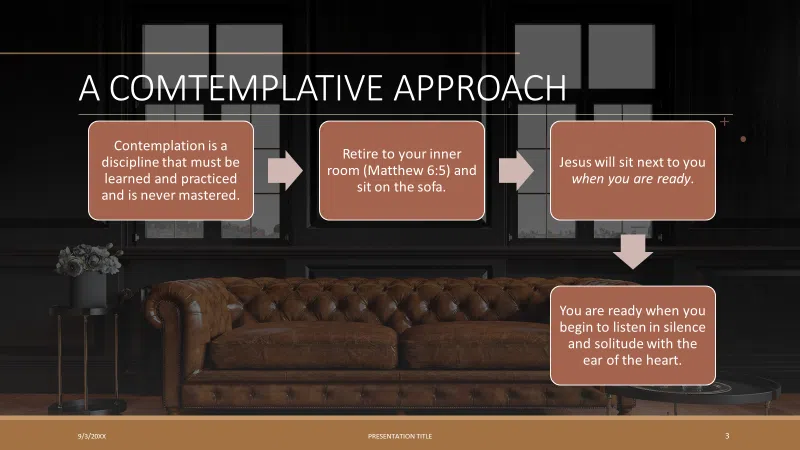
The subject of the existence of God has always intrigued me. Scientific inquiry demands proof that it exists. My own thinking is that God exists, and it is up to me to use the tools Christ gave me to listen with “the ear of the heart.” I try to do that by using Cistercian charisms and practices as I understand them. By myself, my human nature just doesn’t have the energy to tune in to God’s channel–silence.
Consistent with my thinking about my personal life and experiences, both good and bad for me, I use the term boundaries as it applies to God, earth, the Church, and particularly me. All of this with the spiritual noise of original sin in the background, like static that is constant but penetrating human thoughts and behaviors.
What follows are my reflections on the way setting boundaries explains, to some degree, the concept of original sin and how I interpret my Catholicism, as I practice it.
- God is nature with three persons that have no limits or boundaries.
- They created all matter that is, which does have boundaries (Laws of Nature for physical, mental, and spiritual) and automatic rules peculiar to that nature.
- Humans originated from animalistic sources that have boundaries within Nature (not dependent on human manipulation to exist or grow).
- Like a grafted tree, our animality is host to our humanity (See the Genesis story of creation and what it means to have imposed boundaries because of original sin).
- Humans are born into life with roots in animality, but grow in complexity and consciousness because these are the fingerprints of the one who has no boundaries left on each element of matter and time. Refer to the map of Teilhard de Chardin (unattributed) as a blueprint for what reality appears to be.
What it means to be human and the history of why we have such a hard time with our reasoning and free choice reside in the Genesis Principle. The first use of free choice results in humanity selecting boundaries made on human experiences or individual reasoning.
Missing the mark in this cosmic myth of why we are the way we are, the dialogue is between one who makes the boundaries (all that is) and one (Adam and Eve who think they alone can make the boundaries of reality outside of the one who created them.)
God, who has no boundaries, told Adam and Eve that they missed the mark (original sin) and would have to live out what they chose, to teach all humanity that reality is what is without the energy of the boundary maker to live at that most intense level of humanity.
Each person is condemned to search for the meaning to answer six questions:
- What is the purpose of life?
- What is my purpose within what I choose to be that purpose?
- What does reality look like? (This blog)
- How does it all fit together? (This blog)
- How can I love fiercely?
- I know I am going to die. Now what?
- Humanity was floundering around trying to discover what was true using human reasoning and free will to select what that reason uncovered. This would never work because the meaning needed to move to the deepest level of our human nature, consistent with the ongoing process of complexity and consciousness, could only come from the One who forged humanity in the first place.
- The Genesis Principle is the story about why we are so fickle in our resolve to do good. Humans are condemned to make all choices as individuals. Churches or organizations don’t have a choice, but they are the repository of past attempts and guidance on what is good or not.
- Each individual person must be free to choose the answer to these six questions based on their experiences and what others have chosen. Unfortunately, this may be false information, leading to incorrect choices.
- The Principle of Subsidiary, as I understand it, states that all religion, or government for that matter, is most effective at the lowest level to the individual aware of it. This means that my Catholic Faith is most effective and most efficacious in my mind and heart, and in what I do in life to discover the answers to those six questions of what it means to be human.
- Herein lies the seeming conundrum. The very reason why humans have original sin or their propensity to think that they are God (Master of their own boundaries) has to do with that individuality at the lowest level of reality, the person of each individual human. We are unique from each other in talents and experience, we choose to discover meaning, but all one in human nature. It is precisely that individuality and free choice that must die to the kingdom of the earth to choose a deeper reality, spirituality, which is the fulfillment of what it means to be human.
- Each person is like a mini universe because the only ones able to take in reality to discover meaning are individuals. This transaction of called obedience to the will of God, not that we diminish that precious reason and freedom to choose what is good for us. We can tell God to go to Hell or that God does not exist, if we choose, and no thunderbolt will come down out of the sky to kill us. Or, we can move to that deeper level of our humanity, spirituality, first with the kingdom of heaven on earth, where we practice those skills that we will live out forever in the kingdom of heaven in heaven later on.
- I am not you; you are not me; God is not us, and we, most assuredly, are not God.
- The Church does not have a soul of its own with which it can think collectively and make choices. Individual humans, such as me, must take in the reality around me to discern what is meaningful and what is not. Genesis Principle states that God knew about human nature so intimately that God gave humans the freedom to choose what they reason is good for them, and here is the kicker, WITHOUT INTERVENTION FROM GOD.
- We inherit the original sin of Adam and Eve, thinking that I am the only one who can make boundaries that form the basis of my morality or human behaviors. Not only that, I am given the audacious power to believe that I am the center of the universe, and everyone’s opinion does not matter. When I die to self (my human propensity to be the center of the universe, which ironically I am, I reach out to one outside of my reason and free will to become the stuff of meaning, which automatically propels me and sustains me as that deeper level of myself.
- The Christ Principle, like the Genesis Principle, is a system of believing that seems contradictory (which is why we are baptized in the sign of the cross) to our natural evolution. Whereas evolution in the physical universe and even the mental universe is based on matter, the next step uses matter to allow us to move to a deeper part of our humanity, one that is insensible and contains no matter. I could not exist without the base of natural law and mental constructs that allow me to reach a point where I can give my free will and reason to a higher entity (God).
- I move to that deeper level when I realize Jesus came to show us how to act, so that reality that seems foolish to only the mind, is the occasion for me to become more human.
- Here is the thing to remember. When I abandon myself to the will of God, I don’t lose my humanity but enhance it so that now I can see what cannot be seen with mere human eyes. I do this in the upper room of my inner self when I place myself in the presence of Jesus and wait for the Holy Spirit to overshadow me with whatever I need to overcome the effects of original sin.
- When I accept that Jesus is the Son of God, savior, what comes with that transformation is an acknowledgement that God, once again, is chief boundary maker, and I spend my lifetime trying to discover what that is.
- Each day is a lifetime of learning that there is a deeper level to my humanity and struggling to have in me the mind of Christ Jesus to stave off the effects of original sin (Philippians 2:5-12). Prayer is not limited by the boundaries of time but incorporates a large dimension of each waking moment. This is the beauty of the Morning Offering, where I give glory to the Father through the Son and seek the energy of the Holy Spirit to transform each moment into a deeper awareness of what it means to be human at the deepest level of my evolution.
- Next: Boundaries upon boundaries. Making sure I choose the correct one out of many.
uiodg