The Center for Contemplative Practice
A Lay Cistercian Looks at Spiritual Reality
MAGISTER NOSTER: How to set up a formation program to learn the contemplative charism of silence and solitude.
One of the most notable outcomes of my Lay Cistercian Way has been the realization that, although I am not a monk and am not remotely tied to learning about monastic formation, certain practices have developed through my Lectio Divina and the monthly meetings of my Lay Cistercian core group. One behavioral change has been asking Jesus to be my teacher (Magister Noster) as I live out these last few years of a lifetime spent trying “…to have in me the mind of Christ Jesus.” (Philippians 2:5)
Three Lay Cistercians from the core group of Our Lady of the Holy Spirit Monastery in Conyers, GA, meet an additional two hours monthly as an ancillary prayer group, over and above the monthly Gathering Day that is required of those who belong to the Core Monastic Group. Lay Cistercian discernment group in Tallahassee, Florida, whose sole purpose is to give those who wish to dip their toe in the swimming pool of Lay Cistercian practices so that they can tell how hot the water is.
These ideas are how I look at what the monks and other Lay Cistercians have taught me about The Cistercian Way, so that I could develop what I consider My Cistercian Way. I pass on to others what I myself have received. I don’t represent Lay Cistercians or Cistercian monks in any way. I am just a broken-down, old temple of the Holy Spirit who sees that to transform myself from random humanity into a more focused, adopted son (daughter) of the Father, I need discipline. Discipline is a word that comes from the word disciple, one who learns from the Master. What I attempt here is to organize a way to discipline or focus my mind, and hopefully those who care to join me, in being present to Jesus through the power of the Holy Spirit. Silence and Solitude are two of the five Cistercian charisms, the other three being work, prayer, and community. We meet once a month for two hours and learn one new way to grow deeper in the ordinary of our lives. Three Lay Cistercians pray together, share the Holy Spirit, and encourage each other to continue to grow deeper in Christ Jesus, as we can and as we are. (capacitas dei)
This has been a process of discovery of what works and what is not quite right.
This group is not a random collection of those who want to study the Scriptures.
Its purpose is to be present to the Holy Spirit in each person and to share that with those who are in the process of becoming Lay Cistercians.
This is not a group of pick-and-choose Christians who come and go at their whim.
Because it is formational, the same persons who are attached to the Lay Cistercians of Our Lady of the Holy Spirit Monastery (Trappist) attend.
Pick-up groups are good but not formal in the sense of growing deeper each meeting with intention and the watchful eye of the main Monastery group. These groups tend to start from zero with each session and never achieve progressive movement, as each session is a repetition.
This group meets to share the results of their sitting next to Christ in the upper room of their inner selves, waiting for Jesus to tell us what to do, or, as Mary directed, “Do what He tells you.”

THE FORMATION– Keep tied into the Catholic Church universal and parish of Good Shepherd as the context in which Lay Cistercian spirituality can produce good works for all to see and glorify the Father.
THE INFORMATION — Information is sharing the Word, which is dynamic when we move beyond the ideas and comments of the world (citizenship of the earth) to that of placing ourselves outside in the presence of Christ in silence and solitude and sharing the Holy Spirit in each of us (or just being silent). Each Lay Cistercian in our group makes the Word flesh by the ministries we have produced (Actio based on the Five steps of Lectio Divina- Lectio, Meditatio, Oratio, Contemplatio, and Actio). Lectio Divina is the catalyst for a group prayer, each of us different yet sharing one Baptism, one Lord, and the same focus on Cistercian charisms and practices to help us move ever deeper into that upper room of our inner selves.
THE TRANSFORMATION FROM WORLD TO SPIRIT– Trainsformation is from being mere human with worldly values and practices (these are good) to a deeper level of our humanity that is possible because each of us abandons our preconscived notions of what it means to be human to embrace the presence of pure Knowledge, pure Love, and pure Service as each of us can process it and grow ever deeper in Christ Jesus each day and each moment. (conversio morae)
THE INSPIRATION FROM THE MARTYRDOM OF EVERYDAY LIVING– We realize that our citizenship of the spirit has as its roots, the citizenship of the earth. Rather than wasting time trying to prove who God is or is not, we Lay Cistercians try to move ever deeper into our humanity, that same reality in which we are challenged each day to choose good from evil in all its guises. In the earthly kingdom or the ruler of the earth, we tend to choose what we want (which is good but not good enough) but our information and formjation lead us to the conclusion that there is another dimension to our humanity, one that is not accessed through nature or being a natural human, but one that requires free will and knowledge to realize that we must die to that false self, good as the world might think it to be, to be lifted up to that highest level of our humanity, adoption as a son or daughter of the Father and heir to the kingdom of heaven after we die.
We spend our entire lifetime as pilgrims in an alien world (our natural humanness), but must die to self each time we want to move deeper into the mystery of our humanity and the meaning of love. Christ did not come to save us from being human but to give us the ability to attain that deeper level of our consciousness, one possible only with Christ lifting up each of us each day through, with, and in Himself, as humanity reaches its purpose before the Fall of Adam and Eve.
As a Lay Cistercian, the martyrdom of the ordinary living for me takes the shape of that struggle between my earthly humanity seeking its comfort (in my case, sloth is my “thorn of the flesh” alluded to by St. Paul, translated as laziness and the oblivion to the kingdom within me). This struggle is conversio morae (movement) or making what is unforced or taken for granted right now, and transforming it from the kingdom of earth to the self-awareness of who I have become because of my Baptism and Confirmation. The Catholic Church provides me with all I need from Christ to weather the journey.
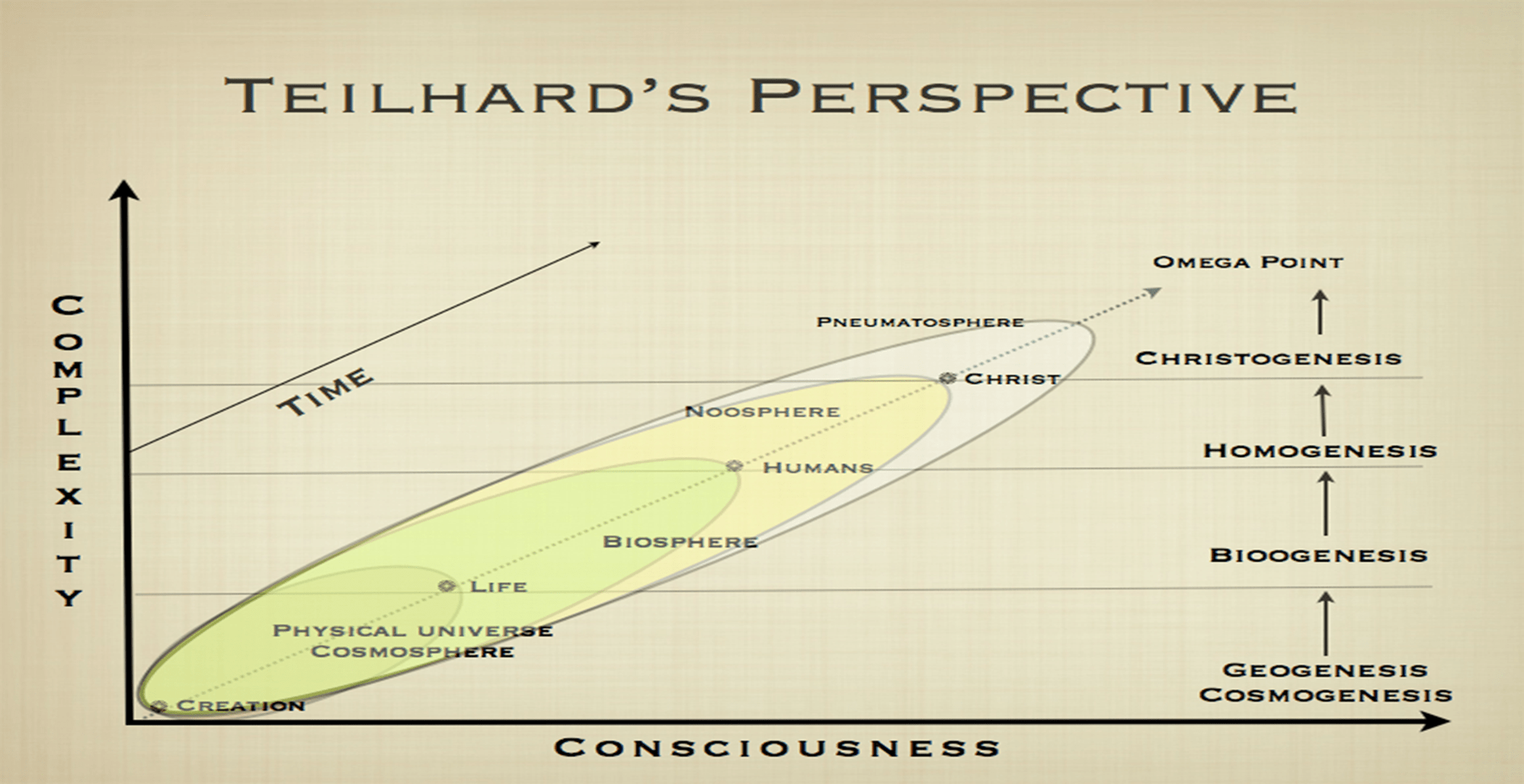
The Catholic Church is the living, unbroken gifts Jesus wanted for me to use to be able to sit in His presence and realize that I need the power of Christ to be an adopted son (daughter) and I realize how to use the Holy Spirit to move forward with complexity and consciousness to fulfill my destiny as an individual but also as a member of my human race.
Humans love to talk, and we fill the holes of silence and unproductivity with chatter, gossip, using cell phones to keep from being bored, and sometimes with something that will actually soothe the savage beast of our longing to be in the presence of the Master. If we all have those awkward silences, we do all this chatter because we are afraid to go to a place inside us (Matthew 6:5) and shut the door to be with Christ alone. We don’t know what to say to fill the time just waiting in God’s presence.
The transformation of which I speak is a habit that may not be easily acquired except by work (Does this remind you of Adam and Eve in the garden, who now had to work for their bread?). Our mantra is: Jesus, have mercy on me, a sinner. In this case, the habit I am offering is how to be in a formational group and just listen with the ear of the heart. There are several layers at work here: humans don’t listen very well, but we do a good job telling others what they may not want to hear. Next, there is listening with the ear of the heart, which means that once you have learned to control your will, you can learn to be present to Christ without conditions. Believe me, that is not easy.
In our prayer meetings that focus on sharing the Holy Spirit’s production (good works) in each of us, we have only one task for each of us. Share, if you wish, just one instance where the Holy Spirit overshadowed you and the results produced. This could be a Scripture reading, a Lectio Divina meditatio or even contemplatio, or just being silent in the stillness with Christ and waiting to listen with the ear of the heart to His heartbeat so we can sync ours with His.
Here are some characteristics of silence and solitude in the formation group of which I speak. You don’t have to practice any of these behaviors, should you choose not to. Discernment means you test the Holy Spirit to see if you can do these behaviors and they work. You may leave at any time without reproach.
- In a Lay Cistercian discernment group, it is not about you or having others listen to what you say in long, often unfocused opinions of what is happening.
- Silence is spoken here.
- This is not a group to discuss anything about the Church, how the Pope is or is not doing what you think he should be doing. A formation group is not about Bible study, although the Sacred Scriptures hold the primacy of honor as the true words that come to us directly from Christ through the Holy Spirit.
- This is a group of independent believers gathered together to listen with the ear of the heart to what Christ says through the power of the Holy Spirit.
- There is a Master or Director to the two-hour session, who must spend at least two hours before the Blessed Sacrament (if available) in prayer and profound silence just listening with the ear of the heart (St. Benedict).
- Allow the Master to direct your mind and heart to lift them up to the Lord. This session is not about the Master, but rather about being present to Jesus.
- Those attending must be a sinner, one who seeks God with their whole mind, their whole heart, and their whole strength, and how to love others as Christ loved us.
- Chatting about work, family, home, football games, etc… only cause the group to lose focus. You are encouraged to keep the group focused on Christ and the intense concentration required in this gathering by bringing us back to the center.
- It takes spiritual energy to attend one of these discernment sessions so constant awareness of Christ in prayer is encouraged. Lowering of eyes (custos oculi) when praying and other times is acceptable.
- There are designated times in the session when an open discussion is allowed and will be administered by the Master, who will control the time.
- Contemplation is all about going inside you to spend time with Jesus. He is the one with whom you discuss in your upper room, with the door locked (Matthew 6:5). You don’t control the agenda. Reflect on what the Master presents as a point for thought and just wait, letting the idea ruminate in your mind.
- Feel the presence of Christ in your room, as his heart beats against your heart on that park bench in the middle of winter.
- You access your upper room through humility (fear of the Lord) and obedience, letting Christ control the agenda.
- Just learn to wait without that cell phone keeping you from entering the upper room. It is a place where Steven Hawking could not look.
- The reason Lay Cistercians take so long as a Novice (two years) and a Junior (three years) is to practice, fail, practice humility, and begin to move unnoticeably deeper into the mystery of our humanity, using the mystery of faith as the template.
Discover more from The Center for Contemplative Practice
Subscribe to get the latest posts sent to your email.
 The Center for Contemplative Practice
You must be logged in to post a comment.