The Center for Contemplative Practice
A Lay Cistercian Looks at Spiritual Reality
WHAT IS THE ACHILLES HEEL OF ATHEISTS?

Before you get a chance to think that I am an Atheist-phobe, let me pop that balloon. My view of reality states that each human, and especially me, all have an Achilles heel, a blind spot as you look out your car door window at what is behind you, a place you never looked because you never thought anything was there. This human idiosyncrasy plays out in almost every person, institution, political, and religious fringe on both extremes of any issue. I bring this up because my Lectio Divina for this morning challenged me to refrain from letting this concept hold me hostage and keep me from, as Dr. Bernard Boland, an Existentialist Philosopher from Loyola University (Chicago) and my Summer School Professor stated, that I should stand just a little bit out in front of where I am consciously (ex-sistere) to be able to keep the balanced perspective of “…the ontic possibility of the manifest ability of all being encountered.”
I offer my view on what various weaknesses are of situations in my life and how they help me to grow by taking back ownership of my humanity and not taking for granted concepts that are unknown or unknowable to me. The frenetic title of the Achilles heel for atheists, or anyone with other deposits of thoughts, depends entirely on the sum total of knowledge, love, and its application, service to and for others that I have assimilated. I can take credit only in that it is the attempt of my human reasoning to make resonant that which it finds disruptive and slightly out of kilter. I hate being out of sorts with my humanity. It is an existential thing, not at all reasonable to the strict commentators on life through one language (religion, science, philosophy, history, literature, psychology). In my Lectio Divina, my thoughts drift to the word “catholic” or universal to describe the temptation to compartmentalize life into neat drawers that only I know how to open. The URL, http://www.organism.earth, comes close to my thoughts of being a catholic Catholic.
All of my opinions come from my own interpretation of life (which, after all, is all I have to work with) about how the views of others impact my thinking. My hypothesis is everyone is free to discern what life means for them and seek a resolution for their Achilles heel. https://www.youtube.com/watch?v=jeQewUcc4rM
With the bias that I view everything that comes from the totality of my life experiences in searching for what it means to be fully human, I offer you what I observe about the Achilles heel for the following groups or movements.
MY VIEW OF THE ACHILLES HEEL FOR ATHEISTS AND SCIENTISTS — Atheists are actually correct in their assertion that there is no god if all I use in the scope of my reasoning is the physical and mental universes. The ability to reason and choose what we reason as good for us is natural and consistent with our humanity. My worldview has three universes or sets of assumptions about life and how they integrate with each other, forming one reality. They are physical and mental universes, which I share with all other human beings in trying to discern what is meaningful, loving, and accurate. Using my reasoning and free choice, I have discerned that there is something called the spiritual universe, which, in my discovery of this deeper penetration into my humanity, allows me to align my dissonance of original sin (the condition of just being human in two universes, physical and mental) with the resonance of The Christ Principle, my template that makes all things new.
The Achilles heel for atheism and scientific inquiry (I don’t say atheists or scientists because each person is different and may or may not subscribe to the three universes but one reality hypothesis) is that they can’t look into that murky void of ambiguity in the present and future and use the three levels of assumptions about what life is at its whole level of evolution. I am not talking about atheism as being wrong because I am critical of religions that tout this or that truth, usually to benefit the person doing the touting. It is not that they can’t look into that place where no human wants to venture; instead, they just never thought anything was worth their observations. This is also the Achilles heel of scientific inquiry that does not allow for anything as real outside of scientific methodology. Atheism or scientific inquiry, limited only to the physical and mental universes, cannot support the invisible part of the meaning of life and, in my opinion, does not explain the meaning of life, what love is, or what is valid for all absolutely. What it does well and is essential to our knowledge is to explore what it is, why it is, where it is, and how it is, and give a factual representation of all they can observe. Although I do not share the conclusions drawn by those who hold the hypothesis that there is no god, I will defend the right of anyone to hold whatever they wish as their center. Choosing what is the lynchpin of your existence is a big part of what it means to be human. I love atheists while reserving my own intellectual integrity to disagree with assumptions and conclusions that do not fit my personal profile. I express no less from atheists about me and my approach to what it means to be fully human in our intellectual progression.
THE ACHILLES HEEL OF CHRISTIANS AND THE CATHOLIC CHURCH –– Everyone has an Achilles heel, that part of a person or a movement that is a blind spot. For Christians, and for some in the Catholic Church, this blind spot is the assumption that having read Scriptures, they are now fortified with THE TRUTH and that everyone else who disagrees with them is vilified, shunned, ostracized from even daring to challenge that there might be an interpretation that has not yet been discovered. All life is black and white, with them being the truth source determining good or evil. Like atheists and scientists, it would be the heights of absurdity to think that all Catholics think alike. Quite the opposite is true because people view what they perceive as accurate based on all their lifetime experiences of discovering what is true or false based on trial and error. This is not to say that Catholics don’t have a core of beliefs that come down through each age, picking up and sloughing off the insignificant baggage of the duly designated authorities to pass on what Christ said and meant. (Magisterium of the Church and the evolution of Ecumenical Councils teach is authentic with what went before).
In this end-time amalgamation of ideas collected from a lifetime of hits and misses, I would call it the Catholic Principle or continuity of thinking consistent with what was authentic. This principle has its origins with the Apostles and moves forward in each age with the people and processes of that age to seek continuity with Scripture and the early writers of what it means to “…Have in you the mind of Christ Jesus.” (Philippians 2:5) It is Jesus, not the Catholic Church, that is the center of The Catholic Principle. Individuals may loot the authority (which they don’t have) and the continuity of practice down through the ages (some good things happened, and then some bad things, too). The authority of tradition is the living dynamic of humans trying to find meaning for their humanity through the attempt in each age, moving forward through time with all its complexities, to speak truth to what is that continuity for each age. Individuals, being individual Catholics, can say YES or NO or even I DON’T CARE about the teaching at each age. Some teachings in our most recent age rile up some individuals to protest a single issue teaching that they don’t think is consistent with that bulk compendium of collective thought that comes from Scriptures through the Apostles, then through the bishops in each age and their collective authority (Ecumenical Councils). Like Atheists, I don’t agree with these single-issue Catholics, but they are a part of that tree of Christ that has many leaves, but they have a right, because of their humanity, to protest too much if they wish. The Catholic Church is condemned to be couched in the nuances of meaning as centuries of thinking impact the core beliefs of The Catholic Principle (Nicene Creed, for starters). The template of The Christ Principle remains central in all this rationalization, which must be at the center of The Catholic Principle.
THE ACHILLES HEEL OF PROTESTANT BELIEVERS
If you have digested all the above, then my Achilles Heel for individual Catholics is the notion that, just because they have a right to their opinion, then their opinion supersedes those authorized by the Church Universal and the Holy Spirit to guide us towards what may be a problematic fit (mainly because we don’t know how it fits in with the twenty centuries of those who likewise struggled in each age to place Jesus as their center.) Sincerity is never a good substitute for Faith and Belief. This way of thinking that the individual is the center of moral and dogmatic assumptions is my notion of The Protestant Principle. or the paradigm change of those who rejected what they considered to be a drift away from placing Christ as the only authority and not The Church Universal, flawed. However, it can be with human leadership. The untended consequences of this shift had four unexpected changes:
- WHEN YOU CHANGE THE ASSUMPTIONS, YOU CHANGE THE WHOLE EQUATION — Every consequence has an opposing reaction. Change the paradigm, and what follows, good or bad, changes from before. The Protestant Principle, as I define it, states the only way to place Jesus at the center of your life is to get rid of those things that seem like false gods. It sounds good, and the motivation is absolutely on track. Still, the assumption is to avoid the seeming enigma of the Catholic Church being the authority to tell you how to worship and pray. This leads to abandoning what has been held in the prior centuries in favor of the individual now being the sole authority. Now, Scripture has become the new authority. But there is a problem. Who is to say what it means? The only answer possible is to hold that each individual looks at the authority of the Scriptures (which, by the way, is the authority for The Catholic Principle) and the unintended consequence that there is a Tower of Babel regarding who authorized what truth. It continues today with the fracturing of ideas that some like or don’t like. Those who separate themselves from the Body of Christ have no idea of the unintended consequences as they move forward. They do so in good conscience.
- TRADITION ONLY MOVES FORWARD FROM WHEN THAT TRADITION FIRST BEGAN. History records what was, returning to whatever time frame you study. For those who changed their paradigm, their tradition or heritage begins from their founding. When Protestants changed assumptions about the nature of humans, the definition of church, the locus of authority, what it means to have a sacramental system with the Eucharist as its center, and how to make all things new through Penance and dying to false self in favor of rising to newness of what it means to be fully human, their new paradigm was not their old paradigm. This reformed way of thinking, although exciting and iconoclastic with current systems of belief, has the unfortunate side effect, in my thinking, of rendering what is true from Apostolic time and early writings about what it means to be a disciple, as a broken lineage with heritage. Going back in time, the foundational event is history, not tradition or even heritage. To be sure, just as early Christianity coopted Sacred Scriptures and the format of the Eucharist (Passover) from their Jewish heritage, it also reformed being just beholden to the Law alone to discovering a more catholic approach to those who gather together in anticipation of the coming of Christ again in glory. In this context, Catholicism was a personal relationship with the living Christ through Eucharist and prayer while not limiting who can be saved to the enlightened (Gnostics and particularly the purity of the Jewish birthright.) It is no accident that very early Christianity coalesced around the people as the living body of Christ here on earth but also in the life to come. Eucharist was the remembrance of the Last Supper but with a twist. This Last Supper was how Jesus would sustain this gathering of the Christian diaspora into a unified yet highly individual encounter with the real presence of Jesus in the Eucharist as real food and drink. Christ reenacts the Incarnation, Baptism, and Real Presence, Making All things new each time we proclaim the death of the Lord until he comes again in glory. We wait, but not as orphans. The Achilles Heel for Catholic Universalists is to be oblivious that each person has the mark of the cross indelibly tattooed on this spirit. Being Catholic means to die to self each day, to that false self characterized by the Seven Deadly Sins, only to put on Christ with the energy of the Holy Spirit. Who would not want to explode in gratitude at such an adoption and want to shout it to the rooftops? Each person is the Christ-bearer (Christopher) to their world and a messenger of the wonders of being an adopted son (daughter) of the Father. The struggle of the early believers to stay focused on Christ instead of peripheral thinking dominated the early church of the martyrs up to and including the Edit of Milan (330 AD). It ushered in a modified paradigm, the monarchical church with its parallel monastic and religious life counterpart, St. Benedict, the early monks, and hermits. In its collective pathway forward, it seems the Church doesn’t travel in a straight line but weaves and wobbles down the centuries, picking up new ways of thinking and discarding old habits. The only promise Christ made to St. Peter was that the Holy Spirit would not let humans fall off the edge into oblivion. The road is rocky. Just because the road of the Church is rocky, so too, it is a struggle to believe. It is impossible without the energy of the Holy Spirit in forming and shaping our humanity, one at a time, to realize a strength that humanity alone is incapable of creating, the incessant movement forward with the complexity of all life around us growing ever older, ever closer to what it means to be human as intended by our nature. When I am aware of my Achilles Heel, I can even move beyond it to where my nature intends me to me. I am not of a divine nature, merely human in nature and subject to its rules and invisible mandates. Yet, if I wish, I can begin a new paradigm if I don’t like the one I inhabit and create a new one. I must start over once more from where I changed my paradigm. A big reason why I am Catholic is that I don’t look back on my history but embrace those bumps and bruises as the collective Catholic experiences as I move forward. Those scars and broken bones the Church received from going down the wrong path are an essential part of what it means to be Catholic. I am in the process of converting myself toward what I have discovered to be the next level in my humanity: adoption as a son (daughter) of the Father and heir to the kingdom of heaven on earth (while I live) and later on…forever.
- WHEN YOU TAKE SOMETHING AWAY FROM THE DEPOSIT OF FAITH, YOU ALWAYS HAVE LESS THAN WHAT YOU TOOK IT FROM. Think about it! When you, the individual, don’t agree with something you probably don’t understand, saying that it doesn’t fit into the Catholic Deposit of Faith, what you actually mean is that it doesn’t fit into your perception of what that Catholic Deposit of Faith is. One person’s view against the combined centuries of hard-earned struggles of the truth so that we can live a life consistent with the Gospel message to “have in you the mind of Christ Jesus.” (Philippians 2:5). You pit yourself against the will of the Holy Spirit, always a self-defeating hand to be dealt. The zeal to make Christ the center of your life is what I consider the motivation of any old or modern-day reformer. I share that view of my Faith. In doing so, I always go deeper to penetrate the unfathomable riches in vertical spirituality (capacitas dei) rather than tearing up the room to make room for new furniture. To restore unity, one must replace what was lost with what was stripped away from the Body of Christ. This is true for all reformers throughout the centuries of struggles to identify the honest Christ. Even today, reformers that rip apart or cause factions, instead of going deeper into the mystery of Faith, risk unintended consequences for their activity, ones that may not show up for decades. (Galatians 5)
- EACH INDIVIDUAL IS THEIR OWN POPE, OWN CHURCH, OWN MORALITY, AND OWN SPIRITUALITY. The right to choose what you think is true does not make what you believe right. The Genesis Principle states that the knowledge of the tree of good and evil is the root of original sin. Choice, because it makes our species different from Giant Slolths, is at the heart of this classic mythic story of what it means to be human. There are only two options of choices we make in what we assimilate into ourselves that can make us grow in complexity and consciousness. One is that the template for what is good or evil is from God. The other one is that we take from anything other than God, such as our individual thoughts, a collective set of statutes and principles (government, books, ideologies, philosophies, scientific inquiry or, and this is most frequently used, what I want to do because it makes me feel fulfilled or happy). It comes down to God’s will versus the will of individual humans. Tearing down the basic principles that have weathered the storms of heresies and the best efforts of clerics to dump them is not an excellent way to build on the authentic traditions that went before. But who decides? The Protestant Reformation is, in my estimation, all about the individual deciding those critical practices passed on through the Old Testament and written about by early Christian witnesses. You can’t throw out the priesthood and still have a sacrifice of the Eucharist; you can’t have a pope as the figurehead of Christ (as the Abbot or Abbess is the personification of Christ to monks and nuns) and each individual is their own pope. There is no oneness, catholicity, apostolicity, and holiness in the approach of each person being their own church. The Achilles Heel of any reform movement that dismantles centuries of long-held beliefs is what replaces what may seem reasonable but it is like a seed thrown on rocky ground. It may live but not harvest the potential of the one who sowed the grain. Be careful what you sow, for you may have to settle for less than you planted and not even realize it.
MY PERSONAL ACHILLES HEEL — Not only do movements (see above) have vulnerabilities, but so do individuals. I put myself at the top of that list.
My big blind spot is that, in thinking that I am Catholic, I can get on the conveyor belt of life and just nap my way to heaven because, after all, Jesus Saves. For fifty years, I wandered in the desert, thinking I had the truth, and just led a life without the cross or hardship and then claimed my reward. I had an abrupt “Come to Jesus Moment” when I joined the Lay Cistercians of Our Lady of the Holy Spirit (Trappist) and was accepted as a novice (which I still am to a considerable degree). There was no St. Paul “knock him off his horse” conversion. Instead, I just tried to open my mind, but mostly my heart, to be present to the Holy Spirit and the energy of God. I used the practices that were handed down to the Cistercian Order, specifically the Trappist monks and nuns, as a way to die to those factions of the world that continuously seek to derail me from just waiting patiently for God to whisper to me in the silence of my heart. It is a deceiving process because I tried to convert myself from my old self to my new self each day (conversio morae) and consciously grow in my proximity to the energy of God through the Holy Spirit. I needed to learn how to wait, not as my tempestuous lack of human focus would suggest, but to sit in silence and solitude and listen in that upper room of my inner self with the “ear of the heart.” I am still doing that each day as my core exercise.
My Achilles Heel is actually my strength when I embrace my humanity and seek to be one with God using the complexity and consciousness unique to me to say, “Jesus is Lord.”
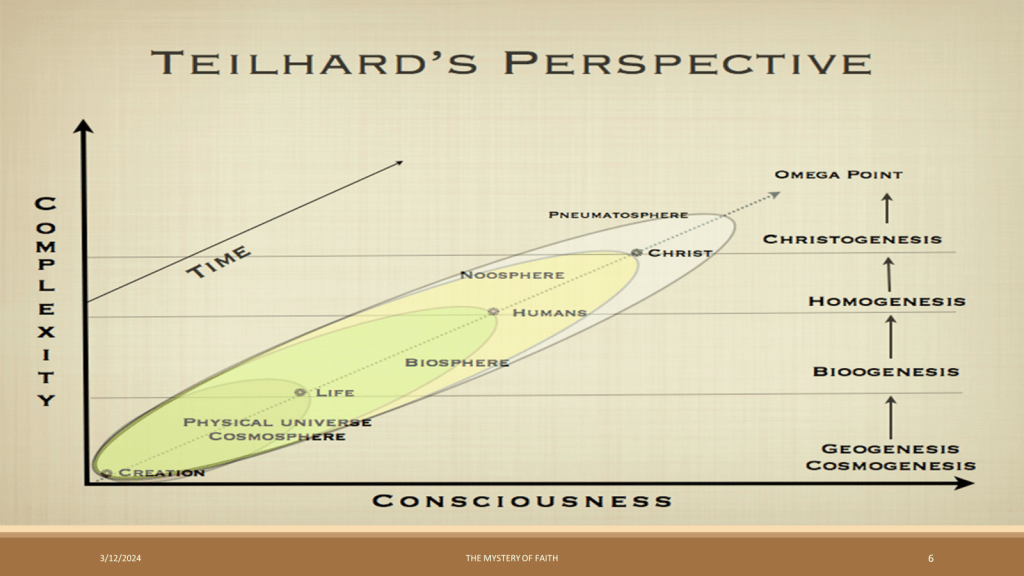
My blind side is to think that my humanity by itself can produce in me that which lifts me up each day as an adopted son of the Father. It is only when I deny myself daily, purposefully, using Cistercian practices and charisms (humility and obedience as found in the Rule of St. Benedict) that what seems like no movement actually is me in a river of movement in space and time, possessing my 83.7 years of the total flow.
In a complete reversal of rational thinking, I find that it is more important that God believes that I exist rather than for me, with my limited human capacity to comprehend God, to believe God exists.
UIODG
Discover more from The Center for Contemplative Practice
Subscribe to get the latest posts sent to your email.
 The Center for Contemplative Practice
You must be logged in to post a comment.