The Center for Contemplative Practice
A Lay Cistercian Looks at Spiritual Reality
CONVERSIO MORAE: Growing from false self to true self
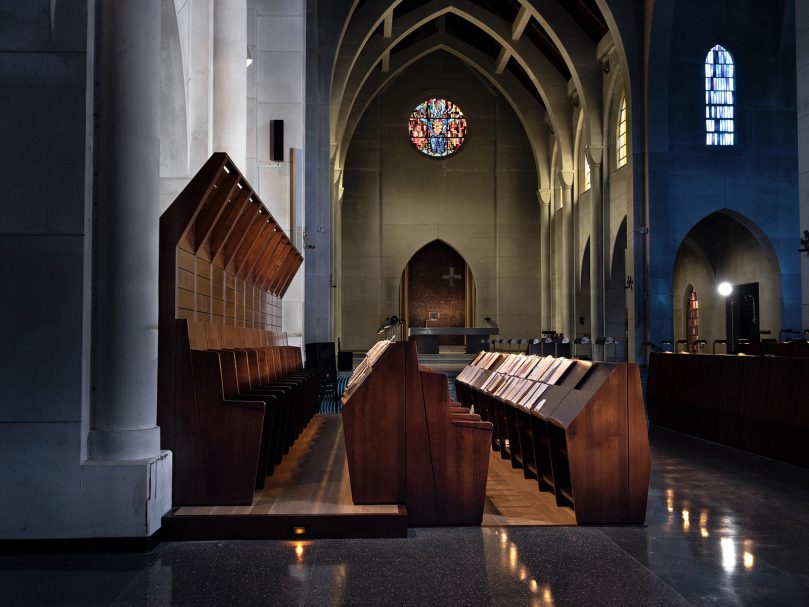
One of the most essential parts of my Lay Cistercian Way is growing (capacitas dei) and growing by doing penance to move from my false self to my true self as an adopted son (daughter) of the Father. It all sounds so theoretical. They are sterile and no more important than words in the phone book if these words are without the power to do what they mean.
An exciting thing about anything good is that we must put it there. Choosing what is good is not automatic. If we want Love of Christ to be present, we must place it there. Because of original sin, our default is the moral ambiguity of either choices from God or the world. St. Paul uses this dual concept in Galatians 5 where he gives the two choices we have to make; choose God’s way or choose the ambiguity of what the world holds. Not to be too simplistic about the world being all bad, that is not what I am saying. Original sin means there are effects for the archetypal sin of Adam and Eve, and it is a condition where the devil lurks like a roaring lion seeking to seduce us with that weakness and proneness to choose our will, one that takes the easy road rather than the way of the cross, the correct road.
One of the key concepts in Teilhard de Chardin’s Map is that of movement, the other axis being complexity. bring this up in the context of moving from false self to true self because of the implications it has for being human and our need for redemption from the effects of our humanity.
- That compendium of wealth about the meaning of what it means to be human, The Torah, specifically Genesis 2-3, describes in detail that God created all that is and installed humans to be keepers of the Garden of Eden. Genesis goes out of its way to say that everything God made was good. That includes butterflies, dogs, cats, humans, and, unfortunately, mosquitoes. Hold that thought.
- Over time, the multiple writers of Genesis crunched hard against what they saw and experienced. Humans didn’t act well, so how could a good God make what is rotten and evil? Over countless learning sessions and campfires, the eventual myth emerged. What God created must be good. Humans messed it up.
- Humans fell victim to the serpent (Satan) and the invitation to be in charge of the Garden of Eden without God. Now comes that archetypal moment of choice where either humans or God decides what is good for Adam and Eve. They chose wrong. This choice was not a one-time event, although the Genesis Story gives humans the context for such an action. It must have happened since the early writers and people could remember. Why do we humans do bad things if a good God made us?
- Now, we come to the purpose of all Genesis, actually all Scriptures (John 20:30-31). God tells humans what is bad so they don’t lose their identities as humans and humans must choose good or evil based on what God tells them or what their instincts tell them. One is life, the other is death (to what it means to be fully human and to continue movement as humanity. This is intelligent progression allows humans to reach out and touch that next level of our evolution. Christ made it possible for us to have the choice once again. He was a ransom for many and the sacrificial lamb of God who would take away the sins of the world.
- All of us are born into that condition known as original sin. Baptism removes it, not because of anything I did or could do. Because of Love, Christ paid the price of the sacrifice for all humans to, once again, be able to care for the earth as caretakers of each other. What a great second chance.
- But, there is a catch (isn’t there always), maybe two catches.
- The effects of original sin remain with all humans, even if Baptism takes away the sin of Adam and Eve.
- Salvation is based on choosing to keep Christ as our individual, not just keeping laws or doing good works for the sake of works.
- Because salvation happens only within the parameters of my lifetime, I must work (Genesis again) to maintain my choice of Jesus as Lord and Savior each day (each moment, if truth be told).
- The Spiritual and Corporal Works of Mercy are the living Body of Christ’s way for me, the individual, to transform myself from those seven deadly sins, always trying to encroach on my center and get me to forget my struggle or completely abandon it for mere pleasures of the body. Many people I have read think that the Catholic Church is against pleasure and fulfillment of what it means to be human. Actually, I find just the opposite. What the Catholic Church (Magisterium) does is to keep before each age the tools and techniques needed for me to move from my false self to my true self by providing Eucharist, Liturgy of the Hours, Reconciliation, the Sacraments, in the context of community.
- As a Lay Cistercian, this Lay Cistercian Way, based on the practices and charisms of the Cistercian approach to dying to self as capacity dei and conversion morae, make it possible for me to struggle down my individual pathway to reach what nature has intended for me from the Garden of Eden.
- Conversion uses The Principle of Subsidiarity, that is, the most effective service to others happens at the lowest level to the ones they serve. In the case of Lay Cistercians, that means I am the container in which my false self is grounded to make way for a new self (new wine). I do that by choosing good rather than evil as my center. These Corporal and Spiritual Works of Mercy are only guidelines for me to focus on doing for others rather than always focusing on what the world says will make me happy. If you want Love to be present, you must put it there. It is not an easy task, and I can’t do it without help from the Holy Spirit and The Christ Principle. Lay Cistercian Way helps me to focus on Jesus each day by having a mindset. Philippians 2:5 says it best, “Have in you the mind of Christ Jesus.” This is what I hear when I say the words, “Love your neighbor as yourself.”
- Catholicism is a way of acting, that seeks the truth that comes from the Holy Spirit and is stored in our temple of the Holy Spirit. All of this produces life, not just of this world but a deeper reality for my humanity, one I could not conceive of with reason alone, but one that makes no sense without it. That is why I HOPE that the words of Christ are true. In the words of St. Thomas Aquinas, “I believe, help my unbelief.”
Read the following from the URL on the works of mercy and the seven deadly sins from your bishops: http://www.usccb.org.
“Often it is the people closest to us who need our help. We should not go out in search of some unknown business to accomplish. It is better to begin with the simplest, which the Lord tells us is the most urgent.” —Pope Francis General Audience (10/12/2016)
The Corporal Works of Mercy
The Corporal Works of Mercy are found in the teachings of Jesus and give us a model for how we should treat all others as if they were Christ in disguise; they “are charitable actions by which we help our neighbors in their bodily needs” (U.S. Catholic Catechism for Adults).
FEED THE HUNGRY • Check in with your parish community to see if there are parishioners who cannot (or should not) go grocery shopping themselves. • Check in with your parish to see if the food pantry is adequately stocked. • Organize a network of volunteers in each parish/community to grocery shop for parishioners in need, especially the more vulnerable populations in our community.
GIVE DRINK TO THE THIRSTY • Do not purchase or hoard more water than you need. • While handwashing is vitally important, make an effort not to waste water—in solidarity with our brothers and sisters in Christ who do not have access to clean water and suffer from the lack of this basic necessity.
SHELTER THE HOMELESS • Consider donating toiletries and sanitary items to a local shelter since those who suffer homelessness—and the facilities that minister to them—are especially vulnerable at this time. • Financially support organizations that are working to support the homeless population in your community. The Corporal and Spiritual Works of Mercy During the COVID-19 Pandemic2
VISIT THE SICK • While in-person visits are not advisable during this time, please invest time in reaching out via phone/video call or by sending a letter or card to those who may feel particularly isolated during this time. • Offer to assist caregivers of chronically sick family members by grocery shopping or cooking for them so they do not have to risk exposure. • Reach out to healthcare workers in your community who may be overworked, burdened, or in need of specific support at this time.
VISIT THE PRISONERS • Explore whether your parish or diocese has a prison ministry and, if so, check whether they need supplies or support. • Given that people in prison can be especially isolated and vulnerable during this pandemic, consider how to support those who are ministering to them and bringing them the Word of God.
BURY THE DEAD • Now that funerals may be limited or restricted, reach out with cards or phone calls to those who have recently lost a loved one. • If possible, visit the cemetery to pray for those you have lost—and to ask their intercession on behalf of all those facing death today.
GIVE ALMS TO THE POOR • Reach out to those who may have been especially burdened during this pandemic, especially those whose occupations make them more vulnerable to economic instability. • Remember that the lack of public celebration of Masses may result in parishes struggling financially in the next few months; be sure to continue your support and if possible, increase offerings for those who cannot donate due to recent financial hardship or inability to work. • Remember that Catholic Relief Services continues to serve the most vulnerable and consider making a donation or praying for them as you are able.
The Spiritual Works of Mercy
The Spiritual Works of Mercy have long been a part of the Christian tradition, appearing in the works of theologians and spiritual writers throughout history; just as Jesus attended to the spiritual well-being of those he ministered to, these Spiritual Works of Mercy guide us to “help our neighbor in their spiritual needs” (U.S. Catholic Catechism for Adults).
COUNSELING THE DOUBTFUL • Reassure and support those who may be especially anxious during this time. • If someone asks you for advice, orient your response to Christ, who is the Way, the Truth,
INSTRUCTING THE IGNORANT • With the public celebration of Masses unavailable, learn and/or teach someone else how to make a Spiritual Communion. • Take this time to recommit to your own study and formation and, for those home with children, take advantage of this time to reflect on the faith as a family.
ADMONISHING THE SINNER • Being confined in close quarters for long periods with families or housemates can test us in more ways than one, so be supportive in helping others find their way and correct their mistakes. • Recognize the reality of spiritual warfare in daily interactions and strive to cultivate the corresponding virtues needed to resist your personal temptations.
COMFORTING THE SORROWFUL • Write a letter or send a card to someone who is suffering and let them know you are thinking of them. • Remember that a few moments of your day may make a lifetime of difference to someone who is going through a difficult time. • Consider sharing links to spiritual resources with those who may be isolated, such as live-streamed Masses, so that they can participate in community worship from home.
FORGIVING INJURIES • For families, this time may maximize opportunities to exercise forgiveness, so take this time to model the importance of forgiveness both for this life and the next. • If the sacrament of Reconciliation is not available in your parish at this time, commit to making a regular examination of conscience. • Learn and/or teach your family members the Examen prayer and/or the Divine Mercy Chaplet.
BEARING WRONGS PATIENTLY • Practice developing and strengthening the virtues of temperance, prudence, fortitude, and justice. • When frustrated with someone, step away from the situation, take a few deep breaths, and pray the Our Father, asking God for patience. • Commit to praying the Stations of the Cross once a week.
PRAYING FOR THE LIVING AND THE DEAD • Pray the rosary with family members, via video conference or conference call if needed, for all those who are suffering from the effects of this pandemic. • Keep your own book of prayer intentions, writing down the names of those who you are keeping in your prayers, and let people know that you are praying for them. • Ask a friend or family member if there is anything you can pray for them about.”
Seven Deadly Sins: pride, greed, lust, envy, gluttony, wrath, and sloth.
Read what the Catechism of the Catholic Church says: https://www.usccb.org/sites/default/files/flipbooks/catechism/458/
IMPLICATIONS FOR A BROKEN-DOWN, OLD, AND CROTCHETY LAY CISTERCIAN
Being Catholic, among many reasons, seems to center around being and doing what Jesus wanted for us as a collective (Church) and as individuals. The church gives us the continuity and heritage to know what to do to be a disciple of Christ. Individually, I must take into myself (assimilate) those practices and charisms of being Catholic to simply put myself in the presence of Christ and trust in the Holy Spirit to overshadow me with what I need to move from false self to true self.
I am not born with all this information or skills. I must choose it freely and place myself under the care of the Holy Spirit to give me what I need to flee from the seven deadly sins and move towards the corporal and spiritual works of mercy.
I must move away from all that I have come to experience about what it means to be human and step out into the new pathways of values and morals commended to me by Christ and brought forward through the centuries by the faithful. I realize that I must do that with a systematic approach to spirituality. I have been selected to be a Lay Cistercian who tries to emulate the words of the Gospel to convert oneself through the cross and to put on the armor of Christ (St. Paul). http://www.trappist.net It is another way I have to control that human urge to be lazy and retire to what is easy rather than what is right. The cross is never easy. If it is, it is probably not an authentic cross.
Being human means I am locked into a humanity that has no morals or values from God unless I put them there. If I want the Love of Christ present, I must use my free will and put it there. The energy I get to be aware of this is from the Holy Spirit. I convert myself daily because the alternative is to let my grass grow wild, and we all know how much a problem that is.
The benefits of prayer are not to be taken for granted but a gift of Faith (God’s energy) which each human can assimilate into their behavior if they are aware, know how to sit in the presence of God and listen with “…the ear of the heart” to the whispers of God. Assurance is such a gift, a product, or an outcome of riches just for being in the presence of God and waiting. Unlike belief, which is a momentary assent to what presents itself to us in prayer, Assurance, Acceptance, Accountability, Assimilation, and Awareness all stay with us, attached to the multiple charisms of what makes us Lay Cistercian. When I say that each day is a new opportunity for life to present me with the occasions of blessing the Lord (Canticle of Daniel), then my belief is intertwined with the fruits of my past fidelity to the Rule of Benedict, Cistercian charisms, and the chance to bring into myself a Christ that is unique to me (or to you). It is capacitas dei, slowly growing in grace and wisdom before God and my fellow humans.
As a retiree from work (but not from life), what the Lay Cistercian Way has provided me is not earned but gifted by the Holy Spirit. Believe me, I must work every day to keep myself centered on Christ through Lay Cistercian practices that I learned from the Cistercian monks at Our Lady of the Holy Spirit Monastery (Trappist), Conyers, Georgia. http://www.trappist.net
uiodg
Discover more from The Center for Contemplative Practice
Subscribe to get the latest posts sent to your email.
 The Center for Contemplative Practice